



Cooking for two people presents a unique challenge in the kitchen—you want meals that feel restaurant-quality and satisfying, but you don’t want to spend hours cooking or face an avalanche of leftovers. Sheet pan dinners solve this problem beautifully. Everything cooks on a single baking sheet in the oven, meaning minimal hands-on time, maximum flavor, and cleanup that takes mere minutes. This approach transforms weeknight cooking from a chore into something genuinely manageable, even on the most exhausting days.
The beauty of sheet pan cooking lies in its simplicity and flexibility. You can throw protein, vegetables, and seasonings onto a pan, slide it into the oven, and walk away while the heat does the heavy lifting. By the time you’ve poured a drink or set the table, dinner is ready. No juggling multiple burners, no worrying about whether the chicken finishes at the same time as the potatoes—everything cooks together, everything tastes incredible, and you’re left with just one pan to wash.
Why Sheet Pan Dinners Work So Well for Two
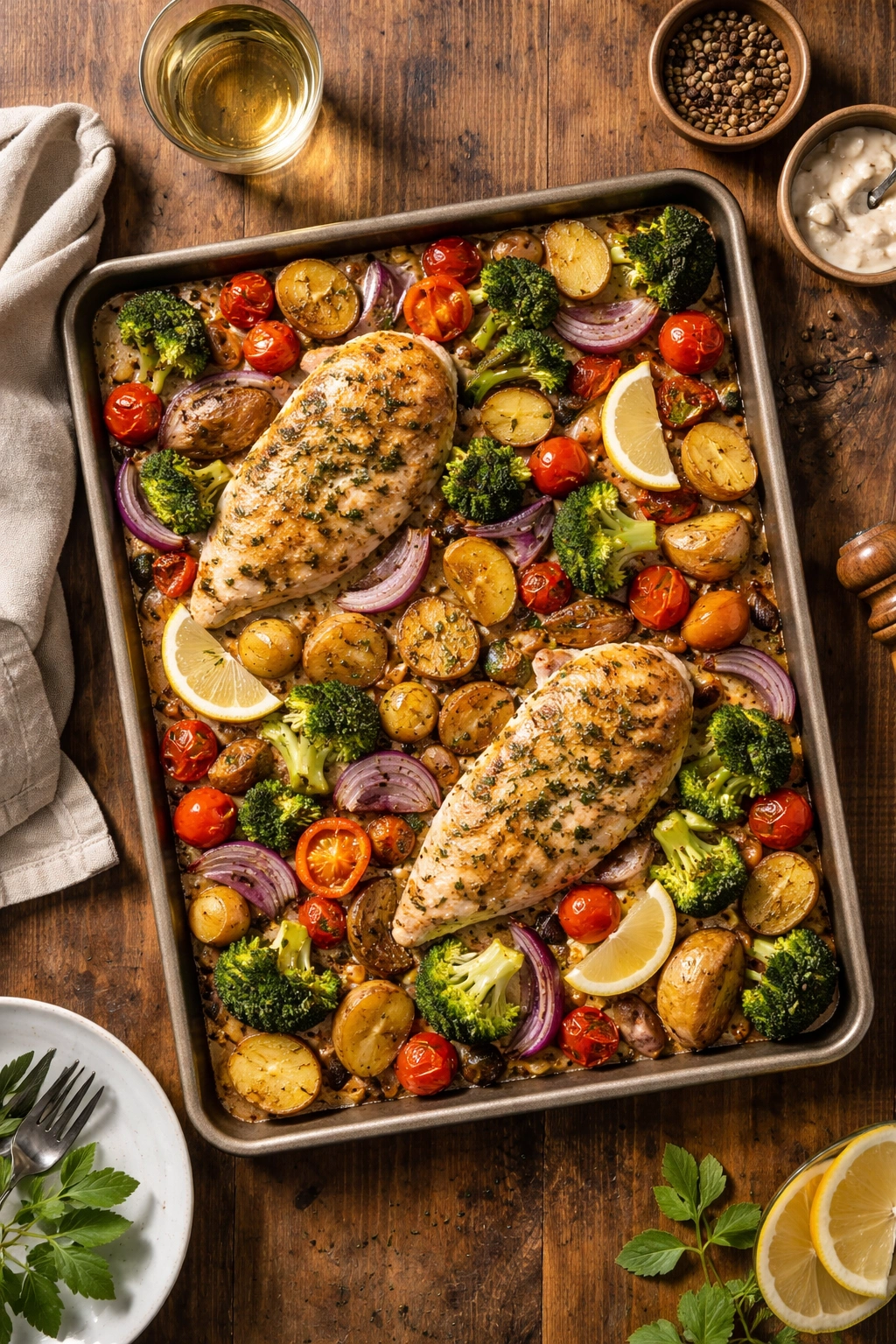
Cooking for two sits in a sweet spot: large enough that leftovers make sense, small enough that standard recipe quantities feel generous. Sheet pan dinners play perfectly to this advantage. A typical 9×13-inch or 10×15-inch sheet pan provides exactly the right surface area for two satisfying portions without feeling oversized or wasteful.
The efficiency factor cannot be overstated. One pan means one cleanup—no saucepans simmering on the stovetop, no baking dish in the oven competing for space. This matters more than you might think when you’re tired after work or simply don’t feel like spending your evening as a dishwashing machine. The psychological win of a nearly empty sink is just as valuable as the time you actually save.
Sheet pan cooking also naturally encourages healthier eating patterns. When you roast vegetables alongside your protein, they caramelize beautifully and develop deep, sweet flavors that need no additional cream sauces or heavy toppings. You end up with balanced meals—lean protein, fresh vegetables, and a starch all on one plate—without feeling like you’re sacrificing anything.
How to Choose the Right Pan for Two
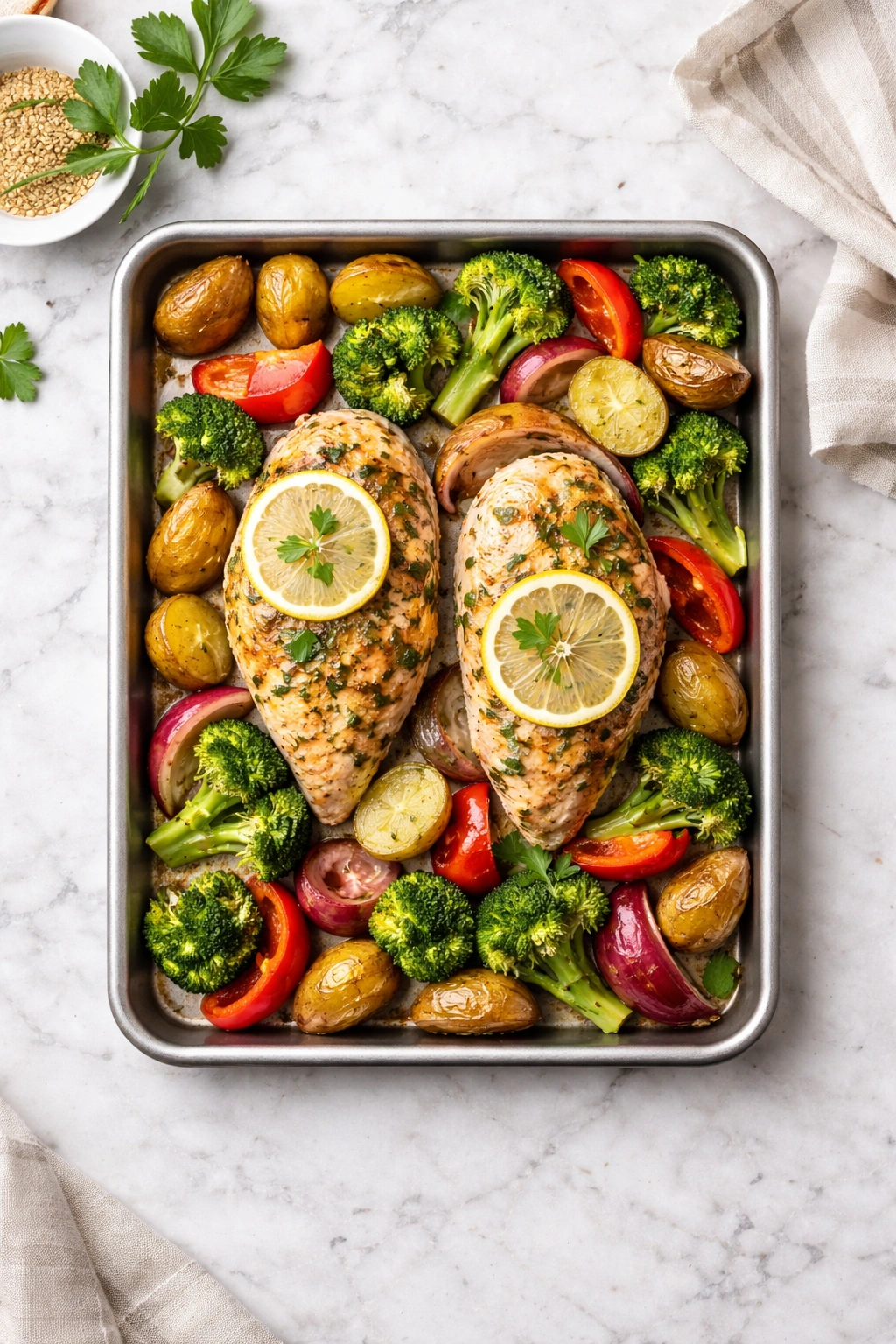
Not all sheet pans are created equal, and getting the right size matters more than you’d expect. A standard full-size sheet pan measures 18×13 inches, which is genuinely too large for two people. Everything spreads out too far, and you’ll struggle to achieve proper caramelization and browning because the ingredients don’t cook as efficiently when there’s excessive space.
Instead, opt for a half-sheet pan measuring 10×15 inches or smaller. This gives you enough room to arrange protein and vegetables in a single layer without crowding, while maintaining the density needed for proper roasting and browning. Some cooks prefer even smaller 9×13-inch pans, which work beautifully for streamlined two-person meals.
The material of your pan matters as well. Aluminum conducts heat evenly and is lightweight and affordable—ideal for most sheet pan cooking. Stainless steel takes longer to heat but develops superior browning. Avoid dark-colored nonstick pans for roasting at high temperatures, as they can cause bottom surfaces to brown too quickly. Heavy-duty pans prevent warping and ensure consistent results year after year.
Lining your pan with parchment paper or aluminum foil is genuinely worth the small effort. This single habit transforms cleanup from annoying to nearly effortless—you simply crumple up the paper, toss it, and you’re done. No scrubbing, no soaking, no regrets about what you just cooked.
The Perfect Temperature and Timing Strategy
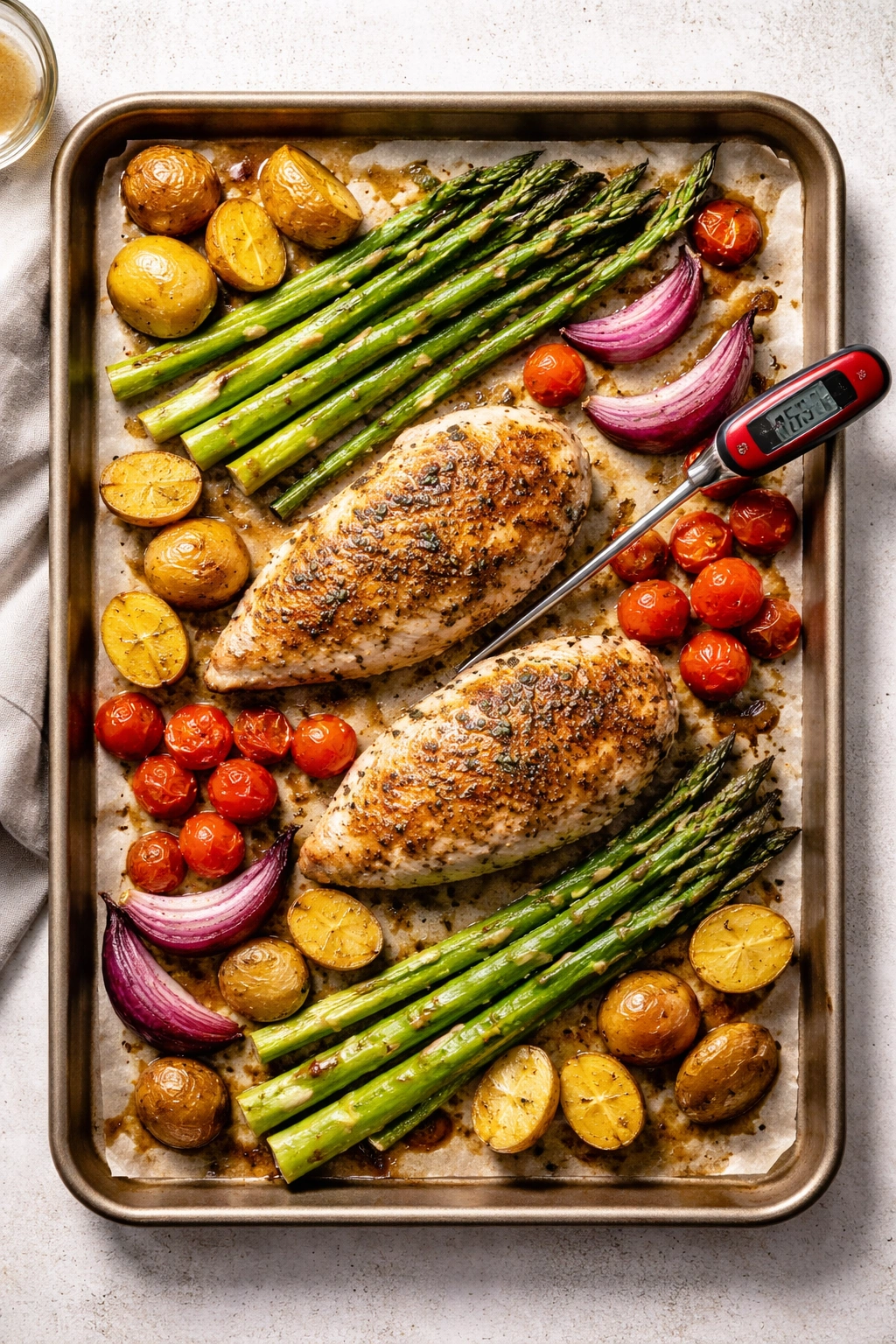
Sheet pan dinners typically cook at temperatures between 375°F and 450°F, depending on what you’re roasting. Higher temperatures (400-450°F) work best for proteins that need a sear and vegetables that benefit from deep caramelization—think chicken, sausage, or hearty root vegetables. Lower temperatures (375°F) suit delicate proteins like fish and shellfish, which can dry out quickly at high heat.
The key strategy for two-person cooking is staggering your ingredients based on cooking time. Rather than trying to time everything perfectly, start items that take longest first. If you’re making a chicken dinner with potatoes and green beans, get the potatoes roasting for 10-15 minutes before adding the chicken and beans. This ensures every component reaches perfect doneness simultaneously without any element overcooking.
For a 10×15-inch pan, most dinners cook in 25-35 minutes once you’ve factored in the initial head start for slow-cooking vegetables. Fish-based sheet pan meals move faster—often 15-20 minutes total—while heartier dishes with root vegetables might run closer to 40-45 minutes. Always use an instant-read thermometer for chicken and pork rather than guessing; internal temperature is the only reliable indicator of doneness, and undercooked poultry is non-negotiable.
Chicken Sheet Pan Dinners for Two
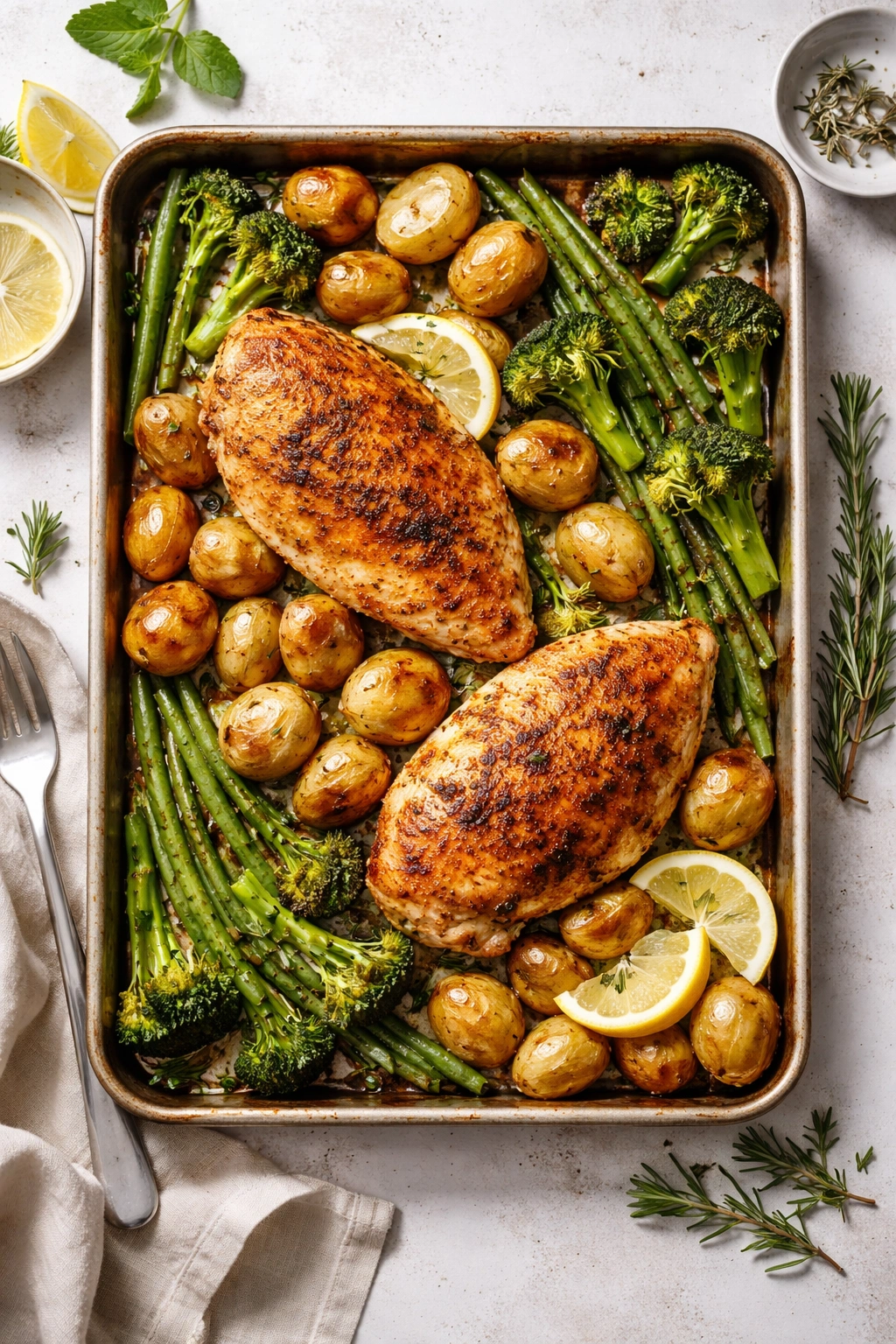
Chicken remains the most forgiving protein for sheet pan cooking, and it’s wonderfully adaptable to different flavor profiles and accompanying vegetables. Chicken breasts cook fastest—typically 20-25 minutes at 425°F when they’re uniform in thickness—while thighs offer more flavor and forgiveness, cooking in about 25-30 minutes.
A classic approach pairs chicken with roasted potatoes and a green vegetable, seasoned with butter, garlic, and fresh herbs. Cut potatoes into small wedges or cubes so they cook at roughly the same rate as chicken. Baby potatoes work beautifully here since they need minimal cutting and roast evenly. Toss everything with olive oil, minced garlic, salt, pepper, and your choice of herbs—thyme, rosemary, and oregano all work wonderfully—then roast at 425°F until the chicken registers 165°F internally.
For something with more assertive flavor, try a Mediterranean-inspired combination using chicken thighs, cherry tomatoes, red onion, olives, and bell peppers. The tomatoes release their juices as they roast, creating a light pan sauce that needs nothing more than a splash of balsamic vinegar to complete it. Fresh herbs like oregano, basil, or parsley scattered over the top just before serving add brightness and polish.
A honey-mustard glaze transforms plain chicken into something restaurant-worthy. Whisk together Dijon mustard, whole-grain mustard, honey, minced garlic, and a splash of soy sauce, then brush this mixture over the chicken and vegetables before roasting. As everything cooks, the glaze caramelizes into a sticky-sweet coating that’s absolutely addictive. Serve this alongside roasted root vegetables like parsnips or carrots for a complete meal.
Garlic and parmesan create another powerhouse combination. Coat chicken breasts, potatoes, and green beans in a mixture of minced fresh garlic, grated parmesan cheese, olive oil, and Italian breadcrumbs, then roast everything together. The breadcrumb coating crisps up beautifully, the garlic mellows into something almost sweet, and the parmesan creates a savory crust that tastes far more complicated than the minimal prep required.
Fish and Seafood Sheet Pan Dinners for Two
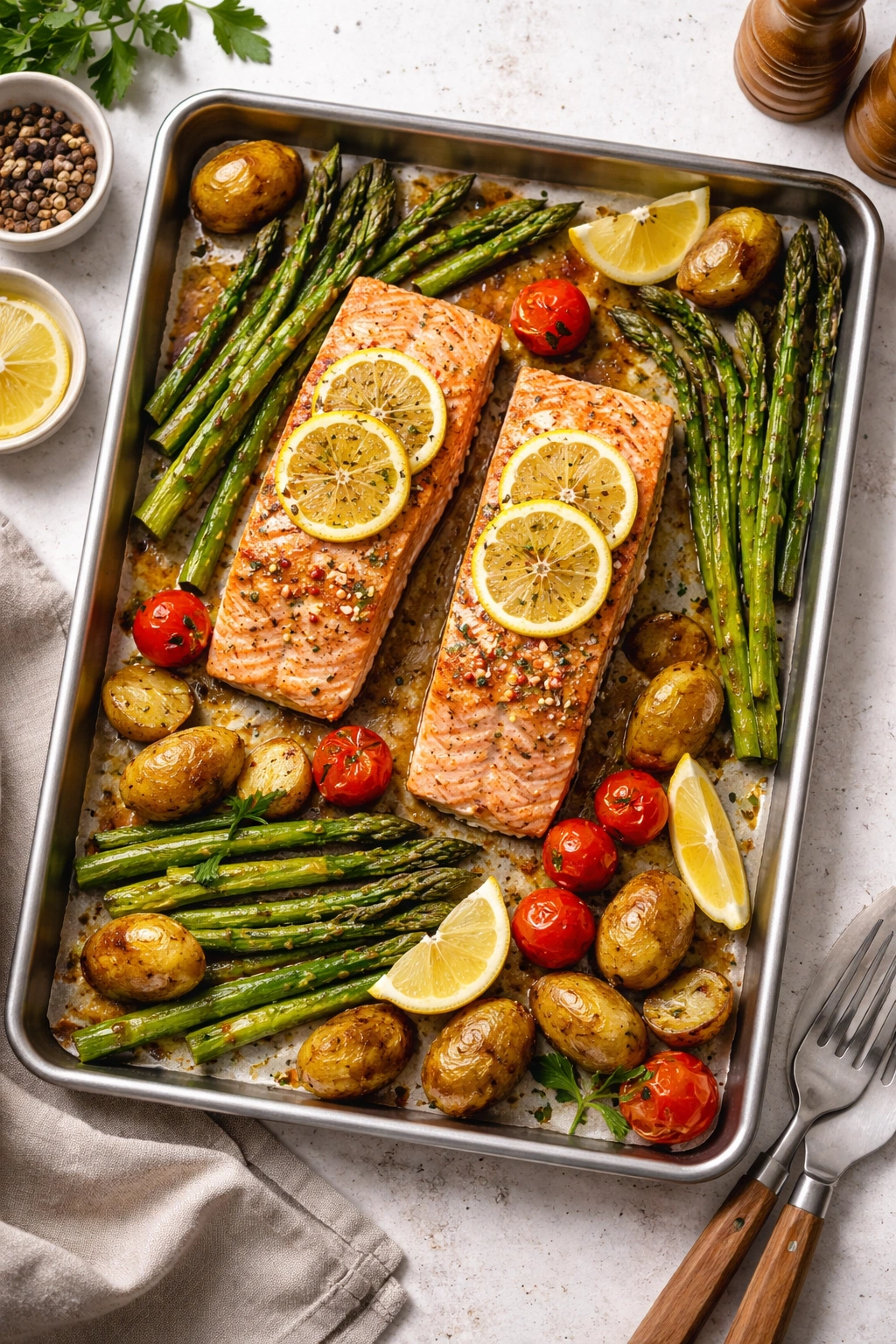
Sheet pan cooking is arguably the best method for cooking fish. The gentle, even heat of the oven prevents the over-cooking that happens so easily on the stovetop, and everything—fish, vegetables, aromatics—reaches perfect doneness together. Salmon fillets are particularly forgiving; the natural oils in the fish prevent drying, and the flesh stays moist even if you accidentally overbake slightly.
A lemon-herb salmon preparation might feature salmon fillets paired with asparagus, thinly sliced onion, and baby potatoes. Drizzle everything with olive oil, season with salt, pepper, fresh dill or parsley, and thin lemon slices, then roast at 400°F for about 15-20 minutes until the salmon flakes easily and the asparagus is tender. The lemon brightens everything, and the acid prevents the dish from feeling heavy.
Sheet pan shrimp dinners come together in remarkable speed—sometimes as little as 12-15 minutes. Toss shrimp with oil, garlic, crushed red pepper, and Italian seasonings, then scatter them across a pan with vegetables like zucchini, cherry tomatoes, and bell peppers. The shrimp brown and become tender, the vegetables caramelize, and you end up with something that tastes like you spent way more effort than you actually did.
For a more adventurous option, try sheet pan mussels or clams. Toss the shellfish with white wine, minced garlic, fresh herbs, and perhaps some diced tomato, then roast in a covered pan until the shells open (discard any that don’t). Serve with crusty bread for soaking up the briny, garlicky cooking liquid. It feels fancy enough for a special dinner, but the actual hands-on cooking time is minimal.
Vegetarian and Vegan Options for Two
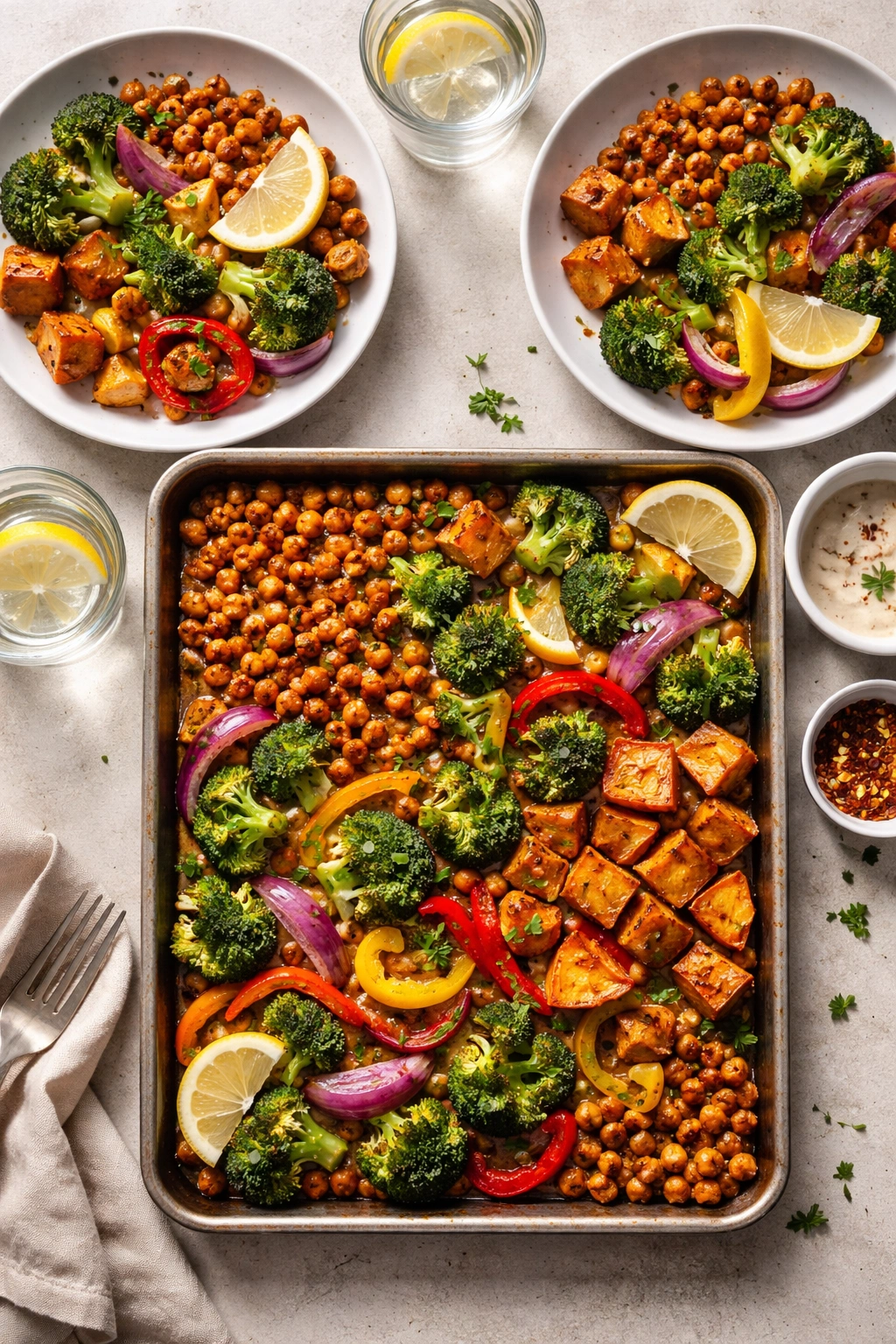
Vegetarian sheet pan dinners prove that you don’t need meat to create satisfying, flavorful meals. The key is building enough substance and protein into the dish so it feels genuinely complete. Chickpeas, white beans, lentils, or tofu all work beautifully roasted alongside vegetables.
A roasted vegetable and chickpea dinner layers broccoli, sweet potato, bell peppers, red onion, and chickpeas, all tossed with olive oil, garlic, smoked paprika, and cumin. Roast everything at 425°F for about 30 minutes, stirring halfway through. The vegetables caramelize at the edges, the chickpeas become crispy on the outside and creamy within, and the whole thing tastes like comfort food that happens to be completely plant-based.
Halloumi cheese—a firm cheese with a high melting point—is a vegetarian game-changer for sheet pan cooking. Cut it into thick slabs or cubes, toss with vegetables like zucchini, eggplant, bell peppers, and red onion, then roast with olive oil and whatever seasonings appeal to you. The halloumi softens slightly without melting completely, developing a tender interior and crisped exterior. Finish with fresh herbs and a squeeze of lemon.
For a vegan option with real substance, try sheet pan tofu with roasted vegetables. Press extra-firm tofu to remove excess moisture, cut into cubes or slabs, then toss everything with an Asian-inspired glaze made from soy sauce, sesame oil, rice vinegar, and minced garlic. Roast alongside vegetables like broccoli, snap peas, and carrots. The tofu absorbs the glaze’s flavor and develops crispy edges, while the vegetables soften and caramelize.
Pork, Beef, and Sausage Dinners for Two
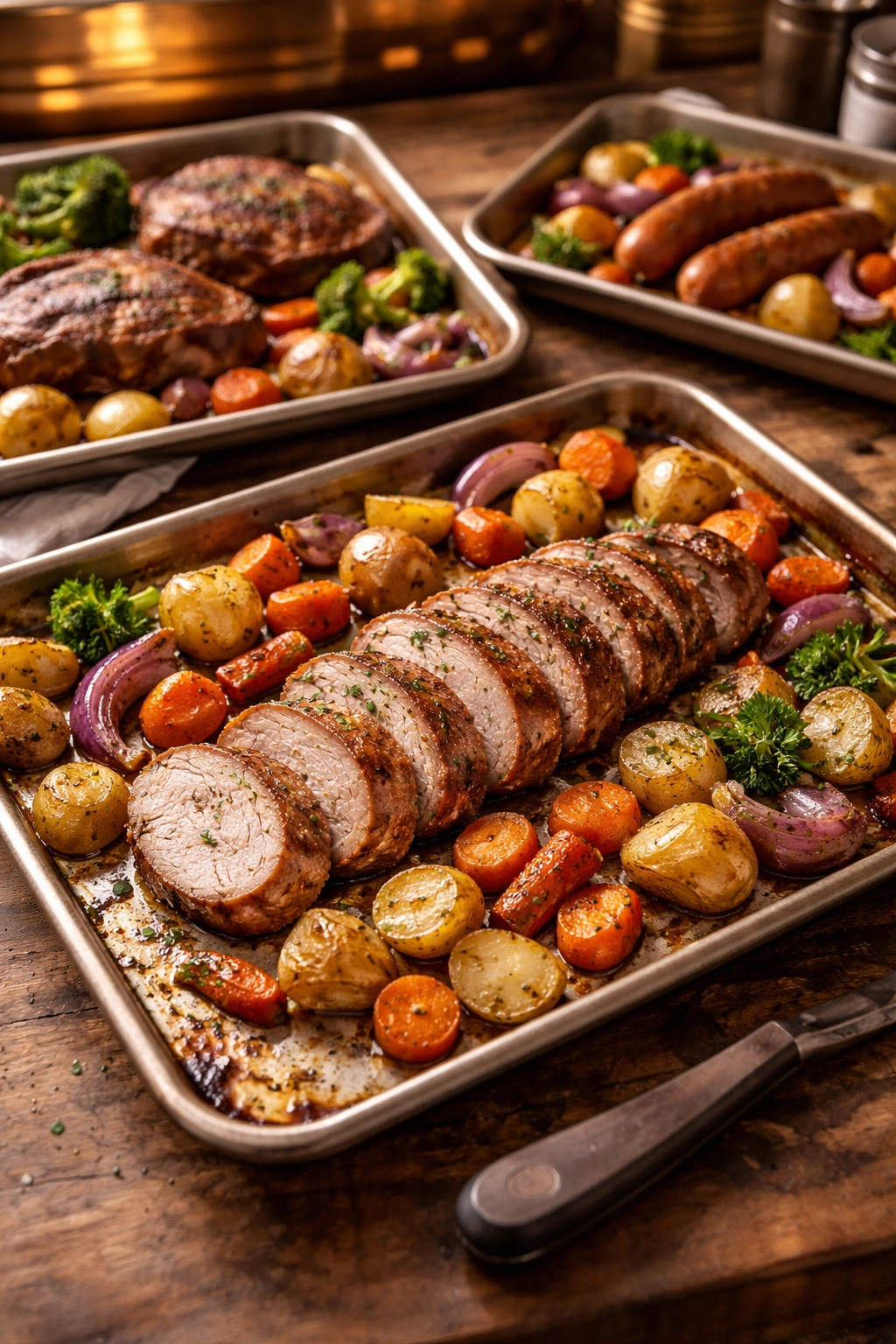
Pork tenderloin is one of the leanest proteins available, and it roasts beautifully on a sheet pan. A small tenderloin sized for two cooks in about 20-25 minutes at 425°F, emerging tender and juicy with a golden exterior. Pair it with roasted root vegetables—potatoes, parsnips, carrots, or beets—and you’ve got an elegant dinner that feels special without demanding significant effort.
Sausage and vegetables offer hearty comfort with excellent flavor-building potential. Sheet-pan chorizo with potatoes and asparagus, or smoked sausage with peppers and onions, deliver deep, complex tastes with minimal active cooking time. The sausages brown beautifully, releasing their flavorful oils into the vegetables, and everything finishes cooking together. Italian sausage pairs wonderfully with fennel, tomatoes, and white beans. Spanish chorizo works beautifully with potatoes and smoked paprika.
For beef, ground beef sheet pan meals work surprisingly well when cooked as individual meatloaves or patties rather than trying to cook a single large piece. Form ground beef into two loaves or patties, nest them among roasted vegetables and potatoes, then bake until they reach 160°F internally. Alternatively, try sheet pan beef and broccoli—a deconstructed stir-fry where sliced beef (often sirloin steak cut thin) roasts on a pan with broccoli florets, then everything is tossed in a simple sauce made from soy sauce, garlic, ginger, and a touch of honey.
Pork chops work beautifully on sheet pans, particularly when paired with a flavor-building rub. Try brown sugar and garlic, or a spice rub based on cumin and chili powder. Get the chops and accompanying vegetables—potatoes, bell peppers, or sweet potatoes—on the pan, and you’ll have dinner in about 30-35 minutes.
Building Flavor: Seasonings and Sauce Ideas
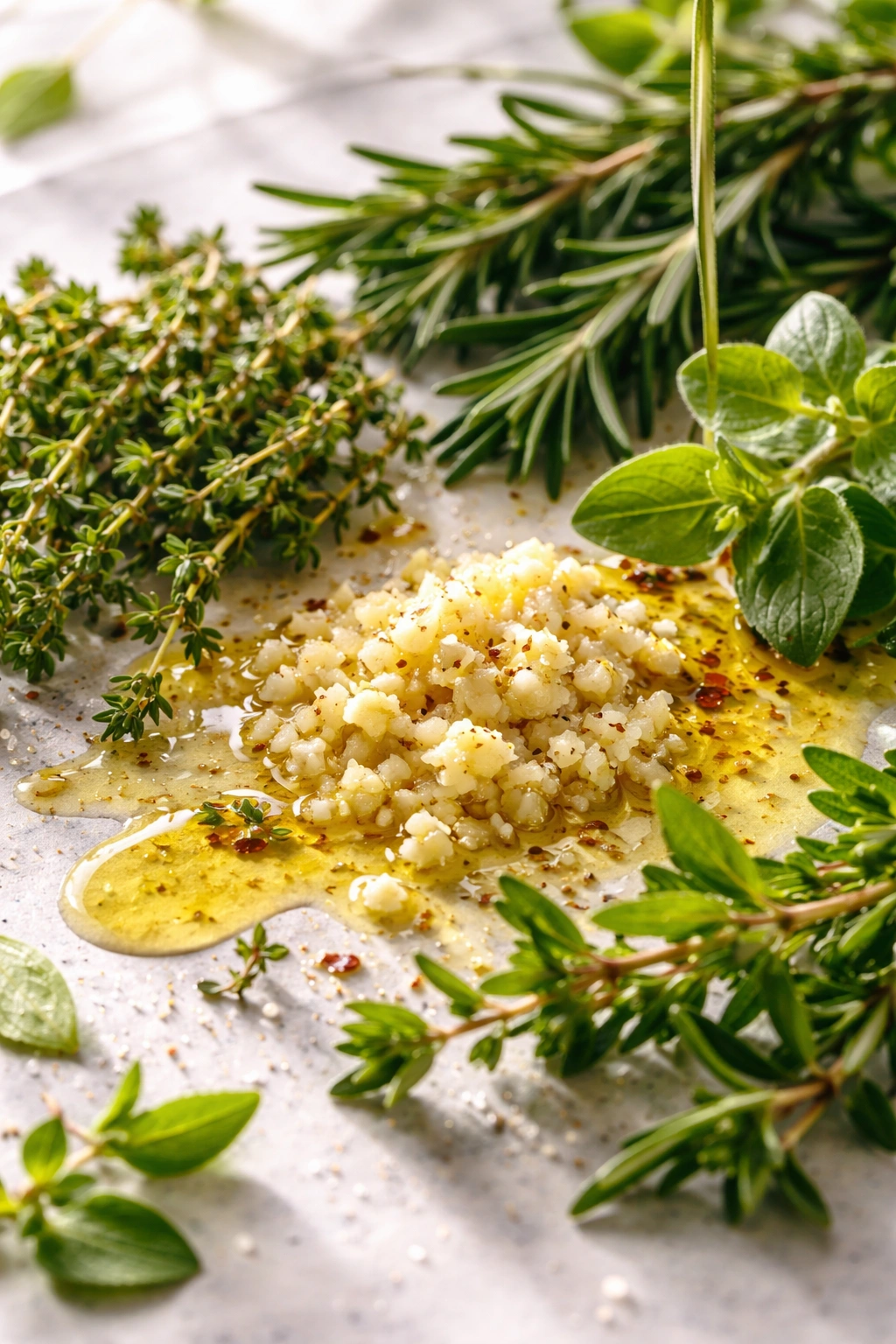
Sheet pan cooking doesn’t mean sacrificing depth of flavor. In fact, the concentrated roasting process actually intensifies flavors, making seasonings taste more vibrant. A simple herb approach with fresh thyme, rosemary, oregano, and minced garlic takes chicken and vegetables from plain to delicious. Fresh herbs added at the end—parsley, basil, dill, or cilantro—add brightness that grounds the whole dish.
Oil is your flavor foundation. Don’t skimp on quality olive oil, which carries fat-soluble flavors beautifully and prevents sticking without creating a greasy result. Garlic and lemon are the dynamic duo that works with almost everything—roasted garlic mellows into something almost sweet, while lemon juice added at the end provides sharp brightness that cuts richness.
Soy sauce, balsamic vinegar, and Worcestershire sauce add umami depth to any sheet pan dinner. A simple Asian glaze using soy sauce, sesame oil, rice vinegar, and ginger transforms ordinary chicken or vegetables into something restaurant-quality. Mediterranean flavors—oregano, olives, feta cheese, tomatoes—work beautifully with chicken, fish, or vegetables. For bolder flavor, try smoked paprika, cumin, and crushed red pepper for a Southwestern vibe.
Parmesan cheese scattered over vegetables just before roasting adds a salty, umami punch and creates delicious crispy bits. Breadcrumb coatings mixed with herbs and cheese create textural contrast—crispy exteriors against tender interiors. Even a simple finish of buttered garlic breadcrumbs transforms roasted vegetables from side dish to something genuinely craveable.
Smart Prep Strategies to Save Time
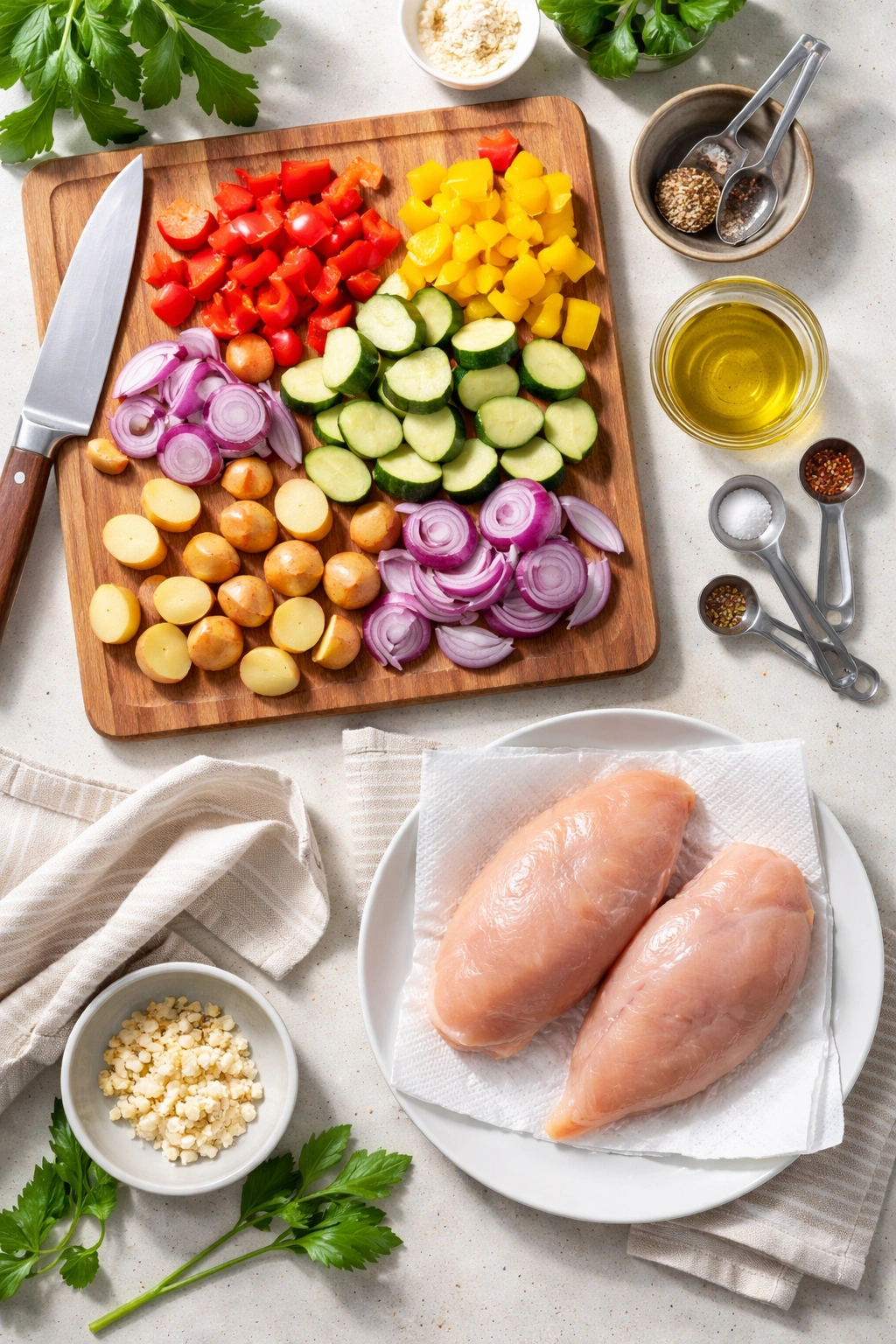
Sheet pan dinners don’t demand elaborate prep, but a few smart moves elevate results significantly. Cut vegetables to similar sizes so they cook evenly; uneven pieces means some overcook while others remain raw. Aim for roughly ¾-inch to 1-inch chunks for potatoes and harder vegetables, which cook at a more moderate pace than smaller pieces.
Patting chicken and fish dry before roasting improves browning dramatically. Moisture on the surface prevents the dry-heat cooking needed for crisping and browning. A simple paper-towel blot makes the difference between pale, steamed chicken and golden, attractively browned poultry.
Do as much prep as possible before your partner arrives or before you start actual cooking. Wash and chop vegetables, pat proteins dry, and measure out seasonings and oil. By the time you’re ready to cook, actual assembly takes just 5-10 minutes. You can even prep everything except the oil earlier in the day, then do final tossing right before roasting.
Consider using pre-cut vegetables when they genuinely save meaningful time—pre-cut butternut squash, baby potatoes that need no cutting, or trimmed asparagus all represent reasonable shortcuts that don’t compromise results. Your mental energy and saved minutes matter too.
Storage and Leftovers for Tomorrow
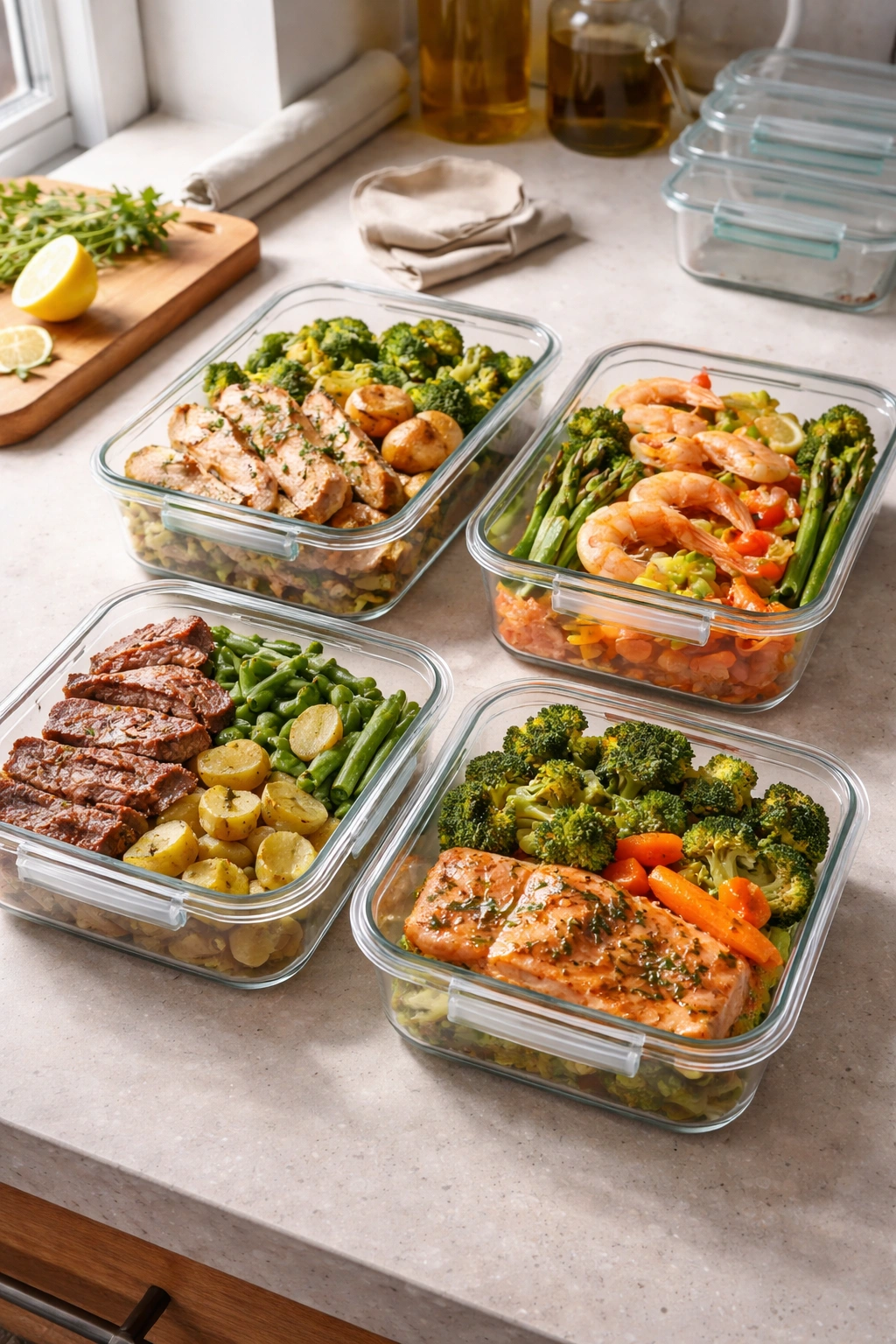
Sheet pan dinners designed for two rarely produce awkward quantities of leftovers, but what remains stores beautifully. Cool the entire pan to room temperature, then transfer individual portions to airtight containers. Most sheet pan dinners keep well for 3-4 days refrigerated.
Vegetables hold up better than proteins in the fridge, so if you’re planning to eat leftovers cold, separate components if possible. Chicken and sausage dry out slightly with refrigeration, but they work wonderfully chopped up and tossed into salads, grain bowls, or reheated gently in a low oven. Fish typically doesn’t reheat well, so plan to eat it fresh or repurpose it into salads or tacos.
For freezing, most sheet pan dinners keep for up to 3 months, though vegetables soften somewhat when thawed. If you know you’ll be freezing portions, slightly undercook the vegetables to account for additional softening. Cool the pan completely, then transfer portions to freezer containers. Reheating in a 350°F oven for 15-20 minutes works better than microwaving, which can dry everything out.
Crispy Vegetables: The Secret to Great Results
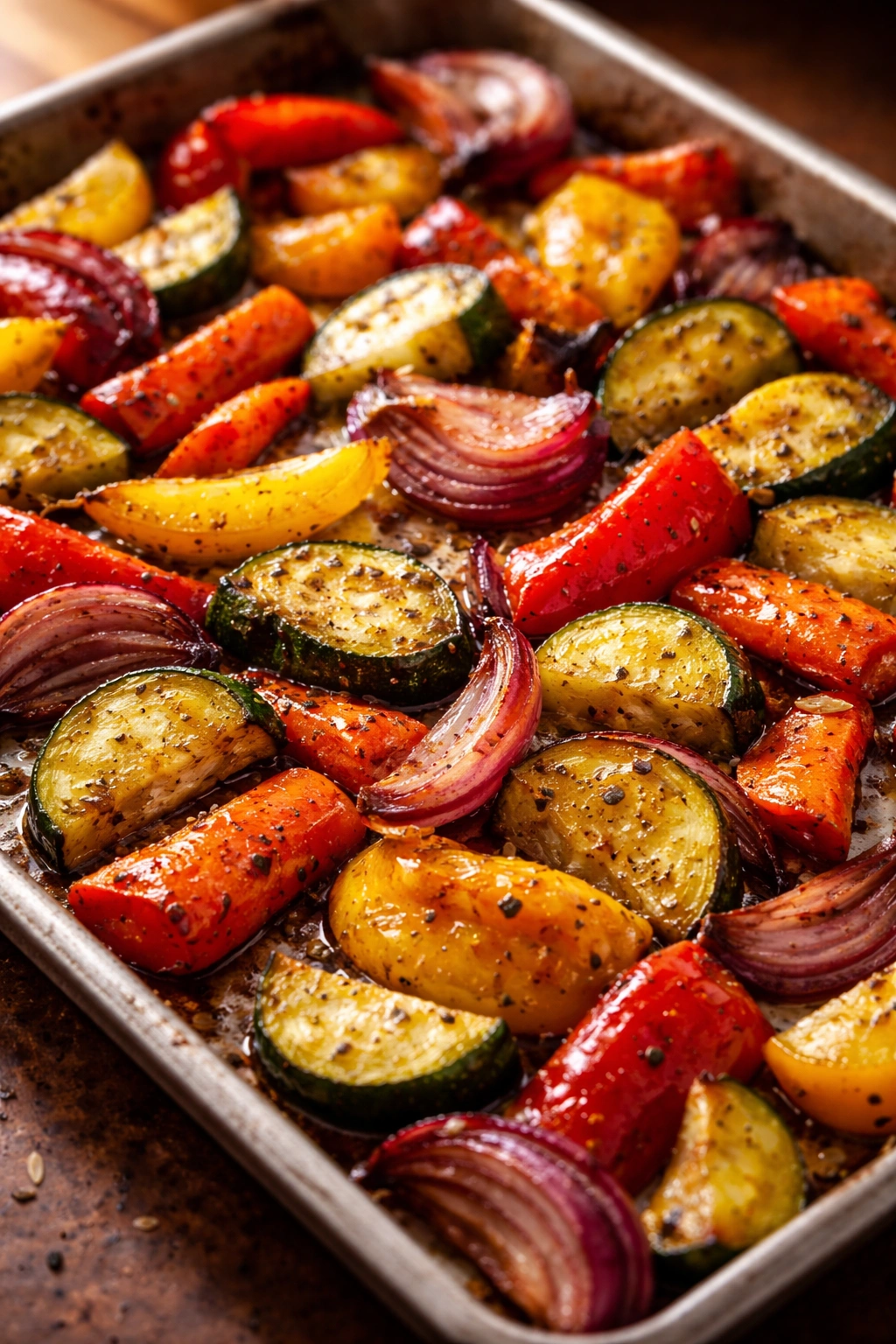
Many people approach roasted vegetables with mild expectations, expecting them to be merely edible. The secret to genuinely delicious, restaurant-quality roasted vegetables is aggressive seasoning and proper heat. The higher the oven temperature (within reason), the better the caramelization and browning. 425°F is ideal for most vegetable-heavy sheet pan dinners; lower temperatures produce pale, steamed-looking results.
Don’t stir the vegetables halfway through cooking—or if you do, do it sparingly. Leaving them undisturbed allows one flat side to make contact with the hot pan, developing fond and flavorful browning. Moving them around constantly keeps them steaming instead of roasting. Only shuffle the pan or stir if vegetables are browning unevenly or too quickly.
Oil is essential, but you can get away with less than you might expect. Two tablespoons of quality olive oil for a full sheet pan of vegetables is genuinely sufficient for proper browning and flavor, as long as everything is tossed evenly. Under-oiled vegetables will steam; properly oiled vegetables will caramelize.
Seasoning generously seems counterintuitive when you’re cooking in such a straightforward way, but bold, assertive seasoning is what separates memorable food from forgettable. Kosher salt should be visible on the vegetables; fresh cracked pepper should be generous. Fresh garlic and dried herbs should be added with a confident hand—these flavors concentrate and deepen during roasting.
Making Meal Prep Work for Two
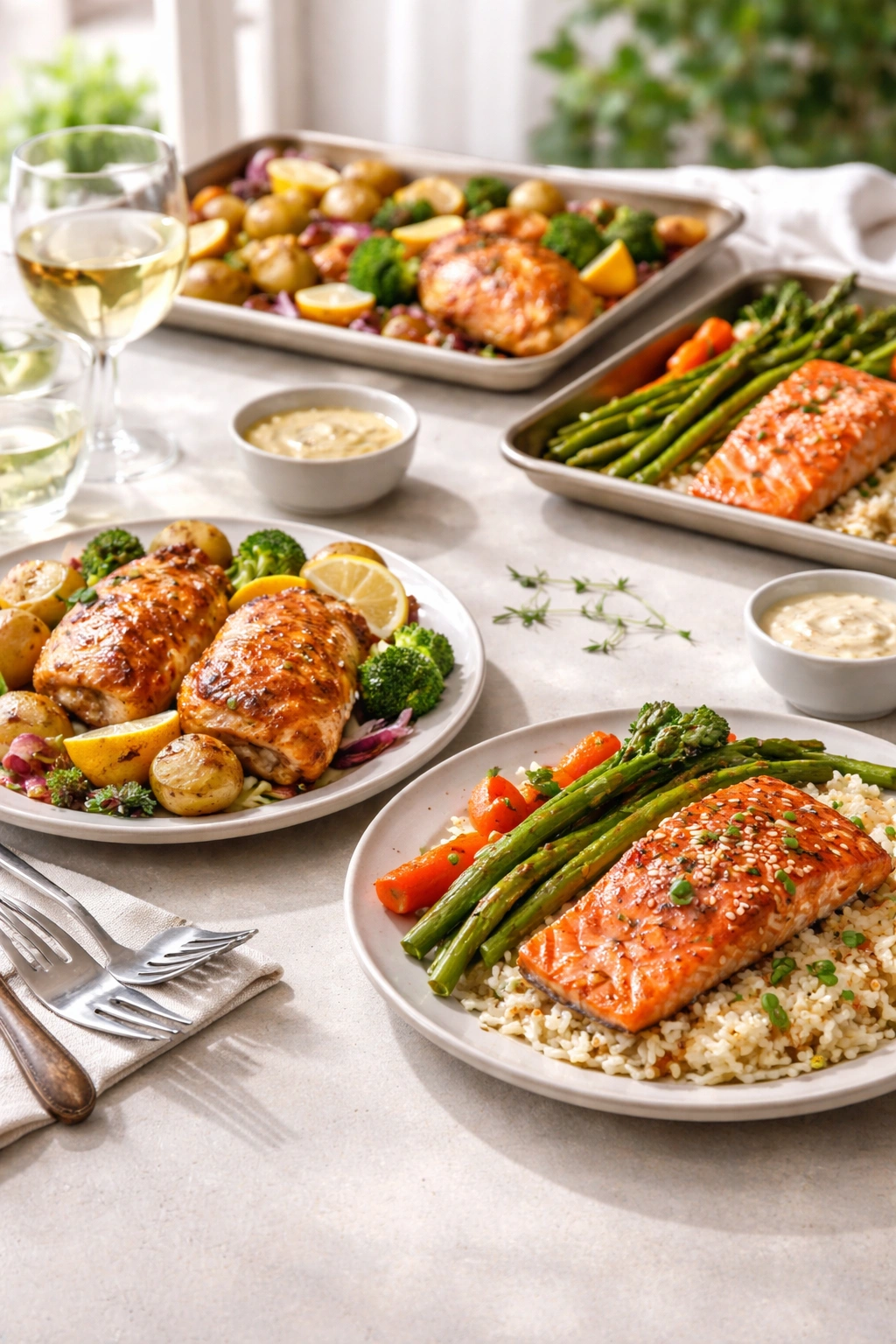
Meal prepping for two looks different than cooking for a larger family, but the concept still offers real value. You might prep a single large batch on the weekend, dividing it into two or three individual meals, or you might prep components that become different dinners throughout the week.
Component-based prep works beautifully for two. Roast several sheet pans of different vegetables on a Sunday—one with Mediterranean vegetables like zucchini and tomatoes, another with root vegetables, a third with Asian-inspired broccoli and peppers. Roast some proteins—perhaps a small chicken breast and a couple of sausages—separately. Then throughout the week, you mix and match components with different grains, beans, or sauces to create variety without repetitive cooking.
Alternatively, make two complete sheet pan dinners on one or two evenings per week, then you’re set for days. This requires only slightly more cooking effort than preparing a single dinner, yet you’ve freed up several weekday evenings from cooking responsibilities. Even just two sheet pan prep sessions per week cuts cooking workload dramatically.
The beauty of this approach is flexibility—if you’re tired and want Chinese-style bowls on Wednesday, reheat your roasted vegetables with a quick soy-ginger sauce. If you’re craving something Mediterranean on Friday, pair the same vegetables with fresh herbs and a squeeze of lemon. One batch of roasted components becomes multiple distinct meals.
Adding Global Flavors to Your Sheet Pan Repertoire
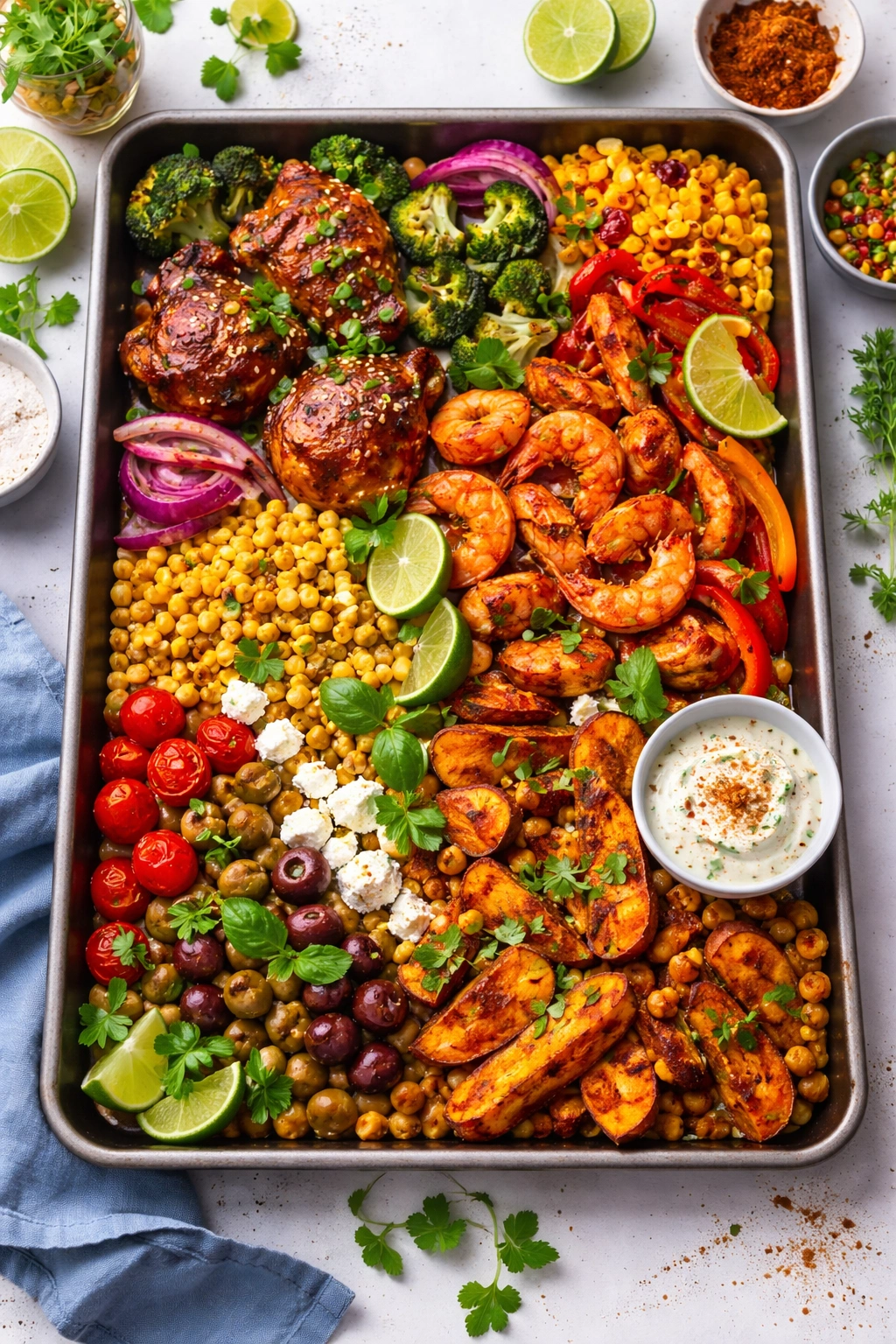
Sheet pan cooking adapts beautifully to global flavors and cuisines. Mediterranean sheet pan dinners might feature chicken, tomatoes, olives, feta, red onion, and herbs like oregano and basil. Mexican-inspired versions add chorizo, black beans, corn, peppers, and cumin, finished with cilantro and lime.
Asian flavors come alive on sheet pans through glazes and sauces. A ginger-soy-sesame glaze works over chicken, shrimp, or vegetables. Korean-inspired versions use gochujang, a spicy fermented paste mixed with soy sauce and honey. Thai flavors incorporate coconut milk, fish sauce, and curry paste. Indian preparations use tandoori spices, turmeric, cumin, and ginger.
Moroccan flavors—cinnamon, cumin, preserved lemon, and chickpeas—work beautifully roasted together. Middle Eastern versions use sumac, za’atar, and tahini-based sauces. French preparations might feature Dijon mustard, white wine, and fresh herbs. Italian takes garlic, tomato, basil, and quality olive oil as starting points.
The advantage of cooking for two is the ability to experiment freely. Try a new flavor profile one night without worrying about feeding skeptical family members. If you love it, you’ve got leftovers. If it’s not your favorite, the portion size means limited waste.
Final Thoughts
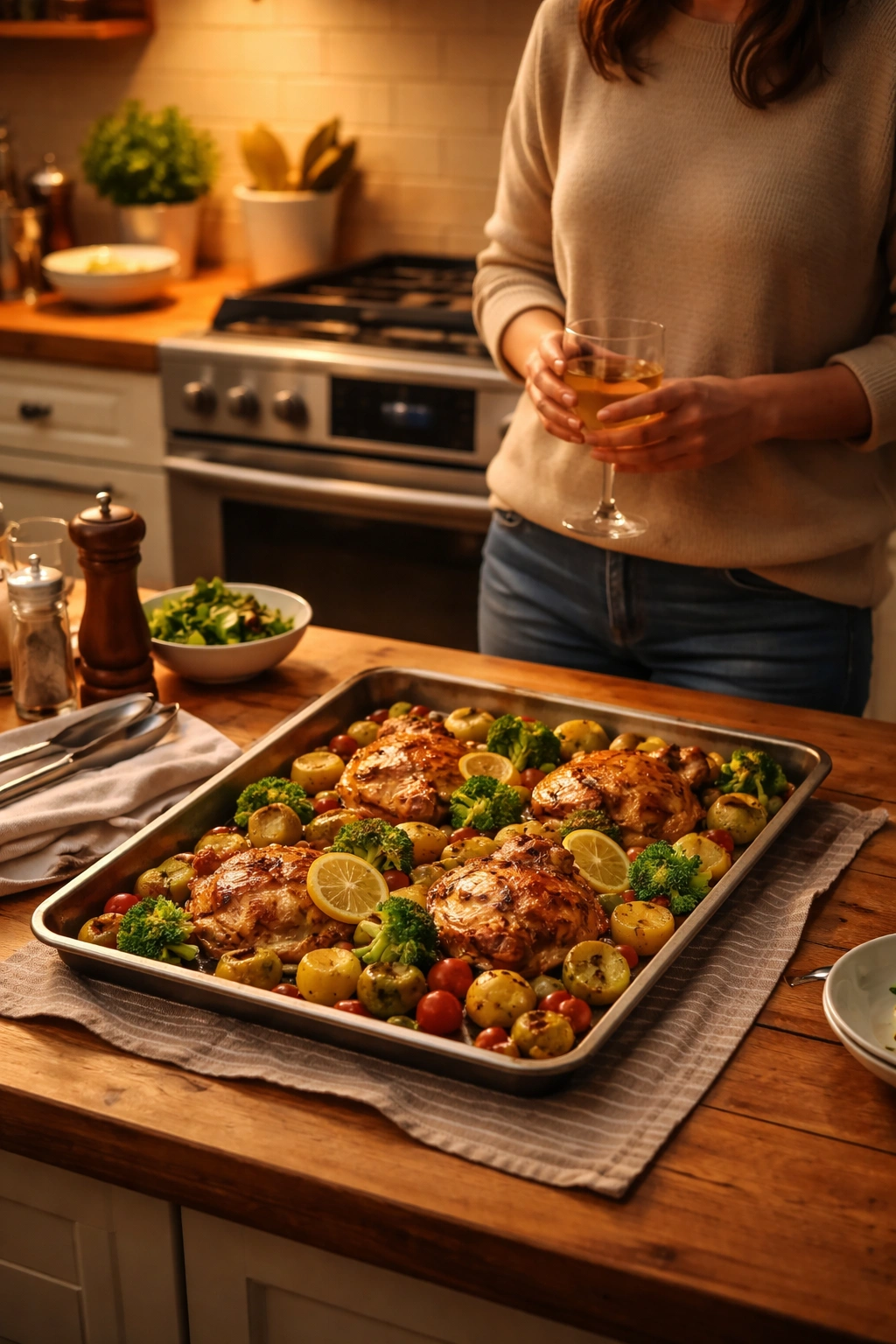
Sheet pan dinners for two represent the intersection of convenience, flavor, and elegance. They prove that cooking for a small household doesn’t require shortcuts or compromised results. Instead, it offers freedom—freedom from complicated recipes, from mountain-high stacks of dishes, from the guilt of food waste, and from the pressure to make elaborate dinner presentations.
The next time you’re staring at the calendar wondering what’s for dinner, remember that you’re just minutes away from something genuinely delicious and satisfying. Grab a sheet pan, preheat your oven, and trust that the direct, honest cooking method of roasting will deliver results that taste far more complicated than the effort required. That’s the real magic of sheet pan cooking—meals that look and taste like you spent hours in the kitchen, accomplished in half an hour or less.
