



Chicken salad is one of those meals that makes you feel like you’ve got your life together. You pull it from the fridge during a hectic Tuesday, scoop it onto whole grain bread or onto a bed of greens, and suddenly you’ve got lunch that tastes intentional—not like you threw together whatever was in the pantry. The best part? It takes less than 15 minutes to prepare, stores beautifully for days, and tastes even better after sitting in the fridge overnight as the flavors meld together. Whether you’re meal prepping for the week or looking for a quick lunch that doesn’t feel boring by day three, this is the chicken salad recipe that actually keeps you excited to eat it.
Why Homemade Chicken Salad Beats Store-Bought Every Time
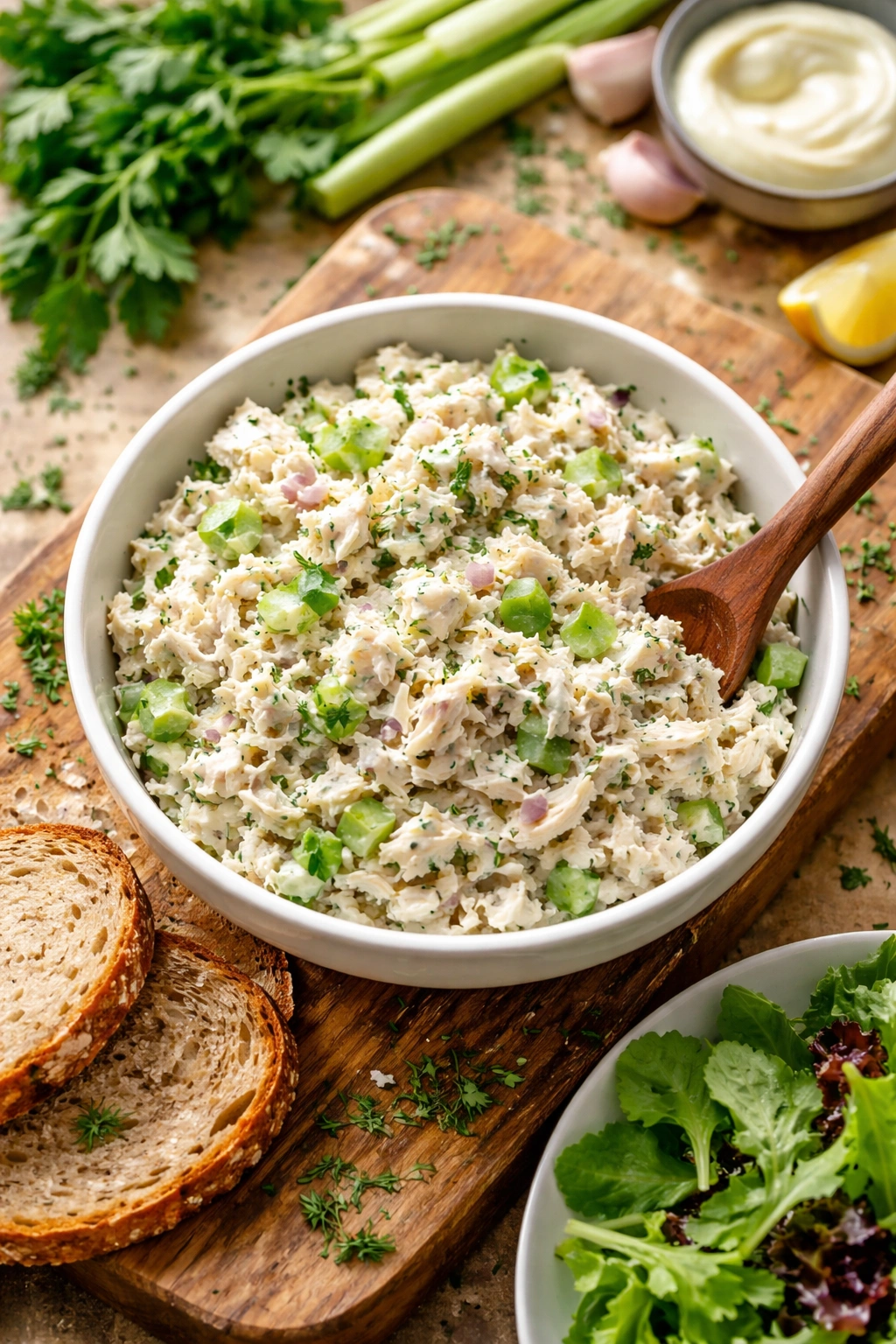
Store-bought chicken salad often comes loaded with stabilizers, excessive mayo, and ingredients you can’t pronounce. When you make it at home, you control every single element—the ratio of creamy to crunchy, the balance of tang and richness, whether you want it on the heavier side or bright and fresh. You know exactly what went into that container, and you can adjust the flavors to match what you’re craving that particular week. Plus, homemade costs a fraction of what you’d pay at a deli counter, and it tastes noticeably fresher since it hasn’t been sitting under fluorescent lights.
The key to chicken salad that doesn’t get boring is building layers of flavor and texture. You need something creamy as a base, something acidic to brighten it, something crunchy to keep things interesting, and fresh herbs to make it taste alive rather than flat. The recipe below hits all those notes without being fussy or requiring any special equipment beyond a cutting board and a bowl.
The Magic of Make-Ahead Lunches
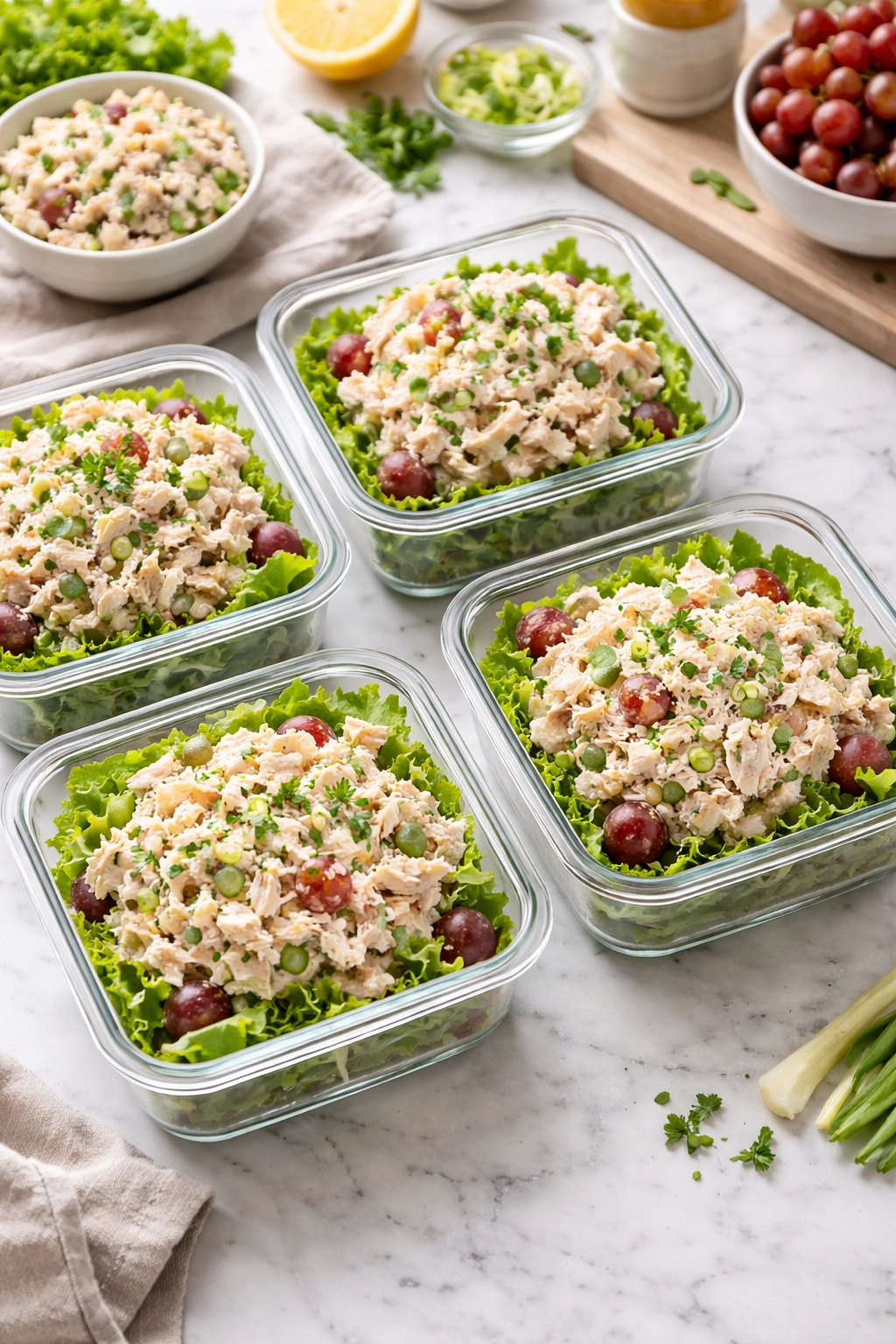
Meal prepping chicken salad removes one of the biggest lunch obstacles: decision fatigue. When you’ve got four containers of ready-to-eat chicken salad in the fridge, you’re not tempted to hit the food court or spend money on takeout because you don’t know what else to eat. You’ve already solved that problem. Just grab a container, decide if you want it on bread, lettuce wraps, or crackers, and you’re done. That’s powerful when you’re tired and hungry.
This recipe also works beautifully for people who eat the same lunch every day without getting bored, and for people who want to make four slightly different versions. You can prep the base salad on Sunday, then dress and serve each bowl differently throughout the week—with ranch one day, vinaigrette the next, or different toppings to keep things fresh. The foundation stays the same, but the eating experience changes.
The Best Chicken to Use
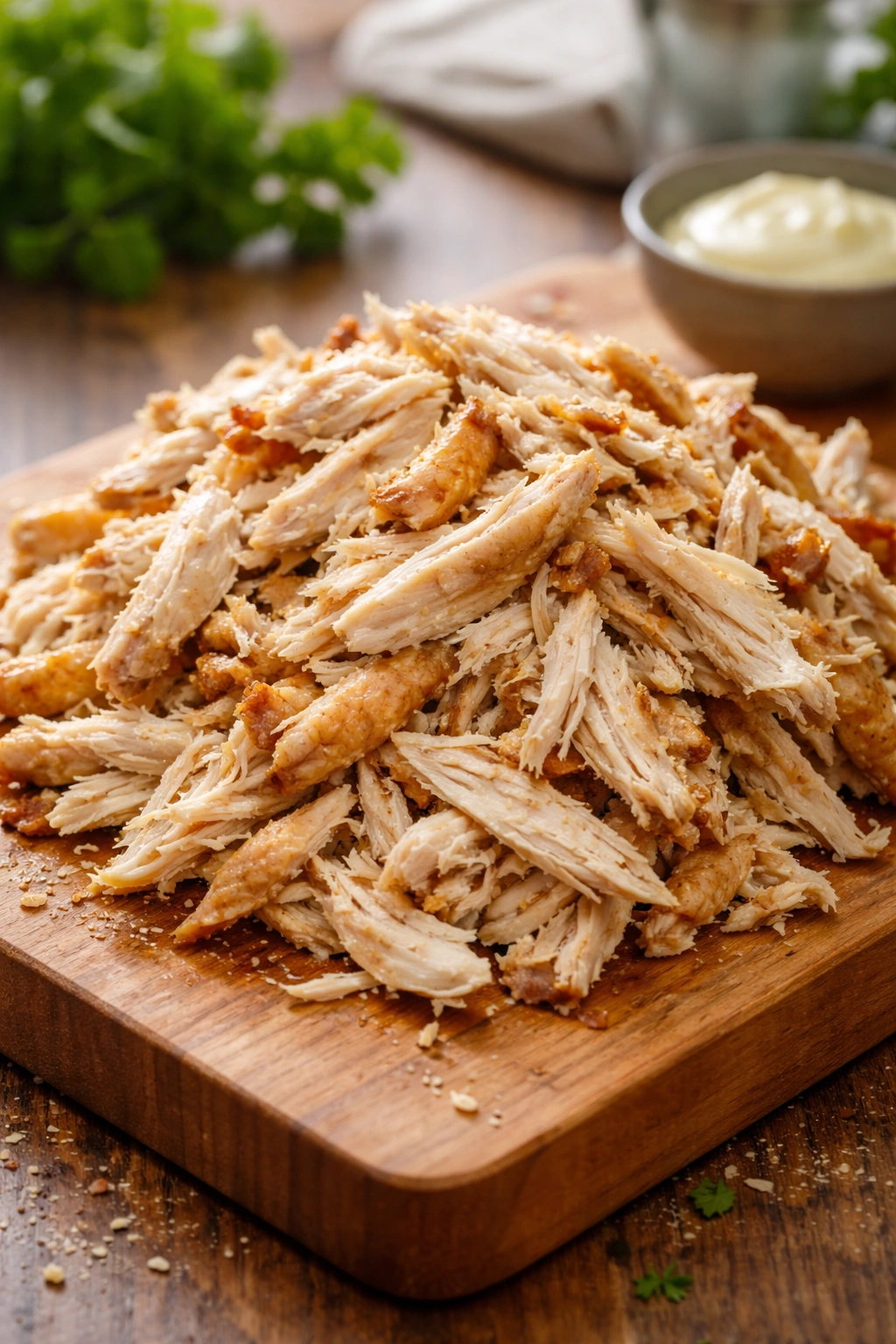
Rotisserie chicken is genuinely a meal-prep hero and saves significant time. Grab one from the grocery store deli, let it cool slightly, then pull the meat from the bones. You’ll get a surprisingly juicy result because rotisserie chicken is cooked gently over time rather than blasted with high heat. If you prefer to cook your own chicken, poaching is your friend—it keeps the meat tender and moist, which matters more here than it does in other applications because you’re eating it cold.
To poach chicken for salad, place boneless, skinless chicken breasts in a pot, cover them with chicken broth (or water with a pinch of salt), bring to a boil, then immediately reduce heat to low and cover. Let them simmer gently for about 5 minutes, then turn off the heat completely and let them sit in the hot broth for 15-20 minutes. The residual heat finishes cooking them perfectly. Remove them to a cutting board, let them cool completely, then chop. This method produces chicken that’s noticeably juicier than baked chicken, which matters when it’s the star ingredient in a salad that sits in the fridge.
Yield: Serves 4 to 5 | Makes about 4 cups
Prep Time: 15 minutes
Cook Time: 0 minutes (if using rotisserie chicken) or 20 minutes (if poaching chicken)
Total Time: 15 to 35 minutes active
Difficulty: Beginner — no cooking required if using store-bought rotisserie chicken, and the assembly is straightforward enough for anyone to master on the first try.
Ingredients for Classic Chicken Salad
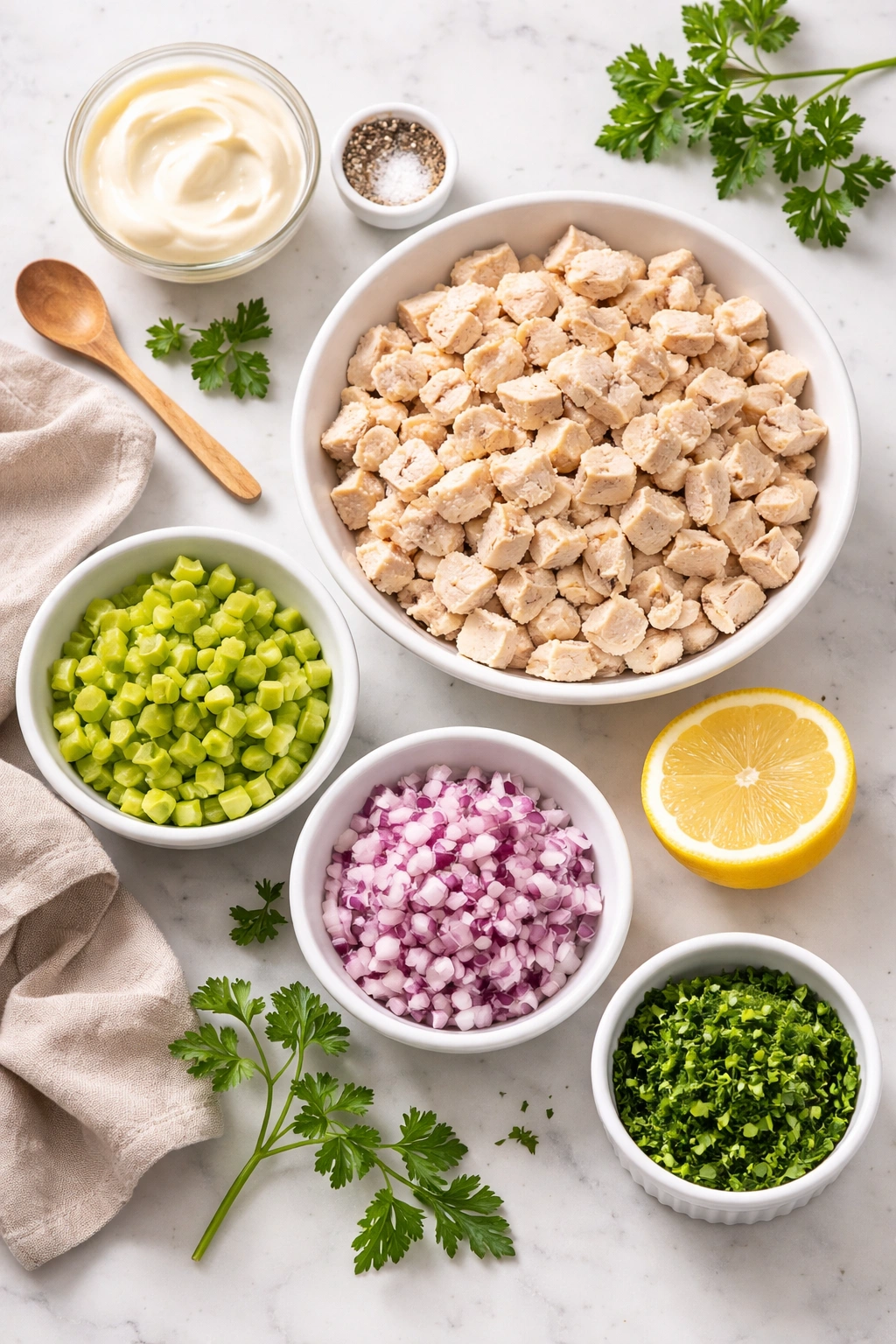
For the Salad Base:
- 2½ to 3 cups cooked chicken breast, finely chopped or shredded (from one rotisserie chicken, or about 12 ounces cooked chicken)
- ⅓ cup light mayonnaise (or Greek yogurt for a lighter version, or a mix of both)
- ½ cup celery, finely diced (about 2 medium stalks)
- ¼ cup red onion, finely diced
- 2 tablespoons fresh lemon juice (about 1 lemon)
- 1 teaspoon Dijon mustard
- 2 tablespoons fresh parsley, finely chopped (optional but recommended)
- ½ teaspoon seasoned salt (or fine sea salt, to taste)
- ¼ teaspoon black pepper, freshly ground
- 2 to 3 tablespoons chicken broth (if the salad needs extra moisture)
Optional Add-Ins for More Flavor and Texture:
- ¼ cup sliced almonds or chopped walnuts, lightly toasted
- ½ cup halved red grapes (adds sweetness and juiciness)
- ¼ cup thinly sliced scallions (green and white parts)
- 1 tablespoon fresh dill, finely chopped
- ½ apple, finely diced (adds bright crunch, toss with lemon juice to prevent browning)
- ¼ cup avocado, diced (add just before serving to prevent browning)
How to Make Perfect Chicken Salad
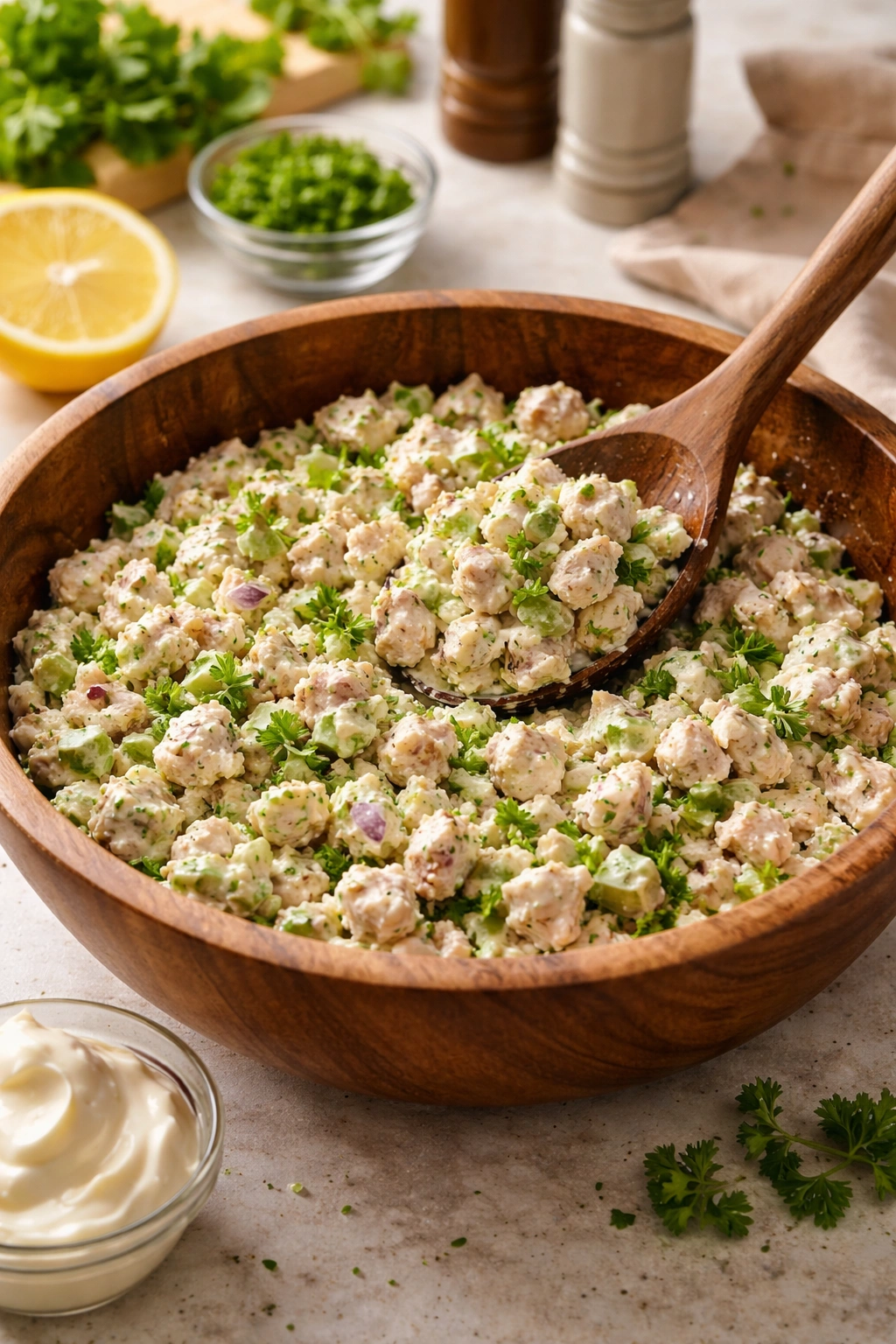
Prepare Your Ingredients:
-
If using a whole rotisserie chicken, let it cool to room temperature (about 10 minutes is usually enough), then remove all the meat from the bones, discarding the skin if you prefer a lighter version. Chop the meat into bite-sized pieces—aim for roughly ½-inch chunks so the salad has good texture.
-
Finely dice the celery. The size of your dices here matters more than you might think—small, uniform pieces distribute throughout the salad better and give you a piece of celery in every bite.
-
Dice the red onion very finely. If you find red onion too sharp, soak the diced pieces in a small bowl of cold water for 5 minutes, then drain and pat dry—this mellows the flavor significantly.
-
Finely chop the parsley and set aside.
-
If using nuts, toast them lightly in a dry skillet over medium heat for 2-3 minutes, stirring occasionally, until fragrant. This brings out their flavor considerably and makes them taste less bland.
Advertisements
Combine the Salad:
-
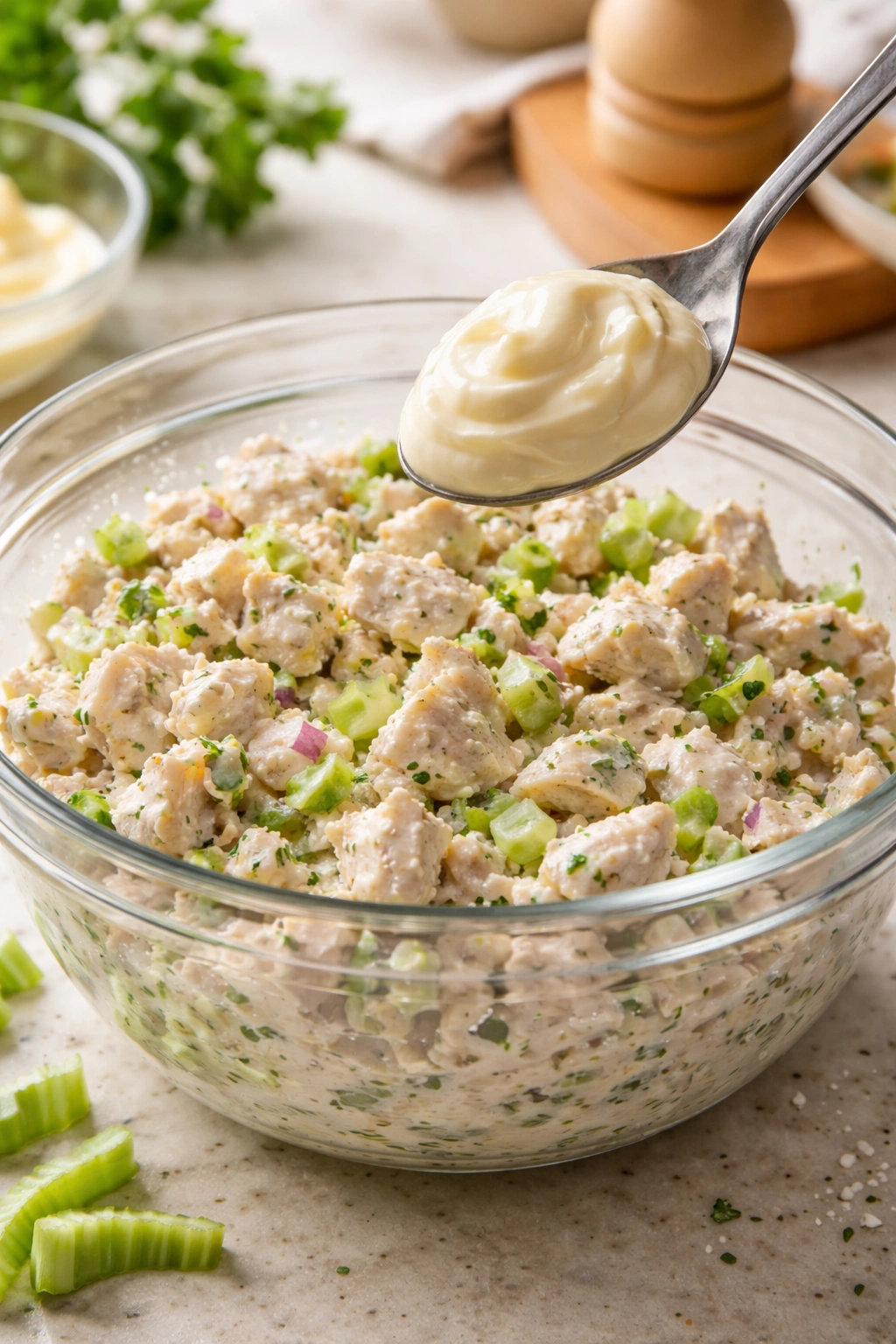
In a large bowl, combine the chopped chicken, diced celery, diced red onion, and fresh parsley. Gently toss to combine.
-
Add the mayonnaise, lemon juice, Dijon mustard, seasoned salt, and black pepper directly to the bowl.
-
Fold everything together gently but thoroughly until the mayo is evenly distributed and all ingredients are well combined. Do not overmix or aggressively stir—you want the ingredients to stay distinct rather than becoming mushy.
-
Taste the salad and adjust seasonings as needed. Most homemade chicken salad benefits from a pinch more salt than you think it needs—taste it before you serve it, not just after making it, since flavors develop slightly as it sits.
-
If the mixture seems too dry (which can happen with chicken that’s leaner than average), fold in 2 to 3 tablespoons of chicken broth or an extra tablespoon of mayo. The salad should be creamy enough to hold together but not so wet that it feels sloppy.
-
At this point, if you’re using optional add-ins like nuts, grapes, or dill, fold them in gently. Avoid adding avocado until you’re ready to serve, as it browns quickly.
-
Cover the bowl and refrigerate for at least 30 minutes before serving. This allows flavors to meld and the salad to become even more delicious.
The Secret to Creamy Without Heavy
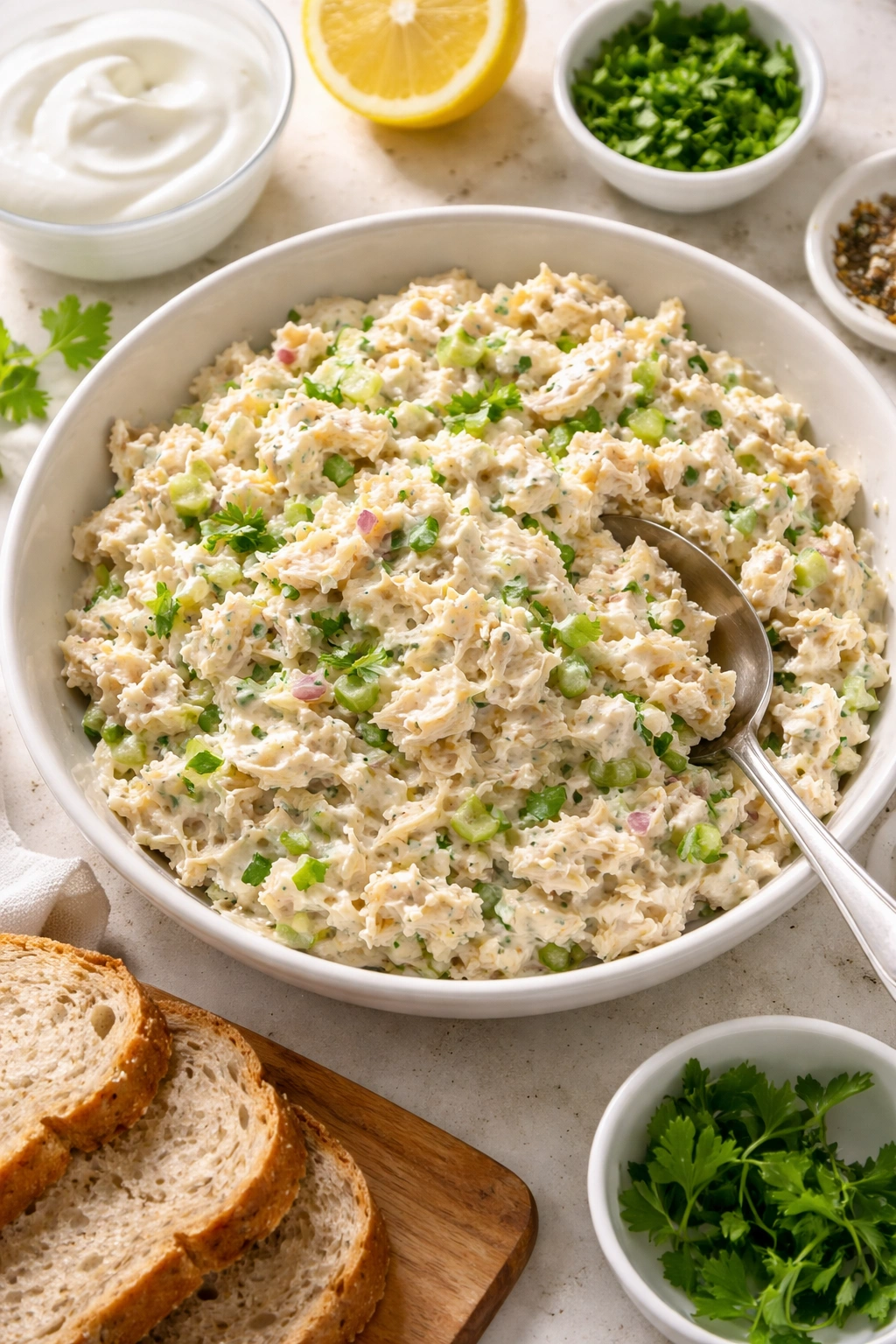
Traditional chicken salad recipes use full-fat mayo in large quantities, which creates a rich but heavy result that gets tiring by the second or third day of eating it. Using light mayo keeps things from feeling indulgent while still delivering creaminess. If you want to go even lighter, replace half the mayo with plain Greek yogurt. The tanginess of yogurt actually brightens the entire salad and adds another layer of flavor, plus you get a protein boost.
If you’re using Greek yogurt, choose one with at least 2% fat—fat-free Greek yogurt tastes chalky and thin. The best approach for most people is a mix: ⅓ cup light mayo combined with ¼ cup Greek yogurt. This gives you the authentic taste and texture of chicken salad with a meaningful reduction in calories and saturated fat.
Some people worry that Greek yogurt will make chicken salad taste sour or yogurt-y. It doesn’t, as long as you’re using plain, unsweetened yogurt and you’re generous with the Dijon mustard and lemon juice, which mask any potential tartness and add their own brightness instead.
Why Celery Is Non-Negotiable
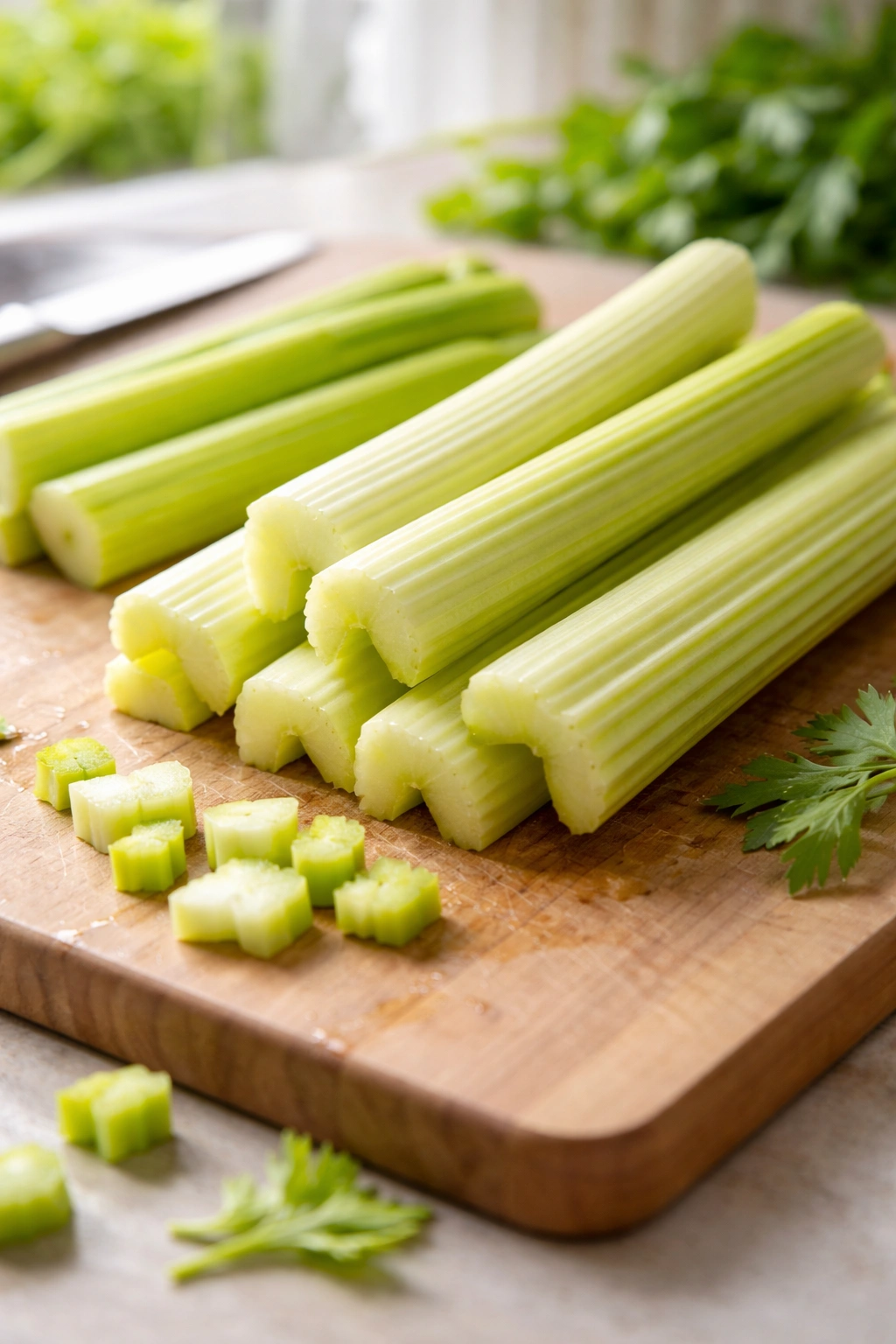
Celery does three things at once: it adds crunch that keeps the salad interesting across multiple days, it adds subtle vegetal flavor without being aggressive, and it hydrates the salad naturally without adding mayo. Raw celery has a high water content, so when you chop it and combine it with the other ingredients, it slowly releases moisture that keeps everything from becoming paste-like after a few days in the fridge.
Always remove the leafy tops from celery stalks and discard them—they’re bitter and add an unpleasant flavor to chicken salad. Use only the pale, tender inner stalks and the white parts at the base, which are milder and more tender than the outer dark green stalks.
Practical Tips for the Best Results
Make sure your chicken is actually cooked through before mixing. Undercooked chicken is a food safety risk. If you’re poaching chicken, verify with a meat thermometer that the thickest part reaches 165°F (74°C) before removing it from heat. If you’re using rotisserie chicken from the store, it’s already cooked, but double-check that it’s been refrigerated properly and is still fresh.
Don’t skip the lemon juice. Acid is crucial. It brightens the entire salad, prevents the mayo from tasting heavy and cloying, and keeps the flavors feeling fresh even on day four in the fridge. If you use bottled lemon juice instead of fresh, use just slightly less—bottled is more concentrated and can overpower the salad if you’re not careful.
Chop everything finely. This is the difference between a salad that feels thoughtfully composed and one that feels like you threw random things in a bowl. Uniform, small pieces mean every bite has the same ratio of flavors, and the salad spreads more easily on bread or crackers.
Taste the salad cold, not at room temperature. Flavors mute when food is cold, so if you taste it right after mixing (when it’s still fairly room temperature), you’ll add seasonings that are too aggressive once it’s been chilled. Always refrigerate it first, taste it, then adjust if needed.
Toast nuts even if you don’t think it matters. Toasting takes 3 minutes and makes nuts taste noticeably more flavorful and less raw. This is one of those tiny steps that compounds with everything else to make the salad memorable rather than just decent.
Variations That Keep You Interested
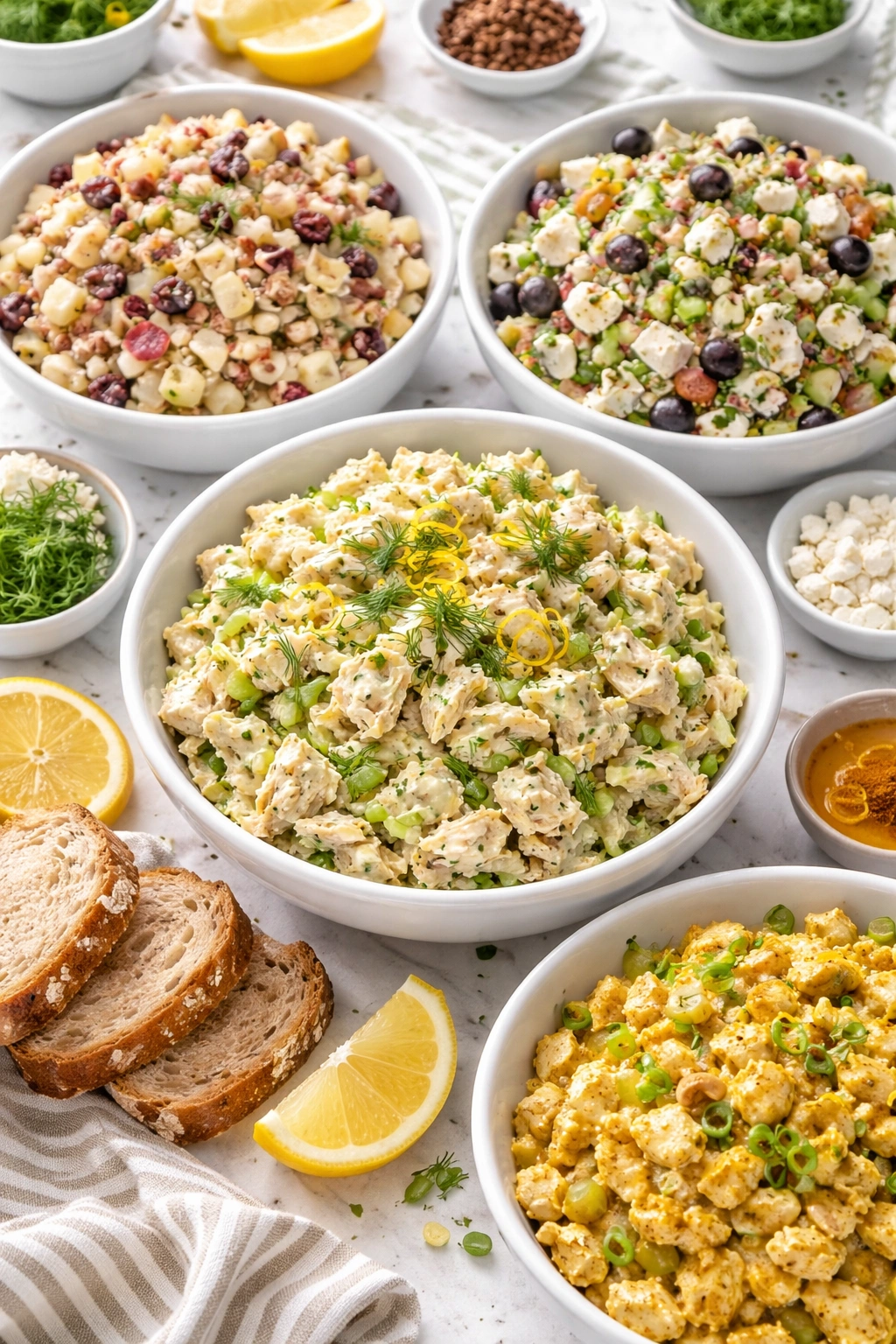
Dill and Lemon Version: This is nearly a different salad. Replace the parsley with 2 tablespoons fresh dill, add an extra ½ teaspoon of lemon zest, and use lemon juice as your only acid (no vinegar). This version feels particularly fresh and is stunning on rye bread or served with crackers.
Cranberry Pecan Version: Add ⅓ cup toasted pecans, ¼ cup dried cranberries (chopped into smaller pieces so they distribute evenly), and use ¼ cup diced apple mixed with the lemon juice. This version has sweetness and richness that feels more special, like a salad you’d serve at a lunch gathering rather than just eating for yourself.
Greek Version: Replace the parsley with fresh dill, add ⅓ cup crumbled feta cheese, ¼ cup kalamata olives (chopped), and ¼ cup diced cucumber. Use a mix of mayo and Greek yogurt for the creamy base. The olives and feta transform this into something that feels Mediterranean and bright.
Curry Version: Add 1 to 1½ teaspoons curry powder to the mayo and yogurt mixture before combining with the chicken. Add ¼ cup diced apple, 2 tablespoons sliced scallions, and ⅓ cup toasted cashews. This version feels adventurous and keeps your palate interested because the curry spice creates an entirely different flavor profile from the classic version.
Buffalo Chicken Salad: Mix 3 tablespoons buffalo sauce into the mayo and yogurt base, then reduce the Dijon mustard to just ½ teaspoon. Add ⅓ cup chopped celery (yes, more than usual—it helps balance the heat), ¼ cup diced blue cheese or crumbled feta, and ⅓ cup toasted walnuts. This version is spicy, tangy, and creamy all at once.
Avocado Version: Make the base salad, then fold in ½ to ¾ cup diced avocado just before serving. You can’t add avocado to the base and store it—it browns too quickly. But if you’re making a single batch to eat that day or the next, fresh avocado creates an incredibly lush texture. The fat in the avocado also makes the salad feel richer even if you’re using light mayo.
Waldorf-Inspired Version: Add ⅓ cup toasted walnuts, ½ cup halved red grapes, ¼ cup diced apple (tossed with lemon juice), and 2 tablespoons fresh basil instead of parsley. This version feels elegant and slightly sweet, perfect for serving on a bed of greens as a composed salad rather than as a sandwich.
How to Store and Keep It Fresh
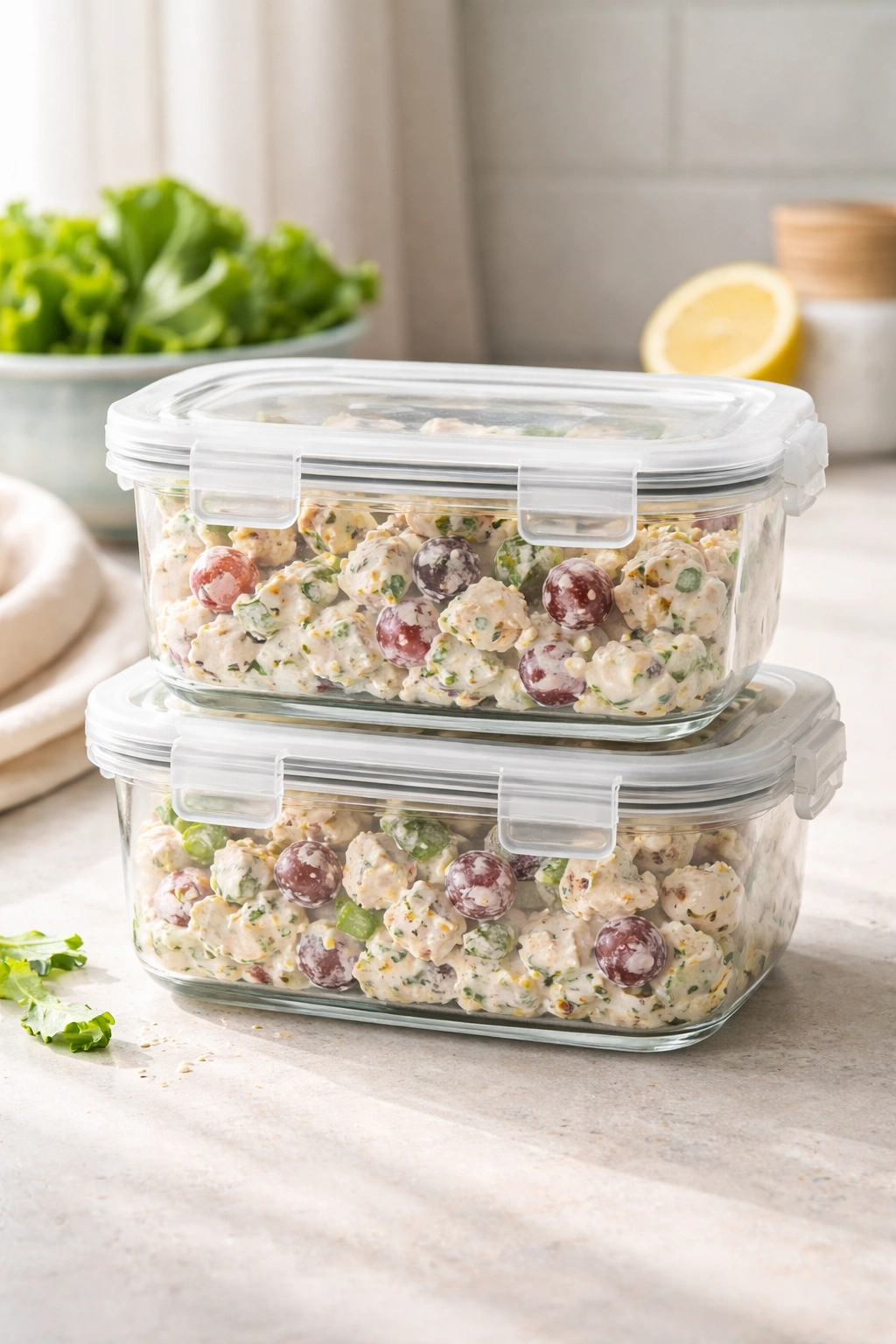
Chicken salad keeps beautifully in the fridge for up to 4 days when stored in an airtight container. The mayonnaise acts as a preservative, keeping the ingredients moist and protected. After day four, the texture starts to deteriorate slightly as the celery softens, and any fresh herbs begin to fade in flavor. Fresh herbs like dill or parsley are best added a day before eating rather than when you initially mix the salad, if you want them to taste bright on day three or four.
Don’t freeze chicken salad. The mayo-based dressing doesn’t refreeze well and separates oddly when thawed. The fresh vegetables get mushy. Stick to refrigerator storage only.
If you’re meal prepping and want to maximize freshness across four days, consider assembling the base salad without add-ins like nuts or fresh herbs, then adding those elements the night before you plan to eat each portion. This requires a bit more effort, but the result tastes fresher because the nuts stay crispy and the herbs stay flavorful. Alternatively, store nuts and herbs separately and add them right before eating.
Keep the salad in glass containers rather than plastic if you can. Glass doesn’t absorb odors or oils the way plastic does, so your container won’t start smelling like mayonnaise after a few uses. Plus, glass is transparent, so you can see what you’ve got without opening it.
How to Serve It (More Ways Than You’d Think)
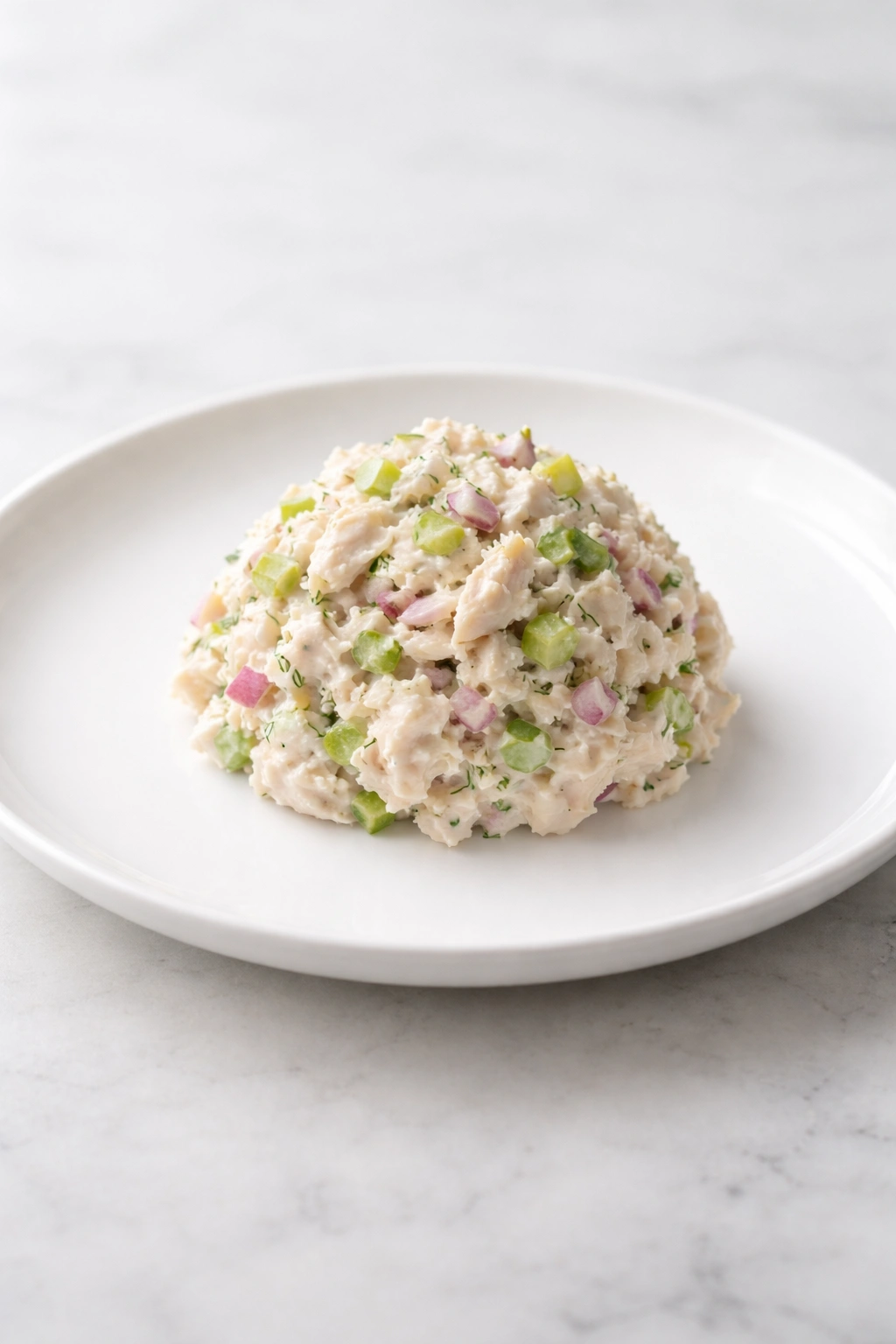
Chicken salad is endlessly versatile. On Monday, pile it onto whole grain bread with lettuce and tomato. On Tuesday, scoop it onto a bed of mixed greens with cucumber and cherry tomatoes. On Wednesday, serve it in lettuce wraps (butter lettuce or romaine work beautifully). On Thursday, use it as a dip for fresh vegetables and whole grain crackers. On Friday, toss it with cooked quinoa and roasted vegetables to turn it into a grain bowl.
Serve it alongside raw vegetables like celery, carrots, radishes, and bell peppers for a light, crunchy meal. The contrast between the creamy salad and the crisp vegetables is deeply satisfying. Pair it with soup—a light broth-based soup, creamy tomato soup, or even a hearty lentil soup. The combination of cold, creamy chicken salad with warm soup is genuinely comforting.
For a more substantial meal, serve it alongside roasted vegetables, a simple grain like brown rice or quinoa, or even roasted potatoes. If you’re meal prepping in containers, fill half the container with chicken salad and half with raw vegetables and a simple grain for a complete, balanced meal that needs nothing else.
Toast bread if you’re making it into a sandwich—it prevents the bread from getting soggy if the salad is particularly moist, and the contrast between warm, crispy bread and cold creamy salad is wonderful.
Making Containers That Actually Work
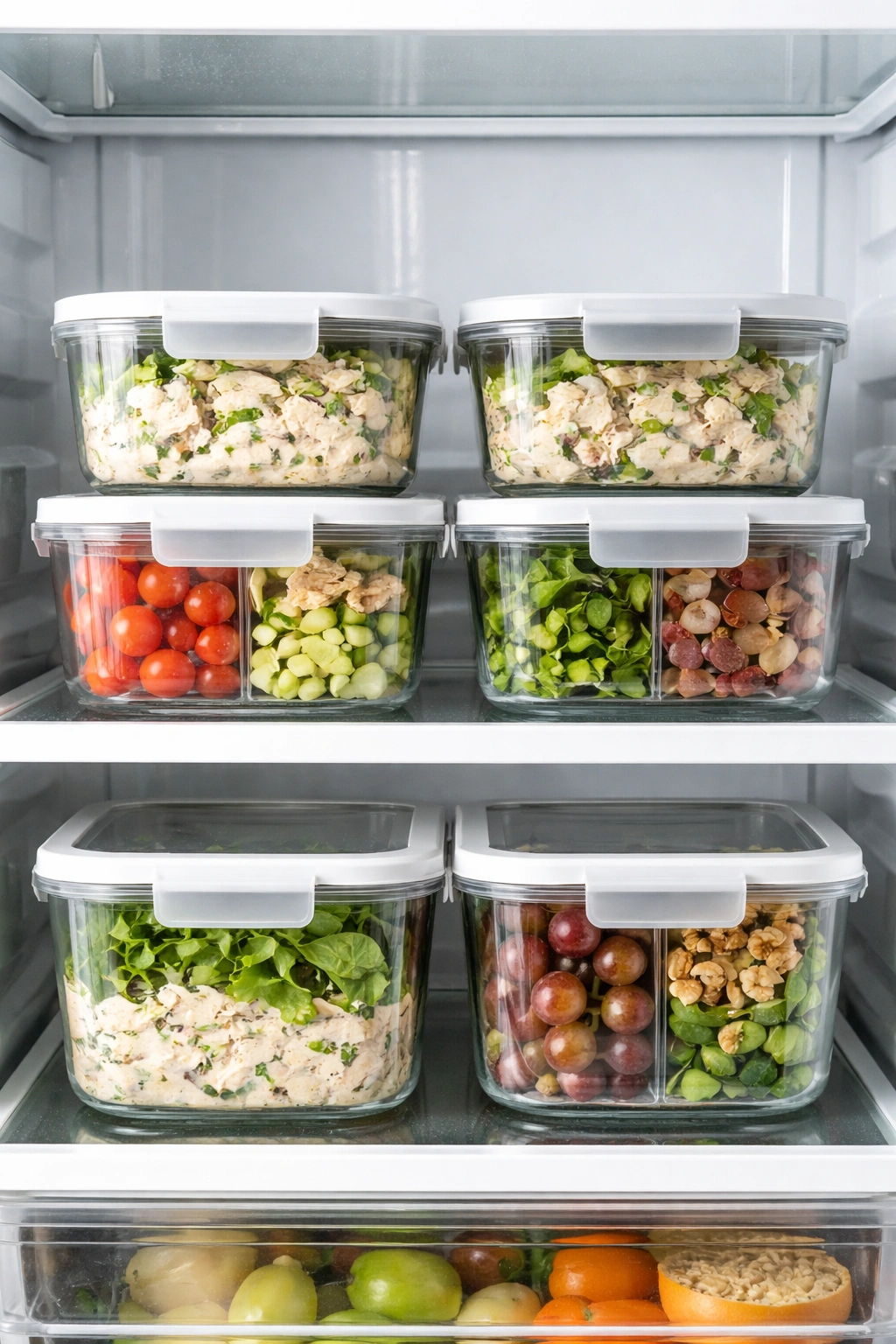
The way you package chicken salad for meal prep makes a real difference in how much you enjoy eating it throughout the week. Use glass containers with airtight lids. Pyrex and similar brands make containers specifically designed for meal prep, and they’re worth the investment because they last forever and keep food fresh noticeably longer than plastic.
If you’re storing the salad with other components (like lettuce, crackers, or raw vegetables), keep them separate until you’re ready to eat. Lettuce gets soggy, crackers get soft, and raw vegetables start to release moisture that makes the salad watery. Keep these elements in separate compartments of the same container, or store them in different containers entirely.
Label your containers with the date you made them. This prevents you from eating salad that’s older than you think and helps you stay organized if you’re making multiple batches. Use a permanent marker on the lid or on masking tape stuck to the container.
Store containers on the middle or lower shelf of your fridge, not on the door. The temperature fluctuates on the door every time you open the fridge, which can affect how long the salad stays fresh. The main body of the fridge maintains a more consistent temperature.
Troubleshooting Common Mistakes
The salad is too dry. This usually means either the chicken was already dry (which sometimes happens with store-bought rotisserie chicken if it’s been sitting for a while) or you didn’t use enough mayo. Add another tablespoon of mayo or a few tablespoons of chicken broth, mixing gently. For future batches, use broth to adjust the moisture level—it adds flavor without making the salad taste even richer. If you’re using particularly lean chicken, you might need to use closer to the full ½ cup of mayo that some recipes call for.
The salad tastes flat and boring. You need more acid and more salt. Add another squeeze of lemon juice and a pinch more salt, tasting as you go. Acid awakens flavors that taste muted without it. Don’t underestimate how much salt chicken salad needs—it’s more than you’d think, but you won’t taste the salt itself, just livelier, more delicious flavors overall.
The celery is too strong and overpowering. This usually means you used too much or didn’t chop it finely enough. For future batches, use slightly less celery, or soak the diced pieces in water for 5 minutes before adding them to the salad. If you’ve already mixed it, you can’t really fix it, but know that the celery flavor mellows slightly as the salad sits in the fridge.
The salad separated or the mayo broke. This typically happens when you’ve added ingredients that are too cold, or you’ve mixed it too aggressively. Mayo-based dressings need gentle folding, not vigorous stirring. For future batches, let all ingredients come to roughly the same temperature before mixing. If it’s happened already, you can’t really salvage it, but it will still taste fine—it’s just a texture issue.
The chicken fell apart and got shredded into tiny pieces. This isn’t really a problem, just different from what you expected. Shredded chicken still works beautifully in chicken salad. If you prefer larger chunks, chop the chicken more carefully and fold it in more gently. Some pieces will always break apart slightly, but if you chop just until the pieces are roughly bite-sized and then handle the salad carefully, you’ll maintain better texture.
What Makes This Recipe Meal-Prep Gold
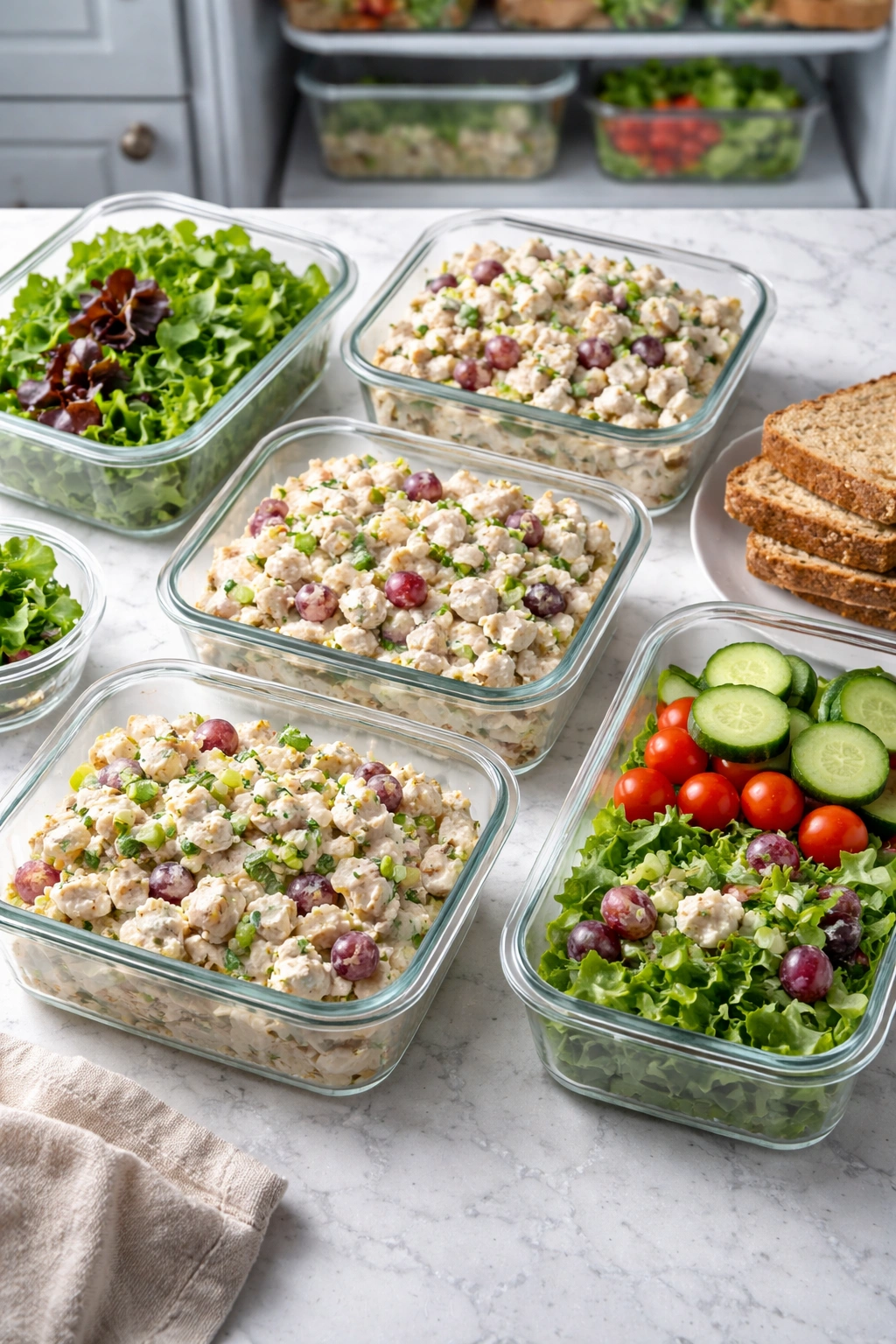
This particular chicken salad recipe is exceptional for meal prep because the flavors actually improve as it sits in the fridge. The mayonnaise acts as a preservative, the lemon juice prevents oxidation, and all the ingredients meld together into something more flavorful after 24 hours than it was when you first made it. Day two tastes better than day one—rare for any salad.
It’s also flexible enough that you won’t get bored eating it three or four times a week. You can serve it differently each time you eat it, add different toppings, pair it with different sides, and make slightly different versions throughout the month. The base recipe is the same, but the eating experience changes based on how you serve it.
Finally, it’s genuinely healthy. You’re getting lean protein, fresh vegetables, healthy fats from mayo or olive oil mayo, and vegetables that add fiber and nutrients. It’s not light and fluffy—it’s substantial enough to be a real meal, not just a side dish. You’ll feel satisfied after eating it, not hungry an hour later.
Make-Ahead Secrets Nobody Tells You
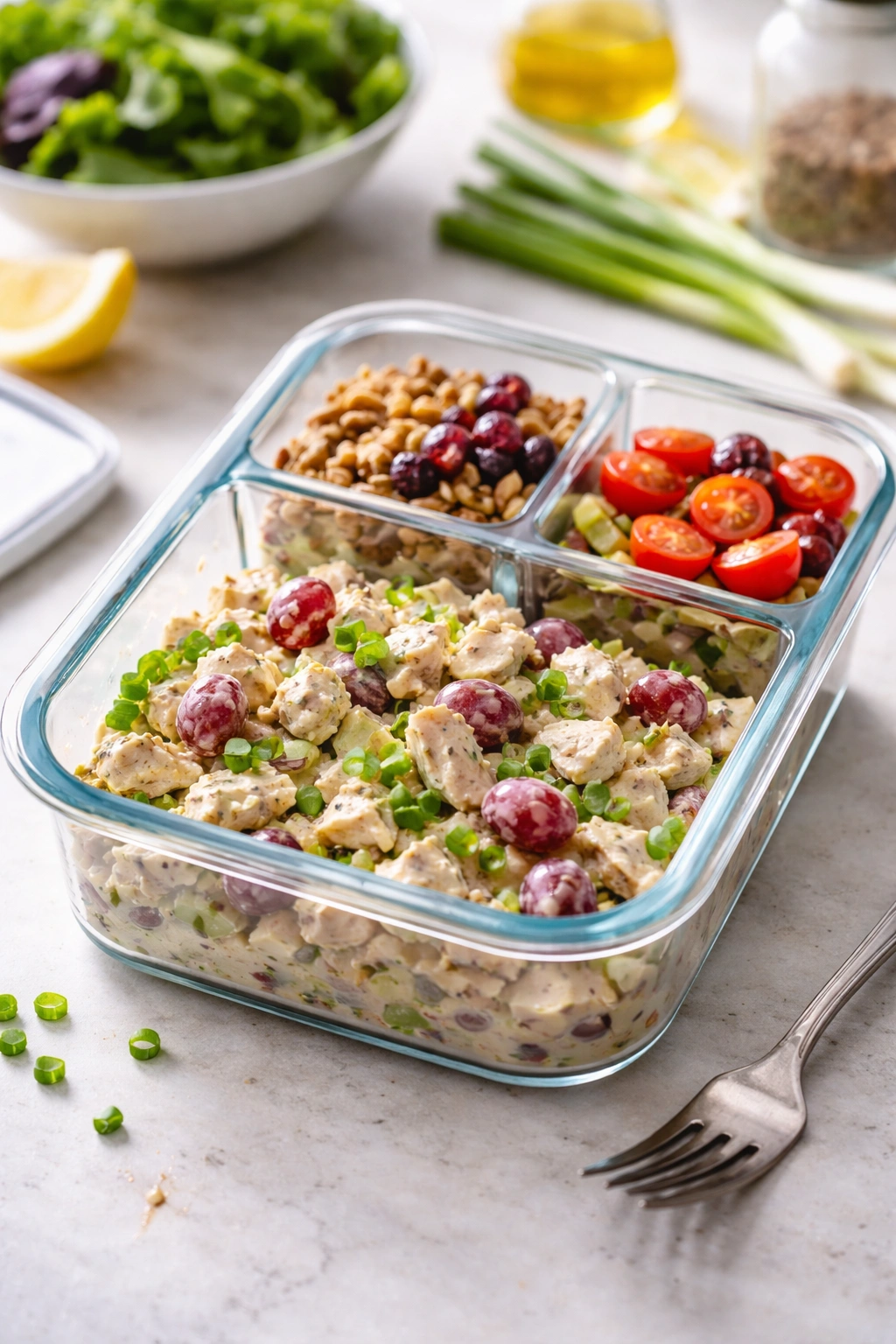
If you’re meal prepping for an entire week, make the chicken salad on Sunday and portion it into containers that evening. Let it sit overnight in the fridge—by Monday, the flavors will have melded into something noticeably more delicious than they were on Sunday evening. You’re not adding extra ingredients; you’re just giving the ingredients time to get to know each other.
If you’re adding nuts, don’t toast all of them at the beginning of the week. Toast just enough for the salads you’ll eat in the first couple of days, then toast more midweek. Toasted nuts gradually lose their crispness and start to taste a bit stale after a few days. If you toast them fresh a couple of times throughout the week, every salad you eat will have that fresh toasted nut flavor.
Reserve a small portion of the base salad (just chicken, mayo, celery, and seasonings—no fresh herbs or optional add-ins) to customize on the fly. This lets you make a quick batch of a different variation if you’re craving something specific without starting from scratch. Add fresh dill one day, curry powder another day, or cranberries and pecans on a day when you want something different.
Flavor Combinations That Work
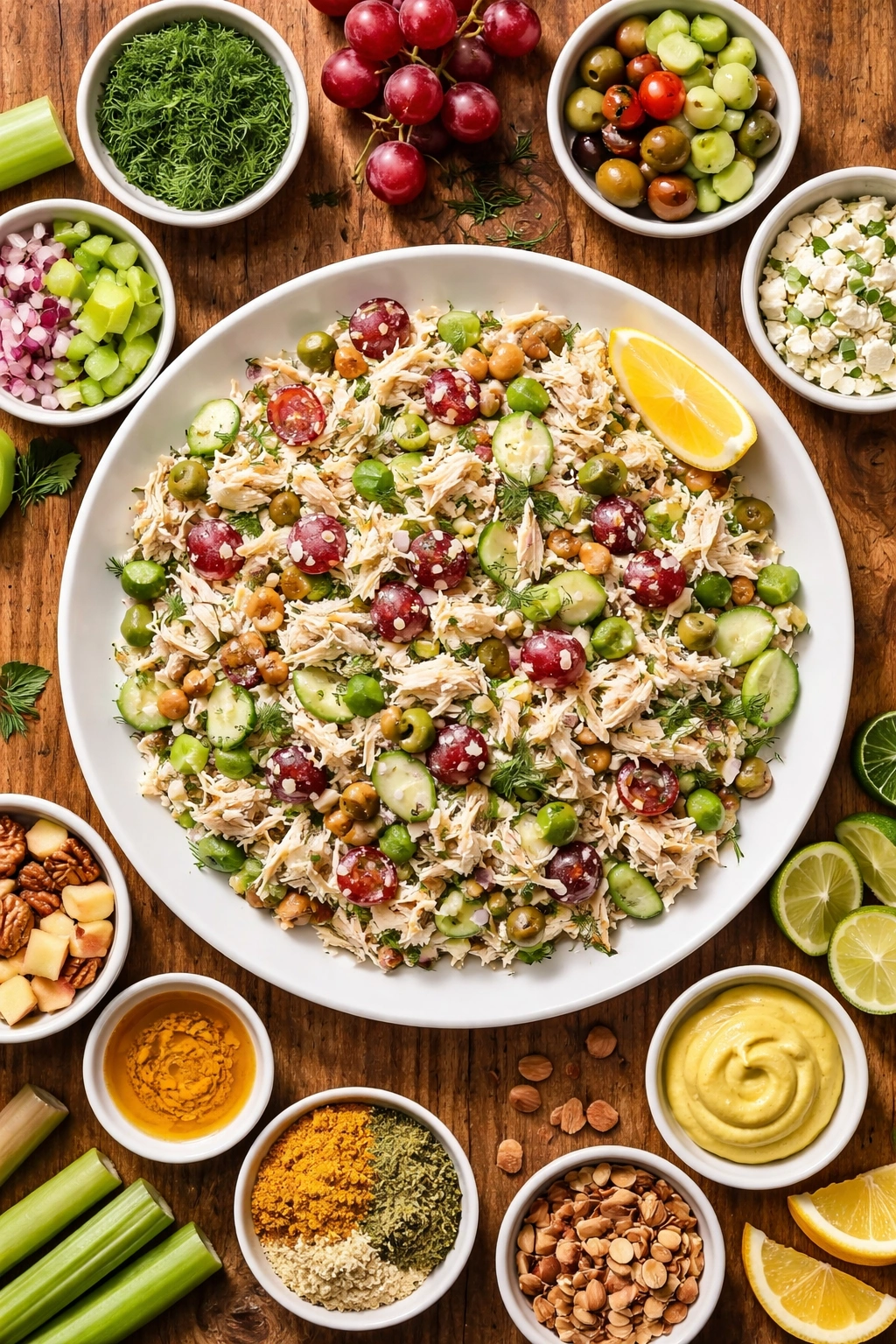
Classic Dill: Dill, lemon, mayo, chicken, celery. Simple and impossible to get tired of. Serve on rye bread or sourdough.
Sweet and Savory: Grapes, pecans, parsley, Dijon mustard, lemon. Serve over lettuce or alongside roasted vegetables.
Mediterranean: Kalamata olives, feta, cucumber, dill, lemon, a touch of oregano. Serve in pita pockets or on a bed of arugula.
Spiced and Warm: Curry powder, lime juice, scallions, cashews, a touch of honey. Serve in lettuce wraps or over brown rice.
Bold and Tangy: Buffalo sauce, blue cheese crumbles, walnuts, extra celery, fresh dill. Serve with celery sticks or on whole grain bread.
Ingredient Substitutions That Work
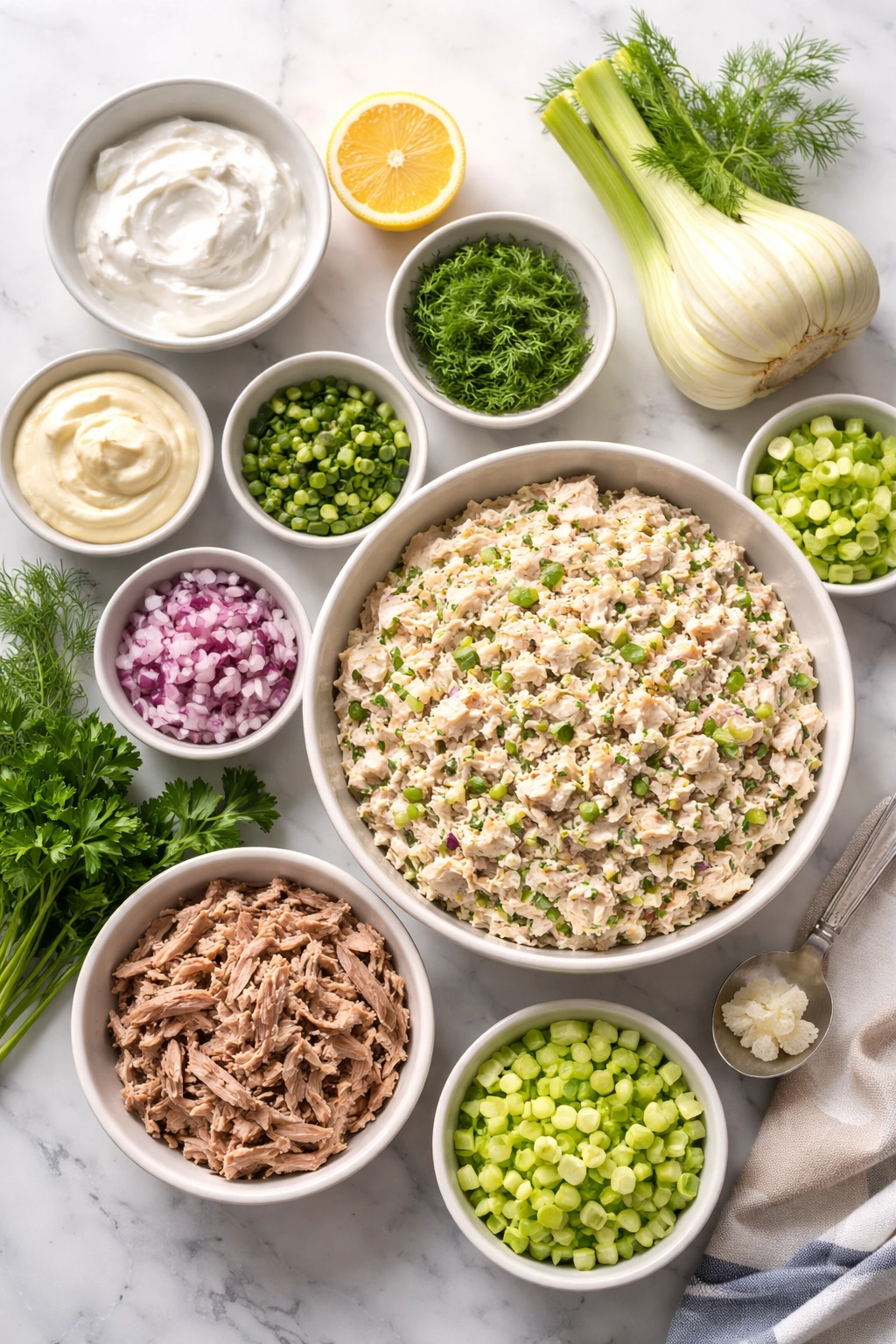
If you don’t have Dijon mustard, use regular yellow mustard or omit it entirely—the salad will be fine, just slightly less tangy. If you can’t find fresh parsley, use fresh dill, fresh basil, or fresh chives instead. If you don’t have celery, use finely diced fennel, which has a similar crunch. If you’re avoiding mayonnaise entirely, use Greek yogurt or a mix of Greek yogurt and sour cream—the salad will be thinner and more tangy, but it’ll still be delicious.
If you only have access to thighs instead of white meat chicken, use them—dark meat is actually juicier for chicken salad and won’t dry out in the fridge. If you don’t have red onion, white onion or even scallions work, though the flavor will be slightly different. Use whatever vegetables you have on hand and enjoy the salad you’ve created rather than the one you planned to make.
Frequently Asked Questions

Can I use rotisserie chicken that’s been in my fridge for a few days?
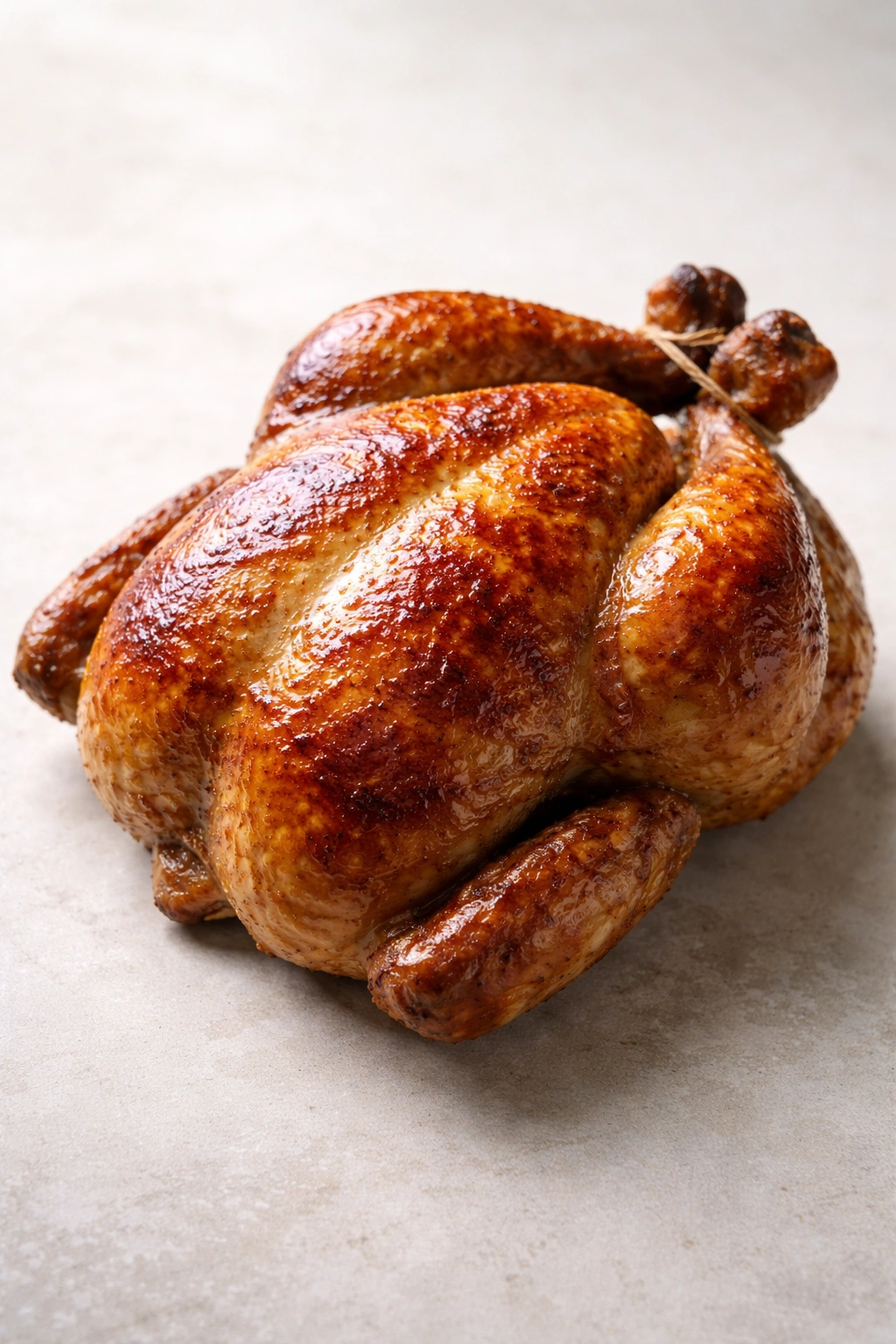
Yes, as long as it’s still fresh (within 3-4 days of purchase). Rotisserie chicken from the store has already been refrigerated properly, so as long as it doesn’t smell off, you can use it. If you’re unsure, err on the side of caution and don’t use it.
How much chicken salad should I make if I want to meal prep for four days?
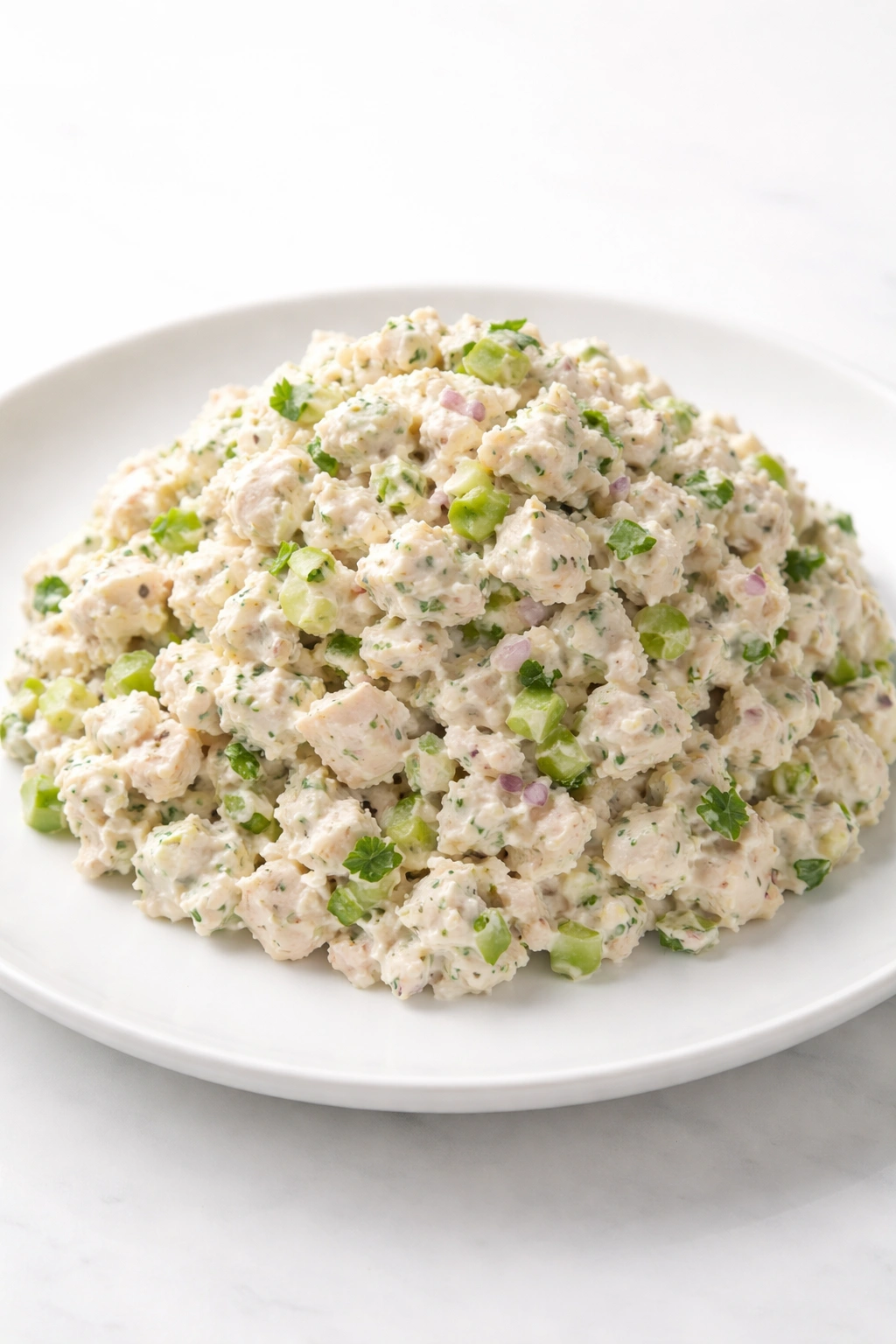
This recipe makes about 4 cups, which comfortably serves 4 people as a main course or 5-6 people as part of a larger meal. If you’re meal prepping four lunches, this is the perfect amount. If you want additional meals, double the recipe.
Can I make this with ground chicken instead of shredded chicken?
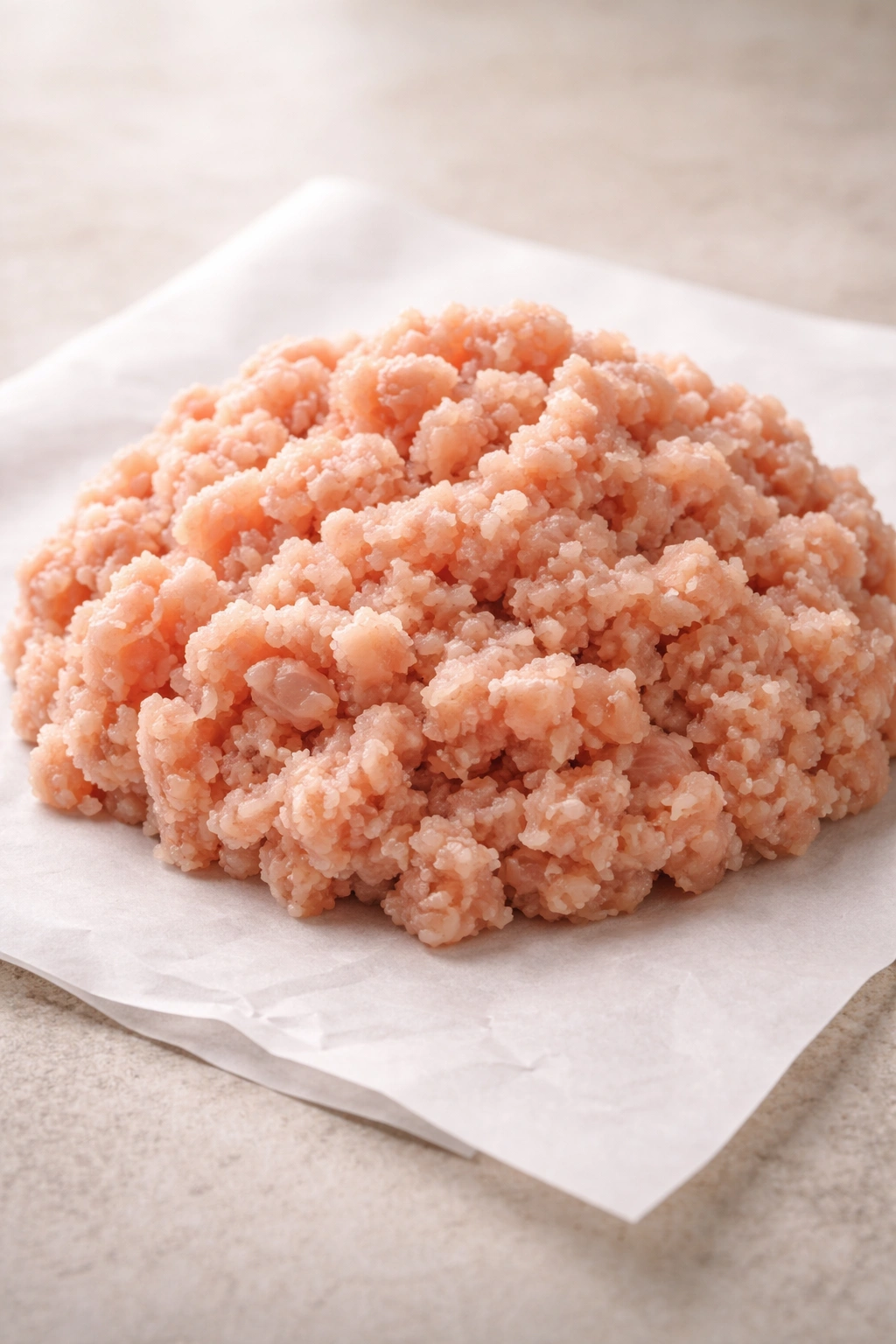
You could, but the texture would be quite different—more like a chunky spread than a traditional chicken salad. It would work fine if that’s what you’re going for, but the standard version with shredded or chopped chicken is more familiar and texture-wise more interesting.
Should I salt the chicken before mixing?
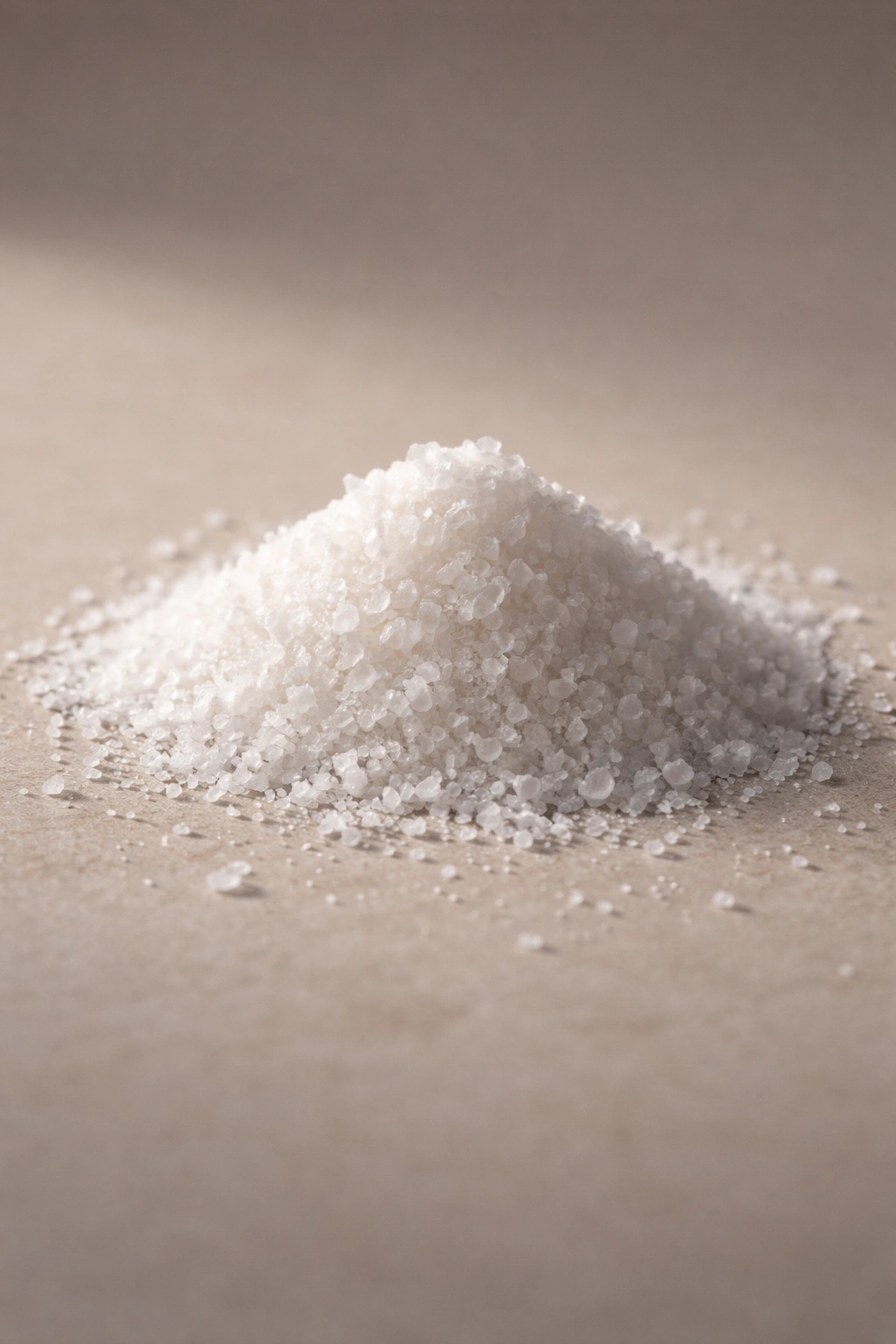
No, salt the finished salad only. Salting the chicken and then mixing it with other ingredients makes it harder to control the total salt level. Add salt to the completed salad and taste it before serving.
Can I use canned chicken?
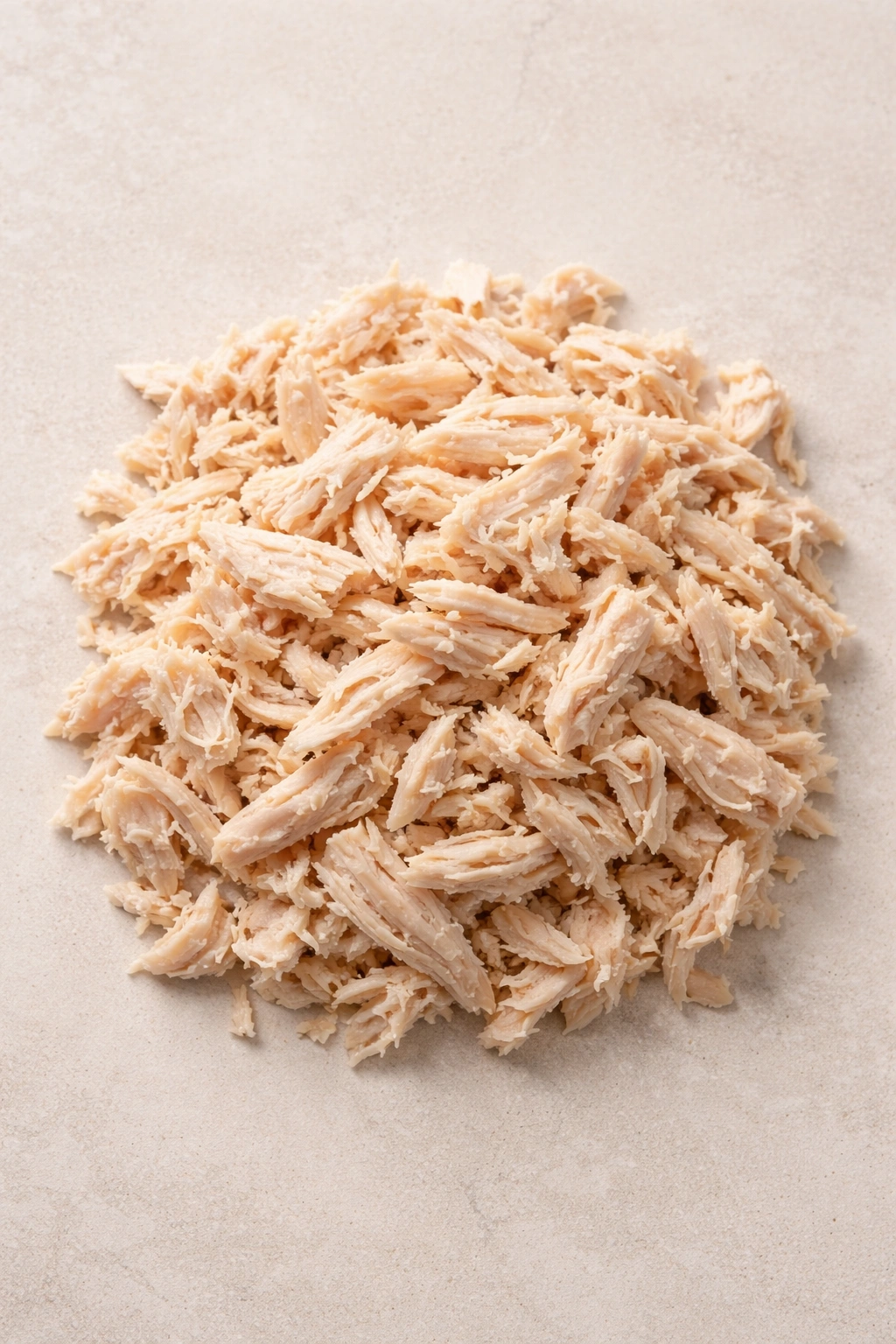
You could if you’re in a pinch, but canned chicken tends to be mushy and have a slightly metallic taste that doesn’t work as well in chicken salad. Fresh or rotisserie chicken is vastly superior. However, if canned is your only option, drain it very well and squeeze out excess moisture before using.
What’s the best bread for chicken salad sandwiches?
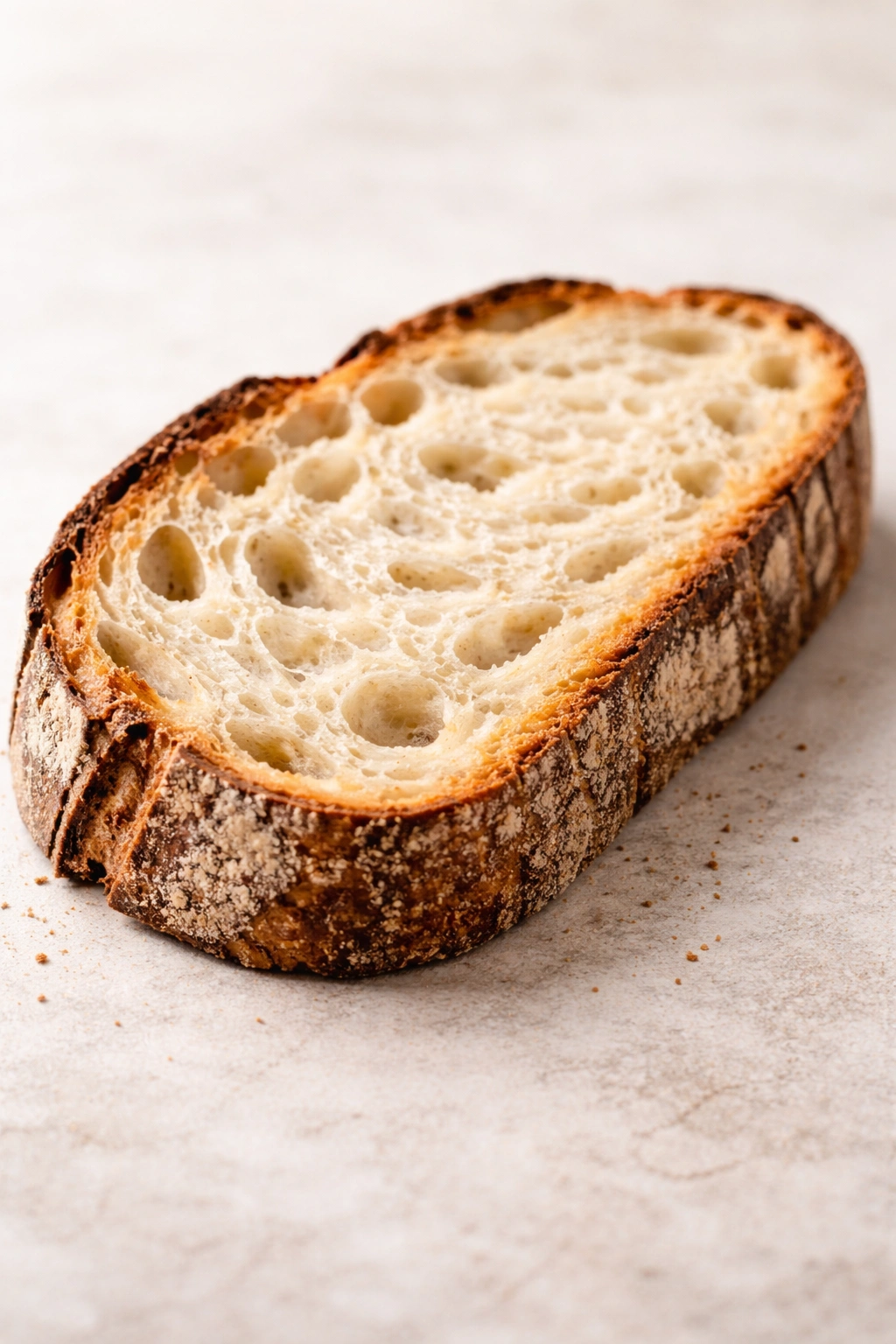
Hearty, flavorful bread works best—sourdough, rye, whole grain, or multigrain. White bread gets soggy quickly and doesn’t add anything to the experience. Toasting the bread helps prevent sogginess regardless of which type you choose. Bagels (especially everything bagels or garlic bagels) are also wonderful with chicken salad.
How do I prevent the salad from getting watery?
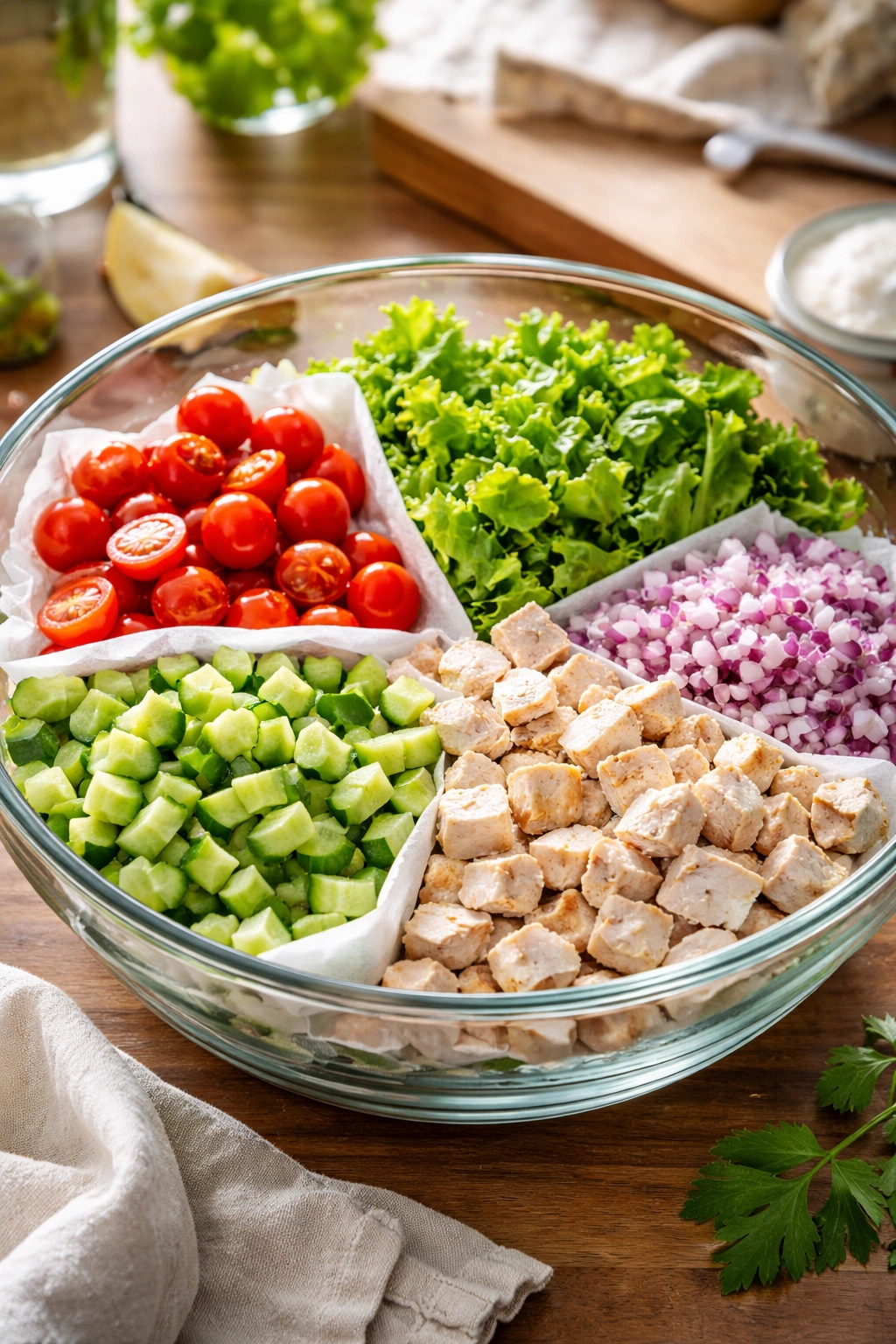
Use properly drained vegetables and don’t add watery vegetables like tomatoes or cucumbers directly to the salad—save those for serving time. Keep the salad separate from lettuce, and don’t dress it with additional dressing before storing it. The mayonnaise-based dressing is all it needs.
Can I add cheese to chicken salad?
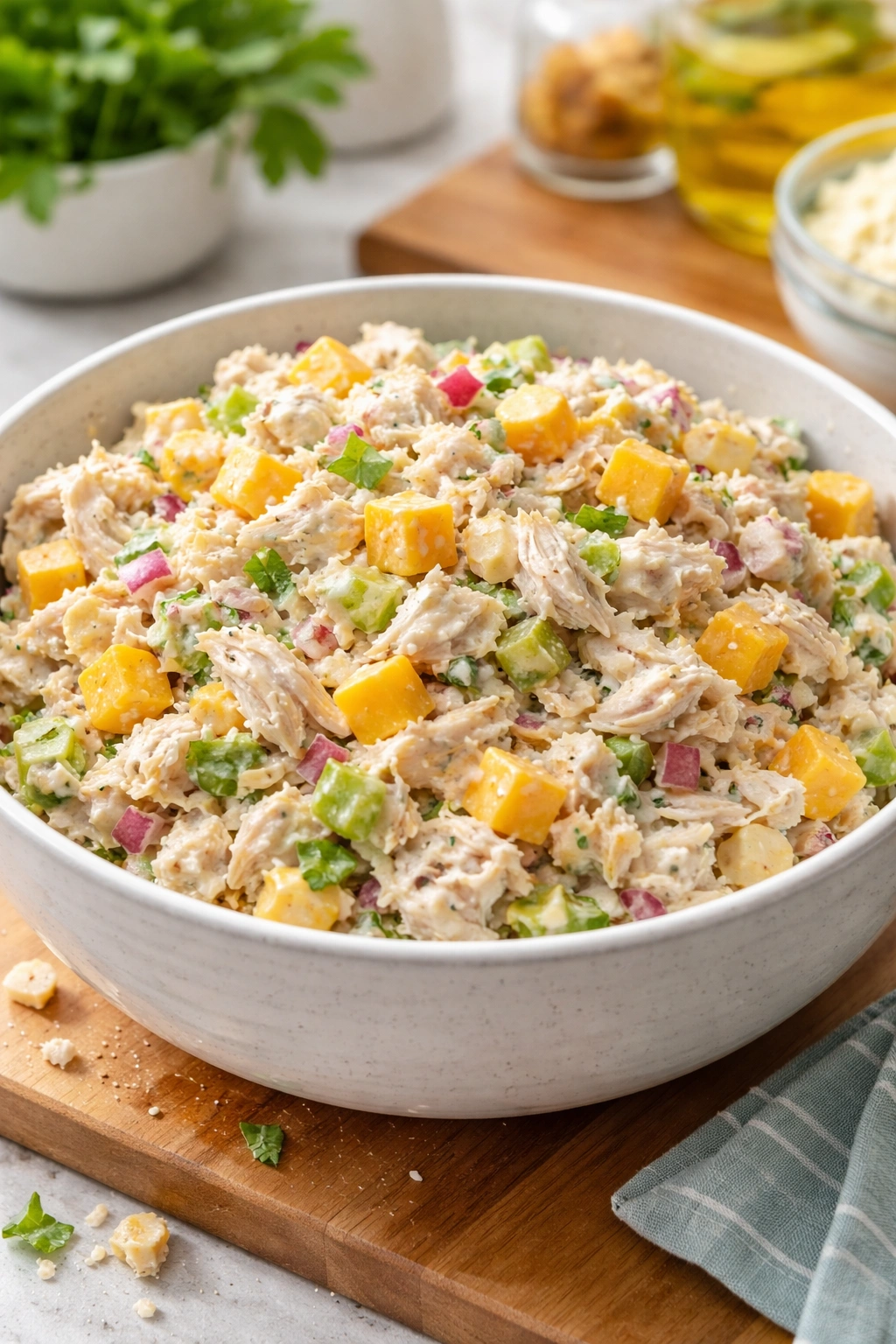
Absolutely. Crumbled feta works beautifully (especially in the Greek version), as does shredded cheddar, crumbled blue cheese, or Swiss cheese. Add it toward the end so it doesn’t break apart during mixing. Start with ¼ to ⅓ cup depending on how cheesy you want it.
What if I don’t like mayonnaise?
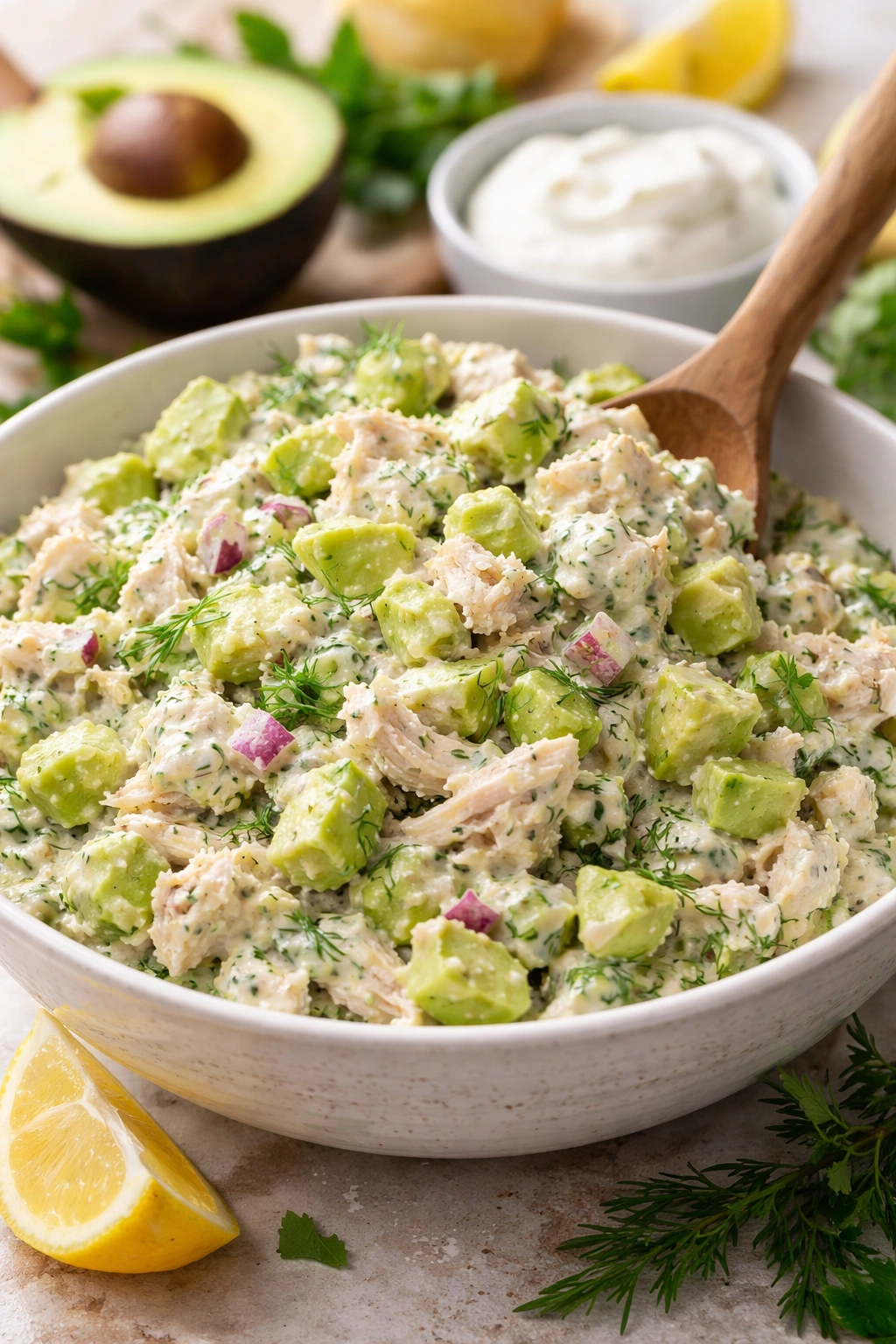
Use plain Greek yogurt or a mix of Greek yogurt and a small amount of sour cream. You could also use avocado or even mashed tofu (for a non-dairy option). The salad will taste different but will still be delicious—just adjust your seasonings accordingly since each base has different flavor implications.
How long does homemade chicken salad actually stay good?
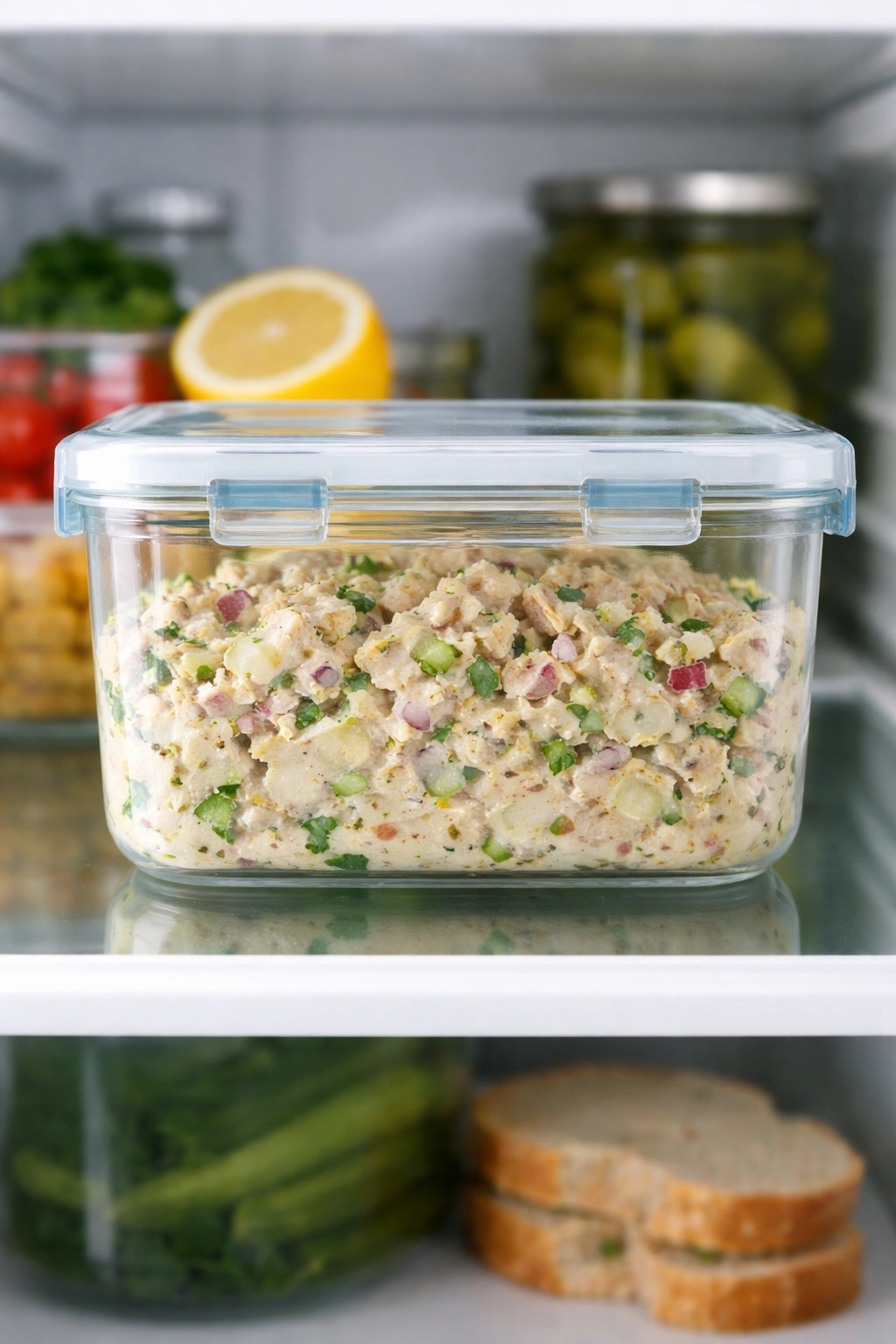
Properly stored in an airtight container in the fridge, it stays fresh and safe to eat for up to 4 days. After that, it’s not unsafe necessarily, but the quality starts declining—the vegetables soften, fresh herbs fade, and it just doesn’t taste as good. For best results, eat it within 3 days.
Final Thoughts
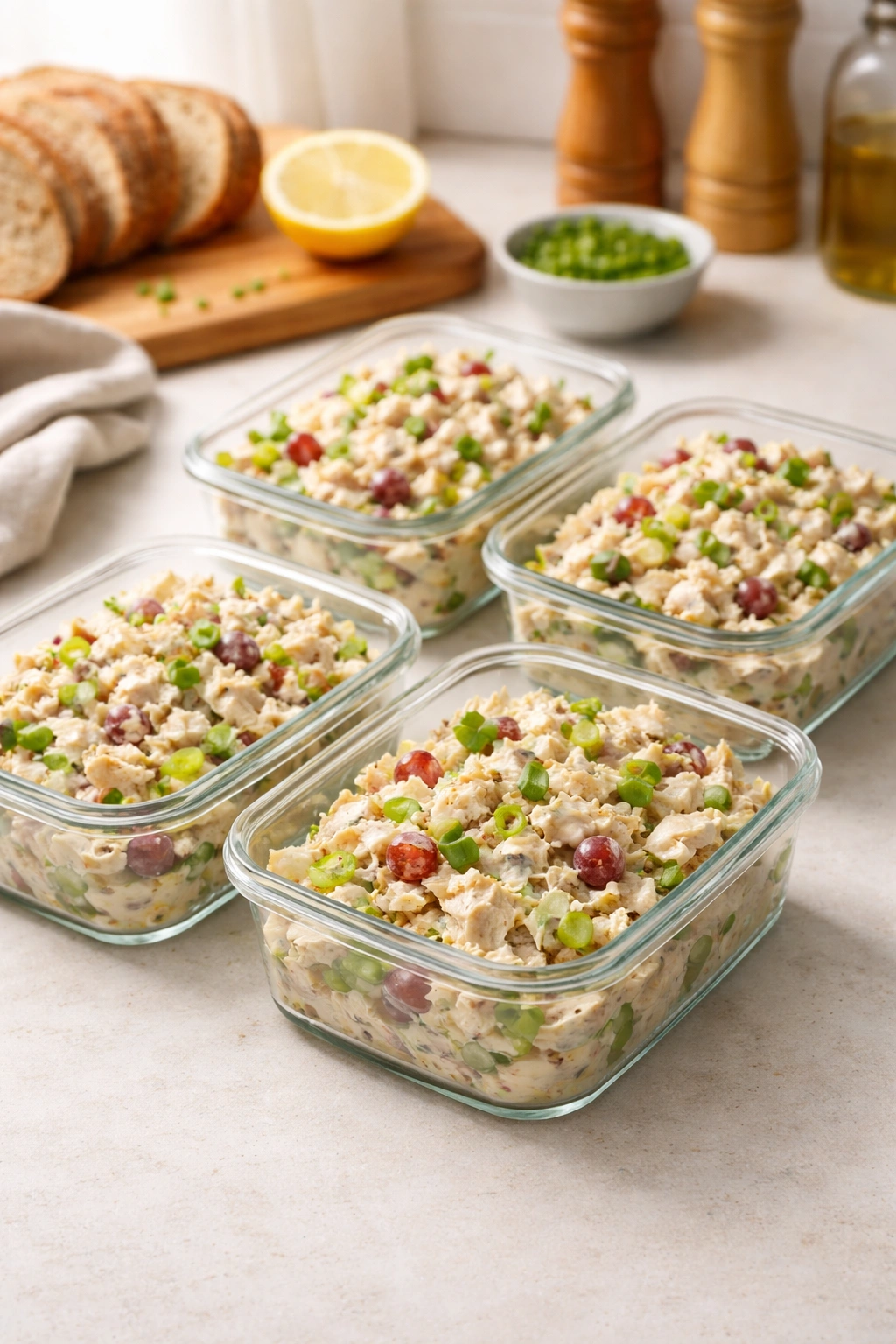
Easy chicken salad is the kind of recipe that seems simple until you realize how many variables create a truly excellent version. Getting the ratio of creamy to crunchy right, balancing flavors so nothing overwhelms, choosing fresh ingredients, and treating the mix with a gentle touch—these small details compound to create a salad you’ll actually look forward to eating rather than one you force yourself through out of obligation.
This recipe works because it respects your time and your taste buds. It comes together in 15 minutes, tastes better the next day than it does the first day, and lasts long enough to genuinely streamline your week. Make it on Sunday, portion it into containers, and you’ve solved the “what’s for lunch?” problem for several days straight. That’s not just convenient—it’s genuinely life-changing when you’re juggling everything else on your plate.
