



There’s something almost magical about sheet pan dinners. You throw everything on one tray, slide it into the oven, and walk away. Thirty to forty-five minutes later, you’ve got a complete, restaurant-quality meal with virtually zero cleanup. It’s the kind of cooking that feels like cheating—but in the best possible way.
Sweet potatoes are the MVP of sheet pan cooking. Their natural sweetness caramelizes beautifully under high heat, their texture becomes creamy inside while the edges crisp up, and they play well with almost any flavor profile you throw at them. Whether you’re going Mexican, Mediterranean, Asian-inspired, or classic American comfort, sweet potatoes are your reliable anchor. Add in whatever proteins, vegetables, and seasonings match your mood, and you’ve got dinner sorted.
This guide will show you exactly how to build a sheet pan dinner with sweet potatoes that actually feels complete—with proteins that satisfy, vegetables that matter, and flavors that make you want seconds.
Why Sheet Pan Dinners Have Become a Game-Changer
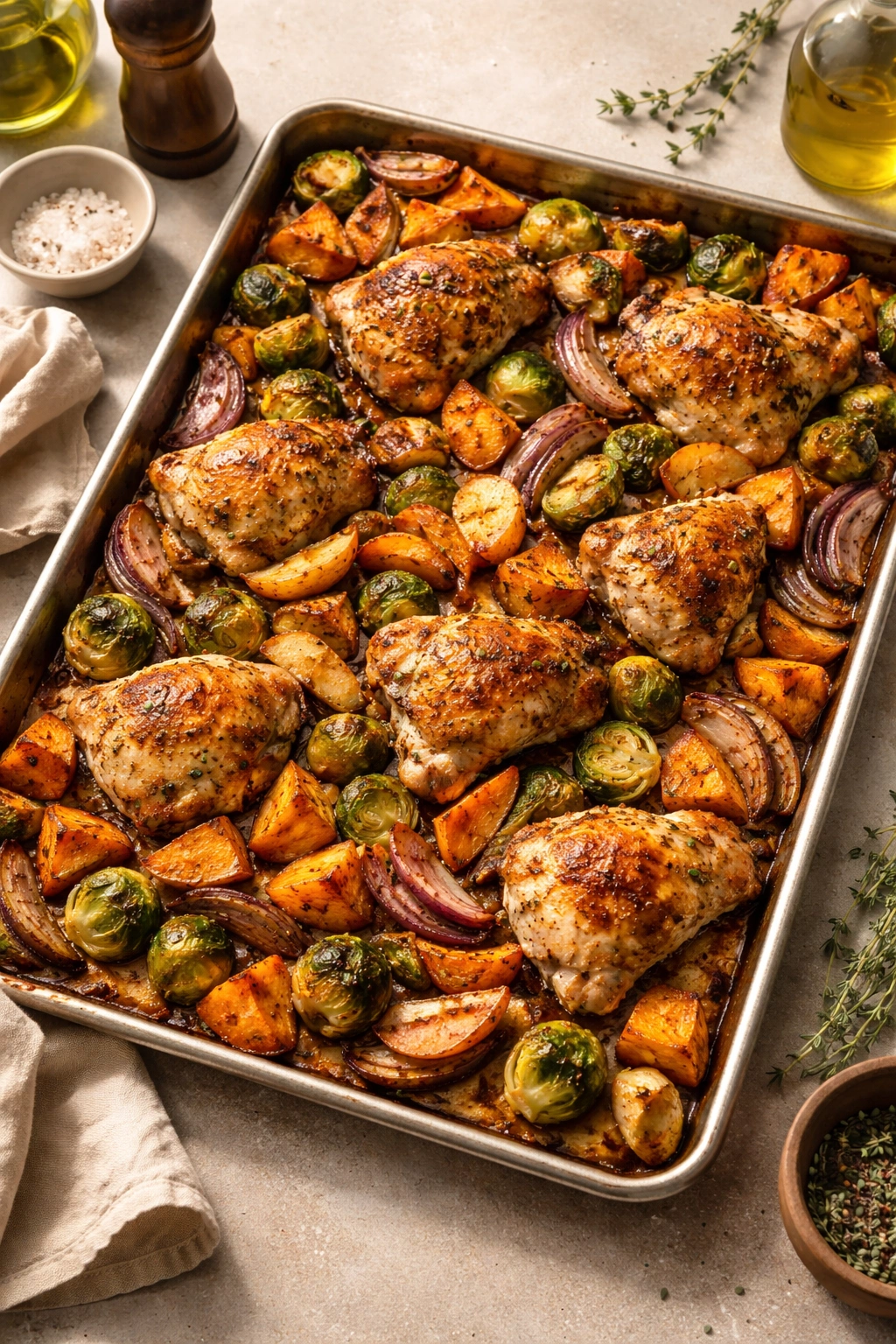
The beauty of sheet pan cooking goes way beyond convenience. When everything cooks together, flavors meld in ways they simply don’t when you’re managing multiple pots and pans. The chicken releases its juices, which season the vegetables as they roast. The onions caramelize and become sweet, the garlic turns mellow and nutty, and the whole pan develops this incredible depth.
For busy people trying to eat well, sheet pan dinners solve a real problem. You’re not choosing between healthy and convenient anymore—you get both. There’s no scrambling to coordinate timing between three different cooking methods. No juggling pans on a crowded stovetop. Just one sheet, one oven, and done.
Plus, if you’re meal prepping for the week, you can make a full batch on Sunday and portion it out for quick reheats throughout the week. The vegetables hold up beautifully, and reheating in a hot oven (rather than the microwave) restores the texture that made everything delicious in the first place.
Choosing Your Sweet Potatoes and Preparing Them Right
Not all sweet potatoes are created equal. The two most common varieties you’ll find are Beauregard (sometimes labeled as “red”) with reddish-orange skin and orange flesh, and Jewel with darker skin and more orange flesh. Both work beautifully for sheet pan dinners. There’s also the less common white sweet potato, which has pale skin and white flesh inside—it’s slightly less sweet and has a firmer texture.
For sheet pan cooking, size and uniformity matter more than variety. You want sweet potatoes that are roughly the same width so they cook evenly. An oversized potato will still be hard in the middle while smaller ones turn to mush.
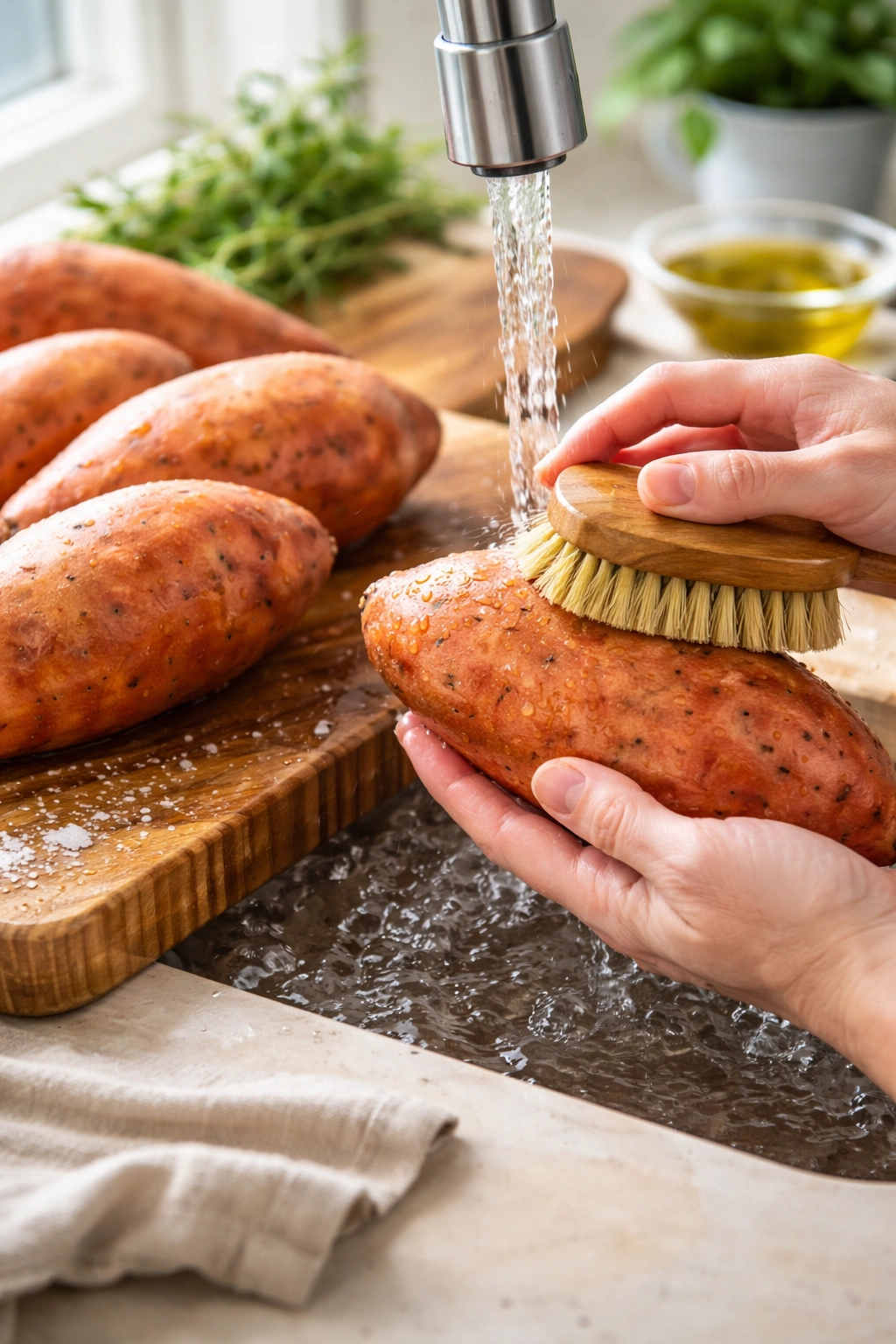
Here’s the prep that actually makes a difference: Wash your sweet potatoes thoroughly under running water, scrubbing gently with your hands or a clean brush to remove any dirt. Pat them dry—this step is surprisingly important because moisture on the surface prevents proper browning and caramelization. If you prefer peeled potatoes, peel them before cutting. If you’re keeping the skin on (which I recommend because it adds nutrition and texture), just make sure they’re completely dry.
Cut your potatoes into uniform 1-inch cubes. This is the sweet spot for caramelization—large enough that they don’t fall apart during roasting, but small enough that the center cooks through before the edges burn. Use a sharp knife and take your time with this step. Uneven pieces mean uneven cooking, and nobody wants a sheet pan where half the potatoes are golden and half are still crunchy.
Building Your Protein Foundation
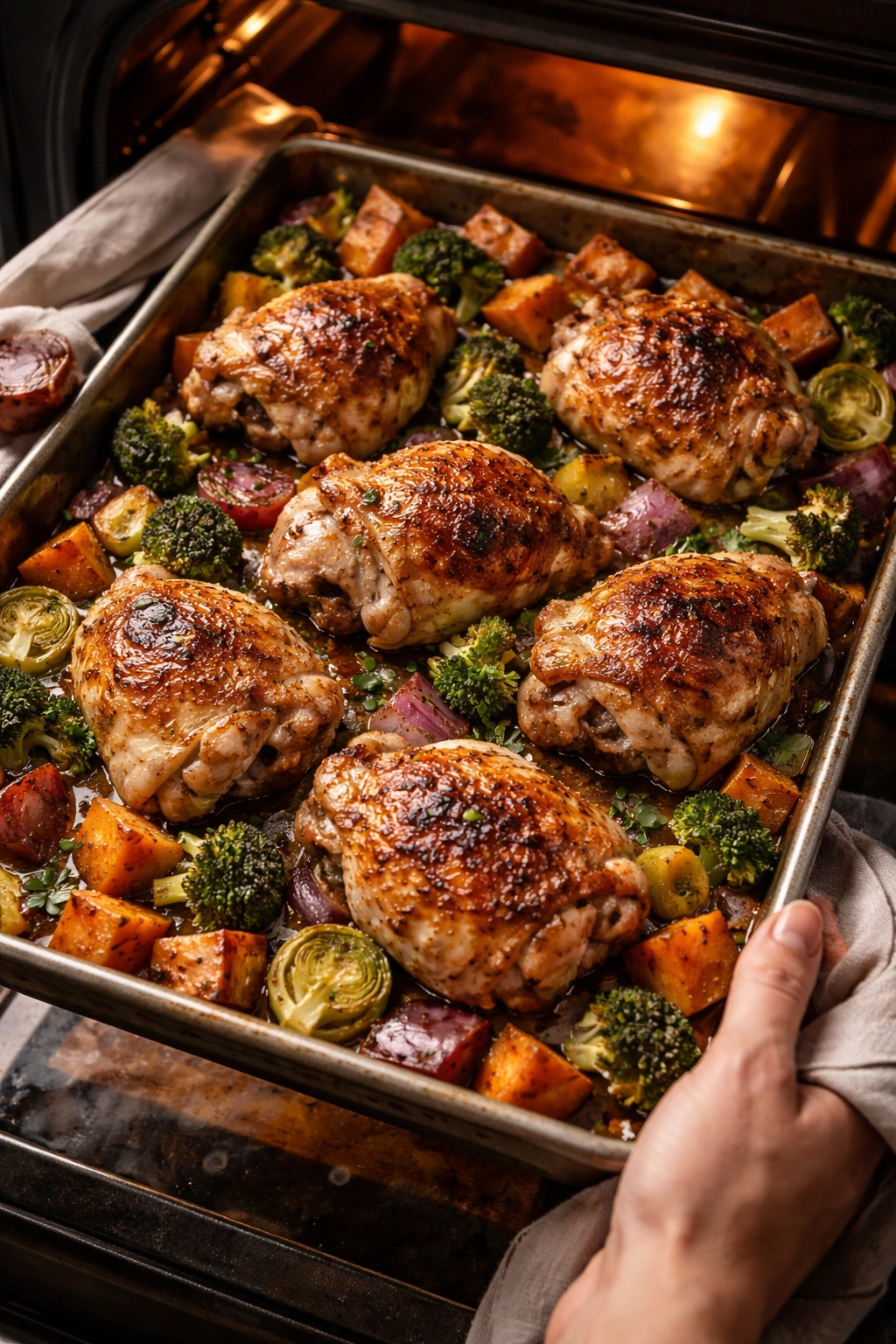
The protein you choose sets the tone for everything else on your sheet pan. Let’s talk through your realistic options.
Chicken is the workhorse choice, and for good reason. Chicken breast cooks quickly and stays lean, though some people find it can dry out if you’re not careful about temperature and timing. The fix is simple: pound your breasts to an even thickness (about three-quarters of an inch) so they cook uniformly, or use chicken thighs instead, which are forgiving and stay juicy even if you accidentally overcook them slightly. A pound-and-a-half of chicken serves four people generously.
Sausage is a fantastic option if you want minimal hands-on work. Pre-cooked sausages—whether smoked kielbasa, andouille, chicken sausage, or even plant-based varieties—just need to be sliced and added to the pan. They bring their own seasoning and fat, which seasons everything else. This is perfect if you’re short on time or energy because there’s no marinating step. Cut them into roughly inch-thick slices and let a flat side make contact with the hot pan for maximum browning.
Shrimp or other seafood is your move if you want something lighter and faster. Shrimp cooks in under five minutes, so you’d add it near the very end of roasting. This works beautifully with Asian-inspired flavors, Mediterranean seasonings, or even a spicy Cajun-style approach. Pat shrimp dry before cooking, because any excess moisture will steam them rather than sear them.
Tofu or plant-based proteins absolutely belong on sheet pans if you’re eating vegetarian or vegan. The key is pressing extra-firm tofu to remove excess moisture, then tossing it in a starch like cornstarch along with your seasonings. That coating helps it crisp up and also helps the spices stick around. Give it a little extra oil and a slightly longer roasting time than you’d give chicken.
Ground meat works too if you shape it into meatballs or a crumbled mixture. Brown it separately in a skillet first, then add it to your sheet pan for the final roasting phase. This prevents it from releasing too much liquid that would steam your vegetables.
Creating Flavor Layers: Seasonings and Marinades
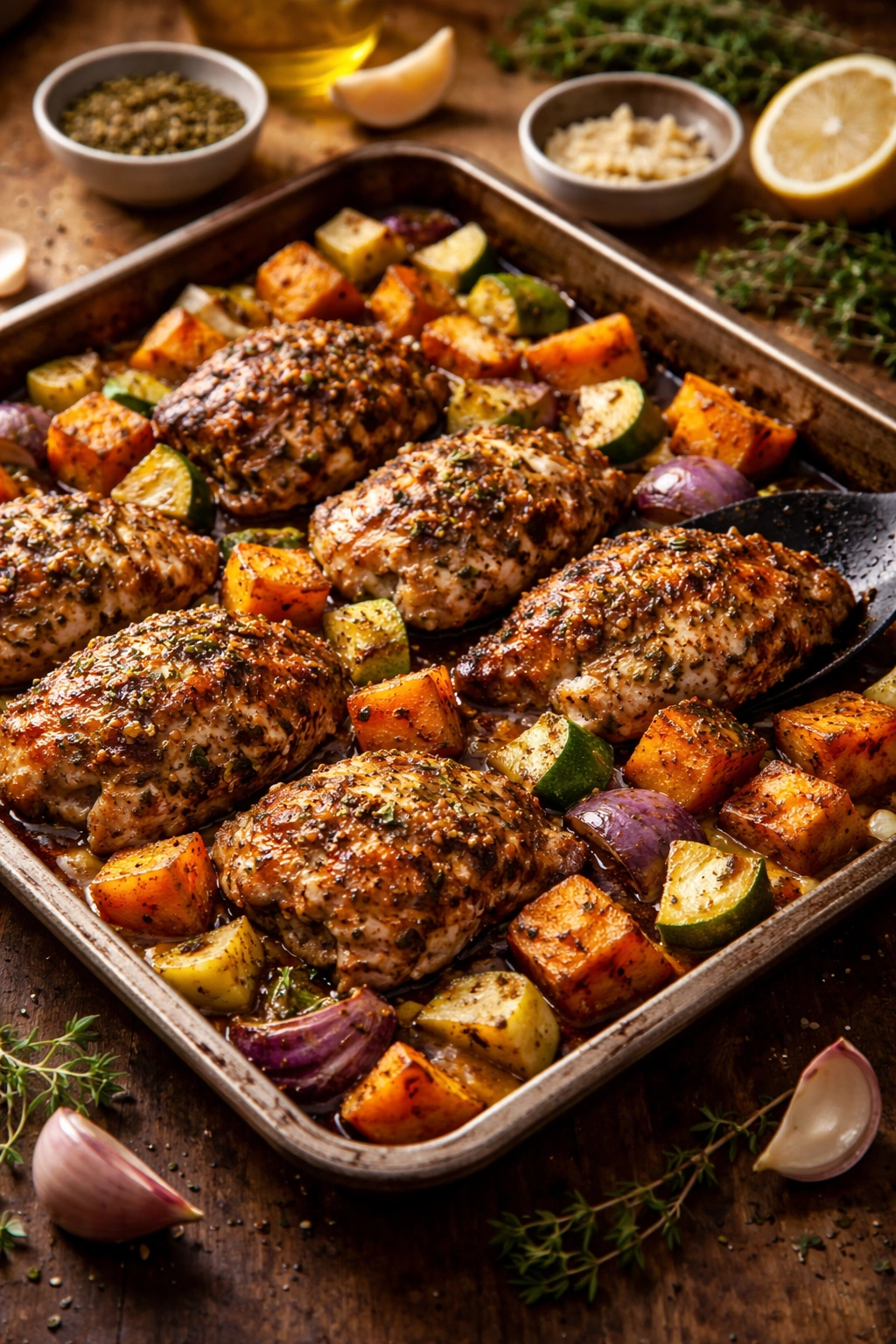
A sheet pan dinner lives or dies on seasoning. This is your chance to get creative and actually make something you’re excited to eat, not just another chicken-and-potatoes situation.
The Mediterranean approach is foolproof. Toss your sweet potatoes and protein in a mixture of olive oil, lemon juice, garlic, oregano, and fresh thyme. Let it sit for at least ten minutes so the garlic flavor infuses through everything. Balsamic vinegar adds depth and helps with caramelization. If you’re using chicken, this is the moment to marinate it while you prep your vegetables.
For Mexican-inspired flavors, create a quick spice rub with cumin, chili powder, smoked paprika, garlic powder, and a pinch of cayenne. Mix it with olive oil and lime juice, then coat your protein and potatoes. This combination gives you warmth and complexity without being aggressively spicy (though you can dial up the heat if you want).
Asian-inspired seasonings work beautifully too. Combine soy sauce, rice vinegar, fresh ginger (grated, not powdered), garlic, sesame oil, and a touch of honey or brown sugar. This creates a glaze that caramelizes beautifully in the oven. Add some sesame seeds as a garnish and you’ve got something special.
Simple doesn’t mean boring. If you’re short on time or ingredients, just use salt, pepper, garlic powder, and smoked paprika, then hit everything with quality olive oil. Add fresh herbs at the end if you have them—parsley, cilantro, or dill depending on your flavor direction.
The golden rule: don’t skimp on oil. At least two to three tablespoons per sheet pan. Oil helps with browning and caramelization, prevents things from sticking and drying out, and helps seasonings actually coat your ingredients evenly. It’s not excessive; it’s necessary.
Vegetable Companions That Actually Matter
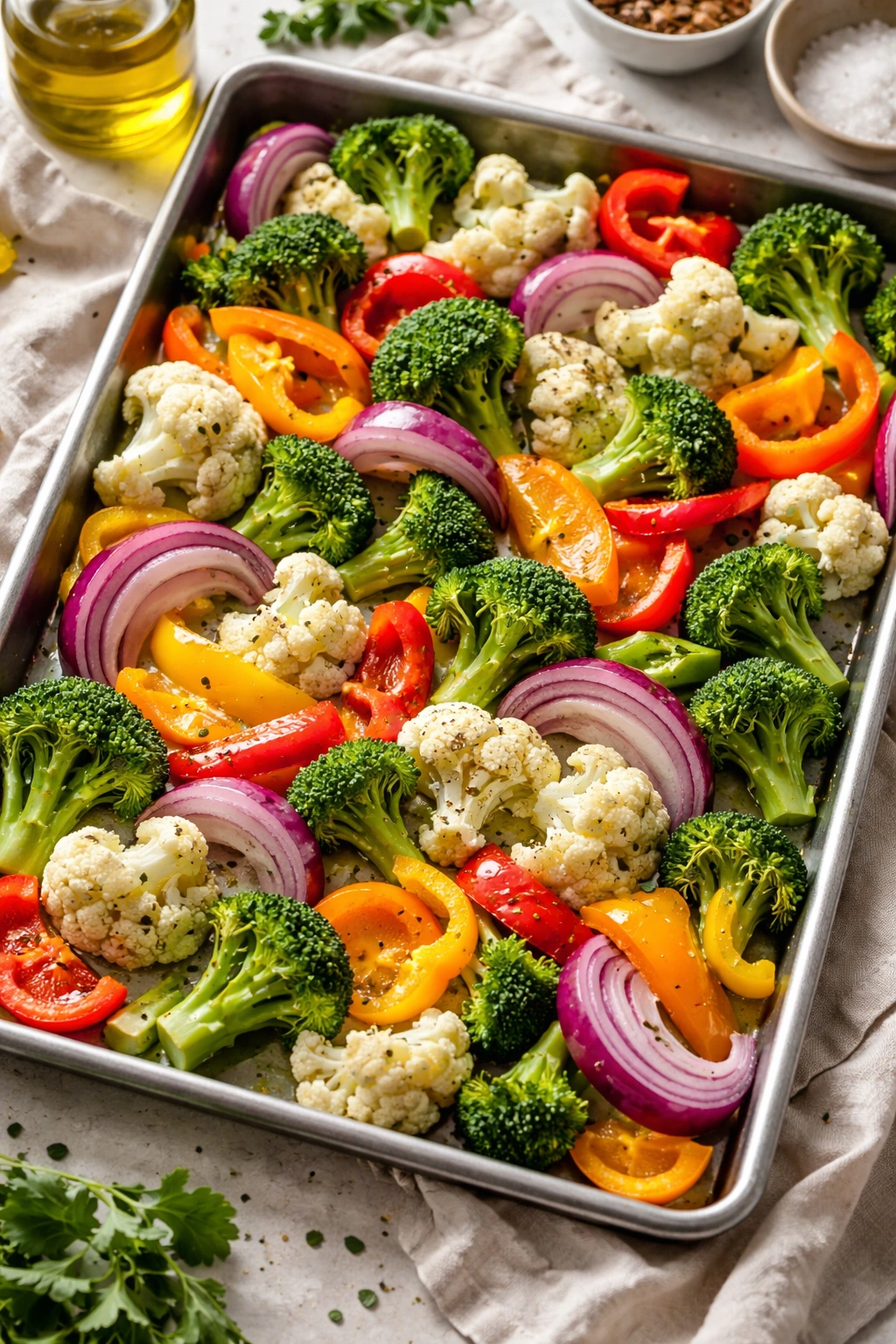
Sweet potatoes shouldn’t be lonely on that pan. The vegetables you add should contribute real flavor and texture, not just take up space.
Red or yellow onions are non-negotiable. Slice them into quarter-inch-thick wedges so they caramelize without disappearing completely. Onions add sweetness, depth, and body. They’ll soften up during roasting and create little pockets of concentrated flavor. If you’re worried about them burning, leave them slightly larger.
Bell peppers in any color work beautifully. Red and yellow peppers are sweeter, while green is more vegetal. Cut them into one-inch chunks rather than strips so they maintain some texture through cooking. They add brightness and a subtle sweetness that complements roasted sweet potatoes perfectly.
Broccoli and cauliflower are your vegetables if you want something hearty and filling. Cut them into bite-sized florets, toss well with oil and seasonings, and add them about halfway through roasting so they don’t overcook and turn mushy. They pick up the flavors from any proteins or onions nearby.
Green beans work great, especially if you cut them into one-inch pieces. They stay relatively firm even when fully cooked, and they have a subtle earthiness that balances sweet potatoes beautifully. Trim the ends and toss them in your seasoning mixture.
Zucchini and summer squash are lighter options that work well with Mediterranean or Mexican flavors. Cut them into half-moons about three-quarters of an inch thick. Add them to the pan only in the last 15-20 minutes so they don’t turn to mush.
Fresh garlic and fresh herbs are your secret weapons for depth. Smash whole garlic cloves and scatter them around the pan (don’t mince them or they’ll burn). Add fresh rosemary sprigs or thyme stems that you can easily remove before eating. Their oils will infuse the whole dish as it roasts.
The ratio I use is roughly two cups of secondary vegetables plus the sweet potatoes per sheet pan. This gives you enough to make the meal feel complete without overwhelming the pan or preventing proper browning.
The Science of Perfect Roasting: Temperature and Timing
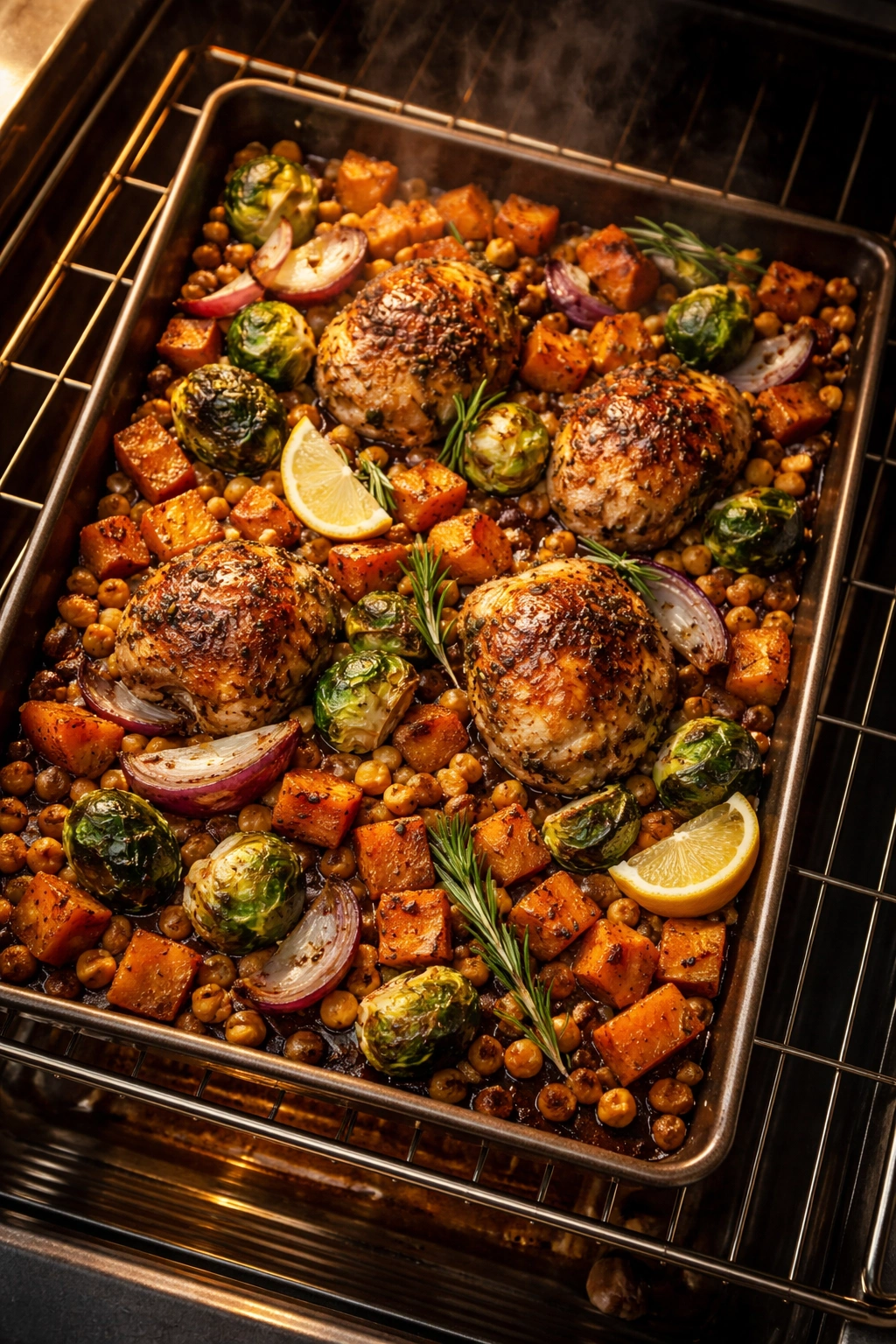
Roasting temperature is the difference between caramelized perfection and sad steamed vegetables. You want hot enough to create browning and crispy edges, but not so hot that everything burns before the insides cook through.
425°F (220°C) is your starting point for most sheet pan dinners. This is hot enough to encourage caramelization and browning while giving proteins and root vegetables time to cook all the way through. Most sheet pan dinners are done in 35-45 minutes at this temperature.
If you’re using particularly thick-cut vegetables or large pieces of chicken, you might drop it to 400°F and cook a few minutes longer. If you’re adding quick-cooking proteins like shrimp near the end, you keep it at 425°F and just add them for the final five minutes.
One crucial technique: spread everything out in a single layer on your sheet pan. Don’t pile vegetables on top of each other or crowd the pan. If something doesn’t fit in a single layer, use two sheet pans. Crowding creates steaming instead of roasting, and that’s when you end up with pale, soft vegetables instead of caramelized gorgeousness.
Stirring halfway through makes a real difference. After about 20 minutes, pull your sheet pan out and give everything a gentle toss. This ensures even browning and prevents anything from sticking to the pan. If you’re adding vegetables that cook more slowly (like broccoli or thicker-cut potatoes), this is also the moment to add them so they finish cooking at the same time as everything else.
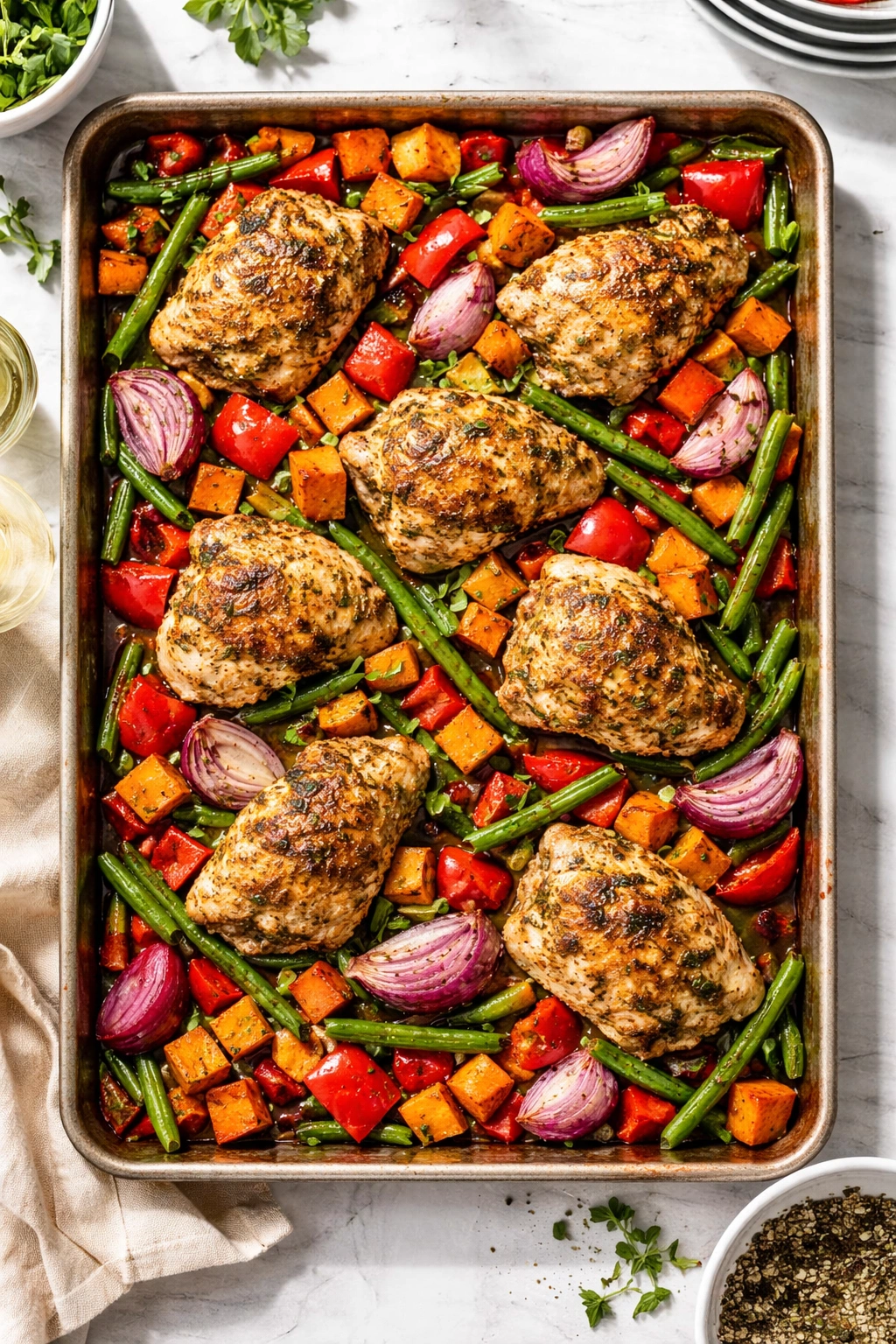
A Complete Recipe: Mediterranean Chicken and Sweet Potato Sheet Pan
Yield: Serves 4
Prep Time: 15 minutes
Cook Time: 40 minutes
Total Time: 55 minutes
Difficulty: Beginner — No special equipment required, and the steps are straightforward even if you’ve never made a sheet pan dinner before.
For the Chicken and Vegetables:
- 1.5 pounds boneless, skinless chicken breast, pounded to even thickness (about three-quarters inch) or 1.5 pounds chicken thighs, patted dry
- 2 medium sweet potatoes, peeled or unpeeled, washed and cut into 1-inch cubes
- 1 large red onion, cut into half-moons about three-quarters inch thick
- 1 red bell pepper, seeded and cut into 1-inch chunks
- 8 ounces fresh green beans, trimmed and cut into 1-inch pieces
- 4 cloves garlic, smashed and left whole
- 3 tablespoons extra-virgin olive oil, divided
- 2 tablespoons fresh lemon juice
- 1 tablespoon balsamic vinegar
- 2 teaspoons dried oregano (or 2 tablespoons fresh if you have it)
- 1.5 teaspoons dried thyme
- 1 teaspoon sea salt, plus more to taste
- Half teaspoon freshly ground black pepper, plus more to taste
- Fresh parsley or dill for serving (optional)
- Lemon wedges for serving
Prepare the Pan and Preheat:
-
Preheat your oven to 425°F (220°C). Position your oven rack in the middle position. Line a large rimmed sheet pan (at least 18 by 13 inches) with parchment paper for easy cleanup, or just use the pan as-is if you prefer.
-
Pat your chicken completely dry with clean paper towels — this step is critical for browning. Season both sides with a pinch of salt and pepper and set aside on a plate.
Prepare and Season the Vegetables:
-
In a small bowl, whisk together two tablespoons of the olive oil, the lemon juice, balsamic vinegar, oregano, thyme, one teaspoon salt, and half teaspoon pepper. Set this mixture aside.
-
Add your cubed sweet potatoes to the sheet pan. Drizzle with about one tablespoon of your oil-herb mixture and toss until evenly coated. Spread them out toward one side of the pan, creating space in the middle for your chicken and other vegetables. The sweet potatoes should be in a relatively single layer, not piled on top of each other.
Start the Root Vegetables:
- Place the sheet pan in your preheated oven and roast the sweet potatoes for 15 minutes. They should start to soften around the edges and release moisture into the pan.
Add Remaining Components:
-
Remove the pan from the oven carefully. The pan will be very hot. To the sweet potatoes, add your sliced red onion, bell pepper chunks, green beans, and smashed garlic cloves. Drizzle the remaining oil-herb mixture over everything and toss gently to combine. Push these vegetables to the outer edges of the pan, creating a clear space in the center.
Advertisements -
Place your prepared chicken pieces in the center of the pan, arranging them in a single layer with some space between each piece. Do not cover the vegetables completely with chicken; you want vegetables visible and able to brown.
-
Return the sheet pan to the oven and roast for another 20-25 minutes, until the chicken is cooked through (an instant-read thermometer inserted into the thickest part should read 165°F or 74°C), and the vegetables are tender with caramelized, golden edges. The exact timing depends on your chicken thickness and your oven’s particular heat distribution.
Finishing Touches:
-
Remove from the oven and let rest for three to five minutes before serving. Taste everything and adjust salt and pepper as needed. Sometimes the herbs mask the salt, so a pinch more at the end brightens things up considerably.
-
Scatter fresh parsley or dill over the top if you have it, and serve from the pan or transfer to a platter. Squeeze fresh lemon juice over each portion as you serve. This final hit of acid wakes up all the flavors.
Tips That Actually Make a Difference
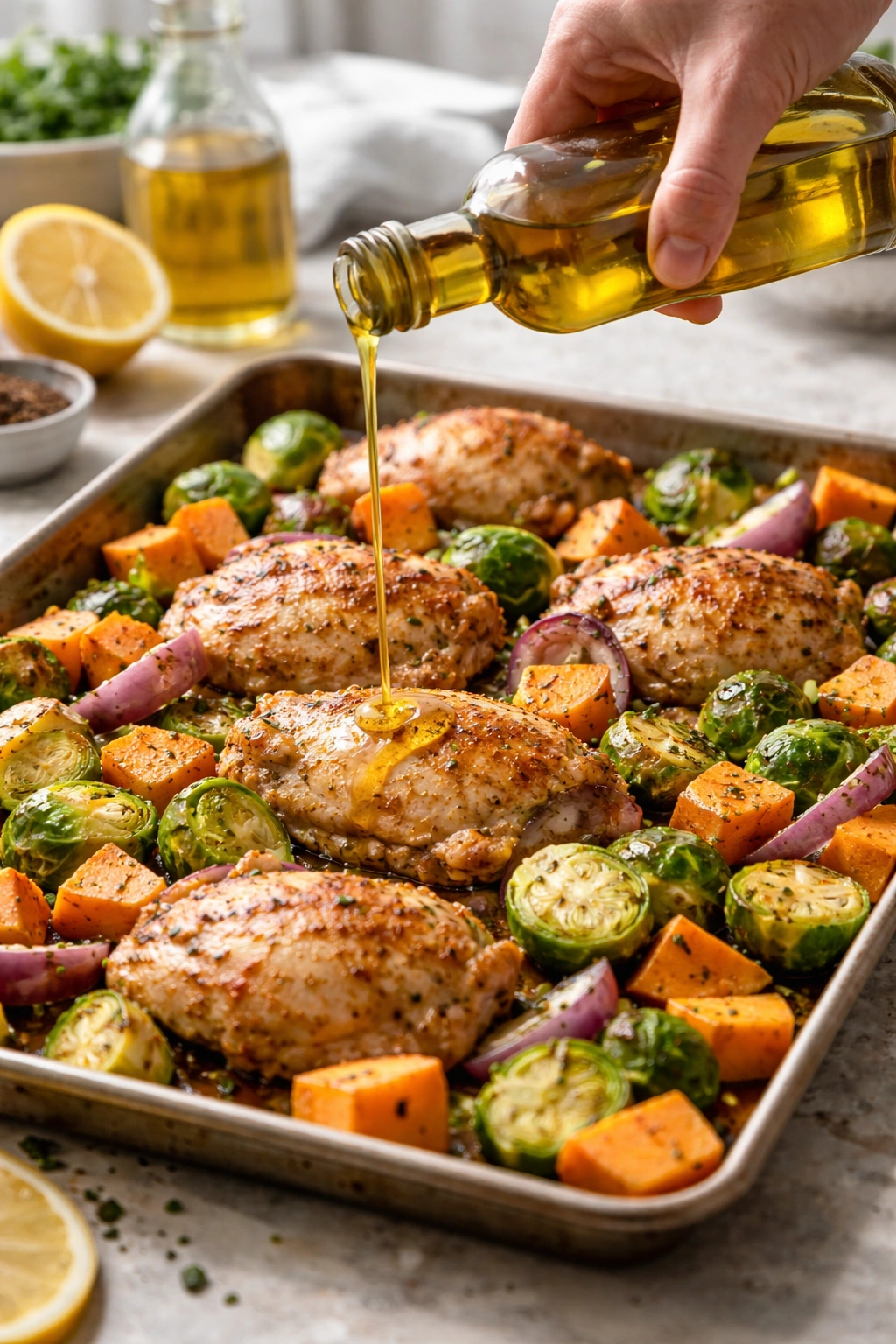
Oil is your friend, not your enemy. I can’t stress this enough. Two tablespoons minimum per sheet pan. The vegetables will brown properly, the chicken will stay juicy, and everything will taste exponentially better. Underoiled sheet pan dinners taste dry and disappointing.
Don’t skip the lemon or vinegar step. That acid at the end isn’t optional garnish—it’s essential. It cuts through the richness of the oil and protein and makes all the flavors pop. A squeeze of fresh lemon juice or a drizzle of good vinegar transforms a good dinner into one you’ll actually crave.
Pat your chicken completely dry. Moisture is the enemy of browning. Wet chicken steams instead of searing. This single step takes you from pale, mediocre chicken to golden, properly browned chicken.
Don’t crowd your sheet pan. If you have doubts about whether it all fits in a single layer, use two pans. Everything should be in contact with the hot pan, not stacked on top of other ingredients. This is where the browning magic happens.
Keep an eye on thinner vegetables. If you’re adding green beans, broccoli, or other quicker-cooking vegetables, add them halfway through rather than at the start. This prevents overcooking while ensuring they finish at the same time as everything else.
Use a meat thermometer. The most reliable way to know chicken is done is an instant-read thermometer, not guessing or cutting into it (which releases juices). Insert it into the thickest part without touching bone. 165°F (74°C) is your target for food safety.
Baste partway through if you want extra browning. If you have a moment around the 25-minute mark, carefully pull out the sheet pan and spoon some of the pan juices over the top of your chicken. This adds flavor and helps it brown more evenly.
Variations: Different Flavor Profiles on the Same Foundation
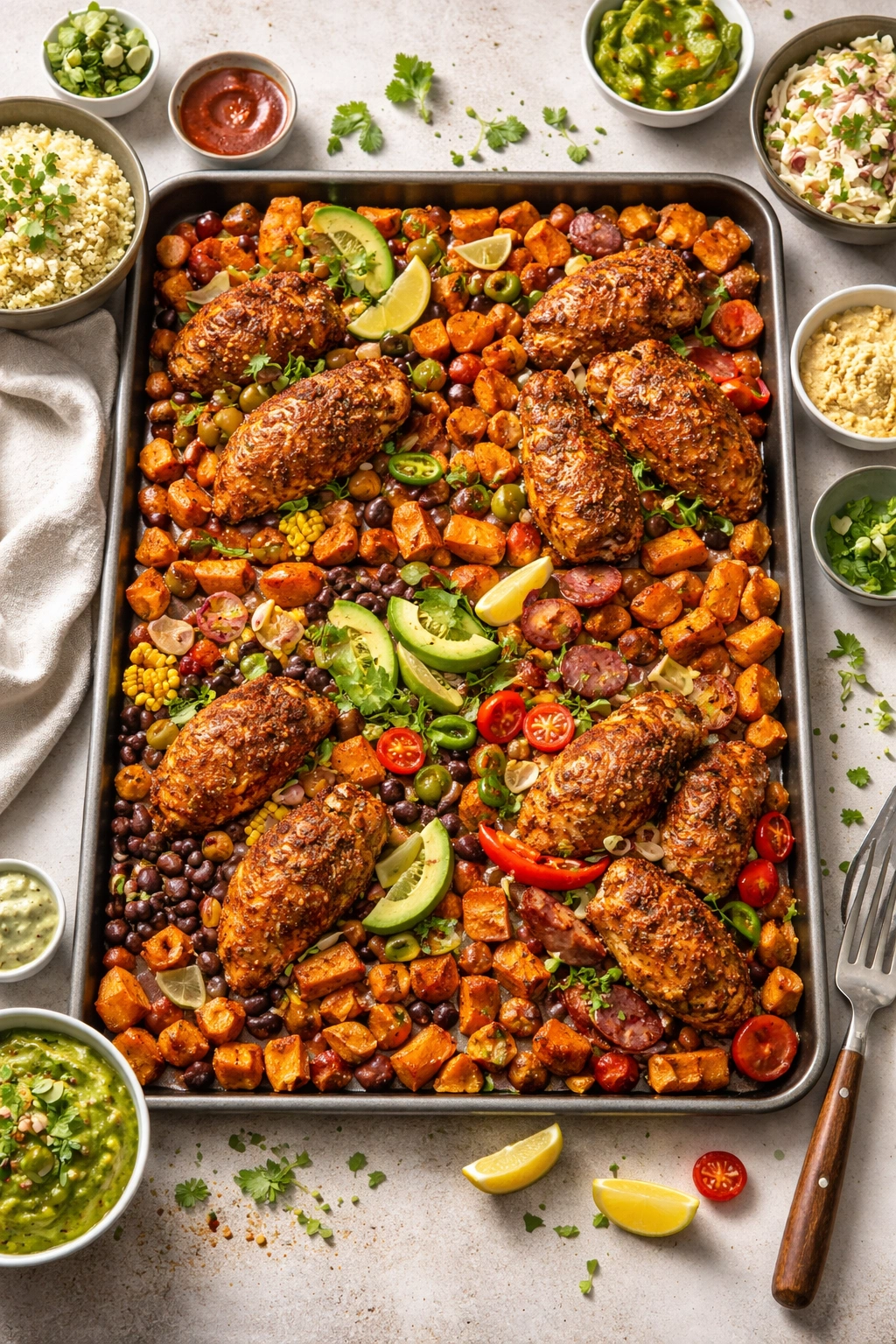
The beautiful thing about the sheet pan formula is that it’s endlessly adaptable. Change your seasonings and you’ve got a completely different meal.
Mexican Version: Replace the oregano and thyme with cumin, chili powder, smoked paprika, and garlic powder. Use lime juice instead of lemon. Add a can of black beans to the pan toward the end of cooking. Serve with avocado, salsa, cilantro, and warm corn tortillas.
Asian-Inspired: Create a glaze with three tablespoons soy sauce, two tablespoons rice vinegar, two teaspoons sesame oil, one tablespoon honey, and three cloves minced garlic. Toss your sweet potatoes and chicken in this mixture. Add sliced red bell peppers and snap peas (adding the snap peas only in the last ten minutes). Serve over rice or cauliflower rice and top with sesame seeds and sliced green onions.
Moroccan Spiced: Use cumin, cinnamon, paprika, ginger, and a pinch of cayenne in your oil base. Add dried apricots to the pan halfway through cooking for pops of sweetness. Serve over couscous with a dollop of Greek yogurt mixed with harissa if you want heat.
Cajun: Combine smoked paprika, garlic powder, onion powder, dried oregano, dried thyme, cayenne, and a pinch of cayenne for serious heat if you like it. Use andouille sausage instead of chicken. Add okra and a can of diced tomatoes. Serve over rice.
Simple Italian: Just garlic, dried basil, oregano, and parmesan cheese. Use chicken or Italian sausage. Add zucchini, cherry tomatoes, and red onion. Finish with fresh basil and a good splash of balsamic.
Customizing for Your Dietary Approach
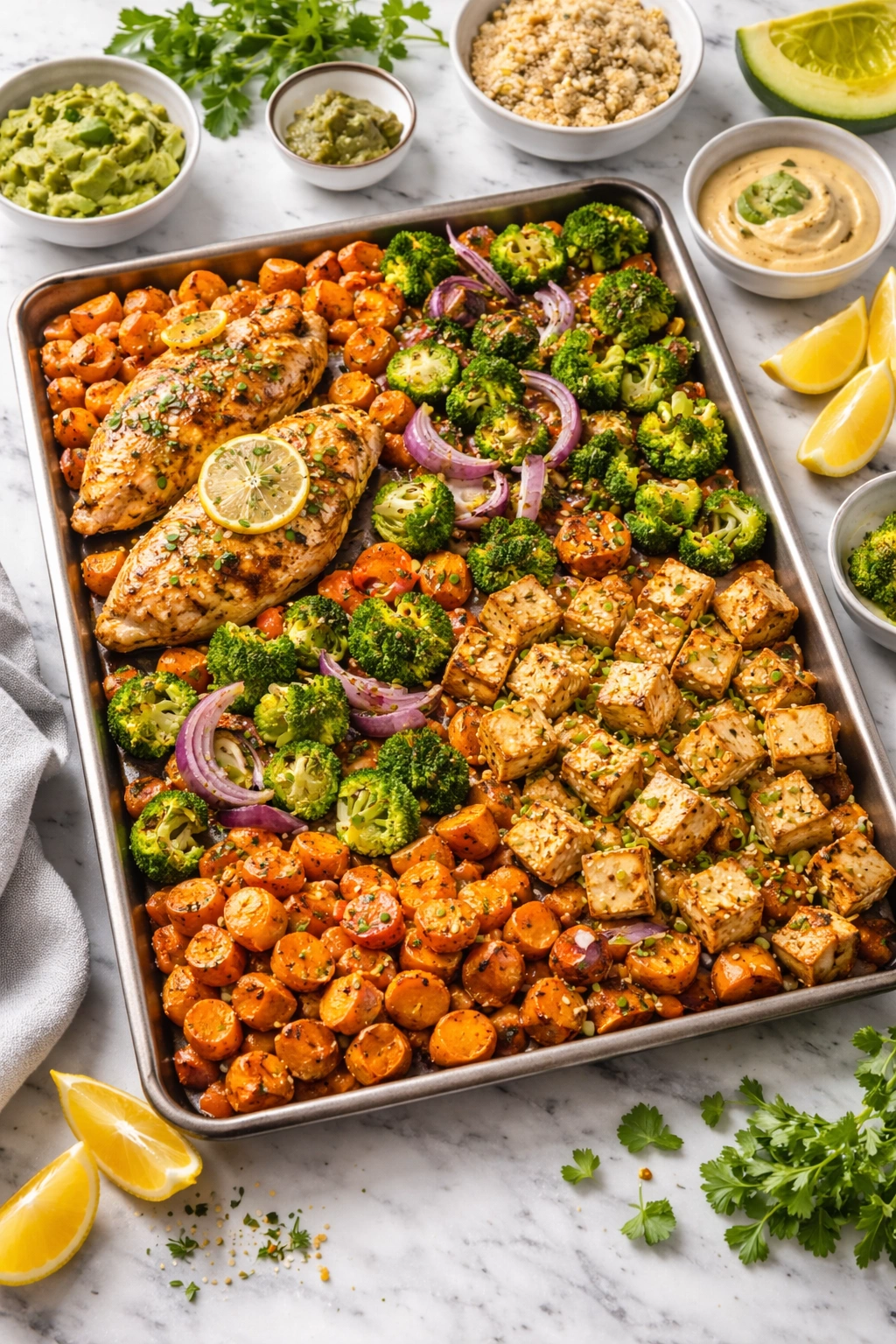
Sheet pan dinners work beautifully within virtually any eating framework.
For keto or very low-carb eating: Reduce the sweet potatoes to just a couple of tablespoons of cubed pieces per serving, and use additional non-starchy vegetables instead. Broccoli, cauliflower, zucchini, and bell peppers are all fair game. The rest of the formula stays exactly the same.
For vegetarian or vegan: Swap your protein for extra-firm tofu (pressed, then tossed in cornstarch and oil), white beans, chickpeas, or a plant-based sausage. Everything else remains identical. You might add a can of beans to bulk up the meal and add protein.
For dairy-free: Everything here is already dairy-free unless you choose to add cheese. Just verify your protein choice is dairy-free if you’re using pre-made sausage.
For gluten-free: This recipe is naturally gluten-free. Just verify any seasoning blends or pre-made sausages don’t contain hidden gluten.
Storage, Reheating, and Meal Prep
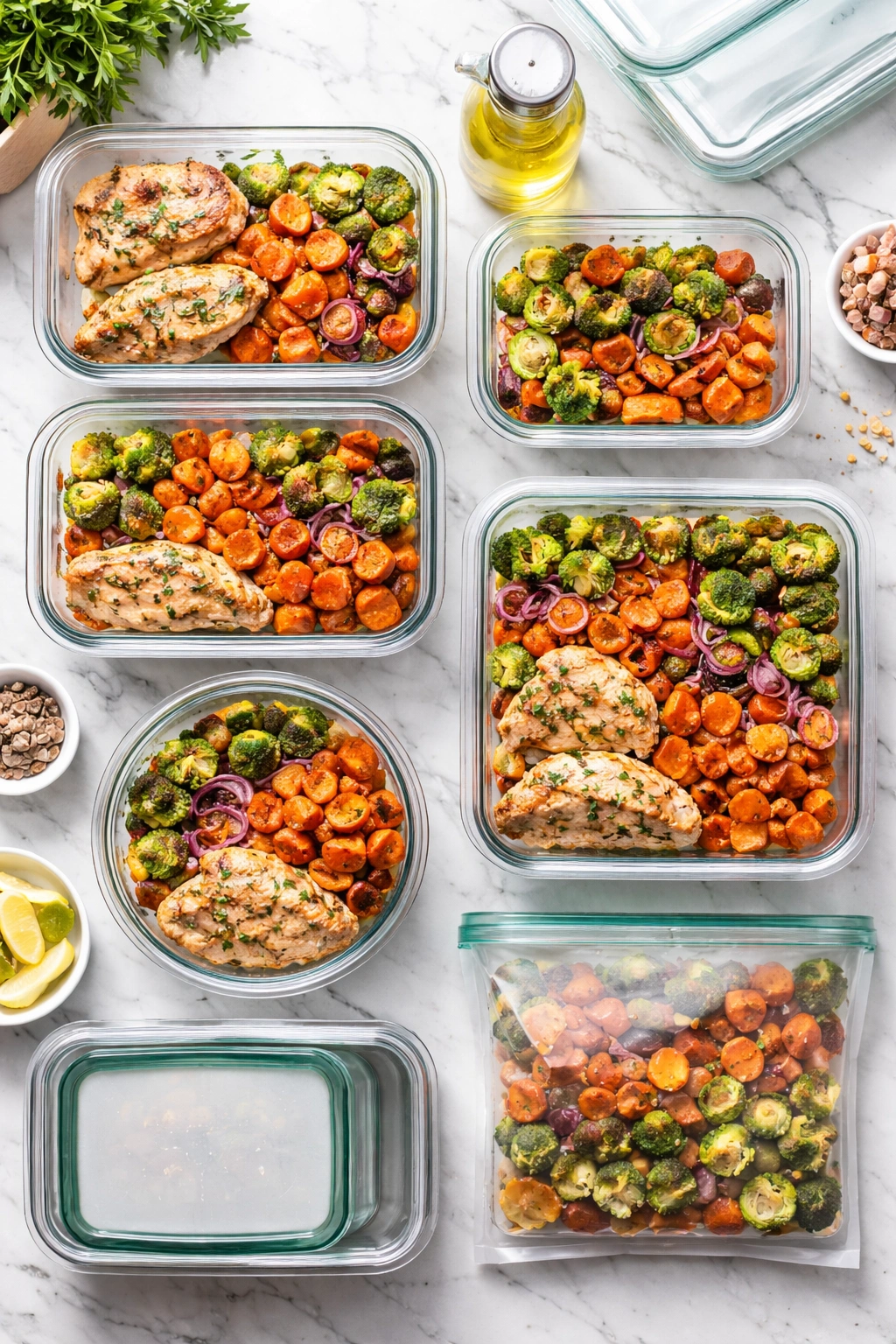
This is where sheet pan dinners really shine for busy people.
Refrigerator storage: Once cooled to room temperature, transfer your finished dinner to an airtight container and refrigerate for up to four days. The flavors actually improve slightly the next day as everything sits together.
Freezing: Sheet pan dinners freeze reasonably well, though the vegetables become slightly softer when thawed. Cool completely, spread on a baking sheet in the freezer for a couple of hours until solid, then transfer to a freezer bag or container. This “flash freezing” prevents everything from turning into a frozen block. They’ll keep for up to three months.
Reheating for best results: Reheat in a preheated 375°F oven for about 10-15 minutes, covered with foil to prevent over-browning. This restores the texture much better than a microwave. If you’re really short on time, the microwave works, but you’ll lose some of the textural appeal that made the original so good.
Meal prep hack: Make your sheet pan dinners on Sunday, portion them into containers, and reheat throughout the week. You can also prep your components the night before—wash and chop all your vegetables, prepare your marinade, and store in separate containers. Come evening, you just combine everything, roast, and eat.
Serving Suggestions and Complete Meal Ideas
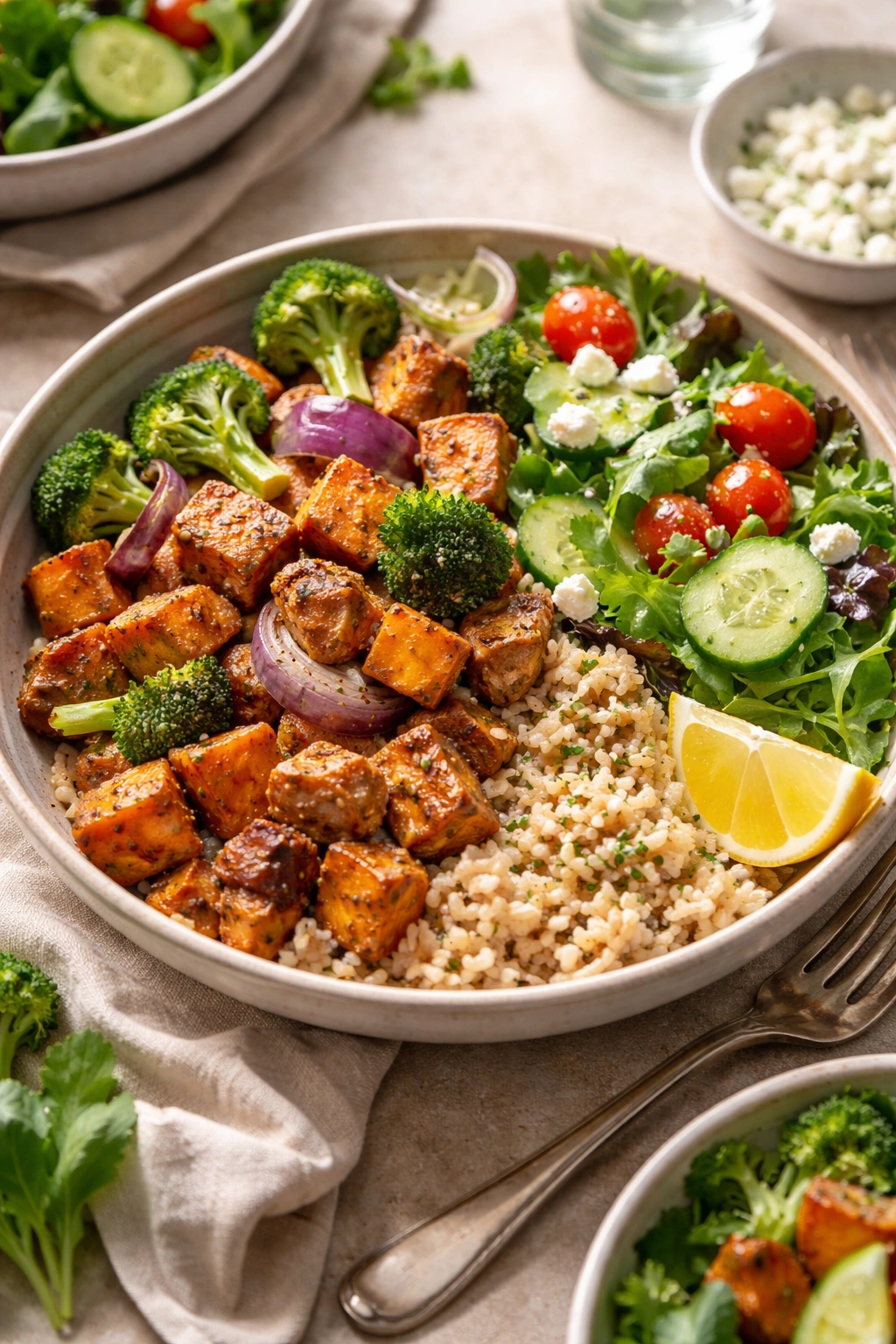
A sheet pan dinner is technically complete as-is, but here are ideas to round things out if you want something more substantial.
Over grains: Serve your sheet pan dinner over rice (brown rice, white rice, or any grain you like), farro, quinoa, or couscous. This turns it into more of a complete bowl and makes it more filling.
With a side salad: A simple arugula salad with lemon vinaigrette brightens everything and adds fresh vegetables. The acidity of the dressing echoes the lemon in your sheet pan dinner.
Wrapped up: Use warm pita, flour tortillas, or flatbread to turn your sheet pan dinner into wraps. Add a sauce—tahini, tzatziki, or avocado crema depending on your flavor direction—and you’ve got an entirely different meal format.
With crusty bread: If you’re serving this Mediterranean-style, slice some good crusty bread and use it to soak up the pan juices. Nothing gets wasted, and you’ll want every bit of that browned, seasoned liquid.
With simple sides: Roasted cauliflower, steamed broccoli, or a basic side salad all work beautifully without adding much prep time to your day.
For lunch the next day: Portion your leftovers into containers and eat cold or reheated. Add fresh vegetables, a grain, or wrap it up for a completely different eating experience than dinner was.
Final Thoughts
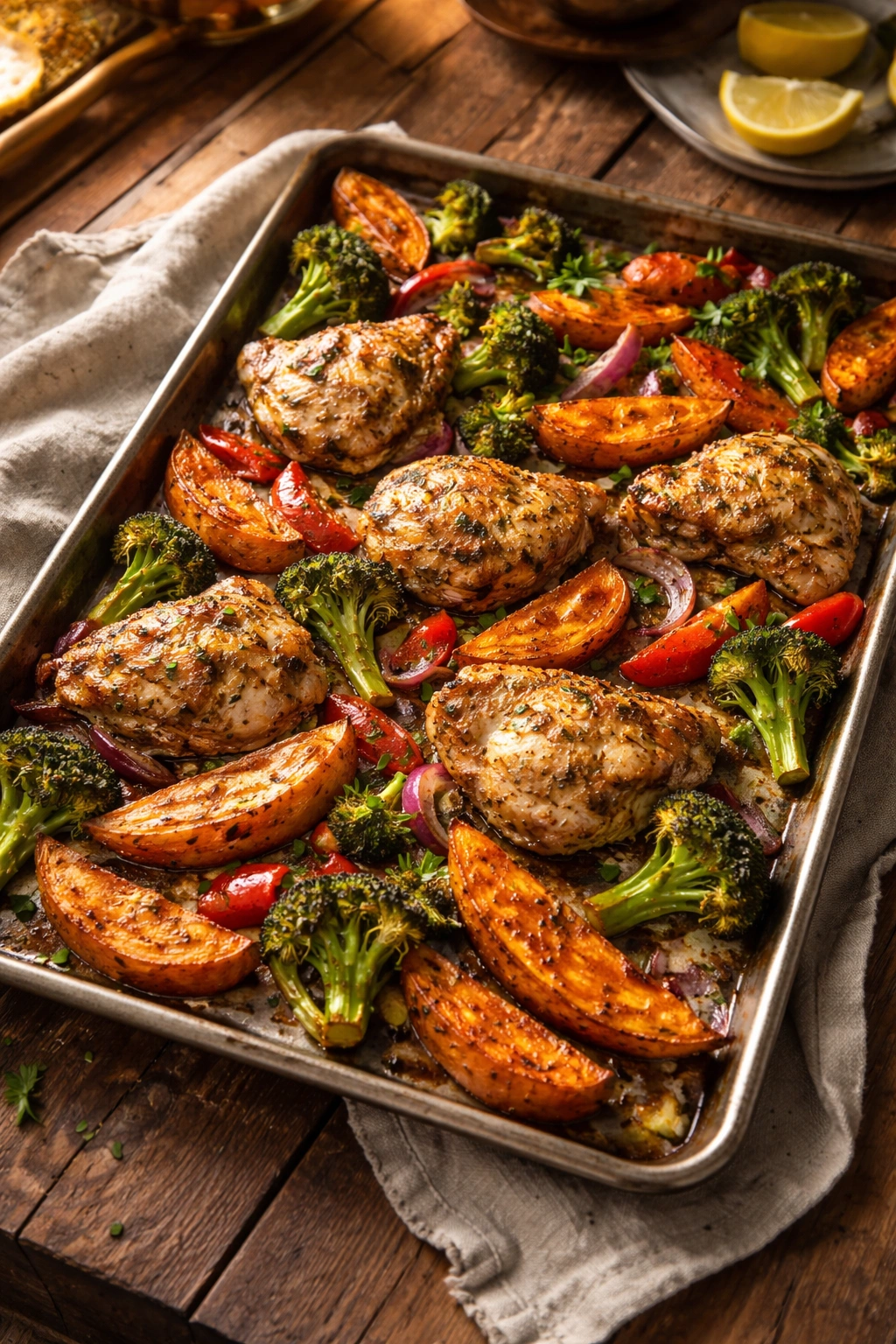
A sheet pan dinner with sweet potatoes, properly seasoned and thoughtfully composed, isn’t a compromise or a shortcut. It’s just smart cooking. You’re getting vegetables that have actually caramelized and developed flavor, protein that’s cooked through and juicy, and the kind of one-dish satisfaction that makes weeknight cooking feel manageable rather than overwhelming.
The key is respecting the basics—good oil, proper spacing, right temperature, adequate seasoning—and then making it your own. Whether you go Mediterranean, Mexican, Asian, or something you completely invent, the formula works. Start your sheet pan dinners this week and you’ll genuinely wonder why you ever spent time managing three different pans and dishes. Once you taste how good this tastes, you’ll be making these regularly. Your weeknights just got a whole lot easier, and your dinner just got a whole lot better.
