



When your workday drains every ounce of energy and the thought of facing a sink full of pans makes you want to order takeout, one-pan dinners become your secret weapon. These meals let you go from hungry to fed without turning your kitchen into a disaster zone. The magic of one-pan cooking goes beyond simple cleanup—when you roast chicken alongside potatoes or simmer shrimp in the same skillet as your vegetables, all those flavors meld together, creating depth that tastes far more complicated than it actually is.
The best part? Everything happens in one vessel. Your protein releases its fat, seasoning the starches around it. Vegetables caramelize in those flavorful drippings. Sauces thicken from pasta starch or vegetable moisture. You get restaurant-quality results with a single pan to wash and maybe a cutting board. For busy weeknights, that kind of efficiency isn’t just convenient—it’s life-changing. Here are ten one-pan dinner ideas that deliver real flavor while keeping your evening cleanup minimal.
1. Skillet Chicken with Creamy Lemon Garlic Orzo
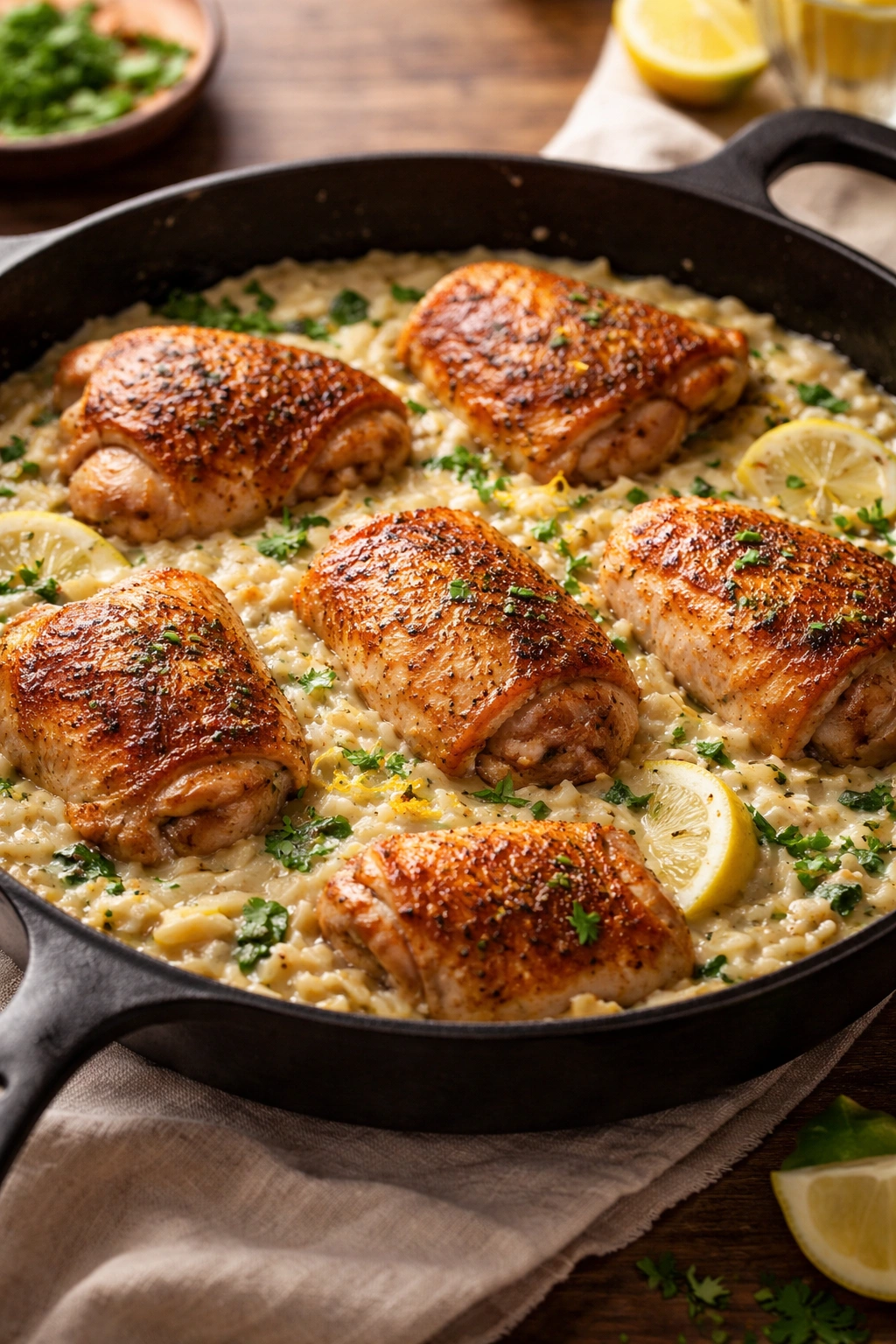
This dish proves that simple doesn’t mean boring. Crispy chicken thighs get pulled from the skillet and set aside while you build a silky sauce right in the same pan using butter, garlic, and lemon juice. The orzo pasta cooks directly in chicken broth, absorbing all that richness and developing a slightly creamy texture from its own starches. By the time everything comes together, you’ve got a cohesive meal that tastes like it took all evening.
Why It Works So Well
The combination of crispy skin and tender meat with a bright, tangy sauce creates contrast that keeps every bite interesting. Chicken thighs stay juicier than breasts when cooked in a single pan because they’re more forgiving with heat and fat content. Starting the thighs skin-side down creates a foundation of rendered fat that seasons everything else in the pan—the garlic gets golden and fragrant, and the orzo becomes creamy without a drop of cream.
How to Build Maximum Flavor
- Sear chicken thighs skin-side down for 5-7 minutes until the skin turns deep golden and fat renders into the pan
- Remove the chicken, sauté minced garlic in that rendered fat until it just turns golden (about 1 minute—don’t burn it)
- Pour in chicken broth and add uncooked orzo directly to the pan, stirring occasionally as it cooks
- When the orzo is nearly tender, nestle the chicken back in, finish with fresh lemon juice and zest, and let it all warm through together
Pro tip: Fresh herbs like dill or tarragon stirred in at the end brighten the whole dish. A handful of baby spinach wilts into the sauce in seconds and adds nutrition without extra dishes.
2. Sheet Pan Greek Chicken and Potatoes
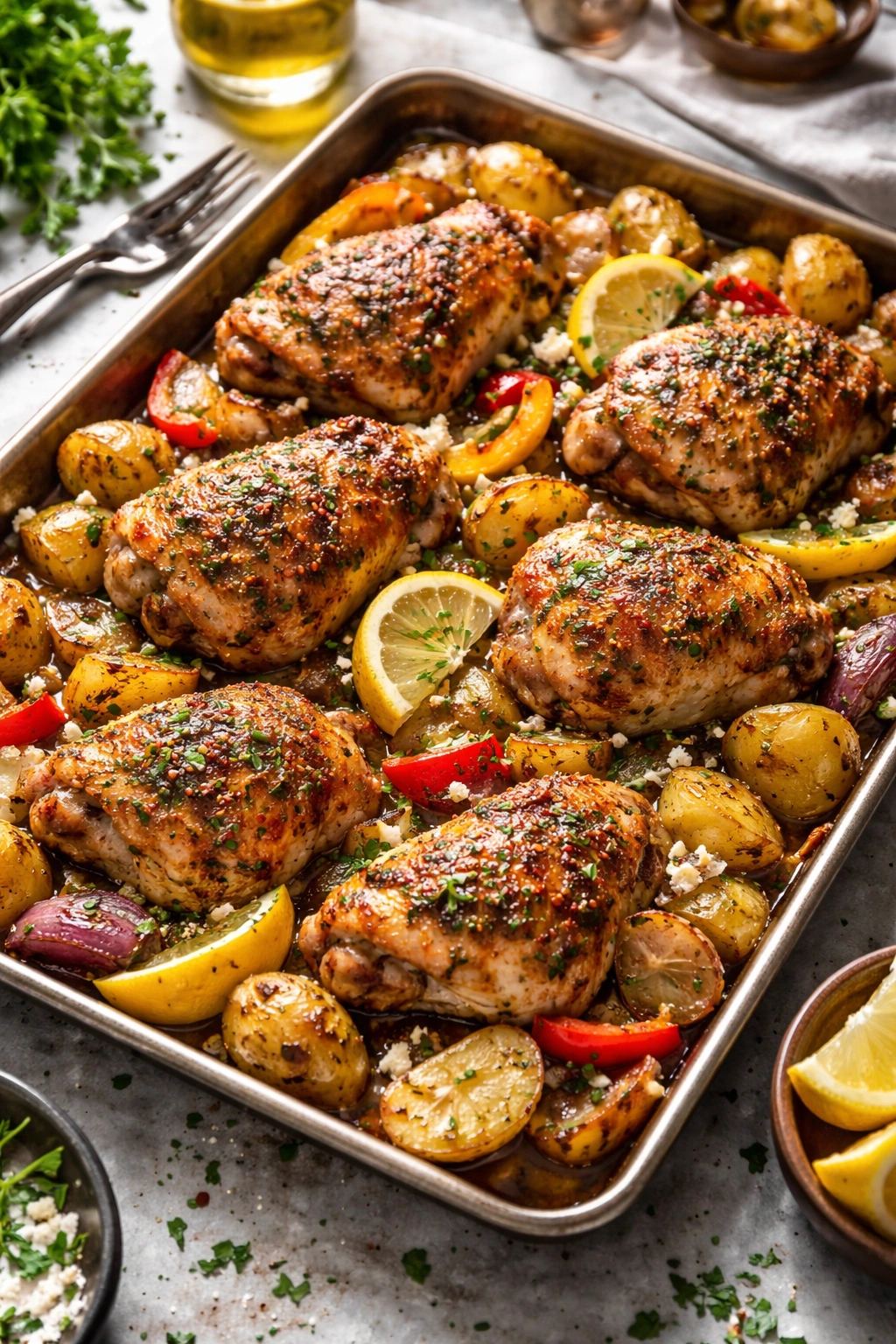
This one-pan wonder relies on the principle that everything benefits from roasting together. Bone-in, skin-on chicken thighs stay juicy while their drippings become a natural sauce for thin-sliced potatoes and bell peppers. A marinade of lemon zest, garlic, oregano, and good olive oil gets rubbed under the chicken skin and tossed with the vegetables, so flavors develop as everything roasts.
The Secret to Juicy Results
Starting with bone-in, skin-on chicken ensures the meat stays tender even at high heat (425°F / 220°C). The bone conducts heat evenly through the meat, and the skin protects the flesh from drying out. Pounding the chicken gently breaks down the meat structure without tearing it, which helps it cook through faster. The key is not moving things around too much—let them sit undisturbed for the first half of cooking so vegetables can caramelize and chicken skin can crisp.
The Complete Setup
- Loosen the skin on chicken thighs carefully and rub the herb-lemon marinade directly onto the meat
- Toss potatoes and peppers with the same marinade and arrange them around the chicken on the sheet pan
- Roast uncovered at 425°F for 35-40 minutes, rotating the pan halfway through
- Top with crumbled feta cheese, Kalamata olives, and fresh herbs in the last few minutes
Worth knowing: This recipe delivers nearly 30 grams of protein per serving and works beautifully cold the next day for lunch. The leftovers taste even better as flavors continue developing overnight.
3. One-Pot Pasta with Italian Sausage and Broccoli Rabe
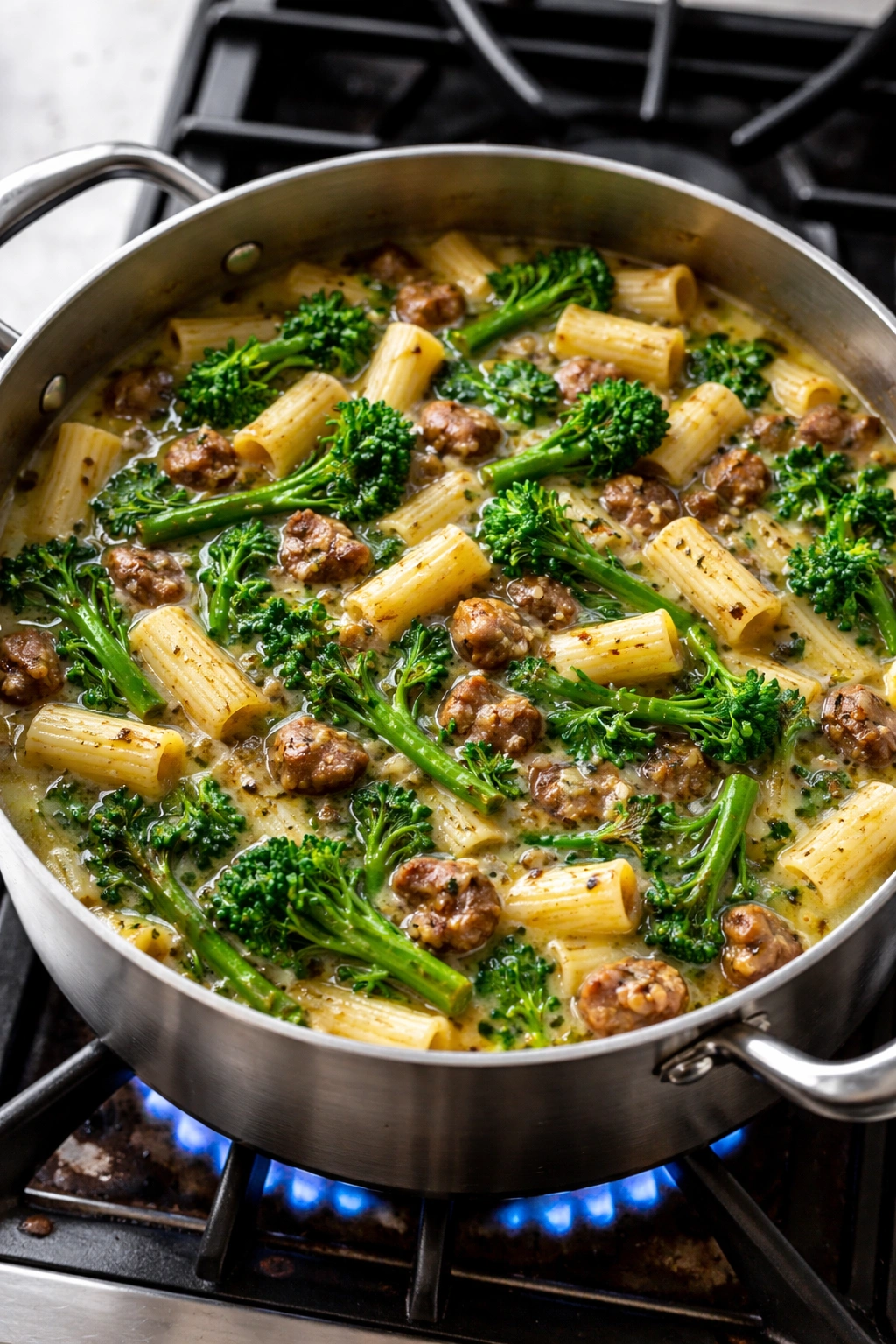
Breaking the rule of boiling pasta separately changes everything. Here, pasta cooks directly in broth with sausage and greens, absorbing liquid as it goes and developing a subtle creaminess from its own starches. You’re building sauce as you cook, not making it separately. The sausage renders its fat, which seasons the pasta, while broccoli rabe wilts into tender bites that tangle through every forkful.
Why Cooking Pasta in Broth Works
When pasta cooks in broth instead of plain water, it becomes a vehicle for flavor rather than a neutral base. The starch released from the pasta emulsifies with the cooking liquid, creating a silky sauce that clings to every piece. This is the same technique risotto uses, but it’s faster and requires far less attention. Start with slightly less liquid than you’d normally use (about 4 cups for a pound of pasta), because the pasta releases moisture as it cooks.
Building This Meal in Stages
- Brown Italian sausage in a large skillet, breaking it into bite-size pieces as it cooks
- Add chopped garlic and red pepper flakes to the rendered fat, toasting for about 30 seconds
- Pour in broth and bring to a simmer, then add uncooked pasta directly to the liquid
- When the pasta is nearly tender (about 2 minutes before package directions suggest), add chopped broccoli rabe and stir frequently for the last couple of minutes
- Finish with a knob of butter and grated Parmesan
Insider note: If your pasta looks too thick at the end, stir in a splash of pasta water or broth to loosen it. If it’s too soupy, let it cook for another minute without stirring—the starch will absorb liquid quickly.
4. Sheet Pan Salmon with Roasted Vegetables
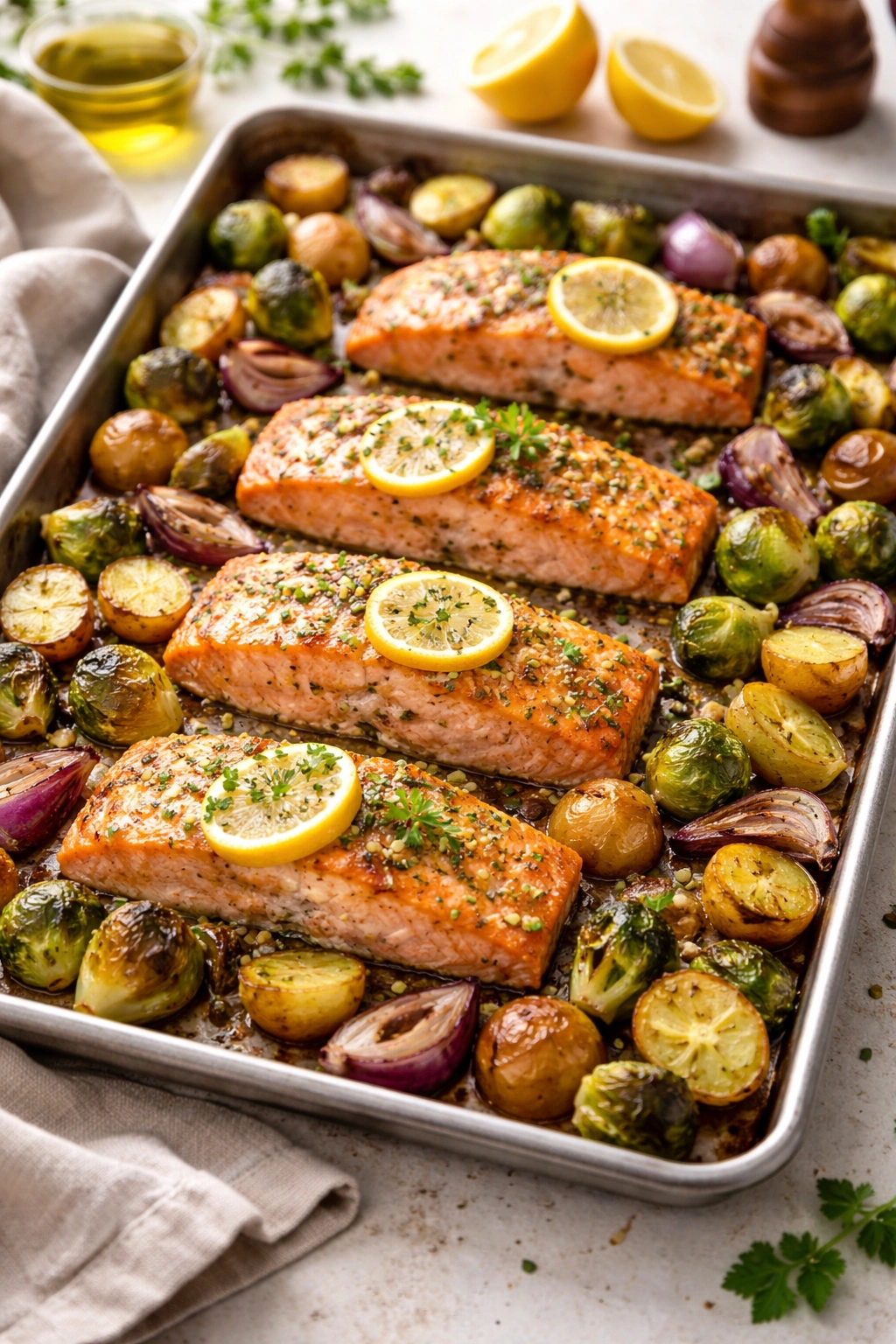
Salmon cooks so quickly that it pairs perfectly with vegetables that need a longer roast, as long as you time it right. Start hardy vegetables like potatoes and Brussels sprouts for 15 minutes, then nestle salmon fillets on top alongside softer vegetables that only need the final 12-15 minutes. Everything finishes at once with minimal fussing, and the salmon’s fat drips onto the vegetables as they roast, naturally seasoning them.
The Timing That Makes It Work
This recipe teaches you to think about cooking times as an asset, not a problem. Hearty root vegetables need 25-30 minutes total; salmon needs about 12-15 minutes depending on thickness. Adding potatoes first, then salmon partway through, means everything’s done at the same moment. You’re not juggling multiple pans or keeping things warm—you pull one sheet pan from the oven and dinner’s ready.
Flavor Development on the Sheet Pan
- Toss potatoes, Brussels sprouts, and red onion with olive oil, salt, and pepper; spread on a sheet pan and roast at 400°F for 15 minutes
- Add salmon fillets seasoned simply with salt, pepper, and lemon zest; nestle them among the vegetables
- Add softer vegetables like asparagus or cherry tomatoes around the salmon
- Roast for another 12-15 minutes until salmon flakes easily with a fork and vegetables are golden and tender
- Finish with fresh dill, lemon juice, and a drizzle of good olive oil
Pro tip: Pat salmon dry before seasoning—moisture is the enemy of a crispy exterior. Placing fillets skin-side down on the sheet pan prevents sticking and creates a protective barrier that keeps the flesh moist.
5. Beef Stir-Fry Fried Rice in a Single Skillet
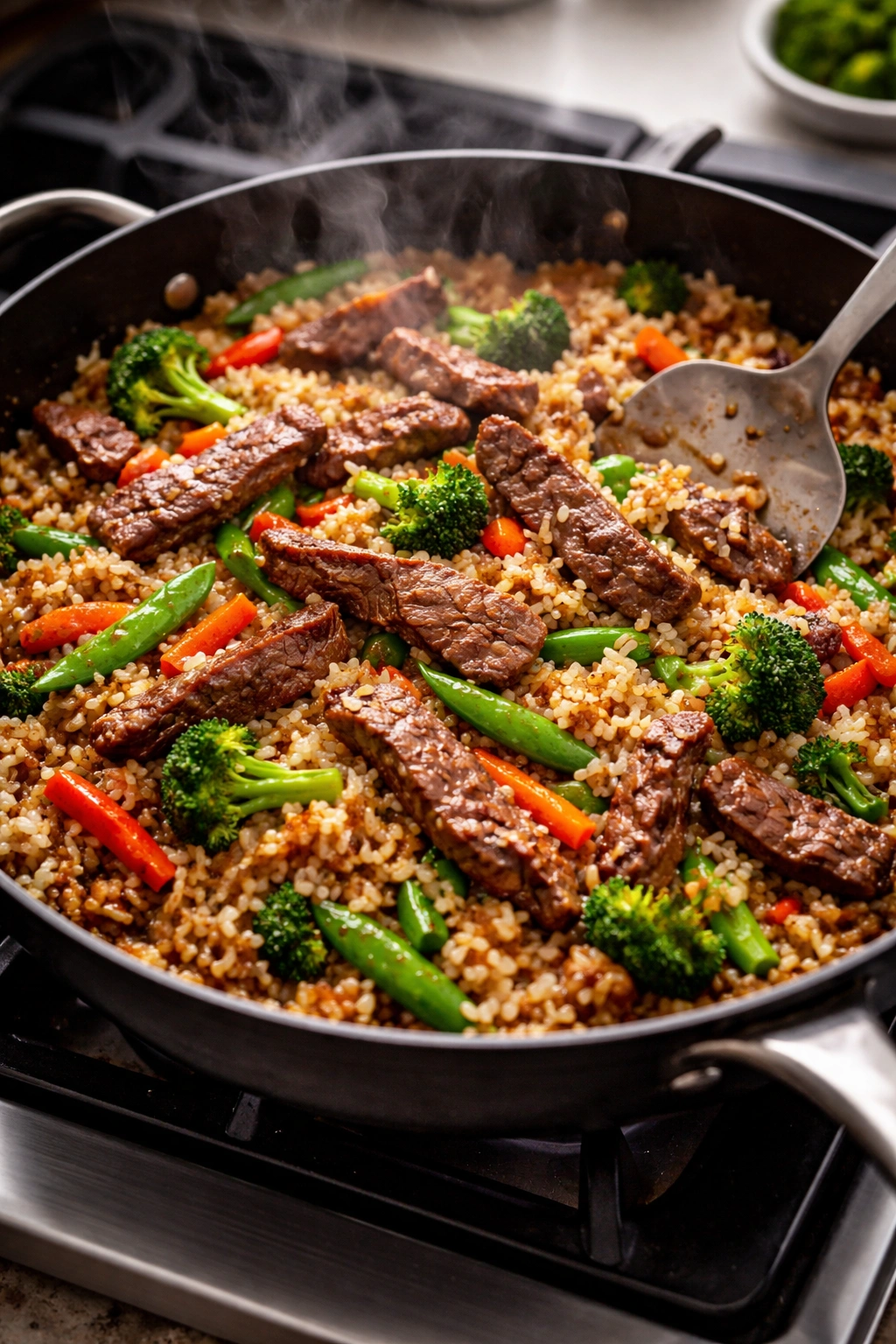
Stir-fry and fried rice traditionally require multiple pans and serious stovetop real estate. This version consolidates everything into one skillet without sacrificing the high heat and constant motion that make stir-fries so appealing. You get tender beef, vegetables with a slight char, and fluffy rice all bound together in a savory sauce—no separate cooking vessels needed.
The Method That Changes Everything
Start with cooked rice (leftover rice works beautifully and actually performs better than fresh). Heat your skillet until it’s smoking hot, sear beef in batches, then set it aside. This prevents overcrowding and ensures a proper crust. With the beef out, your vegetables hit the same hot skillet, cooking quickly and developing char. The rice goes in next, breaking up any clumps and toasting slightly in the residual heat. Finally, the beef returns for a quick toss with sauce, and you’re done.
Building Layers of Flavor
- Heat oil in a large skillet over high heat until it shimmers, then add thinly sliced beef in a single layer
- Leave it undisturbed for 2 minutes to develop a crust, then stir and cook another minute; transfer to a plate
- Add vegetables (broccoli, peppers, snap peas) and stir constantly for 2-3 minutes until they develop color
- Add cooked rice and break up any clumps, stirring frequently for 2-3 minutes
- Return beef to the skillet and drizzle with a sauce of soy sauce, sesame oil, and a touch of honey; toss to coat
Worth knowing: Day-old rice works better than fresh because the grains are drier and separate more easily. If you only have fresh rice, spread it on a plate and refrigerate for at least an hour, or cook it ahead of time and cool it completely.
6. Turkey Meatball Skillet with Creamy Tomato Orzo
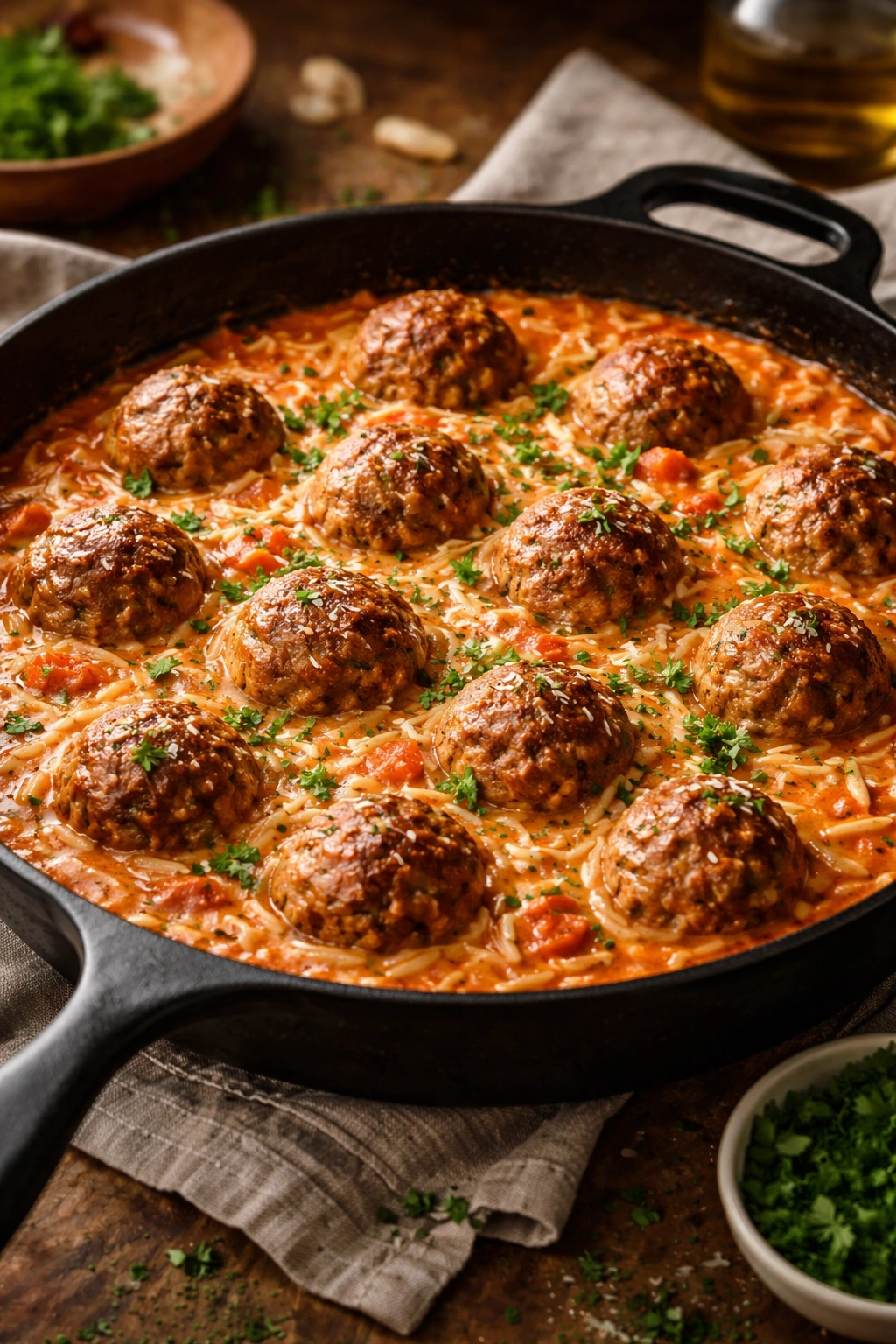
Ground turkey cooks faster than beef and stays lean without sacrificing flavor, especially when you form it into meatballs that brown quickly. These meatballs simmer in a tomato sauce enriched with cream, while orzo pasta cooks right in that same sauce. Everything mingles into a comforting, cohesive dish that feels far more involved than the 30 minutes it actually takes.
Why Ground Turkey Works Here
Turkey is often dismissed as bland, but that’s a problem only when you ignore seasoning. Here, the meatballs get a full complement of herbs, grated cheese, and breadcrumbs that keep them moist and flavorful. Because they’re cooked in sauce rather than standalone, they absorb that tomato richness as they simmer. The cream mellows the acidity of the tomatoes and creates a sauce that clings beautifully to the orzo.
The Complete Cooking Sequence
- Form ground turkey mixed with breadcrumbs, Parmesan, herbs, egg, and salt into 1-inch meatballs
- Brown them in a skillet over medium-high heat, working in batches and setting aside when golden on the outside
- Sauté garlic in the same skillet, then add canned tomatoes and a splash of chicken broth
- Return meatballs to the pan and add uncooked orzo directly to the sauce
- Simmer for about 12-15 minutes, stirring occasionally, until the pasta is tender and the sauce thickens slightly
- Stir in a splash of heavy cream or crème fraîche and finish with fresh basil
Pro tip: Using a combination of herbs—parsley, oregano, and a pinch of Italian seasoning—gives the meatballs complexity that keeps them from tasting one-dimensional. Don’t skip the Parmesan; it adds savory depth and helps bind the mixture.
7. Shrimp and Vegetable Skillet with Cilantro Lime Sauce
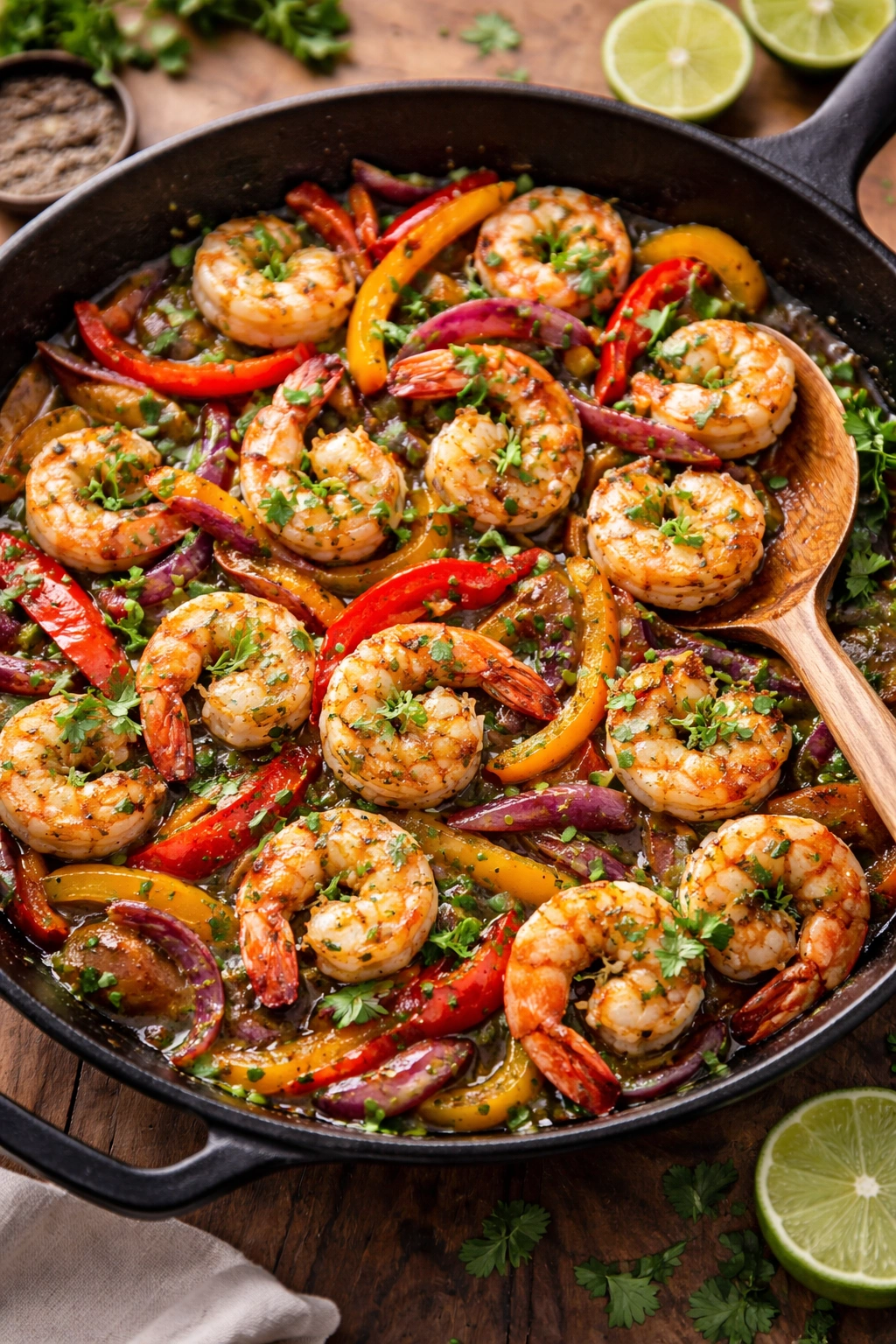
Shrimp cooks in minutes, making it ideal for one-pan dinners when you’re short on time. A quick soak with baking soda and salt keeps the shrimp plump and snappy, while the cilantro lime sauce brings brightness that contrasts beautifully with caramelized onions and peppers. Everything hits the skillet in quick succession, creating a meal ready to serve in under 20 minutes.
The Science Behind Tender Shrimp
Brining shrimp briefly with baking soda raises the pH of their surface, which prevents them from tightening and becoming rubbery when cooked. This same technique is used in restaurant kitchens and makes an enormous difference in texture. Pair this with high heat and minimal cooking time—just a minute or two until the shrimp curl and turn opaque—and you get results that rival any seafood restaurant.
Building the Complete Dish
- Brine shrimp for 15-20 minutes in a mixture of salt, baking soda, and a spoonful of cilantro chutney
- Heat oil in a skillet over medium-high heat and cook sliced onions and bell peppers until caramelized and soft (about 8-10 minutes)
- Push vegetables to the sides of the pan and add shrimp to the center, cooking until just cooked through (about 1-2 minutes per side)
- Stir everything together, then finish with cilantro chutney and a squeeze of lime
- Serve over rice or with flatbread to soak up the fragrant, spicy sauce
Insider note: Don’t overcrowd the skillet when cooking shrimp. Working in batches takes an extra minute but ensures proper browning and even cooking. Overloaded pans steam instead of sauté, leaving shrimp pale and less flavorful.
8. Sheet Pan Fajitas with Peppers and Onions
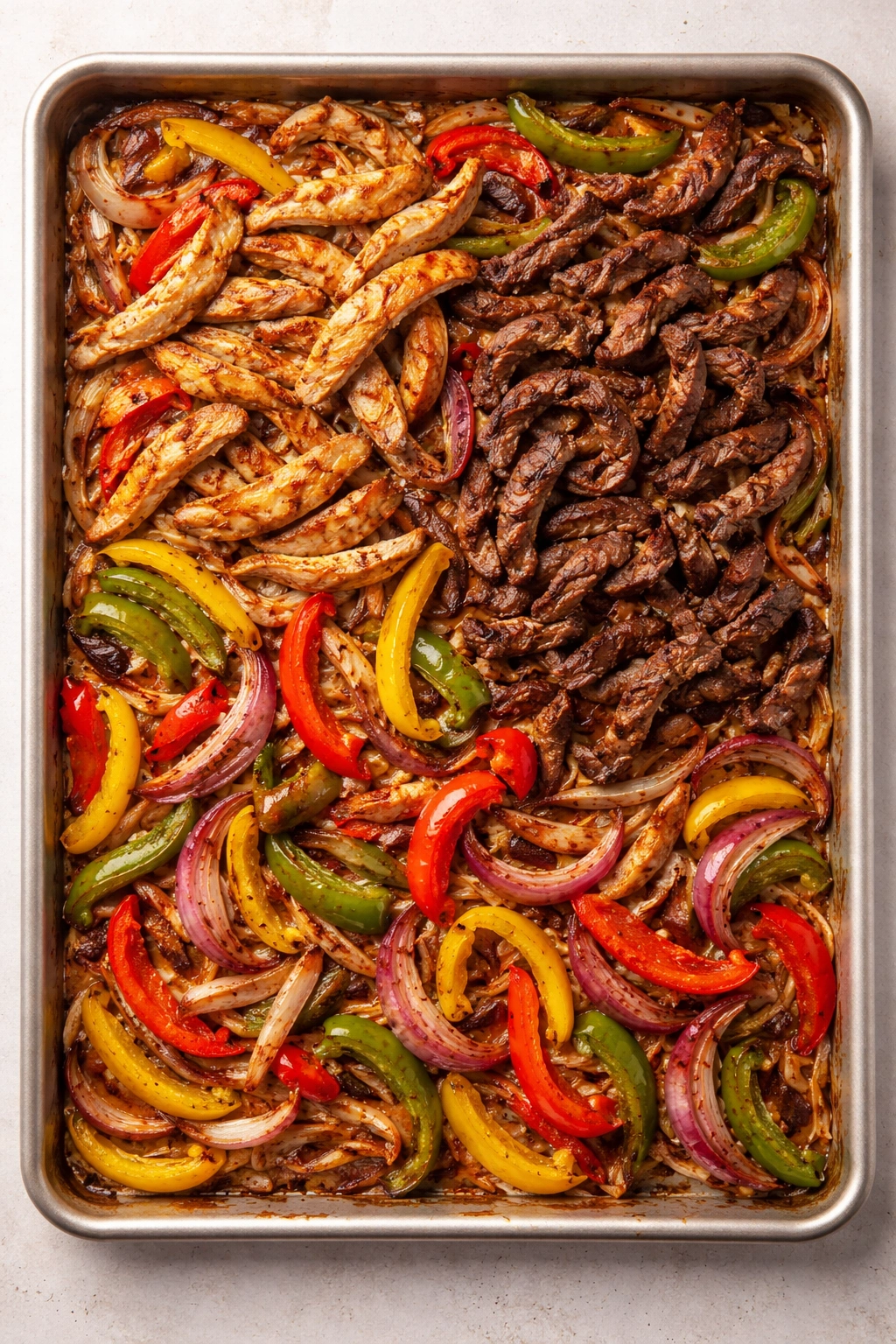
Fajita components roast beautifully on a sheet pan with chicken or beef, bell peppers, and onions all caramelizing together. The meat’s juices season the vegetables as they cook, and everything comes out with that slightly charred, deeply savory flavor you’d normally get from a well-seasoned skillet on the stovetop. Serve with warm tortillas and your favorite toppings for an interactive meal that feels special without the work.
Why Sheet Pan Cooking Enhances Fajitas
Traditional fajitas require careful heat management and frequent stirring to achieve proper char while keeping proteins tender. A sheet pan simplifies this by surrounding everything with even heat from all sides. The vegetables caramelize from the dry heat of the oven, intensifying their natural sweetness, while the protein cooks through gently. You’re not standing over the stove watching for hotspots—you’re doing something else entirely.
Building Perfect Fajitas
- Slice chicken breasts or beef sirloin into thin strips and bell peppers and onions into thick slices
- Toss everything with a mixture of oil, lime juice, cumin, chili powder, garlic, and salt
- Spread in a single layer on a sheet pan and roast at 425°F for 15-20 minutes, stirring halfway through
- Remove from the oven and let rest for 2-3 minutes, which allows the proteins to relax and reabsorb juices
- Transfer to warm tortillas and top with avocado, sour cream, cilantro, and lime
Worth knowing: The resting period after cooking is crucial. It allows residual heat to finish cooking the centers while the exterior sets slightly, resulting in meat that’s tender and juicy rather than stringy and tough.
9. Chicken Pot Pie Skillet
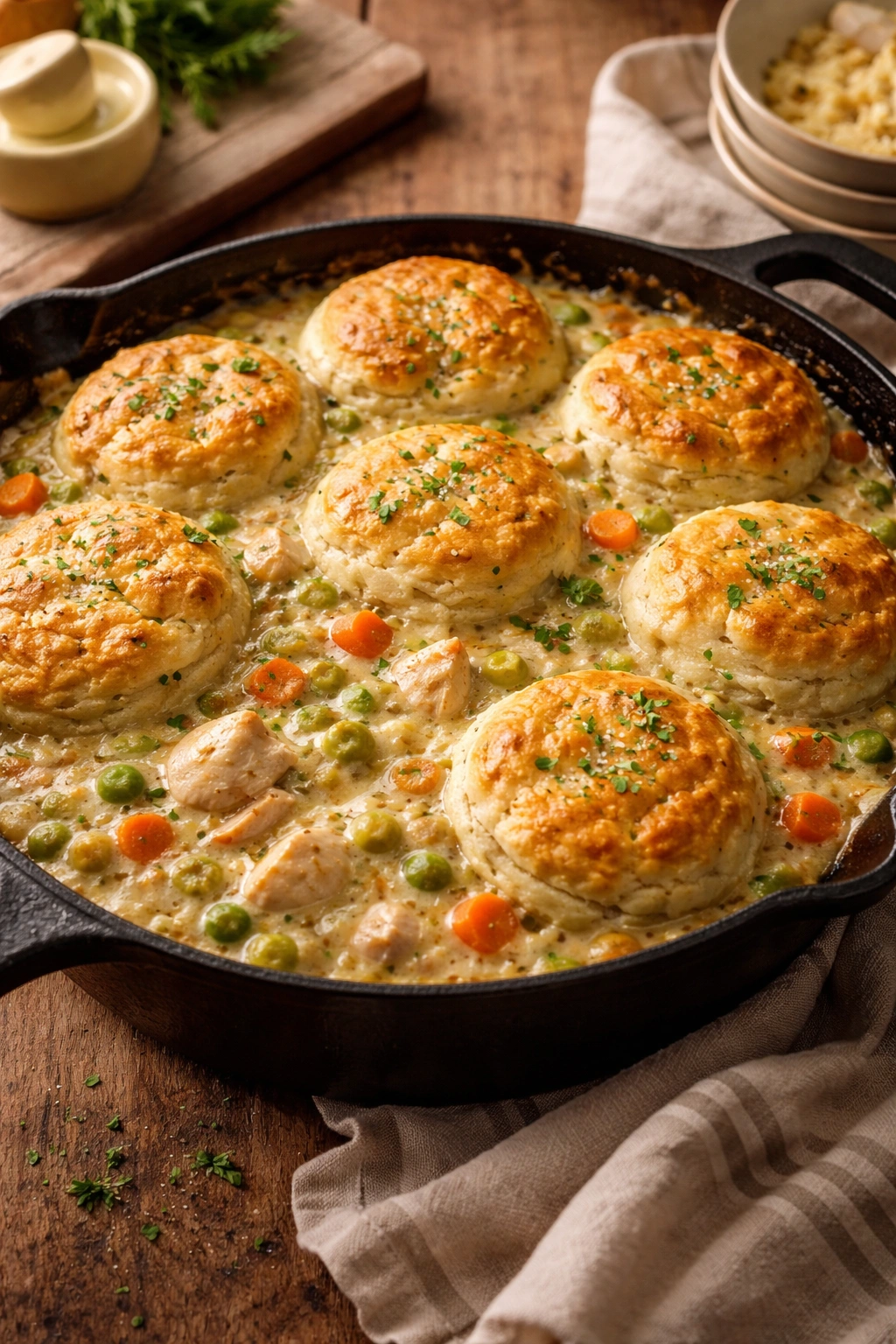
Traditional chicken pot pie requires making a roux-based sauce, cooking vegetables separately, preparing chicken, and then baking in the oven with pastry on top. This skillet version achieves all those flavors and textures in one pan without the fussing. Tender chicken, vegetables, and a creamy sauce come together quickly, topped with buttery biscuit crust that bakes right on top in the oven or under the broiler.
Streamlining a Classic Comfort Food
The genius of this approach is skipping the separate cooking steps. Chicken cooks quickly in pieces (whether cubed breasts or shredded thighs), vegetables soften in the same pan, and a simple roux thickens the broth into sauce. By keeping everything together, you build flavor through layering—the chicken releases gelatin and proteins that enrich the broth, vegetables give up their moisture and sweetness, and the roux carries everything into silky comfort.
The Practical Method
- Sauté diced onions, carrots, and celery in a large oven-safe skillet until soft (about 5 minutes)
- Push vegetables to the sides and cook diced chicken in the center until cooked through (about 6-7 minutes)
- Sprinkle flour over everything and stir constantly for 1 minute to form a roux
- Pour in chicken broth and a splash of cream, stirring until smooth and thickened (about 2-3 minutes)
- Add peas and fresh thyme, then top with biscuit dough (store-bought is perfectly acceptable)
- Bake at 375°F for 15-20 minutes until biscuits are golden and the filling is bubbling at the edges
Pro tip: Using a cast-iron skillet makes this even easier because it can go directly from stovetop to oven without transferring. If your skillet isn’t oven-safe, transfer everything to a baking dish after the filling thickens.
10. Kielbasa and Potato Skillet
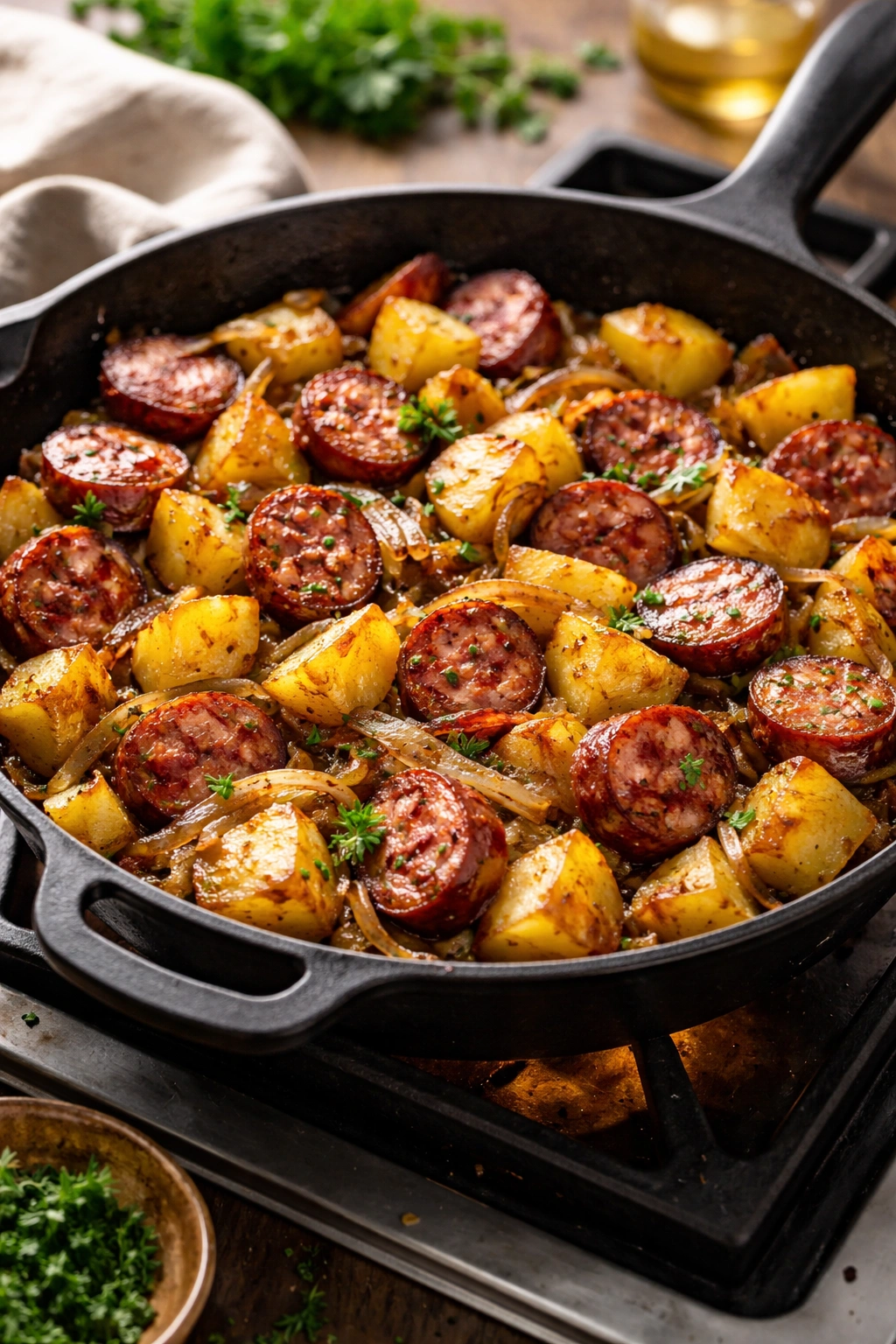
This is comfort food in its purest form—smoky sausage, golden potatoes, and soft onions all seasoned together with minimal ingredients. Everything happens in one skillet, with potatoes going in first to develop a head start, then kielbasa getting seared for flavor, and finally onions adding sweetness that balances the savory elements. It’s the kind of meal that tastes like home cooking at its finest.
The Appeal of Simplicity
There’s elegance in knowing that excellent food doesn’t require complicated techniques or exotic ingredients. Kielbasa’s inherent smokiness means you don’t need much else. Good quality sausage already has the spice and salt needed; all you’re doing is bringing those flavors forward through proper cooking. The potatoes absorb seasoning from the sausage fat and develop golden, crispy edges. Onions caramelize slowly, turning sweet and tender.
The Straightforward Assembly
- Cut potatoes into bite-size pieces and arrange in a skillet with butter, salt, and pepper
- Cook over medium heat for 10-12 minutes, stirring occasionally, until potatoes are golden and nearly tender
- Slice kielbasa into coins and push potatoes to the sides of the pan, searing sausage for 2-3 minutes per side
- Add sliced onions and a splash of broth or beer, if you like (it adds richness), and simmer for another 5 minutes
- Finish with fresh parsley or chives and serve directly from the skillet if you’re keeping things casual
Worth knowing: Cutting potatoes into uniform small pieces ensures everything finishes at the same time. Larger chunks will still be firm while smaller pieces turn to mush if you’re not careful with your knife work.
Final Thoughts
One-pan cooking isn’t about cutting corners or sacrificing quality—it’s about working smarter and understanding how flavors develop when ingredients share the same vessel. Every one of these dinners proves that some of the best meals come together with minimal fussing and maximum efficiency. The vegetables taste better because they absorb the fat and drippings from the protein. The starches become richer because they cook in flavorful broth rather than plain water. The proteins stay more tender because they’re cooking in a moist environment rather than exposed directly to high, dry heat.
Once you get comfortable with the basic approach—starting with proteins, building aromatics in the rendered fat, adding starches and vegetables in the right sequence—you’ll find yourself reaching for these recipes constantly. They fit real life: busy days when you barely have time to think, let alone cook; evenings when the idea of facing a pile of dishes makes your heart sink; nights when you want something that tastes homemade but doesn’t demand hours in the kitchen. These ten one-pan dinners deliver on all those fronts. You’ll find yourself making them again and again, each time tweaking them slightly based on what’s in your produce drawer or freezer. That’s the real beauty of one-pan cooking—it’s flexible, forgiving, and always delicious.
