



When you’re staring at the clock on a weeknight and wondering what to throw together for dinner, sausage is your secret weapon. This humble ingredient transforms from plain protein into the star of hearty, flavorful meals that come together in minutes rather than hours. Whether you’ve got smoked kielbasa in your fridge, fresh Italian sausage links, or spicy chorizo waiting to be used, these 10 dinner ideas prove that sausage dishes don’t require complicated techniques or endless prep work—they just require a little creativity and some smart seasoning choices.
What makes sausage so brilliant for busy weeknights isn’t just the convenience factor, though that’s certainly part of it. It’s that sausage comes pre-seasoned and packed with enough flavor to carry an entire meal. You can build around it in dozens of ways: sheet pan dinners that require almost zero cleanup, one-skillet meals that go straight from stovetop to table, pasta dishes that taste like you spent hours on a simmering sauce, and hearty soups that feel like comfort food without the effort. The beauty is that most of these dinners come together in 30 minutes or less, which means you can have supper on the table before anyone gets too hungry or hangry.
The sausage dinners that follow aren’t just quick—they’re genuinely delicious. These are the kinds of meals your family will actually request on repeat, not dishes you’re making just because you’re short on time. I’ve pulled together proven recipes and techniques that home cooks have tested and loved, combined with smart strategies for maximizing flavor while minimizing fuss. Let’s dig into 10 sausage dinner ideas that will become your new weeknight rotation.
1. Sheet Pan Sausage and Vegetables
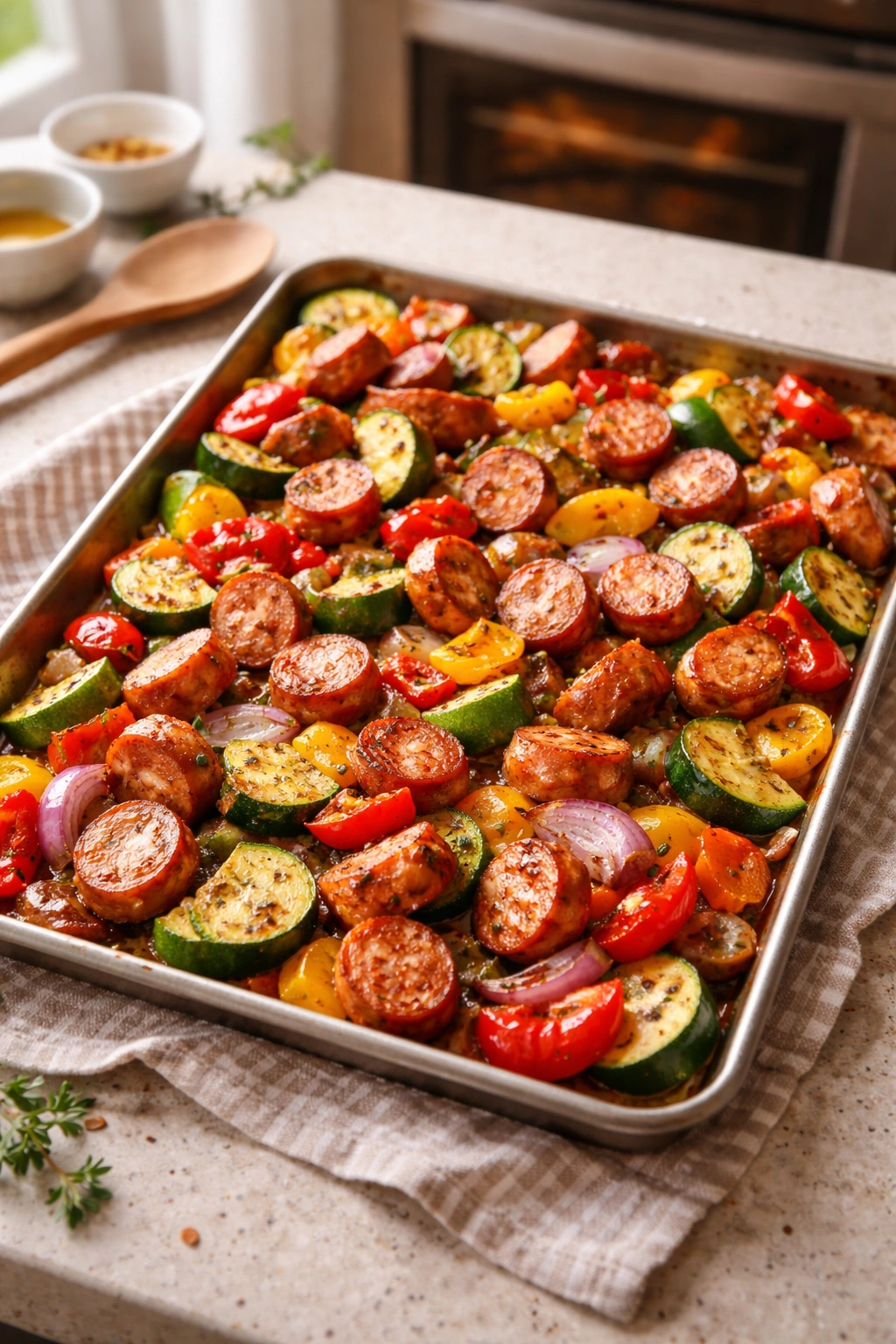
Sheet pan dinners are the ultimate weeknight shortcut, and when you load one with sausage and fresh vegetables, you’ve essentially created a complete meal that requires minimal attention. This approach lets you throw everything onto a single pan, slide it into the oven, and walk away while the heat does the work for you. The beauty is that vegetables caramelize while they roast, developing a natural sweetness that pairs perfectly with savory, seasoned sausage.
Why It’s Perfect for Busy Nights
The genius of sheet pan cooking lies in the cleanup department—you’ve got one pan to wash instead of three or four. Beyond that, the hands-on time is genuinely minimal. You’re chopping vegetables and arranging them on a pan with sausage and olive oil, then the oven handles everything else. There’s no standing over a stove, no stirring, no babysitting. Meanwhile, everything roasts together, allowing flavors to meld and vegetables to soften into tender, slightly caramelized pieces that taste far more complex than their simplicity suggests. The sausage releases its flavorful oils, which coat the vegetables and season them naturally throughout the cooking process.
How to Build Your Sheet Pan
Start with 1 to 1.5 pounds of sausage—smoked kielbasa, Italian sausage links, or chicken sausage all work beautifully—sliced into rounds or cut into chunks if using links. Toss them onto a foil-lined baking sheet with your choice of vegetables cut into similar-sized pieces so they cook evenly. Bell peppers in multiple colors add visual appeal and sweetness, while red onions contribute depth, zucchini brings freshness, baby potatoes or root vegetables add heartiness, and mushrooms bring an earthy note. Drizzle everything with olive oil, season with salt, pepper, garlic powder, paprika, and dried herbs like oregano or Italian seasoning, then roast at 400°F for 25 to 30 minutes, stirring halfway through. The sausage should be browned and any potatoes should be tender. Finish with fresh parsley and maybe a sprinkle of Parmesan cheese. You can easily double this recipe for a crowd or for meal prep portions.
2. One-Pot Sausage Pasta
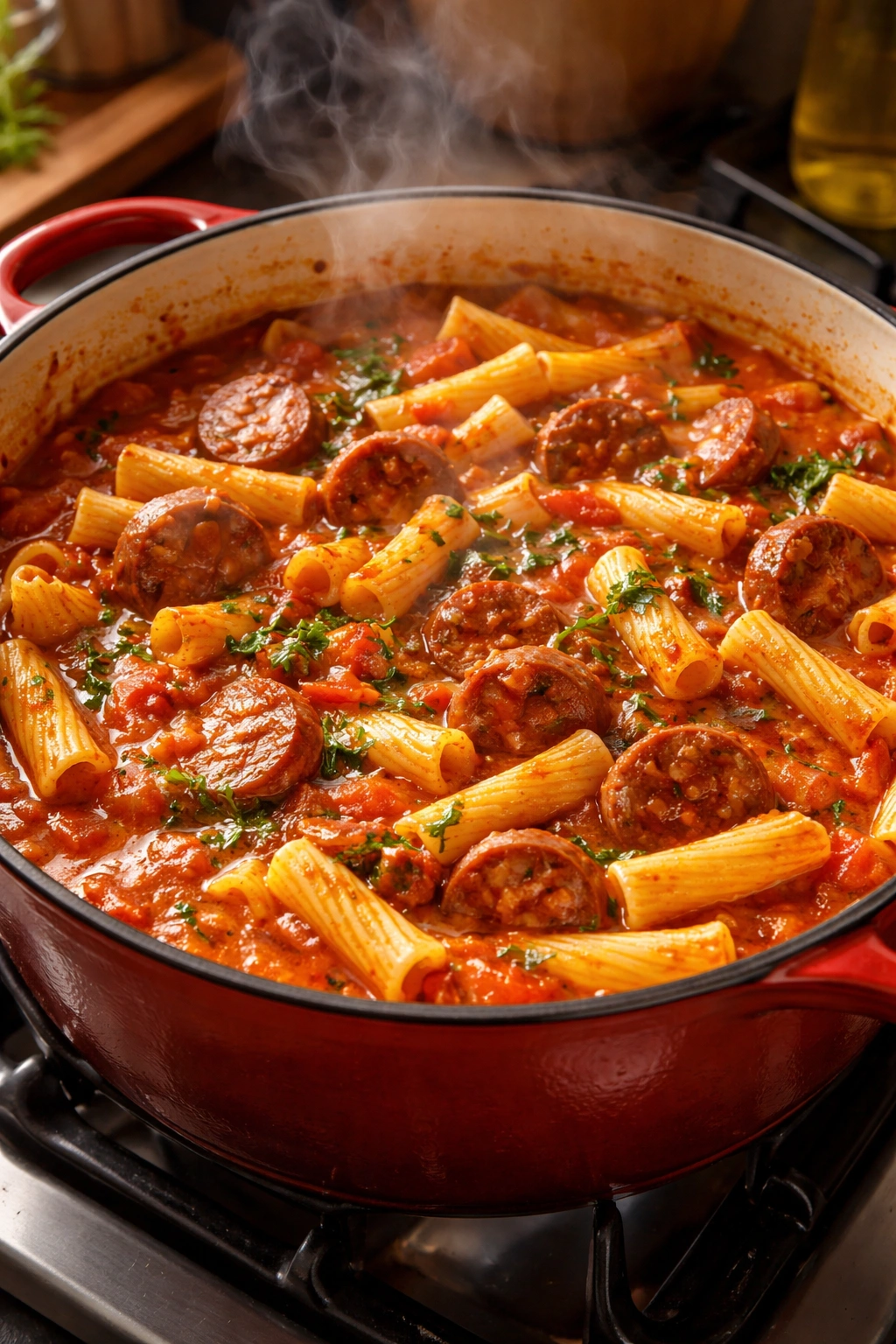
There’s something deeply satisfying about a sausage pasta that tastes like it simmered for hours but actually came together in about 30 minutes. This is the kind of dish that proves sausage doesn’t need a complicated sauce—it brings enough seasoning and richness on its own to carry a simple tomato-based pasta dish. The sausage pieces break down slightly as they cook, their flavors infusing the sauce and creating a deeply satisfying meal.
The Magic of One-Pot Cooking
One-pot pasta dishes eliminate the need to manage multiple pans simultaneously, which is a genuine game-changer on busy weeknights. You brown the sausage first, building up flavorful browned bits on the bottom of the pot—this is called the fond, and it’s where tons of flavor lives. Then you add aromatics like garlic, maybe some diced onion or mushrooms, then pasta sauce (store-bought is absolutely fine), some broth or water, and the pasta itself. Everything simmers together until the pasta is tender and has absorbed all those delicious flavors. The result tastes like you made a proper ragù, but you’ve actually just walked away and let the heat do the work.
Building Your Perfect Version
Use 1 pound of Italian sausage (spicy, mild, or sweet depending on your preference), browned and crumbled in a large pot or Dutch oven. Add 3 to 4 cups of tomato sauce—marinara, traditional tomato sauce, or even fire-roasted tomato sauce all work. Include 2 to 3 cups of broth and about 12 ounces of pasta (short shapes like penne or farfalle work best). Bring everything to a boil, then reduce heat and simmer uncovered for 12 to 15 minutes until the pasta is tender. For extra vegetables, add fresh spinach, diced mushrooms, or bell peppers right at the end—the spinach wilts down in minutes. Top with fresh basil, parmesan cheese, and red pepper flakes. This freezes beautifully too, making it perfect for meal prep.
3. Skillet Sausage and Peppers
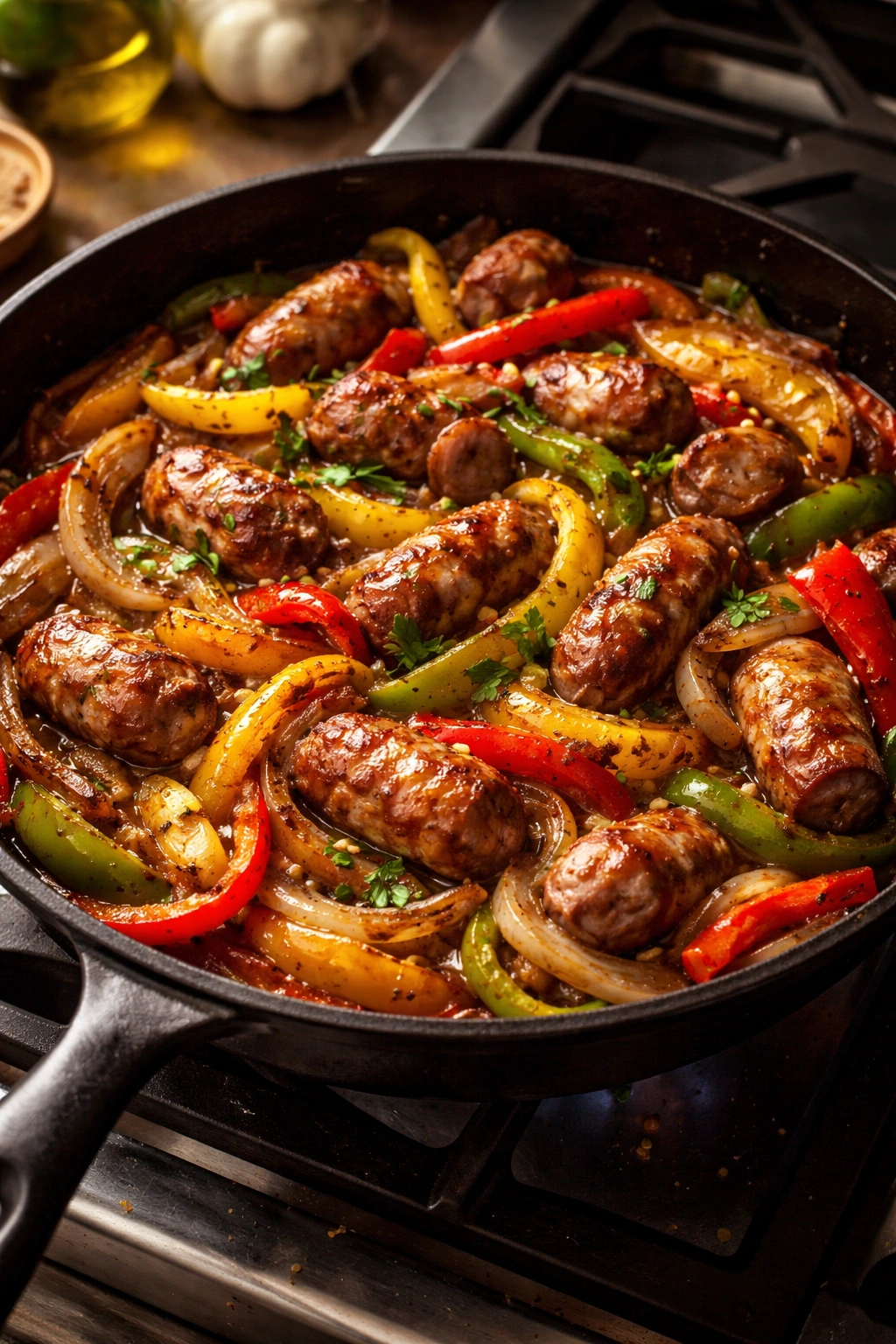
The classic combination of sausage, bell peppers, and onions is a classic for good reason—the sweet caramelized peppers and onions balance the savory, seasoned sausage in a way that feels both simple and sophisticated. This is the kind of straightforward skillet meal that lets you see exactly what you’re eating, and tastes better than you’d expect from such minimal effort.
Why This Combination Works
Bell peppers and onions become incredibly sweet when they’re given time to caramelize over medium heat, developing a depth of flavor that would be impossible if you rushed them. That sweetness plays beautifully against the bold, herbaceous notes in Italian sausage. Garlic adds another aromatic layer, while a splash of broth or wine helps deglaze the pan, lifting up all the browned, flavorful bits stuck to the bottom. The whole thing comes together with about 20 minutes of active cooking, but it tastes like you’ve been tending a simmering sauce for hours.
Step-by-Step Approach
Heat a large skillet over medium-high heat with a bit of olive oil. Add sausage links (1 to 1.5 pounds) and brown them on all sides for about 2 to 3 minutes per side—they won’t be cooked through at this point, which is fine. Remove them and slice into rounds, then set aside. In the same skillet, add sliced onions and bell peppers (a mix of colors looks beautiful), cook them with a pinch of salt for about 5 minutes while stirring occasionally. Add minced garlic, then pour in chicken broth or a splash of red wine, scraping the bottom to release those flavorful bits. Return the sausage to the skillet, reduce heat to medium, cover, and simmer for about 10 minutes until everything is cooked through and the peppers are soft but still have some texture. Finish with fresh herbs like parsley and basil. This is wonderful served over pasta, rice, polenta, or crusty bread.
4. Sausage and Rice Skillet
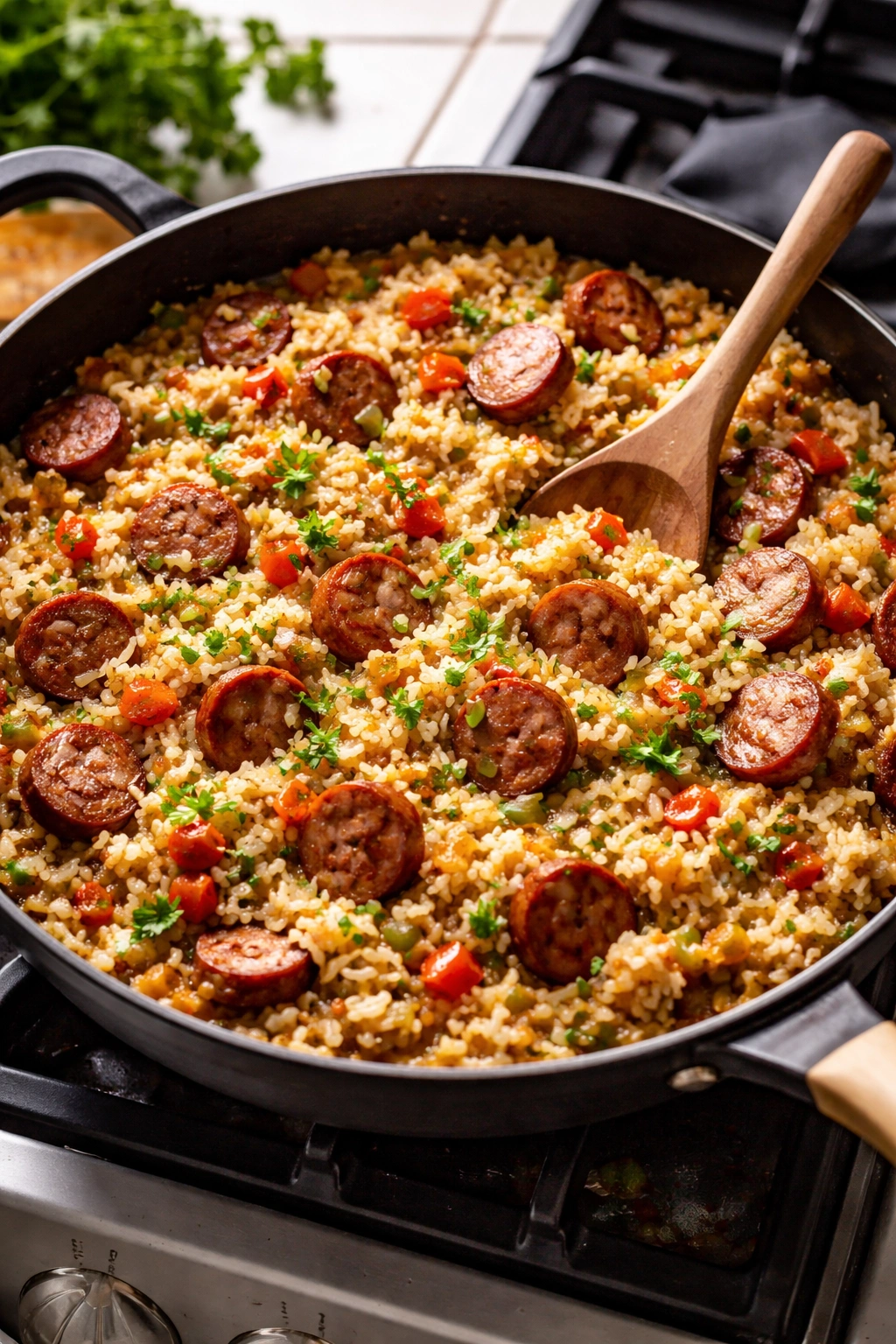
A one-skillet sausage and rice dinner is exactly what you need when you want something that feels complete without requiring multiple components. The rice soaks up all the savory sausage flavors as it cooks, making every grain taste rich and satisfying. This is the kind of dinner that’s genuinely economical—you’re using humble ingredients that most families keep on hand—yet tastes special enough for company.
Why Rice Works Magic with Sausage
Rice is like a flavor sponge, absorbing the seasoned broth and sausage oils as it cooks. You’re not just heating up rice; you’re building a cohesive, flavorful dish where every component supports the others. The technique is simple: brown the sausage, add aromatics, toast the rice briefly (this step adds a subtle nuttiness), then add broth and let everything simmer together. The rice finishes tender, flavored throughout, with chunks of sausage distributed throughout. There’s no draining, no separating—it all comes together in one pan.
Creating Your Skillet Version
Brown 1 pound of sliced smoked sausage or crumbled Italian sausage in a large skillet, then remove it and set aside. In the same skillet, sauté diced onion and bell pepper until they’re softened, about 3 to 4 minutes. Add minced garlic and your choice of seasonings—Cajun spices for a Louisiana-inspired version, Italian seasoning for a more Mediterranean feel, or simple salt and pepper with some paprika. Add 1.5 cups of uncooked rice and toast it in the pan for about 2 minutes, stirring constantly. This develops a subtle nutty flavor. Pour in 3 cups of broth (chicken broth works for any flavor profile), return the sausage to the pan, bring to a boil, then reduce heat and cover. Simmer for about 18 to 20 minutes until the rice is tender and liquid is absorbed. You can add black beans, diced tomatoes, or frozen vegetables during the last few minutes of cooking. Finish with fresh cilantro or parsley depending on your flavor direction.
5. Cajun Sausage and Pepper Pasta
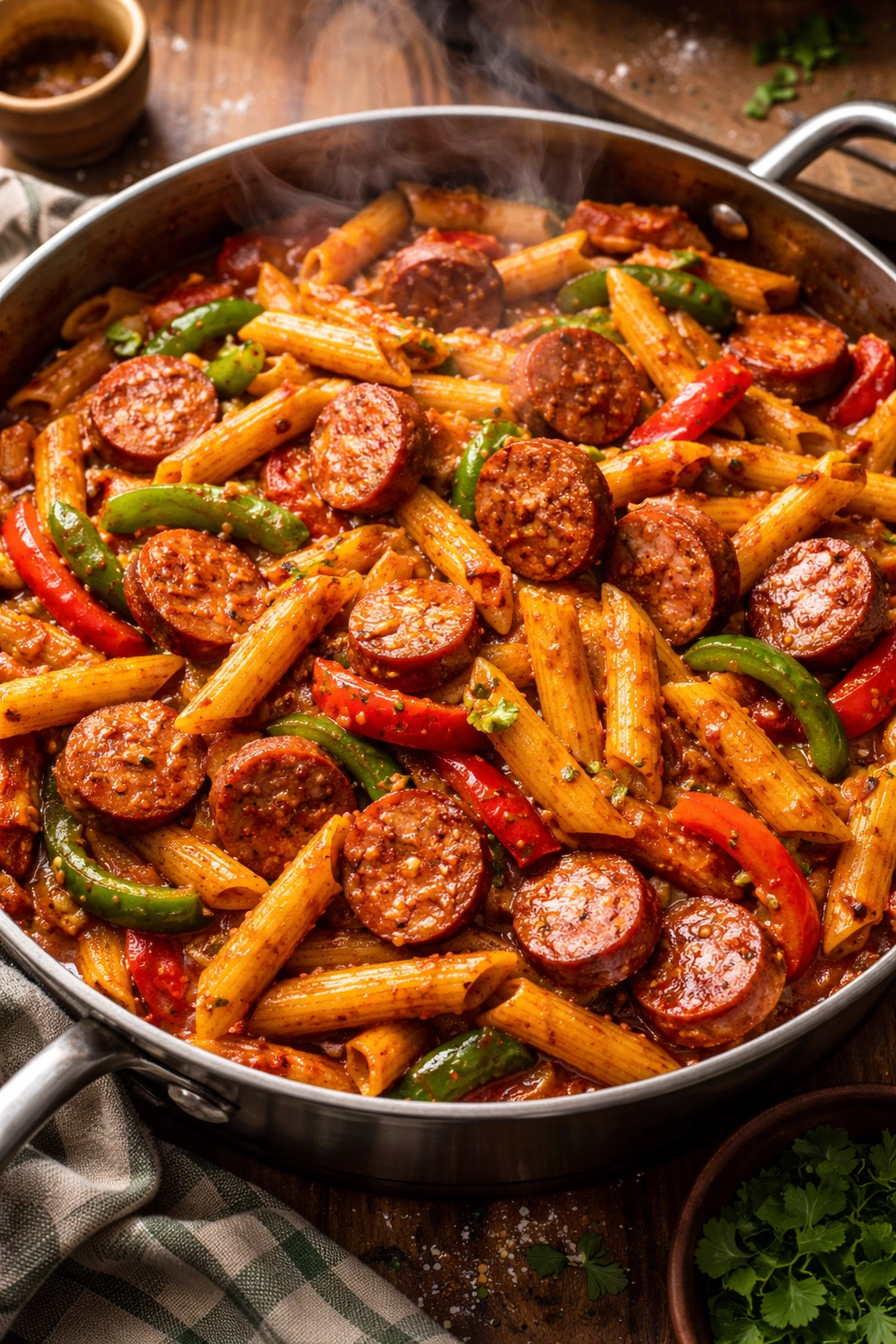
If you want a sausage pasta that tastes bold and flavorful without requiring special ingredients or complicated techniques, a Cajun-spiced version delivers in every way. The warm spices of Cajun seasoning—a blend of paprika, cayenne, garlic powder, onion powder, thyme, and oregano—transform simple sausage and pasta into something that tastes like it came from a New Orleans restaurant kitchen. You don’t need to actually be in the South to make this; you just need smoked sausage, your favorite pasta shape, and the right spice blend.
What Makes Cajun Seasoning So Special
Cajun spices hit you with warmth and complexity rather than just heat. There’s usually a bit of cayenne for spice, paprika for smokiness and color, garlic and onion powder for savory depth, and herbs like thyme and oregano for an earthy quality. When you bloom these spices in a hot pan with sausage and aromatics, they become incredibly fragrant and flavorful. They wake up the dish without requiring you to do anything fancy—it’s literally just seasoning and good technique. The result is a pasta that tastes like a restaurant creation but takes about 30 minutes from start to finish.
Building Your Cajun Version
Slice 1 pound of smoked sausage into rounds and brown them in a large skillet over medium-high heat for a few minutes, then remove and set aside. In the same pan, sauté diced bell peppers and onions until they’re softened. Add minced garlic and 1.5 to 2 tablespoons of Cajun seasoning (adjust based on heat preference), then cook for about a minute until it’s fragrant. Add fire-roasted diced tomatoes (one 14-ounce can, drained), about 1 cup of chicken broth, and return the sausage to the pan. Simmer for about 10 minutes. Meanwhile, cook your pasta separately and drain it. Add the cooked pasta to the sausage mixture and toss everything together. You can thin it with more broth if you prefer a saucier consistency. Finish with sliced green onions and serve with hot sauce on the side so people can add more heat if they want it.
6. Breakfast for Dinner Sausage Casserole
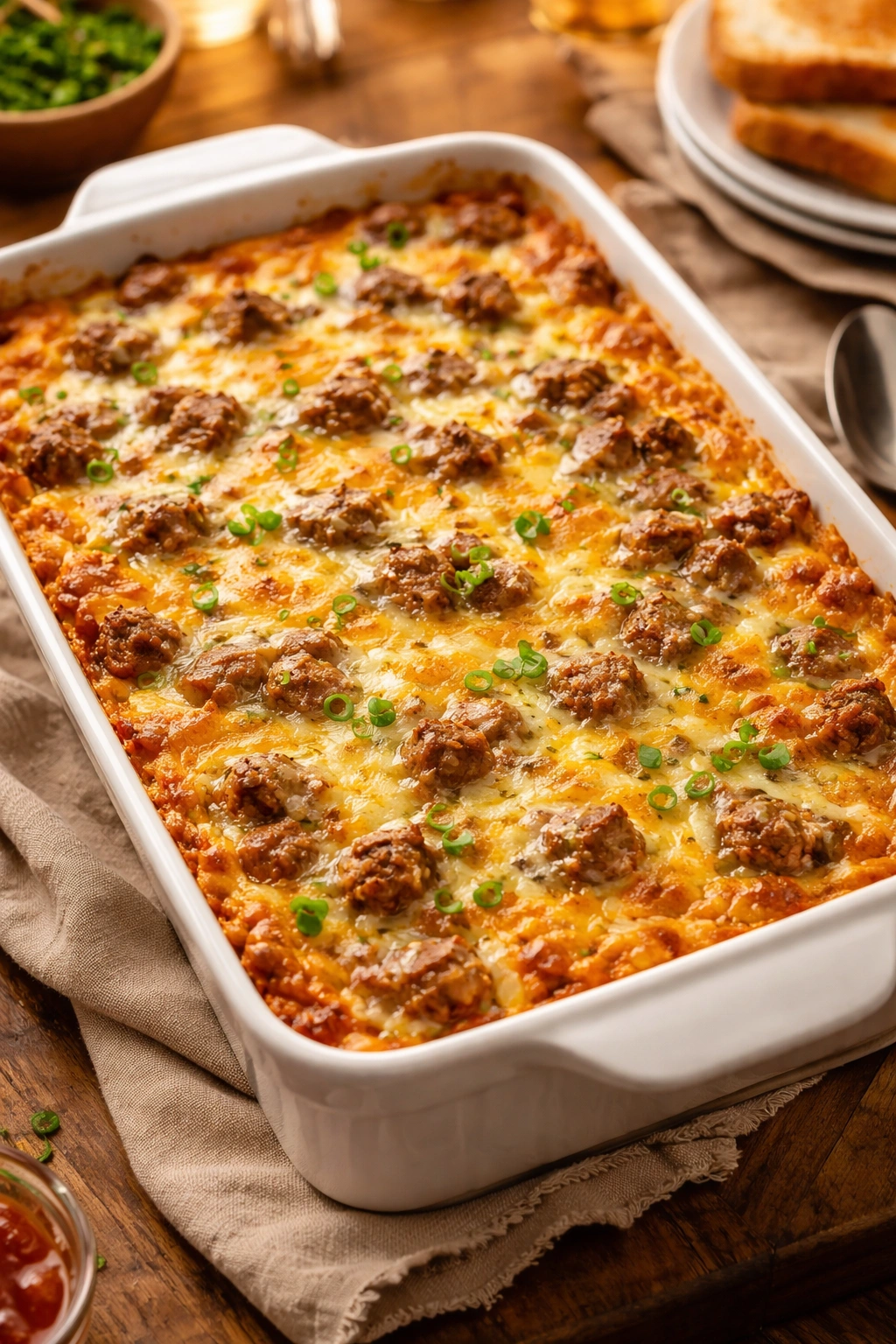
There’s no rule that says breakfast food belongs only at breakfast time, and a sausage breakfast casserole for dinner is the kind of cozy, satisfying meal that makes everyone happy. The combination of eggs, sausage, cheese, and vegetables (if you add them) creates a dish that’s simultaneously breakfast-y and completely appropriate for supper. You can assemble this in the morning, refrigerate it all day, then bake it in the evening, or you can make it from scratch and have it on the table in about 45 minutes.
Why Breakfast Casseroles Work for Dinner
A well-made sausage and egg casserole is essentially a quiche without the crust, which means it’s more forgiving and definitely faster to prepare. You’re not waiting for pastry to blind-bake or worrying about soggy crusts. The eggs cook gently in the oven, becoming custardy and tender, while sausage pieces throughout add savory, meaty bites. You can bulk it out with potatoes, peppers, mushrooms, or spinach, which means it’s also a reasonable way to sneak more vegetables into dinner. And honestly, there’s something deeply comforting about eating breakfast food for dinner—it signals that tonight is about ease and satisfaction rather than complexity.
Creating Your Casserole
Brown 12 ounces of breakfast sausage in a skillet, breaking it up as it cooks, then spread it in a greased 9×13-inch baking dish. You can layer diced potatoes or frozen hash browns, diced peppers, mushrooms, onions, or whatever vegetables appeal to you. Whisk together 8 eggs, 2 cups of milk, salt, pepper, and maybe some herbs like thyme or Italian seasoning, then pour the mixture over the sausage and vegetables. You can sprinkle cheese on top if you like. At this point, you can cover and refrigerate for up to 24 hours, or proceed directly to baking. Bake covered at 350°F for about 30 minutes, then uncovered for another 10 to 15 minutes until the eggs are set but still slightly jiggly in the very center. The carryover heat will finish cooking them. Let it rest for about 5 minutes before serving.
7. Sausage and White Bean Soup
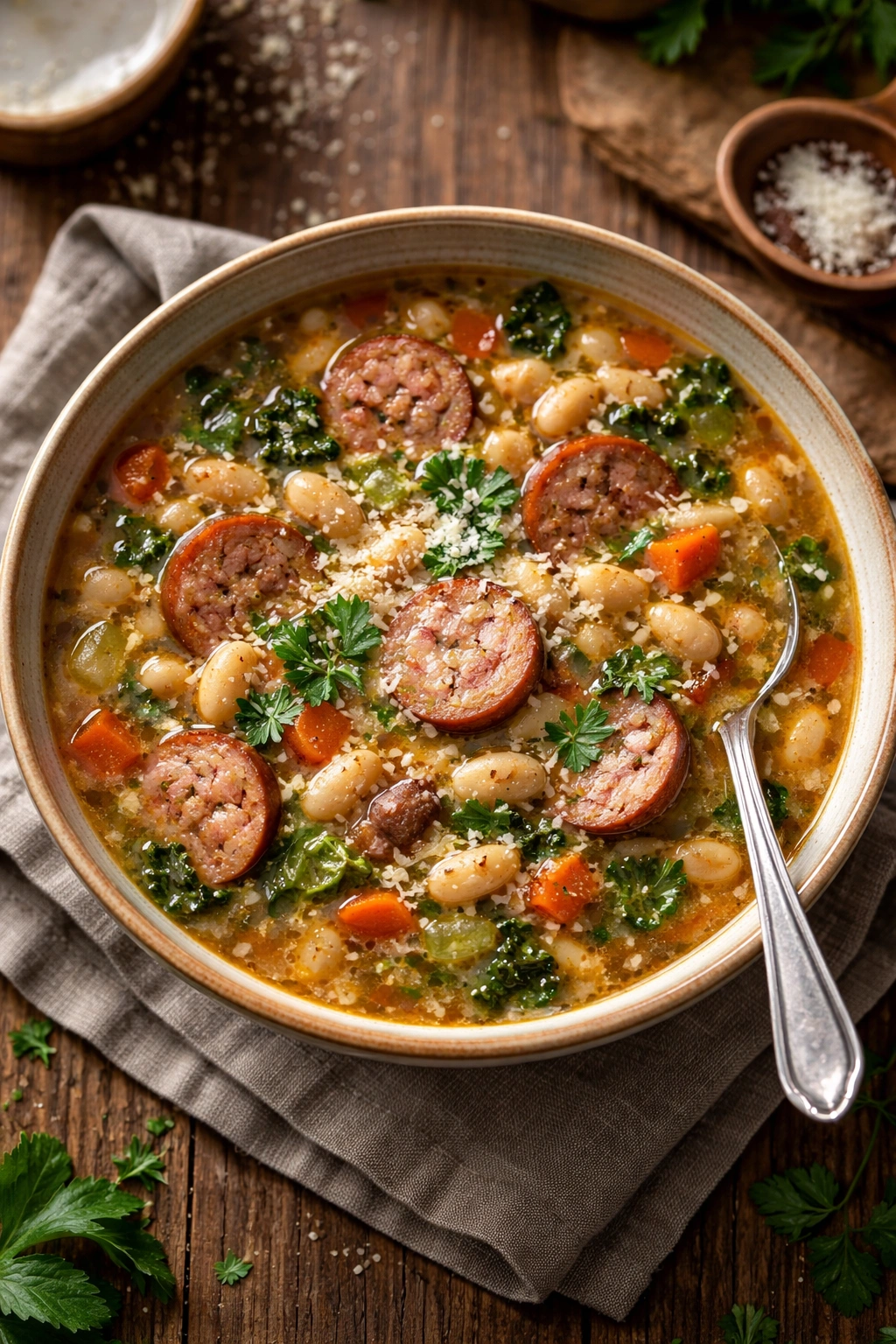
A hearty soup built around sausage and beans is exactly what you need when you want something warming and filling without any heavy lifting. White beans contribute creaminess and mild flavor, while sausage brings the seasoning and meaty element. The result is a genuinely comforting bowl of soup that tastes like it simmered for hours but actually comes together in about 30 minutes. Plus, soups almost always taste better the next day, making this an ideal meal prep option.
Why Beans and Sausage Make Perfect Partners
Beans have this subtle, almost neutral quality that lets sausage shine, but they also add texture and substance that makes the soup feel complete. Canned beans are totally fine here—there’s no advantage to cooking dried beans from scratch for a weeknight dinner. The sausage releases oils and flavors into the broth, seasoning it naturally as everything simmers. You’re building depth through simple technique: browning the sausage first, sautéing aromatics, toasting tomato paste (if using it) for a moment to concentrate its flavor, then adding broth and beans. It’s straightforward cooking that produces something deeply satisfying.
Building Your Soup
Brown 1 pound of sliced smoked sausage in a large pot, then remove and set aside. In the same pot, sauté diced onion, carrot, and celery (the classic mirepoix) until they’re softened, about 5 minutes. Add minced garlic and if you want, a spoonful of tomato paste—cook it for about 30 seconds to concentrate the flavor. Pour in 6 cups of chicken broth, then add two 15-ounce cans of white beans (drained and rinsed), the cooked sausage, maybe some diced tomatoes or spinach if you have them, and herbs like thyme and bay leaf. Bring to a boil, then reduce heat and simmer for about 15 minutes to let flavors meld. Season to taste with salt and pepper. Serve with crusty bread or crackers. This freezes beautifully and tastes even better after a day or two.
8. Sausage and Gnocchi Skillet
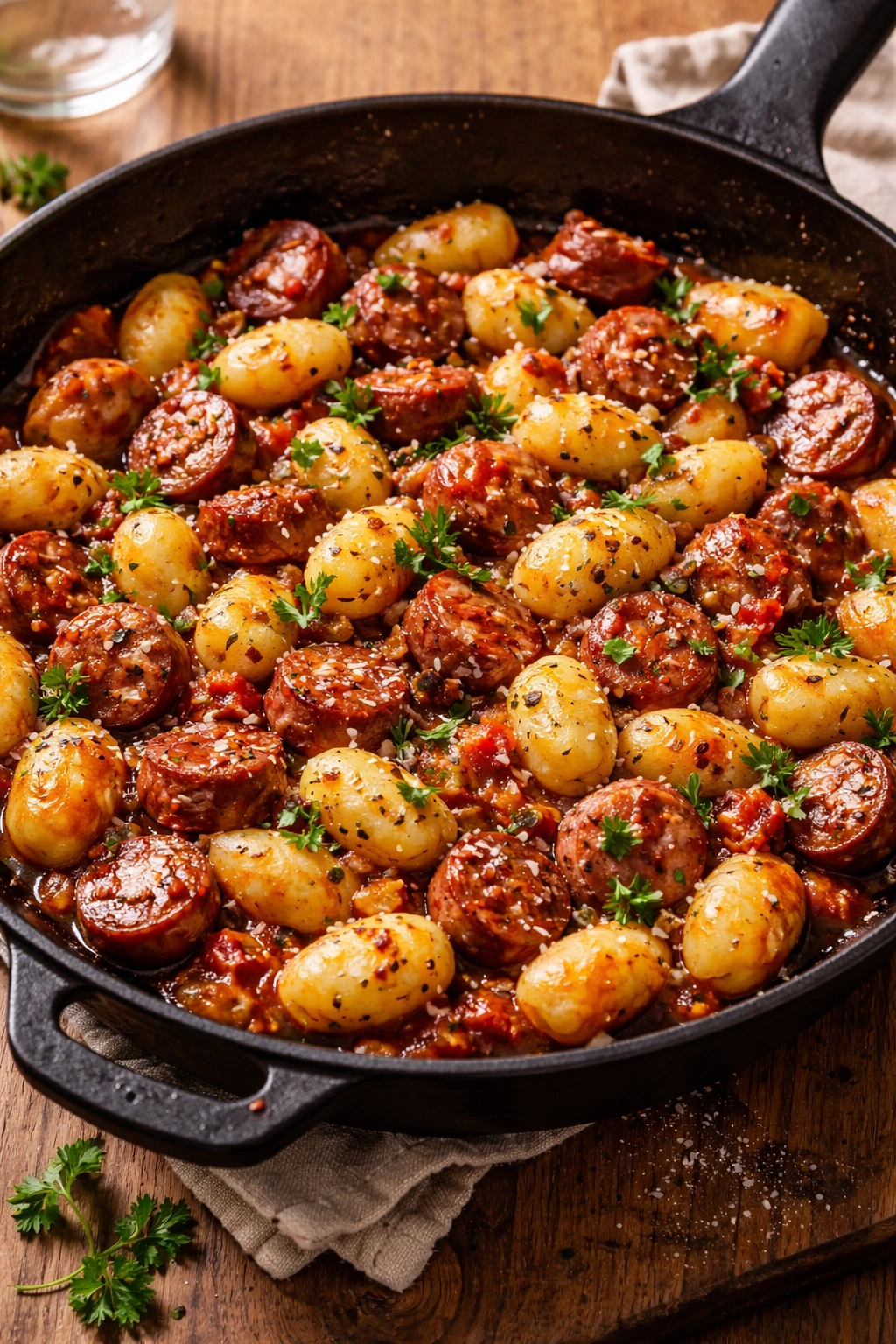
Gnocchi are these tender, pillowy little dumplings that feel restaurant-fancy but cook in minutes, making them perfect for weeknight dinners. When you combine them with sausage and any number of simple add-ins like spinach, mushrooms, or tomatoes, you’ve got a meal that tastes special without being complicated. The gnocchi absorb flavors from the sausage and sauce, becoming incredibly tender and flavorful without requiring much active cooking time.
The Appeal of Gnocchi
Gnocchi cook faster than regular pasta—usually in just 2 to 3 minutes—which means you’re not waiting around for water to boil and pasta to reach al dente. Most importantly, they have an incredibly tender texture that’s completely different from wheat-based pasta. They’re soft in a way that feels almost silky, and they absorb sauce and sausage flavors beautifully. You can find both fresh and frozen gnocchi at most grocery stores; frozen is usually more economical and works just fine for this purpose. They need no thawing—you just toss them straight from the freezer into a hot skillet.
Creating Your Skillet Version
Brown 12 ounces of Italian sausage (spicy, mild, or sweet) in a large skillet, breaking it up as it cooks, then remove and set aside. In the same skillet with the sausage’s oil still coating it, add minced garlic and maybe some diced shallot, cooking until fragrant. Add a splash of dry white wine if you have it, letting it reduce by about half, then add fresh spinach (which will wilt down to almost nothing), diced mushrooms, sun-dried tomatoes, or whatever vegetables appeal to you. Return the sausage to the pan, then add the gnocchi—if frozen, they’ll cook through in just a few minutes, especially as they’re tossed with everything. You can add a splash of broth or cream if you want a saucier dish, or let everything cook together until the gnocchi are heated through. Finish with fresh basil and grated Parmesan cheese. This comes together in about 25 minutes total.
9. Sausage and Sauerkraut Skillet
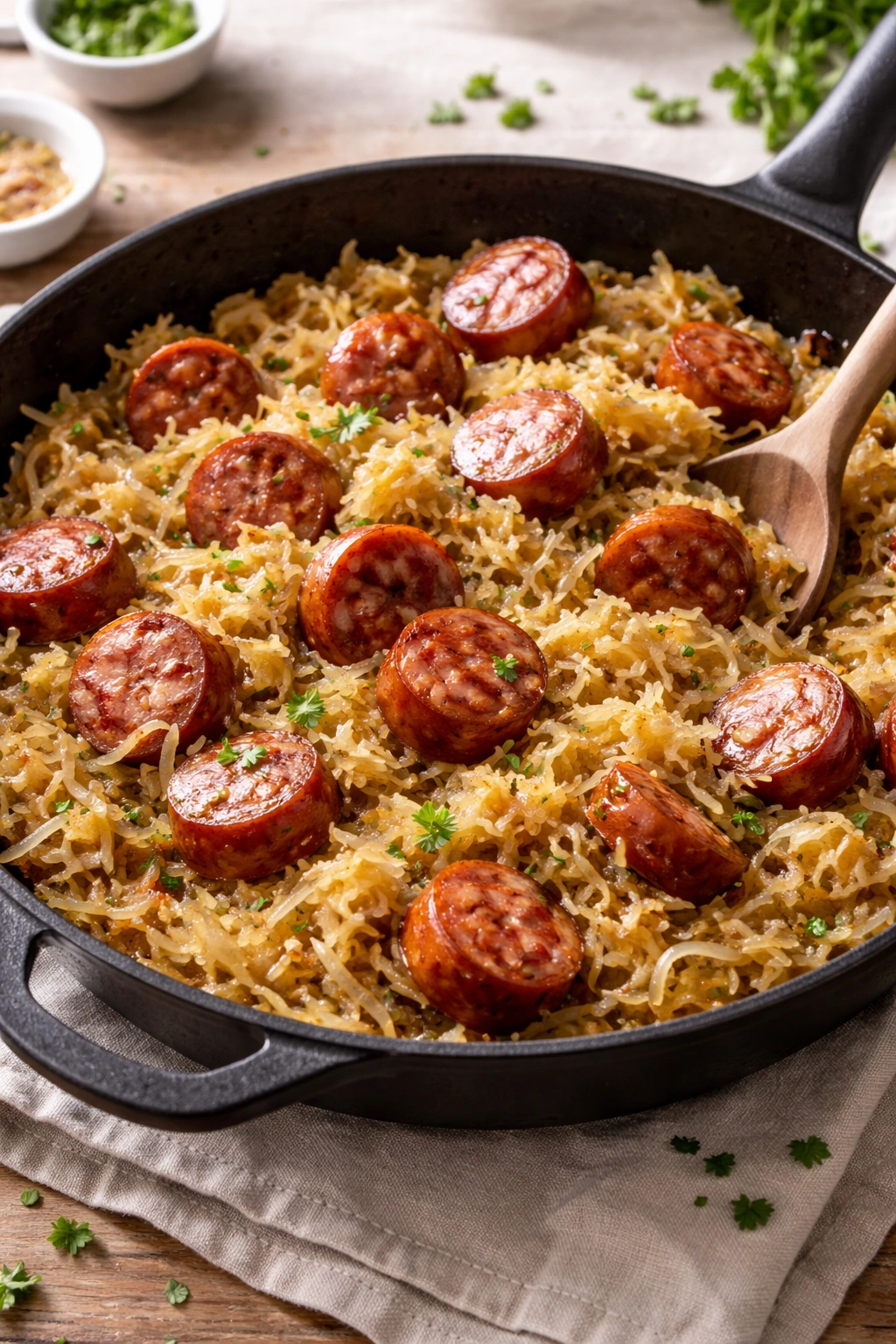
This might sound unconventional if you haven’t had it before, but sausage and sauerkraut is a time-tested combination with German roots that deserves a place in your weeknight rotation. The tangy, slightly sour quality of sauerkraut cuts through the richness of sausage in a way that feels sophisticated and balanced. The flavors marry together as everything simmers, creating something way more interesting than the sum of its parts. Plus, it comes together incredibly quickly—often in 20 minutes or less.
Why This Traditional Pairing Works
Sauerkraut brings acidity and complexity that balances sausage’s richness in the same way that a squeeze of lemon juice would. The fermented quality of sauerkraut adds depth that makes the dish taste like you’ve been planning it for days, even if you’ve just thrown it together on a Tuesday night. Kielbasa is the traditional sausage choice here, but any smoked sausage works beautifully. You’re essentially creating a balance between savory, rich protein and tangy, slightly funky vegetables—a combination that’s oddly addictive once you try it.
Building Your Version
Slice 1 to 1.5 pounds of kielbasa or other smoked sausage into rounds and brown them in a large skillet over medium-high heat for a few minutes. Add diced onion and cook until soft, about 3 to 4 minutes. Pour in drained sauerkraut (you can use canned or jarred, which requires zero cooking)—about 2 to 3 cups depending on how much you like it. Add a splash of broth or even apple cider if you have it, a spoonful of mustard for extra tang, maybe some caraway seeds if you want to be traditional, and a pinch of sugar to balance flavors. Reduce heat and simmer everything together for about 10 to 15 minutes, letting flavors meld. Season with salt and pepper to taste. Serve over mashed potatoes, egg noodles, or with crusty bread. It’s hearty, delicious, and somehow feels both simple and sophisticated.
10. Sausage and Vegetable Skillet with Rice or Pasta
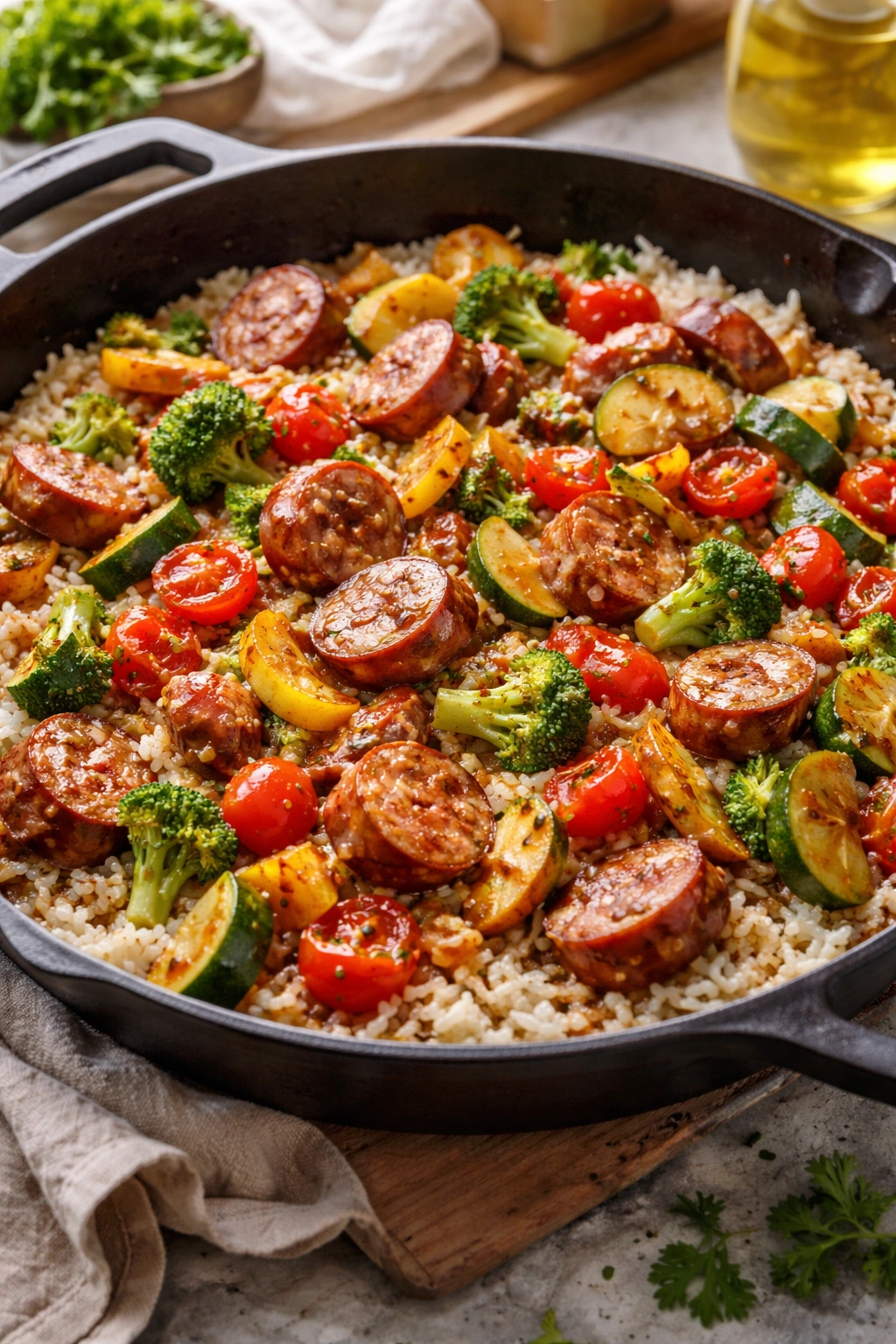
The most flexible sausage dinner might be a simple skillet where you brown sausage, add whatever vegetables you have on hand, season everything boldly, and serve it over rice or pasta. This is the kind of dinner that works with almost any combination of ingredients, requires almost no shopping, and tastes different depending on your mood and what’s in your fridge. It’s the ultimate weeknight solution when you want something satisfying without any real planning.
The Beauty of Flexible Cooking
This approach relies on technique rather than a specific recipe, which makes it endlessly adaptable. You’re developing flavor through browning the sausage first, sautéing vegetables to caramelize them, adding seasonings and a bit of broth or tomato sauce to create a sauce, then serving the whole thing over your choice of base. The key is seasoning boldly—don’t be shy with garlic, salt, pepper, and herbs—and letting everything simmer together long enough for flavors to meld. You can use whatever sausage you have, whatever vegetables look good, and whatever herbs or spices appeal to you.
Creating Your Version
Brown 1 pound of sausage (Italian, smoked, chorizo—whatever you have) in a large skillet, breaking it up or slicing it depending on its form. Remove and set aside. In the same skillet, sauté diced onion and any vegetables you have: bell peppers, zucchini, mushrooms, broccoli, whatever. Once they’re starting to soften, add minced garlic, then return the sausage to the skillet. Add a splash of broth or tomato sauce, season with salt, pepper, and your choice of herbs (Italian seasoning, cumin, paprika, dried thyme—whatever sounds good), and simmer for about 10 minutes until everything is cooked through and flavors have melded. Meanwhile, cook rice or pasta. Serve the sausage mixture over your base, finish with fresh herbs if you have them, and you’ve got a complete, satisfying dinner that took about 30 minutes and required minimal cleanup.
Final Thoughts
The 10 sausage dinners above prove that weeknight cooking doesn’t have to be complicated or time-consuming to be genuinely delicious. Sausage is a remarkably forgiving ingredient that carries meals on its own merits, requiring nothing more than simple techniques and good seasoning to create food your family will request on repeat. Whether you’re drawn to sheet pan simplicity, one-pot pasta convenience, hearty soups, or flexible skillets, there’s a sausage dinner that fits your schedule and your tastes.
The real secret to these meals isn’t any special trick or technique—it’s understanding that sausage is already flavorful, already seasoned, and ready to be the star of your dinner without requiring elaborate preparation. Brown it, combine it with vegetables or pantry staples, season boldly, and let the oven or stovetop do the work. You’ll have supper on the table in 30 minutes or less, usually with minimal cleanup and genuinely pleased people at your table. That’s the kind of weeknight win worth celebrating.
