



There’s a common misconception that eating for digestive health means complicated meal prep, unusual ingredients, and flavors that taste medicinal. The truth? Some of the easiest dinners to throw together happen to be the most gut-friendly meals you can eat. When you focus on whole foods that are naturally gentle on digestion, you’re not choosing restriction—you’re choosing dinners that leave you feeling energized instead of bloated, that support healthy nutrient absorption, and that actually taste good.
Gut health influences everything from your immune system to your mood, sleep quality, and energy levels throughout the day. But most people still think “eating for digestion” means sacrificing the kinds of dinners they actually want to eat. The 10 dinners in this guide prove that’s simply not true. Each one features digestible proteins, gentle carbohydrates, and foods rich in prebiotics and probiotics that feed the beneficial bacteria living in your digestive system. Better yet, none of them require special equipment, hard-to-find ingredients, or hours in the kitchen.
The beauty of these meals is that they work whether you’re new to thinking about gut health or you’ve been optimizing your digestion for years. They’re forgiving enough that you can swap vegetables based on what’s in your fridge, simple enough that weeknight cooking stays stress-free, and nourishing enough that you’ll feel the difference in your digestion, energy, and overall wellness after a few weeks of regular eating this way.
1. Herb-Roasted Salmon with Roasted Root Vegetables
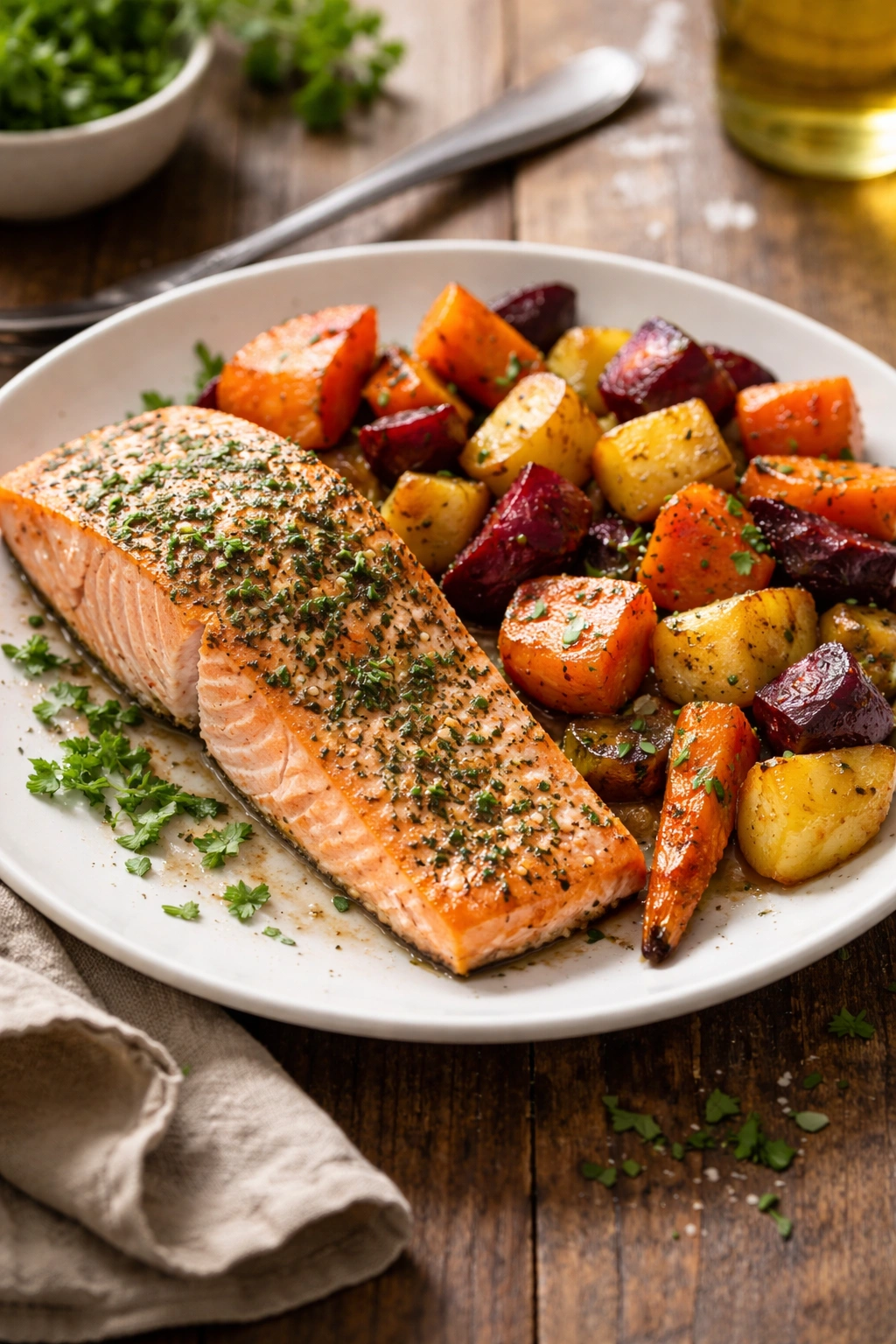
Salmon is one of the most gut-friendly proteins you can eat, and not just because it’s tender and easy to digest. The omega-3 fatty acids in salmon actively reduce inflammation in your gut lining, while the protein helps rebuild the cells that form your intestinal barrier—the critical defense system that keeps harmful substances out of your bloodstream. Pair this with roasted root vegetables like sweet potato, beets, and carrots, which are packed with resistant starch and prebiotic fiber that feeds your beneficial gut bacteria, and you have a dinner that tastes indulgent while being genuinely therapeutic for your digestive system.
Why This Dinner Works for Digestion
Salmon’s high fat content doesn’t slow digestion—it actually supports it by triggering the release of bile acids that help you absorb fat-soluble vitamins like vitamin D and vitamin A, both critical for immune function and a healthy gut lining. The gentle cooking method of roasting means the protein remains tender and doesn’t become the tough, difficult-to-digest version you’d get from overcooking. Root vegetables soften completely when roasted, making them easier on your digestive system than raw or barely-cooked versions while preserving more nutrients than boiling would.
How to Build the Plate
- Season a 6-ounce salmon fillet with sea salt, black pepper, fresh dill, and a squeeze of lemon juice
- Toss 1 cup of mixed root vegetables (diced sweet potato, beets, parsnips, carrots) with 1 tablespoon of olive oil and fresh thyme
- Roast both the salmon and vegetables at 400°F for 12-15 minutes until the salmon flakes easily and the vegetables are fork-tender and caramelized at the edges
- Add sautéed asparagus or steamed green beans on the side for additional prebiotic fiber
Pro tip: Make roasted vegetables in double batches at the beginning of the week so you have them ready to pair with different proteins throughout the week, cutting your actual cooking time down to just the protein.
2. Simple Turkey Meatballs with Mashed Sweet Potato
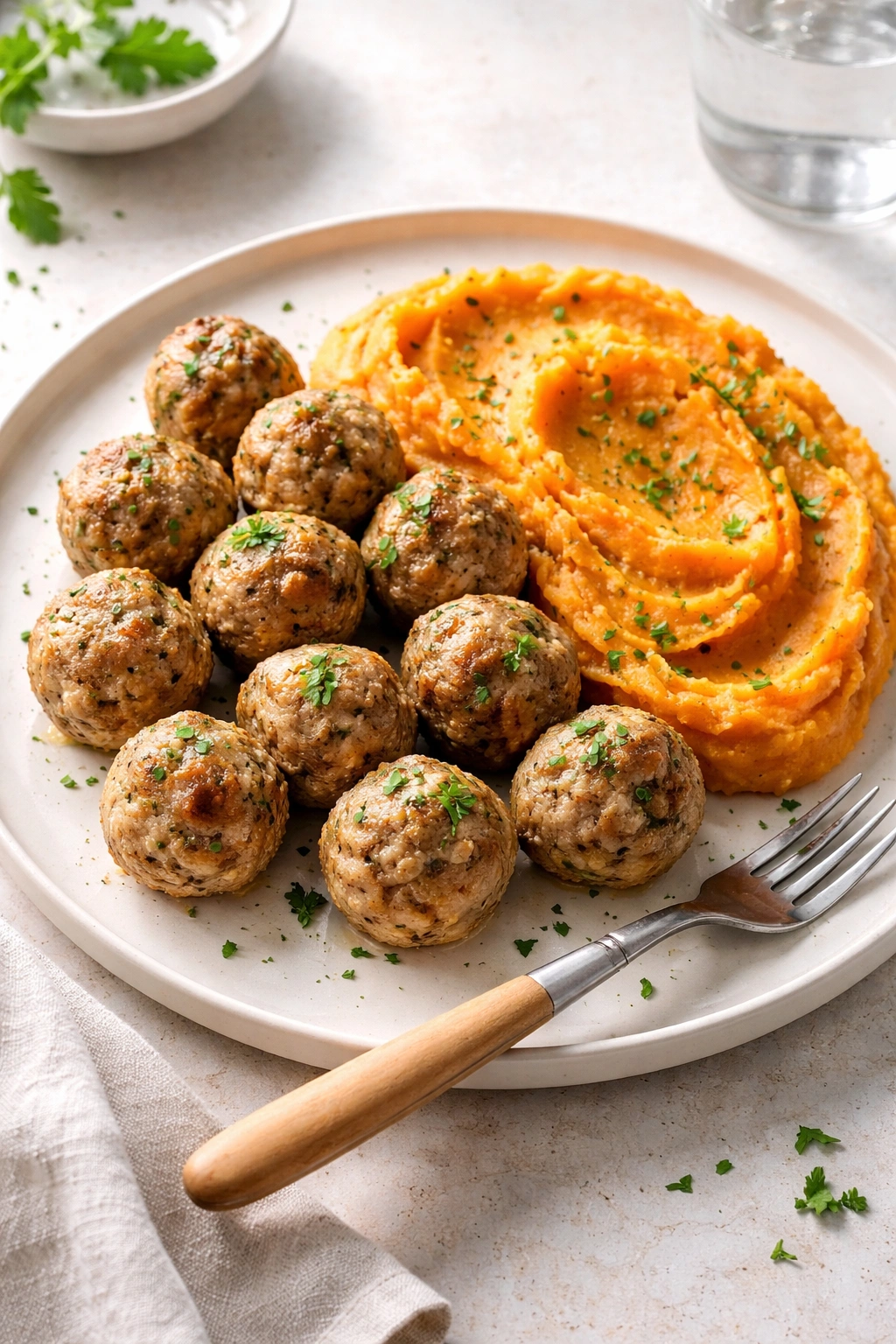
Ground turkey is one of the leanest proteins available, making it exceptionally easy for your digestive system to break down without triggering inflammation. These meatballs are bound with a small amount of almond flour or finely minced mushrooms instead of breadcrumbs, which means there’s no refined grain sitting in your gut slowing transit time. Pair them with smooth, creamy mashed sweet potato that provides prebiotic fiber and the gentle carbohydrates your gut bacteria actually need to thrive.
Why Ground Turkey Is Gut-Friendly
Lean ground turkey has significantly less fat than beef, which means it moves through your digestive system faster and doesn’t trigger the kind of inflammation that heavy, fatty proteins can cause. The key is not overcooking the meatballs—they should be just cooked through but still tender, not dense or hard. When ground poultry is overcooked, the protein becomes tough and your digestive system has to work much harder to break it down, sometimes causing bloating or discomfort hours after eating.
Building the Dish
- Mix 1 pound ground turkey with 1 egg, 2 tablespoons almond flour, 2 minced garlic cloves, fresh parsley, sea salt, and pepper
- Form 12-14 meatballs and bake at 375°F for 15-18 minutes until cooked through
- Boil and mash 1 large sweet potato with 1 tablespoon ghee or coconut oil, a pinch of cinnamon, and sea salt
- Serve meatballs alongside the mashed sweet potato with a simple side of sautéed zucchini or steamed broccoli
Worth knowing: Add a tablespoon of finely minced mushrooms to the meatball mixture—mushrooms contain compounds that support the growth of beneficial Bifidobacterium in your gut.
3. Bone Broth-Based Chicken Soup

There’s a reason bone broth chicken soup appears in healing traditions across virtually every culture—this combination is therapeutic for your digestive system at a cellular level. The gelatin from long-simmered bones heals and seals your intestinal lining, while the amino acid glutamine reduces inflammation and supports the tight junctions that prevent intestinal permeability. The warm broth is inherently easy to digest, and chicken cooked in broth becomes impossibly tender and requires minimal effort from your digestive system.
The Healing Power of Broth
Bone broth contains collagen, which breaks down into gelatin during the cooking process—this gelatin coats your intestinal tract and literally helps repair damage caused by inflammation, stress, or a history of processed foods. The amino acids in broth also feed your gut bacteria and support the production of butyrate, a short-chain fatty acid that nourishes the cells lining your colon. Unlike store-bought broths that simmer for just 1-2 hours, traditional bone broth simmers for 12-24 hours, which means it extracts far more of these healing compounds.
Making the Soup
- Simmer 1 pound chicken thighs, 4 cups homemade bone broth, 2 cups diced carrots and celery, 1 cup peeled and diced sweet potato, sea salt, and fresh thyme for 30 minutes
- Shred the chicken and return it to the pot
- Add 2 cups fresh spinach or kale in the last 5 minutes of cooking—the heat wilts it but preserves its prebiotic fibers
- Finish with a squeeze of fresh lemon juice and fresh parsley
Insider note: If you don’t have homemade bone broth, look for high-quality store-bought versions that list bones as the first ingredient and contain no added sugars or vegetable oils.
4. Baked White Fish with Steamed Brassicas and Brown Rice
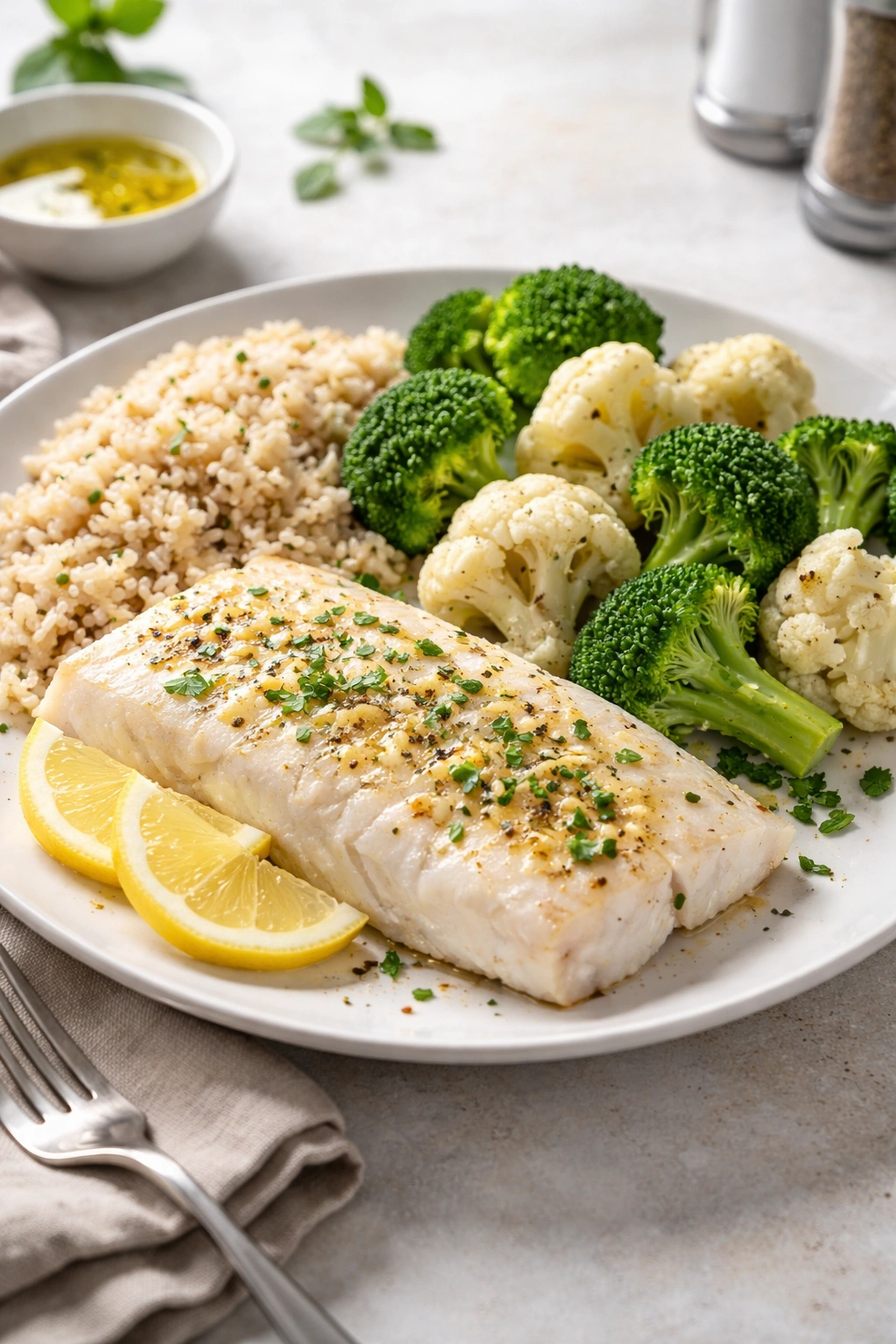
White fish like cod, halibut, or tilapia is the gold standard for gentle proteins—it’s so lean and delicate that it requires almost no digestive effort. The flesh of white fish is naturally tender, cooks quickly to avoid becoming tough, and contains easily absorbed protein. Brown rice provides resistant starch and the specific fiber your beneficial bacteria need, while brassicas like broccoli, cauliflower, and Brussels sprouts contain sulforaphane, a compound that actively reduces harmful bacteria and feeds beneficial strains.
Why White Fish Deserves More Attention
Most people reach for salmon or chicken out of habit, but white fish is actually easier on your digestive system while delivering complete protein. The cooking method matters enormously here—baking or poaching keeps the flesh delicate, while pan-searing at high heat can make it tough and dense. White fish also contains iodine, which supports thyroid function and indirectly supports healthy digestion and metabolism.
Assembling the Plate
- Bake a 5-ounce white fish fillet at 375°F for 10-12 minutes seasoned with sea salt, black pepper, fresh dill, and a drizzle of olive oil
- Steam 1.5 cups of brassica vegetables (broccoli florets, cauliflower, or thinly sliced Brussels sprouts) for 5-6 minutes until tender but still bright
- Cook 1/2 cup brown rice according to package directions, then finish with a pinch of sea salt and a teaspoon of ghee
- Squeeze fresh lemon juice over the entire plate
Quick facts:
- White fish is typically 1-3% fat, compared to 15-20% in fatty fish
- The proteins in white fish have smaller molecular structures, making them faster to digest
- Brassicas contain a prebiotic called inulin that’s fermented by beneficial bacteria
5. Slow Cooker Chili with Beans and Vegetables
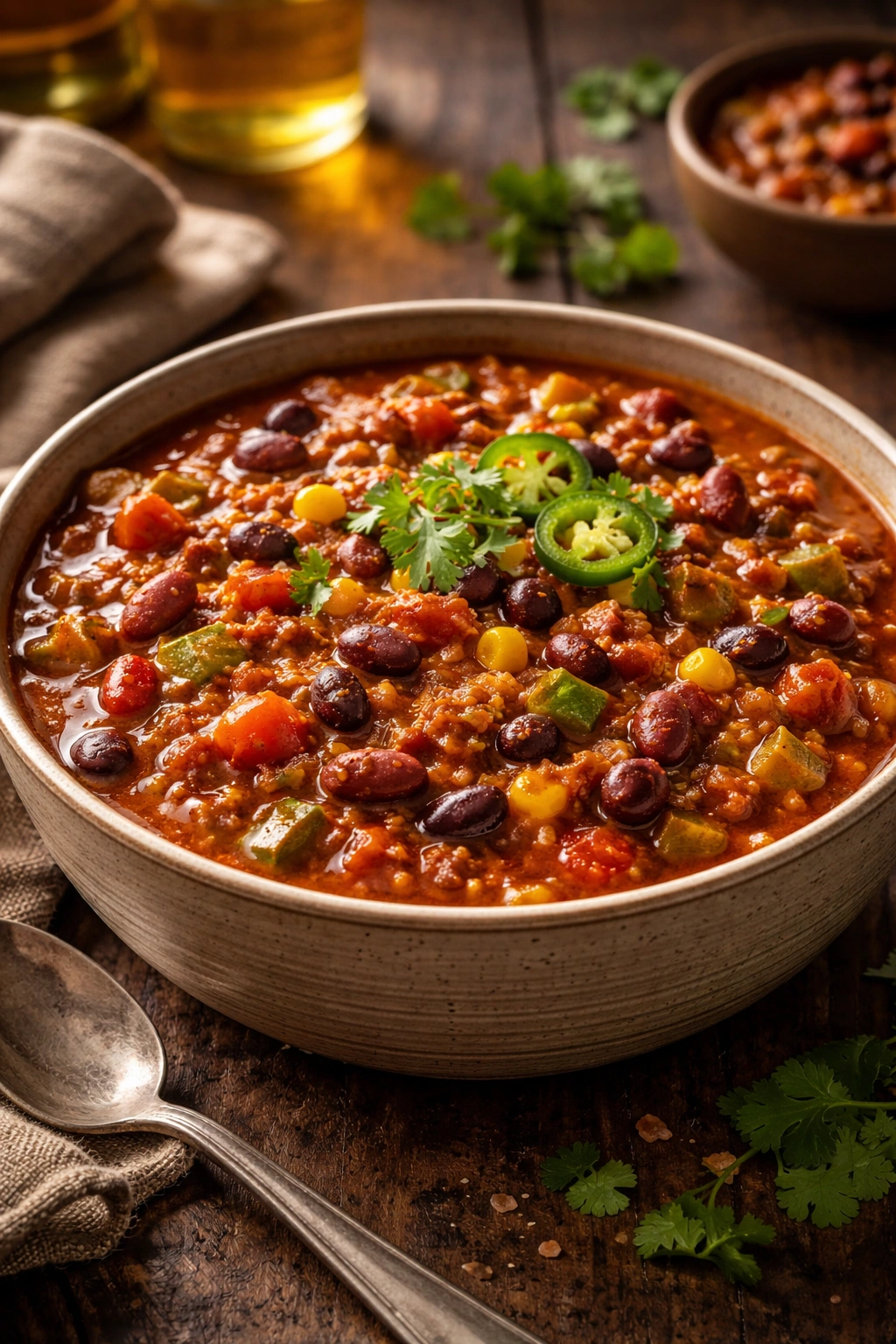
Chili is one of those dinners that sounds indulgent but is actually exceptionally good for your gut health when made with beans instead of relying solely on meat. Beans are loaded with both soluble and insoluble fiber, which means they feed your beneficial bacteria while also promoting regular bowel movements. The long, slow cooking breaks down both the beans and the vegetables, making all the nutrients and fiber more bioavailable and easier for your digestive system to process.
The Power of Beans for Gut Health
Beans are prebiotics—they contain specific types of fiber that your body can’t digest, but your beneficial bacteria ferment them into short-chain fatty acids like butyrate. This process is what actually creates the health benefits. The long cooking time in a slow cooker is crucial because it breaks down the phytic acid and lectins that can otherwise interfere with nutrient absorption. Canned beans that you drain well work perfectly if you don’t have time to cook dried beans from scratch.
Building Your Chili
- Sauté 1 medium diced onion and 4 minced garlic cloves in 1 tablespoon olive oil, then transfer to a slow cooker
- Add 1 can (15 oz) each of kidney beans and black beans (drained and rinsed), 2 cans (15 oz each) diced tomatoes, 1 diced bell pepper, 1 diced zucchini, 2 tablespoons tomato paste, 1 tablespoon cumin, 1 teaspoon oregano, and sea salt
- Cook on low for 6-8 hours or high for 3-4 hours
- Serve with a small side of cooked white rice or cornbread if you want additional grounding carbohydrates
Worth knowing: The longer this chili sits (even better the next day), the more the flavors deepen and the more the beans continue to break down, making it even easier on your digestion.
6. Grass-Fed Beef Meatballs with Zucchini Noodles
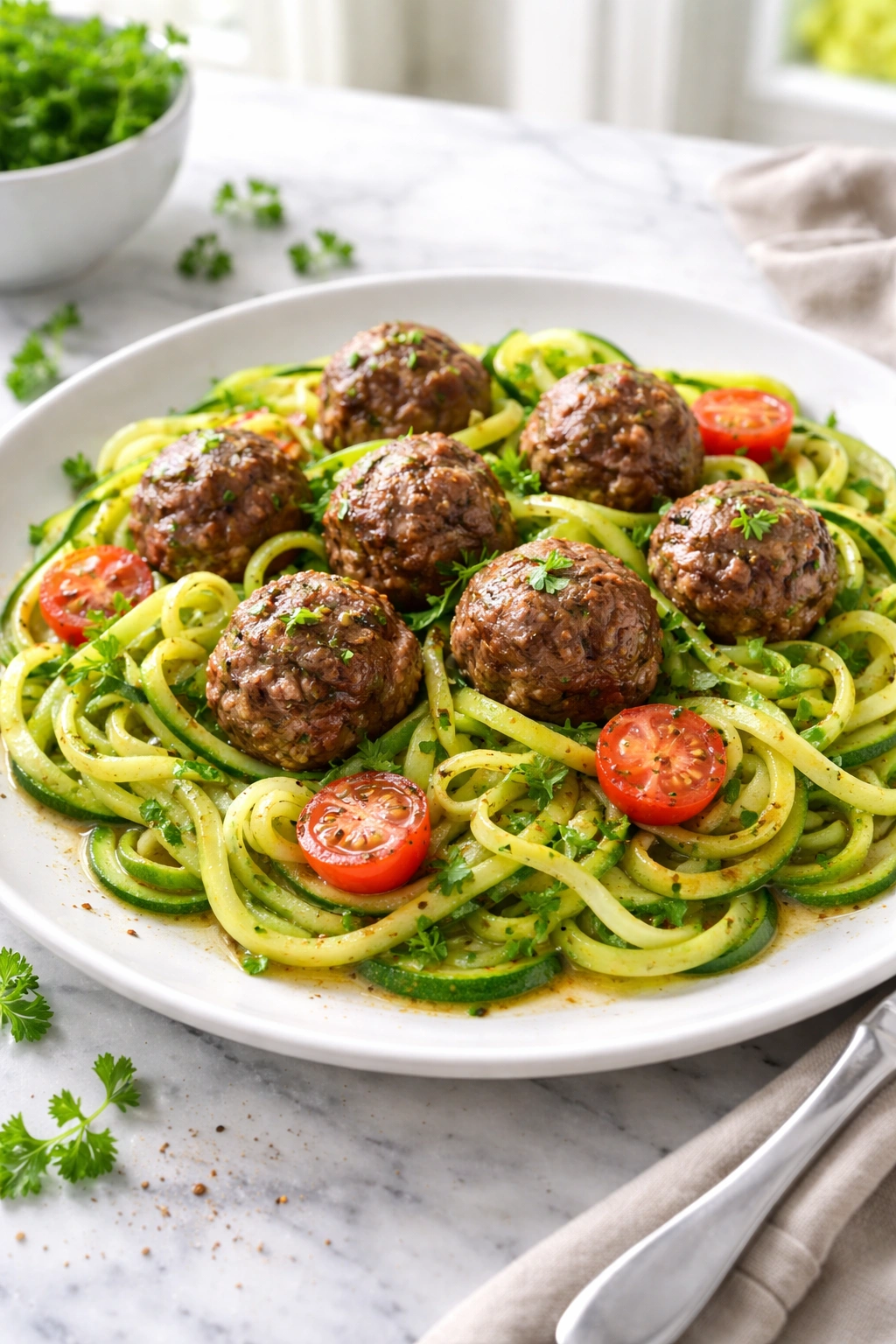
When people first work on healing their gut, they often assume they need to eliminate beef entirely, but grass-fed beef is actually a superb protein for digestive health. Grass-fed beef contains higher levels of omega-3 fatty acids and conjugated linoleic acid (CLA), both of which reduce inflammation in your gut lining. The key is using grass-fed quality (which has a different fat composition than conventional beef) and keeping the meatballs tender through a short cooking time and minimal handling.
Why Grass-Fed Matters for Digestion
Cattle raised on grass develop beneficial omega-3 to omega-6 ratios in their meat, which is the opposite of grain-fed beef that’s high in inflammatory omega-6 fatty acids. This difference in fat composition directly impacts whether the beef causes inflammation in your digestive system or actively reduces it. Grass-fed beef also tends to be easier to digest because the animals are raised without antibiotics that can disrupt their natural microbial populations, which affects the meat’s digestibility.
Creating the Meal
- Gently mix 1 pound grass-fed ground beef with 1 egg, 2 tablespoons almond flour, 3 minced garlic cloves, 2 tablespoons fresh parsley, sea salt, and black pepper
- Form into 12-14 meatballs and bake at 375°F for 12-15 minutes until just cooked through
- Spiralize 2 medium zucchini into noodles and lightly sauté in 1 tablespoon olive oil with sea salt for 2-3 minutes
- Toss the meatballs with a simple tomato sauce (canned tomatoes, garlic, basil, olive oil) and serve over the zucchini noodles
Pro tip: Don’t skip the zucchini noodles in favor of pasta—zucchini is over 95% water and contains negligible amounts of irritating compounds, while refined pasta sits heavily in the digestive system.
7. Sheet Pan Chicken Thighs with Roasted Vegetables
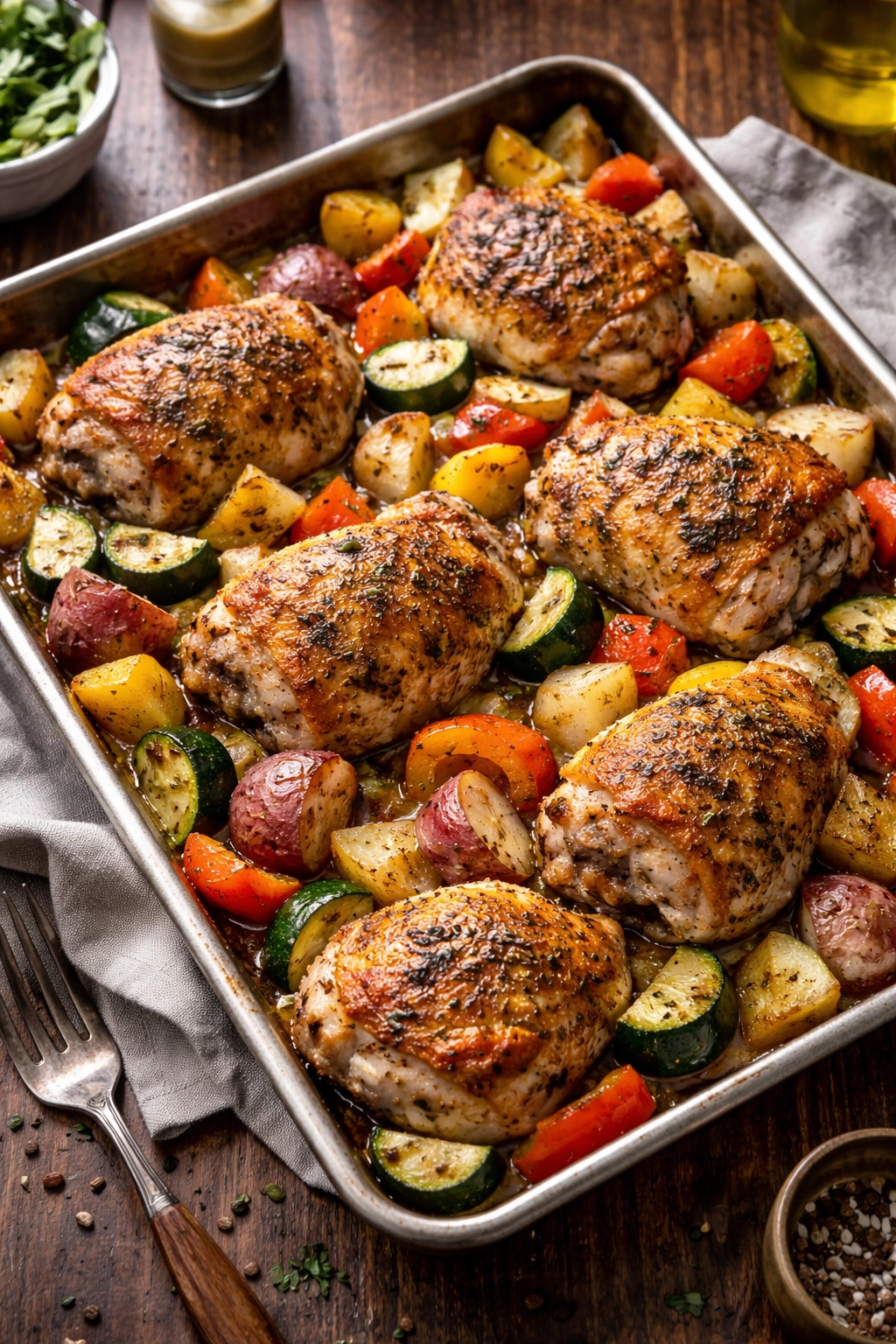
Chicken thighs get overlooked in favor of chicken breast, but they’re actually superior for gut health. The higher fat content in thighs makes them harder to overcook—they stay tender even if you accidentally leave them in a few minutes too long. This fat also helps you absorb fat-soluble vitamins from the vegetables you’re roasting alongside the chicken, making the entire meal more nourishing.
Why Thighs Beat Breast for Digestion
Chicken breast is lean and somewhat bland, which means it can be boring enough that you overeat, and the leanness means it dries out quickly if you’re not careful. Thighs have more flavor, more nutrients, and stay juicy and tender—all factors that make the meal more satisfying and easier on digestion. The skin-on thighs are your best option because the rendered fat seasons the entire pan and keeps everything moist.
Putting Together the Pan
- Season 4 bone-in, skin-on chicken thighs with sea salt, black pepper, fresh rosemary, and dried oregano
- Arrange on a sheet pan with 1 cup each of diced red potatoes, zucchini, and bell peppers tossed with 2 tablespoons olive oil
- Roast at 425°F for 30-35 minutes until the chicken skin is crispy and the vegetables are caramelized
- Finish with fresh lemon juice and a handful of fresh parsley
Quick facts:
- Chicken thighs contain 170% more selenium than breast meat
- The fat in thighs helps absorb the fat-soluble vitamins (A, D, E, K) from roasted vegetables
- Dark meat chicken has a lower glycemic impact than white meat
8. Lentil and Vegetable Stew with Bone Broth
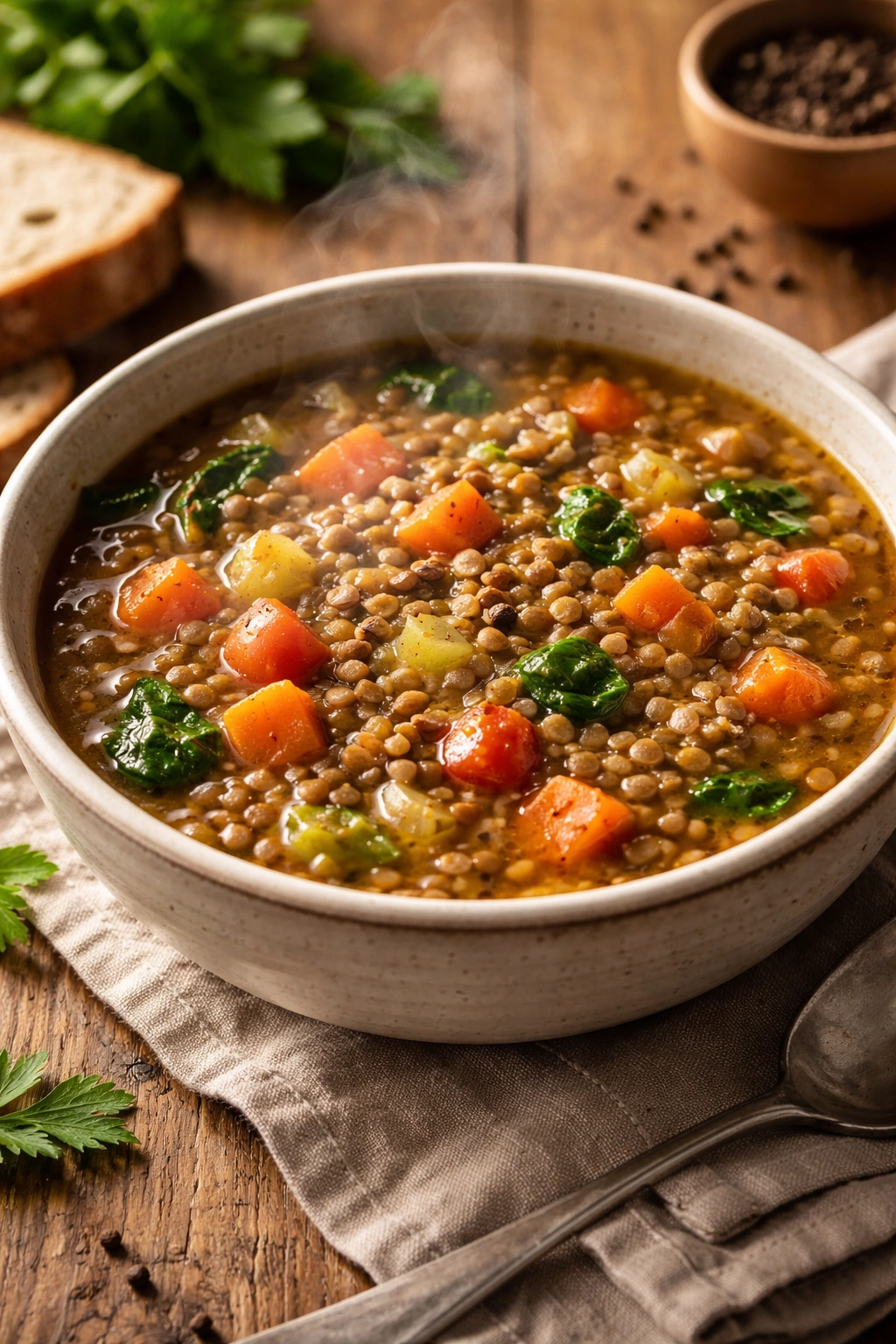
Lentils are a vegetarian or plant-forward protein that’s honestly one of the best foods for gut health you can eat. Unlike beans, which require overnight soaking and long cooking times, lentils cook in 20-30 minutes and still deliver massive amounts of prebiotic fiber. When you simmer them in bone broth instead of plain water, you’re adding the gut-healing gelatin and amino acids, creating a dinner that’s genuinely therapeutic while tasting hearty and satisfying.
The Nutritional Profile of Lentils
Lentils contain resistant starch, soluble fiber, and insoluble fiber—essentially they hit all three of the fiber types that support different aspects of gut health. The polyphenols in lentils are also fermented by your gut bacteria into compounds that reduce inflammation and support a healthy intestinal barrier. Red lentils cook faster and become softer, while brown and green lentils hold their shape better—choose based on your texture preference.
Constructing the Stew
- Sauté 1 diced onion, 3 minced garlic cloves, and 1 tablespoon minced fresh ginger in 1 tablespoon ghee
- Add 1 cup dry lentils, 4 cups bone broth, 2 cups diced carrots and celery, 1 can (15 oz) diced tomatoes, 1 teaspoon turmeric, and sea salt
- Simmer for 25-30 minutes until the lentils are tender and the vegetables are soft
- Stir in 2 cups fresh spinach in the last minute of cooking and finish with a squeeze of fresh lemon
Insider note: The turmeric isn’t just for flavor—it contains curcumin, a compound that reduces intestinal permeability and inflammation.
9. Poached Chicken with Fermented Vegetables and Cauliflower Rice
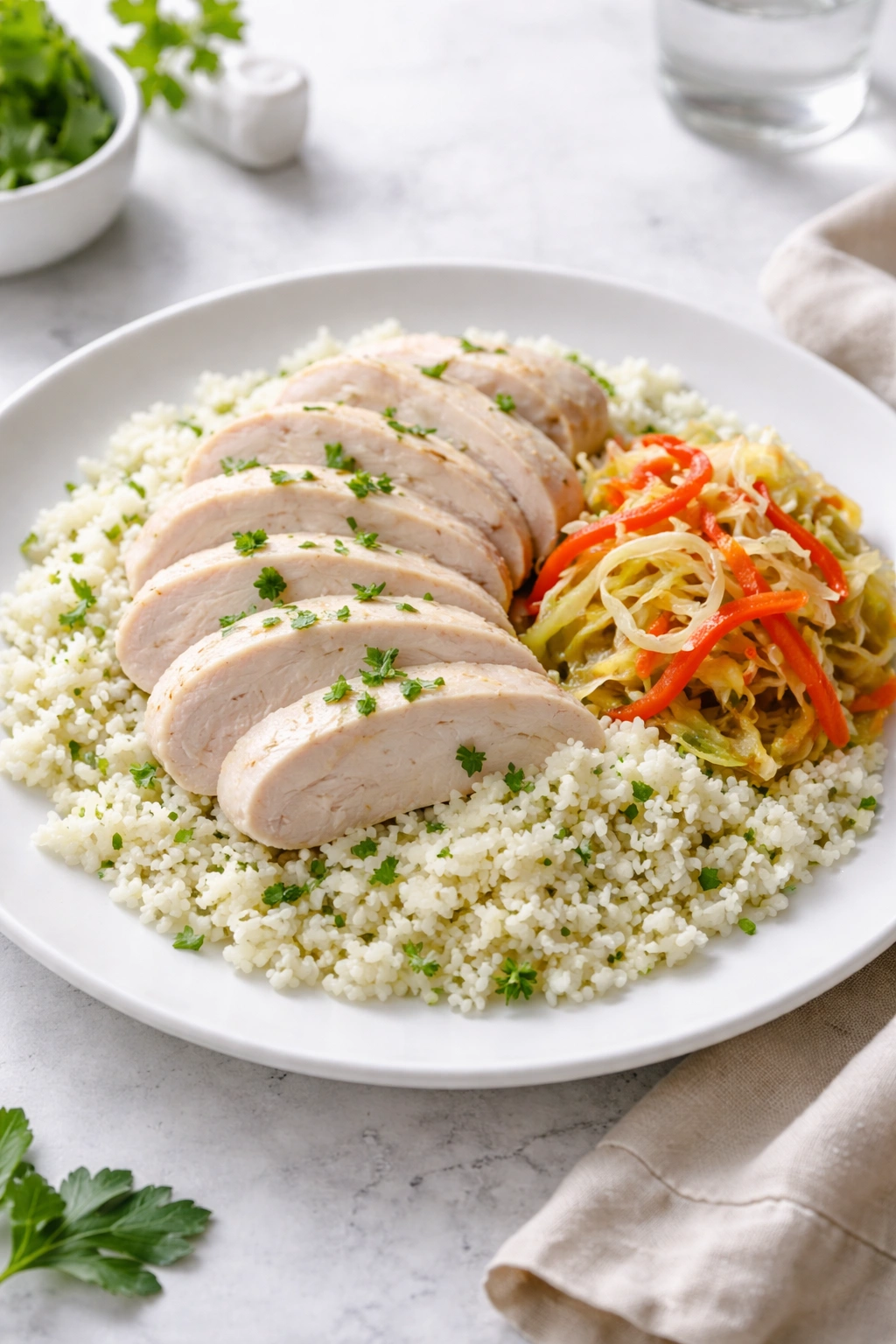
Poaching is the gentlest cooking method for chicken, creating meat so tender it practically dissolves on your tongue. Pair this with fermented vegetables like sauerkraut, kimchi, or lacto-fermented carrots, and you’re delivering live probiotics directly to your digestive system with every bite. Cauliflower rice provides a low-carb, high-fiber base that doesn’t spike blood sugar but does feed your beneficial bacteria.
Why Poaching Is Superior for Digestion
When you poach chicken in a low-sodium broth, the meat comes out incredibly tender and moist—there’s virtually no chewing required, which means minimal digestive effort. The meat stays in its simplest, most digestible form. Fermented vegetables contain beneficial bacteria and organic acids that enhance nutrient absorption and support the growth of your existing beneficial bacteria populations.
Assembling This Dinner
- Poach 2 chicken breasts or 1 pound chicken thighs in 3 cups low-sodium chicken broth with fresh thyme and bay leaf for 15-20 minutes until cooked through
- Shred or cut the chicken and serve in small bowls
- Serve alongside 1 cup steamed cauliflower rice topped with 2 tablespoons sauerkraut or other fermented vegetables
- Drizzle the chicken with the poaching broth as a sauce
Quick facts:
- Fermented vegetables contain lactic acid bacteria that actively reduce harmful bacteria populations
- The enzymes in fermented foods enhance the bioavailability of minerals like iron and calcium
- Cauliflower rice contains compounds that feed beneficial bacteria while remaining low in fermentable carbohydrates
10. Turkey and Sweet Potato Shepherd’s Pie with Vegetable Layers
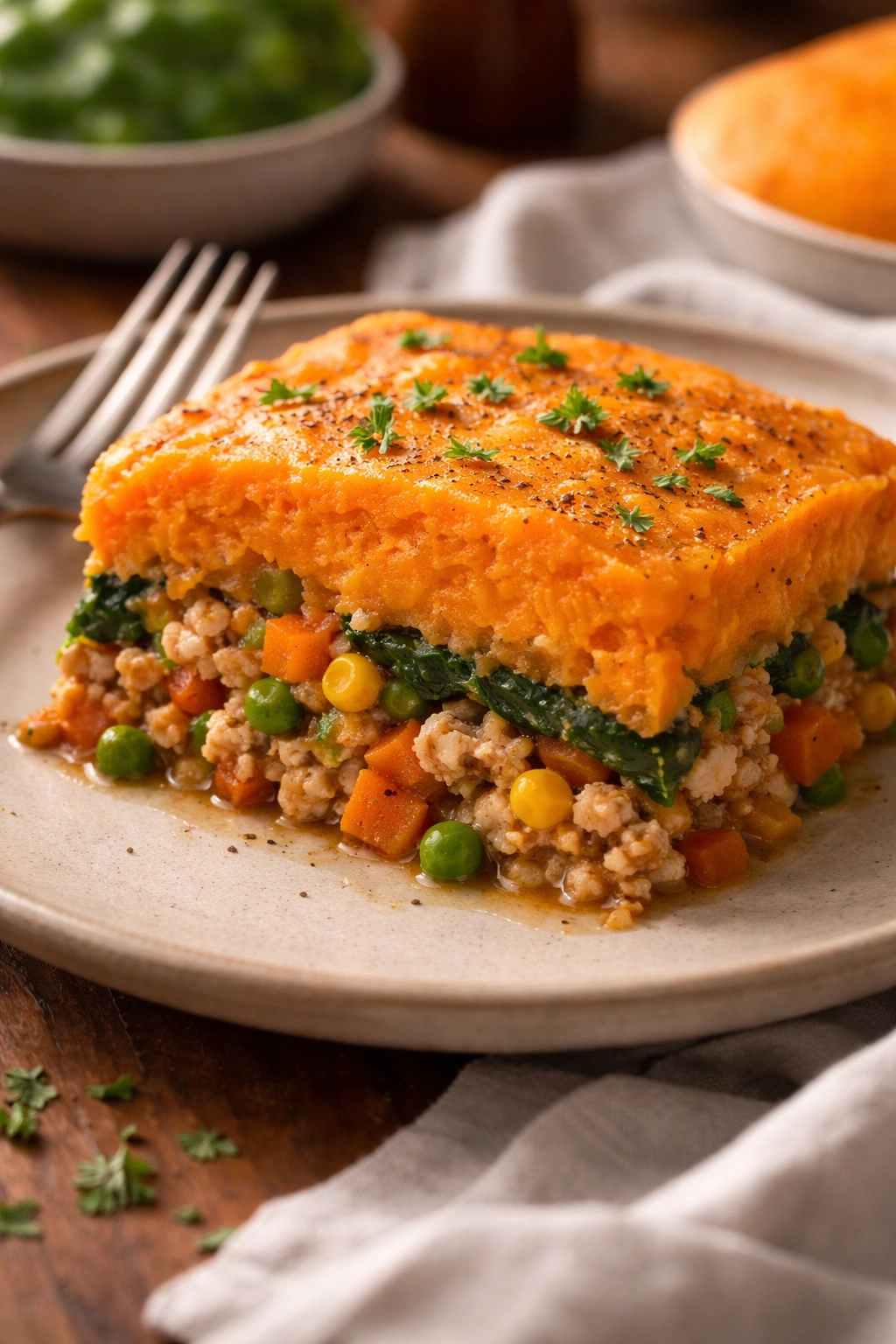
This twist on a classic comfort food delivers all the satisfaction and nostalgia of the traditional version while being exceptionally gentle on your digestive system. Ground turkey provides lean protein, sweet potato mash is packed with prebiotic fiber, and the layers of roasted vegetables add nutritional density and different types of fiber. This is the kind of dinner that looks special enough to serve guests but is simple enough for a weeknight.
Why This Combination Works
Sweet potato mash on top means you’re getting resistant starch and beta-carotene, while the turkey remains lean and easily digestible. The layering of vegetables means you get diverse fiber types and different nutrient profiles—this diversity is what feeds the broadest range of beneficial bacteria. Baking everything together melds the flavors and softens the vegetables perfectly.
Building the Pie
- Sauté 1 pound ground turkey with 1 diced onion and 4 minced garlic cloves, seasoning with sea salt, black pepper, and fresh thyme
- Transfer the cooked turkey to the bottom of a 9×13-inch baking dish
- Layer 2 cups diced vegetables (carrots, celery, zucchini, peas) over the turkey
- Boil and mash 2 large sweet potatoes with 2 tablespoons ghee, a pinch of cinnamon, sea salt, and black pepper
- Spread the sweet potato mash over the vegetables and bake at 375°F for 25-30 minutes until the top is lightly golden
Pro tip: Make this in a larger batch on a Sunday and portion it into individual containers—it reheats beautifully and becomes even more flavorful the next day as everything melds together.
Final Thoughts

Building meals around gut-friendly principles doesn’t require you to become a different kind of eater—it simply means paying attention to the whole foods that make your digestive system feel supported rather than stressed. Each of these 10 dinners shares a core philosophy: gentle proteins that are easy to break down, plenty of fiber to feed beneficial bacteria, and cooking methods that preserve both nutrition and tenderness.
The most important shift you can make is consistency. Your gut bacteria respond to what you eat regularly, not to occasional perfect meals. If you rotate through these 10 dinners multiple times throughout a month, you’ll start noticing changes in your digestion, energy levels, and how you feel overall. Many people report clearer skin, better sleep, improved mood, and more stable energy within just a few weeks of consistently eating this way.
Start with whichever dinner appeals to you most and master that recipe before moving to the next one. You don’t need to overhaul everything at once—small, sustainable changes build lasting results. Your digestive system has spent however long it’s been exposed to processed foods and inflammatory patterns, and it genuinely heals in response to nourishment. These dinners are your vehicle for that healing.
