



Getting enough protein doesn’t mean spending hours in the kitchen or relegating yourself to bland chicken and rice every single night. The truth is, some of the most satisfying, flavor-packed high-protein meals come together in less time than it takes to order delivery—and they’re infinitely better for your body, wallet, and taste buds.
The challenge isn’t finding recipes. It’s understanding which ingredients work together to create complete, nutritious meals quickly, and knowing exactly which techniques cut your cooking time in half without sacrificing quality. Most people approach 30-minute cooking by throwing whatever protein and vegetables together and hoping for the best. But with intentional planning and the right mental framework, you can build meals that are actually exciting to eat—meals with real flavor, interesting textures, and the protein your body needs to build muscle, stay satisfied, and perform at its best.
This guide walks you through the exact strategies that separate slow, frustrating cooking from quick, confident weeknight meals. You’ll discover which ingredients to always have on hand, which cooking methods work fastest without compromising taste, and specific meal blueprints that come together in 30 minutes or less. More importantly, you’ll understand why these approaches work so you can adapt them to whatever proteins and produce you have available.
Why Protein Matters for Quick Meals
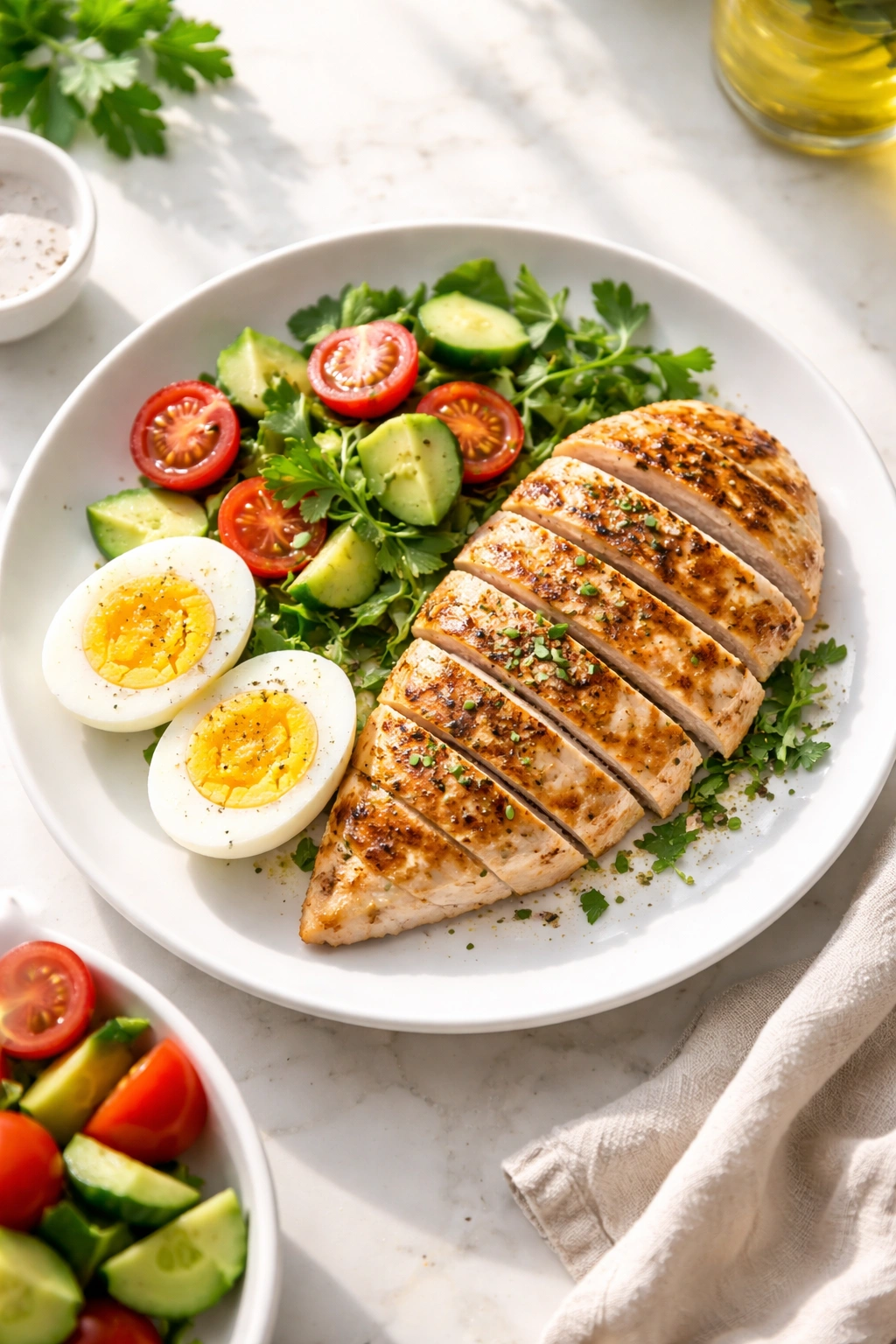
Protein does something remarkable in your body: it takes longer to digest than carbohydrates, which means it keeps you satisfied for hours after you eat. This is why a dinner that’s genuinely high in protein leaves you feeling full at 9 p.m., while a high-carb meal leaves you hunting through the pantry an hour later.
Beyond satiety, protein is the building block your body uses to repair muscle tissue, create enzymes, build bone, and produce hormones. If you exercise—even moderately—your protein needs increase significantly. Most people need between 0.7 and 1 gram of protein per pound of body weight daily, depending on activity level and goals. For a 150-pound person, that’s roughly 105–150 grams spread across the day.
The real advantage of centering your 30-minute meals around protein is this: when you start with a solid protein source, the meal practically builds itself. You pick a lean protein (chicken, fish, turkey, eggs, Greek yogurt), add vegetables for fiber and micronutrients, include a healthy fat to help with nutrient absorption and flavor, and you’ve got a complete meal. The protein does the heavy lifting nutritionally, which means you don’t need to spend time fussing with complicated side dishes or sauces to make dinner feel satisfying.
Quick high-protein cooking also tends to be drier, leaner cooking—grilling, pan-searing, stir-frying—rather than long, slow braises. These methods cook food faster, create better texture and flavor through Maillard browning (that delicious crust on a seared salmon fillet), and keep your kitchen cooler in warmer months. It’s a genuinely better way to cook, not just a faster one.
Essential High-Protein Ingredients to Keep on Hand
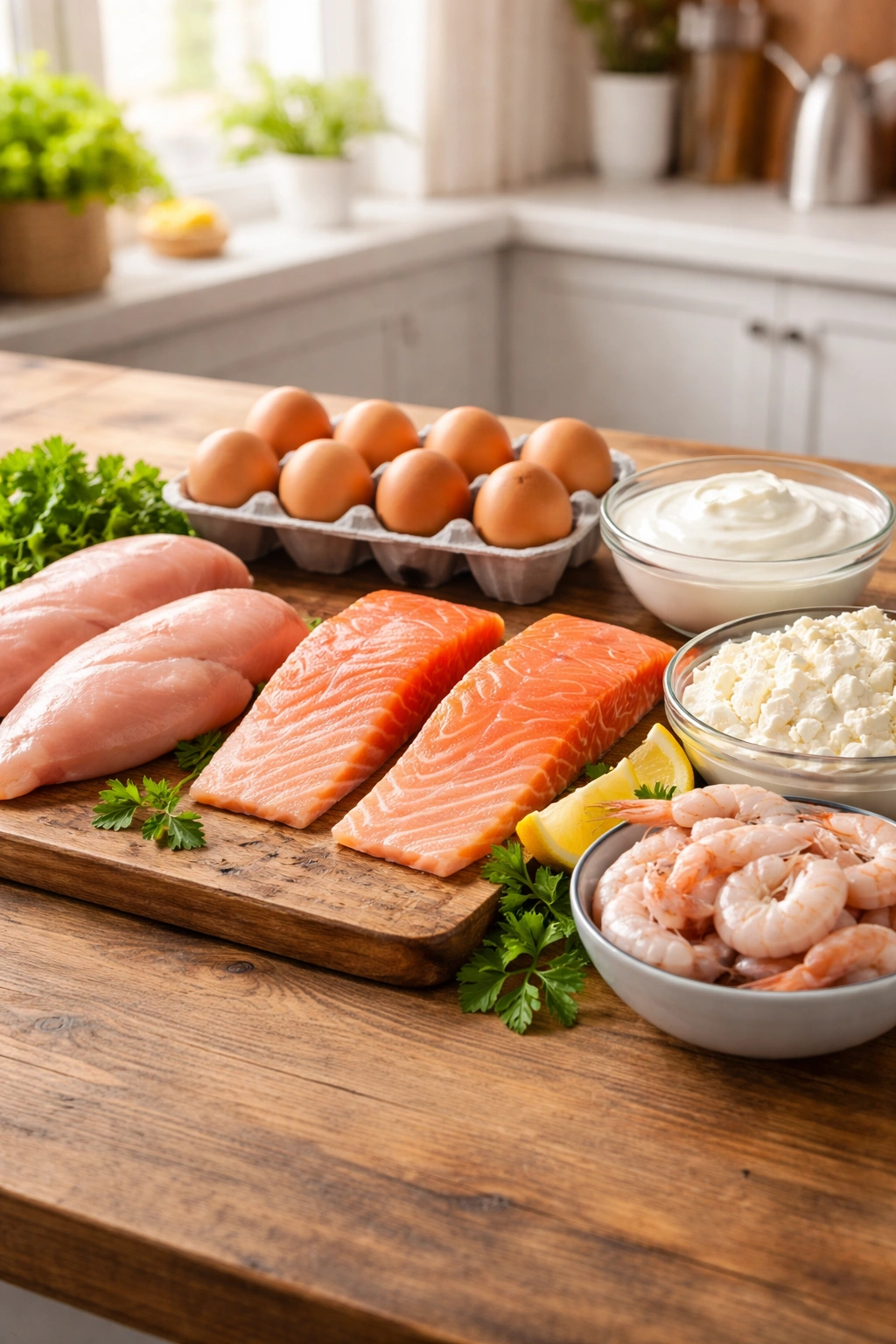
Your ability to make a high-protein meal in 30 minutes depends entirely on what’s already in your kitchen. Stock these items, and you’re never more than a few minutes away from dinner.
Lean Proteins are non-negotiable. Boneless, skinless chicken breasts cook in 12–15 minutes in a pan or under the broiler. Ground turkey and ground beef are even faster—they’re done in 8–10 minutes. Salmon fillets cook in the same time as chicken. Shrimp are the speed champion of the protein world: they’re finished in 2–3 minutes once they hit heat. Eggs are infinitely flexible (omelets, scrambles, hard-boiled for snacking) and cook in minutes. Greek yogurt and cottage cheese require zero cooking and deliver 15–20 grams of protein per serving.
Vegetables that cook quickly are your second essential category. Broccoli florets, thinly sliced bell peppers, snap peas, spinach, mushrooms, zucchini, and asparagus all cook or soften in 5–10 minutes with high heat. Pre-cut vegetables (frozen broccoli, canned mushrooms, pre-sliced bell peppers) save prep time without sacrificing nutrition—frozen vegetables are actually picked at peak ripeness and frozen within hours, so they’re nutritionally equivalent to fresh.
Pantry staples that enable quick cooking include: good olive oil, garlic (fresh or jarred minced), low-sodium soy sauce, lemon and lime juice, hot sauce, vinegars (balsamic, rice, apple cider), canned diced tomatoes, and a basic spice collection (salt, pepper, paprika, cumin, Italian seasoning). These items transform simple proteins and vegetables into actually delicious food.
Smart carbs round out your pantry: brown rice (or white rice, which cooks slightly faster), whole-grain bread, sweet potatoes (which can microwave in 8–10 minutes), oats, and legumes (canned beans are fine—they’re cooked already, just drained and rinsed). The carbs provide energy and additional fiber; the point isn’t to eliminate them, but to keep them in proportion to your protein.
Building Blocks for 30-Minute High-Protein Dinners
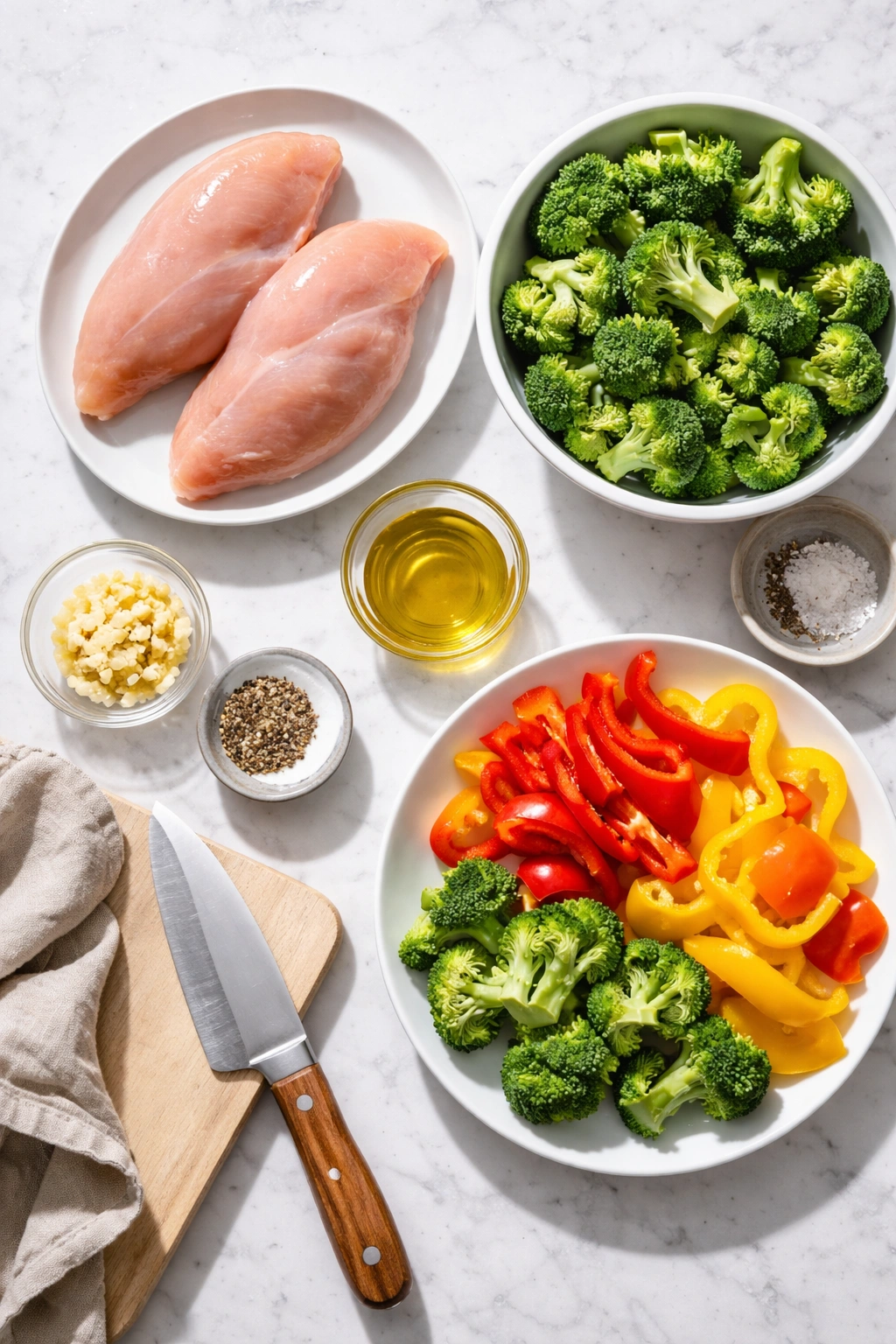
Rather than rigid recipes, it’s more useful to understand the formula that makes high-protein meals work and taste good within a tight timeframe.
The Protein + Hot Cooking Method approach prioritizes speed without sacrificing flavor. Choose your protein, season it well (salt, pepper, garlic, maybe a pinch of cumin or paprika), and apply high heat. Pan-searing gets a crust on the outside while keeping the inside tender—it’s fast and creates restaurant-quality texture. Broiling uses your oven’s top heating element to cook from above while you relax for 10 minutes. Stir-frying on a screaming-hot burner cooks everything simultaneously while building flavor through high heat and movement.
The Power of Mise en Place cuts your actual cooking time nearly in half. Before you turn on the stove, gather and prep everything: slice your vegetables, mince your garlic, measure your sauces, arrange your ingredients within arm’s reach. This sounds obvious, but most home cooks skip it and end up frantically prepping while things cook. When your mise en place is done, cooking takes 15 minutes—genuine hands-on time at the stove. Without it, cooking stretches to 30 minutes because you’re constantly stopping to prep the next ingredient.
The Value of Pre-Cooked Components removes the biggest time constraint. Buy rotisserie chicken (it’s fully cooked, just shred it and add it to a stir-fry or salad). Use canned beans instead of dried. Buy pre-riced cauliflower or regular rice that’s already been cooked. Keep frozen vegetables that require no chopping. These aren’t inferior to from-scratch versions—they’re time-multipliers that let you eat well even on nights when you’re exhausted.
The Flavor Trinity takes seconds to implement but transforms plain protein into something crave-worthy: acid (lemon juice, lime juice, vinegar), fat (olive oil, butter, cream), and seasoning (salt, pepper, garlic, spices). A salmon fillet is just fish. The same salmon fillet with butter, lemon, and garlic is a dish you’d pay $28 for at a restaurant. These additions cost pennies and take zero time.
Sheet Pan Chicken with Roasted Vegetables
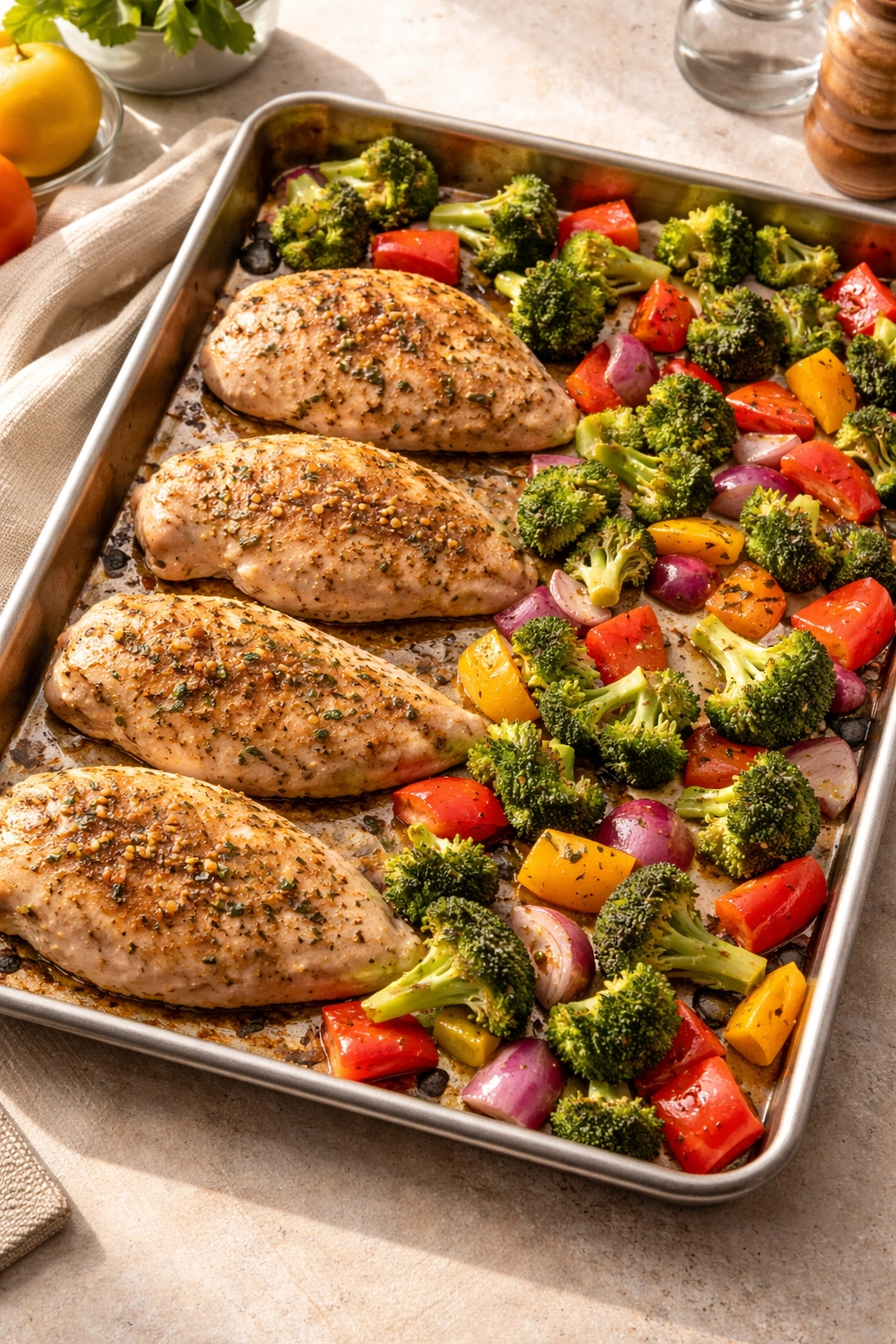
Sheet pan meals are the workhorse of 30-minute cooking: everything cooks on a single pan at the same temperature, the oven does most of the work while you relax, and cleanup is minimal.
Start with chicken breasts pounded to even thickness—about three-quarters of an inch. Pound them between two pieces of plastic wrap or parchment paper using a meat mallet, the bottom of a heavy pan, or even a sturdy can. Even thickness means everything cooks at the same rate and finishes simultaneously. Pat the chicken dry with paper towels (moisture prevents browning), then season both sides generously with salt, pepper, and a teaspoon of paprika or dried oregano.
Arrange the chicken on one half of a rimmed baking sheet. Cut vegetables into bite-sized pieces: broccoli florets, bell pepper chunks, red onion wedges, or whatever you have. The key is uniform sizing so everything finishes cooking at the same time. Toss the vegetables with a few tablespoons of olive oil, salt, pepper, and minced garlic, then spread them on the other half of the pan around the chicken.
Broil at 425°F for 12–15 minutes, watching carefully toward the end. The chicken is done when a meat thermometer inserted in the thickest part reads 165°F (74°C) and the meat is completely white with no pink. The vegetables should be tender and slightly charred at the edges. Total time from raw to plated: about 20 minutes, leaving room for a quick side dish or salad if you want one.
Pro tip: Pat your chicken completely dry before seasoning. Moisture on the surface releases steam that prevents browning. Dry meat browns. Wet meat steams.
The beauty of this approach is flexibility. Use whatever vegetables are in your fridge, swap the seasoning based on what sounds good (Italian herbs, Asian-inspired ginger and soy, or simple lemon and garlic), or add a drizzle of balsamic vinegar or honey in the last minute of cooking for brightness or richness. One chicken breast with a cup of roasted vegetables gives you roughly 35 grams of protein, 8 grams of fiber, and genuine satisfaction.
Stir-Fried Beef with Broccoli and Brown Rice
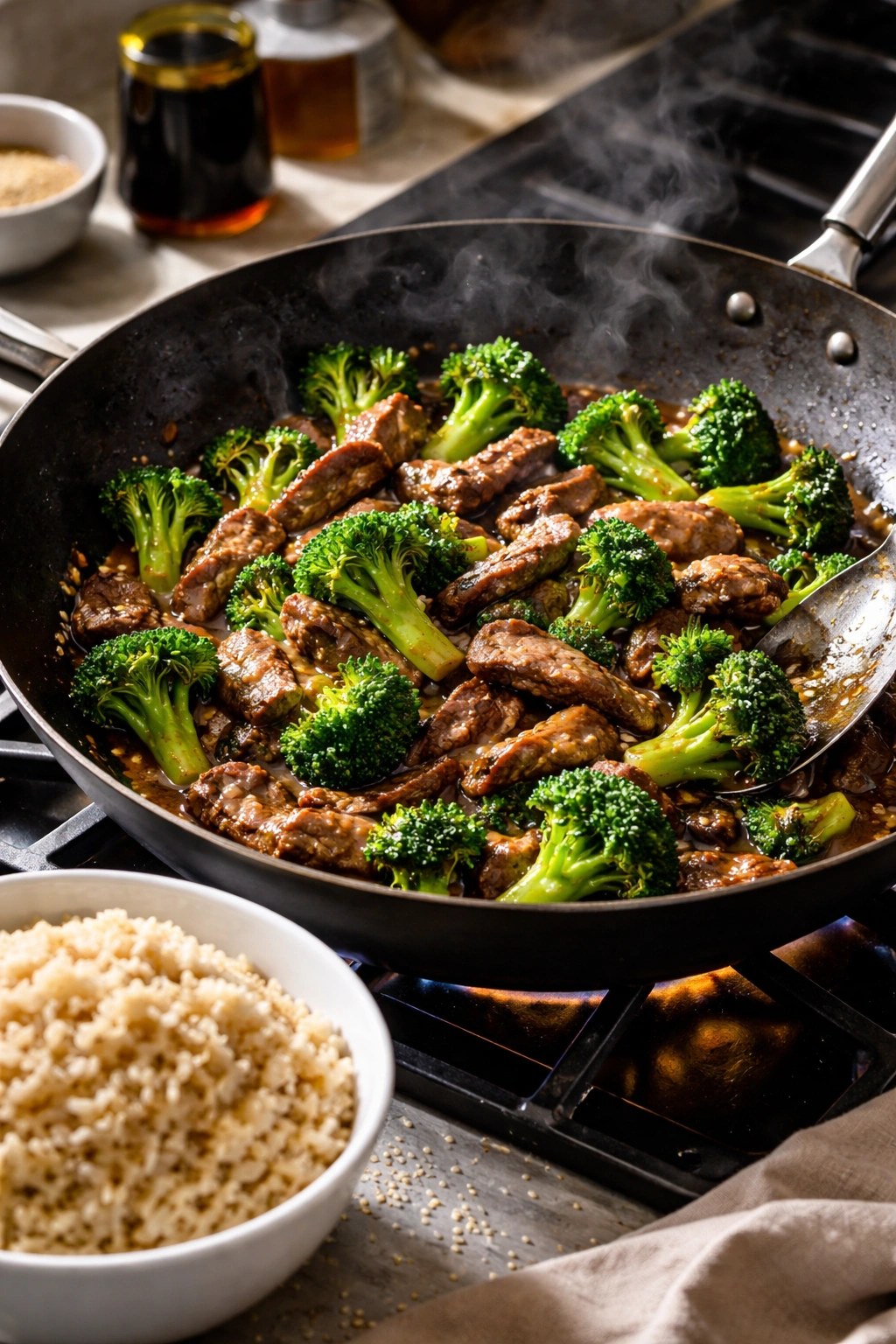
Stir-fries intimidate people, but they’re genuinely faster than most home cooking once you understand the technique. The secret is high heat, small pieces (which cook faster), and not overcrowding the pan.
Get your rice started first (it’s the longest component). Brown rice takes about 30 minutes, but you’re not actively cooking it—it simmers while you make everything else. If you want to save time, use minute rice (it’s done in 10 minutes) or pre-cooked rice from a pouch or container. This isn’t cheating; it’s strategic use of your 30 minutes.
Slice your beef thin and against the grain (this breaks down the muscle fibers and creates a more tender bite). Flank steak and sirloin are affordable cuts that work beautifully for stir-fries. Cut it into bite-sized pieces, about the size of your thumbnail. Pat it completely dry, then season lightly with salt and white pepper.
Get your wok or large skillet screaming hot over high heat. Add a tablespoon of neutral oil (vegetable, canola, or peanut—olive oil smokes at high heat and makes the kitchen smell off). When the oil shimmers and begins to smoke slightly, add your beef in a single layer. Do not stir it immediately. Let it sit untouched for 60 seconds, creating a crust on one side. Then stir constantly for another 60–90 seconds until the beef is browned on the outside but still pink inside (it will continue cooking). Remove it to a plate.
Add a bit more oil to the pan. Immediately add vegetables that take longer to cook (broccoli florets, diced onion, carrots). Stir constantly for 2–3 minutes, then add faster-cooking vegetables (snap peas, bell peppers, minced garlic, sliced ginger). Stir for another 2 minutes until everything is just starting to soften but still has a bite.
Return the beef to the pan along with a sauce: 3 tablespoons low-sodium soy sauce, 1 tablespoon oyster sauce, 1 teaspoon sesame oil, 1 teaspoon rice vinegar, and a minced garlic clove. Toss everything together for 30 seconds until the sauce coats everything. Taste and adjust seasoning—more soy for saltiness, more vinegar for brightness, more sesame oil for richness.
Serve over your brown rice. One serving (about 150 grams beef plus vegetables) delivers 30 grams of protein, significant fiber from vegetables, and actual complex carbs from whole grains. The entire meal, from start to finish, takes 25–30 minutes if you use pre-cooked rice or minute rice.
Worth knowing: The hard part of stir-frying isn’t the cooking—it’s the prep. Slice your vegetables before the pan goes on heat. Measure your sauce before you touch a burner. Have everything visible and within reach. Once you start cooking, it moves fast and you can’t stop to chop something.
Salmon with Quick Lemon Butter Sauce
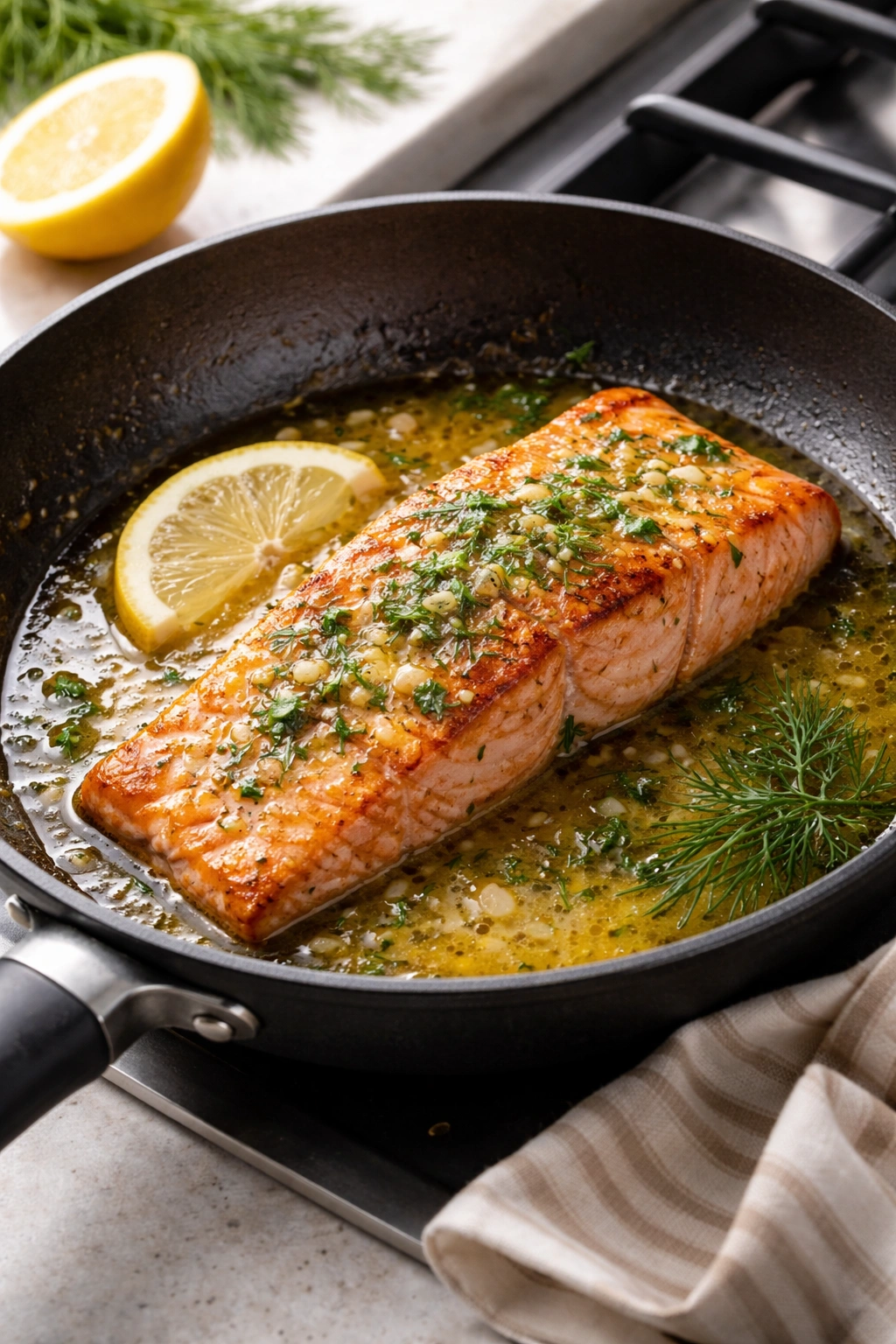
Salmon is one of the fastest proteins to cook and one of the most nutritious. It’s high in protein, but also in omega-3 fatty acids (which reduce inflammation and support brain health) and B vitamins. It tastes buttery and rich without being heavy, and it cooks in the time it takes to make a salad.
Pat your salmon fillet dry and season both sides with salt and pepper. Heat a tablespoon of butter and a tablespoon of olive oil in a large skillet over medium-high heat until the butter foams and just turns golden. Add the salmon skin-side up (this protects the delicate flesh) and cook for about 6 minutes without moving it. The salmon is done when the flesh is opaque and flakes gently with a fork, and the internal temperature reaches 145°F (63°C).
While the salmon cooks, make the sauce. In a small bowl, combine 2 tablespoons of cold butter, the juice of half a lemon, 2 minced garlic cloves, salt, pepper, and a pinch of fresh dill or parsley if you have it. When the salmon finishes cooking, remove it to a plate. Pour the garlic mixture into the still-hot pan, let it sizzle for about 30 seconds (just long enough to warm the garlic, not cook it entirely—raw garlic is bitter), then spoon it over the salmon.
Serve with a quick side: sautéed spinach (wilts in 2 minutes), roasted asparagus (broiled alongside the salmon), or a simple arugula salad with olive oil, lemon, and a pinch of salt. One 150-gram salmon fillet provides 28 grams of protein, plus all those omega-3s, in about 12 minutes of actual cooking time.
Insider note: The skin on salmon is where a lot of the omega-3s hide, and it gets crispy and delicious in a hot pan. Don’t remove it—cook it skin-side up first (for a soft, buttery side), then flip and finish skin-side down if you want a crispy exterior. Either way, the skin is edible and nutritious.
Ground Turkey Tacos with Avocado and Lime
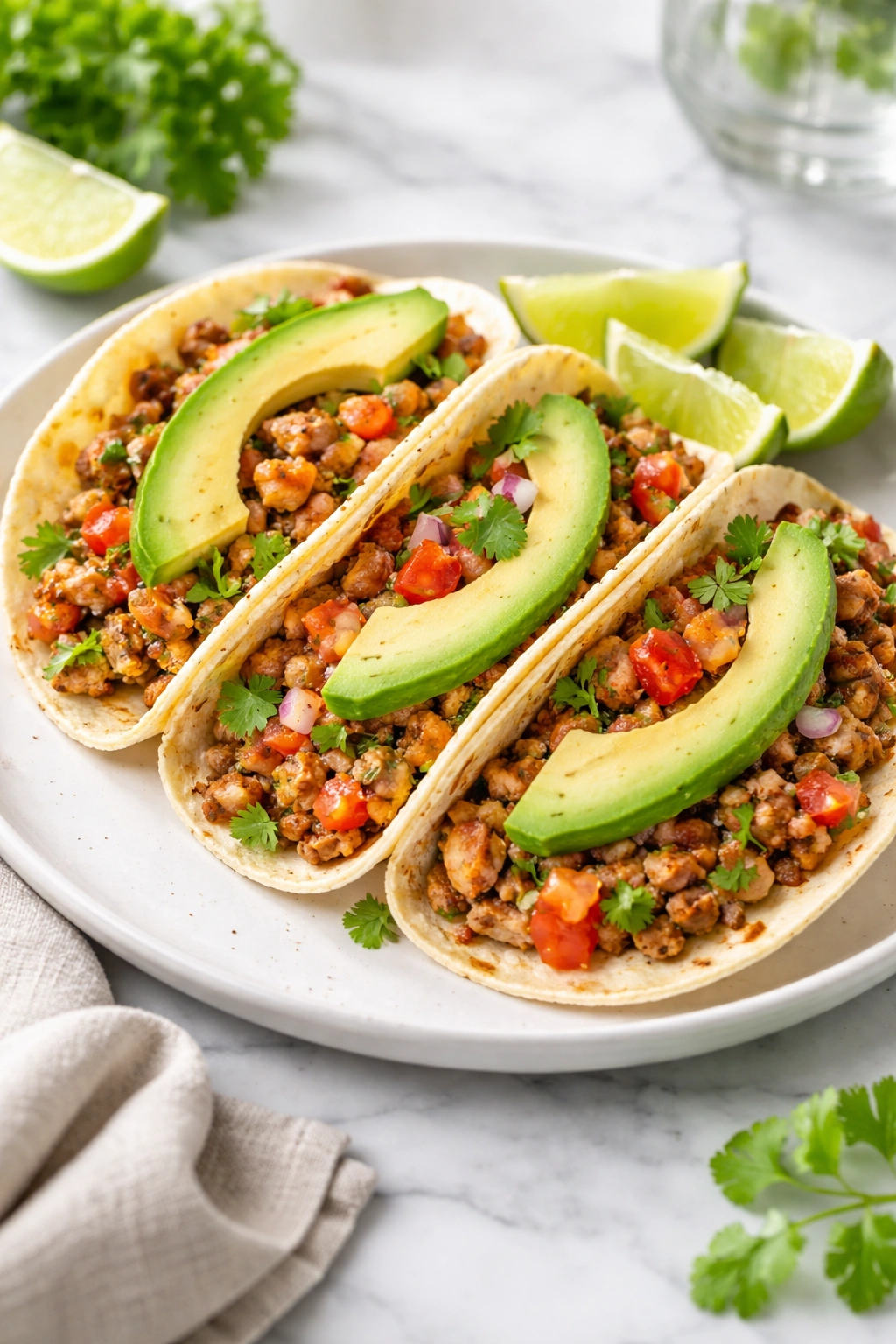
Ground turkey is criminally underrated. It’s leaner than ground beef, cooks faster than whole chicken breasts, and it absorbs seasoning beautifully. Tacos are the ultimate 30-minute meal framework: minimal cooking, maximum customization, and genuinely satisfying.
Heat a tablespoon of oil in a large skillet over medium-high heat. Add a pound of ground turkey (broken up as it cooks with a wooden spoon) and cook for 8–10 minutes, stirring occasionally, until it’s completely cooked through—no pink remaining. The turkey will break into small pieces and won’t brown as dramatically as ground beef, but that’s normal. It doesn’t need to be deeply browned; it just needs to be cooked through.
While the turkey cooks, combine your seasoning: 2 teaspoons ground cumin, 1 teaspoon smoked paprika, 1 teaspoon garlic powder, ½ teaspoon onion powder, ½ teaspoon salt, ¼ teaspoon cayenne pepper (optional, for heat), and a generous pinch of black pepper. When the turkey is cooked, add the spices along with 3 tablespoons of water and a tablespoon of lime juice. Stir well and let it simmer for 2–3 minutes so the spices bloom and the flavors meld.
Warm your taco shells or tortillas (corn is traditional and gluten-free; flour tortillas are softer and more pliable). Set up a taco bar: your seasoned turkey, diced tomatoes, shredded lettuce, sliced avocado, diced red onion, cilantro, lime wedges, and any salsa you like. Let people build their own tacos. Each turkey taco (on one tortilla, filled) contains roughly 12–15 grams of protein, plus fiber from the tortilla and vegetables, plus healthy fat from avocado.
The whole operation—from raw turkey to sitting down to eat—takes about 20 minutes. It’s cheap, it’s fast, and it’s genuinely delicious. No one suspects it’s a weeknight meal that took 20 minutes and four dollars total to make.
Shrimp Pasta with Garlic and White Wine
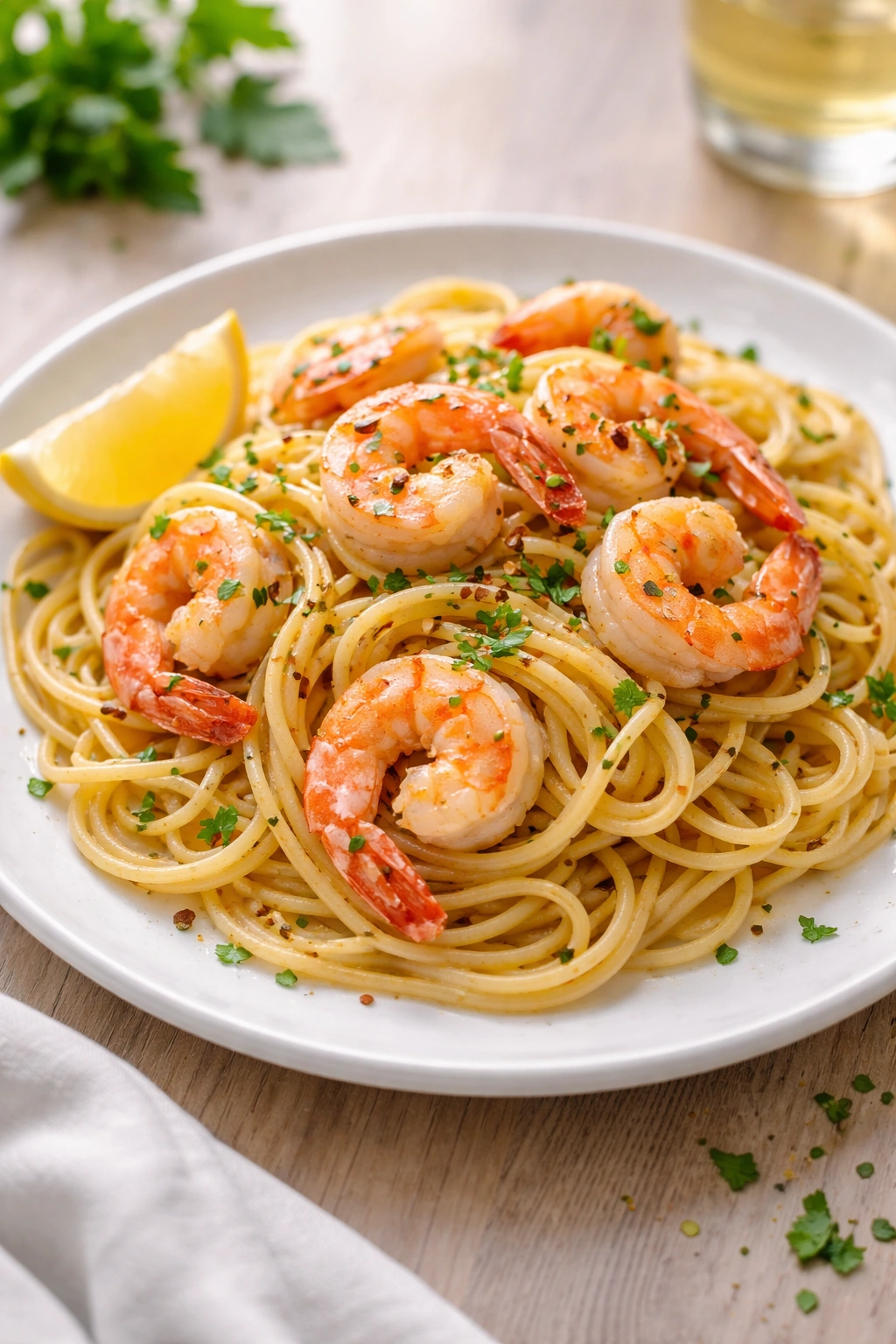
Shrimp is magic for quick cooking. It goes from raw to done in two minutes. It has zero carbs (pure protein), it’s expensive enough to feel special but cheap enough to eat multiple times a week, and it works in literally any cuisine.
Start your pasta water boiling first (salt it generously—it should taste like the sea). Get your pasta going according to package directions. While that happens, peel and devein your shrimp if it’s not already done. Pat it dry.
In a large skillet, melt 2 tablespoons of butter with a tablespoon of olive oil over medium-high heat. Add 4–5 minced garlic cloves and cook for about 30 seconds until fragrant. Add your shrimp (about a pound for 2 servings) and cook for about 60 seconds per side—it should turn opaque and pink. Don’t overcook it; overcooked shrimp becomes rubbery. Remove the shrimp to a plate.
Pour ½ cup of dry white wine (or chicken broth if you don’t want to use wine) into the pan and let it reduce by half, about 2 minutes. This concentrates the flavor. Add a squeeze of lemon juice, a pinch of salt, and crack of pepper. Return the shrimp to the pan and toss everything together for 30 seconds.
Drain your pasta, toss it directly into the pan with the shrimp and sauce, and add a handful of fresh parsley and a pinch of red pepper flakes if you like heat. The starchy pasta water clings to the pasta, helping the sauce coat everything. Serve immediately with fresh lemon wedges.
One serving (about 150 grams shrimp plus pasta) delivers 30 grams of protein, carbs for energy, and enough fat from butter and olive oil to make it actually satisfying. The entire meal cooks in about 15 minutes once your water is boiling.
Pro tip: Keep frozen shrimp in your freezer at all times. It defrosts in cool water in about 5 minutes, and you never have to worry about fresh shrimp going bad. It’s just as good as fresh for cooking purposes.
Cottage Cheese Bowl with Granola and Berries
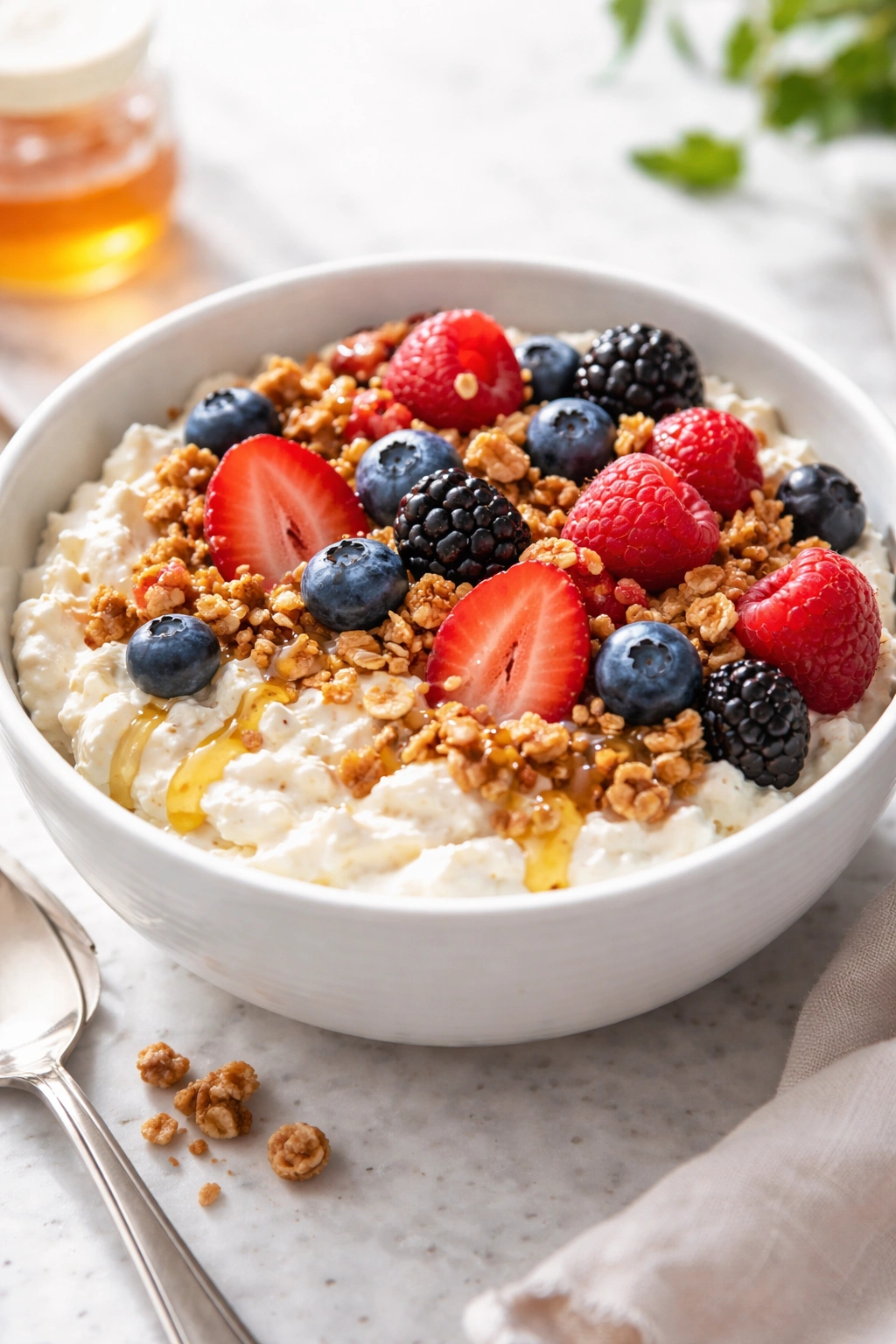
Not every high-protein meal requires cooking. Cottage cheese is criminally overlooked in Western cuisine; it’s eaten everywhere else in the world and should be a staple in yours. A half-cup serving of full-fat cottage cheese contains about 14 grams of protein and takes zero cooking time.
Scoop cottage cheese into a bowl. Add fresh berries (whatever’s in season: blueberries, raspberries, strawberries, or a mix). Drizzle with a tablespoon of honey or maple syrup. Top with a handful of granola (the texture contrast matters—choose granola that’s crunchy, not chewy). Optionally add a sprinkle of unsweetened shredded coconut, a pinch of cinnamon, or a handful of chopped nuts for extra crunch.
This works for breakfast, lunch, or even dessert. It’s filling, it’s genuinely delicious (nothing tastes worse than “healthy food” you don’t want to eat), and it requires no cooking. You’re looking at 25–30 grams of protein, plenty of fiber from berries and granola, and enough natural sugar to feel like a treat.
The key to cottage cheese actually tasting good is this: eat it fresh from the container. Don’t let it sit in a bowl for hours. The texture is perfect for about 15 minutes after you scoop it, then it starts weeping liquid. It’s not bad, just less pleasant. Eat it reasonably soon after you make it.
Eggs and Vegetable Scramble
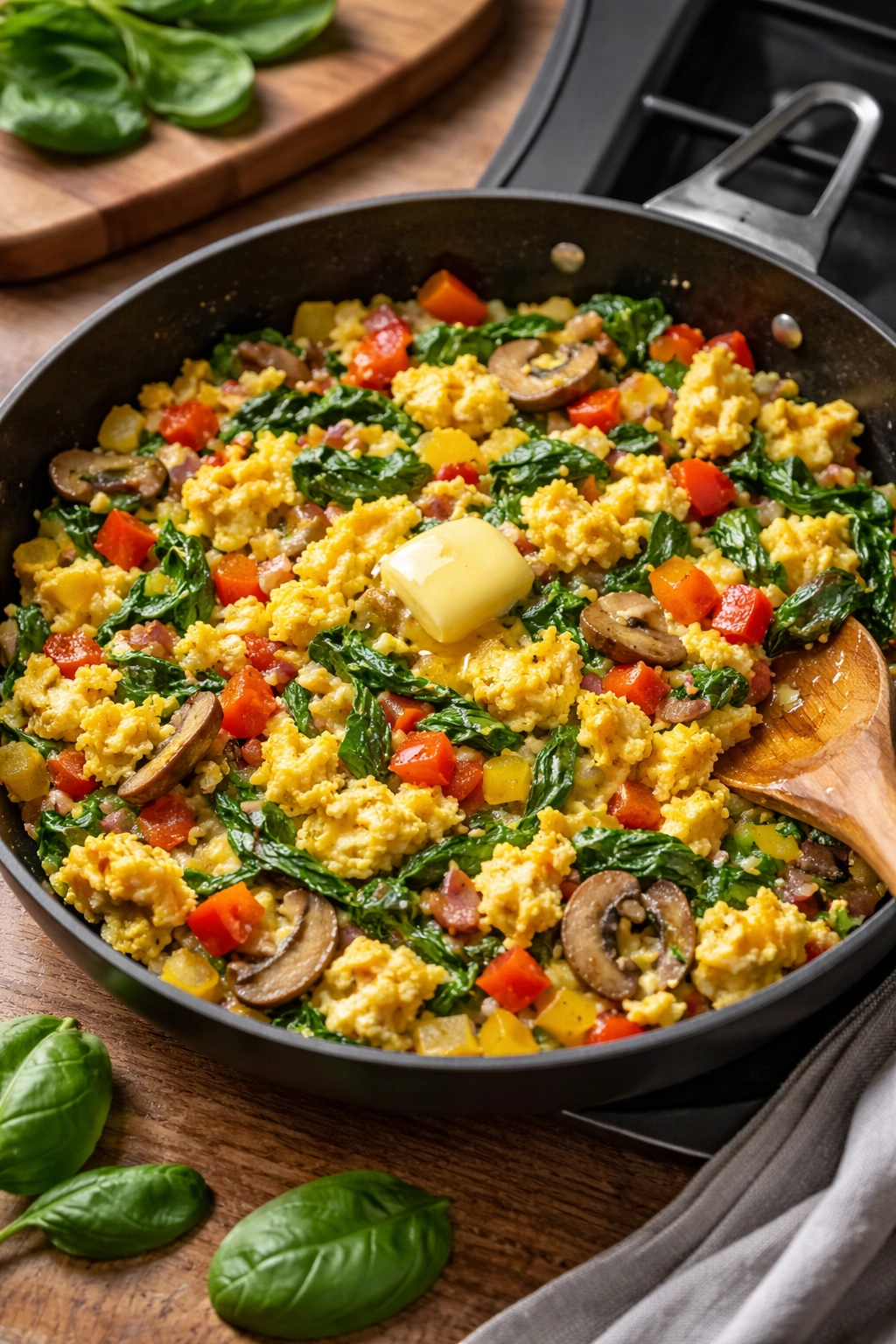
Eggs are protein perfection: they’re cheap, they’re versatile, they’re done in five minutes, and they’re nutritionally complete (all nine essential amino acids in one package). A three-egg scramble provides about 18 grams of protein and takes 5 minutes to cook start to finish.
Dice up whatever vegetables you have: bell peppers, mushrooms, onions, spinach, tomatoes, zucchini. Heat a large skillet over medium heat with a tablespoon of butter. Add vegetables that take longer to soften (diced bell pepper, onion, mushrooms) and cook for 2–3 minutes. Add vegetables that wilt quickly (spinach, tomatoes) and cook for another minute.
Crack your eggs into a bowl, add a pinch of salt and pepper, and whisk them briskly until they’re completely combined. Pour them into the skillet with the vegetables. Let them sit untouched for about 10 seconds (this prevents them from turning into a grainy scramble), then gently push the cooked edges toward the center, tilting the pan so uncooked egg flows to the hot edges. Keep doing this—slow, gentle movements—until the eggs are mostly set but still slightly wet on top. They’ll continue cooking from residual heat even after you remove them from the stove. This prevents overcooking and keeps them creamy.
Serve immediately. Optionally top with shredded cheese, fresh herbs, hot sauce, or a dollop of sour cream. Three eggs plus a cup of mixed vegetables gives you roughly 20 grams of protein, tons of nutrients, and a meal you can eat for breakfast, lunch, or dinner without anyone questioning you.
Worth knowing: Scrambled eggs get tough and rubbery when they’re cooked too fast over too-high heat. Medium heat, slow movements, and pulling them off the stove slightly underdone creates the texture everyone actually wants.
Common Mistakes That Slow You Down
Most people don’t cook slowly because they can’t. They cook slowly because they’re making decisions as they go, and indecision eats time. Knowing which mistakes to avoid transforms your cooking speed from sluggish to genuinely fast.
Cooking with wet proteins is the biggest time-waster. Wet chicken or fish releases steam instead of browning. Brown requires dry surface, hot pan, and patience. Use paper towels and dry your protein thoroughly before it touches heat. This single step saves 5 minutes because your food cooks faster and tastes dramatically better.
Not reading the entire recipe before starting costs you serious time. You start cooking, realize you need to do something else (let something come to room temperature, gather a tool), and suddenly you’re rushed. Spend 60 seconds reading the whole thing first. Know what you need before you need it.
Using dull knives slows you down more than you realize. Sharp knives cut quickly and precisely. Dull knives require more pressure, slip off vegetables, and make prepping take twice as long. A sharp chef’s knife is the most important tool in your kitchen. Keep it sharp (steel it regularly, get it professionally sharpened every year or two).
Overcrowding the pan forces you to cook in batches, which doubles your time. Proteins need space around them to brown properly. If your skillet is full with barely any room between pieces, remove half the protein, cook it until done, then remove it and cook the other half. This sounds like it adds time, but it actually saves it because browning creates flavor and texture that rush-cooked crowded food never achieves.
Not using pre-made or convenience ingredients when appropriate forces you to do more work than necessary. Buying rotisserie chicken, using frozen vegetables, choosing pre-cooked rice, or buying shrimp that’s already peeled all save time without sacrificing nutrition. They’re not inferior choices for a 30-minute meal—they’re smart choices.
Cooking without tasting as you go means you finish something that tastes bland and then have to fix it. Taste as you cook. Does the seasoning taste right? Is it salty enough? Does it need acid (lemon, vinegar) for brightness? Does it need more garlic or spice? Make adjustments while you’re cooking, not after you’ve plated everything.
Time-Saving Strategies for Weeknight Cooking
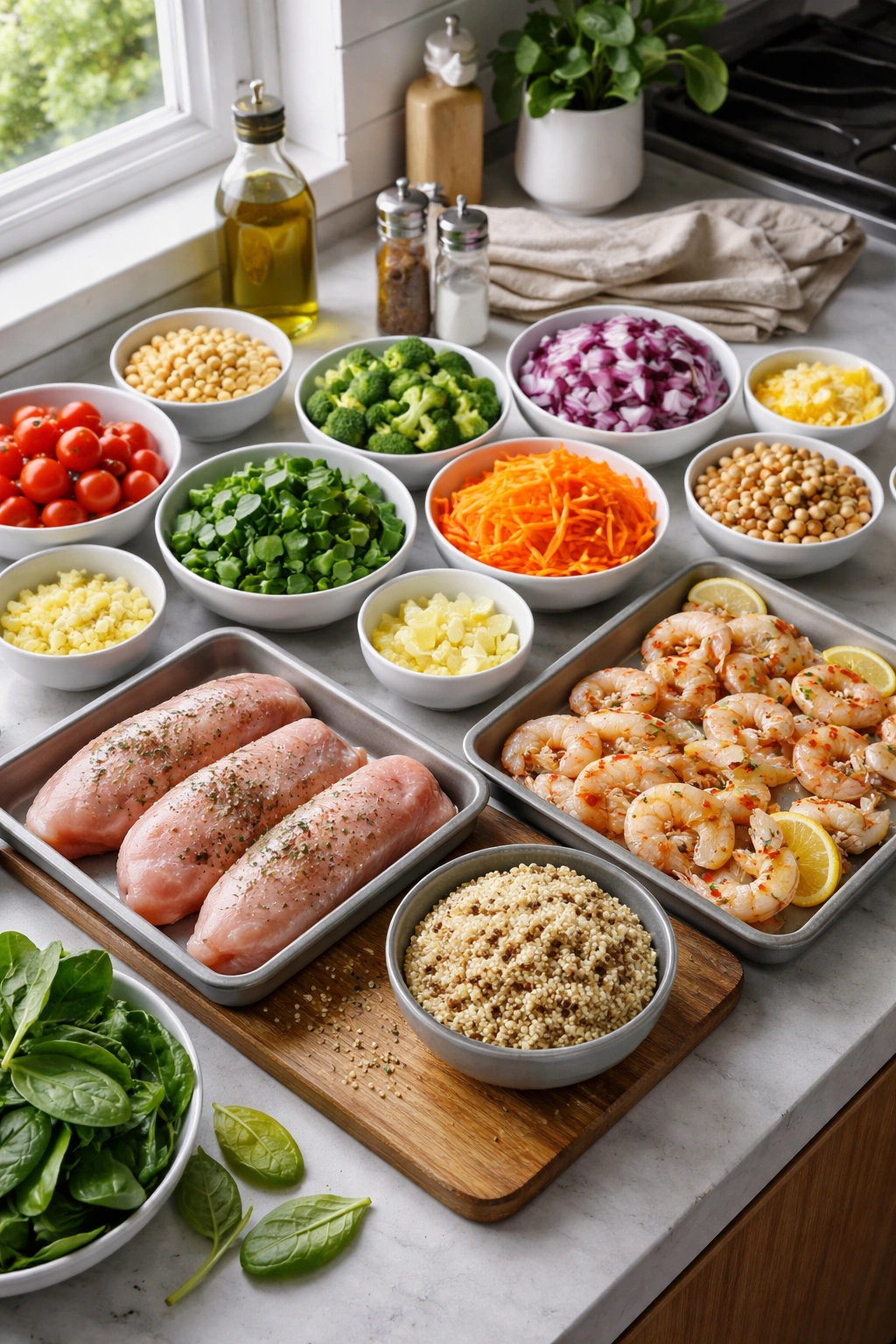
Strategy matters as much as technique. The fastest meals aren’t necessarily the simplest recipes—they’re the ones where you’ve removed every possible friction point.
Buy pre-cut vegetables whenever possible. Yes, they cost a bit more. Yes, it’s less environmentally ideal. But if paying a small premium means you actually cook dinner on a Tuesday night instead of ordering takeout, the premium was worth it. Pre-cut broccoli, sliced mushrooms, diced bell peppers, and pre-sliced onions all save 10–15 minutes of prep time. The nutrients are identical to whole vegetables.
Cook two proteins at once when you turn the oven on. Roast your salmon and chicken together (they cook at similar times). Grill your chicken and shrimp simultaneously. When you finish, you have cooked protein to use for the next two days of meals. This isn’t meal prep in the traditional sense; it’s just being efficient. Tomorrow, throw your cooked chicken in a salad or stir-fry. The day after, use the salmon in a pasta or over rice. You’ve bought yourself two easy meals.
Use your oven more aggressively. Modern ovens preheat fast. While your oven preheats, you can prep vegetables and season protein. By the time you’re ready to cook, the oven is hot and ready. Sheet pan cooking (everything on one pan) beats stovetop cooking for speed because the oven does the work while you step away. Multi-pan stovetop cooking requires constant attention.
Standardize your spice blends. Rather than reaching for 12 different spices for different meals, combine spices you use frequently into blends. Make a taco seasoning (cumin, smoked paprika, garlic powder, onion powder, salt, pepper). Make an Italian seasoning blend (oregano, basil, thyme, garlic powder). Make a basic curry powder blend. Store them in airtight containers. Now you grab one container instead of measuring six individual spices. This saves multiple minutes per meal.
Boil water immediately. This sounds obvious but most people don’t. The moment you decide to make pasta, rice, or anything that requires boiling, fill your pot, salt it, and set it on high heat. Let it come to a boil while you prep everything else. By the time you’re ready to cook, boiling water is waiting. This saves 10–15 minutes per meal.
Invest in the right equipment. A large, heavy skillet that heats evenly is worth the money. A good chef’s knife is worth the money. A reliable meat thermometer prevents overcooking and guessing. A microplane zester makes zesting lemon or ginger seconds. A sturdy set of measuring spoons and cups (rather than searching for them) saves minutes. You’re not buying luxury items; you’re removing obstacles.
Meal Prep Shortcuts That Save 10 Minutes
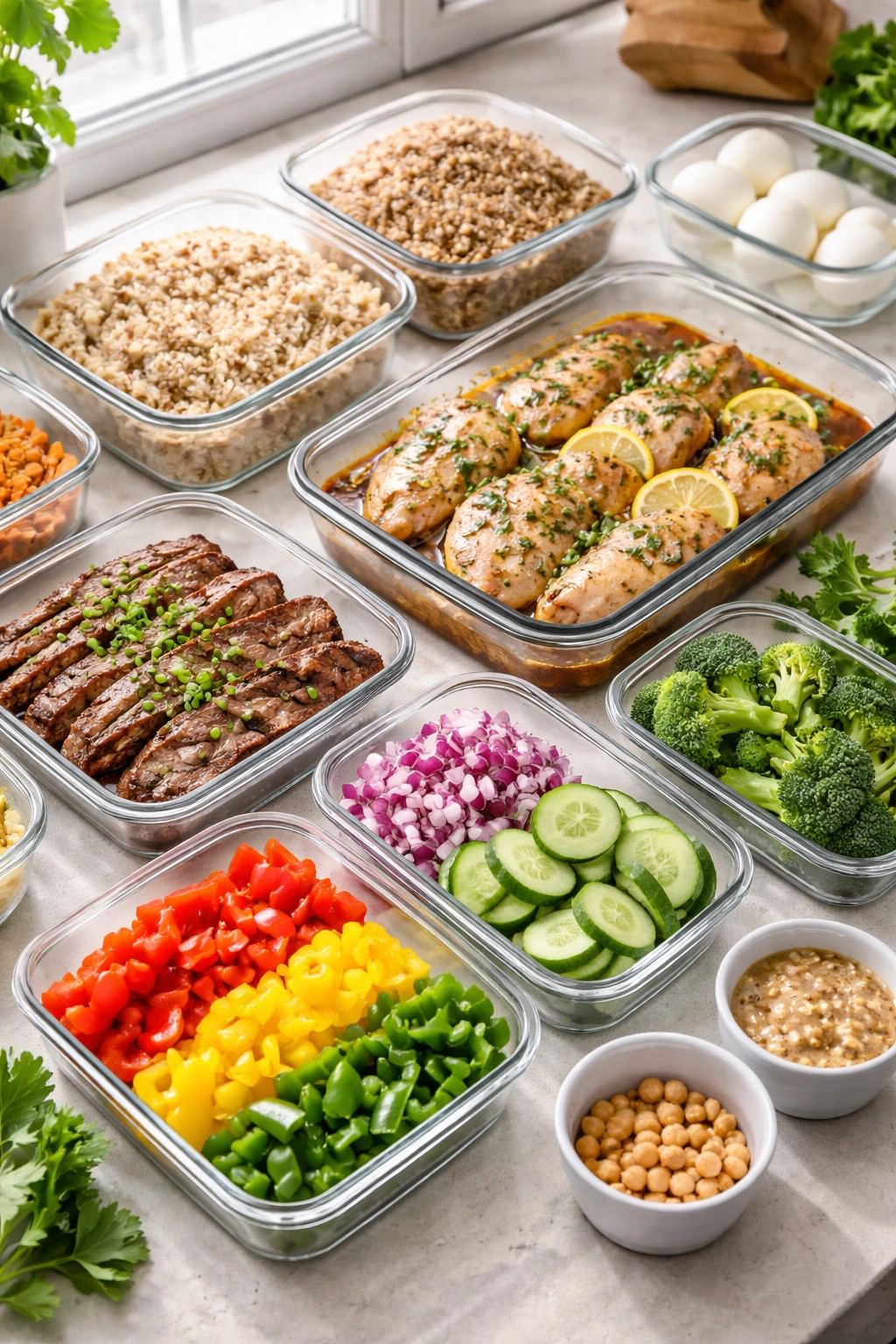
Meal prep doesn’t have to mean spending three hours on Sunday batch-cooking chicken and rice in separate containers. It can mean strategic pre-cooking that cuts your weeknight cooking time almost in half.
Cook a big batch of grain on Sunday (brown rice, farro, quinoa, whatever). Divide it into containers and refrigerate it. Now all week, instead of starting pasta water 30 minutes before dinner, you just reheat pre-cooked grain in a microwave (2 minutes) or skillet (3 minutes). This saves you 25 minutes per meal.
Marinate proteins the night before. Proteins cook faster when they’ve been marinated overnight because the acid in the marinade breaks down muscle fibers slightly. Beyond that, they taste better because the marinade has already infused them with flavor. Combine olive oil, lemon juice, garlic, and herbs in a container with your chicken or fish. Refrigerate overnight. The next evening, you literally just throw it in a hot pan. No additional seasoning needed; the work is already done.
Prep your vegetable cuts in advance. Sunday evening, dice your bell peppers, chop your broccoli, slice your mushrooms, and mince your garlic. Store everything in airtight containers. Throughout the week, when you decide to cook, your vegetables are literally ready to go into the pan. Chopping takes longer than cooking for most people. Removing that step saves 10–15 minutes.
Make a big batch of your favorite sauce (tomato-based, cream-based, soy-based) on Sunday. Refrigerate it. All week, you cook your protein in 15 minutes and finish with pre-made sauce. The sauce carries all the flavor; the protein is just the canvas. This approach consistently shortens cooking time.
Hard-boil eggs. Boil a dozen eggs, cool them, and keep them in the fridge. Now you have instant protein for anything: snacks, salads, chopped into scrambles, or just eaten with salt and pepper as a side. A hard-boiled egg that took you five minutes of passive cooking (just sitting in hot water) becomes a protein source throughout the week.
The secret to all of these shortcuts: they don’t require you to cook a bunch of separate meals on Sunday. They’re just small batches of foundations—grains, proteins, vegetables, sauces—that you combine differently throughout the week. Monday is grain + herb-marinated chicken + roasted vegetables. Tuesday is the same grain + shrimp + different sauce. Wednesday is grain + ground turkey + fresh vegetables and soft tortillas for a burrito bowl. You spent an hour Sunday, and you bought yourself 15 minutes of cooking time on five different evenings.
Final Takeaway
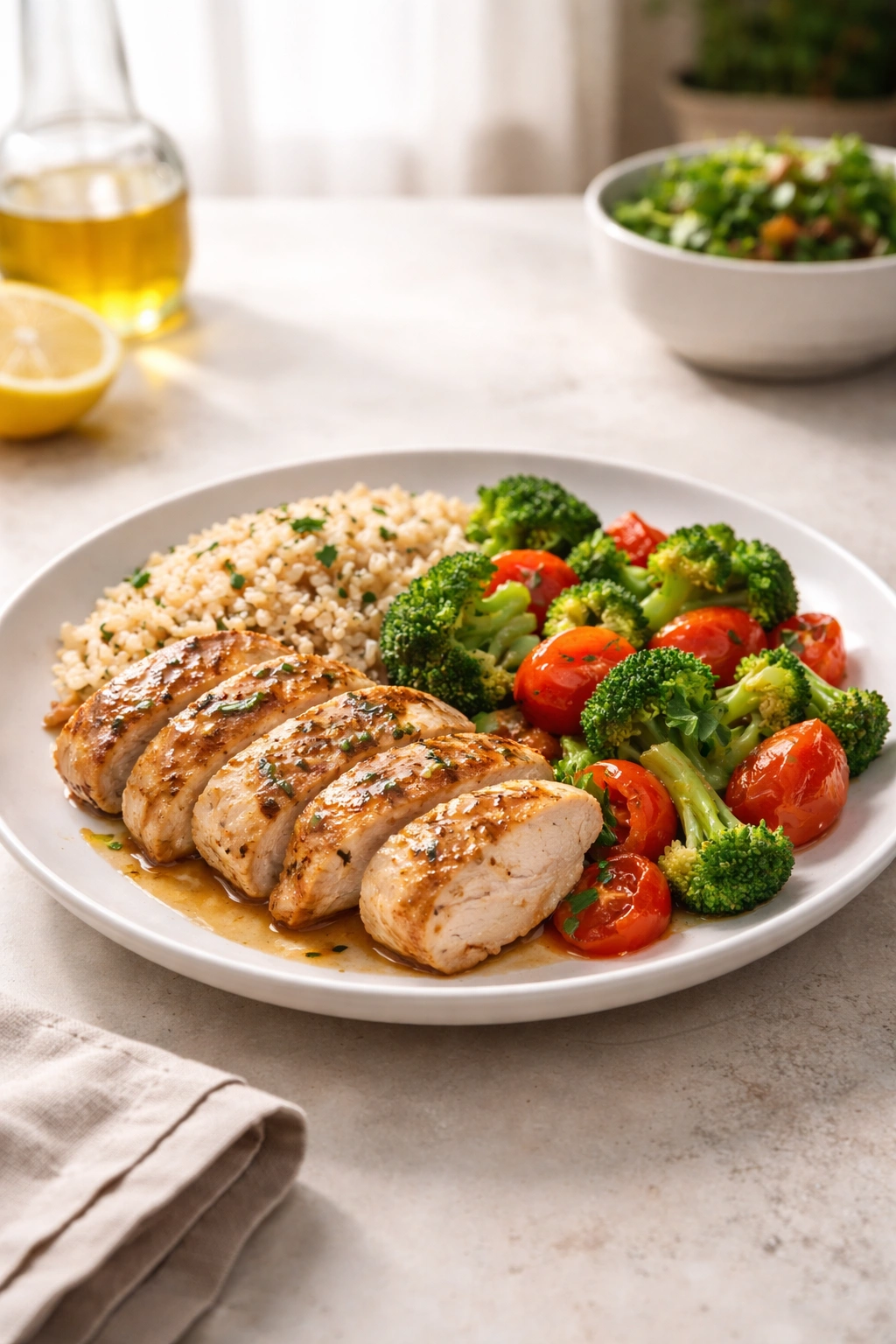
High-protein meals in 30 minutes aren’t a special skill or a secret formula. They’re the result of three intentional choices: using fast-cooking proteins (chicken, ground turkey, shrimp, eggs, salmon), minimizing prep through smart shopping (pre-cut vegetables, pre-cooked grains), and using simple cooking methods that emphasize flavor (searing, stir-frying, roasting).
The missing piece most people overlook is this: the meal is already good before it hits the plate. Your protein tastes good, your vegetables taste good, your carbs taste good. You’re not trying to rescue mediocre ingredients with complicated sauces. You’re starting with solid fundamentals and letting them shine. That’s what makes a 30-minute meal feel effortless instead of rushed.
Start with the meal blueprints here—the sheet pan chicken, the stir-fry, the shrimp pasta. Make them a few times until they feel automatic. Then start playing with vegetables, seasonings, and proteins based on what’s in your fridge. You’ll develop your own speed and confidence. Within a few weeks, 30 minutes stops feeling like a constraint and starts feeling like plenty of time to cook genuinely good food.
The biggest advantage you gain isn’t speed—it’s freedom. When you can cook a satisfying, protein-rich meal in 30 minutes, you stop thinking you need takeout. You stop believing weeknight cooking is difficult. You start eating food that tastes better, costs less, and fuels your body the way it actually needs. That’s worth the investment in learning these techniques.
