



Stroganoff has a reputation for being a decadent, heavy comfort food — the kind of dish you might assume is off the table if you’re eating mindfully. But the truth is, this Russian-inspired classic doesn’t require the mountains of sour cream and butter traditionally called for. With a few smart swaps and technique adjustments, you can make stroganoff that feels just as luxurious and satisfying, delivers all the silky sauce and tender beef you’re craving, and doesn’t leave you feeling weighed down afterward.
The key is understanding where the richness actually comes from. It’s not just the cream — it’s the deep, savory beef flavor, the umami-rich mushrooms, and the careful technique that builds body into the sauce. A light version doesn’t mean sacrificing any of that. What it means is using Greek yogurt or a half-and-half blend instead of pure heavy cream, reducing the butter, and letting the beef and its broth do more of the flavor-building work. The result is a dish that tastes indulgent but leaves you feeling satisfied rather than stuffed.
This stroganoff is the kind of dinner you can make on a regular weeknight — it comes together in about 45 minutes — but it’s elegant enough to serve to guests. It reheats beautifully, the flavors actually deepen overnight, and it pairs perfectly with egg noodles, rice, or even roasted vegetables if you want to keep things even lighter. Whether you’re cooking for one or feeding a family, this approach gives you all the comfort of the classic with none of the guilt.
The History and Appeal of Stroganoff
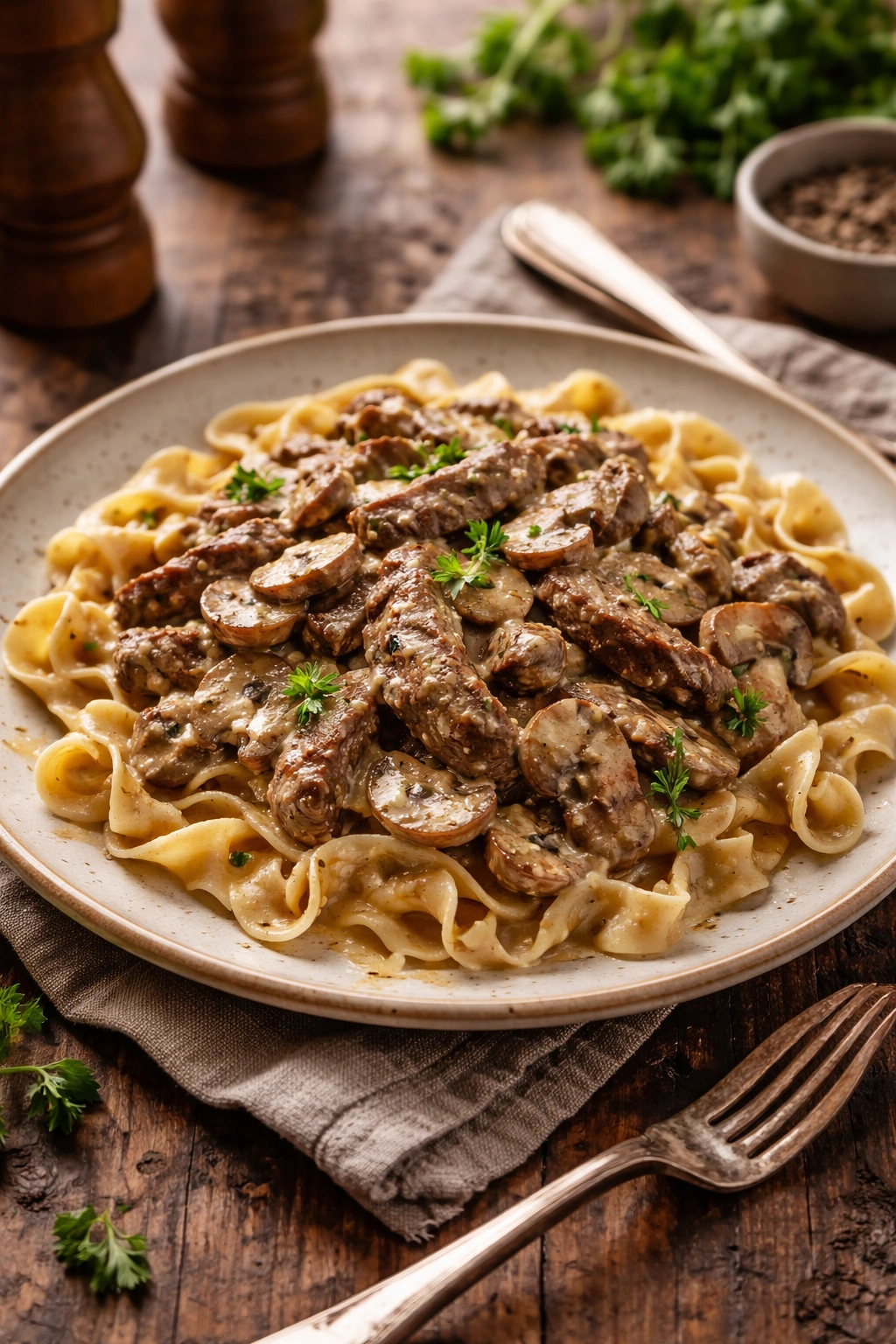
Stroganoff emerged in 19th-century Russia, named after the influential Stroganov family, and it quickly became a staple across Eastern Europe and beyond. The original version was a luxurious dish of beef simmered in a rich sour cream sauce — exactly the kind of indulgent preparation that made sense for aristocratic dining in colder climates, where fat and calories were valuable fuel.
What made stroganoff so appealing wasn’t just the richness, though. It was the contrast of flavors and textures: tender beef against a silky sauce, sharp sour cream cutting through savory meat broth, the earthiness of mushrooms tying everything together. These elements still appeal to us, and they still work beautifully in a lighter version.
The dish has evolved significantly over time. American versions often incorporate tomato paste or Worcestershire sauce. Some Eastern European preparations skip the sour cream entirely and rely on beef broth and mustard instead. Modern home cooks have adapted it endlessly — adding herbs like dill and parsley, using different cuts of beef, playing with vegetables. The flexibility of stroganoff is actually one of its greatest strengths.
Why Stroganoff Deserves a Healthier Makeover
The traditional version isn’t inherently bad — it’s just calorie and fat-dense, which doesn’t work for everyone’s dietary goals. But the structure of stroganoff is actually ideal for a lighter approach. The long, slow cooking of the beef tenderizes it without added fat. The mushrooms develop deep umami that carries the sauce. The aromatics build complexity. A light stroganoff keeps all these mechanisms intact.
Homemade stroganoff also wins against the packaged stroganoff mixes or restaurant versions, which often contain thickeners, added sugar, and sodium. When you make it yourself, you control every ingredient and every step. You know exactly what’s going into your sauce. You can taste the beef, the mushrooms, the cream — not a soup of additives.
What Makes This Version Lighter Without Losing Flavor
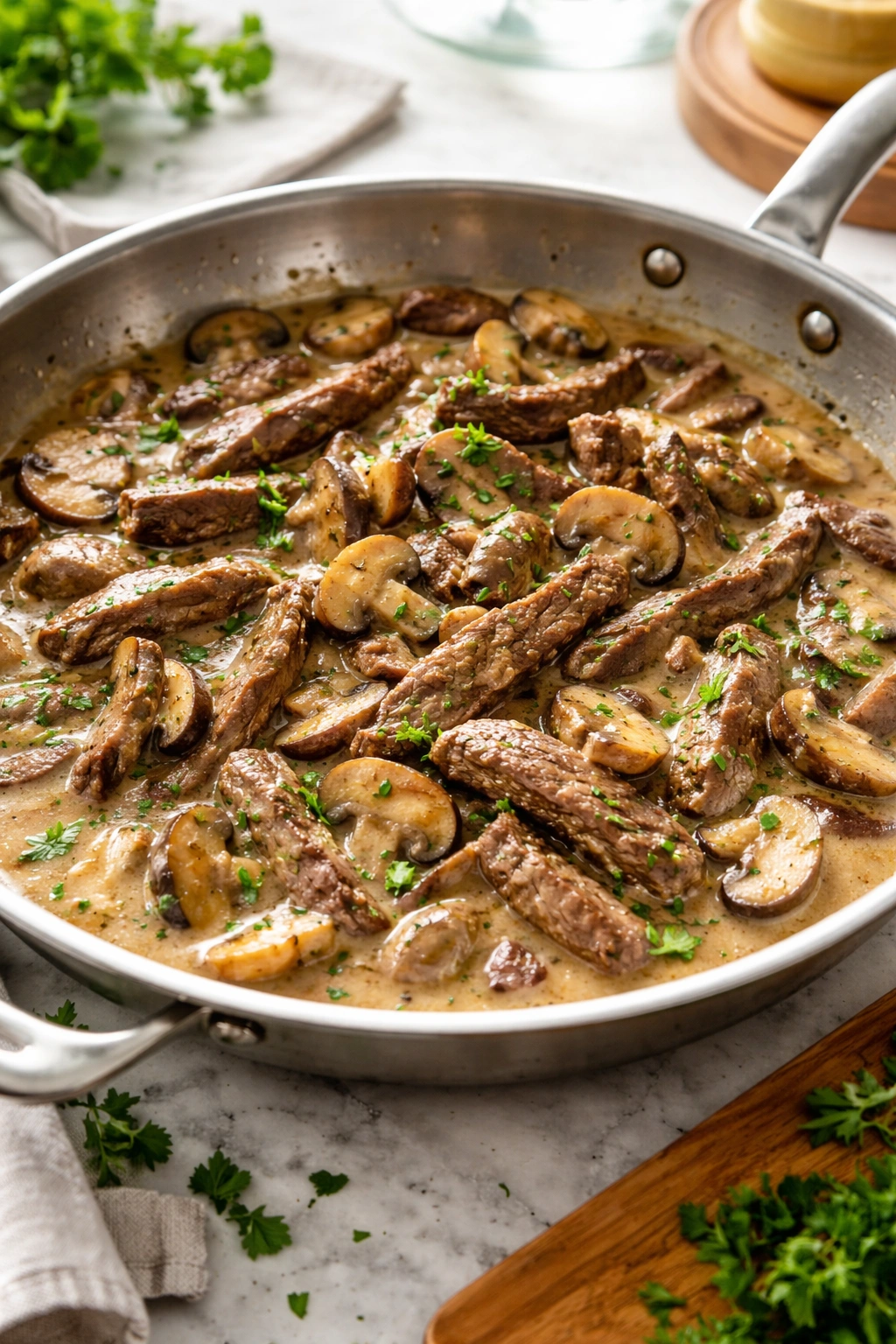
The secret to a lighter stroganoff isn’t removing ingredients — it’s replacing them strategically and trusting better technique to do the work. Instead of using two cups of sour cream, you might use one cup of Greek yogurt blended with half-and-half. You cut the butter back to what’s actually needed for building flavor, not just adding richness. You use beef broth actively to develop the sauce’s body, so you need less cream overall.
The beef itself becomes more central to the dish’s appeal. By selecting a good cut, searing it properly, and cooking it slowly enough that it renders its own gelatin into the broth, you create a naturally rich, silky sauce. That gelatin does what cream traditionally does — it adds body and luxurious texture. You’re working with the beef rather than against it.
Mushrooms play a bigger role too. They’re browned slowly to concentrate their umami, releasing their moisture completely so they add depth rather than diluting the sauce. Some of the mushrooms are pureed into the sauce, which thickens it naturally while adding rich fungal flavor. That’s a technique you don’t see in traditional stroganoff, but it delivers serious complexity without any heavy ingredients.
The acid in the sauce also changes slightly. Traditional stroganoff gets brightness from sour cream’s tang. A lighter version might use a touch of Dijon mustard, lemon juice, or a splash of white wine — all of which add flavor dimension and cut through richness just as effectively. These techniques aren’t about deprivation; they’re about highlighting flavors that always existed in stroganoff but often get buried under fat.
Essential Ingredients for Perfect Stroganoff
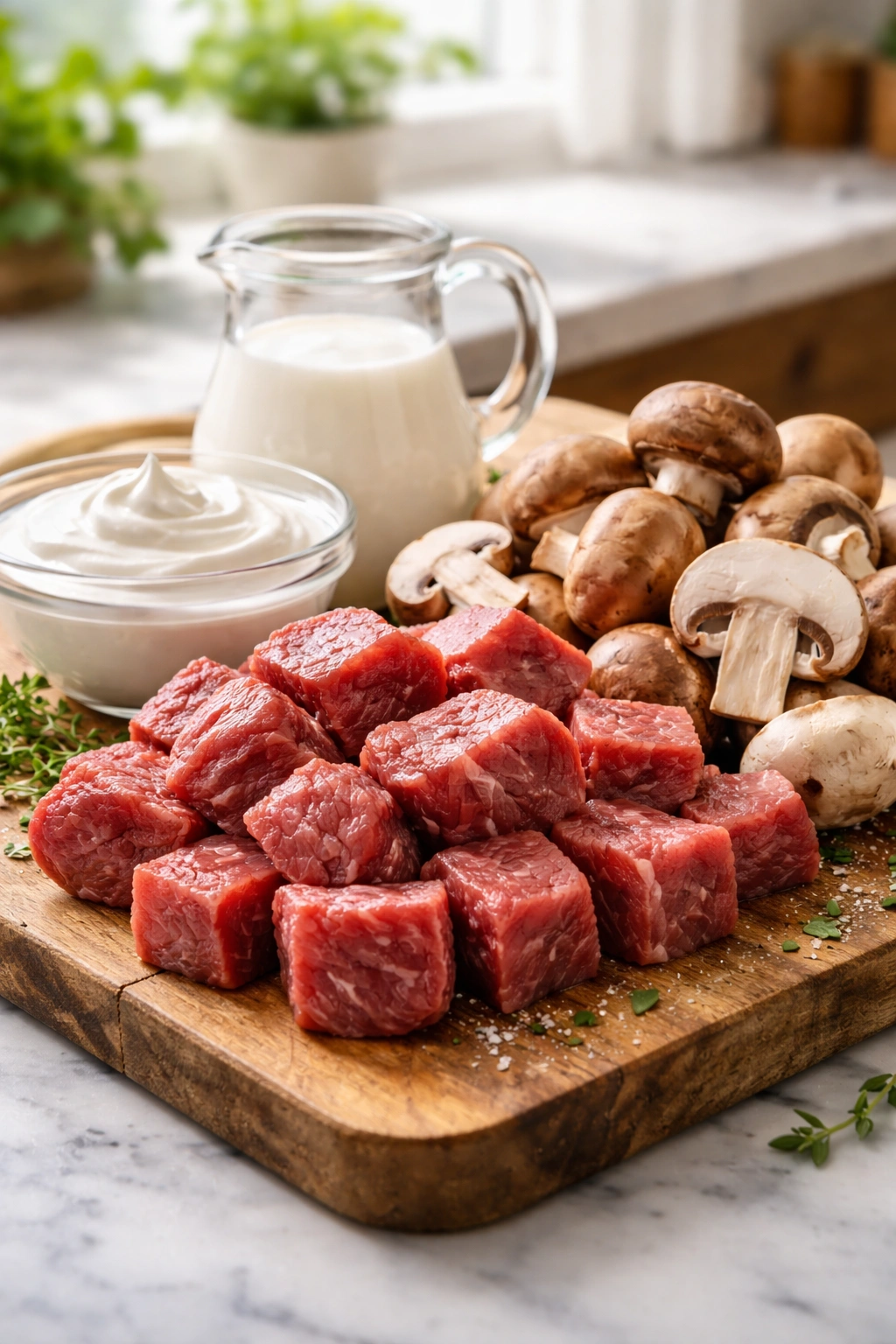
The ingredient list is short, which is one of stroganoff’s best qualities. But each ingredient does specific work, so quality matters.
For the beef: You want a cut that becomes tender through slow cooking, not an expensive steak that’s already tender raw. Chuck roast or beef stew meat is ideal — it has enough marbling and connective tissue that it develops incredible flavor and texture as it braises. The collagen in cheaper cuts transforms into gelatin, which is exactly what creates that silky sauce without needing tons of cream.
Mushrooms are non-negotiable. They’re doing the real work here. Use cremini, button, or a mix of varieties. Fresh mushrooms have more flavor than frozen. You want enough mushrooms that they make up almost a quarter of the final dish’s volume — not just a garnish, but a major component.
For the cream element: Greek yogurt works beautifully because it has more protein and tanginess than sour cream, but fewer calories and less fat. If you use Greek yogurt exclusively, use full-fat (not nonfat) to maintain richness. Half-and-half is lighter than heavy cream or sour cream but still contributes richness. Some people blend Greek yogurt with half-and-half, others use a combination of sour cream and Greek yogurt, others use all sour cream but in a smaller amount than traditional recipes.
Beef broth is your hidden weapon. It’s the base that develops flavor as the beef cooks in it. Use homemade if you have it, quality store-bought if you don’t. Avoid the low-sodium versions — stroganoff needs that savory depth.
Aromatics: Yellow onion and garlic provide the foundation flavor. Some recipes add a touch of tomato paste for umami and slight acidity. Dijon mustard adds a subtle tang and complexity that deepens the sauce.
Seasonings: Kosher salt, black pepper, and often a touch of paprika. Some versions add fresh dill, thyme, or parsley at the end. These herbs are traditional in Eastern European stroganoff and they brighten the dish beautifully.
Yield: Serves 4 to 5 | Makes about 6 cups total
Prep Time: 20 minutes
Cook Time: 45 minutes
Total Time: 65 minutes
Difficulty: Intermediate — The technique involves multiple steps (searing beef, sautéing mushrooms, building the sauce), but each step is straightforward. Timing is important so components cook properly, but nothing requires special skills.
Best Served: Immediately while warm and steaming, spooned over egg noodles or rice. The dish tastes even better the next day as flavors deepen, though reheating gently is important to prevent the cream from breaking.
Ingredients
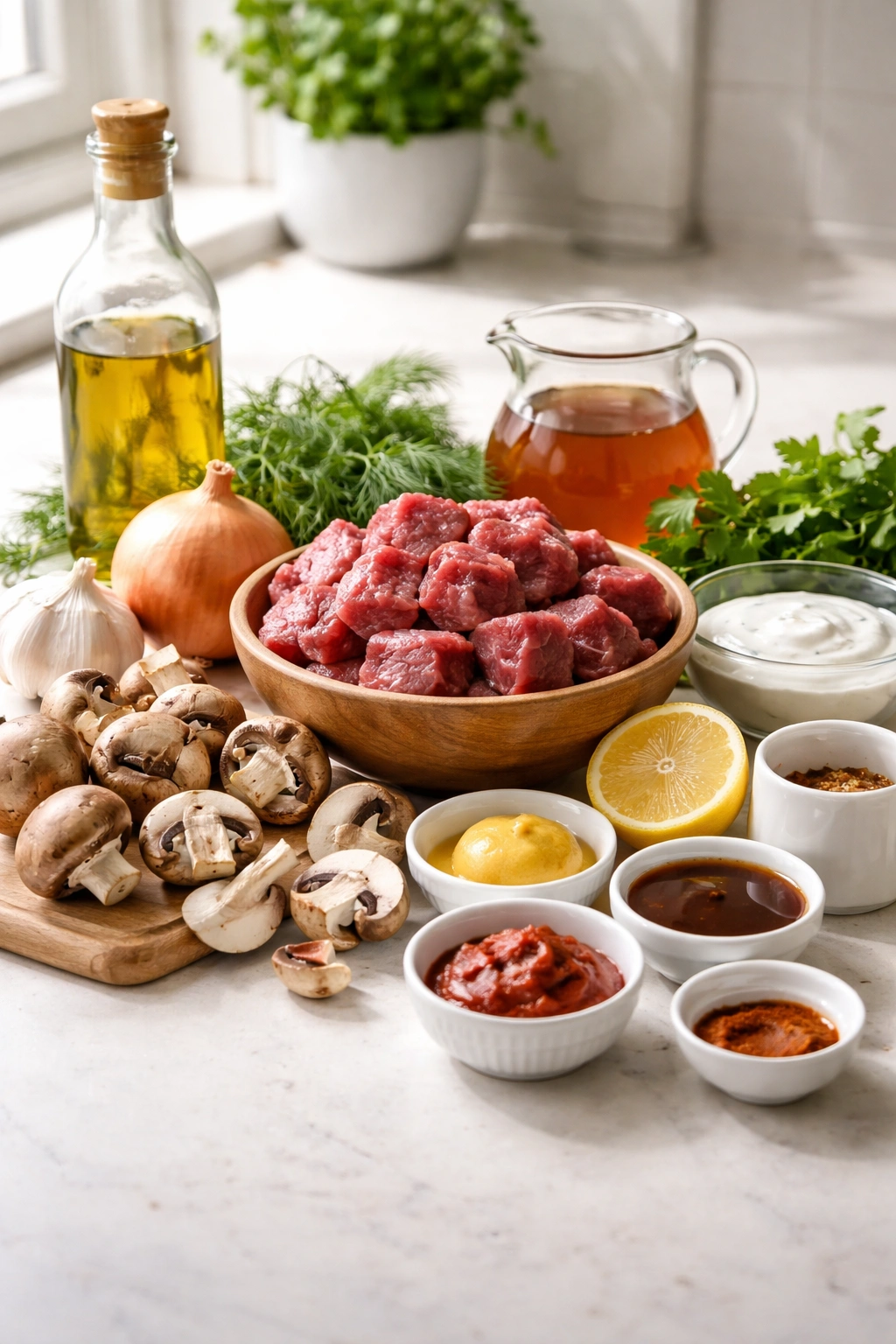
For the Stroganoff:
- 1.5 pounds beef chuck roast or beef stew meat, cut into 1-inch cubes
- 2 tablespoons olive oil, divided
- Kosher salt and freshly ground black pepper, to taste
- 1 medium yellow onion, diced (about 1 cup)
- 4 cloves garlic, minced (about 2 tablespoons)
- 12 ounces cremini or button mushrooms, halved or quartered (about 4 cups)
- 2 tablespoons tomato paste
- 2 teaspoons Dijon mustard
- 1.5 cups beef broth (homemade or quality store-bought)
- ¾ cup full-fat Greek yogurt (or ½ cup Greek yogurt + ¼ cup sour cream)
- 2 tablespoons half-and-half or whole milk
- 1 tablespoon fresh lemon juice
- 1 teaspoon Worcestershire sauce (optional, but adds depth)
- ½ teaspoon smoked paprika or regular paprika
- 2 tablespoons fresh dill, finely chopped (or 2 teaspoons dried dill)
- Fresh parsley, chopped (optional, for garnish)
For Serving:
- 1 pound egg noodles, or rice or mashed potatoes
- Extra fresh dill and parsley for garnish
- Additional lemon wedges (optional)
Equipment and Prep Tips
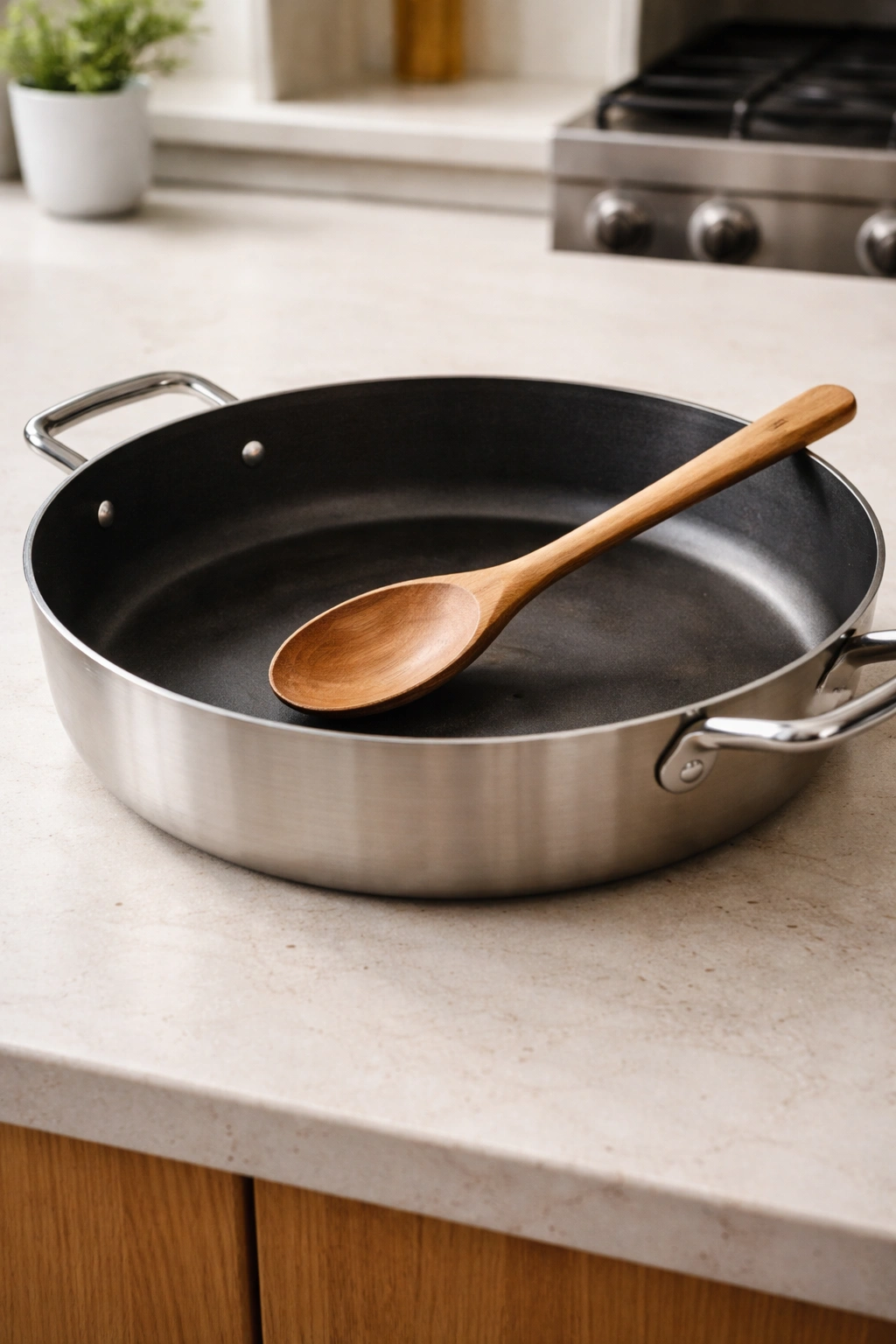
You’ll need a large, heavy-bottomed skillet or Dutch oven — one that can comfortably hold the beef when seared in batches and that has enough surface area to brown the mushrooms properly. A 5-quart Dutch oven works perfectly, as does a 12-inch skillet. The key is having enough room so you’re not overcrowding anything, which prevents proper browning and steaming.
A wooden spoon or silicone spatula is essential for scraping up the browned bits (called fond) from the bottom of the pan. That brown crust contains concentrated flavor, and you want to dissolve it into your sauce. It’s the difference between a good stroganoff and an exceptional one.
Prep work matters more than you might think. Cut your beef ahead of time so it’s ready to sear without delay. Slice the mushrooms or quarter them — consistent sizes ensure even cooking. Mince your garlic and dice your onion in advance. Measure out your liquids and dairy products. This takes maybe ten minutes total, but it means you’re never rushing once you start cooking. Stroganoff is actually quite fast, and proper timing of each step is what creates the best texture.
One more small detail: let your beef come to room temperature before searing. Meat that comes straight from the fridge won’t brown as well. Just fifteen minutes on the counter makes a noticeable difference in how deeply the meat sears.
Instructions
Sear the Beef and Build Your Sauce Base:
-
Pat the beef cubes thoroughly dry with paper towels — this is crucial for browning. Wet meat steams instead of sears, and steamed beef won’t develop the deep flavor you’re after.
-
Season the beef generously with kosher salt and freshly ground black pepper on all sides.
-
Heat 1 tablespoon of olive oil in a large skillet over medium-high heat. When the oil just begins to shimmer (about 1-2 minutes), you’re ready to sear.
-
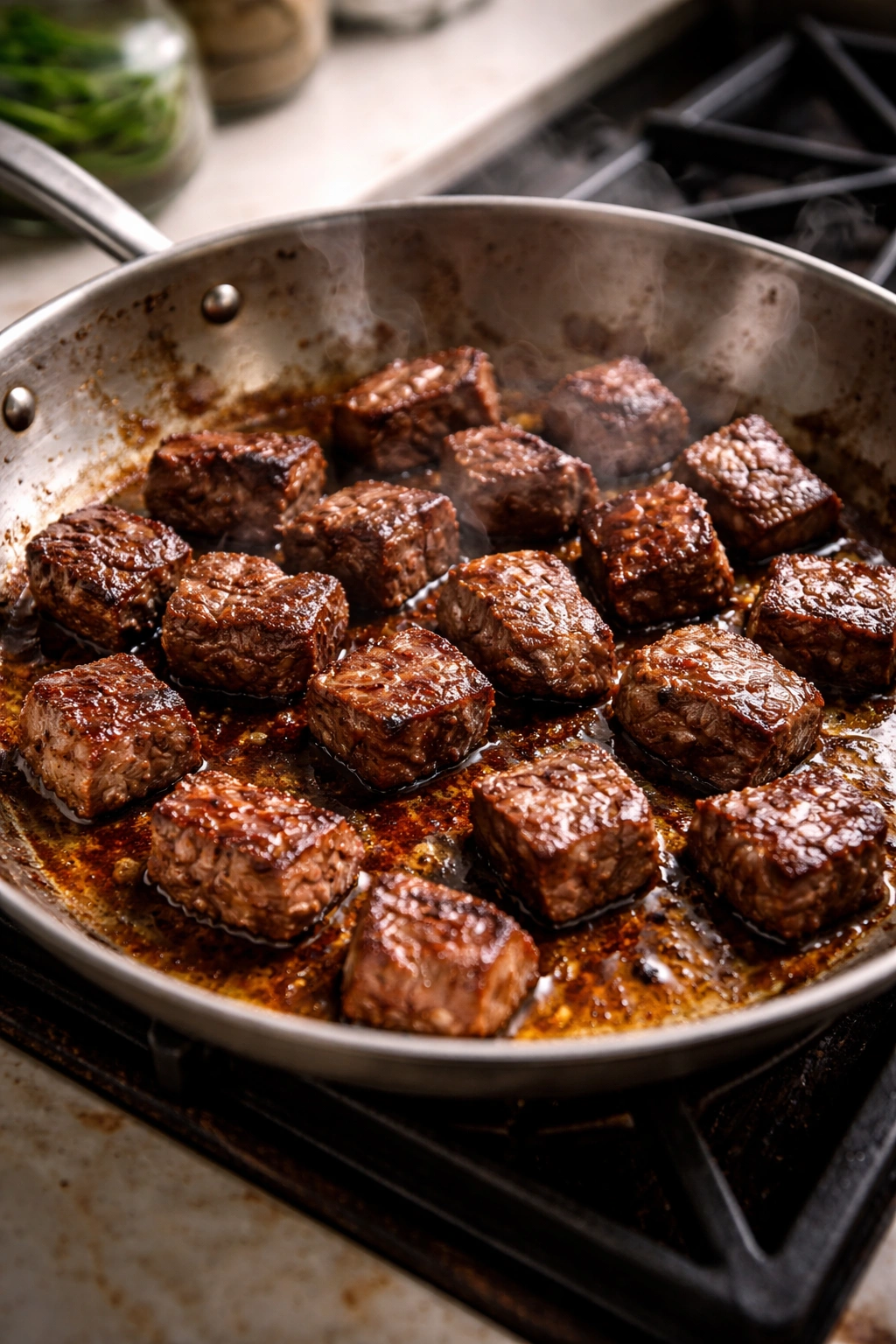
Working in batches so you don’t overcrowd the pan, sear the beef for 2 to 3 minutes per side, until a deep golden-brown crust forms. Do not stir the beef constantly — let each side sit undisturbed on the hot surface for full color development. You want a crust, not gray browned meat. Transfer the seared beef to a clean plate as it finishes.
-
Once all beef is seared, add the remaining 1 tablespoon of oil to the same skillet. The fond (brown crust) on the bottom is flavor gold — you’re about to dissolve it into your sauce.
-
Add the diced onion and cook for 3 to 4 minutes over medium heat, stirring occasionally, until the onion becomes translucent and soft. The onion will help loosen the fond as it releases its moisture.
-
Add the minced garlic and cook for another 30 seconds to 1 minute, stirring constantly, until fragrant. Be careful not to let the garlic brown — it should smell sweet and pungent, not burnt.
-
Add the tomato paste and stir constantly for 1 to 2 minutes. This step cooks out the raw tomato taste and allows the tomato paste’s umami to concentrate. You’ll see the paste deepen slightly in color and smell more savory.
Advertisements -
Pour in the beef broth, scraping the bottom of the skillet with your wooden spoon to release all the browned fond. This is the most important step for building flavor — don’t skip the scraping. The fond dissolves into the broth, creating a rich, savory base.
Cook the Beef and Mushrooms:
-
Return all the seared beef (including any accumulated juices on the plate) to the skillet. Stir to combine everything, ensuring the beef is partially submerged in broth.
-
Bring the liquid to a simmer over medium-high heat. Once simmering, reduce the heat to medium-low and cook at a gentle simmer (small bubbles breaking the surface slowly, not a rolling boil) for 20 to 25 minutes. The beef will continue to tenderize as it braises in the hot liquid. You’re not trying to reduce the liquid aggressively — you want it to stay at a steady, gentle simmer.
-
While the beef is braising, prepare the mushrooms. Heat a separate large skillet over medium-high heat. Once hot, add about half of the quartered mushrooms without any oil initially — the mushroom moisture will release as they cook and prevent sticking.
-
Cook the mushrooms for 3 to 4 minutes, stirring occasionally, until they release their moisture and begin to soften. The pan will look wet. Continue cooking until the liquid they’ve released mostly evaporates (another 2 to 3 minutes), and the mushrooms begin to brown lightly on the edges. This concentrates their umami flavor.
-
Transfer the browned mushrooms to a plate. Repeat step 12-13 with the remaining mushrooms, cooking them the same way and adding them to the plate with the first batch. You’re browning mushrooms in batches so they actually brown instead of steaming in their own released moisture.
Finish the Stroganoff:
-
After the beef has braised for 20 to 25 minutes and is nearly tender, add the browned mushrooms to the skillet with the beef. Stir gently to combine.
-
In a small bowl, whisk together the Greek yogurt, half-and-half (or milk), Dijon mustard, and Worcestershire sauce if using. This mixture will be thick and creamy. Whisking these ingredients together beforehand prevents them from breaking (curdling) when you add them to the hot liquid.
Advertisements -
Reduce the heat to low — this is important. You never want to boil a cream sauce, which breaks the dairy proteins and creates a grainy, broken texture.
-
Slowly add the yogurt-cream mixture to the simmering beef and mushrooms while stirring gently and constantly. Add it gradually over about 30 seconds, not all at once, to prevent shocking the cream with a sudden temperature change.
-
Continue stirring gently for 2 to 3 minutes until everything is evenly combined and the sauce is smooth and creamy. If at any point the sauce looks grainy or broken, remove the skillet from heat and whisk in a tablespoon of cold milk or broth to cool it slightly and re-smooth the sauce.
-
Add the smoked paprika, lemon juice, and fresh dill. Taste the stroganoff and adjust seasoning with additional salt and pepper as needed. The sauce should taste rich and savory with a subtle tang from the mustard and lemon.
-
Cook the stroganoff over low heat for another 5 minutes, stirring gently and occasionally, to let all the flavors meld. Do not allow it to boil — gentle heat is your friend once the dairy is added.
-
Serve the stroganoff immediately over cooked egg noodles, rice, or mashed potatoes. Garnish generously with fresh parsley and additional fresh dill if you like.
Common Mistakes to Avoid
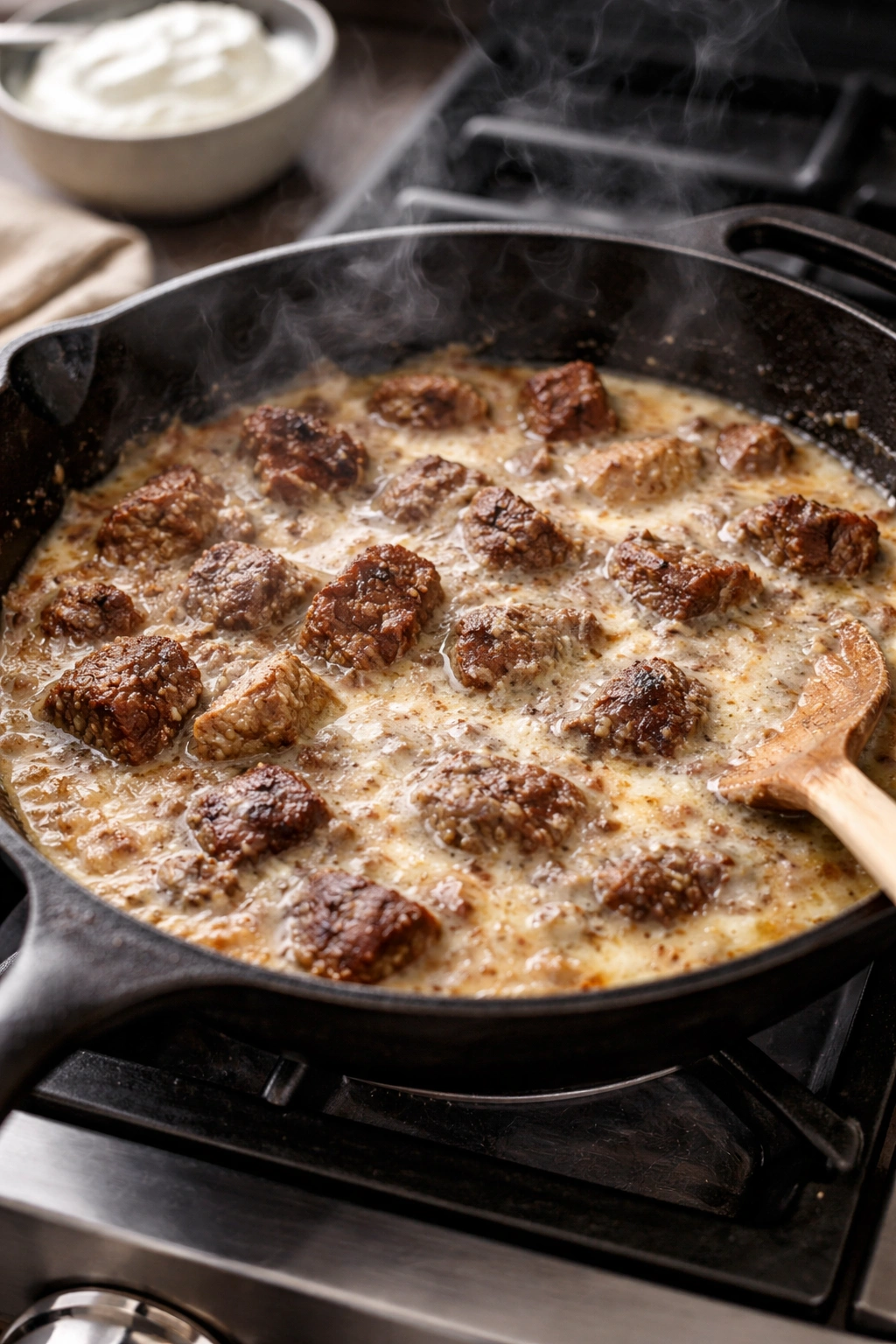
The number one mistake people make with stroganoff is adding the cream too quickly or at too high a temperature. When cold or room-temperature cream hits boiling liquid, the proteins in the dairy denature too quickly and the sauce breaks, becoming grainy and separated. It looks curdled and tastes gritty. This is completely preventable if you keep the heat low before and after adding dairy, and if you add the cream slowly while stirring constantly. Even if you do accidentally break the sauce, you can often fix it by removing the pan from heat and whisking in a touch of cold milk or broth to cool everything down and re-smooth the texture.
Another common issue is underseasoning the beef at the searing stage. Salting the raw beef seems counterintuitive because traditional cooking advice warns against it, but salting before searing actually helps the meat brown better and doesn’t toughen it. Salt the beef generously before it hits the pan. You can always adjust seasoning at the end, but you can’t add that initial crust flavor once it’s lost.
Overcrowding the pan while searing the beef prevents browning. If beef pieces are touching each other in a crowded skillet, they steam rather than sear. This is the difference between a brown, flavorful beef stroganoff and one that looks pale and tastes flat. Sear in two or three batches if needed. It takes an extra five minutes but makes a huge difference.
Using low-quality mushrooms or skipping the browning step leaves you with a watery, bland sauce. Mushrooms are doing the heavy lifting in a lighter stroganoff — don’t shortcut this. Brown them properly in a separate pan, let them release all their moisture and then re-absorb it, and you’ll get deep umami instead of mushroom water.
Finally, don’t skip the fond-scraping step. That brown crust on the bottom of the pan after searing the beef is concentrated flavor. Dissolving it into the broth is what creates a deeply savory sauce without needing extra cream. It seems like a small detail, but it’s actually the technique that makes the difference between good stroganoff and exceptional stroganoff.
Tips for Tender, Flavorful Beef
The beef is the star of stroganoff, so it deserves attention. Start with the right cut. Chuck roast or stew meat has more collagen and fat than lean cuts, which means it becomes more tender as it cooks, not less. The collagen converts to gelatin, which adds silkiness to the sauce without extra cream. Expensive steaks like ribeye or sirloin would actually be wasted here because they lose their tender texture through braising.
Cut your beef into uniform chunks — about one inch is ideal. Larger pieces stay more tender (they’re less likely to overcook), and uniform sizes ensure they all cook at the same rate. If you cut some pieces at half an inch and others at two inches, the smaller ones will become stringy while the larger ones are still tough.
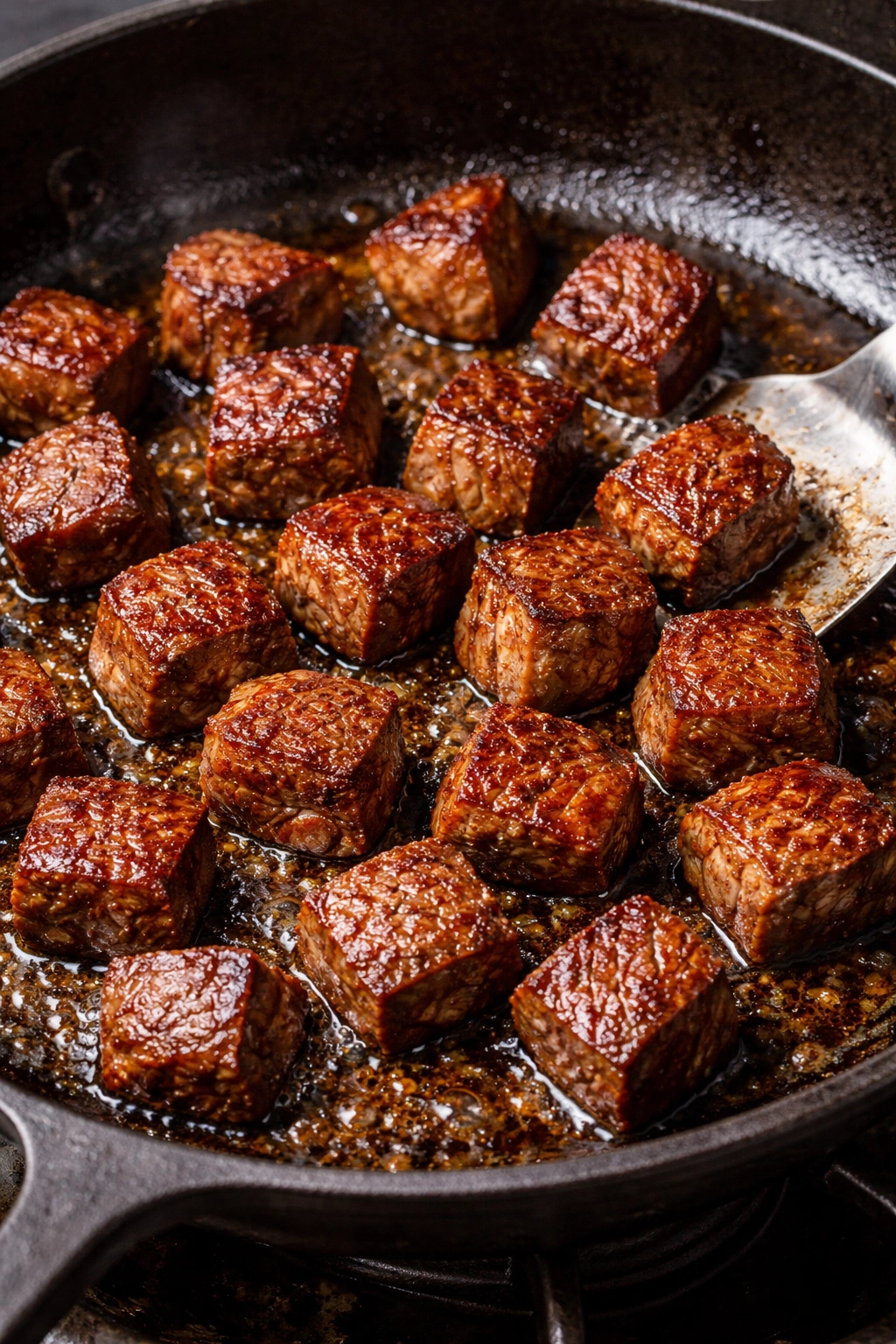
The searing step is crucial for flavor. Those brown bits create Maillard reaction compounds that make stroganoff taste savory and deep. Don’t skip this or rush it. Let the beef sit undisturbed on the hot surface for two to three minutes per side. A metal spatula works better than a wooden spoon for searing because you can scrape underneath and break the crust loose when it’s ready.
Don’t cook the beef longer than the recipe calls for. The braising time (20-25 minutes after searing) is enough to tenderize stew meat. Overcooking doesn’t make it more tender — it makes it mushy and stringy. Beef is done when you can easily cut through a piece with a spoon, but it still has some structure. It should not fall apart in the sauce.
One final tip: if you have access to homemade beef broth, use it. The difference between homemade broth and store-bought is real. Homemade broth has more body and deeper flavor because it contains more gelatin from bones. That richness means you need less cream to achieve the stroganoff texture and flavor you’re after. But good-quality store-bought broth works fine too — just avoid the low-sodium versions, which lack the depth stroganoff needs.
How to Build the Perfect Light Cream Sauce
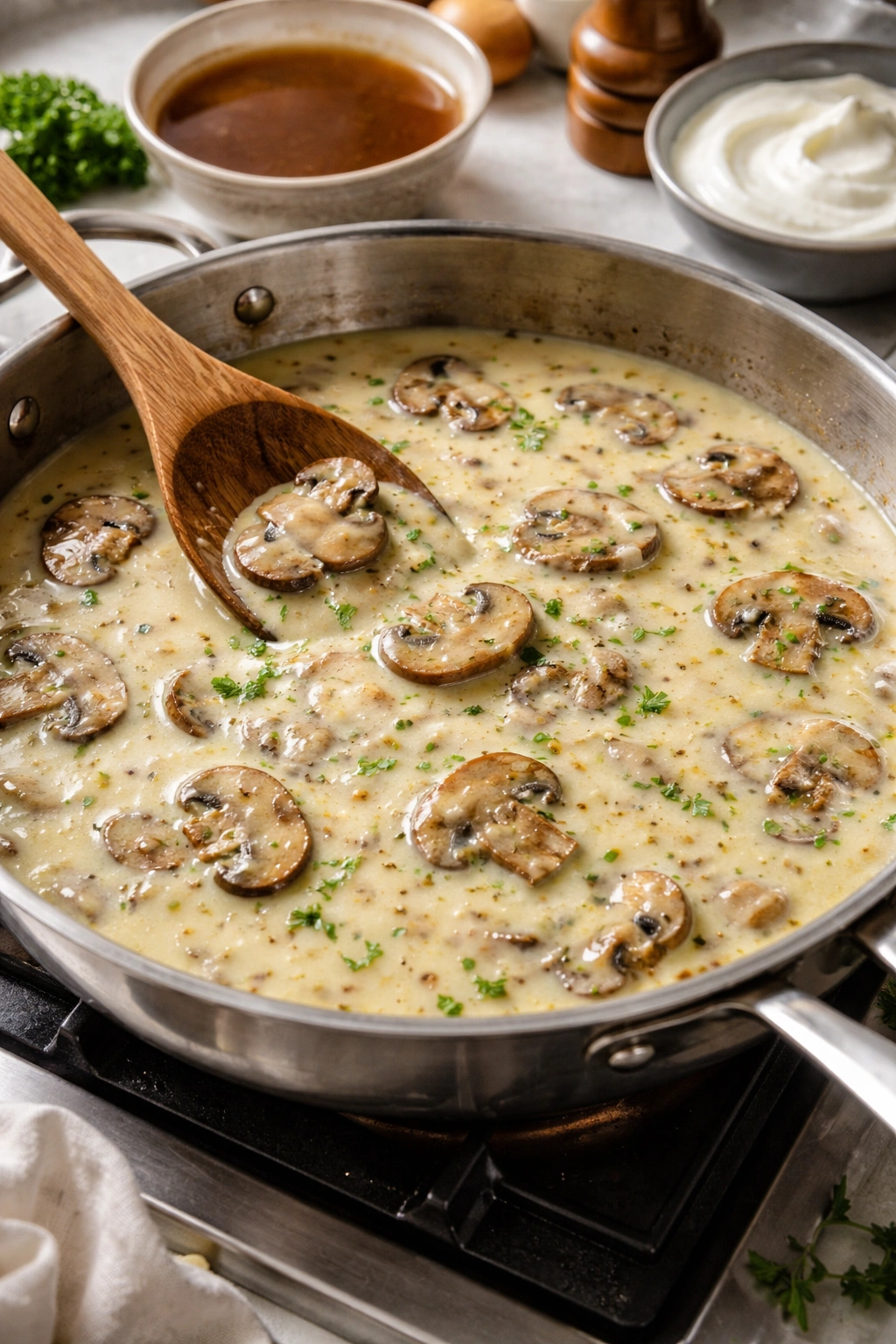
The sauce is where technique matters most. In a traditional stroganoff, heavy cream or sour cream does most of the work — it adds richness, body, and that signature silky texture. In a lighter version, you’re distributing the work across several elements: the beef’s own gelatin (from collagen converting as it cooks), browned mushrooms that add umami and body, and a smaller amount of cream combined with Greek yogurt.
Start with good beef broth as your base. The broth develops flavor as the beef braises in it, becoming more savory and less generic. As the beef releases moisture and collagen, the broth becomes richer without any added fat. This is already a good sauce base before you add any cream.
The browned mushrooms contribute more than flavor. When mushrooms brown and their moisture evaporates, they become more concentrated and dense. When you add them to the sauce, they help thicken it naturally through their cell structure and released umami compounds. Some stroganoff recipes actually puree about a third of the mushrooms into the sauce for extra body and silkiness. This is optional but effective if you want even more richness without extra cream.
The Greek yogurt is the secret to a lighter stroganoff that doesn’t taste light. Full-fat Greek yogurt has more protein than sour cream, so it has a thicker, more luxurious mouthfeel at lower fat levels. It also has tanginess that adds complexity. The key is buying full-fat — nonfat Greek yogurt is thin and won’t give you the texture you want. You can use Greek yogurt exclusively, or blend it with a small amount of sour cream or half-and-half for extra richness. The dairy-to-beef ratio is roughly 3/4 cup dairy to 1.5 pounds beef, which is about half what traditional stroganoff uses.
The Dijon mustard and Worcestershire sauce are crucial. Mustard adds subtle tang and depth that makes people say “this is stroganoff” without tasting obvious mustard. Worcestershire adds umami complexity. Together, they let you use less cream while still having a fully satisfying sauce. A squeeze of fresh lemon juice at the end brightens everything and emphasizes the savory elements.
Adjusting the Sauce Consistency to Your Preference
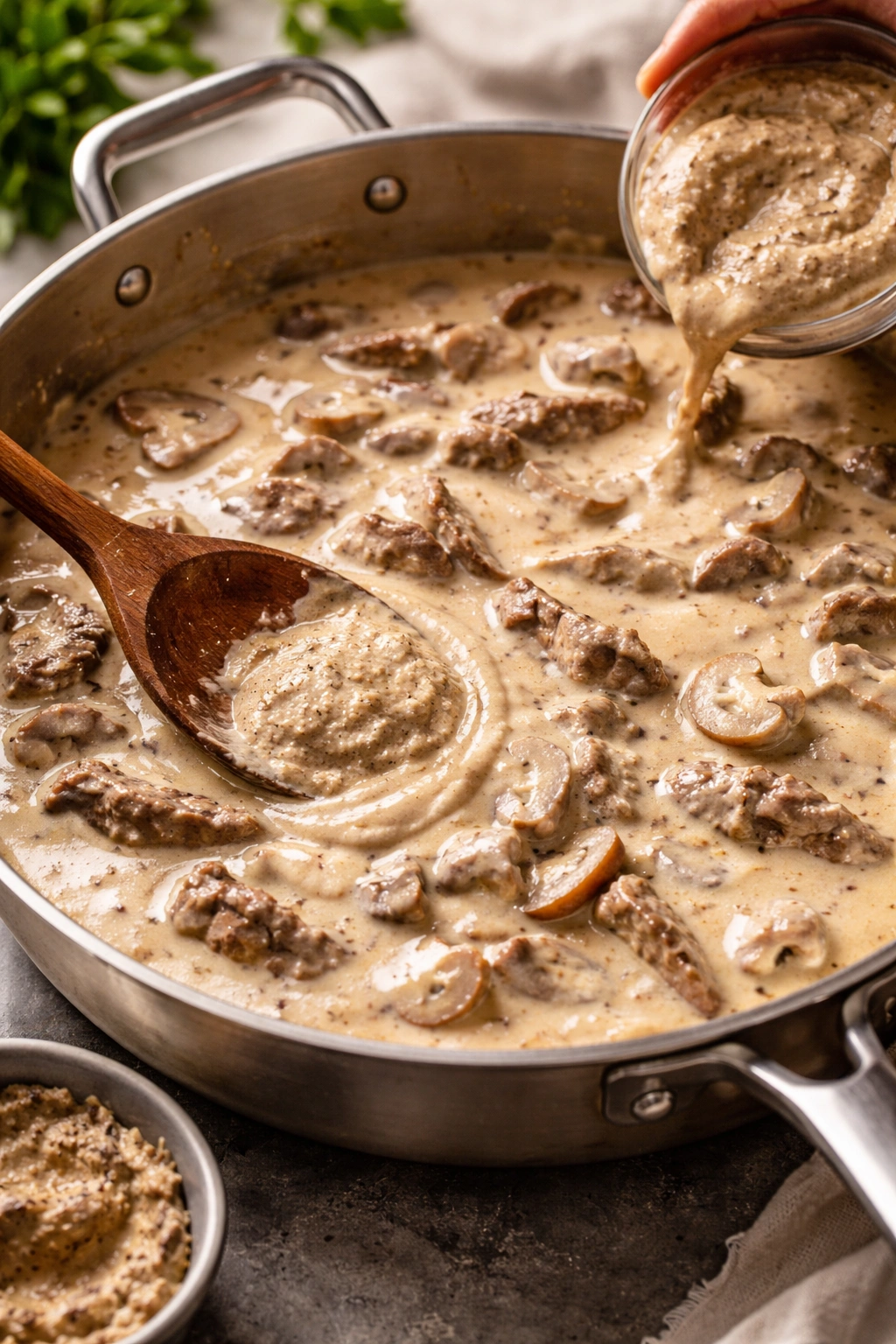
Stroganoff sauce should be creamy and coating, coating noodles or rice without being soupy, but it shouldn’t be thick or gravy-like either. If your sauce seems too thin after adding the cream, there are several ways to adjust without adding more fat.
Option one: Reduce the liquid. If you have time, simmer the stroganoff gently (without boiling) for another 5 to 10 minutes before adding the cream. The liquid will reduce slightly, concentrating flavor and thickening the sauce naturally. This works best if you haven’t added the dairy yet.
Option two: Puree some mushrooms. Blend about one-third of the cooked mushrooms into a smooth paste and stir it back into the sauce. Mushroom puree adds thickness and body without any added fat or cream. It also deepens the umami.
Option three: Use cornstarch slurry if necessary. If you’ve already added the cream and the sauce still seems too thin, whisk together one tablespoon of cornstarch with two tablespoons of cold beef broth (not the hot sauce). Stir this slurry into the stroganoff while gently heating over low heat for one to two minutes. The cornstarch will thicken the sauce noticeably. Don’t use more than this amount or the sauce will become gluey instead of silky.
Option four: Add a touch more Greek yogurt. You can whisk in an extra tablespoon or two of full-fat Greek yogurt to add richness and thickness. Mix it with a little cold broth first to prevent lumping.
On the flip side, if your sauce is too thick, simply whisk in a little extra beef broth, a splash of half-and-half, or even cold water, a tablespoon at a time, until you reach the consistency you prefer. Go slowly because it’s easier to thin something out than to thicken it back up.
Best Dairy Swaps for a Lighter Version
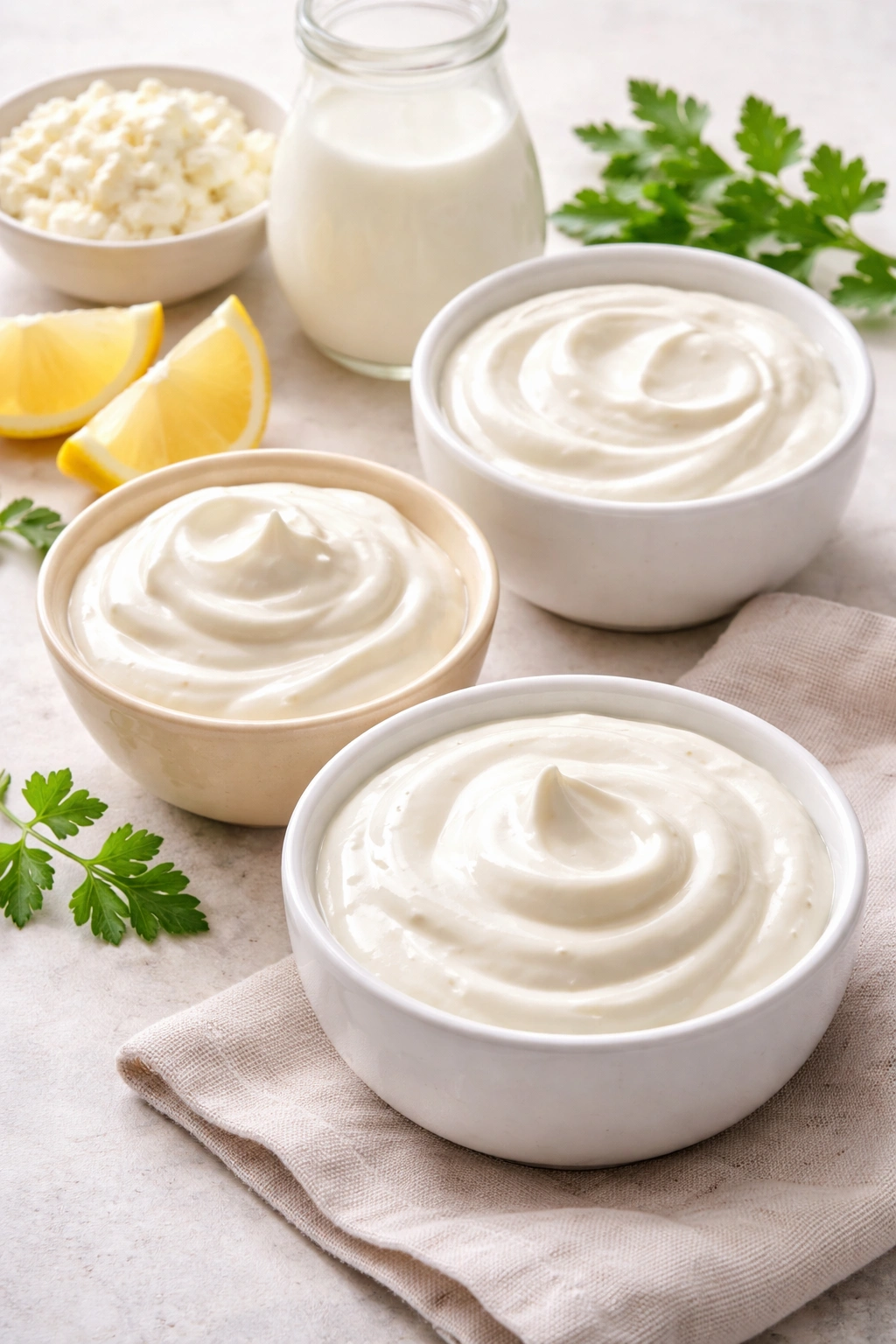
Not everyone has Greek yogurt on hand, and stroganoff is flexible. Here are your best swaps:
Sour cream alone: Use about ¾ to 1 cup of full-fat sour cream, prepared exactly the same way (whisked with mustard and Worcestershire before adding). The sauce will taste more traditionally stroganoff-like but will have more fat than the Greek yogurt version. This is perfectly valid and delicious.
Half-and-half alone: Use 1 to 1.25 cups of half-and-half. The result will be less tangy than sour cream or Greek yogurt, so you might want to add an extra splash of lemon juice or a touch more Dijon mustard to compensate. Half-and-half is lighter than sour cream but has less protein, so the mouthfeel is slightly thinner.
Greek yogurt plus sour cream: Blend ½ cup Greek yogurt with ¼ cup sour cream. This gives you some of the tanginess and richness of sour cream with some of the protein and mouthfeel of Greek yogurt. It’s a nice middle ground.
Crème fraîche: If you have it or can find it, use ¾ cup of crème fraîche. It has less fat than traditional sour cream, more tang than half-and-half, and a luxurious texture. Prepare it the same way.
Cottage cheese (unconventional but works): This is an interesting hack if you’re looking for maximum protein and minimum fat. Blend 1 cup of full-fat cottage cheese until completely smooth (this takes a minute or two in a blender or food processor), then prepare it the same way as you would Greek yogurt. The result is super creamy and protein-rich, though some people find the flavor slightly different. Blend it with a tablespoon of lemon juice to add tang.
Cashew cream (for dairy-free): Blend ¾ cup of soaked raw cashews (soaked in hot water for 20 minutes) with ¼ cup of the soaking liquid until completely smooth. Season it with salt and a touch of lemon juice, then use it the same way. The result is rich, creamy, and entirely plant-based. Some stroganoff enthusiasts prefer this for its silky mouthfeel.
The key with any swap is to taste and adjust. If your cream element is tangier (sour cream, crème fraîche), you might need less lemon juice. If it’s milder (half-and-half, cottage cheese), you might need more acid to brighten the sauce. The base ratio of 1.5 pounds beef to roughly 1 cup cream-based element works across all these options.
Variations and Flavor Customizations
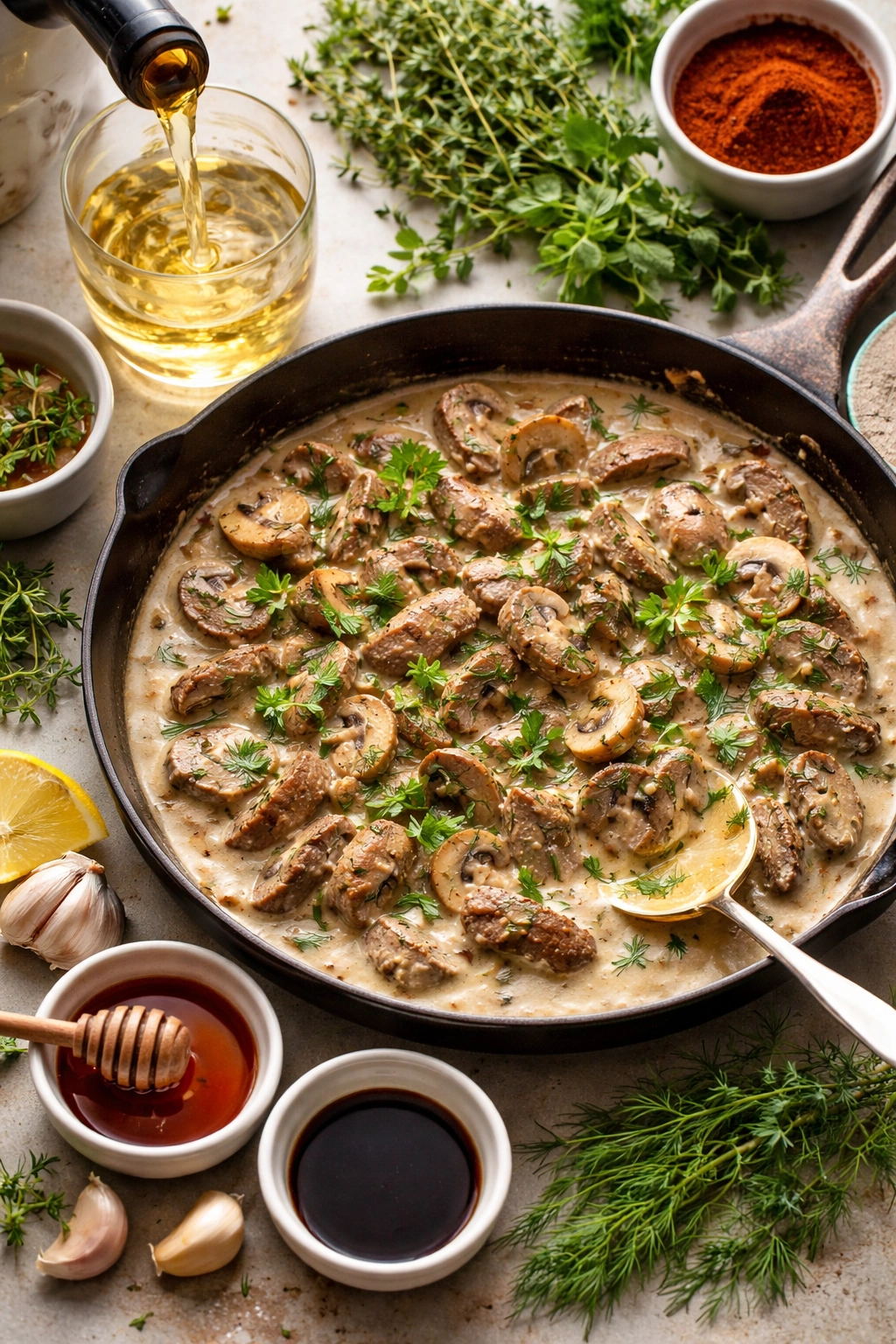
The beauty of stroganoff is that it accepts variations without losing its essential character. Here are some tested approaches:
Beef stroganoff with wine: Replace 1/2 cup of the beef broth with dry white wine (sauvignon blanc or pinot grigio work well). Add it after the onion and garlic, let it simmer for two minutes to cook off the alcohol, then add the broth. The wine adds acidity and complexity. Some people use red wine, which makes the stroganoff darker and earthier — use a dry wine and reduce the amount to ½ cup since red wine flavor is more assertive.
Stroganoff with fresh herbs: Add 2 tablespoons of fresh thyme or oregano with the beef at the braising stage, and finish with fresh dill as called for. The herbs add brightness without adding calories. Fresh tarragon is also wonderful if you have it.
Stroganoff with a touch of sweetness: A tablespoon of balsamic vinegar or a teaspoon of honey balances the umami and tang beautifully. Add it with the Worcestershire sauce. This appeals to people who find the traditional version too savory.
Stroganoff with paprika emphasis: Use hot or smoked paprika instead of regular, or use a full teaspoon of paprika instead of half a teaspoon. This makes the stroganoff slightly spicier and deeper in color. Hungarian stroganoff traditionally features paprika more prominently.
Stroganoff with egg noodles mixed in: This sounds strange but it works. Cook your egg noodles separately, then toss them directly into the stroganoff before serving (instead of serving the stroganoff over noodles). The stroganoff coats the noodles and they absorb some of the sauce. It’s more integrated and feels cozier.
Stroganoff with pearl onions: Instead of (or in addition to) diced onion, use peeled pearl onions. Add them at the same time as the mushrooms so they cook through but stay intact. They add sweetness and visual interest.
Stroganoff with caramelized onions: This is a time investment but creates incredible depth. Slice onions thinly and cook them over low heat with a touch of oil for 30 to 40 minutes, stirring occasionally, until they’re deep golden and very soft. Use these instead of diced onion. They’re naturally sweet and rich.
Beef stroganoff with mushroom medley: Don’t stick to just cremini. Use a mix of cremini, shiitake, and oyster mushrooms. Each variety has different flavor — shiitake adds earthiness, oyster adds sweetness — and together they create more complex depth than any single variety.
Stroganoff with fresh dill emphasis: This is traditional in Russian and Eastern European versions. Use ½ cup of fresh dill instead of just 2 tablespoons. Add half at the end of cooking and half as garnish. Dill’s anise-like flavor becomes quite prominent and it’s wonderful.
What to Serve With Stroganoff
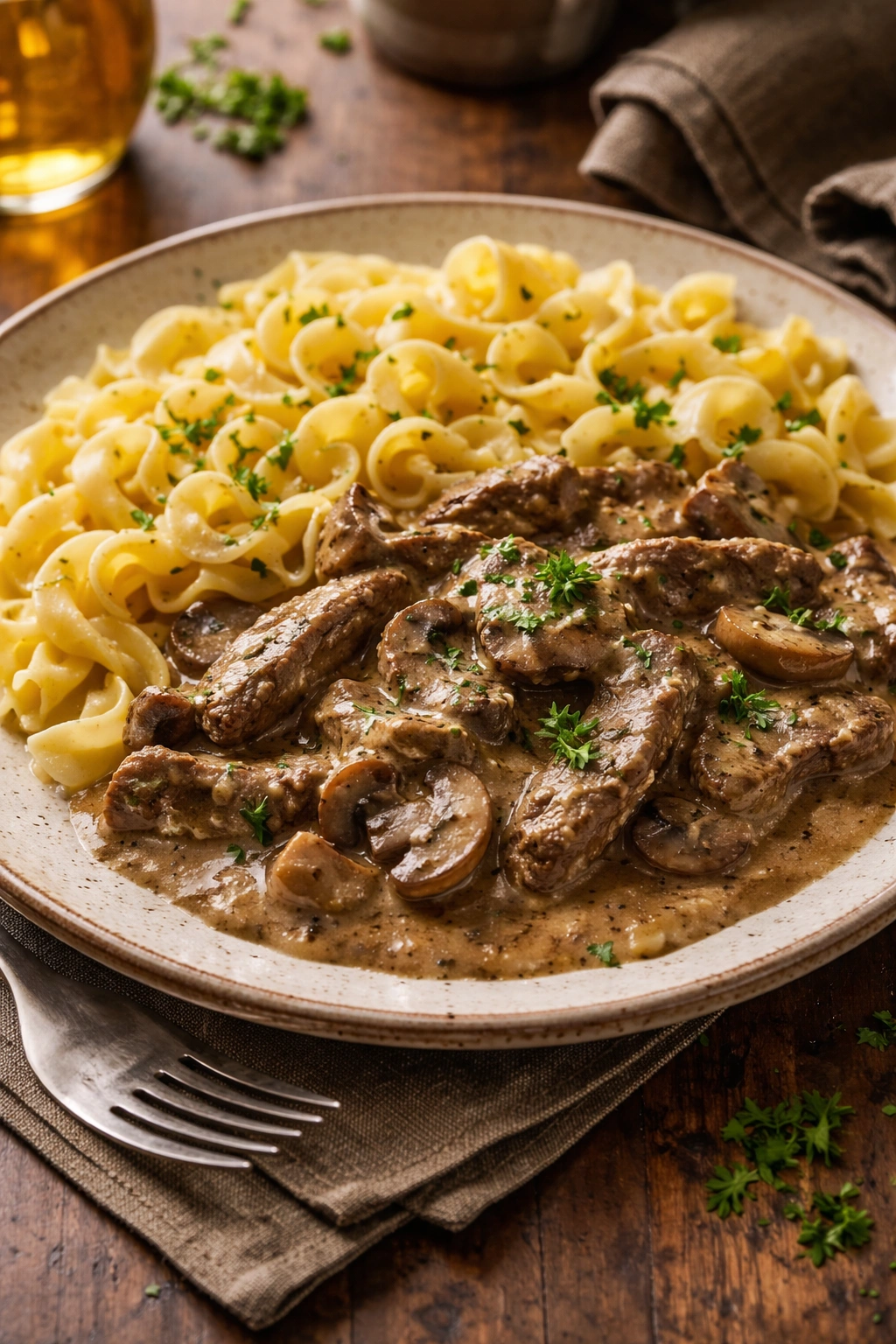
Stroganoff absolutely needs a starch to soak up the sauce. Egg noodles are the traditional choice and they’re ideal — their size and shape catch sauce beautifully. Wide, curly noodles work better than thin spaghetti. Cook them according to package directions and toss lightly with a small pat of butter or a splash of olive oil to prevent sticking.
Rice is an excellent alternative. Egg noodles are carb-heavy and traditional; rice feels lighter. Use long-grain white rice (jasmine or basmati), brown rice, or even cauliflower rice if you want to reduce carbs further. The stroganoff’s rich, creamy sauce works beautifully over any rice variety.
Mashed potatoes are another option, especially if you want something comforting and rustic. Stroganoff over creamy mashed potatoes is deeply satisfying. Use Greek yogurt or a small amount of half-and-half in the potatoes to keep them lighter if you want consistency with the stroganoff sauce.
Roasted vegetables balance the richness. Roasted broccoli, Brussels sprouts, or asparagus on the side add freshness and nutrients. Their slight char and earthiness contrasts nicely with the creamy stroganoff.
A simple green salad with vinaigrette (lemon and oil, or a sharp vinaigrette) is the lightest accompaniment. The acidity and fresh greens refresh your palate between bites of rich stroganoff.
Pickled vegetables on the side — pickled onions, pickled cucumbers, or pickled cabbage — are traditional in Eastern European meals and add a bright, tangy contrast that cuts through richness beautifully.
Crusty bread for sopping up extra sauce is never wrong. A thick slice of good bread toasted lightly with a touch of butter, or just plain crusty bread to soak up every last bit of sauce.
A simple side dish or light salad is all you need. Stroganoff is rich enough that you don’t want overly heavy sides. The point is to have something that complements the sauce and balances the meal overall.
Storage, Reheating, and Make-Ahead Options
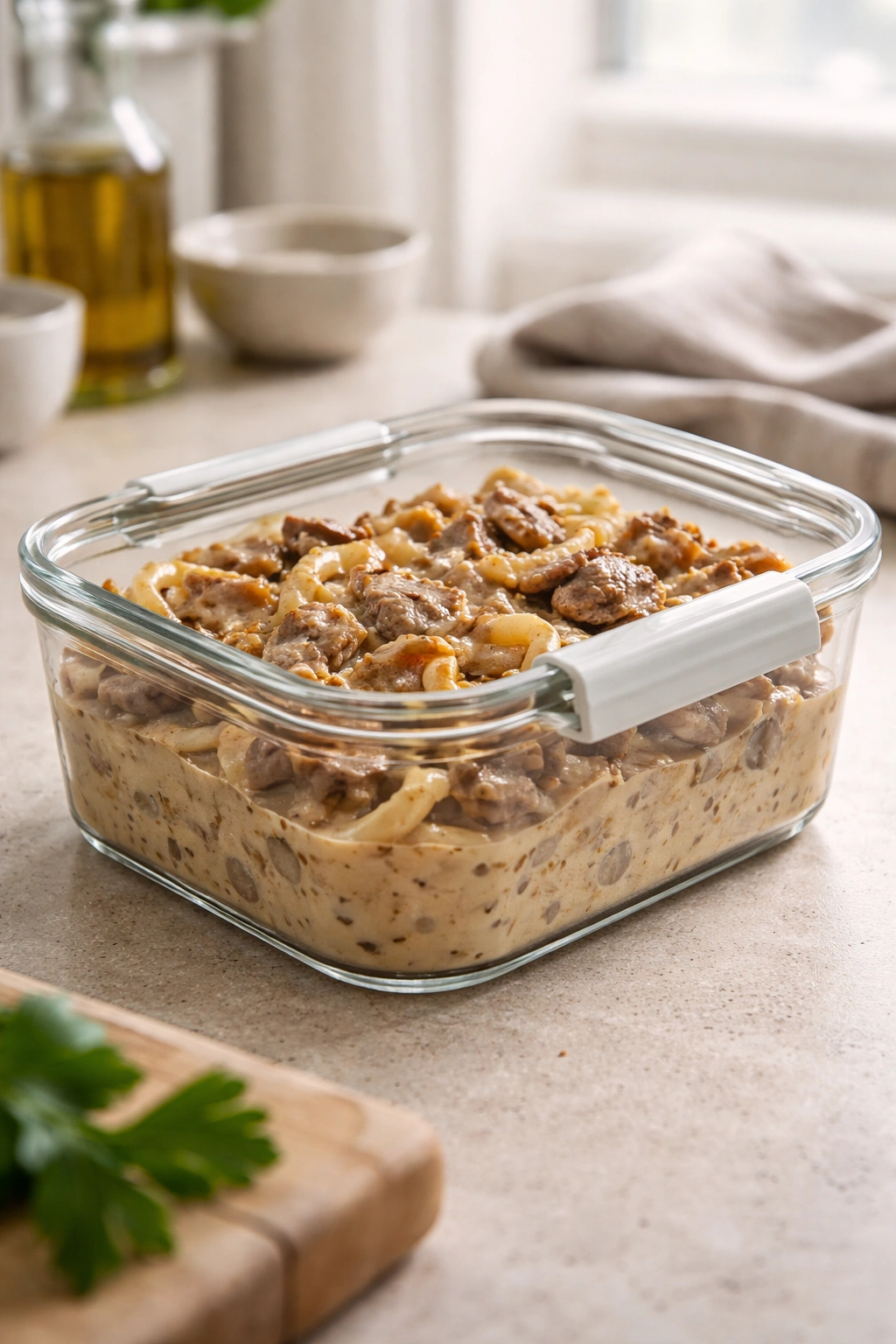
One of stroganoff’s best qualities is that it actually improves after a day. The flavors meld and deepen. The beef becomes more tender. It’s genuinely better the next day than it is the first, which makes it an ideal make-ahead dinner.
Storing stroganoff: Let it cool completely (about 30 minutes on the counter in the pot), then transfer to an airtight container. It keeps in the refrigerator for up to four days. The sauce will thicken slightly as it cools because the beef’s gelatin solidifies; this is completely normal and actually desirable for a concentrated flavor.
Freezing stroganoff: Yes, you can freeze it, though the texture changes slightly. Freeze in an airtight container or heavy-duty zip-lock bag for up to three months. The cream sauce won’t break during freezing, but it will be slightly less smooth than fresh stroganoff. Thaw in the refrigerator overnight before reheating. Some people prefer to freeze stroganoff without the cream sauce, add the beef and broth only, then make the sauce fresh when reheating — this preserves the silky texture better.
Reheating is important: Never microwave stroganoff if you can avoid it — microwaves create hot spots and the cream can break. Instead, reheat gently on the stovetop over low to medium-low heat, stirring occasionally, until warmed through (about 8 to 12 minutes). If the sauce has thickened too much, whisk in a splash of beef broth or milk as you reheat. If it seems like the cream is breaking (looking grainy), remove it from heat and whisk in a tablespoon of cold milk to cool it and re-smooth the sauce.
Make-ahead components: You can make stroganoff up to the point where you’d add the cream, refrigerate it, and finish the sauce fresh the next day. This ensures the smoothest, most silky final result. Reheat the beef-mushroom mixture gently, then prepare your Greek yogurt-cream mixture fresh and add it just before serving.
Preparing noodles ahead: Cook your egg noodles separately ahead of time if you want to streamline dinner. Toss them with a tiny bit of oil to prevent sticking, and store in the refrigerator. Toss them with a tablespoon of butter just before serving to warm them and add shine.
The stroganoff taste is consistently excellent whether served fresh or reheated, which makes it perfect for weeknight cooking or for preparing components ahead when you know you’re busy.
Final Thoughts
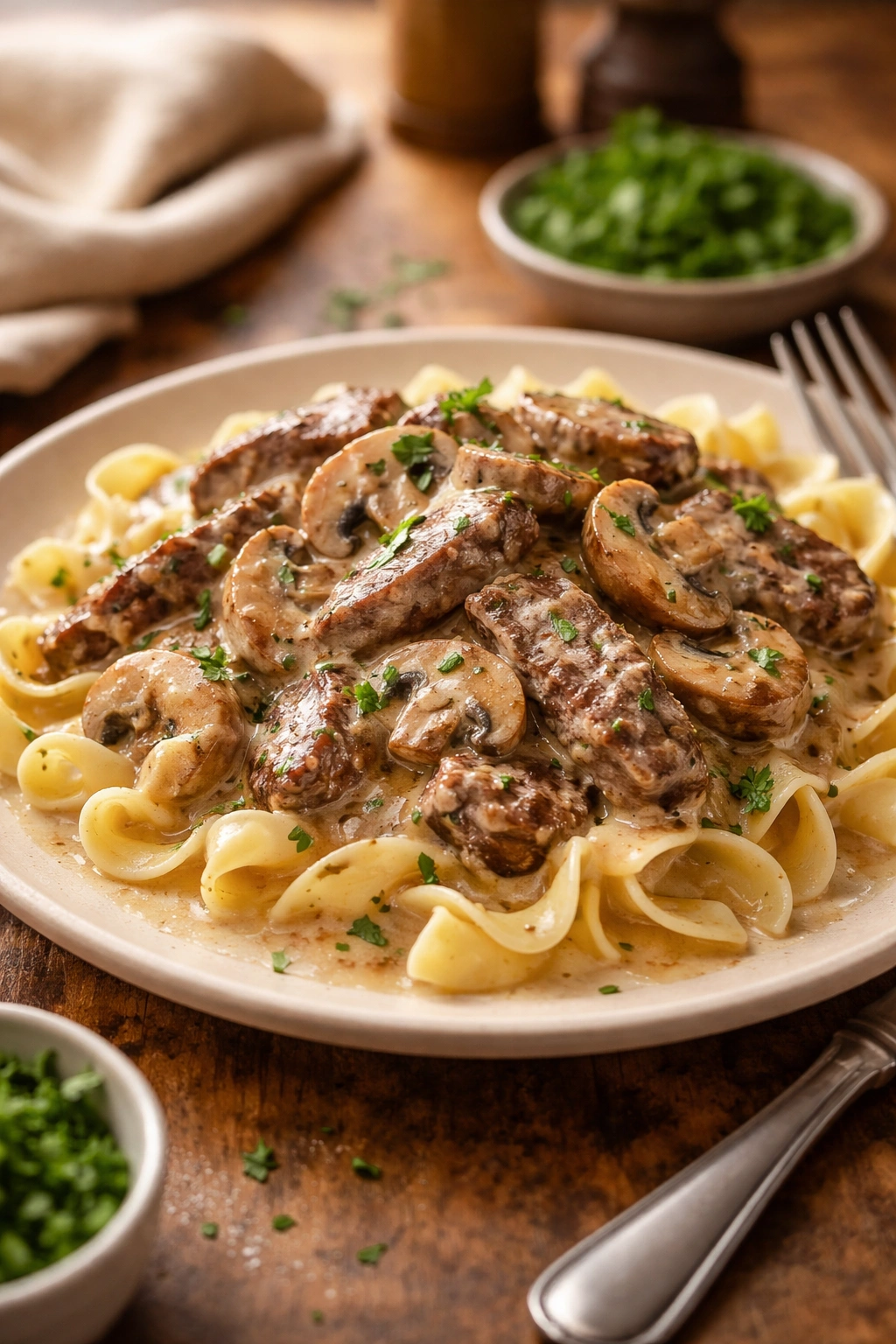
A lighter stroganoff doesn’t mean sacrificing any of the comfort, richness, or satisfaction that makes this dish beloved. It means understanding where the stroganoff’s appeal actually comes from — the tender beef, the umami-rich mushrooms, the silky sauce — and building those elements with less cream and more technique.
The truth is, many people discover they actually prefer this version. It tastes deeply savory because the beef and mushrooms aren’t buried under fat. You feel satisfied after eating it rather than stuffed. The sauce coats noodles beautifully without being heavy. You can make it any night of the week without guilt, and you can enjoy a generous portion without feeling like you overdid it.
Start with the basic recipe as written, and adjust it based on your own preferences and what you have on hand. Use Greek yogurt, sour cream, or some combination — they all work. Brown your mushrooms thoroughly. Sear your beef properly. Don’t rush the sauce-building stage. These fundamentals matter more than any specific ingredient.
Stroganoff is flexible enough to adapt to your tastes, your dietary preferences, and whatever you have in your kitchen. Make it with wine or without. Emphasize the dill or add fresh thyme. Serve it over noodles, rice, or potatoes. It’s a technique and a framework more than a rigid recipe. Once you understand how stroganoff works, you can make it your own way indefinitely.
