



Packing a healthy snack might seem simple, but the reality is that most people either skip snacks entirely and crash by mid-afternoon, or they grab whatever’s convenient—which usually means processed cookies, sugary granola bars, or vending machine chips. The consequence is a blood sugar rollercoaster, afternoon energy crashes, and a nagging sense that you’re not fueling your body the way you know you should.
The good news? Once you establish a snack strategy, everything changes. You’ll have steady energy, fewer cravings, better focus, and you’ll actually feel good about what you’re eating. The secret isn’t finding some rare superfood—it’s understanding which combinations of protein, healthy fat, and complex carbs actually keep you satisfied until your next meal. More importantly, these snacks need to survive your commute, stay fresh without refrigeration (or at least without much), and taste genuinely good so you’re not forcing yourself to eat them.
Real talk: the snacks that work best are the ones you actually enjoy eating. If something tastes like punishment, you won’t keep packing it. That’s why this list focuses on snacks that genuinely taste delicious while delivering the nutrition your body needs to perform. Whether you’re managing a busy work schedule, navigating school days, or just trying to stay on track during a hectic week, these ten snacks prove that healthy eating doesn’t have to be complicated or boring.
1. Greek Yogurt Parfaits in Grab-and-Go Containers
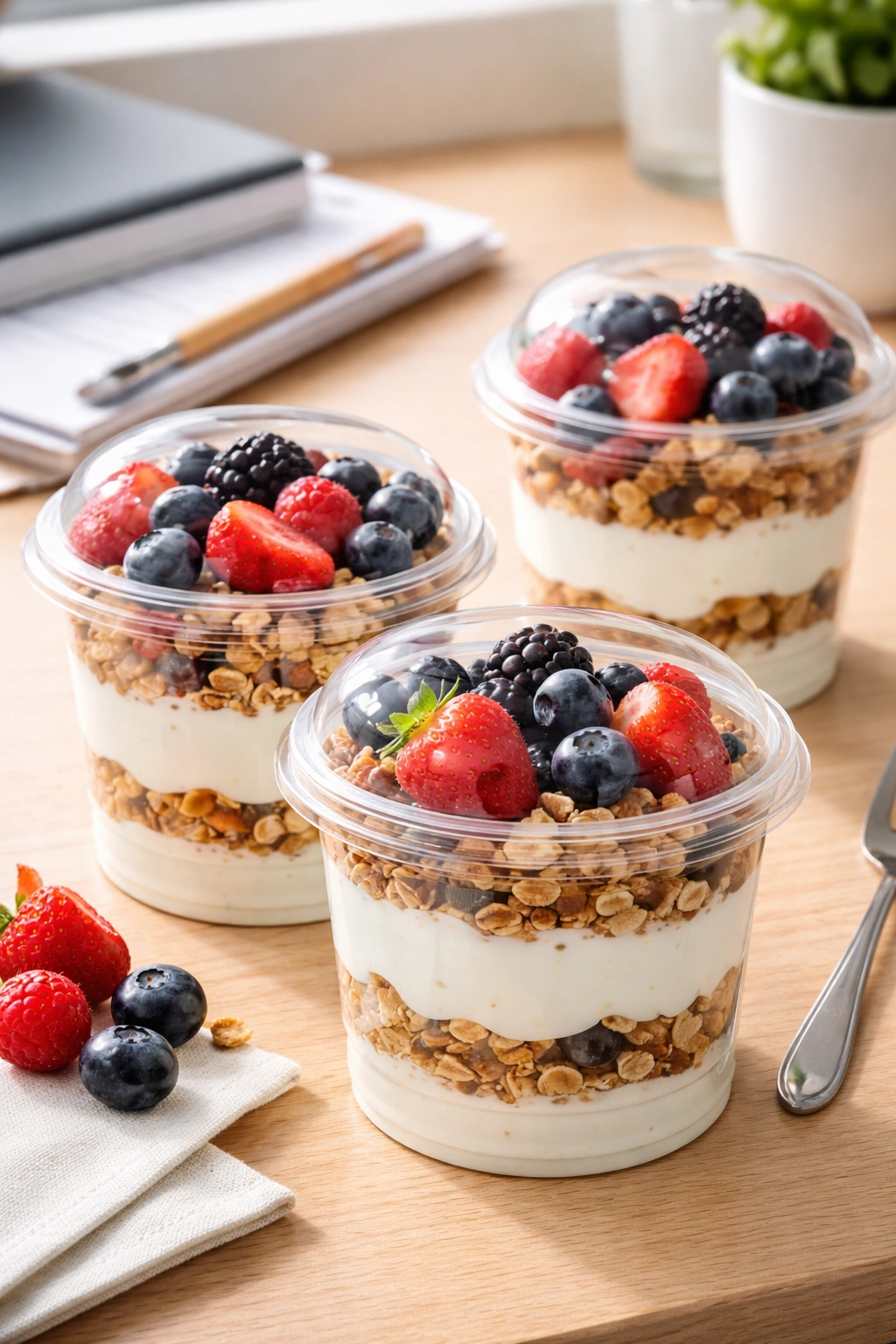
Greek yogurt has become a staple for people who understand nutrition because it delivers roughly twice the protein of regular yogurt while keeping the calories reasonable. A single half-cup serving contains around 10-15 grams of protein, which is genuinely satisfying and helps prevent the mid-morning energy crash that hits most people around 10 AM.
The key to making this work for packing is layering it strategically in a small mason jar or plastic container. Start with a base of plain, unsweetened Greek yogurt—the unsweetened part matters because flavored versions hide a shocking amount of added sugar. Then add a layer of granola (aim for varieties with minimal added sugar), followed by fresh berries or sliced fruit, then another layer of yogurt on top. This stacking method keeps the granola from getting soggy while you’re at your desk or in a backpack, and it creates a more interesting texture experience than just stirring everything together.
Why It Works for Packed Snacking
Greek yogurt’s high protein content means it actually satisfies hunger, which separates it from low-protein snacks that leave you wanting more an hour later. The probiotics in yogurt also support digestion, and the calcium strengthens bones—benefits that matter especially during school years when bone density is still being established. The layered approach prevents sogginess, so you get that satisfying crunch from granola even hours after packing it.
Building Your Own Parfait Combinations
- Plain Greek yogurt paired with blueberries and unsweetened granola creates a berry-and-cream flavor that tastes almost like dessert
- Layer yogurt with diced apple, a drizzle of honey, and granola for a crunchier, slightly sweet option that stays fresh all day
- Mix yogurt with sliced banana, crushed almonds, and a sprinkle of cinnamon for a subtle sweetness without added sugar
- Try Greek yogurt with fresh strawberries, dark chocolate chips, and coconut flakes for an indulgent-feeling snack that’s surprisingly balanced
Pro tip: Pack the granola separately and add it just before eating if you’re dealing with particularly humid weather or if your snack will sit packed for more than 4-5 hours. The extra minute of assembly is worth keeping that crunch.
2. Mixed Nuts and Seeds
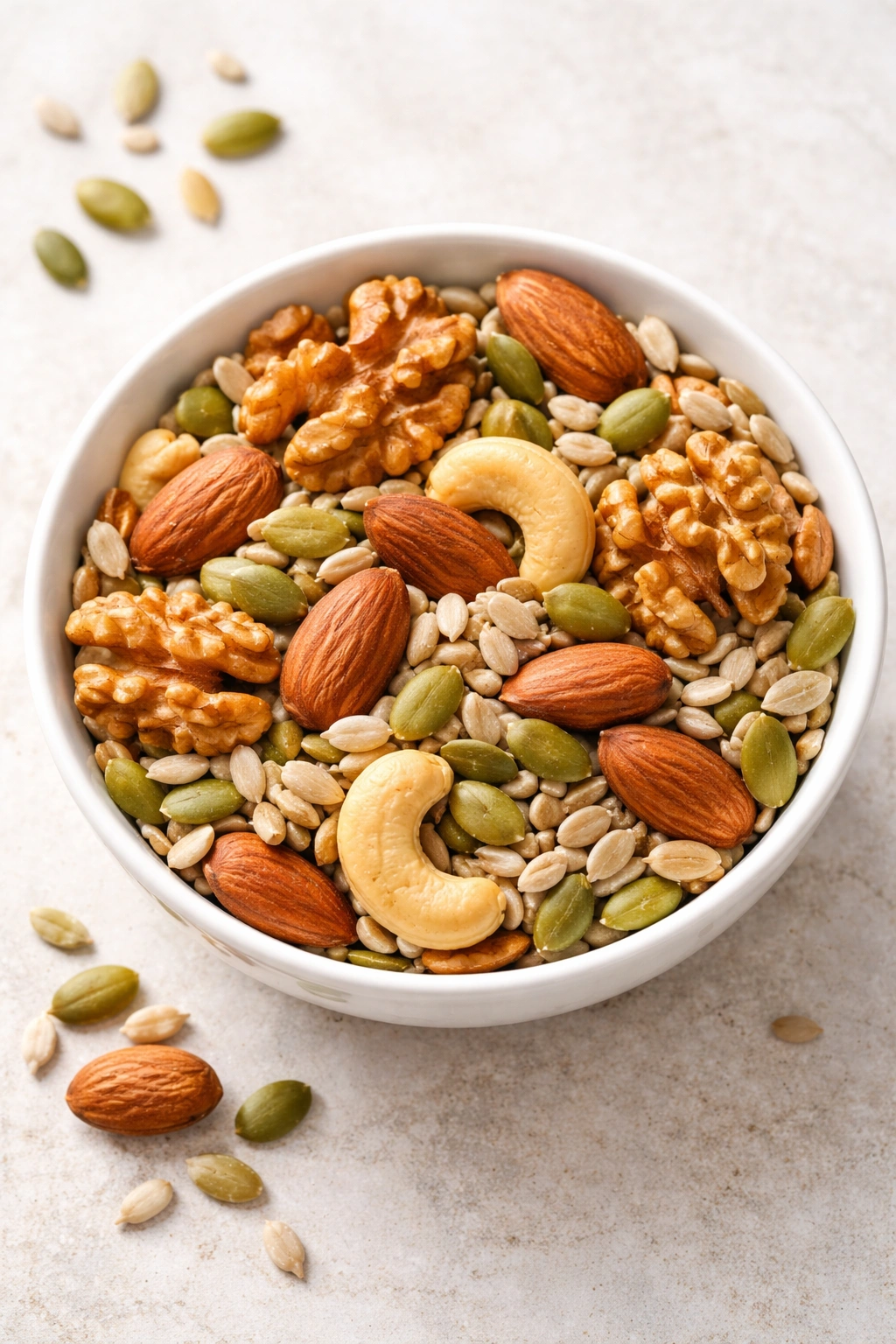
Nuts and seeds represent concentrated nutrition—they’re calorie-dense, yes, but they’re packed with healthy fats, plant-based protein, and minerals that your body genuinely needs. An ounce of almonds (roughly 23 nuts) contains 6 grams of protein, 3.5 grams of fiber, and magnesium, which supports energy production and stress management. The healthy monounsaturated fats in nuts don’t spike blood sugar the way refined carbs do, so you get stable, lasting energy.
The real advantage of mixed nuts over single-nut varieties is that you get complementary nutrition and flavor complexity. Almonds bring fiber, walnuts provide omega-3 fatty acids, cashews add minerals, and when you include seeds like pumpkin or sunflower, you boost your mineral intake even further. The variety also makes the snack more interesting to eat, so you’re less likely to mindlessly consume the whole container without noticing.
Why Nuts Keep You Fuller Longer
The combination of protein, healthy fats, and fiber in nuts creates what nutritionists call the “satiety effect”—your body recognizes you’re genuinely fed, so hunger signals quiet down. This is why a small handful of nuts (roughly an ounce) can bridge the gap between lunch and dinner or keep you stable during an afternoon meeting without triggering the 3 PM snack spiral most people experience.
Creating Your Own Nut Mix
- Base blend: almonds, unsalted cashews, and walnuts in equal parts—this is your go-to combination for balanced nutrition and flavor
- Add seeds for extra minerals: mix almonds with pumpkin seeds and sunflower seeds for a boost of zinc and magnesium
- Include dried fruit sparingly: add cranberries or raisins in small amounts (about 10% of your mix) for natural sweetness without turning the snack into a sugar-heavy treat
- Make it spicy: toss your nut mixture with a light coating of olive oil and sea salt, add paprika and cayenne for a savory kick that actually aids digestion
Worth knowing: Raw nuts are fine, but lightly roasted nuts tend to be more satisfying because roasting brings out their natural flavors. Just avoid heavily salted or honey-roasted varieties, which can push your sodium or added-sugar intake higher than intended.
3. Fresh Fruit with Portable Preparation
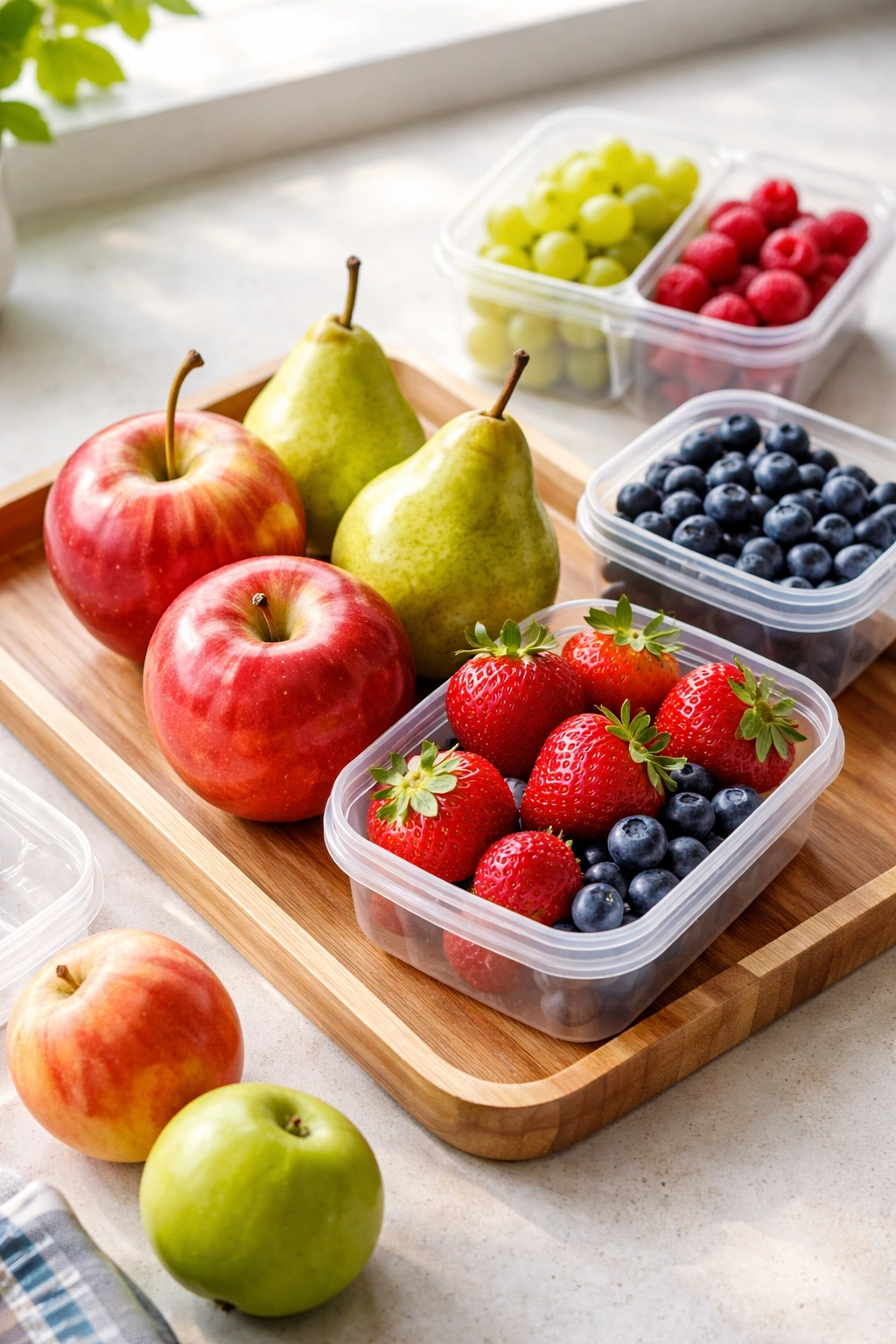
Fresh fruit is the obvious choice, but the reason most people abandon it as a snack is logistics—apples are fine, but bananas get bruised, berries get crushed, and grapes… well, they just disappear. The trick is choosing fruits that actually survive in a backpack and taste better because they’re carefully selected.
Berries are technically the superior snack because they’re lower in sugar than tropical fruits, higher in fiber, and packed with antioxidants. A half-cup of blueberries contains just 7 grams of natural sugars but 2 grams of fiber and compounds called anthocyanins that support brain function—genuinely useful during a school day or work project requiring focus. The downside? They get crushed easily, so you need a sturdy container.
Why Individual Fruits Work Better Than You Think
Whole apples, pears, and oranges travel beautifully. They’re naturally packaged, resilient, and they don’t require any preparation. An apple with its skin provides 4 grams of fiber, satisfying chewiness, and stable blood sugar support. A medium pear delivers pectin, a type of fiber that feeds the good bacteria in your gut and helps you feel fuller. These aren’t exciting snacks, but they’re reliable, they genuinely satisfy, and they work with any meal plan.
Fruit Preparation That Actually Lasts
- Slice and pack apples or pears in a small container with a squeeze of lemon juice to prevent browning—the acid stops the enzymatic reaction that causes discoloration
- Pre-portion grapes into a reusable container, and they stay fresh and crisp for 24+ hours if your pack includes an ice pack
- Pack whole berries in a shallow container with paper towels above and below to absorb excess moisture and prevent mold
- Choose slightly underripe bananas (they’ll ripen a bit during the day) and pack them whole, then peel and eat right before eating to prevent browning
Insider note: Frozen berries thaw to room temperature by snack time and stay fresher longer than refrigerated versions. Pack them in an insulated container and they’ll act as their own cooling pack while thawing to the perfect texture.
4. Hummus with Fresh Vegetables
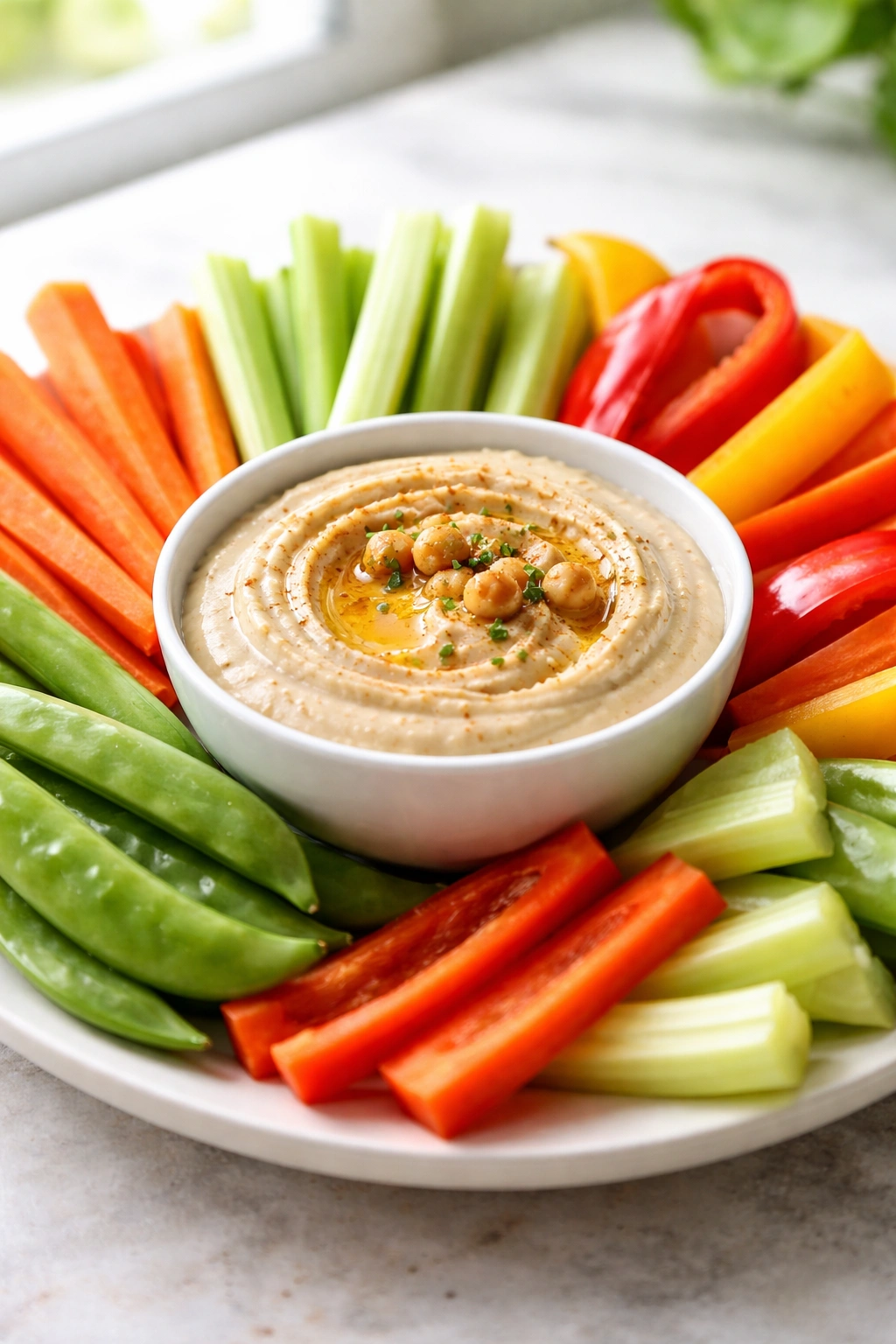
Hummus is basically chickpeas blended with tahini (sesame seed paste), olive oil, and lemon—which means it’s delivering plant-based protein, healthy fats, and fiber all at once. A quarter-cup serving contains about 3 grams of protein, 2 grams of fiber, and it’s satisfying enough that you won’t finish it mindlessly. The creamy texture makes it feel indulgent even though it’s genuinely nutritious.
The magic of pairing hummus with vegetables is that you’re creating a snack with almost perfect macro balance: the hummus provides protein and fat, while the vegetables add fiber, hydration, and micronutrients. A stick of celery (mostly water and fiber) with hummus becomes an actual meal in miniature, not just something to nibble on. The crunch factor also matters psychologically—you feel more satisfied after eating something crunchy than something soft, even if the calorie content is identical.
Vegetables That Don’t Get Soggy or Spoil
Raw vegetables hold up remarkably well when packed properly. Carrots, celery, bell peppers, and snap peas all last the full day without refrigeration and actually taste better at room temperature than cold vegetables fresh from the fridge. Cucumbers are fine too, though they’re best eaten the same day. Cherry tomatoes and broccoli florets work, but they’re more fragile and should be packed in a firm container rather than loose in a bag.
Hummus Packing That Prevents Leaks
- Use a small, leak-proof container for hummus and pack vegetables in a separate compartment so everything stays intact
- Make a “hummus container” by using a small silicone or plastic tub with a tight-sealing lid—these often come in 4-ounce sizes perfect for snacking
- Pack vegetables strategically: sturdy items like carrots and celery on the bottom, more delicate peppers and snap peas on top
- If your pack doesn’t have an insulated section, pack hummus with a small ice pack or freeze it the night before—it’ll thaw to perfect consistency by snack time while keeping vegetables cool
Pro tip: Make your own hummus on the weekend if you want to control sodium and skip store-bought versions. A blender full of canned chickpeas, 3 tablespoons of tahini, 3 tablespoons of lemon juice, 2 cloves of garlic, and 2 tablespoons of olive oil yields roughly two cups of hummus that lasts all week in the refrigerator.
5. Cheese Cubes and String Cheese
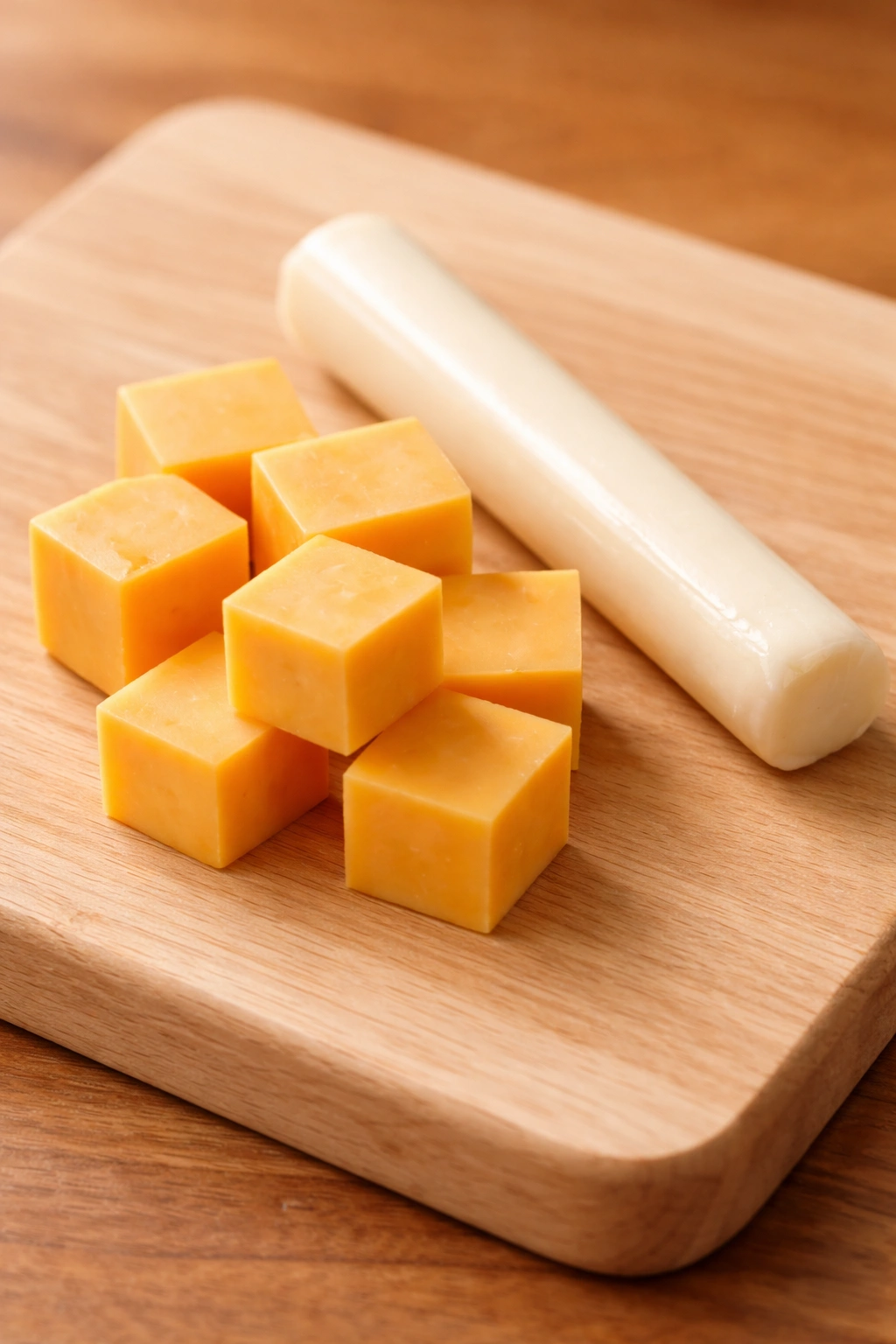
Cheese gets a bad reputation from diet culture, but the reality is that cheese is mostly protein and fat—nutrients your body needs. A one-ounce serving of cheddar (roughly a cube about the size of dice) contains 7 grams of protein and less than 4 grams of carbohydrate. This actually makes cheese one of the fastest, most portable ways to get substantial protein without any preparation.
String cheese is specifically designed for portability, which is why it works so well for packing. It’s pre-portioned, requires no utensils, doesn’t need refrigeration for a few hours, and most people genuinely enjoy eating it. The ritual of peeling it apart gives you something to do with your hands while eating, which adds to the satisfaction factor. Swiss cheese, mozzarella, and cheddar cubes all work similarly—pick whichever you actually enjoy eating.
Why Cheese Works as Sustained Energy
Cheese is roughly 30% protein and 25-30% fat with minimal carbohydrate. This combination means it digests slowly, keeping you satisfied for several hours. The casein protein in cheese also triggers satiety signals in your brain, so you feel genuinely full rather than just “not hungry.” Combine cheese with fruit (apple and cheddar is a classic for a reason), or with whole grain crackers, and you’ve created a snack that carries you through the afternoon without the energy crash.
Cheese Pairing Ideas
- String cheese with apple slices creates a naturally sweet-and-savory combination that works like a light meal
- Cheddar cubes with whole grain crackers and a handful of almonds builds a complete snack with all three macronutrients
- Swiss cheese with fresh grapes provides a more elegant flavor pairing—something you’d actually enjoy eating in a professional setting
- Mozzarella balls (fresh, not fried) with cherry tomatoes and fresh basil feels fancy enough for someone with particular taste, but it’s just simple ingredients
Worth knowing: Cheese does contain sodium and saturated fat, so portion control matters. Stick to one ounce (roughly the size of two dice) as your snack portion rather than eating until you’re full, and balance it with fruits and vegetables to get the full nutritional benefit.
6. Homemade Trail Mix
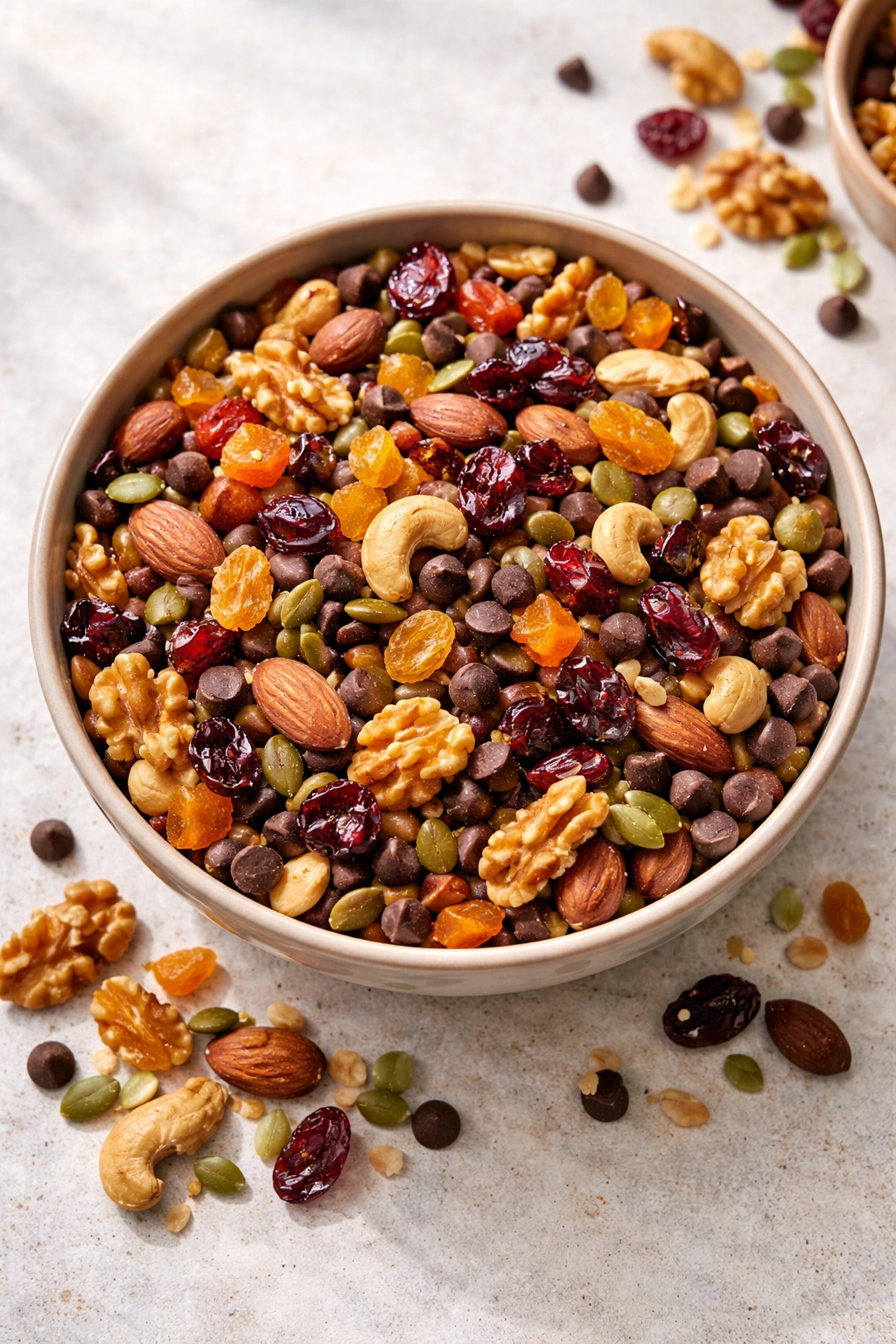
Commercial trail mixes are often loaded with chocolate pieces, candy, and coconut, turning what could be a healthy snack into something closer to dessert. Making your own trail mix takes about ten minutes on a weekend and gives you complete control over what goes in. You end up with something that’s actually satisfying while tasting genuinely good, not like you’re compromising.
The formula for solid trail mix is simple: start with a base of unsalted nuts (roughly 60% of your mix), add seeds (about 20%), include dried fruit in moderation (roughly 15%), and if you want chocolate, stick to dark chocolate chips with at least 70% cacao content (about 5% of your mix). This ratio keeps sugar reasonable while maintaining enough variety that you’re not bored by the third handful.
Building Trail Mix Components
The nut base should be whatever you enjoy eating. Almonds are nutritionally dense with vitamin E. Walnuts bring omega-3 fatty acids. Cashews add minerals like magnesium and zinc. Pecans contribute lutein for eye health. Mix at least two types so you get complementary nutrition and flavor. Seeds deserve equal consideration—pumpkin seeds are mineral-rich, sunflower seeds add B vitamins, and chia seeds deliver omega-3s. Choose one or two you genuinely like.
Dried Fruit and Chocolate Additions Done Right
- Dried cranberries are tart and interesting without being overly sweet, adding about 4 grams of sugar per quarter-cup
- Dried mango is sweeter but more flavorful than raisins, giving you the satisfaction of sweetness without needing chocolate
- Dark chocolate chips (70% cacao or higher) add richness without the sugar overload of milk chocolate
- Unsweetened coconut flakes work if you enjoy coconut, adding healthy fats and fiber without the sugar of sweetened varieties
Pro tip: Store your trail mix in glass jars with tight-sealing lids, and it stays fresh for 2-3 weeks at room temperature. Portion it into small bags on the weekend so you can just grab a snack-sized amount rather than eating from the jar and losing track of how much you’re consuming.
7. Whole Grain Crackers with Nut Butter
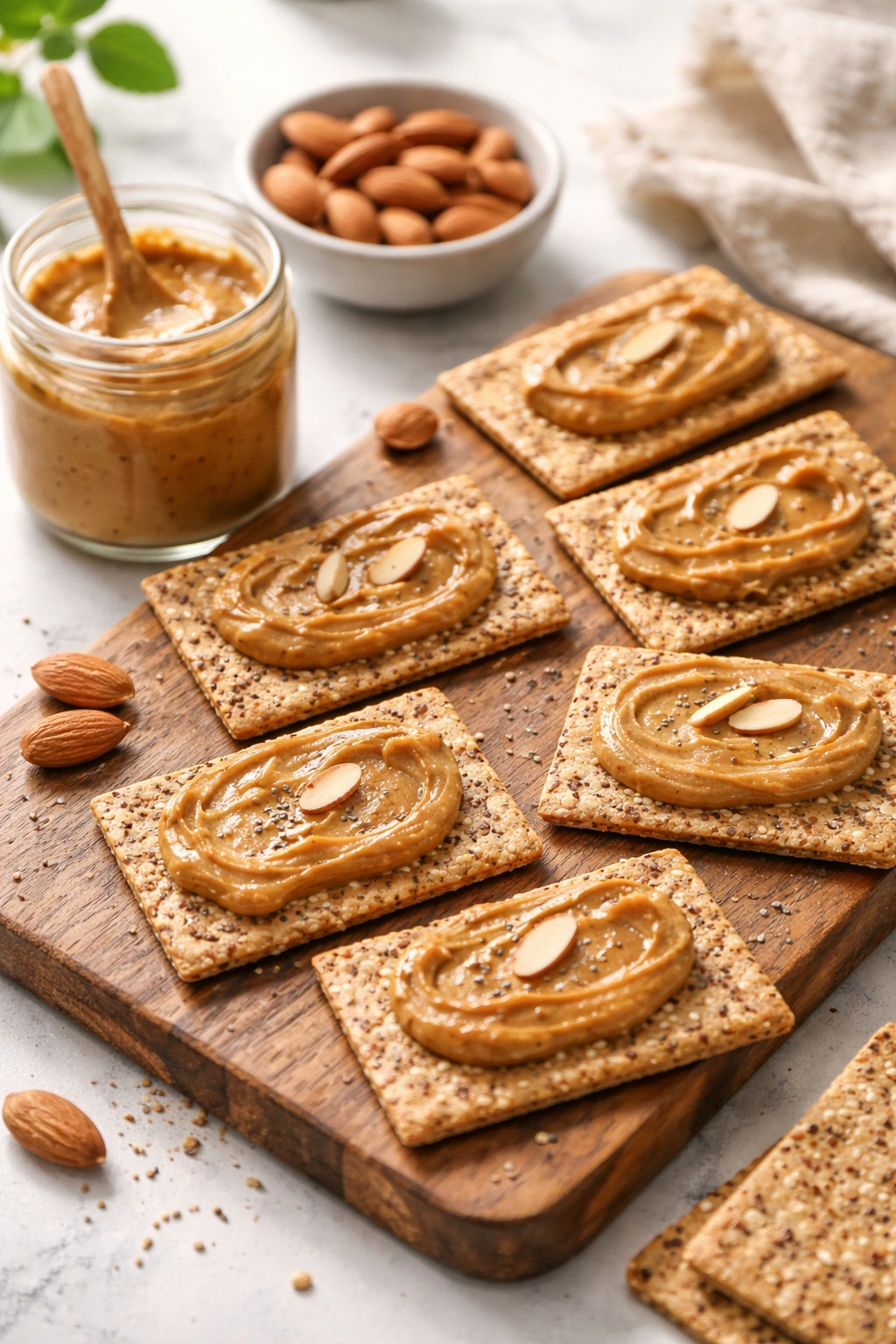
Whole grain crackers paired with nut butter create a snack that’s genuinely balanced—you’re combining complex carbohydrates (the crackers), plant-based protein (the nut butter), and healthy fats (also in the nut butter) into something that actually sustains energy. A serving of whole grain crackers with two tablespoons of almond butter delivers roughly 10 grams of protein, 3 grams of fiber, and stable blood sugar support.
The key is choosing whole grain crackers rather than refined grain versions. Refined crackers are basically white bread in a cracker format—they digest quickly, spike blood sugar, and leave you hungry an hour later. Whole grain versions contain the entire grain kernel (bran, germ, and endosperm), which means they’re actually filling and deliver genuine nutrition. Look for varieties with at least 3 grams of fiber per serving and no added sugar.
Nut Butter Options and Their Benefits
Almond butter is mild and versatile, with good amounts of vitamin E and magnesium. Peanut butter (technically a legume, not a nut) is higher in protein than tree nut butters and offers excellent value. Cashew butter is richer and creamier, appealing to people who find other nut butters too grainy. Tahini (sesame seed paste) is technically a seed butter and delivers calcium, making it especially valuable if you’re avoiding dairy. Try a few and choose based on flavor you actually enjoy.
Packing Strategies That Work
- Buy individual nut butter packets (widely available at grocery stores now), and pair them with whole grain crackers for zero mess and portability
- Pack homemade nut butter in a small jar, then carry whole grain crackers separately—assembly takes thirty seconds when you’re ready to eat
- Spread nut butter on crackers at home, let them dry for a few minutes, then pack them in a container—they’ll hold together without getting soggy
- Pair your crackers and nut butter with fruit or cheese to complete the snack macro-wise
Insider note: If you make your own nut butter in a food processor, store it in the refrigerator where it lasts much longer than commercial versions. The oils in homemade nut butter can oxidize faster because there are no preservatives, but refrigeration slows that process significantly.
8. Hard-Boiled Eggs
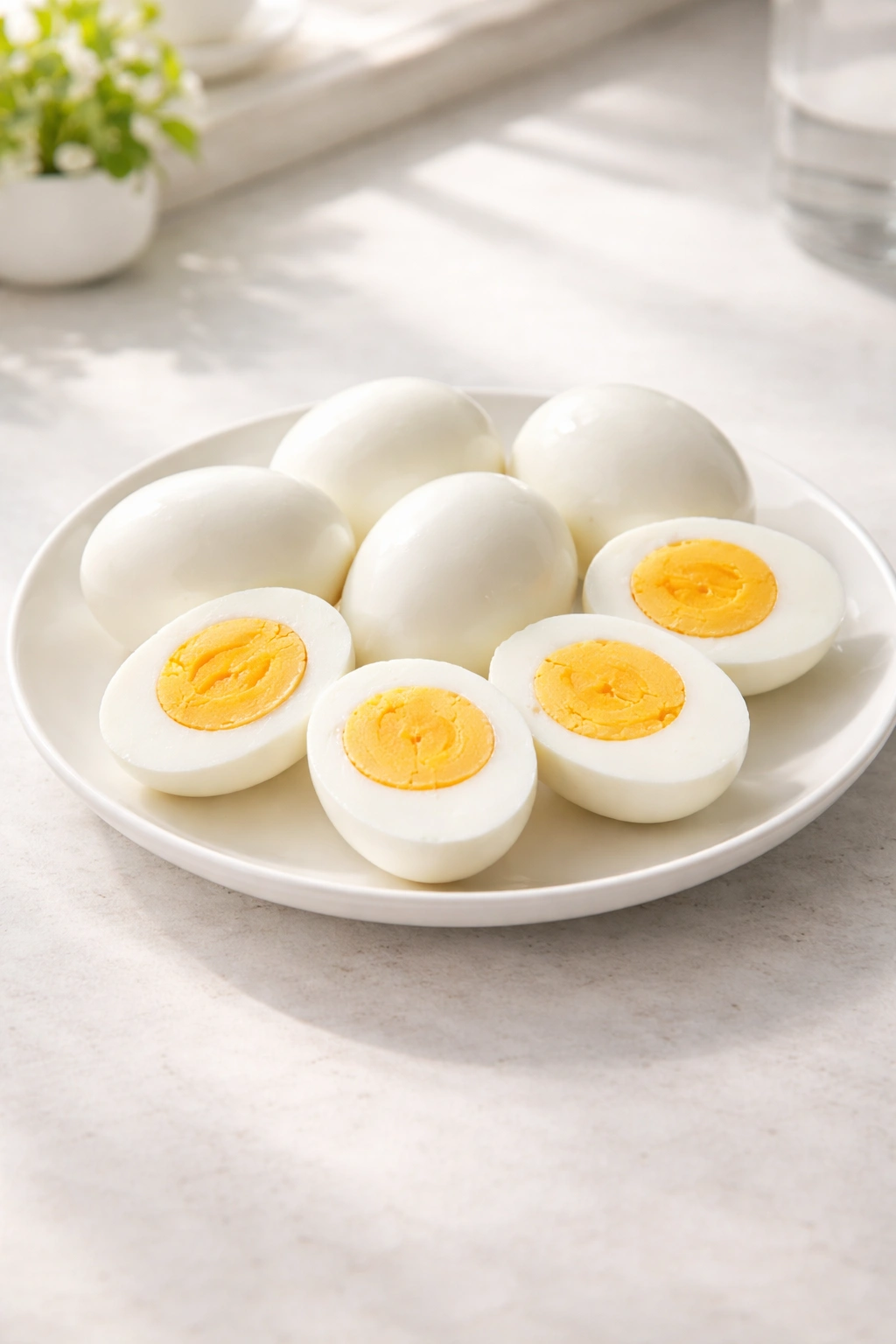
A hard-boiled egg is perhaps the most underrated portable snack because it’s complete protein packaged in a shell. One large egg contains 6 grams of protein, selenium, choline (which supports brain function), lutein (which protects eye health), and all nine essential amino acids your body can’t manufacture on its own. The fact that an egg is basically perfectly portable—just peel and eat—makes it genuinely practical.
Hard-boiled eggs are also calorie-efficient compared to other protein sources. One egg is roughly 70-80 calories, so you’re getting substantial protein from a snack that won’t throw your daily calorie intake off track. The yolk, despite its reputation, contains most of the nutrients—the lutein, choline, and healthy fats are all in the yolk. Eating the whole egg means you’re getting complete nutrition, not just protein from the white.
Making Hard-Boiled Eggs That Peel Easily
The most frustrating part of hard-boiled eggs is when they’re difficult to peel. The solution is technique: place eggs in cold water, bring them to a boil, then remove from heat and let them sit, covered, for 12 minutes. This creates the perfect texture—cooked through but not rubbery. After the 12 minutes, shock them immediately in ice water (or just run them under cold water) for at least 5 minutes. This stops the cooking and makes the shell separate from the white easily.
Making Eggs More Interesting
Hard-boiled eggs are plain by design, which is part of their appeal, but you can boost interest with minimal effort:
- Peel and store in a sealed container with a light sprinkle of sea salt and black pepper—simple but genuinely satisfying
- Toss peeled eggs with a small amount of everything bagel seasoning for flavor without much added salt
- Pack whole peeled eggs with a small container of hot sauce, allowing you to customize how much you use
- Pair eggs with cherry tomatoes and fresh herbs—fresh dill or cilantro adds substantial flavor lift
Pro tip: Boil a dozen eggs on Sunday and store them in the refrigerator for the entire week. They last 7 days easily and take less than 20 minutes to prepare. Peel them as you use them if you prefer, or peel them all at once and store the peeled eggs in a container lined with a damp paper towel to keep them from drying out.
9. Chia Seed Pudding
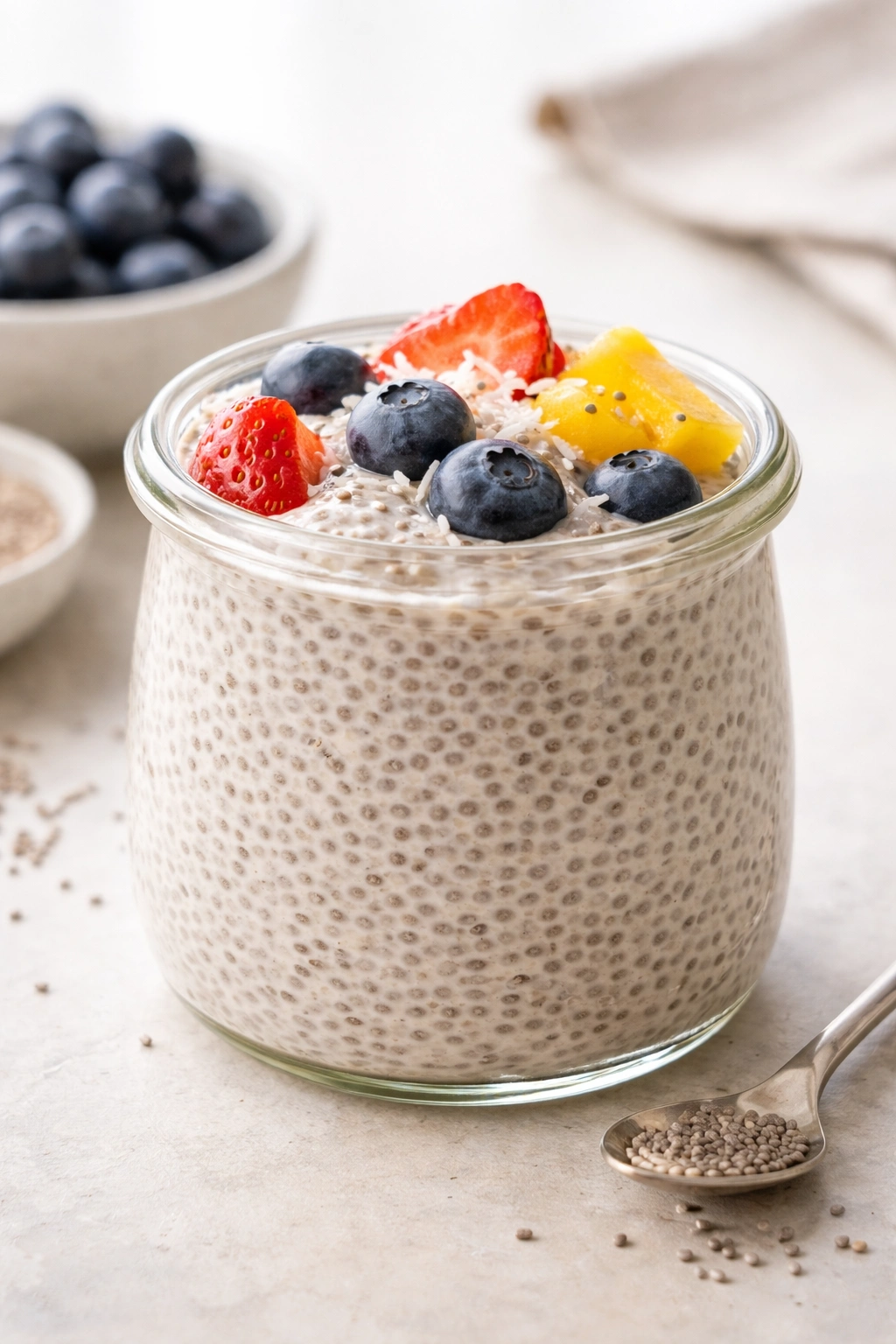
Chia seed pudding feels indulgent—it tastes like dessert, with a creamy, pudding-like texture—but it’s genuinely nutritious. Chia seeds are tiny seeds that absorb liquid and swell, creating that pudding texture. A quarter-cup of chia seeds contains roughly 12 grams of plant-based protein, 10 grams of fiber, and omega-3 fatty acids. This snack is specifically valuable for people who struggle with afternoon hunger or need sustained energy during afternoon classes or meetings.
The basic formula is simple: mix chia seeds with milk (dairy or non-dairy), add a small amount of sweetener if you want, then refrigerate overnight. By morning, you have a ready-to-eat snack that tastes like you indulged while actually delivering serious nutrition. You can prep multiple portions on the weekend and grab one each day, making this one of the easiest snacks to batch-prepare.
Creating Pudding Variations
The base is two tablespoons of chia seeds mixed with half a cup of milk. Beyond that, flavor variations are endless:
- Vanilla pudding: mix with milk and add half a teaspoon of vanilla extract, optionally with a tiny drizzle of honey
- Chocolate pudding: stir in a tablespoon of unsweetened cocoa powder and a teaspoon of maple syrup
- Berry pudding: blend fresh berries into the milk before mixing with chia, or layer berries on top before eating
- Coconut pudding: use coconut milk as your liquid base and add a tablespoon of unsweetened shredded coconut
Packing and Portioning
- Make pudding in small mason jars with tight lids, and you have grab-and-go snacks that last 4-5 days in the refrigerator
- Layer pudding with granola or nuts on top, adding them just before eating to keep them crunchy
- Transport pudding in insulated containers with ice packs, or simply pack it in your regular lunch bag—it stays fresh for several hours
- Top with fresh fruit just before eating to add brightness and natural sweetness
Worth knowing: Chia seeds need liquid to shine. Don’t eat them dry or they’ll actually absorb moisture from your mouth, creating an unpleasant texture. Always mix them with at least 4 times their volume in liquid (the standard is roughly 1:4 chia to liquid ratio).
10. Roasted Chickpeas
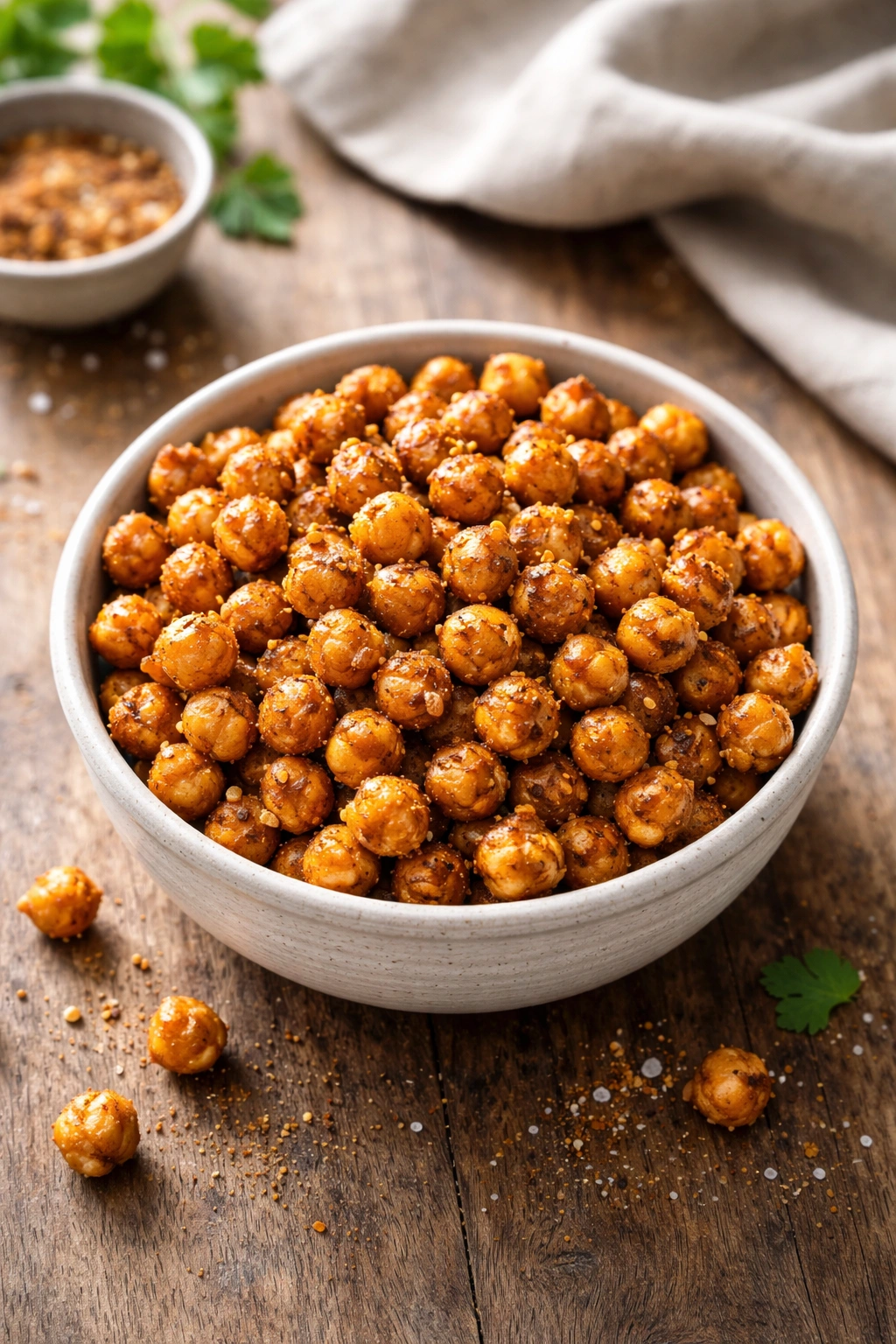
Roasted chickpeas are what happens when you take a humble legume and treat it like a snack chip. Canned chickpeas, drained and dried, tossed with a bit of olive oil and seasonings, then roasted until crispy, transform into something genuinely crunchy and satisfying. A quarter-cup of roasted chickpeas contains roughly 5 grams of protein and 4 grams of fiber—nutritionally solid for something that tastes almost like a treat.
The beauty of roasted chickpeas is that they’re completely customizable. You can make them savory with spices, slightly sweet with cinnamon and sugar, or Mediterranean with herbs. They’re also shelf-stable once cooled, so you can make a big batch on the weekend and snack from it all week. Unlike store-bought crackers or chips, roasted chickpeas deliver actual nutrition—legumes are one of the best plant-based protein sources available.
Making Perfectly Crispy Roasted Chickpeas
The technique is critical here. Start with canned chickpeas, drain them thoroughly, then pat them completely dry with a clean kitchen towel or paper towels. Moisture is the enemy of crispiness. Toss the dried chickpeas with a light coating of olive oil—roughly one tablespoon per can—then add your seasonings. Spread them in a single layer on a baking sheet and roast at 400°F (200°C) for 25-35 minutes, shaking the pan halfway through, until they’re golden and crispy. This takes active experimentation because different ovens vary, but you’ll know they’re done when they’re deeply golden and sound crispy when you shake the pan.
Seasoning Combinations That Deliver
- Classic savory: sea salt, black pepper, and a small amount of garlic powder—simple and universally appealing
- Spicy: paprika, cumin, cayenne, and a pinch of black pepper for complexity beyond simple heat
- Mediterranean: dried oregano, basil, a bit of thyme, and a squeeze of lemon zest stirred in after roasting
- Slightly sweet: cinnamon, a tiny bit of honey or maple syrup mixed in with the oil, and a pinch of sea salt for contrast
Pro tip: Store roasted chickpeas in an airtight container at room temperature for up to five days. If they get slightly soft, they’ll re-crisp in a 350°F oven for 5-10 minutes. This means you can make a large batch and refresh it as needed throughout the week.
Final Thoughts

Snacking is either a tool that supports your energy and goals, or it’s a habit that works against you. The difference comes down to intentionality—choosing snacks that actually satisfy rather than reaching for whatever’s convenient when hunger hits. Each of these ten snacks works because they combine protein, healthy fats, and fiber in proportions that keep you satisfied for several hours. They also taste genuinely good, which means you’ll actually keep packing them instead of abandoning them after the first week.
The real skill isn’t finding the “perfect” snack—it’s building a rotation that fits your taste preferences and your lifestyle. Maybe you’re someone who thrives with portable protein like hard-boiled eggs and cheese. Maybe you prefer the crunch of roasted chickpeas or trail mix. Maybe you’re a grain person who feels best with crackers and nut butter. The point is to test these options, figure out what genuinely works for your body and your preferences, and then commit to preparing it.
Start by picking three of these snacks and prepping them for the week ahead. Notice how your energy feels, whether afternoon crashes disappear, and whether you’re actually satisfied between meals. That real-world feedback matters infinitely more than any article—including this one. Once you’ve found your rhythm, you’ll stop viewing snacking as something you need to optimize and start seeing it as the straightforward habit it should be: fuel that tastes good and keeps you functioning at your best.
