



Eggs are the breakfast MVP, and honestly, they’re infinitely more versatile than the scrambled routine most of us have stuck on repeat. Whether you’ve got five minutes before heading out the door or you’re leisurely cooking for a crowd on a Sunday morning, eggs deliver. The challenge isn’t finding ways to cook eggs — it’s knowing what to do with them beyond the obvious.
The recipes and ideas ahead move past the usual suspects. You’ll find elegant preparations that look like you spent hours in the kitchen but come together faster than you’d expect. There are also deeply savory, flavor-packed dishes from around the world that feel special enough for weekend brunch or impressive enough to serve guests. Some are ridiculously simple; others involve a few extra steps that genuinely pay off. What ties them together is this: they all celebrate eggs as the main event, not as a side note to toast and bacon.
The best part? Every single one of these ideas works with whatever’s in your kitchen. Fresh herbs, roasted vegetables, sharp cheeses, leftover proteins — eggs are wildly collaborative. They work with bold spices, delicate flavors, fresh ingredients, and pantry staples. Once you’ve mastered a couple of these approaches, you’ll find yourself naturally adapting them based on what you have on hand and how much time you’re working with.
1. Eggs Benedict with Homemade Hollandaise
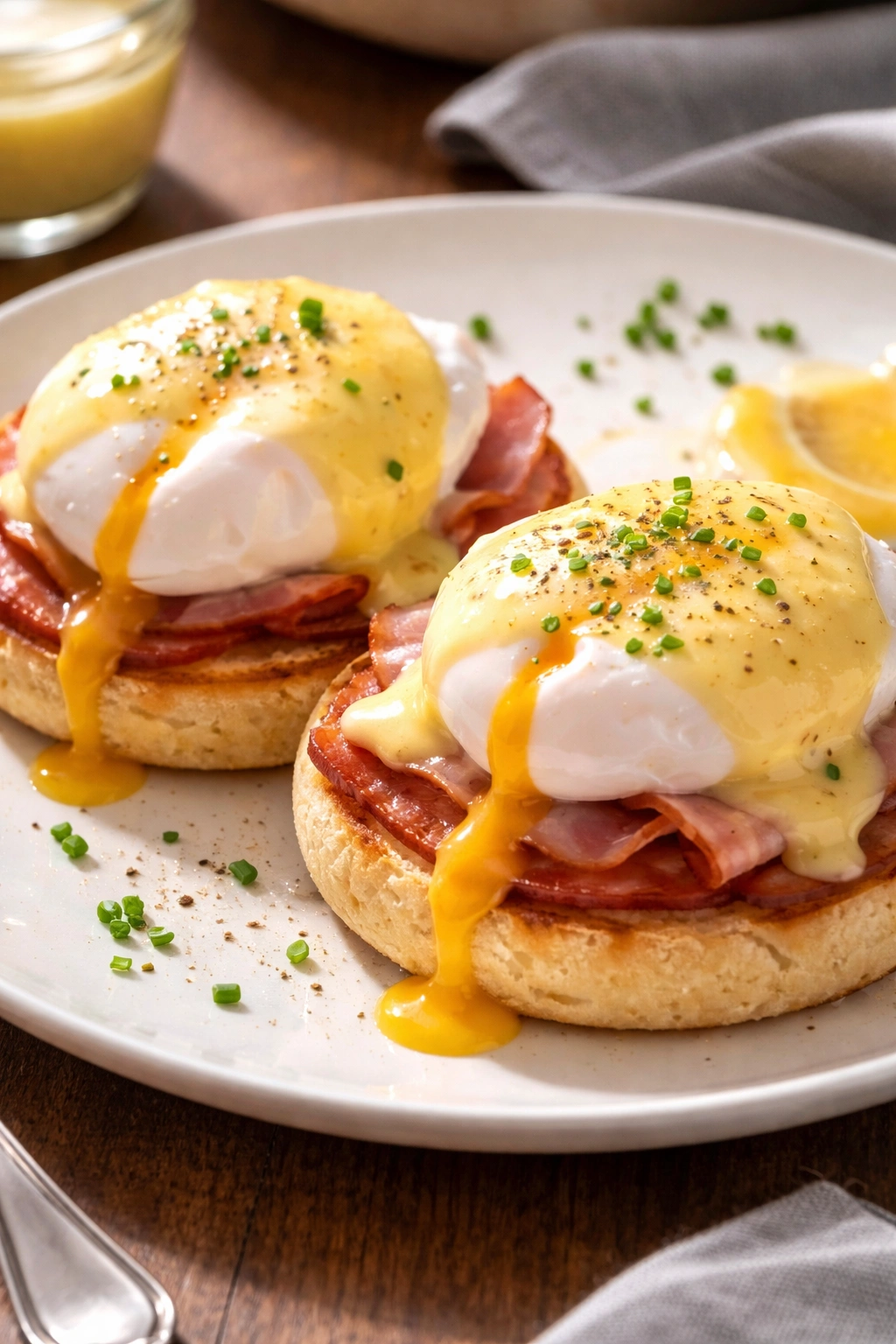
Eggs Benedict sits at that sweet spot between impressive and achievable. The combination of a perfectly toasted English muffin, a slice of ham or Canadian bacon, a silky poached egg, and rich hollandaise sauce is genuinely hard to beat. The trick isn’t in any single component — it’s in timing them all to come together at once, warm and ready to eat.
Why This Breakfast Stands Out
Eggs Benedict tastes like a restaurant dish, which is exactly why people avoid making it at home. But here’s the thing: hollandaise is actually five minutes of work. Once you understand the basic technique, you’ll see that the entire dish is totally achievable on a regular Tuesday morning. The runny yolk mingles with the hollandaise, creating a sauce that soaks into the English muffin. That’s the payoff — the combination of textures and the way everything works together.
Building Each Layer Properly
The English muffin is your foundation, so split one and toast it until the edges are crispy and the inside is warm and slightly soft. While it’s toasting, heat a skillet with a slice of ham or Canadian bacon over medium-high heat until it’s just warmed through and the edges start to curl slightly — about two minutes total. For the poached egg, bring a shallow pot of water to a gentle simmer, add a splash of white vinegar (this helps the whites stay together), and slide your egg into a small cup first, then pour it into the water. Let it cook for three to four minutes until the white is set and the yolk is still soft. Assemble quickly: muffin, ham, egg, then drizzle with hollandaise.
The Five-Minute Hollandaise Formula
Place three egg yolks and a tablespoon of cold water in a heatproof bowl over simmering water (the bowl shouldn’t touch the water). Whisk constantly for two minutes until pale and slightly thickened. Remove from heat and whisk in eight ounces of melted butter very slowly — the slower you go, the more stable your sauce becomes. Once it’s creamy, season with lemon juice, salt, and a pinch of cayenne. If it breaks or looks grainy, add a teaspoon of cold water and whisk gently to bring it back together.
Pro Tips
Make the hollandaise right before you assemble — it doesn’t hold well for long. Cook the ham first so it stays warm while you poach the egg. If poaching feels intimidating, try simmering the egg in a ramekin in a shallow water bath instead; you’ll get something very close to the classic result.
Make-ahead shortcut: Hollandaise can be held in a warm thermos for up to 30 minutes, or you can make it ahead and reheat it gently over hot water (not direct heat) just before serving. The yolks are pasteurized during the cooking process, so there’s no food-safety concern with making it ahead.
2. Shakshuka (Eggs Poached in Spiced Tomato Sauce)
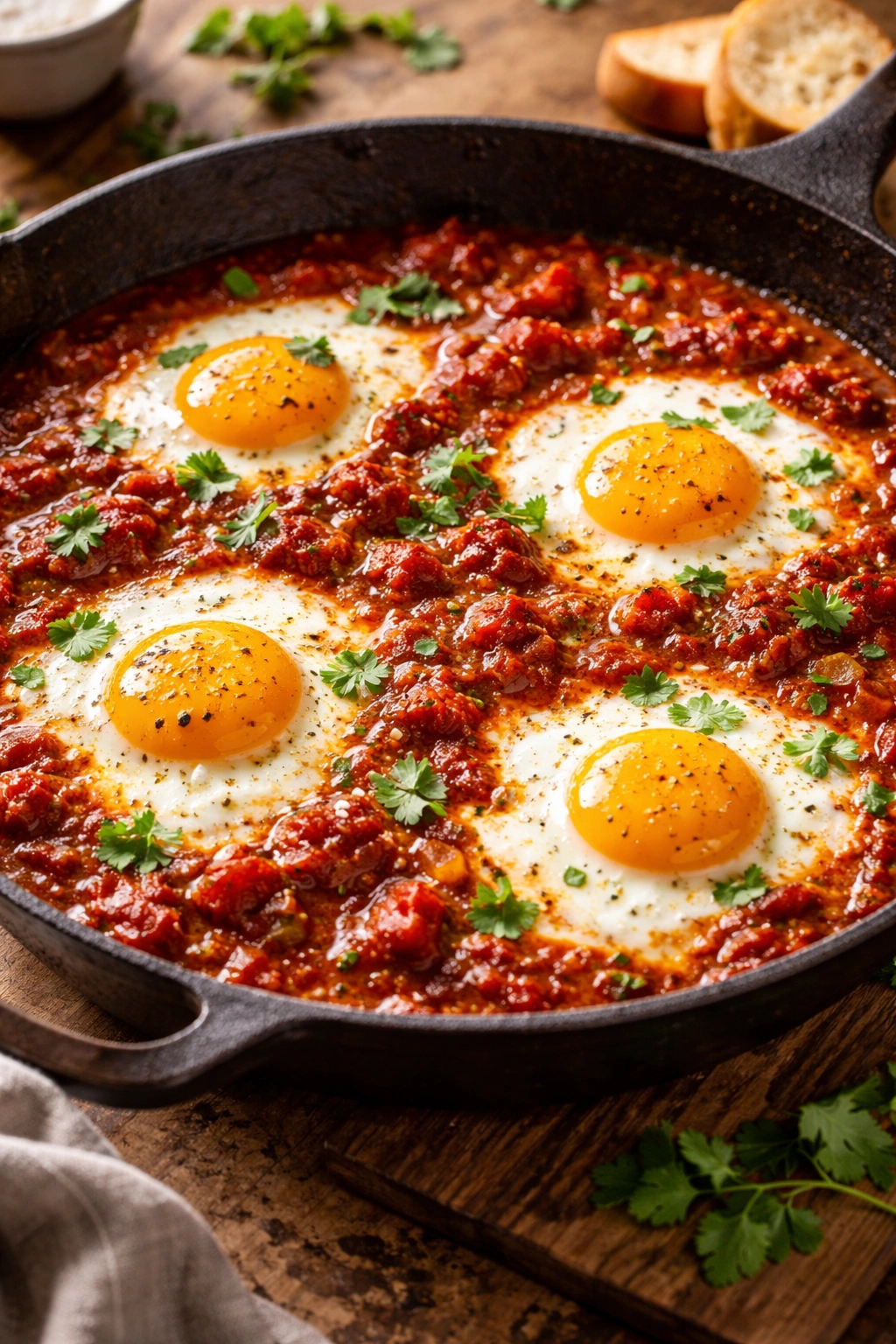
Shakshuka is a North African and Middle Eastern dish that deserves way more space on American breakfast tables. It’s eggs poached in a deeply seasoned tomato sauce that’s bright, warm, and completely satisfying. The beauty here is that the sauce does most of the heavy lifting — you literally crack eggs into it and let them cook until the whites set and the yolks stay runny.
Why It’s a Top Breakfast Choice
Shakshuka is packed with flavor from spices like cumin, paprika, and cayenne, but it never feels heavy. The tomato sauce is the backbone, and it carries all those spices beautifully. Each bite combines the soft-cooked egg with the seasoned sauce, and if you’re tearing pieces of bread to dip, you’re getting a complete, satisfying meal in every bite. It’s the kind of breakfast that keeps you full and happy for hours.
Building the Sauce That Makes It Work
Heat two tablespoons of olive oil in a large skillet over medium heat. Add one diced onion and a few minced garlic cloves; cook until soft and fragrant, about five minutes. Stir in one teaspoon of cumin, one teaspoon of paprika, a pinch of cayenne, and salt and pepper to taste. Cook for another minute until the spices become fragrant. Add one 28-ounce can of crushed tomatoes and a pinch of sugar (this balances the acidity). Let this simmer gently for 10 to 15 minutes — the sauce should reduce slightly and the flavors should deepen. Taste and adjust the seasoning.
Poaching the Eggs in the Sauce
Once your sauce is bubbling gently, create small wells in the sauce with the back of a spoon. Crack an egg into each well — you can typically fit four to six eggs depending on your skillet size. Cover the skillet and let it simmer gently for five to seven minutes. The whites will turn opaque and set, while the yolk stays soft and runny. You’ll know they’re done when you can gently push the white with a spoon and it feels set but the yolk jiggles.
Serving and Flavor Boost
Shakshuka is best served family-style, straight from the skillet, with warm pita bread or crusty bread on the side for dipping. Fresh herbs scattered on top — cilantro, parsley, or a combination — add brightness. A dollop of Greek yogurt or labneh on the side creates cool contrast against the warm, spiced eggs. Crumbled feta cheese works beautifully too.
Vegetable additions: Dice bell peppers, zucchini, or mushrooms and add them when you cook the onions — they’ll soften in the sauce and add substance without changing the essential character of the dish.
3. Egg Fried Rice with Fresh Vegetables
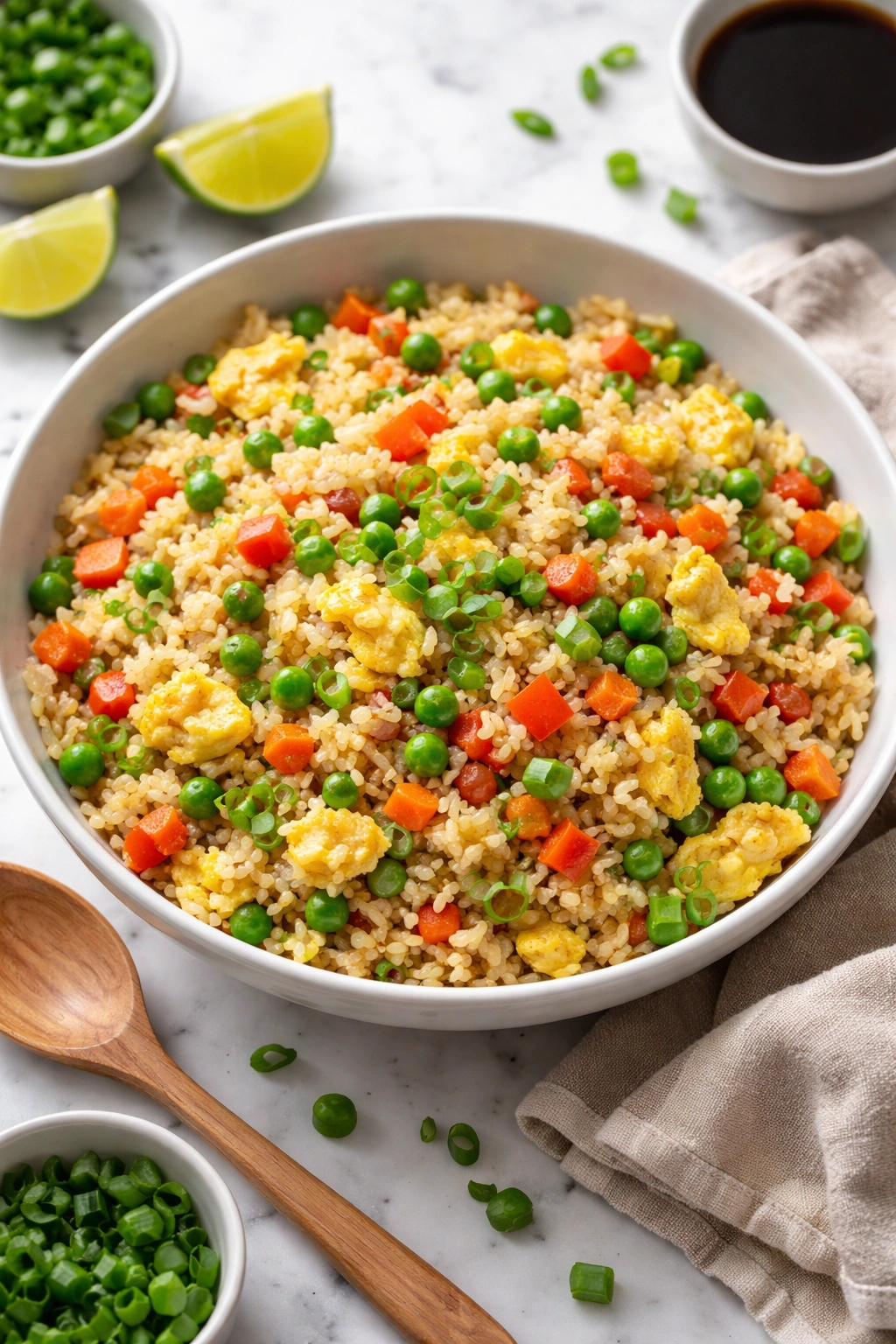
Egg fried rice feels like a dinner dish, but it’s perfect for breakfast when you’ve got leftover rice in the fridge. The eggs coat every grain, the vegetables add color and nutrition, and the whole thing comes together in about 15 minutes. It’s also wildly flexible — whatever vegetables you have on hand will work.
Why It Works for Breakfast
Fried rice is satisfying in a way that feels more complete than standard breakfast fare. The mix of protein, carbs, vegetables, and fat from the oil and eggs keeps you satisfied. Plus, it’s genuinely one of the fastest ways to turn leftover rice into something interesting. If you batch-cook rice on the weekend and portion it into containers, you’ve got the foundation for this ready to go.
The Technique That Makes It Different
Cold rice is essential — day-old rice works much better than fresh rice, which tends to clump together. Heat two tablespoons of oil in a large skillet or wok over medium-high heat. Add three beaten eggs and scramble them quickly, breaking them into small pieces as they cook. Remove them to a plate. Add a bit more oil to the skillet, then add your diced vegetables — onion, carrot, peas, corn, and bell pepper are classics, but use whatever you have. Cook until just tender, about four minutes. Add three cups of cooked, cooled rice and break up any clumps. Stir frequently, letting the rice touch the hot surface of the skillet so it picks up a slightly toasted flavor. Add the eggs back in along with soy sauce and a touch of sesame oil, tossing everything together.
Building Flavor Layering
The soy sauce is crucial — it’s what transforms rice from “leftover grain” into something delicious. Start with two tablespoons and taste as you go; you can always add more. A teaspoon of sesame oil added at the end creates a subtle warmth. White pepper (or black, if that’s what you have) adds more flavor than salt alone. Fresh ginger minced fine, a couple of minced garlic cloves, and a pinch of white pepper create depth that makes the whole dish feel more interesting.
Toppings and Serving Ideas
Fried rice is absolutely better with something fresh on top. Sliced green onions, cilantro, or fresh Thai basil wake up the flavors. A fried egg on top turns it into a special breakfast — the runny yolk becomes an extra sauce. Sriracha, hot sauce, or chili oil on the side lets people add heat if they want it.
Make-ahead reality: This is actually better made fresh, but it keeps in the fridge for three days and reheats well. Add a splash of soy sauce and a touch of oil to restore moisture when reheating.
4. Spanish Tortilla (Potato and Egg Skillet)
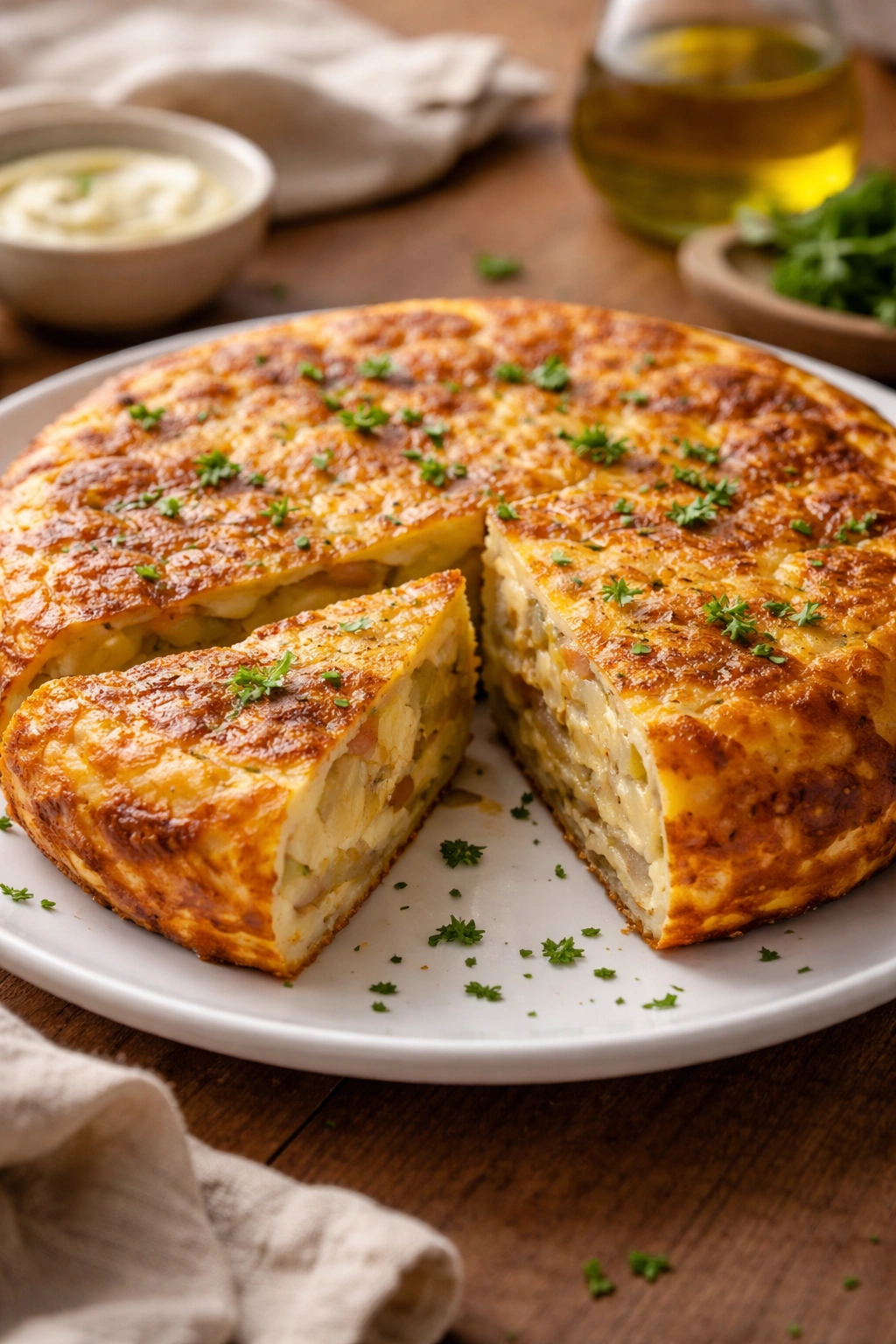
A Spanish tortilla is not what you think it is — it’s not a rolled wrap, it’s a thick, cake-like omelet loaded with potatoes and onions, sliced into wedges and served warm or at room temperature. It’s elegant, filling, and somehow feels fancier than the sum of its simple ingredients.
What Makes It Stand Out
A Spanish tortilla is proof that sometimes simple really is best. There’s nowhere to hide with just potatoes, onions, eggs, and olive oil — the quality of each ingredient matters. The magic is in the cooking technique: you start with slow-cooked potatoes that are tender and sweet, then bind them with beaten eggs and finish cooking in the oven. The result is a creamy interior with crispy, golden edges. It’s breakfast, lunch, or dinner, and it’s equally welcome warm from the oven or at room temperature the next day.
Building the Foundation
Slice two medium potatoes into thin rounds (about a quarter inch thick) and half a large onion into thin slices. Heat four tablespoons of olive oil in a medium skillet (about eight inches) over medium-low heat. Add the potatoes and onions, sprinkle with salt, and cook gently, stirring occasionally, for 15 to 20 minutes. You want the potatoes very tender but not browned — they should be sweet from the gentle cooking, not crispy. Drain them in a colander, reserving the oil.
The Egg Binding
While the potatoes cook, beat six eggs with salt and pepper until well combined. Once the potatoes are tender, pour the reserved oil back into the skillet (you should have about three tablespoons). Add the potatoes and onions back in, then pour the beaten eggs over them. Cook over medium heat for about two minutes, just until the edges start to set. Transfer the skillet to a preheated 375°F (190°C) oven and bake for 10 to 15 minutes, until the center is just set but still slightly soft (it will firm up as it cools). The top should be lightly golden.
Slicing and Serving
Run a spatula around the edges to loosen it, then slide it onto a cutting board. Let it rest for a few minutes, then slice into wedges like a pie. Serve warm with a simple green salad dressed with lemon vinaigrette, or serve at room temperature with Spanish olives and a hunk of good bread.
Flavor variations: Add a splash of sherry vinegar to the potatoes as they cook. Stir in roasted red peppers or sautéed mushrooms. A handful of fresh herbs stirred into the beaten eggs adds brightness.
5. Baked Eggs in Avocado Halves
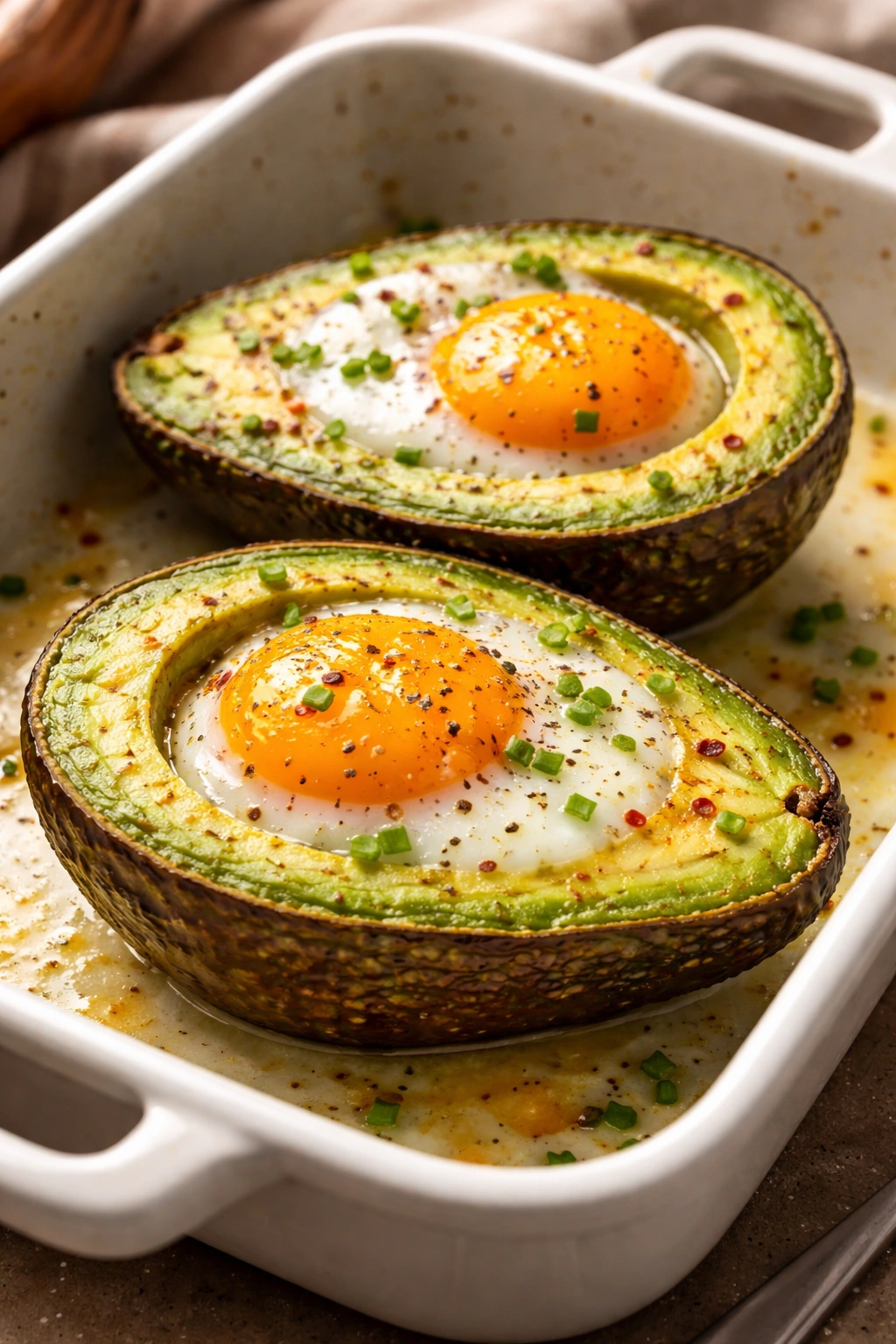
This is minimalist cooking at its best: split an avocado, scoop out a tiny bit more flesh to create a slightly larger egg cup, crack an egg into it, bake until the white sets, and eat it straight from the skin with a small spoon. It’s beautiful, it’s healthy-feeling, and it comes together in about 15 minutes.
Why People Love This Approach
Baked eggs in avocado hit that sweet spot where food is both nutritious and indulgent. The creamy avocado contrasts beautifully with the cooked egg white and runny yolk. There’s very little room for error — almost everything about this is hard to mess up. Plus, it’s naturally keto-friendly, paleo-friendly, and just generally feels like a restaurant dish that you’ve somehow made at home.
The Technique Simplified
Preheat your oven to 425°F (220°C). Cut a ripe avocado in half and remove the pit. Use a small spoon to scoop out just enough flesh to create a slightly larger cavity where the pit was — you want the egg to nestle into it, not be so deep that it takes forever to cook. Place the avocado halves in a baking dish or on a small sheet pan. Crack an egg into each half, season with salt and pepper, and bake for 12 to 15 minutes. The egg white should be opaque and set, but the yolk should still jiggle slightly when you nudge the avocado.
Flavor Building Around Simplicity
Since there are so few ingredients, each one should taste good. Use fresh, good-quality eggs. Season generously with sea salt and fresh black pepper. A whisper of cayenne or smoked paprika adds complexity without changing the essential character. Just before serving, a tiny drizzle of good olive oil and a sprinkle of fresh herbs — chives, cilantro, or parsley — elevate the whole thing.
Serving and Topping Ideas
Eat it straight from the avocado skin with a small spoon, or scoop the entire thing onto toast. Crumbled crispy bacon is a classic addition. Diced fresh tomatoes, a pinch of feta cheese, or chopped fresh herbs all work. Some people add a splash of hot sauce. The beauty is that it’s so simple, you can embellish it however you want without it feeling like too much.
Pro tip: Ripe avocados are crucial — if your avocado is too firm, the cooking time becomes unpredictable. If it’s overripe, it gets mushy. Aim for an avocado that yields slightly to pressure but isn’t soft.
6. Frittata with Seasonal Vegetables
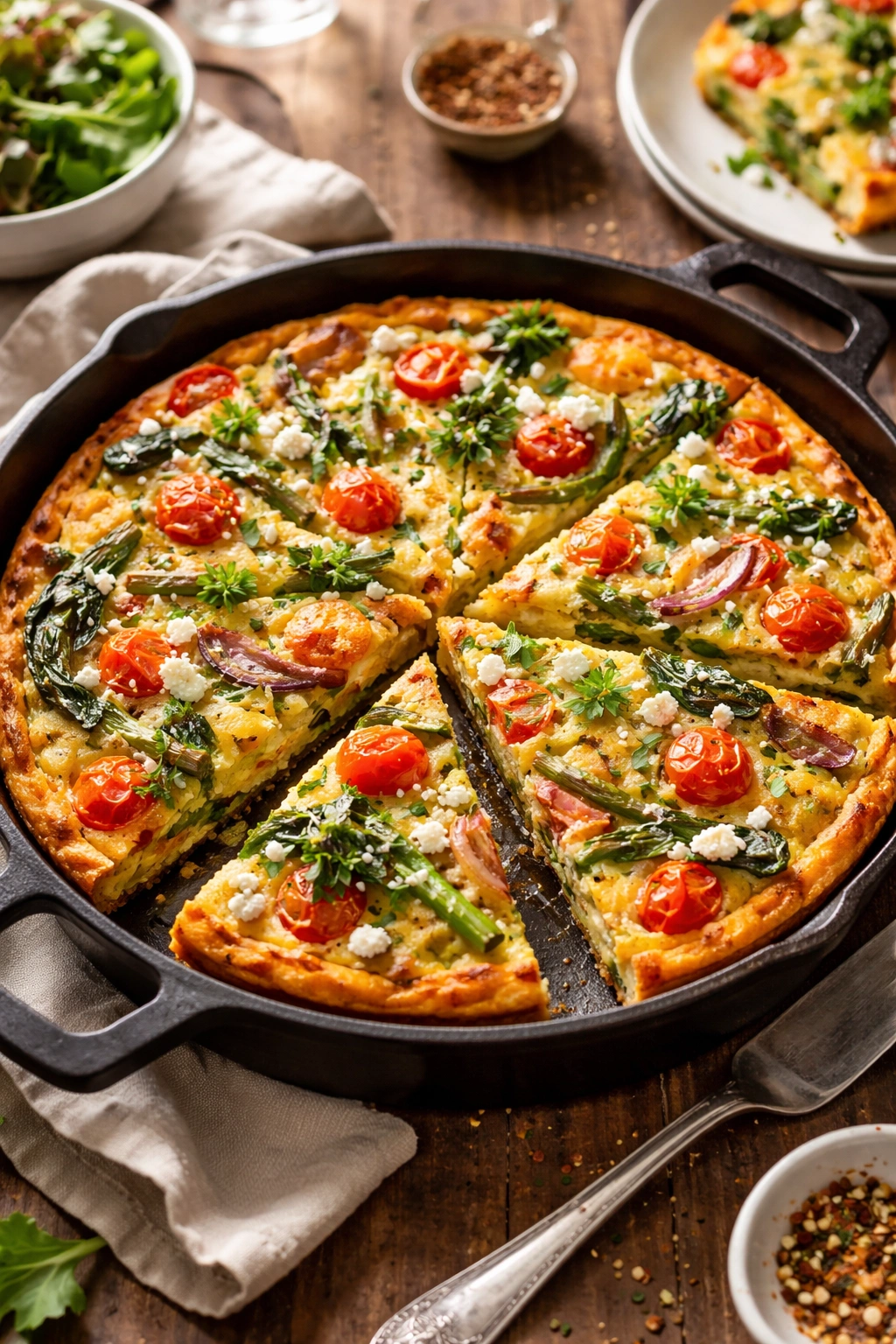
A frittata is an open-faced omelet that cooks entirely in the oven, which means you can load it with vegetables, cheese, and herbs without worrying about flipping it or getting stressed about timing. It’s flexible enough to use whatever vegetables you have on hand, and it’s even better the next day as leftovers.
What Makes It Better Than Scrambled
A frittata is visually stunning — golden, puffy, loaded with color from vegetables and flecks of fresh herbs. It’s also infinitely more flexible than scrambled eggs because you cook the vegetables first, letting them caramelize and develop flavor, then pour the eggs over them. Everything cooks together, which means the flavors meld and deepen rather than staying separate. Plus, it’s easy to scale up for a crowd.
Building Your Frittata Foundation
Heat two tablespoons of olive oil in a 10-inch oven-safe skillet over medium heat. Add diced vegetables — start with whatever takes longest to cook (onions, hard squashes), then add quicker-cooking items (spinach, tomatoes, mushrooms). Cook until the vegetables are tender and lightly caramelized, about eight to ten minutes. Season with salt and pepper. While they cook, beat six eggs with a quarter cup of milk or cream, salt, pepper, and any fresh herbs you want (basil, dill, chives, parsley all work beautifully).
The Oven Finish
Pour the beaten eggs over the cooked vegetables, add a handful of grated cheese (cheddar, gruyère, feta, and goat cheese all work), and cook over medium heat for three minutes until the edges start to set. Then transfer the skillet to a preheated 375°F (190°C) oven and bake for 10 to 12 minutes. The top should be lightly golden and puffed, and the center should be just set when you give the pan a gentle shake.
Vegetable Combinations That Work
Spring frittata: asparagus, peas, fresh herbs, and goat cheese. Summer frittata: zucchini, tomatoes, basil, and mozzarella. Fall frittata: mushrooms, caramelized onions, sage, and gruyère. Winter frittata: broccoli, roasted red peppers, garlic, and cheddar.
Storage and reheating: Frittata keeps in the fridge for three to four days and is excellent sliced and eaten cold, or gently reheated in a 300°F (150°C) oven until warm. It’s perfect for making ahead on Sunday and having breakfast ready all week.
7. Soft-Boiled Eggs with Soldiers (Toast Strips)
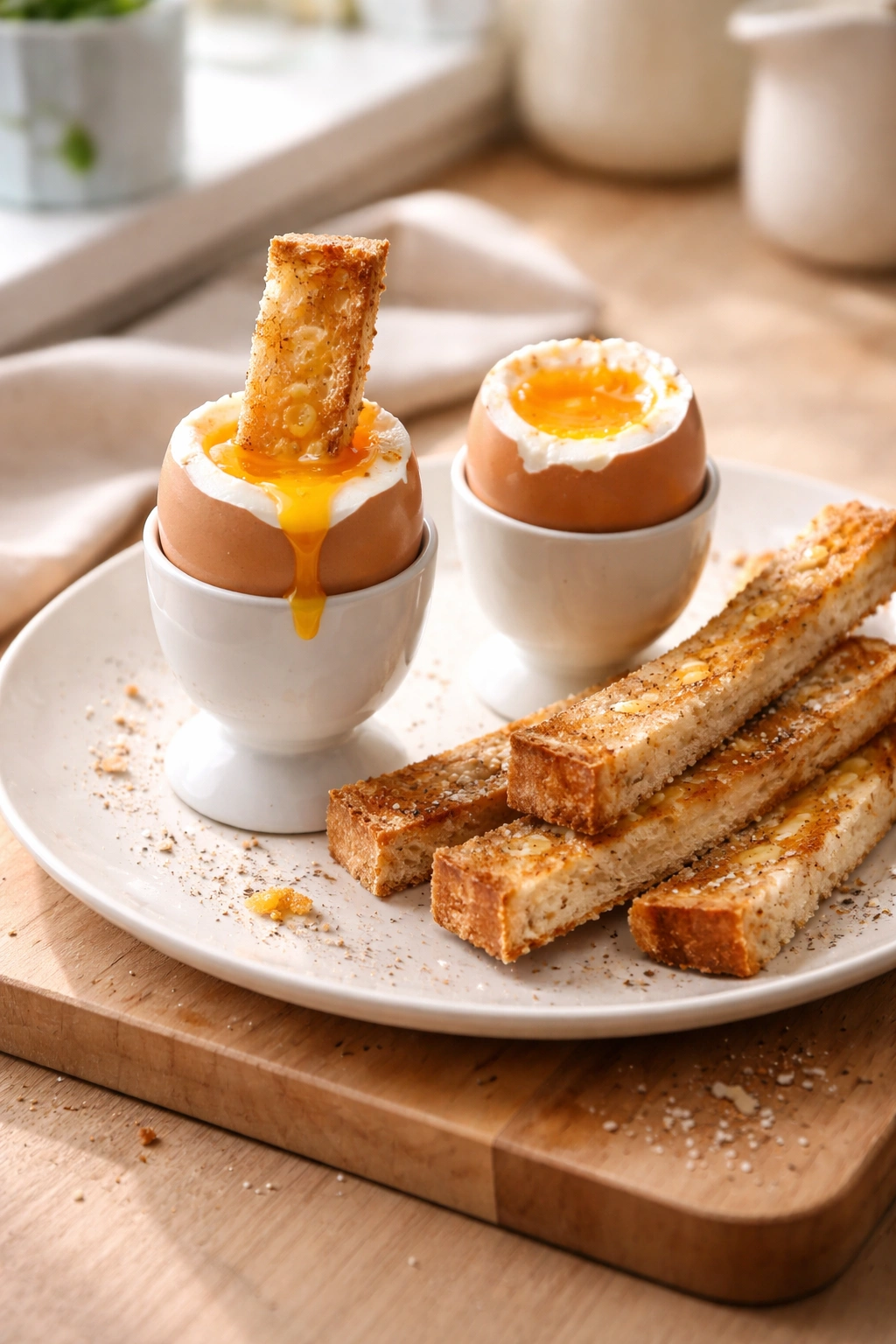
Sometimes the best breakfast is the simplest one: a perfectly soft-boiled egg with a runny yolk, crispy buttered toast cut into strips for dipping, and a pinch of good sea salt. There’s something deeply satisfying about cracking into that soft yolk and having it flow into the soldiers.
Why This Works Even (Especially) for Adults
Soft-boiled eggs feel like a childhood breakfast, but there’s a reason they endure: they’re comforting, they’re simple, and they’re endlessly enjoyable. There’s no better use for a really good egg. The key is getting the timing exactly right so the white is just set but the yolk is still runny in the center. Once you nail that, it becomes a breakfast go-to.
Timing Perfectly
Bring a pot of water to a boil. Gently lower room-temperature eggs into the boiling water using a spoon. Set a timer: for a soft yolk with a just-set white, cook for six to six and a half minutes. Immediately transfer the eggs to an ice bath to stop the cooking. The ice bath is important — it stops the residual heat from continuing to cook the yolk.
Serving Properly
Place each egg in an egg cup. Using a sharp knife, carefully cut off the very top of the egg — about a quarter inch. You want to create an opening large enough to fit a toast strip through. The egg should be warm and the yolk runny. Arrange your buttered toast strips (cut about half an inch wide) in a little bundle next to the egg. Dip, eat, and enjoy.
The Soldier Toast
Cut good-quality bread (sourdough, whole wheat, or white all work) into strips about half an inch wide and two to three inches long. Toast them until golden and crispy. Immediately butter them so the butter melts into the warm toast. Sprinkle with fleur de sel or another finishing salt. That’s it. These strips are perfect for dipping into the runny yolk.
Pro tip: Bring your eggs to room temperature before boiling — this gives you more predictable results and helps prevent the shell from cracking. If you’re making several eggs at once, it’s better to add them to the boiling water at intervals so they all finish at the same time, rather than cooking them all at once.
8. Thai-Inspired Egg Curry
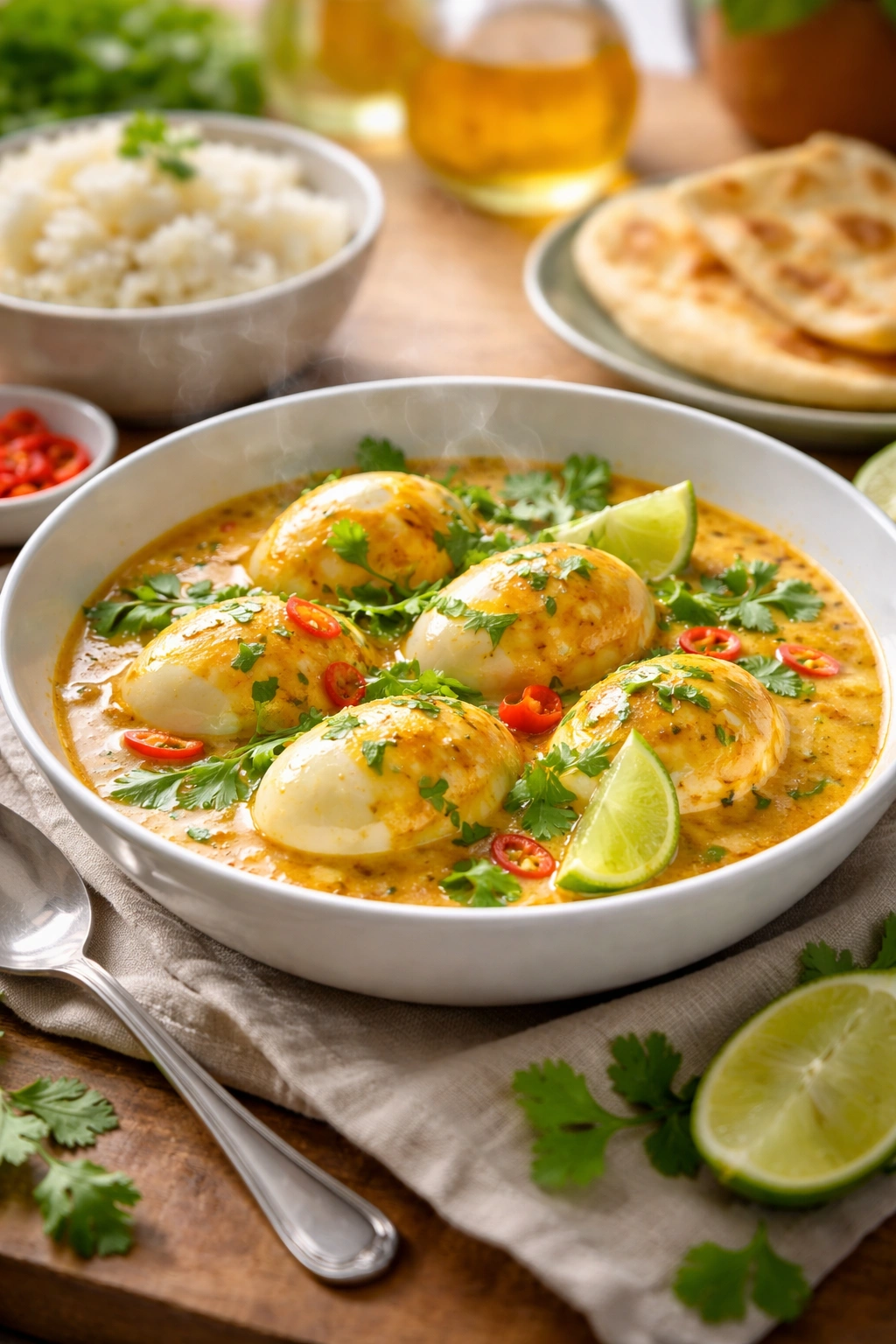
This is breakfast that doesn’t feel like breakfast because it’s so flavorful and deeply satisfying. Scrambled eggs are cooked in a curry sauce made from coconut milk, lime, fresh herbs, and a touch of heat. It’s served over rice or with flatbread for dipping, and it’s ready in less than 20 minutes.
How This Works as a Morning Meal
Thai egg curry has all the comfort of regular curry without the heaviness of a meat-based version. The coconut milk keeps things light, and the lime juice and fresh herbs add brightness. The eggs become tender and absorb the flavors of the sauce. It’s warming without being heavy, and it’s substantially different enough from typical breakfast foods that it feels special.
Building the Curry Base
Heat one tablespoon of oil in a large skillet over medium heat. Add two tablespoons of Thai red curry paste and cook, stirring, for two minutes until fragrant. Pour in one 14-ounce can of coconut milk — use full-fat for the best flavor and texture. Add a tablespoon of fish sauce, the juice of one lime, and a pinch of palm sugar (or a half teaspoon of regular sugar). Stir to combine and let it simmer gently for five minutes so the flavors develop.
Cooking the Eggs in the Sauce
While the sauce simmers, beat eight eggs together in a bowl. Pour the beaten eggs into the simmering curry sauce and stir gently with a spatula, letting the eggs cook into soft curds that are coated in the sauce. This takes about three to four minutes. You want the eggs to be just cooked through but still creamy. Add diced fresh vegetables — bell peppers, green beans, or fresh spinach all work — and stir gently until just tender.
The Finishing Touches
Remove from heat and taste. Adjust seasoning with a squeeze more lime juice, more fish sauce if needed, or a pinch more heat from cayenne or fresh chili. Scatter with fresh Thai basil (or cilantro if Thai basil is hard to find), sliced green onions, and diced red chili if you like heat. A squeeze of lime juice at the table is perfect.
Serving Options
Serve over jasmine rice, with warm naan or roti for dipping, or even over toast if that’s what you have. A dollop of Greek yogurt stirred in at the end cools things down if the heat is too intense.
Flavor variations: Add a splash of soy sauce for depth. Include a tablespoon of curry paste instead of two for a milder version. Stir in diced pineapple for sweetness and tropical flavor.
Tips for Cooking Eggs Like a Professional
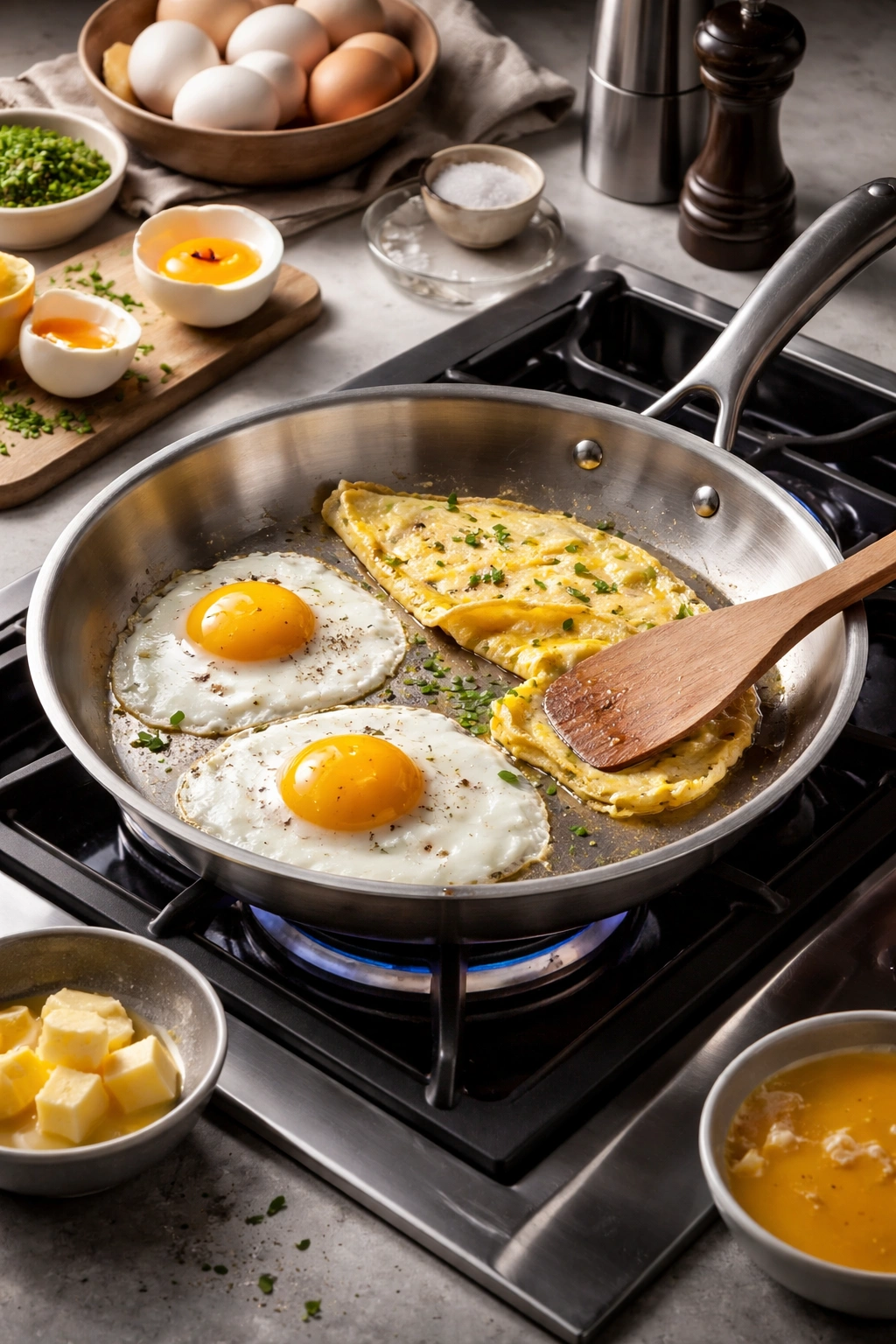
The difference between good eggs and great eggs usually comes down to a few technical details that pros have practiced into muscle memory. Understanding these shifts something fundamental in how your eggs taste and how confident you feel making them.
Temperature control is everything. High heat scrambles eggs too quickly, trapping water and making them tough. Medium or medium-low heat takes longer but gives you time to stir gently and create soft, creamy curds. For fried eggs, start with medium-high heat to get the white set quickly, then reduce to medium to keep the yolk from cooking too much. For poached eggs, the water needs to be barely simmering — a rolling boil breaks the delicate whites apart.
The salt question matters more than most people realize. Salt draws water out of eggs, which is why salting scrambled eggs too early can make them watery. Add salt right at the end of cooking, or salt the eggs as they go into the pan. For fried or poached eggs, salt right in the cooking water or on the finished egg — there’s no risk of drawing out moisture.
Room-temperature eggs cook more evenly than cold eggs straight from the fridge. This is especially important for poaching and soft-boiling, where timing is crucial. Pull eggs out 10 to 15 minutes before cooking and you’ll get better, more consistent results.
Fat is flavor and texture. Using good butter instead of nonstick spray, finishing with a drizzle of quality olive oil, or cooking in rendered bacon fat transforms how eggs taste. Don’t skimp on the fat, but do use it intentionally.
Common Egg Cooking Mistakes to Avoid
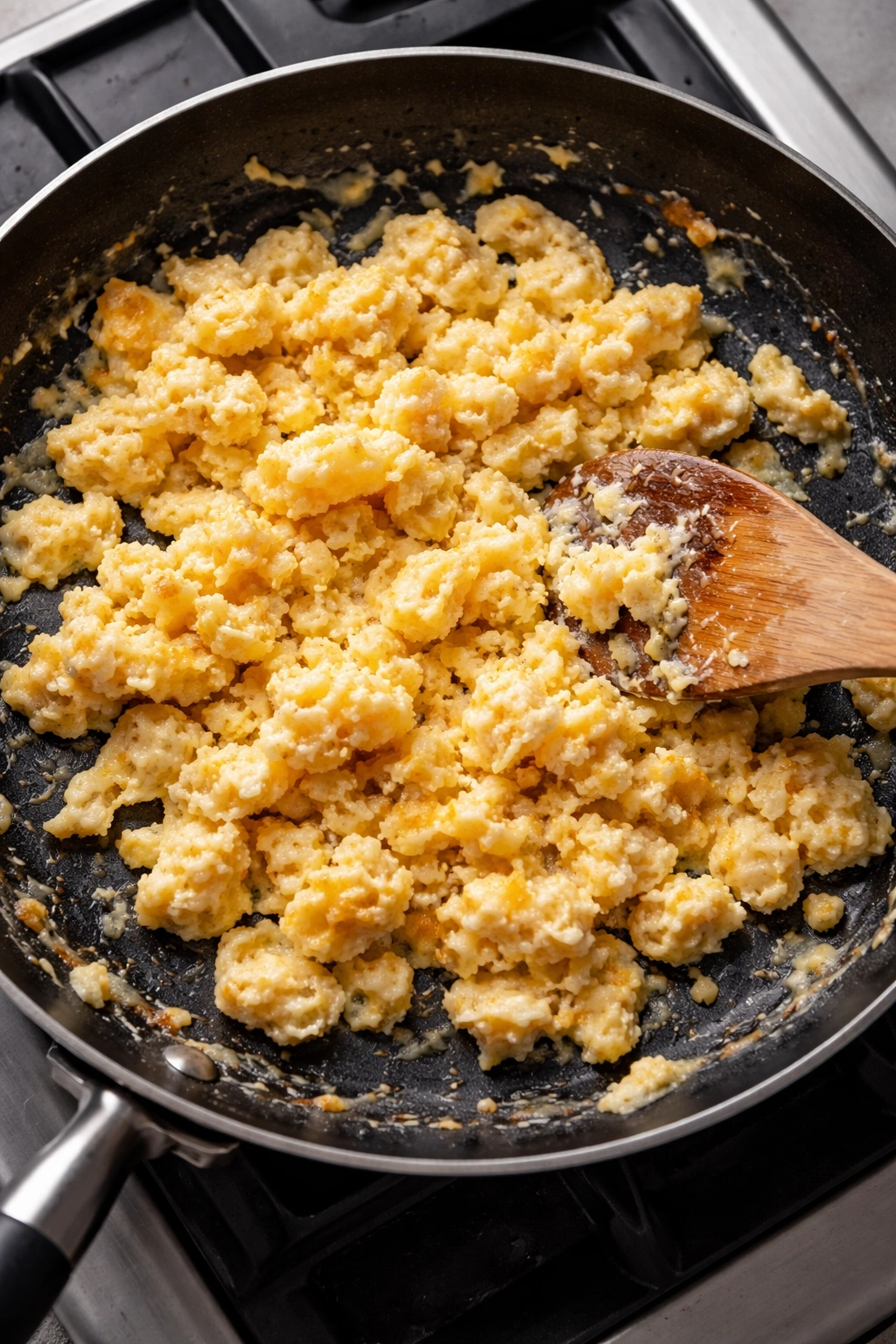
Most people make the same mistakes repeatedly without realizing it. Recognizing these patterns lets you skip them entirely and get better results immediately.
Cooking on too-high heat is the biggest culprit. Scrambled eggs that are rubbery, fried eggs with crispy edges, and broken hollandaise all trace back to heat that was too high. Medium to medium-low heat is your friend with eggs almost always.
Scrambling too aggressively breaks the curds into tiny pieces and can make eggs look broken and separated. Use a spatula to gently push the eggs from the edges toward the center, letting uncooked egg flow to the hot surface. You’re creating soft curds, not a scrambled scramble.
Waiting too long to remove eggs from heat is a close second. Eggs continue cooking from residual heat after you pull them off the stove. Scrambled eggs should look slightly underdone when you remove them from the pan — they’ll finish cooking in the few seconds it takes to plate them. Fried eggs should be plated the second the white is set. Poached eggs should be pulled from the water the moment the white looks opaque and firm.
Overcrowding the pan when making fried eggs or poaching brings the temperature down and makes everything take longer. Use a wider pan, cook fewer eggs at a time, or get a bigger skillet. Crowding leads to temperature swings and uneven cooking.
Storage and Make-Ahead Ideas
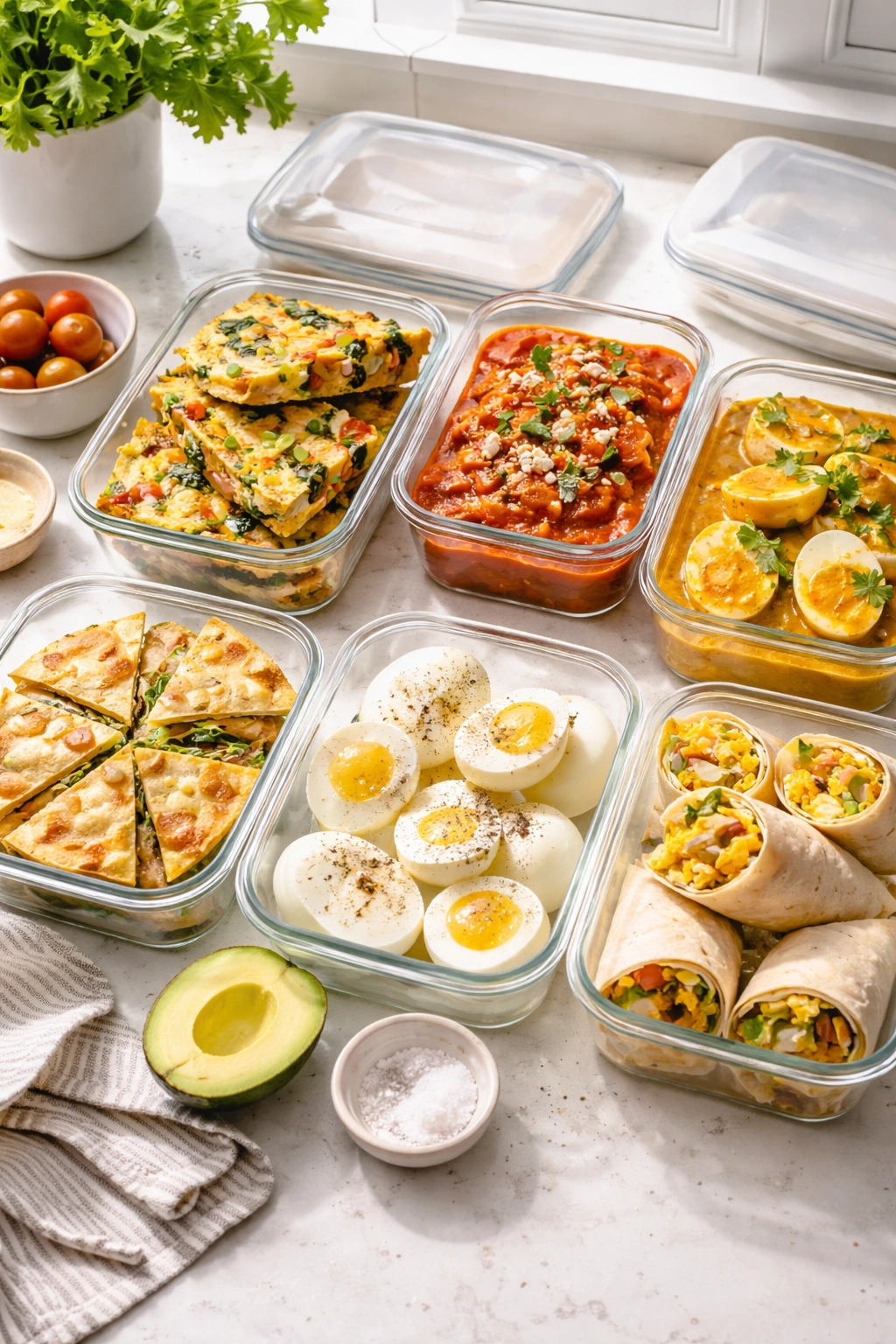
Understanding what can be made ahead and how transforms weekday mornings from stressful to simple.
Frittatas are genuinely better the next day — let them cool completely, cover, and refrigerate for up to four days. Slice and eat cold, or reheat gently in a low oven until warm. Spanish tortillas keep for three days and taste equally good warm or at room temperature. Shakshuka sauce can be made up to two days ahead and refrigerated; reheat gently and crack eggs into it just before serving. Thai egg curry keeps for three days and reheats beautifully — add the eggs when you reheat so they’re fresh and tender.
Hard-boiled eggs last up to a week in the fridge, but soft-boiled eggs are best eaten immediately. Pre-toast the soldiers for soft-boiled eggs and reheat them briefly just before serving if making ahead. Hollandaise doesn’t hold well beyond an hour, but it reheats gently over hot water without breaking.
Rice for fried rice should be cooked ahead and chilled completely so it doesn’t clump. Store it in the fridge for up to five days. Assemble and cook fried rice fresh every time for best results. The vegetables for frittata or Spanish tortilla can be cooked and cooled the night before; assemble with eggs and finish cooking when you’re ready to eat.
Final Thoughts
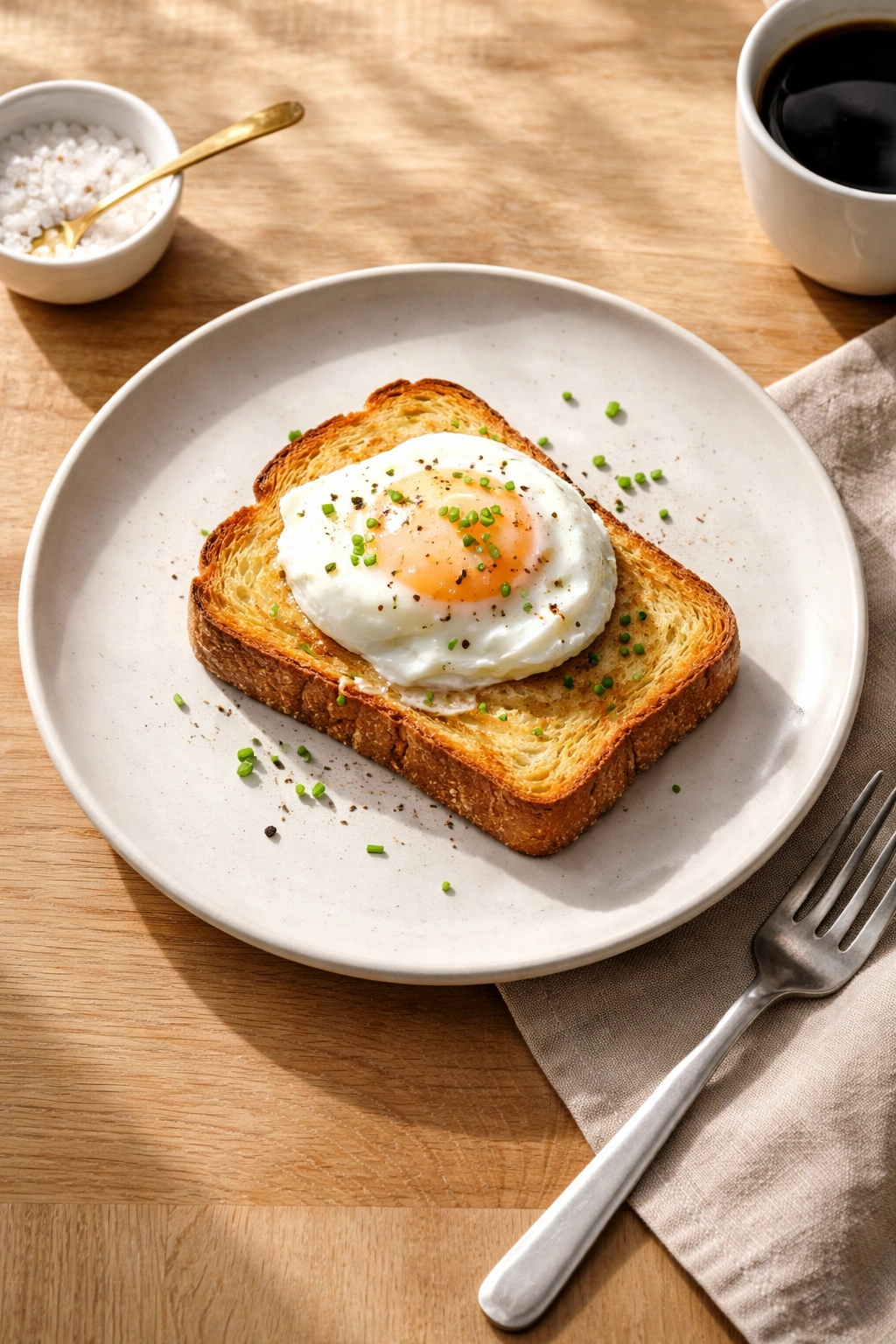
Breaking out of the scrambled-eggs rut doesn’t mean complicating breakfast. It means understanding a few core techniques and using them to explore different flavors and textures. An eggs Benedict teaches you to poach and make hollandaise — skills that transfer to other dishes. A shakshuka shows you how to build sauce and cook eggs in it. A frittata proves that oven-cooking eggs opens up entirely new possibilities.
The reality is that once you’ve made a couple of these dishes, the others become less intimidating. You realize that the techniques overlap, that most of the work is flavor-building and setup rather than active cooking. You also discover that eggs are genuinely forgiving if you understand the basics.
Pick one of these that genuinely excites you and make it this week. Don’t aim for perfect — aim for done. Once you’ve made it once, the second time becomes easier and faster. That’s when breakfast shifts from something you rush through to something you actually look forward to.
