



Managing diabetes doesn’t mean eating boring, repetitive meals that only you enjoy while the rest of your family faces a completely different dinner table. The challenge many people with diabetes face is finding meals that are genuinely good for blood sugar control and delicious enough that everyone — whether they’re managing diabetes or not — actually wants to eat them. When you’re cooking for a family, the last thing you need is to prepare two separate meals or deal with resistance from people who resent dietary restrictions.
The truth is, the best diabetic-friendly dinners aren’t special diabetes meals at all — they’re just thoughtfully balanced plates built on principles that happen to be excellent for everyone’s health. They emphasize lean proteins, plenty of vegetables, whole grains in appropriate portions, and healthy fats. These meals stabilize blood sugar, keep you feeling satisfied for hours, and taste so good that no one at the table feels like they’re eating “diet food.”
The dinners that work best for diabetes management share some key characteristics: they include a source of lean protein to prevent rapid blood sugar spikes, they’re loaded with non-starchy vegetables that add volume and nutrients without spiking glucose, they contain minimal refined carbohydrates, and they’re portion-controlled without feeling restrictive. When you build dinners this way, you’re not just managing blood sugar — you’re setting up your whole family for stable energy, better focus, and fewer afternoon or evening cravings.
What makes these eight dinners special is that they’re genuinely easy to prepare on weeknights, they don’t require exotic ingredients or complicated techniques, and they offer real flexibility for different tastes and preferences around your table. Each can be prepped ahead, customized to individual preferences, and scaled to feed however many people you’re serving.
1. Herb-Roasted Salmon with Roasted Vegetables
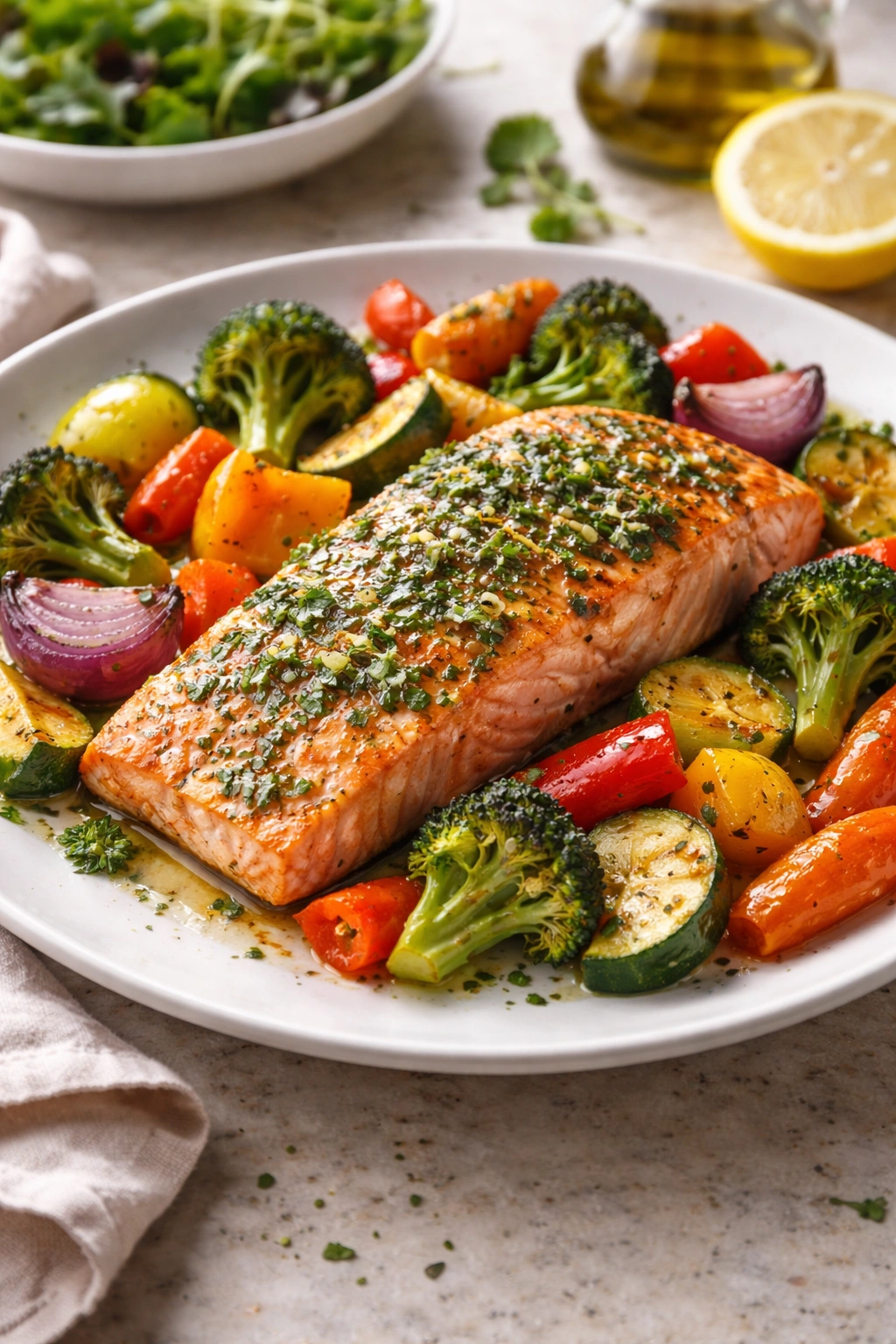
Salmon is one of the most diabetes-friendly proteins you can serve, and not just because of its low carbohydrate content. The omega-3 fatty acids in salmon have been shown to improve insulin sensitivity and reduce inflammation — both critical factors in blood sugar management. Beyond the metabolic benefits, salmon has a naturally rich flavor that makes this meal feel indulgent without any of the added sugars or refined carbs that derail glucose control.
This dinner comes together in about 35 minutes and requires minimal active time. The basic approach is simple: season salmon fillets with fresh herbs (dill, parsley, or tarragon work beautifully), a squeeze of lemon, and a drizzle of olive oil, then roast alongside a colorful mix of non-starchy vegetables. The vegetables do the heavy lifting nutritionally — they’re packed with fiber, which slows carbohydrate digestion and prevents blood sugar spikes.
The protein and vegetable combination: Plan for about 5 ounces of cooked salmon per person (roughly a medium fillet), roasted at 400°F for 12-15 minutes until the flesh is opaque and flakes easily. Pair it with at least two cups of roasted vegetables per person — think Brussels sprouts tossed in a bit of olive oil and garlic, bell peppers cut into chunks, zucchini spears, asparagus, or broccoli florets. The volume of vegetables ensures your family fills their plates with nutrient-dense food while keeping total carbohydrates moderate.
Roasting concentrates the vegetables’ natural flavors and brings out their sweetness without any added sugars. Toss everything on the same sheet pan with olive oil, salt, pepper, and whatever dried herbs you have on hand — this makes cleanup simple and means everything finishes cooking at the same time. The salmon finishes cooking right when the vegetables reach that perfect golden, slightly caramelized stage.
Make-ahead advantages: Salmon holds up beautifully in the refrigerator for up to three days, making this ideal for meal prep. You can portion it out with the roasted vegetables on Monday evening and have ready-to-eat dinner components waiting for you midweek. Simply reheat gently in a 325°F oven for about 8 minutes, just enough to warm through without drying out the fish.
Family-friendly tweaks: Kids who are skeptical about fish often enjoy salmon more than white fish because of its more assertive flavor and firmer texture. If you’re serving people with different vegetable preferences, just add more variety to the pan — everyone can choose their favorites. Serve with a side of cauliflower rice or a small portion of brown rice for family members who want a grain, while those managing diabetes can stick with extra vegetables.
2. Turkey and Black Bean Stuffed Bell Peppers
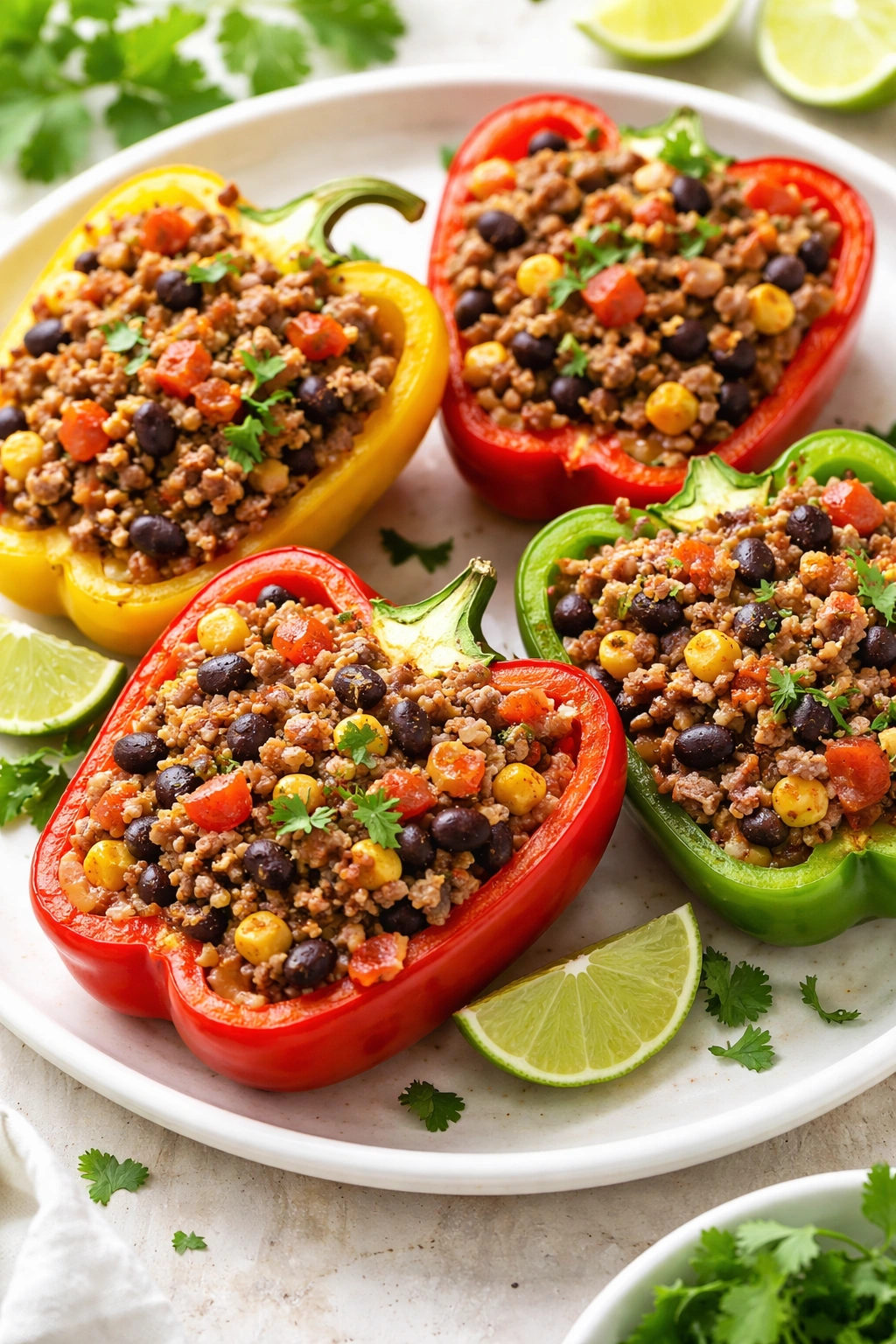
Stuffed peppers offer a built-in portion-control system — each pepper is its own neat serving, and the large volume of the pepper itself means you’re eating something satisfying and visually substantial without excessive calories or carbohydrates. The combination of lean ground turkey and black beans creates a protein-rich filling that keeps blood sugar stable while providing the umami satisfaction that makes this feel like comfort food rather than a diet meal.
Ground turkey is one of the leanest available proteins, and when you buy 93% lean or higher, you’re getting roughly 22 grams of protein with under 5 grams of fat per 3-ounce serving. Black beans, while they contain carbohydrates, are also rich in fiber and protein — a half-cup serving has about 8 grams of protein and 4 grams of fiber, making them a genuinely blood-sugar-friendly legume when portions are controlled.
Building the filling: In a large skillet, brown about a pound of ground turkey over medium-high heat, breaking it apart as it cooks. This takes about 8 minutes. Add diced onions and minced garlic, and sauté until soft (another 3-4 minutes). Stir in one can (15 ounces) of black beans (rinsed and drained), about a cup of diced tomatoes (fresh or low-sugar canned), and your choice of seasonings — cumin, chili powder, and oregano work beautifully here. Add a tablespoon of tomato paste for depth without excessive sugar. Let this simmer for about 5 minutes while you prepare the peppers.
Cut large bell peppers in half lengthwise and remove the seeds and white ribs. You’ll need four large peppers, which yields eight pepper halves — perfect for four people with two halves each. Lightly brush the peppers with olive oil and place them cut-side up in a baking dish with a half-inch of water in the bottom. Divide the turkey-bean mixture evenly among the pepper halves, then cover the dish with foil and bake at 375°F for 25-30 minutes, until the peppers are tender but still hold their shape.
Toppings and flavor: Just before serving, you can top each pepper with a small amount of shredded cheese (about a tablespoon of sharp cheddar or Mexican blend), which adds flavor without pushing carbohydrates too high. A fresh squeeze of lime juice and a scatter of fresh cilantro brighten the whole dish. These additions cost almost nothing nutritionally but make a dramatic difference in how satisfying the meal feels.
Feeding a varied family: This meal works beautifully for families with different dietary needs. Those managing diabetes can eat the peppers as they are, while others might want to serve theirs over a small scoop of rice or with cornbread on the side. The filling itself is so flavorful and substantial that even people who think they won’t like vegetables-as-the-main-event often become fans.
Make-ahead and freezing: You can assemble these peppers completely, cover them, and refrigerate for up to two days before baking. Even better, they freeze exceptionally well after cooking — they’ll keep for up to three months. Reheat from frozen by covering with foil and baking at 350°F for about 40 minutes until heated through.
3. Grilled Chicken Breast with Quinoa and Steamed Broccoli
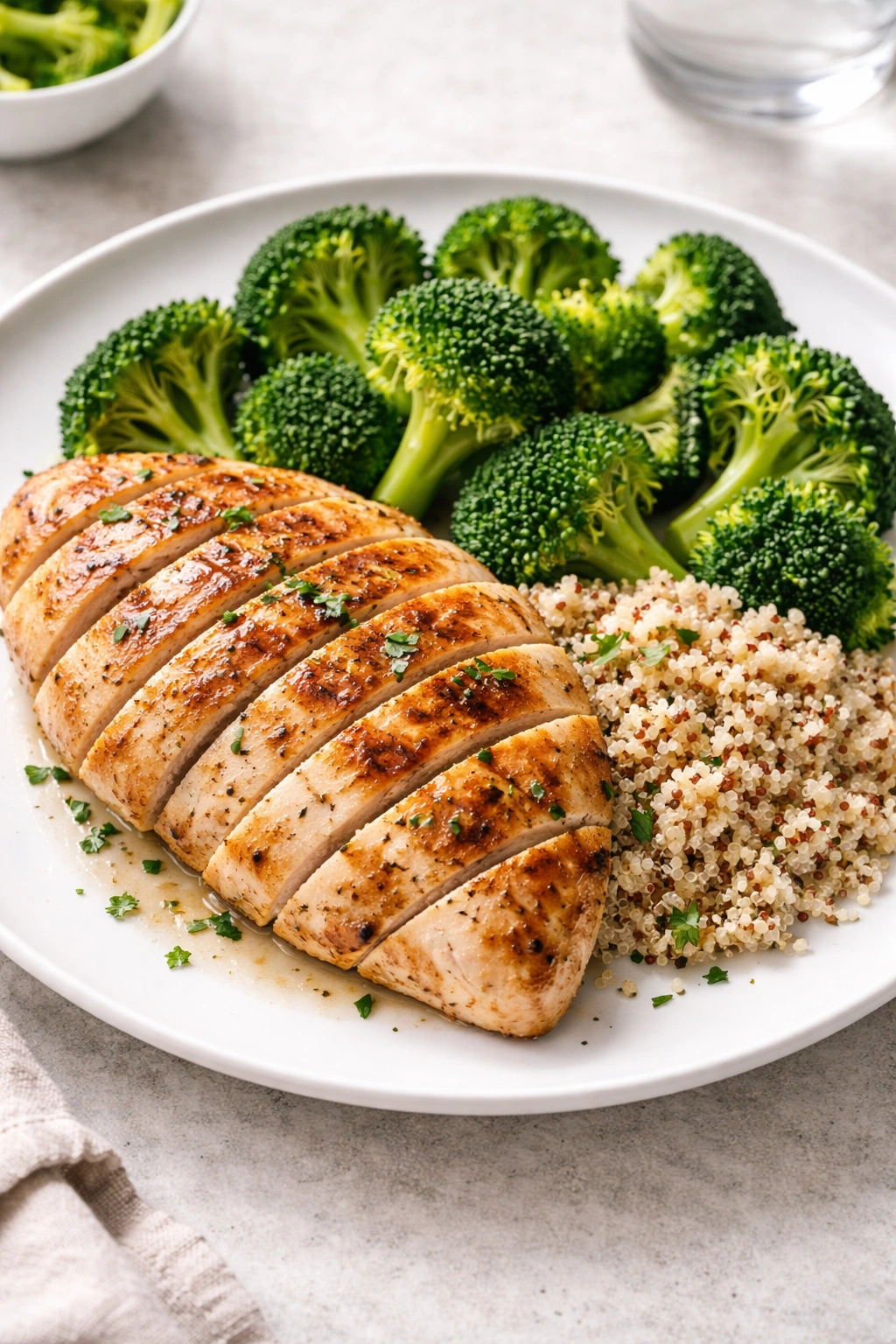
This might sound like the default “healthy dinner,” but when executed well, grilled chicken is anything but boring. The secret is in the marinade and the proper cooking technique that keeps the meat juicy instead of dry. Chicken breast is the leanest poultry option at about 26 grams of protein per 3-ounce serving with virtually no fat, making it essential protein for blood sugar management without adding unnecessary calories.
Quinoa gets included here not as the centerpiece of the plate but as a modest-sized grain component. A half-cup of cooked quinoa contains about 8 grams of protein and 4 grams of fiber, plus it’s a complete protein containing all nine essential amino acids — making it more nutritionally complete than rice or pasta. For someone managing diabetes, a quarter to half-cup serving provides enough of a grain component without tipping blood sugar, especially when paired with the substantial protein and vegetables on the plate.
The marinade makes the difference: Mix together about a quarter-cup of olive oil, the juice and zest of one lemon, three minced garlic cloves, a tablespoon of balsamic vinegar, and about a teaspoon of Dijon mustard. Add Italian herbs (dried oregano, basil, and thyme work well) and plenty of black pepper. Marinate the chicken for at least 30 minutes — ideally 2-4 hours if you have time. This does two things: it infuses the chicken with flavor so it tastes anything but plain, and the acid from the lemon and vinegar helps break down the protein fibers slightly, resulting in more tender meat.
Grill the chicken over medium-high heat for about 6-7 minutes per side for a medium breast (thickness matters here — try to select breasts that are a consistent thickness, or pound them to even thickness before marinating). Use an instant-read thermometer to check for doneness at 165°F internal temperature. Letting the cooked chicken rest for 5 minutes before serving keeps the juices inside the meat instead of on your plate.
The vegetable component: Steam fresh broccoli for about 4-5 minutes until it’s bright green and tender-crisp. Toss it immediately with a small amount of butter or olive oil, a squeeze of fresh lemon juice, and a sprinkle of garlic powder. This takes broccoli from something people tolerate to something they actually look forward to. Two cups of steamed broccoli per person provides roughly 7 grams of fiber and only about 14 grams of carbohydrates — making it an ideal vegetable for blood sugar stability.
Family flexibility: Cook the chicken, quinoa, and broccoli as described, then let people customize their plates. Those managing diabetes might skip the quinoa entirely or use just a small quarter-cup portion, while others can add more. Kids who are resistant to broccoli sometimes eat it more willingly when it’s part of a plate where the star protein (well-flavored chicken) is something they actually enjoy.
Make-ahead strategy: Marinate chicken the night before so it’s ready to grill when you walk in the door. Quinoa can be cooked several days ahead and reheated, or served at room temperature. Broccoli is actually wonderful at room temperature as well, making this an excellent meal for meal-prep containers.
4. Lean Ground Beef Tacos with Lettuce Wraps
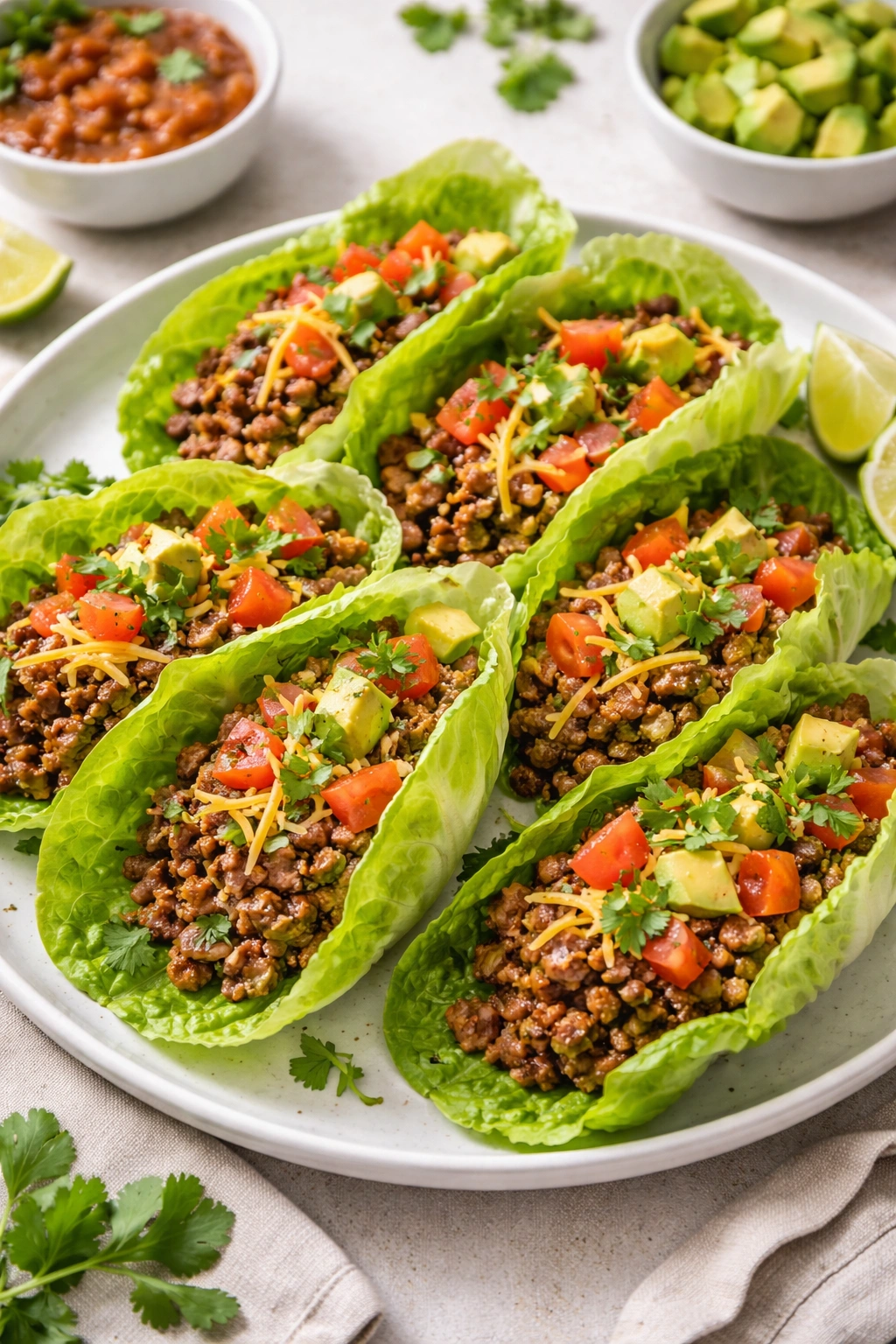
Tacos are universally loved, and the lettuce wrap version lets everyone participate in the meal without requiring special preparation. Using 93% lean ground beef keeps the saturated fat content reasonable while maintaining the satisfying, umami-rich flavor that makes taco night feel special. The key to keeping this diabetic-friendly is building the taco with lettuce or other low-carb wraps instead of tortillas, then letting family members customize their approach.
Ground beef is concentrated protein — about 22 grams per 3-ounce serving of 93% lean beef — and it satisfies cravings for rich, flavorful food in a way that sometimes lighter proteins don’t. The fat content is low enough that you’re getting nutrient density without excessive calories or saturated fat.
Preparing the meat and seasonings: Brown about a pound of 93% lean ground beef in a large skillet over medium-high heat, breaking it into small pieces as it cooks (about 8 minutes). Drain any accumulated fat if desired. Add a diced onion and two minced garlic cloves, cooking until fragrant and soft (about 3 minutes). Sprinkle in your seasoning: about two teaspoons of chili powder, one teaspoon of cumin, half a teaspoon of smoked paprika, a quarter-teaspoon of cayenne pepper (adjust to your heat preference), and a good pinch of salt and black pepper. Add about three tablespoons of tomato paste and a quarter-cup of beef broth or water, stirring well to combine. Let this simmer for about 5 minutes while the flavors meld and the liquid reduces slightly. This method is better than using a seasoning packet because you control the sodium and sugar content completely.
The lettuce wrap base: Large butter lettuce or romaine lettuce leaves become the taco vessels. They’re sturdy enough to hold the filling, create a satisfying eating experience, and add a mild, fresh flavor that complements the seasoned beef. Place several leaves on each plate. For family members who want traditional tacos, warm some small whole-wheat or corn tortillas to serve alongside.
Build-your-own taco bar: Set out the seasoned beef, lettuce leaves, and various toppings in separate bowls so everyone can customize. Include diced tomatoes, shredded cheese (sharp cheddar or Mexican blend), sliced avocado, diced red onion, fresh cilantro, and salsa. This approach means that people managing diabetes can load up on vegetables and limit higher-carb additions, while others can include rice or beans if they want them.
The toppings that matter: Avocado deserves special mention here because it’s one of the few foods that people with diabetes can eat generously. Half an avocado has about 12 grams of fat (the healthy, monounsaturated kind), 6 grams of fiber, and only 6 grams of carbohydrates. It makes the meal incredibly satisfying while actually improving blood sugar response. A quarter-cup of shredded sharp cheese adds flavor without needing large amounts, keeping calories reasonable.
Make-ahead ease: The beef mixture keeps beautifully in the refrigerator for three days and reheats quickly in a skillet with a splash of broth to restore moisture. You can cook it earlier in the day and let your family assemble their own tacos when dinner arrives — which actually increases their enjoyment because they’re involved in building their meal.
5. Baked White Fish with Lemon and Herb Crust
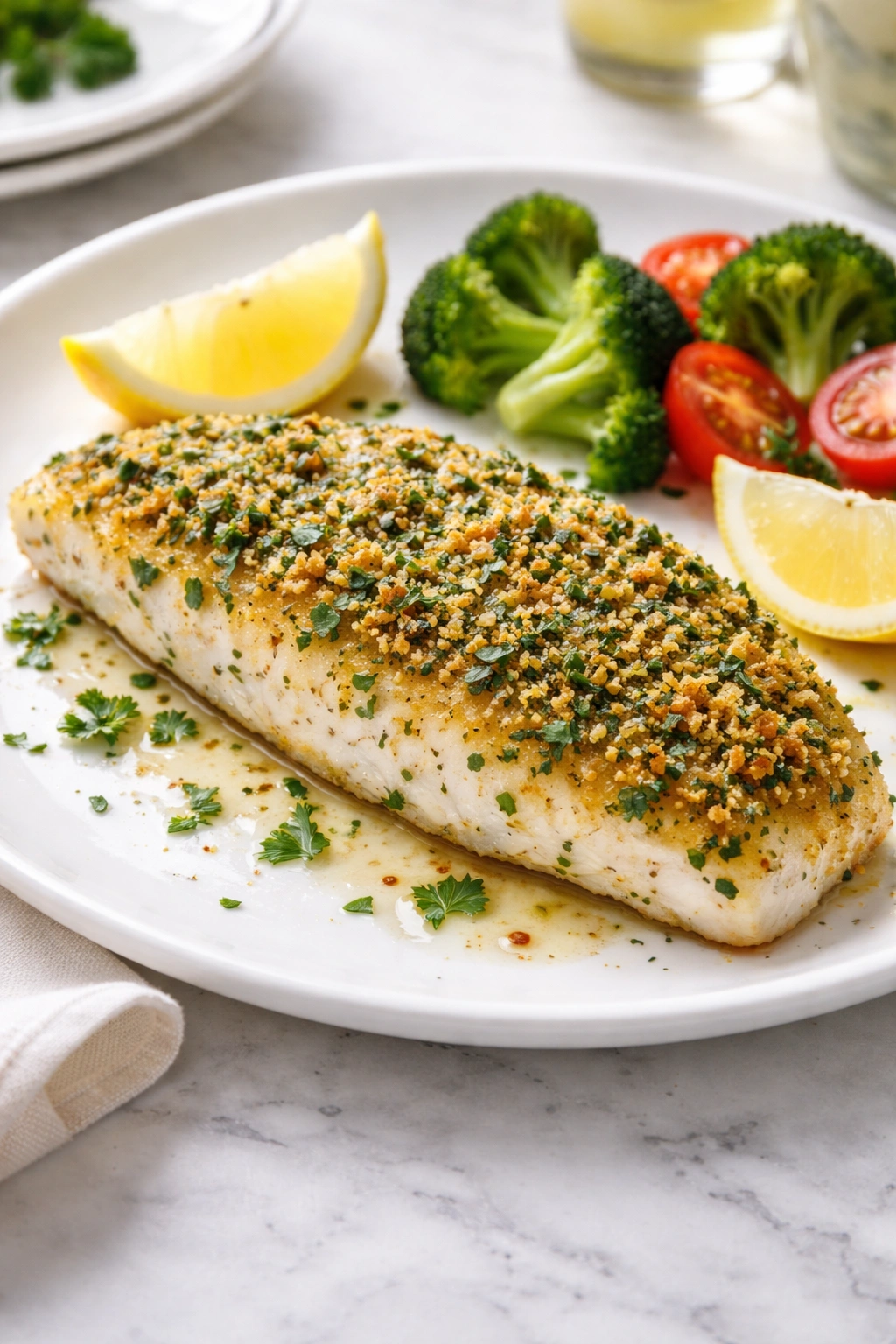
White fish like cod, halibut, or sea bass offers a lighter alternative to salmon while still providing excellent lean protein with virtually no carbohydrates. At about 20 grams of protein per 3-ounce serving with less than 1 gram of fat, white fish is as close to pure protein as you can get. The delicate flavor means it pairs beautifully with bright seasonings, and a crust made from crushed nuts and herbs adds texture and prevents the fish from drying out during cooking.
The crust is what transforms this from plain white fish into something genuinely craveable. It protects the delicate meat, seals in moisture, and adds flavor in every bite. The nuts in the crust add healthy fats and create a satisfying crunch that makes the meal feel more substantial than it actually is, calorically speaking.
Making the herb crust: Pulse about one cup of almonds (or a mixture of almonds and walnuts) in a food processor until you have a coarse crumb texture — not so fine that it becomes nut butter, but smaller than whole nuts. Mix this with a quarter-cup of grated Parmesan cheese, about a teaspoon of lemon zest, a tablespoon of fresh parsley (or a teaspoon of dried), and a teaspoon of fresh thyme (or half a teaspoon of dried). Add a pinch of salt and black pepper. Place this mixture on a shallow plate.
Pat the fish fillets dry with a paper towel, then lightly brush both sides with olive oil. Press the flesh side of each fillet into the nut-herb mixture, coating evenly. You want the crust to stick to the fish, so don’t worry about being delicate. Place the fillets crust-side up on a parchment-lined baking sheet and bake at 400°F for 12-15 minutes, depending on the thickness of your fillets. The fish is done when it flakes easily with a fork and the internal temperature reaches 145°F at the thickest part.
Supporting vegetables: Serve with roasted or steamed vegetables. Thin asparagus spears roasted alongside the fish take about the same amount of time and require almost nothing — just a drizzle of olive oil, salt, pepper, and a squeeze of lemon juice at the end. You could also roast a combination of vegetables like green beans, zucchini, and red bell pepper slices on the same sheet pan as the fish, creating a one-pan meal that’s simple to clean up.
Flavor additions: A squeeze of fresh lemon juice over the finished fish just before serving brightens everything immediately. Some people love a small dollop of tartar sauce made with Greek yogurt instead of traditional mayonnaise — about a quarter-cup of plain Greek yogurt mixed with a tablespoon of finely minced dill pickles, a teaspoon of lemon juice, and a pinch of salt. This adds flavor without the refined carbohydrates of traditional tartar sauce.
Why families enjoy it: The crust makes the fish exciting rather than something people approach with skepticism. Even family members who claim they don’t like fish often enjoy it prepared this way because the crust is genuinely delicious. The meal cooks quickly (about 20 minutes from start to finish), making it perfect for weeknights when time is tight.
Storing and reheating: Baked white fish keeps for three days in the refrigerator and can be eaten cold or gently reheated. It doesn’t reheat quite as beautifully as salmon does (the texture can become slightly dry), so this is best eaten within a day or two of cooking.
6. Vegetable Stir-Fry with Tofu or Lean Chicken
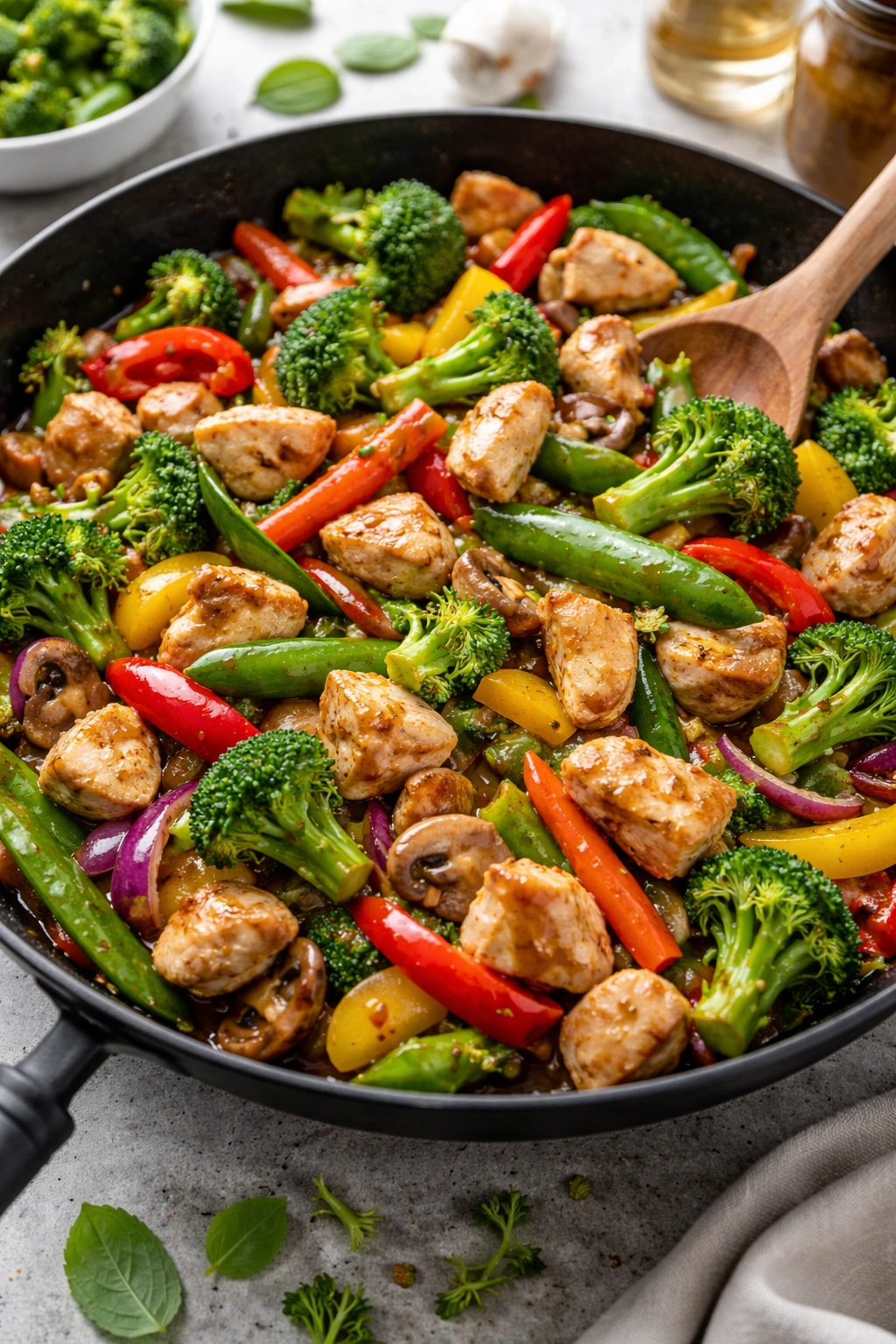
Stir-fry is one of the best possible dinner formats for blood sugar management because it naturally incorporates large volumes of vegetables with a modest amount of protein and minimal added fat or sugar. The quick, high-heat cooking preserves the vegetables’ nutrient content while keeping their texture crisp and appealing. You can easily control what goes into each person’s bowl, making this ideal for families with different preferences and dietary needs.
The traditional stir-fry sauce in most restaurants is packed with sugar and cornstarch, which would sabotage blood sugar control. Making your own sauce takes three minutes and costs almost nothing, while giving you complete control over the sugar content. You’ll want a combination of savory, slightly acidic, and umami flavors: soy sauce provides salt and umami, rice vinegar provides acidity and brightness, ginger and garlic provide aromatic heat, and a small amount of honey or a sugar substitute can add a touch of sweetness that highlights the vegetables rather than dominating the flavor profile.
The sauce (for 4 servings): Whisk together three tablespoons of low-sodium soy sauce, two tablespoons of rice vinegar, one tablespoon of sesame oil, two minced garlic cloves, about a teaspoon of minced fresh ginger, and a teaspoon of cornstarch (which helps thicken the sauce). Skip the sugar entirely, or add just a teaspoon of honey if you prefer slight sweetness. Cornstarch is used here in a small amount to thicken the sauce that coats the vegetables, not as a thickening agent for large quantities of liquid that would spike blood sugar significantly.
Preparing the vegetables: Use a combination of whatever vegetables look fresh and appealing: broccoli florets, thinly sliced bell peppers (red, orange, or yellow for visual appeal), snap peas, baby bok choy, sliced mushrooms, thin asparagus pieces, and shredded carrots. You want at least 5-6 cups of vegetables total for four servings, which means about 1.5 cups of vegetables per person — this volume ensures fullness and satisfaction.
Chop everything into bite-sized pieces before you start cooking, because stir-frying happens quickly. The vegetables should be about the same size so they cook evenly. Have everything prepped and within arm’s reach of your cooking surface, along with your sauce in a small bowl.
The cooking technique: Heat about a tablespoon of neutral oil (vegetable or peanut oil) in a large skillet or wok over medium-high to high heat until it shimmers. Working in two batches if necessary (overcrowding the pan drops the temperature), add your vegetables and stir-fry for about 5-7 minutes, stirring almost constantly, until they’re tender-crisp. The vegetables should retain some crunch and bright color — you’re not cooking them into softness. Transfer the cooked vegetables to a plate.
Add a bit more oil if needed, then cook your protein. If using cubed tofu (about 14 ounces extra-firm, pressed and cubed), let it sit in the pan for a minute or two per side to develop a light golden crust before stirring. If using chicken, slice a breast thinly (about a quarter-inch thick) and cook for 2-3 minutes per side until opaque throughout. Return the vegetables to the pan along with your sauce, toss everything together over the heat for about a minute until the sauce coats all the components and thickens slightly, then serve immediately.
Serving options: This stir-fry can be served over a small portion of brown rice or cauliflower rice for someone managing diabetes, or over regular white rice for others. Some people enjoy rice, others prefer eating the stir-fry as a standalone bowl with a modest base of rice, and others skip the rice entirely. The beauty of stir-fry is that the vegetables are so flavorful and substantial that the meal doesn’t require a grain base to be satisfying.
Make-ahead advantage: You can prep all the vegetables hours ahead of cooking, storing them in separate containers. When dinner time arrives, you just need about 10 minutes of cooking time, making this perfect for busy weeknights.
7. Turkey Meatballs with Zucchini Noodles and Marinara
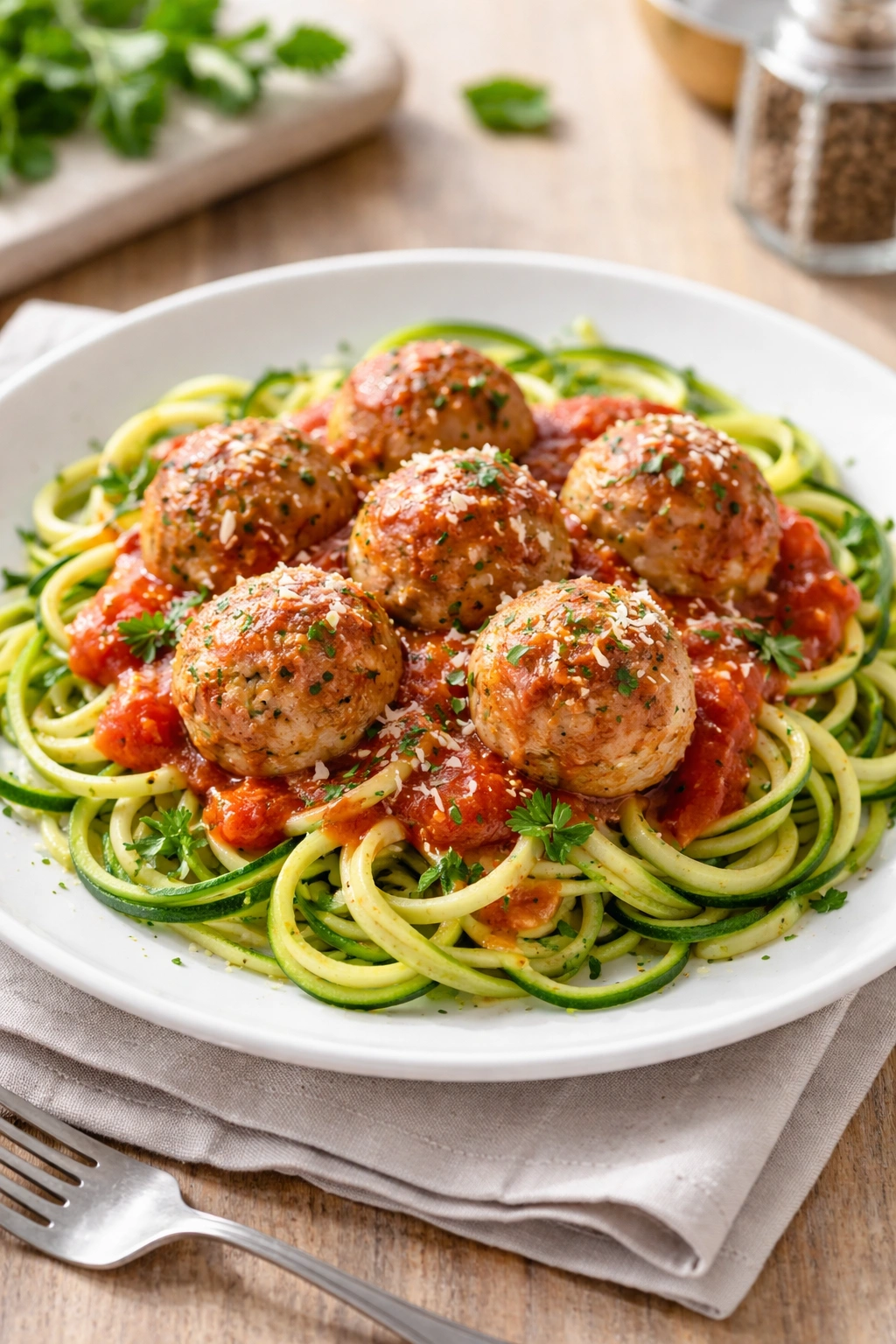
Ground turkey meatballs are lean, satisfying, and freeze beautifully, making this meal one of the most practical for meal prep and busy families. The traditional spaghetti and meatballs is transformed here by replacing pasta with zucchini noodles — a swap that slashes carbohydrates without sacrificing the meal’s familiar, comforting character. Zucchini noodles (spiralized or ribboned) are about 95% water and nearly zero grams of carbohydrates per serving, making them an ideal base for someone managing blood sugar while still providing the visual and textural satisfaction of a pasta dish.
The secret to turkey meatballs that don’t taste lean and dry is incorporating a binder and enough seasoning that they taste intentional rather than like diet food. Eggs and a small amount of finely grated Parmesan cheese (plus a splash of milk) bind the meatballs, while Italian herbs and garlic provide the flavor that makes them crave-worthy.
Making the meatballs: In a large bowl, combine a pound of 93% lean ground turkey, one egg, a quarter-cup of grated Parmesan cheese, a quarter-cup of plain Greek yogurt or milk, about a third-cup of finely grated zucchini (for moisture and nutrition), two minced garlic cloves, a tablespoon of finely chopped fresh parsley (or a teaspoon of dried), a teaspoon of dried oregano, a teaspoon of dried basil, and a pinch of salt and black pepper. Mix gently with your hands until just combined — don’t overwork the mixture or the meatballs become dense.
Form into about 24 meatballs (about the size of walnuts). You can cook them immediately or refrigerate them in a covered container for up to a day, or freeze them on a sheet pan before transferring to a freezer bag for up to three months.
Cooking the meatballs: Lightly brush a large rimmed baking sheet with olive oil, then place the meatballs on it in a single layer. Bake at 400°F for about 18-20 minutes, stirring halfway through, until they reach an internal temperature of 165°F. They’ll develop slightly golden edges while staying moist inside. This baking method is easier than pan-frying because you avoid having to manage them carefully on the stovetop, and you can make a full batch without needing to work in multiple batches.
The sauce matters: Simmer your meatballs in a good-quality marinara sauce (about 24 ounces for 4 servings). Check the sauce label — you want one with no added sugar, or minimal added sugar. Many brands actually don’t add any sugar at all, relying instead on the natural sweetness of the tomatoes. Let the meatballs simmer in the sauce for about 10 minutes, which melds the flavors and finishes cooking the meatballs through.
Preparing zucchini noodles: If you have a spiralizer, you can make zucchini noodles fresh just before serving — they only need about a minute or two of cooking in a skillet with a tiny bit of oil over medium-high heat, just until they soften slightly and some of their water evaporates. If you don’t have a spiralizer, you can buy pre-spiralized zucchini noodles (often in the refrigerated or frozen produce section), or simply use a vegetable peeler to create ribbons. Toss the cooked noodles with a small amount of olive oil, salt, and a squeeze of lemon juice.
Plating it together: You can serve the meatballs and sauce over the zucchini noodles, or keep them separate so people can choose how much noodle base they want. Finish with a scatter of fresh basil and a sprinkle of Parmesan cheese. For family members who want traditional pasta, you can serve the meatballs and sauce with a half-cup portion of whole-wheat or regular pasta, keeping everyone happy on the same plate structure.
The freezing advantage: These meatballs are one of the most freezer-friendly components you can make. Uncooked meatballs keep for up to three months, or you can freeze them after cooking in a container with the sauce. This means on a night when cooking feels impossible, you can pull out a frozen container, reheat it gently, prepare zucchini noodles, and have dinner on the table in 15 minutes.
8. Grilled Portobello Mushroom Steaks with Roasted Root Vegetables
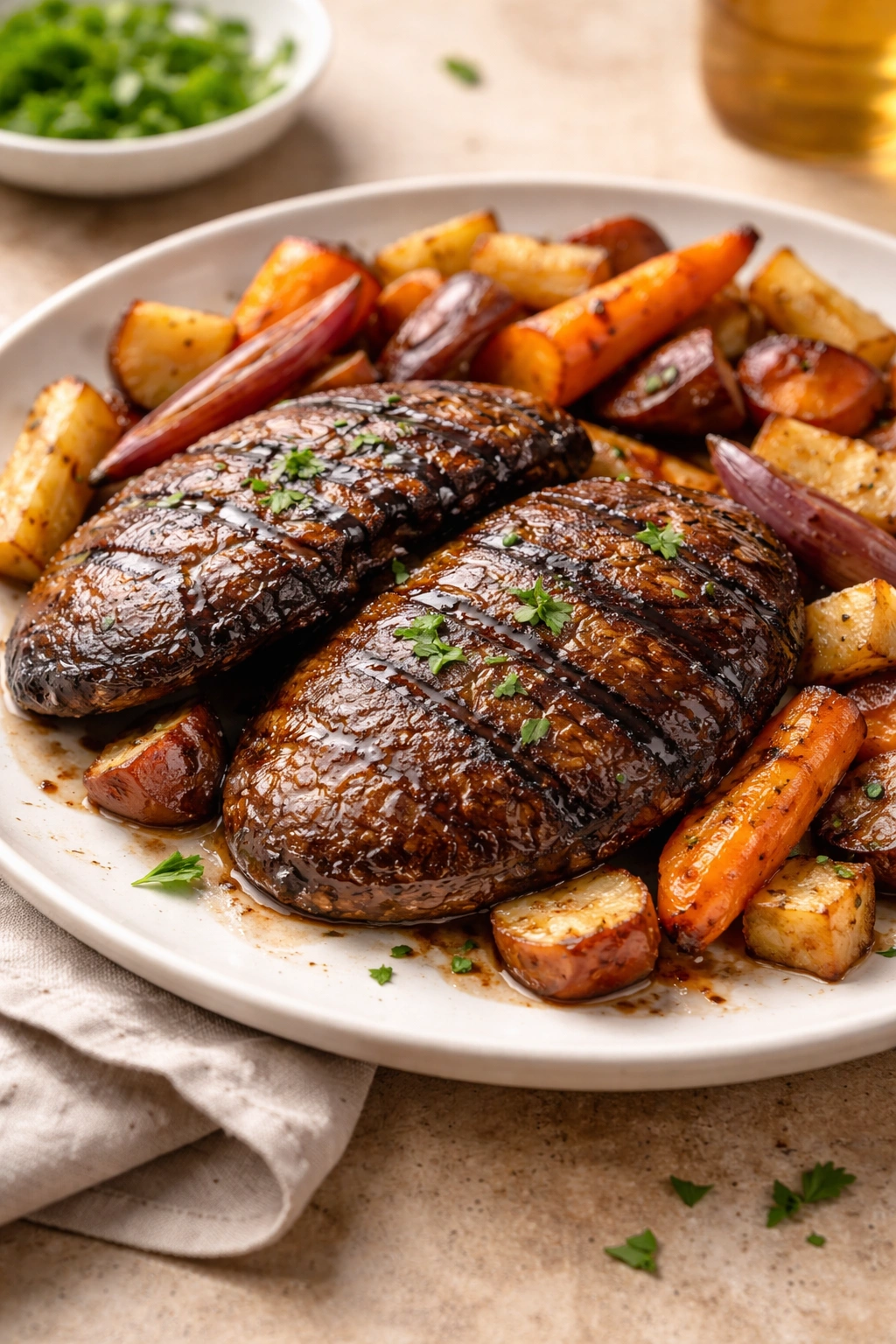
Even families with non-vegetarians appreciate this meal because Portobello mushrooms have a meaty texture and umami-rich flavor that satisfies in a way that lighter vegetables don’t. A large Portobello cap has the heft and substance of a grilled steak, making this an especially good option for the vegetarians, pescatarians, or vegans in your family while also offering a lower-calorie, high-nutrient-density option for anyone managing diabetes.
Portobello mushrooms are about 93% water and contain only about 4 grams of carbohydrates per cup, making them nearly negligible from a blood sugar perspective while providing genuine satisfaction. They’re rich in B vitamins, potassium, and selenium. When you remove the dark gills from underneath and brush the caps with oil, then grill them, they develop a beautiful caramelized exterior while staying tender inside — almost exactly the texture of a grilled portobello steak at a high-end restaurant.
Preparing the mushrooms: Select 4 large Portobello caps (one per person). Remove the stem and scrape away the dark gills using a sturdy spoon — this prevents them from releasing water during cooking and becoming soggy. Brush both sides generously with olive oil, then season with salt and pepper. Optional: brush with a balsamic glaze (just a tablespoon of balsamic vinegar mixed with a teaspoon of honey or a sugar substitute, reduced in a small saucepan for a minute or two).
Grill them over medium-high heat for about 5 minutes per side, until they develop grill marks and are tender when pierced with a fork. They release some liquid as they cook, which is normal. Transfer to a serving plate and drizzle with any accumulated juices from the grill.
The roasted vegetables: Prepare a mix of root vegetables that roast beautifully: carrots cut into thin spears (about the thickness of a pencil), celery root or celeriac cut into roughly one-inch cubes, Brussels sprouts halved lengthwise, and small parsnip pieces. Toss everything with olive oil, salt, pepper, and a sprinkle of dried thyme or rosemary. Spread in a single layer on a baking sheet.
Roast at 425°F for about 25-30 minutes, stirring halfway through, until the vegetables are golden and tender at their edges. Root vegetables have more carbohydrates than non-starchy vegetables, but they’re still reasonable for blood sugar management — a cup of roasted mixed root vegetables has about 20 grams of carbohydrates plus 4 grams of fiber, making them worthy of a place on the plate, just in a modest portion.
Finishing touches: Top each mushroom steak with a small handful of fresh arugula and a squeeze of fresh lemon juice just before serving. The contrast between the warm, tender mushroom and the peppery, fresh arugula is genuinely delicious. You could also crumble a small amount of goat cheese over the top (about a tablespoon), which adds richness and flavor without excessive calories.
Why the whole family enjoys it: Mushrooms have umami richness that satisfies deeply. People who imagine they won’t like a vegetarian dinner often become enthusiasts when they try properly prepared Portobello mushrooms. The roasted root vegetables are sweet enough to appeal to people who worry that vegetable-forward meals lack interest, while still being nutritionally appropriate for diabetes management. The meal requires no special cooking equipment and comes together quickly.
Make-ahead strategy: Both the mushrooms and roasted vegetables can be prepared a day ahead and served at room temperature, or gently reheated. This makes it one of the easiest meal-prep options for busy families.
Final Thoughts

Building satisfying, diabetes-friendly dinners that your whole family actually looks forward to comes down to a simple principle: prioritize whole, nutrient-dense foods, include plenty of vegetables, control your portions of grains and starches, and season everything generously so the food tastes genuinely delicious rather than like a diet meal. When you focus on these elements, blood sugar management becomes a side effect of eating well rather than a burden that requires constant willpower.
The eight dinners described here aren’t prescriptive — you’re not locked into eating them in any particular order or even eating all eight. Instead, they’re templates that you can adapt endlessly based on what’s in your refrigerator, your family’s preferences, and what cooking time you actually have available. The salmon might become halibut. The turkey meatballs might become chicken meatballs. The vegetables in the stir-fry change with the seasons. The principle remains consistent: quality protein, abundant vegetables, measured grains, and flavoring that makes people want to eat the meal.
What makes these meals work long-term is that they don’t feel restrictive. Nobody at your table feels like they’re eating “diabetic food.” Instead, they’re eating appealing, well-prepared meals that happen to be excellent for blood sugar management. That shift in mindset — from restriction to abundance — is what allows people to sustain these eating patterns not just for weeks but for years. Your family eats well because the food is genuinely good, not because they’re forcing themselves through meals that feel like punishment. That’s when real, lasting change happens.
