



The Mediterranean diet has earned its reputation as one of the world’s healthiest eating patterns, and for good reason — but it’s not just about sit-down meals. The real magic happens in the snacks. Unlike processed alternatives loaded with added sugars and artificial ingredients, Mediterranean snacks celebrate whole foods: nuts, fruits, legumes, vegetables, and healthy fats. They’re designed to satisfy cravings while actually nourishing your body, and most require minimal preparation. Whether you’re grabbing something between meals, feeding guests, or packing lunch boxes, these eight snacks deliver authentic Mediterranean flavors without the fuss.
The beauty of eating the Mediterranean way is that snacking becomes an extension of the lifestyle, not a guilty detour from it. These aren’t restrictive or complicated — they’re foods you’ll actually crave, made from pantry staples you probably already have on hand. Many can be prepped in bulk on a quiet Sunday and grabbed all week. Others come together in five minutes flat. The focus here is on real food, simple combinations, and flavors that celebrate the sun-soaked regions around the Mediterranean coast.
Let’s explore eight snacks that capture the essence of Mediterranean eating while fitting seamlessly into your everyday routine. Each one balances protein, healthy fats, and fiber in a way that keeps you satisfied without the energy crashes that follow most conventional snacks. You’ll find yourself reaching for these instead of ultra-processed alternatives — and discovering that eating well doesn’t have to be complicated or time-consuming.
1. Hummus with Fresh Vegetables
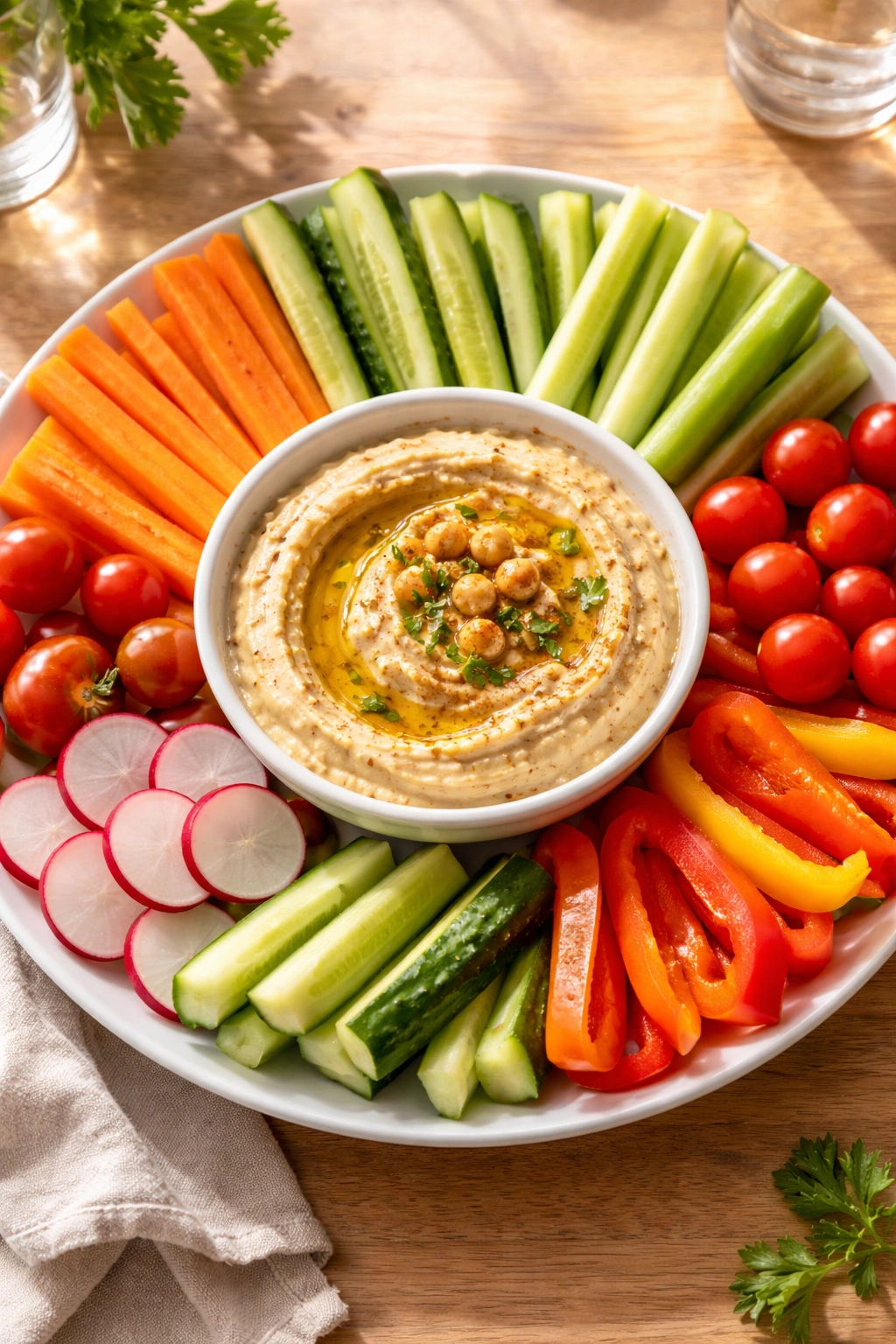
Hummus sits at the heart of Mediterranean snacking culture. This creamy dip made from chickpeas, tahini (sesame paste), lemon juice, and garlic delivers a combination of plant-based protein and healthy fats that actually keeps you satisfied between meals. Store-bought hummus works fine when you’re busy, but homemade hummus tastes noticeably fresher and takes only a food processor and about five minutes to prepare.
The magic of hummus as a snack isn’t just its nutritional profile — it’s its versatility. A single batch pairs beautifully with crisp vegetables that require zero preparation: carrots, bell peppers, cucumbers, celery, radishes, and cherry tomatoes. Unlike chips or crackers, these vegetables add volume and fiber without sending your blood sugar on a spike-and-crash roller coaster. You’ll feel fuller longer on fewer calories.
Why It’s a Mediterranean Staple
Chickpeas are a cornerstone of Mediterranean eating, packed with fiber and plant-based protein that makes this snack genuinely satisfying. The tahini adds a subtle richness and brings along its own minerals, particularly calcium and magnesium. Lemon juice doesn’t just brighten the flavor — the acidity helps your body absorb iron from the chickpeas more efficiently. This isn’t accidental — it’s how Mediterranean eating works, with ingredients that complement each other nutritionally as well as in taste.
How to Use It for Maximum Variety
- Pair with raw vegetables for a traditional approach
- Drizzle a spoonful over roasted chickpeas for textural contrast
- Spread on whole grain pita and layer with cucumber and herbs
- Use as a base layer on your snack board, surrounded by olives and cheese
- Mix into Greek yogurt for a creamy dip that stretches further and adds probiotics
Pro tip: Make your own hummus on Sunday and store it in an airtight container — it stays fresh for up to five days, making grab-and-go snacking effortless on busy weekdays.
2. Olives and Cheese Board
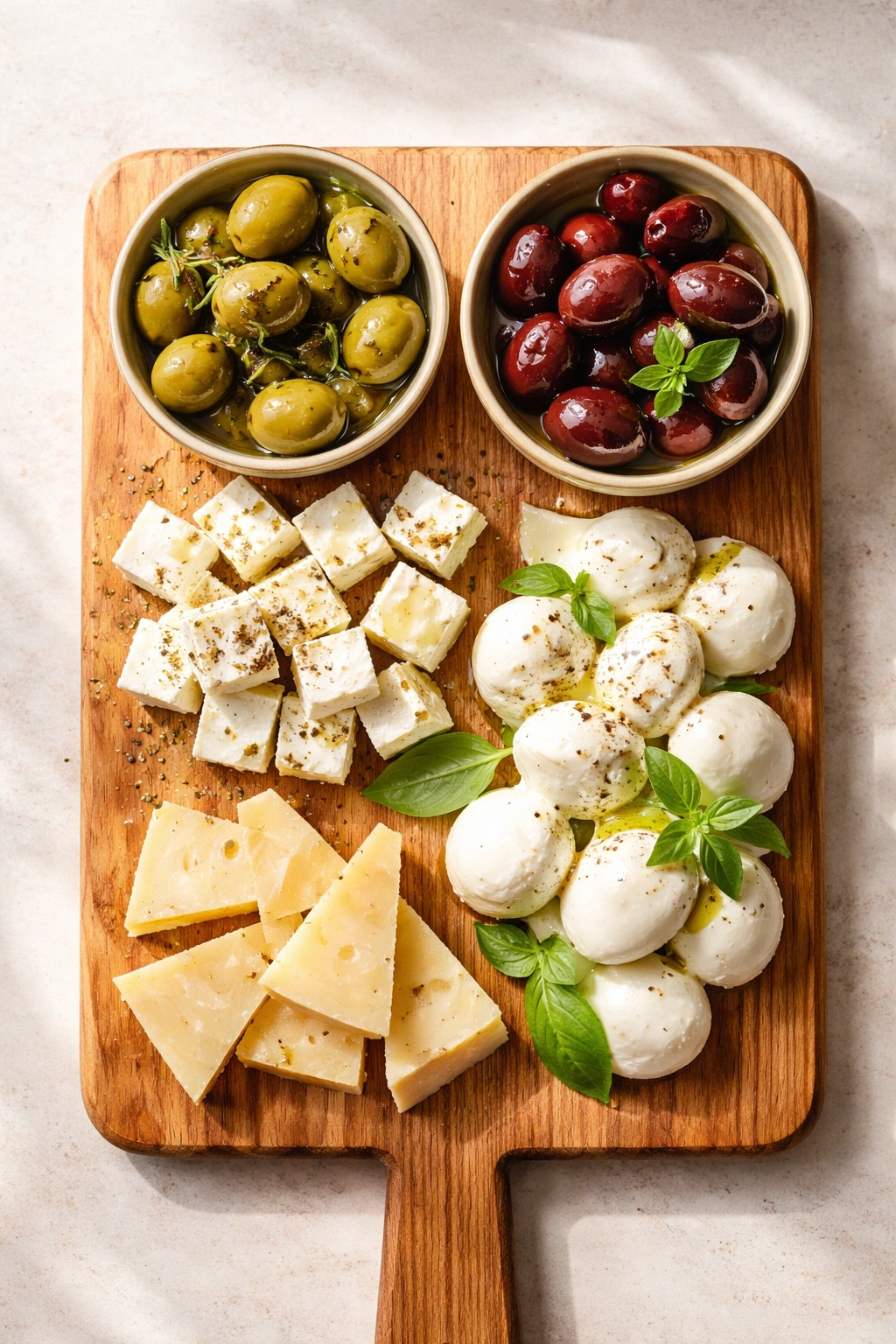
An olive and cheese pairing feels simultaneously simple and sophisticated — and it’s one of the easiest Mediterranean snacks to assemble. The salty brininess of quality olives balances perfectly against creamy cheese, whether you choose tangy feta, mild mozzarella, or nutty aged varieties. Together, they deliver satisfaction with practically no preparation required.
This snack works because it covers multiple nutritional bases. Olives bring heart-healthy monounsaturated fats and polyphenols (powerful antioxidants), while cheese adds protein, calcium, and fat-soluble vitamins. The combination is calorie-dense but nutrient-dense, meaning small portions genuinely satisfy. You’re not eating a large volume — you’re eating quality food that your body recognizes and uses efficiently.
Building Your Board
Keep a selection on hand rather than committing to a single type. Mix briny Kalamata olives with milder green olives — the contrast keeps the snack interesting. Choose 2-3 cheeses: one fresh and crumbly (feta), one creamy and mild (burrata or fresh mozzarella), and one aged and complex. This variety prevents flavor fatigue and means your board works for different moods and occasions.
What Else Goes With Them
- Small pieces of fresh fruit (grapes, figs, or pear slices) contrast beautifully with salty, briny elements
- Whole grain crackers or toasted pita chips add structure without overwhelming the delicate flavors
- Fresh herbs like oregano, basil, or thyme scattered across the board add Mediterranean authenticity
- A tiny drizzle of quality olive oil ties everything together and adds richness
- Roasted nuts (almonds or walnuts) bring textural variety and additional protein
Worth knowing: Buy olives from the bulk bin when possible — they cost less and taste fresher than pre-packaged versions. Store them in the brine they came in (or make a simple brine with water, salt, and vinegar) and they’ll keep for weeks in the refrigerator.
3. Whole Grain Pita with Za’atar
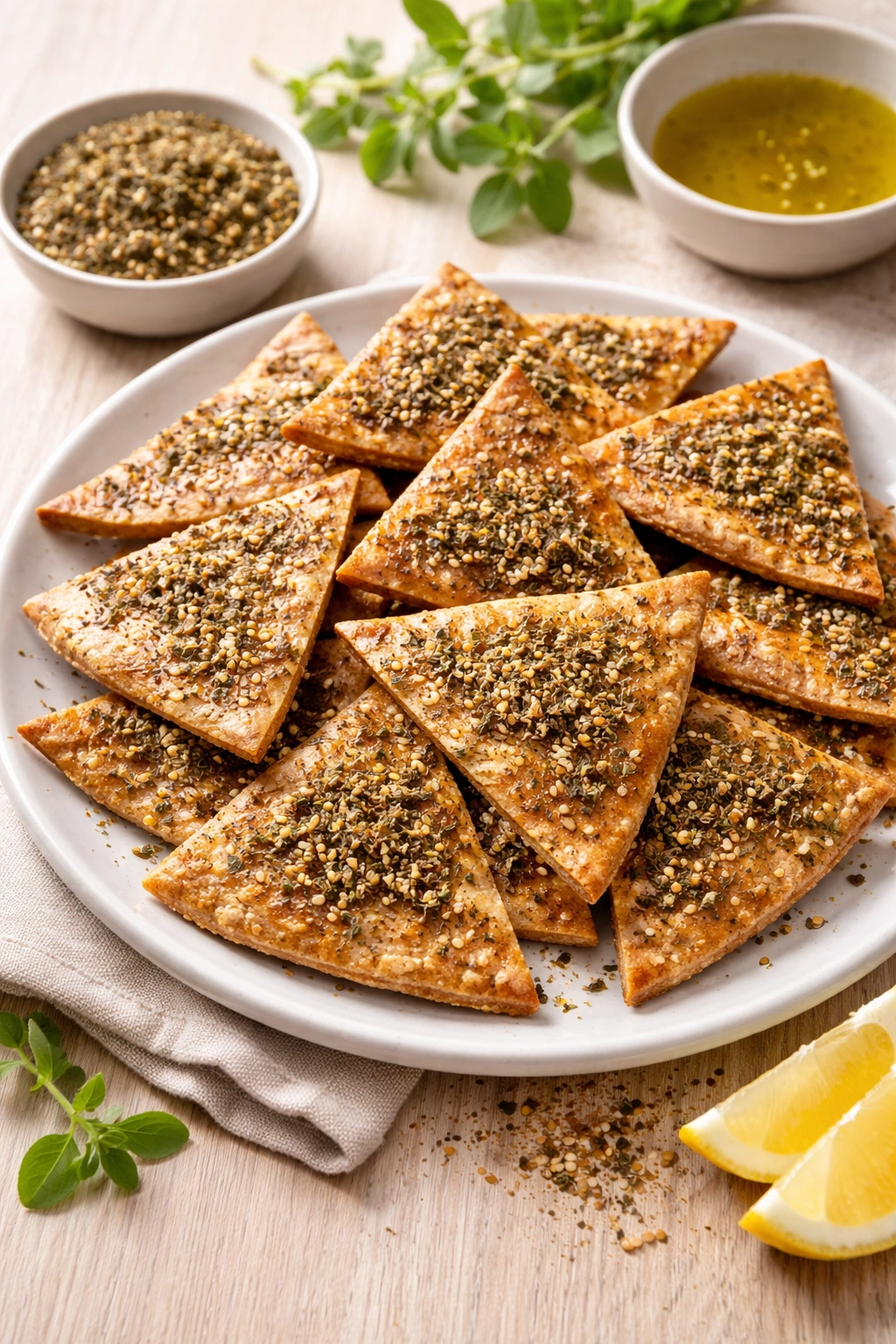
Za’atar is a Middle Eastern spice blend that brings everything together — tangy sumac, toasted sesame seeds, dried herbs like thyme and oregano, and salt. When you brush whole grain pita with olive oil, sprinkle it generously with za’atar, and toast it, you get crispy, flavor-packed wedges that taste like you spent an hour in the kitchen. The reality? Five minutes, start to finish.
This snack satisfies in multiple ways. The whole grain provides sustained energy from complex carbohydrates and fiber. The olive oil delivers fat-soluble vitamins and promotes satiety. The za’atar brings fascinating flavor complexity and the dried herbs contribute additional antioxidants. It’s the Mediterranean equivalent of seasoned crackers, but infinitely better for your body.
The Za’atar Technique That Changes Everything
Don’t just sprinkle za’atar on your pita — mix it with olive oil first. A ratio of roughly three parts za’atar to one part olive oil creates a paste that clings to the bread and distributes flavor evenly. Brush this mixture over your pita, slice it into triangles or strips, and toast at 375°F for about six minutes until the edges curl slightly and the bread is crispy throughout.
Why This Snack Stays Interesting
- Make a fresh batch whenever you want — it takes literally five minutes
- Experiment with different pita types: whole wheat, sprouted grain, multigrain
- Add crumbled feta or a drizzle of tahini before serving for extra richness
- Pair with hummus, baba ghanoush, or whipped feta for a more substantial snack
- Keep plain toasted pita chips in a container and sprinkle za’atar fresh when you want to eat them (prevents sogginess)
Quick fact: Sumac, the tangy ingredient that defines za’atar’s flavor, contains the same polyphenols found in green tea — powerful antioxidants that support heart health and reduce inflammation.
4. Mezze Platter Components
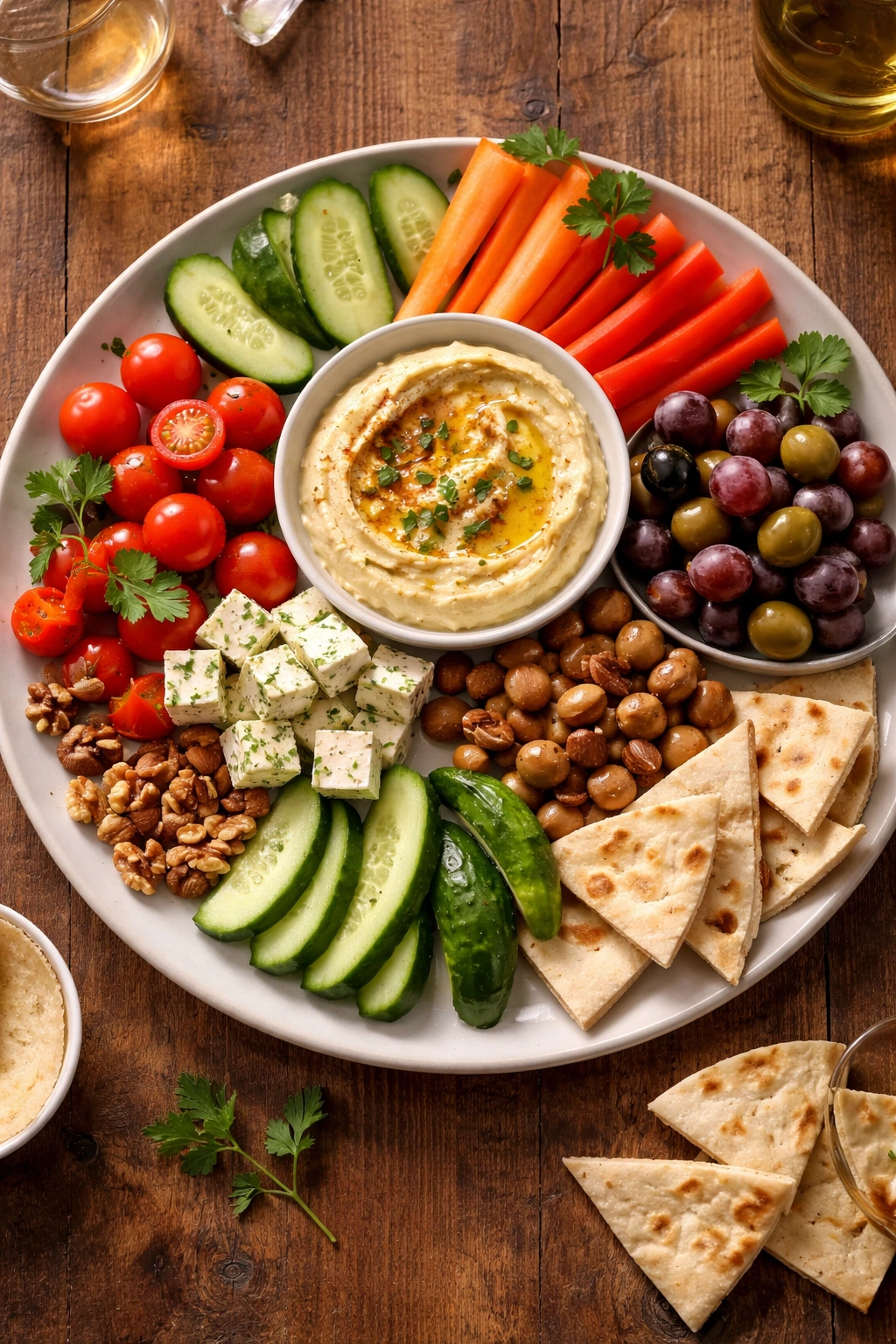
A mezze platter takes the concept of snacking and elevates it into something almost celebratory. Rather than one snack, you’re assembling a collection of small, flavorful components that work individually and together. The beauty here is flexibility — you build your platter based on what you have available and how much time you want to invest.
The traditional Mediterranean approach to eating involves abundance and variety on the table, but in quantities that encourage thoughtful eating rather than mindless consumption. A mezze platter captures this philosophy perfectly. You’re not eating one large thing — you’re experiencing multiple flavors and textures, which actually helps you feel satisfied on less food while enjoying the experience more.
The Core Components Every Platter Needs
- A dip or spread (hummus, baba ghanoush, tzatziki, or muhammara)
- Vegetables (cucumbers, tomatoes, radishes, bell peppers, or raw fennel)
- Cheese (feta, halloumi, or fresh mozzarella)
- Olives (at least two varieties for contrast)
- Nuts (roasted almonds, walnuts, or pistachios)
- Fruits (fresh figs, dates, grapes, or pomegranate seeds)
Assembly Ideas That Maximize Appeal
A white or neutral-colored platter creates the best visual contrast. Arrange components in small mounds or lines rather than scattered randomly — it looks more intentional and inviting. Start with your dips in small bowls or ramekins (prevents dilution into one another). Ring them with complementary vegetables, then layer in nuts, fruits, and cheese around the edges. A drizzle of quality olive oil over the whole thing and a scatter of fresh herbs (mint, parsley, dill) finishes it beautifully.
Insider note: Prepare components in separate containers the night before — the platter comes together in minutes when guests arrive, everything stays fresher, and you avoid the last-minute scramble.
5. Roasted Chickpeas
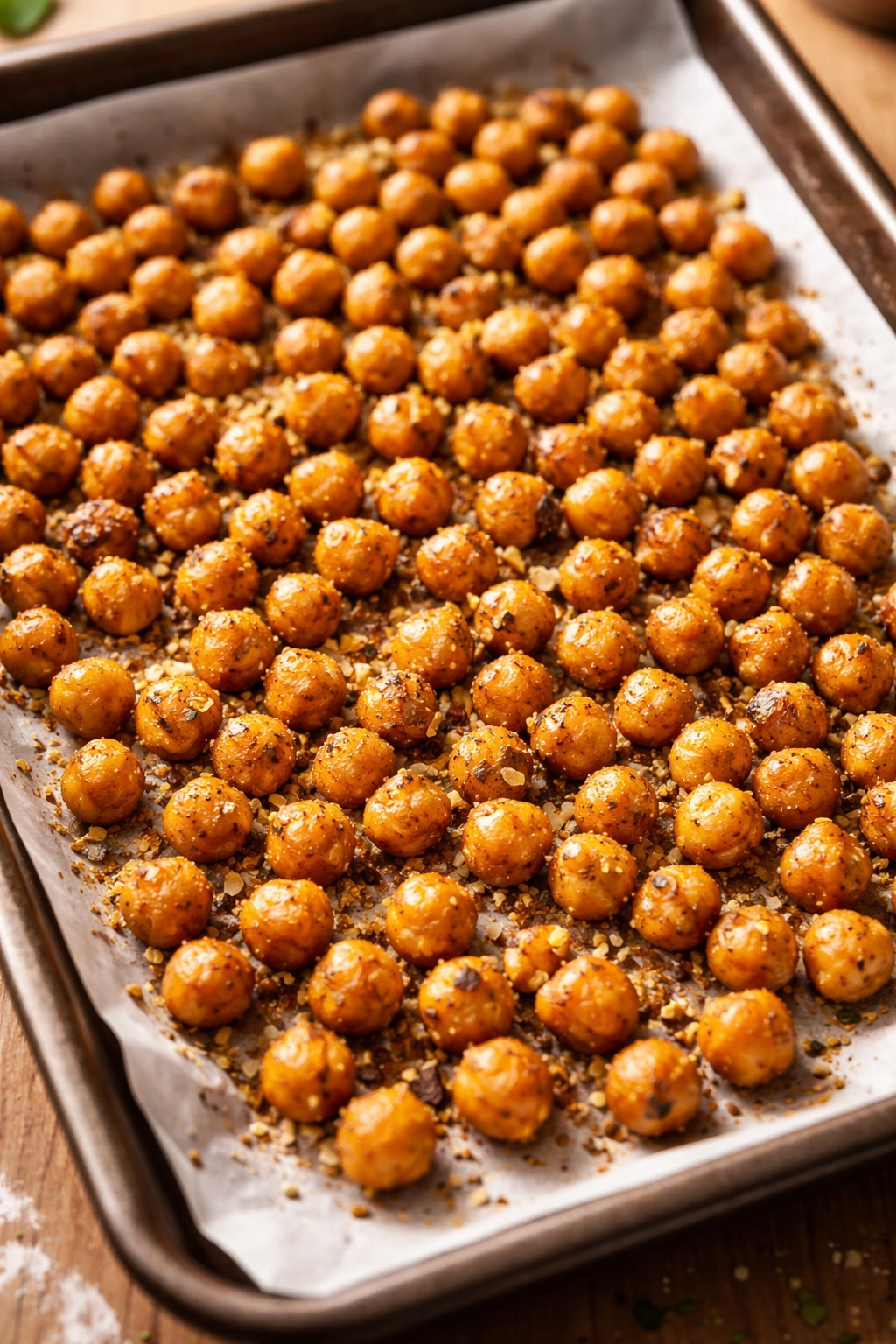
Roasted chickpeas are the Mediterranean answer to chips — crunchy, satisfying, protein-packed, and surprisingly simple to make. A can of chickpeas, some olive oil, salt, and whatever spices appeal to you creates a snack you’ll actually want to eat over processed alternatives. The best part? You can customize the seasoning endlessly, so you never get bored.
This snack delivers what your body actually needs. Chickpeas provide plant-based protein, fiber, and complex carbohydrates. The roasting process concentrates the flavors and creates an addictive crunch without deep-frying or added sugars. They’re shelf-stable enough to keep on hand for week-long snacking, though they’re best eaten within a few days of roasting (they soften slightly as they sit).
The Roasting Method That Works Every Time
Drain and thoroughly dry a can of chickpeas — moisture is the enemy of crispiness. Toss them with olive oil (about two tablespoons per can), salt, and your chosen seasonings. Spread in a single layer on a baking sheet and roast at 400°F for 25-35 minutes, shaking the pan every ten minutes to ensure even cooking. They’re done when they’re golden brown and crunchy all the way through — bite one to verify before removing from the oven.
Seasoning Combinations Worth Trying
- Mediterranean classic: oregano, garlic powder, lemon zest
- Za’atar spiced: za’atar blend, sumac, a hint of cayenne
- Rosemary and garlic: fresh rosemary, minced garlic, black pepper
- Smoked paprika: smoked paprika, cumin, a touch of chili powder
- Herb and salt: dried dill, parsley, thyme, sea salt
- Spicy: garlic powder, cayenne, paprika, black pepper
Real talk: Don’t skip the thorough drying step. Damp chickpeas steam rather than roast, becoming chewy instead of crispy. Paper towels are your friend here.
6. Feta and Herb Dip with Pita Chips
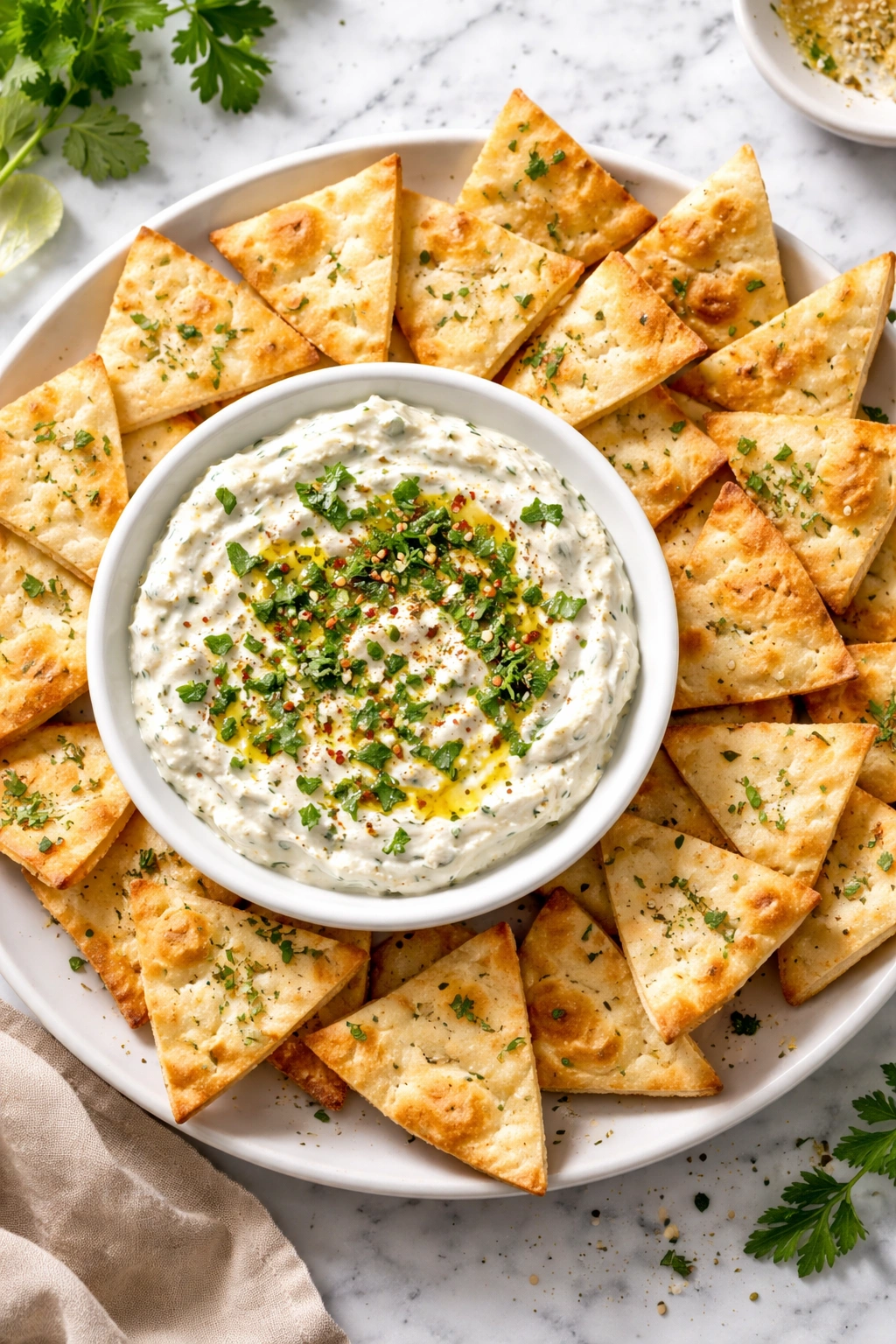
This dip sits somewhere between traditional tzatziki (which uses yogurt) and whipped feta — creamy, herbaceous, and absolutely addictive on crispy pita chips. Unlike store-bought dips loaded with stabilizers and preservatives, homemade feta herb dip comes together in five minutes with just a few quality ingredients. You control the texture, salt level, and herb balance.
The combination of tangy feta and fresh herbs creates a dip that tastes bright and sophisticated while remaining completely accessible. Feta brings protein and calcium; the herbs add virtually no calories but tons of flavor and antioxidants. This is Mediterranean eating at its most efficient — maximum flavor and nutrition with minimal effort.
The Recipe That Works
Crumble 8 ounces of quality feta into a food processor with ½ cup Greek yogurt, 2 tablespoons fresh lemon juice, 2 cloves minced garlic, a small handful of fresh herbs (parsley, dill, oregano, or mint — your choice or a combination), and a pinch of black pepper. Process until smooth and creamy, tasting as you go. If you prefer a looser consistency, add Greek yogurt a tablespoon at a time. Transfer to a serving bowl and top with a drizzle of excellent olive oil and a scatter of fresh herbs.
Making It Work for You
- Prepare the dip up to three days ahead — flavors actually deepen overnight
- Make pita chips by brushing pita with olive oil, cutting into triangles, and toasting at 375°F for 8-10 minutes
- Serve with raw vegetables if you want a lighter presentation
- Add crumbled walnuts to the top for textural contrast and healthy omega-3 fats
- Thin with a bit more yogurt if you prefer it more like a spread for sandwiches
Pro tip: Keep the herb selection flexible based on what’s growing in your garden or available at the market — this dip works beautifully with virtually any combination of fresh Mediterranean herbs.
7. Dried Figs and Almonds
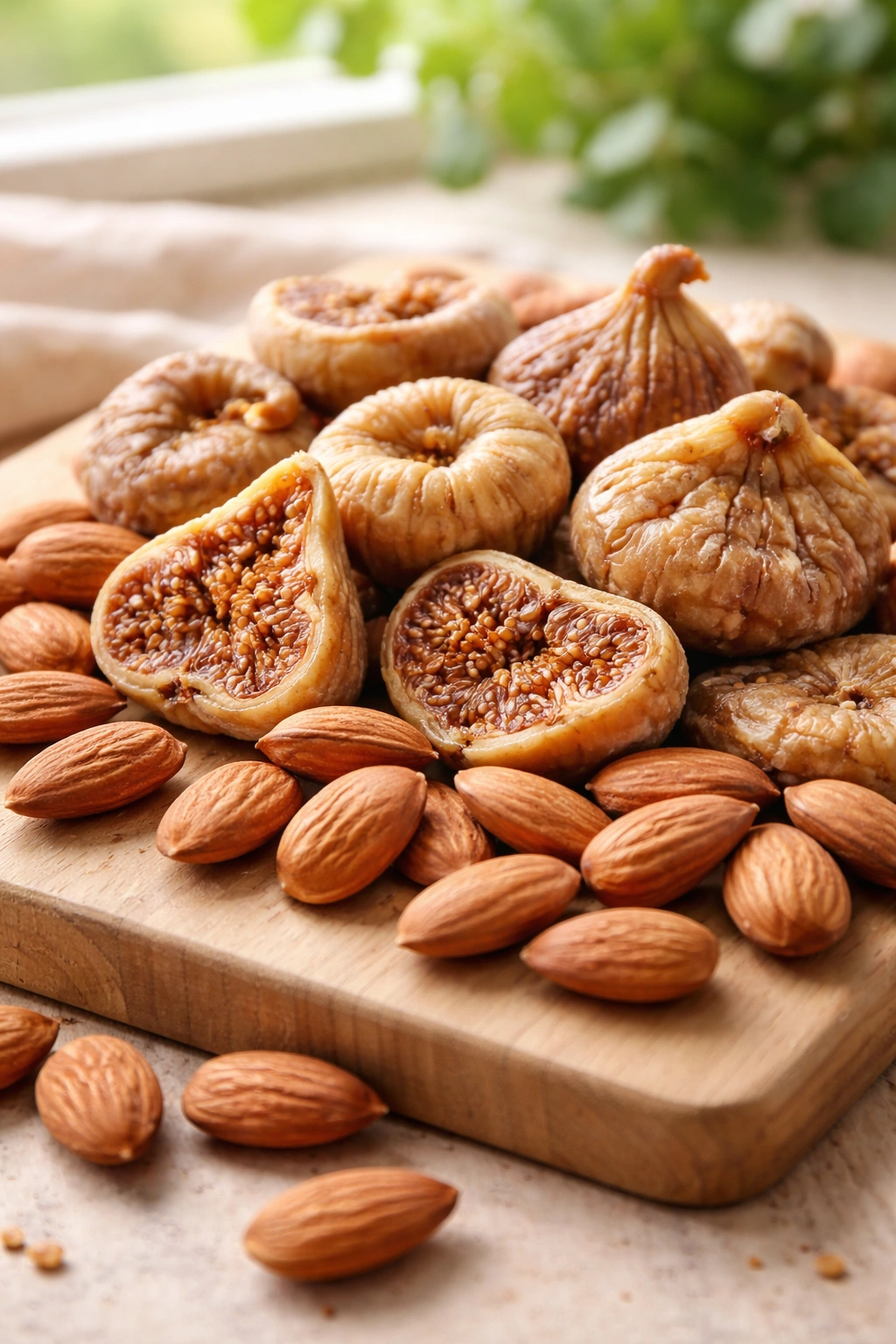
This pairing might sound simple, but it’s deceptively satisfying. Dried figs provide natural sweetness and chewy texture, loaded with fiber and minerals. Almonds offer protein, healthy fats, and a subtle crunch that contrasts perfectly with the fig’s softness. Together, they create a snack that tastes indulgent while actually being genuinely nutritious — no added sugars, no processing, just whole foods.
This snack requires literally zero preparation beyond purchasing the ingredients. It works for pre-meal hunger, post-workout recovery, or afternoon energy slumps. The combination of fiber, protein, and natural sugars provides sustained energy without the crash that follows processed snacks. It’s the kind of snack you can eat mindfully, appreciating each bite’s flavor and texture.
Why This Pairing Works So Well
Figs have been cultivated around the Mediterranean for thousands of years — they’re not just delicious, they’re deeply rooted in the region’s food culture. Modern figs are dried and shelf-stable but still retain their nutritional powerhouse status. They’re loaded with fiber for digestive health, manganese for bone health, and polyphenols for antioxidant protection. Almonds amplify this nutritional profile while adding satiety that prevents overeating.
Making It Your Own
- Mix in a small handful of unsalted pumpkin seeds or sunflower seeds for additional variety
- Add a few dark chocolate chips (use quality chocolate) for elegance without excess
- Combine with fresh or dried apricots for additional flavor layers
- Make individual portions in small containers for grab-and-go convenience
- Toast the almonds lightly before combining for deeper flavor (optional but recommended)
Quick fact: A single serving of almonds (about 23 nuts or one ounce) contains nearly four grams of fiber — about 10 percent of your daily needs — supporting digestive health and satiety.
8. Whipped Feta with Herbs and Olive Oil
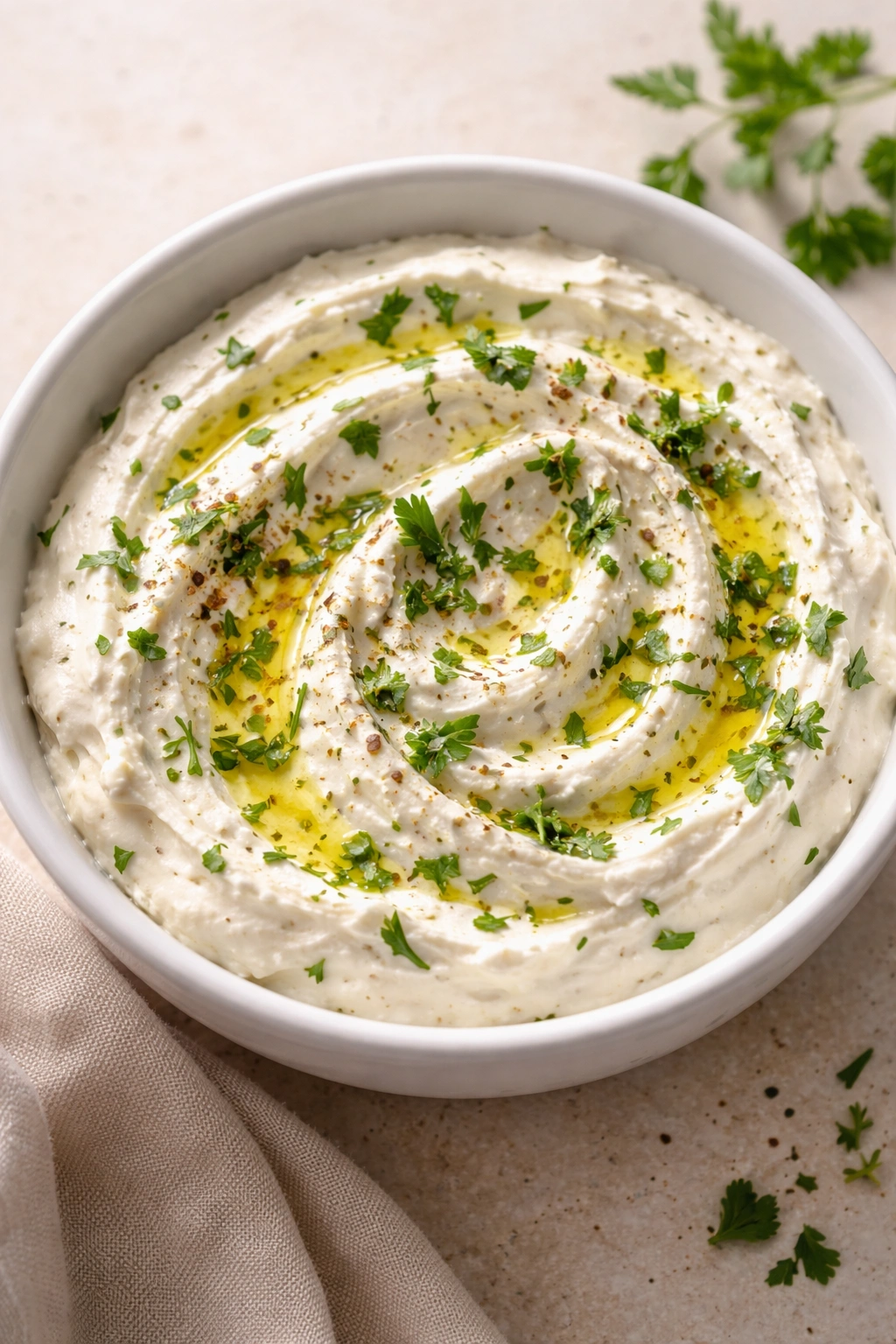
Whipped feta is both elegant and effortless — feta processed until light and creamy, then elevated with fresh herbs and a generous pour of quality olive oil. It transforms from something you’d find in a casual mezze platter to something worthy of company dinner. The difference between regular feta and whipped feta is just a food processor, but the transformation in texture and presentation feels luxurious.
This snack celebrates one of the Mediterranean diet’s cornerstone ingredients: feta cheese. Unlike processed spreads, whipped feta is just cheese and air — you’re tasting the real thing, not a stabilized approximation. The whipping process incorporates air, creating an impossibly creamy texture from a naturally crumbly cheese. It’s textbook Mediterranean ingenuity: making something better through technique rather than additives.
The Whipping Process
Crumble 12 ounces of quality feta (avoid heavily salted varieties if possible) into a food processor. Process for 3-4 minutes until the texture is light and fluffy — it’ll transform from crumbly to cloud-like. Add 2-3 tablespoons of heavy cream or Greek yogurt and pulse until fully incorporated. Season with fresh cracked black pepper and a tiny pinch of cayenne (optional but recommended for complexity).
Transfer to a shallow serving bowl and create a slight well in the center with the back of a spoon. Pour a generous ribbon of excellent olive oil into the well — don’t skimp here, quality olive oil is part of the presentation. Scatter fresh herbs (dill, parsley, mint, or oregano) across the top and maybe a few pomegranate seeds for color if you’re feeling celebratory.
Serving This With Confidence
- Whole grain crackers or toasted pita for scooping
- Raw vegetables sliced into spears (celery, cucumber, bell pepper)
- A scatter of roasted nuts across the top for textural contrast
- Roasted red peppers or artichoke hearts for elegant presentations
- Everything bagel seasoning sprinkled on top (surprisingly Mediterranean-friendly)
Worth knowing: This whipped feta keeps refrigerated for 4-5 days, making it perfect for preparing ahead. Bring it to room temperature before serving — cold feta loses some of its creamy texture and herb flavors become muted.
Final Thoughts

Mediterranean snacking isn’t about deprivation or complexity — it’s about celebrating real food in its simplest forms. Each of these eight snacks requires minimal preparation while delivering maximum nutrition and satisfaction. They’re designed to be grabbed quickly on busy days but also sophisticated enough to serve with genuine pleasure when guests arrive or when you simply want to slow down and taste what you’re eating.
The philosophy underlying these snacks is fundamentally different from conventional snacking culture. Instead of foods engineered to trigger craving and consumption, these are foods designed to satisfy — to fill your hunger with nutrition while bringing genuine pleasure. You can eat smaller portions because the food is nutrient-dense and actually nourishing. Your body recognizes these as real food, not a chemical approximation of flavor.
Start with whichever snacks appeal most to you and keep those staples on hand. As they become part of your routine, you’ll find yourself naturally reaching for them over processed alternatives. Your energy stabilizes, cravings diminish, and eating well stops feeling like effort and starts feeling like a choice you’re genuinely excited to make. That’s when you know you’ve found your Mediterranean rhythm.
