



There’s something genuinely satisfying about opening your lunch bag at work and finding a thoughtfully assembled snack box instead of the same old sandwich. Not only does it break up the monotony of typical workday meals, but it also gives you that nostalgic, playful feeling of the lunchables you might’ve enjoyed in childhood — except now you’re in control of every ingredient, and every component actually tastes like something worth eating.
The beauty of adult lunchables is that they’re infinitely more sophisticated than their grocery store counterparts, yet surprisingly easier to throw together than you’d think. You’re not limited to processed cheese and artificially flavored crackers. Instead, you can build boxes filled with real aged cheddar, prosciutto, roasted almonds, fresh berries, and artisanal crackers — combinations that make your coworkers genuinely envious when you unwrap your lunch. Better still, these boxes require just a few minutes of prep time, can be assembled the night before, and they stay fresh throughout the entire workday.
The real advantage isn’t just the taste, though that’s undoubtedly important. It’s that when you pack your own lunchable-style boxes, you’re creating a meal that plays to your actual preferences, dietary needs, and the foods you genuinely enjoy. You control the sodium levels, skip ingredients you dislike, load up on proteins and healthy fats that keep you satisfied, and avoid the random items that never made sense in the first place.
The Benefits of Homemade Lunchables for Your Workday
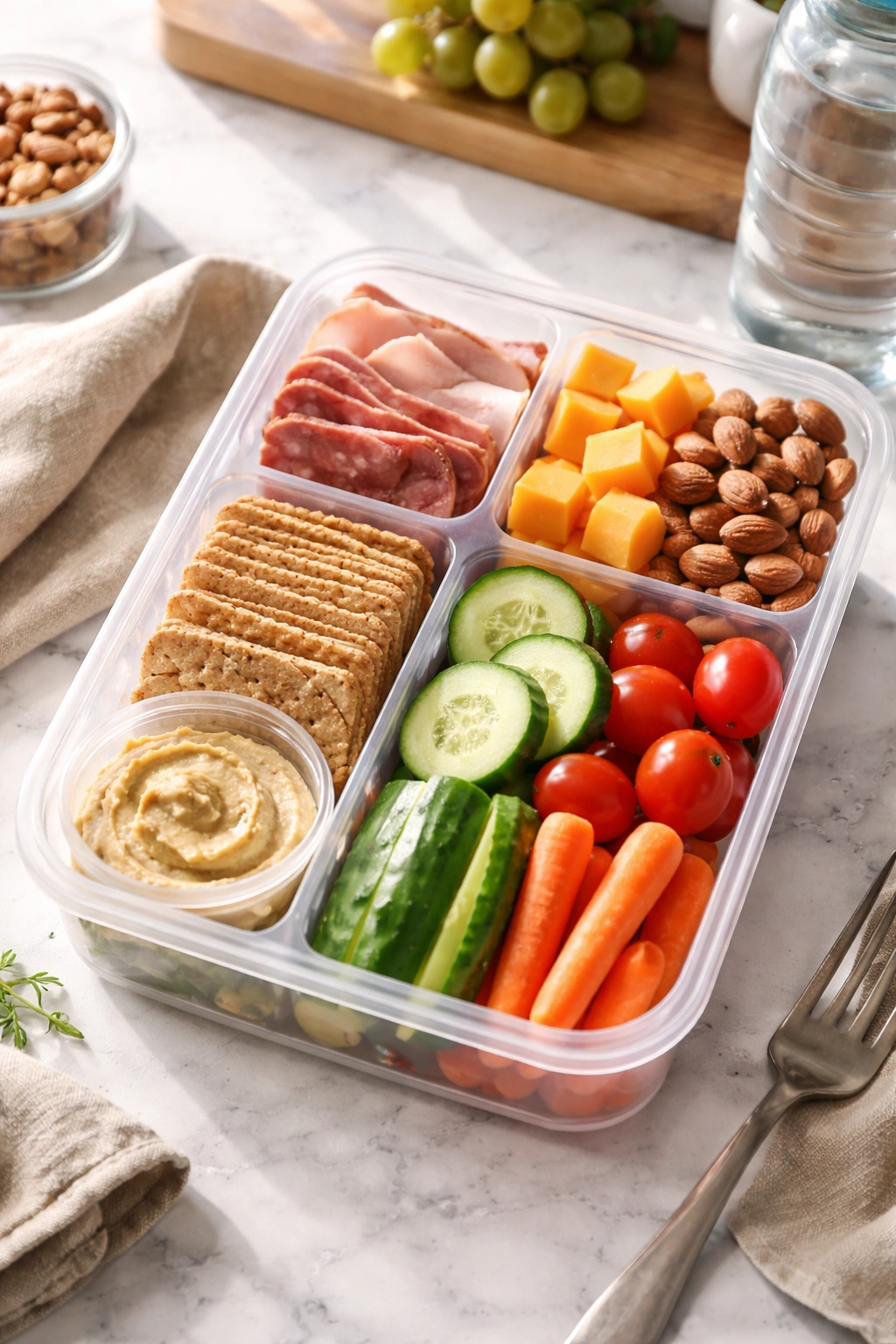
Packing your own assembled boxes transforms how you approach eating at work in ways that go far beyond simple convenience. When your lunch is already portioned, visually appealing, and requires zero assembly beyond opening a container, you’re far more likely to actually eat it rather than reaching for vending machine snacks or ordering takeout because you’re too hungry and impatient to wait.
Better nutrition control is perhaps the most overlooked advantage. You’re not buying a pre-packaged product engineered to maximize shelf life through preservatives and excessive sodium. You’re curating each component intentionally — choosing lean proteins, whole grain crackers, vegetables packed with fiber, and healthy fats that genuinely nourish you. This matters more than you might realize when you’re eating lunch five days a week over the course of months.
The cost savings accumulate surprisingly quickly. A homemade lunchable box costs roughly a quarter to a third of what you’d spend grabbing lunch from a cafe or restaurant. When you multiply that across 20 or 22 work days per month, you’re looking at savings that really add up without requiring any dietary compromise. You’re still eating well — you’re just not paying the markup for someone else to assemble it.
There’s also something psychologically powerful about arriving at your desk with lunch already prepared and ready to eat. You eliminate the mid-morning decision fatigue about what to eat, where to go, or whether you have time to grab something. That mental real estate gets freed up for your actual work. Plus, having satisfying snacks available throughout the day stabilizes your energy and blood sugar in ways that erratic eating patterns simply cannot.
Protein-Packed Charcuterie Boxes You Can Prep Ahead
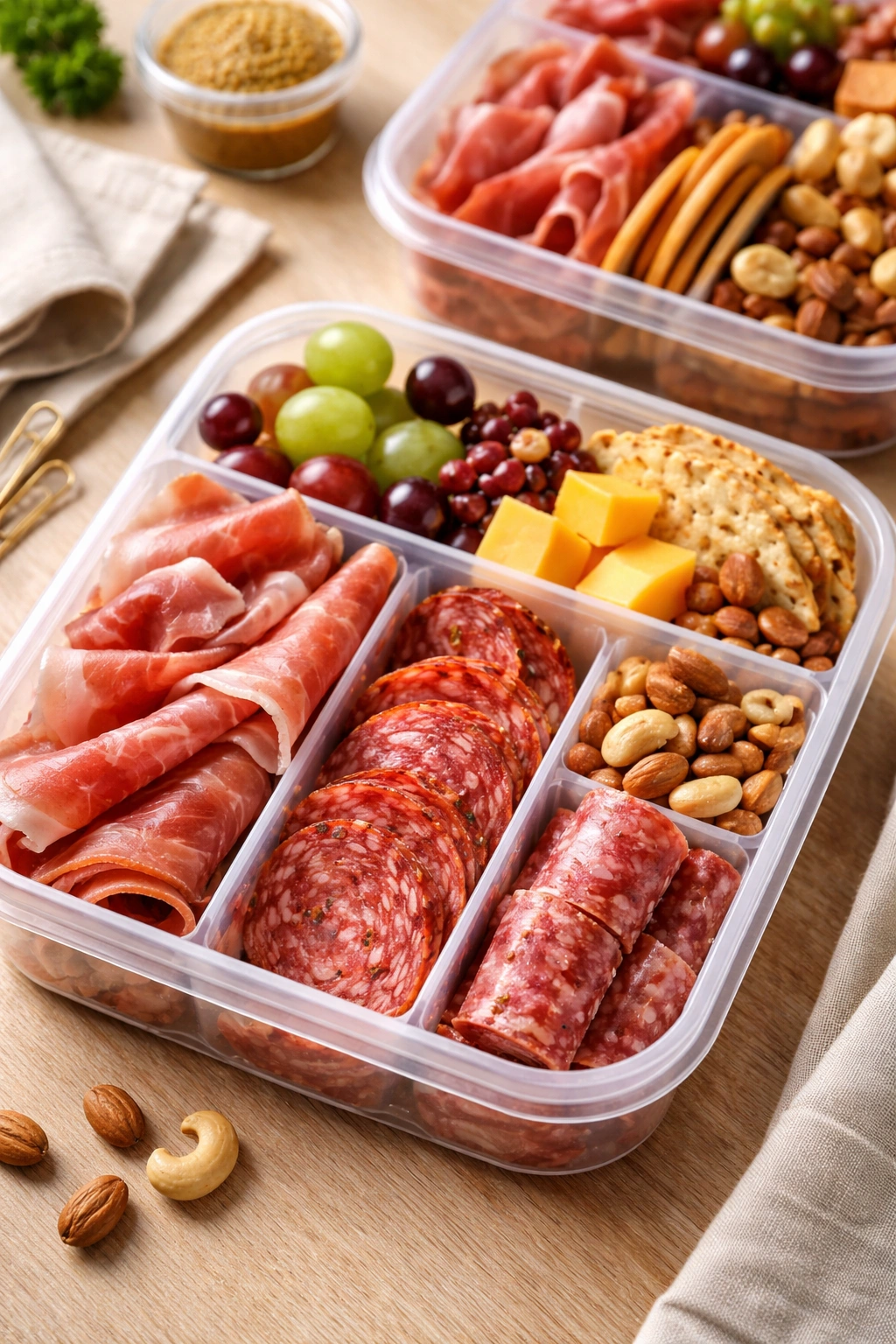
The foundation of an excellent adult lunchable is protein-rich cured and fresh meats that provide genuine staying power throughout your afternoon. Unlike carbohydrate-heavy lunches that lead to energy crashes around 3 p.m., a protein-forward box keeps you satisfied and focused until dinner.
Prosciutto is the obvious choice — it’s elegant, requires zero cooking, and a small amount goes a surprisingly long way in terms of flavor and satiety. One ounce of prosciutto contains roughly 9 grams of protein while staying relatively lean. Slice it thin, fold it loosely into your container, and it provides this salty, umami-rich element that elevates everything around it.
Soppressata, spicy or mild depending on your preference, offers similar benefits with a firmer texture and more pronounced flavor. The advantage of soppressata over prosciutto is that it holds up better throughout the day — it doesn’t dry out or become chewy the way some cured meats can. Slice it into thin rounds and you’ve got ready-to-eat protein.
Salami varieties deserve serious consideration too. Sopressata, saucisson, or even simple hard salami all provide concentrated protein and fat in a form that doesn’t require refrigeration for a few hours, making them ideal for day-long storage in a work bag. The key is buying quality versions from an actual deli counter rather than pre-sliced packages that often contain additives and have been sitting under fluorescent lights for weeks.
Don’t overlook smoked turkey or smoked chicken as lighter alternatives if you prefer less richness. Roll thin slices around the cheese (we’ll get to that) or eat them plain with crackers and mustard. These options deliver serious protein with less fat, which some people prefer for afternoon eating.
Roasted chickpeas or edamame add a different dimension of protein — they’re plant-based, satisfying, and bring textural variety to your box. Toss them with a bit of olive oil, sea salt, and whatever spices appeal to you (smoked paprika, curry powder, everything bagel seasoning), then roast until crispy. Make a big batch on Sunday and portion them throughout the week.
Cheese and Cracker Combinations That Actually Stay Fresh
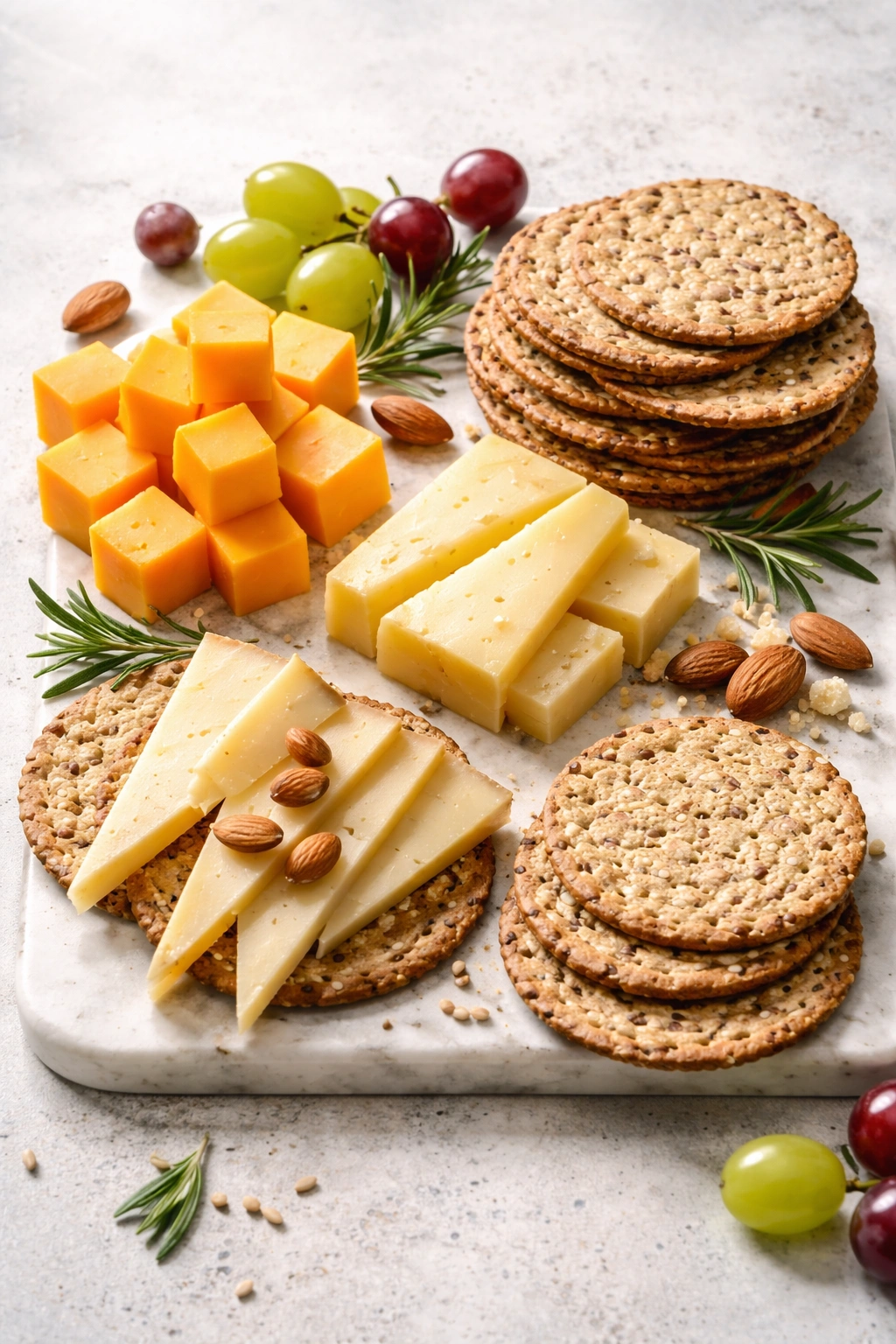
Cheese is the scaffolding that holds an adult lunchable together, and the choice between soft, semi-firm, and hard varieties determines both the flavor profile and the practical storage properties of your box.
Hard and semi-firm cheeses are your workday friends because they genuinely improve throughout the day. Aged cheddar, comté, gruyère, or manchego won’t sweat, won’t become unpleasantly soft, and actually taste better as they reach room temperature. An ounce or two of a really flavorful aged cheese provides more satisfaction than a large block of mild cheddar. The crystalline texture of aged cheese also provides this satisfying crunch that’s genuinely pleasurable to eat.
Smoked gouda brings this gentle smokiness that pairs beautifully with nuts and dried fruit. A sharper cheddar — especially vintage or extra sharp varieties — provides concentrated flavor so you need less volume to feel satisfied. Gruyère works beautifully with cured meats and adds this slightly sweet, nutty undertone that’s impossible not to enjoy.
Milder fresh cheeses like fresh mozzarella or burrata work well if you’re pairing them with something that same morning, but be aware they’ll continue softening throughout the day. If you’re packing in the morning and eating at lunch, they’re fine. If you’re packing the night before, firmer options are safer.
The cracker situation determines whether your entire box actually tastes good or whether it just feels obligatory. Skip the generic saltines and the aggressively flavored varieties that overpower everything else. Quality whole grain crackers, seeded varieties, or thin artisanal crackers made from proper ingredients cost just slightly more than mediocre options but taste substantially better.
Look for crackers with minimal ingredient lists: flour, water, salt, perhaps a seed component, and not much else. Avoid anything listing sugar or multiple unpronounceable additives. Ritz-style crackers with their artificial butter flavoring actually detract from good cheese and cured meats rather than complement them.
Hearty whole grain crackers stand up well to moisture from cheese and maintain their integrity throughout the day. Seeded options (sunflower, pumpkin, flax) add nutritional density and texture. Thin, crispy options like water crackers pair elegantly with aged cheeses and let the cheese be the star rather than competing for attention.
Bring your crackers in a separate small container if you’re packing more than a few hours ahead. This prevents them from absorbing any moisture and maintains their crispness for as long as possible. The thirty-second effort of keeping them separate transforms how good your lunchable is by mid-afternoon.
Roasted Nuts and Seeds for Satisfying Crunch
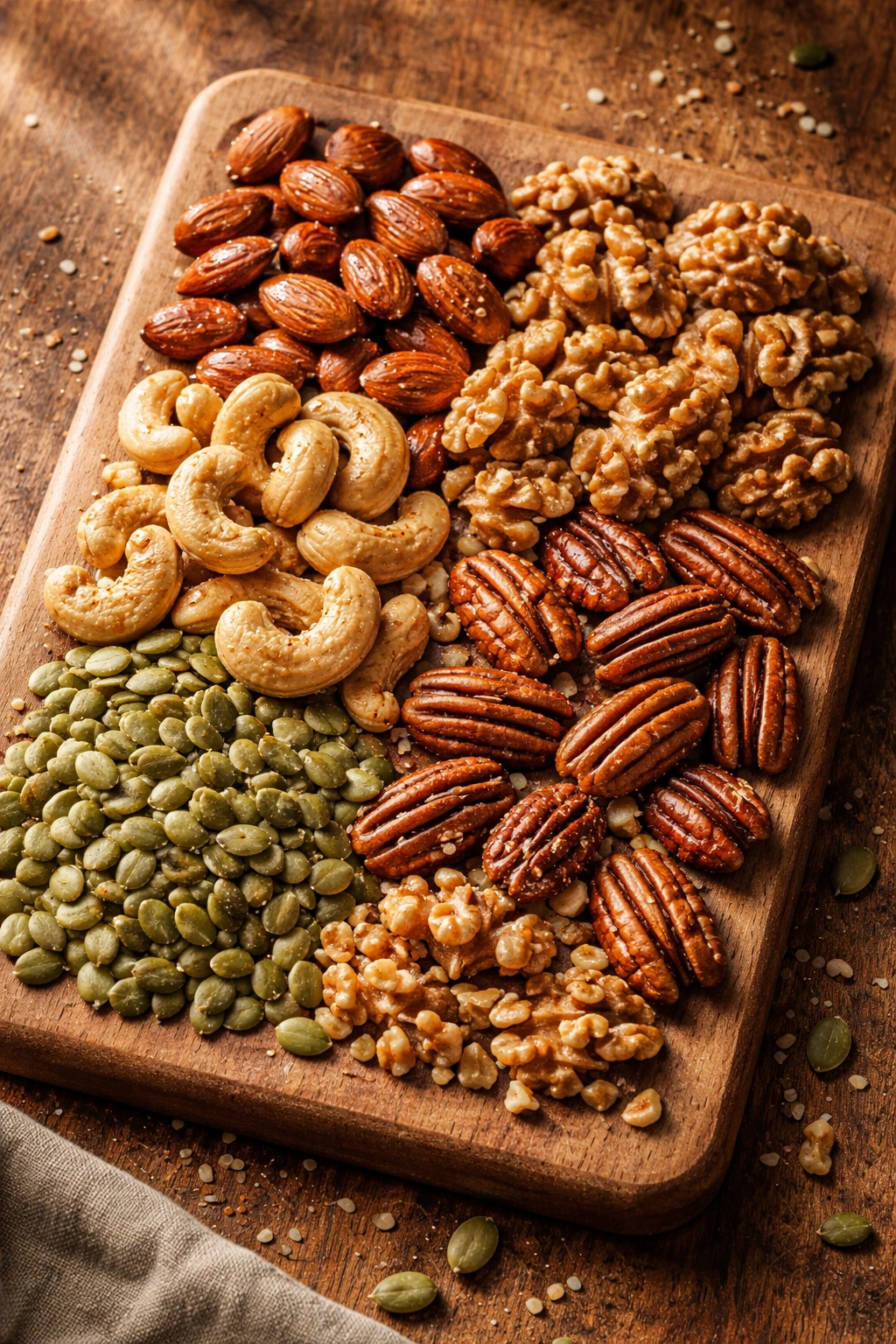
The crunch factor in a lunchable box matters more than it seems — it provides textural contrast, keeps the eating experience from becoming monotonous, and delivers substantial nutritional benefits alongside pure satisfaction.
Raw or roasted almonds are the reliable foundation. An ounce (roughly a small handful) contains about 6 grams of protein, healthy monounsaturated fats, and fiber that actually helps you feel full. Their mild flavor doesn’t compete with other ingredients, so they work in nearly any combination. Roast them lightly with just salt, or try them with cinnamon and a touch of honey for a sweeter element.
Cashews offer a creamy, buttery quality that provides contrast to aged cheese and cured meats. Their richness means a smaller portion satisfies — you don’t need to pack as much volume as you would with almonds.
Walnuts bring earthy, slightly bitter notes that pair beautifully with dried fruit and blue cheese. Their higher omega-3 content makes them nutritionally compelling too, though their stronger flavor means they’re not universal crowd-pleasers.
Pecans work wonderfully if you’re building slightly sweeter boxes with dried fruit and maybe a touch of honey drizzle. Their buttery flavor is genuinely luxurious.
Sunflower seeds and pumpkin seeds shift the dynamic by adding crunch without the heaviness of nuts. They’re slightly less calorie-dense, which some people prefer for midday eating. Roast them in a single layer at 300°F for about 15 minutes with whatever seasonings appeal to you. Everything bagel seasoning works beautifully, as do smoked paprika, cumin, or just salt.
Mixed seeds (chia, flax, pumpkin, sunflower) provide nutritional density in a small volume. They’re less satisfying to eat straight compared to larger nuts, but scattered throughout your box they add fiber, minerals, and visual interest.
Chickpea snacks or roasted chickpeas deserve their own category because they’re different from traditional nuts while delivering comparable protein and satisfaction. Toss canned chickpeas with olive oil and whatever spices call to you, spread them on a baking sheet, and roast at 425°F for about 20-25 minutes until golden and crispy. They should sound genuinely crispy when you bite them, not just on the outside. Make a big batch and portion throughout the week.
The key with nuts and seeds is portion control without deprivation. An ounce feels like a small amount until you’re actually eating it — then it provides surprising satisfaction. Pre-portion your nuts into small containers so you’re not mindlessly eating from a large bag at your desk.
Fresh Vegetables and Dips Worth Looking Forward To
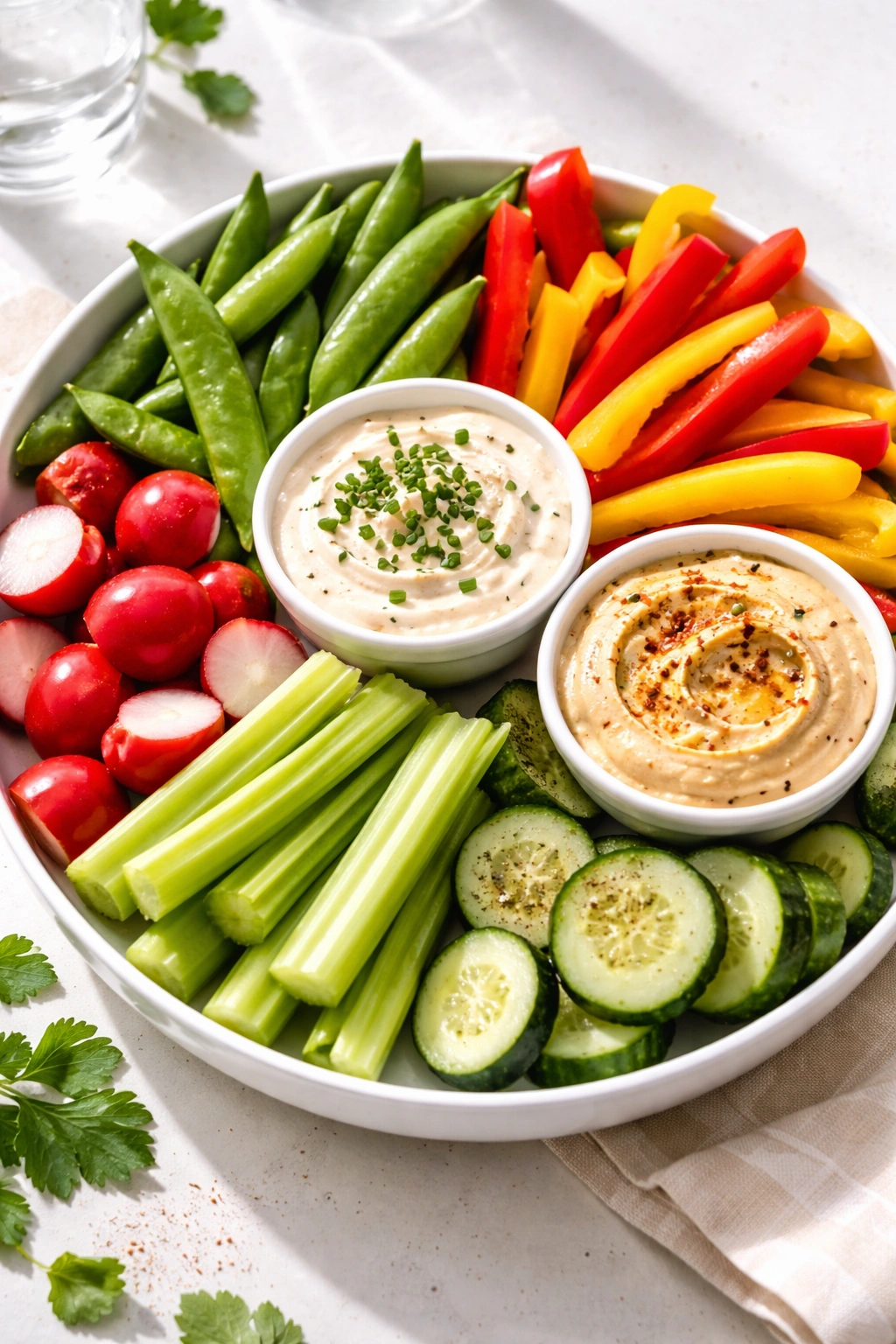
Raw vegetables get a bad reputation in assembled snack boxes because they’re usually included as obligatory healthy filler rather than because they’re genuinely delicious. Change your approach and suddenly they become the highlight.
Crisp snap peas taste nearly sweet and provide satisfying crunch. They require zero prep beyond rinsing and fit perfectly into a small container. They stay fresh throughout the day and pair beautifully with both savory and slightly sweet elements.
Radishes are genuinely underrated. Their peppery crunch provides this almost electric quality alongside milder flavors. Slice them thin, add a tiny pinch of salt, and they become genuinely crave-worthy rather than obligatory vegetables.
Bell pepper strips — especially red or orange varieties, which taste sweeter than green — add color, nutrition, and a yielding crunch that contrasts with harder elements like nuts. They hold up well throughout the day and taste even better at room temperature.
Cucumber rounds work if you’re eating relatively soon after packing. They’ll hold up for several hours but will become soggy if left all day, so pack them separately if you’re uncertain about timing.
Celery sticks are genuinely excellent vehicles for dips and pair beautifully with almost any cheese. They stay incredibly crisp and hold their integrity throughout the entire day.
Cherry tomatoes bring bright acidity and natural sweetness. Pack them whole or halved depending on how you prefer to eat them. Their flavor intensifies slightly as they warm, which isn’t a problem — they’re actually more flavorful at room temperature than straight from the refrigerator.
The dip situation transforms vegetables from obligatory to genuinely desirable. Forget bland hummus or flavorless ranch-style dips made with powder packets. A real whipped ricotta with lemon zest and herbs becomes something you’re genuinely excited to eat. Mix ricotta with a squeeze of fresh lemon juice, grated zest, salt, pepper, and chopped fresh herbs (dill, parsley, chives). Pack it in a small container and your vegetables suddenly feel luxurious.
Actual good cheese dip — a blend of cream cheese, sharp cheddar, maybe a touch of whole grain mustard and caramelized onions — elevates this from snack to something genuinely crave-worthy. Make a batch and portion it in small containers for the week.
Herbed cream cheese works beautifully too. Mix cream cheese with fresh herbs, garlic, and maybe a touch of lemon. Spread it on vegetables or crackers and you’ve got something far more interesting than what most people pack for lunch.
The Art of Building a Balanced Snack Box
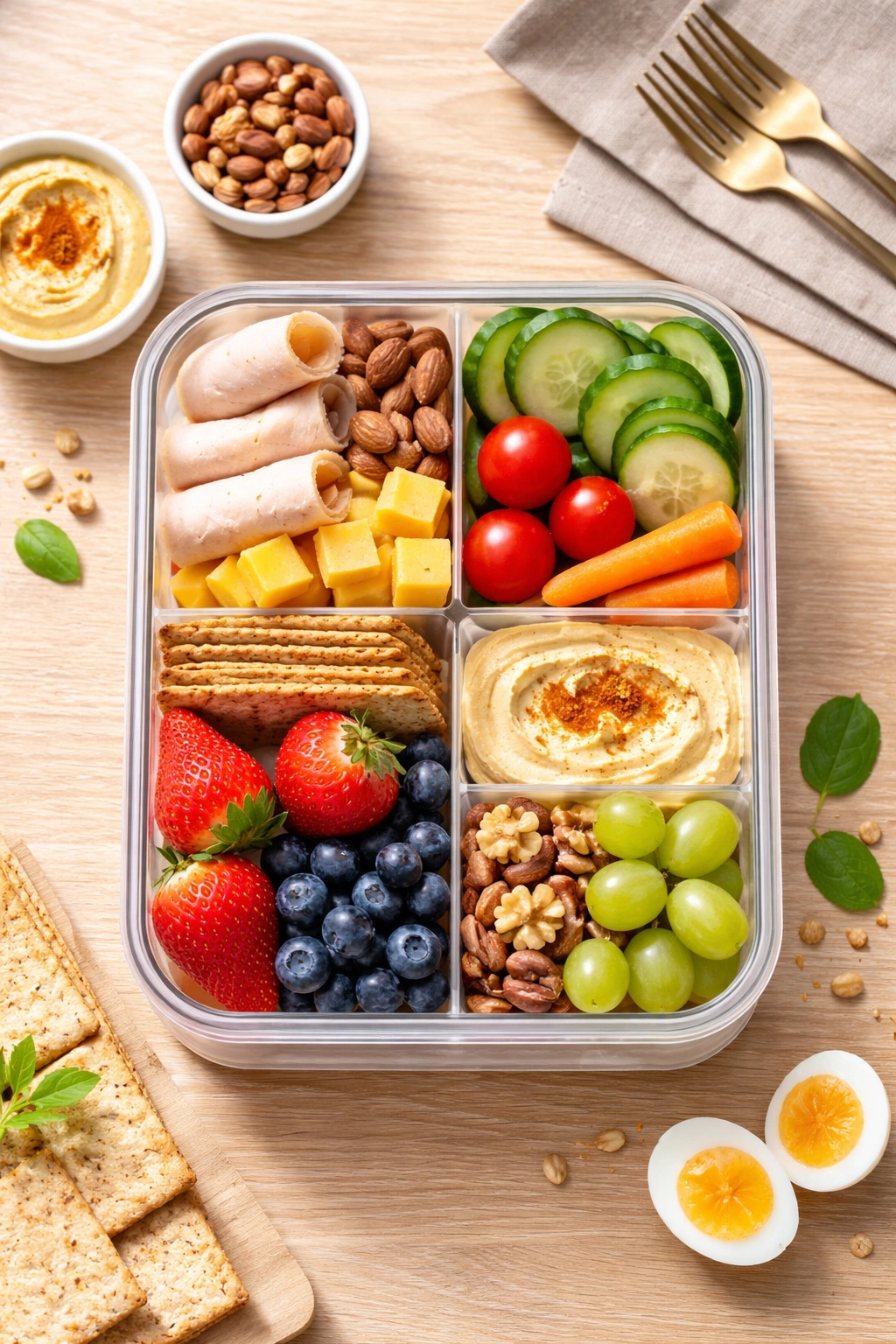
The architecture of your assembled box determines whether it feels like a proper meal or just random snacks thrown together. A truly satisfying adult lunchable contains protein, healthy fat, complex carbohydrates, and fiber in proportions that keep you full and satisfied.
Start by thinking about protein as your foundation. You want roughly 15-20 grams of protein in your box to create genuine satiety. This might be 2 ounces of cured meat plus an ounce of cheese (roughly 20 grams combined), or it could be roasted chickpeas, nuts, and a smaller amount of meat. The source matters less than hitting this target.
Build fat intentionally. Aged cheese, nuts, seeds, and quality cured meats all provide healthy fats that slow digestion and keep you satisfied. You’re not trying to minimize fat — you’re trying to include enough to actually feel full. Roughly 10-15 grams of fat is satisfying for a snack-style meal.
Add complex carbohydrates through quality crackers, whole grain options, or vegetables. This isn’t about filling the box with crunch — it’s about including enough carbohydrate to provide sustained energy. One ounce of whole grain crackers (usually 3-4 crackers depending on size) provides around 15 grams of carbs.
Fiber comes from vegetables, whole grains, nuts, and seeds. Aim for at least 5-7 grams to support stable blood sugar and genuine satiety.
The color variety in your box signals nutritional variety. If everything is beige (crackers, nuts, cheese), add something green (snap peas, cucumber), something red (cherry tomatoes, red pepper), something purple (perhaps purple cabbage or purple grapes), and maybe something orange (cheddar, peaches, apricots).
Size your portions by thinking about your hunger patterns. If you’re eating this as your entire lunch, build a bigger box — aim for roughly 400-500 calories with the macronutrient balance described above. If you’re eating it as a snack alongside other food, scale it back to 200-250 calories.
Visual balance matters too. Don’t pack everything in one giant pile. Create small clusters: a pile of nuts here, cheese and crackers there, vegetables on the other side, perhaps dried fruit in a corner. This makes your box look more abundant and makes the eating experience more interesting because you’re reaching for different things.
Make-Ahead Components You Can Prep on Sunday
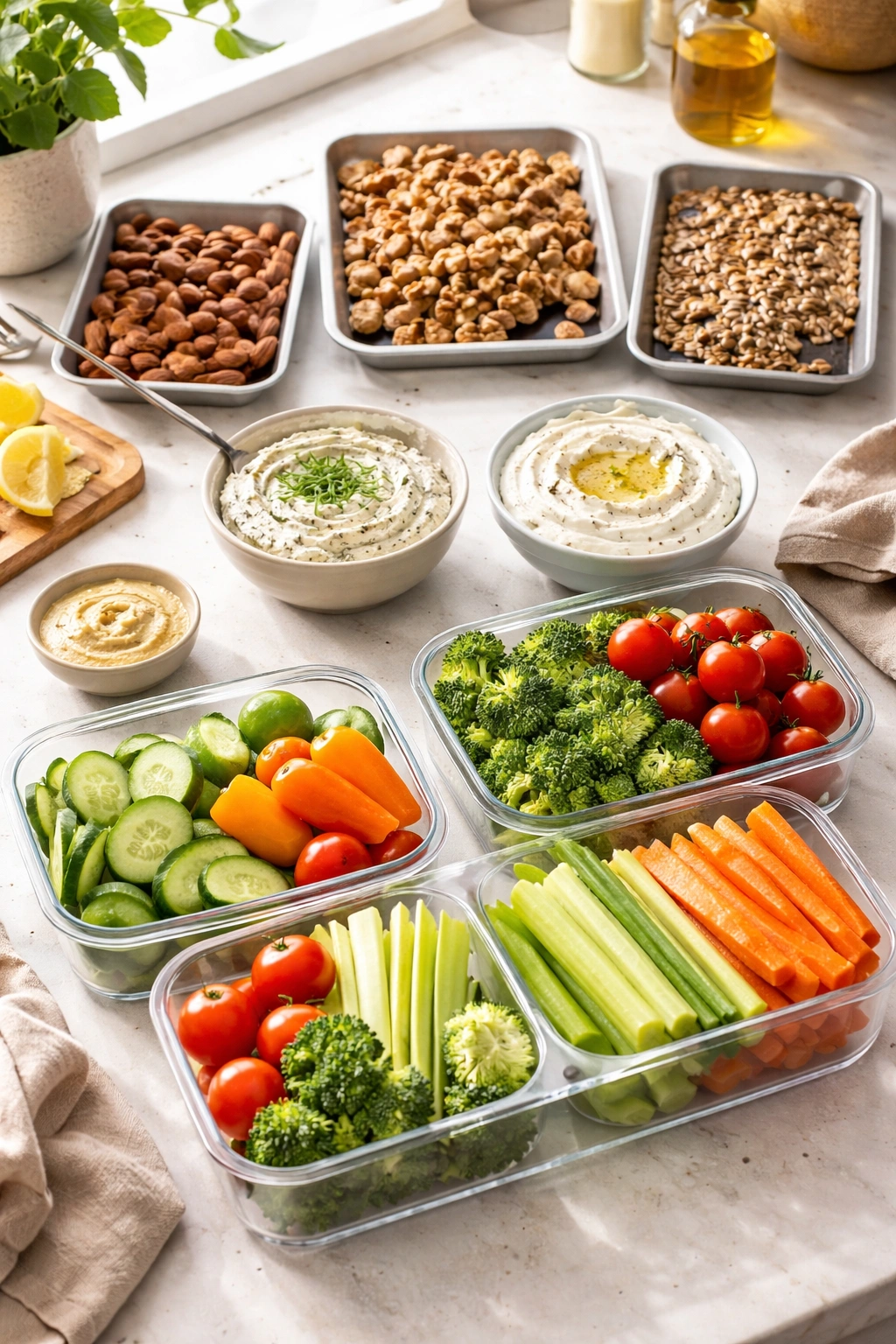
The secret to actually maintaining this habit is doing the prep work when you have energy and time rather than scrambling each morning before work. Spending two hours on a Sunday afternoon prepping ingredients for five days of lunches is exponentially easier than doing it every single morning.
Roast your nuts and seeds all at once. Spread almonds, walnuts, sunflower seeds, and whatever else you’re using across multiple baking sheets, season them, and roast them all together at 300°F for 15-20 minutes. Cool them completely, then portion into small containers or bags. This takes maybe 30 minutes active time and gives you roasted nuts for the entire week.
Make your dips in bulk. Whipped ricotta, herbed cream cheese, or any other dip you’re planning to include can be made in large batches, portioned into small containers, and refrigerated for up to five days. Some dips actually taste better after a day or two as flavors develop.
Wash and chop or prepare all your vegetables. Snap peas just need rinsing. Radishes and bell peppers can be sliced and stored in containers. Cherry tomatoes can be left whole. Cucumbers and celery can be cut if you’re eating them within the first two days, or left whole for later in the week.
Cook your chickpeas or whatever protein-forward snack you’re including. Spread them on baking sheets, roast, cool, and portion. This is a one-time prep that fuels several days of snacking.
Slice your cheese if you prefer it pre-sliced, or buy blocks and slice them on individual mornings. Pre-sliced cheese gets a bit dry if stored for more than a few days, so fresher slicing actually improves quality. If you want to prep ahead, keep blocks intact and slice each morning in about 30 seconds.
Buy cured meats as close to your eating days as possible. Slicing them yourself from the deli counter gives you control over thickness and freshness. Pre-packaged sliced meats oxidize and lose quality quickly.
Keep your crackers in their original packaging or in airtight containers until you’re actually packing your boxes. They lose crispness when exposed to air for extended periods.
Storage and Packing Tips That Keep Everything Fresh
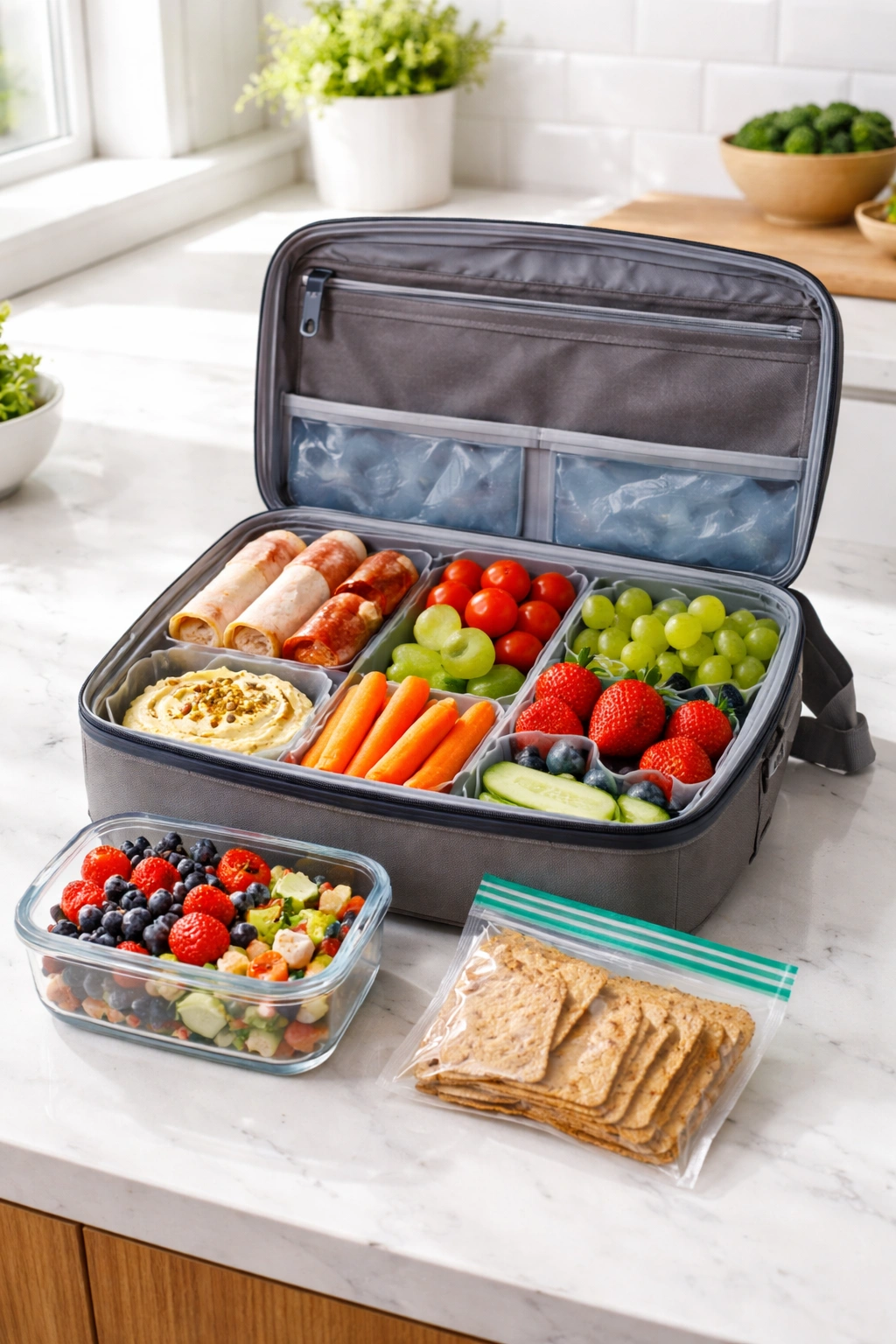
The difference between a lunchable that tastes fantastic and one that tastes stale by afternoon often comes down to simple storage strategy.
Pack your crackers separately if you’re assembling your box more than an hour or two before eating it. This is the single most important rule. Crackers will absorb moisture from cheese and vegetables if packed together for extended periods, turning from crispy to unpleasantly soft. Keep them in a small bag or container, then add them to your box right before eating, or eat them straight from their container.
Use proper food storage containers that seal well. Glass containers with snap lids work beautifully and last for years. They don’t absorb odors, they handle temperature changes without warping, and they’re transparent so you can see what you’re eating. Disposable containers work too, but glass feels more substantial and is better for the environment.
Pack wetter elements like vegetables and dips in containers that won’t seep into other components. If you’re including a dip, keep it in its own small container so it doesn’t migrate into your cheese or crackers.
Temperature matters more than you might think. Pack your lunchable in an insulated lunch bag with a reusable ice pack if you’re eating it more than three hours after packing. Aged cheese and cured meats are fine at room temperature, but they taste better if they haven’t been sitting in a warm bag for hours. The ice pack keeps everything cool without actually freezing anything, which is perfect.
Avoid putting anything wet directly against other ingredients. If you’re including grapes or any fruit that might have moisture, separate them or keep them in their own container.
Use a lunchable assembly line if you’re making several for the week. Line up all your containers, portion cheese into each one, then move down the line portioning nuts, then vegetables, etc. This is faster than making individual boxes from scratch and ensures consistency.
Label your containers with the date if you’re prepping for multiple days. Use a piece of tape and a marker, or write directly on the container lid with a dry-erase marker. This prevents accidentally eating food that’s been sitting for longer than you realized.
Flavor Combinations That Go Beyond the Basics
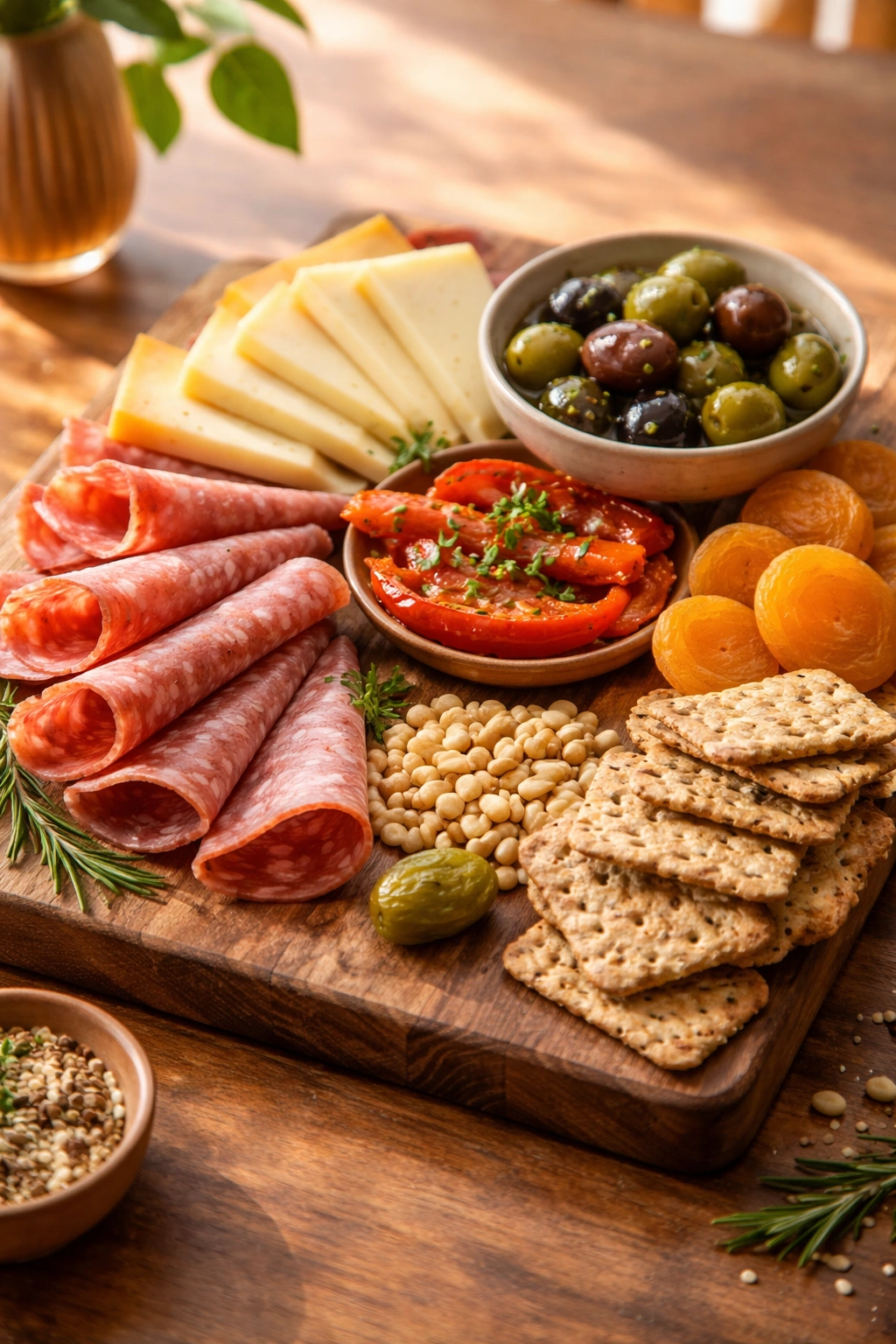
Moving beyond the standard cheese and crackers framework opens up genuinely exciting possibilities. The key is thinking about complementary flavor profiles rather than just throwing compatible foods together.
Mediterranean combinations pair aged gouda or manchego with cured olives, roasted red peppers, salami, and crispy flatbread crackers. Add some pine nuts and perhaps a few dried apricots for subtle sweetness. This tastes like an actual meal rather than a snack.
Autumn-inspired boxes might include sharp cheddar, candied pecans, dried cranberries or figs, and hearty whole grain crackers. Add some roasted pumpkin seeds and maybe a bit of smoked turkey. The slight sweetness from the dried fruit balances the sharpness of the cheese beautifully.
Spanish-style lunchables build around jamón ibérico or regular Spanish ham, manchego cheese, roasted almonds, green olives, and thin crispy crackers. The salty, rich ham and olives create a genuinely sophisticated combination that tastes restaurant-quality.
Fresh and bright combinations pair burrata or fresh mozzarella (eaten sooner rather than packaged overnight) with cherry tomatoes, fresh basil, high-quality olive oil, and thin crackers. Add some prosciutto and you’ve got something that tastes like summer on a plate.
Smoky and bold flavors work beautifully together. Smoked gouda, smoked salmon, roasted sunflower seeds, crispy seeds, thinly sliced red onion, and thin whole grain crackers create this sophisticated, restaurant-quality combination. A squeeze of fresh lemon juice right before eating elevates it further.
Naturally sweet combinations include grapes (fresh), dried apricots, candied walnuts, mild cheddar, and water crackers. This works beautifully for people who prefer less savory afternoon eating or who want variety throughout the week.
The principle is balance between salty and sweet, rich and bright, crispy and tender. Think about what you’re craving flavor-wise and build your box intentionally around that craving rather than just defaulting to the same combination every day.
Dietary Swaps for Common Allergies and Restrictions
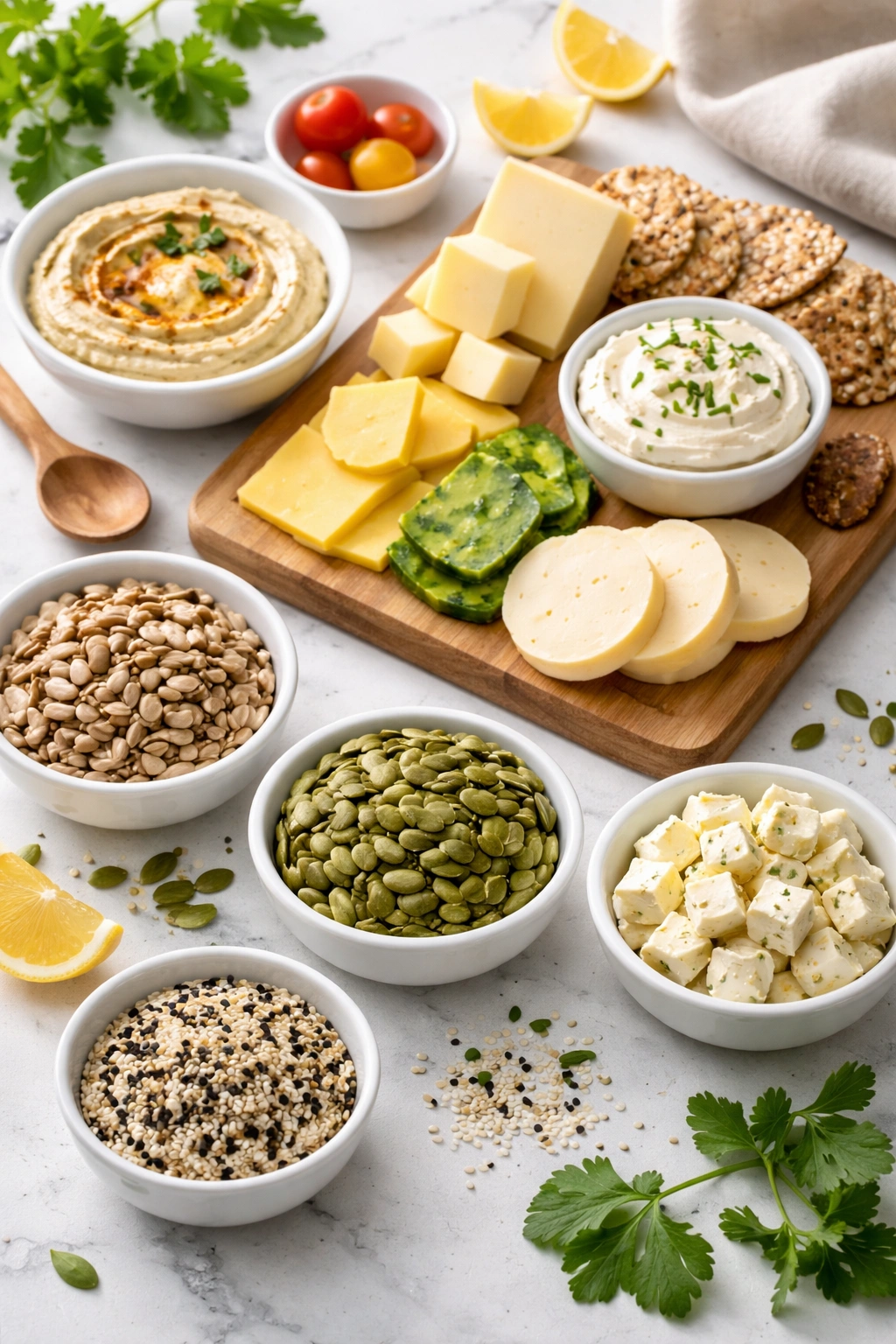
The beauty of assembling your own lunchables is that you can work around nearly any dietary restriction or preference without the boxes feeling like deprivation food.
For nut allergies, seeds become your primary protein and textural component. Roasted sunflower seeds, pumpkin seeds, and sesame seeds provide crunch and nutrition. Alternatively, increase the cured meat and cheese proportion, or add roasted chickpeas for that satisfying bite.
For dairy restrictions, swap cheese for dairy-free alternatives (which have improved tremendously) or skip cheese entirely and increase the protein from cured meats, nuts, and seeds. Hummus becomes a more prominent dip option. Plant-based cured meats exist, though quality varies significantly.
For vegan diets, build around nuts, seeds, cured plant-based meats, hummus, vegetables, and high-quality whole grain crackers. Add roasted chickpeas or other roasted legumes for protein. The boxes look identical to non-vegan versions but have entirely different components.
For gluten sensitivity, simply swap your regular crackers for high-quality gluten-free alternatives. Look for brands that don’t taste aggressively “gluten-free” — they should taste like real crackers that just happen to be made without wheat. Many people find that gluten-free crackers actually pair beautifully with aged cheeses because they don’t compete for attention.
For lower-carb preferences, increase nuts, seeds, and full-fat cheese while decreasing crackers. Vegetables become more prominent. You’re not trying to make a keto lunchable unless that’s your actual approach — just thoughtfully swapping proportions.
For pescatarian or vegetarian approaches, cured meats simply don’t appear in the box. Everything else remains the same: multiple cheese varieties, nuts, seeds, vegetables, and crackers. You’ve got plenty of protein from those sources without the meat.
The key is not viewing these swaps as sacrifices but as opportunities to explore different flavor combinations. Someone eating a nut-free lunchable might discover that they genuinely prefer seed-based versions. Someone exploring dairy-free options might realize they enjoy the texture and flavor of certain alternatives more than they expected.
Beyond the Box: Creative Serving Ideas
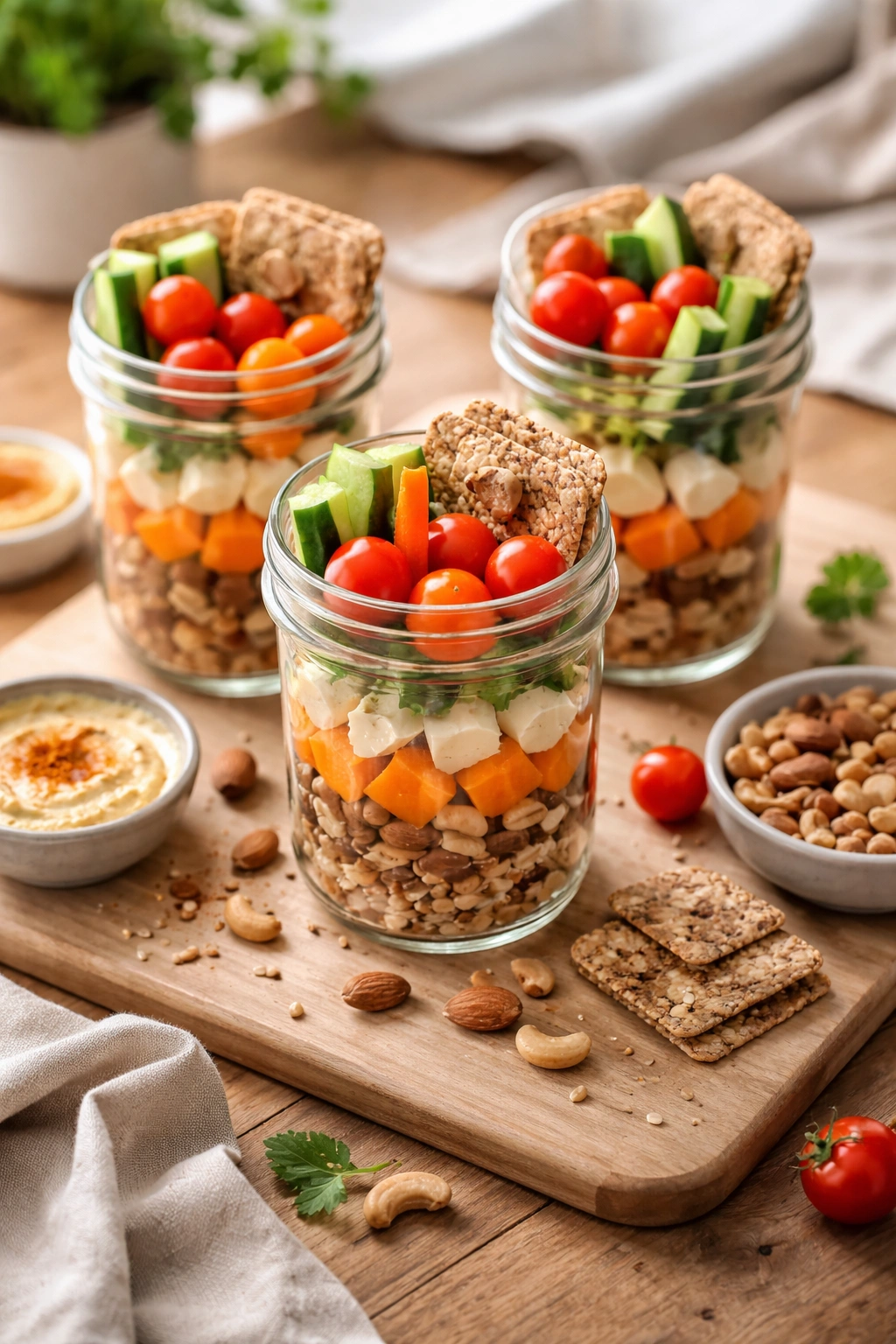
Adult lunchables don’t have to stay in boxes. Once you’ve mastered the basic formula, you can adapt the concept for different occasions and presentations.
Mason jar layers stack components vertically — nuts and seeds on the bottom, cheese in the middle, vegetables and crackers on top. Shake before eating and everything combines in an almost salad-like format.
Wooden boards or small platters work beautifully if you’re eating at your desk or bringing lunch to a gathering. Arrange components artfully and suddenly your lunchable looks like actual charcuterie.
Individual glass jars portion everything in layers, allowing you to prep an entire week’s worth on Sunday and grab one each morning. They’re beautiful enough to eat from if you’re eating at your desk or sharing lunch with colleagues.
Wrap-style assembles components in large lettuce leaves or thin flatbreads — cheese, cured meat, vegetables, nuts — then roll and eat like a wrap. It’s the same components but with different mechanics.
Final Thoughts
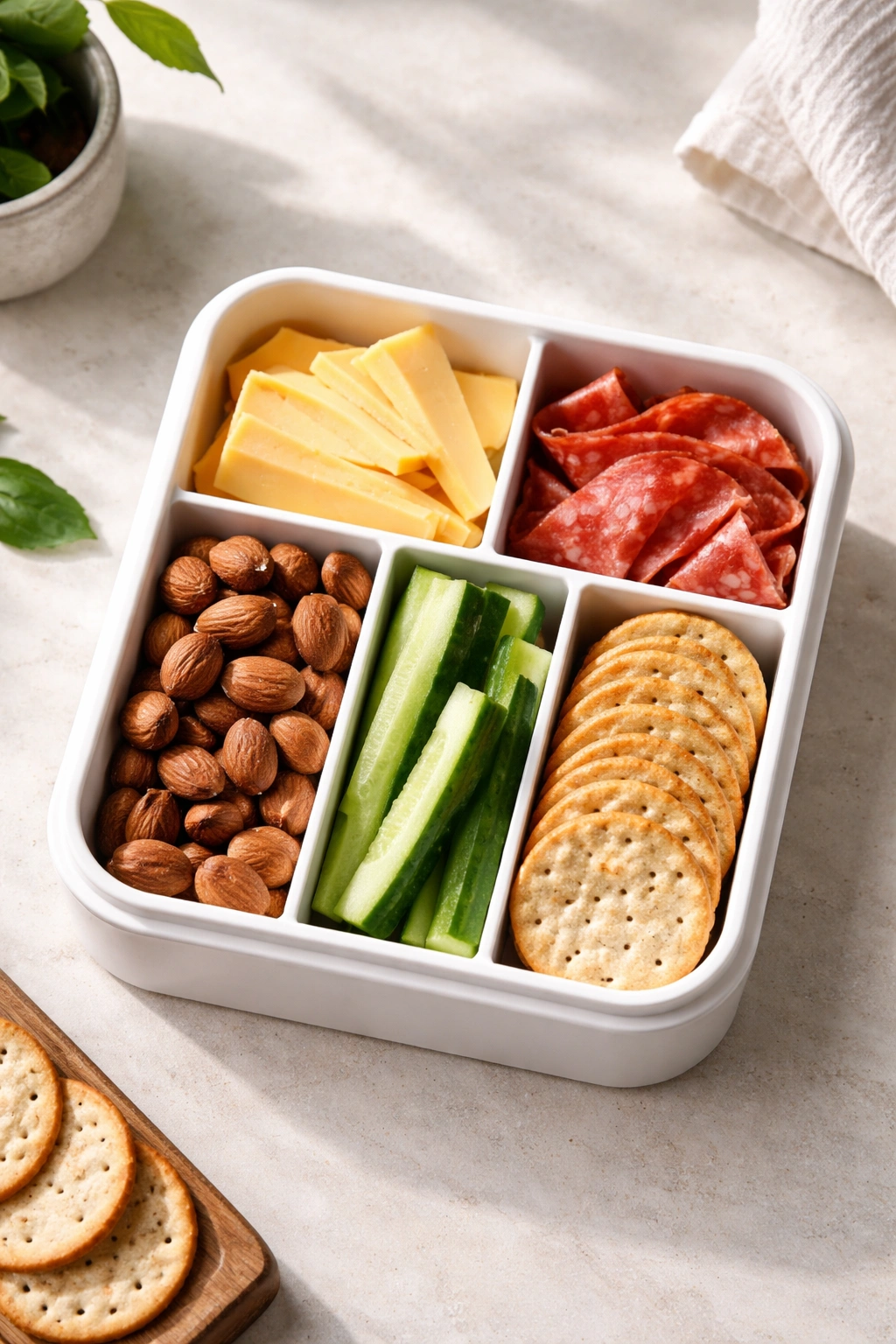
The beauty of adult lunchables is that they feel indulgent and special while actually being straightforward to assemble and genuinely nutritious. You’re not limiting yourself to what large food companies decided to package together. You’re building exactly what satisfies you, nourishes you, and fits your actual dietary needs.
Start simple: choose one aged cheese, one cured meat, one nut, one vegetable, and one cracker. Assemble a few boxes and eat them throughout the week. Notice what you genuinely enjoyed and what you’d swap next time. Build from there, gradually expanding your combinations as you discover what you actually crave.
The secret isn’t complicated techniques or fancy ingredients, though both help. It’s consistency and intention. When you spend fifteen minutes each week assembling boxes that actually taste good and satisfy you, lunchtime stops being something you endure and starts being something you actually look forward to. That shift — from obligation to genuine pleasure — makes all the difference in actually maintaining the habit.
