



There’s something undeniably romantic about the clink of a cocktail glass, the shimmer of a perfectly chilled drink catching the light, and the moment you realize someone went to real effort to make something beautiful just for you. The white chocolate raspberry martini hits different on date night—it’s not your typical “grab a beer” kind of drink. It’s the kind of cocktail that says you’ve thought about this, planned it, and want the evening to feel a little more special than ordinary. The silky sweetness of white chocolate paired with the sharp brightness of fresh raspberries creates this sophisticated balance that feels indulgent without being cloying, and the fact that you’re making it from scratch rather than ordering it out adds an undeniable charm.
What makes this drink truly impressive is that it looks complicated to make, but it’s honestly straightforward once you understand the technique. No fancy bartending skills required—just an understanding of how flavors blend together, the importance of proper chilling, and a few essential tools. The cocktail itself sits in that magical space between dessert and aperitif. It’s creamy and luscious from the white chocolate liqueur, sharp and fresh from real raspberries, and silky-smooth from a touch of cream. Serve it early in your date night and it’ll set a sophisticated mood. Serve it after dinner and it becomes a decadent dessert in a glass.
The beauty of mastering this drink is that you can make it consistently excellent, which means date night becomes something you can actually look forward to creating together. You’re not stressing about proportions or second-guessing whether you’ve done it right—you know exactly what goes into the glass and why, which frees you up to actually enjoy the evening instead of mentally troubleshooting your cocktail technique.
Why This Martini Works for a Date Night at Home
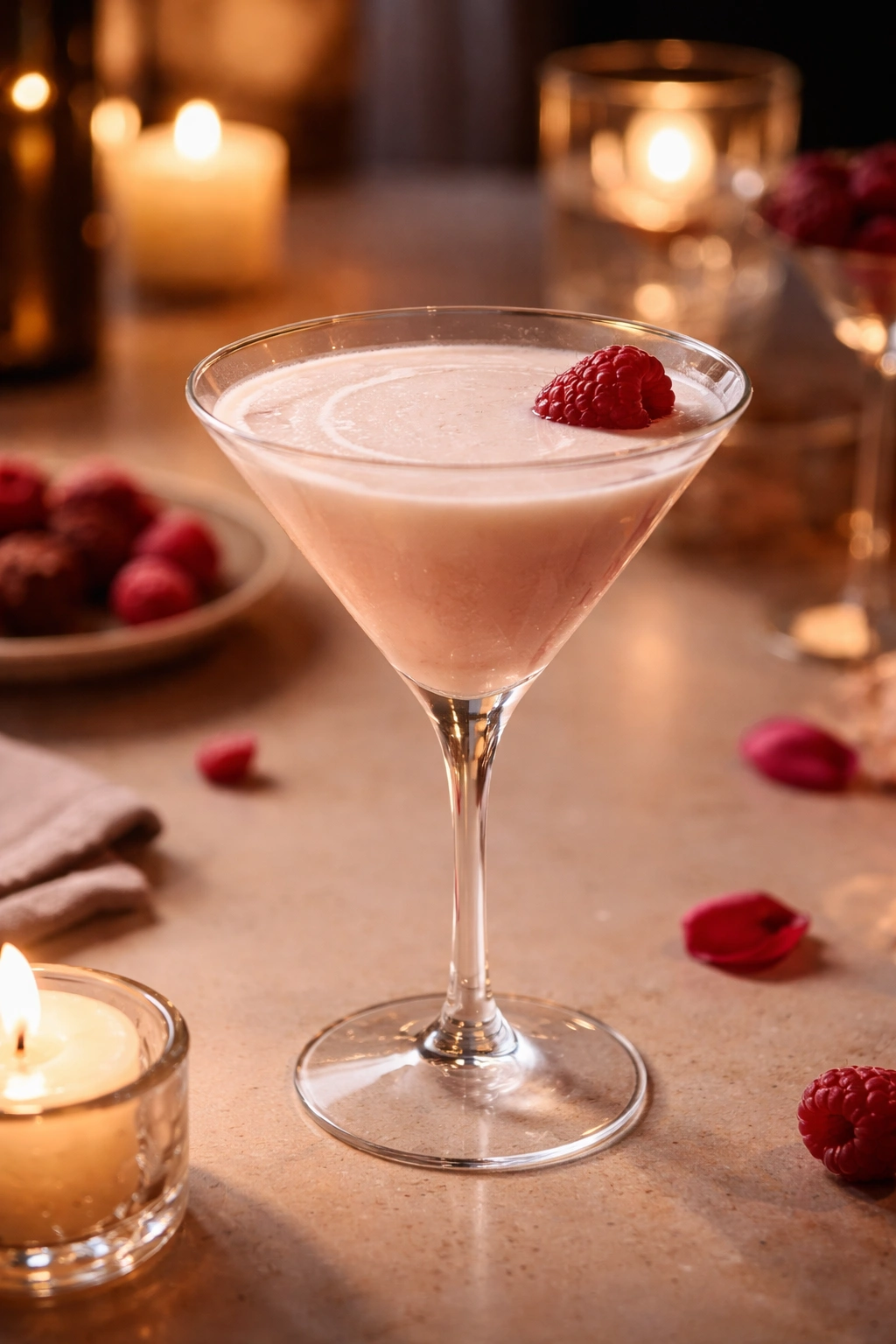
Making cocktails together becomes a small ritual that transforms an ordinary evening into something you’ve both chosen to invest time in. The white chocolate raspberry martini specifically works because it’s visually striking—that pale cream color with a garnish of fresh raspberries looks like something from a high-end cocktail bar, which means your effort gets immediately appreciated the moment you hand it over.
The flavor profile hits multiple pleasure points simultaneously. You get sweetness (but sophisticated, not candy-like), tartness from the raspberries, a hint of vanilla, and that luxurious mouthfeel from the cream and white chocolate. Nobody’s going to take a sip and feel like they’re drinking something too sweet or artificial-tasting. Instead, they’re going to taste actual quality ingredients and care.
Why It Beats Store-Bought Cocktails
Making this at home costs less than ordering two of these drinks at a bar, tastes fresher because you’re using real raspberries (not syrup), and comes with the intangible bonus that comes from effort. Your date isn’t just getting a drink—they’re getting tangible proof that you wanted to make the evening special. That matters more than you might think.
The drink also scales beautifully. Make it in proper 5-ounce portions on date night, or scale up the batches if you’re hosting friends. It actually freezes reasonably well in a pitcher (we’ll get into that), so you could even prep most of the work ahead of time if you’re hosting.
The Story Behind White Chocolate and Raspberry as a Pairing
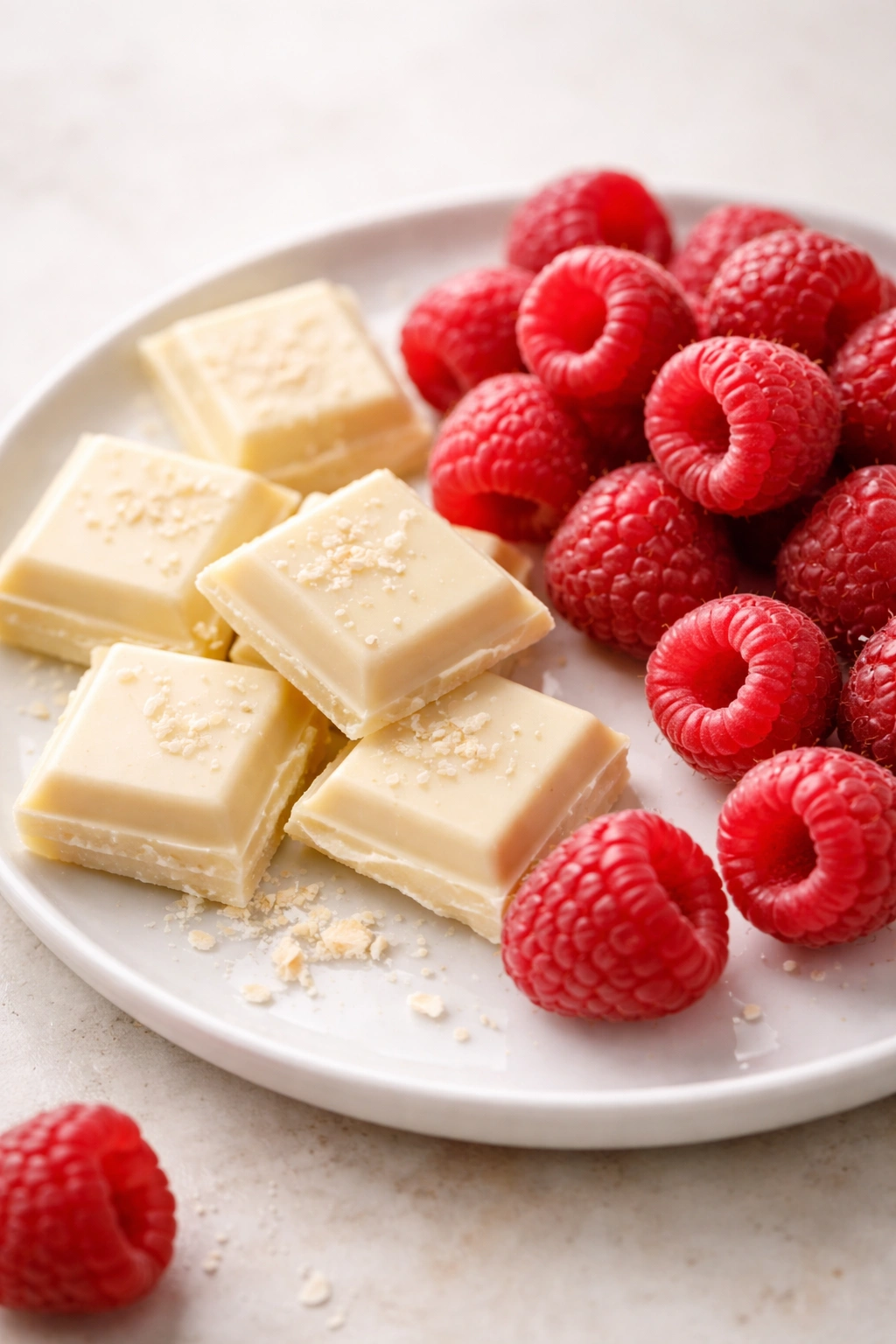
White chocolate and raspberry is actually a pairing that shows up in fine dining and pastry for a reason—they belong together. Raspberry’s bright tartness cuts through white chocolate’s richness and sweetness, creating balance instead of cloying excess. The flavor combination is old enough to be classic, but recent enough in cocktail culture that it still feels modern and intentional when you serve it.
The reason this works in a martini specifically is the dilution and the alcohol base. When you shake a cocktail properly, you’re not just mixing ingredients—you’re adding water from the ice, which opens up the flavors and prevents them from feeling overly concentrated. The vodka provides a neutral backbone that lets the white chocolate and raspberry shine without competing flavors muddying the waters.
Historically, white chocolate liqueurs became trendy in bars starting in the 1990s and 2000s, which means cocktails built around them are refined enough to feel intentional but accessible enough that most liquor stores carry the basic ingredients. You’re not hunting for rare or obscure bottles—you’re working with established, recognizable spirits that just happen to create something elegant when combined thoughtfully.
Understanding the Key Ingredients and How They Work Together
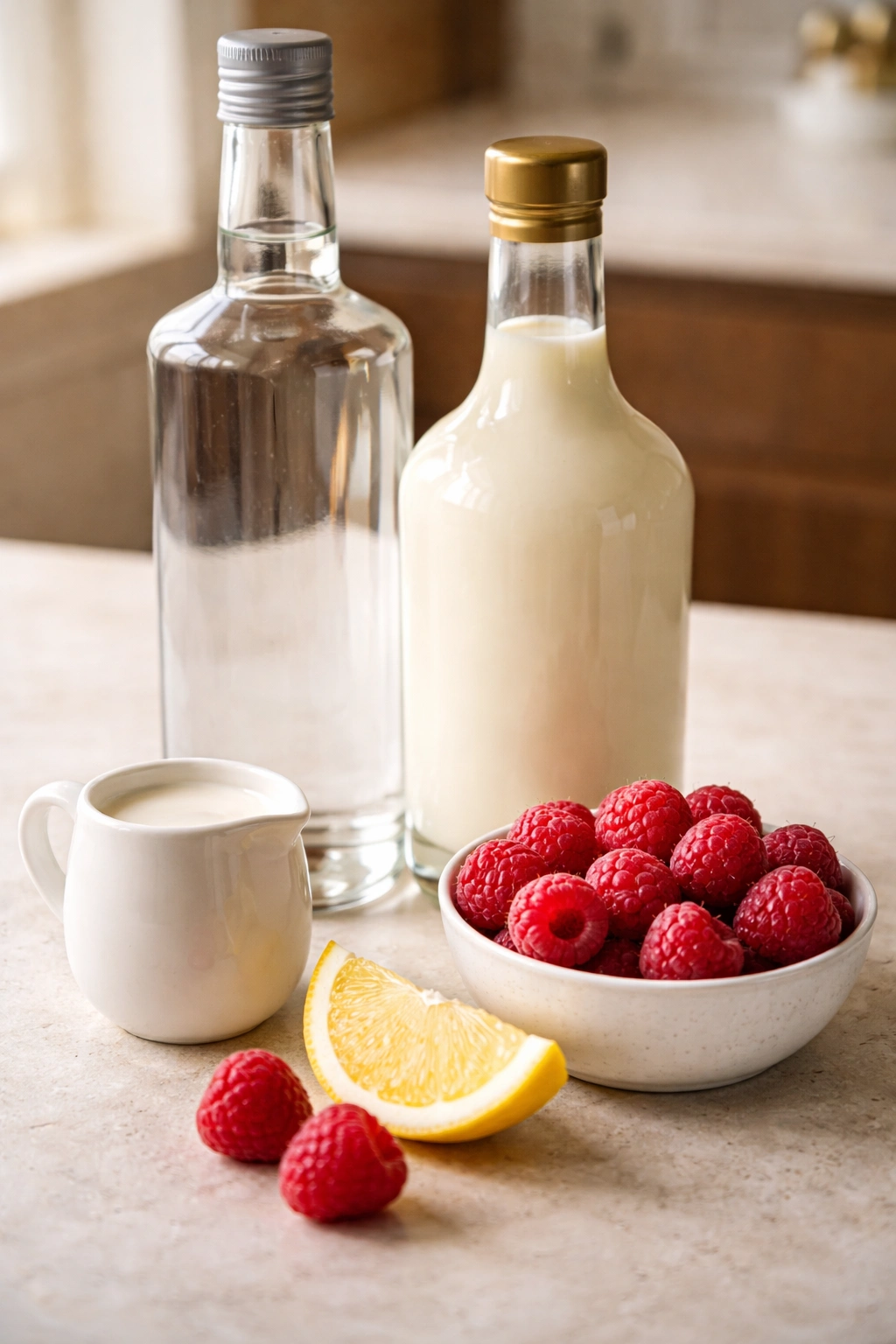
Before we jump into the recipe, let’s talk about why each ingredient matters and what it contributes to the final drink. This isn’t just about throwing things together—understanding the why behind each component makes you a better cocktail maker.
Vodka is your base spirit. You want something clean and neutral (nothing flavored or expensive—a mid-range vodka is perfect for cocktails). Vodka doesn’t add its own flavor; it provides alcohol and a silky texture that carries the other flavors without competing. The slight warmth and texture of the vodka is what makes this feel like a proper cocktail rather than a sweet drink.
White chocolate liqueur (like Godiva or Monin) is where the signature flavor comes from. This isn’t melted chocolate—it’s a liqueur that combines cocoa butter and vanilla with sweetness and alcohol. What makes white chocolate liqueur different from regular chocolate liqueur is the absence of cocoa solids, which keeps the drink pale and creamy instead of dark brown.
Fresh raspberries add tartness, flavor, and texture. Frozen raspberries work too, but fresh ones crush more easily and integrate into the drink more elegantly. The raspberry flavor needs to be bright enough to cut through the sweetness of the white chocolate liqueur—this is why fresh fruit matters here.
Heavy cream (or sometimes white crème de cacao, depending on your method) adds that silky, luxurious mouthfeel. A quarter-ounce to half-ounce is enough to round out the flavors without making the drink taste like dessert soup. The cream coats your palate and makes the drink feel more sophisticated than it would be without it.
Fresh lemon juice is critical because it provides acid that balances the sweetness. This is the ingredient many home bartenders forget or skimp on, and it’s actually what makes the difference between a drink that’s “sweet” and one that’s “balanced.” You need about a half-ounce, and it must be fresh (bottled lemon juice will make a noticeable difference in quality).
Powdered sugar (optional, for simple syrup) rounds out the sweetness and creates a silky texture. A small amount (about a quarter-ounce) is enough. This prevents the drink from tasting sharply alcoholic and creates the right balance between sweet and tart.
Serving Details and Timing Information
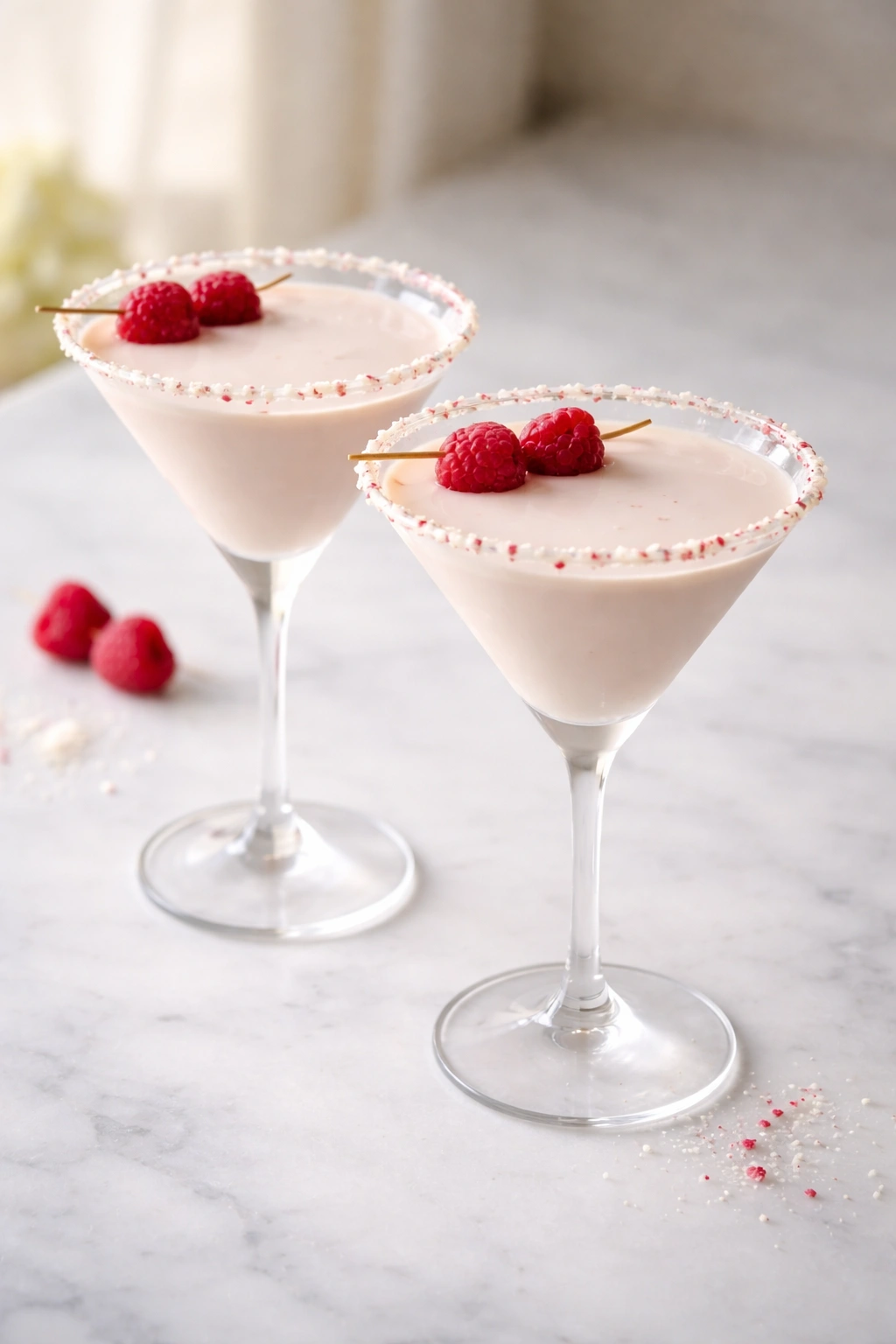
Yield: Makes 2 cocktails (5 ounces each—proper martini portions)
Prep Time: 5 minutes (assuming you have ingredients assembled)
Chill Time: The glasses should be chilled for at least 2 minutes in the freezer or 5 minutes in an ice bucket filled with ice water. This is not optional—the drink’s texture and temperature depend on proper chilling.
Total Time: 10 minutes (including chilling and shaking)
Difficulty: Beginner to Intermediate — You don’t need bartending experience, but you do need a cocktail shaker and a basic understanding of how to shake properly (which we’ll cover in detail). If you’ve made any shaken cocktails before, this is easy. If you’re new to cocktail making, read the instructions carefully and take your time with the technique.
Best Served: Immediately after shaking, in chilled glasses. This drink doesn’t sit well—make it when you’re ready to drink it.
Special Note: If you’re making this for a date night dinner where you want minimal time away from the table, prep everything except the shaking ahead of time (ingredients measured, glasses in the freezer, raspberries rinsed). Then shake and serve in under two minutes.
What You’ll Need: The Complete Ingredient List
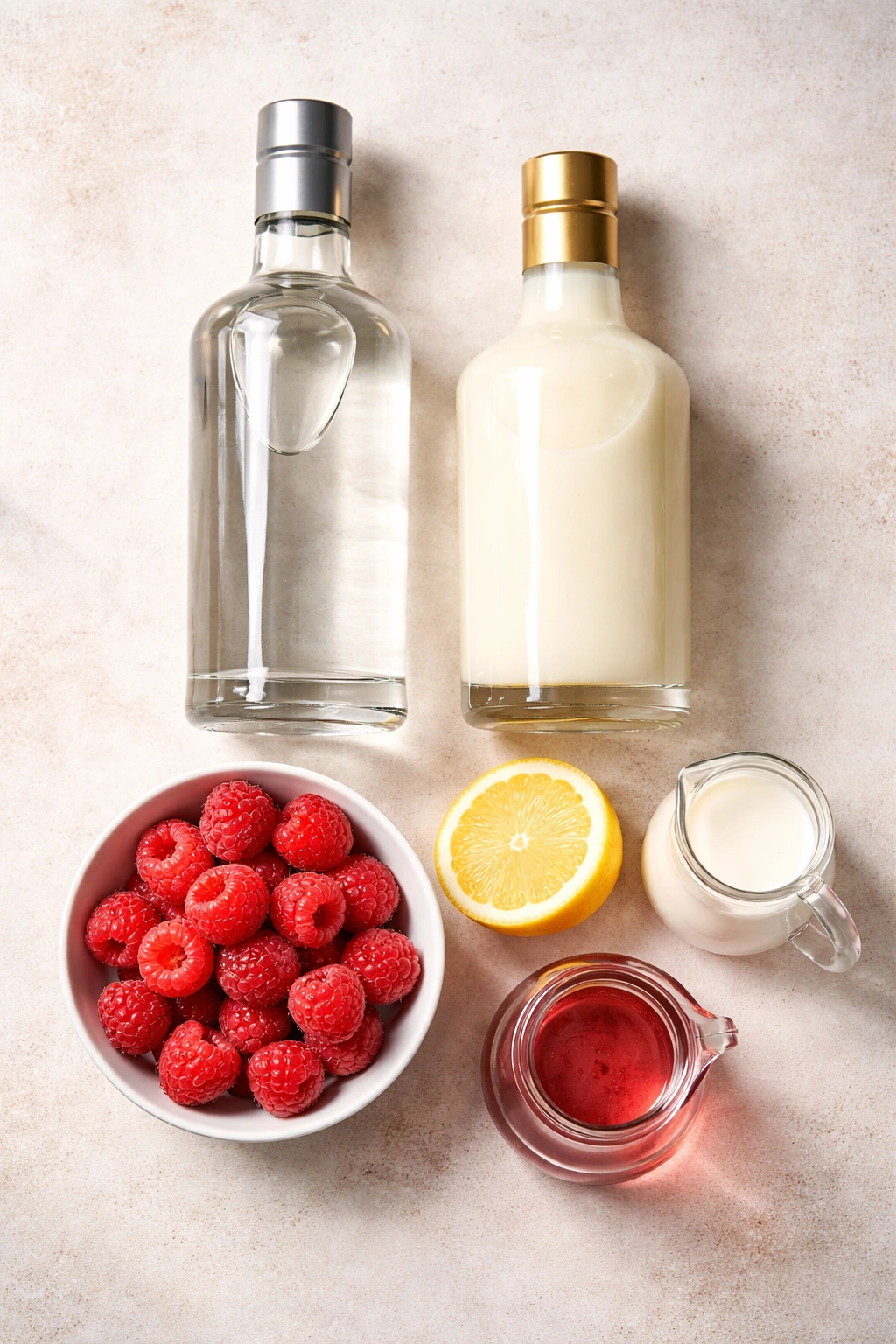
For the Cocktail (makes 2 drinks):
- 2 ounces vodka (40 ml, or about 1.5 standard bar jiggers)
- 1.5 ounces white chocolate liqueur, such as Godiva Liqueur or Monin White Chocolate (approximately 45 ml)
- 1 ounce fresh heavy cream (30 ml, or 2 standard bar teaspoons)
- 0.5 ounces fresh lemon juice, squeezed from half a fresh lemon (15 ml)
- 0.5 ounces simple syrup or powdered sugar syrup (15 ml; see note below on making this)
- 6-8 fresh raspberries, plus additional raspberries for garnish
- Ice (lots of it—both for chilling glasses and for shaking)
For Simple Syrup (if making from scratch):
- 1 cup water
- 1 cup granulated sugar
Note on Simple Syrup: If you don’t have simple syrup on hand, you can make it in five minutes by heating equal parts water and sugar until the sugar dissolves, then letting it cool completely before using. Alternatively, you can substitute with a quarter-ounce of powdered sugar stirred into a tiny bit of warm water to dissolve. Bottled simple syrup from any bar supply or grocery store works perfectly fine too. The syrup doesn’t need to be special—plain simple syrup is exactly what you need.
Substitution Notes: If you can’t find white chocolate liqueur, you can substitute with equal parts Frangelico (hazelnut liqueur) and crème de cacao, though the flavor will shift slightly away from pure white chocolate. If you prefer a lighter drink, use milk instead of heavy cream, though you’ll lose some of that luxurious mouthfeel. Some bartenders use aquafaba (the liquid from a can of chickpeas) as a vegan cream substitute, and it actually creates an impressive silky texture.
Essential Cocktail Equipment and Bar Tools
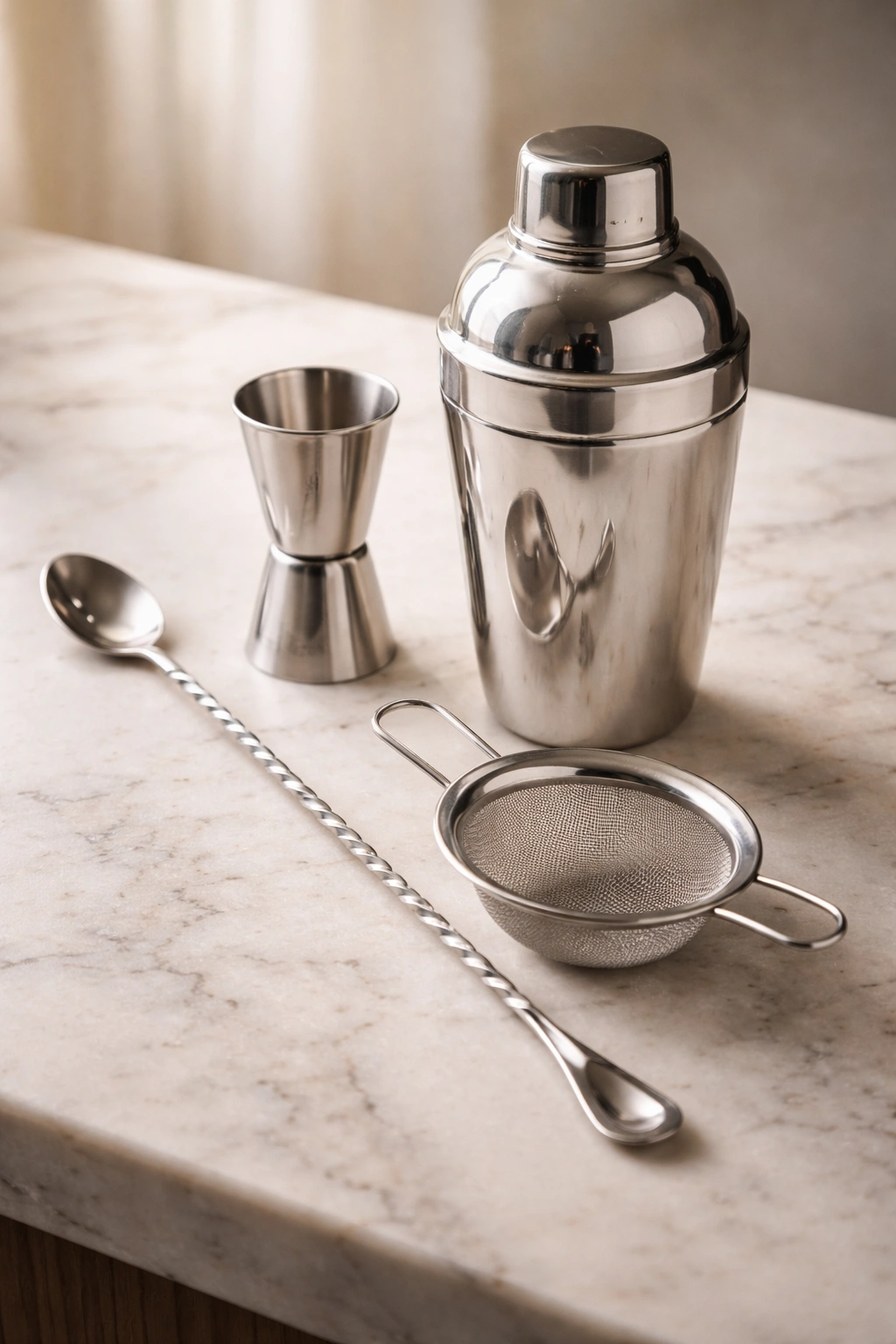
You don’t need a full bartender’s kit to make this properly, but a few tools make an enormous difference. Here’s exactly what you need:
A cocktail shaker is non-negotiable. A Boston shaker (the two-piece metal shaker that professionals use) is ideal, but a basic lever-top cocktail shaker or even a covered mason jar works if that’s what you have. What matters is that it has enough room to hold ice and all the liquid without overflowing, and that you can seal it completely so you can shake vigorously without spilling.
A jigger (shot measure) ensures you’re using the right proportions. Standard jiggers measure 1.5 ounces on one end and 0.5 ounces on the other, which gives you the common measurements this recipe uses. If you don’t have a jigger, a standard shot glass (1.5 ounces) works, and you can estimate smaller amounts with a regular measuring spoon (a tablespoon is roughly half an ounce).
A bar spoon or long-handled spoon is useful for stirring ingredients together before shaking, though not absolutely essential. A regular teaspoon works in a pinch.
A fine-mesh strainer (not always essential, but helpful if you don’t want crushed ice or raspberry pulp in the final drink). You can also use a regular kitchen colander held over the shaker, or just accept that a few raspberry bits in the glass adds charm.
Chilled martini glasses or coupe glasses are what you’ll serve this in. Two standard martini glasses hold about 5 ounces each, which is exactly the right size for this cocktail. The shape matters because martini glasses are designed to keep the drink’s temperature stable and because the narrow top concentrates the aromas, which matters when you’re savoring a drink like this. If you don’t have martini glasses, coupe glasses, wine glasses, or even regular drinking glasses work—the flavor is the same, just the presentation shifts slightly.
Fresh raspberries for garnish—these add flavor, aroma, and visual appeal. Buy them a day or two before you plan to make this so they’re fresh but not at peak ripeness (peak ripeness means they fall apart more easily when you try to use them).
How to Make This Cocktail: Step-by-Step Instructions
The technique matters as much as the ingredients here. Follow these steps precisely, and you’ll get a cocktail that tastes professional-quality. Cut corners and you’ll notice the difference immediately.
Prepare Your Glasses and Station:
-
Fill two martini glasses or coupe glasses with ice water or place them in the freezer for at least 2 minutes (up to 30 minutes is fine). The glasses absolutely must be ice-cold—this is how you prevent the finished drink from warming up too quickly and losing its silky texture. If you’re using an ice water bath instead of a freezer, use a glass or bowl deep enough to submerge the glasses at least halfway.
-
Measure out all your ingredients into individual small vessels or shot glasses before you start shaking. This is called “mise en place” in cooking, and it’s essential for cocktails because once you start shaking, you need to work quickly. Have your vodka, white chocolate liqueur, cream, lemon juice, simple syrup, raspberries, and strainer all within arm’s reach.
-
Fill your cocktail shaker about two-thirds full with ice. Use fresh ice, not ice that’s been sitting in a bowl and is starting to melt—you want hard, cold ice that will chill the drink rapidly without diluting it too much.
Advertisements
Build and Shake the Cocktail:
-
Add 2 ounces of vodka to the shaker first. The order doesn’t matter technically, but starting with vodka makes it easier to eyeball everything.
-
Add 1.5 ounces of white chocolate liqueur. This is where the signature flavor comes from, so measure this accurately.
-
Add 1 ounce of heavy cream. Pour it slowly and carefully so it doesn’t splash.
-
Add 0.5 ounces of fresh lemon juice. This is the balance that prevents the drink from tasting overly sweet—don’t skip it.
-
Add 0.5 ounces of simple syrup or powdered sugar syrup.
-
Add the raspberries—six to eight fresh ones—directly into the shaker. This is important: you’re going to muddle (gently crush) these raspberries so they release their flavor into the drink. Using a muddler or the handle of a bar spoon, gently press the raspberries against the bottom and sides of the shaker for about 10 seconds. Don’t over-muddle—you want to break the raspberries open and release their juice, but not pulverize them into bits. Gentle pressure for 10 seconds is exactly right.
-
Seal the shaker tightly by placing the mixing cap on top (or closing your lever-top shaker). Place your hand firmly over the seal to make sure it’s airtight—nothing ruins a cocktail faster than a shaker that leaks halfway through.
-
Shake vigorously for 10-12 seconds. This is the critical step. You want to shake hard and fast enough that you can feel the ice tumbling inside the shaker. The sound should be a vigorous rattling, not a gentle slosh. This accomplishes three things: it chills the drink rapidly to the correct temperature, it dilutes the drink slightly (which makes it smoother and less alcoholic-tasting), and it incorporates air, which creates the silky, almost velvety texture that makes this drink special. Don’t be timid—real bartenders shake hard.
-
Stop shaking when the outside of the shaker becomes frosty and cold to the touch (usually around 10-12 seconds in). The drink is now perfectly chilled.
Advertisements
Strain and Serve:
-
Remove the empty martini glasses from the freezer or ice bath and quickly dry them with a clean towel.
-
Strain the drink into the two glasses using a fine-mesh strainer (or pour carefully over the back of a bar spoon if you don’t have a strainer) to separate the liquid from the ice and raspberry pulp. Pour slowly and deliberately so the drink flows smoothly and fills both glasses equally. Do this quickly—once the shaker is opened, the drink is warming up, so you want to get it into the glasses within 10-15 seconds.
-
Divide the strained drink evenly between the two glasses. You should have approximately 5 ounces in each glass (2.5 ounces of original liquid plus about 2.5 ounces of ice water from the melted ice, plus a small amount from the cream and lemon juice).
Garnish and Finish:
-
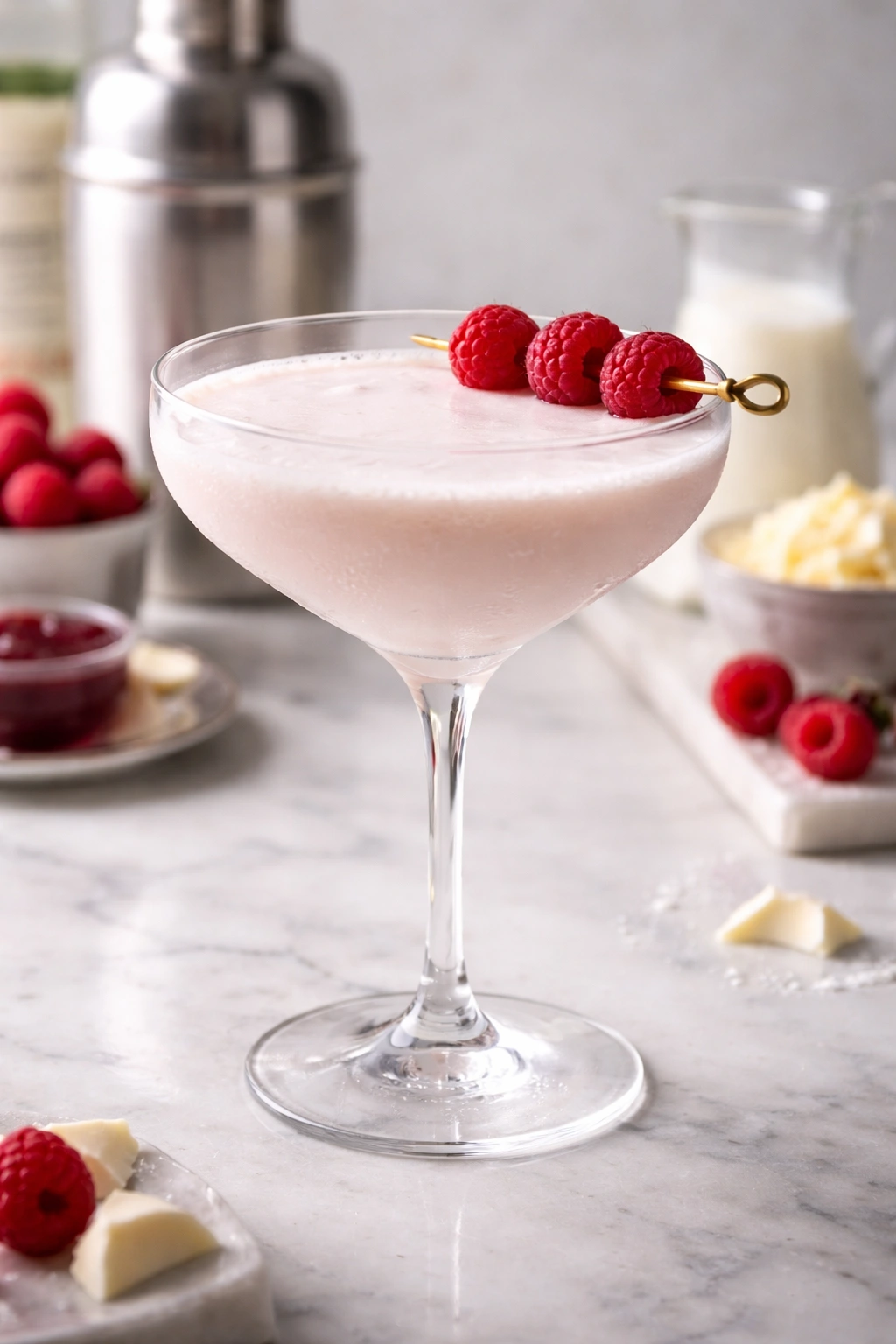
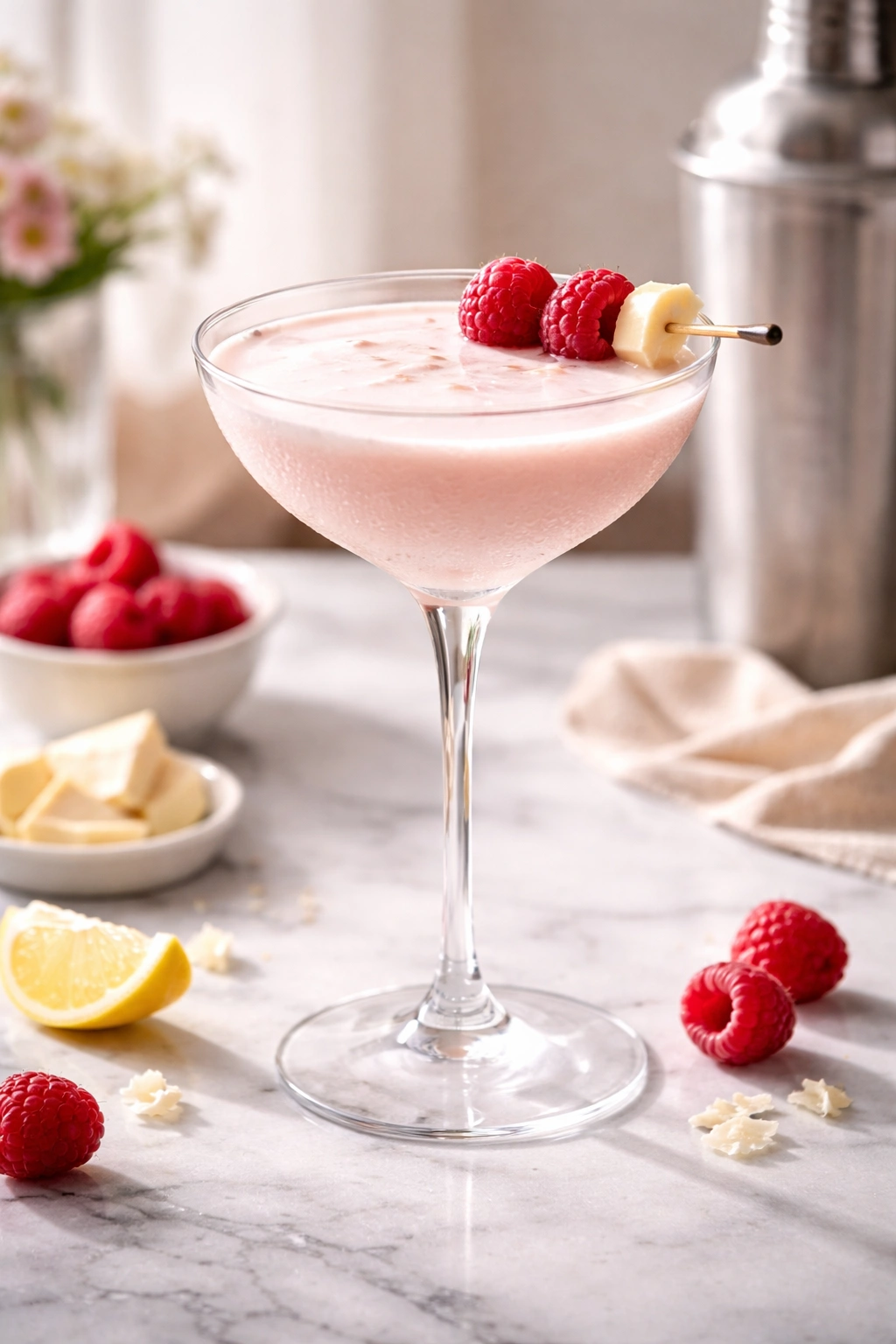
Garnish each glass with 2-3 fresh raspberries threaded onto a cocktail pick (a small skewer), or simply drop them into the glass. The raspberries serve three purposes: they add a visual pop of color, they hint at the flavor inside, and you can eat them after you finish drinking (they taste amazing soaked in the cocktail).
-
Optional but recommended: add a thin spiral of white chocolate shavings (using a vegetable peeler on a bar of white chocolate) over the top of the drink. This adds an elegant visual touch and reinforces the white chocolate flavor.
-
Serve immediately while the drink is still ice-cold. Hand the glass to your date with confidence—you’ve just made something that tastes like it came from a proper cocktail bar.
Pro Tips for Making This Drink Perfectly Every Time
Shake with confidence, not hesitation. The shaking step looks intimidating the first time, but it’s actually straightforward once you understand that you’re trying to chill the drink and create texture, not gently mix things. Real bartenders shake hard. Your drink will taste noticeably better when you shake with proper vigor.
Use fresh lemon juice without exception. This is the ingredient that most people either skip or use bottled for, and it’s actually the difference between a drink that tastes balanced and one that tastes cloyingly sweet. Fresh lemon juice takes 30 seconds to squeeze from half a lemon—it’s worth it. You’ll taste the difference immediately.
Chill your glasses in the freezer, not just with ice water. The freezer method is more reliable and creates a more consistent chill. If you’re chilling multiple glasses, put them in the freezer when you start prepping ingredients, and they’ll be perfectly cold by the time you’re ready to strain.
Measure everything precisely the first time you make this. Once you’ve made it once and understand how the flavors balance, you can start tweaking (a touch more lemon if you like it tarter, a touch more cream if you want it silkier). But the first time, follow the recipe exactly. Cocktails are actually chemistry, and proportions matter.
Muddle the raspberries gently but deliberately. The goal is to break them open and release juice, not to create a paste. About 10 seconds of gentle pressure is exactly right. Under-muddling leaves the raspberries mostly whole, which means less flavor. Over-muddling creates bitter notes from the seeds.
Shake for the full 10-12 seconds, no shortcuts. The drink isn’t just chilled—it’s chilled, diluted slightly (which makes it smoother), and aerated (which creates texture). This all happens during the shake. Shaking for only 5 seconds and you’ll notice the drink tastes sharp and alcoholic instead of smooth.
Don’t skip the straining step. The fine-mesh strainer keeps ice chips and raspberry pulp out of the finished drink, which makes a huge difference in the texture and presentation. If you don’t have a strainer, you can pour the drink carefully over the back of a bar spoon, which creates a barrier that catches most of the solid material.
Taste the raspberries before you use them. If they’re very tart, you might want to reduce the lemon juice slightly (add just a touch less). If they’re very sweet, you might want to add slightly more lemon. Raspberries vary in tartness depending on variety and season, so tasting them first lets you adjust the balance.
Common Mistakes That Ruin This Cocktail (and How to Avoid Them)
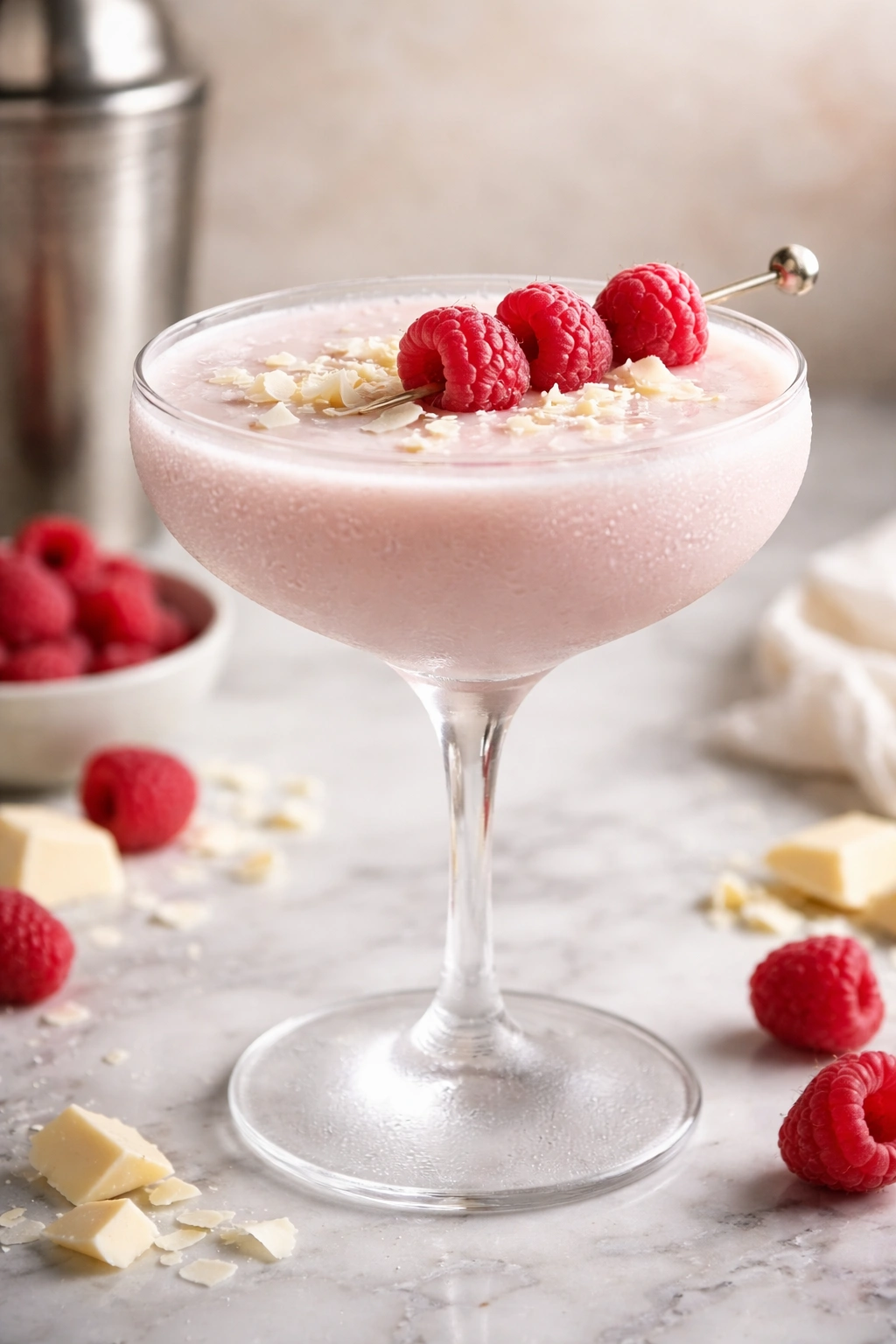
Using bottled lemon juice instead of fresh. This is the single biggest mistake people make with this drink. Bottled lemon juice tastes oxidized and bitter compared to fresh. There’s no substitute for fresh. If you absolutely can’t find fresh lemons, skip the drink rather than making it with bottled juice—that’s how much of a difference this makes.
Not shaking hard enough. If you’re shaking gently or timidly, the drink won’t get cold enough, and it won’t develop the right texture. The drink should feel very cold to the touch and taste smooth, not sharp. If it tastes too alcoholic or the temperature isn’t right, you didn’t shake hard enough.
Using warm or room-temperature glasses. Warm glasses will warm up the drink immediately. This is why chilling the glasses is non-negotiable. Some home bartenders think it’s unnecessary; they’re wrong. The difference between a drink served in a warm glass and a properly chilled glass is the difference between something okay and something excellent.
Measuring by eye instead of using a jigger. You might think you know what a “splash” of cream looks like, but cream proportions matter. Too much cream and the drink tastes heavy. Too little and it’s missing the silky texture. Use a jigger (or measuring spoon) for precision.
Over-muddling the raspberries. If you press hard for 30 seconds instead of gently for 10, you’ll crush the seeds, which release bitter tannins. The drink will taste slightly off without you being able to pinpoint exactly why. Gentle pressure for 10 seconds is exactly right.
Letting the drink sit in the shaker after you’ve finished shaking. Once the cocktail is mixed, it’s warming up. You have about 15 seconds to strain it into glasses. Waiting longer means the drink warms up and starts to taste diluted and flat.
Using low-quality white chocolate liqueur. Cheap white chocolate liqueur tastes fake and artificial. You don’t need an expensive bottle, but mid-range brands like Godiva or Monin taste dramatically better than the bottom-shelf options. This is one place where the liquor quality actually matters.
Forgetting the simple syrup completely. Some home bartenders skip this thinking they’ll reduce overall sweetness. The simple syrup isn’t there to make it sugary—it’s there to round out the texture and prevent the drink from tasting sharp. Without it, the drink tastes more alcoholic than sophisticated. Don’t skip it.
Serving the drink too warm. If the drink sits for more than 30 seconds before you taste it, it starts warming up. The texture becomes thinner, and it doesn’t taste as good. Make the drink, serve immediately, and enjoy it while it’s still ice-cold.
Creative Variations to Customize This Drink
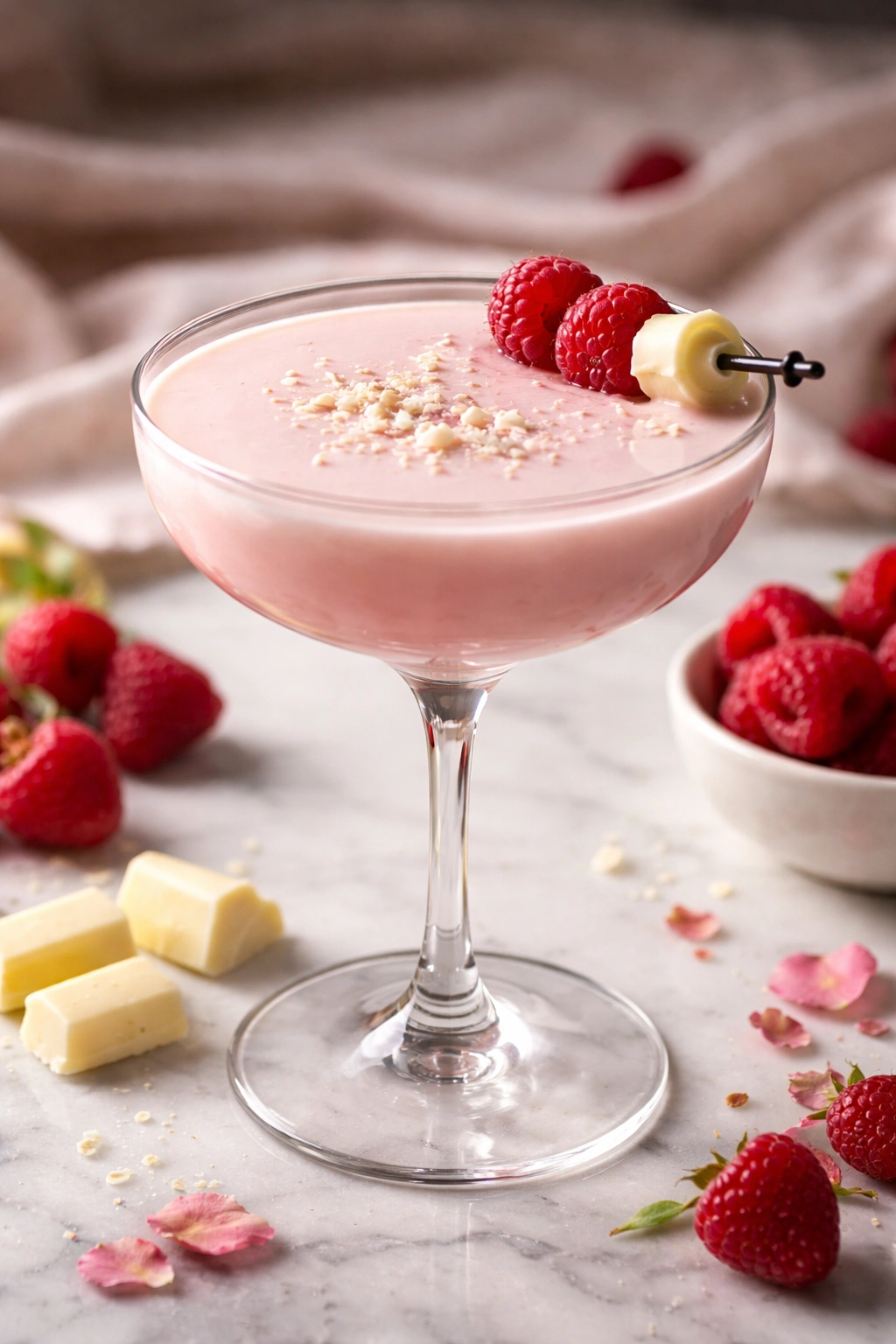
The beauty of this cocktail is that it adapts beautifully to different flavor preferences and ingredient availability. Here’s how to make variations that taste intentional rather than haphazard.
Strawberry Version: Replace the raspberries with fresh strawberries (about the same quantity—6-8 medium-sized pieces). Strawberries are slightly sweeter and less tart than raspberries, so reduce the simple syrup to 0.25 ounces and increase the lemon juice to 0.75 ounces. The result is a slightly less sweet drink with softer fruit flavor. Strawberry and white chocolate is a classic pairing in pastry, so this variation tastes equally sophisticated.
Blackberry Version: Blackberries are more robust and earthy than raspberries. Use 6-8 blackberries (they’re larger than raspberries, so fewer pieces) and muddle them the same way. The flavor will be more complex and less conventionally sweet—add this if you want the drink to feel a little more “grown-up” and less dessert-like.
Spiced White Chocolate Version: Keep the raspberries but add a small pinch of cayenne pepper or 1-2 drops of vanilla extract to the shaker. The cayenne adds a subtle heat that contrasts beautifully with the sweetness. The vanilla deepens the white chocolate flavor without making it more intensely sweet. Add these before you shake, and they’ll integrate perfectly.
Champagne or Prosecco Float: Make the drink as written, but instead of filling the glass completely, pour about 3.5 ounces of the strained cocktail into the glass, then top with 1-1.5 ounces of cold Champagne or Prosecco. This creates a lighter, more bubbly version that feels less indulgent but still sophisticated. The bubbles make the drink feel celebratory—perfect for toasting on date night.
Non-Alcoholic Version: Replace the vodka and white chocolate liqueur with 2 ounces of white chocolate syrup diluted with a touch of water, add the raspberries, cream, lemon juice, and simple syrup as written, skip the alcohol entirely, and shake with extra ice. It won’t taste identical to the alcoholic version, but it will taste delicious in its own right—silky, fruity, and indulgent.
Coconut Raspberry Version: Add 0.5 ounces of coconut liqueur (like Malibu) and reduce the white chocolate liqueur to 1 ounce. This shifts the flavor toward tropical sweetness while keeping the white chocolate in the background. It’s lighter and more summery than the original.
Darker Chocolate Note: Some bartenders add a very small amount (just 0.25 ounces) of dark chocolate liqueur or chocolate bitters to the shake. This deepens the chocolate flavor and makes it less one-note. If you try this, taste carefully—too much dark chocolate overpowers the white chocolate and berries.
Storage, Make-Ahead Preparation, and Batch Cocktails
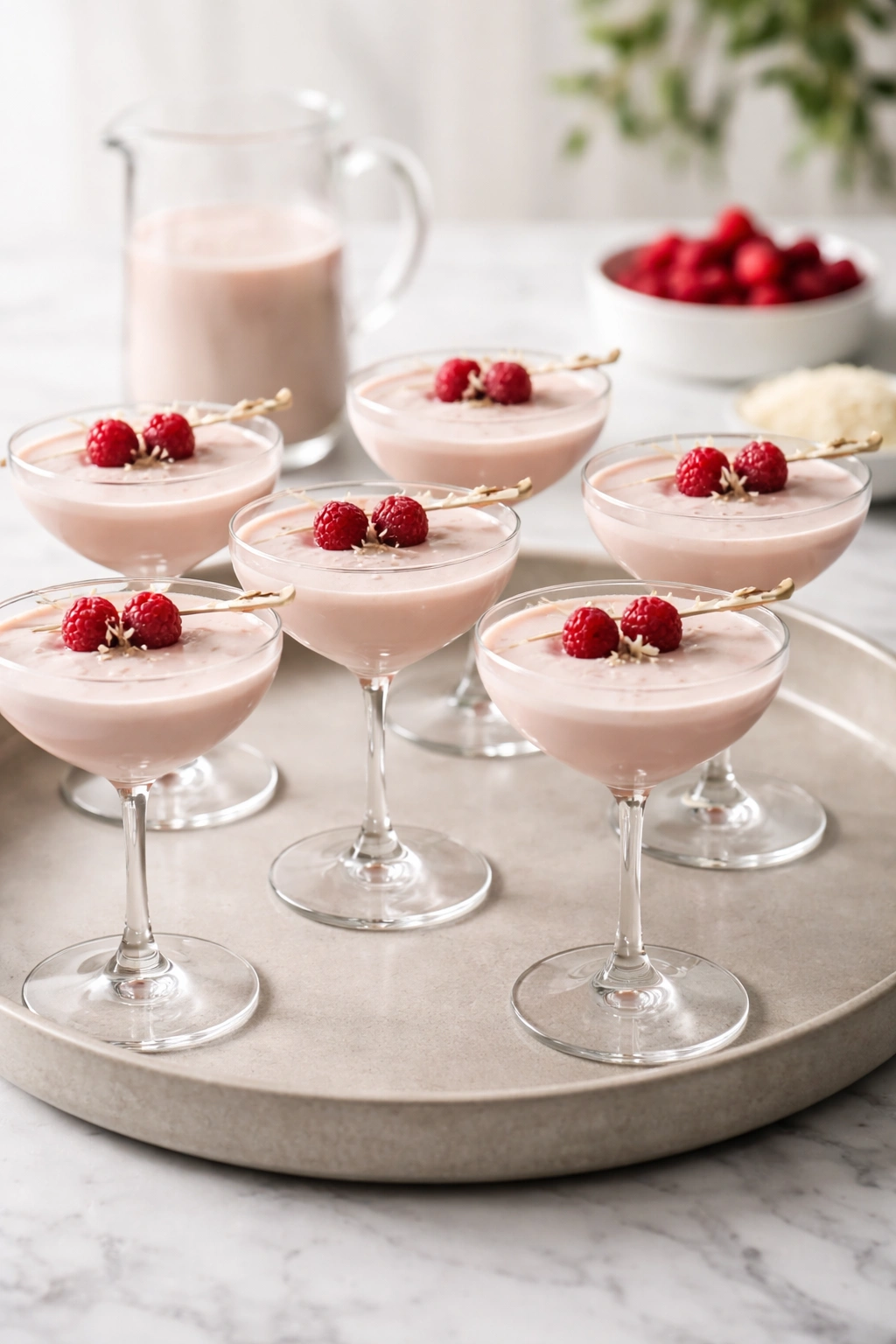
For Same-Day Enjoyment: Make the cocktail immediately before serving. It doesn’t store well—the texture breaks down, condensation dilutes it, and the raspberries start to look mushy. This is a drink that’s best fresh.
Prepping Ahead: You can do almost everything in advance except the actual shaking and straining. About 30 minutes before you want to drink this:
- Measure your vodka, white chocolate liqueur, cream, lemon juice, and simple syrup into separate small glasses or bottles and set them aside
- Rinse your raspberries and set them out to dry slightly
- Place your martini glasses in the freezer
- Fill your shaker with ice (or prepare to fill it when you start the actual recipe)
This means when you want to drink the cocktail, it’s just a matter of pouring the pre-measured ingredients into the shaker with raspberries, shaking, and straining. Total active time: two minutes.
For Batch Cocktails (if you’re serving more than two people): You can pre-batch the non-fruit portion of the drink, which makes serving easier. Calculate the total amount of vodka, white chocolate liqueur, cream, lemon juice, and simple syrup needed (multiply the per-drink amounts by the number of drinks), mix them together in a pitcher, cover, and refrigerate until you’re ready to serve. When ready, shake the batched mixture in your cocktail shaker along with fresh raspberries (about 3-4 raspberries per drink), then strain into chilled glasses. The reason you don’t pre-muddle the raspberries is that they start to break down and become mushy if they sit in liquid for too long—muddle them fresh right before you shake.
Freezing for Later: You can freeze a batch of this cocktail in a shallow pan (like a 9×13-inch baking dish). Make the full recipe, pour it into the pan, and freeze. Once frozen solid, break it into chunks and store in a freezer bag. To serve, place the frozen chunks in a glass and let them melt slowly—it becomes more of a slushie than a cocktail, but if you’re okay with that texture, it works. Fair warning: the texture changes noticeably, and the flavor becomes slightly less complex as it thaws. Fresh is always better.
How Long It Lasts: A properly stored batch in a sealed pitcher in the refrigerator stays good for about 24 hours, though the flavor is best within the first few hours. The raspberries will start to break down, and the drink’s texture will become thinner over time. If you’re making this for tomorrow night, store the non-raspberry ingredients together and add fresh raspberries when you’re ready to shake.
Pairing This Drink with the Perfect Date Night Dessert
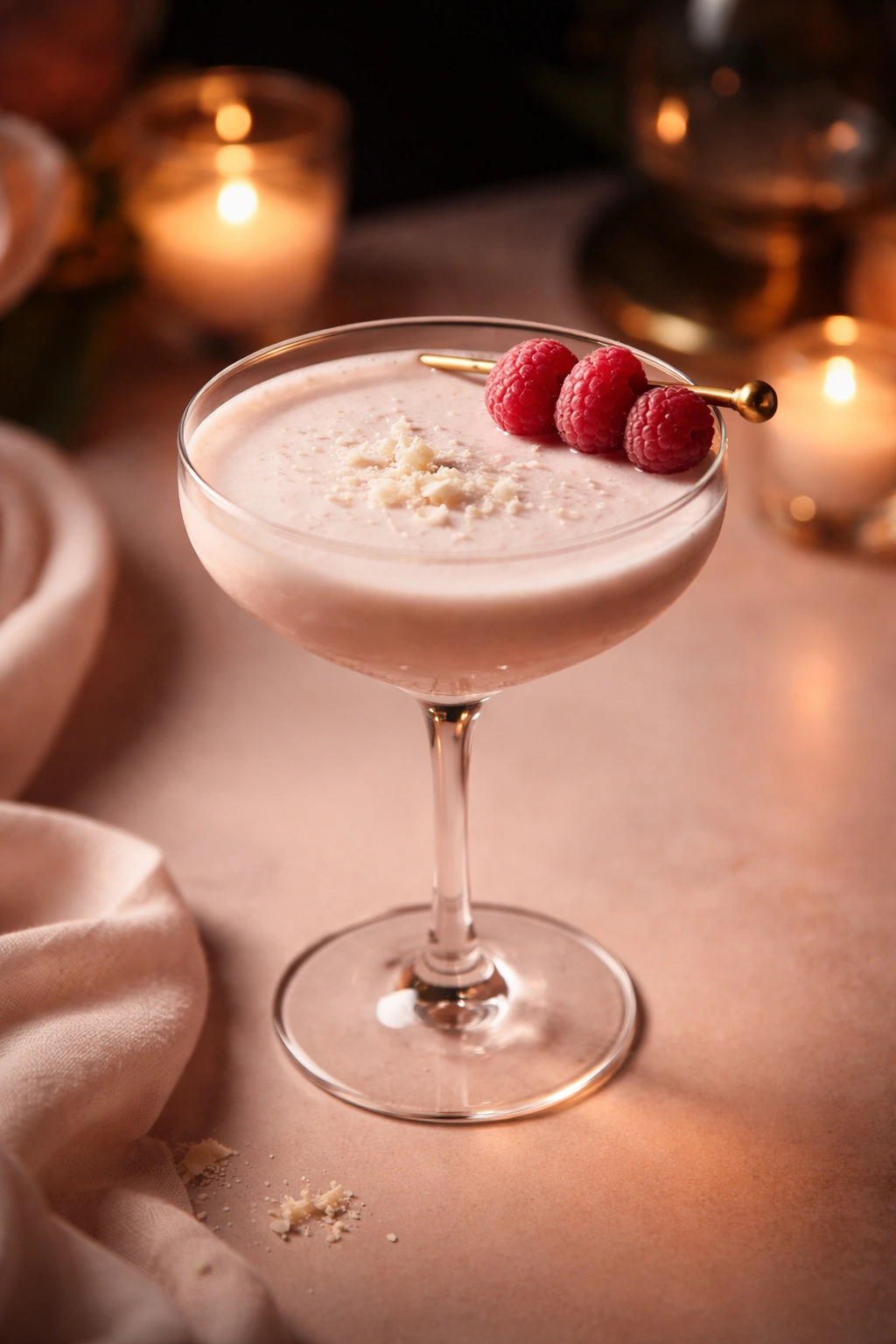
The white chocolate raspberry martini is sweet enough that it works as a dessert itself, but it also pairs beautifully with actual dessert if you want to go all-in on an indulgent date night. Here’s what works:
Chocolate Cake or Brownies: The raspberry in the drink complements darker chocolate beautifully. If you’re serving a rich chocolate dessert, this cocktail serves as a palate cleanser between bites—the tartness of the raspberry cuts through the chocolate richness, and the drink’s sweetness echoes the dessert without competing.
Vanilla Panna Cotta or Vanilla Cheesecake: White chocolate in the drink and vanilla in the dessert create a lovely echo that feels intentional. The raspberry provides brightness that prevents the pairing from feeling too heavy.
Raspberry Desserts (Raspberry Cheesecake, Raspberry Tart, Raspberry Mousse): This is almost cheating—you’re doubling down on the same flavors, which some people love and others find repetitive. If you go this route, try to find a dessert with slightly darker or earthier notes (like a chocolate-raspberry combination) to avoid too much flavor overlap.
Lemon Desserts: The tartness of both the cocktail and lemon dessert is a sophisticated pairing. A lemon posset or lemon tart would feel bright and elegant alongside this drink.
Cream-Based Desserts (Tiramisu, Mousse, Custard): The cream in the cocktail echoes the cream in these desserts, creating a textural harmony. These work beautifully.
Fruit-Based Desserts (Sorbet, Fruit Tart, Berries and Cream): Fresh fruit in the dessert echoes the fresh raspberries in the drink. A berry sorbet or a simple plate of mixed berries with whipped cream is sophisticated and doesn’t feel overly indulgent.
What to Avoid: Skip overly acidic desserts like key lime pie alongside this cocktail—the tartness becomes overwhelming. Also avoid very spicy or savory desserts (like chili chocolate or salt caramel)—the contrasts are too jarring when paired with the sweetness here.
Timing Tip: Serve the cocktail as an aperitif (before dinner), as dessert itself (skip a separate dessert entirely), or between courses. If you’re doing a full date-night meal with separate drinks and dessert, this works best as the dessert course rather than an aperitif.
Why Serving This Cocktail on Date Night Actually Matters
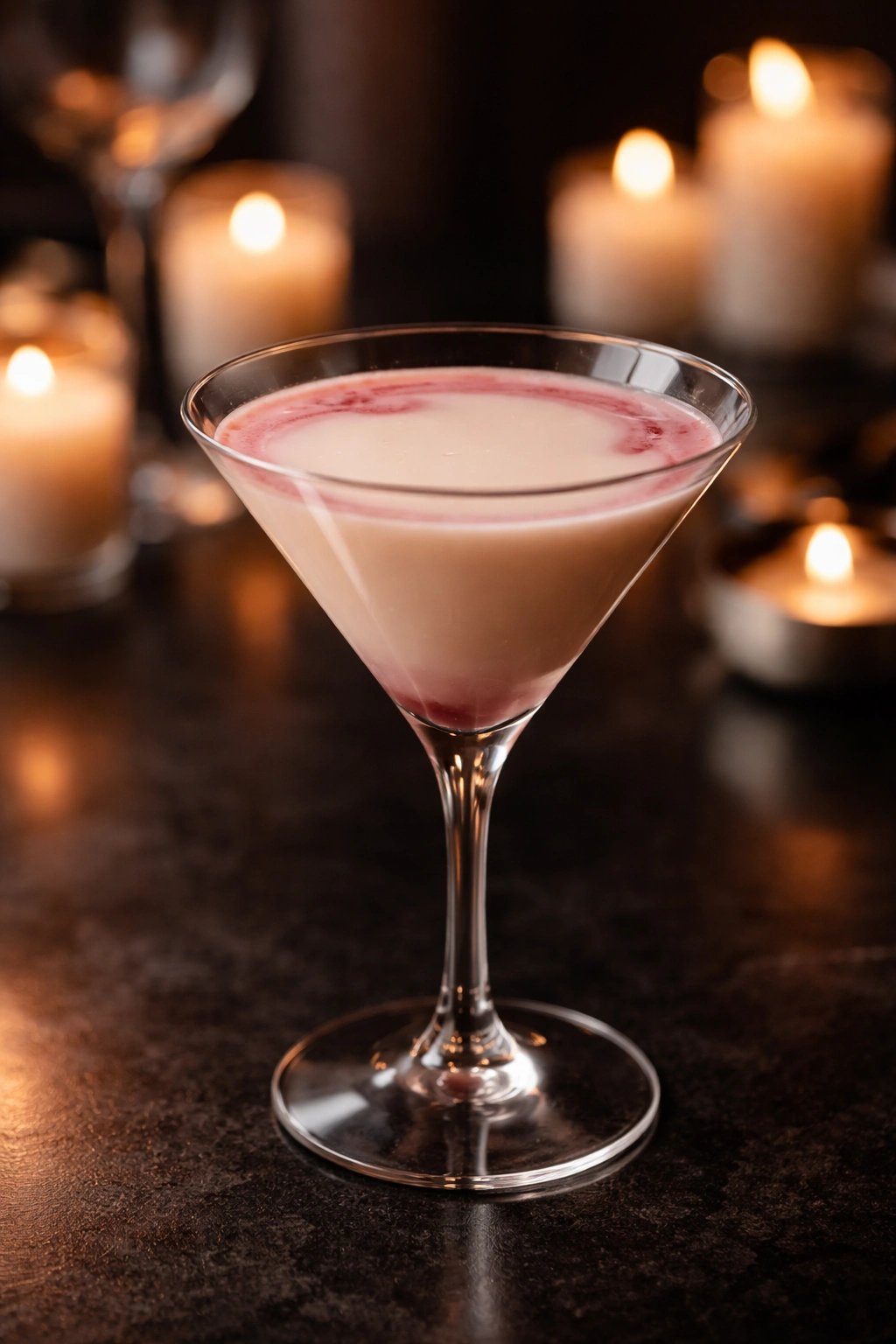
There’s a psychology to date night that has nothing to do with the actual food or drinks. It’s about intention, effort, and the message you’re sending when you put thought into something. Ordering takeout is convenient. Making a cocktail from scratch says something different—it says you’re invested enough to learn a skill, gather ingredients, and put in effort for this person.
The white chocolate raspberry martini specifically has an approachability that makes it perfect for this moment. It’s not so complex that you need years of bartending experience to nail it. It’s not so simple that it feels like an afterthought. It sits in that sweet spot where effort is visible but stress isn’t required. Your date is going to see you make it, watch you shake it with confidence, and receive it as something genuinely special—all without you having to stress about technique.
The drink also tastes rich and indulgent, which matches the date-night vibe. You’re not serving a quick shot or a casual beer. You’re serving something that takes time to sip, that tastes like celebration, and that signals “this evening is intentional and special.”
Final Thoughts
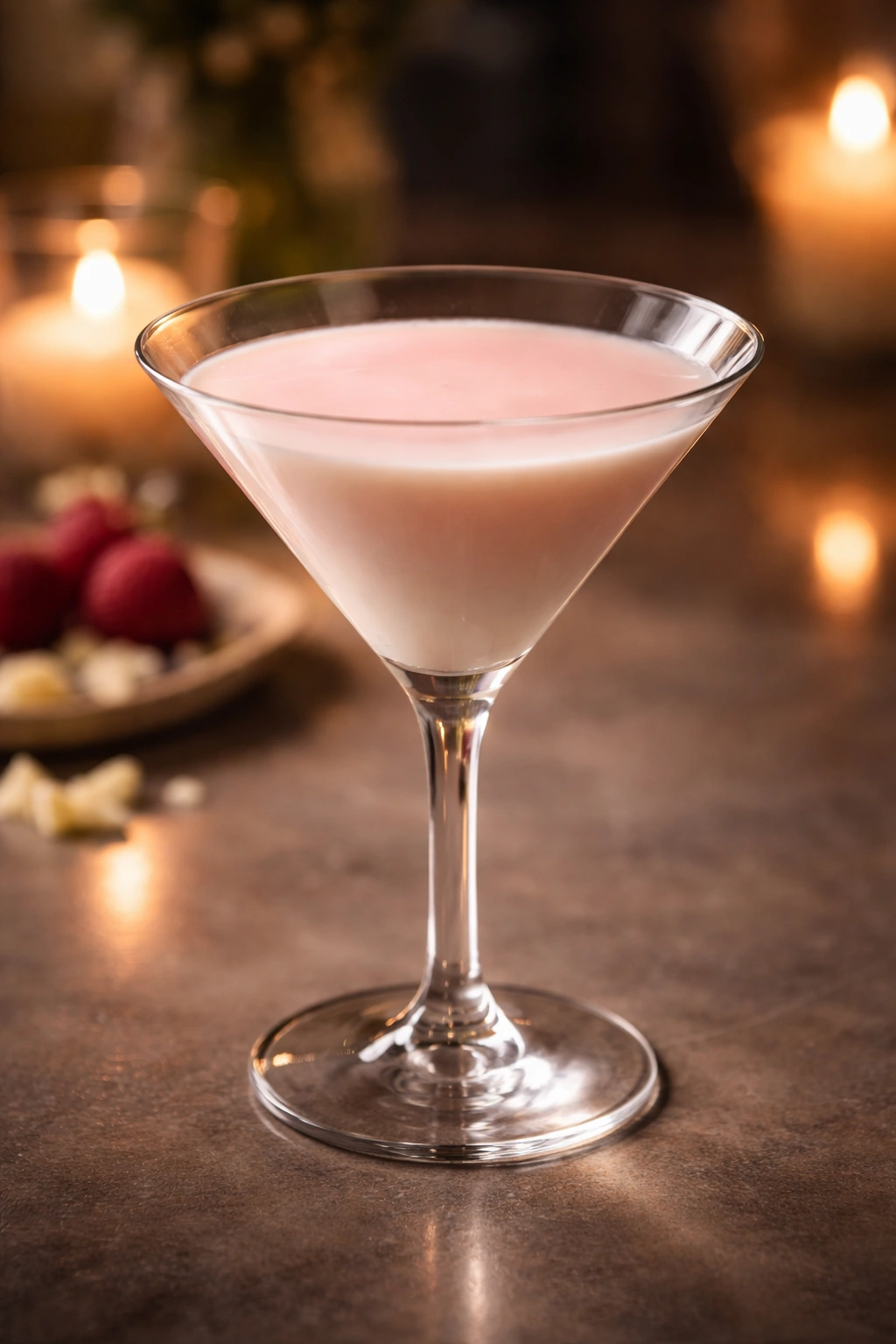
Making a cocktail at home transforms date night from something ordinary into something you’ve both chosen to invest time in together. The white chocolate raspberry martini hits all the right notes—it looks impressive, tastes sophisticated without being difficult, and creates a moment of genuine connection when you hand it over. You’re not just serving a drink. You’re creating an experience.
The best part is that once you’ve made this cocktail once and understood the technique, you can make it consistently. There’s no second-guessing, no hoping it turns out okay. You know exactly what you’re doing and why, which means you can actually relax and enjoy the evening instead of worrying about your cocktail technique.
Start with the recipe exactly as written. Measure precisely, chill your glasses, shake with confidence, and serve immediately. Once you’ve made it successfully once, you can start experimenting with variations and learning where you can bend the rules. But that first time, following the steps exactly is how you build the confidence and muscle memory that makes this drink something you can pull off brilliantly whenever you want to.
Your next date night just got a lot more interesting.
