



If there’s one dish that transforms broccoli skeptics into believers, it’s a properly made broccoli cheese bake. Unlike the watery, overcooked versions that have given this casserole a bad reputation, a truly exceptional broccoli cheese bake achieves something magical—tender-crisp florets swimming in a sauce so creamy and cheese-forward that people come back for seconds and thirds, asking if you’ll bring it to the next gathering. The trick isn’t complicated, but it requires understanding a few key principles that separate a forgettable casserole from one that becomes the highlight of the table.
This isn’t just comfort food; it’s proof that vegetables don’t need to be hidden or masked. When you build this dish correctly, the broccoli becomes the star, and the cheese sauce plays the supporting role of elevating it into something irresistible. The magic happens when you respect both the vegetable and the sauce—cooking the broccoli just enough so it maintains structure and a slight bite, while the cheese sauce stays creamy and decadent without turning grainy or separating during the bake.
The beauty of this casserole lies in its versatility and reliability. Whether you’re feeding your immediate family on a weeknight or bringing it to a holiday table where you need a dish that travels well and reheats beautifully, a broccoli cheese bake delivers consistently. It’s the kind of recipe that becomes a staple—the one people specifically request, the one you’re known for, the one that justifies making a double batch because you know it’ll disappear.
Why This Broccoli Cheese Bake Is Different
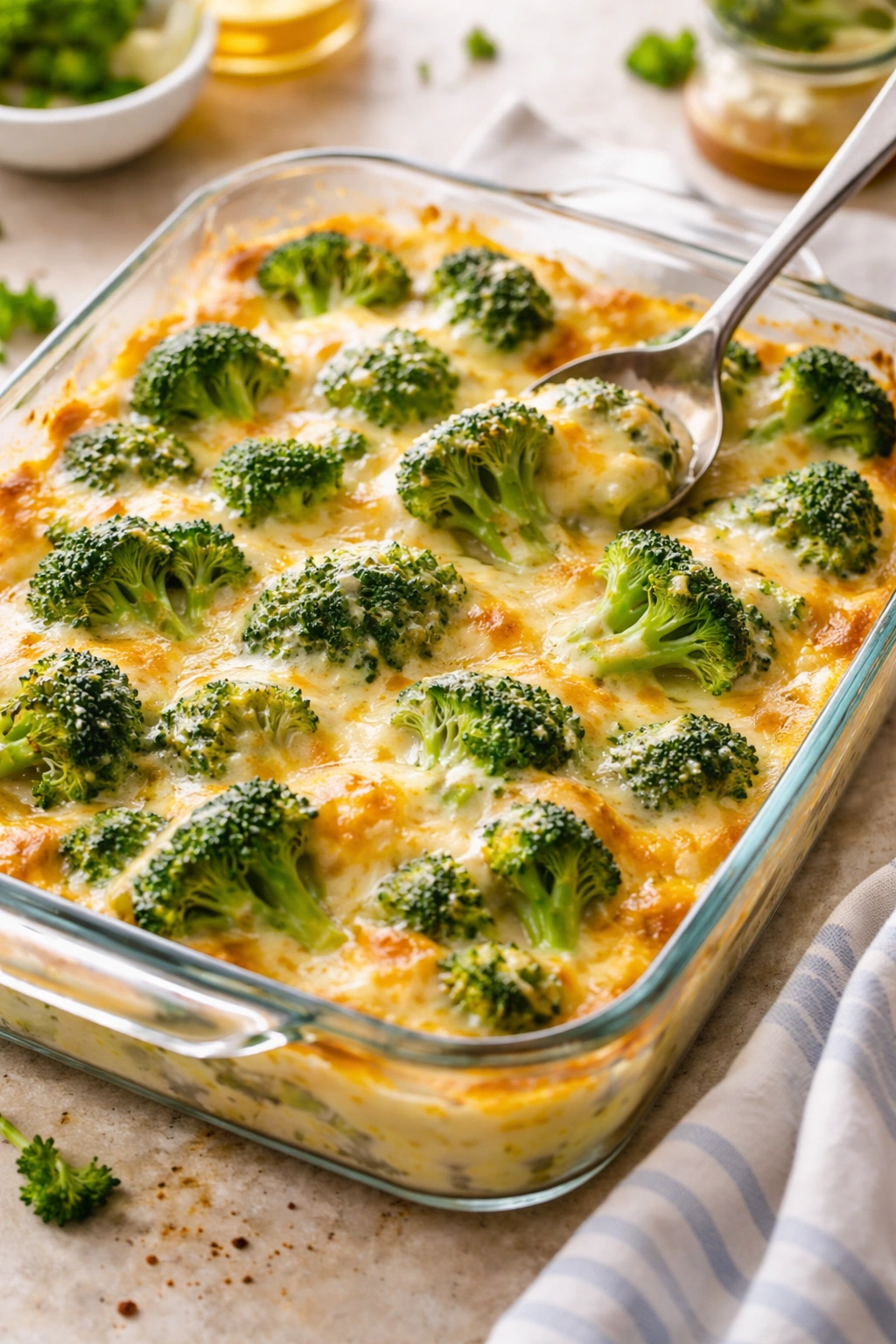
Most broccoli casseroles fall into one of two camps: those drowning in cream of mushroom soup from a can, or those so heavy with cream and butter that they feel more like a cheese sauce with broccoli bits scattered throughout. A truly exceptional version strikes a balance that respects both components. The broccoli should taste like broccoli—vibrant, slightly sweet, with that satisfying tender-crisp texture that makes you want to eat vegetables. The sauce should be creamy enough to coat every floret but not so thick that it overwhelms.
The reason this matters is simple: when people taste this dish, they’re tasting broccoli that actually tastes good, combined with a sauce that’s genuinely craveable. You’re not hiding the vegetable; you’re celebrating it. This shift in perspective changes everything about how the dish is received, especially by those who normally avoid vegetables.
What makes people come back isn’t the casual assembly or the convenience factor—it’s that this casserole tastes intentional. Someone clearly cared about the quality of ingredients, the cooking technique, and the final result. Those details don’t go unnoticed.
The Secret to Making Broccoli That Everyone Will Eat
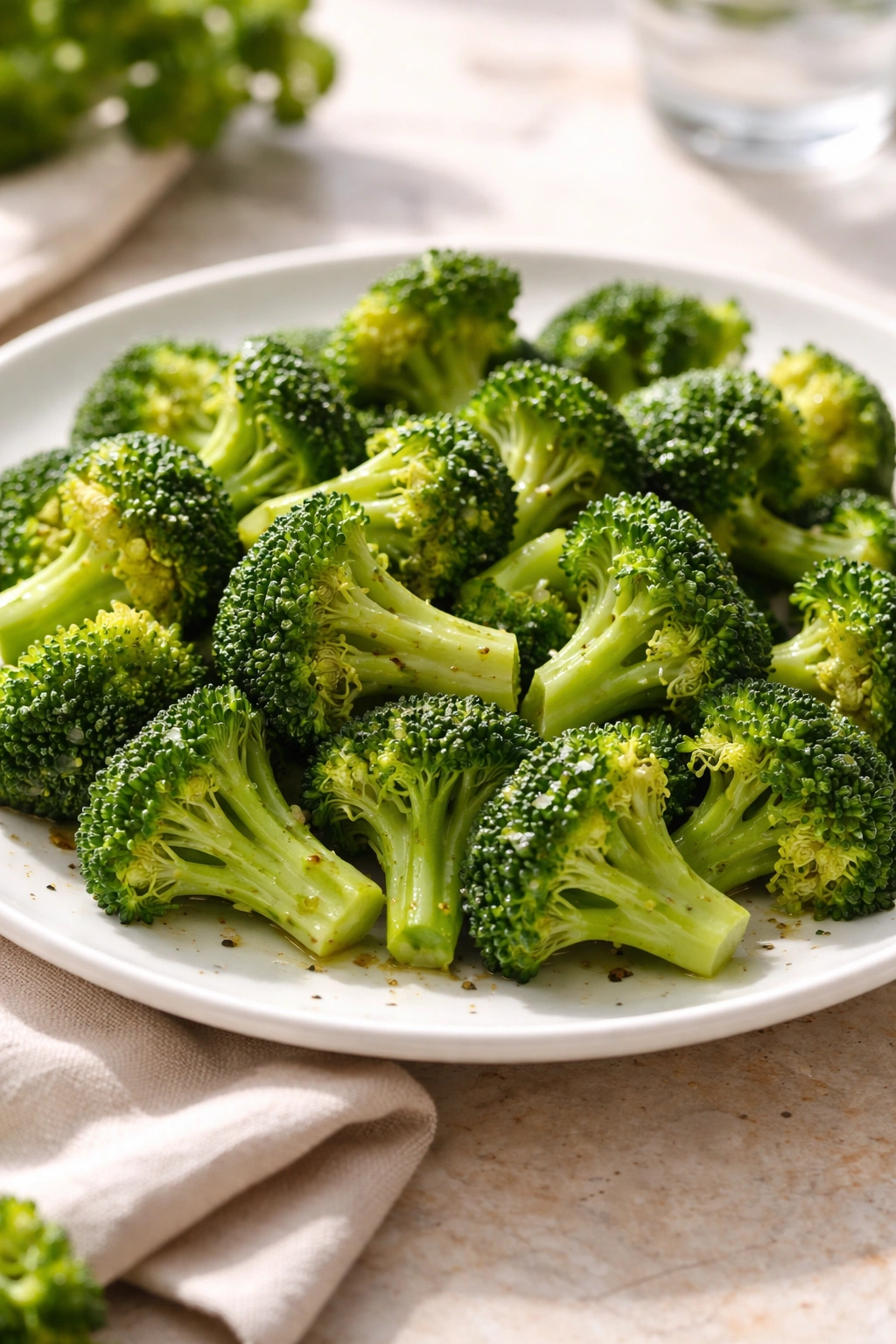
The broccoli itself is where most casserole recipes go wrong. People either steam it until it’s mushy, or they skip precooking it entirely and end up with florets that remain tough after baking. The solution is a quick blanch in salted boiling water, followed by an ice bath to stop the cooking immediately. This takes about 5 to 8 minutes total and is the single most important step in the entire recipe.
Blanching the broccoli before assembly serves multiple purposes. First, it partially cooks the florets so they reach perfect tenderness during the baking phase—no guesswork, no overcooked mush. Second, it seasons the vegetable properly; the salt in the water flavors the broccoli throughout, not just on the surface. Third, it removes excess moisture, which prevents the casserole from becoming watery or from the sauce from thinning out during baking.
The ice bath is crucial. As soon as the broccoli turns bright green and a fork can easily pierce the thickest part of the stem, you transfer it directly into ice-cold water or run it under cold water with ice cubes. This shocking stops the cooking process instantly, which is why your broccoli will be perfectly tender-crisp rather than mushy. Never skip this step—it’s the difference between a soggy vegetable and one with actual texture and appeal.
Building a Cheese Sauce from Scratch (Not a Can)
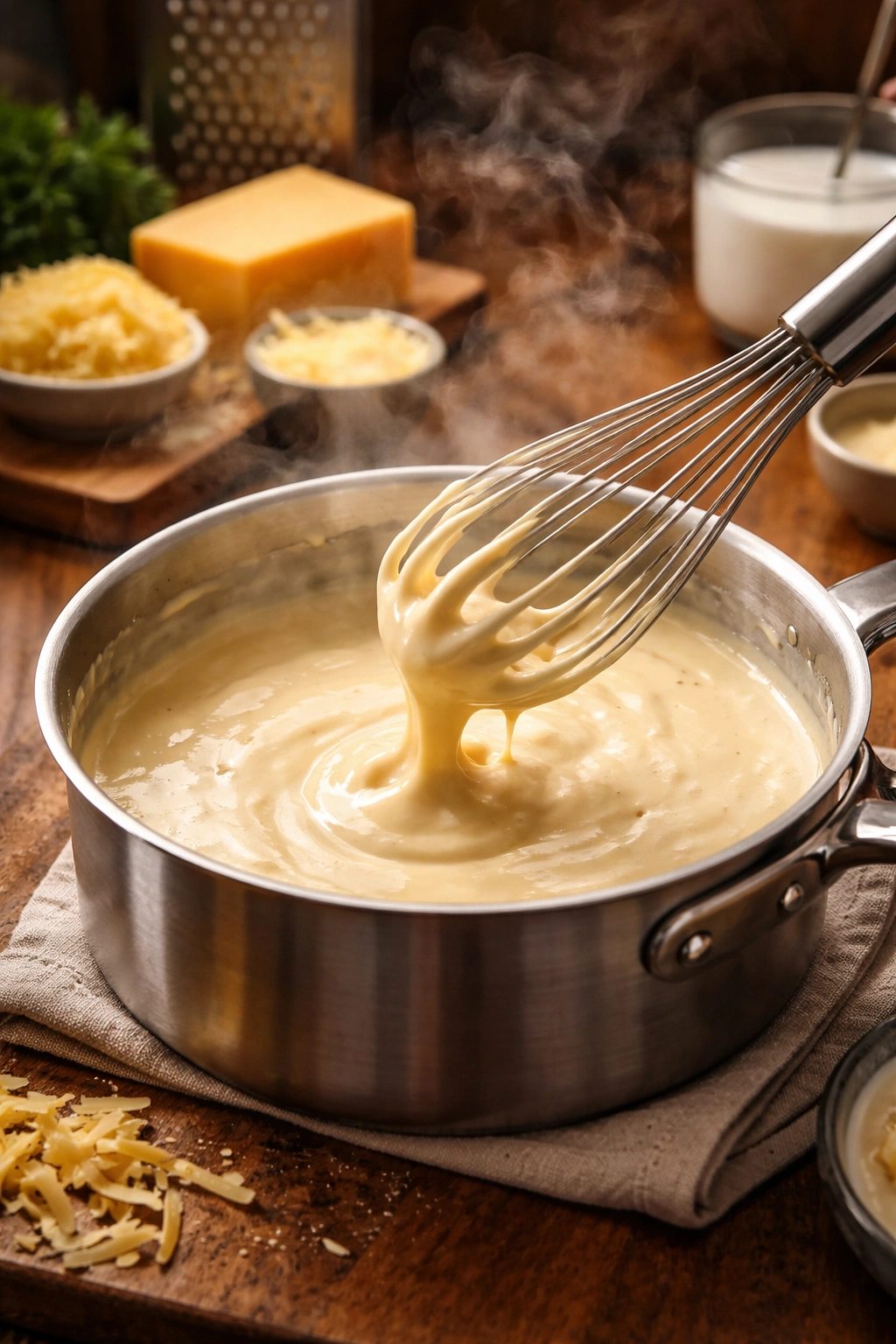
The cheese sauce is where this recipe truly separates itself from ordinary casseroles. Instead of relying on canned cream of mushroom soup or powdered cheese packets, this version builds a proper béchamel—butter, flour, and milk—and then enriches it with real cheese. This approach gives you complete control over flavor, texture, and creaminess.
Start by melting butter over medium heat, then whisk in all-purpose flour to create a roux. Cook this mixture for about one minute, stirring constantly—this brief cooking time toasts the flour slightly and removes the raw flour taste without browning the roux. Then slowly add milk while whisking continuously to prevent lumps from forming. The constant whisking is important; you’re not just combining ingredients, you’re creating a smooth, even base.
Bring the mixture to a gentle simmer and continue cooking for another 2 to 3 minutes, stirring often with a wooden spoon or silicone spatula, until the sauce thickens enough to coat the back of a spoon. When you draw your finger across the coated spoon, the path should stay defined rather than immediately flowing back together. This thickness indicator matters because the sauce will thin slightly when you add cold broccoli to it, and it will thin further as the broccoli releases moisture during baking.
Remove the sauce from heat before adding cheese—this is essential. Adding cold cheese directly to a boiling sauce can cause the proteins to seize and the sauce to break or become grainy. Instead, stir the cheese into the warm but off-heat sauce, letting the residual warmth melt it gradually. Taste as you go; real cheese has salt, so you may not need to add extra salt to the sauce itself.
Choosing Your Cheese Wisely
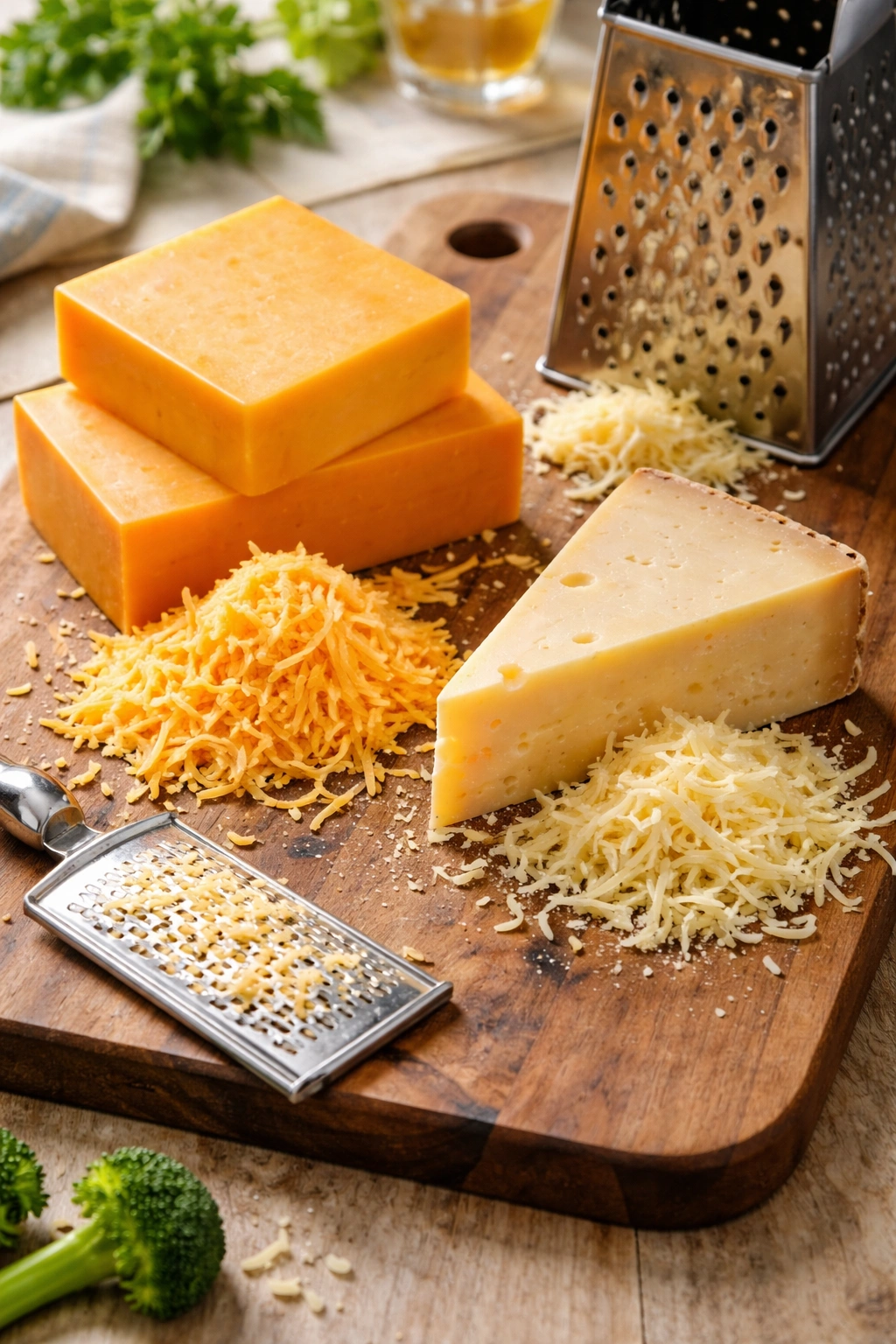
Not all cheese is created equal for this casserole, and this decision significantly impacts the final result. Sharp cheddar is the classic choice, and it’s exceptional because it brings intense cheese flavor that doesn’t get lost in the casserole. When you use sharp cheddar, you need less cheese to achieve deep, satisfying cheese flavor compared to mild cheddar, which means the sauce stays creamy rather than becoming thick and gluey.
Here’s the most important rule: always use freshly grated cheese. Pre-shredded cheese from a bag contains anti-caking agents that create a slight grainy, powdery texture in the sauce. When you hand-grate a wedge of sharp cheddar, the sauce becomes silky and smooth. This difference is noticeable enough that your guests will comment on it.
You can also blend cheeses for interesting flavor combinations. A mix of sharp cheddar and a smaller amount of gruyere adds subtle nutty notes. Swiss cheese brings tanginess and a slightly different melting characteristic. Some cooks use a combination of cheddar and smoked cheddar for depth. The key is using cheese you genuinely enjoy eating straight; if you wouldn’t snack on it, the sauce won’t sing in your casserole.
Avoid low-fat cheese and anything labeled as “cheese product.” These melt differently and don’t create the rich, creamy sauce you’re aiming for. The small amount of full-fat cheese in this casserole is worth the nutritional trade-off because it transforms the entire dish into something memorable.
Understanding the Perfect Texture Balance
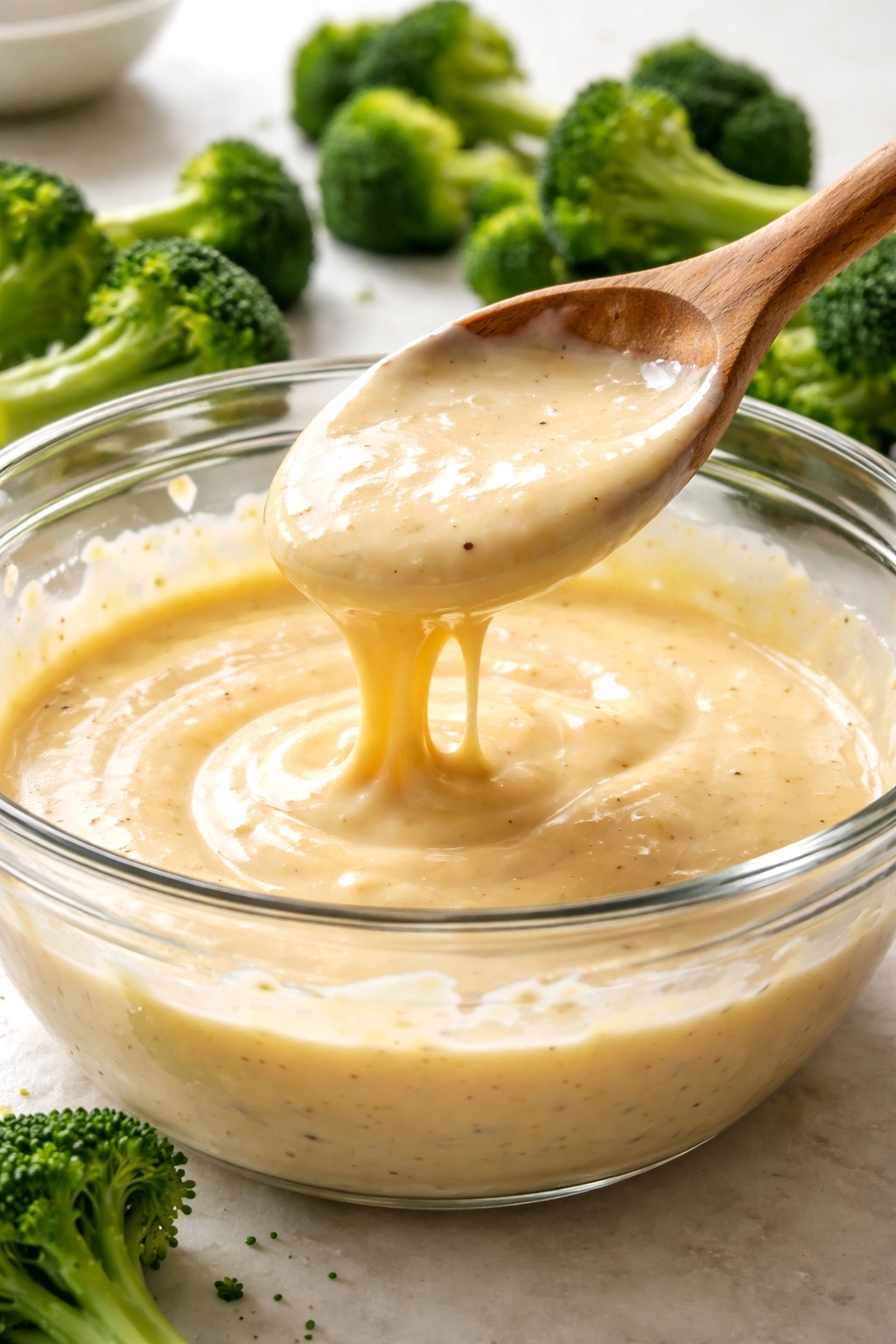
The best broccoli cheese bake achieves a specific texture balance that separates good versions from great ones. You want the sauce to be creamy and cling to each floret, but you don’t want it so thick that it becomes stodgy and dense—the kind where you have to cut it into neat portions with a fork. The right consistency is somewhere between a sauce you can spoon and something almost custardy.
This balance is achieved through proportion and understanding how water moves through the dish during baking. The broccoli releases moisture as it bakes, which thins the sauce naturally. To account for this, you make the sauce slightly thicker than the final desired consistency before it goes into the oven.
If your sauce looks perfect when it goes into the oven but the final casserole is too thin, your broccoli was probably too wet. The solution is to thoroughly dry the blanched broccoli on a clean kitchen towel before assembling the casserole. Moisture is the enemy here—even a few extra droplets on the florets will thin out your sauce more than you’d expect.
When to Use Additions Like Eggs or Extra Cream
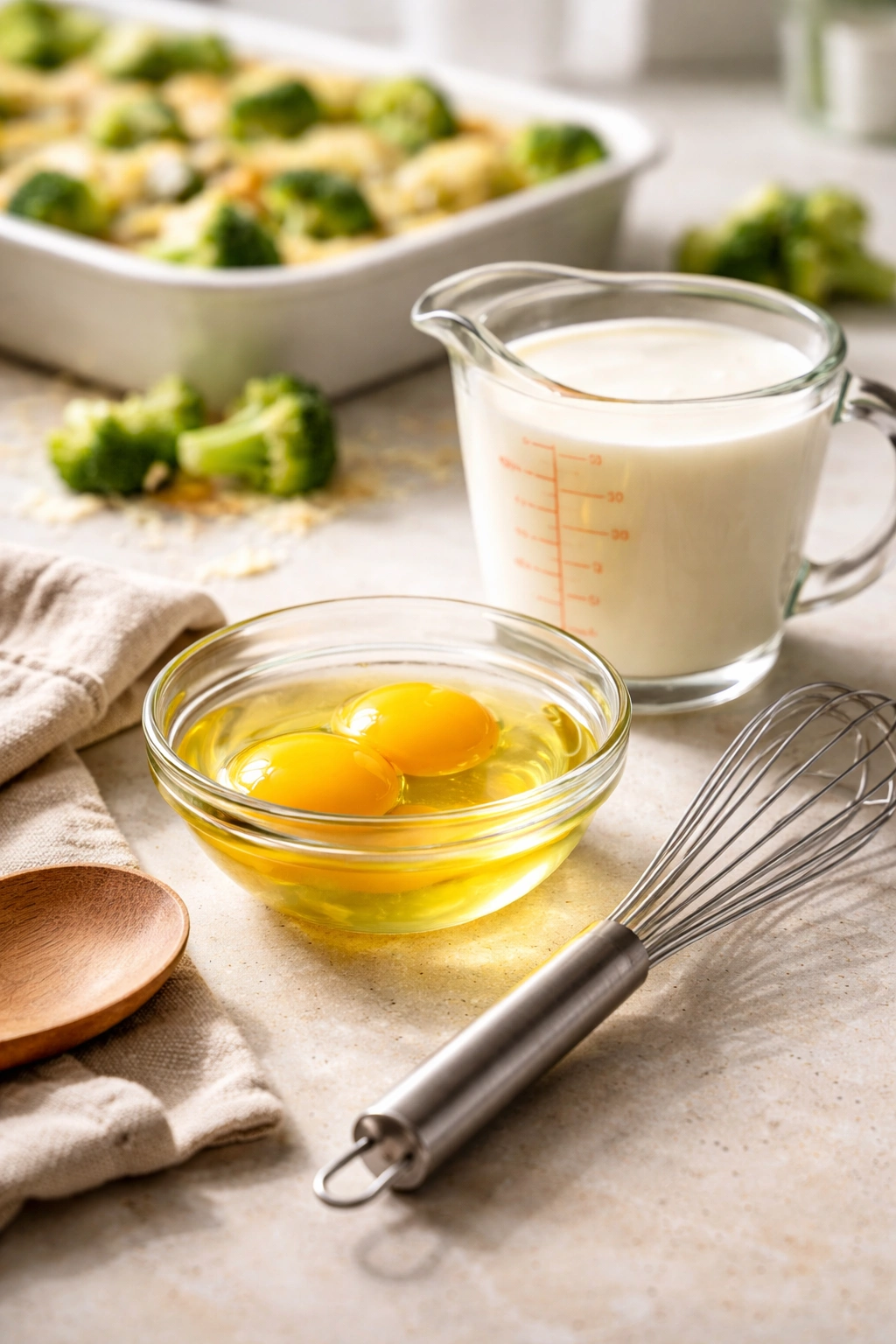
Some broccoli casserole recipes include beaten eggs, which act as a binder and create a slightly custard-like texture that holds together better for slicing. Others add heavy cream or sour cream to make the sauce even richer. These aren’t necessary for a delicious casserole, but they do change the final texture in ways some cooks prefer.
If you add eggs (typically one or two beaten eggs stirred into the finished sauce), the casserole becomes firmer and can be cut into neat portions rather than scooped. This is useful if you’re serving a crowd and want uniform pieces. The eggs also add richness and slight creaminess.
Heavy cream or sour cream added to the milk makes the sauce more luxurious and forgiving—a sauce made entirely with heavy cream is less likely to break or become grainy. If you’re nervous about cheese sauce, adding ½ cup of heavy cream to your milk base gives you more insurance against a split sauce.
Yield: Serves 6 to 8 as a side dish | Serves 4 to 5 as a light main course
Prep Time: 25 minutes
Cook Time: 35 to 40 minutes
Total Time: 60 to 65 minutes
Difficulty: Intermediate — the recipe requires making a cheese sauce from scratch and managing a few moving parts, but the steps are straightforward and the technique is forgiving for home cooks with basic cooking skills.
Ingredients for a Creamy, Crowd-Pleasing Broccoli Cheese Bake
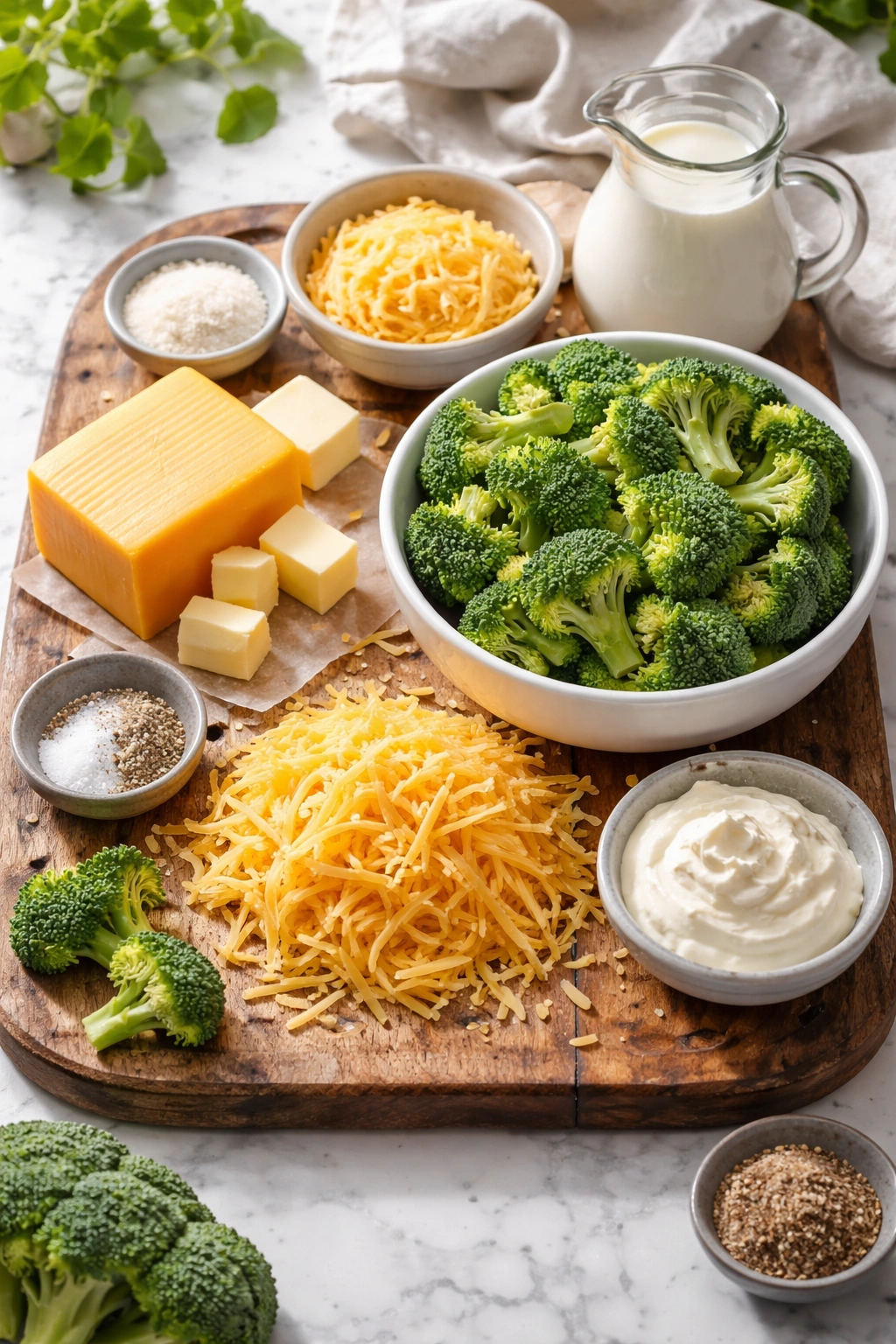
For the Broccoli and Assembly:
- 2 to 2½ pounds fresh broccoli (about 2 large heads), cut into florets of similar size
- Kosher salt for blanching water (about ¼ cup per large pot)
- Ice cubes for shocking (about 2 cups)
For the Cheese Sauce:
- 4 tablespoons unsalted butter
- 3 tablespoons all-purpose flour
- 1½ cups whole milk, preferably at room temperature
- ½ cup heavy cream (optional, but recommended for extra creaminess)
- 2 cups freshly grated sharp cheddar cheese (about 8 ounces), divided
- ½ cup freshly grated gruyere cheese (optional but adds nice flavor, or use additional cheddar)
- ¼ teaspoon dry mustard powder (optional but adds depth without tasting like mustard)
- ¼ teaspoon freshly grated nutmeg (optional, just a whisper)
- ½ teaspoon kosher salt, or to taste (adjust based on how salty your cheese is)
- ¼ teaspoon freshly ground black pepper
- Pinch of cayenne pepper (optional, for subtle heat)
For the Topping (Optional but Recommended):
- 3 tablespoons unsalted butter, melted
- 1 cup panko breadcrumbs or crushed crackers (Ritz or cheese crackers work beautifully)
- ¼ cup freshly grated parmesan cheese
- ¼ teaspoon kosher salt
- ⅛ teaspoon black pepper
Instructions for Assembling and Baking
Prepare Your Equipment and Ingredients:
-
Preheat your oven to 350°F (175°C) and position the rack in the center. Generously butter a 9×13-inch baking dish (or a 3-quart casserole dish if you prefer) and set it aside.
-
Fill a large pot about three-quarters full with water. Add about ¼ cup of kosher salt—the water should taste like seawater. Bring it to a rolling boil over high heat.
-
While the water comes to a boil, cut the broccoli into florets of similar size (roughly 2 to 3 inches long with about ¾-inch stems). Uniform sizing ensures even cooking. If you have nice broccoli stems, trim the dry bottom, peel off the tough outer layer with a vegetable peeler, and cut them into coins—they’re delicious and shouldn’t be wasted.
Blanch and Shock the Broccoli:
-
Once the water is at a rolling boil, add all the broccoli florets. The water temperature will drop temporarily, then recover. Stir gently so all the florets are submerged and cook for 4 to 5 minutes, uncovered. You’re looking for the broccoli to turn bright green and become just barely tender—when you pierce a floret with a fork, it should feel tender but still have a slight resistance.
-
Have your ice bath ready before you add the broccoli. Place a colander in the sink and fill a large bowl with ice cubes and cold water next to it, or prepare a colander and run cold water over it. The moment the broccoli reaches that bright-green tender-crisp stage, transfer it immediately to the colander using a slotted spoon or spider strainer. Don’t drain slowly—get it into that ice bath quickly.
-
Once it’s in the colander, run cold water over the hot broccoli for about 30 seconds, tossing gently with your hands, until the broccoli is completely cold. Then let it sit in the colander to drain thoroughly—you want it as dry as possible. If there are any pools of water collecting in the bottom, gently tip the colander and let them drain. Excess moisture is the enemy of a creamy sauce.
-
Lay a clean kitchen towel flat on a baking sheet and gently transfer the drained broccoli onto it. Let it sit while you make the sauce—the towel will absorb any remaining surface moisture.
Advertisements
Make the Cheese Sauce:
-
In a heavy-bottomed saucepan (cast iron or stainless steel work beautifully), melt the butter over medium heat. When the butter is melted and foaming, add the flour all at once and whisk constantly for about 1 minute. The mixture should look sandy and smell slightly toasted—you’re cooking out the raw flour taste without letting the roux brown.
-
Remove the pan from heat. Take a measuring cup and combine the milk and heavy cream (if using). Slowly pour about one-third of this mixture into the roux while whisking constantly and vigorously. The mixture will be very thick at first, but keep whisking—you’re preventing lumps from forming.
-
Once that first portion is incorporated and smooth, return the pan to medium heat and continue whisking. Slowly pour in the remaining milk mixture, whisking constantly to maintain a smooth sauce. The whisking action is crucial here; don’t get lazy or you’ll end up with lumps.
-
Bring the sauce to a gentle simmer—small bubbles should appear around the edges and occasionally on the surface. Reduce heat to medium-low and cook for 2 to 3 minutes, stirring frequently with a wooden spoon, until the sauce thickens enough to coat the back of the spoon. When you draw your finger across the coated spoon, the path should remain clearly visible.
-
Remove the pan from heat completely. This is critical: do not add cheese to a hot, boiling sauce. The residual heat will melt the cheese perfectly without risking a broken sauce.
-
Add the optional dry mustard powder and nutmeg if you’re using them—these don’t add detectable “mustard” or “nutmeg” flavor but instead add savory depth that makes people say “wow, this is really good” without being able to identify why.
-
Add 1½ cups of the shredded cheddar and all the gruyere (if using). Stir gently and continuously until the cheese is completely melted and the sauce is smooth. Taste it now, before you add the broccoli. If you feel it needs salt, add a pinch—remember, your cheese contributes salt, so be cautious. Season with the pepper and cayenne if desired.
Combine and Assemble:
-
Transfer the dry broccoli florets from the towel to the prepared baking dish. Distribute them evenly, breaking up any clusters so each floret has a little space. You’re creating a single, fairly packed layer.
Advertisements -
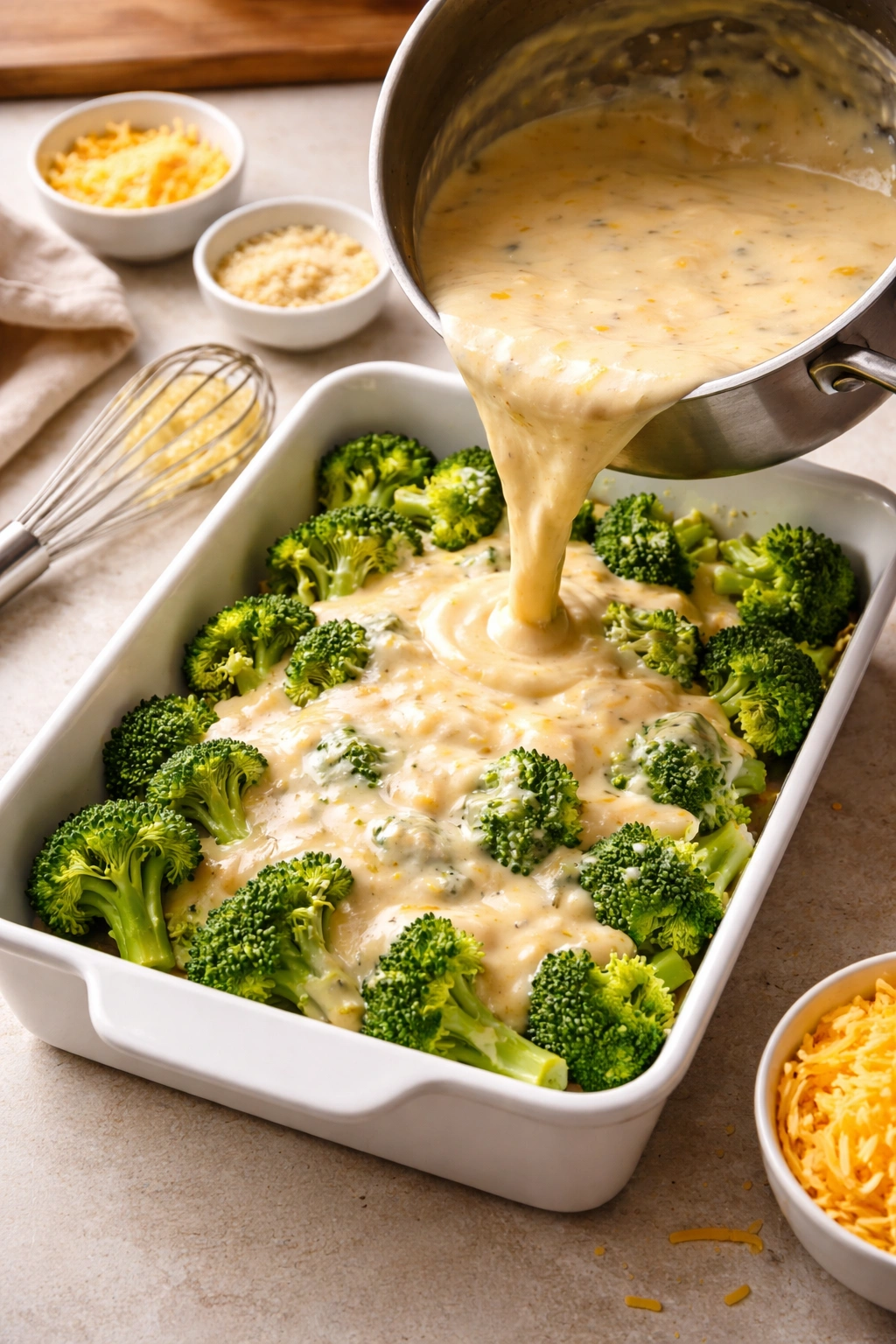
Pour the cheese sauce over the broccoli slowly and evenly, using a rubber spatula to gently push some sauce down between the florets. Fold the sauce and broccoli together gently, using a spatula or large spoon, until every floret is coated with sauce. Don’t be aggressive—you’re not trying to break up the florets, just ensure they’re evenly distributed and coated.
-
Sprinkle the remaining ½ cup of cheddar evenly over the top of the casserole.
Prepare the Topping (Optional):
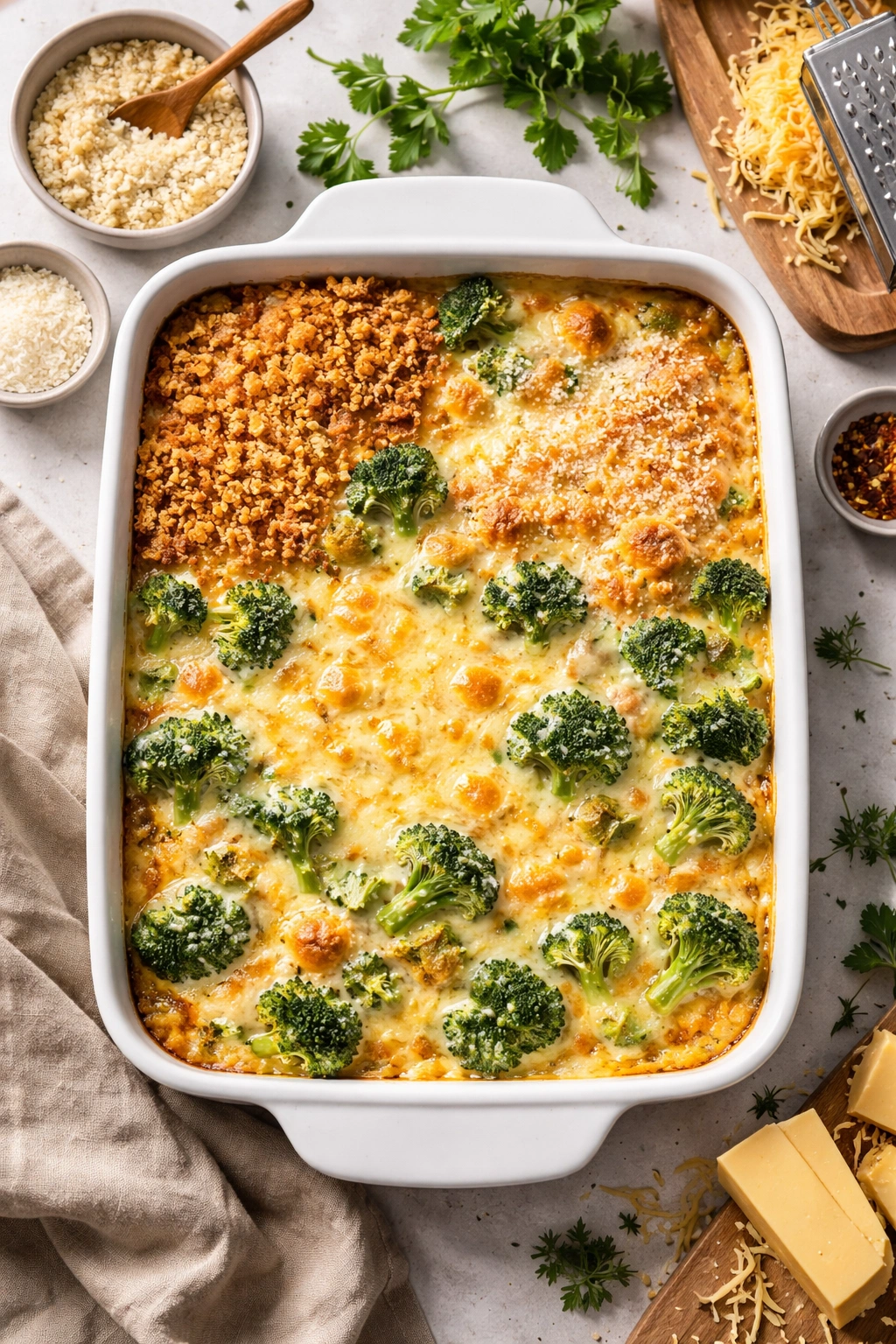
- If you’re making the breadcrumb topping, combine the panko, parmesan, salt, and pepper in a small bowl. Pour the melted butter over the mixture and toss gently with a fork until all the breadcrumbs are coated and look like wet sand. This step takes about one minute. Sprinkle this mixture evenly over the cheese layer—don’t press it down, just let it settle naturally.
Bake:
-
Bake for 35 to 40 minutes, depending on your oven. The casserole is done when the cheese is melted and bubbling at the edges, and the top is light golden brown (especially if you used the breadcrumb topping). The exact time depends on how thick your baking dish is and how your oven bakes, so start checking around the 30-minute mark.
-
Do not overbake. The moment you see steady bubbles around the edges and the top is turning golden, pull it from the oven. Overbaking can cause the cheese to separate slightly or the sauce to become grainy.
-
Remove the casserole from the oven and let it rest for 5 to 10 minutes before serving. This resting period allows the sauce to set slightly, making it easier to serve neat portions. It will still be creamy and not stodgy—the resting time stabilizes the structure without cooling it down too much.
Pro Tips for Maximum Creaminess and Flavor
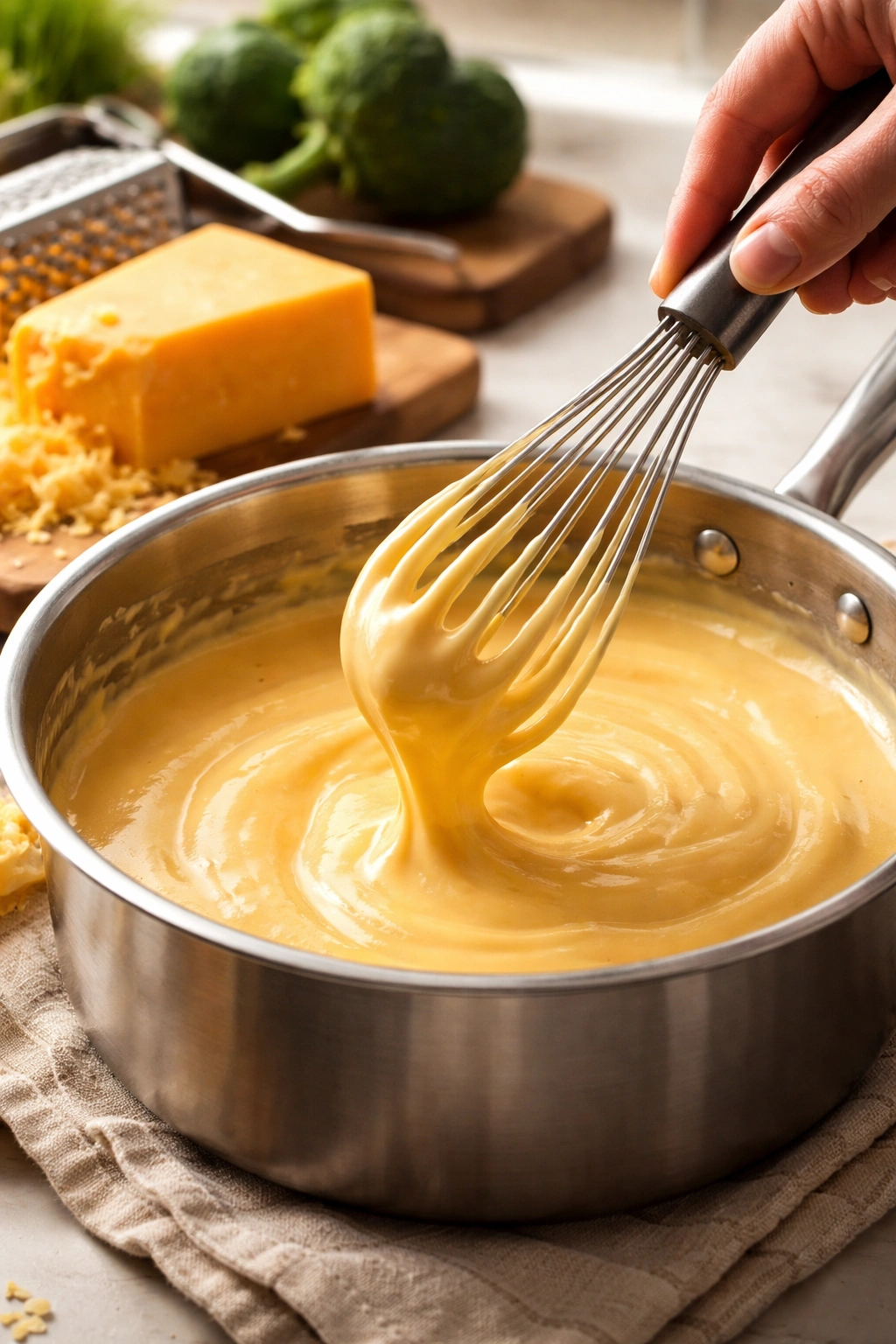
The difference between a good broccoli cheese bake and one that people obsess over comes down to attention to small details. Use butter, not oil, in the sauce. Butter creates a better texture and contributes to that rich, luxurious mouthfeel that makes this dish so satisfying. The milk should ideally be at room temperature before you add it to the roux—cold milk cools down the roux and can cause lumps to form more easily.
When you’re whisking the sauce, use a wire whisk, not a fork or spoon. A wire whisk creates a more thorough mixing action and breaks up lumps far more effectively than other utensils. If you do accidentally end up with small lumps, strain the entire sauce through a fine-mesh sieve before adding the cheese—it takes 30 seconds and eliminates the problem entirely.
The dry mustard powder and nutmeg are optional additions, but they’re worth knowing about. Dry mustard adds savory depth without any mustard flavor—people will taste it as “wow, that’s really good” without identifying the component. A tiny whisper of nutmeg is traditional in béchamel sauce and adds subtle warmth. If you’ve never tried these additions, use just the tiniest amounts; you can always add more next time but you can’t take it out.
Toast your breadcrumb topping mixture separately before sprinkling it over the casserole if you have time. In a dry skillet over medium heat, toast the panko alone for about 2 minutes until it just begins to smell nutty, then toss with the butter and parmesan. This creates a crunchier, more flavorful topping than just mixing everything together.
If you’re concerned about the sauce breaking or becoming grainy, use a combination of whole milk and heavy cream rather than all milk. The higher fat content in cream makes the sauce much more forgiving. You don’t need to use heavy cream if you don’t want to, but it’s excellent insurance.
Common Mistakes That Ruin the Casserole
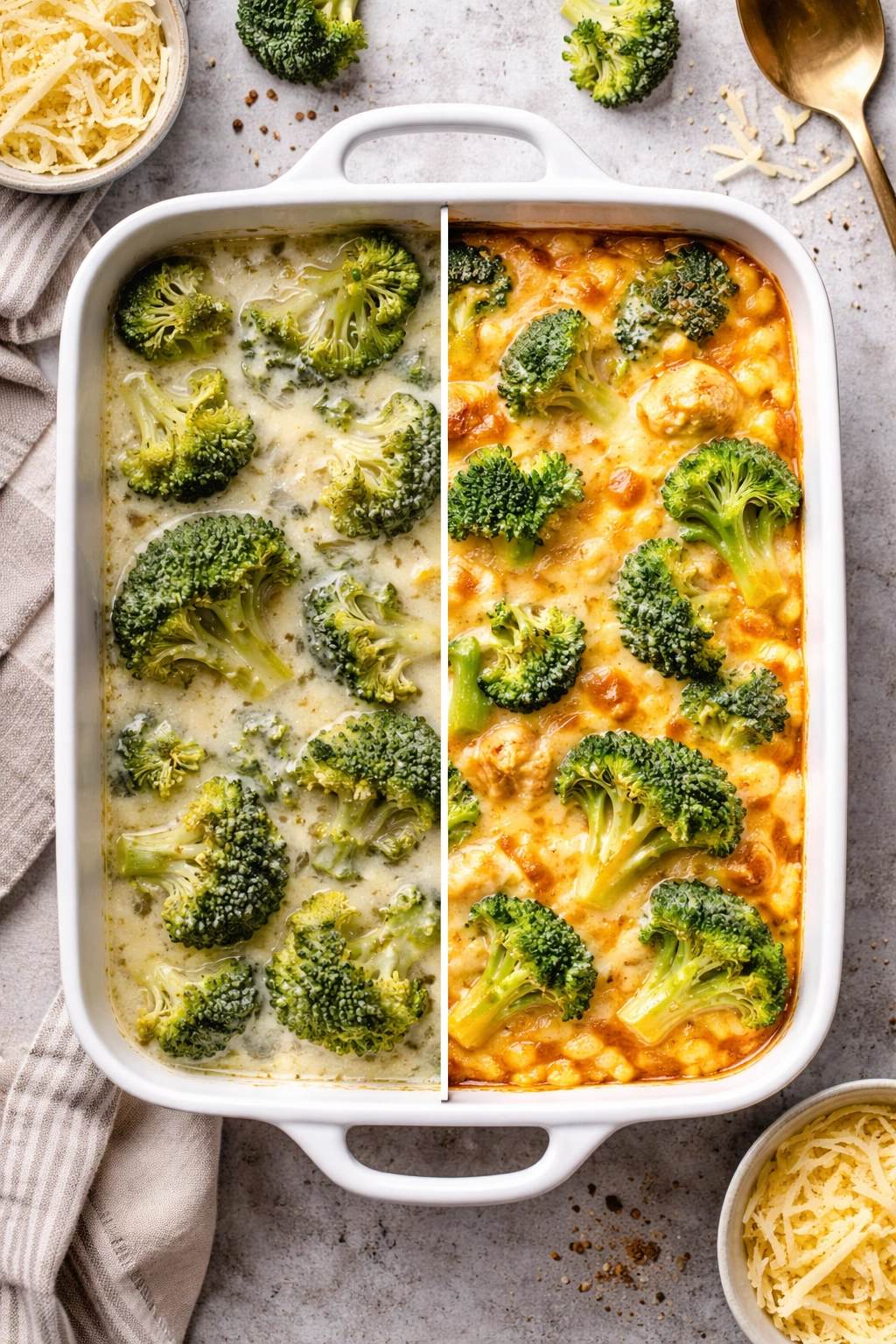
The most common mistake is not blanching the broccoli ahead of time. People assume they can assemble everything raw and let the oven cook the broccoli, but this invariably results in either tough florets or mushy ones, with no in-between. The blanch-and-shock method takes 10 minutes and is the single reason this recipe succeeds.
Another frequent error is not drying the broccoli properly after blanching. If you transfer wet broccoli to the casserole dish, that water will release into the sauce during baking, thinning it significantly. The towel-drying step isn’t optional—it directly impacts the final texture.
Adding cheese to boiling sauce is the third major mistake. When you add cold cheese to a boiling hot sauce, the proteins in the cheese seize up, and the sauce breaks or becomes grainy. Always let the sauce cool slightly—off the heat is perfect—before adding cheese. The residual heat will melt the cheese smoothly.
Don’t skip tasting the sauce before you add the broccoli. This is your last chance to adjust seasoning, and it takes 10 seconds. If the sauce tastes bland, it won’t improve when baked; it’ll taste more bland because the broccoli releases moisture.
Overbaking is also common. The casserole doesn’t need to bake for a full hour; 35 to 40 minutes is usually sufficient. Once you see bubbles at the edges and the top is golden, remove it. Continuing to bake can cause the sauce to become grainy or the cheese to separate slightly.
Finally, don’t use pre-shredded cheese. This seems like it should be minor, but pre-shredded cheese contains anti-caking agents that create a noticeably grainy texture in the sauce. Hand-grating takes three extra minutes and makes a real difference in the final product.
Delicious Variations to Try
Smoked Cheddar Broccoli Bake: Replace half of the sharp cheddar with smoked cheddar for a subtle smoky depth. This is exceptional if you’re serving it alongside grilled meats or barbecue.
Gruyere and Thyme Version: Use a combination of sharp cheddar and gruyere, and add 1 teaspoon of dried thyme (or 1 tablespoon of fresh thyme) to the sauce. The thyme adds an herbal note that makes the whole dish more sophisticated. Fresh thyme stirred in at the very end (after you turn off the heat) is even better.
Broccoli and Mushroom: Sauté 8 ounces of sliced mushrooms (cremini or button) in butter until they release their moisture and begin to brown, about 5 minutes. Add them to the casserole along with the broccoli. The earthiness of mushrooms complements cheese beautifully.
Spicy Pepper Jack Version: Replace half the cheddar with pepper jack cheese for a version with gentle heat and a slightly different flavor profile. Add a tiny pinch of cayenne pepper to the sauce as well. This is excellent served alongside Southwestern-inspired meals.
Cheesy Broccoli with Bacon: Crumble 6 to 8 ounces of cooked bacon and layer it with the broccoli before adding the sauce. The smoky, salty bacon adds incredible richness. You might reduce the salt in the sauce slightly since bacon is salty.
Broccoli and Cauliflower: Use a combination of 1 pound broccoli and 1 pound cauliflower. Cauliflower adds a slightly milder, more delicate flavor and texture that works beautifully with the cheese sauce. Blanch them together for the same time.
Broccoli with Sun-Dried Tomato: Add 4 to 6 ounces of sun-dried tomatoes (not oil-packed ones; the jarred ones in oil are too oily) chopped into small pieces. The slight sweetness and tanginess adds complexity to the cheese sauce. Layer them with the broccoli.
Protein-Enriched Version: Stir 2 cups of shredded rotisserie chicken into the sauce before adding the broccoli. This turns it into a complete main dish. You may want to increase the amount of sauce by 50% (add 50% more butter, flour, and milk) to ensure everything is well-coated.
Light Version with Cottage Cheese: Replace half the heavy cream with cottage cheese blended smooth. This adds protein and creaminess with fewer calories than straight cream. Blend it into the warm sauce until completely smooth before adding cheese.
How to Prepare This Ahead of Time
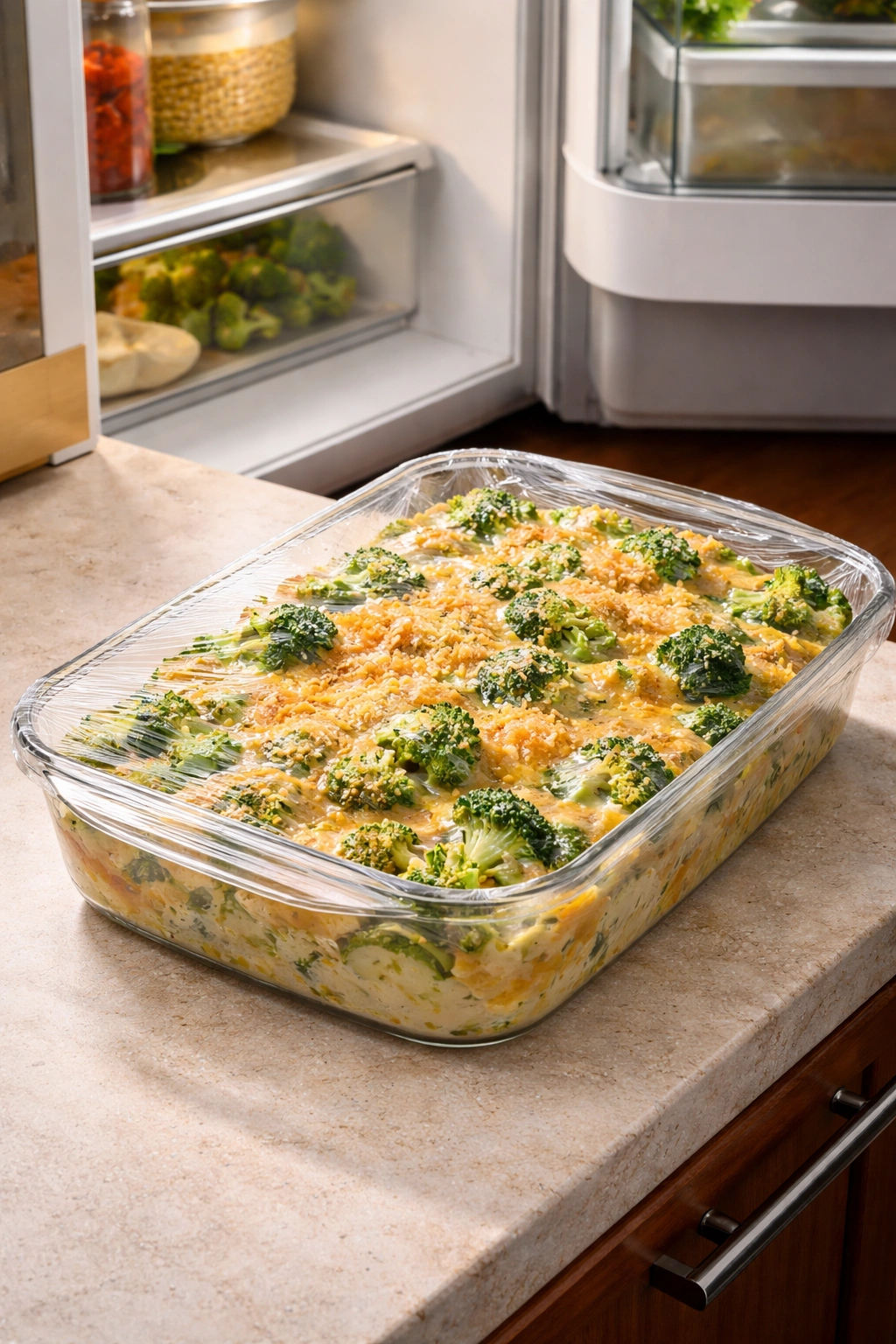
This casserole is one of the most do-ahead-friendly dishes you can make, which is part of its appeal for holiday entertaining. You can assemble the entire thing, unbaked, up to 24 hours in advance. Here’s exactly how:
Complete the recipe through step 16 (when the broccoli is coated with sauce). If you’re making the breadcrumb topping, don’t add it yet. Cover the assembled casserole tightly with plastic wrap or aluminum foil and refrigerate. When you’re ready to bake, remove it from the fridge and let it sit at room temperature for about 20 minutes—this ensures the edges don’t cook too fast while the center is still cold.
If you added the breadcrumb topping before refrigerating, the breadcrumbs will absorb moisture from the steam and become soggy. Instead, store the topping separately in a zip-seal bag or small container, and sprinkle it over the casserole just before you put it in the oven. This takes 30 seconds and ensures a crispy, golden topping.
The baking time may need to increase slightly if the casserole goes straight from the refrigerator to the oven—check for doneness around the 40-minute mark instead of 35 minutes. The internal temperature should reach about 165°F at the center when you insert a thermometer.
You can also blanch the broccoli the day before and keep it refrigerated in an airtight container. This is helpful if you want to break the assembly into multiple steps. Just make sure it’s completely dry when you store it, and bring it to room temperature before assembling the casserole.
Storage and Reheating Instructions
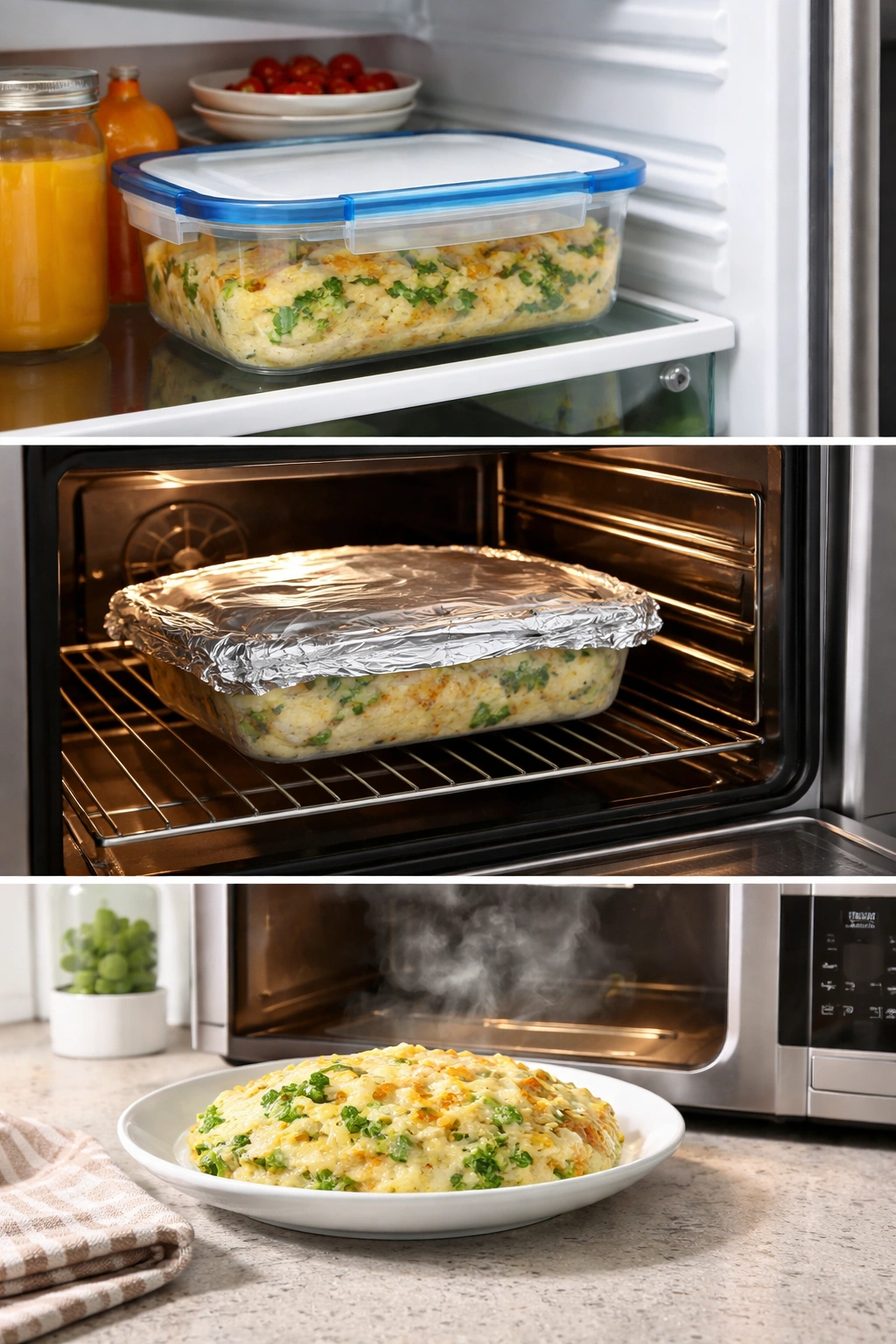
Leftovers keep beautifully in the refrigerator for 3 to 4 days in an airtight container or covered tightly with plastic wrap. The flavor actually deepens slightly as the dish sits, so leftovers are often even better than the original meal. To reheat in the oven, preheat to 350°F, transfer the leftover casserole to an oven-safe dish, cover loosely with foil, and bake for 15 to 20 minutes until heated through and steaming. If you want the top to crisp up, remove the foil for the last 3 to 5 minutes.
For microwave reheating, transfer a portion to a microwave-safe dish, cover it loosely with a damp paper towel, and microwave at 50% power for 1 to 2 minutes, stirring halfway through. Lower power heats it more gently and prevents the sauce from becoming grainy.
Stovetop reheating is surprisingly good if you have the time. Transfer leftovers to a skillet or saucepan over medium-low heat, add a splash of milk (1 to 2 tablespoons), cover, and cook for 5 to 7 minutes, stirring occasionally, until heated through. The added milk replaces any liquid that may have been absorbed, restoring creaminess.
You can freeze unbaked assembled casseroles for up to 3 months. Assemble completely (with or without the breadcrumb topping—either works), cool to room temperature, wrap tightly in plastic wrap, then again in foil, and freeze. To bake from frozen, remove the plastic wrap but keep the foil covering, and bake at 325°F for about 60 to 75 minutes, removing the foil for the last 15 minutes if you want the top to brown. Alternatively, thaw in the refrigerator overnight and bake as directed.
Do not freeze after baking—while the casserole reheats fine from frozen, the texture of the broccoli deteriorates after freezing when already cooked.
Perfect Pairings and Serving Ideas

Broccoli cheese bake is wonderfully versatile and complements an enormous range of proteins and mains. With roasted or baked chicken, it’s perfect—the cheese sauce cuts through any richness and adds moisture. Herb-roasted chicken, lemon chicken, chicken piccata, or simple roasted breast all benefit from having this casserole alongside.
With grilled steak or beef, the creamy cheese sauce is luxurious and satisfying. It’s particularly good next to a perfectly seared ribeye or a lean grilled sirloin. The sauce adds richness without competing with the meat.
With pork, especially grilled pork chops, roasted pork tenderloin, or ham, it’s exceptional. The cheese and broccoli both have a subtle sweetness that pairs beautifully with pork.
With fish, particularly milder white fish like cod, halibut, or flounder, the cheese sauce adds welcome richness and complements the delicate flavor. It’s also excellent with baked salmon.
For a vegetarian main, pair it with roasted mushrooms, grilled tofu, or a hearty frittata. Two servings of this casserole is substantial enough to be a complete meal when served with a simple green salad dressed with a bright vinaigrette.
For holiday tables, serve it with turkey (it’s perfect alongside herb-roasted turkey or turkey breast), ham, prime rib, or standing rib roast. Its creamy richness balances well with heavier holiday proteins.
Side dish pairings that work beautifully: roasted potatoes, mashed potatoes, rice pilaf, wild rice, roasted root vegetables, or a simple green salad with a vinaigrette to cut through the richness. A light lemon salad is particularly nice—the acidity provides a bright contrast.
Beverages that pair well: Full-bodied white wines like chardonnay, crisp white wines like sauvignon blanc, or light reds like pinot noir all work nicely. For non-alcoholic options, sparkling cider, apple juice, or iced tea provide good contrast.
Never serve this casserole immediately after removing it from the oven if possible—let it rest for 5 to 10 minutes. This allows the sauce to set slightly, making it easier to serve neat portions that don’t slide around the plate. The casserole will still be perfectly hot; you’re just stabilizing the structure.
Why People Keep Coming Back
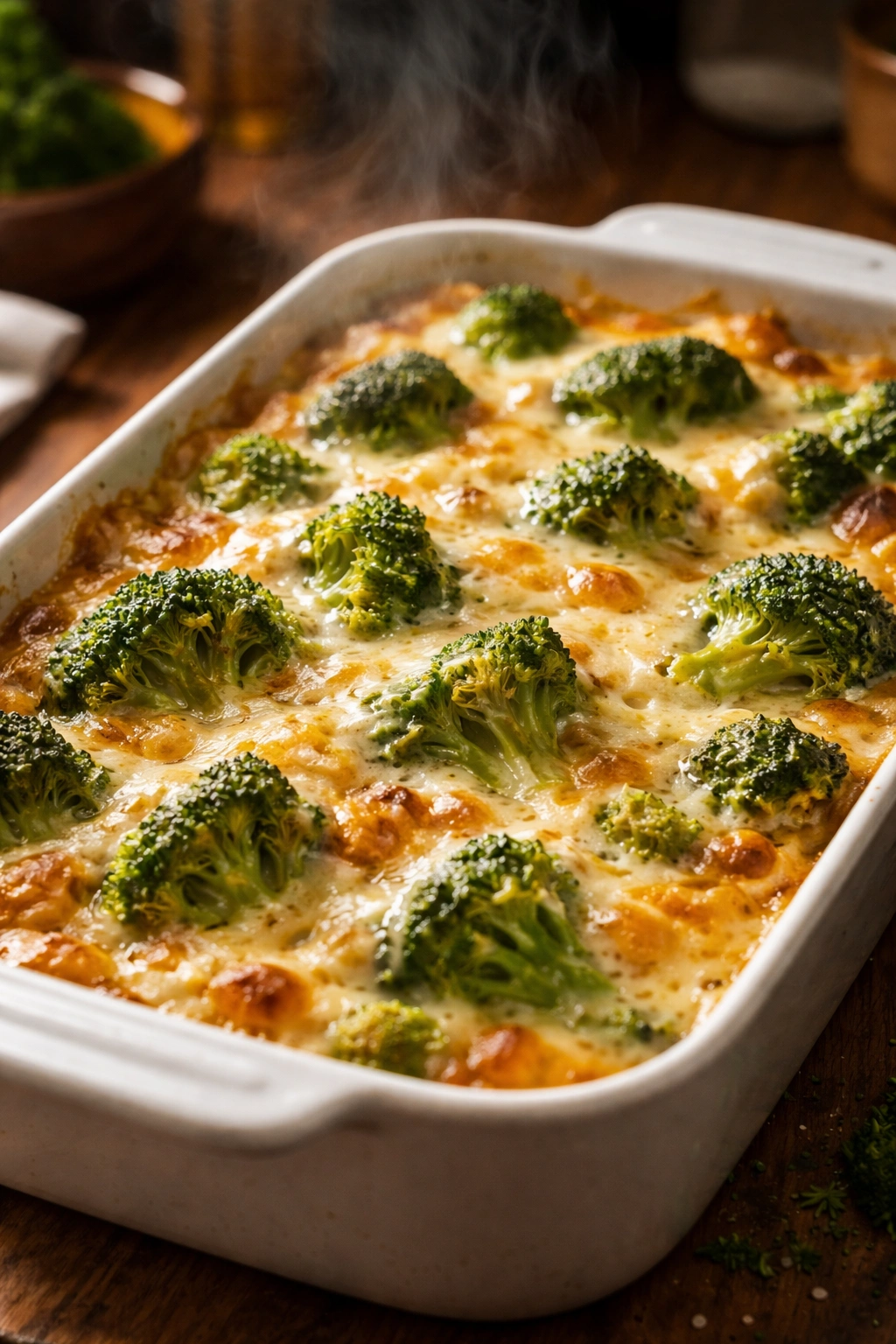
The reason this particular broccoli cheese bake becomes a requested dish isn’t complicated. It’s made with genuine ingredients—real butter, real milk, real cheese. The broccoli is treated with respect, cooked just enough and no more. The flavors are unapologetic and generous; this isn’t health food pretending to be delicious. It’s delicious food that happens to include vegetables.
When people ask for your recipe, they’ll be surprised at how straightforward it is. There are no secrets, just technique and care. The same techniques work for other vegetable gratins—cauliflower, broccoli and cauliflower together, even brussels sprouts transform under this same treatment.
Make this casserole regularly and you’ll find it becomes woven into your family traditions. Bring it to potlucks and holiday gatherings and it’ll become known as your dish. The creamy cheese sauce and tender broccoli don’t need gimmicks or trendy additions to impress. Done properly, it’s inherently impressive—the kind of dish that makes people feel cared for, because clearly someone put thought and effort into something as simple as making vegetables delicious.
Final Thoughts
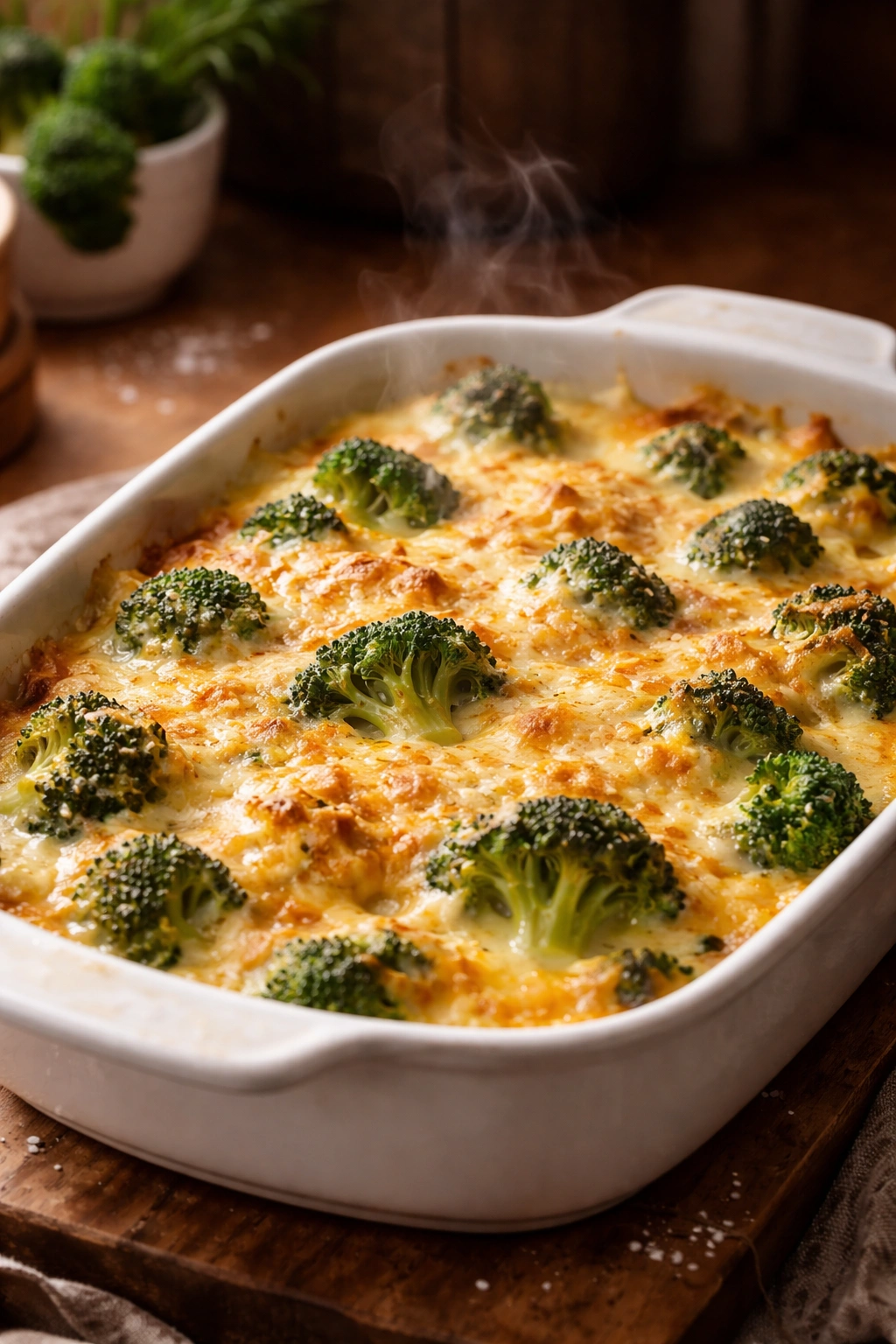
A broccoli cheese bake that everyone comes back for isn’t about complexity; it’s about respect for the ingredients and attention to technique. The blanch-shock method for the broccoli, the from-scratch cheese sauce instead of canned soup, the hand-grated cheese, the simple topping—these details compound into a finished dish that tastes unmistakably like someone who knew what they were doing made it.
Make this recipe once and you’ll understand exactly why it’s requested at every gathering. Make it twice and you’ll develop your favorite variation. Make it regularly and it’ll become as automatic as roasting chicken—a reliable way to create something genuinely impressive with basic ingredients and straightforward technique. That’s the real power of a truly great casserole.
