



Grilled chicken thighs might just be the most underrated dinner move you can make this grilling season. While everyone’s been obsessing over chicken breasts for decades, dark meat has quietly been the superior choice for anyone serious about juicy, flavorful results on the grill. The beauty of chicken thigh skewers lies in their forgiving nature — they resist drying out, absorb marinades like a sponge, and develop that golden, charred exterior that makes people actually excited about dinner. Whether you’re feeding a crowd at a backyard cookout or throwing together a quick weeknight meal, these skewers deliver restaurant-quality flavor with minimal fuss. The key isn’t fancy technique or hard-to-find ingredients; it’s understanding why thighs work better, how to prep them properly, and what grilling method transforms them from ordinary to unforgettable.
Why Chicken Thighs Are the Best Choice for Grilling
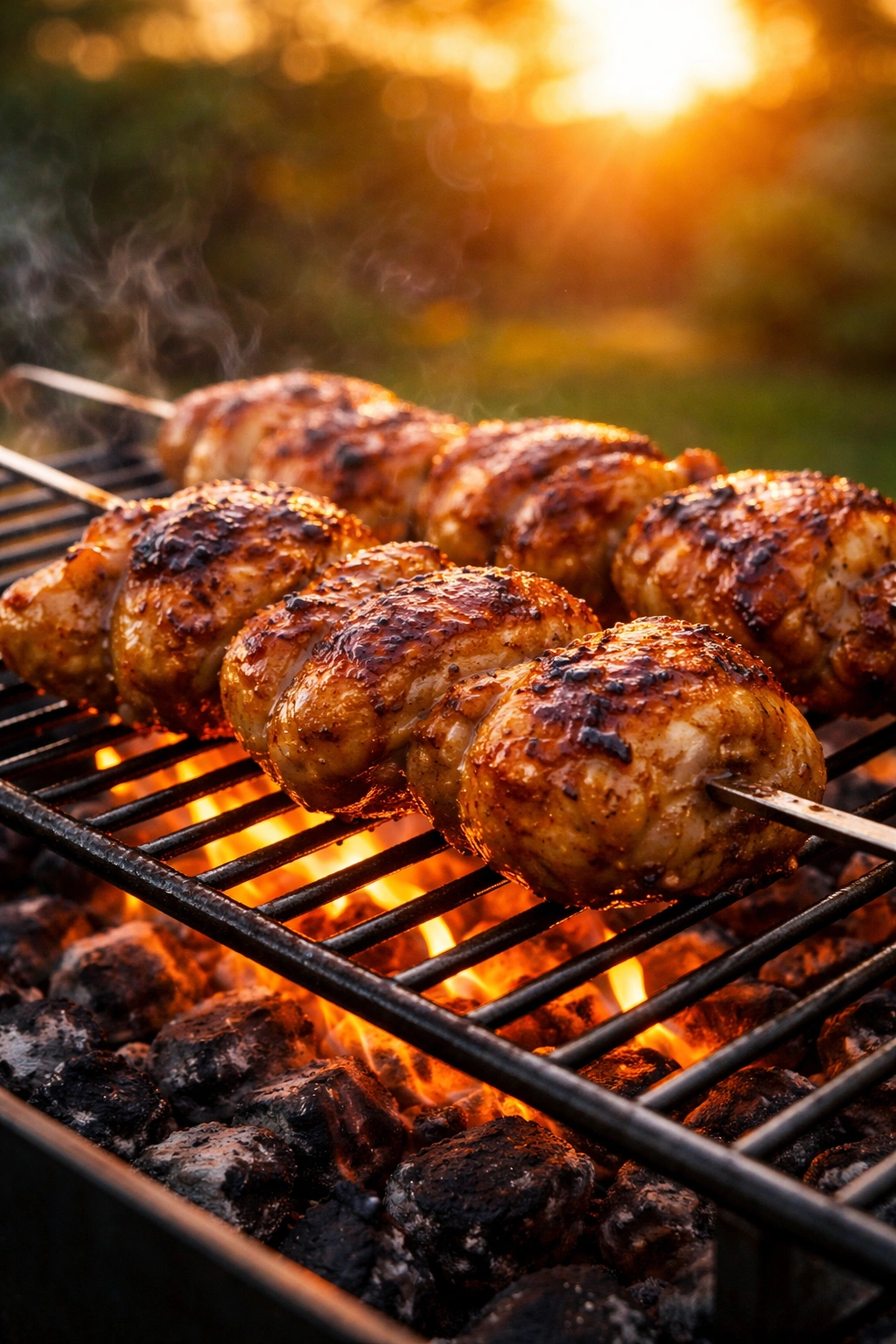
This is where everything starts, and honestly, it’s the decision that changes everything. Chicken thighs contain roughly twice the fat content of chicken breasts, and that fat is your secret weapon on the grill. Fat equals flavor and moisture, period. When you’re exposing meat to high, direct heat, that fat prevents the protein from drying out while it’s cooking. It also renders and caramelizes, creating those deeply satisfying savory notes that make people ask for your recipe.
The Science of Dark Meat
Chicken thighs contain more myoglobin — the protein that makes meat taste rich and meaty — than white breast meat. This is why dark meat has that distinct, fuller flavor even before you add any marinade. The fat in thighs also stays distributed throughout the meat rather than concentrated in one spot, which means every bite tastes equally good whether you’re eating from the center or the edge of the skewer.
Why Breasts Fail on the Grill
Boneless, skinless chicken breasts are lean and low in fat, which sounds healthy until you realize those same qualities make them prone to drying out the moment they hit high heat. Even if you’re careful and flip them constantly, the exterior can char while the interior is still cooking, leaving you with uneven results. The acidic marinades that work beautifully with thighs (yogurt-based or lemon-based) can actually make breasts taste leathery because there’s not enough fat to keep the meat tender during the chemical process of marinating.
The Flavor Advantage
When you bite into a grilled chicken thigh skewer, you taste deep, savory chicken flavor — not just the marinade or sauce coating the outside. This is because thighs have actual taste. They absorb any spice blend or marinade you choose, but the chicken itself isn’t bland underneath. You can use simple seasonings with thighs and still get incredible results, or you can layer complex flavors knowing the meat itself will support and enhance them rather than disappear behind the sauce.
Understanding the Perfect Marinade for Flavorful Skewers
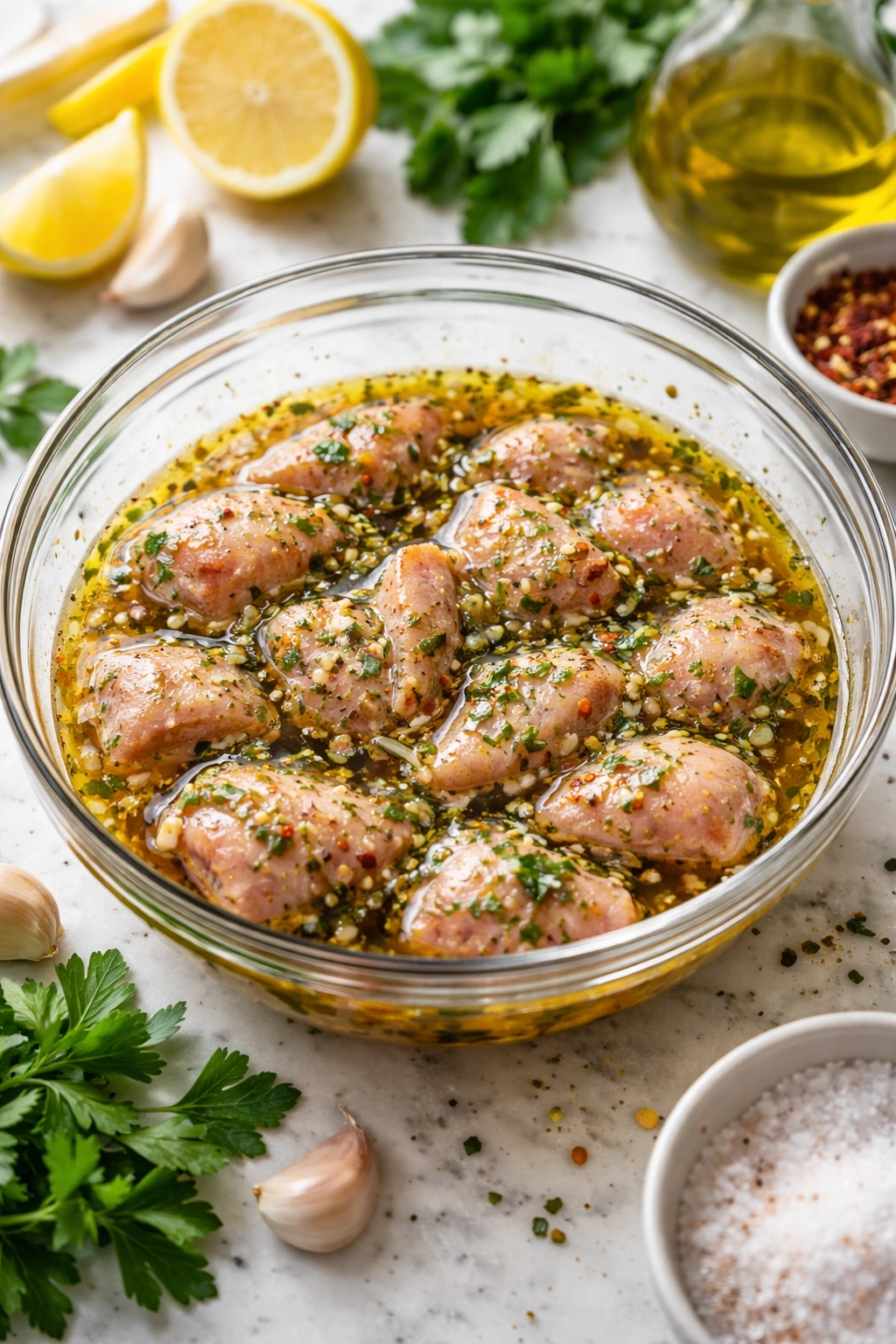
A marinade isn’t just about adding flavor; it’s about penetrating the meat and keeping it moist from the inside out. The best marinades for chicken thigh skewers combine three essential elements: fat, acid, and aromatic flavor compounds. Oil coats the meat and carries fat-soluble flavors. Acid (lemon juice, vinegar, yogurt, or wine) breaks down the muscle fibers slightly, allowing liquid to penetrate deeper and tenderizing the meat. Aromatics like garlic, ginger, spices, and herbs add the flavor profile you’re going for.
Building a Balanced Marinade
The classic ratio is roughly 3 parts oil to 1 part acid, though this shifts depending on what acid you’re using. Yogurt-based marinades can be thicker and more forgiving. Citrus-based marinades are brighter and more delicate. A simple combination might be olive oil, lemon juice, minced garlic, paprika, cumin, salt, and pepper — the kind of thing you can throw together in five minutes. But you can also get creative with soy sauce and ginger, with tomato paste and Worcestershire, or with Middle Eastern spices like cinnamon and coriander.
Why Tomato Paste Works So Well
Professional grill cooks swear by tomato paste as a marinade base because it clings to the chicken, doesn’t run off, and actually caramelizes on the grill, creating deeper color and richer flavor. Mix tomato paste with oil, acid, and your chosen spices, and you’ve got a marinade that will stick around and do its job.
Time Matters More Than You Think
A marinade needs at least 30 minutes to start making a meaningful difference, but 2 to 4 hours is where you really see the flavor develop. Overnight is ideal if you have time — the longer the chicken sits in that marinade, the more tender and flavorful it becomes. Just don’t go overboard with acidic marinades; more than 8 hours and you risk the acid beginning to break down the meat fibers too much, creating a mushy texture rather than a tender one. With oil-based marinades (tomato paste, garlic, and herbs without a lot of acid), you can safely marinate for up to 24 hours.
Choosing Your Vegetables and Layering Strategy
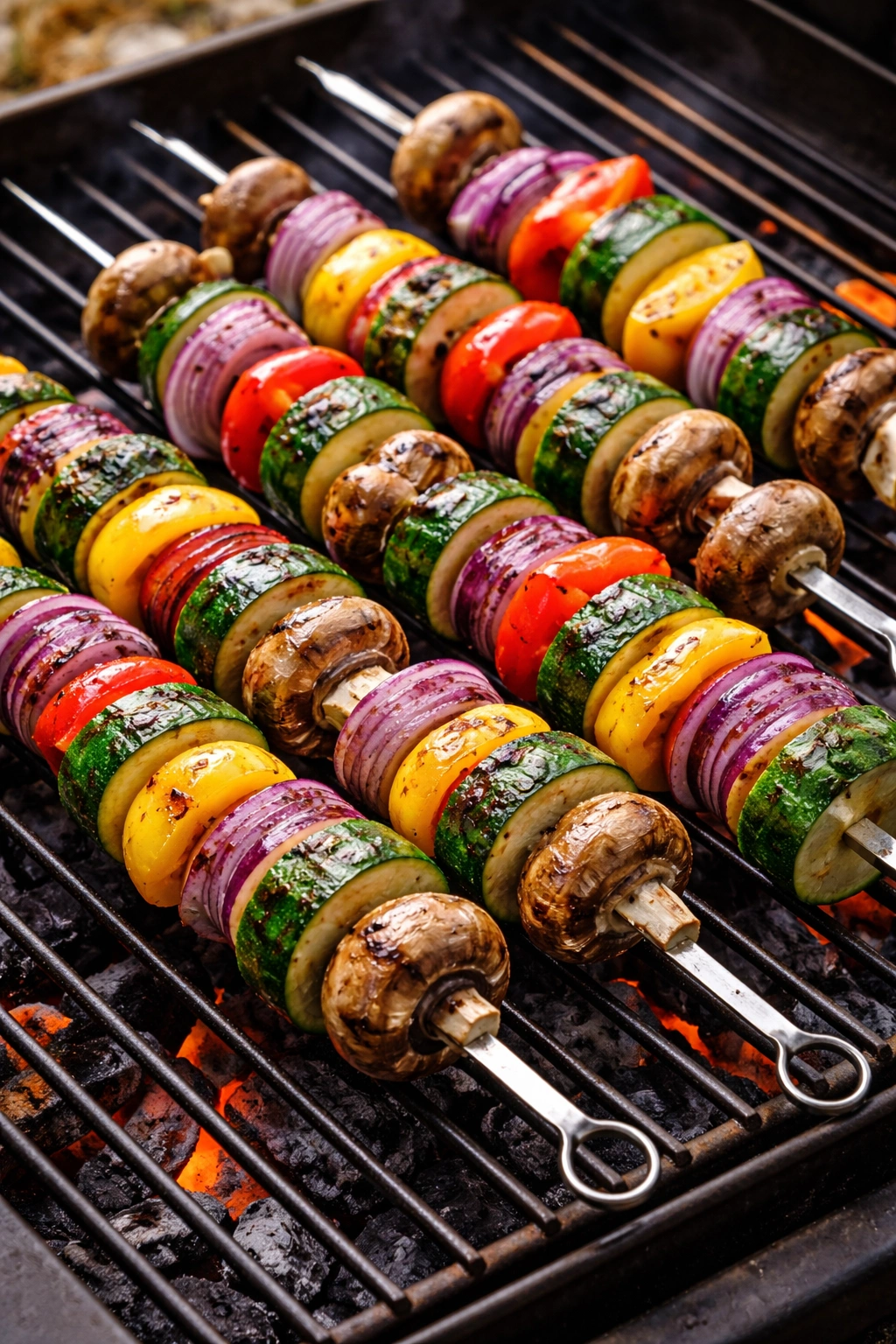
The vegetables on your skewer aren’t just filler — they’re cooking alongside the chicken and deserve just as much thought. The best skewer vegetables are naturally sturdy enough to hold their structure during cooking but flavorful enough to actually enhance the meal. Soft vegetables like zucchini cook through quickly and soak up char flavor beautifully. Bell peppers add sweetness and visual appeal. Red onions become caramelized and tender. Mushrooms get meaty and savory.
Vegetables That Work Best
Bell peppers in any color work beautifully — they stay firm, develop light char marks, and their natural sweetness balances savory marinades. Red onions are phenomenal because they caramelize while maintaining some structure and actually taste better after being grilled (they lose their raw harshness). Zucchini and summer squash cook through in the time it takes chicken to finish, creating tender bites that work well with Mediterranean or Asian marinades. Cherry tomatoes are great if you don’t mind them blistering slightly — they concentrate and intensify their flavor. Mushrooms, especially cremini or portobello pieces, get deeply savory and meaty on the grill.
Avoiding Skewer Mistakes
Not all vegetables work equally well. Delicate vegetables like tomatoes can fall apart if you’re not careful with placement. Root vegetables like potatoes need to be parboiled first if you want them cooked through by the time the chicken is done. Leafy vegetables are a no-go — they’ll char to nothing in seconds.
The Threading Pattern
The way you arrange your skewer matters more than people realize. Try alternating chicken, vegetable, chicken, vegetable, so the vegetables act as a buffer between chicken pieces and heat circulates more evenly. Don’t pack pieces tightly against each other — leave a tiny gap so heat can actually reach all sides of each piece. This is what separates evenly cooked skewers from ones where the edges char while the center is still undercooked.
The Equipment That Makes a Difference
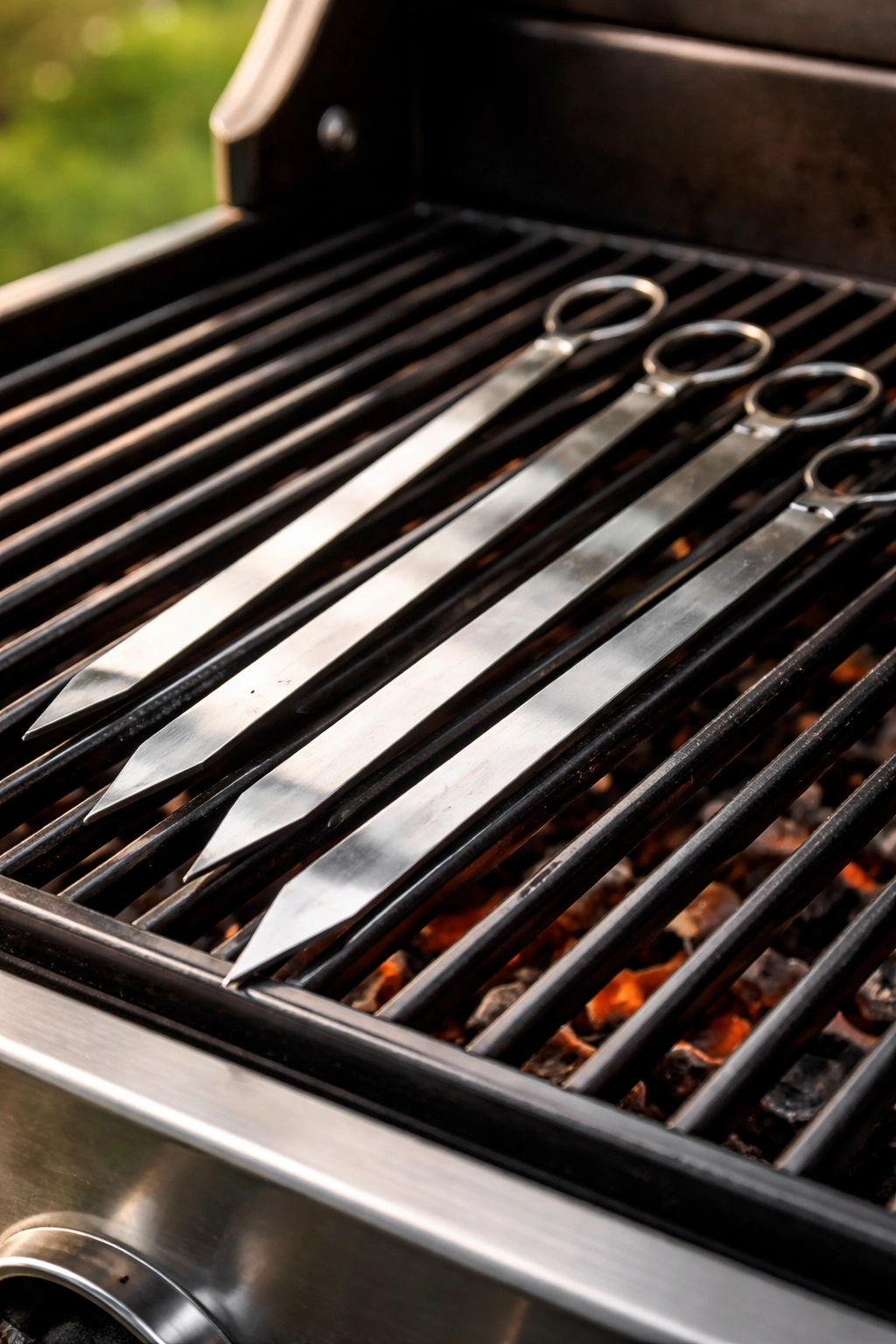
You can grill chicken skewers on whatever equipment you have, but using the right tools absolutely changes your results. Metal skewers are genuinely worth the investment because they conduct heat, won’t burn, and last forever. Wooden skewers work, but they require soaking and still sometimes char despite your best efforts. The flat-sided metal skewers are superior to round ones because the meat doesn’t spin around while you’re turning it.
Metal vs. Wooden Skewers
Metal skewers heat up with the grill, which actually helps cook the chicken more evenly and prevents that frustrating problem where the exterior chars while the interior is still raw. They’re dishwasher-safe, reusable for years, and worth the small upfront cost. If you use wooden skewers, soak them for at least 30 minutes (some people swear by overnight soaking in water) to prevent charring, but honestly, a set of stainless steel skewers solves this problem permanently. Look for ones with flat or beveled sides rather than perfectly round — they grip the meat better and prevent spinning.
Grill Setup Essentials
Make sure you have tongs long enough to handle the skewers safely and comfortably. A meat thermometer is invaluable for checking doneness without cutting into the meat. Oil or cooking spray for the grates makes a huge difference in preventing sticking. A clean grate is essential — use a grill brush to scrape off debris, then oil it right before the skewers go on.
Temperature Control
Knowing whether your grill runs hot or cool helps you dial in timing. A thermometer probe tells you if your grill is actually at the temperature you think it is. Some grills have hot spots where flames are closer; rotating your skewers helps them cook evenly. Being able to move skewers between direct and indirect heat gives you more control if things are cooking too fast.
Preparing Your Chicken Thighs: Cutting and Prep Work
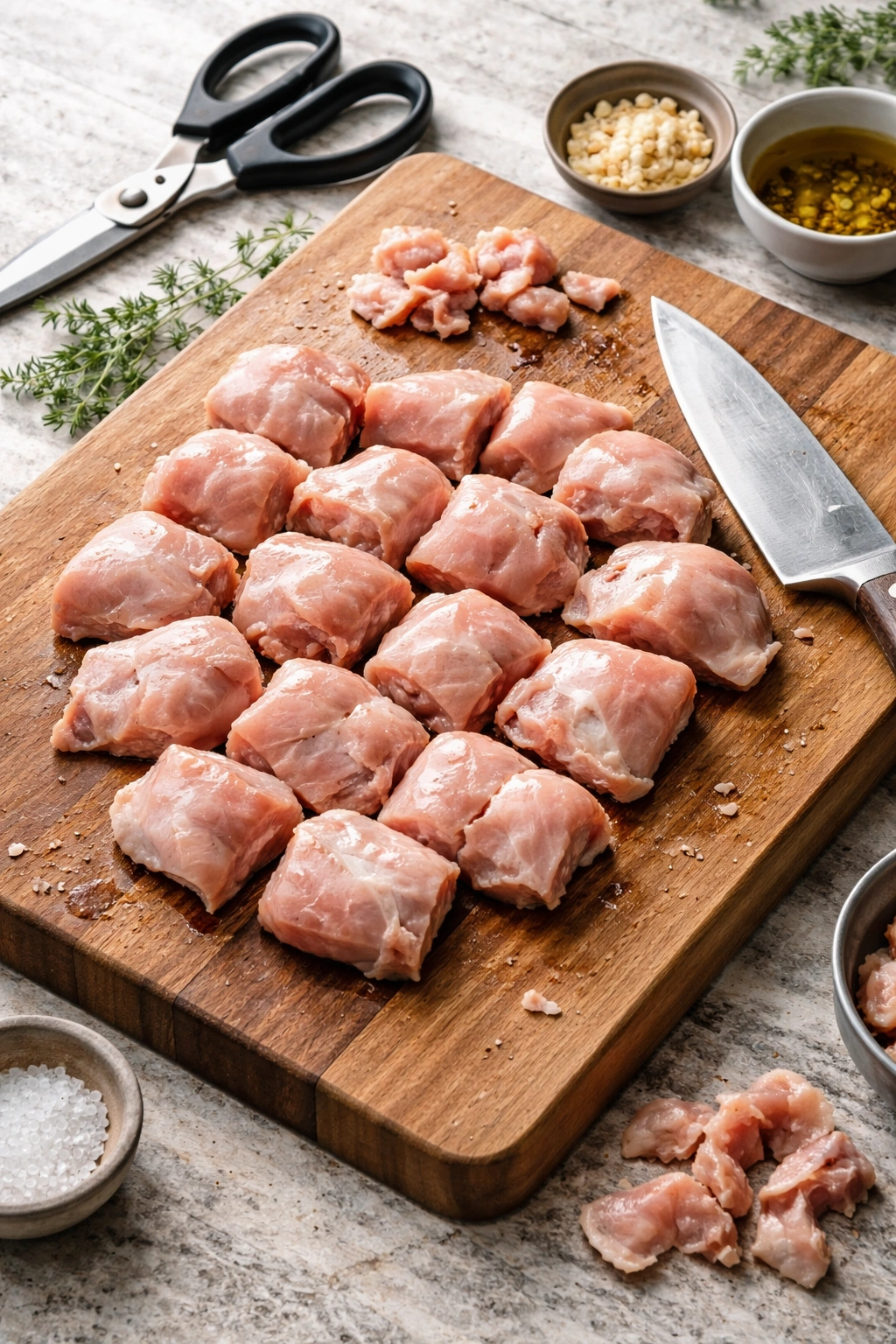
Proper prep is where a lot of home cooks lose points. If you’re cutting chicken thigh pieces that are wildly different sizes, they’re not going to cook evenly — some will dry out while others are still underdone. The goal is consistent, bite-sized pieces that cook through in roughly the same amount of time.
How to Cut Chicken Thighs
Lay out your boneless, skinless chicken thighs on a clean cutting board. Trim any excess fat or gristle around the edges — you want to keep some fat in the meat, but not fatty chunks hanging off. Cut the thighs into pieces roughly 1 to 1.5 inches across. This is the sweet spot for thickness — thick enough to stay moist, small enough to cook through evenly. Kitchen shears are actually faster than a knife for this job and easier to handle. Try to cut pieces roughly the same size so they cook uniformly.
The Benefit of Prep Work
Cutting the thighs before marinating increases surface area, which means more marinade can penetrate the meat. A whole thigh won’t absorb as much flavor as cubed pieces sitting in the same marinade for the same amount of time. If you do need to work with larger pieces (some people fold them on the skewer), just account for longer cooking time.
Cold Meat Cooks Better
Right before you skewer the chicken, make sure it’s well chilled. Cold meat comes off the grill with better color and char because the exterior has time to brown before the interior overcooks. If your marinade has been sitting at room temperature, that’s fine — just let the chicken sit in it and chill before grilling.
Marinating: Timing and Technique for Maximum Flavor
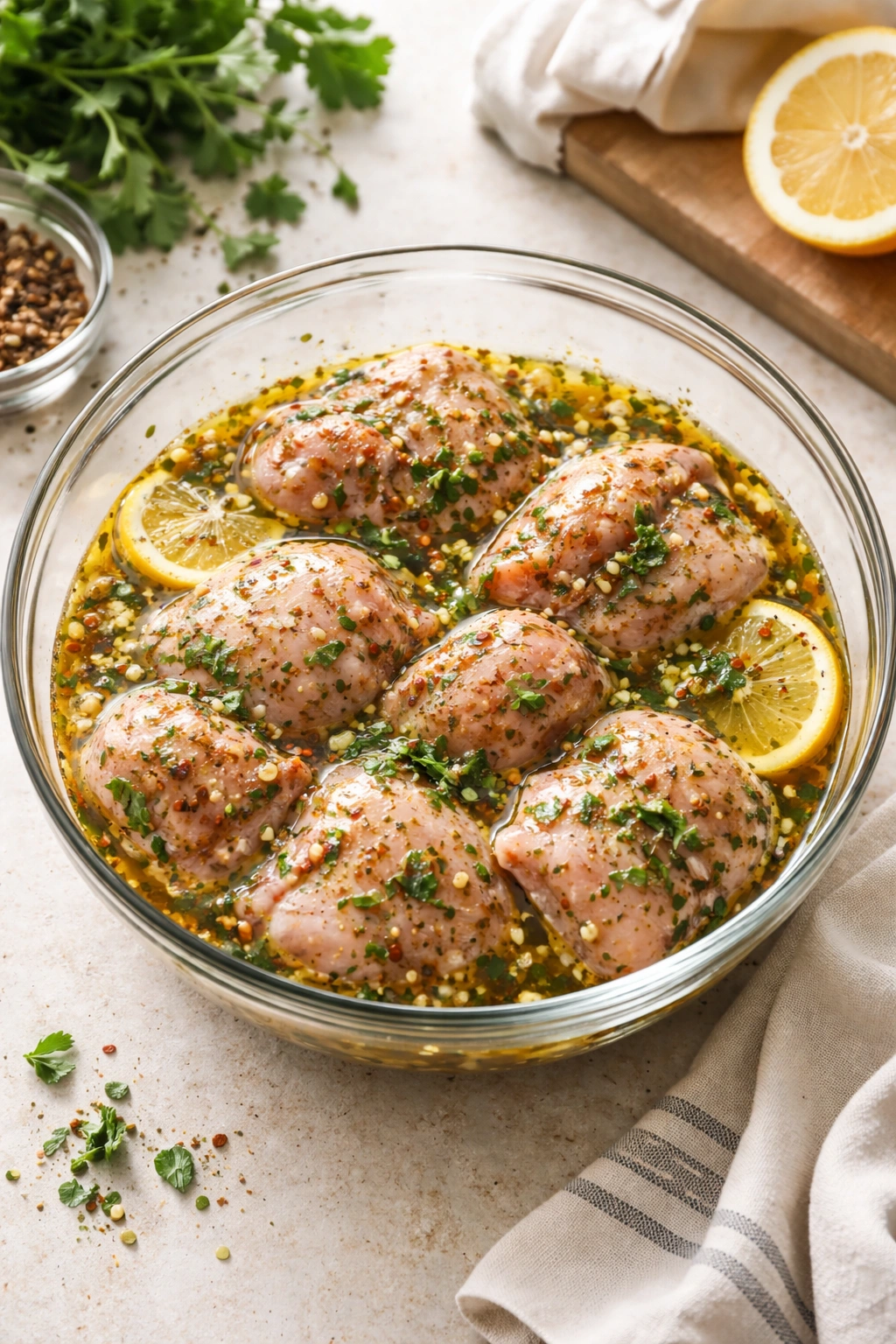
The marinade is where much of your flavor development happens, so don’t skip this step or rush it. You can marinate chicken thighs in a zip-top bag, in a bowl with a lid, or in any container where the chicken is in contact with the liquid and protected from air exposure.
The Minimum and Maximum Times
A 30-minute marinade gives you noticeable flavor, but 1 to 4 hours is really where chicken thigh skewers shine. The longer the chicken sits, the more tender and flavorful it becomes. If you’re marinating overnight (up to 24 hours), that’s perfect — you can prep the night before and have perfectly seasoned, tender chicken ready to thread and grill the next day. With highly acidic marinades (lots of citrus or vinegar), avoid going longer than 8 hours. With oil-based marinades, you can safely go up to 24 hours.
Technique for Even Marinating
If you’re using a zip-top bag, pour the marinade in, add the chicken, seal it, and shake or massage the bag to coat everything evenly. This ensures every piece is in contact with the flavor-carrying liquid. If you’re using a bowl, make sure the chicken is fully submerged or at least all pieces are touching the marinade. Leave about 2 inches of space at the top of the container so the marinade can circulate.
Make-Ahead Magic
This is the best part about marinated skewers: you can prepare them the night before, keep them refrigerated, and pull them out 15 minutes before grilling to come closer to room temperature. This makes weeknight grilling genuinely easy — do the prep work when you have time, refrigerate everything, and just thread and grill when you’re ready to eat.
Grilling Technique: Getting Perfect Char and Juiciness
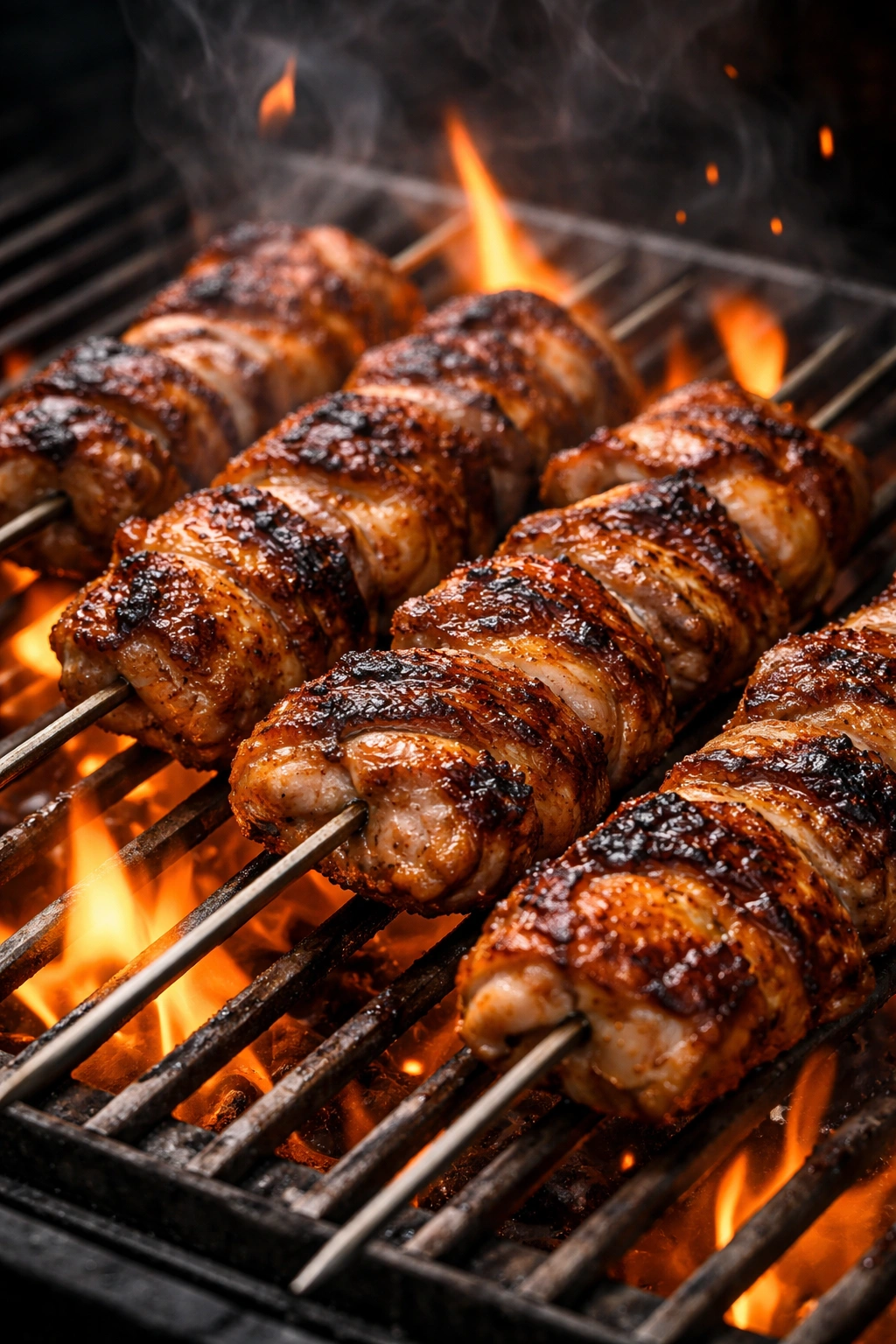
This is where the magic happens, and it’s simpler than you might think. The goal is a golden-brown, charred exterior with a hot, slightly pink juicy center. Chicken thighs reach food-safe temperature at 175°F internal temperature (some people cook to 165°F, but thighs are safer and stay juicier at 175°F).
Preheat and Prepare Your Grill
Get your grill hot before the chicken goes on — this seals the exterior quickly and creates those appetizing grill marks. For chicken skewers, medium-high to high heat is ideal (around 450°F if you can measure it). Let the grill run for at least 5 minutes so everything reaches temperature. Clean the grates with a grill brush, then oil them lightly with a paper towel dipped in oil using tongs — this prevents sticking without creating excess smoke.
The Cooking Process
Place your skewers on the hot grill and leave them alone for the first 2 to 3 minutes. This allows the exterior to develop color. Then flip or rotate a quarter turn every 3 to 4 minutes. A full set of skewers usually needs 10 to 15 minutes total depending on the size of your pieces and your grill’s temperature. You’re looking for golden-brown color on all sides with some char spots — that’s the flavor you’re after.
Temperature Check
Use a meat thermometer inserted into the thickest piece of chicken to check for doneness. It should read 175°F for chicken thighs (165°F is the minimum, but thighs taste better at 175°F). Don’t skip this step the first few times — it’s the difference between undercooked and perfectly cooked. Once you’ve done it a few times, you’ll start to recognize what done looks like.
The Rest Is Non-Negotiable
Remove the skewers from the heat and let them rest for 5 minutes on a plate or platter. This allows the juices to redistribute throughout the meat, which keeps each bite juicy instead of losing all the liquid to the grill. It’s a small step that genuinely improves the eating experience.
Common Mistakes That Ruin Chicken Thigh Skewers
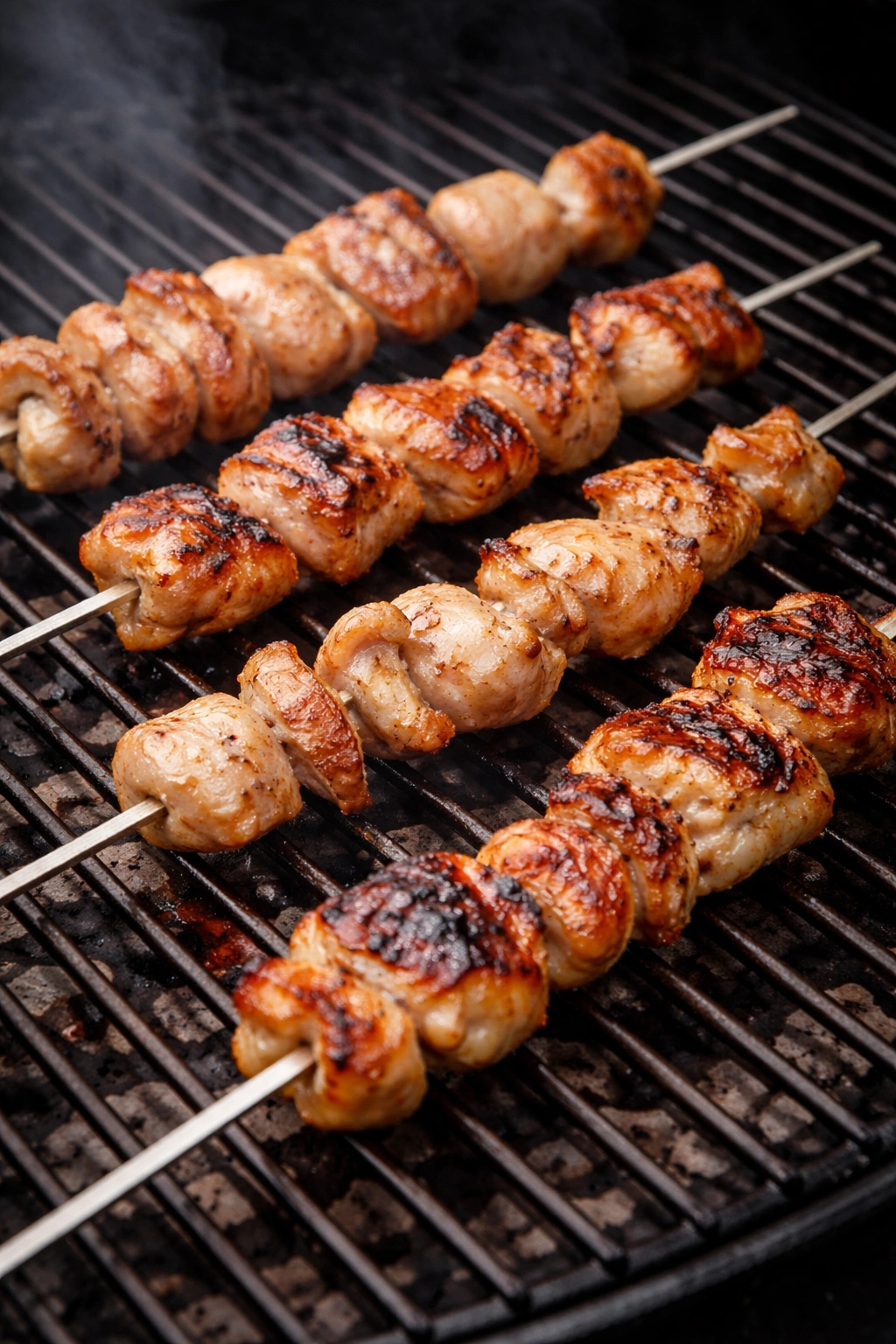
Most grilling disasters are preventable. These are the mistakes people make over and over, and how to avoid them.
Packing Pieces Too Tightly
If you cram chicken and vegetables so close together they’re touching everywhere, the sides facing each other don’t get proper heat exposure. You end up with some sides that are pale and undercooked while other sides char. Leave a tiny gap between pieces — just enough so you can see through slightly. Heat needs to circulate.
Uneven Piece Sizes
When you cut pieces that range from 1 inch to 2 inches, the smaller pieces overcook and dry out while you’re waiting for the larger pieces to finish. Cut everything to roughly the same size, and your skewers cook evenly every single time. This is non-negotiable for consistent results.
Using a Cold Grill
If your grill isn’t actually hot when you put the skewers on, they’ll steam and soften instead of sear and char. The exterior won’t brown, and you miss out on that deeper flavor that makes grilled chicken special. Preheat properly and verify with a thermometer or by holding your hand above the grates — you should only be able to hold it there for about 2 seconds before it’s too hot.
Skipping the Thermometer
“It looks done” is how you end up with undercooked chicken or dried-out overcooked chicken. A meat thermometer takes the guesswork out completely. Once you’ve checked a few times, you’ll develop intuition, but that thermometer is your safety net.
Crowding the Grill
If you put too many skewers on at once, they lower the grill temperature and steam each other instead of getting proper heat exposure. Cook in batches if needed. It’s better to grill in two rounds of 10 skewers each than to crowd 20 skewers on and have them all come out mediocre.
Not Letting Them Rest
Pulling skewers straight off the grill and eating immediately means all the juices run out onto the plate instead of staying in the meat. A simple 5-minute rest (tent loosely with foil to keep them warm) makes a genuine difference in how juicy they are.
Variations to Try: Flavor Combinations That Work
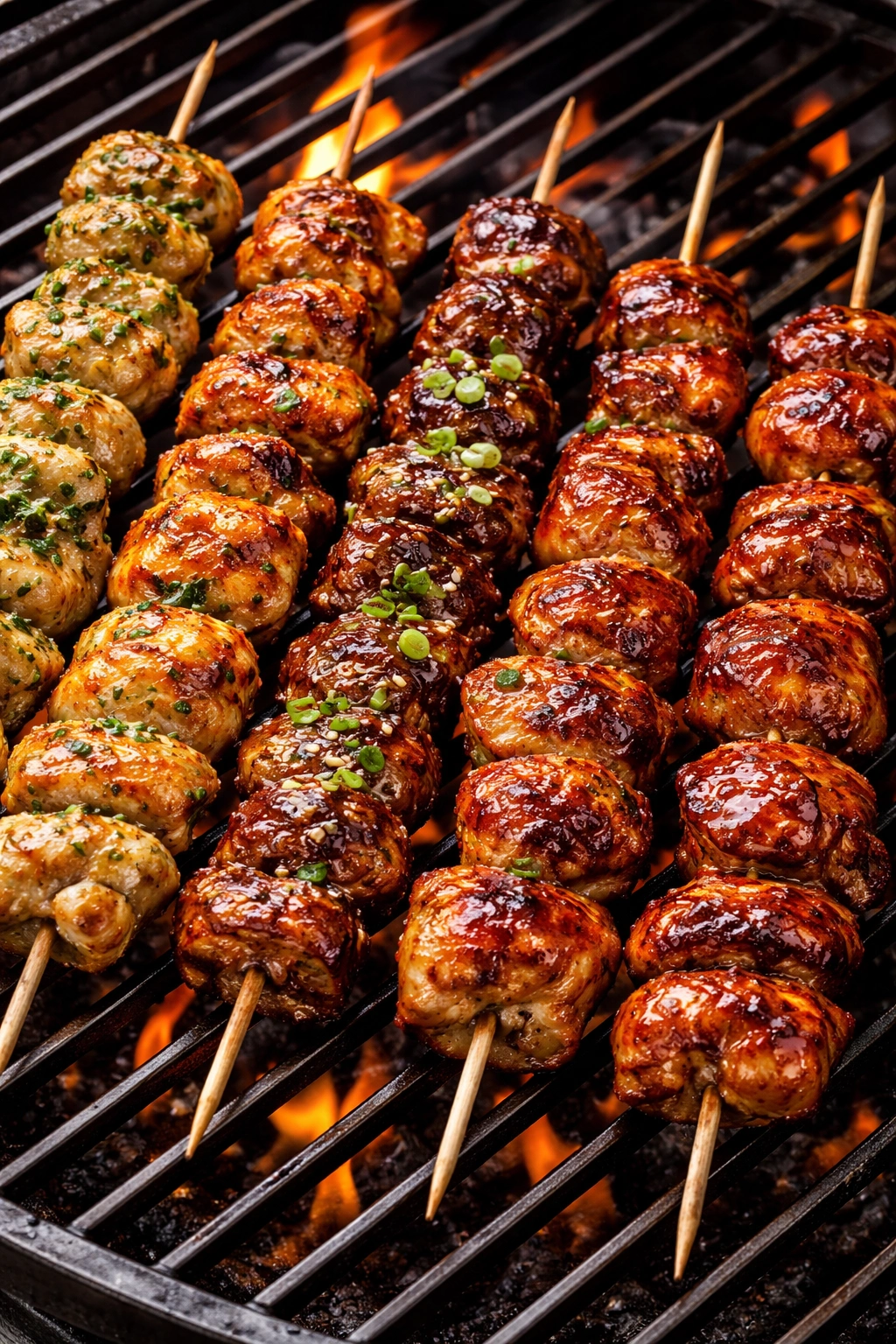
Once you’ve mastered a basic version, these flavor combinations will keep you rotating through different skewers all season long.
Mediterranean with Lemon and Herbs
Combine olive oil, fresh lemon juice, minced garlic, dried oregano, dried thyme, salt, and pepper. This is bright, clean, and works with any summer vegetable. Thread with bell peppers, red onion, and zucchini. Finish with fresh mint if you have it.
Middle Eastern with Yogurt and Warm Spices
Mix Greek yogurt with paprika, cumin, cinnamon, red pepper flakes, lemon zest, and minced garlic. This creates a creamy marinade that clings beautifully to the chicken. The yogurt keeps everything incredibly moist and tender. Thread with chunks of red onion and any colored peppers.
Asian with Soy and Ginger
Combine low-sodium soy sauce, honey, fresh ginger, minced garlic, sesame oil, and a touch of rice vinegar. This is glossy, deeply flavored, and pairs beautifully with bell peppers, red onion, and mushrooms. The honey caramelizes on the grill, creating irresistible char.
Smoky BBQ with Tomato Paste
Mix tomato paste with vegetable oil, Worcestershire sauce, brown sugar, chili powder, smoked paprika, garlic powder, and onion powder. This creates that classic BBQ flavor and actually looks appetizing on the grill with the caramelized, slightly charred exterior. Thread with peppers and onion, finish with your favorite BBQ sauce if desired.
Peruvian with Cumin and Lime
Combine cumin, chili powder, smoked paprika, fresh ginger, garlic, soy sauce, and fresh lime juice with olive oil. This is earthy, warm, and slightly sweet. It’s a bit more adventurous than the classics but absolutely worth trying.
Quick Herb and Garlic (No Marinade)
If you’re in a real time crunch, simply toss your thighs in olive oil, salt, pepper, minced fresh garlic, and fresh herbs like parsley, basil, or rosemary. Grill immediately. You lose the tenderness that comes from marinating, but the flavor is still bright and fresh.
Storage, Leftovers, and Make-Ahead Tips
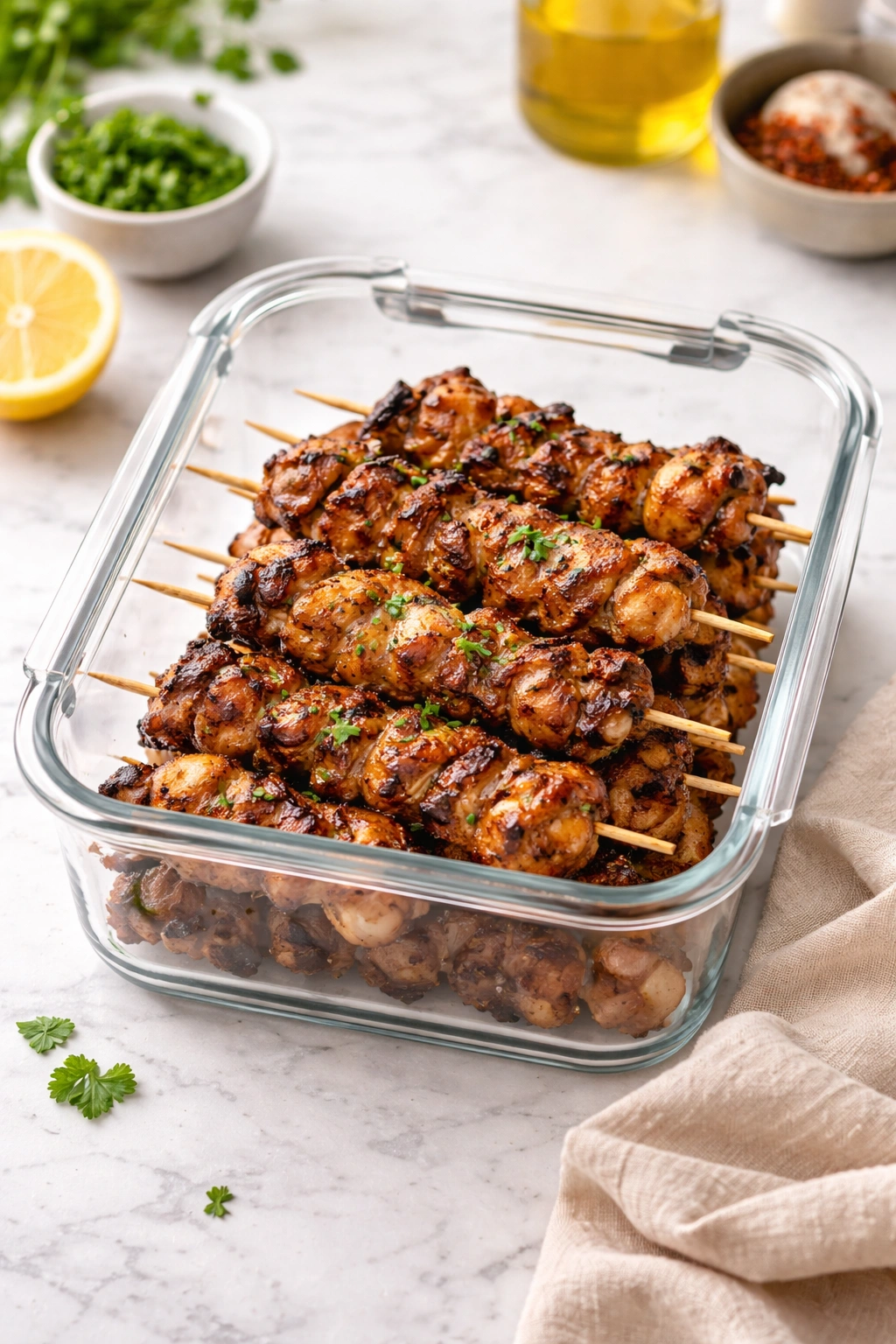
Grilled chicken thigh skewers are just as good cold or reheated as they are hot off the grill, which makes them perfect for meal prep.
Refrigerator Storage
Store cooked skewers in an airtight container in the refrigerator for up to 4 days. You can leave them on the skewers or remove the chicken pieces, though they take up less space without the skewers. Cold skewers are fantastic the next day for lunch — either eat them straight from the fridge or reheat gently.
Freezing and Thawing
You can freeze cooked skewers for up to 2 months. Let them thaw overnight in the refrigerator before reheating. For best results, remove the chicken from the skewers before freezing to save space. Raw marinated chicken (before grilling) can be frozen for up to 2 months — just thaw overnight in the refrigerator and grill as usual.
Reheating Without Drying Them Out
The oven is gentler than the grill for reheating. Set your oven to 350°F and warm the skewers for about 10 minutes, covered loosely with foil. You can also place them back on the grill over indirect heat (grill lid closed) for a few minutes to re-char them slightly and warm through. The stovetop in a grill pan works too — just keep the heat moderate and flip frequently so they heat evenly.
Make-Ahead Strategy
Thread and marinate your skewers the night before, cover them, and refrigerate. The next day, pull them out about 15 minutes before grilling so they come closer to room temperature. Cold chicken straight from the fridge takes slightly longer to cook through. You want the exterior to have time to brown and char before the interior gets too warm.
Serving Suggestions and Perfect Pairings
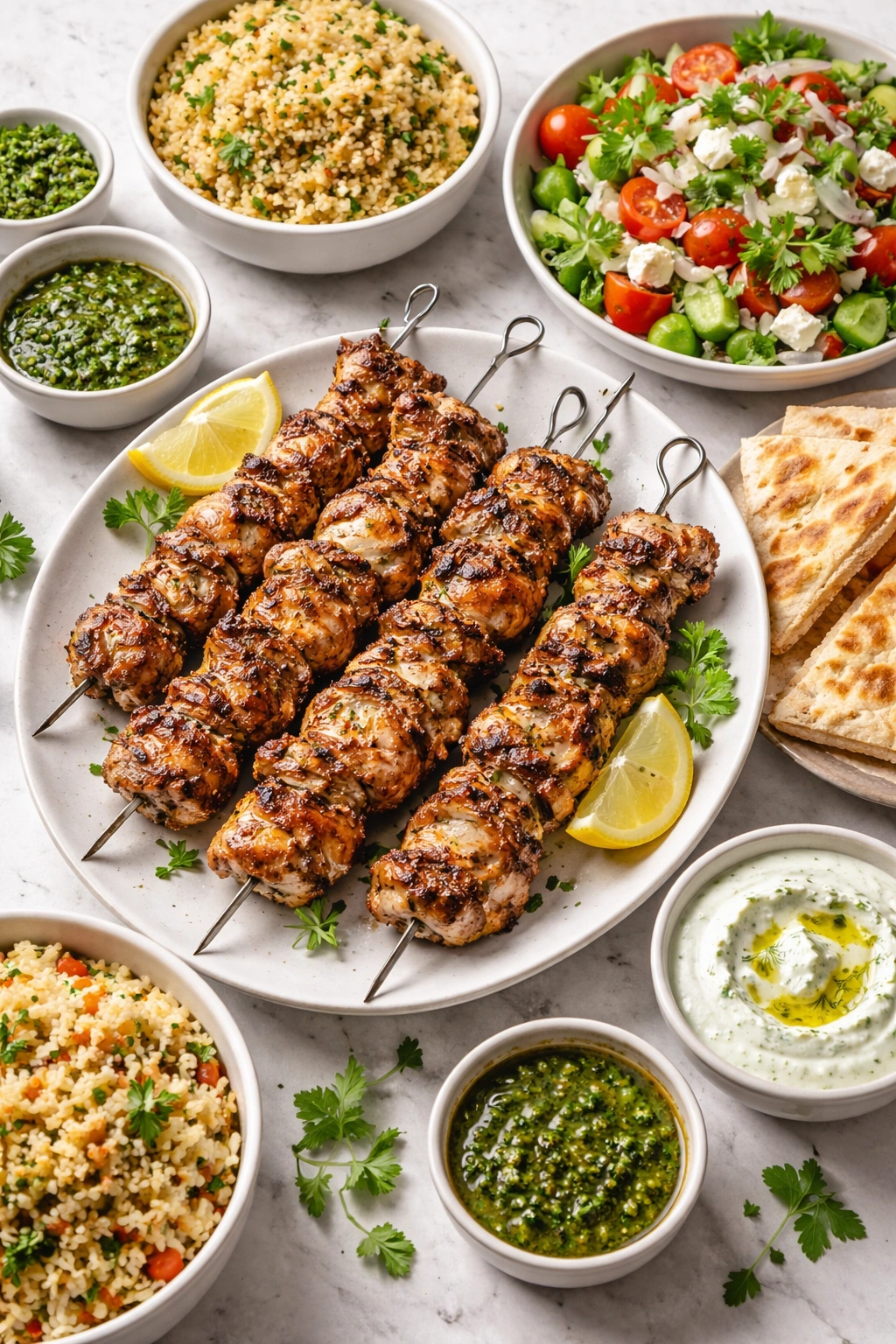
The best part about grilled chicken thigh skewers is their versatility. They work at backyard cookouts, weeknight dinners, or elegant summer entertaining.
Grain Bowls and Rice
Serve over a bed of cilantro lime rice, Mediterranean orzo, or golden rice pilaf. The skewers become a protein on top, and people can customize with whatever vegetables and sauces they like. Jollof rice, yellow rice, or simple jasmine rice all work beautifully.
Salads and Fresh Sides
Pair with a crisp Mediterranean cucumber salad, Greek salad with feta, a bright arugula salad, or a coleslaw for contrast. The cool, fresh vegetables balance the charred, warm chicken beautifully. Grilled vegetables on the side (asparagus, zucchini, more peppers) extend the grilled flavor profile.
Sauces and Dips
A garlicky yogurt dip is traditional and absolutely delicious. Fresh herb sauces like chimichurri or pesto work great. Simple lime crema, sriracha mayo, or your favorite BBQ sauce all complement grilled chicken. Even just a squeeze of fresh lemon and good flaky salt finishes them perfectly.
Bread and Wraps
Serve alongside grilled naan, flatbread, or pita. People can build their own wraps with chicken, vegetables, sauce, and fresh herbs. This is incredibly popular at casual gatherings and makes people feel like they’re participating in the meal.
Casual Entertaining
These are perfect for a crowd because you can prep and marinade hours in advance, and grill just before serving. Set up a platter with the skewers and let people grab them hot off the grill. Provide a couple of sauce options and let people customize. It feels special but requires minimal effort from you.
Key Takeaways
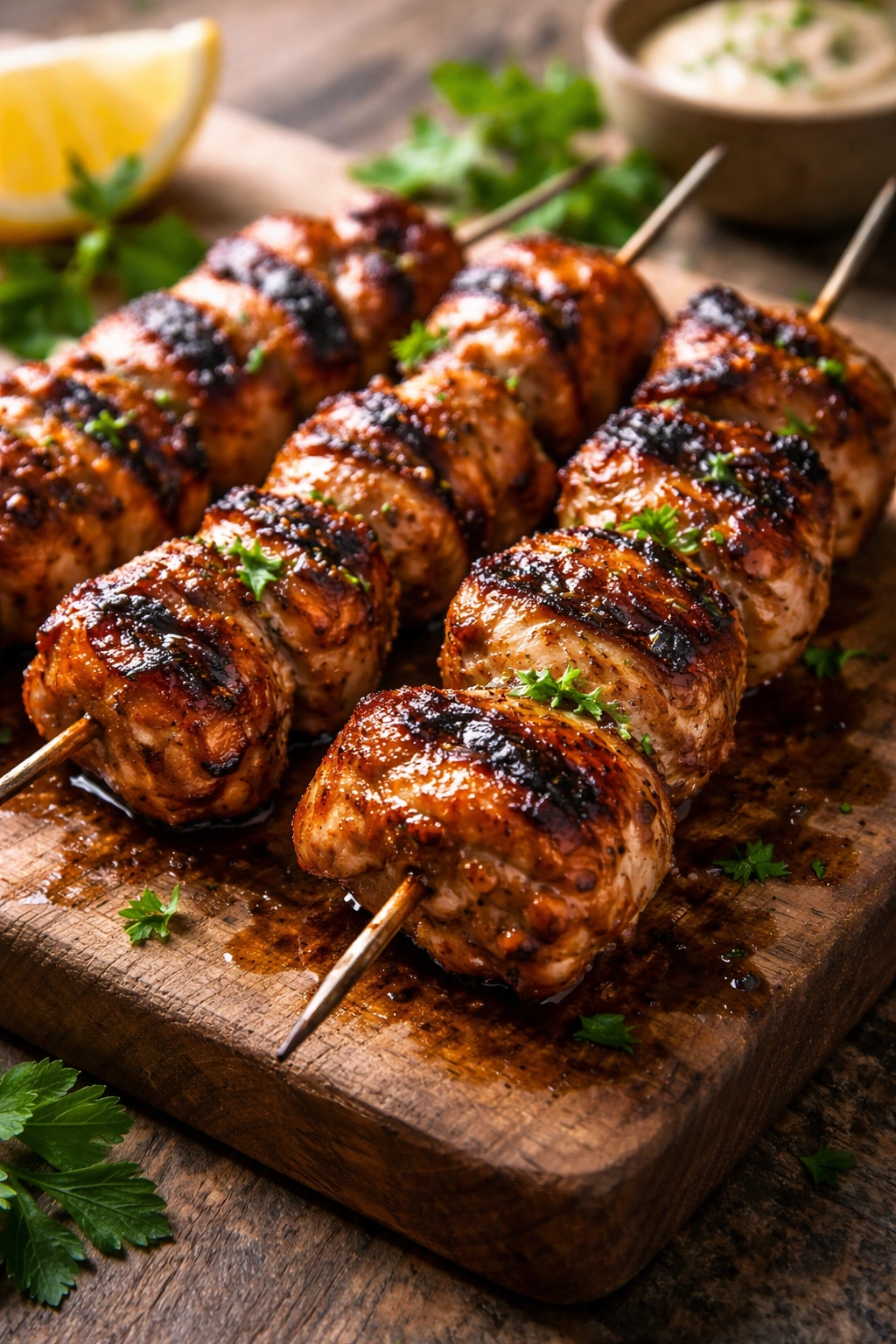
Chicken thigh skewers aren’t complicated, but understanding why thighs work better than breasts, how to marinade properly, and what grill technique creates the best results makes all the difference between mediocre and unforgettable. Thighs stay juicy, absorb flavor deeply, and develop that golden char that makes people reach for seconds. A good marinade needs time, fat, acid, and aromatic flavor compounds. Proper prep means consistent piece sizes, an adequately preheated grill, and the patience to let them rest after cooking. These skewers are forgiving enough for a beginner to succeed with but rewarding enough to become a regular in your rotation. Once you’ve mastered the basic technique, the flavor variations are genuinely endless — try a different marinade every week and you still won’t run out of combinations worth making. Whether you’re feeding a crowd or putting together a simple weeknight dinner, grilled chicken thigh skewers deliver restaurant-quality results with minimal fuss.
