



When you’re staring down a busy weeknight and need dinner on the table without hours of fussing, buffalo chicken casserole becomes your secret weapon. This one-pan meal transforms the bold, tangy flavors everyone loves about buffalo wings into a creamy, comforting dinner that comes together faster than you’d expect. The best part? Most of the “cooking” happens passively in your oven while you handle everything else on your plate. With a handful of pantry staples and a rotisserie chicken you already bought, you’ll have a bubbling, golden casserole ready to serve in under 45 minutes—often much less if you’ve got your strategy down.
The magic of a minimal-prep buffalo chicken casserole isn’t about skimping on flavor or nutrition. It’s about being strategic with ingredients, making smart shortcuts without sacrificing taste, and understanding that sometimes the simplest approach delivers the best results. You’re not buying a dozen specialty items or spending half an hour chopping vegetables. Instead, you’re working with things that already live in your fridge and freezer, building something that tastes like you spent all afternoon cooking when you really only spent 10 minutes prepping.
What Makes Buffalo Chicken Casserole a Minimal-Prep Dinner
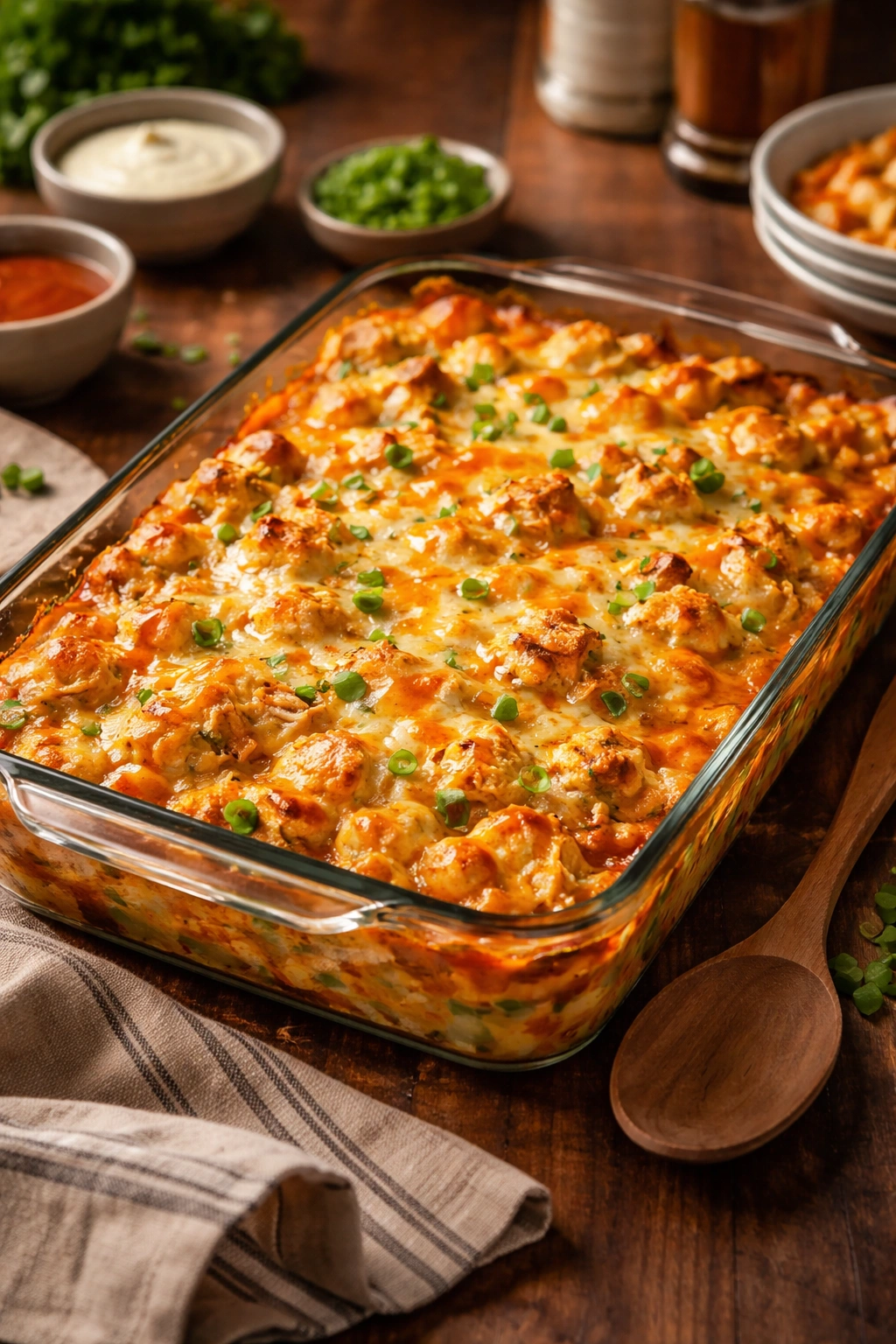
Not all casserole recipes are created equal when it comes to actual prep burden. Some ask you to roast chicken from scratch, make sauce from vinegar and hot peppers, and spend ages dicing vegetables into perfectly uniform pieces. A true minimal-prep version strips away every unnecessary step while keeping every essential flavor intact.
The real time-savers come from three decisions: using pre-cooked chicken instead of raw, relying on frozen vegetables instead of fresh ones, and choosing a sauce base that mixes together in minutes rather than simmering for extended periods. These aren’t compromises—they’re actually better choices for a weeknight dinner, because frozen vegetables retain nutrients beautifully and pre-cooked chicken guarantees doneness every single time.
The assembly process itself barely qualifies as cooking. You’re mixing a few ingredients in a bowl, stirring them into pasta or rice, spreading it in a baking dish, adding cheese, and sliding it into a preheated oven. That’s genuinely it. The oven does the heavy lifting, melting everything together and building those creamy, bubbly textures you want, while you pour yourself a drink and relax.
The Simple Science Behind Quick Assembly
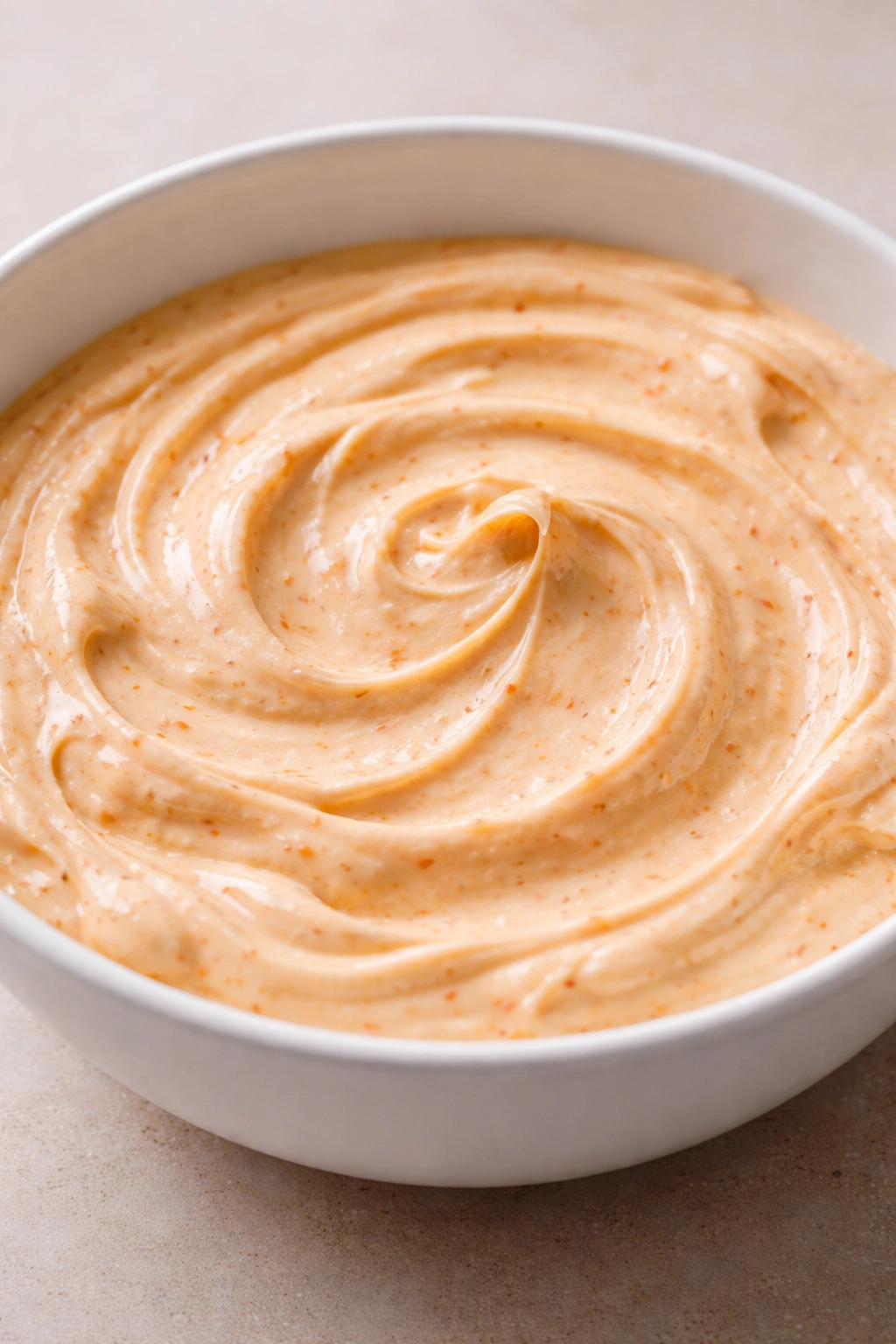
Understanding why minimal-prep versions work helps you feel confident skipping steps that sound important but actually aren’t. The creamy sauce in buffalo chicken casserole relies on three core components: fat, acid, and seasoning. Fat comes from cream cheese or butter or both. Acid comes from the buffalo sauce itself, which contains vinegar. Seasoning comes from ranch dressing powder, buffalo sauce, and any additional spices you add.
When these three elements mix together and gently heat in the oven, they don’t need any special sauce-making technique. You’re not reducing anything, thickening anything, or watching a stovetop. The cream cheese softens and spreads through the mixture as the oven’s ambient heat does the work. The result is completely indistinguishable from a sauce made with fussy techniques, but you’ve saved yourself 15 minutes of stove time.
Protein doesn’t need special handling either. Rotisserie chicken is already fully cooked, so it just needs to warm through in the oven. It won’t dry out in the 25-30 minutes the casserole bakes because the creamy sauce surrounds it and keeps it moist. You’re not adding raw chicken that needs to reach a specific temperature—you’re incorporating fully cooked protein that needs to reach your serving bowl.
Core Ingredients You Need on Hand
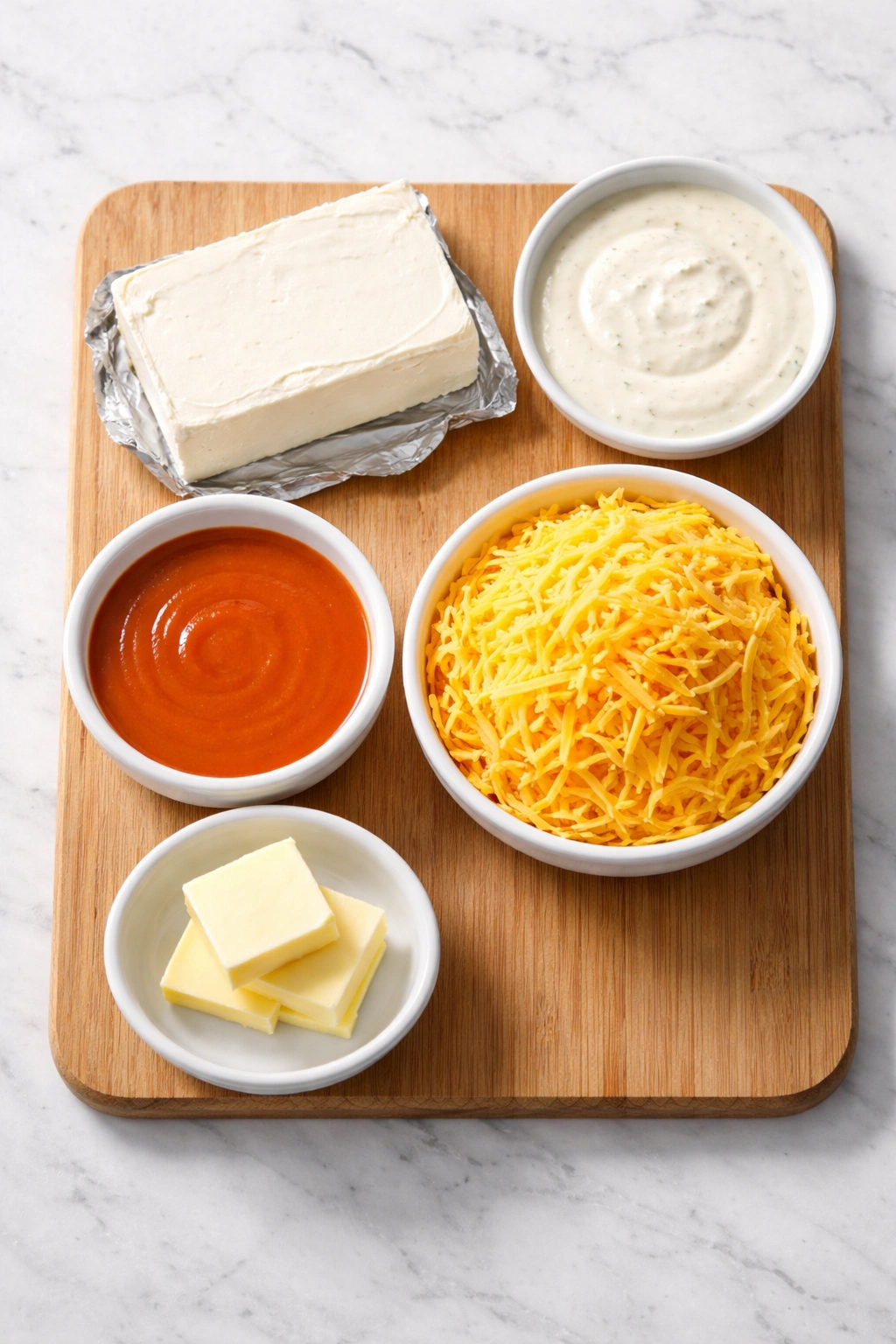
The beauty of a minimal-prep buffalo chicken casserole is that it depends on things most people keep stocked regularly. Nothing requires a special trip to the store or a trip to the specialty aisle.
Cream cheese is non-negotiable. It’s the backbone of the sauce, and softened cream cheese whisks right into other ingredients without any fuss. Buy the block form, not the whipped version, because it has better texture and melts more reliably in the oven.
Buffalo sauce comes from your hot sauce aisle, and frankly, any brand works. Frank’s RedHot is everywhere and inexpensive, but store brands are identical. You control the intensity by using more or less, so no need to overthink this choice.
Ranch dressing balances the heat and adds creaminess. You can use bottled ranch, ranch powder mixed with a splash of milk, or even a drizzle of sour cream thinned with a bit of water if that’s what you have.
Shredded cheese is where you add richness and that golden-brown top everyone wants. A combination of sharp cheddar and mozzarella is ideal, but any cheese blend works beautifully.
Butter helps melt everything together smoothly and adds richness to the final texture.
That’s genuinely the complete list of sauce-building ingredients. Everything else—the chicken, the starch base, any vegetables—are vehicles to carry these flavors.
The Five-Ingredient Base Sauce
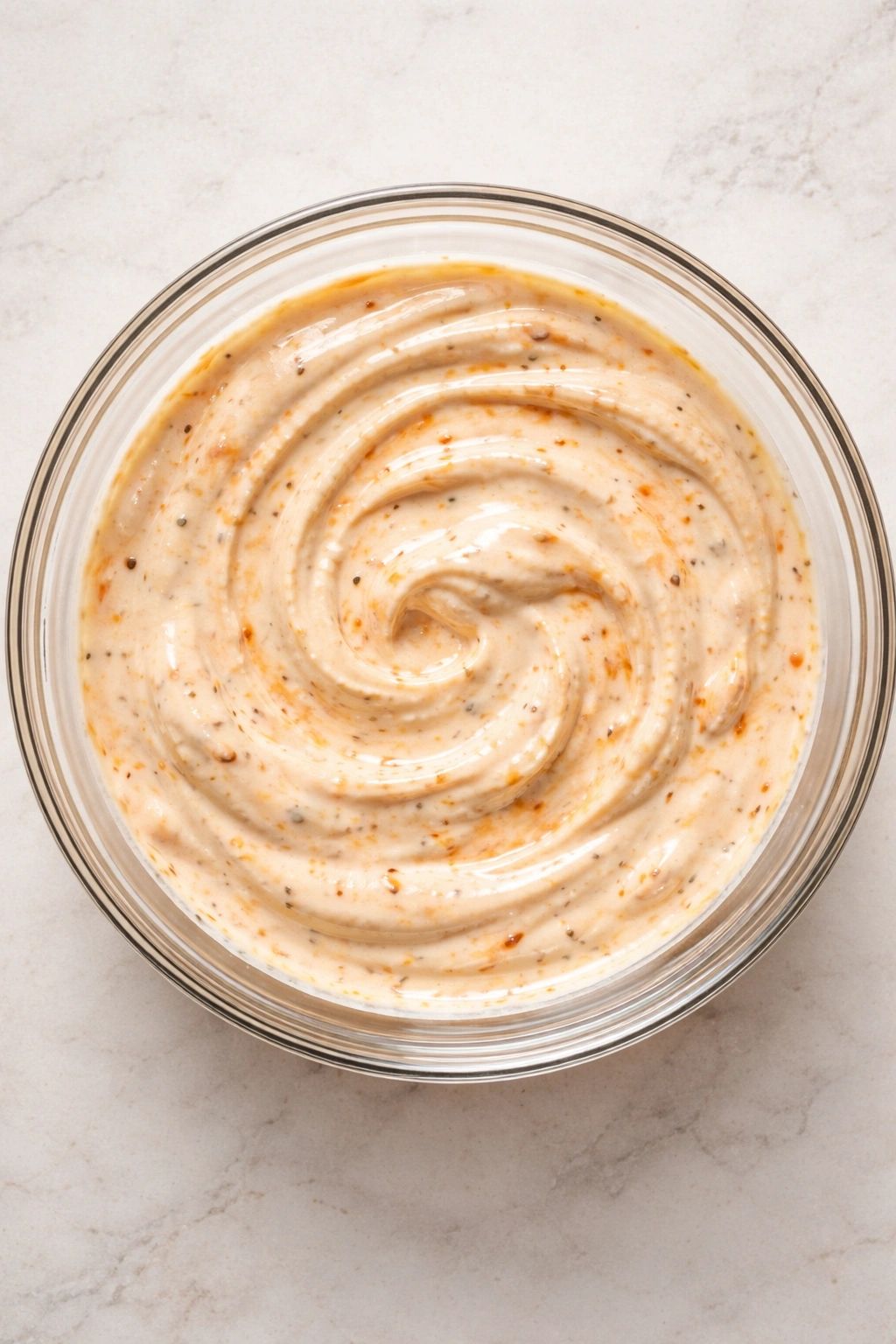
The actual sauce comes together in minutes and requires zero cooking skill. Soften your cream cheese (either by leaving it on the counter for 30 minutes or microwaving it for 20-30 seconds) and combine it in a bowl with buffalo sauce, ranch dressing, and a pinch of salt and pepper.
That’s your sauce. Just mix it together until you have something creamy and cohesive with a warm tan color and flecks of orange from the buffalo sauce. Don’t overthink the texture—it doesn’t need to be perfectly smooth. A few small lumps of cream cheese will melt completely in the oven and actually help distribute creaminess throughout the casserole.
The proportions are flexible depending on how spicy you want dinner to be and how creamy you prefer the final result. A typical casserole serves 6-8 people and uses about 8 ounces of cream cheese, ½ to ¾ cup buffalo sauce, ½ to 1 cup ranch dressing, and a couple of tablespoons of butter melted right into the warm sauce. If your family hates spice, use less buffalo sauce. If they go crazy for heat, use more. Taste as you go—you can always add more heat, but you can’t remove it.
Choosing Your Starch Base
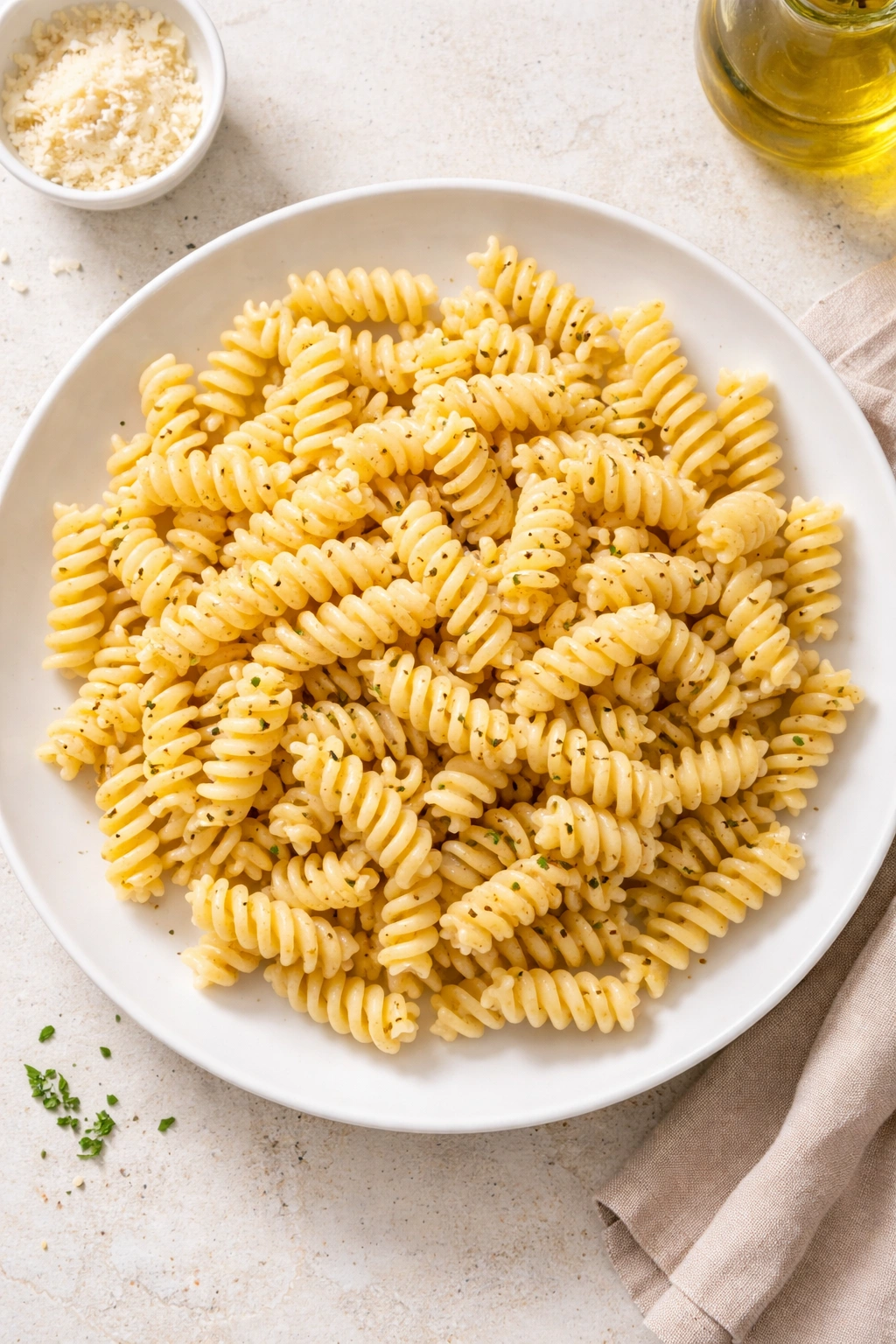
The starch foundation of your casserole is your biggest customization choice, and every option comes with its own time-saving advantage.
Pasta is the most traditional choice and honestly the easiest approach for minimal prep. You cook it according to package directions (which happen while other elements come together), drain it, and mix it directly into your sauce. Rotini holds sauce beautifully in its spirals, but penne, medium shells, or any short pasta shape works equally well. The key is cooking it just slightly al dente—a hair firmer than you’d normally eat it—because it continues softening slightly in the oven.
Cauliflower rice makes an appearance in several lighter versions because it’s genuinely convenient. Most grocery stores sell frozen cauliflower rice in bags, and you can thaw it in a colander while everything else comes together. It adds bulk and nutrition without adding calories, and it requires zero cooking beforehand. Just thaw, drain any excess moisture, and mix it in. If you want to skip the thaw step entirely, some people just toss it in frozen—it’ll cook right in the oven, though it takes a few minutes longer.
Regular white or brown rice gives you a heartier, more substantial casserole. If you’re using leftover cooked rice you already have in your fridge, this is genuinely the fastest choice because there’s zero cooking time. If you don’t have leftovers, minute rice or instant rice cooks in five minutes, which still qualifies as minimal prep.
Egg noodles offer a special cozy quality—they’re wider and softer than regular pasta, and they soak in sauce beautifully. If you have a bag in your pantry, they’re worth using because the texture difference is noticeable and delightful.
Any choice is correct. Pick whichever you have on hand or whichever your family prefers, and you’re done deciding.
Quick Protein: Why Rotisserie Chicken Saves Time
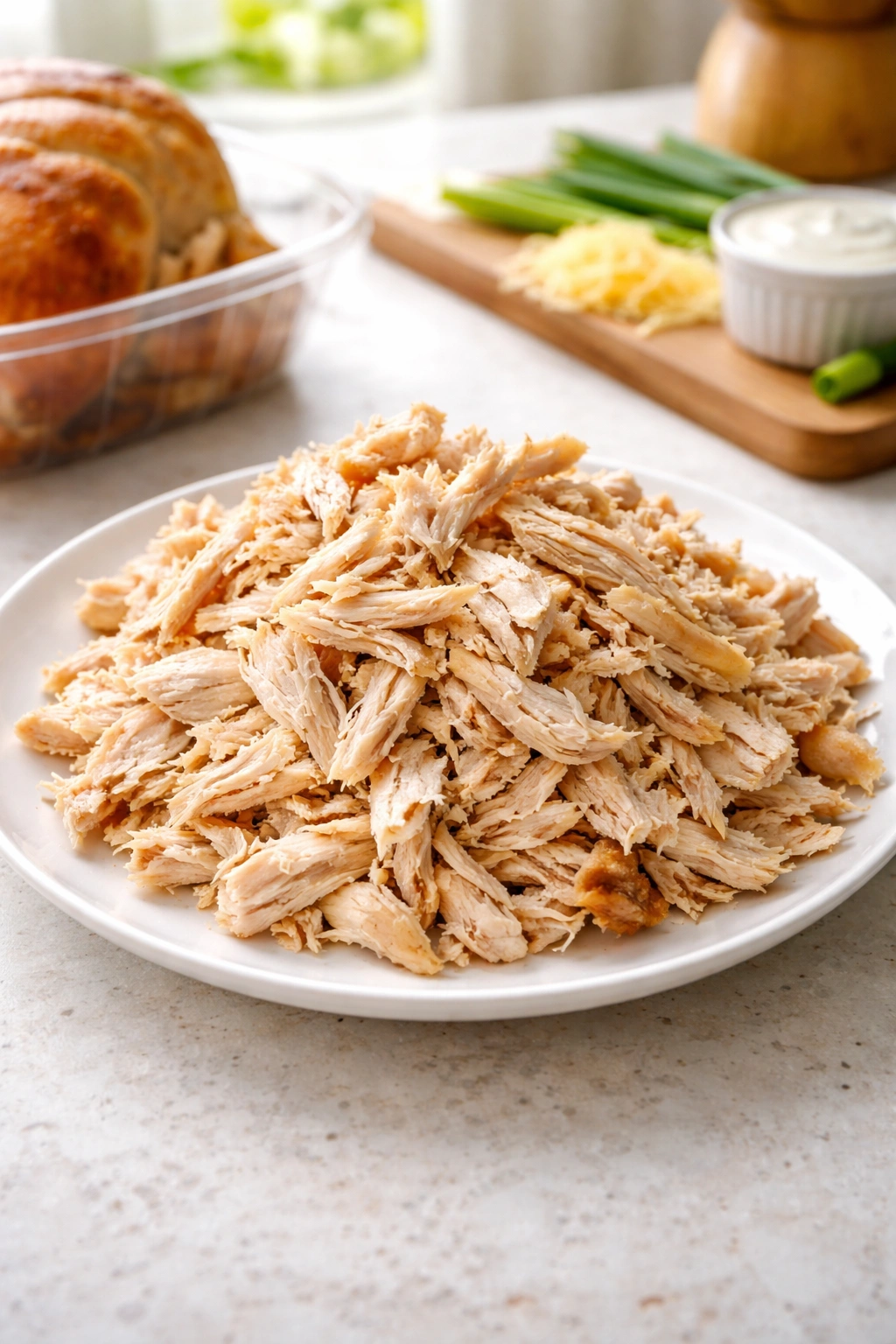
The single biggest time-saver in a minimal-prep buffalo chicken casserole is buying a rotisserie chicken instead of cooking raw chicken from scratch. When you walk into the grocery store, the hot case has already done all the work for you.
A store-bought rotisserie chicken serves 4-6 people generously and costs between $6-10 depending on where you shop. It’s fully cooked, fully flavored, and ready to shred and use immediately. Pull the meat off the bone, discard the skin and bones (or save them for stock if you’re feeling ambitious), and you have about 3-4 cups of perfect chicken for your casserole. This step takes maybe 5 minutes of hands-on time.
The texture of rotisserie chicken in a creamy casserole is actually superior to chicken you’d cook specifically for this recipe. Because it’s been slow-roasted, the meat has more flavor developed and it stays juicy in the creamy sauce. There’s genuinely no reason to add raw chicken unless you’re already making chicken for another meal and want to use leftovers.
If rotisserie chicken isn’t available or you prefer using what you’ve already got, leftover cooked chicken from any source works perfectly. Shredded rotisserie chicken from a previous meal, deli-counter shredded chicken, or chicken breasts you baked earlier in the week all perform identically. The requirement is that it’s pre-cooked and ready to mix in without any additional preparation.
Vegetable Shortcuts That Don’t Sacrifice Nutrition
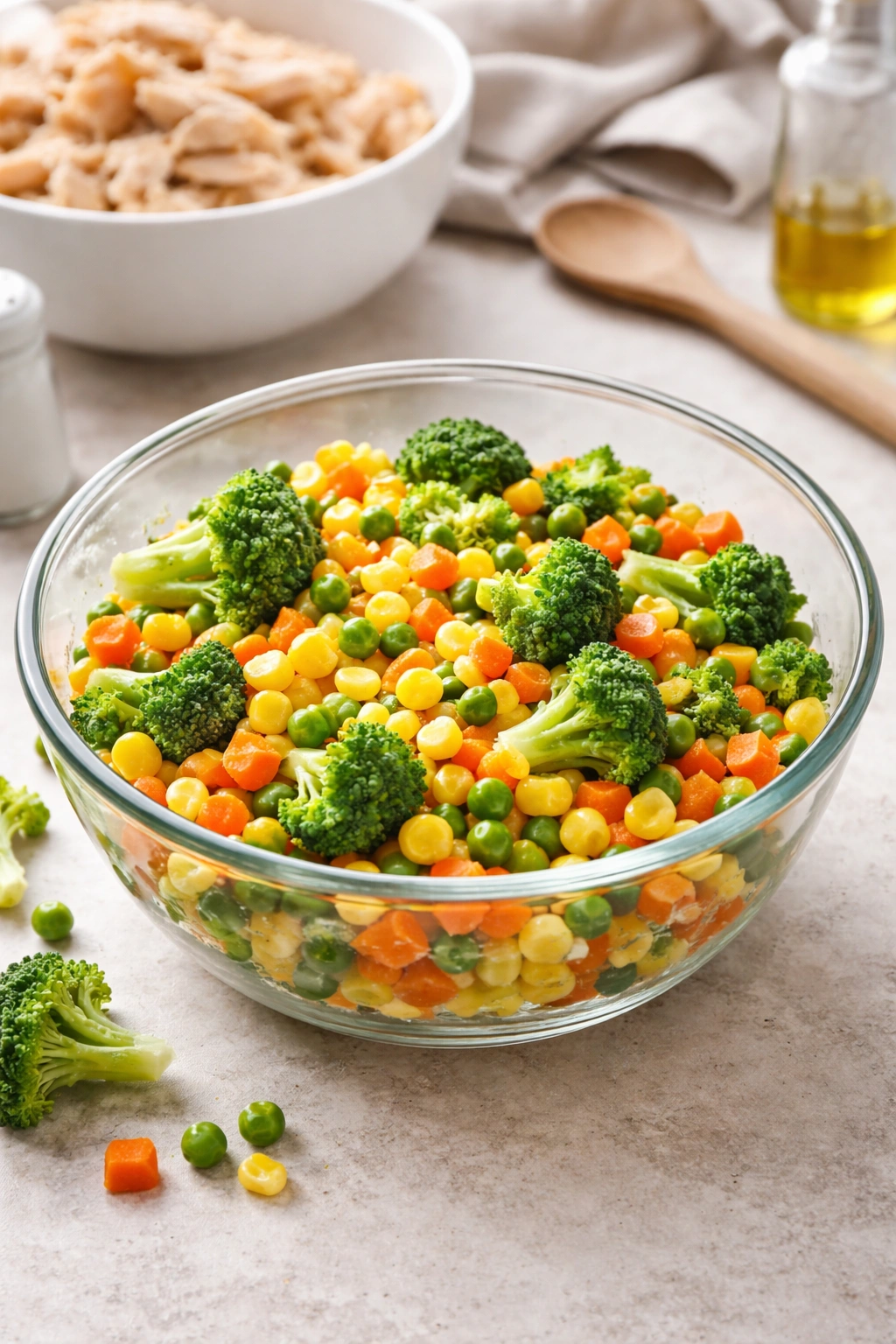
Raw vegetables would be lovely, but they require chopping, and minimal prep means avoiding that step entirely if possible. Frozen vegetables are genuinely your best option here, and it’s not even a compromise—they’re nutritionally identical to fresh vegetables because they’re frozen immediately after harvest, locking in vitamins and minerals before they can degrade.
Frozen mixed vegetables are available in every grocery store, usually for less than $2 per bag. Corn, carrots, peas, and sometimes green beans—just thaw them and add them to your casserole. The thawing happens passively if you let the bag sit while you assemble everything else, or you can run it under warm water for 30 seconds if you’re in a hurry.
Frozen broccoli and frozen cauliflower both work beautifully and add green color to what might otherwise be a monochromatic dish. Thaw them the same way—either passively or with warm water—and dice them slightly if they’re in large florets, though you don’t have to. Frozen vegetables are already soft enough that they don’t need pre-cooking.
Fresh diced onion is the one vegetable most people add fresh, simply because raw onion adds a brightness that frozen onion doesn’t quite capture. You can buy pre-diced onion in the produce section in some stores (it costs a bit more but requires literally zero effort), or spend 3 minutes dicing a fresh onion if you don’t mind the knife work.
Celery is optional but adds textural contrast and authentic buffalo chicken flavor—many people serve buffalo chicken wings with celery on the side, and adding it to the casserole itself bridges that gap. If you have a celery stalk, chop it small, add it raw, and it softens beautifully in the oven’s heat.
Green onions are a finishing touch, not a core ingredient, so add them on top right before serving where they add color and a fresh onion bite without requiring any cooking at all.
The Complete Recipe
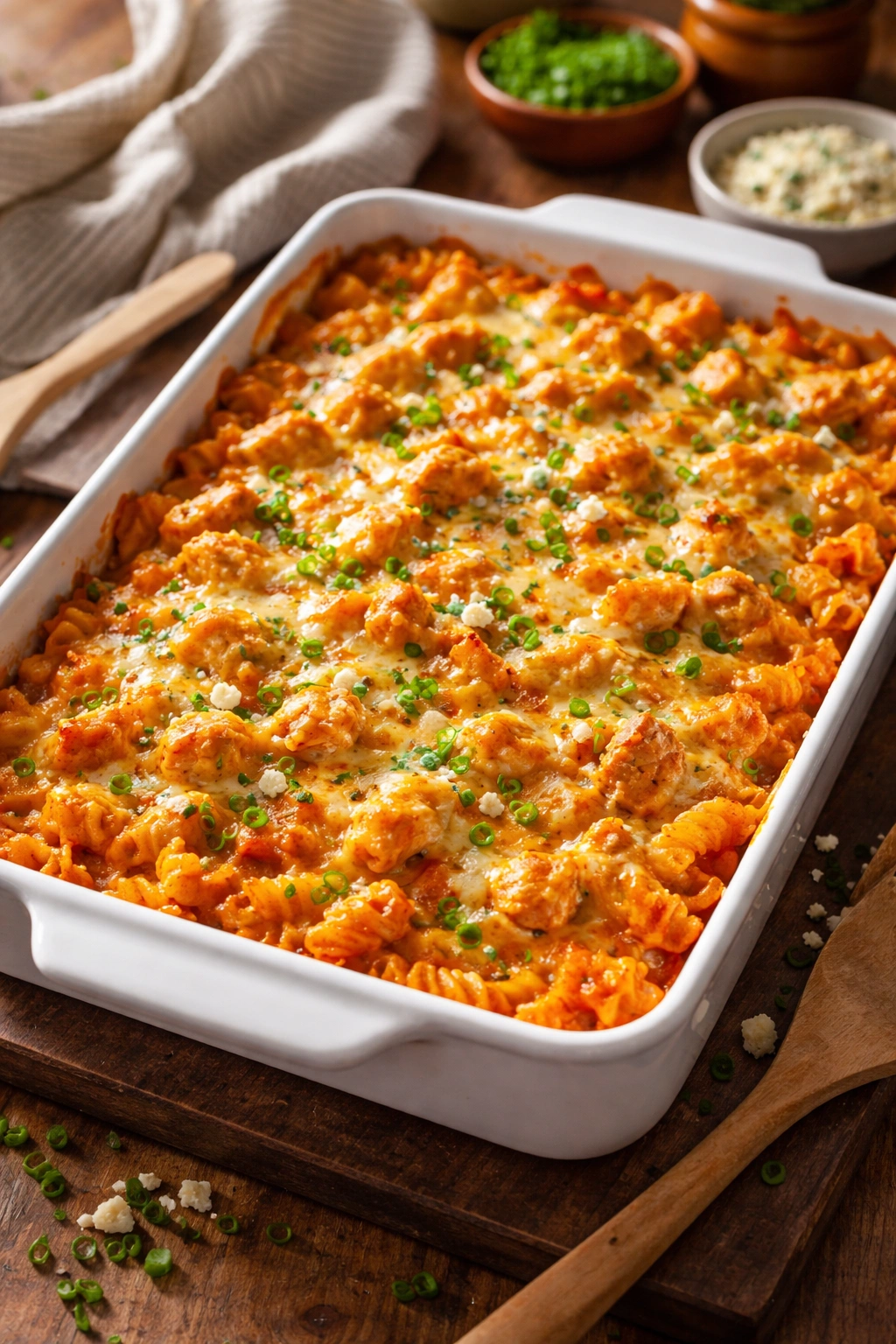
Yield: Serves 6 to 8 | Makes one 9×13-inch casserole
Prep Time: 10 minutes
Cook Time: 25 to 30 minutes
Total Time: 40 to 45 minutes
Difficulty: Beginner — no special equipment required, just a mixing bowl and a casserole dish. All steps are straightforward mixing and baking with zero finicky techniques.
For the Creamy Buffalo Sauce:
- 8 oz cream cheese, softened to room temperature
- ½ to ¾ cup buffalo hot sauce (start with ½ cup, taste, and add more if you want extra heat)
- ½ to ¾ cup ranch dressing (bottled, or mixed from powder according to package directions)
- 2 tablespoons unsalted butter
- ½ teaspoon kosher salt
- ¼ teaspoon freshly cracked black pepper
- Optional: ½ teaspoon garlic powder and ½ teaspoon dried onion powder for deeper savory notes
For the Casserole:
- 3 to 4 cups cooked chicken, shredded (one store-bought rotisserie chicken, or about 1½ lbs leftover cooked chicken)
- 12 to 16 oz pasta of your choice (rotini, penne, shells, egg noodles), cooked according to package directions and drained, OR 24 oz frozen cauliflower rice thawed and drained, OR 3 to 4 cups cooked white or brown rice
- 1 to 2 cups frozen mixed vegetables, thawed and drained (or fresh: 1 small diced onion, 1 diced celery stalk, ½ cup diced bell pepper)
- 2 cups shredded cheese, divided (a combination of sharp cheddar and mozzarella works beautifully, or use any cheese you prefer)
For Serving:
- ¼ cup sliced green onions
- Optional: drizzle of ranch dressing, blue cheese crumbles, or additional buffalo sauce
Prepare the Sauce Base:
-
Remove the cream cheese from the refrigerator and place it in a microwave-safe bowl. Microwave for 15 to 20 seconds if it’s still firm—it should be soft enough to mix easily but not melted. If you forgot to soften it earlier, this brief zap does the job perfectly.
-
Add the buffalo sauce, ranch dressing, melted butter, salt, and pepper (and garlic powder and onion powder if you’re using them) to the softened cream cheese. Whisk everything together vigorously for about a minute until the mixture is relatively smooth and uniform in color. Don’t worry about small lumps of cream cheese—they’ll melt completely in the oven.
-
Taste the sauce. This is your only chance to adjust the heat level before everything goes in the casserole. Add more buffalo sauce if you want it spicier, or add a splash more ranch dressing if you want it milder. You can’t change it once it’s in the oven, so taste now.
Build the Casserole:
-
Preheat your oven to 350°F (175°C). Position the oven rack in the center. Spray a 9×13-inch baking dish with nonstick cooking spray, or lightly butter it.
-
In a large mixing bowl, combine the shredded chicken, your cooked starch base (pasta, cauliflower rice, or cooked rice), thawed frozen vegetables (or fresh vegetables if you’re using them), and the creamy buffalo sauce. Stir everything together until the chicken and starch are completely coated in sauce. Every piece should be surrounded by creamy sauce—if it looks dry, add a splash more ranch dressing or a tablespoon more melted butter.
-
Pour the entire mixture into your prepared baking dish and spread it into an even layer. Scatter about half of your shredded cheese across the top and stir gently to distribute it through the casserole, then sprinkle the remaining cheese evenly over the surface.
Advertisements
Bake:
-
Bake uncovered for 25 to 30 minutes, until the casserole is bubbling around the edges and the cheese on top is melted and just starting to turn golden brown. If you’re using a glass casserole dish, you’ll be able to see the bubbles forming around the perimeter—that’s your signal it’s done. The casserole is fully cooked when you can see heat damage on the cheese, not when everything is pale.
-
Remove from the oven and let it rest for 3 to 5 minutes. This resting period allows the sauce to set up slightly so it doesn’t immediately run off your spoon when you serve it. While it rests, chop your green onions.
-
Top with green onions and any additional toppings you want. Serve hot directly from the dish.
Pro Tips for Even Faster Assembly
Buy pre-shredded rotisserie chicken: Some delis and grocery stores sell rotisserie chicken already pulled off the bone and shredded. It costs a few dollars more, but if you genuinely hate the step of pulling chicken apart, this speeds things up dramatically.
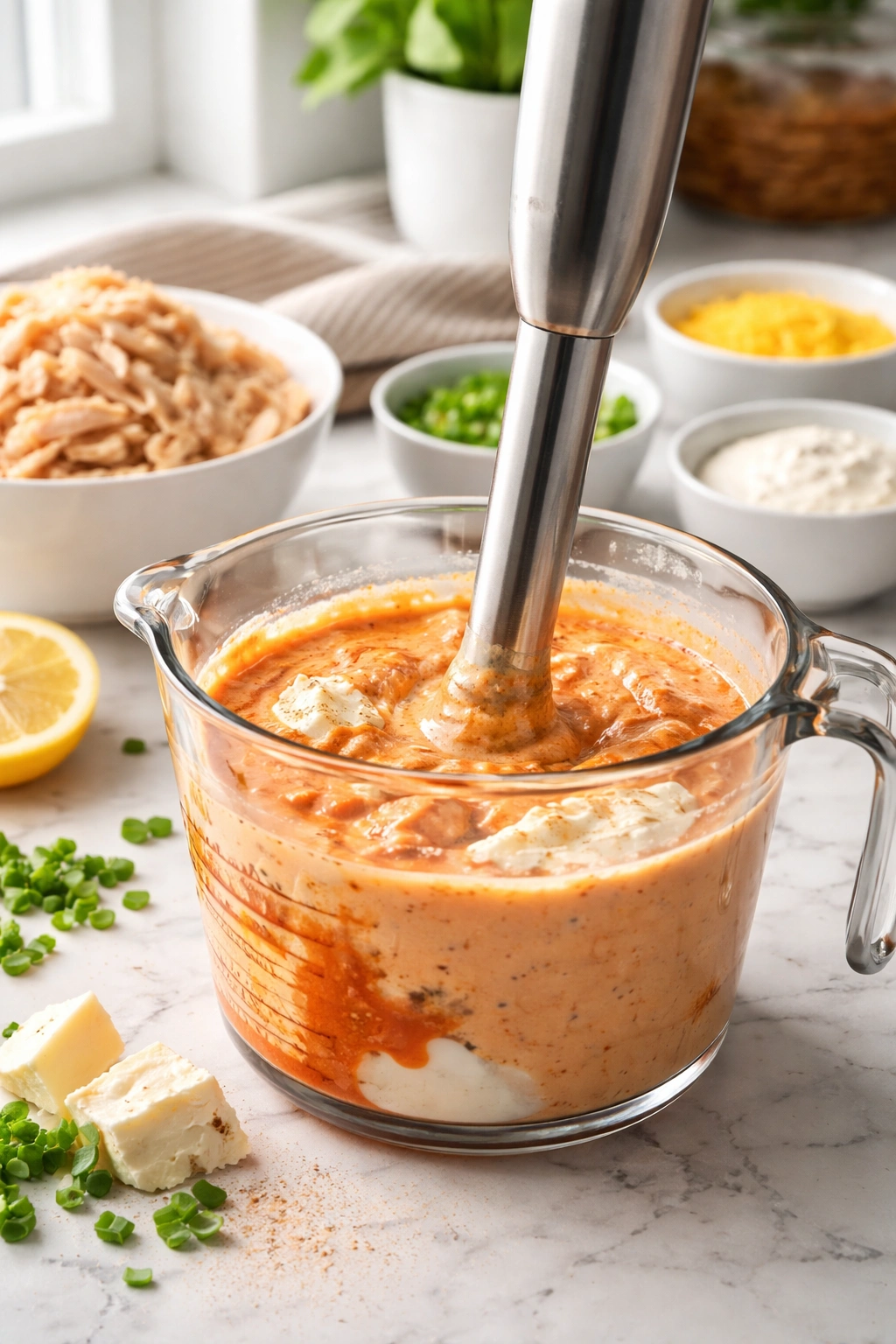
Use an immersion blender for a silkier sauce: If you want the sauce completely smooth without lumps (a matter of personal preference), add your sauce ingredients to a measuring cup and give them 30 seconds with an immersion blender instead of whisking by hand. It creates a silkier texture, but honestly, whisking by hand works fine and gives you one fewer dish to wash.
Thaw frozen vegetables while you prep: Once you’ve assembled your casserole ingredients, place your bag of frozen vegetables in a colander in the sink and run it under warm tap water for 30 seconds. By the time you’ve finished mixing everything else, they’ll be thawed and ready to add. This requires zero thinking and saves you time earlier in the process.
Invest in a microwave-safe mixing bowl: If your mixing bowl is microwave-safe, soften your cream cheese directly in it. This saves you from dirtying an extra bowl and means you go straight from softening to mixing without transferring anything.
Cook pasta while you make the sauce: Your pasta timing and sauce timing don’t need to be synchronized, but they can be if you start the pasta water before you touch anything else. By the time your pasta is draining, your sauce is ready, so the assembly step happens all at once with everything at the right temperature.
Smart Make-Ahead Strategies
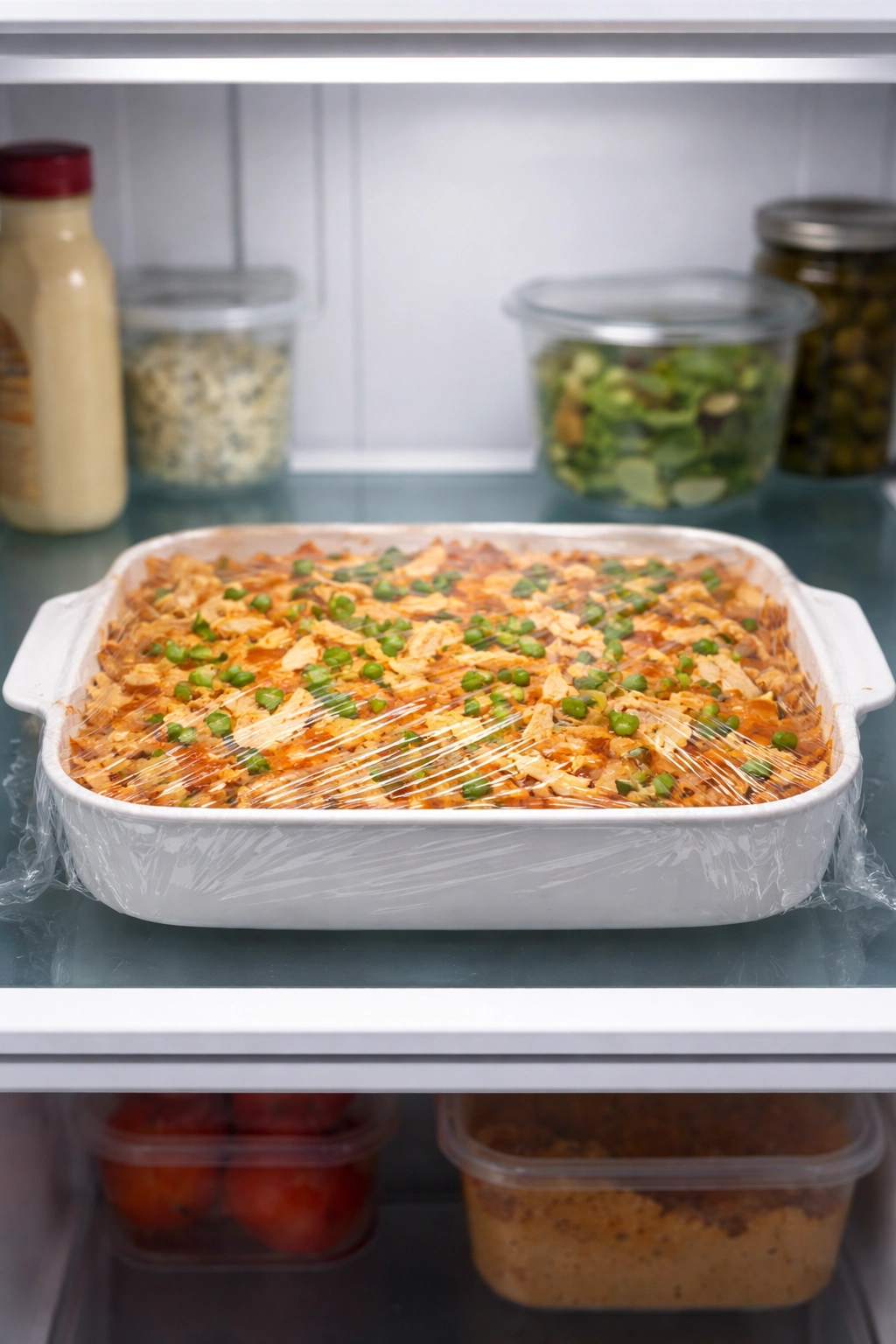
One of the underrated benefits of minimal-prep buffalo chicken casserole is how beautifully it works for advance meal planning. You can assemble the entire casserole up to 24 hours before you want to bake and serve it.
Assemble and refrigerate: Mix everything together exactly as the recipe describes, cover the baking dish with plastic wrap, and refrigerate. When you’re ready to eat, add 5 to 10 minutes to the baking time (since it starts cold instead of room temperature) and bake until bubbling. This is perfect if you’re preparing dinner on Sunday for eating on Wednesday.
Assemble and freeze: You can also freeze an assembled casserole for up to 3 months. Let it come to room temperature first if it’s been in the fridge, then freeze it uncovered for a few hours so the sauce firms up slightly, then cover it with plastic wrap and aluminum foil and slide it into the freezer. To use, thaw overnight in the refrigerator (this prevents temperature shock and helps the texture) and bake as directed, adding 10-15 minutes to the cooking time if it’s still slightly cold.
Freeze individual portions: If you don’t want to reheat a whole casserole, divide it into individual containers and freeze those. Reheat in the microwave in 2-3 minute intervals, stirring between intervals to avoid overheating one spot.
Make just the sauce ahead: You can mix the buffalo cream cheese sauce up to 2 days in advance and store it in a container in the fridge. When you’re ready to assemble, let the sauce come to room temperature (about 10 minutes on the counter) and mix it with everything else. This works beautifully if you want to minimize the very-last-minute prep.
Storage and Reheating for Busy Weeknights
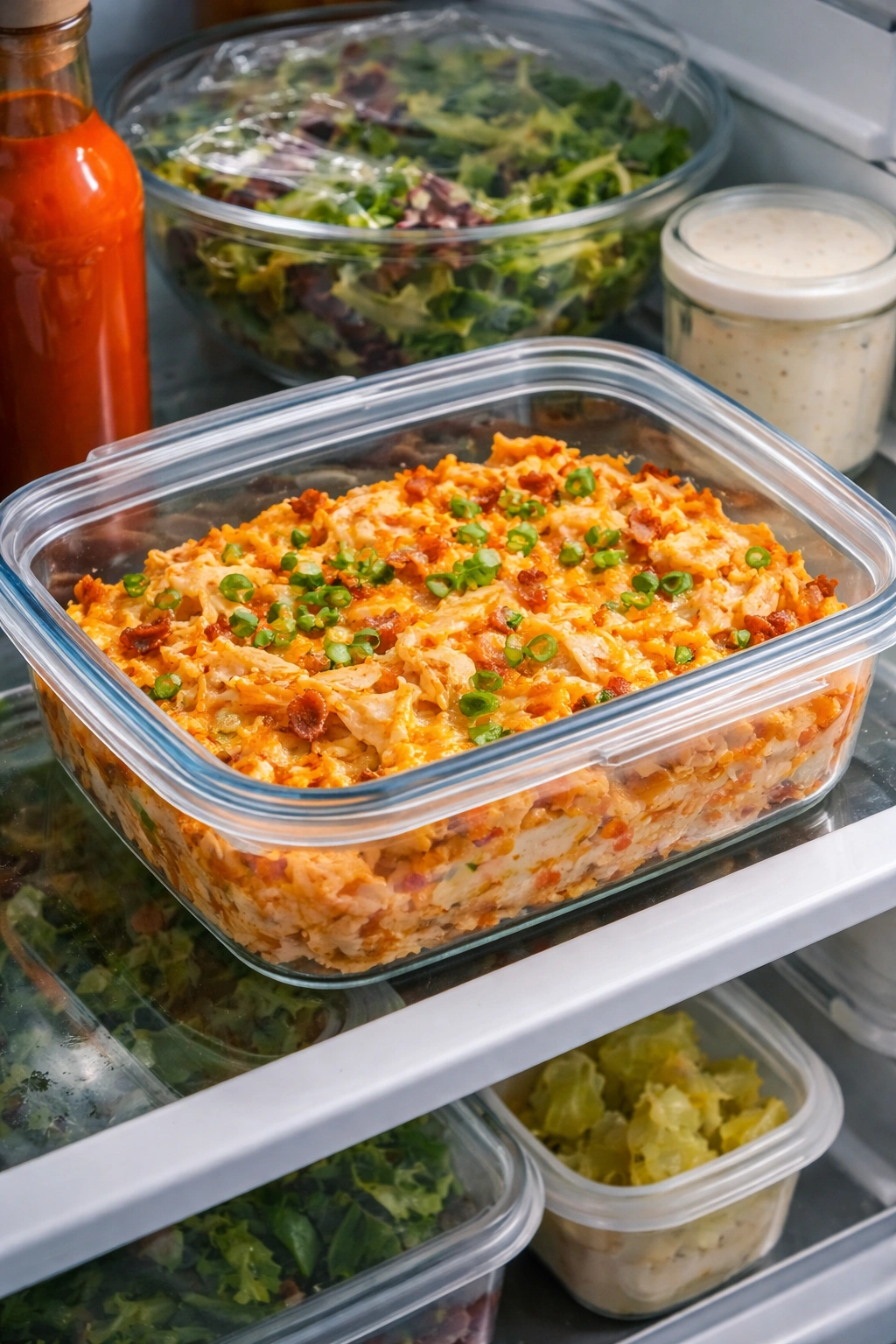
Leftovers from buffalo chicken casserole reheat beautifully and actually improve slightly as the flavors meld together, so don’t hesitate to make a full batch even if you’re cooking for a small household.
Storage in the refrigerator: Cover leftover casserole with plastic wrap or transfer individual portions to airtight containers. It keeps safely for 3 to 4 days in the fridge. The creamy sauce doesn’t separate or spoil quickly because the high salt content and acidic buffalo sauce both act as preservatives.
Reheating in the microwave: Individual portions reheat perfectly in the microwave in 2 to 3 minute intervals on high power. Stir halfway through to encourage even heating. If the sauce seems to tighten up a bit during reheating (which sometimes happens), add a small splash of milk or ranch dressing and stir—it loosens right back up.
Reheating in the oven: If you’re reheating a larger portion or want to maintain the creamy texture more carefully, cover the casserole loosely with aluminum foil and warm it in a 325°F oven for 15 to 20 minutes until it’s heated through. The foil prevents the top cheese from browning too much or drying out.
Don’t skip the resting period: Whether you’re reheating for the first time or the third time, let it rest for 3-5 minutes out of the heat before serving. This gives the sauce a chance to settle and makes plating and eating infinitely neater.
Variations Without Extra Work
The genius of buffalo chicken casserole is that nearly every variation requires zero additional prep beyond the base recipe. You’re not adding new complicated steps—you’re simply swapping one ingredient for another.
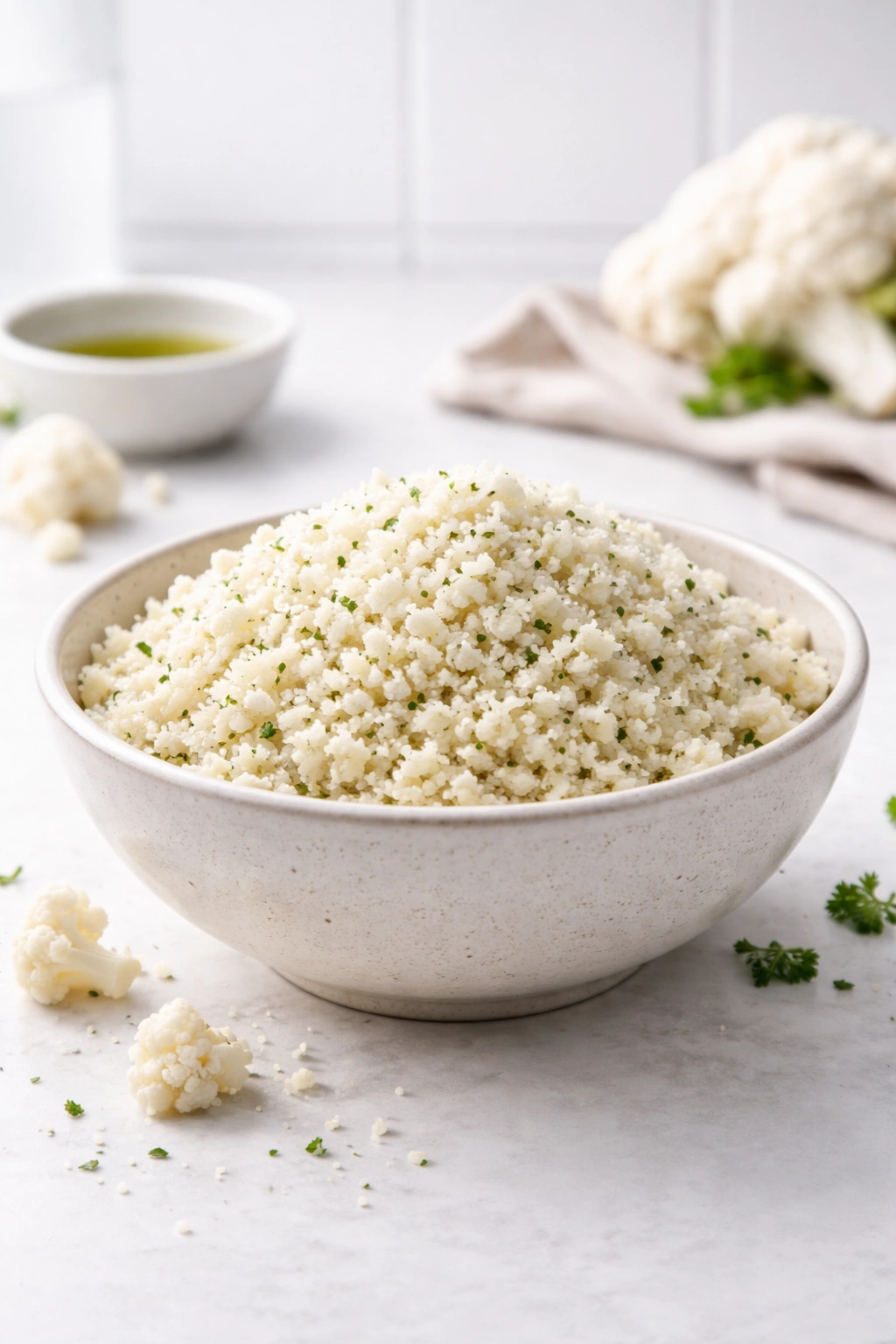
Low-carb version: Use cauliflower rice instead of pasta, and everything else stays exactly the same. The nutritional profile shifts significantly (about 7 grams of carbs per serving instead of 45), and it’s still creamy, satisfying, and completely delicious. Nothing takes longer when you use cauliflower rice because it doesn’t need cooking—just thaw and add.
Dairy-free version: Swap the cream cheese for a dairy-free cream cheese alternative (most brands melt fine in casseroles) and use dairy-free cheese. The flavor isn’t identical to traditional versions, but it’s genuinely good and people on dairy-free diets won’t feel like they’re eating a sad substitute.
Spicier version: Add cayenne pepper to the sauce (¼ to ½ teaspoon depending on how intense you want it), or increase the buffalo sauce and decrease the ranch dressing. Some people add a pinch of red pepper flakes sprinkled throughout the mix. You’re not actually cooking anything extra—you’re just adjusting seasonings.
Less spicy version: This is even easier than the spicy version. Just use less buffalo sauce and more ranch dressing. Start with ¼ cup buffalo sauce and ¾ cup ranch, taste the sauce, and adjust from there.
Vegetable-loaded version: Add extra vegetables without any time increase. Extra frozen vegetables (up to 3 cups total), diced bell pepper, diced mushrooms, or even diced zucchini (which releases moisture but adds nutrition and bulk). Thawed frozen vegetables require no extra cooking, and raw vegetables soften perfectly in the oven. You’re just stirring them into the sauce—same steps, more vegetables.
Cheesy version: Use three types of cheese instead of two. Some people add blue cheese crumbles mixed into the sauce itself (about ¼ cup), giving it a deeper, tangier flavor that’s authentic to buffalo chicken. Others add pepper jack instead of or alongside cheddar for a subtle heat boost. None of this changes the cooking process—it’s just different cheese going in the same amount of space.
Protein swap: Substitute diced rotisserie turkey for rotisserie chicken, or use ground cooked turkey. You can also use ground cooked beef, though the flavor profile shifts away from traditional buffalo chicken. Same cooking time, same texture, completely different flavor.
Serving Suggestions That Come Together Instantly
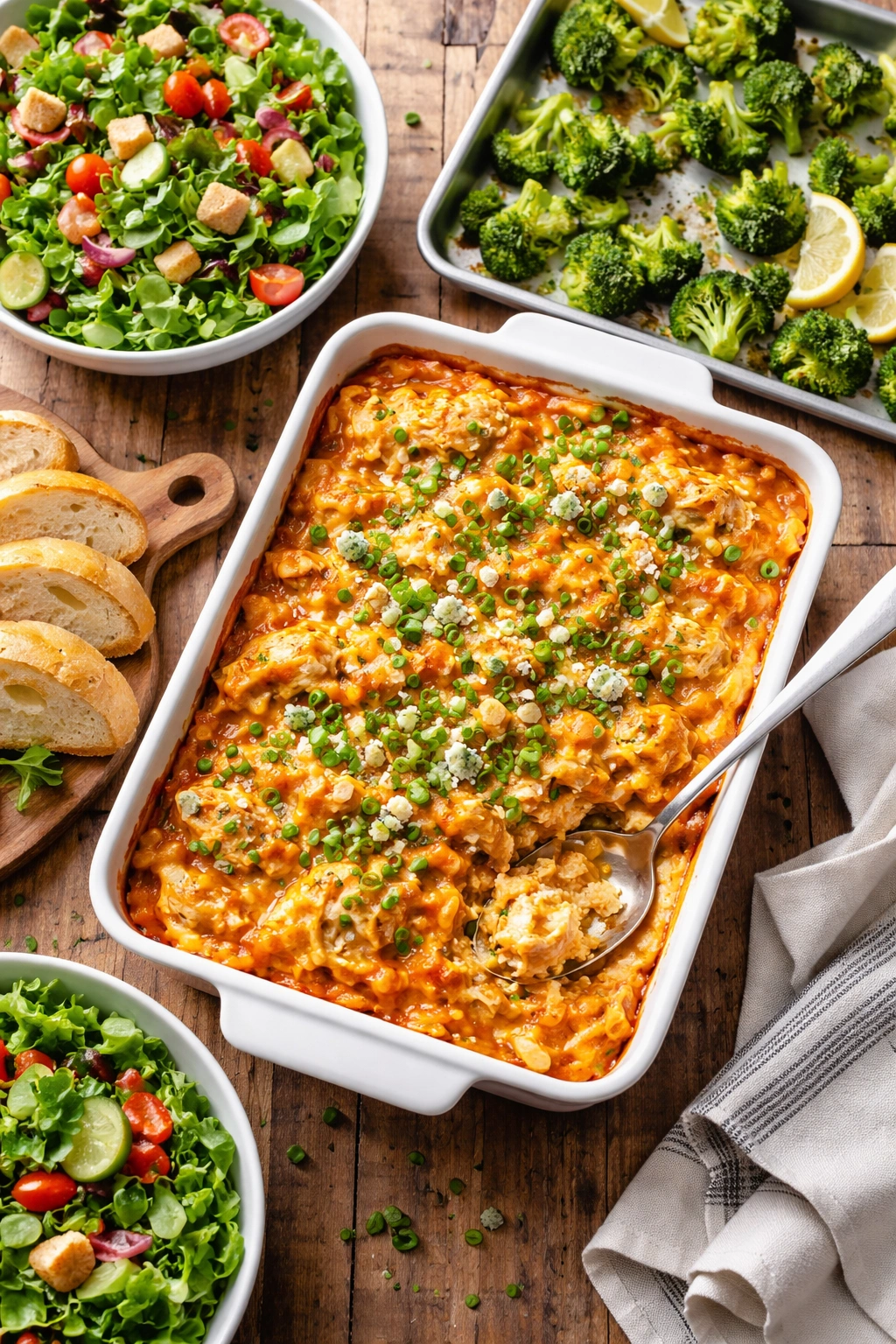
Buffalo chicken casserole is hearty enough to serve on its own, but pairing it with sides elevates the meal without adding time to your evening. The beautiful part is that most good pairings require literally zero cooking or just open-the-refrigerator simplicity.
Simple green salad: Toss together salad greens with a basic vinaigrette (olive oil, vinegar, salt, pepper shaken in a jar). The bright acidity balances the rich, creamy casserole beautifully. This takes 3 minutes and requires no cooking.
Roasted vegetables: If you have 20 minutes while the casserole bakes, toss broccoli or Brussels sprouts with olive oil, salt, and pepper, spread them on a sheet pan, and roast at the same 350°F oven temperature. They’ll be done right when the casserole is, and you get another vegetable serving without extra dishes (they cook in the oven while other things happen).
Bread: Crusty bread, garlic bread, dinner rolls, or cornbread all work perfectly. If you have time, brush bread with butter and garlic powder and toast it in the oven during the last few minutes the casserole bakes.
Ranch or blue cheese dressing: Serve these on the side for drizzling. Some people add a dollop on top of their casserole portion right before eating. This adds creaminess and authentic buffalo wing flavors without requiring any additional preparation beyond opening a bottle.
Celery and carrot sticks: The classic buffalo wing accompaniment works beautifully as a side. Chop a few celery and carrot sticks, chill them beforehand (or don’t—they’re equally good at room temperature), and serve alongside. The crisp, cool vegetables contrast perfectly with the warm, creamy casserole.
Steamed or roasted broccoli: If you want a vegetable that’s more substantial than a salad, steam or roast broccoli florets with a touch of butter and salt. It takes about 10 minutes and requires minimal effort.
Cauliflower rice pilaf: If you didn’t use cauliflower rice in the casserole itself and want a lower-carb side, heat up some frozen cauliflower rice in a skillet with a bit of butter and garlic powder. This is a 5-minute side that adds volume to the meal without heaviness.
Final Thoughts
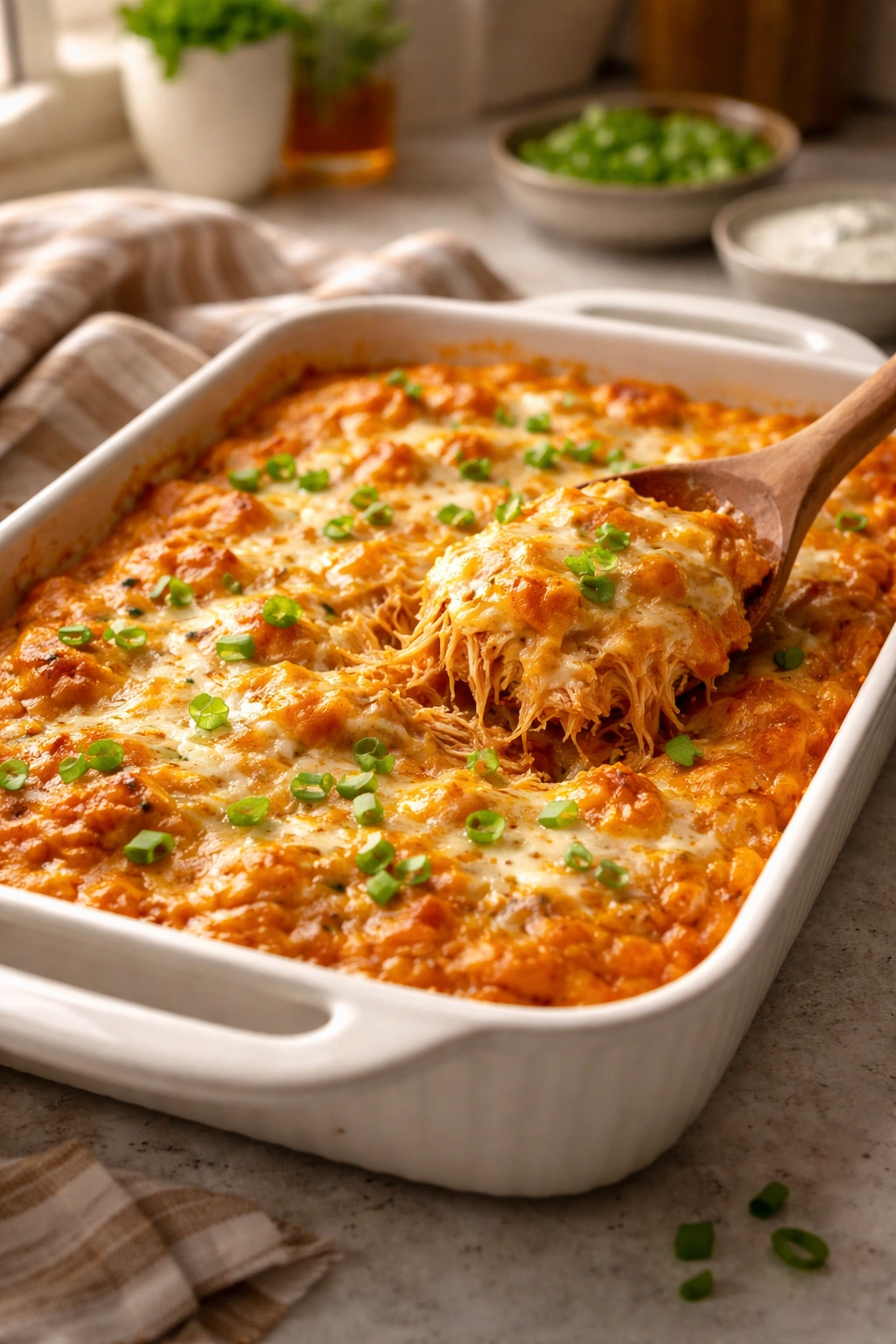
Buffalo chicken casserole with minimal prep represents something important about real-life cooking: you don’t need to be impressive to be delicious. The fanciest restaurants make casseroles, and home cooks have been making them for decades, because the technique is simple and the results are reliably fantastic. You’re not impressing anyone with complexity—you’re impressing them with a meal that tastes like comfort and love in a baking dish.
The minimal-prep version respects your time while delivering exactly the same satisfaction. You’re not cutting corners on flavor or nutrition by using rotisserie chicken and frozen vegetables. You’re making smart choices that let you spend less time on your feet and more time actually enjoying your family or whatever else matters on a given evening.
Keep this recipe in regular rotation through your cooking weeks. Make it when you’re tired and want something reliable. Make it when you’re meal-prepping for the week ahead and want something that freezes beautifully. Make it when your kids’ friends are coming over and you want something that’s crowd-pleasing but doesn’t scream “I spent hours in the kitchen.” Make it exactly as written, or customize it until it reflects your family’s specific preferences for heat level and ingredients. Either way, you’re creating something genuinely worth making again and again.
