



There’s something about the combination of sausage, sweet peppers, and caramelized onions that feels like pure comfort food, yet comes together so quickly you could have dinner on the table faster than it takes to order delivery. Sheet pan sausage and peppers has become a weeknight staple for good reason — it’s the kind of meal that requires almost no technique, minimal active cooking time, and delivers restaurant-quality results with almost zero cleanup. The beauty of this dish lies in its simplicity: you’re relying on the natural juices from the sausage, the inherent sweetness of roasted peppers, and the deep caramelization that happens when vegetables hit high oven heat.
What makes this particular version so appealing is that it’s genuinely foolproof. Unlike skillet versions that demand constant attention to prevent burning, or recipes that require multiple pots and pans, everything happens in one place. The sausage releases its flavorful fat, which coats the vegetables and helps them soften and brown simultaneously. You walk away, the oven does the work, and you come back to a meal that tastes like you spent far more time than you actually did. Whether you’re a busy parent, someone working long hours, or simply tired of complicated dinner prep, this dish speaks directly to your needs — quality food, minimal fuss, maximum flavor.
Why This Recipe Works for Busy Weeknights
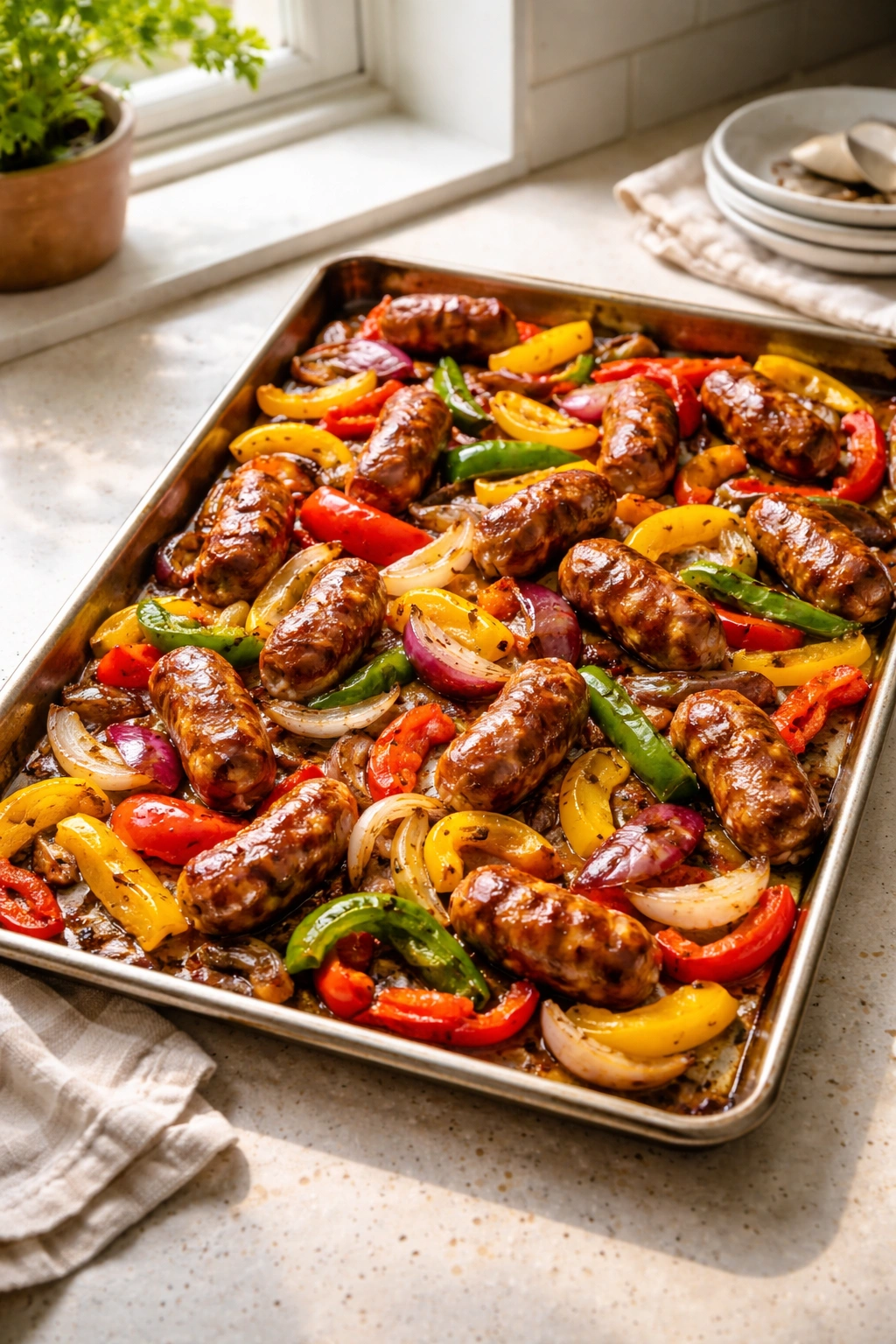
The genius of sheet pan cooking is its efficiency, and this sausage-and-peppers combination exemplifies that approach perfectly. When you’re working with fully cooked sausage (which most grocery store links are), the cooking time drops dramatically — under 20 minutes in many cases. Even with raw sausage, you’re looking at 30-40 minutes total, which is faster than most skillet versions because the oven’s ambient heat surrounds the food rather than relying on direct contact with a pan bottom.
The vegetables benefit enormously from the high-heat roasting environment as well. The peppers’ natural sugars caramelize without the vegetables becoming mushy or overcooked, which can happen when you’re simmering them on the stovetop. The onions transform from sharp and pungent into sweet, tender pieces with slightly charred edges. This flavor development happens passively — you’re not standing there stirring, monitoring heat levels, or adjusting seasoning mid-cook. The oven’s consistent, surrounding heat does all the work for you.
There’s also the matter of cleanup, which shouldn’t be underestimated when you’re evaluating a dinner recipe. A single sheet pan with high sides means everything stays contained, little to no splattering occurs, and you finish the meal with just one pan to wash instead of multiple skillets, pots, and utensils. For many home cooks, the promise of minimal cleanup is almost as appealing as the food itself.
Choosing the Best Sausage for This Dish
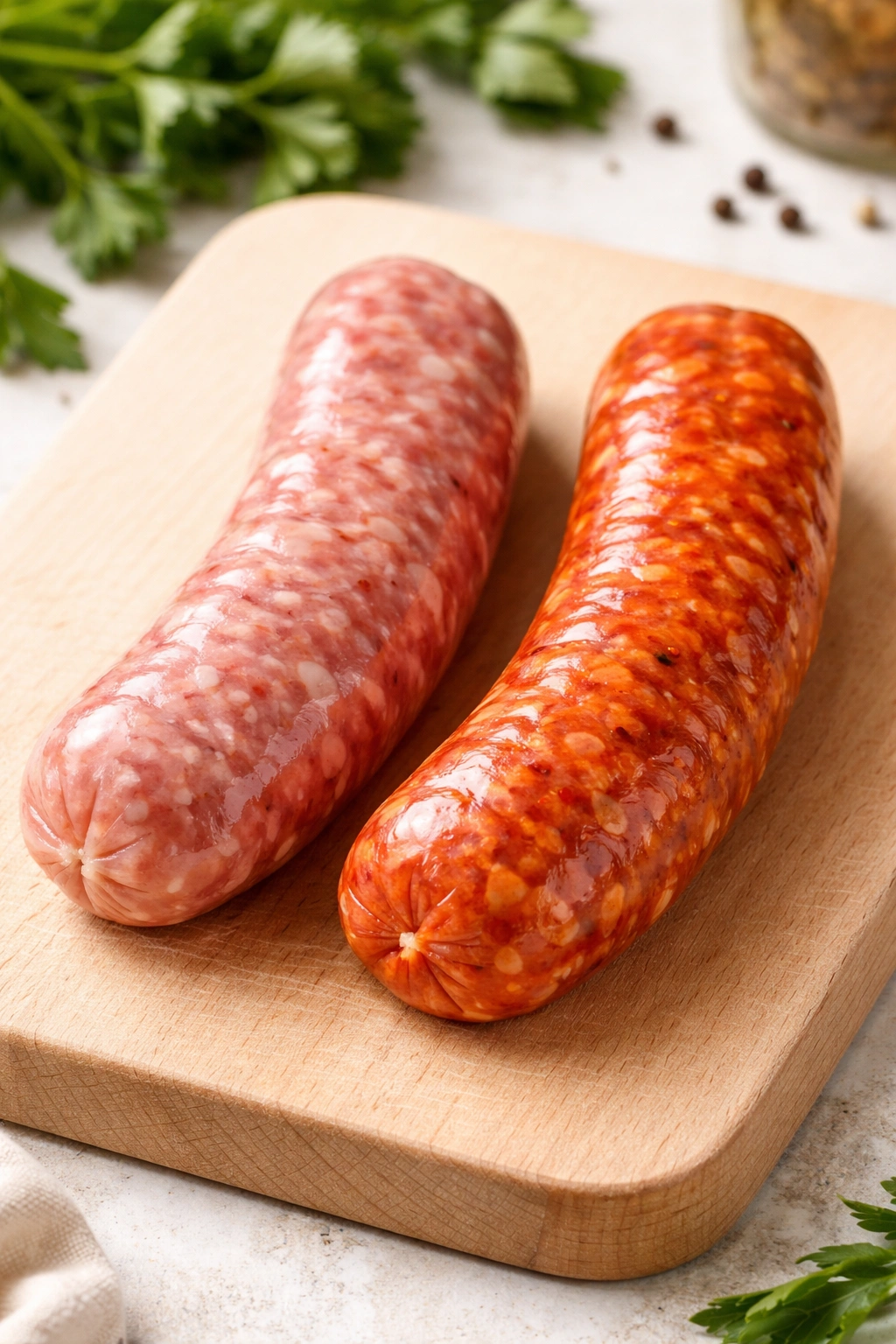
The sausage you select will fundamentally shape the entire dish’s flavor profile, so this choice deserves genuine consideration. Sweet Italian sausage is the traditional choice and offers a balanced, herb-forward flavor that lets the roasted peppers shine. The fennel, garlic, and black pepper typically found in Italian sausage complement the vegetables without competing for attention. If you prefer something with more heat and spice, hot Italian sausage delivers a peppery kick that carries through the entire dish — this is ideal if you enjoy building layers of warmth in your food.
The texture and cooking method matter more than you might initially think. Fully cooked or pre-cooked sausage (the kind that resembles hot dogs in packaging) is genuinely convenient — you’re just warming it through and letting it brown, which takes 8-15 minutes depending on your oven temperature. These links are typically less fatty than raw sausage, which means less rendered fat to pool on your pan. Raw sausage links deliver more authentic flavor and have higher fat content that actually helps coat and tenderize the vegetables. They require a longer cooking time (25-30 minutes minimum) but reward you with superior browning and a more developed, savory depth.
If you’re looking to lighten the dish without sacrificing flavor, chicken or turkey Italian sausage works beautifully — just make sure whatever brand you choose actually tastes like sausage, not like an underseasoned chicken product. Some premium brands use the same seasonings and spices as traditional pork sausage but substitute poultry, delivering genuine flavor with less fat and fewer calories. Kielbasa (Polish smoked sausage) and bratwurst both work wonderfully here as well, bringing different but equally delicious flavor dimensions to the peppers and onions.
Selecting Your Bell Peppers and Onions
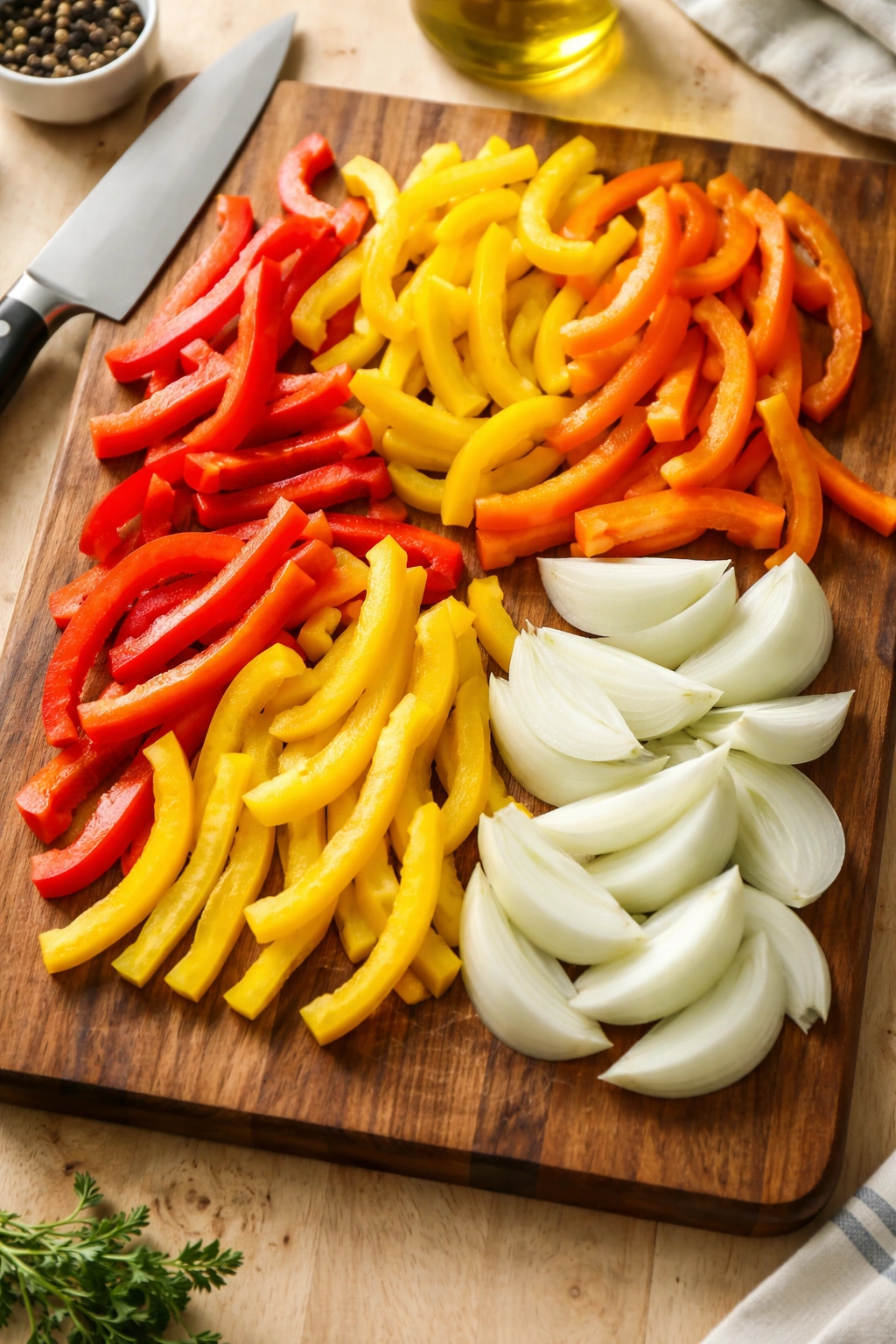
Bell peppers are the backbone of this dish, so variety in color is both visually beautiful and culinarily smart. Red bell peppers are naturally the sweetest option, with a gentle, almost fruity undertone that becomes more pronounced when roasted. Yellow and orange peppers fall in the middle of the sweetness spectrum — neither as assertive as green peppers nor as mellow as red ones, offering a balanced flavor that works with any sausage style. Green bell peppers are noticeably more bitter and herbaceous, which some people love and others find overpowering. If you’re unsure about using green peppers, start with a mix of red, yellow, and orange instead, and you’ll find the roasted vegetables consistently delicious.
Slicing technique makes a genuine difference in how evenly everything cooks. Aim for strips about ¼-inch thick — this thickness allows the peppers to soften completely while still maintaining their structure. Thinner slices risk becoming mushy by the time the sausage finishes cooking; thicker pieces may leave you with peppers that are still somewhat firm in texture. Start by removing the stem end and the seed pod, then slice the pepper lengthwise into long, even strips. This approach feels more natural than trying to slice the whole pepper and tends to produce more consistent pieces.
For onions, yellow and white onions are considerably sweeter than red onions, making them ideal for this dish. Red onions bring visual drama and a slightly sharper flavor that can be lovely if that’s your preference. The key is slicing them into half-moons or thick wedges rather than thin slices — thinner pieces separate into individual layers and can become overly soft or even crispy in spots, while thicker pieces stay cohesive and caramelize beautifully. One large onion or two medium onions provides enough volume to coat your sheet pan with aromatic sweetness without overpowering the sausage.
Essential Seasonings and Flavor Boosters
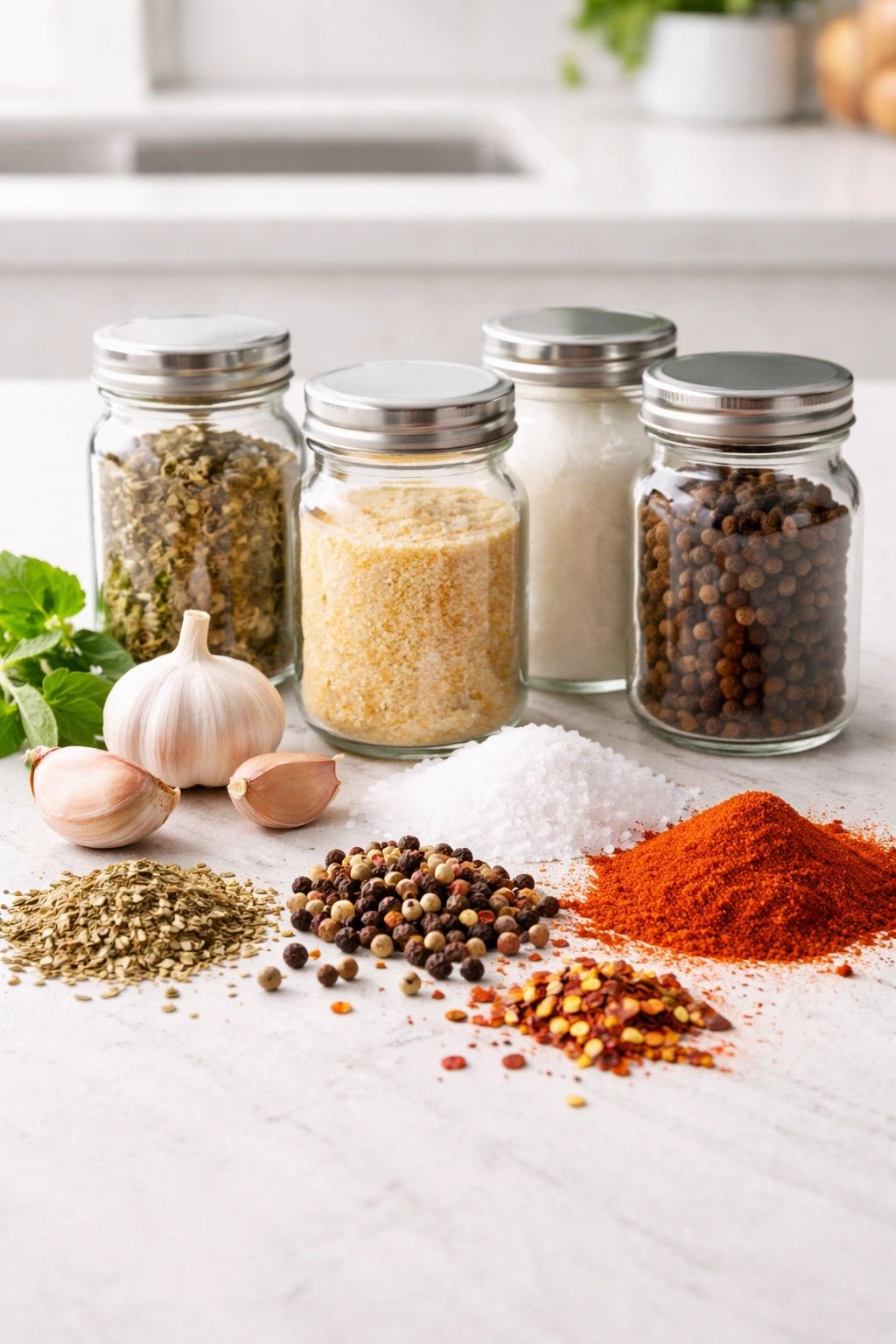
This recipe intentionally keeps the seasoning list minimal because the sausage itself brings substantial flavor, and you want to taste the natural sweetness of roasted vegetables. Dried oregano is the foundation — it’s classic in Italian sausage and peppers preparations, and it echoes the seasonings already present in the sausage itself. Use about 1 tablespoon if you’re cooking 1-1.5 pounds of sausage; dried oregano can taste dusty if applied too heavily, so restraint serves you well here.
Garlic adds aromatic depth without requiring fresh mincing; you can use minced fresh garlic (about 2-3 cloves) tossed into your oil, or garlic powder (½ teaspoon) for convenience and consistency. Fresh garlic brings a slightly sharper, brighter note, while garlic powder delivers deeper, more subtle garlic flavor that doesn’t overshadow the vegetables. Salt and black pepper are essential not just for seasoning but for drawing out the vegetables’ natural juices and helping the caramelization process along.
If you enjoy heat, red pepper flakes (¼ to ½ teaspoon, or to taste) add a pleasant burn without dominating the dish. Sweet paprika (¼ to ½ teaspoon) brings mild pepper flavor and a subtle earthiness that rounds out the seasoning profile. Some cooks add a bay leaf or two while roasting, which infuses the pan juices with subtle herbal notes — remove these before serving, as they’re not meant to be eaten. The real secret to exceptional flavor, though, is generous quality olive oil (at least 2-3 tablespoons for a full sheet pan) — it carries flavor, helps everything brown beautifully, and creates the pan juices you’ll spoon over your finished meal.
Complete Ingredient List
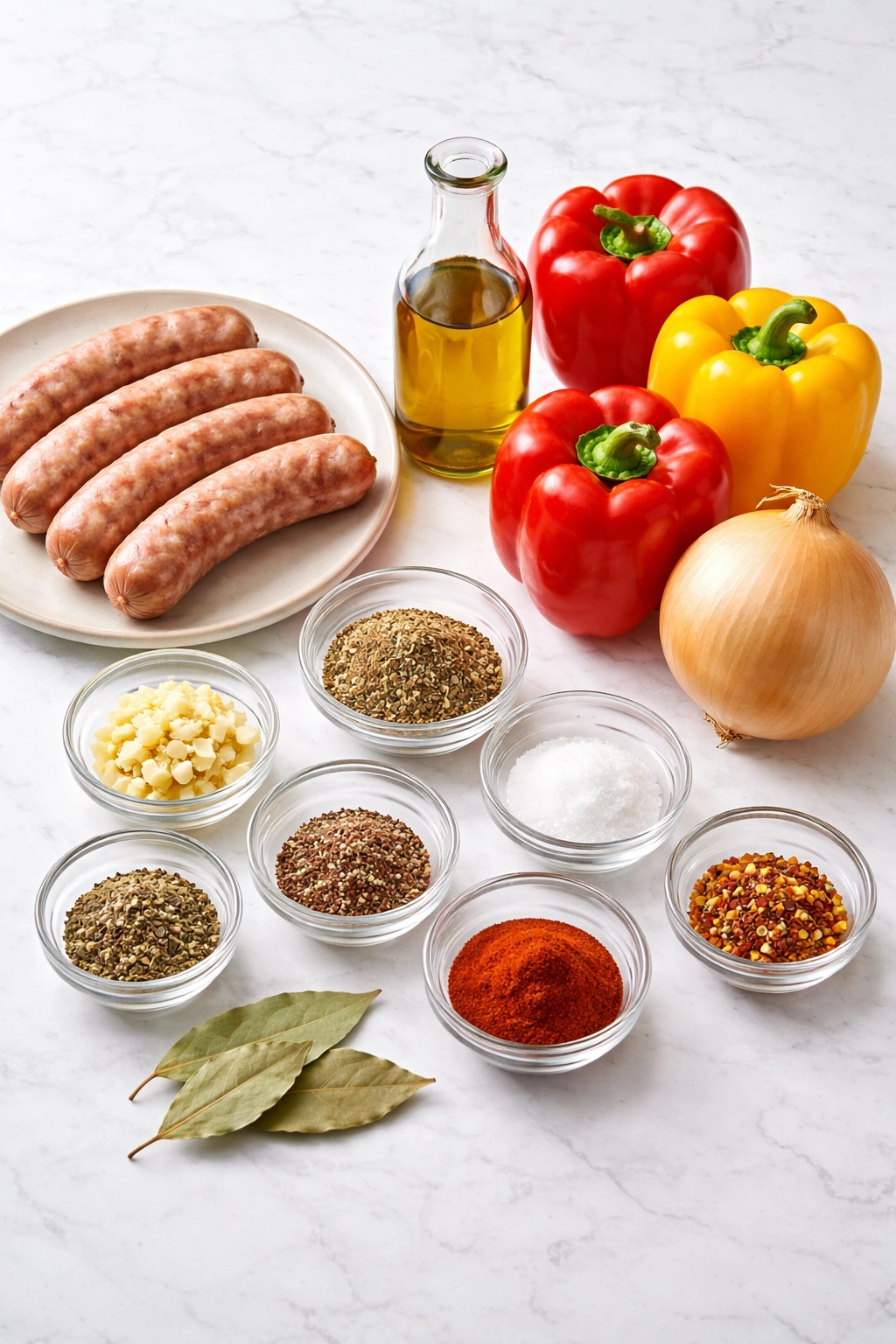
Yield: Serves 4 to 5 | Makes one sheet pan dinner
Prep Time: 10 minutes
Cook Time: 20-35 minutes (depending on sausage type)
Total Time: 30-45 minutes
Difficulty: Beginner — minimal prep work, straightforward assembly, and the oven handles all the cooking with no intervention required. This is an ideal recipe for first-time cooks or anyone new to sheet pan dinners.
For the Sausage and Vegetables:
- 1 to 1.5 pounds Italian sausage links, sweet or hot (or 1.5 pounds fully cooked pre-cooked sausage links)
- 2 large red bell peppers, cored and sliced into ¼-inch-wide strips
- 1 large yellow or orange bell pepper, cored and sliced into ¼-inch-wide strips (optional; you can use 3 of the same color if you prefer)
- 1 large yellow onion, sliced into thick half-moons (about ½-inch thick) or wedges
- 2 to 3 tablespoons extra virgin olive oil
- 1 tablespoon dried oregano
- 2 to 3 large garlic cloves, peeled and minced (or ½ teaspoon garlic powder)
- ½ teaspoon kosher salt (adjust to taste; sausage can be salty, so start conservatively)
- ¼ teaspoon freshly ground black pepper
- ¼ teaspoon red pepper flakes (optional, for gentle heat)
- ¼ teaspoon sweet paprika (optional, for depth)
- 1 to 2 bay leaves (optional; remove before serving)
For Serving:
- Fresh basil or parsley, finely chopped (optional but recommended)
- Crusty Italian bread, pasta, rice, or hoagie rolls (see serving suggestions below)
Step-by-Step Cooking Instructions
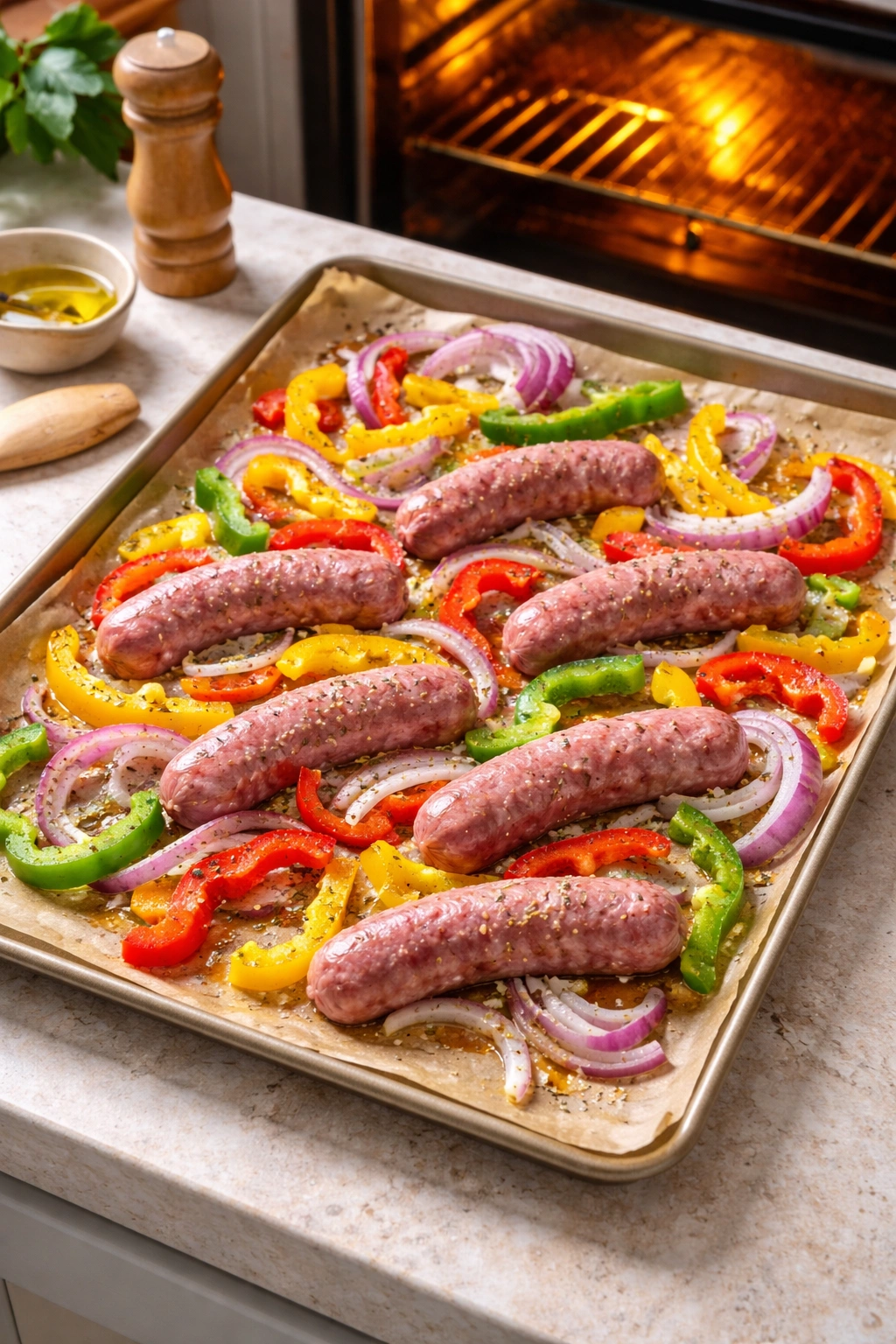
Prepare Your Workspace:
-
Preheat your oven to 425°F (220°C) and position an oven rack in the upper-middle of the oven, about 6 inches from the heating element if you have a broiler. If you prefer gentler browning, use a middle rack instead. Line a large rimmed sheet pan (at least 12×17 inches or larger) with parchment paper for easy cleanup, or lightly coat it with nonstick cooking spray — either approach works beautifully.
-
While the oven preheats, prepare all your ingredients. Slice the bell peppers lengthwise into ¼-inch-wide strips, removing the stem end and seed pod first. Slice the onion into thick half-moons or wedges about ½-inch thick. Mince the garlic if using fresh. Have your oil, salt, pepper, oregano, and any other seasonings measured and ready so assembly moves quickly.
Build Your Sheet Pan:
-
Add the sliced peppers and onions directly to your prepared sheet pan — no need for a mixing bowl, though some cooks prefer mixing everything together first for even seasoning. Sprinkle the oregano, garlic, salt, pepper, red pepper flakes (if using), and paprika over the vegetables.
-
Drizzle 2 to 3 tablespoons of olive oil over everything. Use your hands or a spatula to toss thoroughly, ensuring every piece of pepper and onion is coated with oil and seasonings. The vegetables should glisten and be evenly distributed across the pan. Spread them into a relatively even, single layer — they don’t need to be perfect, but aim for them to be spread out rather than piled up in the center.
-
Nestle the sausage links directly onto the pan among the vegetables. If using raw sausage links, score them gently with a sharp knife by making a few shallow cuts across each link (don’t cut all the way through) — this prevents them from bursting as they cook and allows them to brown more evenly. If using fully cooked sausage links, they need no scoring and will brown beautifully as-is.
Roast Until Golden:
-
Slide the sheet pan into your preheated oven. For fully cooked sausage, roast for 8 to 15 minutes until the sausage is heated through and lightly browned and the vegetables just start to show color at the edges. For raw sausage, roast for 25 to 35 minutes total (see next step for the midpoint check).
Advertisements -
Halfway through the cooking time (around 12-15 minutes for raw sausage), remove the pan from the oven. Use tongs to flip each sausage link so it browns on the opposite side. Stir and toss the vegetables with a spatula, pushing any pieces that are browning too quickly toward the center and bringing the pieces from the center to the edges. This ensures even cooking and caramelization. Return the pan to the oven immediately.
-
Continue roasting until the sausage is deeply browned on both sides and cooked through (fully cooked sausage should be heated through with light browning; raw sausage should reach an internal temperature of 160°F when measured with an instant-read thermometer). The vegetables should be tender with caramelized, slightly charred edges — this typically takes another 10 to 20 minutes depending on which sausage type you used.
Optional Broiler Finish:
- If you’d like extra caramelization and slight charring for more depth of flavor, switch your oven to the broiler setting after removing the pan. Position the rack about 2 to 3 inches below the broiler element and broil for 2 to 4 minutes, watching constantly — the sausage will char and the vegetable edges will blacken slightly. This step is entirely optional but delivers restaurant-quality browning if you have time.
Rest and Serve:
- Remove the pan from the oven and let everything rest for 2 to 3 minutes. This allows the sausage to finish cooking through and the vegetables to reabsorb some of their juices. Top with fresh chopped basil or parsley if desired for brightness and color contrast. Serve directly from the pan or transfer to a serving platter and spoon any precious pan juices over everything.
Pro Tips for Perfectly Caramelized Vegetables
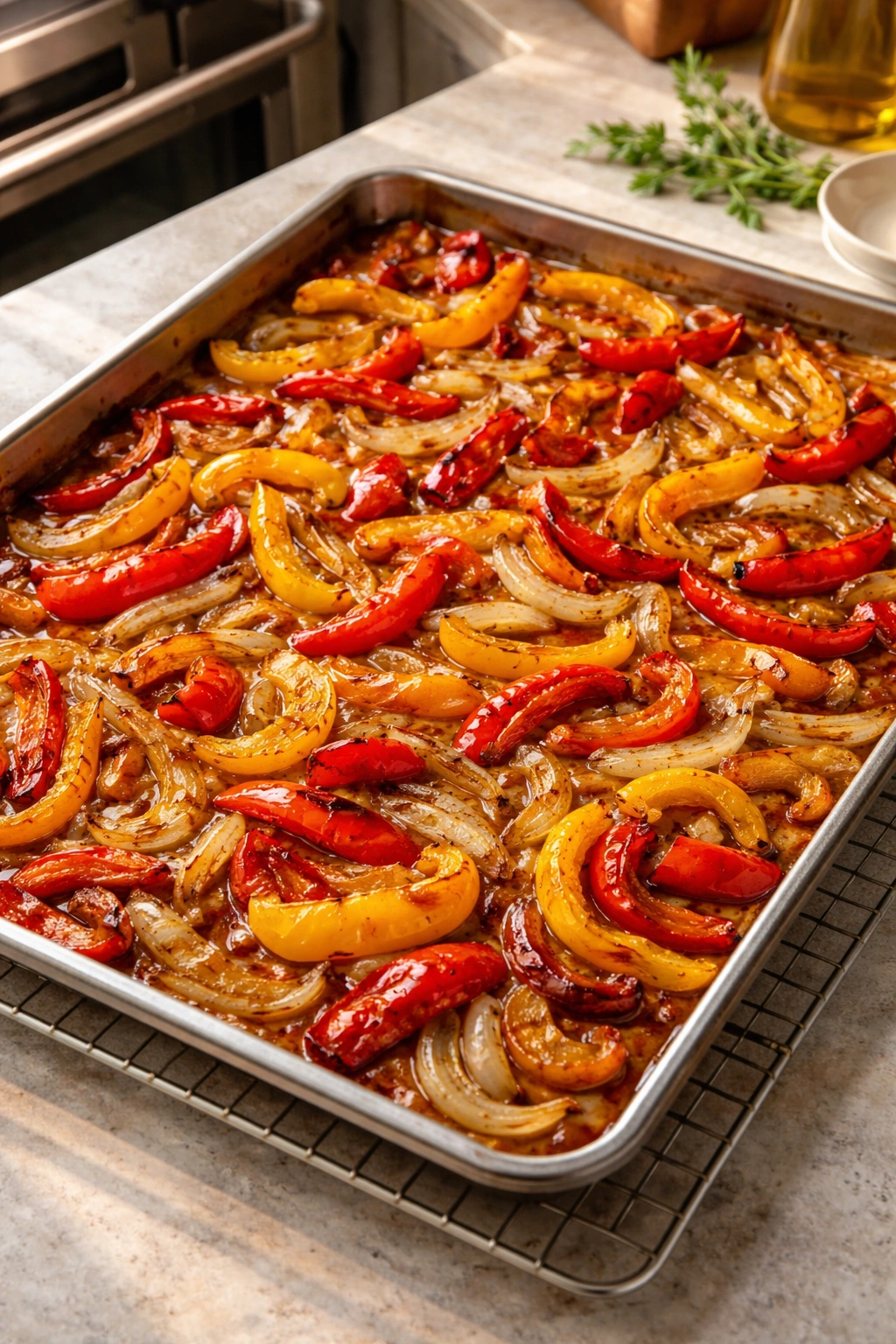
The difference between mushy, pale vegetables and deeply caramelized, tender-crisp peppers often comes down to proper spacing and heat management. Don’t overcrowd your pan — if your sausage and vegetables are stacked or overlapping significantly, they’ll steam rather than roast. Use a large sheet pan (at least 12×17 inches; 13×18 inches is even better) and spread everything in a single, relatively even layer. If you’re cooking for a larger group, don’t hesitate to use two pans instead of trying to fit everything on one.
High heat is your friend here. The 425°F oven temperature is crucial for developing that caramelization and bringing out the vegetables’ natural sugars. If you cook at a lower temperature to avoid browning, you’ll end up with steamed vegetables that taste flat and watery. Don’t be afraid of the dark color on the peppers’ edges — that’s flavorful caramelization, not burning.
Slice your onions thicker than your peppers. Peppers have more density and take longer to cook through, so they benefit from higher heat exposure. Onions, being more delicate, can become overly soft or crispy if they have as much time. Slicing onions ½-inch thick while keeping peppers at ¼-inch thick balances their different cooking rates beautifully.
Don’t skip the stirring step. Halfway through cooking, toss everything around. This rotates which pieces touch the pan’s hottest spots, ensures even browning, and prevents anything from sticking or burning. It’s a quick 30-second intervention that makes a meaningful difference.
Start tasting your pan juices as you reach the end of cooking. These juices are liquid gold — sausage fat mixed with rendered vegetable sweetness and all your seasonings. Some people like more of this salty, rich liquid spooned over their food; others prefer less. If your pan seems dry, you can add a splash of water or broth to create more sauce. If it seems overly wet, increase your heat or roast a bit longer.
Common Mistakes to Avoid
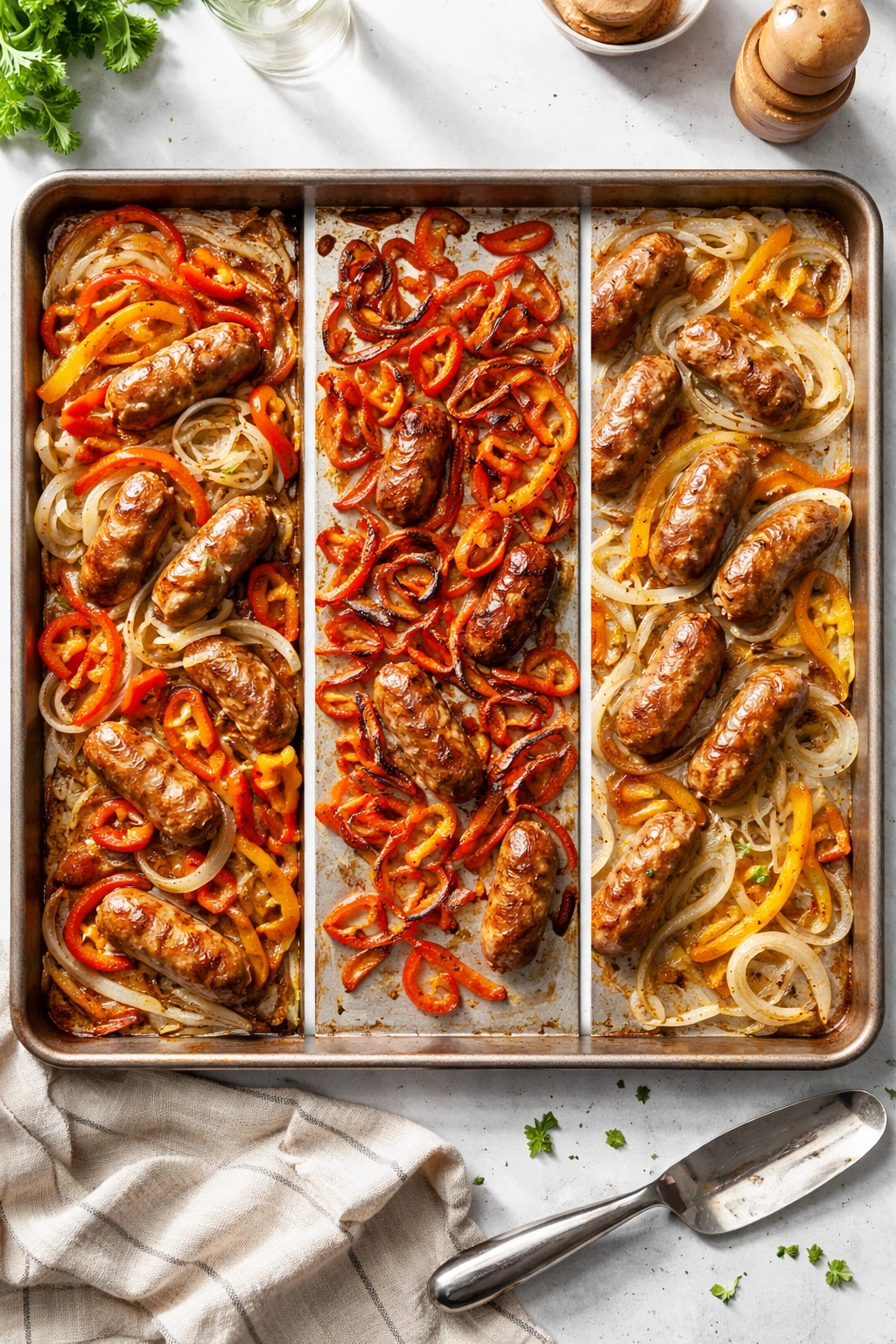
Using thin-sliced peppers is one of the most common missteps, and it results in peppers that are nearly falling apart by the time the sausage finishes cooking. Stay disciplined about that ¼-inch thickness, even if it requires a bit more cutting time. The payoff in texture is absolutely worth it.
Overcrowding the pan happens when cooks underestimate how much space vegetables need. This crowds the sausage and peppers too close together, preventing proper air circulation and browning. Everything starts steaming and overcooking instead of roasting and caramelizing. When in doubt, use a second pan — the oven can handle it, and your final dish will be infinitely better.
Underseasoning out of concern that sausage is already salty leads to bland vegetables that taste like an afterthought. Yes, sausage brings salt, but vegetables need their own seasoning to shine. Start with the amounts suggested, taste after cooking, and adjust if needed — you can always add more salt, but you can’t take it out.
Forgetting to flip the sausage results in one side that’s deeply browned and another that’s pale or even undercooked-looking. Even fully cooked sausage benefits from that flip because it ensures even browning and helps render more fat to coat the vegetables. Set a timer or a phone reminder for the midpoint if you’re prone to forgetting.
Checking on the food too frequently sounds silly, but constantly opening the oven drops the internal temperature and extends cooking time. Unless something smells like it’s burning, resist the urge to peek. Trust the timing, flip once at the midpoint, and let the oven do its work.
Using low-quality olive oil or no oil at all is a genuine waste of this recipe’s potential. Olive oil carries flavor, helps vegetables brown, and creates the pan juices that make this dish special. Cheap or rancid oil will taste rancid; fresh, quality extra virgin olive oil tastes like green olives, grass, and butter. Splurge here — it matters.
Simple Variations to Try
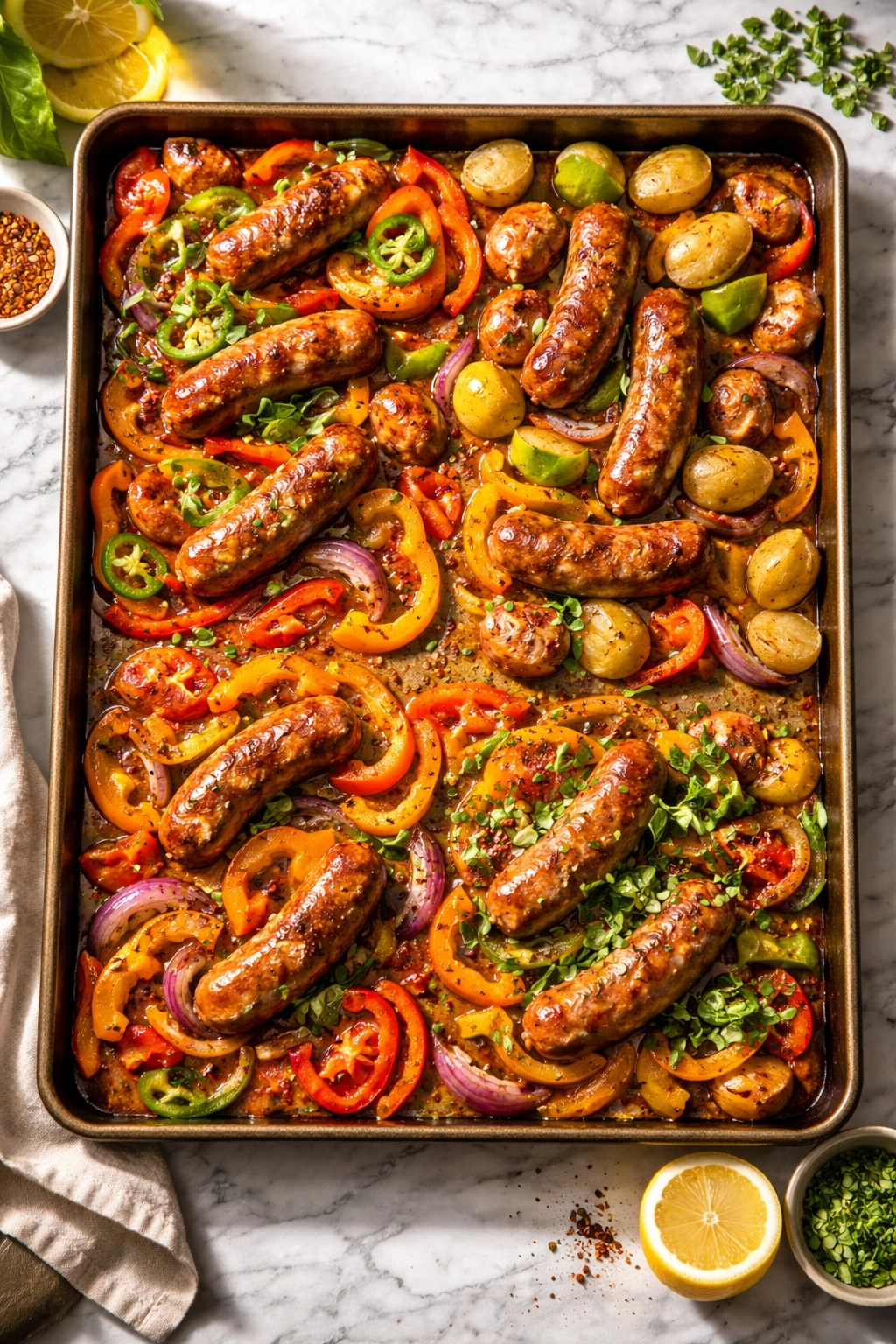
For a spicy version, swap hot Italian sausage for sweet and add ¼ teaspoon cayenne pepper or increase the red pepper flakes to ½ teaspoon or more. You can also add ½ teaspoon smoked paprika for depth. Some cooks add fresh jalapeño slices or even dried chili flakes for extra heat that builds.
To make it heartier, add baby potatoes or diced regular potatoes to your sheet pan along with the peppers and onions — they’ll need extra roasting time (add about 10 minutes) so start them first, then add the sausage and peppers midway through. Diced sweet potatoes work beautifully too and add a subtle sweetness that complements the sausage.
For a fresh herb finish, reserve some chopped fresh basil, parsley, or oregano to sprinkle over the finished dish just before serving. This adds brightness and color that feels special, and the heat of the vegetables slightly wilts the herbs so they’re not too raw.
To make it dairy-free or add richness, toss the finished vegetables with a splash of balsamic vinegar (½ to 1 teaspoon per serving) just before eating. This adds acidity and depth that makes the natural sweetness of the roasted vegetables pop.
If you want creaminess without dairy, stir in a dollop of dairy-free sour cream or coconut cream on the side, or use nutritional yeast for a savory, cheesy note.
For a Mediterranean twist, add halved cherry tomatoes or grape tomatoes during the last 5-10 minutes of cooking so they warm through without bursting. Finish with crumbled feta cheese, fresh dill, and a squeeze of lemon juice for a completely different flavor profile.
To build in more vegetables, add sliced zucchini or yellow squash (add these during the last 15 minutes so they don’t overcook), sliced mushrooms, or asparagus spears broken into 2-inch pieces (add these in the last 10 minutes). Be mindful that adding vegetables extends your cooking time and may require stirring and rotating pans more frequently.
Storage and Make-Ahead Guidance
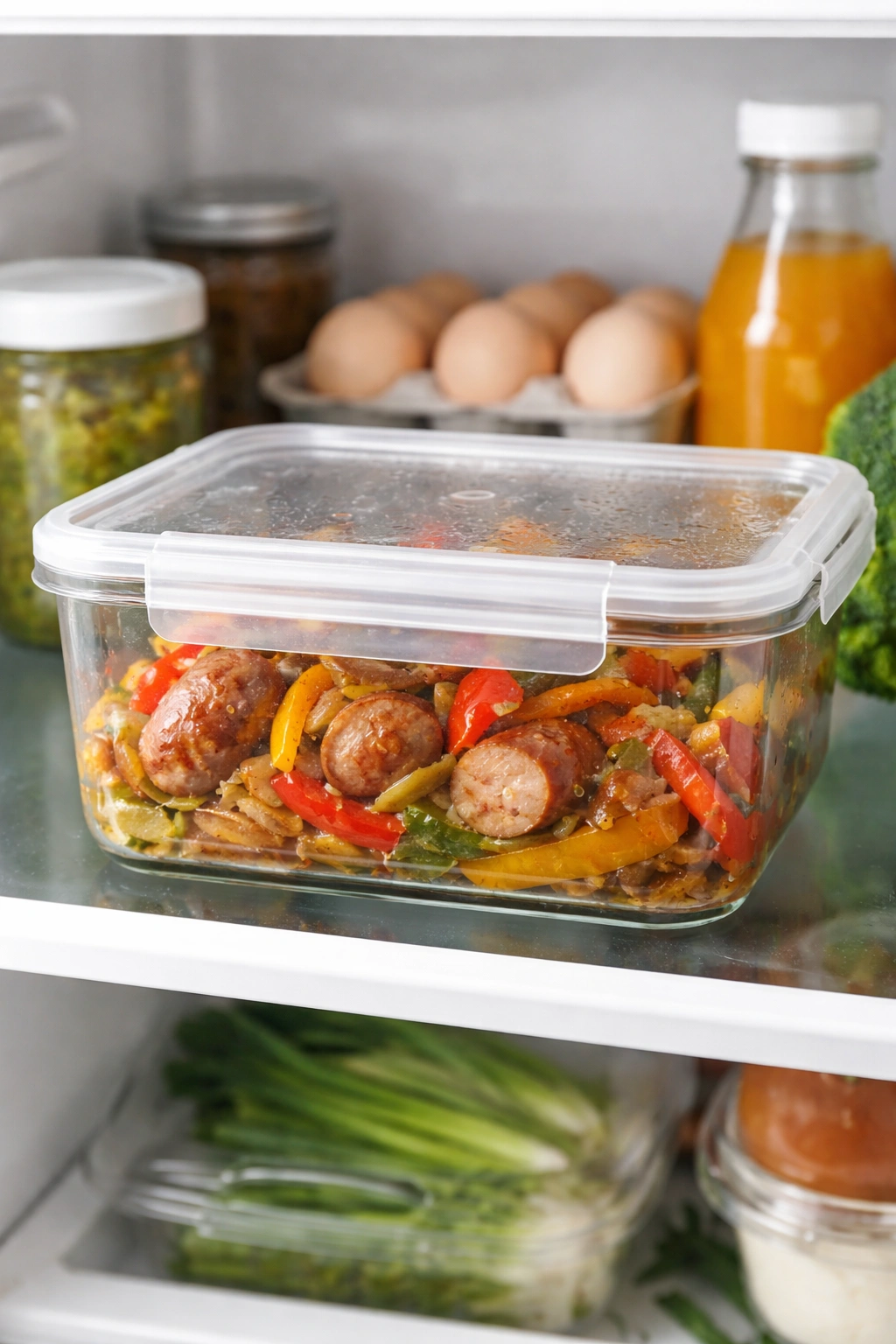
This dish is genuinely excellent for meal prep because both the sausage and vegetables hold up beautifully through storage and reheating. Store leftovers in an airtight container in the refrigerator for up to 4 days. The flavors actually develop and deepen slightly as the components marinate together, making day-two leftovers sometimes even more delicious than the first night.
To reheat, there are three excellent options. The oven method (recommended for best texture) involves spreading the leftovers on a sheet pan, covering loosely with foil, and warming at 350°F for about 10 minutes, then uncovering for the last 2 minutes to re-crisp the sausage edges. The stovetop method works beautifully too — warm the leftovers in a large skillet over medium heat, stirring occasionally, for 5-8 minutes until heated through. The microwave is fastest but can make the sausage slightly rubbery; heat on 50% power for 2-3 minutes, stirring halfway through, to minimize this.
This dish freezes well for up to 3 months. Spread the cooked sausage, peppers, and onions on a baking sheet and freeze until solid (about 2 hours), then transfer to a freezer-safe container or bag. To thaw, remove from the freezer the night before and refrigerate, then reheat using the oven or stovetop method above. The vegetables may have a slightly softer texture after freezing and thawing, but the flavor remains excellent.
For make-ahead assembly, you can slice your peppers and onions the morning of (or up to 24 hours ahead) and store them in airtight containers in the refrigerator. Measure your seasonings into a small bowl and cover. You can even assemble the full sheet pan completely and refrigerate it, covered with plastic wrap, for up to 24 hours before roasting — just increase your roasting time by 5 minutes since the ingredients will start cold.
Serving Suggestions and Pairings
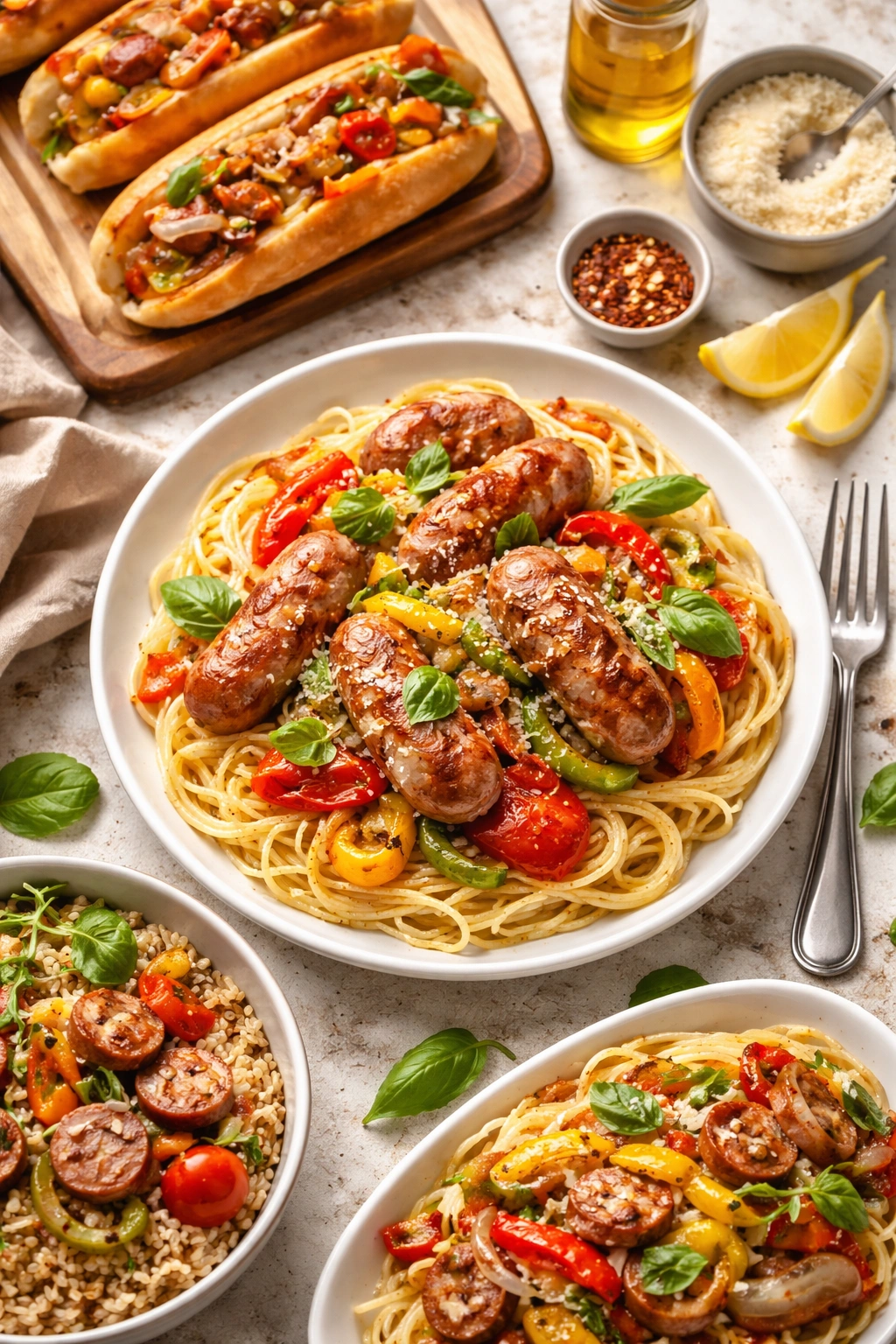
Over pasta is perhaps the most elegant presentation. Cook spaghetti, penne, or fettuccine to al dente, drain, toss with a small glug of olive oil and warm marinara sauce (if desired), then top with the sausage and peppers and their pan juices. Finish with freshly grated Parmesan cheese and fresh basil for a complete Italian dinner.
In hoagie rolls transforms this into a casual sandwich meal that’s perfect for feeding a crowd. Toast large crusty hoagie rolls or sub rolls until lightly golden, pile the sausage and peppers inside, top with shredded mozzarella or provolone cheese, and either broil briefly to melt the cheese or serve as-is. Serve with warm marinara sauce for dipping and a pile of napkins.
Over rice or polenta creates a heartier, more filling plate. White rice, jasmine rice, arborio risotto, or creamy polenta all work beautifully as a base. Spoon the sausage and vegetables over the grain and let the pan juices soak into it.
In a grain bowl makes this feel healthy and modern. Serve over farro, quinoa, wild rice, or even cauliflower rice for a lower-carb option. Add a side salad, some roasted vegetables, and a sprinkle of feta cheese for a complete, balanced meal.
Straight from the pan with crusty bread is genuinely one of the best ways to eat this. Serve the sheet pan right to the table with warm, crusty Italian bread or focaccia on the side. Let everyone scoop what they want directly from the pan, using the bread to push around and soak up every drop of those precious pan juices.
On a big salad turns this into a lighter main course. Serve the warm sausage and peppers over mixed greens, arugula, or spinach, and let the heat slightly wilt the greens while the pan juices create a warm, savory dressing. Add fresh mozzarella, scattered herbs, and a squeeze of lemon juice for brightness.
Frequently Asked Questions

Can I use pre-cooked sausage links?
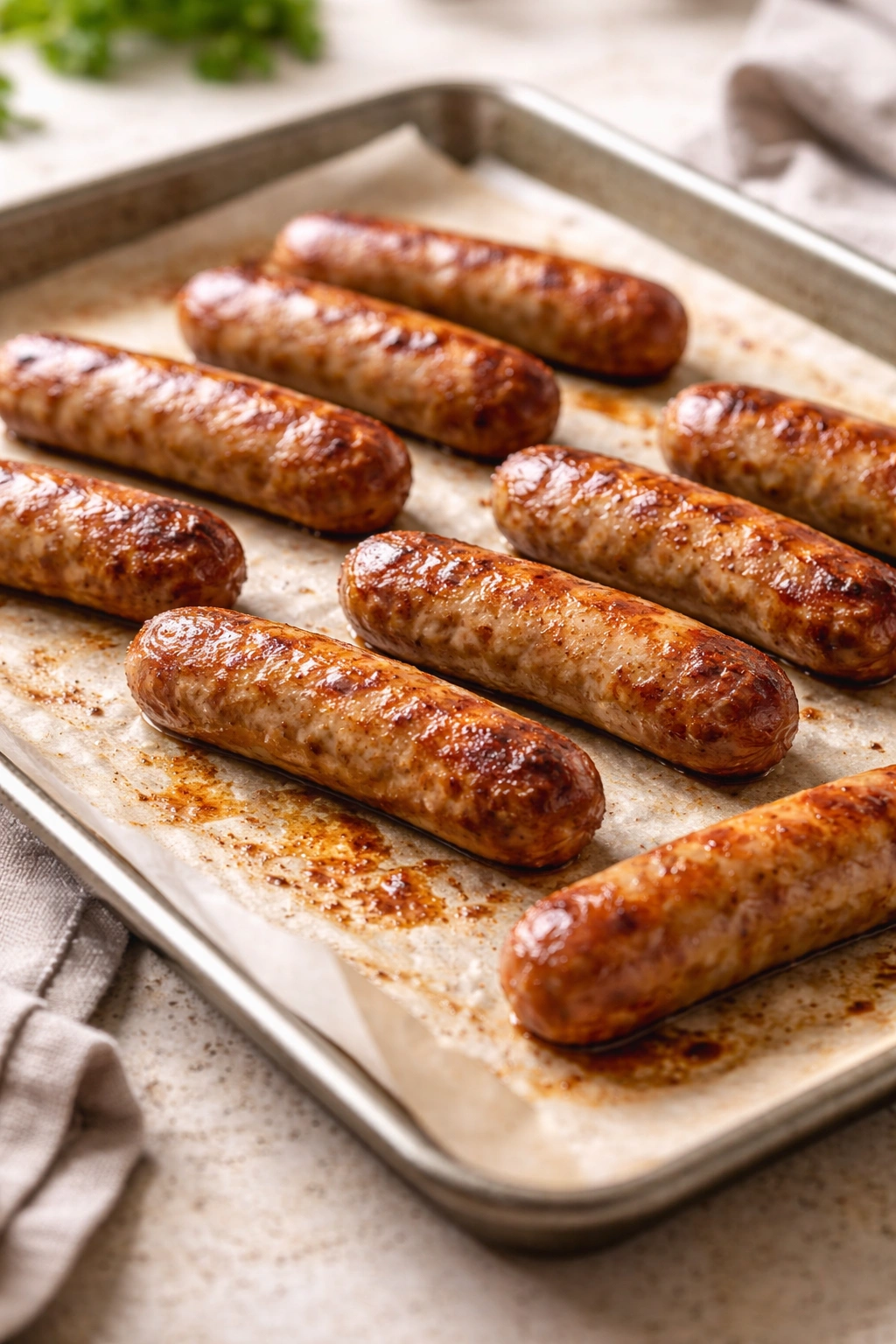
Absolutely yes. Pre-cooked sausage links dramatically reduce your cooking time — you’re looking at just 8 to 15 minutes in the oven instead of 25 to 35 minutes with raw sausage. The tradeoff is slightly less browning and color development since pre-cooked sausage has already lost some of its moisture. To maximize browning with pre-cooked sausage, consider starting your peppers and onions alone for the first 10 minutes, then adding the sausage links and roasting together for the final 8-10 minutes. This gives the vegetables a head start on caramelization while ensuring the sausage browns nicely.
What’s the difference between using sweet and hot Italian sausage?
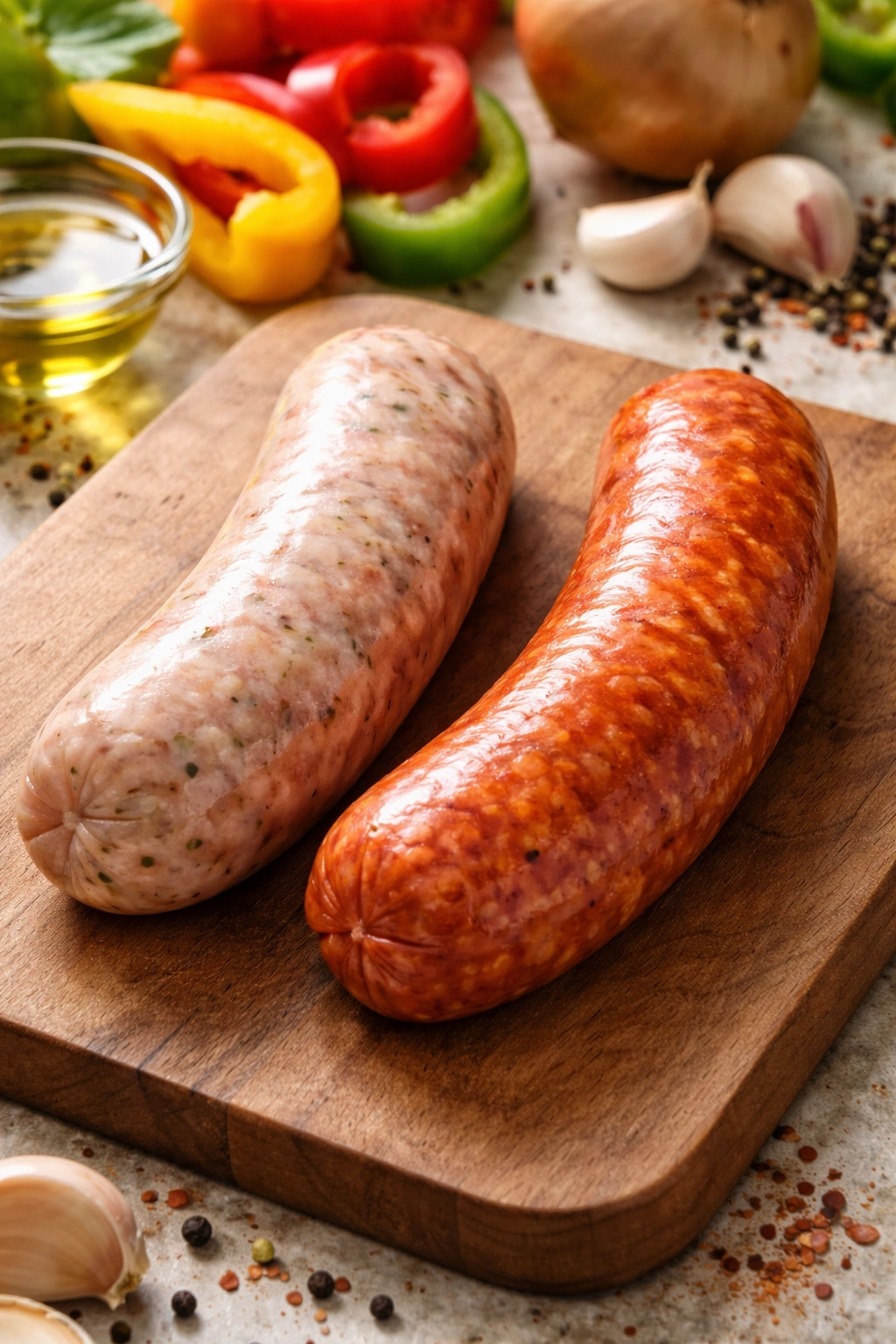
Sweet Italian sausage brings forward the herb flavors (fennel, garlic, black pepper) without heat, letting the natural sweetness of the roasted peppers and onions shine through. Hot Italian sausage includes chili peppers or red pepper seasoning, delivering moderate to significant heat depending on the brand. There’s no right answer — it’s purely about your spice tolerance and what you’re serving with this dish. Some people mix equal parts sweet and hot on the same pan to give everyone options, and this absolutely works beautifully.
Can I use boneless sausage instead of links?
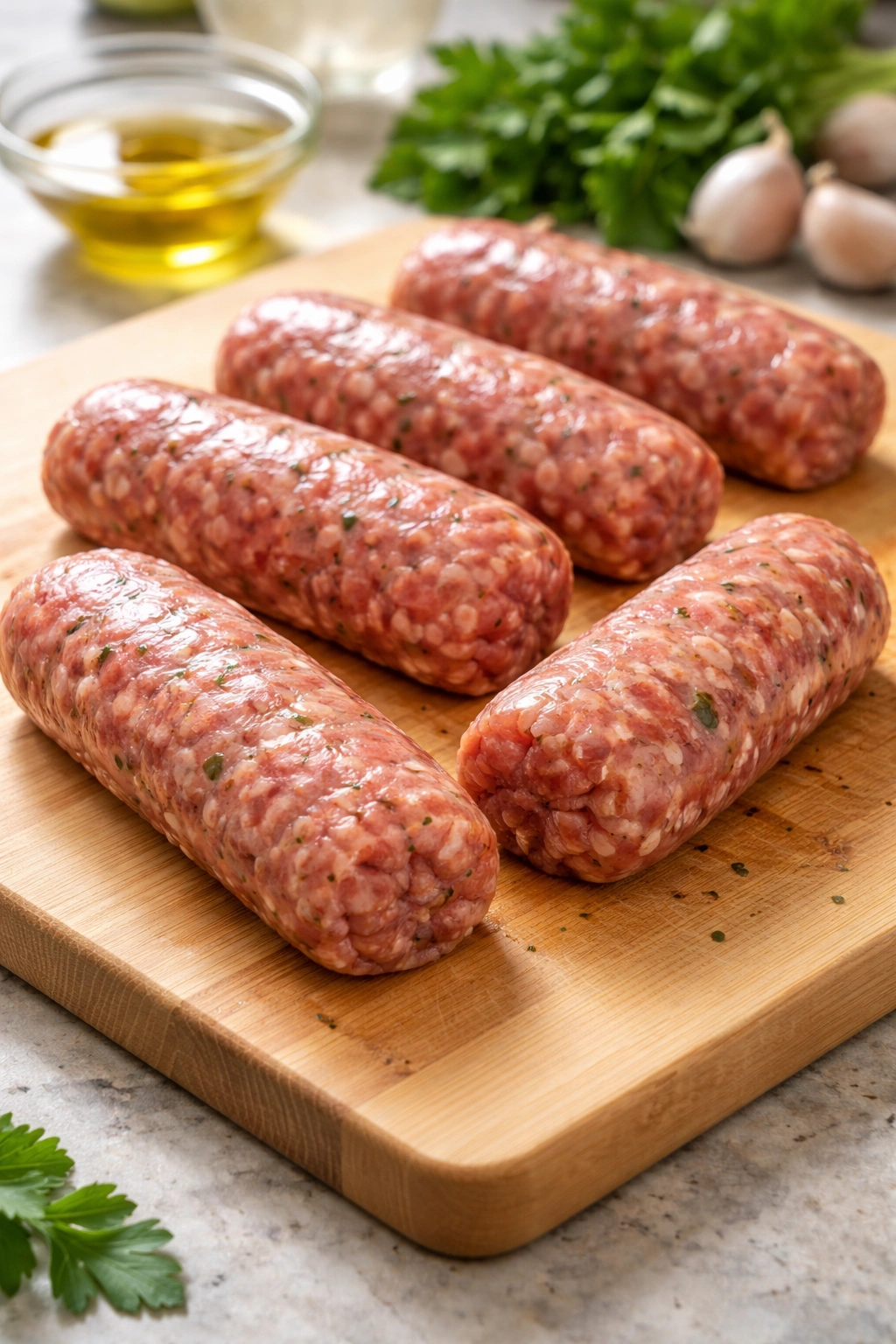
Some grocery stores sell sausage meat in bulk form rather than pre-formed links. This works fine — you’ll just need to portion it into links yourself by shaping it into approximately 3-4 inch long pieces with your hands. Boneless sausage sometimes has slightly more padding of herbs and seasoning and slightly less browning capability compared to casings, but it tastes excellent and cooks to the same timing as regular links.
Why do my vegetables steam instead of roast?
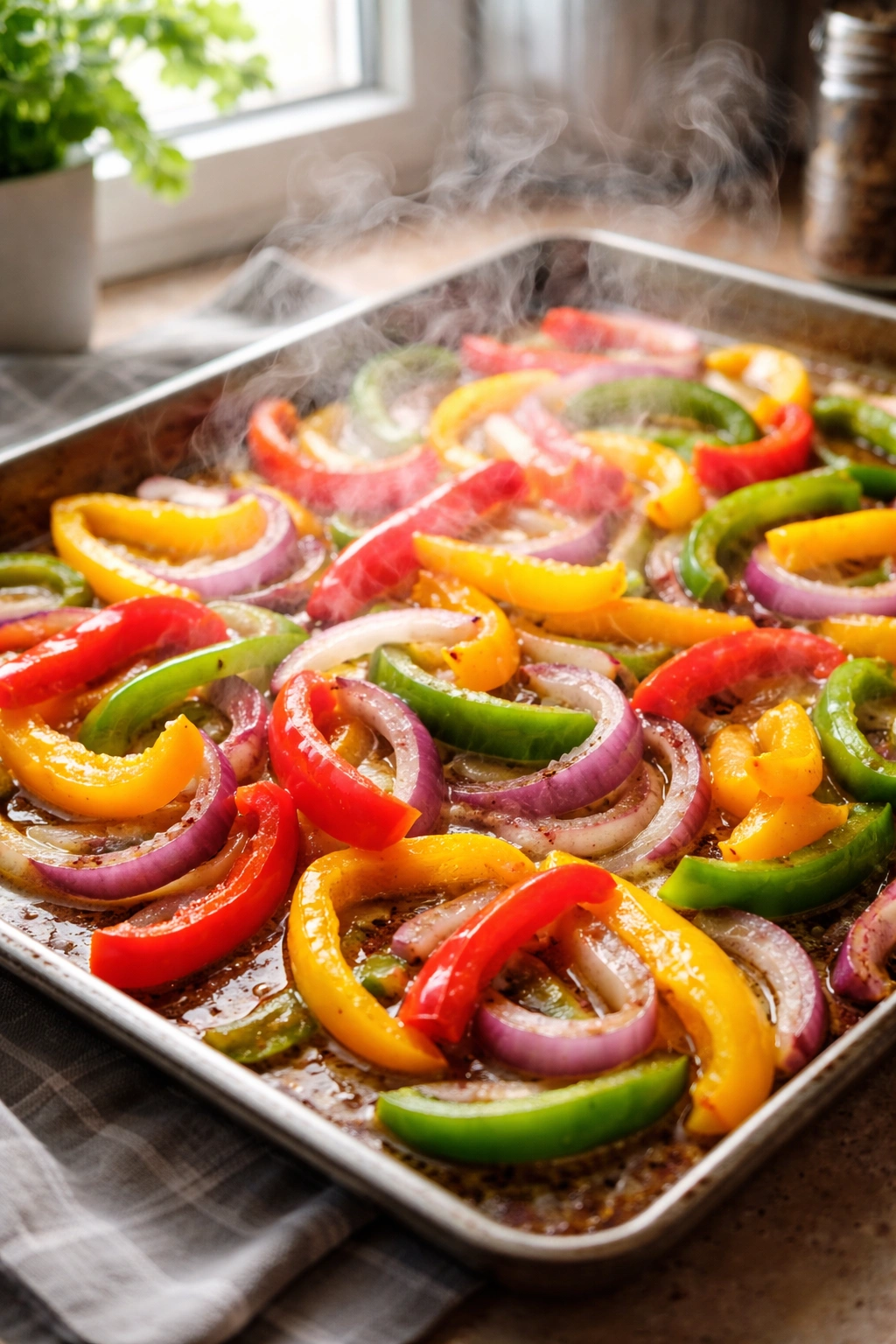
The most common cause is overcrowding — too many vegetables piled on top of each other don’t get exposure to the hot pan or oven air. Use a full-sized sheet pan (13×18 inches if possible) and keep everything in a relatively single layer. The second most common cause is oven temperature that’s too low; make sure you’re truly at 425°F (use an oven thermometer to verify) and that your oven is fully preheated before the pan goes in. Finally, if your vegetables are cut too thin, they release more moisture that creates steam rather than allowing caramelization. Keep pepper slices at ¼-inch and onion pieces at ½-inch or thicker.
How do I get extra-crispy, charred edges on the vegetables?
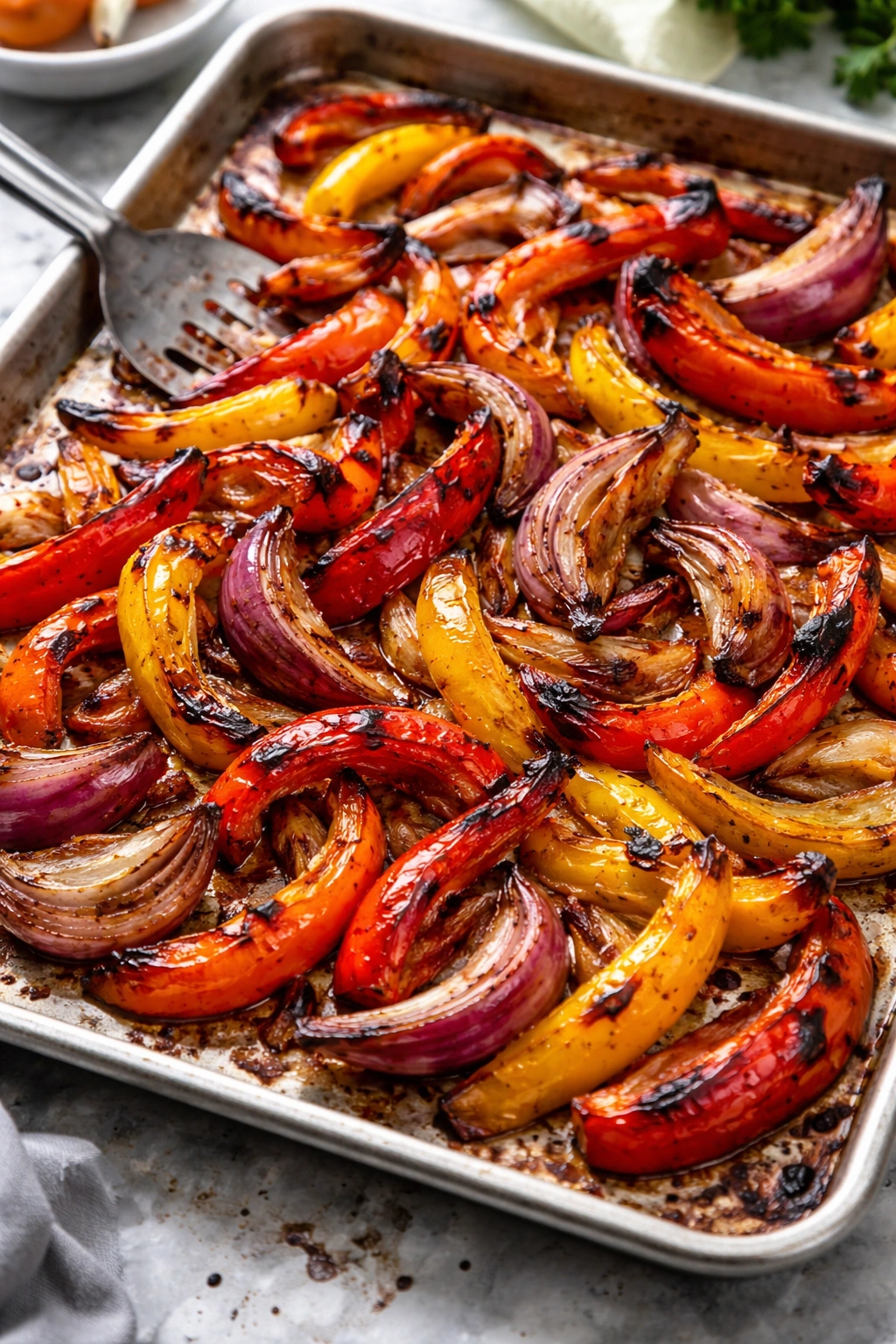
First, make sure your oven temperature is truly at 425°F and that you’re not overfilling your pan (both of these prevent browning). Second, consider using the broiler finishing step — after roasting, switch to the broiler setting and broil for 2-4 minutes about 2-3 inches from the element, watching constantly. The direct, intense heat of the broiler creates charring that you can’t achieve with just oven roasting. Finally, try tossing your vegetables in a tiny bit of balsamic vinegar before roasting — the acidity can help develop deeper browning.
Can I make this in the slow cooker or instant pot?
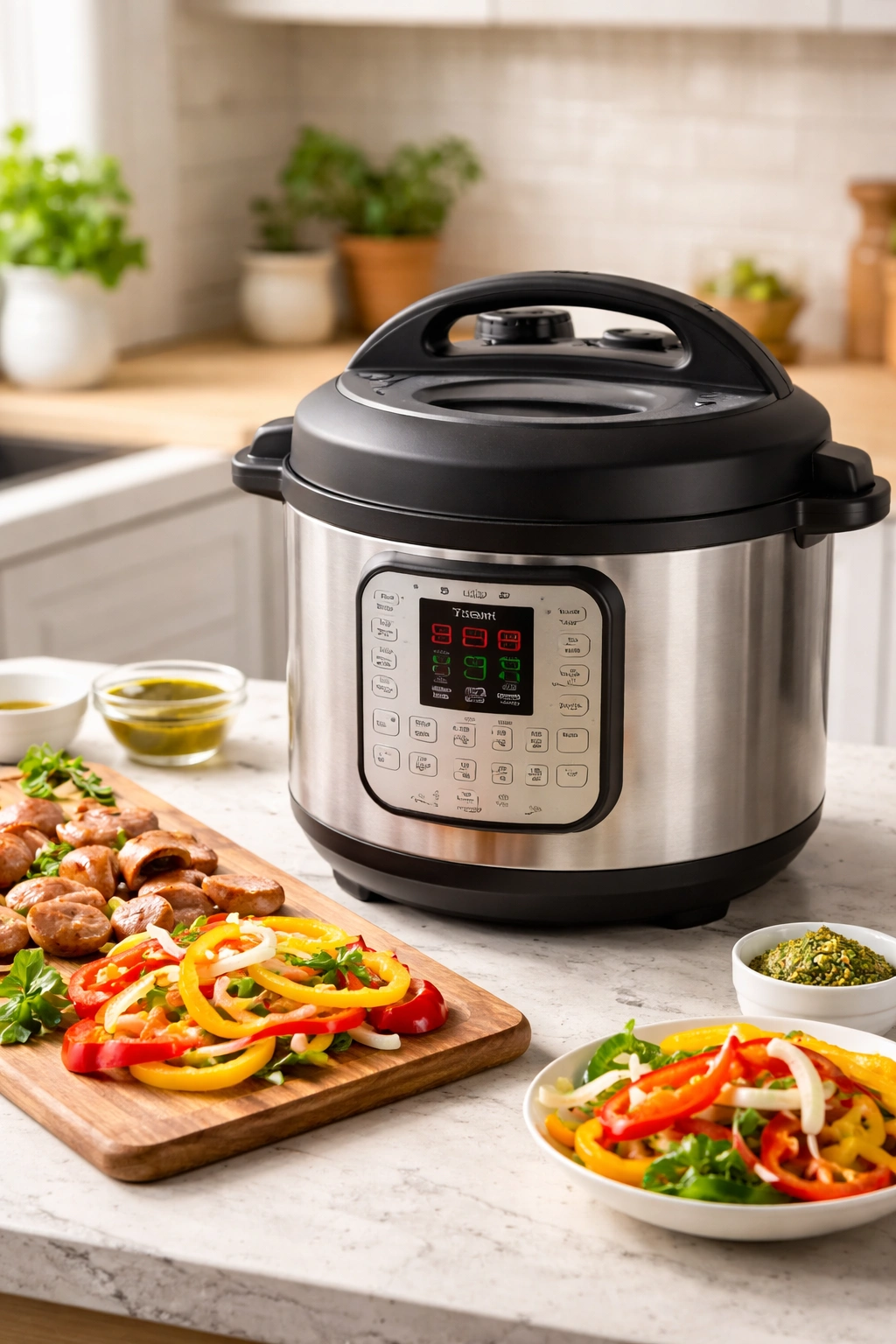
The Instant Pot works well for this — use the pressure cook function at high pressure for about 5 minutes if using raw sausage or 2 minutes if using pre-cooked sausage. The flavors will be more steamed than roasted, though, so the dish loses some of that beautiful caramelization. The slow cooker works but is honestly not ideal for this recipe — low heat prevents proper browning, and the extended cooking time can make sausage dry out. If you must use a slow cooker, brown the sausage briefly in a skillet first, then combine everything in the slow cooker on low for 4-6 hours, but expect softer vegetables and less depth of flavor.
Can I use mini sweet peppers instead of bell peppers?
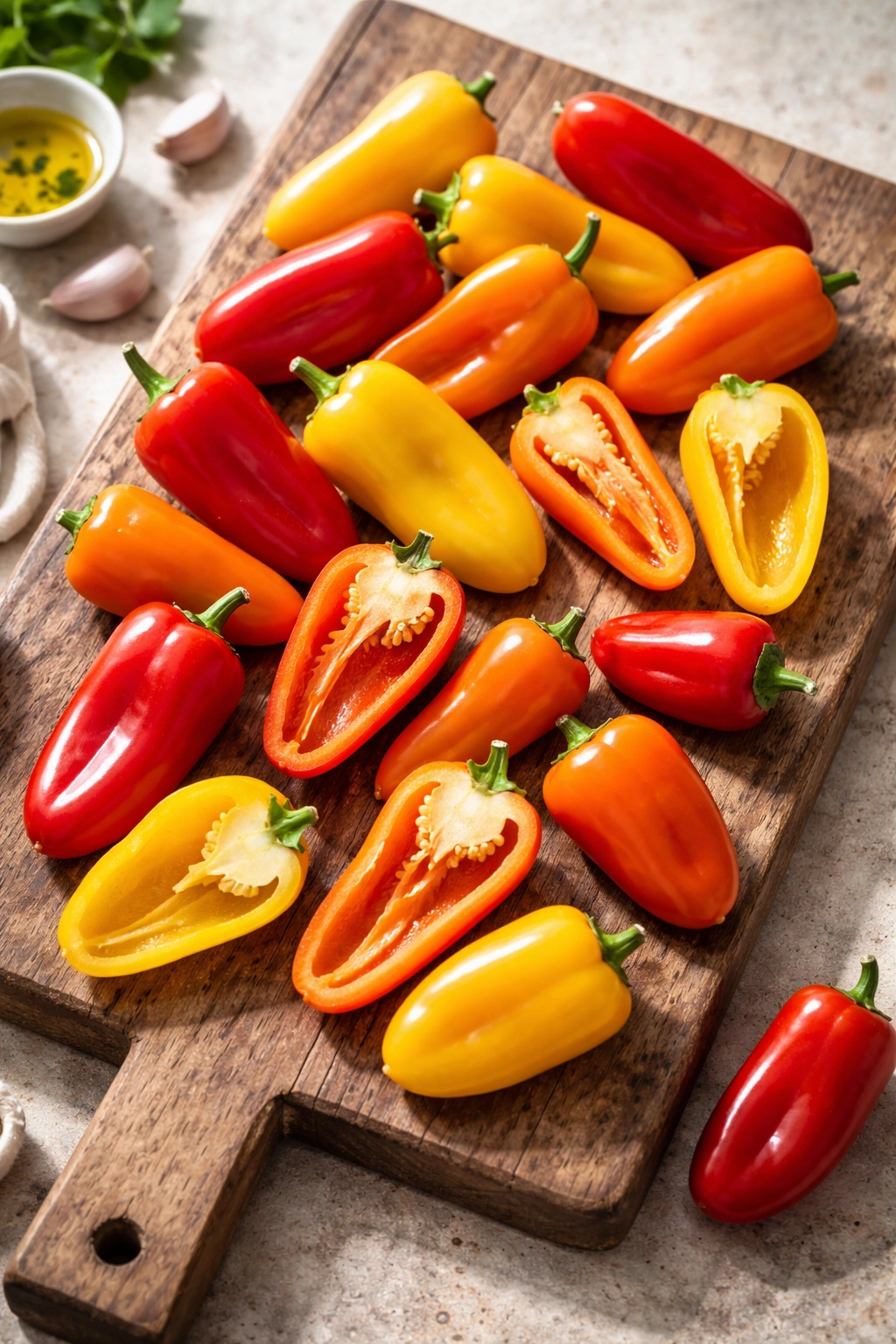
Mini sweet peppers are absolutely wonderful here and have the advantage of fewer seeds and a slightly sweeter flavor. They’ll cook in roughly the same time as regular peppers but may need slightly less time since they’re smaller. No need to slice them — just leave them whole or cut them in half lengthwise if they feel too large. They’re genuinely delicious and create a beautiful presentation on the serving plate.
How far ahead can I assemble this dish?
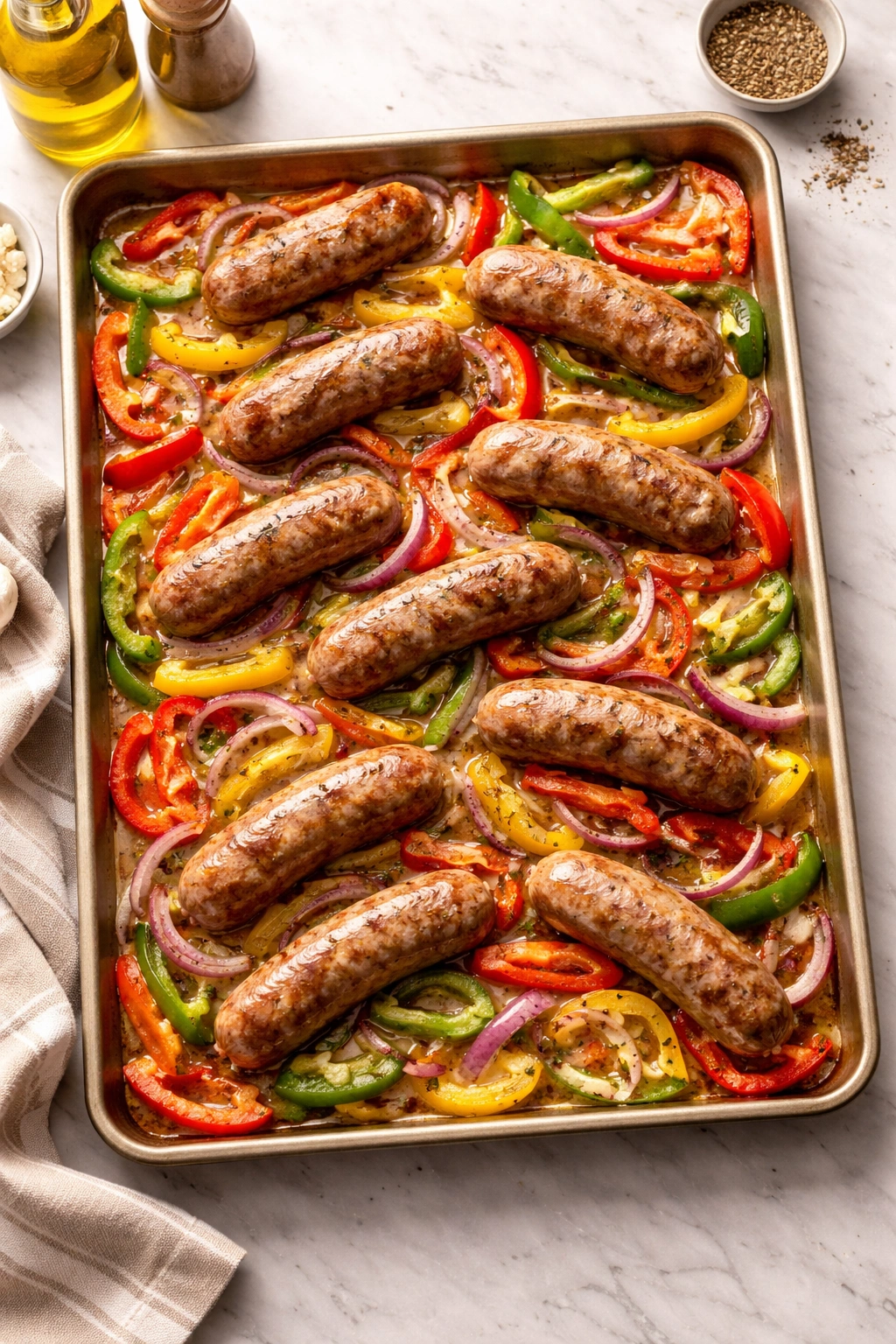
You can assemble the complete sheet pan (vegetables, sausage, seasonings, oil) and refrigerate it for up to 24 hours before roasting. The cold ingredients will take about 5 minutes longer to cook, so add those extra few minutes to your cooking time. The advantage of assembling ahead is that everything is ready to simply slide into a preheated oven when you get home — true set-it-and-forget-it convenience.
Can I cook this on the grill instead?
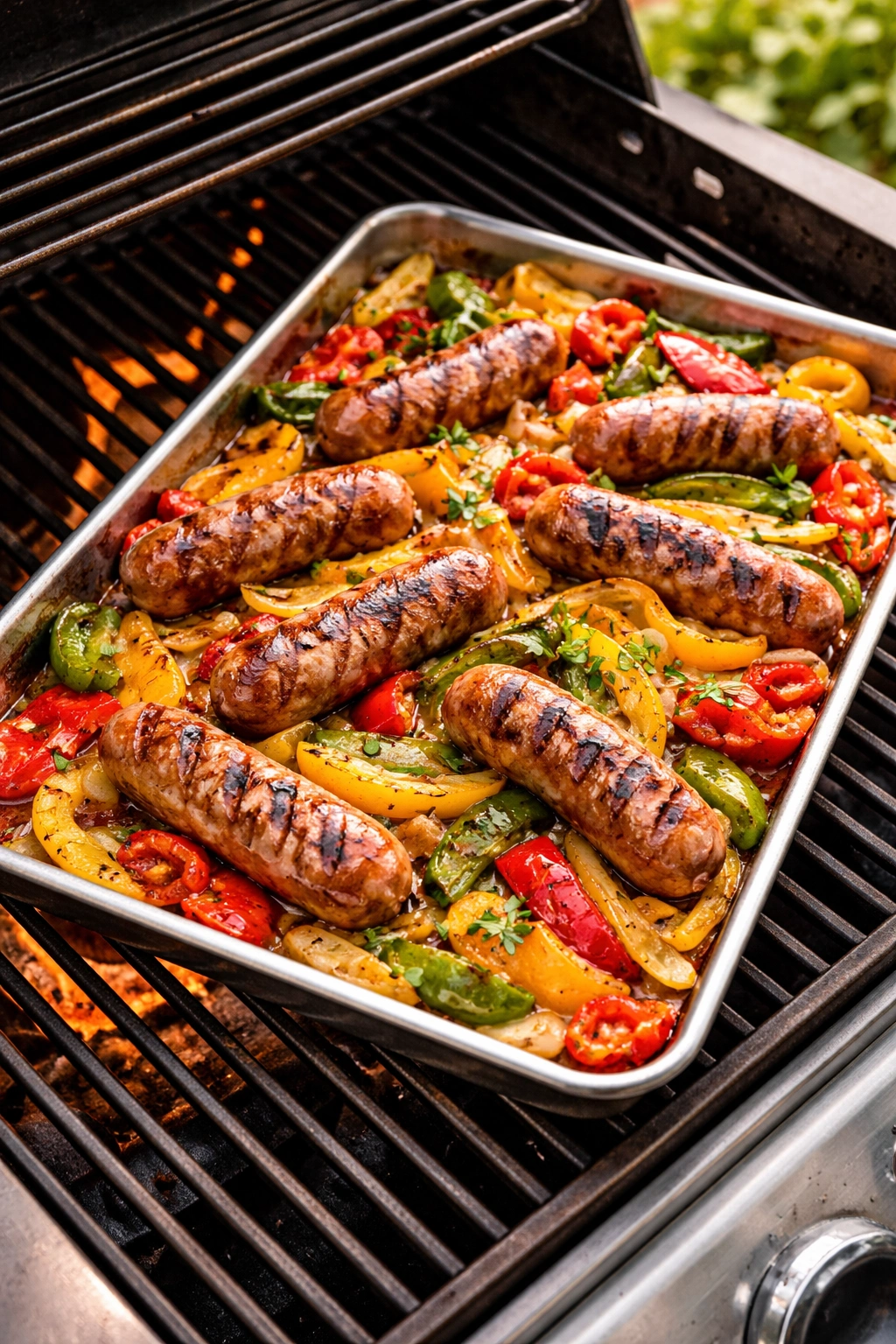
Technically yes, but it requires more attention than oven roasting. Use a grill-safe sheet pan or disposable aluminum pan and place it on the grill grate over medium-high heat. It’ll take roughly the same amount of time as oven roasting, but you’ll need to stir more frequently to prevent sticking and burning since direct heat is much more intense. This method works best if you’re grilling other items anyway — it’s not worth firing up the grill just for this dish.
The Final Word on Easy, Impressive Weeknight Dinners
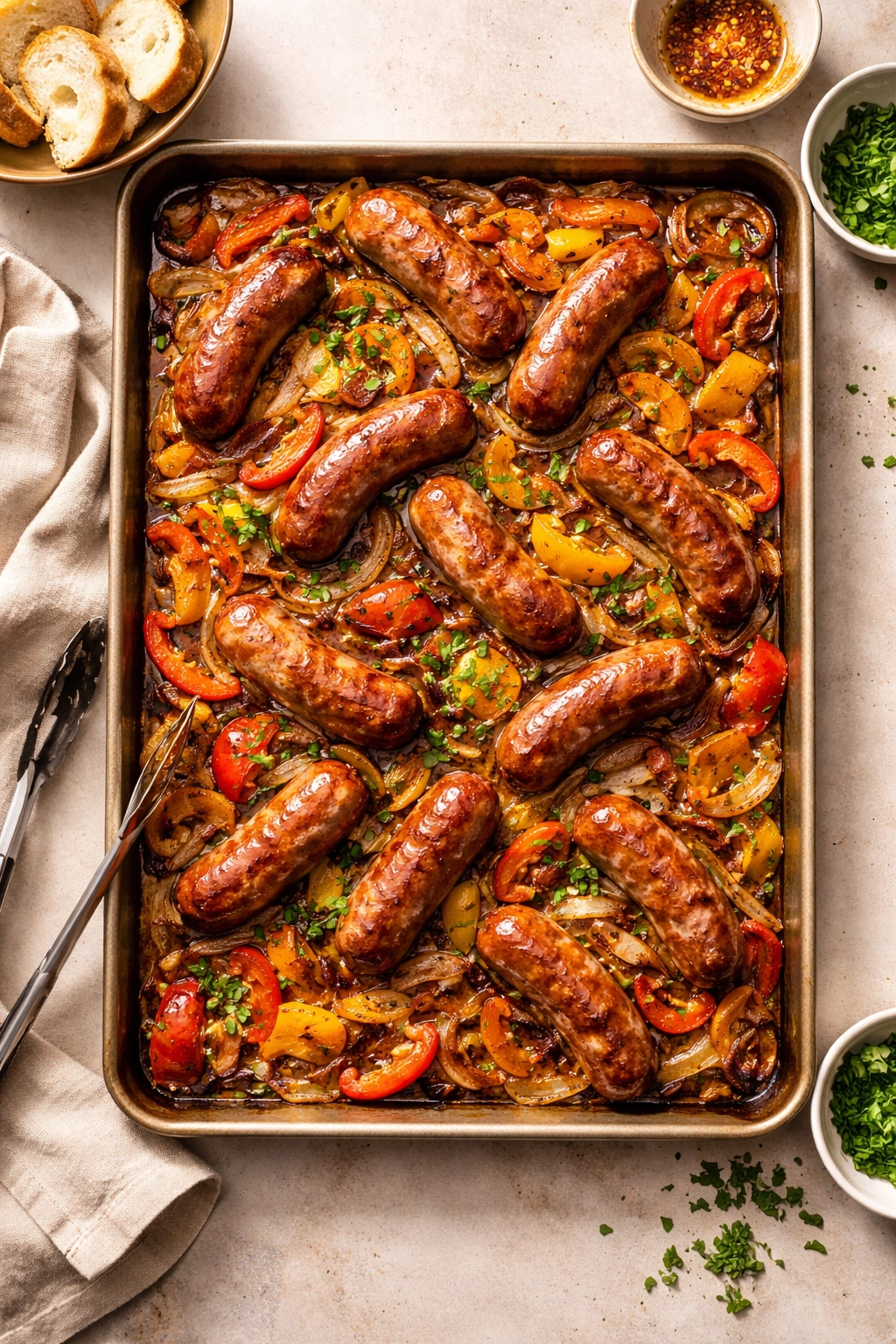
Sheet pan sausage and peppers represents something important in home cooking: the realization that impressive meals don’t require extensive technique, complex ingredient lists, or hours spent hovering over the stove. This dish delivers restaurant-quality flavor and presentation in the time it takes to prep vegetables and answer a few emails. The sausage provides richness and savory depth, the peppers and onions offer sweetness and substance, and the oven brings everything together through gentle, patient heat that creates caramelization you simply can’t achieve through other methods.
Build this into your weeknight rotation not just because it’s quick, but because it’s genuinely delicious. Serve it with something simple alongside — crusty bread, rice, pasta, or just a green salad — and you’ll have a meal that tastes like you spent real effort, even though you barely spent any. The beauty of sheet pan cooking is that it makes you look like you know what you’re doing, even on the nights when you’re simply too tired to do anything complicated. That’s the real power of this recipe.
