



One-Pot Shrimp and Sausage Dirty Rice for Dinner
Dirty rice gets its delightfully impudent name from the way the smoky, spiced meats and seasonings stain the grains, creating a visually rustic dish that tastes far more complex than the minimal effort it requires. When you add succulent shrimp and salty kielbasa or andouille sausage to the mix, you’re looking at a complete dinner that comes together in a single pot in less than an hour, with layers of Cajun-inspired flavor that taste like they’ve been building all afternoon. The beauty of this one-pan wonder is that everything cooks simultaneously — the sausage releases its smoky oils, the peppers and onions soften into a fragrant base, the rice absorbs all that savory goodness, and the shrimp turns perfectly pink without a moment of fussing.
This is the kind of meal that transforms an ordinary weeknight into something special without trapping you in the kitchen or creating a mountain of dishes to wash. It’s fork-tender shrimp meeting chewy rice, all tied together with seasoning notes that dance between paprika’s subtle sweetness, oregano’s earthy warmth, and cayenne’s welcomed heat. Whether you’re cooking for a crowd or just trying to get dinner on the table quickly after a long day, dirty rice with shrimp and sausage delivers the comfort and boldness that keep people coming back for seconds.
Why This One-Pot Meal Beats Everything Else
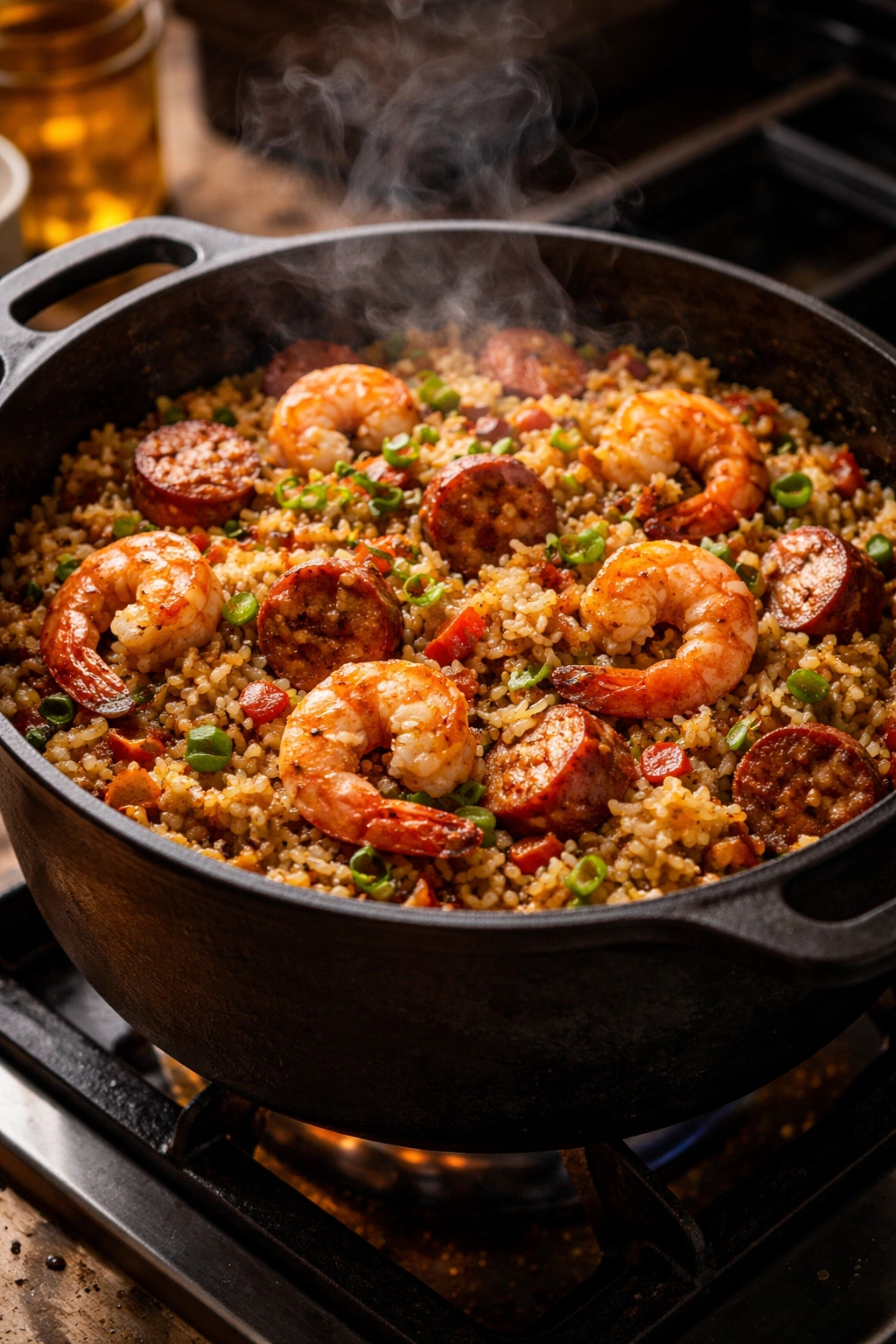
One-pot cooking isn’t just a convenience hack — it’s how the best flavors are built. As the sausage browns, it releases rendered fat and caramelized bits that form a flavorful foundation. When the peppers and onions hit that same pan, they pick up those browned, crusty bits (what cooks call “fond”), multiplying the depth in every bite. By the time the rice goes in, it’s already been surrounded by all that accumulated savory goodness, so every grain absorbs maximum flavor instead of just cooking in plain broth.
This approach also means less cleanup, less stress, and more time to enjoy your meal instead of standing at the sink. The shrimp, being quick-cooking, doesn’t need to go in until the very end — just long enough to turn opaque and infuse the finished rice with a hint of the sea. It’s efficient cooking at its most delicious.
The versatility is another huge win. You can use whatever bell peppers are in your crisper drawer, swap kielbasa for andouille sausage if that’s what you have, or even skip the sausage entirely and add extra shrimp. The core technique — building flavors in one pot and letting rice absorb them all — stays rock-solid no matter what you adjust.
The Real Story Behind Dirty Rice
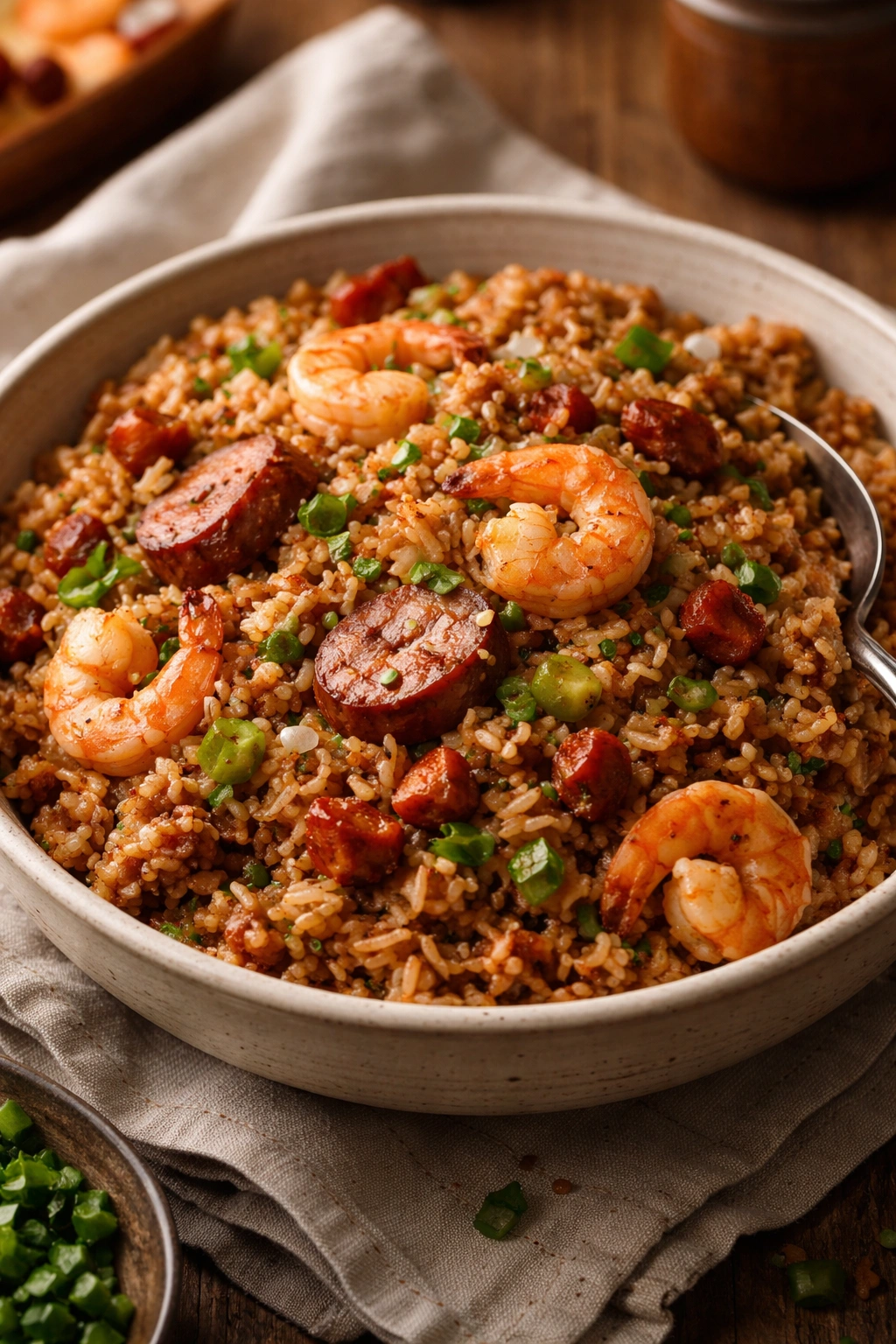
Dirty rice is pure Louisiana soul food, born from the resourcefulness of Cajun and Creole cooks who understood that nothing should go to waste. In the days before modern refrigeration, when cooks had to make the most of organ meats and trimmings, someone realized that mincing up leftover liver, grinding it with aromatics and spices, and mixing it directly into rice created something deeply savory and complex. The bits of meat — traditionally including chicken livers — stained the rice an unappealing brownish color, hence the name.
Over time, the recipe evolved. While traditional versions still include organ meats, most home cooks adopted a simpler approach using sausage, which provides that same smoky, meaty intensity without requiring specialty ingredients. When shrimp entered the picture — a natural pairing given Louisiana’s abundant Gulf seafood — the dish became more restaurant-friendly while losing none of its authentic flavor.
What makes dirty rice endure across generations is that it hits every emotional trigger for comfort food: it’s hearty without being heavy, deeply flavorful without being complicated, and somehow feels both homey and slightly fancy at the same time. A bowl of shrimp and sausage dirty rice says “I put care into dinner” without requiring you to pull out a dozen pans or stress about precise timing.
What Makes This Version Special
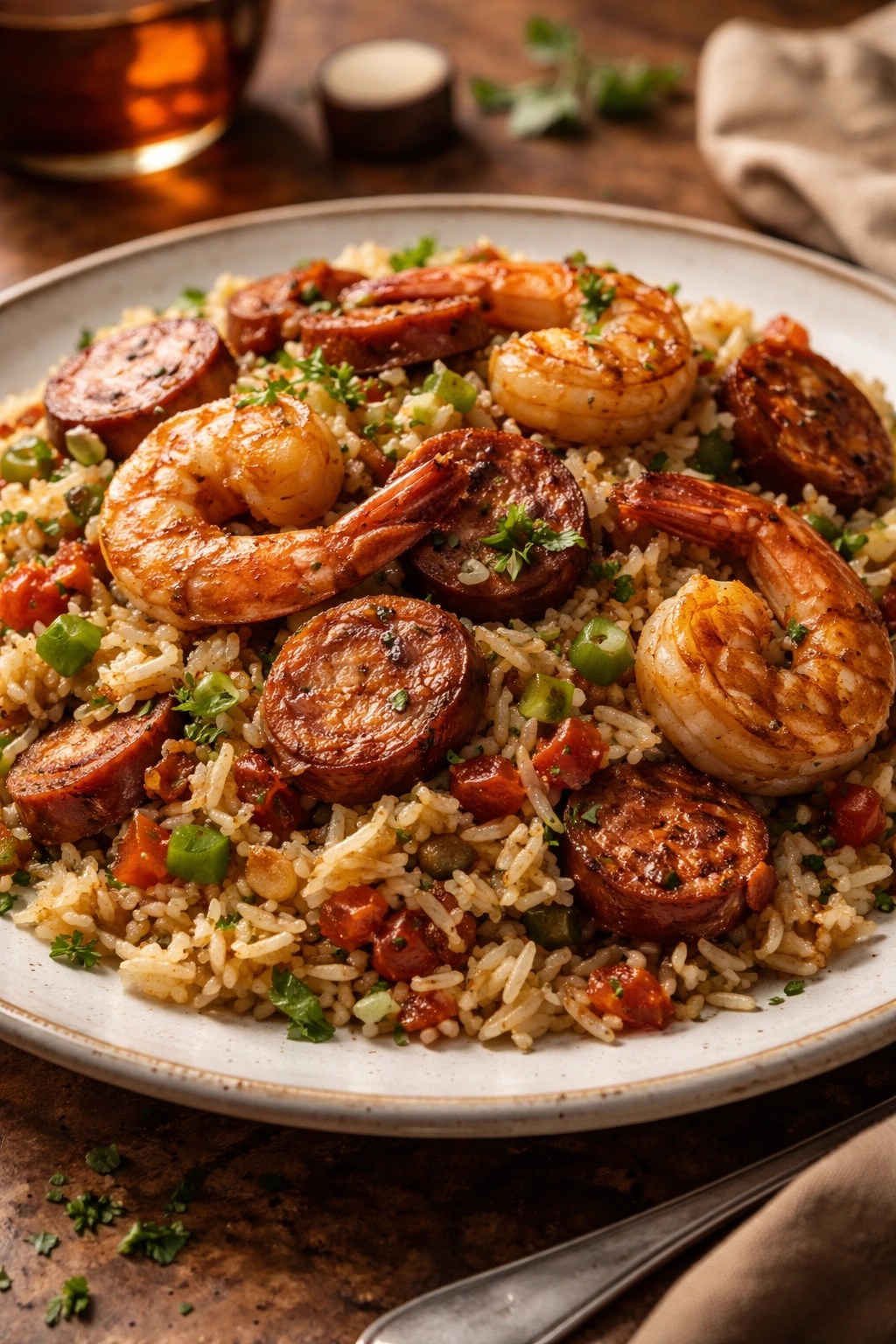
This one-pot approach streamlines the classic without cutting corners on flavor. By searing the sausage and shrimp first, you develop a caramelized crust that wouldn’t exist if you just dumped everything into broth. The sausage fat becomes your cooking medium for the aromatics, layering in richness. The tomatoes — whether fresh or canned fire-roasted varieties — add brightness and acidity that prevents the dish from tasting flat or one-dimensional.
The seasonings matter just as much. A homemade Cajun spice blend takes maybe two minutes to whisk together and gives you far more control over heat level and flavor balance than any bottled version. You’re building with smoked paprika (the real MVP for its depth without spiciness), garlic powder, onion powder, oregano, thyme, and cayenne pepper in whatever ratio suits your heat tolerance. This isn’t the kind of dish that demands your hand be forced — if you love spice, pile on the cayenne; if you prefer gentle warmth, dial it way back.
The rice itself deserves respect. Long-grain basmati rice cooks up lighter and fluffier than shorter varieties, which means the individual grains stay distinct instead of melding into a mushy mess. Most importantly, you want to rinse the rice thoroughly under cool running water for several minutes before cooking to remove excess starch — this is the single most important step for preventing gluey results.
Yield: Serves 4 to 6 people
Prep Time: 15 minutes
Cook Time: 30 minutes
Total Time: 45 minutes
Difficulty: Intermediate — the steps are straightforward, but success depends on proper rice selection, thorough rinsing, and adding shrimp at precisely the right moment so it stays tender.
Essential Ingredients for Building Flavor
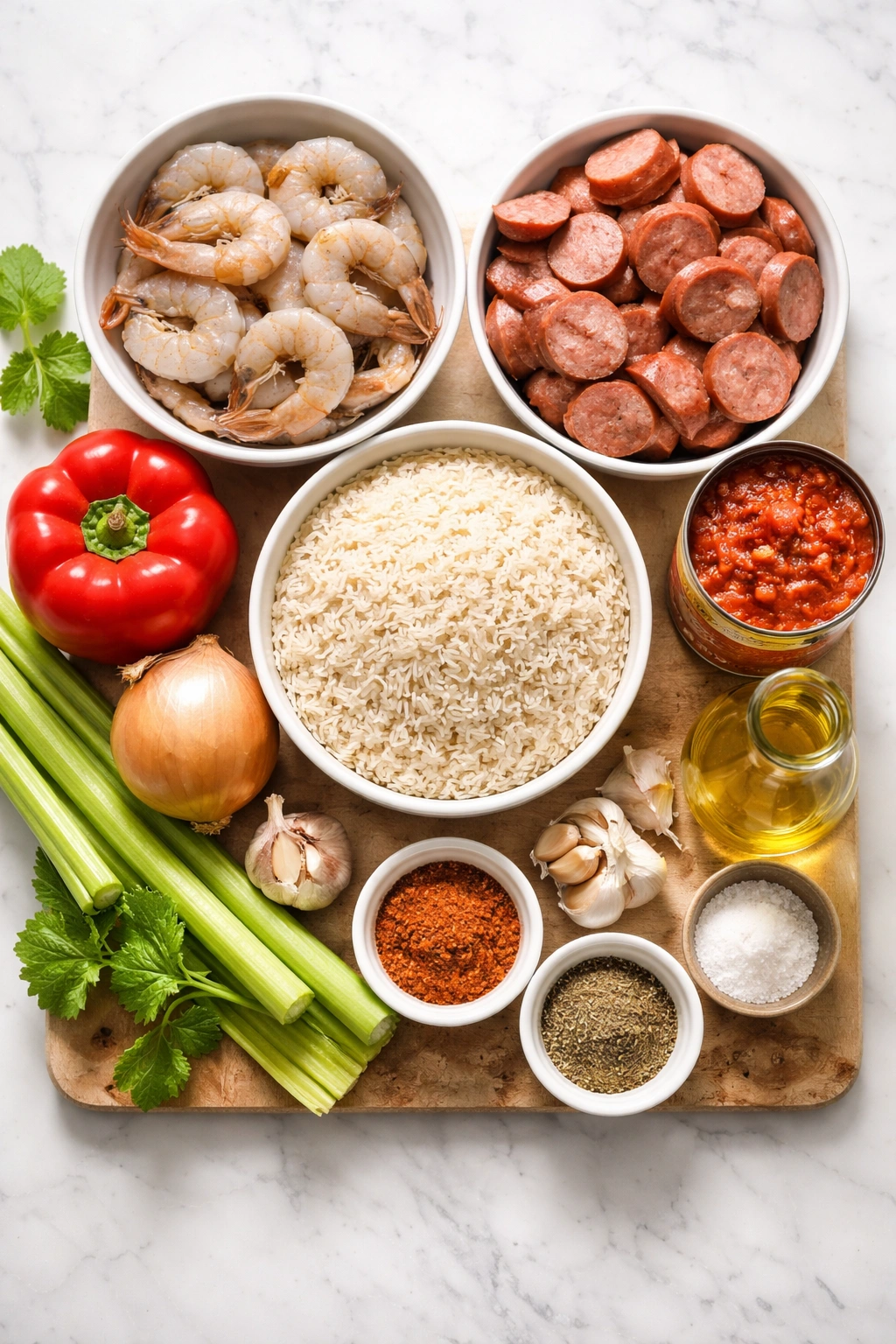
For the Protein:
- 1 pound raw large shrimp, peeled, deveined, and patted dry
- 12 to 14 ounces smoked sausage (andouille, kielbasa, or your preferred variety), sliced into ½-inch rounds
- 3 tablespoons extra-virgin olive oil, divided
For the Rice and Base:
- 1½ cups long-grain basmati rice, thoroughly rinsed and drained until the water runs nearly clear
- 2¾ cups low-sodium chicken broth
- 1 can (15 ounces) fire-roasted diced tomatoes, with their juices (or plain diced tomatoes if fire-roasted aren’t available)
- 1 tablespoon tomato paste
- ½ medium onion, finely diced
- 1 large red bell pepper (or mix red and green), finely diced
- 2 stalks celery, finely diced
- 3 cloves garlic, minced
- 1 tablespoon fresh lemon juice (bottled works fine too)
For the Cajun Spice Blend:
- 1½ teaspoons each of smoked paprika, garlic powder, and onion powder
- ¾ teaspoon each of dried oregano, dried thyme, and freshly ground black pepper
- ½ teaspoon kosher salt
- ¼ to ½ teaspoon cayenne pepper (start with ¼ if heat-sensitive, increase to ½ if you love spice)
For Garnish:
- 2 to 3 green onions (scallions), chopped
- Fresh parsley, roughly chopped (optional but recommended)
Choosing the Right Shrimp Makes All the Difference
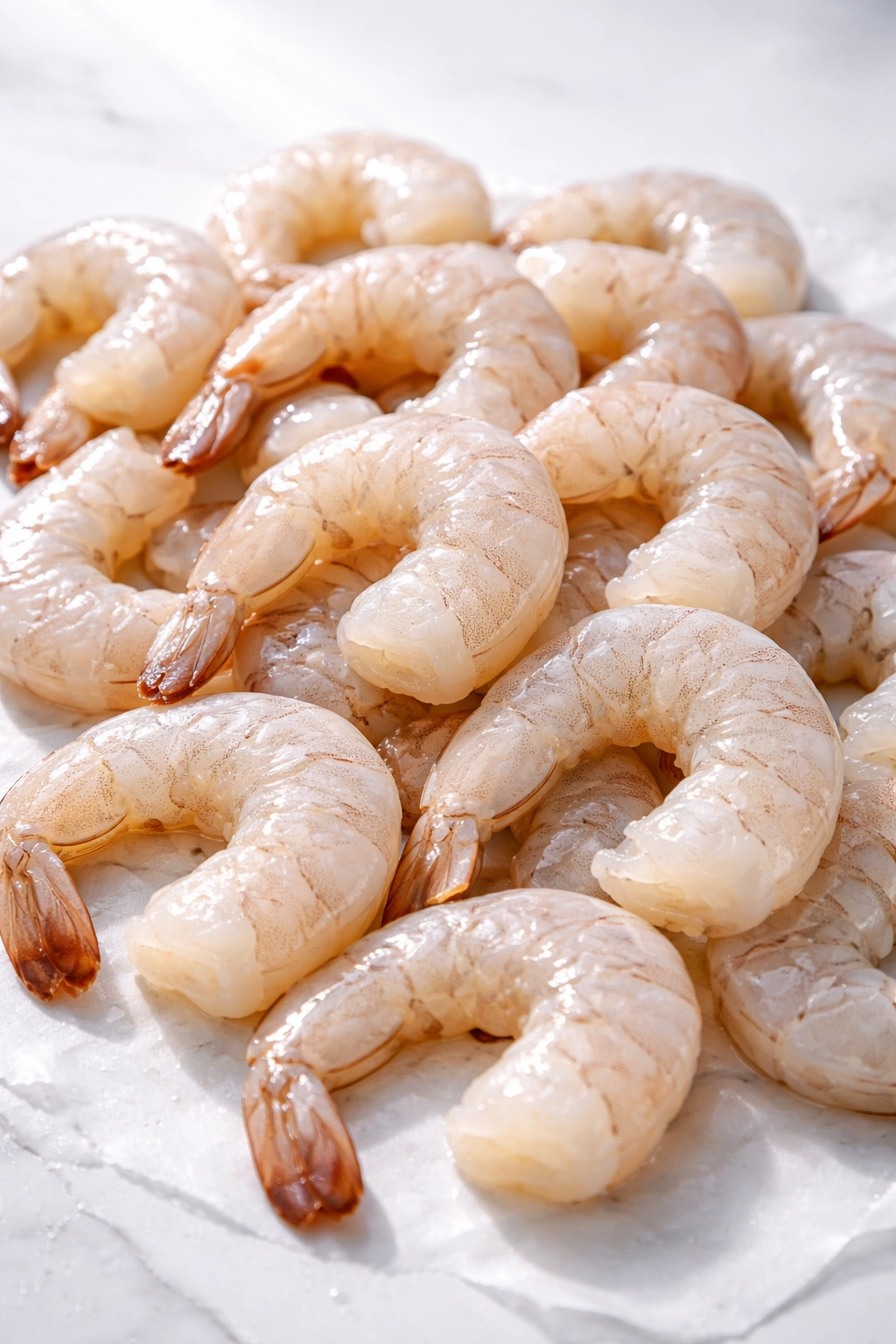
The shrimp is the star of this dish, so invest a moment in selecting the best option available. Look for raw, peeled, and deveined shrimp — buying pre-prepped saves enormous time and removes the messiness. If you can find wild-caught shrimp rather than farm-raised, you’ll notice the difference in texture and subtle flavor depth, but farm-raised works perfectly fine.
Aim for large shrimp in the 21-25 count range, meaning roughly 21 to 25 individual shrimp per pound. Larger shrimp stay juicier during cooking and give you a more satisfying texture, plus they allow you to cook them slightly longer without overcooking (some shrinkage is inevitable when heat hits them).
Frozen shrimp is absolutely your friend here. Shrimp are frozen at peak freshness within hours of being caught, so store-bought frozen shrimp is often fresher than the “fresh” seafood counter option by the time you actually use it. Frozen is also more economical, so you can keep bags stocked in your freezer year-round.
To thaw frozen shrimp quickly without losing quality, seal them in a freezer bag and submerge in a bowl of ice-cold water for 10 to 15 minutes, replacing the water halfway through. The easy overnight method works too — just transfer the bag to the fridge before you leave for work. Once thawed, pat the shrimp completely dry with paper towels before cooking; this helps the Cajun seasoning stick and prevents the shrimp from steaming instead of searing.
The Importance of Basmati Rice and Proper Rinsing
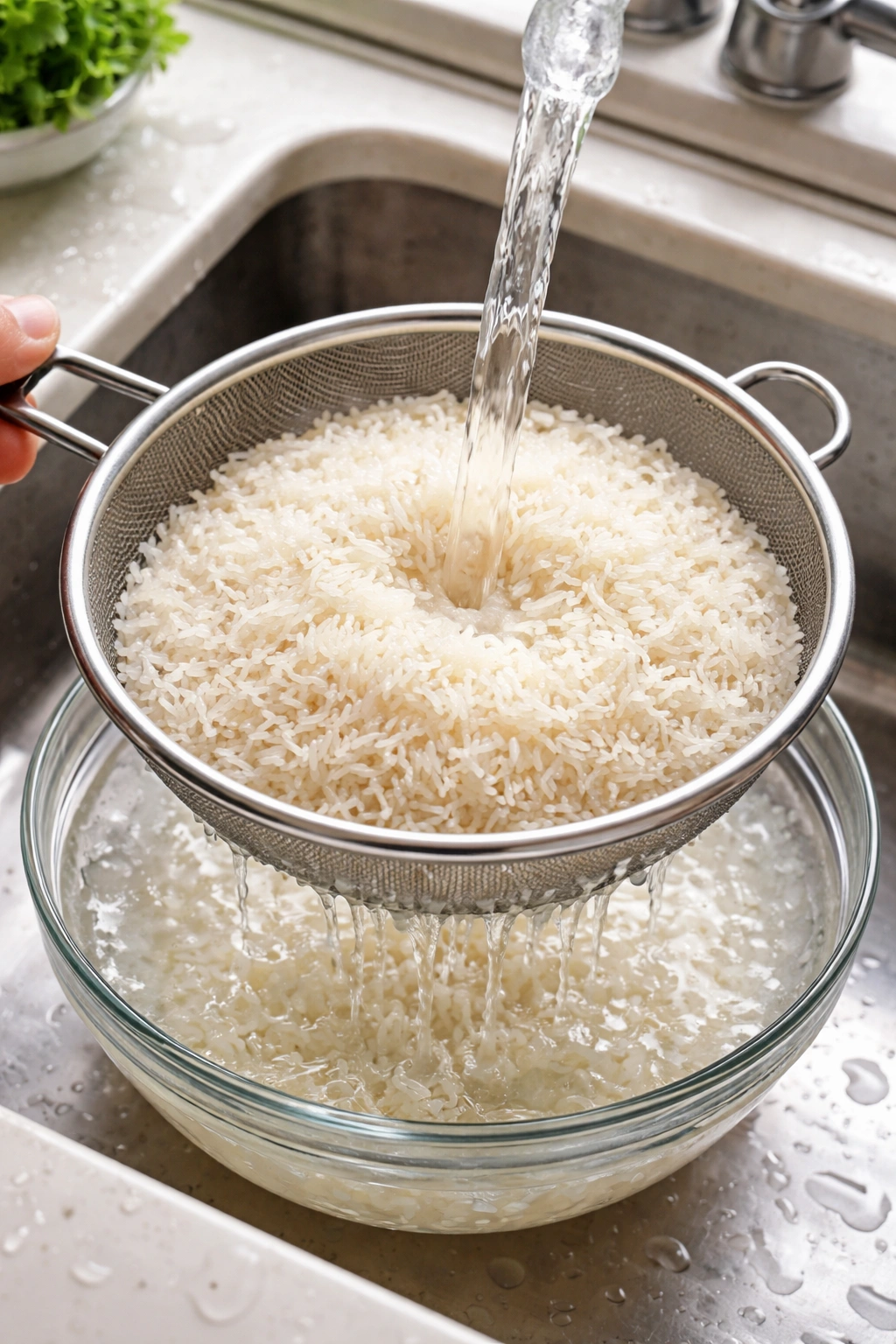
Rice texture can make or break this dish, so don’t skip the rinsing step. Basmati rice has a protective outer layer of starch, and this starch is why so many one-pot rice dishes end up mushy or gluey. To prevent this, place the rice in a fine-mesh sieve and rinse under cold running water for at least two minutes, swirling it gently with your fingers as you rinse. Continue rinsing until the water runs nearly clear — it will never be perfectly clear, but you want to remove as much starch as possible.
Why does rinsing matter so much? The excess starch on the grain’s surface can absorb liquid too quickly, causing the grain to break down. By rinsing, you’re removing that starch and allowing the grain to cook more evenly, staying firm and separate instead of turning into rice porridge. This is the single most important technique for achieving fluffy, individual grains.
If you absolutely can’t find basmati rice, jasmine rice works as a backup, though you may need to adjust the liquid ratio slightly — jasmine tends to absorb liquid at a slightly different rate, so watch carefully after 5 minutes of simmering and add a splash of water if needed. Avoid short-grain varieties altogether; they contain more starch and are genetically predisposed to clinginess.
Building Flavor: The Sausage and Shrimp Foundation
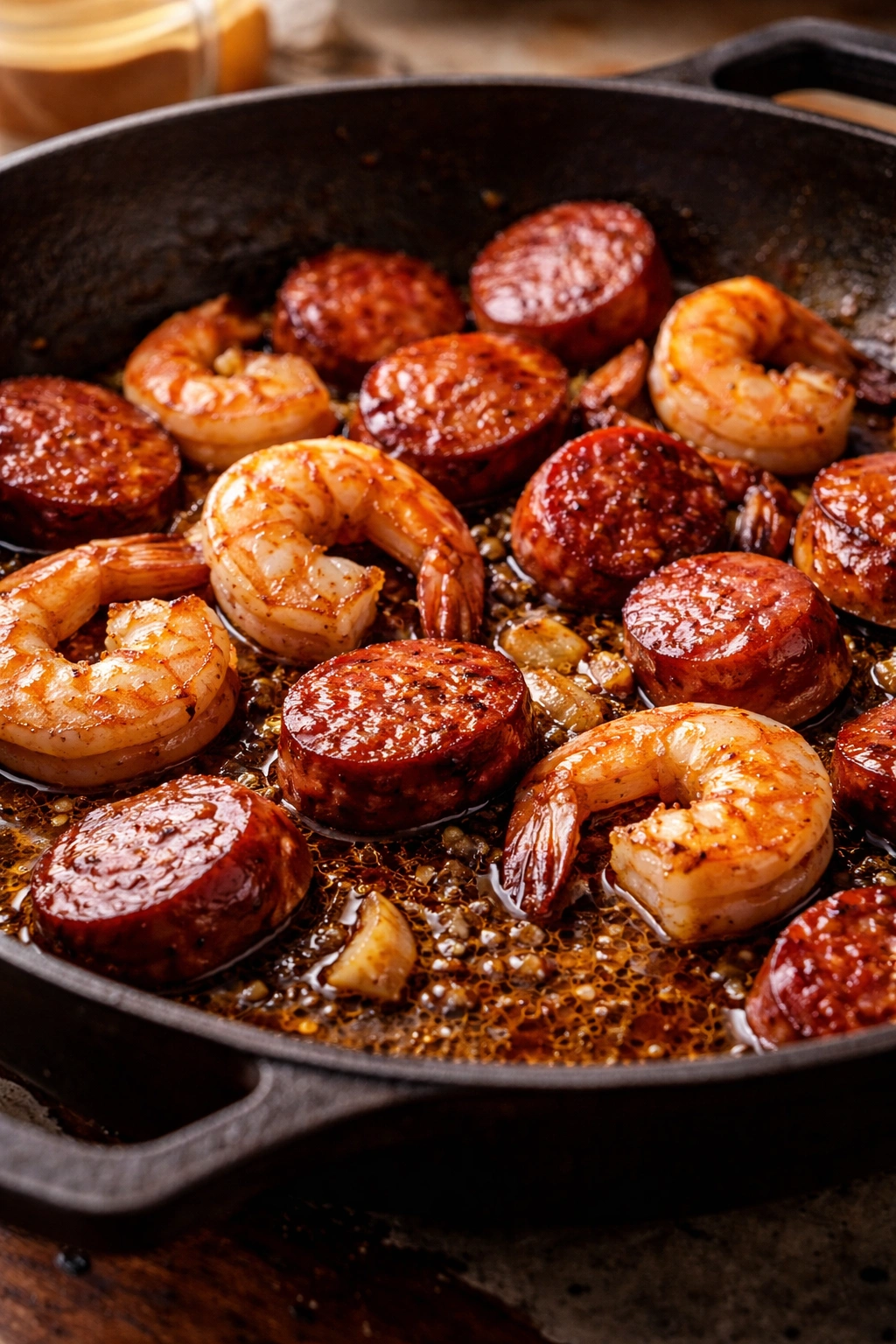
Start by heating 1 tablespoon of olive oil in a large braising pot or Dutch oven over medium-high heat. Once the oil shimmers and smells hot (about 1 minute), add your sliced sausage to the pan in a single layer. Don’t stir immediately — let each slice make contact with the hot surface for 2 to 3 minutes, then flip and repeat on the other side. You’re looking for caramelization, which develops rich, toasty flavors that plain cooking never achieves. This browning step should take about 5 minutes total. Transfer the sausage to a clean plate using a slotted spoon, leaving behind as much rendered fat as possible — this is liquid gold for flavor.
While the sausage cooks, combine all the Cajun spice ingredients in a small bowl and whisk them together. This takes two minutes and gives you far more control than dumping in pre-made seasoning salt blends. Add 1½ tablespoons of this spice mixture to the raw shrimp in another bowl, stirring to coat each piece. Set aside.
Once the sausage is out of the pan, add another tablespoon of oil and let it heat for about 30 seconds. Add the seasoned shrimp in a single, even layer and cook without moving them for 2 to 3 minutes until the bottom side turns opaque and pink. Flip each piece and cook the other side for another 2 to 3 minutes. Look for the moment when the shrimp loses all translucent gray color and turns fully pink and opaque — this happens fast, and overcooking turns shrimp rubbery within seconds. Remove the shrimp to the plate with the sausage. The shrimp doesn’t need to be fully cooked through at this point; it will finish cooking when reintroduced to the hot rice at the end.
Building the Aromatic Base That Holds Everything Together
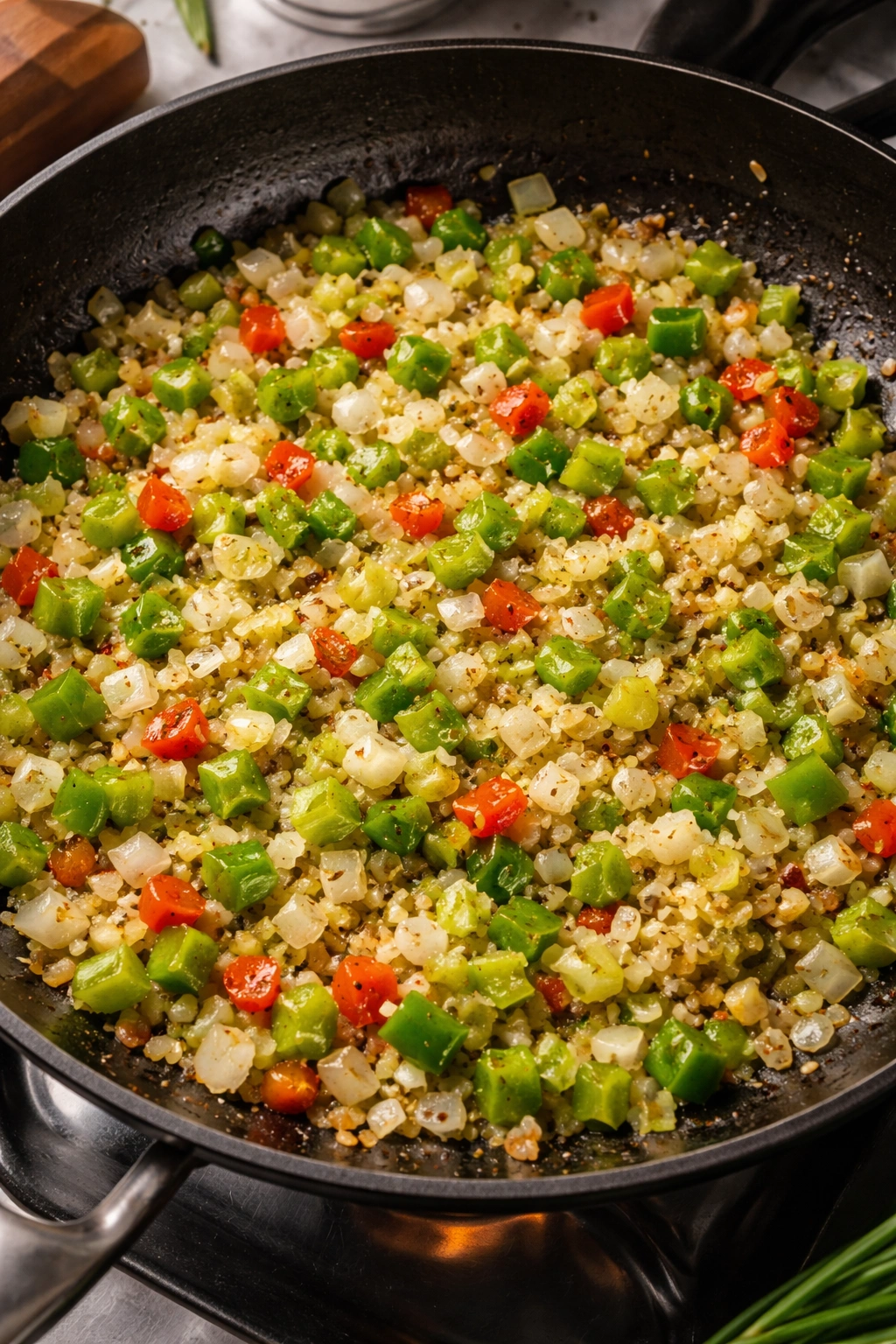
Add the final tablespoon of oil to the pan over medium-high heat and let it warm for about 30 seconds. Add your diced onion and cook for 3 to 4 minutes, stirring occasionally, until it becomes translucent and the edges begin to turn golden. You’re looking for softness and sweetness to develop as the heat breaks down the onion’s cellular structure. Add the diced bell pepper and celery and stir everything together. Cook for another 3 to 4 minutes until these vegetables also soften and release their moisture.
Now add the minced garlic and cook for just 30 seconds to 1 minute until fragrant — this is crucial because garlic burns easily and bitter garlic ruins everything. You want just enough heat to release those pungent, aromatic compounds without actually cooking the garlic into submission.
At this point, your pan contains a flavor base that’s already more interesting than most one-pot meals ever achieve. The browned sausage bits stuck to the bottom of the pan, the caramelized aromatics, the rendered fat holding everything together — this is the foundation that makes every grain of rice taste extraordinary.
Cooking the Rice and Building Moisture Balance
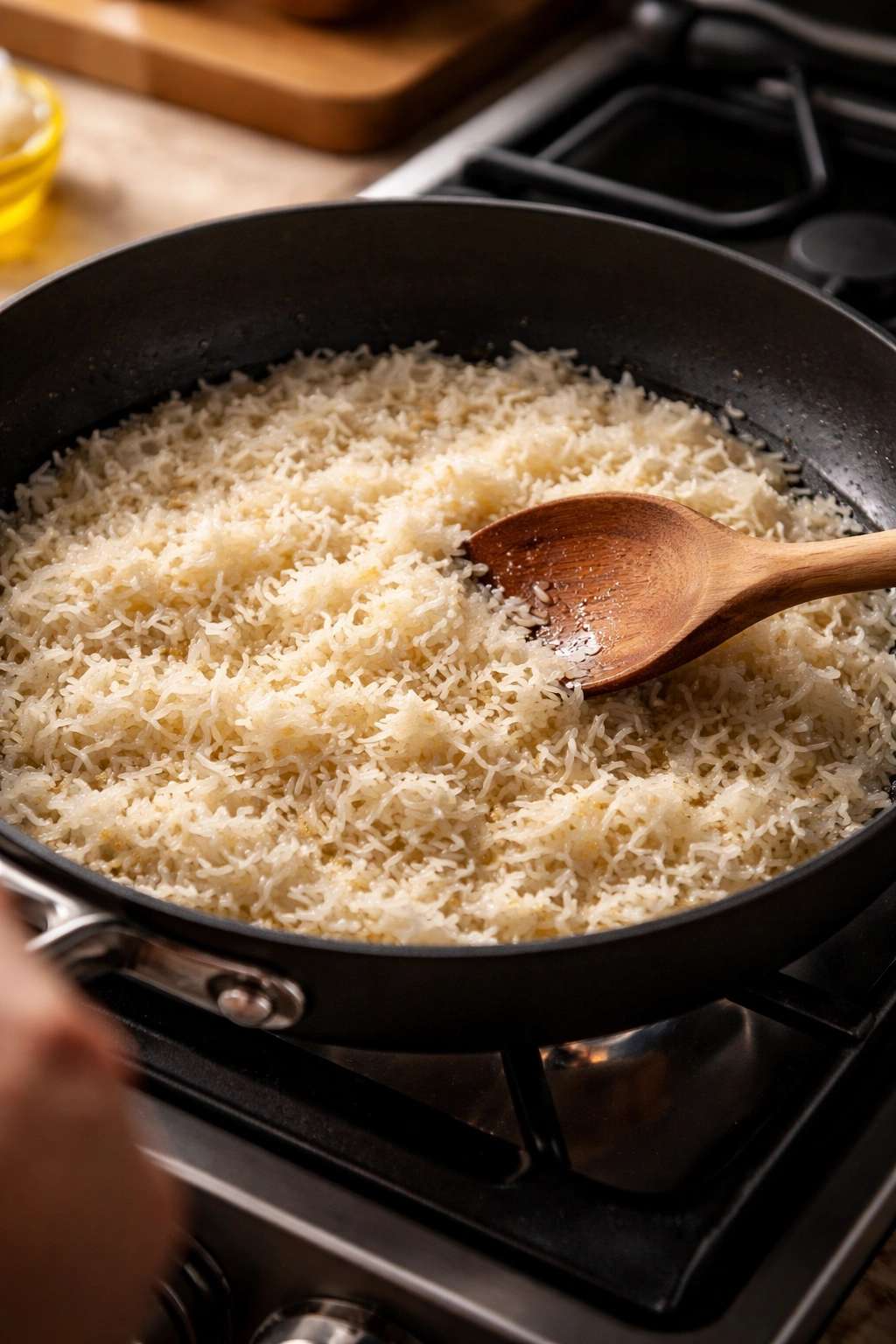
Stir in your thoroughly rinsed basmati rice and use your spoon to toss it with all the vegetables and oil, making sure every grain gets coated. Cook for 1 to 2 minutes, stirring frequently. This toasting step builds a protective coating on each grain that helps it resist absorbing water too quickly and turning mushy. You’ll notice the rice becomes slightly translucent around the edges and smells pleasantly toasty.
Return the sausage to the pan and sprinkle the remaining Cajun spice blend over everything — you should have about ¾ tablespoon left. Stir until the spices are evenly distributed and every ingredient is coated. The pan should smell incredible at this point: smoky from the paprika, earthy from the oregano and thyme, warm from the garlic powder and onion powder, with a whisper of heat from the cayenne.
Add your chicken broth, the can of diced tomatoes (with all their juices — this is important for moisture), and the tomato paste. Stir thoroughly, making sure the tomato paste breaks up and distributes evenly — it won’t dissolve completely, but you want to prevent pockets of concentrated paste in the finished dish. The liquid should look slightly murky and rich, colored by the tomatoes and seasoning.
The Critical Simmering Phase
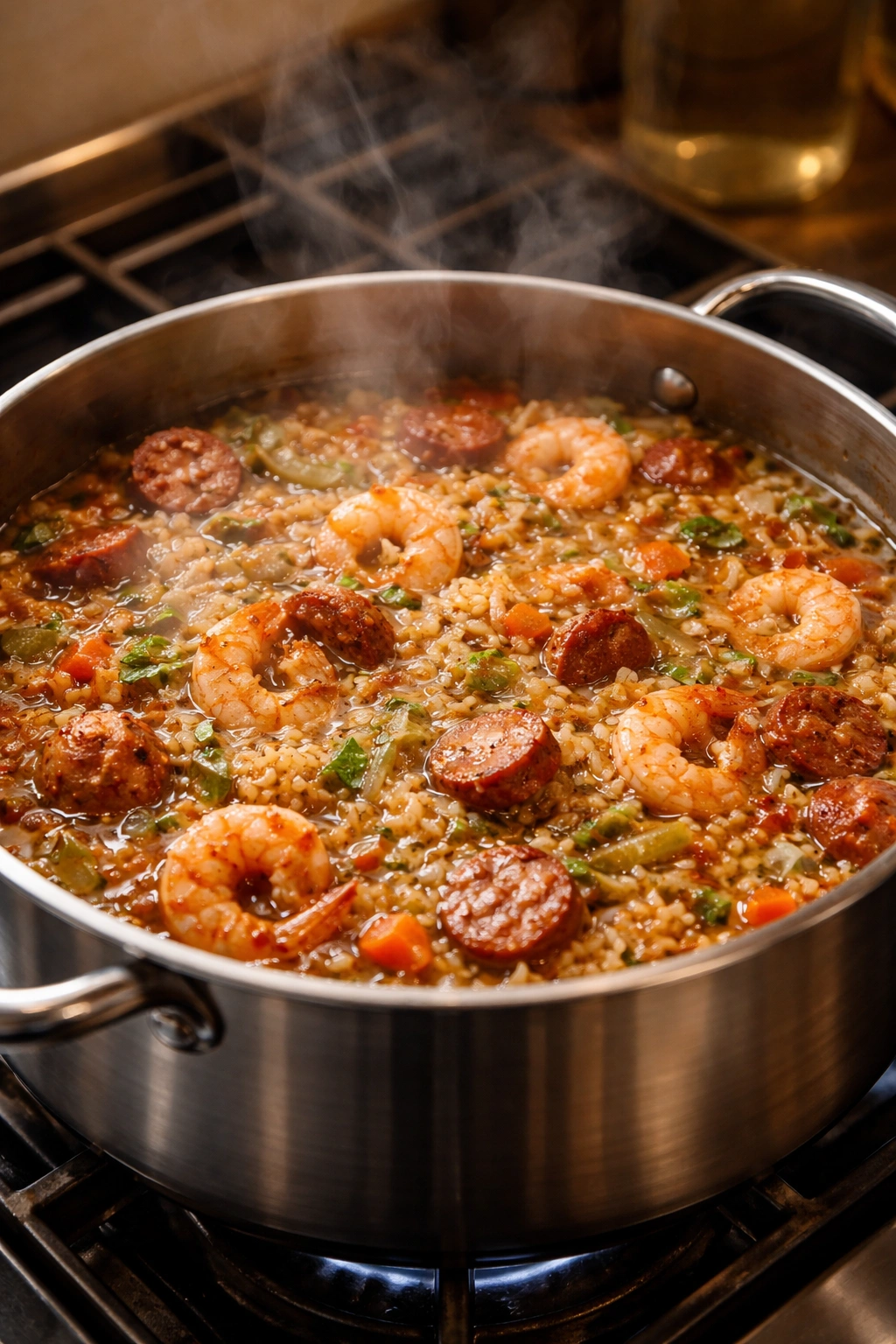
Bring the mixture to a boil over medium-high heat — the entire surface should be actively bubbling and rippling. This can take 3 to 5 minutes depending on your stove and pan, so don’t rush it. Once you see that active boil, give everything one final stir, then cover the pot with a lid and immediately reduce the heat to LOW.
Cook covered for 15 to 20 minutes. This is where your patience becomes critical. Resist the urge to lift the lid constantly; every time you do, you release steam and heat that the rice needs. After 10 minutes, carefully lift the lid just enough to peek at the rice, checking whether the liquid has mostly evaporated. The rice should look mostly dry on the surface but still be slightly firm when you taste a grain. If liquid remains and rice still feels hard, cover and continue cooking another 5 minutes.
Here’s the key: the rice is done when you can see barely any liquid remaining in the bottom of the pot and a grain of rice has a slight firmness in the center but breaks apart when bitten. It should never be completely soft and mushy. If the liquid evaporates before the rice is tender, add just a small splash of water or broth — no more than ¼ cup — and continue cooking. If liquid remains after the rice seems tender, remove the lid and cook uncovered for another 2 to 3 minutes to let the excess evaporate.
Bringing Everything Together in the Final Step
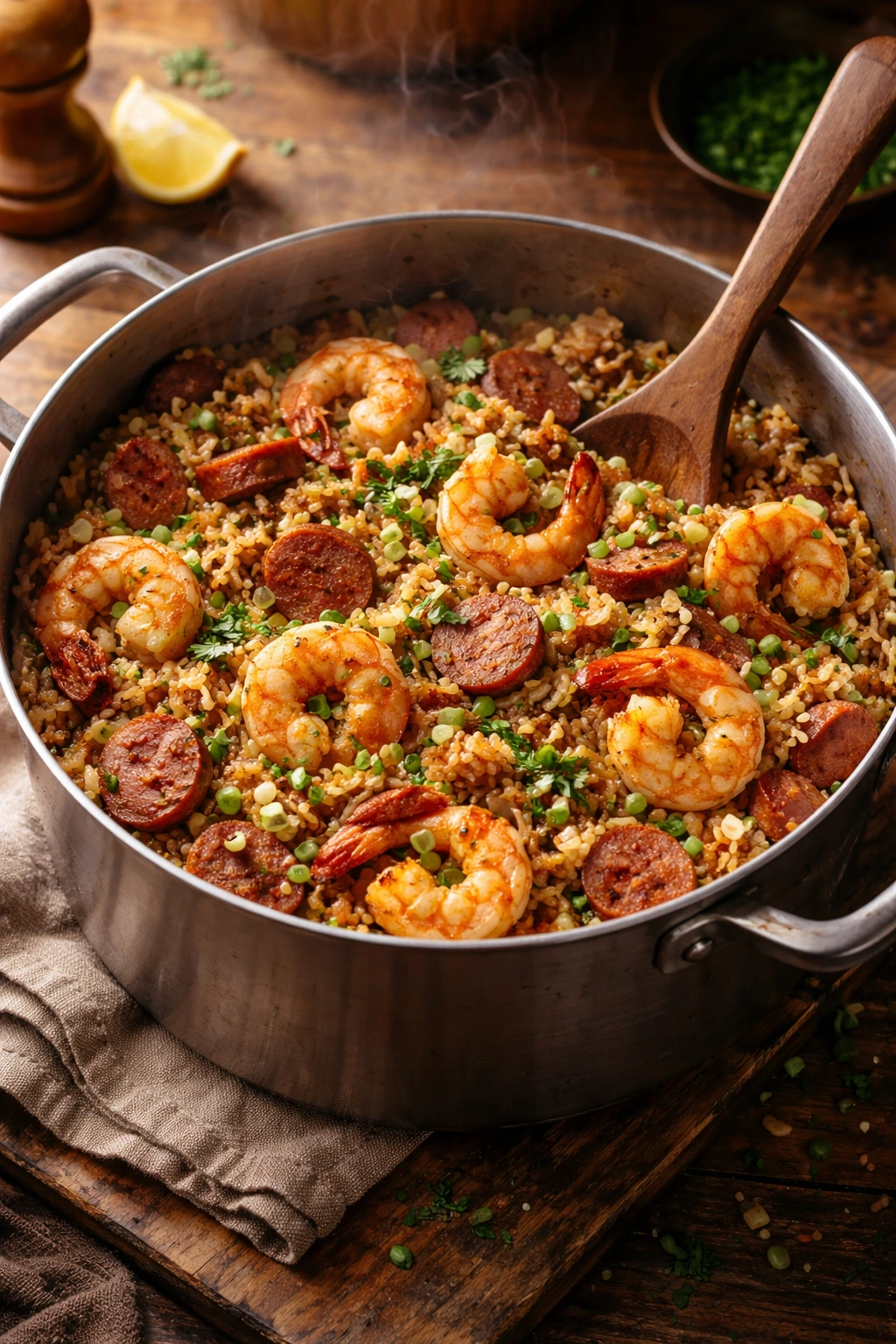
Once the rice reaches that perfect al dente texture, gently fold the cooked shrimp back into the pot, distributing it evenly throughout. Cover the pot and remove it from heat. Now comes the magic: let the pot rest, covered and undisturbed, for 5 to 10 minutes. This resting period allows residual heat to finish cooking the shrimp to perfect tenderness and allows the rice to absorb any remaining liquid, creating a creamy consistency without being wet or mushy.
After resting, fluff the rice gently with a fork — never use a spoon here, as spoon tines can break the delicate grains and make them stick together. A fork’s tines gently separate the grains without crushing them. Drizzle the fresh lemon juice over everything and toss gently to distribute. The acidity wakes up all the flavors, cutting through the richness and adding brightness.
Taste a spoonful and season as needed with additional salt, pepper, or cayenne pepper. This is your chance to adjust the heat level and overall balance. If it tastes slightly flat, it almost certainly needs more salt — salt is the seasoning that brings all flavors into focus. If it’s missing heat, a small pinch more cayenne goes a long way.
Serve immediately in shallow bowls, garnished generously with chopped green onions and fresh parsley if you have it. The warm, steaming rice cradling tender shrimp and smoky sausage in a fragrant, slightly spicy sauce is dinner at its most comforting and satisfying.
Common Mistakes and How to Avoid Every One
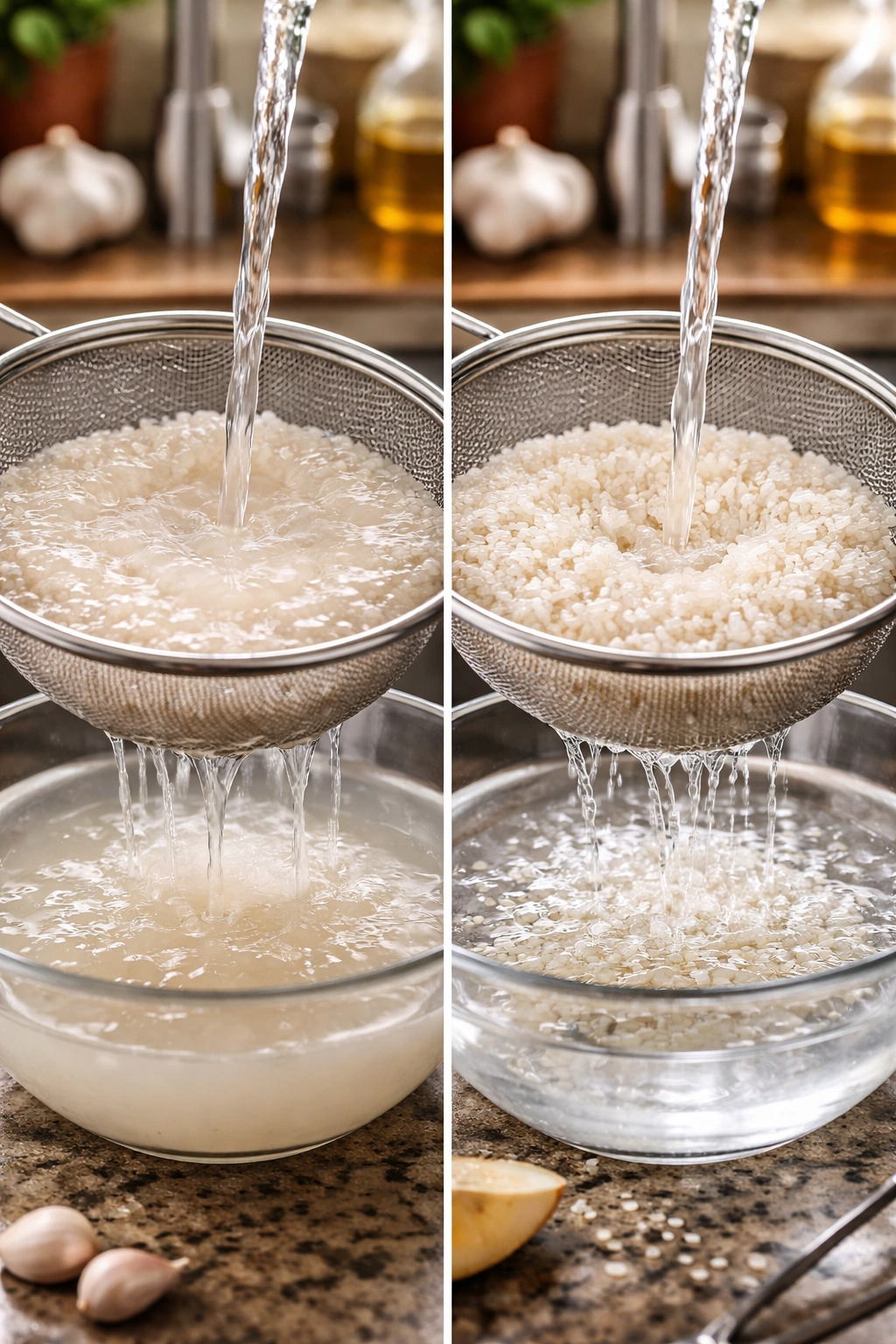
Not rinsing the rice is the #1 culprit behind mushy results. I know it feels unnecessary, but that starch is real and it’s waiting to turn your dinner into rice porridge. Commit to rinsing for at least two minutes under running water, and you’ve solved half your potential problems right there.
Cooking shrimp too early or too long is the second big mistake. Shrimp are delicate and cook in seconds. If you add them to the pot while the rice is still cooking, they’ll be rubbery before the rice is done. If you forget about them and let them sit in the residual heat too long, same problem. Adding them during the final 3 to 5 minutes of cooking, or even better, after removing from heat and letting them finish in the carryover warmth, keeps them perfectly tender and juicy.
Lifting the lid constantly during cooking lets steam escape and throws off your timing. The rice needs that trapped heat and moisture to cook properly. Check once at the 10-minute mark, but then leave it alone.
Using the wrong rice variety will sabotage you. Short-grain rice is starchy and clingy by nature. Medium-grain is okay in a pinch. But long-grain basmati truly is the superior choice for this dish. Jasmine rice works as a backup, but commit to basmati if possible.
Overcrowding the pan when searing sausage and shrimp prevents browning. If your sausage slices are overlapping or stacked, steam develops instead of the dry heat needed for caramelization. Cook in batches if necessary — yes, it takes an extra three minutes, but it’s absolutely worth it for flavor development.
Customizing and Adapting to Your Preferences
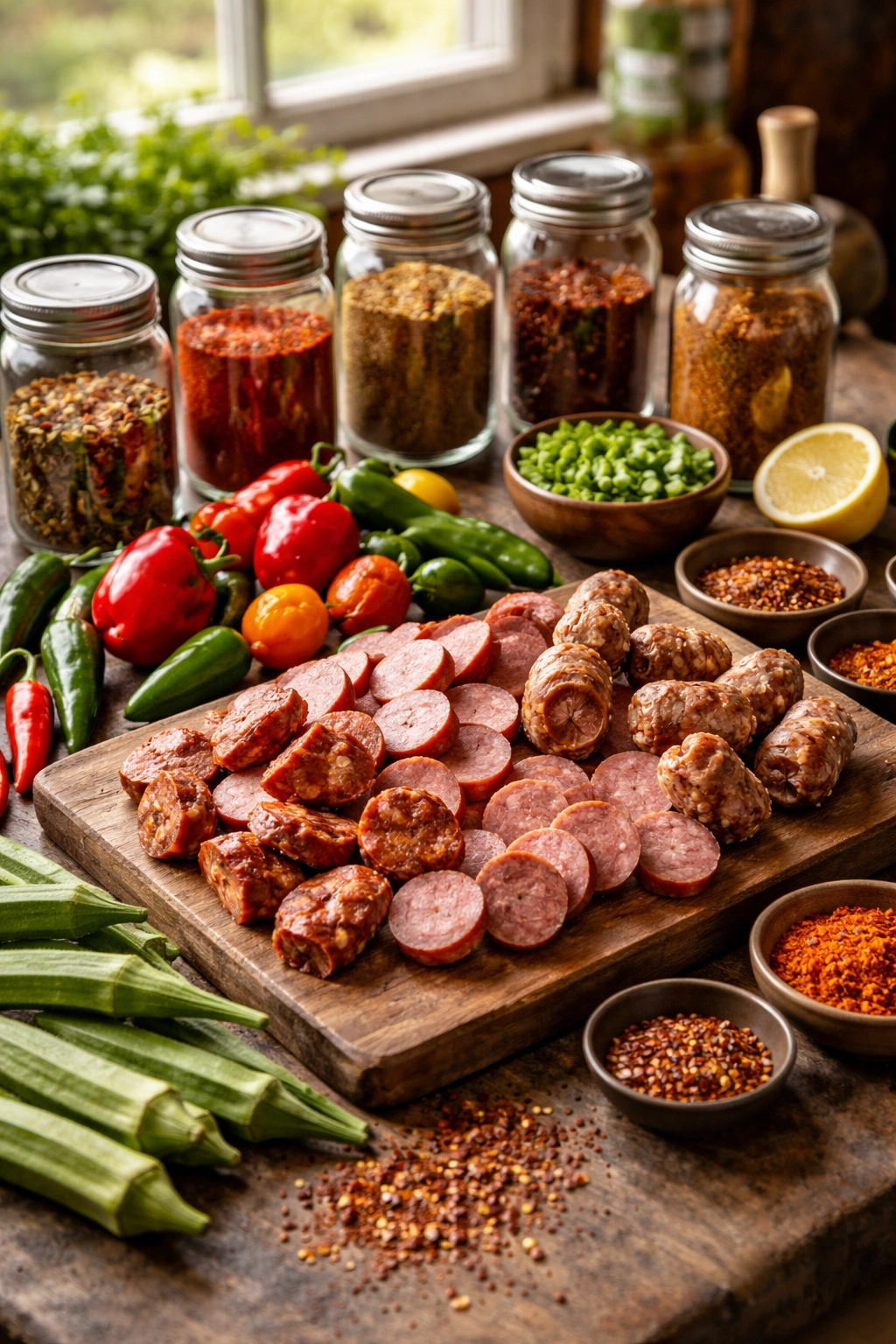
Not everyone loves the same heat level, so build your spice profile to match your crowd. If you’re cooking for heat-sensitive eaters, start with just ⅛ teaspoon cayenne pepper and let people add hot sauce at the table. If you’re among spice lovers, don’t be shy — ½ to ¾ teaspoon cayenne creates a proper kick without overwhelming other flavors.
Swap the sausage based on what you have or prefer. Andouille sausage provides authentic Cajun heat and smoky depth. Kielbasa is milder and meatier. Chorizo brings a completely different spice profile but works wonderfully. Turkey sausage is lighter if you’re seeking a leaner option. Chicken sausage works too. Even omitting sausage entirely and adding extra shrimp (up to 1½ pounds) creates an equally delicious dish — just increase the cayenne since you’re losing that smoky sausage element.
Vegetable swaps are completely fair game. Love okra? Add chopped okra with the peppers and celery. Prefer all red or all green bell peppers? Go for it. Zucchini, mushrooms, or green beans all work wonderfully. The key is dicing vegetables similarly so they cook evenly.
For a creamier version, stir in a splash of heavy cream or even a dollop of sour cream after cooking. This mellows the spice and adds richness if that appeals to you.
If you want to make this vegetarian, skip the sausage, use vegetable broth instead of chicken broth, and add extra vegetables like mushrooms or beans for heft and protein. Increase the seasoning slightly since you’re losing the sausage’s smoky depth.
Storing, Reheating, and Make-Ahead Strategies
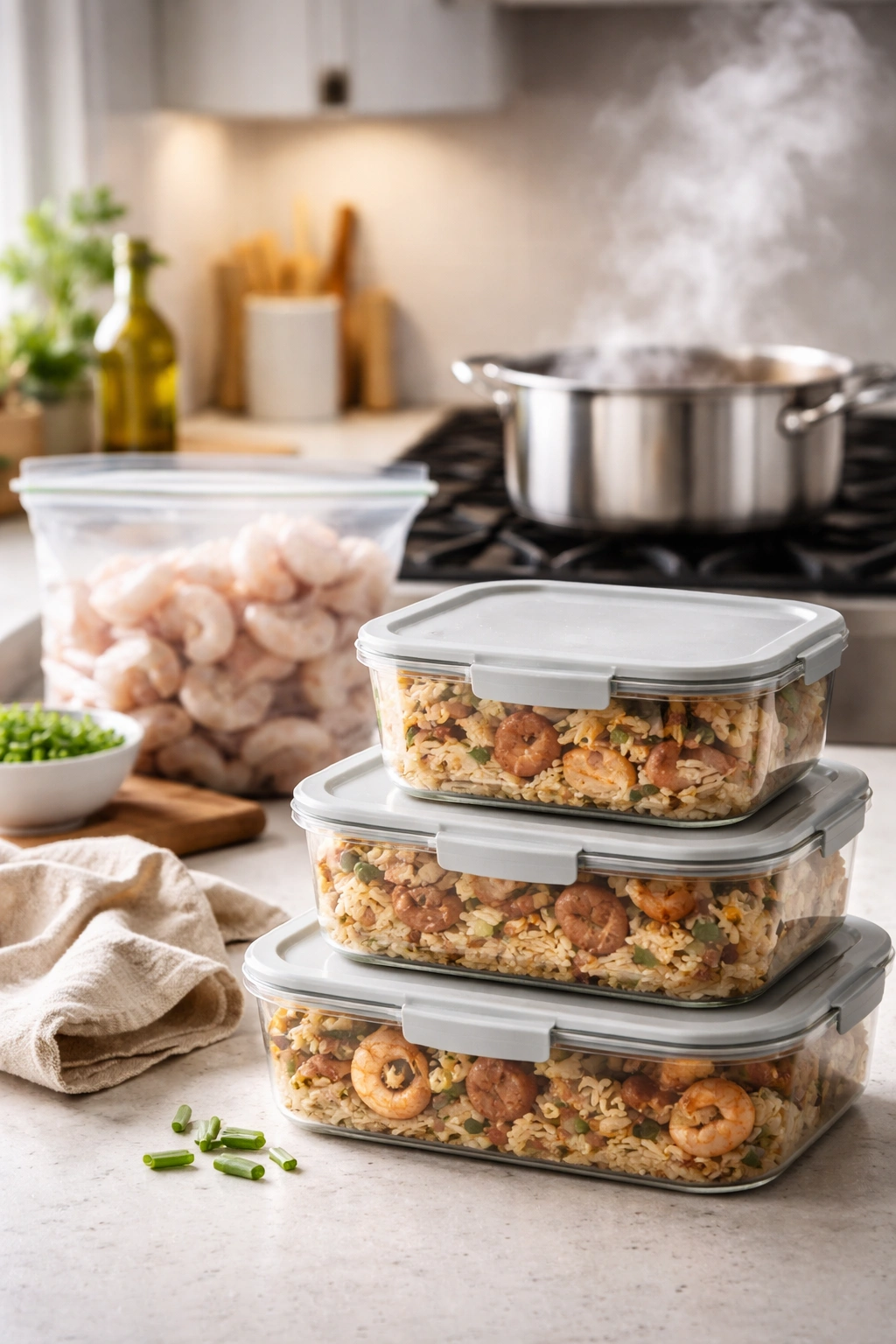
Allow leftovers to cool to room temperature before transferring to an airtight container and refrigerating. Dirty rice keeps beautifully for 3 to 4 days in the fridge — it actually tastes even better the next day as flavors meld and deepen. The rice absorbs any remaining moisture overnight, creating an almost creamy texture without additional liquid.
To reheat without drying it out, add a splash of chicken broth or water before warming. Microwave in 30-second intervals, stirring between each interval, until heated through — usually just 1 to 2 minutes. Alternatively, reheat gently on the stovetop over medium-low heat with a splash of liquid, stirring occasionally. This slower method prevents the rice from drying out or the shrimp from toughening.
For freezing, let the dish cool completely, then transfer to freezer-safe containers or bags in meal-sized portions. It keeps frozen for up to 3 months. Thaw overnight in the refrigerator before reheating — thawing in the fridge prevents the shrimp from breaking down and maintains better texture. Note that shrimp texture does degrade slightly after freezing, though the flavor remains excellent, so this dish is genuinely best enjoyed fresh or refrigerated, with freezing as a backup option.
You can prep components ahead to streamline weeknight cooking. Make your Cajun spice blend days in advance and store in an airtight container — it’s actually more flavorful after sitting. Thaw shrimp overnight in the fridge if using frozen. Chop all your vegetables and store in separate containers. Rinse and drain your rice, covering it with a damp paper towel. When you’re ready to cook, all your prepping is done, and you’re just 30 minutes away from dinner.
Serving Suggestions and Pairings That Complete the Meal
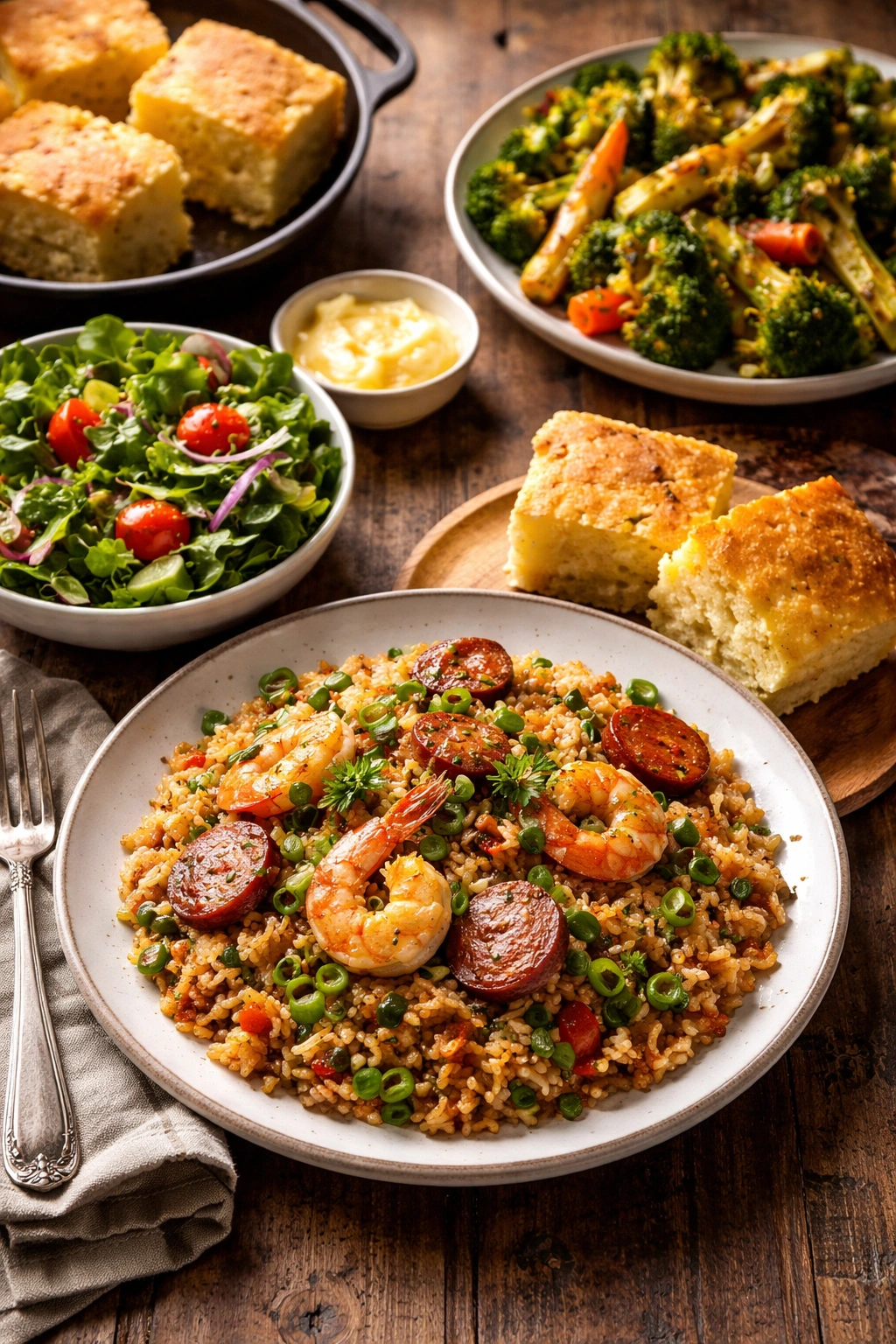
Dirty rice is hearty enough to stand as the entire meal, but pairing it with bright, fresh sides balances the richness beautifully. A simple green salad with a sharp vinaigrette — think lemon vinaigrette or lime-based dressing — cuts through the Cajun spices and adds contrast. The acidity and crunch provide textural counterpoint to soft rice and tender shrimp.
Cornbread is the classic pairing, preferably slightly sweet cornbread that complements the savory, spicy rice. Serve it warm with a touch of honey butter for dipping in any sauce remaining at the bottom of the bowl.
Crusty French bread is wonderful for soaking up the juices, and many people build open-faced sandwiches by piling dirty rice onto bread slices for a more casual presentation.
Roasted okra or roasted green beans add another vegetable dimension and cooked vegetable texture that contrasts nicely with the soft rice. Steamed broccoli is more neutral and lets the dirty rice shine.
A cucumber-tomato salad with lime juice and cilantro is refreshing and serves the same bright-flavors-cutting-richness role as a vinaigrette-dressed green salad.
For beverages, sweet iced tea is the traditional Louisiana pairing, offering sweetness that balances heat. A crisp, cold beer — lager or pilsner work beautifully — complements the spices. Lemonade or citrus-based beverages add refreshment. Even plain ice water with lemon is perfect, as the cooling effect counteracts any lingering cayenne heat.
Make-Ahead Secrets That Change Everything
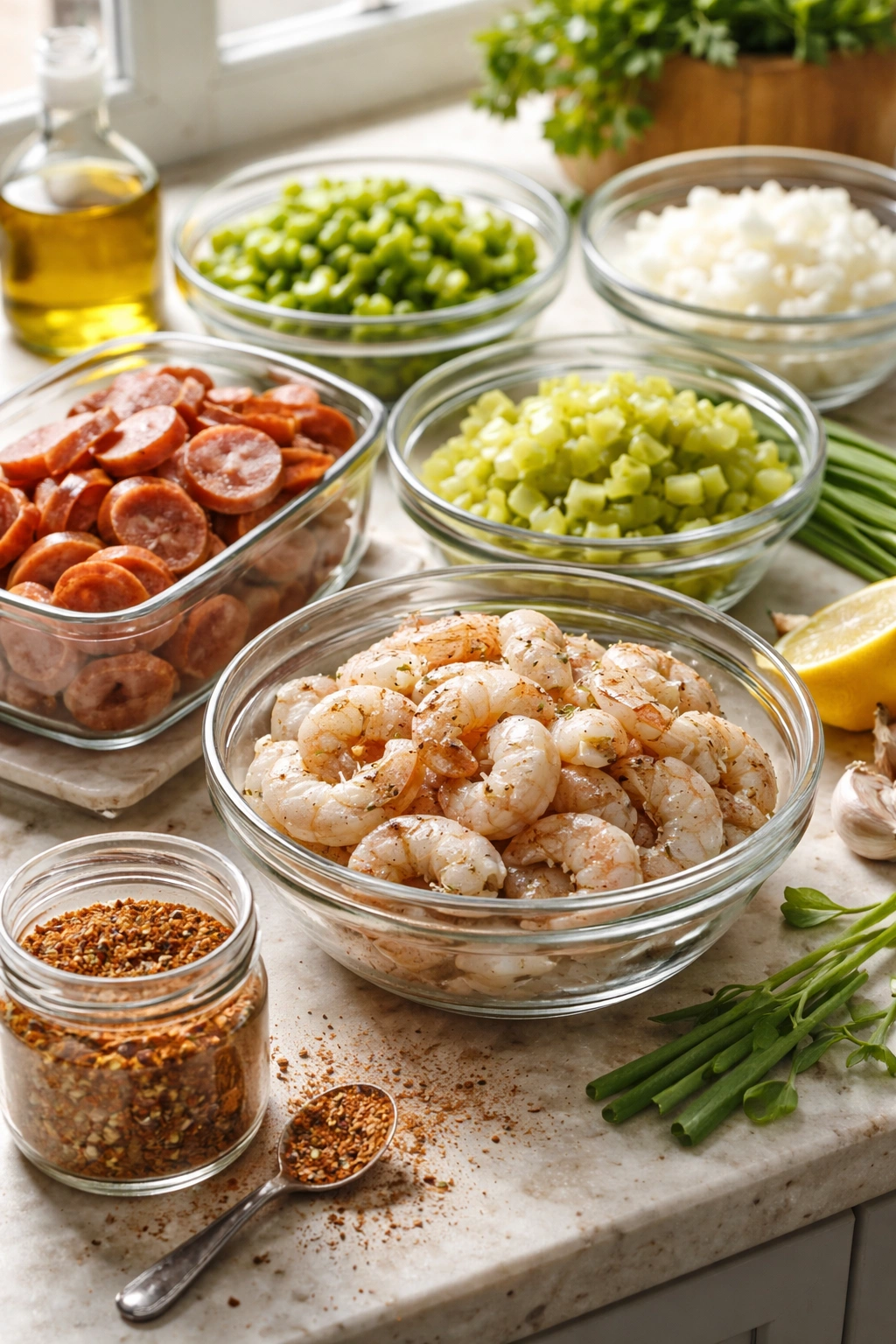
The sausage, shrimp, and vegetables can all be prepped hours in advance. Sausage can stay sliced at room temperature for several hours. Shrimp should stay refrigerated once thawed, preferably in a covered container so they don’t dry out or pick up fridge flavors. Vegetables stay fresher when prepped closer to cooking time, but they’ll hold fine for 4 to 6 hours in the fridge if stored in sealed containers.
Combine your Cajun spice blend the morning of or even days ahead. Store in an airtight spice container or small glass jar. The flavors actually deepen slightly as they sit, so it’s no less flavorful than fresh-made.
If using frozen shrimp, transfer from freezer to fridge the night before. This overnight thaw produces superior texture compared to quick-thaw methods. The slow thaw allows proteins to relax and stay firm rather than becoming mushy.
The rice absolutely must be rinsed just before cooking — don’t rinse it hours ahead, as the wet rice develops an unpleasant texture as it sits. Drain it well, but do the final rinse within minutes of when you’ll be cooking.
Questions People Ask Before Making This the First Time
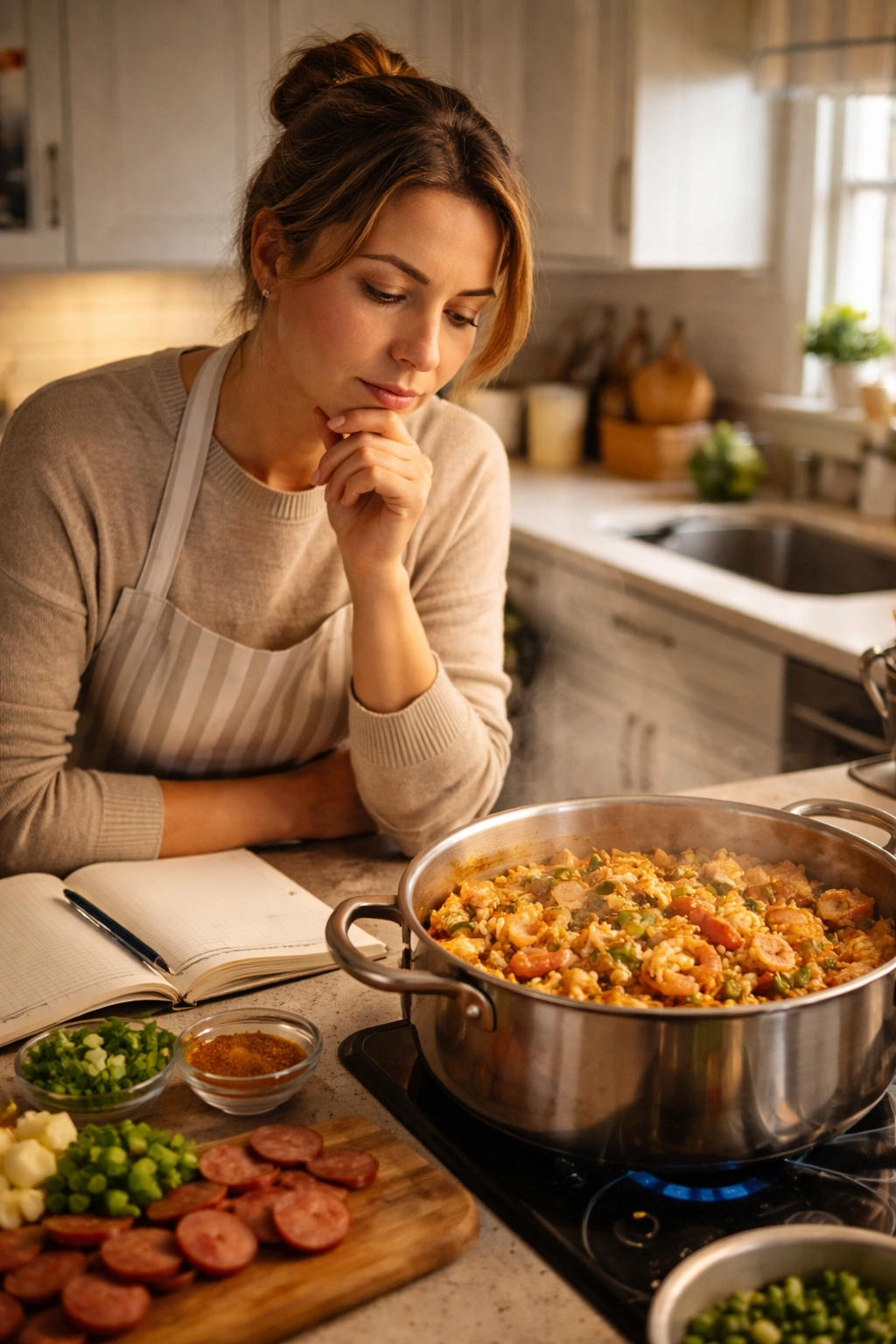
Can I use pre-cooked sausage like breakfast links? You can, but the texture won’t be as good. Pre-cooked sausage tends to dry out and become tough when heated again. Stick with raw smoked sausage or kielbasa, which stays juicy through the cooking process.
What if my rice comes out mushy anyway? First, acknowledge that it still tastes delicious — there’s no shame in slightly soft rice. Next time, commit to rinsing more thoroughly, reduce your liquid slightly (use 2½ cups broth instead of 2¾), or check for doneness at the 12-minute mark instead of the 15-minute mark. Each stove runs slightly hot or cool, so you may need to adjust timing based on your specific equipment.
Can I double this recipe? Absolutely, but use a larger pot to avoid crowding and adjust liquid slightly — you may need just slightly more than double the liquid since a larger surface area evaporates slightly differently. Add an extra 3 to 5 minutes to the simmering time to account for larger volume.
Is this dish naturally gluten-free? Yes, entirely — all the ingredients are naturally gluten-free. Just verify that your sausage brand doesn’t contain any fillers or additives with gluten, and confirm your broth is gluten-free if that’s a concern.
What if I don’t have fire-roasted tomatoes? Plain diced canned tomatoes work fine — you’ll just miss the subtle sweetness that fire-roasting adds. If you only have crushed or diced tomatoes in sauce, use those and reduce your broth by ½ cup since canned tomatoes in sauce contain additional liquid.
Putting It All Together: Your Path to Dinner Success
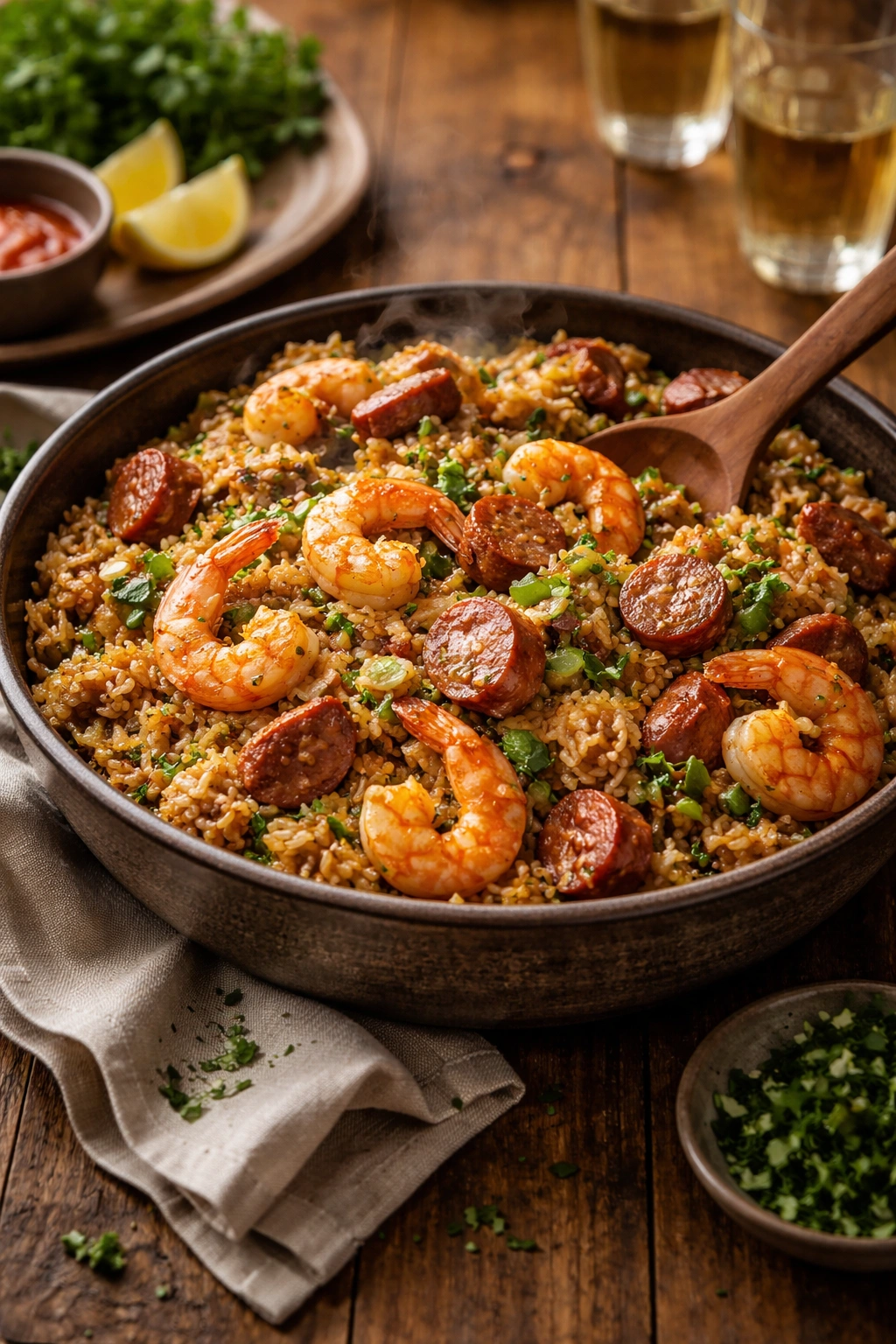
This dish rewards confidence. You’re not doing anything complicated; you’re simply layering flavors methodically and letting time and heat do the work. Sear the sausage until browned, cook the shrimp until pink, sauté the aromatics until soft, toast the rice, add liquid, and let it simmer. Each step builds on the previous one, and the result is a complete, satisfying meal that tastes far more impressive than the modest effort involved.
The beauty of one-pot cooking is that there’s no juggling multiple burners, no timing side dishes to finish simultaneously, no sauce that breaks if you look at it wrong. Everything happens in one vessel. The rice cooks exactly as fast as it needs to cook. The shrimp waits until the very end so it stays tender. The flavors meld as the dish sits, becoming more integrated and cohesive.
Make this once and you’ll understand why dirty rice with shrimp and sausage has endured for generations. It’s economical, satisfying, adaptable, and genuinely delicious. More importantly, it’s the kind of dinner that makes people feel cared for — something homemade, flavorful, and made with attention to detail, served hot and steaming in a bowl meant to be savored.
Start with the basic recipe exactly as written the first time, then feel free to make it your own. Adjust spice levels, swap vegetables, use whatever sausage speaks to you. The technique is forgiving, the ingredients are accessible, and the reward is a bowl of genuine comfort that happens to be one of the most elegant one-pot dinners you can possibly make.
Final Thoughts
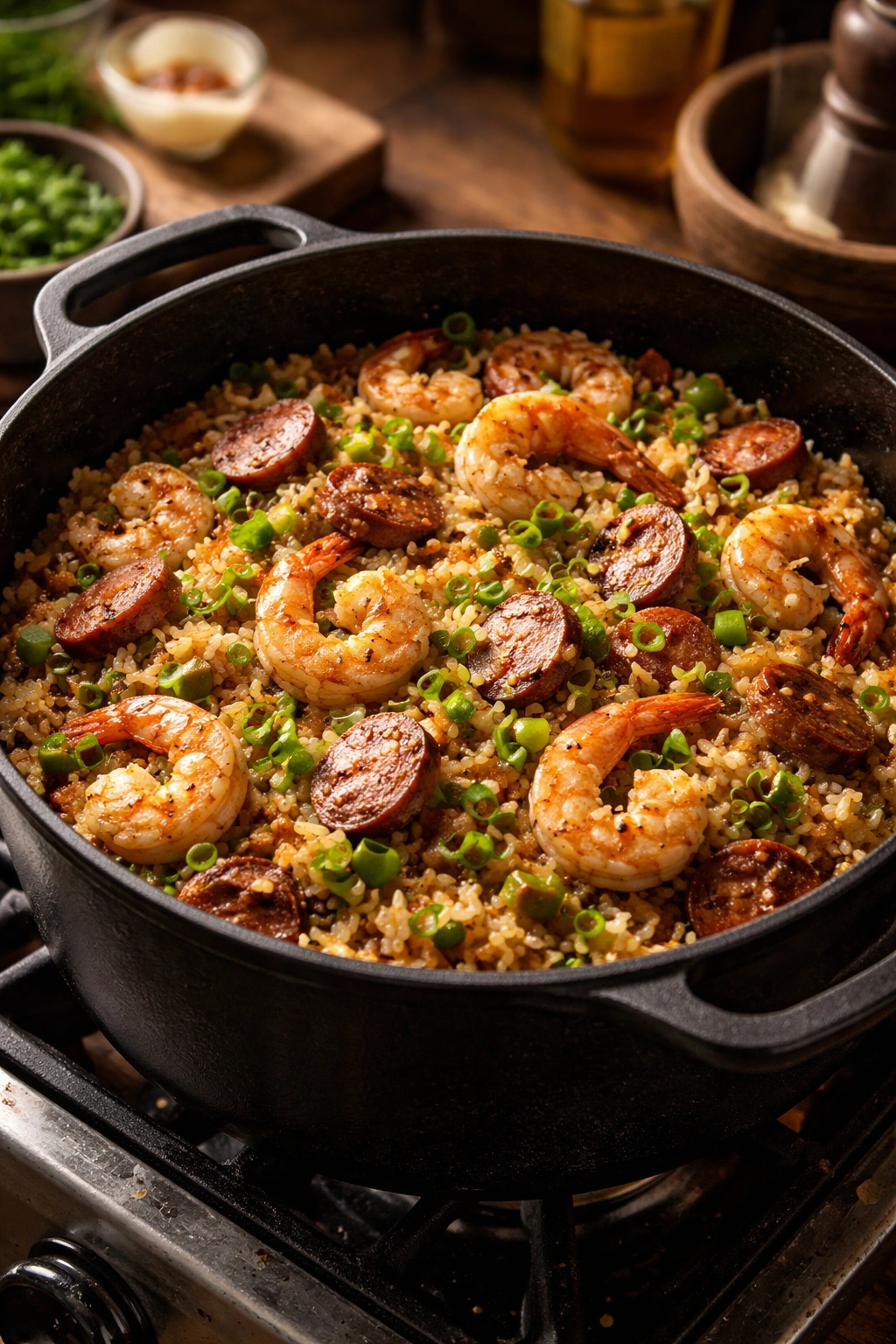
One-pot shrimp and sausage dirty rice proves that real, flavor-packed dinner doesn’t require hours of work or a kitchen that looks like a disaster zone. It’s forgiving enough for weeknight cooking, impressive enough for casual entertaining, and adaptable enough that you’ll make it dozens of different ways. The Cajun seasonings open doors to countless variations, the proteins can flex based on what you have, and the technique remains rock-solid.
Most importantly, this is the kind of meal that brings people to the table. There’s something about a steaming bowl of seasoned rice studded with tender shrimp and smoky sausage that says “I put care into feeding you.” That care doesn’t require complexity — just attention to the fundamentals like properly rinsed rice, properly browned proteins, and properly balanced seasonings. Master those three things, and you’ve mastered dirty rice.
Keep the Cajun spice blend in your pantry year-round. Whenever you want dinner that tastes like Louisiana and takes less time than ordering takeout, you’re 30 minutes and one pot away from something genuinely special.
