



There’s something almost magical about pulling a bubbling casserole out of the oven on a busy weeknight. The aroma alone tells your family that dinner is coming—real, satisfying, comforting dinner. A creamy chicken casserole hits all those notes that make people actually want to sit down together at the table. It’s the kind of dish that disappears quickly, gets requested by kids without complaint, and leaves you with maybe just one small container of leftovers, if you’re lucky.
The best part? This isn’t some complicated restaurant dish that requires special equipment or hard-to-find ingredients. It’s built on principles that have made casseroles a staple of family dinners for generations: combine protein, vegetables, a creamy binding sauce, add a crunchy topping, and let the oven do the heavy lifting. What makes a creamy chicken casserole truly exceptional, though, is understanding why each component matters and how to balance them so every bite delivers both comfort and genuine flavor.
Why This Casserole Becomes a Family Favorite
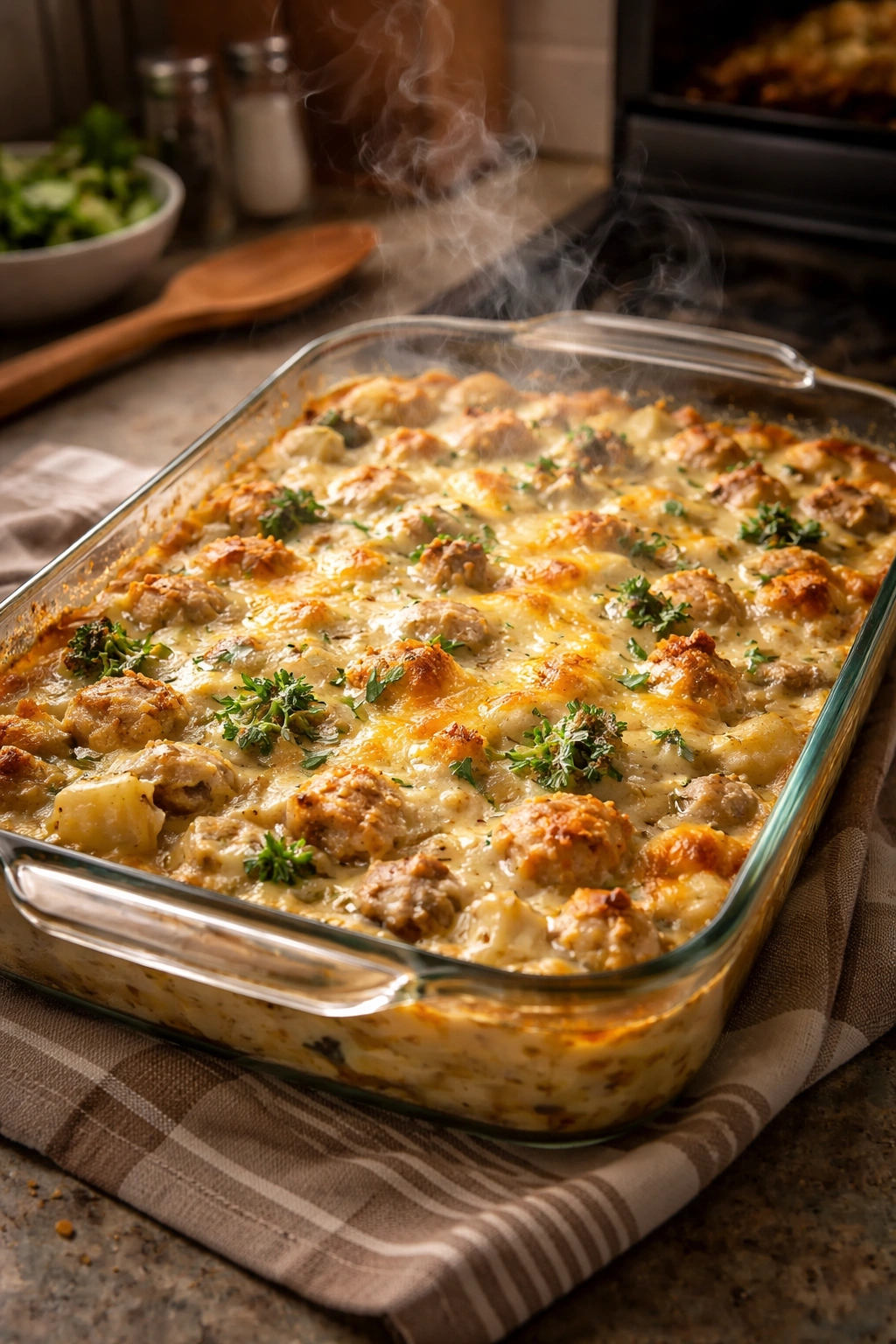
The magic of a creamy chicken casserole lies in its flexibility combined with its reliability. You can make it with ingredients you almost certainly have on hand—or ingredients you can grab on a quick grocery run without breaking the bank. A rotisserie chicken from the deli case, some frozen vegetables, basic pantry staples, and you’re minutes away from having dinner in the oven.
More importantly, this dish works for everyone. Picky eaters tolerate it because the vegetables soften into the creamy sauce, making them less visible and more palatable. Busy parents love it because you can assemble it ahead of time and pop it in the oven when you walk in the door. People watching their budget appreciate that chicken casseroles stretch a relatively small amount of protein across multiple servings without anyone feeling cheated.
The real secret, though, is building layers of flavor. A casserole that relies solely on canned soup tastes like canned soup. But when you layer in sautéed onions, fresh garlic, a combination of both canned soup and fresh cream, real cheese, and thoughtful seasoning, the result tastes like you spent hours on it—even when you didn’t.
The Story Behind the Dish
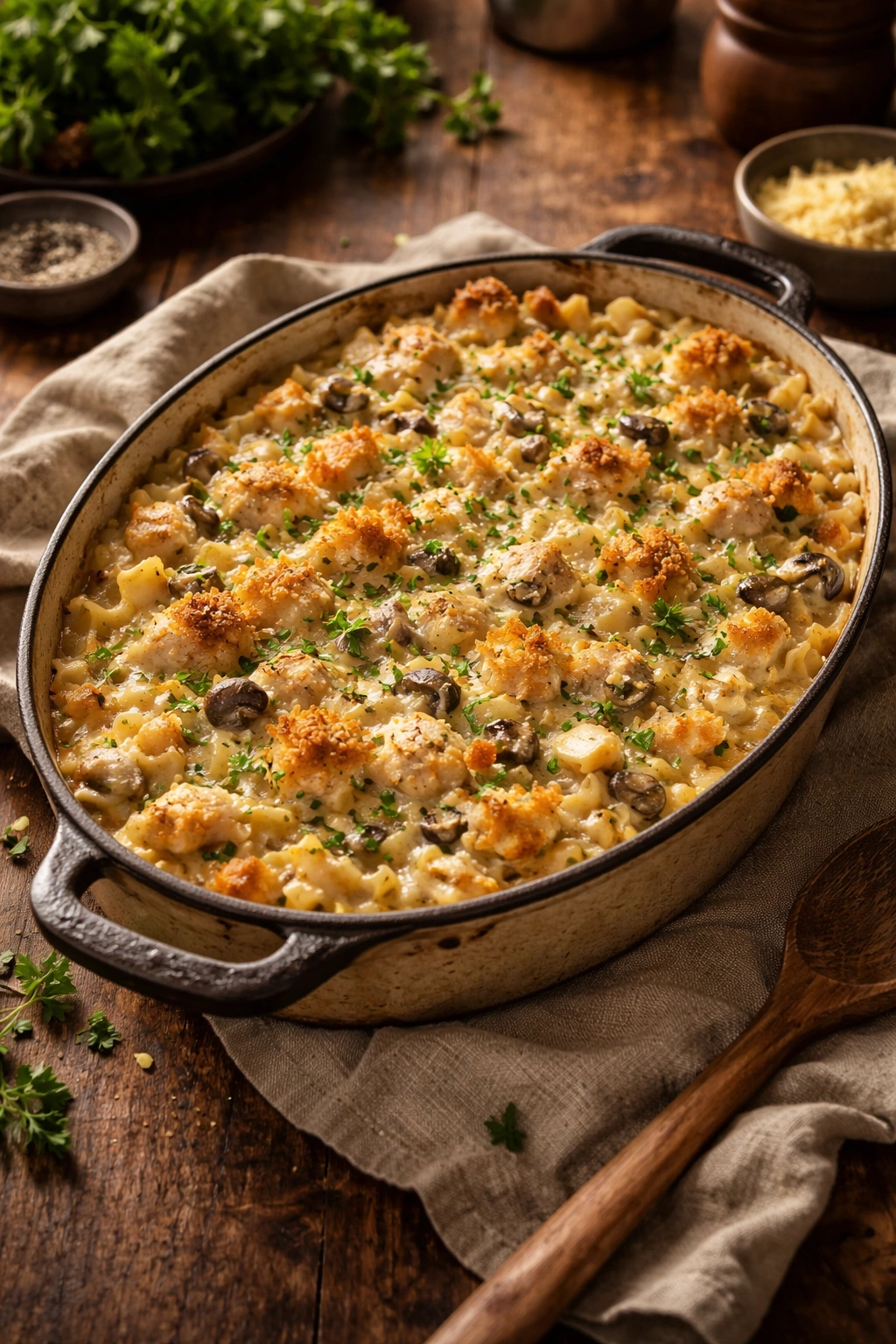
Chicken casseroles have deep roots in American home cooking. They emerged as a practical solution to stretch modest amounts of protein during leaner times, but they’ve endured because they actually taste good. Many families have their own version passed down from mothers and grandmothers, each tweaked slightly to match family preferences.
What’s fascinating is how adaptable the formula is. Some versions build the foundation with cream of chicken soup and sour cream. Others use a homemade sauce made from scratch—a simple roux combined with broth and cream. Some families insist on a Ritz cracker topping; others swear by breadcrumbs or crispy fried onions. Some add vegetables directly into the filling; others keep them minimal and serve sides instead.
This flexibility means there’s genuinely a version of creamy chicken casserole that will become your family favorite. The recipe that follows is built to be both straightforward and customizable, offering a solid foundation you can confidently make tonight, then modify based on what you have on hand or what your family prefers.
Yield: Serves 6 to 8 people | Makes one 9×13-inch casserole
Prep Time: 20 minutes
Cook Time: 40 minutes
Total Time: 1 hour
Difficulty: Beginner — No special techniques required, and most cooks have all the equipment already. The steps are genuinely straightforward, even for someone making a casserole for the first time.
Ingredients for Creamy Chicken Casserole
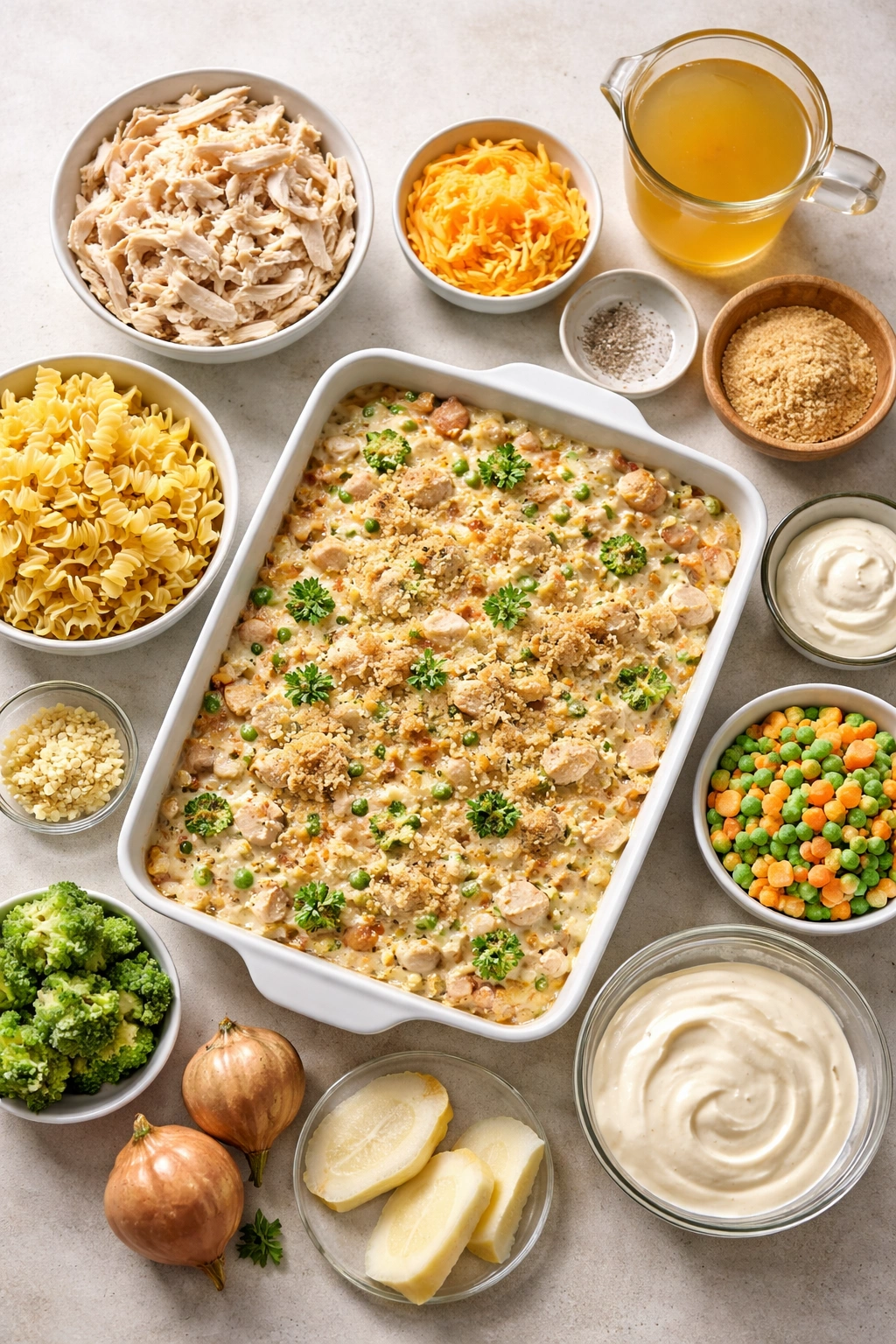
For the Casserole:
- 3 to 4 cups shredded cooked chicken (about 1.5 to 2 pounds of boneless, skinless chicken breasts or thighs, or one large rotisserie chicken)
- 2 tablespoons unsalted butter
- 1 medium yellow onion, finely diced
- 3 cloves garlic, minced
- 2 tablespoons all-purpose flour
- 1 cup low-sodium chicken broth
- 1 cup heavy cream (or half-and-half if you prefer a lighter version)
- 1 (10.5-ounce) can cream of chicken soup
- 1 cup sour cream, at room temperature
- 1 teaspoon dry Italian seasoning
- 1 teaspoon garlic powder
- ½ teaspoon onion powder
- ¼ teaspoon black pepper
- ½ teaspoon fine sea salt (adjust to taste based on the saltiness of your broth)
- 1½ cups frozen mixed vegetables (peas, carrots, corn, or green beans — or use fresh diced vegetables)
- 1½ cups shredded sharp cheddar cheese (or a mild cheddar if your family prefers; freshly shredded works better than pre-shredded)
For the Topping:
- 1 sleeve buttery round crackers (such as Ritz), crushed into coarse crumbs (about 1½ cups crumbs)
- 4 tablespoons unsalted butter, melted
- ¼ cup finely grated Parmesan cheese
- ¼ teaspoon garlic powder
- Pinch of black pepper
Why These Ingredients Work Together
Understanding what each component brings to this casserole helps you feel confident making substitutions when you need to. The chicken is your protein base—shredded and tender so it distributes evenly throughout. Rotisserie chicken saves time and adds extra flavor from the seasoning used to cook it; cooking chicken breasts from scratch gives you more control over sodium and seasoning levels.
The butter and onion form the aromatic foundation, providing base savory flavor that makes everything taste more developed. Garlic adds depth and complexity—it’s the difference between a casserole that tastes generic and one that tastes intentional. The flour, when cooked briefly in butter, creates a roux that will thicken the sauce naturally as it bakes.
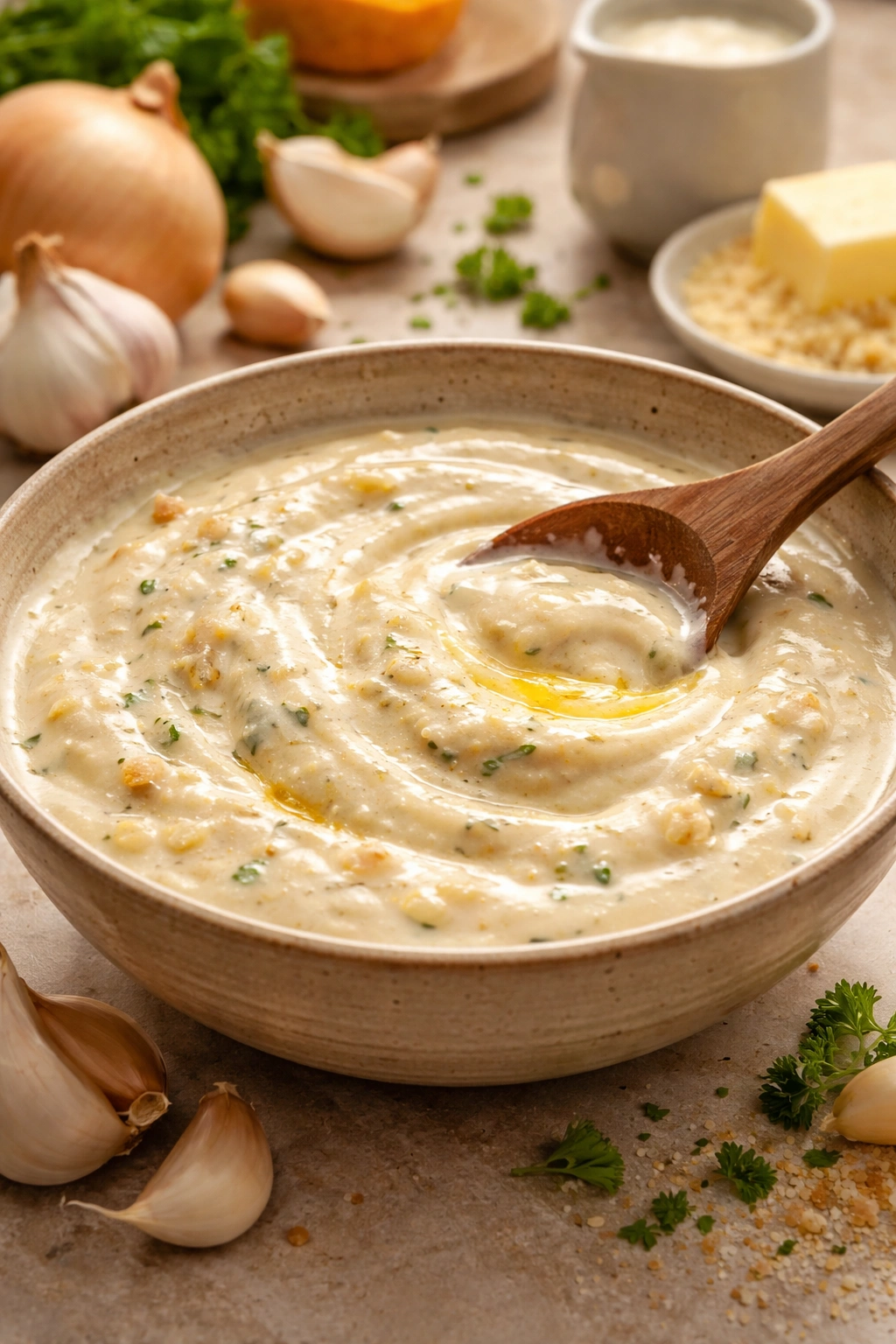
The liquid base is where you really build creaminess. Chicken broth adds savory depth. Heavy cream provides richness and silky texture. Sour cream adds tang that prevents the casserole from tasting one-dimensional and cloying. The cream of chicken soup (yes, even in a from-scratch approach, this one ingredient saves time and adds body that’s genuinely useful). Together, these create a sauce that’s creamy without being heavy, flavorful without being overwhelming.
Cheese melts into the filling during baking, adding both flavor and additional richness. The frozen vegetables cook gently in the sauce, softening without becoming mushy. They add texture and nutritional balance, plus they’re incredibly convenient—no prep required.
The topping is equally important. Buttery crackers provide crunch and richness, preventing the casserole from feeling like a one-note creamy dish. Parmesan adds a savory, umami depth that elevates the entire casserole. The garlic powder in the topping echoes the garlic in the filling, creating flavor cohesion.
Step-by-Step Instructions
Prepare Your Ingredients:
-
If using raw chicken breasts, cook them until fully done (internal temperature of 165°F / 74°C). You can poach them gently in simmering salted water for 15–20 minutes, bake them at 375°F (190°C) for 18–20 minutes, or cook them in an Instant Pot for just 8 minutes on high pressure. Once cooked, let them cool enough to handle comfortably, then shred by hand or with two forks until you have bite-sized pieces.
-
If using rotisserie chicken, remove the skin and bones, then shred or coarsely chop the meat into bite-sized pieces. You should have 3 to 4 cups of shredded meat.
Build the Sauce Base:
-
Preheat your oven to 350°F (175°C). Position the rack in the center so the casserole bakes evenly.
-
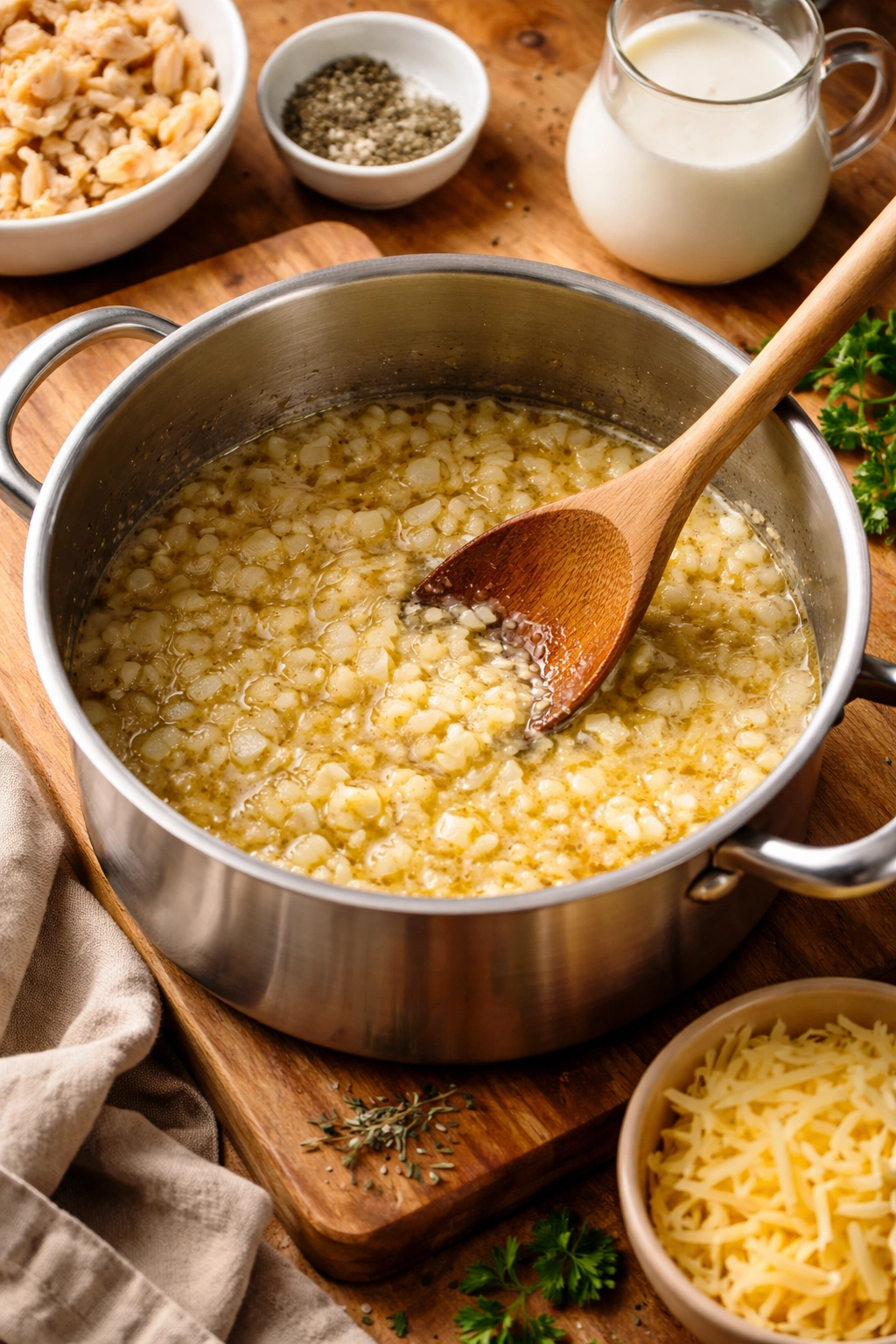
In a large pot or deep skillet, melt the butter over medium heat. Once it’s foamy and fragrant—this takes about 1 minute—add the diced onion. Cook, stirring occasionally, for 4 to 5 minutes, until the onion becomes translucent and softens. You’re not looking for caramelization here; just a gentle softening that releases the onion’s natural sweetness.
-
Add the minced garlic to the softened onion and cook for 30 seconds to 1 minute, stirring constantly. Garlic burns quickly once added, so don’t walk away—you want to release its flavor without burning it, which would add bitterness.
-
Sprinkle the flour over the onion and garlic mixture. Stir continuously for 1 to 2 minutes, allowing the flour to toast slightly in the butter and cook out its raw taste. This mixture—the butter, onion, garlic, and flour—is your roux, and this cooking step is essential for proper flavor development and thickening power.
-
Slowly pour in the chicken broth while whisking constantly. Whisk slowly and deliberately—rushing this step can create lumps. You’re aiming for a smooth, lump-free liquid that gradually thickens as it heats. Once you’ve added all the broth, continue cooking for 1 to 2 minutes, stirring frequently, until the mixture simmers and begins to noticeably thicken.
-
Remove the pot from heat. This is important: never add sour cream to a hot liquid directly, as the heat can cause it to separate and become grainy. Pour the heavy cream into the pot first, stirring to combine. Then, in a separate small bowl, whisk the sour cream until it’s smooth and pourable. Add the sour cream to the cream-broth mixture, stirring gently until fully combined.
Advertisements -
Stir in the cream of chicken soup, breaking it apart with your spoon as you stir so it blends smoothly into the sauce. Do not use a blender or immersion blender for this—gentle folding keeps the texture right.
-
Add the Italian seasoning, garlic powder, onion powder, black pepper, and salt. Stir well. Taste a small spoonful and adjust the seasonings to your preference. This is your chance to fine-tune flavors before everything goes into the casserole dish.
Combine and Assemble:
-
In a large mixing bowl, combine the shredded chicken and the sauce, folding gently with a rubber spatula to coat all the chicken pieces evenly. The chicken should be fully submerged in sauce.
-
Fold in the frozen vegetables and shredded cheddar cheese. The cheese will melt during baking, so don’t worry if it’s visible—it won’t be after 40 minutes in the oven.
-
Lightly grease a 9×13-inch baking dish with butter or cooking spray. Pour the chicken mixture into the dish, spreading it into an even layer. At this point, the casserole can be covered, refrigerated, and baked later (see storage section for details).
Prepare the Topping:
-
In a small bowl, combine the crushed crackers, melted butter, Parmesan cheese, garlic powder, and black pepper. Mix with a fork until the crackers are evenly coated with butter and every bit is moistened. The texture should be crumbly, not clumpy.
-
Sprinkle the cracker mixture evenly over the chicken filling, pressing it down gently so it stays in place during baking. Do not pack it tightly—you want it to bake into a golden, crunchy crust, not a dense layer.
Bake:
-
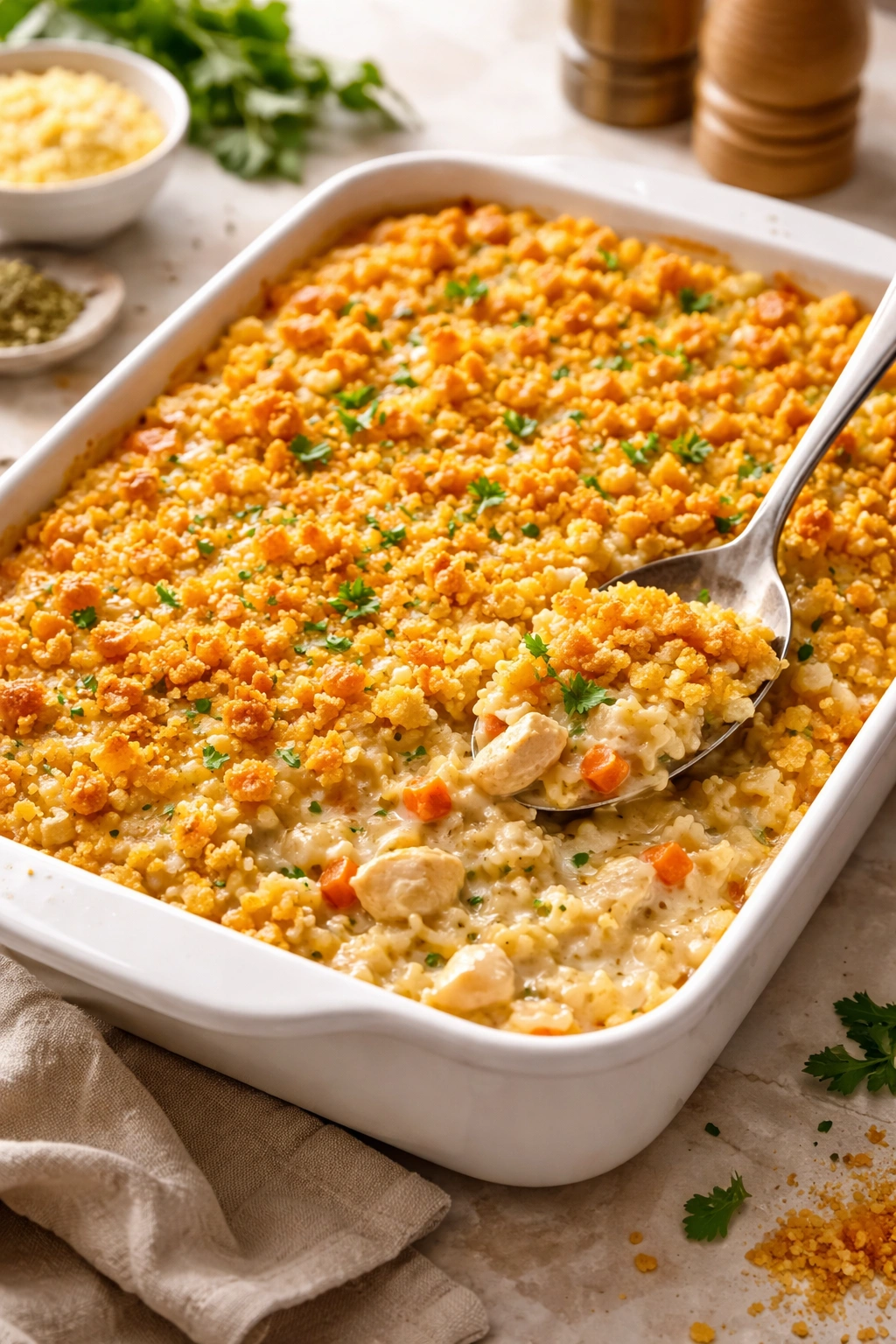
Bake uncovered for 35 to 40 minutes, until the casserole is heated through and the topping is golden brown. The filling should be visibly bubbling at the edges, and a fork pushed into the center should release a little steam. The top should feel crisp to the touch.
-
Remove from the oven and let it rest for 5 minutes before serving. This resting period is essential—it allows the filling to set slightly, so when you scoop, you get neat portions instead of a soupy mess.
-
Scoop into bowls or plates, ensuring each serving has some of the creamy filling and a generous portion of the crunchy topping. Serve immediately while everything is hot.
Practical Tips That Make a Real Difference
The quality of your chicken matters more than you might think. Rotisserie chicken is genuinely the time-saver here, and it works beautifully—just pull the meat off the bones while it’s still warm (or at room temperature) and shred it. If you’re cooking chicken from scratch, avoid overcooking it, as dry chicken stays dry even when cooked in a creamy sauce. The gentle poaching method (simmering in broth with some salt) produces the most tender result.
Don’t skip the brief cooking of the roux. That 1-to-2-minute window where the flour toasts in the butter genuinely improves the flavor of the entire sauce. It’s not just about thickening—it’s about developing flavor. Similarly, cooking the onion and garlic before adding flour creates a flavor base that tastes more intentional and developed.
The sour cream temperature matters. If sour cream is too cold when you add it to warm liquid, it can break and turn grainy. Letting it sit at room temperature for 15 minutes before using it prevents this. If you forget, it’s fine—just whisk it well in its own bowl before adding, and pour slowly while stirring.
Frozen vegetables work perfectly here. They thaw gently in the creamy sauce, releasing their flavor and nutrients into the filling without becoming mushy. If you prefer using fresh vegetables, dice them small (about ¼-inch pieces) and use the same amount. They’ll take the full baking time to become tender, which is fine—just check a piece with a fork toward the end to ensure they’re cooked through.
One common mistake is making the filling too thick or too thin. It should be pourable before it goes in the dish—think of it as a thick soup, not a stiff mixture. If you find yours is too thick (maybe your broth was concentrated, or you used a heavier cream), add a splash of chicken broth or milk and stir. If it’s too thin, you can cook it on the stovetop for 2 to 3 minutes before assembling, and the sauce will thicken.
Another frequent issue is a soggy topping. This happens when the topping is added too far in advance (more than 15 minutes before baking) or when it’s pressed down too firmly. The solution is simple: add the topping right before the casserole goes into the oven, press gently rather than firmly, and keep the crumbs coarse rather than crushing them into powder.
Variations and Adaptations
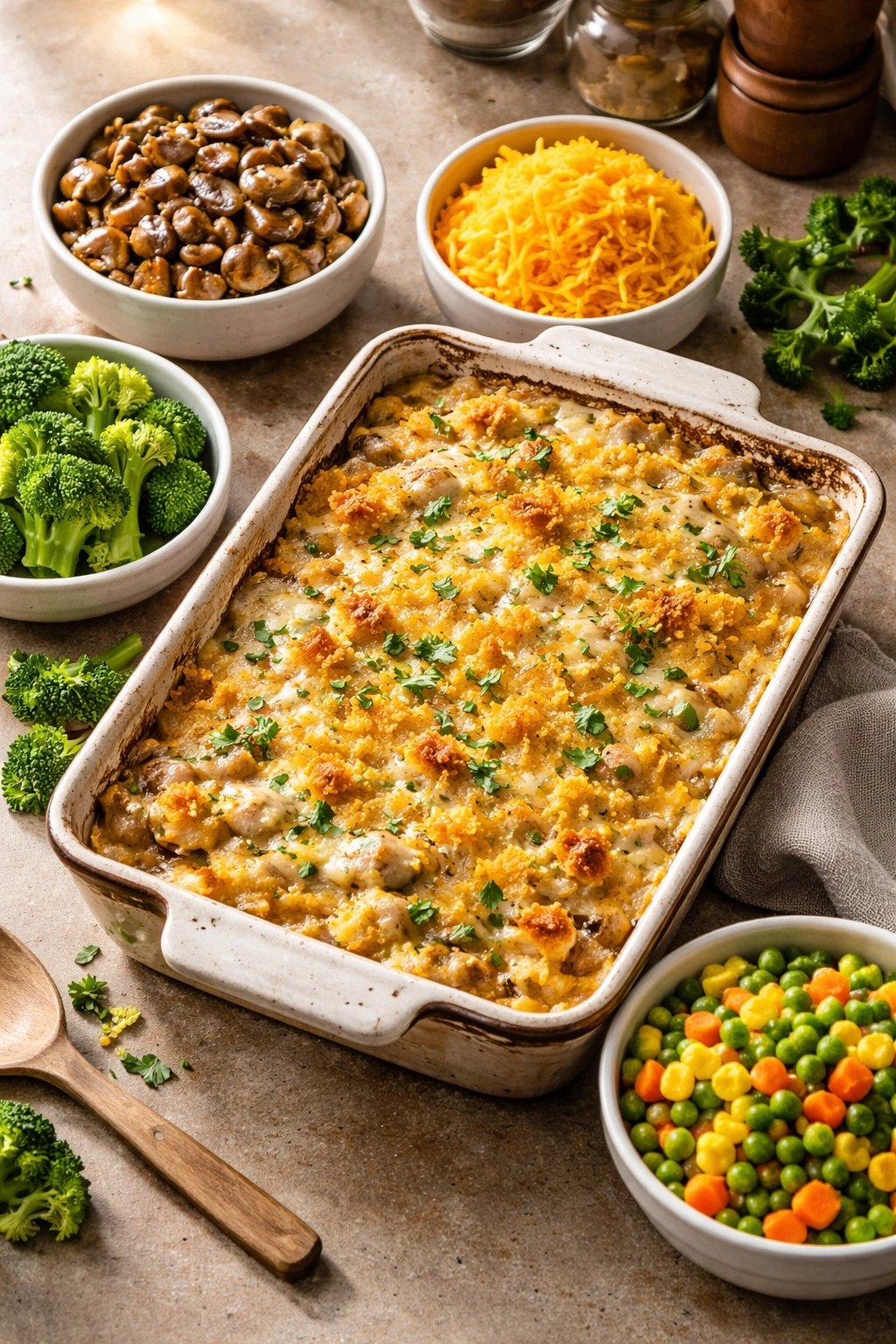
The beauty of a creamy chicken casserole is how easily it adapts to what you have on hand, dietary preferences, or flavor preferences. If you want to make it earthier, add sautéed mushrooms. Cook sliced mushrooms (cremini, baby bella, or white button) in a separate skillet with a little butter over medium-high heat until they release their liquid and the liquid evaporates. This intensifies their flavor. Fold them into the filling just before assembling. About 8 ounces of mushrooms works perfectly.
For a cheesy, indulgent version, increase the cheddar cheese to 2 cups, or use a mixture—1 cup cheddar plus ½ cup gruyere for complexity, or add ½ cup grated Parmesan directly into the filling (in addition to the topping).
To make it more vegetable-forward, use 2 cups frozen mixed vegetables instead of 1½, or add fresh chopped broccoli or green beans that you’ve steamed until just tender before folding them in.
For a lighter version that doesn’t compromise on flavor, use half-and-half instead of heavy cream, and Greek yogurt instead of sour cream in a 1:1 swap. This reduces fat while maintaining creaminess and tang. You might need to add a tablespoon of cornstarch mixed with 2 tablespoons of chicken broth to the sauce if it seems too thin without the heavier cream.
If someone in your family has a shellfish allergy and can’t have certain cream soups, make a homemade cream sauce by simply combining broth with heavy cream and a touch more sour cream, then thicken it with cornstarch slurry (2 tablespoons cornstarch whisked with 3 tablespoons cold water).
To make it gluten-free, use a gluten-free flour blend in place of all-purpose flour for the roux, and use crushed gluten-free crackers (or crispy pork rinds if you prefer) for the topping. Everything else in the recipe is naturally gluten-free.
For a Tex-Mex twist, replace the Italian seasoning with taco seasoning, add a diced jalapeño and some cumin to the filling, use Mexican cheese blend instead of cheddar, and top with crushed tortilla chips mixed with melted butter and Parmesan instead of the cracker topping. Serve with lime wedges and a dollop of sour cream.
If you’re making this for a crowd, the recipe doubles beautifully. Use two 9×13 baking dishes, and increase the baking time by about 10 minutes, or bake both side-by-side in a larger oven (they may need to rotate position halfway through).
Storage, Reheating, and Make-Ahead Options
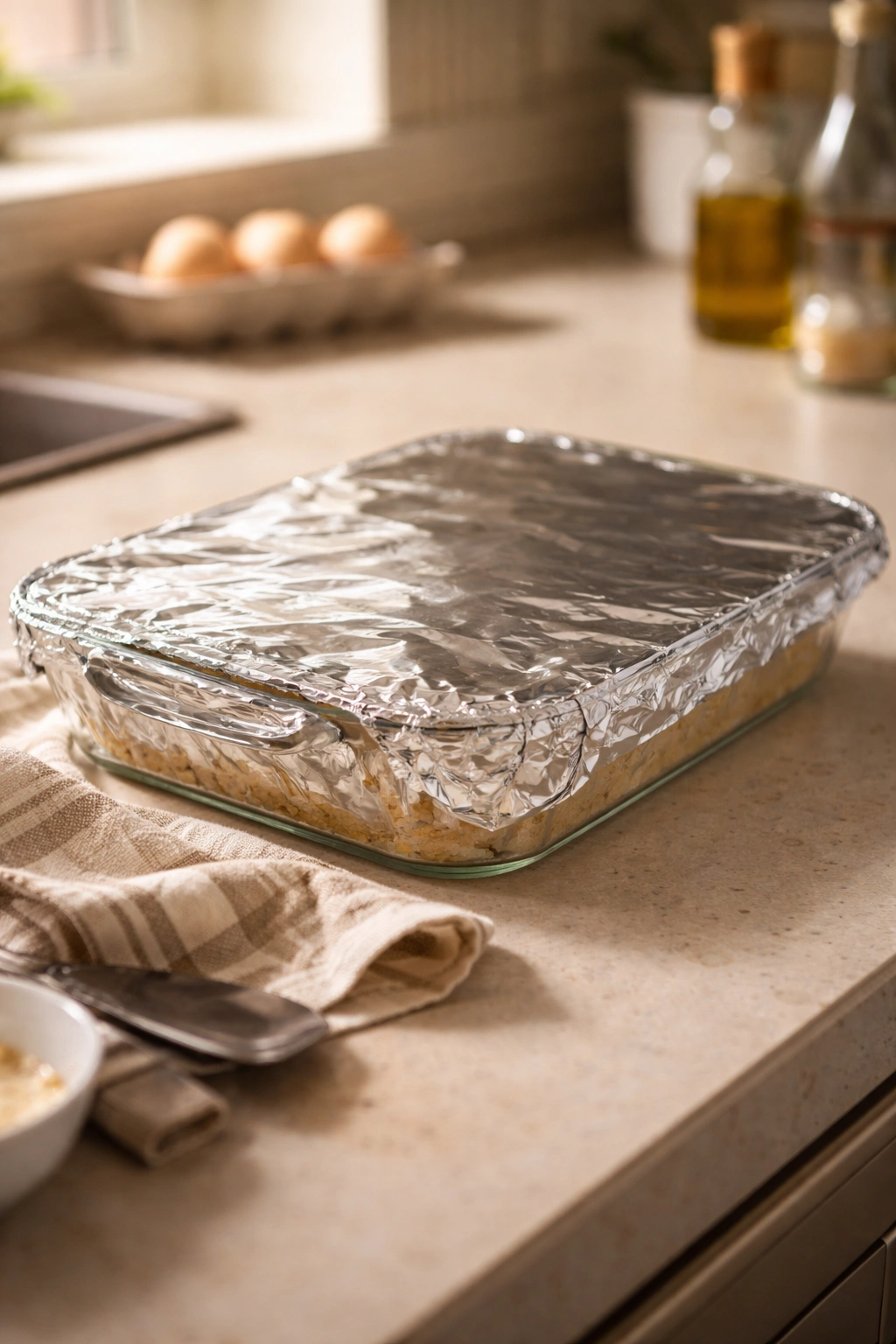
This casserole is genuinely one of the best make-ahead dinners. You can assemble it through step 13, cover the dish tightly with plastic wrap or foil, and refrigerate it for up to 24 hours before baking. When you’re ready to cook it, add about 5 to 10 extra minutes to the baking time since it’s going straight from the refrigerator into the oven. Add the cracker topping right before baking (don’t add it the night before, or it will soften in the refrigerator).
Once baked, leftovers keep beautifully. Store them in an airtight container in the refrigerator for up to 4 days. Reheat gently in a 325°F (165°C) oven, covered with foil, for about 20 to 25 minutes, until heated through. If the filling seems to have thickened as it cooled, add a splash of chicken broth or milk before reheating to restore the creamy consistency.
You can also freeze this casserole, though there’s a caveat: the creamy sauce can become slightly grainy after freezing, though it’s still completely safe to eat and perfectly acceptable. To minimize this, assemble the casserole without baking, then wrap it very well in plastic wrap and foil before freezing for up to 3 months. When you’re ready to bake it, thaw it overnight in the refrigerator, add the topping, and bake as usual (or bake from frozen, adding 15 to 20 minutes to the bake time).
If you’ve already baked the casserole and want to freeze it, let it cool completely, then portion it into airtight containers or wrap tightly, and freeze for up to 3 months. Reheat from frozen at 350°F (175°C), covered, for about 40 to 45 minutes, until heated through. Don’t add the cracker topping until just before baking, or add a fresh topping when reheating for the best crunch.
What to Serve Alongside
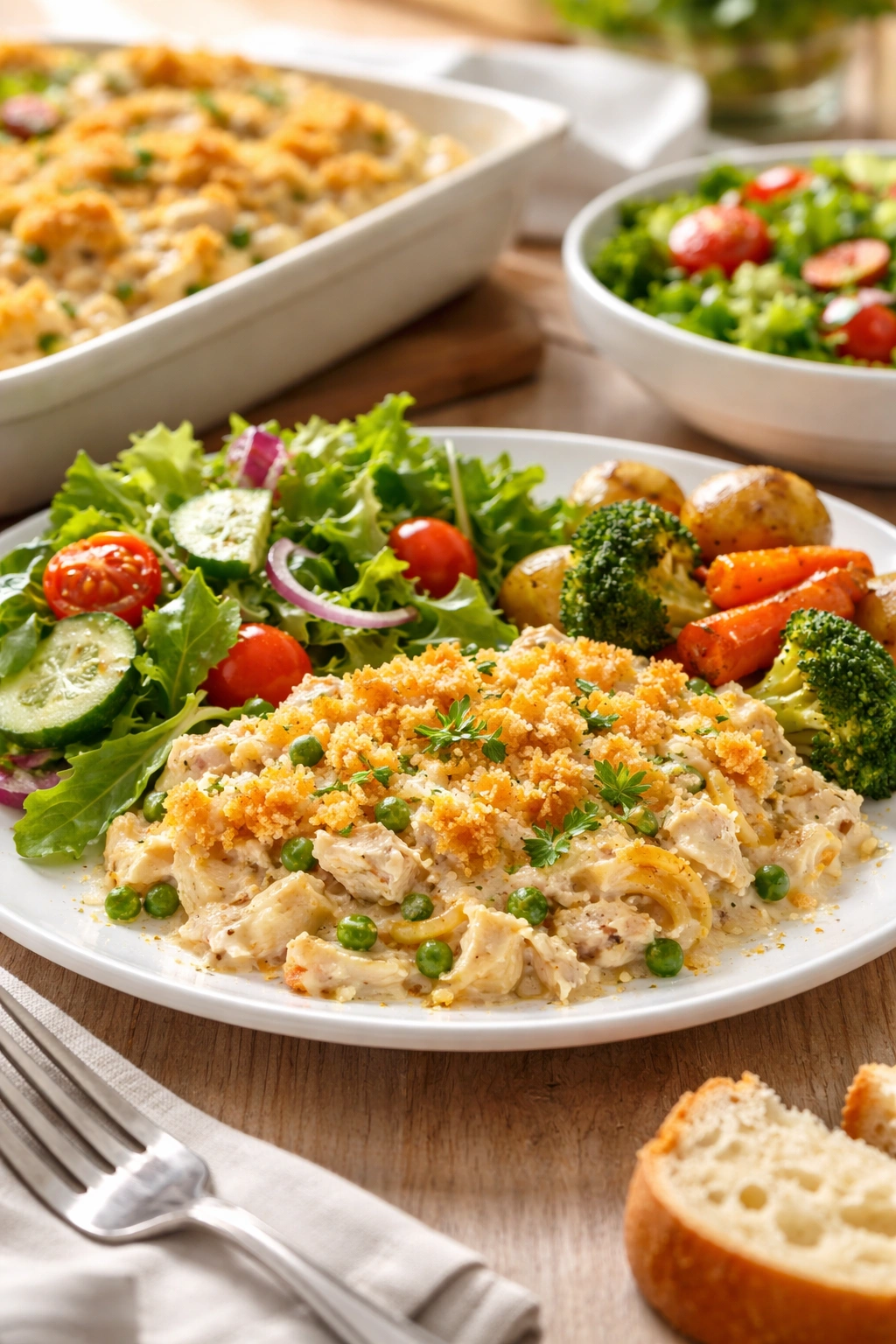
A creamy chicken casserole is fairly rich, so pairing it with something fresh and acidic brightens the entire meal. A simple green salad with a tangy vinaigrette—think lemon-based or balsamic—cuts through the creaminess beautifully. Nothing elaborate is needed; just mixed greens, perhaps some thinly sliced red onion, and a dressing you genuinely enjoy.
Roasted vegetables add color and balance the plate. Green beans tossed with olive oil, salt, and pepper and roasted at 425°F (220°C) for 15 to 20 minutes become crispy-edged and delicious. Roasted broccoli or Brussels sprouts work just as well. These can be roasting in the oven while your casserole bakes if you time it right.
If you want something starchy alongside, keep it simple and light. Egg noodles tossed with a little butter and fresh parsley, mashed potatoes with herbs, or rice pilaf all work. Avoid anything too heavy, as the casserole itself is quite filling.
Crusty bread is always welcome for soaking up the creamy sauce. A simple garlic bread or warm rolls are perfect for this purpose. Some families serve this casserole over rice or noodles, which is equally delicious and makes the casserole stretch a bit further.
Beverages matter too. An unsweetened iced tea, a crisp white wine, or even just cold water with lemon are refreshing alongside the richness of the casserole. Avoid anything too heavy or sweet, which would compete with the flavors rather than complement them.
Final Thoughts
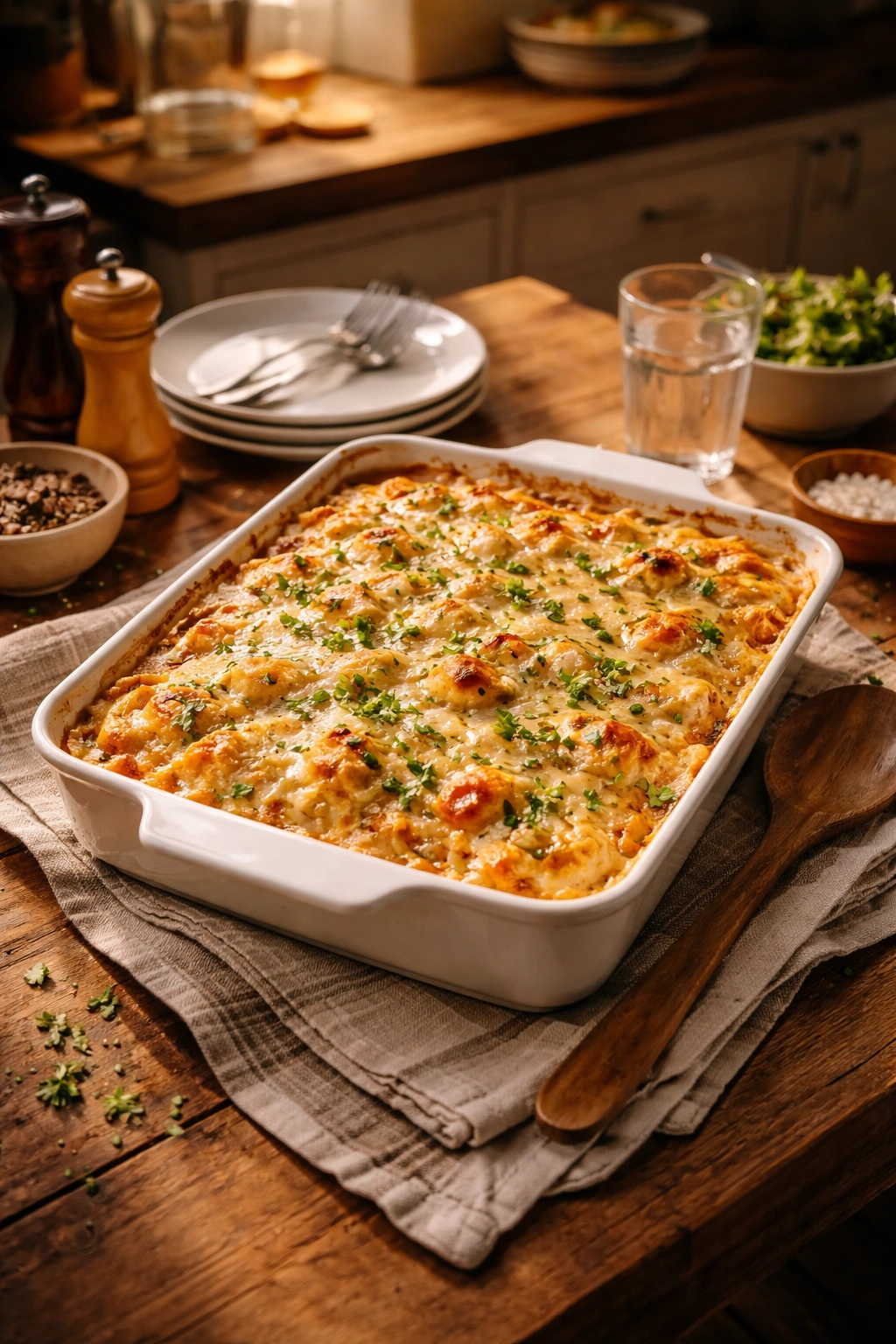
A creamy chicken casserole becomes a family favorite not because it’s fancy or complicated, but because it hits a specific emotional note: it tastes like care. It tastes like someone took time to build layers of flavor, to combine ingredients thoughtfully, to create something warm and comforting that brings people to the table.
The recipe you’ve just read will absolutely deliver that experience. It’s built on proven techniques and proportions that genuinely work, yet it’s flexible enough that you can modify it based on what you have on hand or what your specific family loves.
Make it once exactly as written. Notice how the sautéed onion and garlic deepen the flavor. Observe how the roux creates a sauce that’s thick enough to coat the back of a spoon but pourable enough to distribute evenly. See how the combination of sour cream and heavy cream creates that perfect balance of richness and tang. Taste how the Italian seasoning, garlic powder, and salt work together to make everything taste intentional.
Then, the next time you make it, you’ll know the formula well enough to confidently add the mushrooms your kids suddenly decided they like, or swap in a different vegetable mix based on what’s on sale, or add extra cheese because that’s what your family prefers. That’s when a good recipe becomes a treasured one—when you understand it well enough to make it your own.
The casserole that comes out of your oven will be golden, bubbling, and utterly inviting. Your family will eat it, and most likely ask when you’re making it again. That’s the real success metric here.
