



Fish tacos might be the most forgiving weeknight meal you can make, yet they taste like you spent hours in the kitchen. There’s something magical about how a few simple ingredients — flaky fish, crunchy cabbage, creamy lime sauce, and soft tortillas — come together to create a dish that tastes vibrant, balanced, and completely restaurant-worthy. The beauty of these tacos lies not in fancy techniques but in understanding how each component plays its role. The cool, tangy slaw cuts through the richness of the fish. The lime crema adds luxurious creaminess without heaviness. The warm tortillas hold everything in perfect harmony.
What makes fish tacos genuinely compelling is that they work for almost any occasion. Serve them for a casual weeknight dinner, a summer gathering, a quick lunch, or even a special meal you’re proud to put on the table. They’re healthy enough to feel nourishing, casual enough to feel approachable, and flavorful enough to feel indulgent. Best of all, you can have the entire meal ready — from pantry staples and fresh fish — in under 30 minutes.
Understanding Why These Three Elements Matter
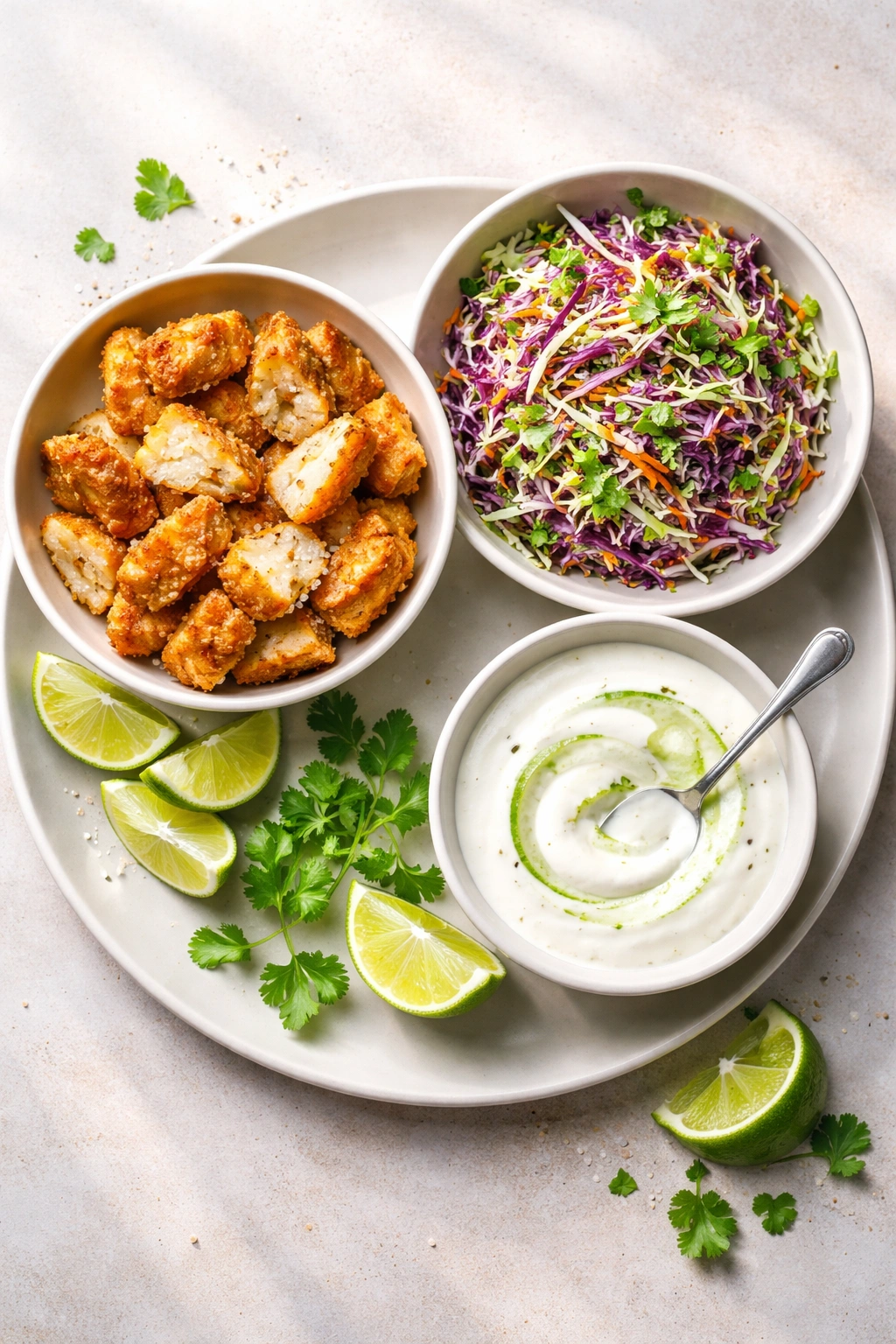
Fish tacos rely on contrast. Without understanding what each component contributes, you might end up with something that tastes flat or one-dimensional. The fish provides the protein and mild, delicate flavor base. The slaw brings acidity, crunch, and brightness that wakes up your palate with every bite. The lime crema delivers a cooling, tangy richness that ties everything together without overwhelming the fish.
This trifecta matters because none of these elements works as well alone as they do together. Eat the fish plain and it’s pleasant but forgettable. Add just the crema and it becomes heavy. But combine all three, and you’ve created a meal where every single component has earned its place on the plate. That’s the secret to fish tacos that taste like something special.
The temperature contrast is equally important. Warm tortillas and warm fish meet cold, crunchy slaw and cool crema. This temperature play keeps every bite interesting and prevents the tacos from feeling monotonous. You’re not just eating; you’re experiencing different textures and temperatures with each mouthful.
A Brief History of Fish Tacos and Where They Come From
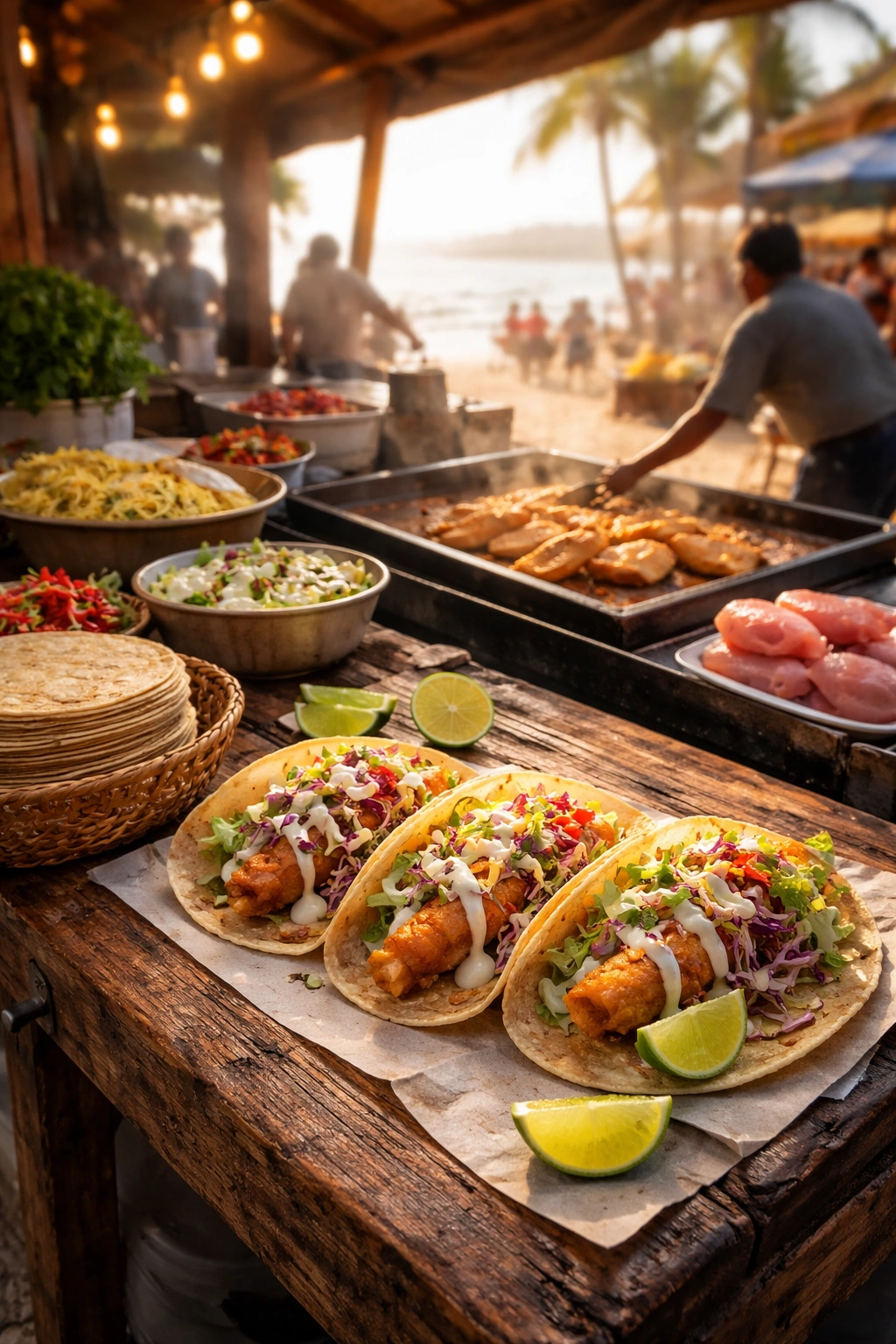
Fish tacos didn’t originate in a restaurant kitchen or get invented by a celebrity chef. They emerged from Mexico’s coastal regions, particularly Baja California, where fresh fish was abundant and tacos were the natural way to serve it. These aren’t fancy tacos — they’re the kind of street food that has fed fishermen and families for generations, where the focus remains on quality fish and simple, bright flavors rather than elaborate preparation.
The addition of cabbage slaw came later, likely influenced by available ingredients and the practical need for something crunchy and acidic to balance rich fried fish. The lime crema similarly evolved as a way to add creaminess while keeping the tacos feeling fresh and light. These additions reflect how traditional food develops — not through decree but through generations of cooks making small adjustments that improve the final dish.
What’s beautiful about fish tacos is that they’ve remained largely unchanged in spirit. Whether you’re eating them from a food truck in San Diego or making them in your own kitchen, the philosophy remains the same: let the fish shine, keep the flavors bright, and don’t overcomplicate things. The tacos have traveled far beyond their origins, but they’ve kept their essential character — simple, fresh, and deeply satisfying.
What Makes Fish Tacos Different From Other Taco Styles
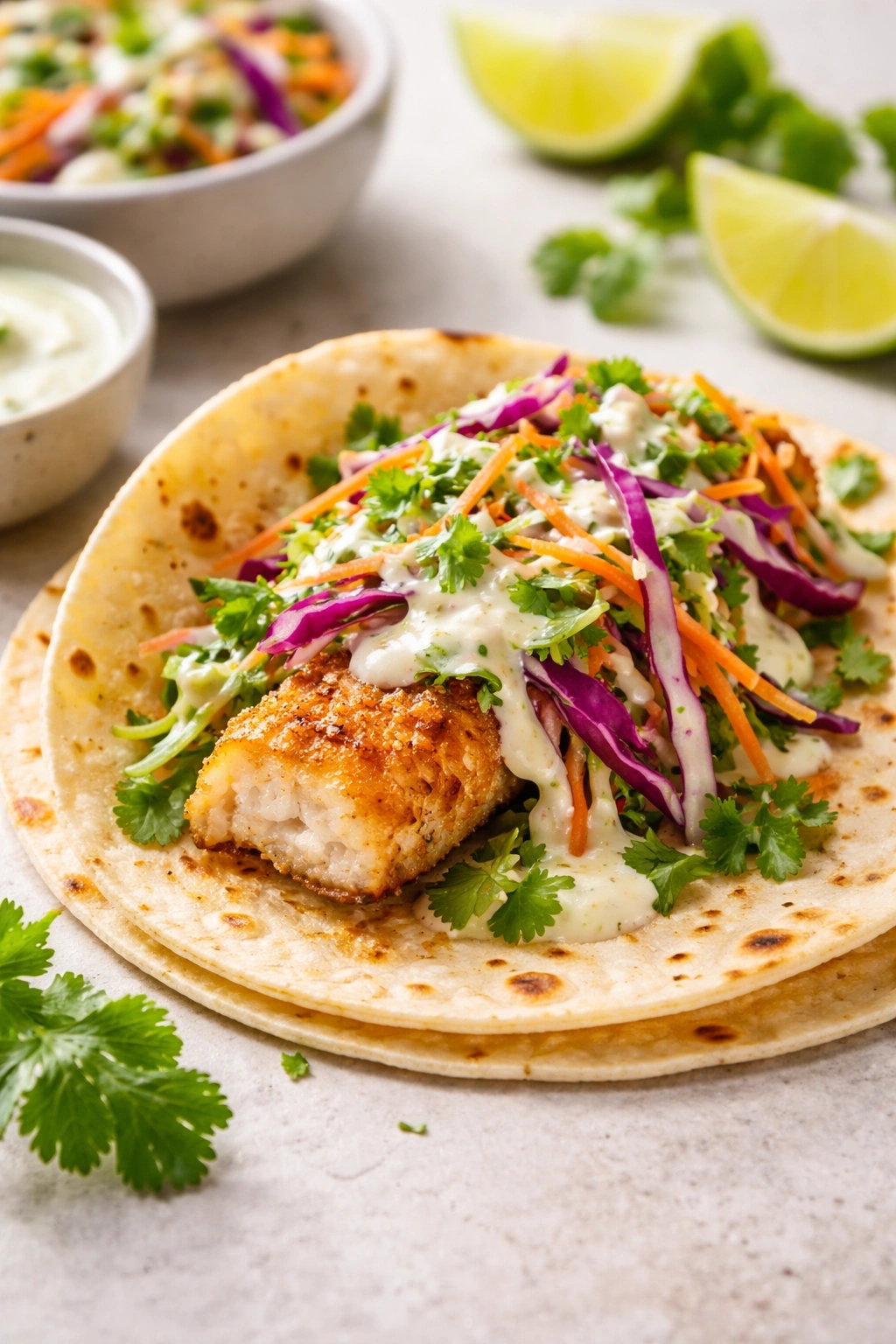
Fish tacos occupy a unique space in taco cuisine. Unlike beef tacos, which can handle bold, heavy spices and rich toppings, fish tacos require restraint and finesse. Fish is delicate, mild, and quick-cooking, so it demands respect in how you season and cook it. Overpower it with spices and you’ve missed the point entirely.
The toppings also differ dramatically. A beef taco might feature cheese, sour cream, lettuce, and salsa. A fish taco celebrates vegetables and bright, acidic elements — cabbage, cilantro, lime, and maybe avocado. Notice what’s conspicuously absent: heavy cheese, beans, and cooked toppings. Fish tacos are about lightness, freshness, and the interplay of cool and warm elements.
The cooking method matters too. While many other tacos benefit from grilling or frying, fish tacos can be made any number of ways — pan-seared, baked, grilled, even air-fried — and still taste fantastic. The fish doesn’t need aggressive cooking to taste good. In fact, overcooked fish is the enemy of a great fish taco. You want the fish just barely cooked through, still tender and slightly moist, almost melting on your tongue.
Building the Perfect Fish Taco: An Overview
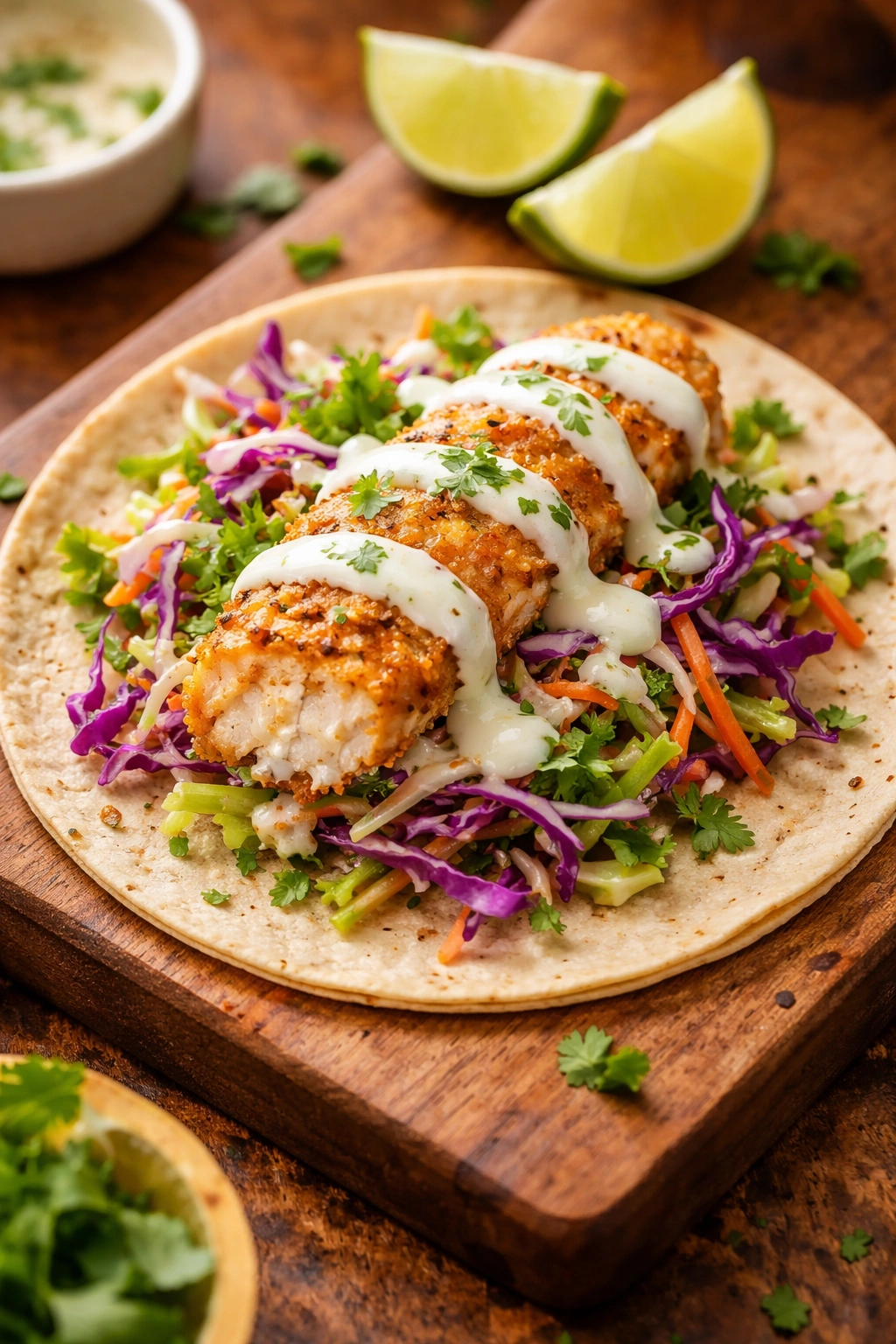
Before diving into the specific recipe, it helps to understand the architecture of a great fish taco. Picture this: you’re holding a warm, soft tortilla. On the bottom lies a bed of cool, crunchy cabbage slaw, its lime and cilantro flavors already making your mouth water. Nestled on top is warm, flaky fish seasoned with just enough spice to complement without overwhelming. A generous drizzle of lime crema cascades over everything, adding richness and tang.
The order matters. Start with the slaw so it acts as a buffer between the warm tortilla and fish, keeping the tortilla from becoming soggy while the slaw stays crisp and cool. The fish goes on top because it’s the star — you want it visible and prominent. The crema comes last, where you can see it and control how much you use. Some people add avocado, fresh cilantro, or thin-sliced red onion, but these are optional embellishments rather than essential components.
The tortillas themselves deserve attention. Soft corn or flour tortillas work equally well, though corn tortillas feel more authentic and add a slightly sweet, earthy note that complements the fish beautifully. Warm them thoroughly — a cold or room-temperature tortilla will make your entire taco feel limp and disappointing. A quick 30-second pan-sear, warming over a gas flame, or a brief microwave steaming all work perfectly.
Yield: Serves 4 to 6 | Makes 8 to 12 tacos
Prep Time: 20 minutes
Cook Time: 12 minutes
Total Time: 32 minutes
Difficulty: Beginner — No special equipment required, simple ingredient combinations, and straightforward cooking techniques make this accessible even if you’ve never made fish tacos before.
Ingredients for Fish Tacos With Cabbage Slaw and Lime Crema
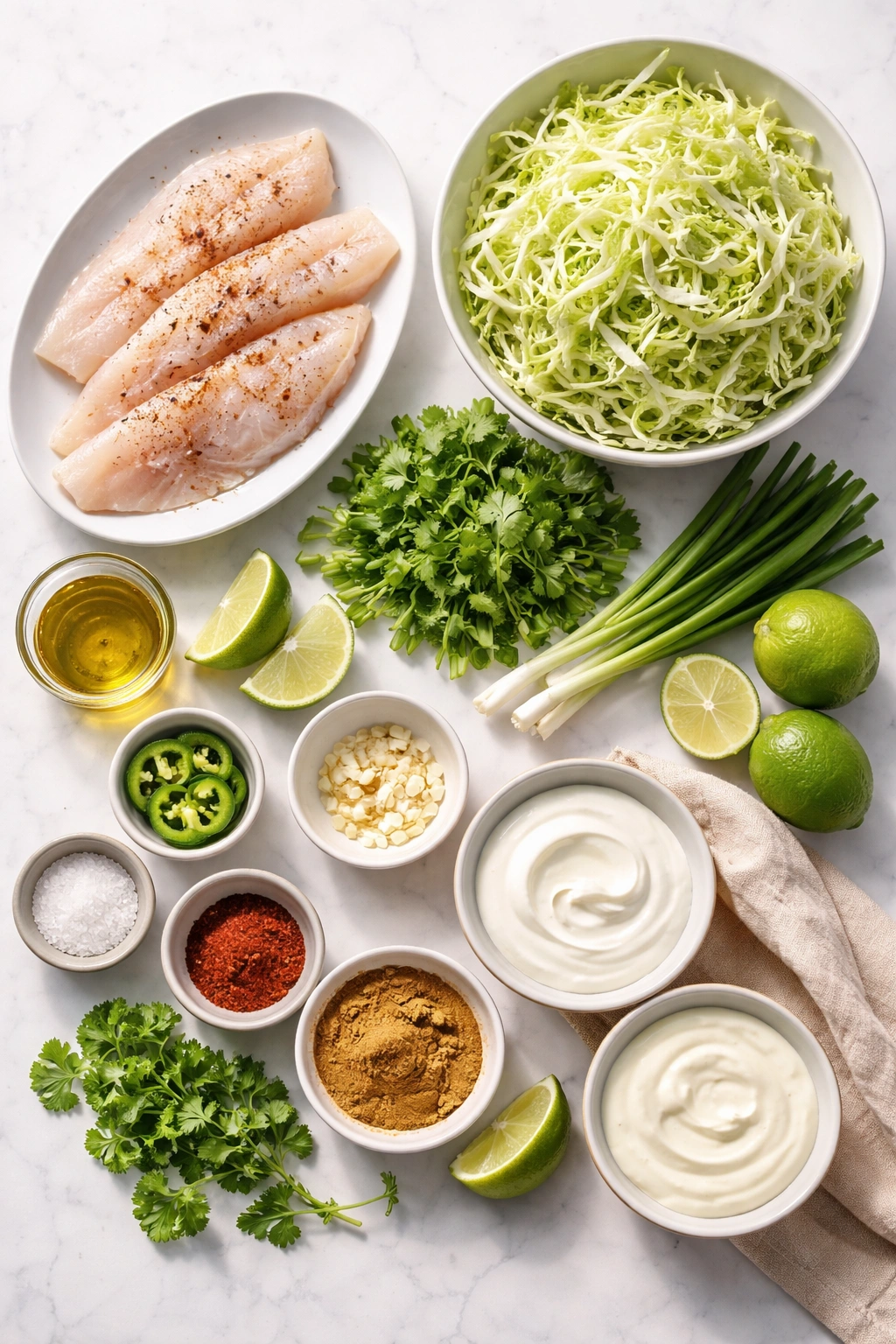
For the Fish:
- 1½ to 2 pounds white fish fillets (such as tilapia, cod, halibut, mahi-mahi, or snapper — choose fillets that are roughly ¾-inch thick so they cook evenly and quickly)
- 2 tablespoons olive oil or vegetable oil
- 1½ teaspoons ground cumin
- 1 teaspoon paprika (smoked paprika adds complexity)
- ½ teaspoon cayenne pepper or chili powder (adjust to your spice preference)
- ¾ teaspoon kosher salt
- ¼ teaspoon ground black pepper
- ½ teaspoon granulated garlic powder (not garlic salt)
- Optional: pinch of granulated sugar (helps the spices create a light crust)
For the Cabbage Slaw:
- 4 cups shredded green cabbage (about ½ small head, or use pre-shredded if short on time)
- ½ cup chopped fresh cilantro (approximately one large handful, packed)
- 2 green onions, thinly sliced
- 1 clove garlic, minced very finely
- 3 tablespoons fresh lime juice (about 1½ limes)
- 2 tablespoons olive oil
- ½ teaspoon kosher salt, plus more to taste
- ⅛ teaspoon ground black pepper
For the Lime Crema:
- ½ cup sour cream
- 3 tablespoons mayonnaise (use good-quality mayo for the best flavor)
- Zest of 1 lime (about 1 teaspoon, removed with a microplane for the finest texture)
- Juice of 1 lime (approximately 2 tablespoons, strained to remove seeds)
- ¼ teaspoon kosher salt
- Optional: ⅛ teaspoon cayenne for a hint of heat
For Serving:
- 8 to 12 soft corn or flour tortillas (6-inch diameter), warmed
- Lime wedges for serving
- Optional toppings: sliced avocado, additional fresh cilantro, sliced jalapeño, thin-sliced radish, cotija cheese
Making the Cabbage Slaw: The Foundation of Freshness
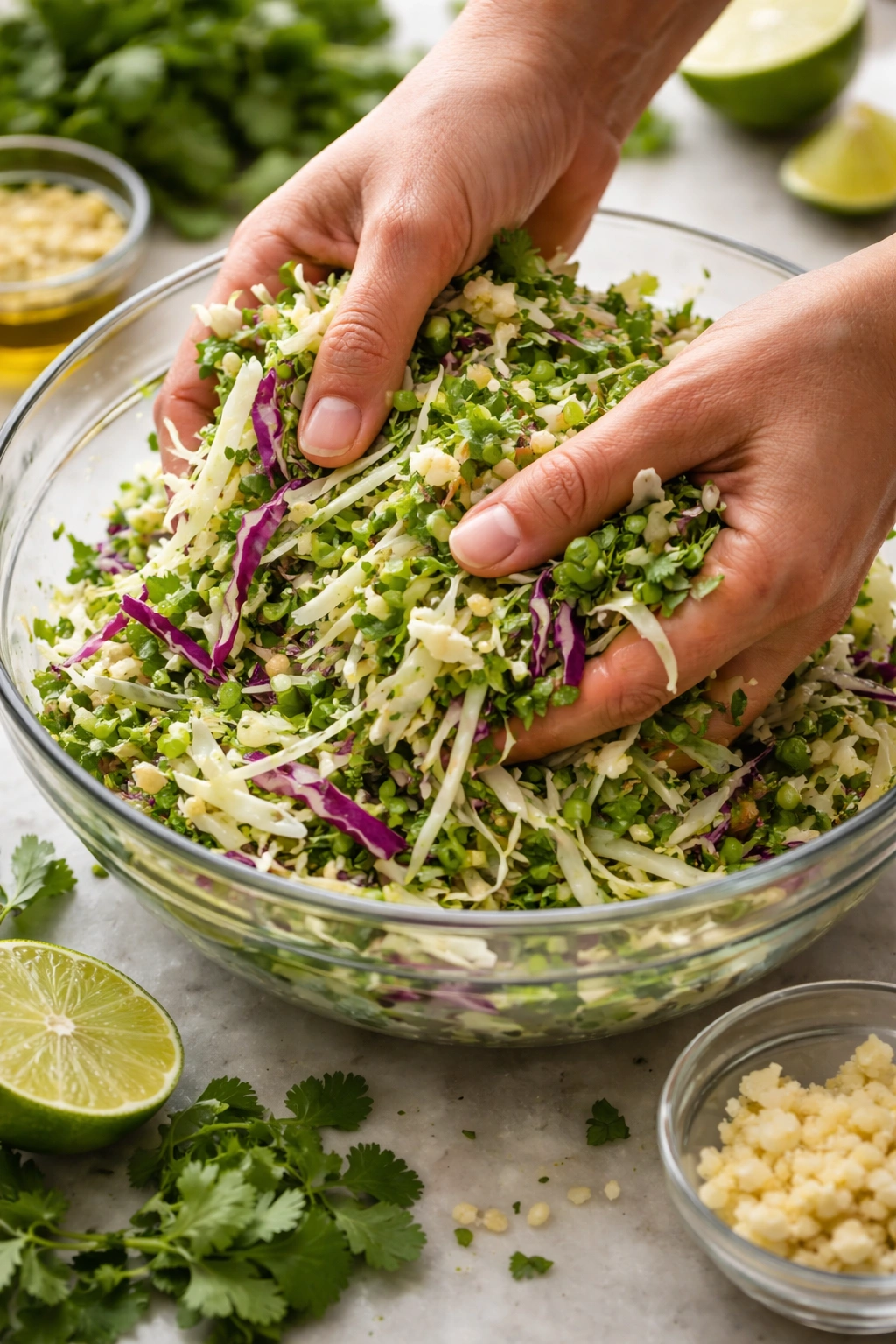
The slaw is where your fish tacos begin, not end. Don’t think of it as merely a topping — it’s the textural and flavor foundation that makes these tacos sing. The bright acidity of the lime juice, combined with the earthiness of cilantro and the gentle bite of garlic, creates a flavor profile that’s both simple and sophisticated.
Start by shredding your cabbage. If you have a food processor with a shredding blade, this takes seconds. If not, a sharp knife and a cutting board work just fine — you’re aiming for thin, even pieces roughly the thickness of a pencil. Green cabbage is milder than red, but either works beautifully here.
Place the shredded cabbage in a large mixing bowl. Sprinkle it with salt — this seems counterintuitive, but the salt begins to soften the cabbage slightly, and more importantly, it seasons it from the inside out rather than just coating the surface. Add the minced garlic, sliced green onions, and cilantro to the bowl. Drizzle with olive oil and fresh lime juice.
Now use your hands to massage everything together. This step is not optional. Your hands are better at this than any spoon or spatula — you can actually feel the cabbage softening and the flavors melding. Massage for about 30 to 45 seconds. You should notice the cabbage releasing some of its liquid and becoming slightly wilted while retaining most of its crunch. Taste it and adjust the seasoning — does it need more lime? More salt? Trust your palate.
Pro tip: Make the slaw up to 4 hours ahead. It actually improves as it sits, the flavors melding while the cabbage continues to soften very slightly. Keep it in the refrigerator in a covered container, and give it a quick stir before serving.
Making the Lime Crema: The Silky Finish
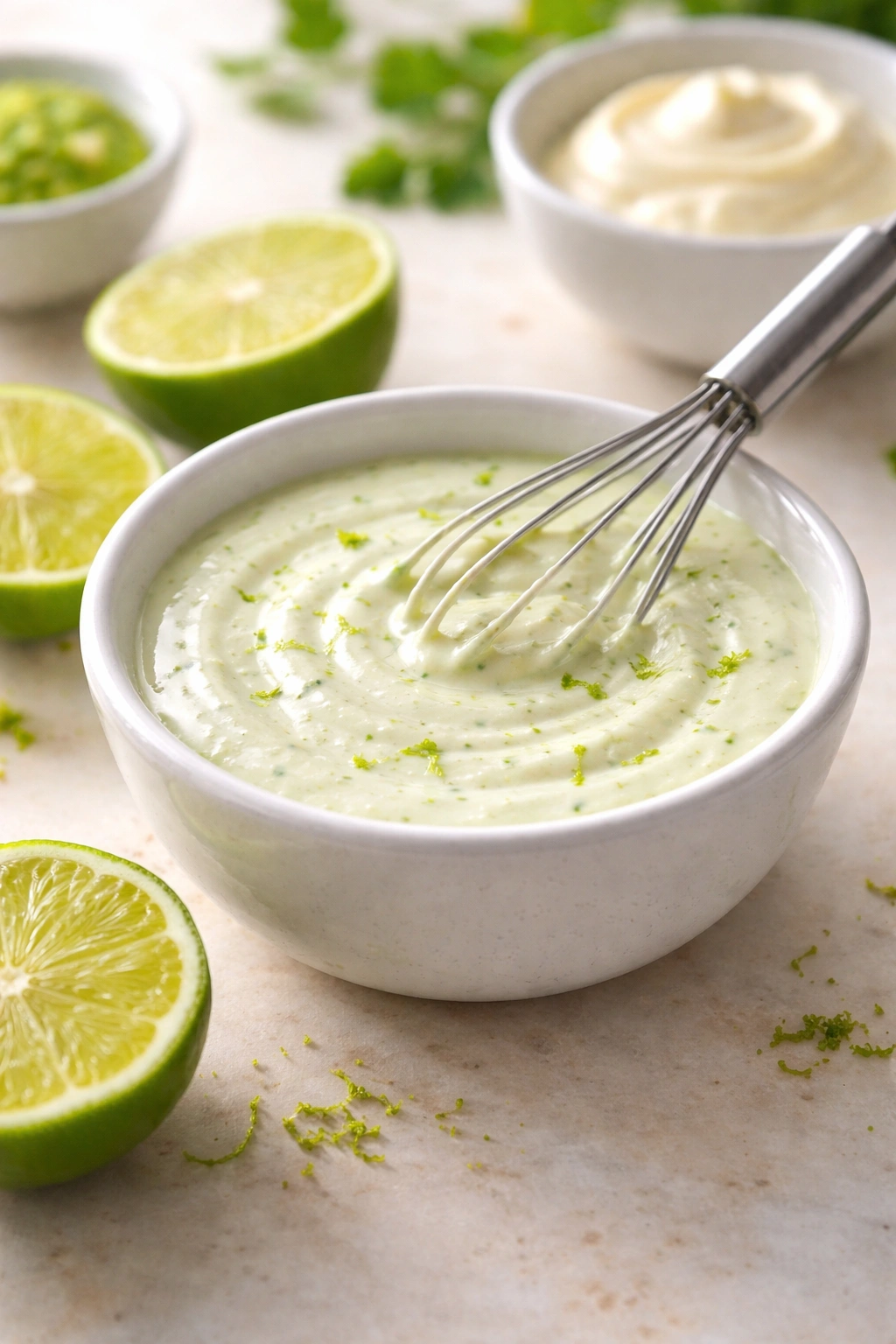
Lime crema is where tacos go from good to unforgettable. This isn’t complicated — it’s just sour cream and mayonnaise brightened with lime, but the combination creates something greater than the sum of its parts. The sour cream provides tang, the mayonnaise adds subtle richness, and the lime brings everything into focus with its bright acidity.
Combine the sour cream and mayonnaise in a small bowl. Whisk them together until completely smooth and no streaks remain. The mixing is important here — you want an emulsified, silky texture rather than two separate ingredients sitting side by side. This takes about 1 minute of whisking.
Add the lime zest. Use a microplane if you have one — it produces the finest, most delicate zest that distributes evenly throughout the crema. If you’re using a box grater, be careful to take only the colored part of the skin, not the bitter white pith underneath. Squeeze your lime juice, strain it to remove seeds, and add it to the bowl. Sprinkle in the salt.
Whisk again until everything is combined and the crema has a uniform pale green tint from the lime zest. Taste it now and make adjustments. It should taste tart and bright, but not so acidic that it overwhelms the palate. If it’s too thick, thin it with a teaspoon of water or lime juice. If it’s too thin, whisk in another tablespoon of mayonnaise.
Worth knowing: Make the lime crema up to 3 days ahead. Store it in a small glass container in the refrigerator, where the flavors will actually deepen and meld together beautifully. Just stir it well before serving.
Seasoning and Preparing the Fish
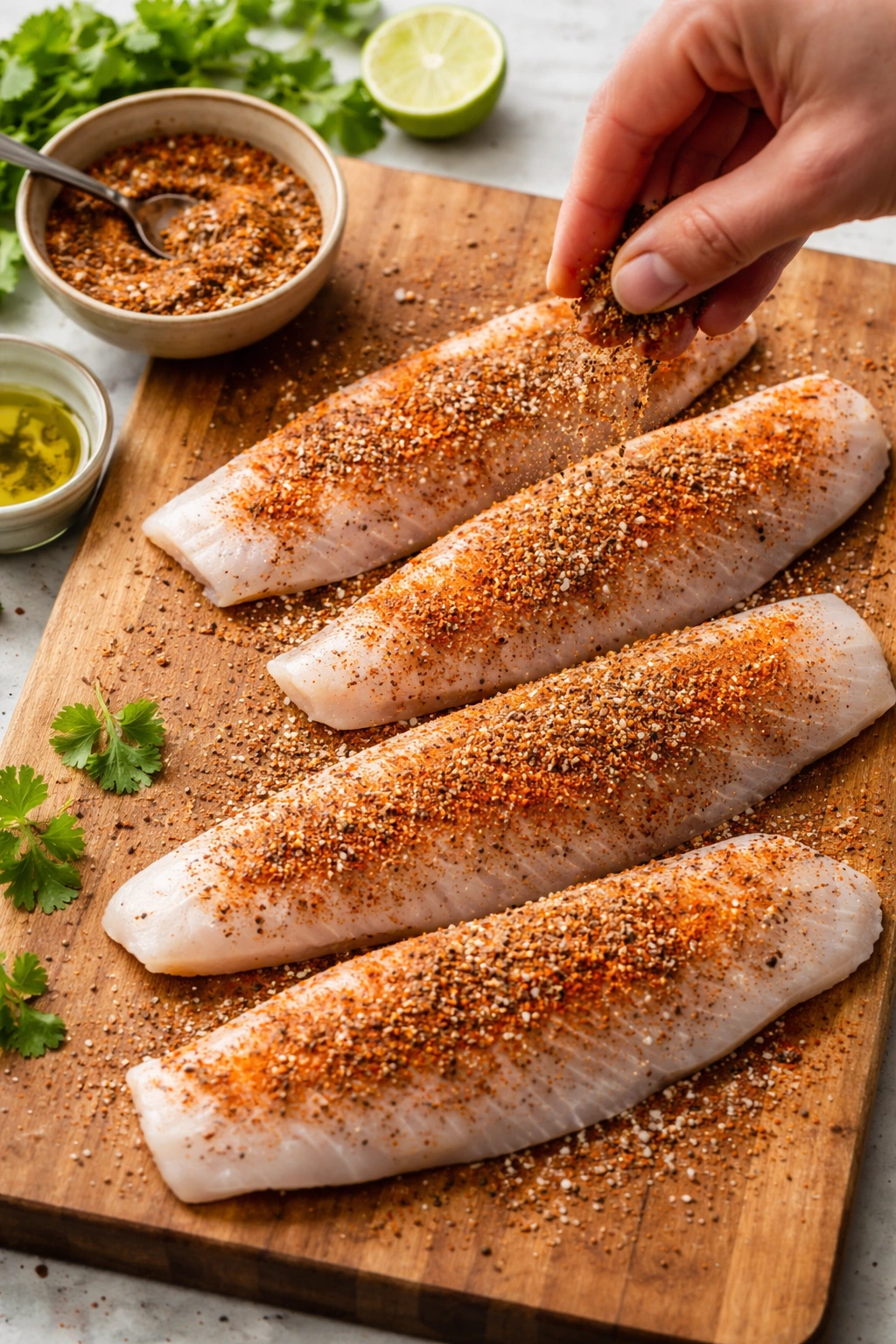
The fish is the star, so treat it with respect. Pat your fish fillets completely dry with paper towels — moisture is the enemy of good seasoning and even cooking. If any excess water remains on the surface, it will prevent the spices from adhering properly and create steam rather than allowing the fish to develop a light golden crust.
Create your spice blend by combining the cumin, paprika, cayenne, salt, black pepper, and garlic powder in a small bowl. Whisk them together with a fork so they’re evenly distributed. The pinch of sugar, if you’re using it, helps the spices caramelize slightly on the fish’s exterior, creating a subtle crust without requiring high heat or overcooking.
Divide your fish fillets into serving-sized pieces if they’re particularly large. You want each piece to be roughly 2 to 3 inches wide, which ensures even cooking and makes them easier to handle in the tacos.
Now comes the seasoning. Sprinkle the spice blend over both sides of each fillet, using about half the mixture for the first side, then flipping and using the remainder. The goal is an even coating that doesn’t look clumpy or overwhelming. If you’ve made your spice blend fairly fine, you’ll use roughly 1 teaspoon per 6 ounces of fish. You won’t use all of the mixture — and that’s fine.
At this point, you can cook immediately or refrigerate the fish for up to 8 hours. Seasoned fish benefits from a brief rest, as the flavors have time to penetrate the flesh rather than sitting solely on the surface.
Cooking the Fish: Three Methods That All Work Beautifully
Pan-Searing for Maximum Flavor and Speed
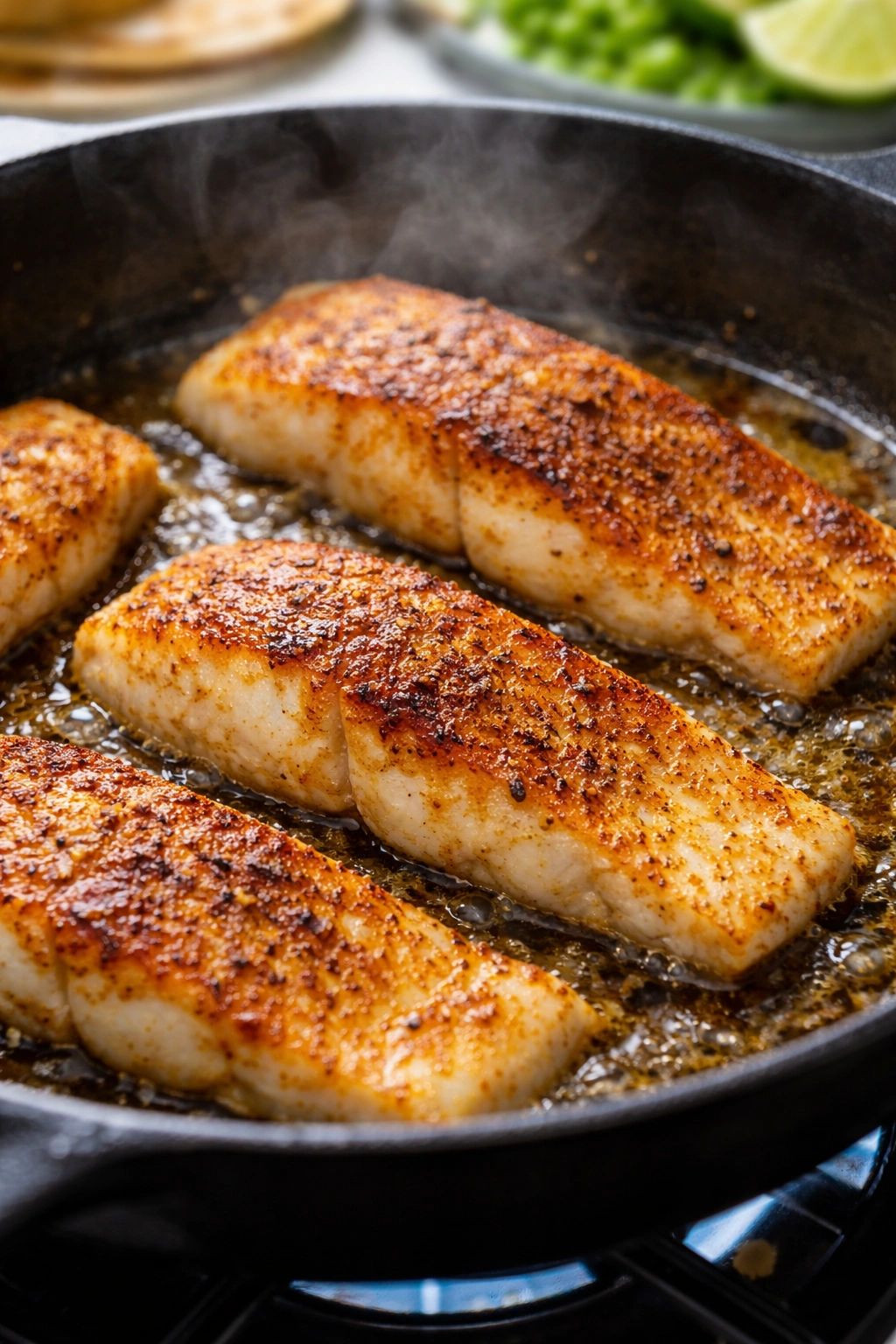
Pan-searing is the fastest method and produces the most flavorful result because it allows the spices to develop a light crust. Heat 1 tablespoon of oil in a large skillet over medium-high heat. The oil should shimmer and move freely across the pan, but not smoke.
Once the oil is hot, carefully place the fish fillets skin-side down (if they have skin) or flat-side down into the pan. Do not move them. Resist the urge to peek or flip — let them cook undisturbed for 3 to 4 minutes. You’ll notice the flesh turning opaque as it cooks from the bottom up, creeping about halfway up the sides of the fillet.
The moment you see the flesh change color and the edges start to look translucent, flip the fish gently using a fish spatula or a thin-edged regular spatula. Cook the second side for another 2 to 3 minutes. The fish is done when it flakes easily with a fork and appears opaque throughout, with maybe just the smallest hint of translucence in the very center. Remember that carryover cooking will finish it after you remove it from heat.
Baking for Hands-Off Simplicity
Preheat your oven to 400°F (200°C) and position the rack in the center. Line a baking sheet with parchment paper or lightly oil it. Place your seasoned fish fillets on the prepared sheet in a single layer, leaving space between each piece so air can circulate.
Bake for 8 to 12 minutes, depending on the thickness of your fillets. Very thin fillets might be done in 8 minutes, while thicker pieces might need the full 12. You’ll know it’s done when the flesh flakes easily with a fork and appears opaque throughout. If you have a meat thermometer, fish is cooked at 145°F (63°C) internal temperature.
The advantage of baking is that you can’t overcook it as easily, since the oven’s even, dry heat doesn’t aggressively brown the outside while leaving the inside underdone. The disadvantage is that you won’t get the flavorful crust that pan-searing creates.
Grilling for Summer Authenticity
Preheat your grill to medium-high heat and oil the grates very well — use a paper towel dipped in oil and held with tongs to coat them thoroughly. This prevents sticking and allows the fish to develop grill marks.
Place the seasoned fish directly on the grates and resist the urge to move it. Let it cook for 3 to 4 minutes until you can see light browning and the flesh has turned opaque about halfway up the fillet. Using a fish spatula or thin-edged regular spatula, gently flip the fish and cook the second side for 2 to 3 minutes until it flakes easily.
Warming the Tortillas: Don’t Skip This Step
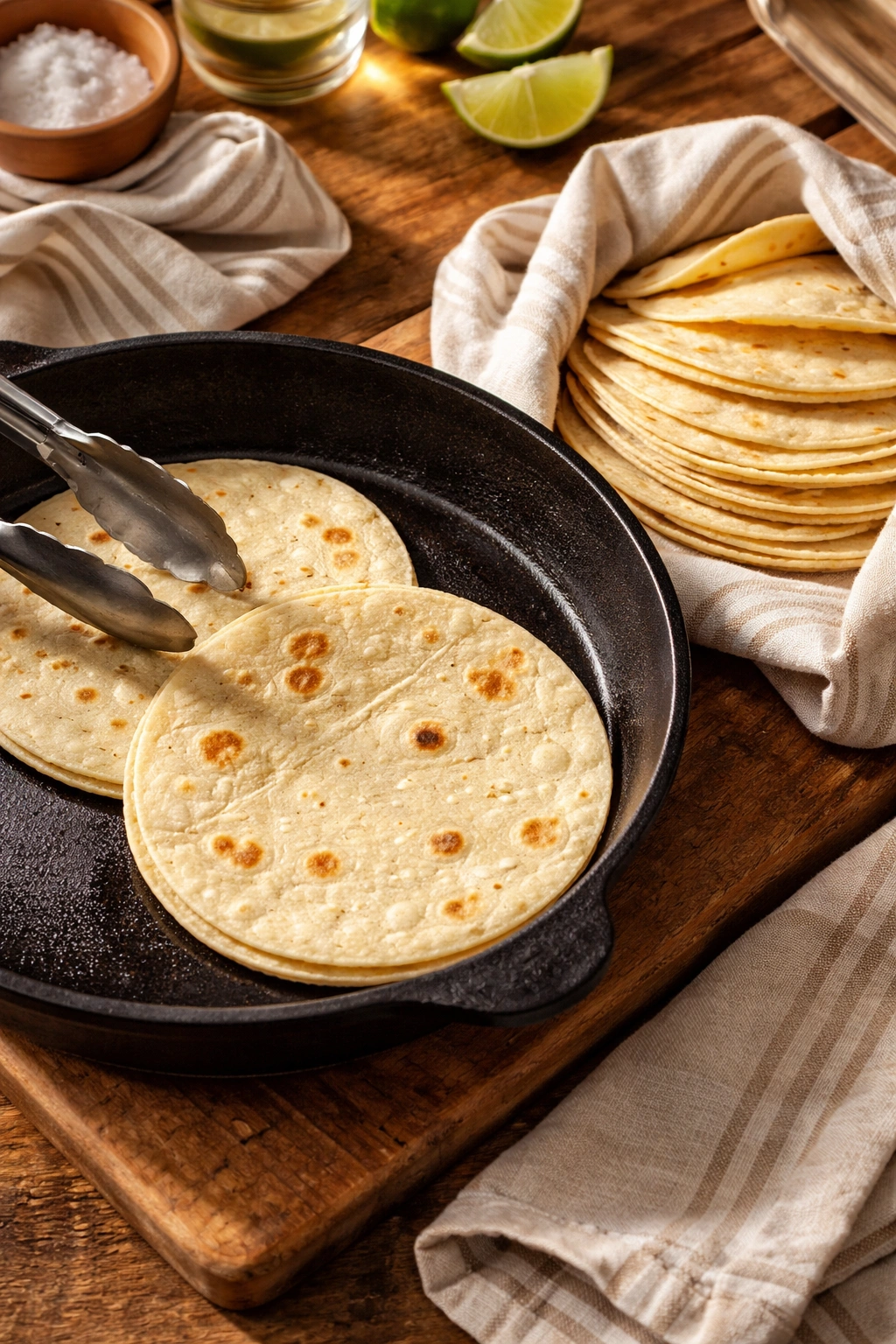
Cold tortillas ruin fish tacos. A room-temperature tortilla feels limp and won’t hold the toppings properly. A warm tortilla becomes pliable, slightly toasted, and develops a subtle flavor that complements everything else.
The fastest method is a skillet. Heat a dry skillet (no oil needed) over medium heat. Once it’s hot, place a tortilla on the skillet and warm it for about 15 to 20 seconds per side. You should see the tortilla puff slightly and maybe develop a few light brown spots. Stack the warm tortillas and wrap them in a clean kitchen towel to keep them warm.
Alternatively, warm tortillas directly over a gas flame — hold them with tongs and rotate them over the flame for a few seconds per side until warm and slightly charred. Or microwave them: wrap them in a damp kitchen towel and microwave for 30 to 45 seconds.
Assembling Your Tacos for Maximum Impact
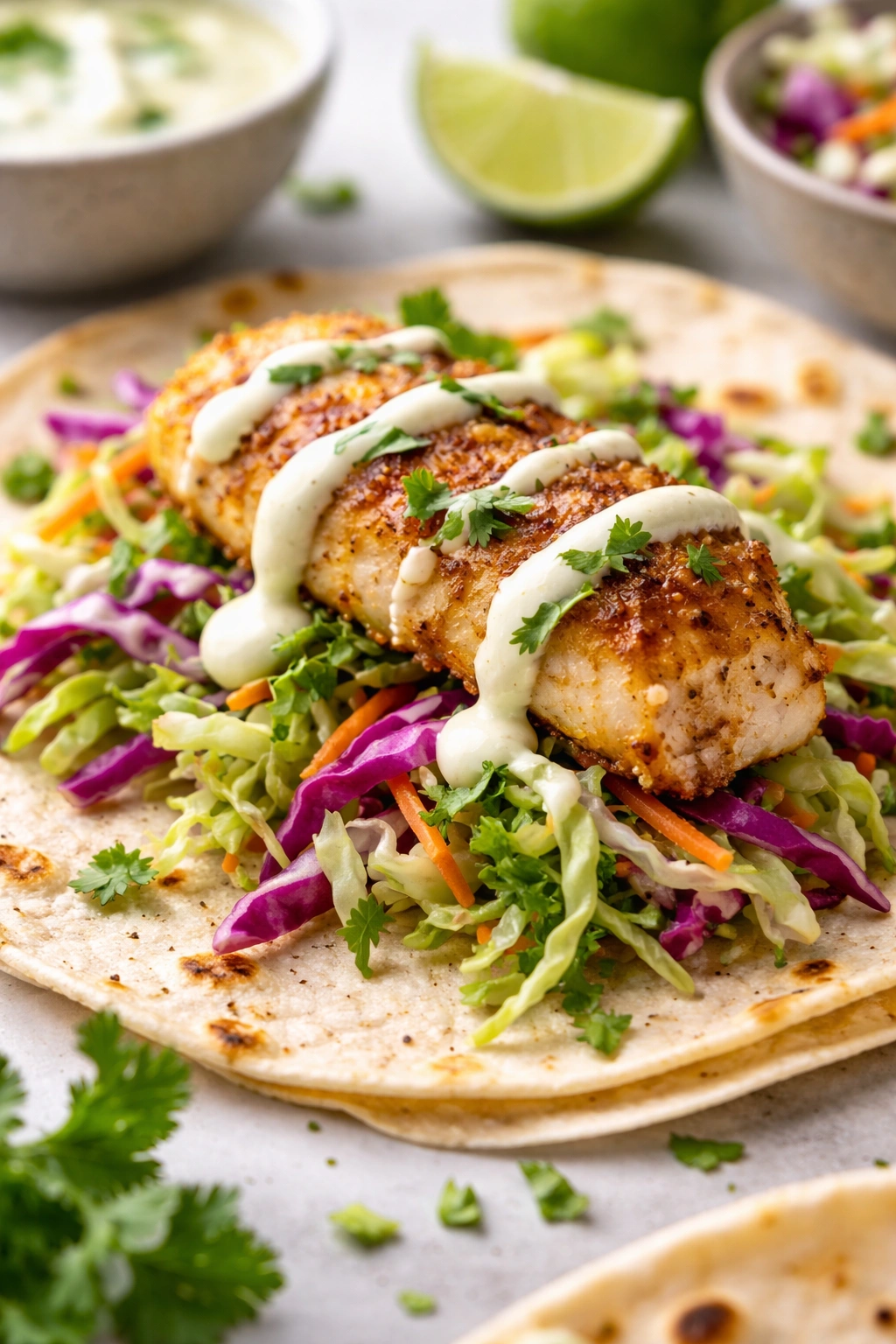
Assemble your tacos just before serving — this prevents the tortillas from becoming soggy. Start with the tortilla, and lay it flat on a plate or in your hand. Add a generous handful of the cabbage slaw directly on top, spreading it along the center of the tortilla. This creates a cool, crunchy base.
Place a piece of warm fish on top of the slaw. One generous piece per taco is ideal — if your fillets are particularly large, you might break them into two or three smaller pieces.
Finally, drizzle with the lime crema. A tablespoon per taco is usually perfect — you want enough to taste it in every bite without the taco becoming a soggy mess.
Pro Tips From Fish Taco Masters
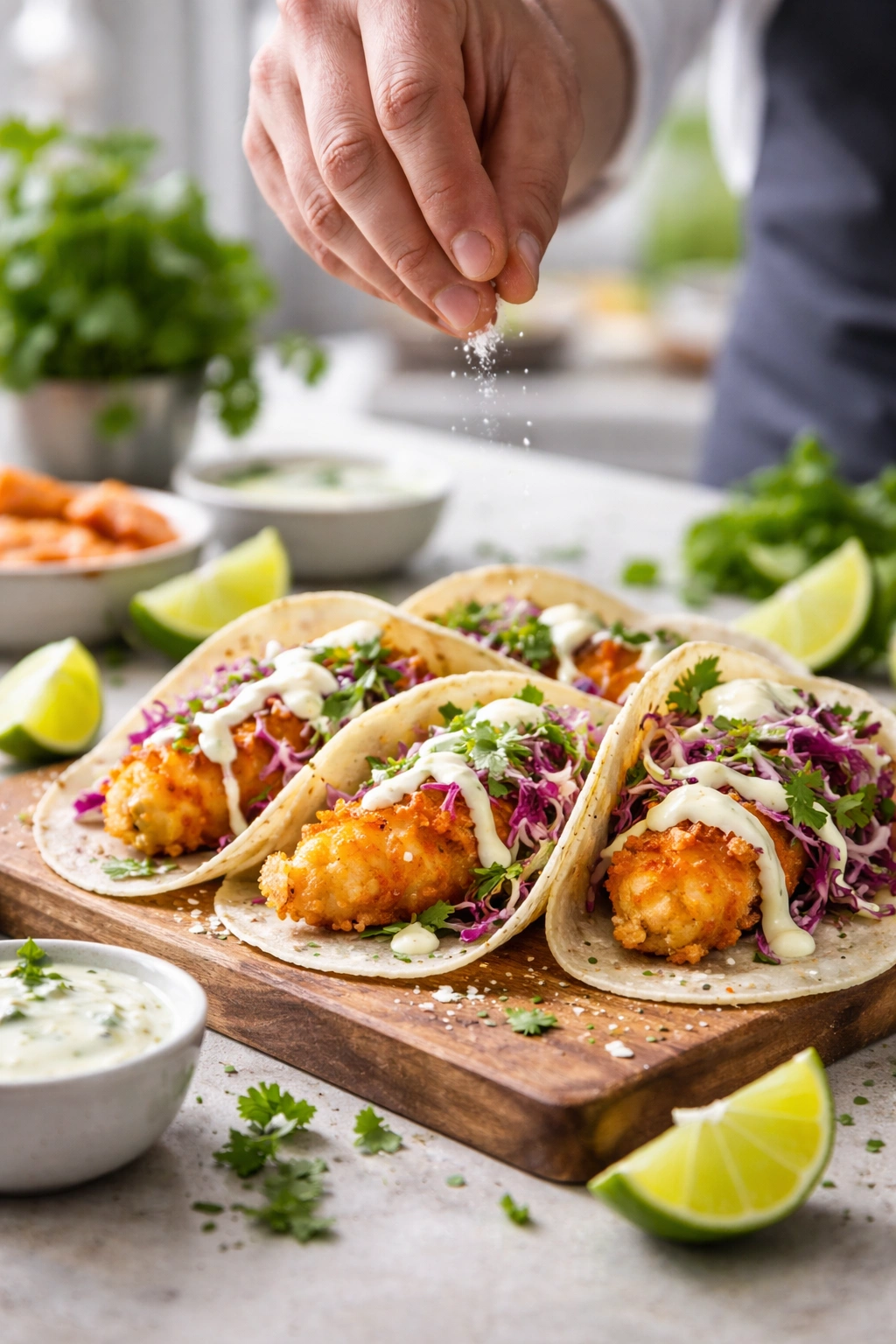
Pat your fish completely dry. Moisture prevents seasoning adhesion and creates steam instead of a flavorful crust. This is non-negotiable.
Don’t overcook the fish. Fish continues cooking after it leaves the heat due to carryover cooking. The moment it looks barely opaque throughout, it’s done. Overcooked fish tastes dry and loses its delicate texture. Aim for a tiny hint of translucence in the very center.
Let the slaw marinate. Cabbage slaw actually improves as it sits. Make it several hours ahead so the cabbage softens slightly and the flavors meld completely. It tastes noticeably better than slaw made immediately before serving.
Make the lime crema ahead too. This keeps in the refrigerator for 3 days and tastes better the next day as the lime flavor develops. One less thing to do when you’re ready to eat.
Taste and adjust salt throughout. The slaw needs salt to develop flavor. The spice blend for the fish needs salt to season it properly. The lime crema needs salt to balance the tang. Don’t be afraid to add a little more if something tastes flat — it makes a tremendous difference.
Squeeze fresh lime over everything. Just before eating, squeeze additional fresh lime juice over your assembled taco. This brightens the entire dish and adds another dimension of flavor.
Variations That Let You Make These Tacos Your Own
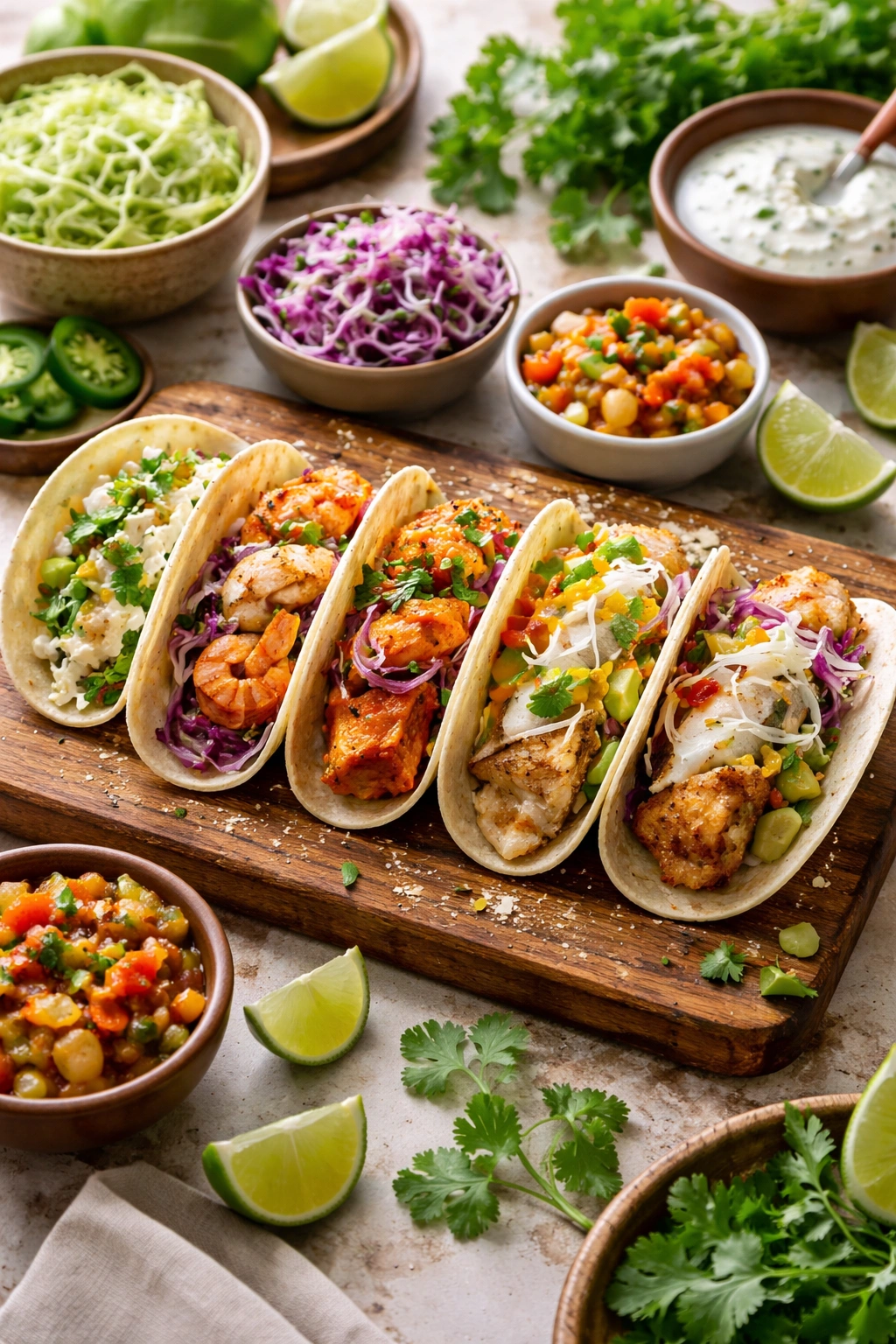
Fish tacos are endlessly adaptable, which is part of their appeal. You can swap the fish for salmon, mahi-mahi, or even shrimp without changing a single other component. Salmon is richer and pairs beautifully with the lime crema. Shrimp cooks faster — only 2 to 3 minutes per side — and adds a sweeter flavor.
If you want to change the slaw, try purple cabbage instead of green for color and a slightly sweeter flavor, or do a mix of both. Add shredded carrots or thinly sliced radish for extra crunch. Swap the cilantro for parsley if cilantro tastes like soap to you — it’s a genuine genetic thing, not a flaw on your part.
For the lime crema, try adding a pinch of chipotle powder for smokiness, or blend in a small amount of minced jalapeño for heat. Some people prefer Greek yogurt instead of sour cream for a tangier, lighter version. If you’re avoiding dairy, mix aquafaba (chickpea liquid) with olive oil to create a vegan-friendly crema — it’s surprisingly effective.
Want mango salsa instead of plain slaw? Dice fresh mango, red onion, and jalapeño, then toss with cilantro and lime juice. This adds sweetness and works beautifully with the fish. Or make a pico de gallo with tomatoes, onions, cilantro, and lime.
Storage and Make-Ahead Strategies
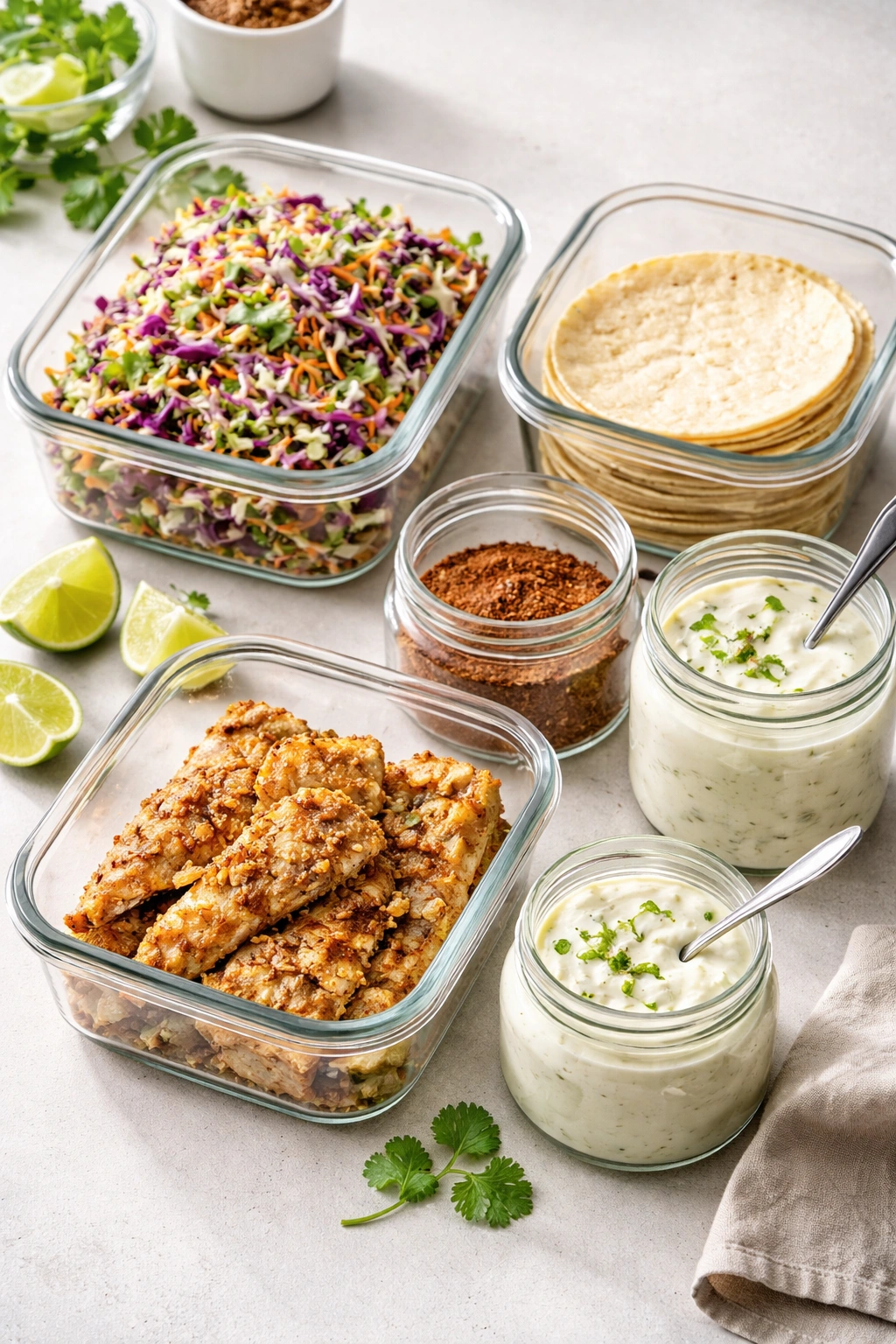
These tacos are fantastic for meal prep because you can make the components separately and assemble them fresh. The cabbage slaw keeps in an airtight container in the refrigerator for up to 4 days — it actually improves as it sits. The lime crema keeps for 3 days. The spice blend can be mixed ahead and stored in a small glass jar for several weeks.
The fish itself is best cooked fresh, but you can season it several hours ahead and refrigerate it until you’re ready to cook. If you want to cook the fish ahead, let it cool to room temperature, then store it in an airtight container in the refrigerator for up to 2 days. Warm it gently in a 300°F (150°C) oven for a few minutes before serving, or serve it at room temperature if you prefer.
Leftover cooked fish can be repurposed into fish taco bowls the next day: layer rice, black beans, leftover slaw, and reheated or room-temperature fish, then drizzle with lime crema. It’s a completely different meal from the tacos but equally satisfying.
Serving Suggestions and What to Serve Alongside
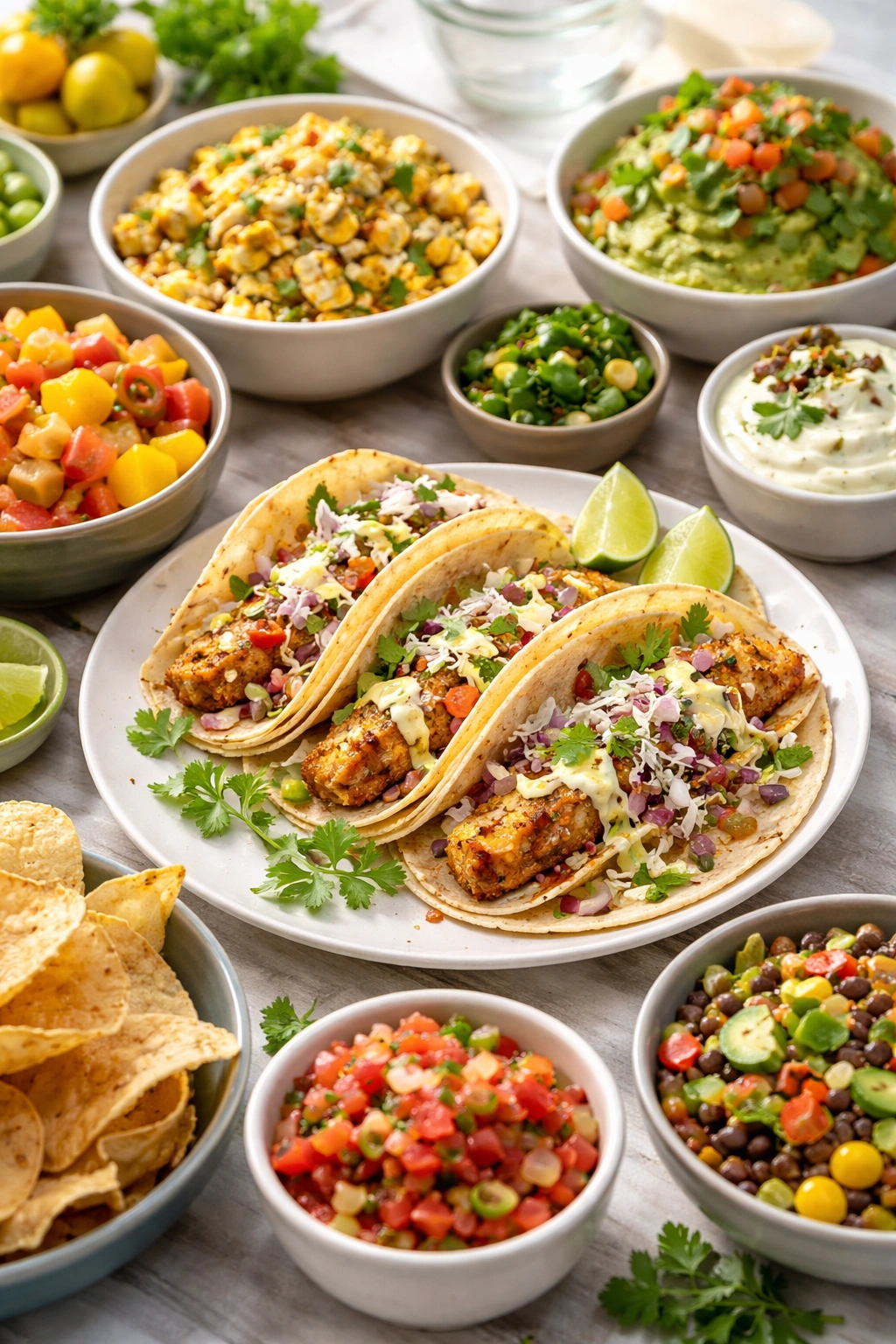
Fish tacos work beautifully as a complete meal on their own, but they taste even better with thoughtful sides. Mexican rice flavored with cilantro and lime is classic. Black beans or refried beans add substance and complement the fish’s delicate flavor. A simple side salad dressed with lime vinaigrette adds freshness.
For a lighter meal, skip the rice and beans and serve the tacos with roasted vegetables — charred corn, grilled zucchini, or roasted poblano peppers all pair beautifully. A simple jicama slaw with lime juice and cilantro adds crunch without heaviness.
If you’re building a taco bar and serving multiple people, set out components separately so everyone can customize their own tacos. Warm fish and tortillas in the center, then surround them with bowls of slaw, lime crema, avocado slices, additional cilantro, sliced jalapeños, lime wedges, and any other toppings you’ve prepared. People love the control and creativity this allows.
Beverage Pairings That Elevate the Experience
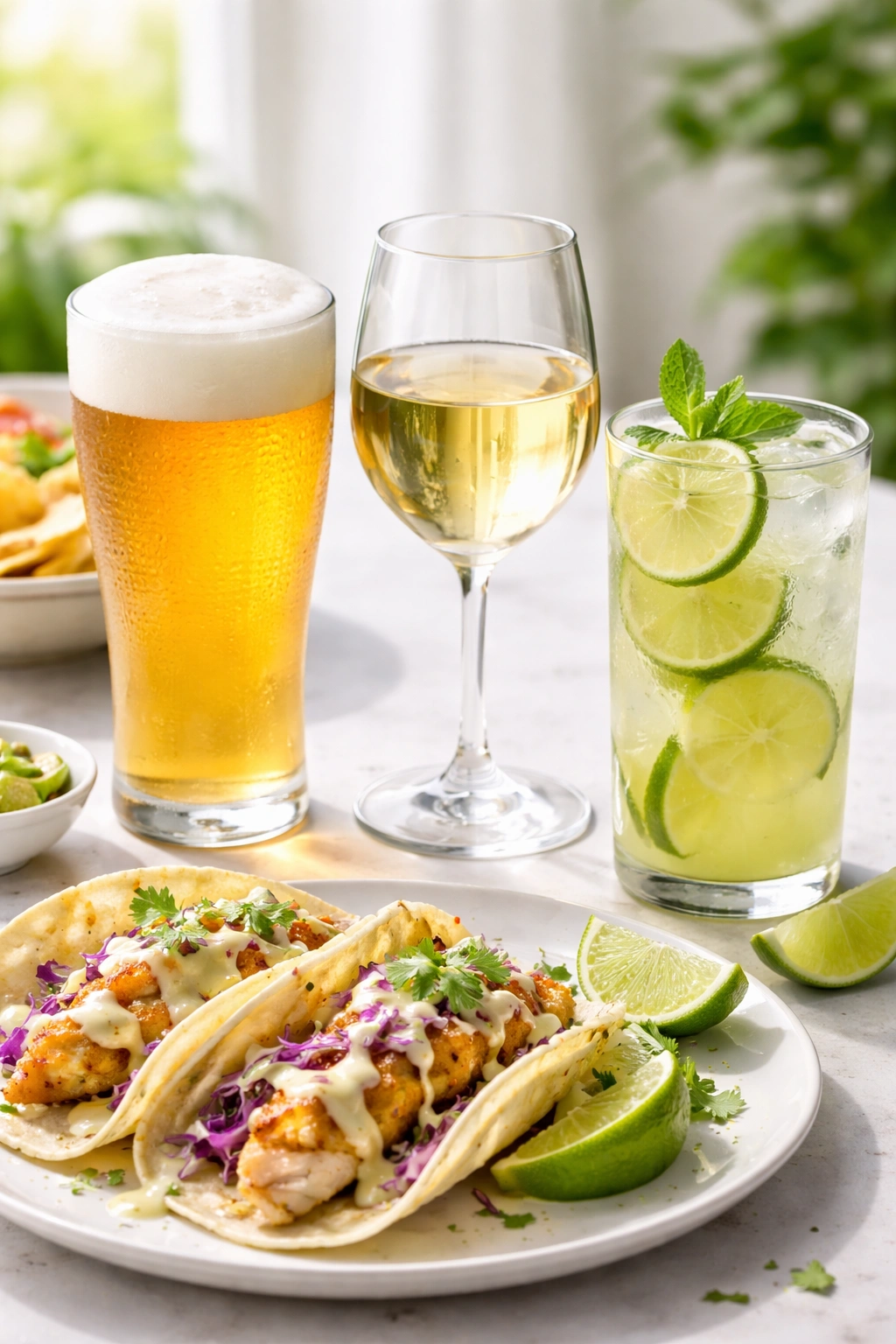
Fish tacos call for beverages that share their fresh, bright character. A crisp pale lager or pilsner beer complements the lime and cilantro beautifully without overwhelming the fish. If you prefer white wine, try a sauvignon blanc or a crisp pinot grigio — the acidity mirrors the lime and cilantro in the slaw.
For a non-alcoholic option, sparkling lime water with fresh cilantro is perfect and mirrors the flavors of the tacos themselves. An agua fresca made from lime juice, simple syrup, and sparkling water is traditional in Mexico and incredibly refreshing alongside something this flavor-packed.
A classic margarita is the obvious choice, and for good reason — the lime, salt, and tequila echo the tacos’ seasoning and provide sophisticated contrast. Make yours with fresh lime juice, quality tequila, and a minimal amount of sweetener to let the lime shine.
Common Mistakes to Avoid
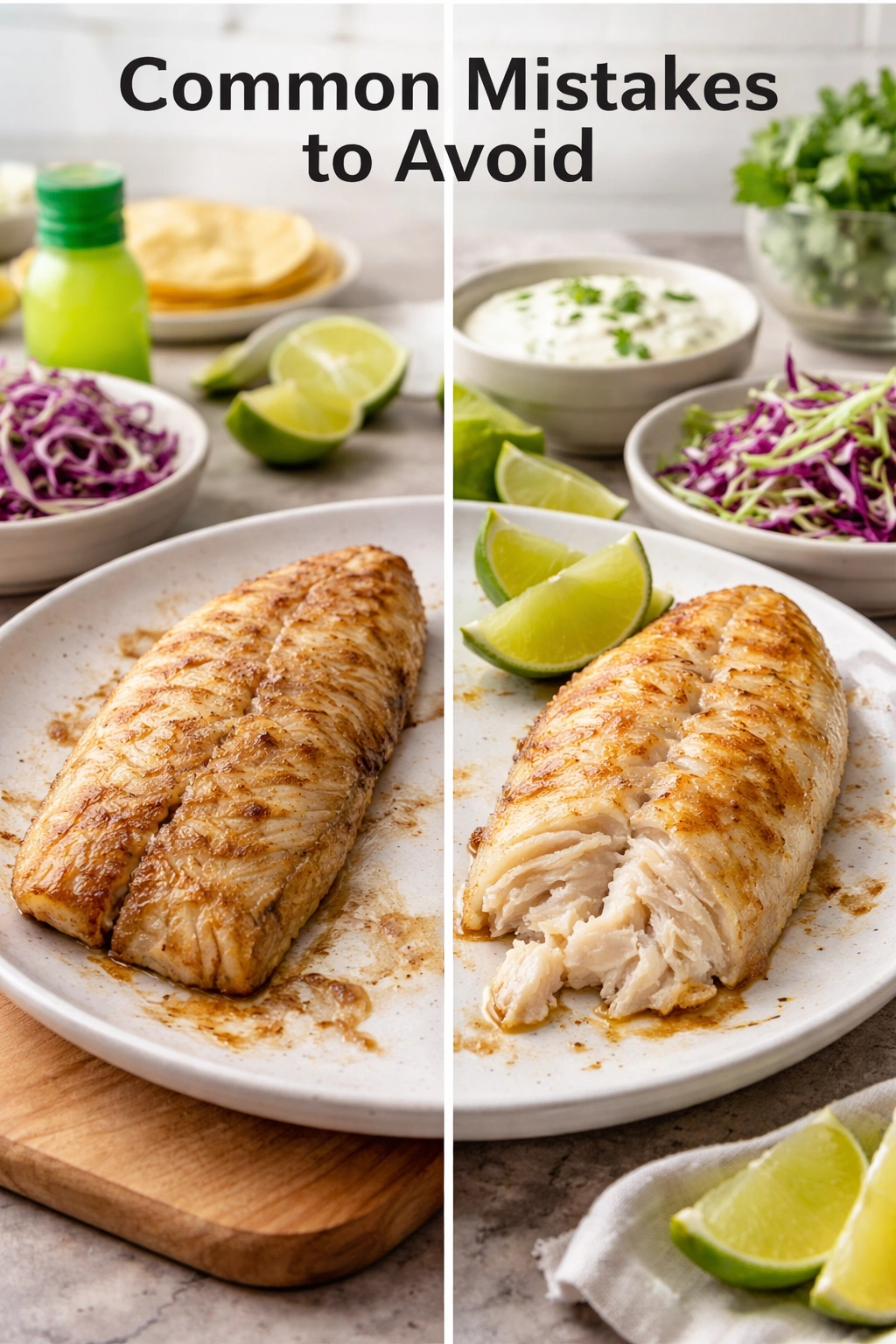
The number one mistake is overcooked fish. People worry about undercooking fish (which is actually rare when you’re starting with good-quality fillets), and they cook it too long. Once the flesh turns opaque throughout with just a hint of translucence in the center, stop. Remove it from heat. Overcooked fish tastes dry and chalky, destroying the entire dish.
The second mistake is underseasoning. The spice blend might seem skimpy on the measuring spoon, but it’s the right amount for delicate fish. Some people add even more cumin and paprika to fish because they grew up eating heavily spiced food — that’s fine if it’s your preference, but remember that you’re seasoning the fish, not overwhelming it.
A third mistake is skipping the slaw. Some people treat it as optional or secondary, piling on extra toppings like cheese and sour cream instead. But the slaw is essential — it’s what makes the tacos sing with brightness and crunch. Without it, fish tacos feel heavy and one-dimensional.
Fourth: using bottled lime juice. Fresh lime juice makes a dramatic difference in both the slaw and the crema. Bottled juice tastes bitter and flat by comparison. Buy limes that feel heavy for their size (they’ll have more juice) and keep a microplane and fresh lime juice available for last-minute assembly.
Finally, using cold components. Cold fish is disappointing. Cold tortillas are disappointing. Cold crema is fine, but warm fish and warm tortillas are essential. Take the 2 minutes to warm your tortillas. Let the fish rest no longer than necessary between cooking and serving.
Why People Return to Fish Tacos Again and Again
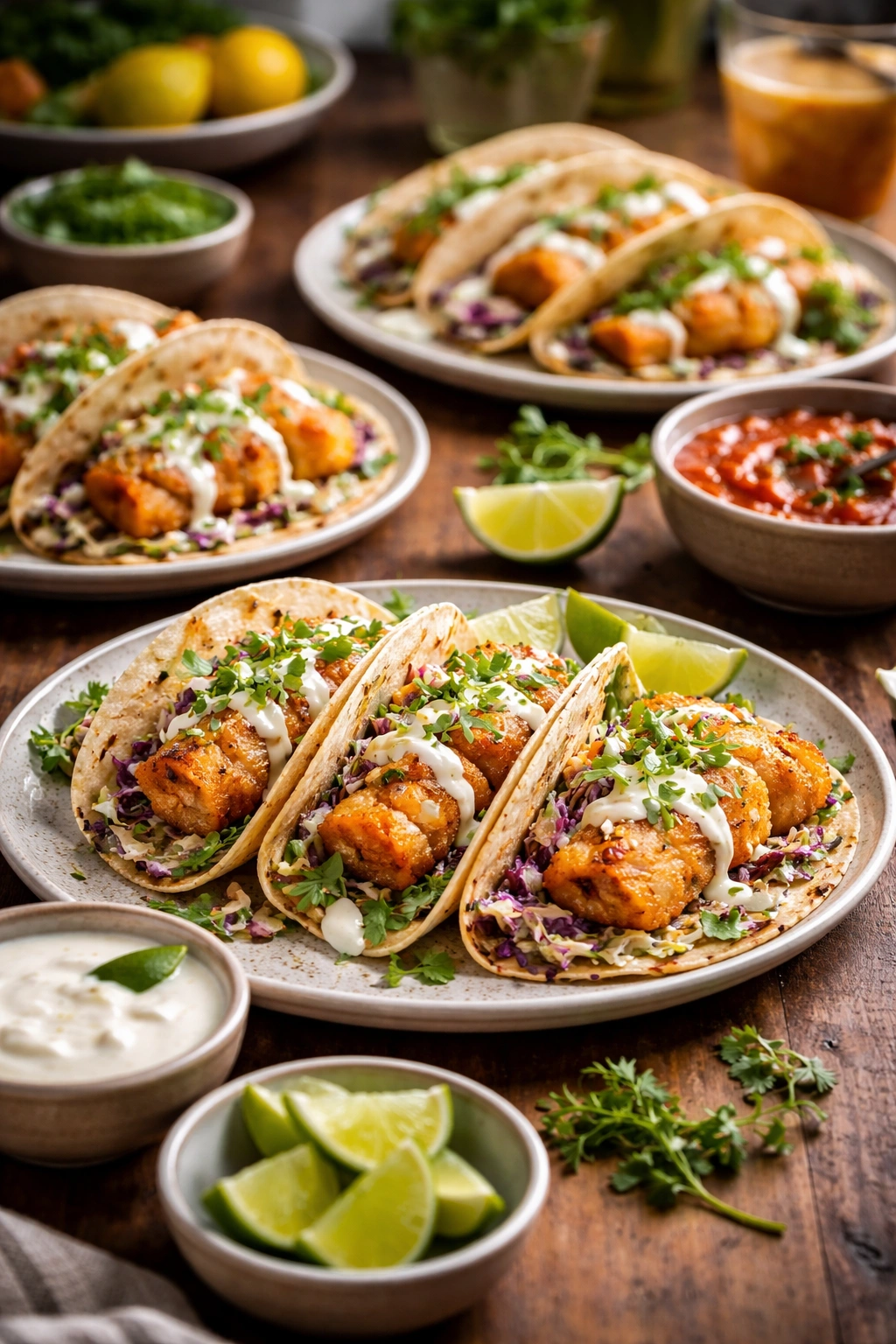
Fish tacos have an almost magical quality — they satisfy in a way that feels both indulgent and wholesome. There’s brightness from the lime and cilantro, creaminess from the slaw’s olive oil and the lime crema, richness from the fish, and textural contrast from the cabbage’s crunch.
They work for someone eating lighter because they’re inherently fresh and not heavy. They work for someone who loves bold flavors because the lime and cilantro are genuinely flavorful. They work for someone in a hurry because they’re done in 30 minutes. They work for someone wanting to impress because they taste like something special.
Once you make fish tacos this way — with a bright cabbage slaw and an ethereal lime crema — you understand why they’re the favorite meal of so many people. It’s not about complexity. It’s about balance, freshness, and respecting each ingredient enough to let it shine.
Final Thoughts
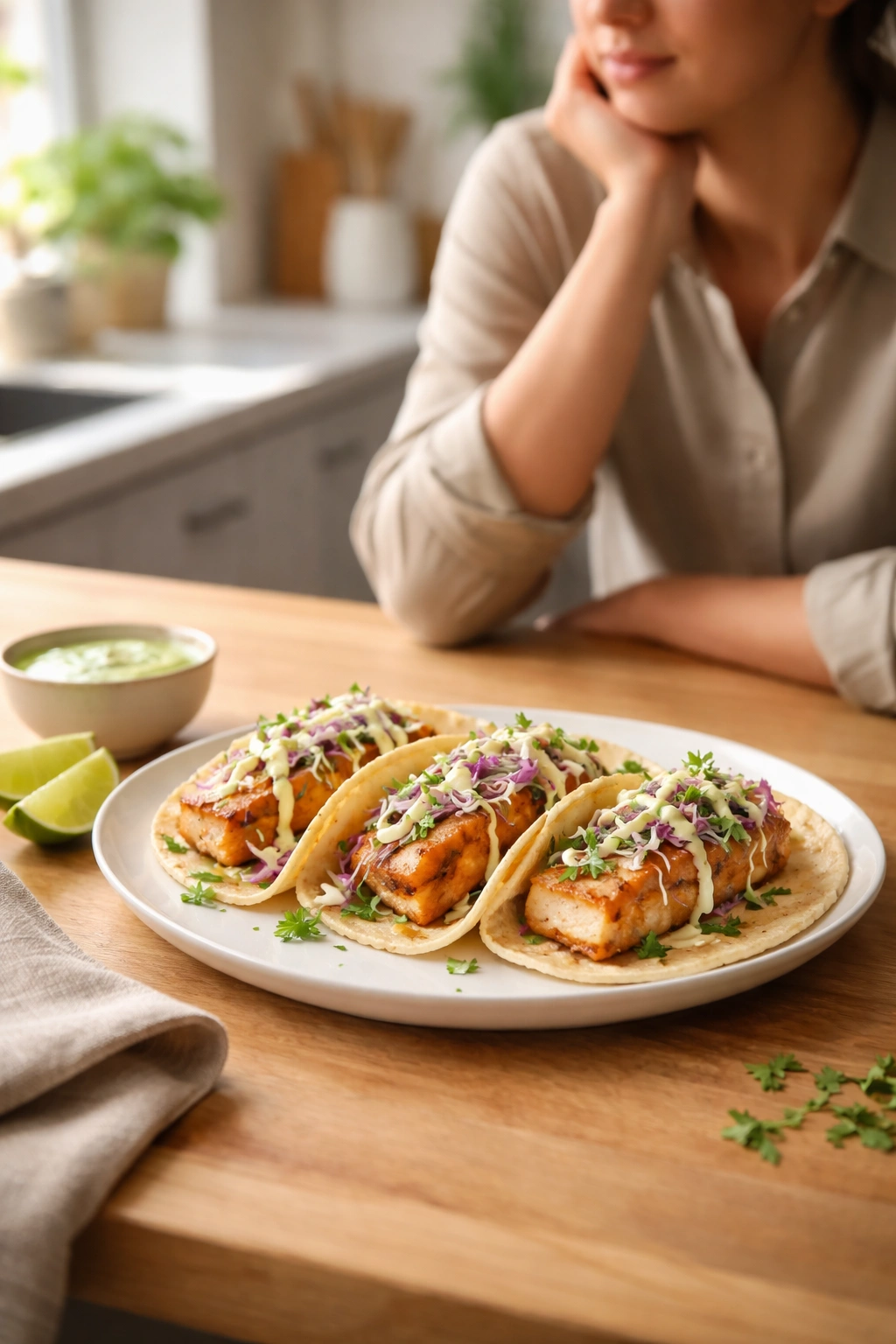
Fish tacos with cabbage slaw and lime crema represent one of the best arguments for simple cooking. You don’t need fancy techniques, expensive equipment, or rare ingredients. You need good fish, bright lime, fresh cilantro, and the understanding that restraint in seasoning often tastes better than excess.
Make these tacos regularly, and you’ll find yourself understanding them more deeply with each iteration. You’ll notice how the different types of fish create subtle variations in flavor. You’ll experiment with the slaw until you’ve found the lime-to-salt balance that makes your own mouth water. You’ll discover that sometimes you want extra heat from cayenne, and sometimes you want the clean, uncomplicated flavors to take center stage.
Most importantly, you’ll have a meal that you love making and that everyone you serve it to will genuinely enjoy. That’s the real payoff — not impressing people with complexity, but delighting them with something that tastes unmistakably fresh, balanced, and made with care. These tacos do exactly that, every single time.
