



There’s something almost magical about the transformation that happens when you combine a few humble cans of tomatoes, some butter, and a splash of cream—in just 20 minutes, you’ve got a bowl of pure comfort that rivals anything simmered for hours. This creamy tomato soup has become a weeknight staple precisely because it bridges that gap between wanting something deeply satisfying and needing dinner on the table before anyone gets too hungry. The secret isn’t some exotic technique or hard-to-find ingredient; it’s understanding how a roux creates creaminess, how sugar balances tomato acidity, and how fresh basil transforms canned tomatoes into something that tastes like you’ve been standing over the stove all day.
What’s remarkable about this particular approach is that it tastes nothing like the condensed soup from a can, despite being just as quick to prepare. The difference lies in building real depth of flavor through garlic and aromatics, layering herbs strategically, and using whole canned tomatoes when possible rather than pre-crushed varieties. Most people assume a creamy tomato soup this quick must be a compromise—less flavorful, less satisfying. The reality is the opposite. This soup delivers a rustic, robust taste with a silky texture that makes you wonder why you’d ever buy the canned version again.
The beauty of this recipe extends beyond speed. It’s endlessly adaptable to what you have on hand, scalable for a small weeknight dinner or a crowd, and it freezes beautifully for future weeks when you need something comforting fast. Whether you’re pairing it with a grilled cheese sandwich (the classic combo that just works), serving it as the anchor of a light lunch, or ladling it into bowls as a first course, this soup has the flexibility to fit your needs without sacrificing flavor. Let’s dive into how to make it, what makes it work, and how to make it completely your own.
Why This Soup Works So Well in 20 Minutes
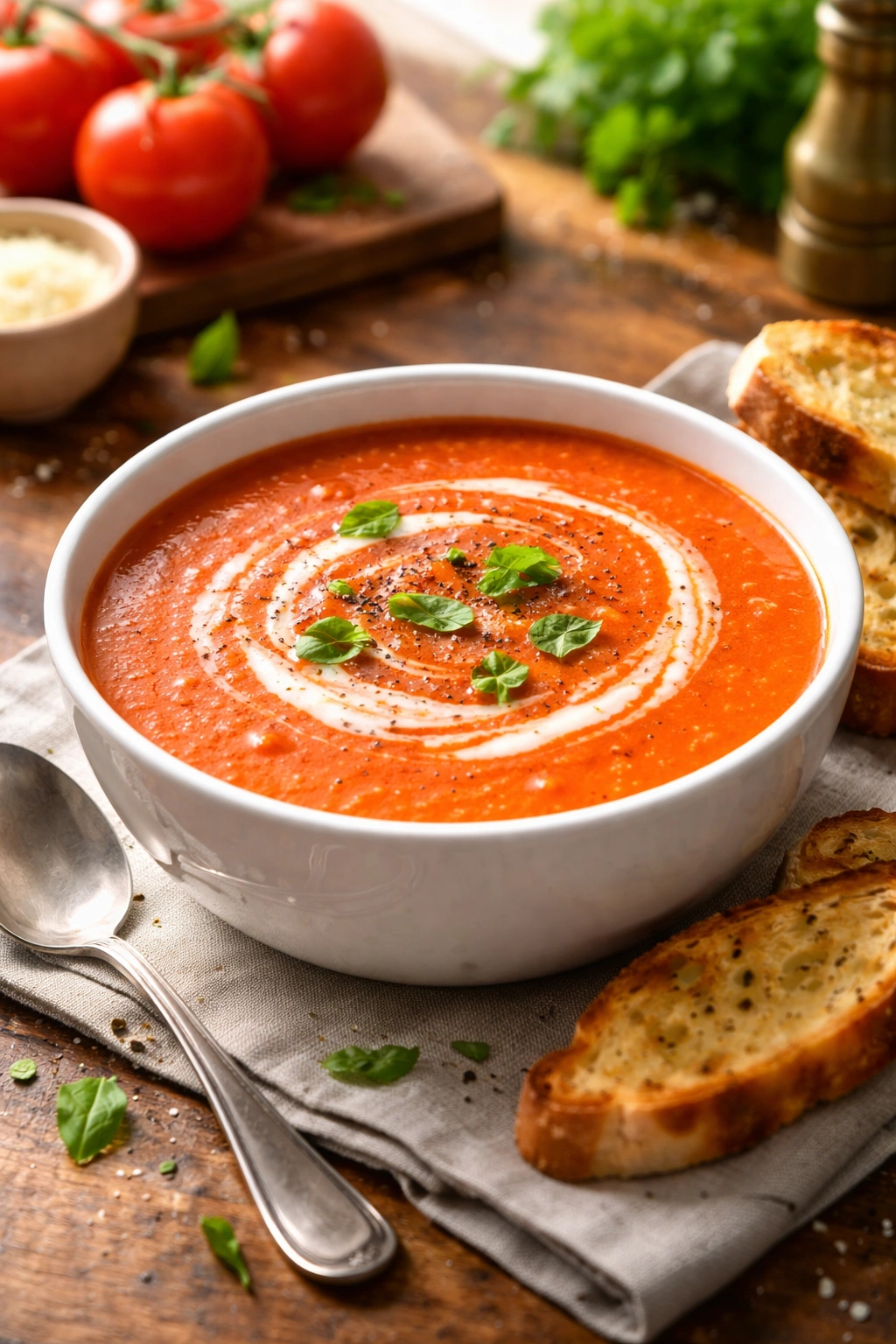
The key to building incredible flavor on a tight timeline is understanding what actually needs time and what doesn’t. Tomato soup doesn’t need a 45-minute simmer to taste delicious—that’s a common misconception. What it does need is a proper foundation: aromatics cooked until they’re soft and sweet, a flour-based roux to create creaminess without relying entirely on heavy cream, and proper seasoning to balance the tomatoes’ natural acidity.
When you sauté onions and garlic in butter first, they release their sugars and become sweeter, adding depth that you’d otherwise only get from long cooking. The flour serves a critical purpose—whisked into milk, it becomes a smooth, silky medium that makes the soup feel luxurious while keeping the cream content lower than traditional recipes. This means you get richness without that heavy, cloying feeling that comes from drowning everything in heavy cream.
Canned tomatoes, far from being a shortcut that sacrifices quality, are actually superior to many fresh tomatoes for soup-making. They’re picked at peak ripeness and processed immediately, concentrating their flavor. Crushed tomatoes with Italian herbs, or a combination of whole and diced tomatoes, give you a head start on flavor that fresh tomatoes simply can’t match consistently. Add in a pinch of sugar to counteract acidity, fresh basil near the end to preserve its aromatic qualities, and you’ve got a soup that tastes like it simmered for hours—in the time it takes to make a grilled cheese sandwich.
Essential Ingredients & Equipment You’ll Need
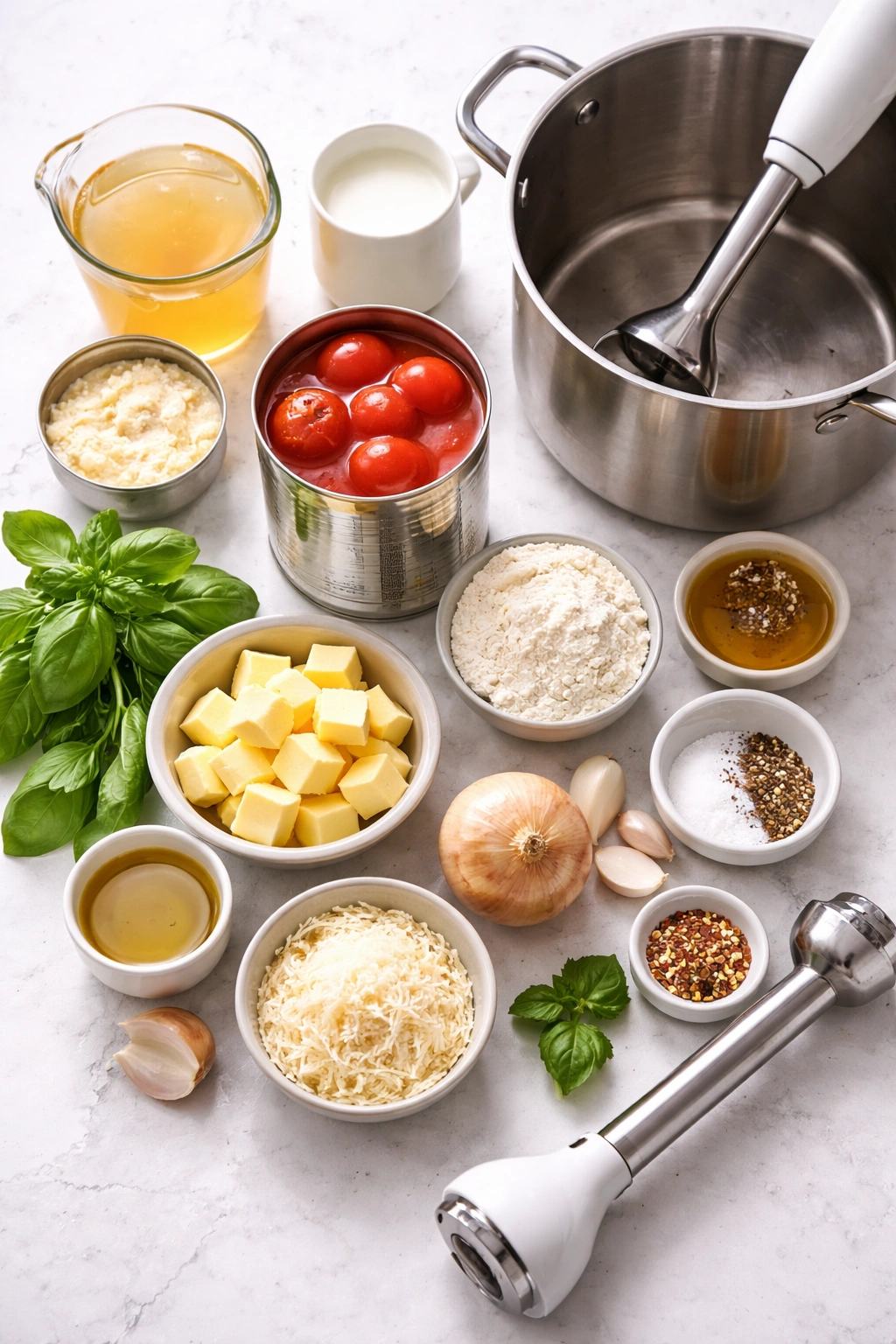
Before you begin, make sure you have the right tools and ingredients assembled. An immersion blender is genuinely the best investment for this recipe, but if you don’t have one, a regular blender works fine—you’ll just need to let the soup cool slightly and work in batches. A large soup pot or Dutch oven is essential; you want enough space for the ingredients to simmer without crowding.
For ingredients, you’ll be relying on pantry staples you likely already have: butter, flour, milk, canned tomatoes, and chicken broth. Fresh basil at the end makes a real difference, but dried basil is a worthy substitute if that’s what you have. Parmesan cheese adds a savory depth that elevates the whole thing. Garlic and onions are non-negotiable—they’re the foundation of everything good about this soup.
The quality of your canned tomatoes matters more than anything else here, since they’re the star ingredient. Look for whole peeled tomatoes or crushed tomatoes (or a combination) from a brand you trust. San Marzano tomatoes are prized for good reason—they tend to be sweeter and less acidic than other varieties. Read the label and choose tomatoes with minimal added ingredients; you want tomatoes, salt, and that’s really it.
Recipe Details
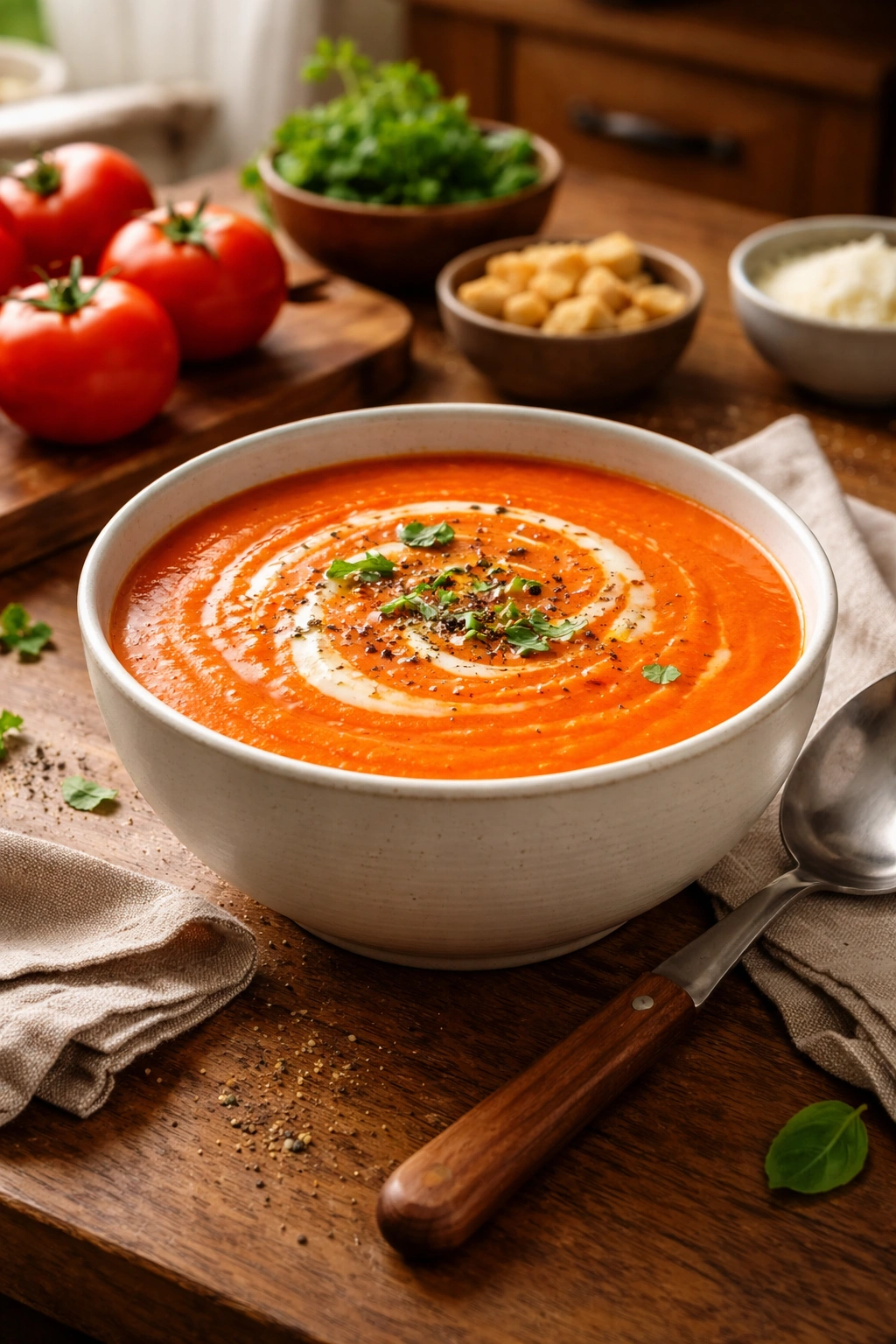
Yield: Serves 4 to 6 | Makes about 6 cups of soup
Prep Time: 10 minutes
Cook Time: 15 minutes
Total Time: 25 minutes
Difficulty: Beginner — This recipe requires no special technique and comes together in minutes, even if you’ve never made soup before.
Complete Ingredient List
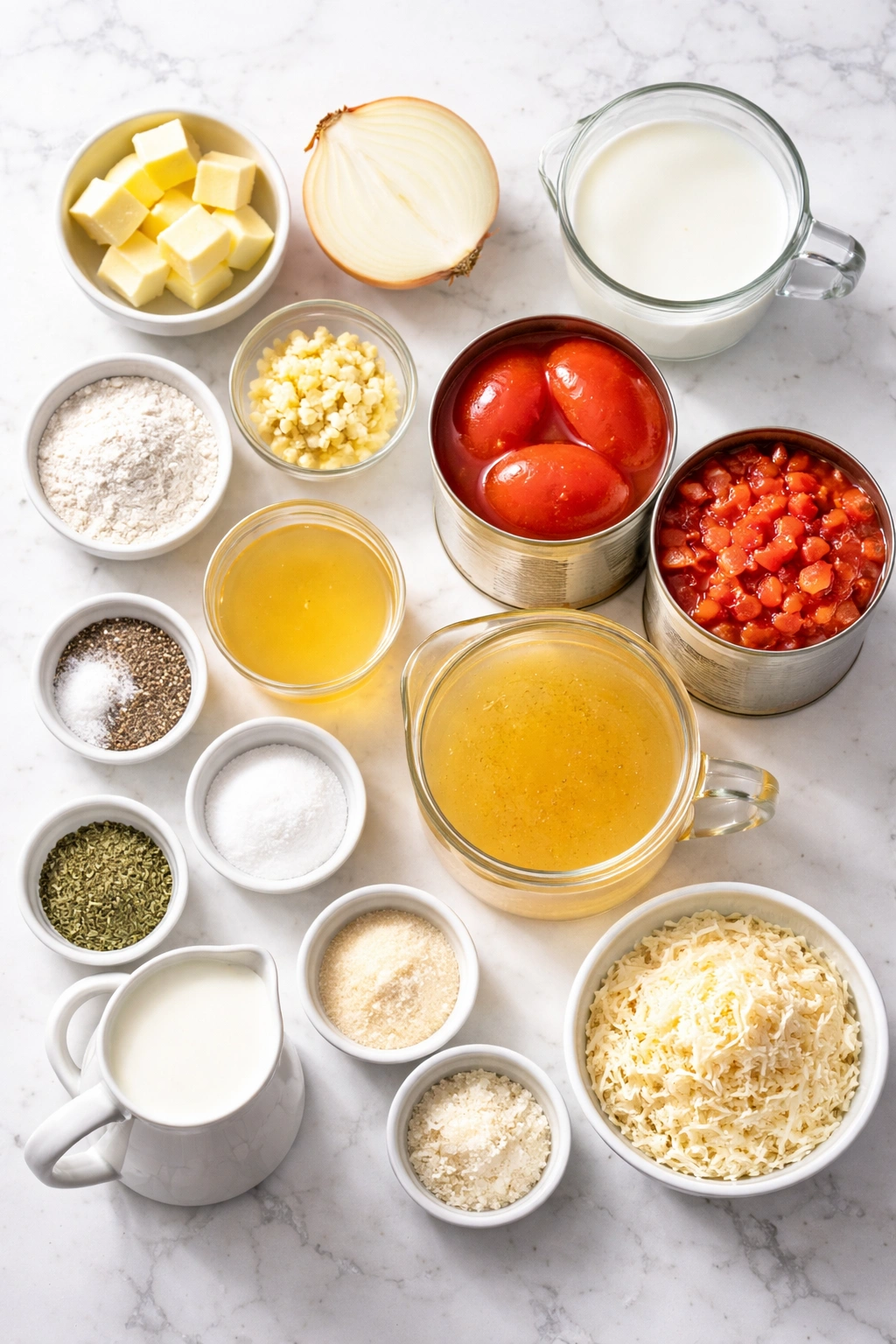
For the Soup Base:
- ¼ cup (½ stick) unsalted butter, cut into pieces
- 1 medium onion, finely diced (about ¾ cup)
- 3 cloves garlic, minced (about 1 tablespoon)
- ¼ cup all-purpose flour
- 2½ cups whole milk (2%, whole, or any milk you keep on hand; you can also use half-and-half for extra richness or substitute non-dairy milk)
- 1 (28-ounce) can whole peeled tomatoes, or crushed tomatoes with Italian herbs (about 3½ cups)
- 1 (14.5-ounce) can diced tomatoes (or substitute another 14-ounce can of whole or crushed tomatoes)
- 2 cups low-sodium chicken broth (or vegetable broth for a vegetarian version)
- ½ teaspoon fine sea salt, plus more to taste
- ¼ teaspoon freshly ground black pepper, plus more to taste
- 1 to 2 tablespoons granulated sugar (to balance acidity; start with 1 and taste before adding more)
- ½ teaspoon dried basil (or ¼ teaspoon if your canned tomatoes already include Italian herbs)
- ½ cup heavy cream, or ⅓ cup for a lighter version (optional but recommended)
- ½ cup grated Parmesan cheese, preferably freshly grated
For Serving:
- Fresh basil leaves, torn or chiffonade (about ¼ cup), or more to taste
- Extra Parmesan cheese for garnish
- Croutons, crusty bread, or oyster crackers (optional)
- Drizzle of good olive oil (optional but nice)
Step-by-Step Instructions
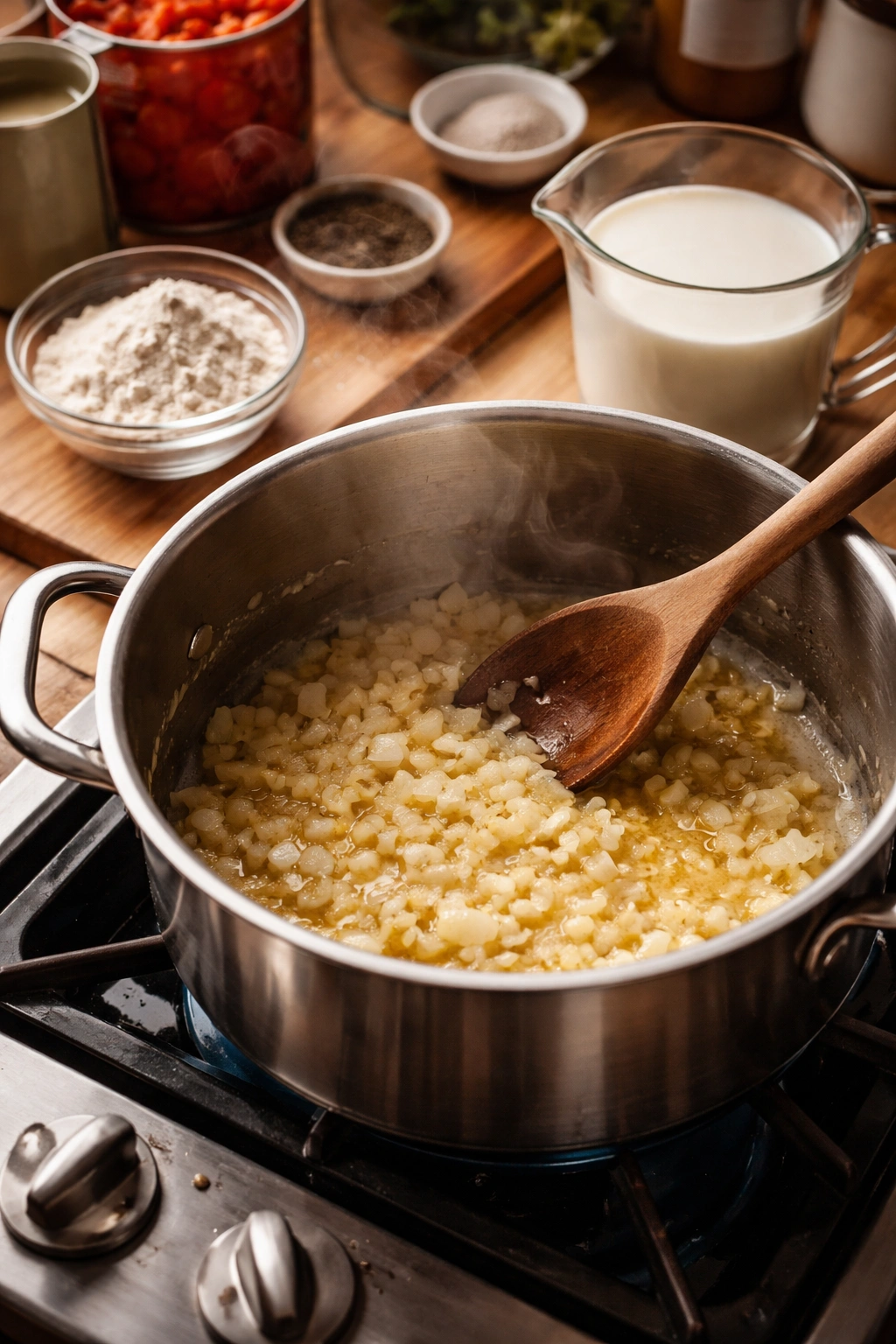
Prepare Your Ingredients:
-
Finely dice the onion and mince the garlic cloves into small pieces—you want them small enough that they’ll soften quickly and distribute evenly throughout the soup.
-
If using whole canned tomatoes, have them ready to break apart; you’ll do this as they go into the pot.
-
Measure out the milk and broth so you’re not scrambling when you need to add them.
Advertisements
Build the Base:
-
Melt the butter in a large soup pot over medium heat. You’ll see it start to foam—that’s exactly what you want. The butter should be melted and shimmering, but not browning yet.
-
Add the diced onion and a pinch of salt (the salt helps the onions release their moisture). Stir occasionally and cook for 3 to 4 minutes, until the onion pieces are soft, translucent, and starting to turn slightly golden at the edges. Don’t rush this step—those caramelized bits add real flavor.
-
Add the minced garlic and cook for exactly 1 minute, stirring constantly. This is just long enough for the garlic to become fragrant without burning, which would make it bitter. You should smell that wonderful garlicky aroma rising from the pot.
Create the Roux:
-
Sprinkle the flour over the onion and garlic mixture. Using a wooden spoon or silicone spatula, whisk constantly for 1 to 2 minutes until the flour is fully incorporated and no white specks remain visible. This mixture is your roux—it’s what will thicken the milk and create that silky, luxurious texture.
-
The roux should look paste-like and slightly golden. If it looks dry or clumpy, you may have cooked the onions too much and evaporated their moisture; add a splash of milk to loosen it, then proceed.
Add the Milk Base:
-
While whisking constantly, slowly pour in about ½ cup of the milk. Start with just a small amount and whisk vigorously to combine it with the roux—this prevents lumps from forming. The mixture will look thick and smooth.
-
Continue whisking and gradually add the remaining 2 cups of milk, pouring slowly while stirring. This is not the time to rush; steady pouring and constant whisking ensures a completely smooth sauce with no lumps hiding in the bottom of the pot. Do not stop whisking or add the milk too quickly—both mistakes are the most common reason for lumpy soup.
Advertisements -
Increase the heat to medium and keep stirring frequently. The mixture will gradually thicken as it heats. You’ll know it’s ready when it coats the back of a spoon and leaves a clear trail when you drag your finger through it—usually 5 to 8 minutes of cooking. The consistency should be like thin pudding at this stage.
Combine with Tomatoes:
-
Add the can of whole peeled tomatoes (with all their juices) to the pot. As you pour, break the whole tomatoes apart with your spoon or spatula, crushing them into chunks. This helps them incorporate evenly. Do not rinse the tomato can—those juices are liquid gold for flavor.
-
Add the second can of diced tomatoes (with juices) and stir to combine.
-
Pour in the chicken broth and add the salt, black pepper, dried basil, and 1 tablespoon of sugar. Stir everything together until well combined. The soup should look a bit thin at this point—that’s normal.
-
Bring the mixture to a gentle simmer over medium heat, stirring occasionally. You should see small bubbles forming at the surface and around the edges of the pot. Do not let it come to a rolling boil, especially if you’re planning to add cream—boiling can cause the cream to curdle, making the soup grainy.
-
Let it simmer gently for 5 to 10 minutes, stirring occasionally. This allows the flavors to meld together and the soup to thicken slightly as the tomato liquid reduces. The flavor deepens noticeably in those final minutes.
Blend and Finish:
-
Remove the pot from heat and let it cool for just 1 to 2 minutes—this is important because you’ll be blending hot soup, and steam can cause accidents.
-
If using an immersion blender, submerge the blender head completely in the soup before turning it on. Start on low speed and work your way up to high, moving the blender around the pot to blend everything evenly. Blend until the soup reaches your desired consistency—some people prefer it completely smooth, while others like a few small tomato chunks for texture. I recommend blending until mostly smooth but with tiny flecks of tomato visible; this gives you the best mouthfeel.
Advertisements -
If using a regular blender, carefully ladle the hot soup into the blender in batches, filling it no more than halfway full. This is crucial—hot liquid expands when blended, and overfilling will cause it to burst out of the top and splash you with scalding soup. Cover the lid with a kitchen towel and hold it firmly while blending. Blend each batch on low speed first, then increase speed once the contents are partially blended. Return each batch to a clean pot.
Add the Cream:
-
Once all the soup is blended, place it back on the stove over low heat if it’s cooled down significantly.
-
Slowly pour in the heavy cream while stirring constantly. This is essential—adding cream too quickly to acidic tomato soup can cause it to curdle, resulting in a grainy texture. Pour slowly and stir constantly, and you’ll avoid this problem entirely. The soup will transform as the cream incorporates, becoming noticeably richer and more luxurious.
-
Stir in the grated Parmesan cheese until it’s completely melted and incorporated. The cheese dissolves into the soup, creating additional creaminess and adding a savory, umami depth.
Taste and Adjust:
-
Taste the soup carefully. Does it need more salt or pepper? Is the tomato flavor overwhelming the soup, or does it taste sweet and balanced? If it tastes too acidic or sharp, add the second tablespoon of sugar, a pinch at a time, tasting between additions. You’re looking for that sweet spot where the tomato flavor is bright but not aggressive.
-
If the soup is too thick for your liking, add a splash more milk or broth while stirring. If it’s too thin, you can simmer it a few minutes longer to reduce and concentrate the flavors. The perfect consistency is when it coats a spoon but still flows easily—somewhere between broth and cream.
Serve:
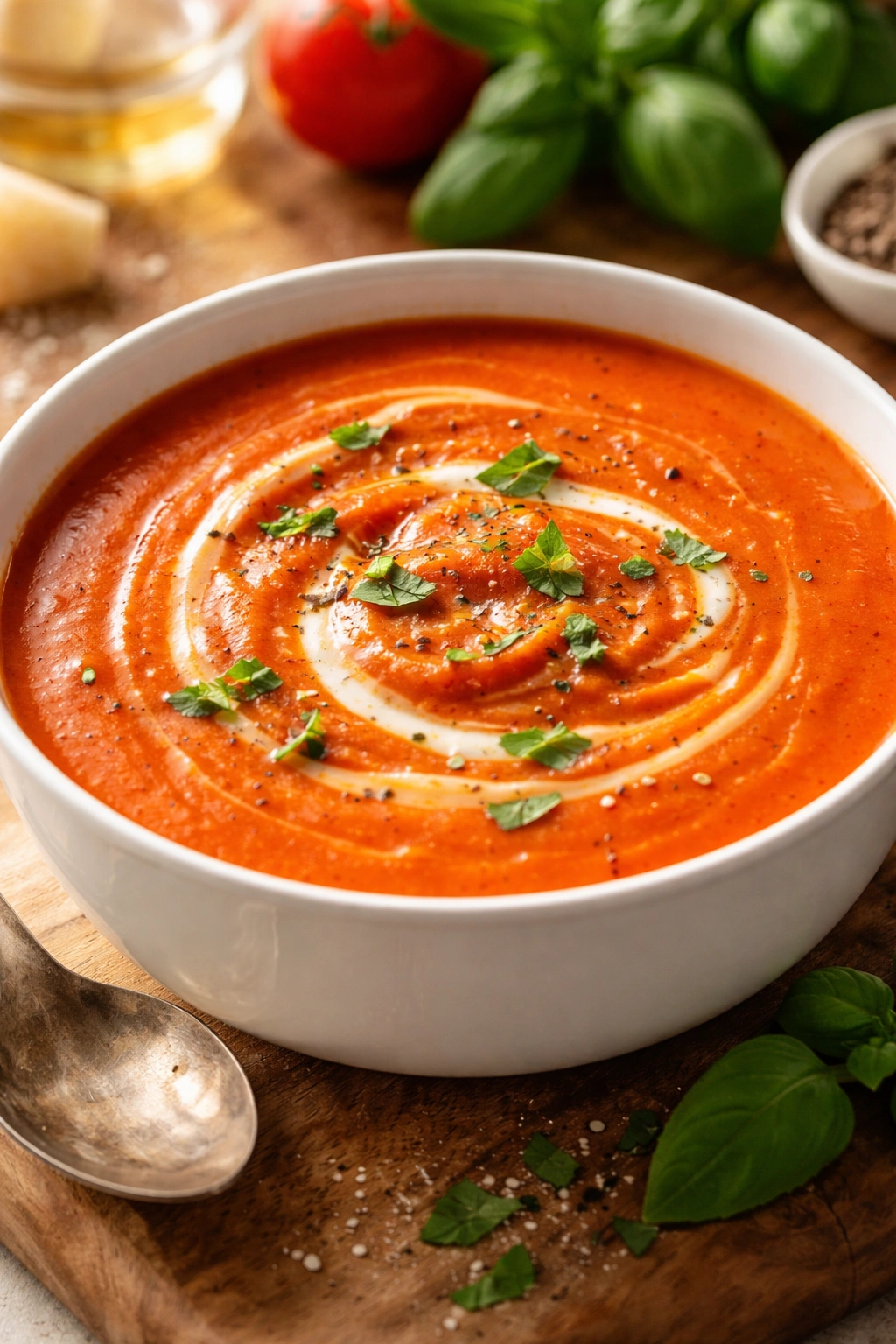
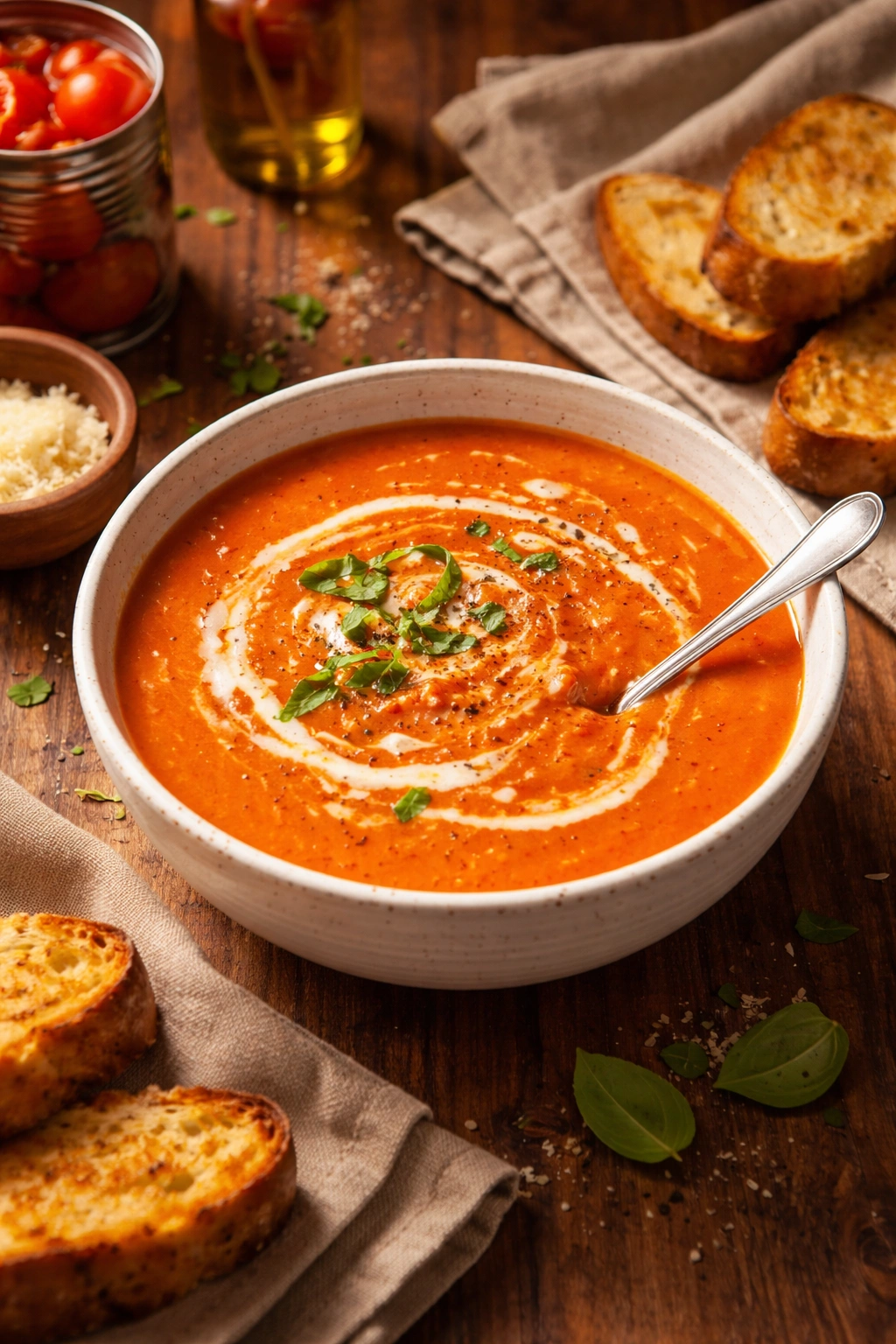
- Ladle the soup into bowls, tear or slice some fresh basil over the top, and add a sprinkle of Parmesan cheese if desired. A small drizzle of good olive oil adds richness and visual appeal. Serve immediately while it’s steaming hot.
Tips for Perfect Creamy Tomato Soup Every Single Time
The milk thickness is critical to getting this right the first time. When you’re cooking the milk and flour mixture in step 11, stop as soon as it coats the back of a spoon. If it thickens too much before the tomatoes go in, you can always whisk in a splash more milk to loosen it; it’s much harder to fix if it’s too thin. The point is you want a thickened base, not a pudding-thick mixture.
Keep the heat on low or medium-low once the milk is in the pot. High heat can cause the bottom to scorch, creating a burnt taste that ruins the entire batch. You want gentle, even heating. Stir frequently, especially around the edges of the pot where heat tends to concentrate.
If you’re using a regular blender instead of an immersion blender, patience is your friend. Let the soup cool completely or at least until you can comfortably hold the pot. Hot soup and a closed blender lid are a dangerous combination. Never fill the blender more than halfway, and hold the lid down with a kitchen towel—steam needs to escape, and you don’t want it forcefully ejecting the lid across your kitchen.
Use whole canned tomatoes or crushed tomatoes with Italian herbs when possible. Diced tomatoes work fine, but whole tomatoes have superior flavor and less added liquid. If you find your soup is too watery after blending, this is usually why—diced canned tomatoes often include more juice than whole tomatoes.
Fresh basil makes a noticeable difference in the final flavor, but it’s not essential. If you don’t have fresh basil, dried basil is a worthy substitute, though you’ll add it earlier in the cooking process rather than at the end. Fresh herbs are most aromatic when they haven’t been cooked, so add them after blending or right at the end.
The sugar is your secret weapon for balancing the acidity of canned tomatoes. Don’t skip it or feel like you’re “cheating” by adding it. This isn’t about making soup sweet; it’s about rounding out the edges and letting the tomato flavor shine without that sharp, acidic bite. Taste as you go, and add gradually—you can always add more, but you can’t take it out.
Common Mistakes & How to Avoid Them
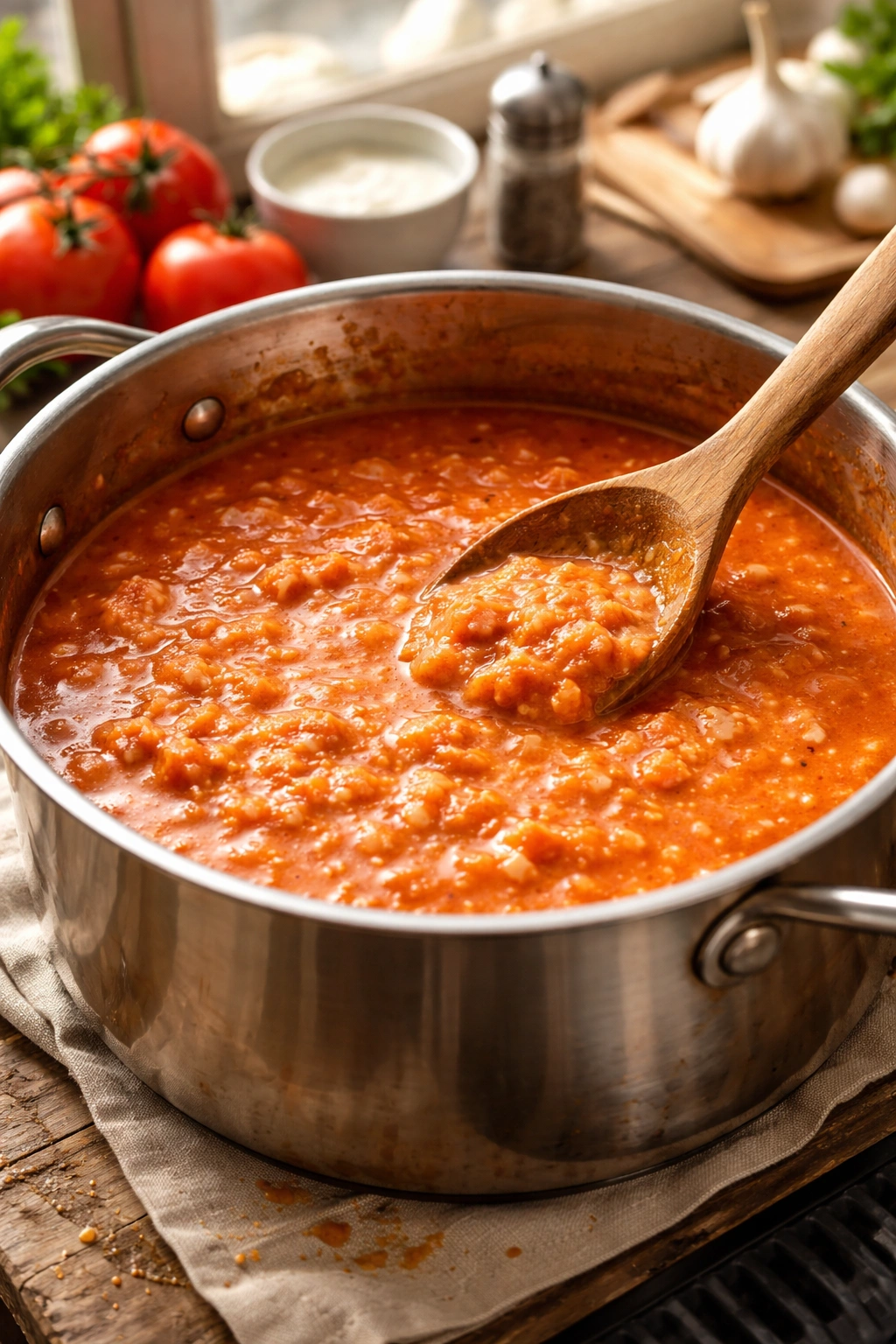
Lumpy Soup: The most common culprit is either not whisking constantly when adding milk to the roux, or adding the milk too quickly. Solution: Whisk vigorously and pour slowly. If lumps do form, strain the soup through a fine-mesh sieve before blending, or simply blend it longer—the immersion blender will break down most lumps.
Curdled Cream: This happens when the soup is at a rolling boil when you add cream, or when you add cream too quickly. Solution: Always remove the pot from heat or reduce to very low heat before adding cream. Add cream slowly while stirring constantly. If it does curdle slightly, it’s not a disaster—the immersion blender will break up the grainy texture to some degree.
Too Acidic or Sharp Tasting: This is the tomato acidity coming through too strongly. Solution: Add sugar a tablespoon at a time, tasting between additions. You’re not trying to make it sweet—just balanced. If you’ve already added the recommended sugar and it’s still too acidic, add a pinch of baking soda. It will fizz—that’s the baking soda neutralizing the acid. Stir well and taste again.
Too Thin or Too Watery: Usually caused by using diced tomatoes with too much liquid, or not reducing the soup enough. Solution: Let it simmer a few extra minutes without a lid, allowing the liquid to evaporate and flavors to concentrate. If you’re in a hurry, you can also stir in a tablespoon of tomato paste, which thickens the soup and intensifies tomato flavor.
Not Enough Garlic or Onion Flavor: This often happens when you rush the initial sautéing. Solution: Take your time with steps 5 and 6. Let the onions get soft and golden, and give the garlic a full minute to become fragrant. These aromatics are your flavor foundation.
Soup Separates or Looks Grainy After Freezing: This is normal with cream-based soups. Solution: When freezing, omit the cream and freeze the soup base. When you thaw and reheat it, add the cream fresh. The soup will taste like you just made it.
Variations & Adaptations to Make It Your Own
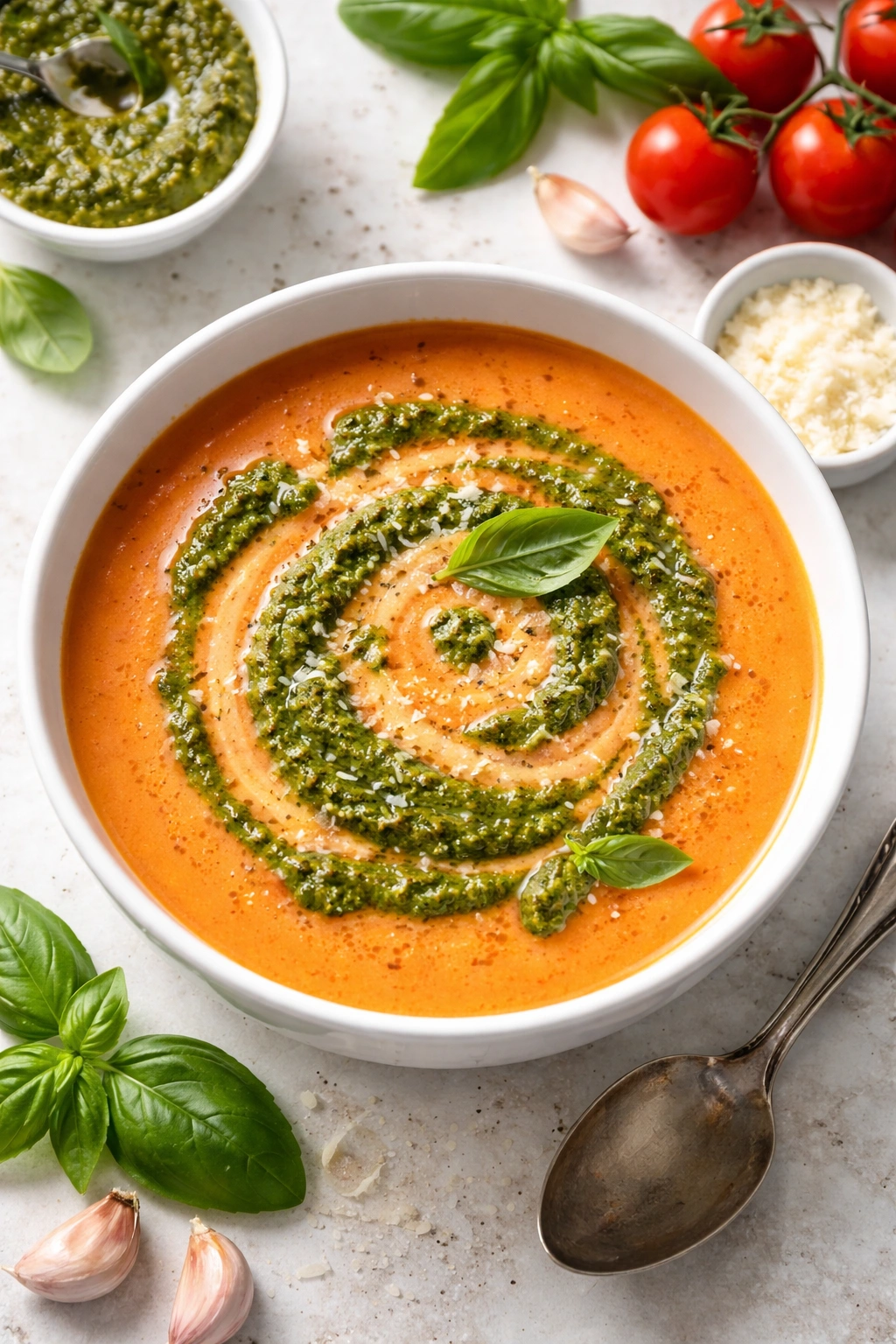
Tomato Basil Pesto Version: Stir in 2 tablespoons of basil pesto along with the fresh basil at the end. This adds an herbaceous, slightly peppery layer that’s absolutely delicious and transforms the soup into something with more complexity.
Roasted Garlic: If you have roasted garlic on hand (or roast it quickly by tossing cloves with olive oil and roasting at 400°F for 15 minutes), use it instead of raw garlic. It’s sweeter and mellower, adding a deeply savory note.
Add Hidden Vegetables: Finely dice a carrot or two and cook them with the onion in step 5. They’ll soften and puree right into the soup, adding sweetness and body while disappearing completely—great for sneaking vegetables into picky eaters’ meals. Cauliflower works the same way and keeps the carb count lower if that matters to you.
Creamy Tomato Tortellini Soup: Add a cup of cooked cheese tortellini or other small pasta to the finished soup. This turns it into a heartier, more filling main course that’s still ready in about 30 minutes total.
Spicy Version: Add ¼ to ½ teaspoon of red pepper flakes when you add the dried basil. For more heat, use 2 teaspoons of minced fresh jalapeño in place of some of the garlic, or stir in a splash of hot sauce at the end. The creaminess of the soup balances the heat beautifully.
Dairy-Free or Vegan: Replace the butter with olive oil or vegan butter. Use non-dairy milk (unsweetened almond, oat, or soy milk work best—avoid anything flavored or sweetened) and skip the cream or use coconut cream instead. The soup will be slightly less rich but still delicious and completely satisfying.
Gluten-Free: Replace the flour with cornstarch (use about 3 tablespoons) or an equal amount of rice flour. Mix the cornstarch with a splash of cold milk to create a slurry, then whisk it into the hot milk mixture. Cook for an extra minute or two to allow the cornstarch to thicken fully. The texture will be very slightly different but nearly identical.
Lighter Version: Use 2% milk instead of whole milk, reduce the cream to ⅓ cup, and skip the Parmesan cheese or use just 3 tablespoons. You’ll get a lighter soup that’s still creamy and delicious without feeling heavy.
Tomato Soup with White Wine: Add ½ cup of dry white wine (Sauvignon Blanc or Pinot Grigio work beautifully) after the roux has thickened and before the milk goes in. Simmer for 1 minute to burn off the alcohol, then proceed as normal. The wine adds acidity and depth that’s particularly nice paired with grilled cheese.
Storage, Make-Ahead, & Freezing Guide
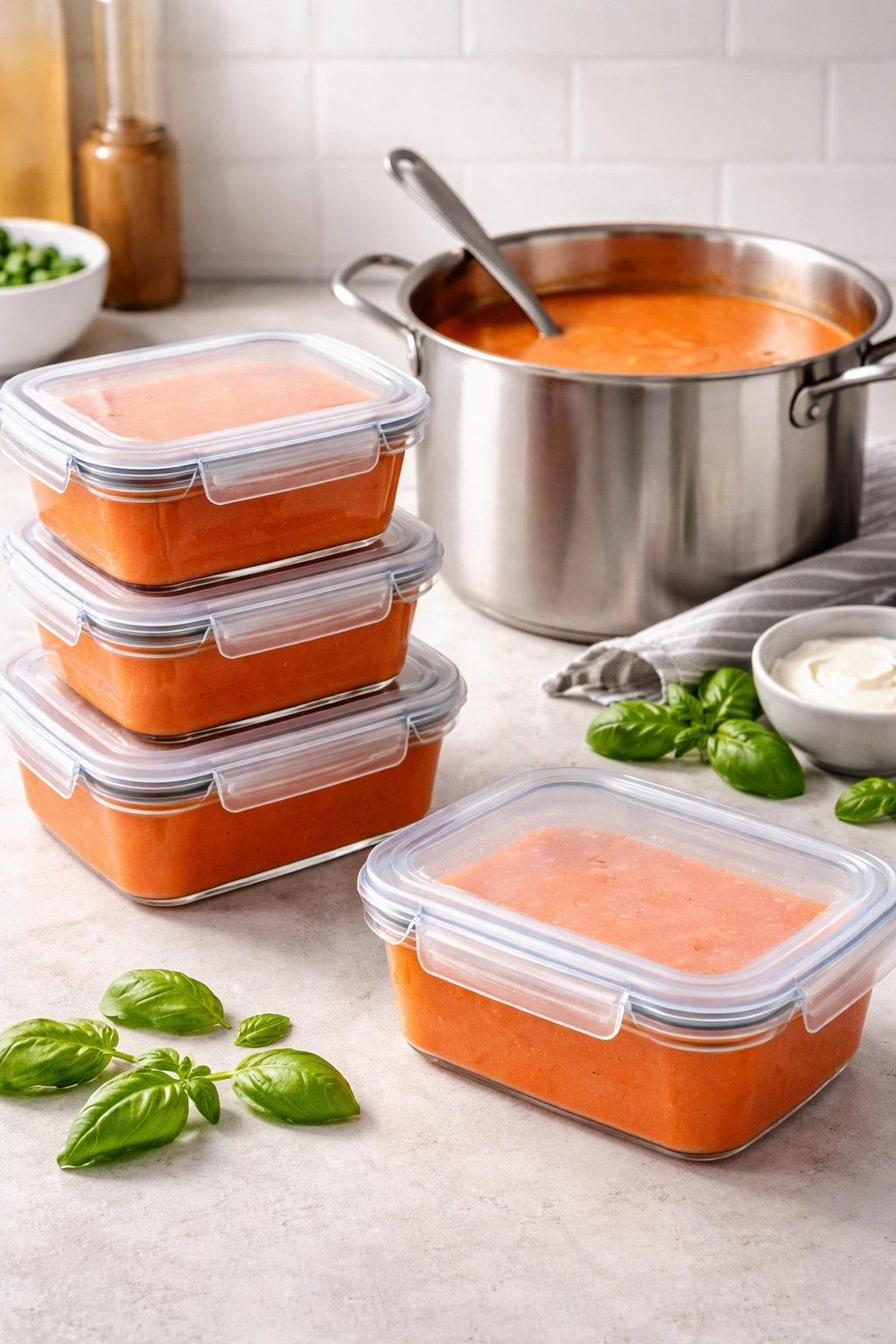
This soup is genuinely a make-ahead winner. Refrigerator: Store it in an airtight container for 3 to 4 days. Reheat gently on the stove over low to medium heat, stirring often. If it has thickened in the fridge (which it often does), add a splash of milk or broth to loosen it back to your desired consistency. You can also reheat individual portions in the microwave, stirring halfway through for even heating.
Freezing: Don’t add the cream until right before serving. The cream can separate in the freezer and make the defrosted soup grainy. Instead, freeze the blended soup base without cream. It keeps beautifully for up to 2 months. Thaw it overnight in the refrigerator or thaw it directly on the stovetop over low heat, stirring occasionally. Once thawed and warmed through, stir in the heavy cream while the soup is on low heat.
Make-Ahead Strategy: You can prepare everything up through step 16 (right after blending but before adding cream) the morning of the day you want to serve it, or even 1 to 2 days ahead. Store the blended soup base in the fridge in an airtight container. When you’re ready to serve, reheat it gently, add the cream, and serve. This means you can have hot soup on the table in just 10 minutes even on the busiest day.
Batch Cooking: This recipe doubles and triples beautifully. Make a large batch on the weekend and portion it into individual containers for grab-and-go lunches throughout the week. It’s comforting, satisfying, and infinitely better than anything from a can or a box.
What to Serve With Creamy Tomato Soup

The Classic Pairing: Grilled cheese sandwich is the obvious and perfect choice. There’s a reason this combo has endured—the rich, salty, melted cheese and crispy, buttery bread provide textural contrast and flavor balance that makes both components taste better. Cut the sandwich into bite-sized pieces and dunk each piece directly into the soup for the full experience, or cut it into strips for dipping.
Bread-Based Options: Crusty bread like a baguette, ciabatta, or sourdough toasted and brushed with olive oil. Buttery garlic bread. Homemade or store-bought cheddar bay biscuits (Bake & Shake style). Breadsticks, either soft and buttery or crispy. Homemade dinner rolls brushed with herb butter. Even simple oyster crackers or saltines stirred into the soup add a nice textural element.
Lighter Sides: Pair the soup with a simple salad—a crisp arugula salad with lemon vinaigrette, a white bean and tuna salad, or tangy dressed frisée all complement the richness of the soup without making the meal feel heavy. A light green salad with Dijon vinaigrette works too.
Protein Additions: Stir in white beans for a protein boost and heartier meal. Add crispy bacon bits. Layer grilled chicken breast slices at the bottom of the bowl before ladling in soup. Poach an egg directly in the soup for a rich, luxurious lunch.
Garnishes That Matter: Fresh basil, obviously. Shredded Parmesan. A drizzle of good olive oil (particularly one infused with basil or garlic). Crispy croutons. Crispy pancetta or bacon bits. A swirl of heavy cream for visual elegance. Fresh red pepper flakes for those who like heat. A tiny dollop of basil pesto.
Beverage Pairings: Serve with a crisp white wine like Sauvignon Blanc or Pinot Grigio if you’re feeling fancy. Iced tea or cold lemonade for a light counterpoint to the richness. A simple sparkling water with lemon. Even hot tea (chamomile or Earl Grey) pairs surprisingly well for a cozy afternoon meal.
Final Thoughts
The real power of this 20-minute creamy tomato soup lies not just in its speed, but in how completely it shatters the assumption that quick cooking means compromised flavor. You’re not cutting corners here—you’re being smart about which corners actually matter. The aromatics, the roux, the quality tomatoes, the strategic use of cream and cheese—every element serves a purpose, and the result is something that tastes like it came from a restaurant kitchen or someone’s grandmother’s hours-long recipe.
Once you’ve made this soup a few times, it becomes automatic. You’ll know the exact point when the onions are perfectly soft and golden, when the roux is ready, when the milk is thickened just right. It becomes the kind of recipe you make without thinking, without measuring, without worry. And that’s when it truly becomes your secret weapon for weeknight dinners—the meal you turn to when you need something comforting, delicious, and completely achievable in the time it takes to make one other thing.
Keep a few cans of quality tomatoes in your pantry, and you’re never more than 20 minutes away from turning an ordinary day into a cozy one.
