



There’s a particular moment that plays out in nearly every kitchen when lasagna hits the table. Someone reaches for a piece before the rest of the dish has even been properly set down. Someone else claims they saw that golden, cheesy corner first. A third person insists that the layers they’re eyeing are definitely the best. And suddenly, a perfectly composed dinner has turned into a friendly tug-of-war over who gets the prime slices with the most cheese and the crispiest edges.
That’s exactly the kind of lasagna this recipe delivers — the kind so undeniably good that people stop having manners around it. It’s not fussy or pretentious. It doesn’t require special equipment or obscure ingredients. What it does require is understanding how to layer pasta, sauce, and cheese in a way that creates pockets of golden, bubbly richness that everyone wants to fight over. The truth is, great lasagna doesn’t need to be complicated. It needs to be methodical, intentional, and built with the kind of careful attention that translates into extraordinary flavor.
This is the lasagna recipe that’s been called “the best” by countless home cooks. It’s the one that comes to family dinners, potlucks, and freezers across countless kitchens. And it’s easier to make than most people expect — which is precisely why it’s so dangerous. One batch leads to requests for another. The second attempt becomes a tradition. Before you know it, you’re the person everyone calls for this particular dish.
Why This Lasagna Gets Everyone Fighting Over It
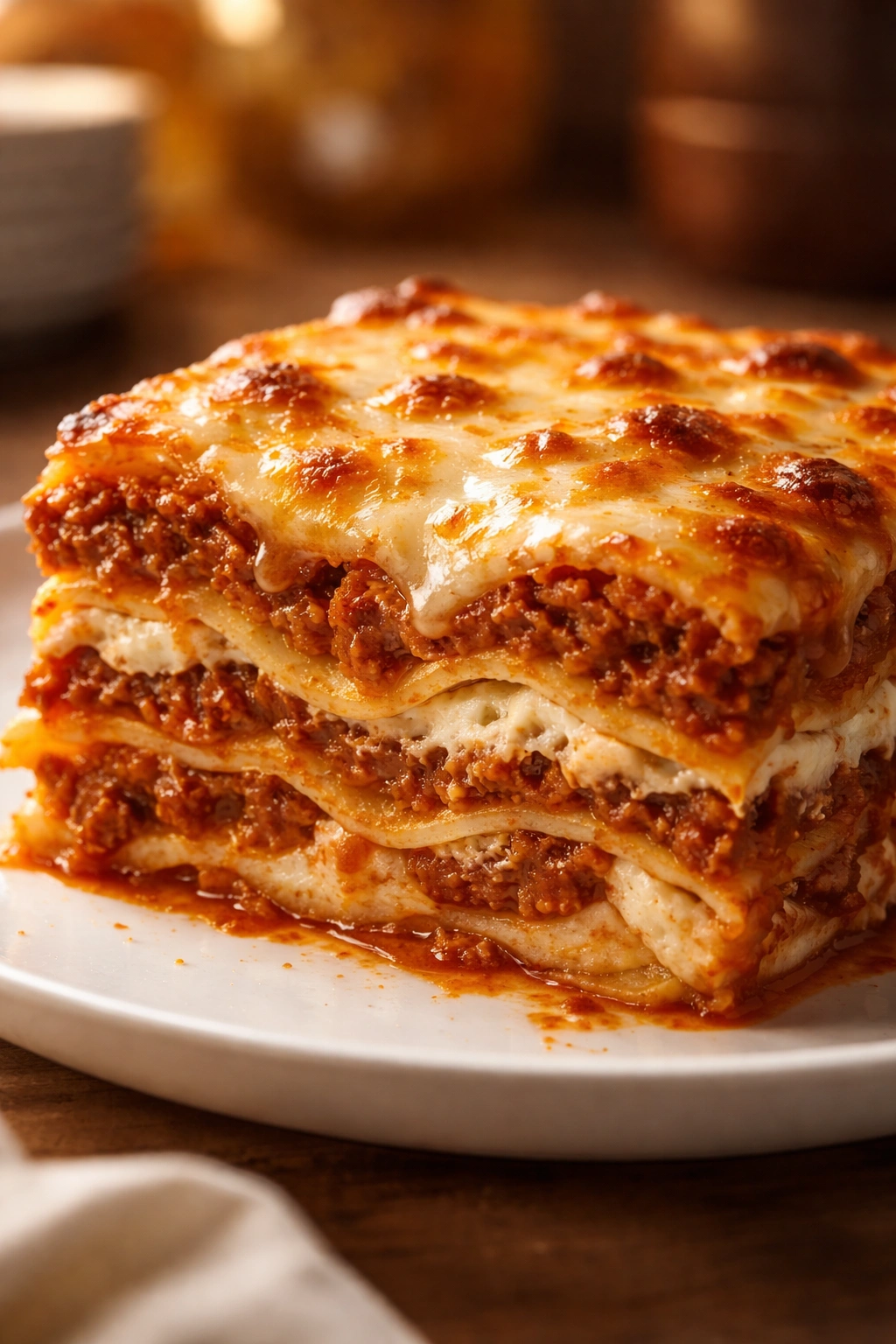
What makes this lasagna different from the dozens of other recipes floating around is something that sounds almost too simple: it’s built on genuine flavor, proper technique, and the kind of restraint that elevates comfort food into something genuinely memorable. Too many lasagna recipes pile on so much cheese that it overpowers everything else, turning the whole dish into a bland, heavy mass. Too many rely entirely on store-bought sauce that tastes flat and one-dimensional.
This version strikes a perfect balance. The meat sauce is rich enough to stand on its own, simmered just long enough for the flavors to deepen and the acidity of the tomatoes to mellow into something warm and complex. The cheese layers are generous without being excessive — enough to create that signature melted, golden quality that catches light when you cut into a finished slice, but not so much that they overpower the careful balance with sauce and pasta.
The reason people fight over this lasagna comes down to texture contrast. Every forkful gives you something different: tender pasta that’s absorbed just enough sauce to taste like part of the whole dish rather than an afterthought, a creamy ricotta filling that feels almost custard-like when you bite through it, and a top layer of mozzarella that’s melted into golden, crispy patches at the edges. That interplay between tender and crispy, creamy and saucy, meaty and cheesy — that’s what makes people reach for seconds before anyone’s finished their first slice.
The Secret to Layers That Hold Together
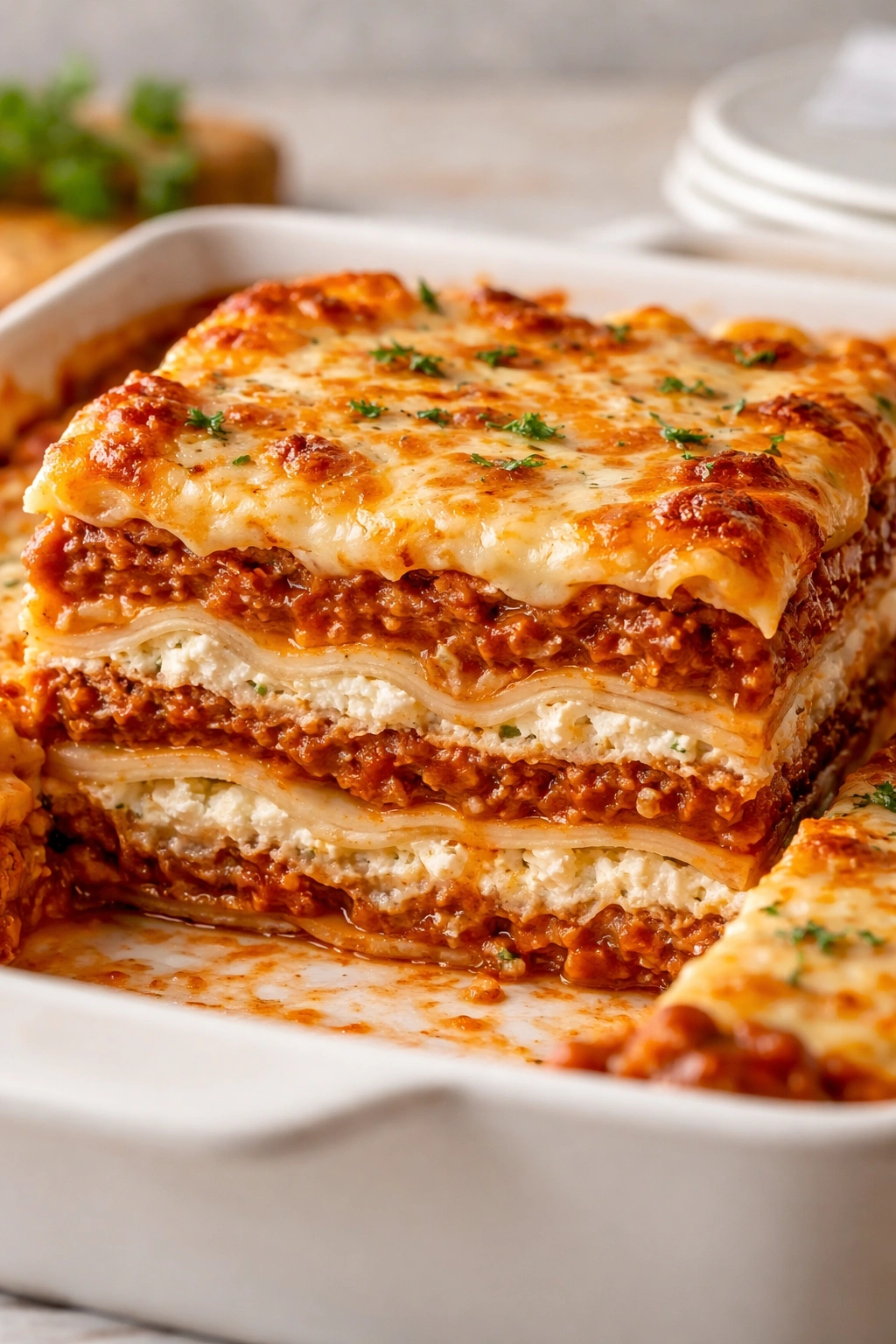
The biggest mistake most home cooks make with lasagna is one they don’t even realize they’re making. They boil their noodles, drain them, and then immediately start layering. What happens next is inevitable: the noodles absorb extra moisture from the sauce during baking, the layers separate instead of melding together, and when you cut into the finished lasagna, the whole thing slides apart on the plate like it’s been assassinated by poor planning.
The solution is counterintuitively simple: cook your noodles to just barely al dente — firm enough that they still have a little resistance when you bite down. Then, immediately after draining, rinse them under cool running water. This stops the cooking process cold and prevents them from continuing to soften. Lay them out on clean kitchen towels and let them dry slightly while you assemble everything else. This extra step removes surface moisture that would otherwise turn your carefully constructed layers into a mushy, soupy mess by the time they come out of the oven.
Another critical element is the timing of when you add the final cheese layer. Many recipes call for sprinkling mozzarella over the entire top before baking, which means it sits in a hot oven for the entire 45 to 60 minutes, turning hard and rubbery instead of melted and bubbly. The better approach is to keep that top layer of cheese in reserve. Bake the lasagna covered for the first 45 minutes, which allows the noodles to soften in a gentle, steam-filled environment without drying out. Then remove the foil, add your final mozzarella cheese, and bake uncovered for just 10 to 15 more minutes. This method guarantees that top layer melts beautifully while still achieving those coveted browned, slightly crispy edges.
What You Need to Gather
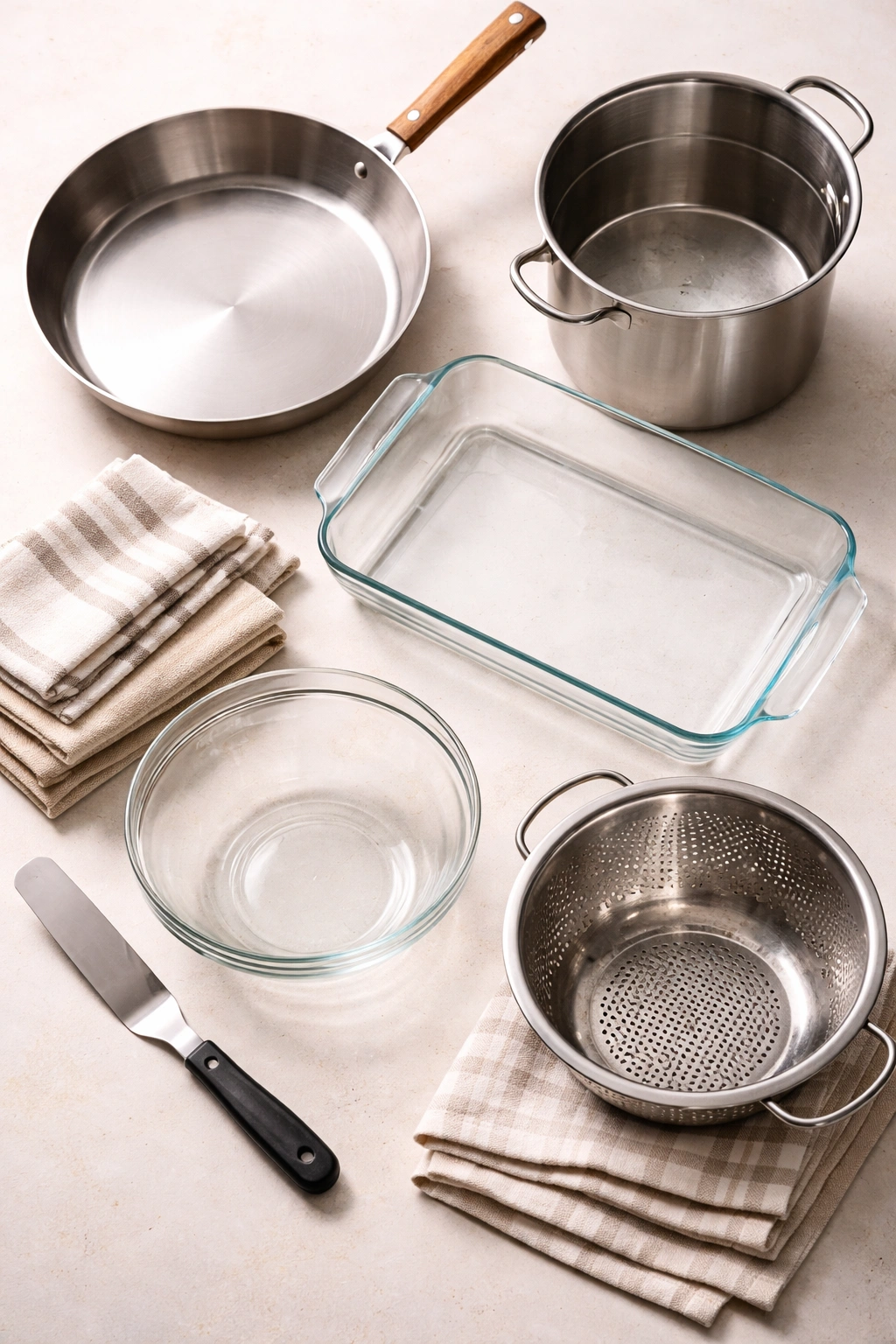
Before you even think about assembling this lasagna, make sure your workspace is set up for success. You’ll need a large skillet or Dutch oven for the meat sauce — something with enough surface area that the beef can brown properly rather than steam in its own moisture. You’ll want a large pot for boiling the noodles, preferably one that’s tall enough that the water doesn’t boil over onto your stovetop when the noodles go in.
For assembly, a standard 9×13-inch baking dish is perfect. If your dish is older or a bit warped, placing it on a baking sheet before filling will catch any sauce that bubbles over and keeps your oven clean. You’ll need a mixing bowl for combining the cheese filling, a colander for draining the noodles, and some clean kitchen towels for blotting them dry. An offset spatula or the back of a spoon makes spreading the cheese mixture significantly easier than trying to dollop it onto layers and smooth it out with a fork.
Have everything prepped and within arm’s reach before you start assembling. This isn’t a dish where you want to be searching for ingredients mid-layer. Measure out your meat sauce, have your noodles laid out and counted, and get your cheese mixture into the bowl and ready to go. The assembly itself moves quickly once you start, and having everything staged means you won’t be standing there with your hands covered in cheese, hunting for the next component.
Serving and Timing Information
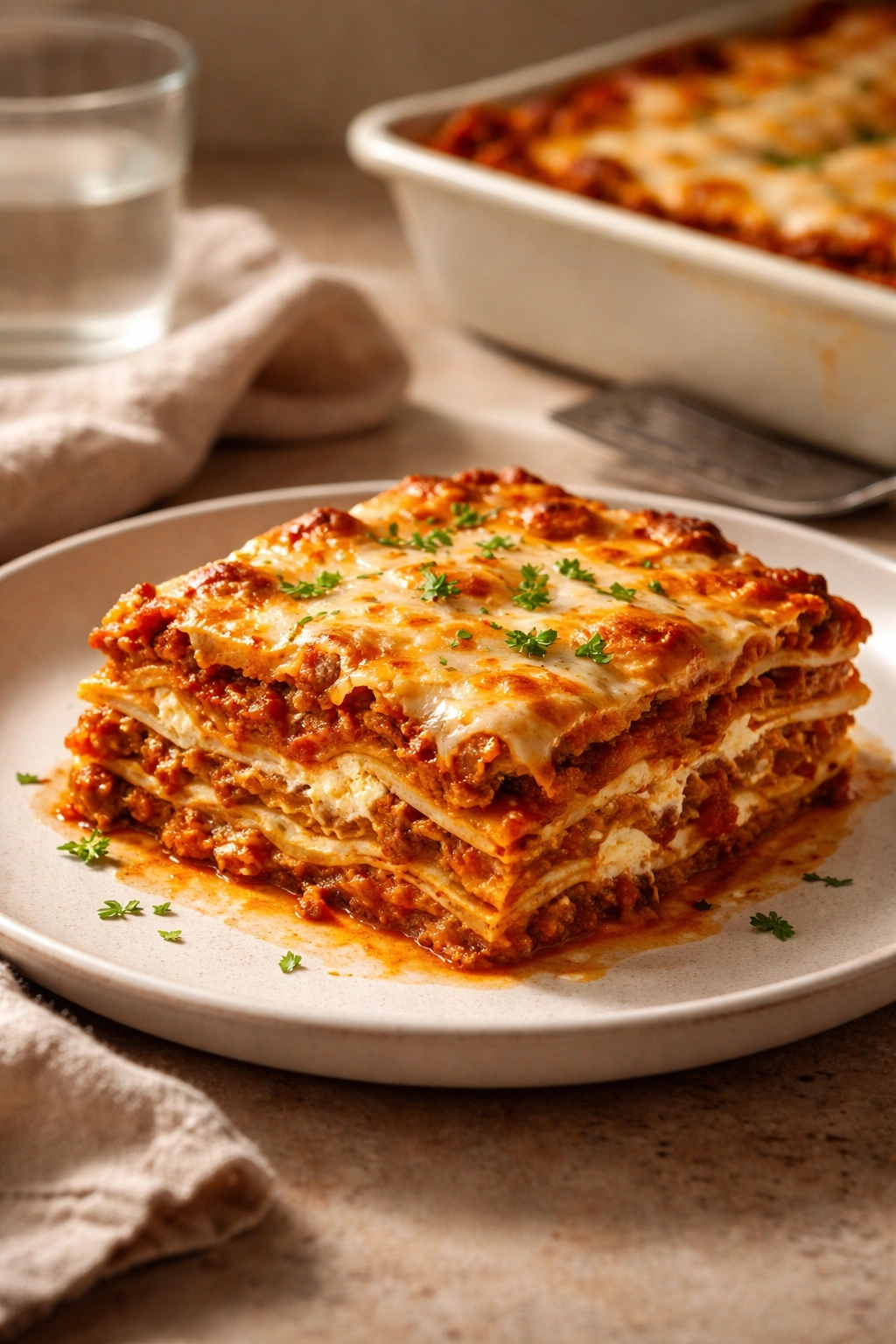
Yield: Serves 8 to 12 (depending on appetites and whether you’re serving side dishes)
Prep Time: 40 minutes (includes browning meat, simmering sauce, boiling noodles, and mixing cheese)
Cook Time: 60 minutes (45 minutes covered, 15 minutes uncovered)
Total Time: 1 hour 40 minutes active time, plus 15 minutes resting before cutting
Difficulty: Beginner to Intermediate — This recipe has several steps and components, but each step is straightforward and the assembly is essentially a structured layer-and-repeat process. No special techniques or equipment required beyond standard kitchen tools.
Additional Notes: The resting period after baking is non-negotiable. This allows the layers to set and the cheese to firm up just enough that slices hold their shape instead of collapsing on the plate. The lasagna actually improves slightly in flavor when made a day ahead, as the sauce continues to meld with the other components.
Complete Ingredient List
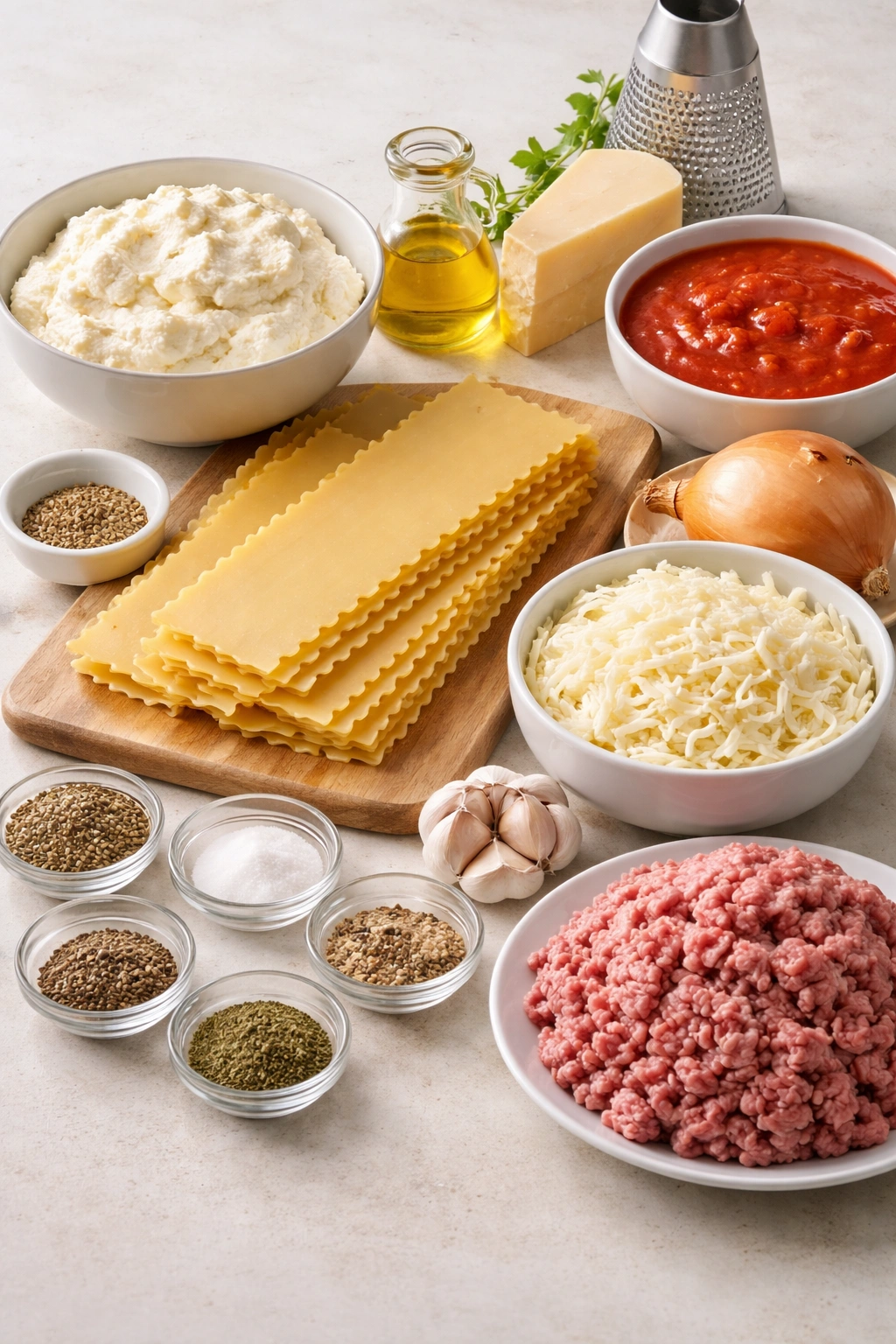
For the Meat Sauce:
- 1 tablespoon extra virgin olive oil
- 1 pound ground beef (or a mix of ¾ pound ground beef and ¼ pound Italian sausage for more depth)
- ½ medium yellow onion, finely diced
- 3 cloves garlic, minced
- 1 (28-ounce) can crushed tomatoes
- 1 (15-ounce) can tomato sauce
- 2 tablespoons tomato paste
- 1 tablespoon fresh Italian seasoning (or 1 teaspoon dried Italian seasoning)
- ½ teaspoon fennel seeds (optional but highly recommended — this is what gives the sauce that subtle sausage-like flavor)
- ½ teaspoon salt, plus more to taste
- ¼ teaspoon freshly ground black pepper
- 1 tablespoon sugar (optional, to balance acidity)
- 1 teaspoon red or white wine vinegar (optional, adds complexity)
For the Cheese Filling:
- 15 ounces ricotta cheese (about 2 cups)
- 1 large egg, beaten
- 2 cups shredded mozzarella cheese, divided (use 1½ cups for the filling, reserve ½ cup for layering)
- ¾ cup freshly grated Parmesan cheese, divided (use ½ cup for the filling, reserve ¼ cup for layering)
- ¼ cup fresh parsley, finely chopped
- ¼ teaspoon salt
- Pinch of freshly ground black pepper
For Assembly:
- 12 lasagna noodles, uncooked (you may want 1 or 2 extra in case of breakage)
- 2 cups shredded mozzarella cheese for the top layer (use low-moisture whole milk mozzarella for the best browning)
- 2 tablespoons freshly grated Parmesan cheese for finishing
Optional Additions:
- 10 ounces frozen spinach, thawed and squeezed completely dry (layer this between the ricotta and sauce if you want a vegetable-forward version)
- 8 ounces fresh mushrooms, sautéed in butter until golden (adds earthiness without competing with the meat flavor)
Step-by-Step Instructions
Prepare Your Workspace:
-
Preheat your oven to 375°F (190°C) and position the rack in the center. Fill a large pot with 4 to 5 quarts of salted water (add about 1 tablespoon of salt) and set it on high heat to come to a rolling boil — this takes longer than most people expect, so start this first.
-
Have your 9×13-inch baking dish ready. Lightly grease it with olive oil or cooking spray to prevent sticking, then set it within arm’s reach of your assembly station.
Make the Meat Sauce:
-
While the water heats, warm the olive oil in a large skillet or Dutch oven over medium-high heat for about 1 minute until it’s shimmering but not smoking. Add the ground beef (and sausage if using), breaking it up with a wooden spoon as it cooks. The goal here is to break the meat into small, fine pieces rather than large chunks — this creates better distribution throughout the lasagna.
-
Cook the meat for 8 to 10 minutes, stirring frequently, until it’s no longer pink and has turned a rich golden-brown color. The fond (those browned bits stuck to the bottom of the pan) is pure flavor, so let it develop. Once the meat is cooked through, carefully tilt the skillet and use a spoon to remove excess grease, leaving about 1 tablespoon behind for flavor.
-
Add the diced onion to the pan and reduce the heat to medium. Cook for 8 to 10 minutes, stirring occasionally, until the onion becomes translucent and the edges begin to caramelize slightly — you’ll notice the onion releases moisture at first, then the moisture evaporates and the onion starts to stick slightly to the pan and turn golden. This is the moment when its natural sugars activate and deepen the sauce’s flavor profile.
-
Add the minced garlic and cook for just 1 minute, stirring constantly, until the raw garlic smell softens and transitions into something fragrant and mellow. Garlic burns quickly, so don’t let it sit unattended.
Advertisements -
Stir in the tomato paste and cook for 2 minutes, stirring constantly. Tomato paste has concentrated flavor, and cooking it briefly in the oil helps dissolve it evenly through the sauce rather than leaving little pockets of intense tomato throughout.
-
Add the crushed tomatoes, tomato sauce, salt, pepper, fennel seeds (if using), and Italian seasoning. Stir well, making sure to scrape up any browned bits from the bottom of the pan — this fond is irreplaceable flavor that will disappear if you don’t incorporate it into the sauce.
-
Bring the sauce to a gentle simmer, then reduce the heat to low. Partially cover the pan with a lid and let it simmer for 15 to 20 minutes, stirring occasionally. The sauce should bubble very gently — you want to see a few lazy bubbles breaking the surface, not a vigorous boil. Taste the sauce after 15 minutes. If it tastes too acidic, add the sugar 1 teaspoon at a time and stir, tasting after each addition. If it tastes flat, add a splash of wine vinegar. The sauce should taste rich, balanced, and deeply savory — not overly tomatoey or sour.
-
Once you’re happy with the sauce, remove it from the heat and let it cool slightly while you work on the other components. You can make the sauce up to a day ahead and store it in the refrigerator, which actually improves the flavor.
Cook the Noodles and Prepare the Cheese:
-
By now, your water should be at a rolling boil (if it’s not quite there yet, wait another minute or two — you want it genuinely boiling, not just hot). Carefully add all 12 lasagna noodles to the pot, stirring gently with a wooden spoon to make sure they don’t stick together. Don’t break them; they’ll fit in the pot just fine if you’re gentle.
-
Cook the noodles according to package directions, but aim for just under al dente — you want them tender and pliable but still with a tiny bit of resistance when you bite down. Start checking them about 1 minute before the package suggests they’ll be done. When they’re ready, drain them immediately in a colander, then rinse them under cool running water for about 30 seconds, gently stirring them with your hand to rinse away excess starch and prevent them from sticking together.
-
Lay the cooked noodles out on clean kitchen towels in a single layer, and gently blot them dry with paper towels. This removes surface moisture that would otherwise be carried into your lasagna.
-
While the noodles are cooking, combine the ricotta, beaten egg, the 1½ cups mozzarella for the filling, ½ cup Parmesan for the filling, parsley, salt, and pepper in a mixing bowl. Stir until completely combined and smooth — there should be no streaks of unmixed ricotta remaining. This mixture should have a creamy, uniform texture.
Assemble the Lasagna:
-
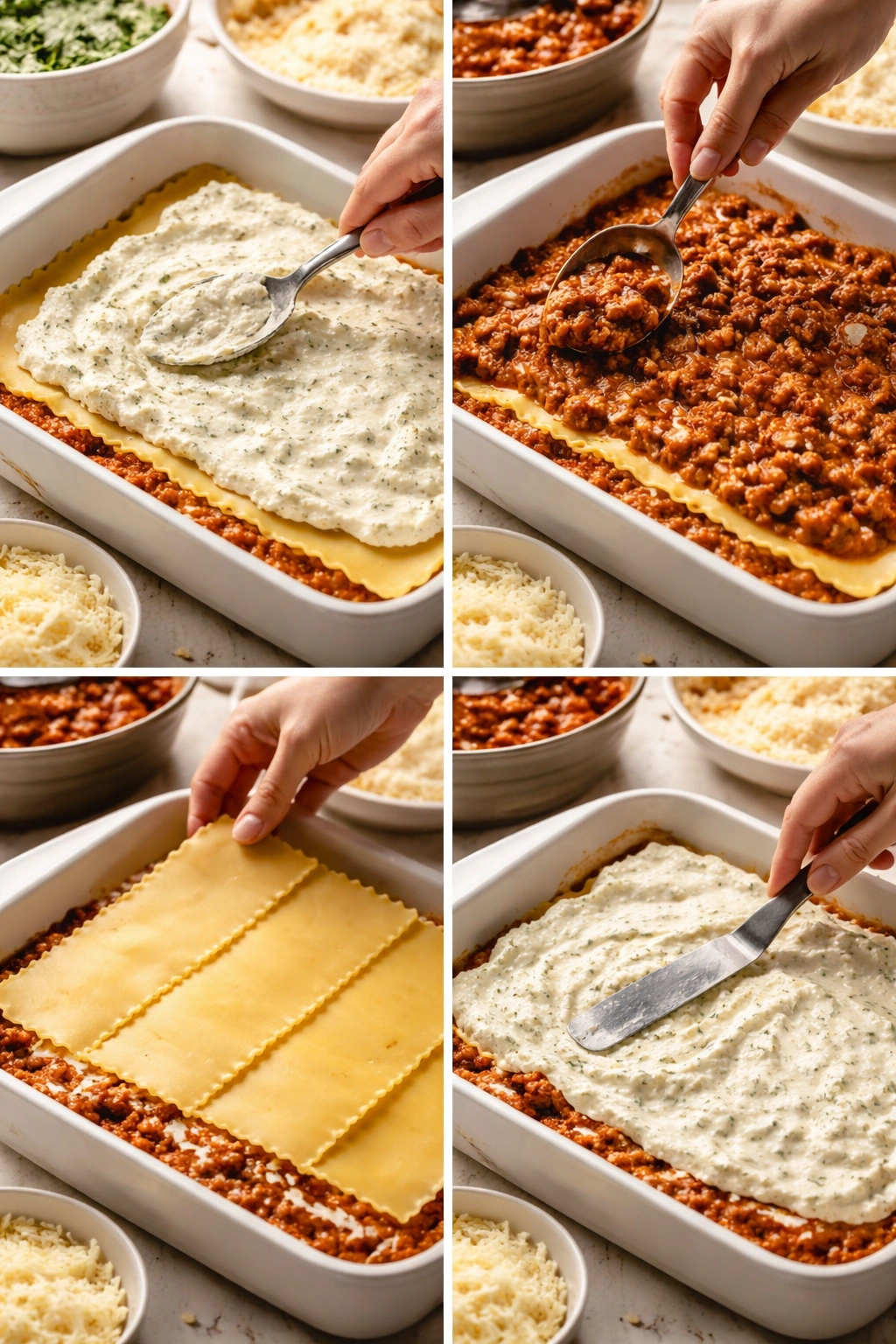
Spread about 1 cup of the meat sauce evenly over the bottom of your prepared baking dish. Make sure the bottom is completely covered — this prevents the noodles from sticking directly to the pan and ensures moisture gets distributed throughout.
-
Lay 4 lasagna noodles in a single layer over the sauce, overlapping them slightly if necessary. It’s fine if they cover the sauce completely or if you can see little gaps; either way, they’ll hold the layers above them. The edges of the noodles can extend slightly up the sides of the pan — this is fine and actually prevents dry spots along the edges.
-
Spread half of the ricotta cheese mixture (about 1½ cups) over the noodles in an even layer. You can use an offset spatula, the back of a wooden spoon, or even your fingers (washed hands work surprisingly well here) to spread it gently across the noodles. Don’t worry about getting it perfectly smooth; just get it distributed.
-
Spoon about 1½ cups of meat sauce over the cheese layer, spreading it gently. You want to see sauce distributed throughout, but you’re not trying to drown the cheese layer.
-
Repeat this exact sequence: 4 noodles, half of the remaining ricotta (the other 1½ cups), about 1½ cups sauce.
-
For the final layer, lay the remaining 4 noodles on top, then spread the remaining sauce (you should have about 1 to 1½ cups left) over them. This is your last meat sauce layer, and it acts as a base for the final cheese topping.
-
At this point, do not add cheese. Cover the baking dish tightly with aluminum foil, making sure the foil doesn’t touch the noodles or sauce if possible (spray the foil with nonstick cooking spray, or loosely tent it so it sits just above the surface). This prevents the cheese from sticking to the foil later.
Bake:
-
Place the covered lasagna in your preheated oven on the middle rack. Bake for 45 minutes. The foil traps steam, which gently softens the noodles while the flavors meld together. You shouldn’t peek during this time, as opening the oven releases the steam you’ve worked to create.
-
After 45 minutes, carefully remove the foil (watch out for the steam released when you lift it — it’s hot). The lasagna should look slightly bubbling around the edges, and the top should appear moist but not soupy.
Advertisements -
Sprinkle the reserved 2 cups of mozzarella cheese evenly over the entire top of the lasagna, then sprinkle the 2 tablespoons of Parmesan over the mozzarella.
-
Return the uncovered lasagna to the oven and bake for 12 to 15 minutes more, until the cheese on top is melted, bubbly, and beginning to brown slightly at the edges. You’re looking for patches of golden-brown cheese, not a uniformly brown top — those golden patches are where the layers have melded into pure, crispy-edged bliss.
Cool and Serve:
-
Remove the lasagna from the oven and set it on a cooling rack or trivet. Let it rest at room temperature for at least 15 minutes (and up to 30 minutes is fine — it will retain heat beautifully). This resting period is critical: the noodles absorb the remaining sauce, the cheese firms up, and the entire structure solidifies just enough that when you cut into it, the layers hold their shape instead of sliding around the plate.
-
Using a sharp knife (and a long, thin spatula if you have one), cut the lasagna into 8 to 12 pieces, depending on serving size. Wipe your knife between cuts with a damp towel for clean edges. Serve each piece immediately with extra Parmesan and fresh basil if desired.
Pro Tips and Common Mistakes

The single biggest mistake people make with lasagna is cutting into it before it’s rested. I understand the urge. You’ve spent an hour cooking, the thing smells incredible, and you want to eat it now. But cut too soon, and every slice will collapse into a pool of sauce with noodles sliding around like they’re floating in a lagoon. The resting period takes just 15 minutes and transforms your lasagna from something that falls apart to something that actually holds its shape.
Here’s another sneaky mistake: using pre-shredded cheese from a bag. Packaged shredded cheese is coated in anti-caking agents (usually cellulose) that prevent it from melting smoothly. It melts unevenly, creating grainy spots instead of that gorgeous, creamy, cohesive layer. Take 2 extra minutes to grate cheese from a block, and your top layer will be noticeably superior.
The quality of your sauce matters more than most home cooks realize. If you’re using store-bought marinara or pasta sauce, choose one that tastes good on its own — this is not the time to economize. Look for options with minimal ingredients and a rich, balanced flavor. If you have time, though, making your own meat sauce from scratch with fresh tomatoes (canned crushed tomatoes work beautifully) gives you control over the flavor and a sauce that tastes like actual food rather than a generic tomato base.
One practical tip that changes everything: if your lasagna dish sits high in your pan, place a baking sheet on the rack below it. Lasagna bubbles and can overflow slightly, and having a sheet underneath catches the overflow and keeps your oven clean. It’s a small step that saves a big mess.
Don’t skip the fennel seeds if you can find them. They’re optional, but they add a subtle background note that makes people say “this tastes amazing” without being able to identify exactly what’s making it taste so good. It’s the secret seasoning that makes a good lasagna taste like it came from a restaurant kitchen.
Variations and Adaptations
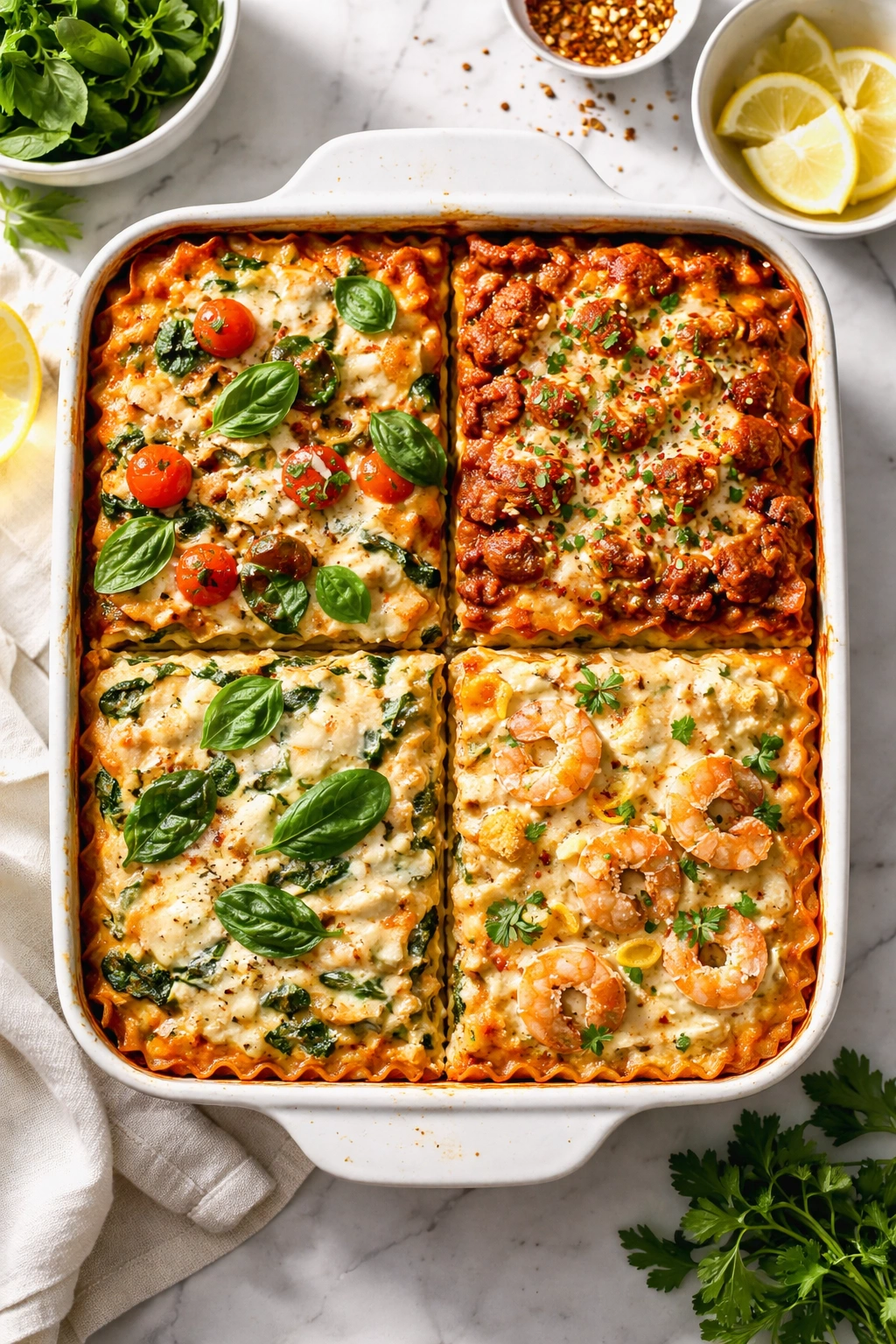
The beauty of this lasagna is its flexibility. Want to make it vegetarian? Skip the meat, increase the mushrooms to 1 pound, and add 10 ounces of spinach (thawed and squeezed dry) to the ricotta mixture. Cook the mushrooms in butter until deeply golden and fragrant, then layer them throughout. Use good-quality vegetable broth instead of meat broth if you’d like, though it’s not essential.
For a spicier version, add ¼ to ½ teaspoon of red pepper flakes to the meat sauce along with the Italian seasoning. It creates a gentle warmth that doesn’t overwhelm the other flavors. Some people also love adding a splash of red wine (about ¼ cup) to the meat sauce after browning the meat and before adding the tomatoes — it adds a subtle depth that rounds out the flavors beautifully.
If you want a lighter version without sacrificing flavor, replace some of the ricotta with Greek yogurt (use ¾ cup yogurt and 1½ cups ricotta instead of the full 2 cups). It creates a slightly tangier, less rich filling that still provides creamy texture without feeling heavy.
For a seafood-forward lasagna, replace the meat sauce with a lighter white wine sauce made with butter, garlic, white wine, and cream, then layer it with ricotta and shrimp. This is a completely different beast, but it’s delicious for those who want something less meaty.
Making this lasagna ahead is not only possible — it’s actually advisable. Assemble the entire lasagna, cover it tightly with plastic wrap and foil, and refrigerate for up to 2 days. You may need an extra 10 to 15 minutes of baking time since it goes in cold. You can also freeze it before baking: wrap the entire assembled (unbaked) lasagna in plastic wrap, then foil, and freeze for up to 3 months. Thaw it in the refrigerator overnight, then bake as directed.
Storage, Freezing, and Reheating
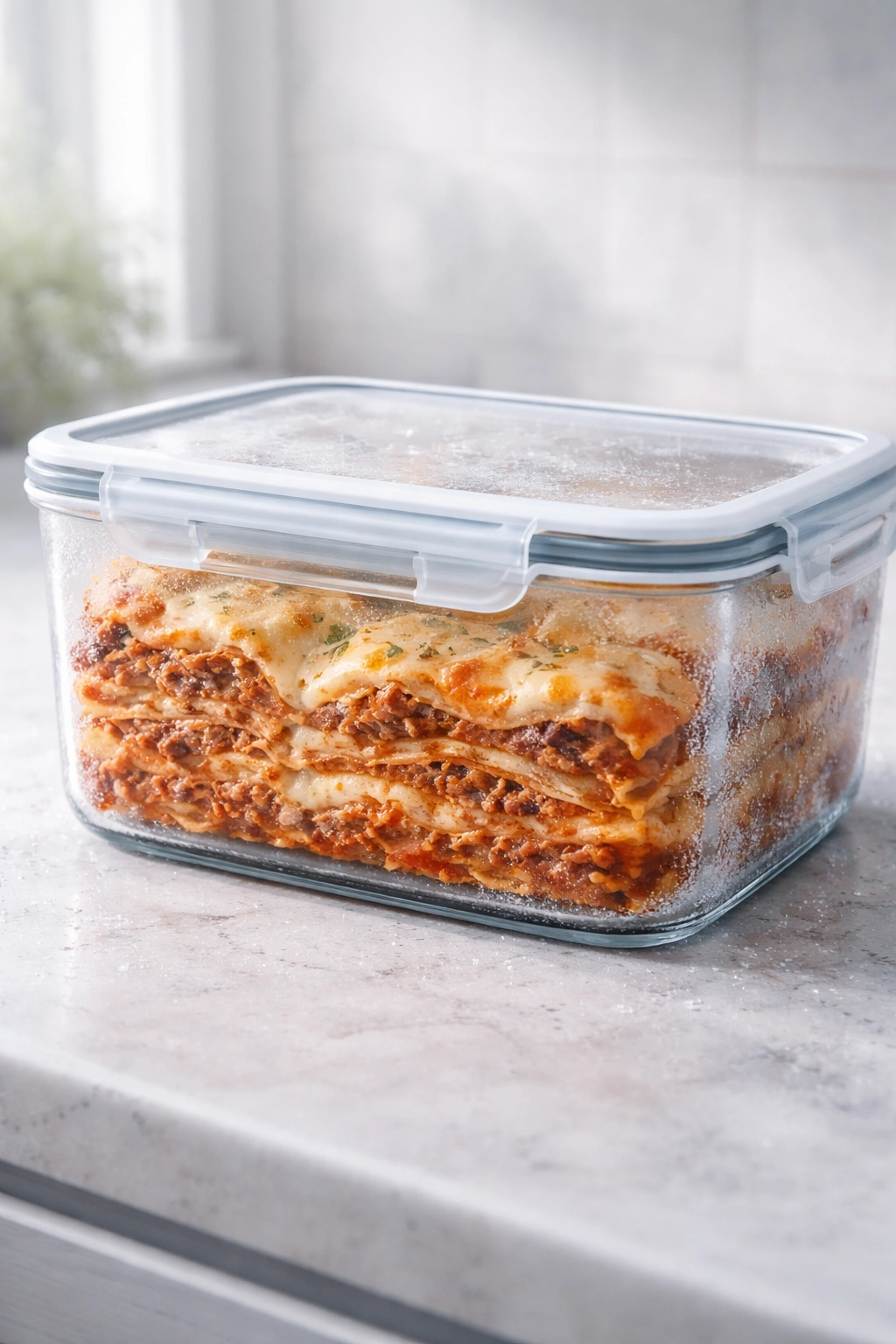
Leftover lasagna keeps beautifully in the refrigerator for up to 5 days in an airtight container. The flavors actually deepen slightly as it sits, making day-two lasagna often better than day-one. To reheat, place individual slices or the whole casserole in a baking dish, cover with foil, and warm in a 350°F oven for 20 to 30 minutes until bubbly again. The oven method is gentler on the texture than the microwave, which can make noodles rubbery, though the microwave works in a pinch if you’re short on time.
Freezing lasagna is one of its greatest strengths. You can freeze it either before or after baking. To freeze unbaked lasagna: assemble it in a disposable aluminum pan (which you can also use for baking), wrap the entire thing in plastic wrap and then aluminum foil, and freeze for up to 3 months. Thaw overnight in the refrigerator, then bake as directed, adding 10 to 15 minutes to the cooking time since it goes into the oven cold.
To freeze baked lasagna: allow it to cool completely, then wrap it tightly in plastic wrap and aluminum foil. Freeze for up to 3 months. To reheat, remove the wrapping, place it in a baking dish, cover with foil, and bake at 350°F for 30 to 45 minutes until heated through and bubbly.
You can also cut the cooled lasagna into individual portions, wrap each piece separately in plastic wrap and then foil, and freeze them in a freezer bag. This allows you to thaw and reheat single servings without touching the rest, which is perfect for small households or for having quick dinners on hand. Reheat frozen individual slices at 350°F for about 15 minutes, or microwave for 2 to 3 minutes until heated through.
One note about refreezing: if you’ve made the lasagna fresh and frozen it, then thawed and reheated it, don’t refreeze those leftovers. Multiple freeze-thaw cycles degrade the texture of the pasta and cheese. Enjoy what you’ve thawed, and make a fresh batch for the freezer instead.
Serving Suggestions and Pairings
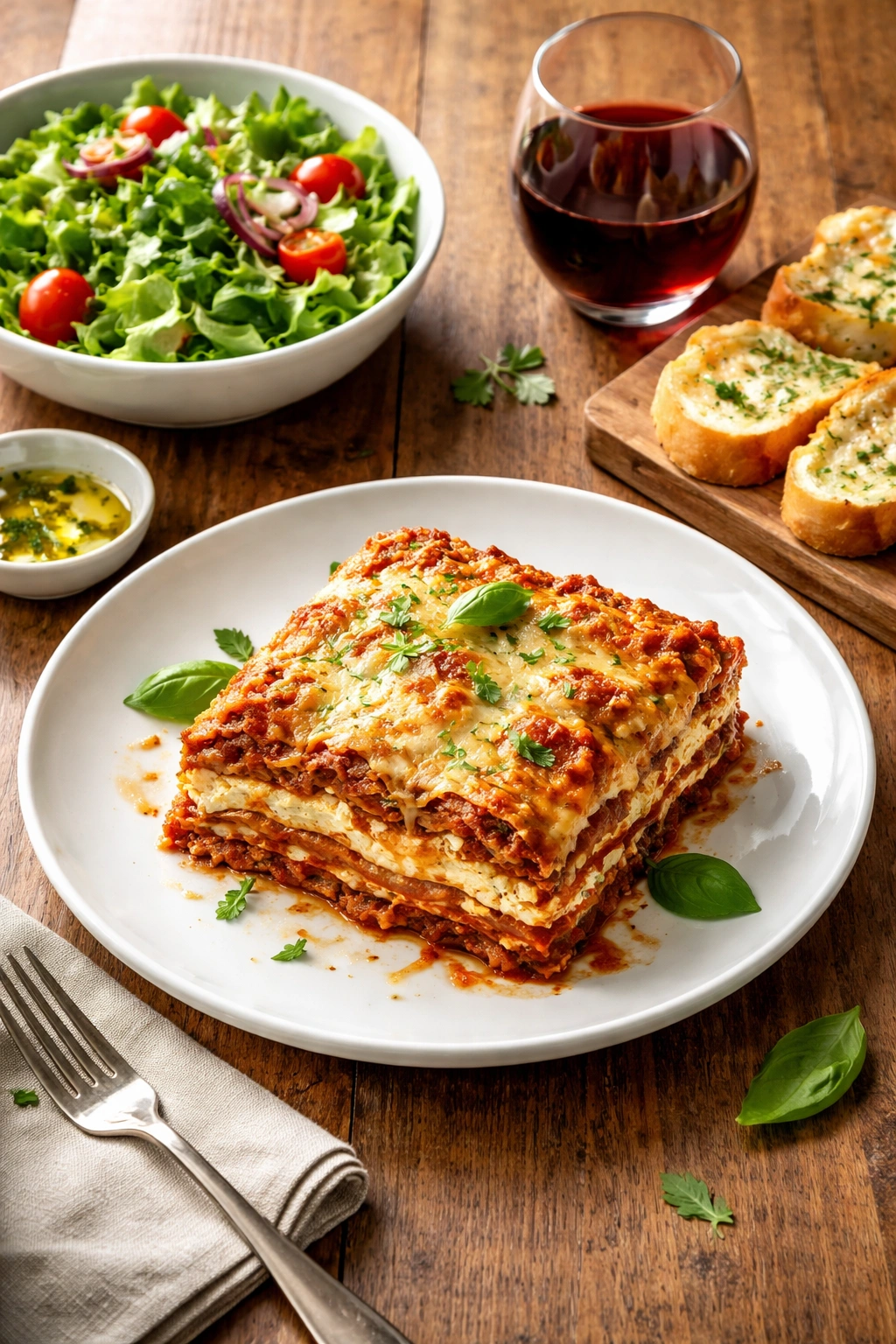
Lasagna is substantial enough to be a complete meal on its own, but it shines when paired with a few thoughtful sides. A simple green salad with a bright vinaigrette cuts through the richness beautifully — try an arugula salad with lemon and Parmesan, or a mixed green salad dressed with red wine vinegar and olive oil. The acidity wakes up your palate between bites of rich, cheesy lasagna.
Garlic bread is the classic pairing for a reason. Slice a crusty baguette lengthwise, brush it with olive oil mixed with minced garlic and fresh parsley, wrap it in foil, and bake at 375°F for about 10 minutes until warmed through and the garlic has fragrant. Some people even like to sprinkle a little Parmesan on top before baking.
For beverages, a medium-bodied red wine complements lasagna beautifully — think Italian reds like Chianti or Sangiovese, which have enough acidity and tannins to stand up to the richness without overpowering it. If you’re not serving wine, sparkling water with lemon or a simple iced tea works well. Avoid overly sweet drinks, which clash with the savory, tomato-forward flavors.
For dessert after lasagna, something light and not too heavy works best. A lemon panna cotta, a simple fruit salad, or even just a small scoop of vanilla gelato cleanses the palate without feeling like you need to roll away from the table afterward. Chocolate desserts can work too, though they compete somewhat with the savory flavors that are still lingering in your mouth.
If you’re serving this at a gathering, present the lasagna in the baking dish rather than on individual plates. There’s something inviting about people serving themselves, watching the steam rise as they cut into a piece, and feeling the comfort of a shared meal. And yes, they’ll absolutely fight over who gets the corner piece.
The Layering Technique Explained
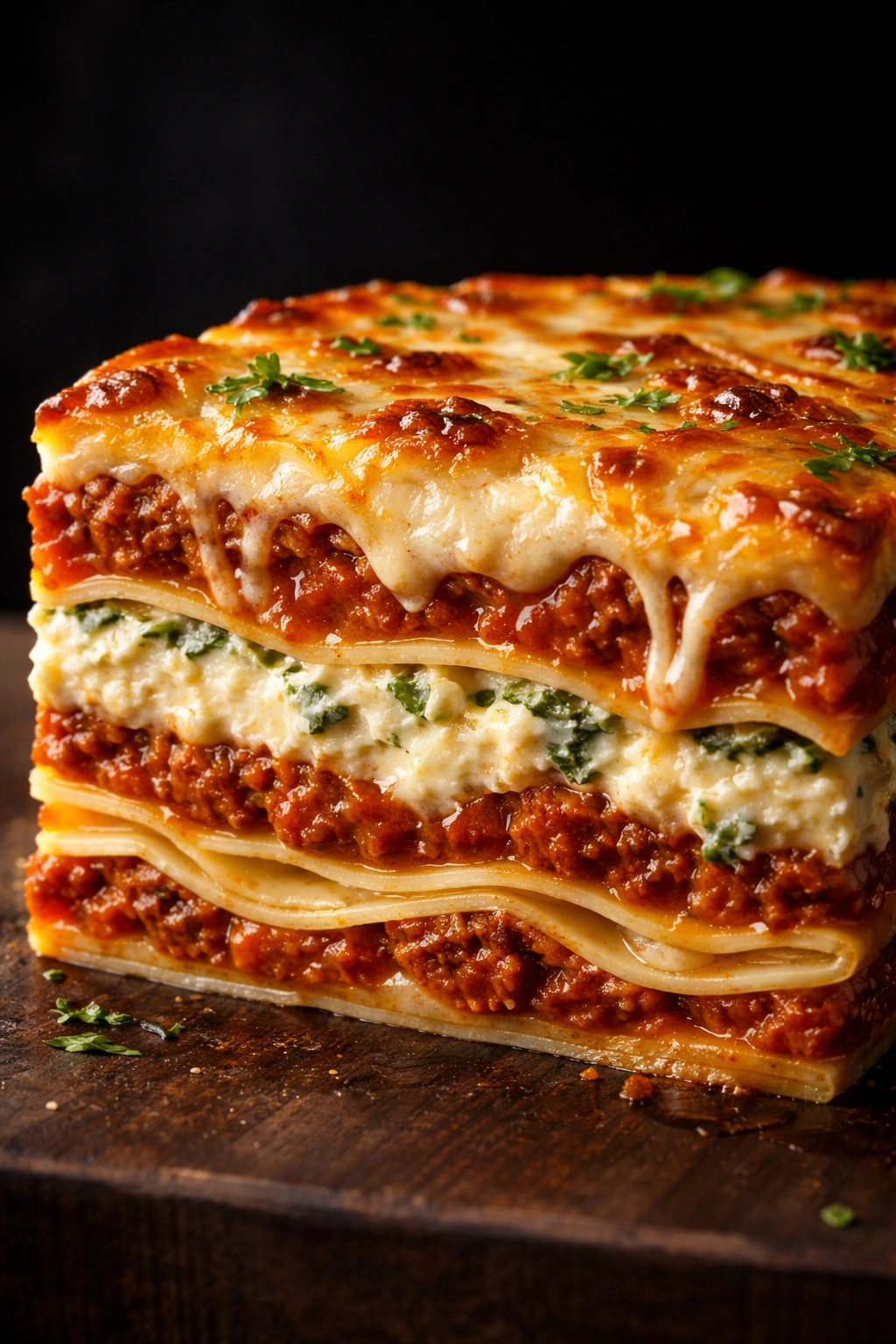
The structure of a lasagna determines whether it’s delicious or disappointing. Most recipes oversimplify the layering strategy, but understanding what you’re doing at each step transforms the result. The key principle is that you want three distinct layers of everything: pasta, sauce, and cheese. This creates structural integrity while ensuring no section gets too heavy with any single component.
Start with sauce on the bottom because it prevents sticking and provides moisture for the first noodle layer. Then noodles, then a thin layer of the creamy ricotta mixture, then sauce — this order ensures that when you take a fork to a finished slice, every bite has components from every layer. The ricotta-and-egg mixture acts as a binder that helps hold the noodles together while also providing creaminess that balances the acidity of the sauce.
The final layer shouldn’t be ricotta mixture; it should be sauce topped with mozzarella. This is crucial because it means the top of your lasagna will have that gorgeous melted, bubbly cheese exterior rather than a layer of filling that browns unevenly. By the time the cheese on top has finished melting and browning, the sauce beneath it has been in contact with the noodle layer below for long enough that everything knits together into one cohesive structure.
Most lasagna recipes use 9 noodles across 3 layers (3 noodles per layer). This recipe uses 4 noodles per layer for a total of 12, which creates more structural support and prevents the layers from sagging or sliding around. The extra noodle layer also means you get a piece that’s sturdier and slices cleaner on the plate.
Why Resting Time Matters More Than You Think
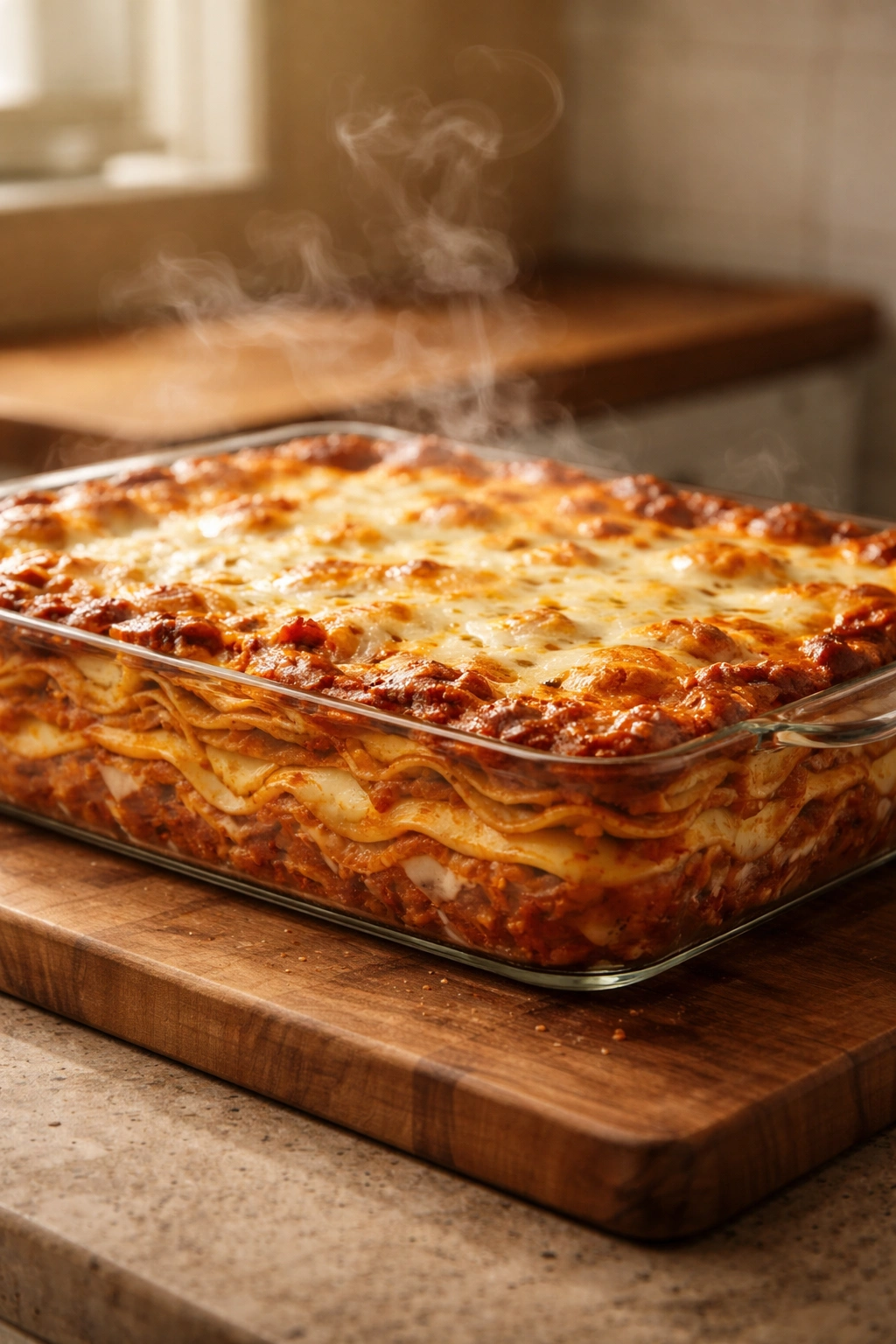
After spending an hour building and baking this lasagna, waiting another 15 minutes before cutting seems like torture. But this resting period is where the magic actually happens. When the lasagna first comes out of the oven, it’s in a state of controlled chaos: the cheese is still molten, the noodles are soft and absorbing sauce, and the entire dish is held together more by steam and heat than by actual structural integrity.
During those 15 minutes, the cheese begins to set as it cools slightly. The noodles finish absorbing the remaining sauce, becoming truly integrated with it rather than separate components bathed in liquid. The whole structure firms up just enough that when you run a knife through it and lift a slice with a spatula, the layers stay together instead of collapsing into a cheesy, saucy pile.
There’s also a flavor element to resting. Flavors are more pronounced when food is at a warm rather than piping-hot temperature. Eating lasagna straight from the oven means the flavors are somewhat muted by the extreme heat in your mouth. Letting it cool for 15 minutes allows your taste buds to actually register what you’re eating, making the experience more enjoyable.
From a practical standpoint, resting also prevents the roof of your mouth from being burned away by molten cheese. That’s less poetic but equally important.
Final Thoughts
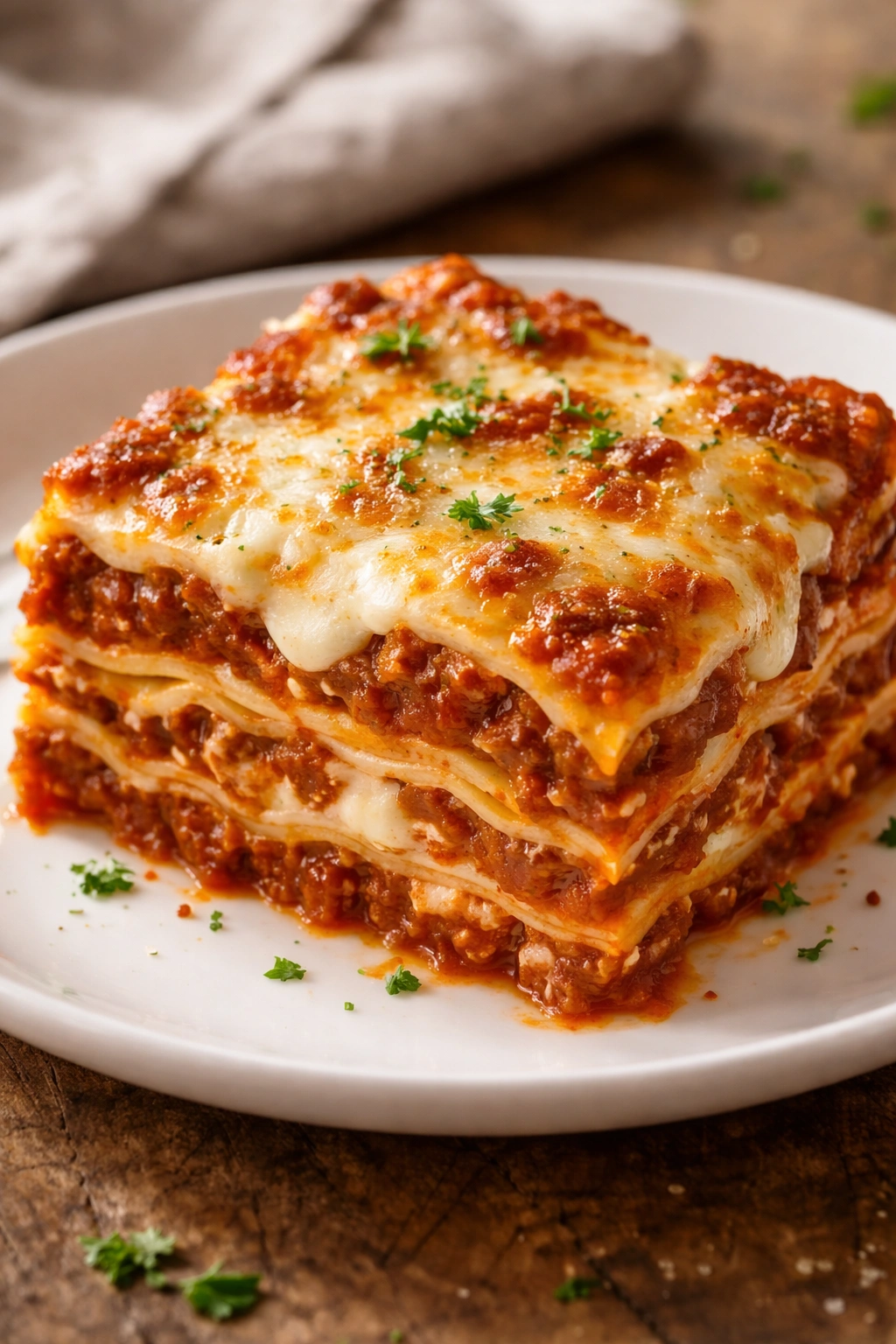
Easy lasagna that everyone fights over isn’t a contradiction. It’s simply lasagna made with attention to detail at every step — not because the recipe is difficult, but because the fundamentals matter. Your sauce needs time to develop flavor. Your noodles need to be cooked just right. Your cheese mixture needs to be smooth and seasoned properly. The assembly needs to be methodical. And the resting period is non-negotiable.
This is the lasagna recipe that makes you feel like a genuinely good cook, even though you’re really just following a straightforward process. It’s the one that people request. It’s the dish that freezes beautifully and tastes equally good reheated weeks later. It’s what you make when you want to feed people something that says “I care about this meal” without spending all day in the kitchen.
The next time you make this, you’ll recognize why people were fighting over it. You’ll see the perfectly set layers when you cut into it, taste the balanced sauce that doesn’t overpower the cheese, and understand why lasagna has been a beloved dish for generations. Then you’ll probably make it again. And again. And before you know it, you’ll be the person everyone calls for their lasagna.
