



Planning food for a baby shower can feel like you’re trying to satisfy everyone at once—and honestly, you kind of are. You’ve got guests with different dietary preferences, varying appetites, and a range of tastes to please. The last thing you want is to spend days in the kitchen stressed out while the parent-to-be is already overwhelmed enough. The sweet spot is finding food that looks beautiful, tastes delicious, can be made ahead, and doesn’t require you to be a professional caterer to pull off.
The secret isn’t fancy or complicated. It’s about choosing foods that actually work at a baby shower—things you can eat while standing, talking, and celebrating with one hand free. It’s about dishes that hold up well if they sit out for a couple hours, that look Instagram-worthy without requiring last-minute fussing, and that genuinely satisfy your guests without them having to wonder when lunch is happening. The best baby shower food falls into that sweet middle ground where it feels special and thoughtful, but the person hosting it can actually enjoy the event instead of being trapped in the kitchen.
These are the food ideas that work because they check every box: they’re easy to execute, they look intentional, they taste good, and they allow you to prep most of them the day before. Whether you’re hosting an intimate gathering of 10 or a larger celebration of 50, these approaches scale easily and give you the freedom to actually be present with your guests instead of anxious about the food.
No-Cook Appetizers That Feel Like You Tried Harder Than You Did
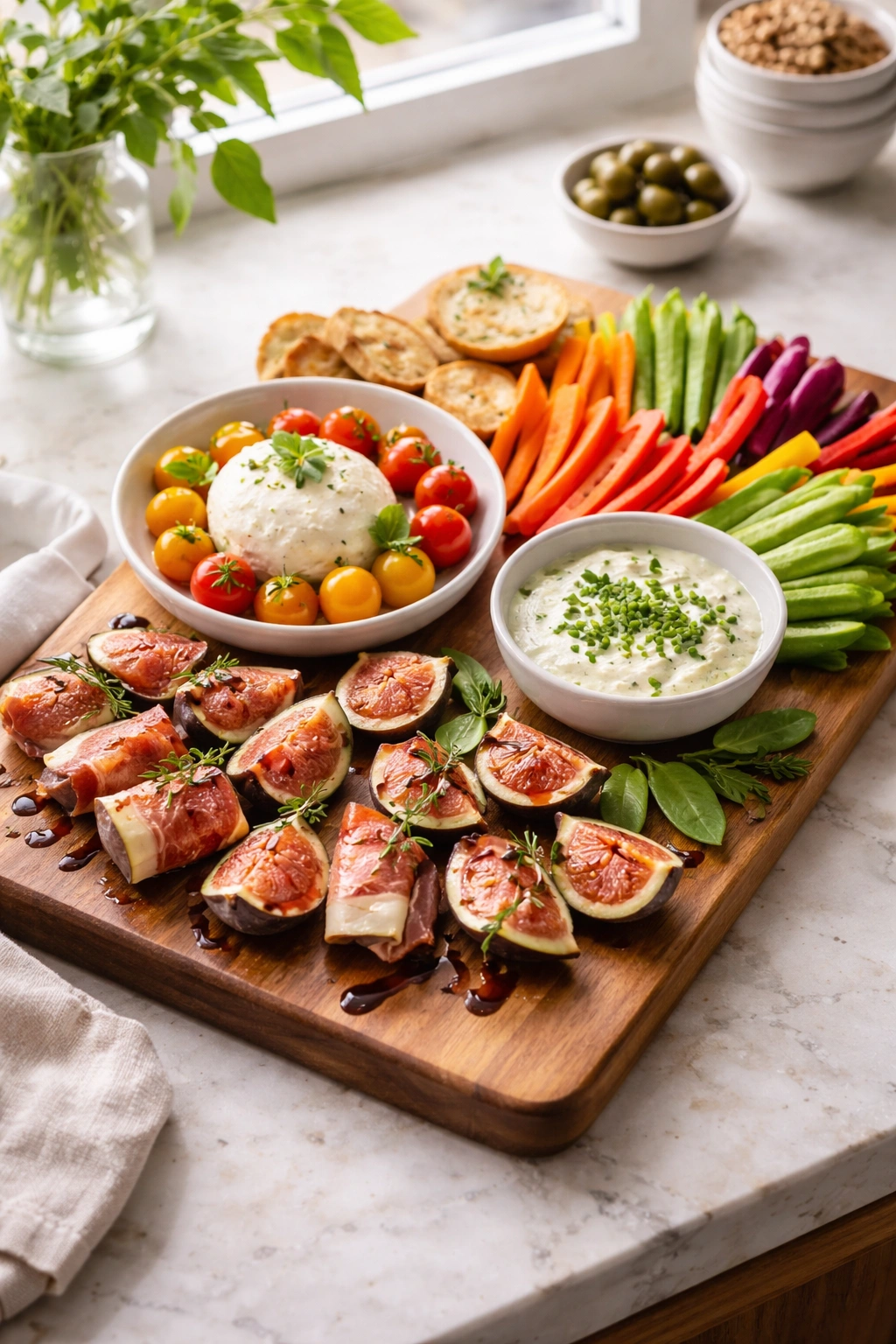
The beauty of no-cook appetizers is that they’re actually more elegant than things you’ve sweated over. They show off quality ingredients in their purest form, and there’s something sophisticated about that simplicity.
Prosciutto-wrapped fresh figs are a showstopper that takes literally 10 minutes to assemble. Buy ripe figs, slice them in half, wrap each half with a thin drape of prosciutto, and plate them on a small board with a few candied nuts. The salty, savory ham against the sweet, jammy fig feels indulgent and tastes like you definitely know what you’re doing.
Cherry tomatoes with burrata and basil are another one that feels fancy but requires zero cooking. Just halve the tomatoes, dollop a spoonful of creamy burrata cheese on a small crostini or on the tomato itself, add a basil leaf, a tiny drizzle of balsamic, and a pinch of fleur de sel. People will absolutely love these, and you can assemble them literally 15 minutes before guests arrive.
Crudités with multiple dips should be a non-negotiable element of every baby shower spread. It’s not boring when you actually invest in the vegetables—think rainbow carrots (not just orange ones), watermelon radishes, heirloom tomato slices, snap peas, celery sticks, and a few handfuls of mixed microgreens. The visual alone tells people you cared about this. Make or buy 3-4 different dips: a tangy herb cream cheese dip, a store-bought hummus elevated with paprika and olive oil, a fresh pico de gallo, and maybe a beet or roasted red pepper dip for color.
Open-faced avocado toasts on toasted baguette slices work as a no-cook appetizer if you make them just 30 minutes before serving. Mash ripe avocado with lemon juice and sea salt, spread on toasted bread, top with everything bagel seasoning or microgreens, and drizzle with good olive oil. They stay fresh for about an hour, so time it right.
Stuffed dates with goat cheese and walnuts are ridiculously simple and sophisticated. Pit large Medjool dates, fill the center with softened goat cheese, press a toasted walnut into the center, and optionally drizzle with a tiny bit of honey. Done in minutes, and they taste like they came from a high-end bistro.
Finger Sandwiches That Don’t Taste Like Bird Food
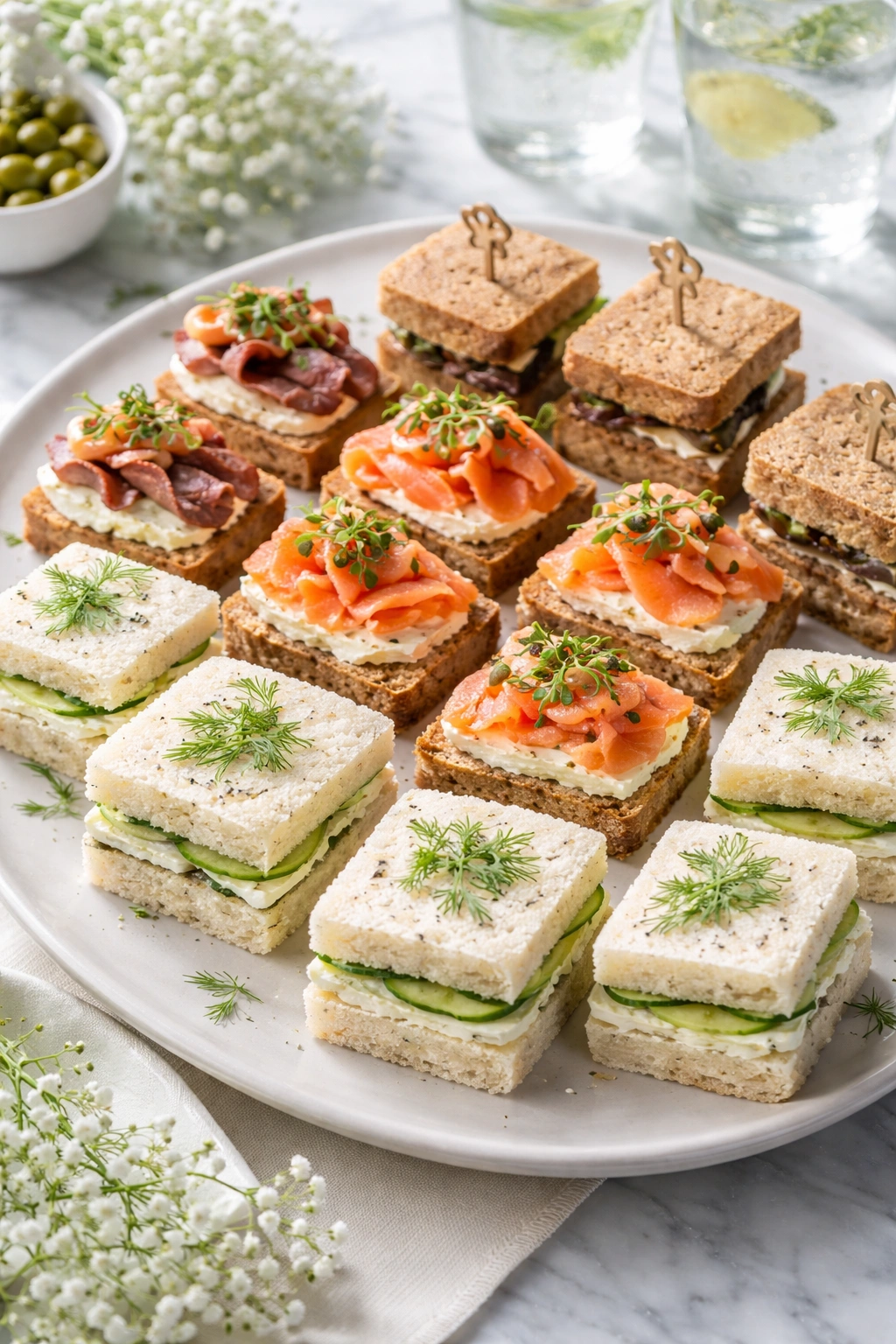
Finger sandwiches get a bad reputation because so many of them are made with ingredients that taste like nothing. The trick is using real flavor, quality bread, and combinations that actually make sense to eat.
Tea sandwiches made with herb cream cheese and cucumber are lovely, but upgrade them by adding paper-thin radish slices, fresh dill, and a tiny pinch of fleur de sel. Use really fresh white or wheat bread (or thinly sliced brioche for something a bit richer), cut the crusts off, and cut into quarters. Make these the morning of, stack them between damp paper towels on a plate, cover tightly with plastic wrap, and refrigerate—they’ll stay fresh all day.
Smoked salmon and dill cream cheese on thin rye bread is a classic for a reason. Add capers, paper-thin red onion, and a small handful of microgreens. These are equally good made the morning before and kept covered in the fridge.
Roast beef with horseradish cream and arugula on thinly sliced whole wheat bread feels substantial and full of actual flavor. Make the horseradish cream by mixing sour cream with prepared horseradish and a tiny bit of Dijon mustard. Layer thin slices of high-quality deli roast beef, a spread of the cream, a small pile of peppery arugula, and you’ve got something that tastes gourmet.
Sun-dried tomato and goat cheese sandwiches on multigrain bread with fresh basil and a thin smear of pesto are vegetarian, colorful, and genuinely delicious. These can be made 8-10 hours ahead and taste even better because the flavors have had time to meld.
Egg salad made with good mayo, Dijon mustard, fresh tarragon, and a tiny bit of anchovy paste (trust me on this) on toasted brioche is elevated and nostalgic at the same time. Add some thinly sliced cucumber and a bit of watercress for freshness. These are best made the morning of.
The key to all finger sandwiches: use really good bread, don’t skimp on fillings, cut them into thirds or quarters rather than halves (they look more refined in smaller pieces), and always remove the crusts unless you’re specifically keeping them for a more rustic look.
Mini Quiches and Savory Tarts That Taste Better Than Store-Bought
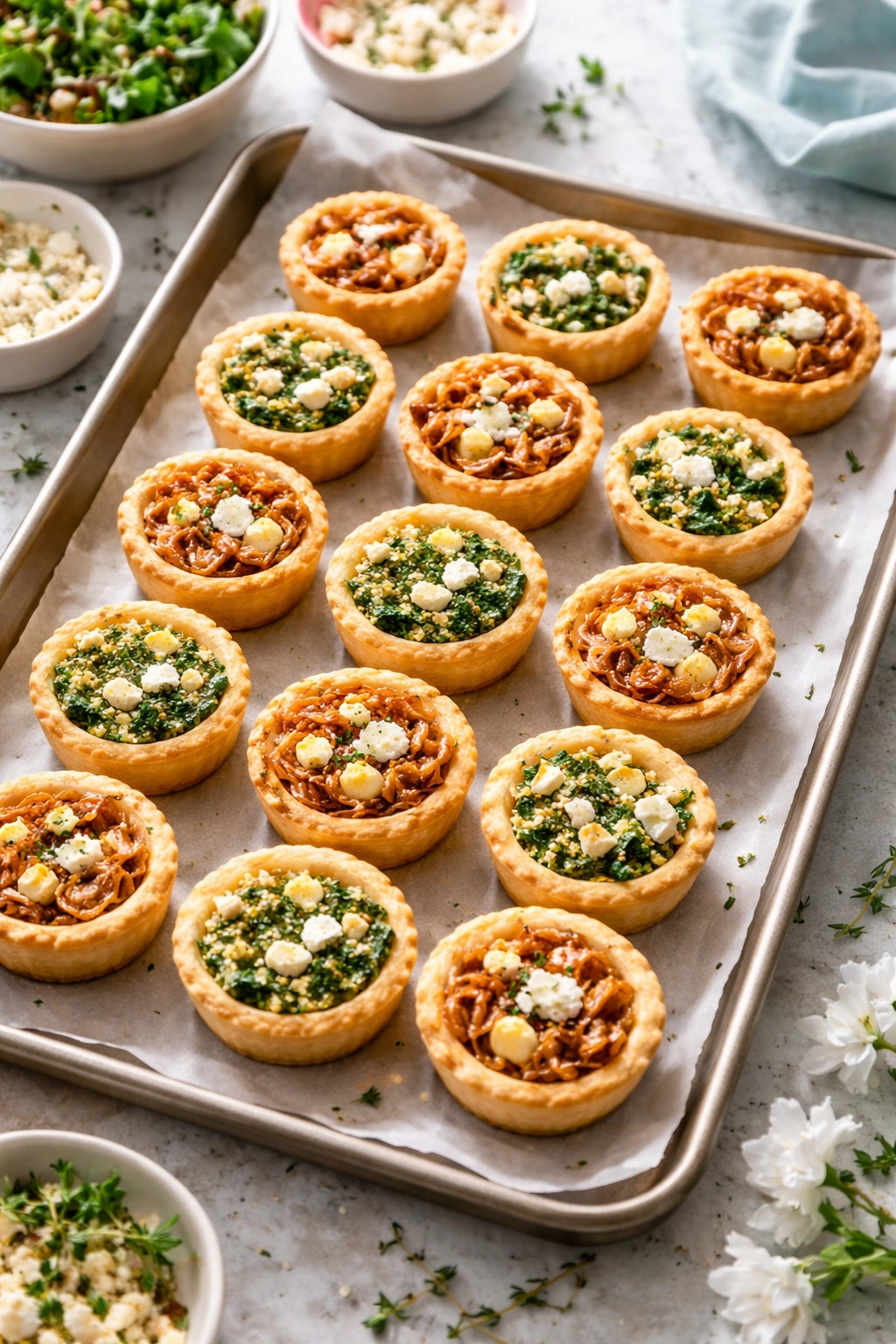
Mini quiches feel fancy but are genuinely one of the easiest make-ahead foods you can prepare. You can make them 2-3 days ahead, refrigerate them, and simply reheat them gently in a low oven right before serving—or serve them at room temperature, which is equally delicious.
The basic formula: use store-bought mini phyllo cups or pre-baked mini tartlet shells (found in the freezer section at most grocery stores), fill them with a mixture of eggs, cream, and your chosen fillings, and bake at 375°F until the custard is set and the tops are just starting to turn golden.
Spinach and feta mini quiches are the reliable workhorse. Sauté fresh spinach with garlic and onion until very dry (moisture is the enemy of quiche texture), combine with crumbled feta, then whisk together 6 eggs, ¾ cup heavy cream, ½ teaspoon salt, and a few grinds of black pepper. Fill each shell about three-quarters full and bake until the centers are just set but still slightly jiggly in the very middle—about 18-20 minutes depending on the size of your shells.
Caramelized onion and goat cheese variations are luxurious and different from what most people expect at a baby shower. Slowly cook sliced onions in butter over medium-low heat for 30-40 minutes until they’re deep golden and sweet, mix in fresh thyme, then add to the custard with crumbled goat cheese before baking.
Smoked salmon, dill, and cream cheese quiches are elegant and feel slightly more upscale. Dice the salmon into small pieces, mix with fresh dill and a tiny bit of zest from a lemon, add to your custard base, and bake. These feel special without being difficult.
Sun-dried tomato, basil, and mozzarella quiches are colorful and taste Mediterranean. Chop sun-dried tomatoes finely, mix with fresh basil, then combine with the custard and add small pieces of fresh mozzarella before baking.
The real secret: don’t overbake. The quiches should have just a slight jiggle in the very center when you pull them out—they continue cooking as they cool and set completely. Overcooked quiches become rubbery and disappointing.
Cheese and Charcuterie Board Strategies That Feel Abundant Without Being Overwhelming
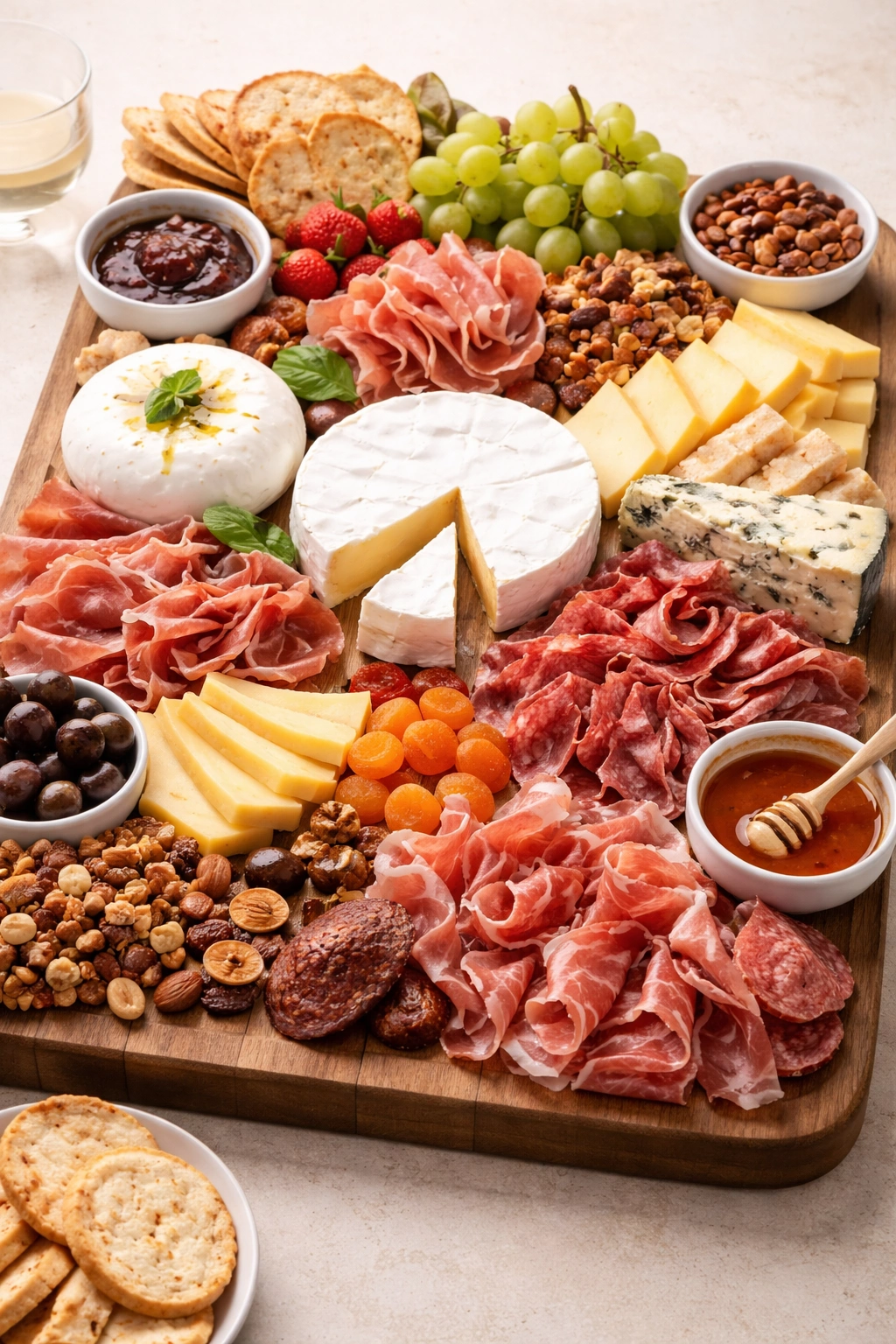
A well-designed cheese and charcuterie board is genuinely one of the most impressive centerpieces you can create. It looks abundant, feels celebratory, and actually requires less hands-on work than cooking multiple dishes.
The structure matters more than you’d think. Start with a large board or marble slab as your base. Add one large wheel or wedge of soft cheese (burrata, brie, fresh mozzarella), one hard cheese (manchego, aged gouda, gruyère), one blue cheese or funky cheese for interest (blue cheese, goat cheese log, fresh ricotta), and one aged cheese (aged cheddar, parmesan shards). This gives people variety without overwhelming choice.
Add cured meats: prosciutto (let a few slices bunch artfully for height), salami (arrange in overlapping fans), and maybe spicy coppa or soppressata for interest. You don’t need more than three types of meat—quality over quantity is the move here.
Build sections rather than dotting things randomly. Group your cheeses together in one area. Have a dedicated cured meat section. Create a fruit section with a mix of fresh (grapes, apple slices, pear slices) and dried (apricots, figs, dates). This makes the board feel intentional rather than chaotic.
Add texture and visual interest with nuts (candied walnuts, marcona almonds, roasted hazelnuts), olives (Castelvetrano, mixed, or packed with herbs), pickles (cornichons, pickled onions, pickled vegetables), and fresh herbs for garnish (rosemary sprigs, microgreens, fresh mint).
Include good bread and crackers. Thin breadsticks (grissini) stand up nicely and look sculptural. Water crackers are classic and don’t compete with the cheese. Choose one or two types rather than a huge variety—quality bread speaks louder than many options.
The advantage of a charcuterie board for a baby shower: you can build it 2-4 hours before guests arrive, cover the most perishable items loosely with plastic wrap, and everything stays fresh and delicious. You’re not reheating, you’re not worrying about timing, and frankly, people will talk about it.
Fruit Platters and Desserts That Actually Make Sense Together
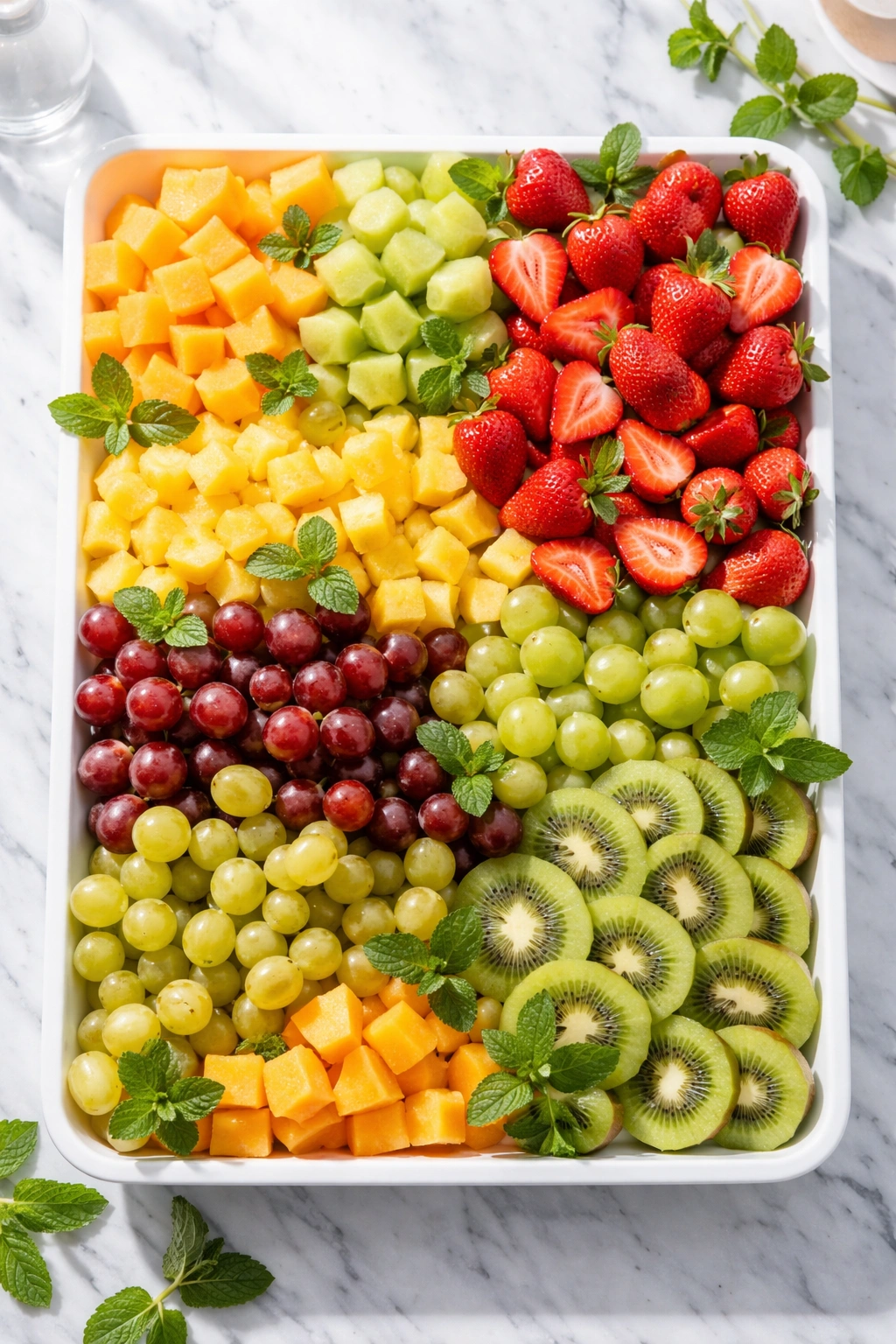
A beautiful fruit platter does double duty as both a refreshing, light offering and a visually gorgeous display that anchors one end of your food table.
Cut fruit into uniform pieces rather than leaving everything whole or in random sizes. Cantaloupe and honeydew cut into small cubes or balls look more refined than haphazard chunks. Strawberries cut lengthwise into quarters show off their color. Pineapple cut into spears or chunks. Grapes left whole but divided by color (red, green, black) in clusters. This creates visual intention.
Arrange fruit by color in a gradient or in distinct sections—all warm colors in one area (strawberries, raspberries, apricots), all cool colors in another (blueberries, blackberries, green grapes, kiwi). This looks infinitely more sophisticated than mixed-up fruit.
Add fresh mint leaves tucked between fruit sections, edible flowers if they’re available (pansies, violas, calendula), and maybe a light dusting of lime zest over tropical fruit to keep it looking fresh and bright throughout the day.
Light lemon cakes or pound cakes pair beautifully with fresh fruit. Slice them into small pieces and arrange alongside the fruit platter. This gives people a sweet option without requiring a full dessert station.
Mini macarons in pastel colors are absolutely on-brand for a baby shower and can be made several days ahead (keep them in an airtight container). Even if you don’t make them yourself, buying them from a good bakery is a reasonable shortcut that people genuinely appreciate.
Sugar cookies decorated with simple royal icing in pastels or with baby-themed decorations (tiny rattles, pacifiers, carriages) feel special and taste good. These can be made several days ahead and stored in an airtight container.
Sliders, Meatballs, and Other Handheld Proteins
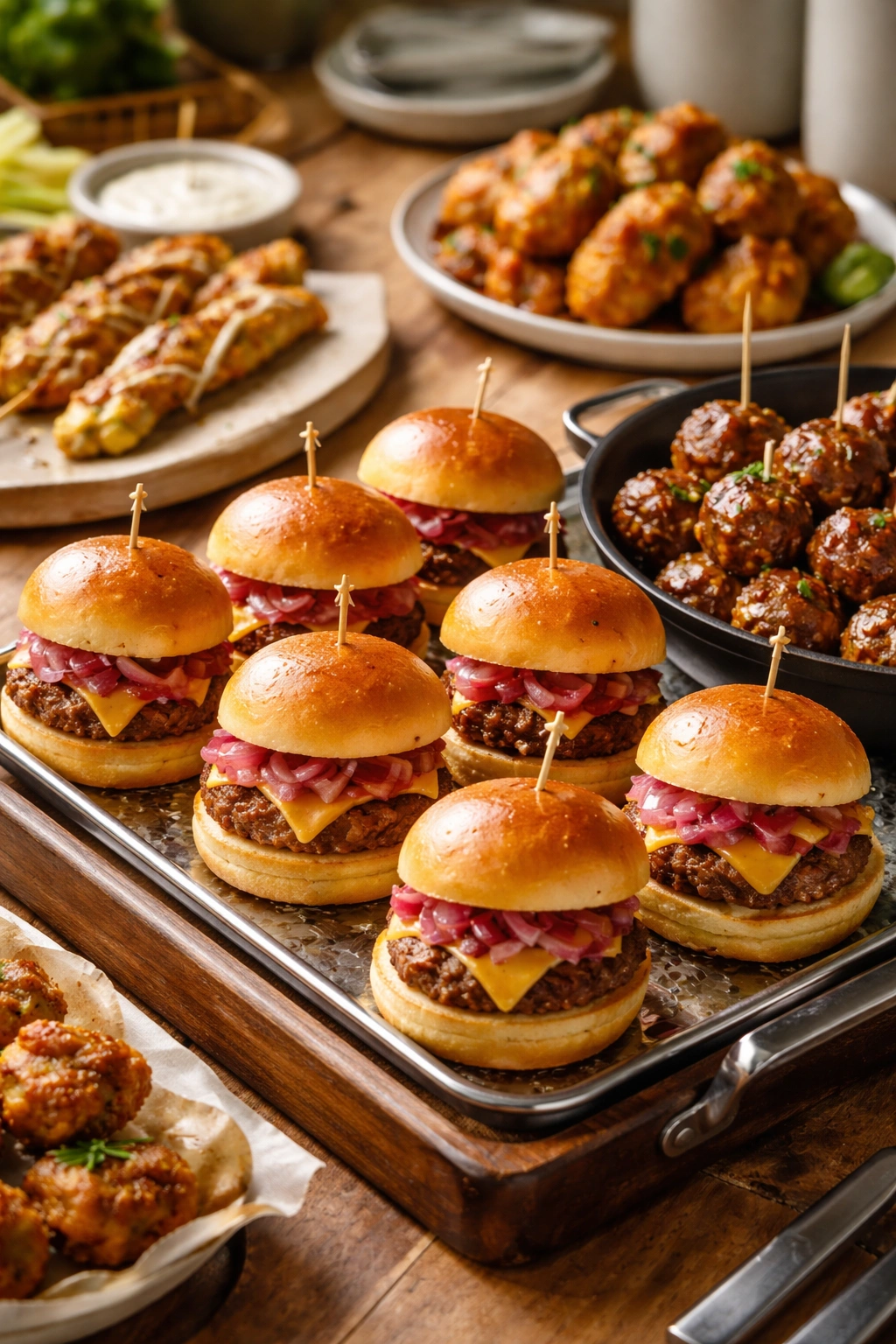
Sometimes people want something more substantial than just appetizers. Having a protein option that’s easy to hold and eat in a few bites bridges that gap perfectly.
Mini sliders on small brioche buns are a crowd favorite that can be made ahead and reheated. Cook burger patties, assemble with a thin slice of cheese and a tiny dollop of pickled onions or a special sauce, and keep them warm on a very low setting in a slow cooker or warming tray. People can grab them as they please.
Swedish meatballs in a rich, slightly tangy brown sauce are a classic for a reason. They can be made completely 2-3 days ahead and simply reheated in a low oven or a slow cooker. Add them to a slow cooker on low before guests arrive and let them sit there, which actually keeps them moist rather than drying them out. People serve themselves with small toothpicks.
Tandoori chicken skewers are a great option if you want something that feels a bit different. Marinate chicken cubes in yogurt mixed with tandoori spice, ginger, and garlic for several hours (or overnight), skewer them, and either grill or broil them until cooked through. They’re flavorful, relatively lean, and feel a bit more interesting than standard options.
Meatballs in a honey sriracha glaze are sweet, spicy, and slightly sticky in the best way. Make the meatballs ahead, freeze them, and reheat them in a slow cooker with the sauce right before the shower. The sauce keeps them moist and delicious.
Pulled pork sliders on small rolls are excellent for feeding a crowd. Cook a pork shoulder in a slow cooker with BBQ sauce for 6-8 hours, shred it, and serve on small rolls with quick-pickled onions and a simple slaw. It’s filling, delicious, and feels less formal than traditional sliders, which works depending on your shower vibe.
The key with all handheld proteins: keep them warm (use a slow cooker set to low or a warming tray), provide small napkins and toothpicks, and don’t make them so large that people are struggling to eat them in one or two bites.
Dips and Spreads That Deserve Their Own Moment
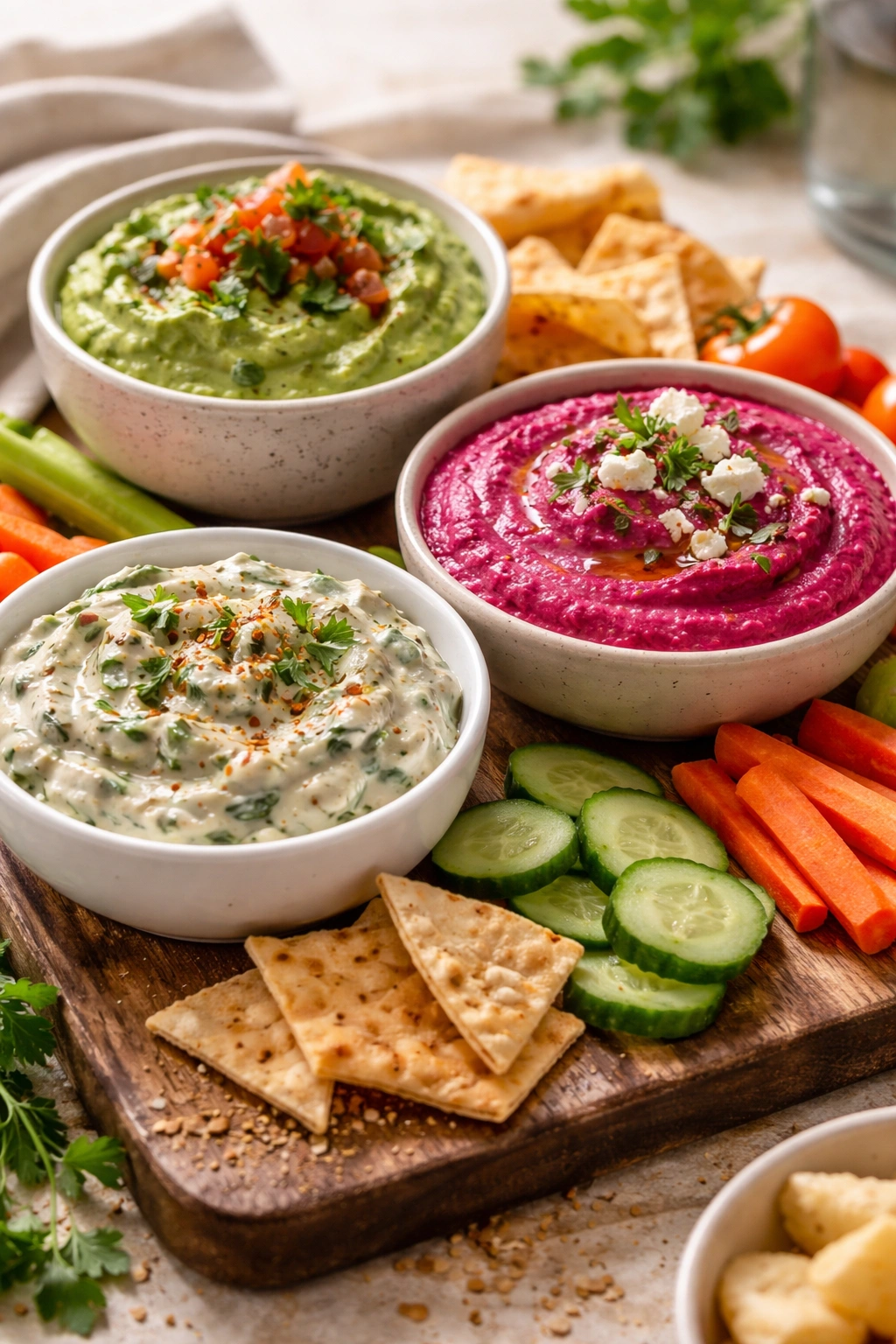
Dips are criminally underrated at baby showers. A few really excellent dips can turn simple vegetables or chips into something people actually look forward to eating.
Whipped feta dip is absolutely addictive and dead simple. Blend crumbled feta cheese with Greek yogurt, lemon juice, fresh dill, minced garlic, and a good glug of olive oil until it’s light and fluffy. Serve with toasted pita chips or crudités. Make it the morning of and cover it tightly—it actually improves as flavors meld.
A roasted red pepper and walnut dip (sometimes called muhammara) is sophisticated and different from the usual suspects. Roast red bell peppers until soft, blend with toasted walnuts, garlic, a splash of pomegranate molasses or red wine vinegar, and a pinch of Aleppo pepper or red pepper flakes. It’s tangy, slightly sweet, and genuinely interesting. Make it 2-3 days ahead.
Herb cream cheese dip is a reliable workhorse that people actually eat. Mix softened cream cheese with sour cream, fresh dill, fresh parsley, chopped chives, lemon zest, a tiny bit of garlic powder, and salt. Dollop it into a small bowl, cover with a thin layer of good olive oil, and scatter herbs on top. Serve with everything: crudités, crackers, bread, chips. Make it the day before and it tastes better because the herbs have time to infuse.
Beet hummus adds a gorgeous jewel tone to your dip selection and tastes earthy and bright. Blend canned chickpeas with roasted beets, tahini, lemon juice, garlic, and olive oil until smooth. It’s vegetarian, colorful, and feels slightly more sophisticated than standard hummus.
Whipped goat cheese with herbs and honey is ridiculously easy and feels special. Blend softened goat cheese with a splash of heavy cream until fluffy, fold in fresh herbs (dill, tarragon, parsley), spoon into a small bowl, and drizzle generously with honey and maybe a sprinkle of crushed pistachios. Serve with good bread and crackers.
Sun-dried tomato and basil spread is perfect for spreading on toasted baguette slices. Blend jarred sun-dried tomatoes, pine nuts, fresh basil, garlic, and good olive oil until it reaches a spreadable consistency. It’s rich, bright, and genuinely delicious. Make it 2-3 days ahead.
The key with dips: make them thick enough that they hold together when scooped but not so thick that people struggle. Always serve dips in shallow, wide bowls so people can actually dip without fishing around. And make more than you think you’ll need—dips disappear fast.
Puff Pastry Magic and Other Bakery Shortcuts
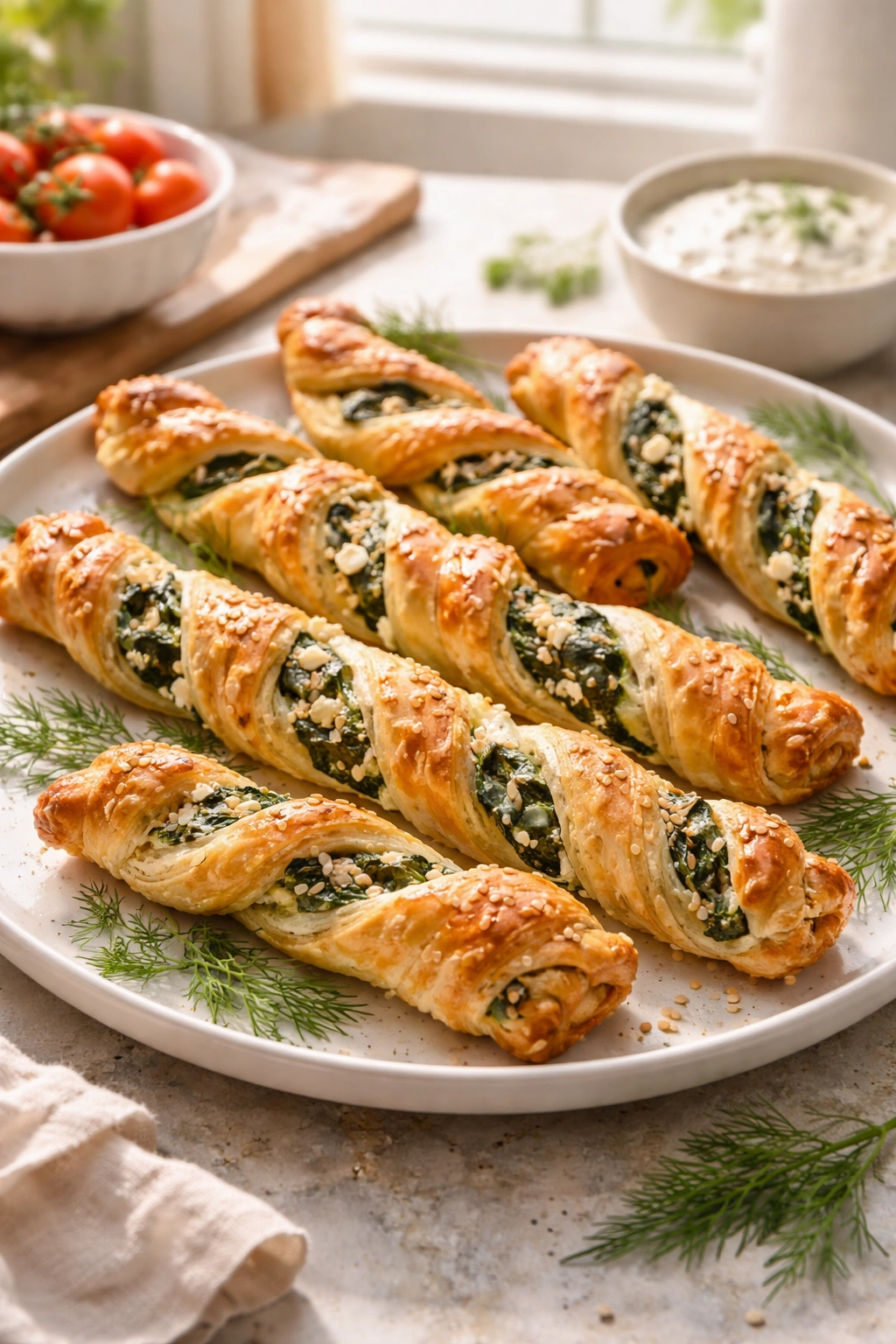
Puff pastry is genuinely one of the best shortcuts in cooking. You buy it frozen, let it thaw, add good fillings, bake, and it looks like you spent hours in the kitchen.
Spinach and feta puff pastry twists are elegant and delicious. Thaw puff pastry sheets, brush with egg wash, sprinkle a mixture of sautéed spinach, feta, and fresh dill over the surface, roll the edges toward the center to form a spiral, brush again with egg wash, and bake at 400°F until golden and puffed. Cool slightly, then cut into diagonal pieces. Make these up to 4 hours ahead and they’re delicious at room temperature.
Caramelized onion and goat cheese puff pastry bites use the same concept. Layer caramelized onions, goat cheese, and fresh thyme on puff pastry, roll it up, slice, and bake. The sweet caramelized onions against the tangy cheese and butter-flaky pastry is genuinely hard to beat.
Asparagus and prosciutto wrapped in puff pastry is fancy enough for any celebration. Cut puff pastry into thin strips, wrap around asparagus spears and a small piece of prosciutto, brush with egg wash, and bake at 400°F until the pastry is puffed and golden. These are best served warm or at room temperature and are completely fine made 6-8 hours ahead.
Beet and goat cheese puff pastry tarts use store-bought puff pastry as the base, topped with roasted and thinly sliced beets, creamy goat cheese, and a scatter of fresh thyme. These can be made ahead and served at room temperature or warmed slightly before serving.
Sweet puff pastry options work too: strawberry and pastry cream tarts use store-bought shells, pastry cream, and fresh strawberries arranged just before serving. Apple hand pies (small folded pastry with seasoned apple filling) can be made ahead and served at room temperature. Tiny cream puffs filled with a simple pastry cream or whipped cream and topped with a berry are elegant and surprisingly easy.
The advantage of puff pastry: you look incredibly accomplished while actually saving serious time and effort. Buy the good frozen kind (Dufour is excellent), thaw according to package directions, and don’t touch it more than necessary—you want those cold butter layers to create crispy, flaky layers.
Beverage Pairings That Complement Your Food
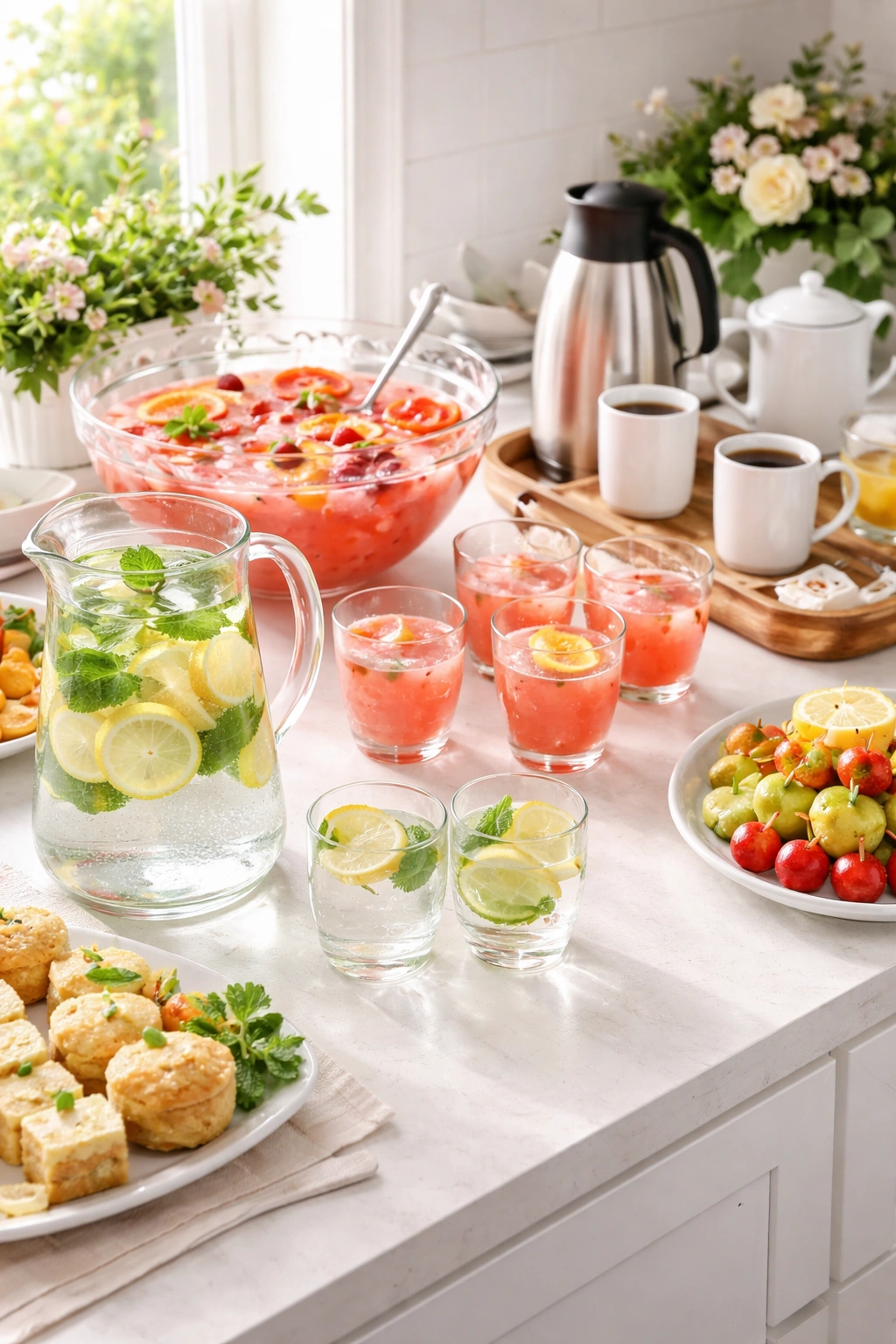
The drinks at a baby shower matter more than many people realize. The right beverages make the entire meal feel more intentional and festive.
Sparkling water with fruit and herbs is refreshing and non-alcoholic (always important at a baby shower since the mom-to-be isn’t drinking). Serve it in a pitcher with fresh fruit (sliced lemons, berries, cucumber), fresh mint, and edible flowers frozen in ice cubes. It looks beautiful, tastes good, and hydrates your guests without being a heavy option.
A simple, slightly sweet punch made with sparkling cider or ginger ale, fresh citrus juice, and a generous amount of fresh fruit and herbs feels celebratory without being alcoholic. Make it the morning of and add the sparkling element just before guests arrive so it stays bubbly.
Coffee and tea service gives people warm beverage options. Brew good coffee, keep it warm in a carafe, and set up a small bar with cream, sugar, and maybe a flavored syrup or two. Offer a selection of herbal teas and hot water so guests can make their own as they please.
Lemonade, both still and sparkling, is classic and perfectly on-brand for a baby shower. Make a concentrated lemon syrup the day before (equal parts sugar and lemon juice heated until the sugar dissolves, then cooled), and guests can make their own drinks by adding the syrup to still water or sparkling water.
A light white wine option (sparkling wine or a crisp Sauvignon Blanc in a single bottle for those who drink) is tasteful without making alcohol the focus of the event.
The key: offer more non-alcoholic options than anything else, make sure water is easily accessible, and have at least one fun, decorative option that feels intentional rather than an afterthought.
Make-Ahead Strategies That Actually Save You Time
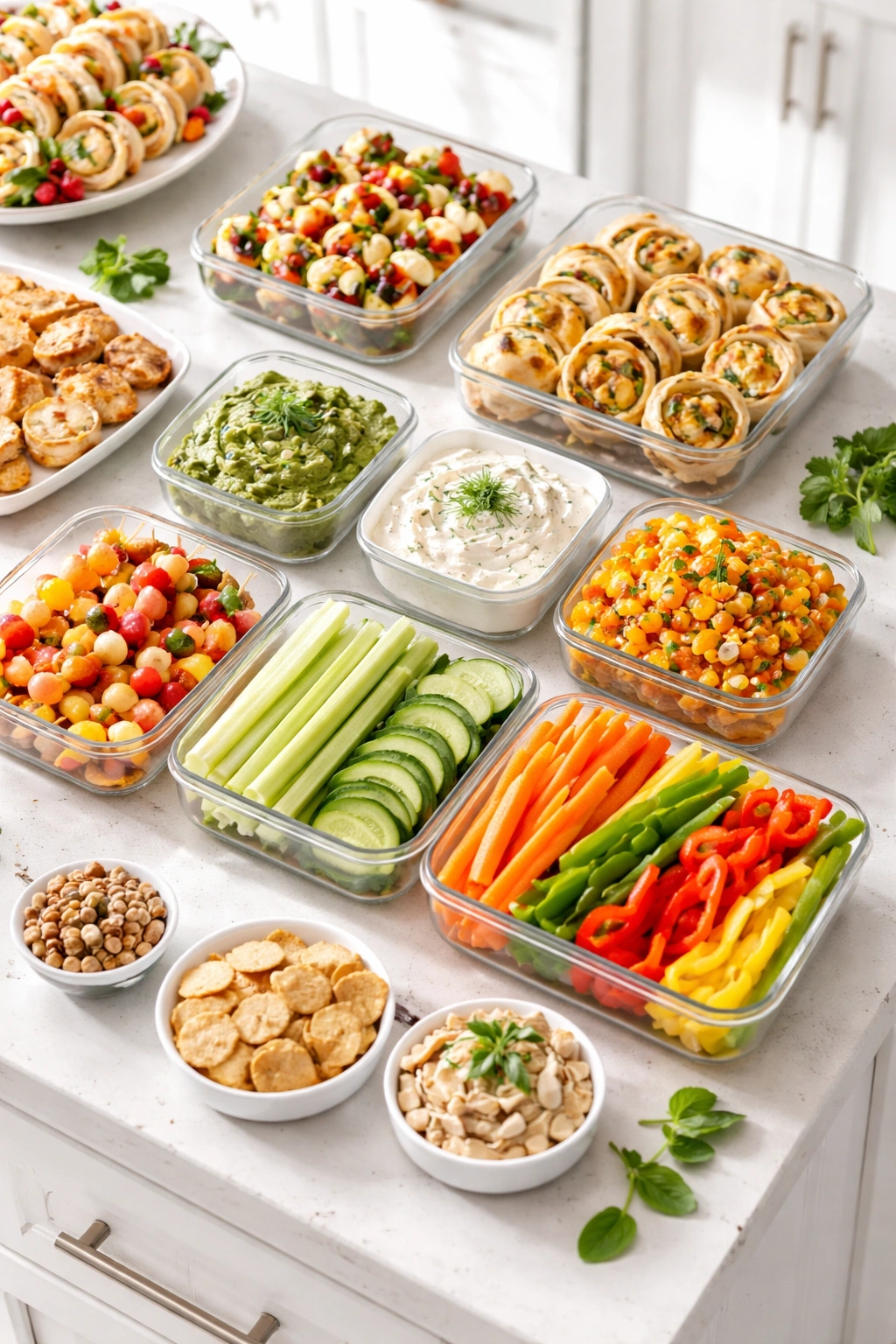
The most useful thing you can do for yourself is preparing as much as possible in the days before the shower. This transforms the day-of into actual enjoyment rather than frantic cooking.
Three days before: Make any dips that hold well (feta dip, roasted red pepper dip, hummus variations, herb cream cheese dip). Prepare and freeze meatballs if using them. Make puff pastry items (spinach twists, asparagus wraps) and keep them refrigerated. Bake any cookies or sweet items. Make the syrup for lemonade.
Two days before: Prepare finger sandwiches, cover them tightly, and refrigerate. Make any meat-based items that reheat well (pulled pork, sliders, meatballs in sauce). Prep fruit by cutting it into pieces and keeping it in airtight containers. Prepare any salads that don’t include dressing. Roast vegetables if needed.
The day before: Assemble the charcuterie board if it has non-perishable items, cover it loosely with plastic wrap, and refrigerate. Prep vegetable platters by cutting and arranging everything, covering with damp paper towels and plastic wrap. Make the tea sandwiches if you’re making them. Chill all beverages. Set up your serving dishes, napkins, and utensils so you’re not scrambling during the event.
The morning of: Assemble delicate items that don’t hold well (anything with avocado, fresh-cut fruit that’s prone to browning, warm items that shouldn’t sit). Reheat anything that needs reheating (quiches, sliders, meatballs). Arrange the final platter, add fresh garnishes, and keep food covered until guests arrive.
One hour before guests: Take food out of refrigeration if needed (many things are delicious at room temperature), transfer items to serving dishes, add ice to cold drinks, and light any candles or set final touches.
The goal is that when guests arrive, you’re ready to welcome them—not still cooking. Build that into your planning from the start.
Budget-Friendly Approaches Without Looking Like You Cut Corners
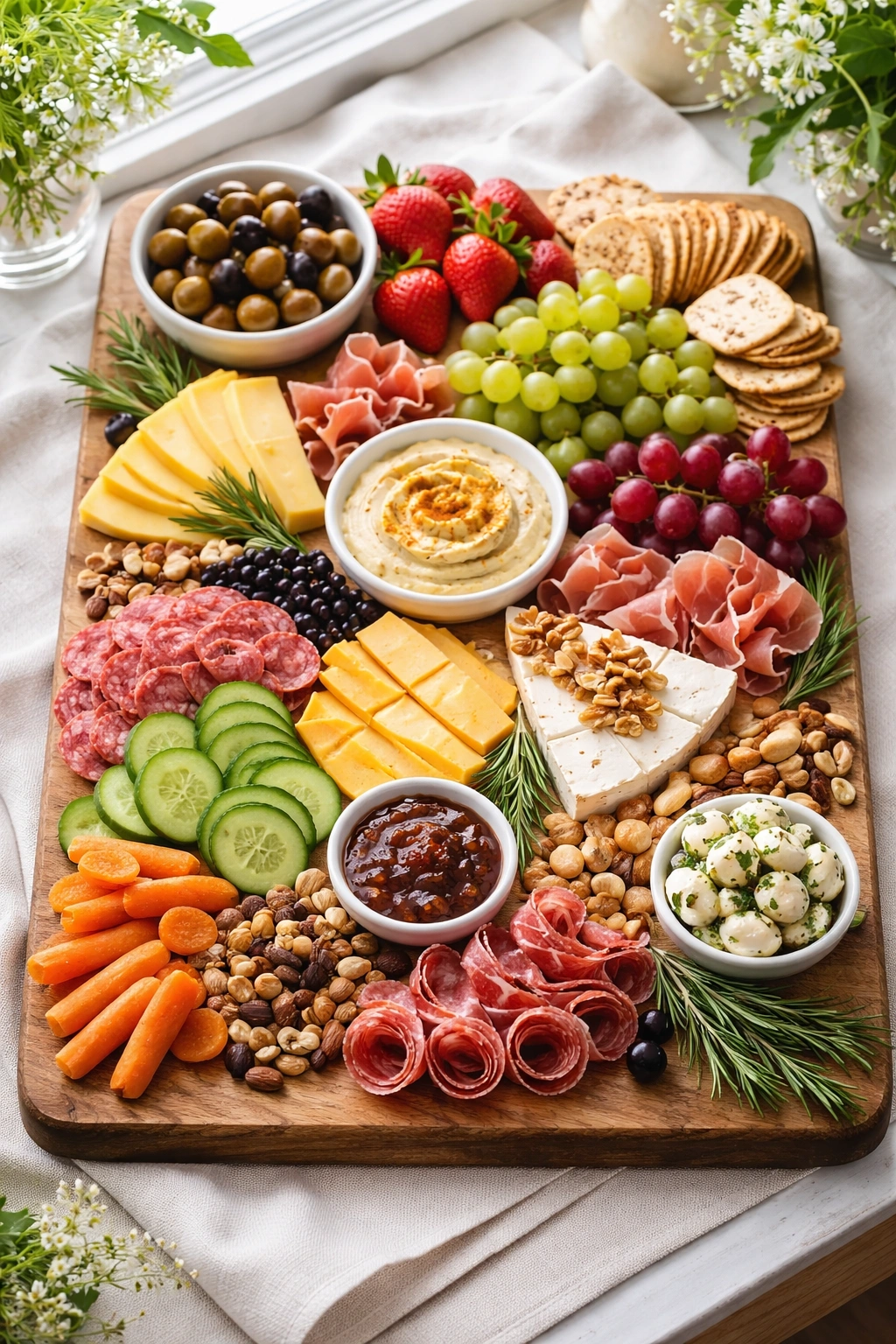
You can absolutely throw a beautiful, delicious baby shower without spending a fortune on food. The trick is being strategic about where you spend and where you save.
Focus your budget on a few showstopping items rather than spreading thin across many options. One gorgeous charcuterie board with quality cheeses and cured meats makes more impact than five mediocre appetizers. One excellent cake with beautiful decoration means more than five types of sweets.
Buy store-bought items and elevate them. Store-bought hummus becomes fancy with a generous drizzle of good olive oil, a scatter of pomegranate seeds, and fresh herbs. Store-bought puff pastry becomes something special with good fillings and careful assembly. Store-bought cookies look intentional when arranged on a beautiful platter.
Shop sales for ingredients a week or two before the shower. Buy frozen vegetables, which are often less expensive than fresh and work just fine for items like spinach and feta quiches. Buy canned beans for dips. Buy whatever proteins are on sale and plan your menu around that.
Batch-cooking things like meatballs or pulled pork stretches your ingredient budget and creates multiple servings from less expensive base proteins. One pork shoulder yields a lot of food and costs less than individual expensive proteins.
Make finger sandwiches instead of buying prepared ones from a caterer—you’ll save significantly and control the quality of ingredients. The basic cost of bread, cheese, and deli meat is modest if you make them yourself.
Skip expensive decorative elements. Fresh flowers and herbs from your garden or inexpensive farmers market options look beautiful without the cost of formal florals. Natural lighting and good serving dishes do more for presentation than expensive decorations.
Skip items nobody actually eats much of. Breadstick towers that look impressive but mostly go uneaten don’t help your budget. Focus on foods you know will be eaten, which means less waste and more value for your money.
The bottom line: choose fewer, better items rather than spreading your budget thin. People remember quality, not quantity.
Dietary Accommodations and How to Handle Them Gracefully
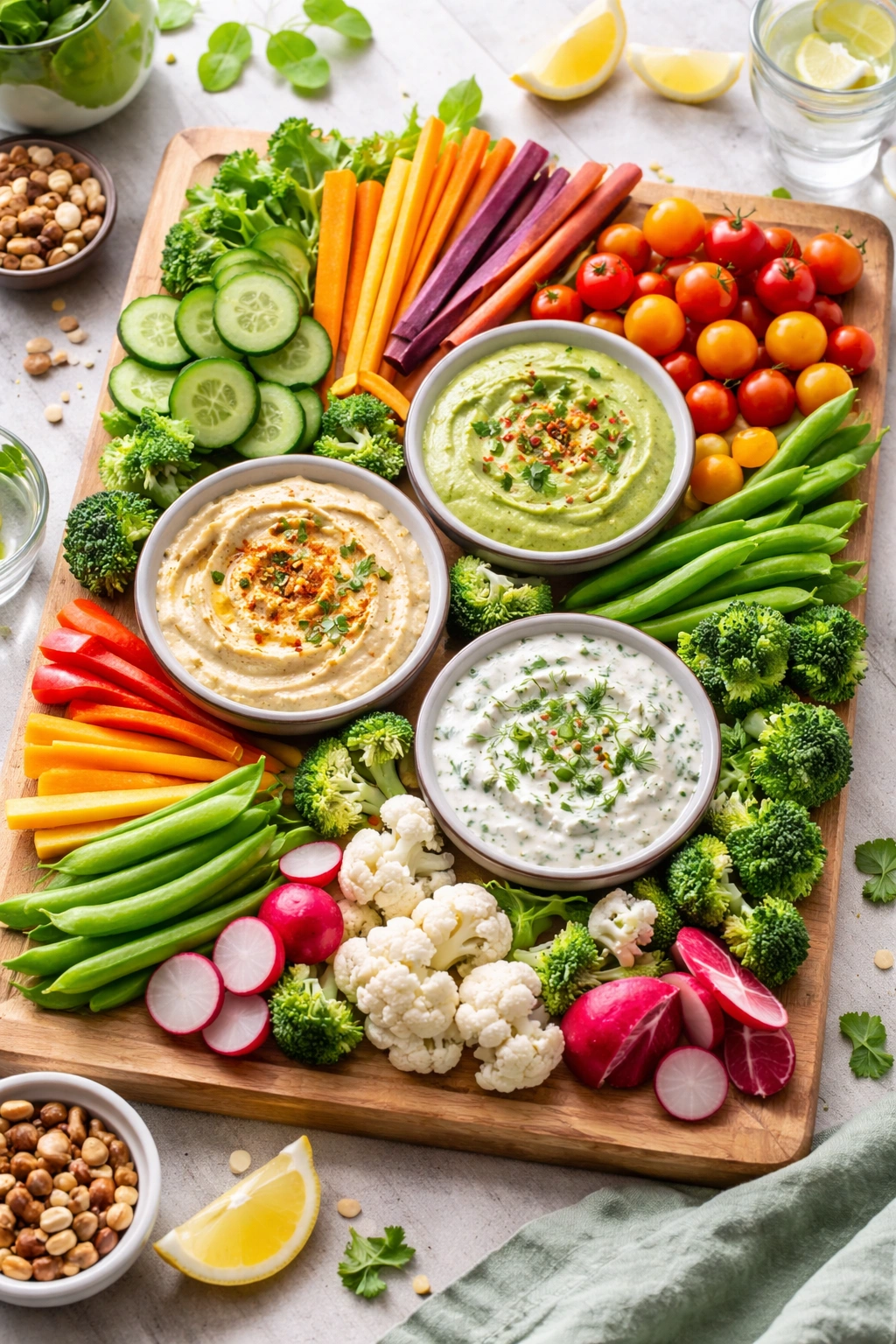
More and more guests have dietary preferences or restrictions, and the way you handle that says a lot about how welcoming your shower feels.
Always ask ahead. When you send invitations, include a simple line asking guests to mention any dietary preferences or restrictions. This gives you actual information rather than guessing or stressing.
Build flexibility into your menu from the start. Vegetarian options should be genuinely appealing (not just a sad pile of vegetables) rather than added as an afterthought. Include options that work for gluten-free guests. Have things that work for dairy-free and vegan guests if you can.
Label your foods clearly. Put a small card next to each dish indicating what allergens or major ingredients it contains. This is helpful information that makes guests feel considered, even if they don’t have restrictions. It’s also genuinely kind to people managing allergies.
Make some foods inherently flexible. A crudités platter with multiple dips serves almost everyone. A fruit platter works for virtually all diets. Grilled vegetables work for vegetarians, vegans, and gluten-free guests. These flexible options mean people always have something to eat.
Provide good non-food options for people who might not be able to eat much (pregnant people sometimes have nausea, nursing mothers sometimes want to limit certain foods). Lots of beverage options, fresh fruit, and light options mean everyone can participate in the eating part of the shower without stress.
The key: make accommodations look intentional and delicious, not like something you’re grudgingly offering. When vegetarian items taste genuinely good, everyone wants to eat them, and no one feels singled out for having different dietary needs.
Final Thoughts
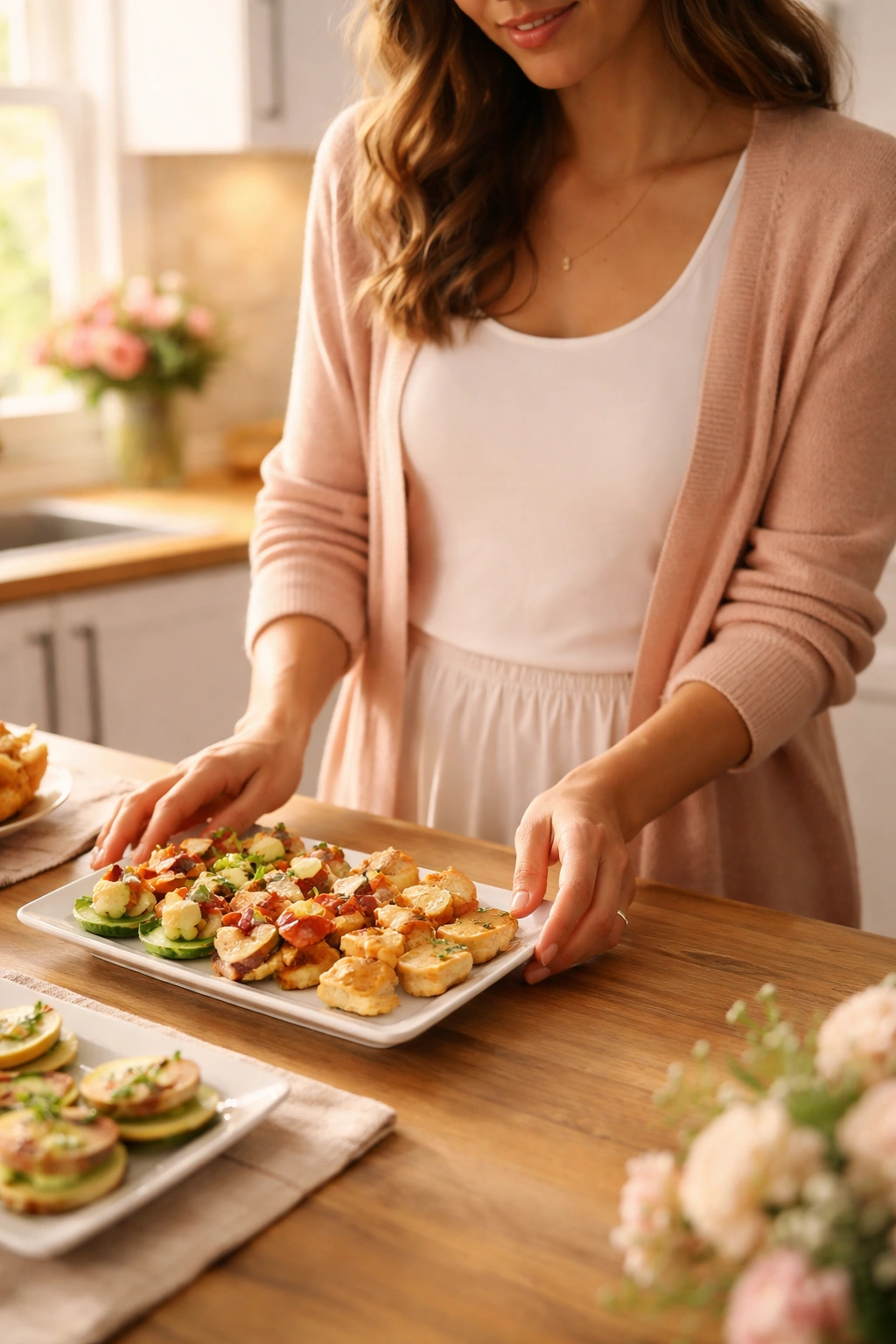
The secret to successful baby shower food is choosing things you actually want to make and are confident executing. Nobody wants to eat stressed-out food, and nobody wants to spend time with someone who’s anxious about whether the quiches are the right temperature.
Start with one or two items you’re absolutely confident about, then build around those. Pick appetizers that can be made 2-3 days ahead so you’re not frantic on the day of. Choose foods that showcase quality ingredients rather than complicated techniques. And remember that people are mostly there for the company and the celebration—the food is secondary to that, even though it matters.
Most importantly, pick foods that are actually delicious and genuinely reflect the love and thought you’re putting into this celebration. That intention comes through in every bite, and that’s what people remember.
