



There’s something inherently special about setting a beautiful roasted lamb at the center of your holiday table. It signals elegance and occasion without requiring the technical skills or all-day commitment of more complicated dishes. Boneless leg of lamb has become my go-to for holiday entertaining precisely because it delivers restaurant-quality results with surprisingly minimal effort—just 15 minutes of hands-on time before the oven does the real work.
This cut transforms into something remarkably tender and juicy when you understand the simple mechanics of how to roast it. The boneless preparation makes carving effortless at the table, there’s no wrestling with bones, and you get a uniform, even thickness that cooks beautifully from edge to center. Whether you’re hosting Easter dinner, a spring celebration, a milestone birthday, or just want to impress guests on a special evening, this is the recipe you’ll return to again and again.
What makes this approach different is that it respects the meat’s natural flavor while building layers of aromatic seasoning throughout—not just on the surface. The combination of garlic, fresh herbs, and lemon creates a subtle but unmistakable flavor profile that feels both classic and effortlessly sophisticated. You’re not masking the lamb; you’re elevating it with flavors that complement rather than overpower its delicate, slightly sweet earthiness.
The Perfect Holiday Centerpiece
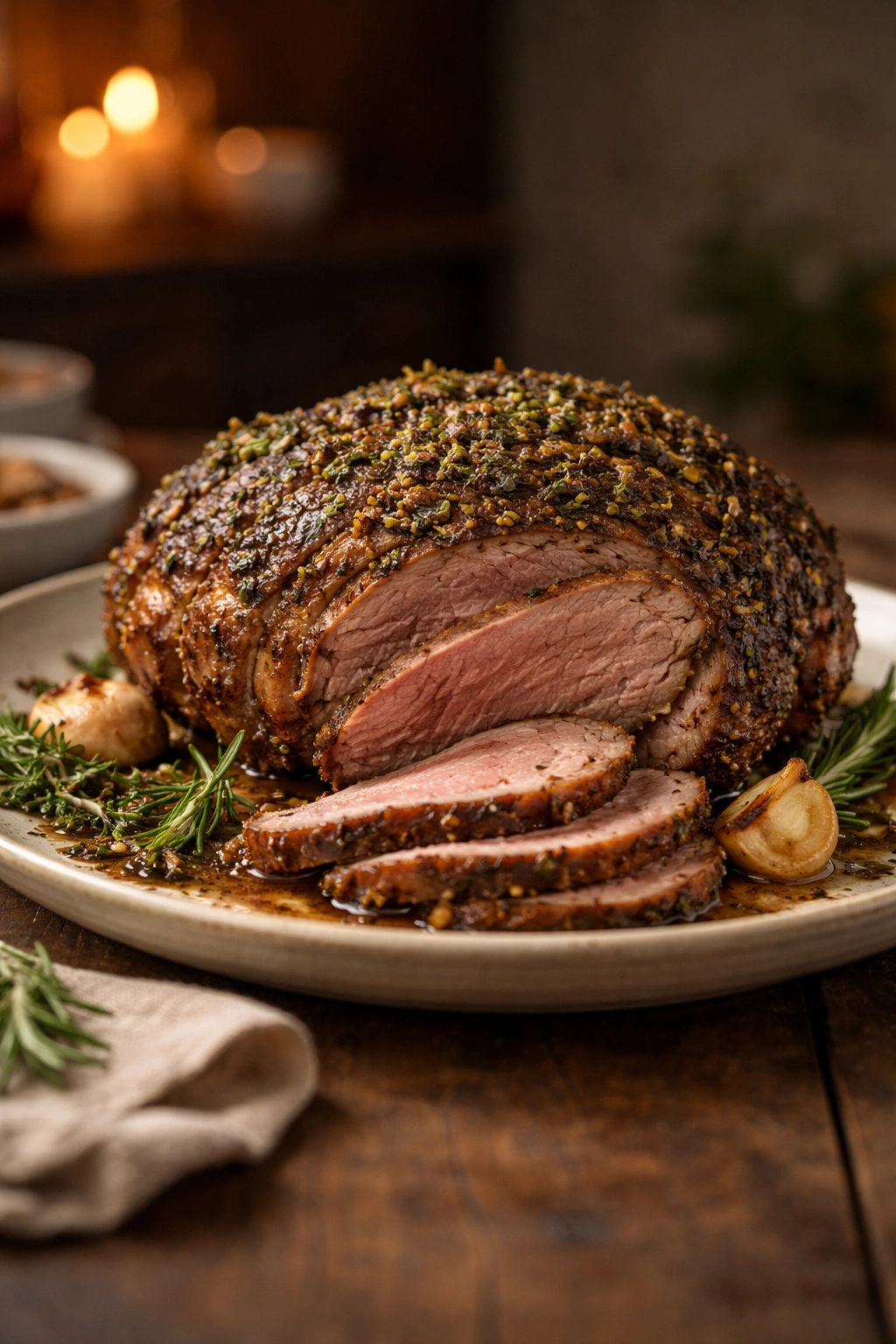
A roasted boneless leg of lamb occupies this enviable space in cooking where it looks far more difficult to prepare than it actually is. Walk into the dining room carrying a beautifully roasted, herb-crusted roast, and your guests will immediately sense that something special has happened in the kitchen. The reality is that you’ve mostly just let time and heat do their work while you attended to other dishes or spent time with loved ones.
This cut works beautifully for holidays specifically because it scales well for any crowd size. A standard boneless leg of lamb in the 4 to 5 pound range serves 8 to 10 people generously, which fits perfectly into typical holiday gatherings. You’re not buying an enormous prime rib or managing multiple smaller cuts; one beautiful roast becomes your centerpiece, your main protein, and honestly, your conversation starter.
The predictability of this recipe matters too. Unlike some showier dishes that demand precise timing and last-minute assembly, a roasted leg of lamb has built-in flexibility. It can rest for 15 to 30 minutes after coming out of the oven—in fact, it should—which means you don’t have to serve immediately. This gives you breathing room to finish sides, pour drinks, and settle everyone at the table without stress. The meat will stay warm under a loose foil tent, and the juices will redistribute throughout, making every slice tender and succulent.
Why Boneless Leg of Lamb Wins
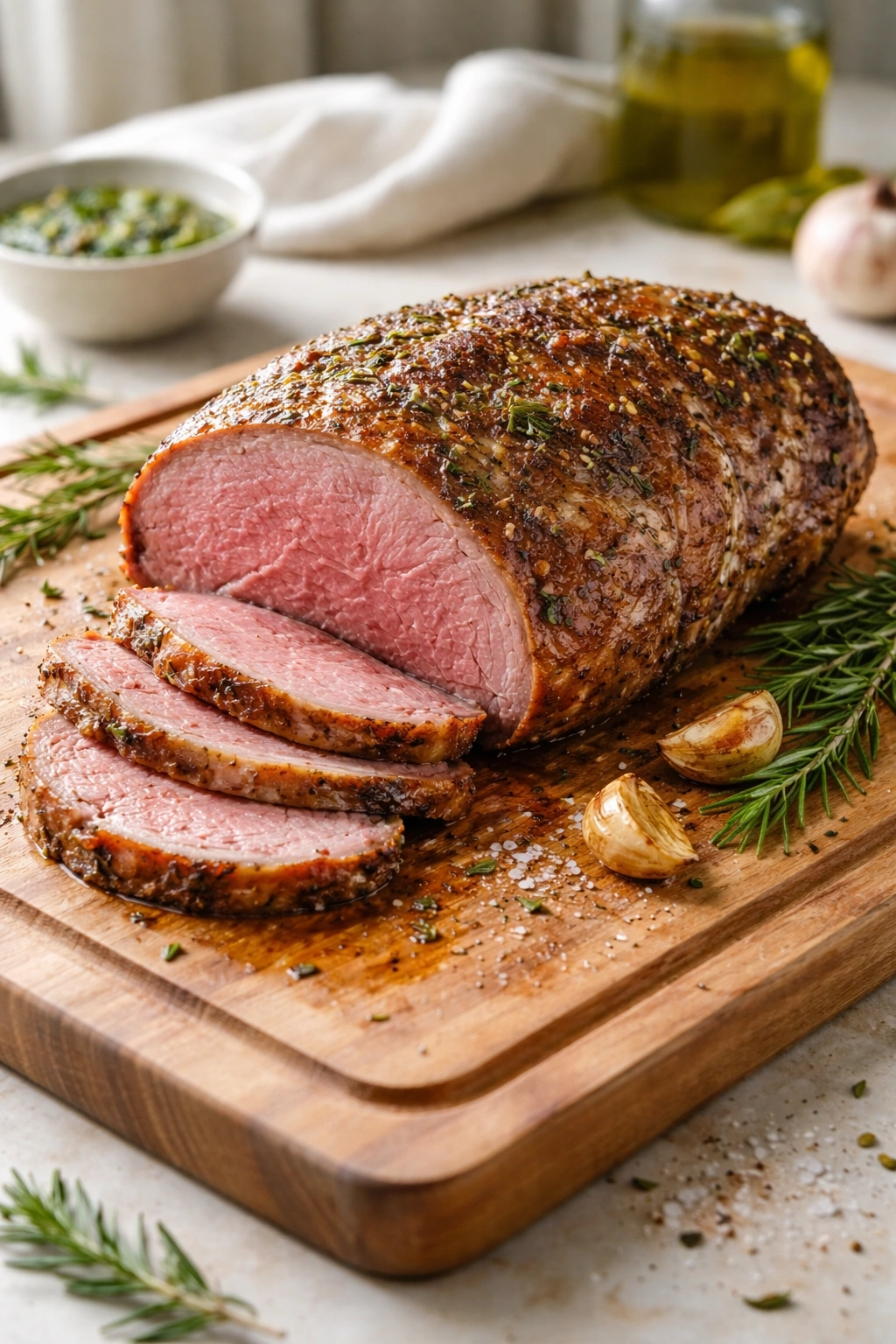
The choice to cook boneless rather than bone-in comes down to practical advantages that matter when you’re entertaining. First, it cooks faster and more evenly. Without a large bone creating a temperature gradient from edge to center, the meat reaches your target doneness more uniformly, with fewer areas that end up overcooked or underdone.
Carving becomes a pleasure instead of a performance. You can slice this roast into neat, thin pieces at the table or in the kitchen without maneuvering around bone or bone shards. The netting that typically holds these roasts together actually works against you if you want optimal seasoning, which is why we remove it, season inside and out, and retie it with kitchen twine. This simple step means the herb and garlic flavors penetrate throughout the meat, not just the exterior.
The economics matter too. Boneless legs of lamb typically cost less per pound than bone-in roasts, and you’re paying only for meat you’ll actually eat. For holiday entertaining on a budget, this is significant. You still get impressive, restaurant-quality results, just with less expense and less waste.
Why Simple Seasoning Is Smarter Than Complex
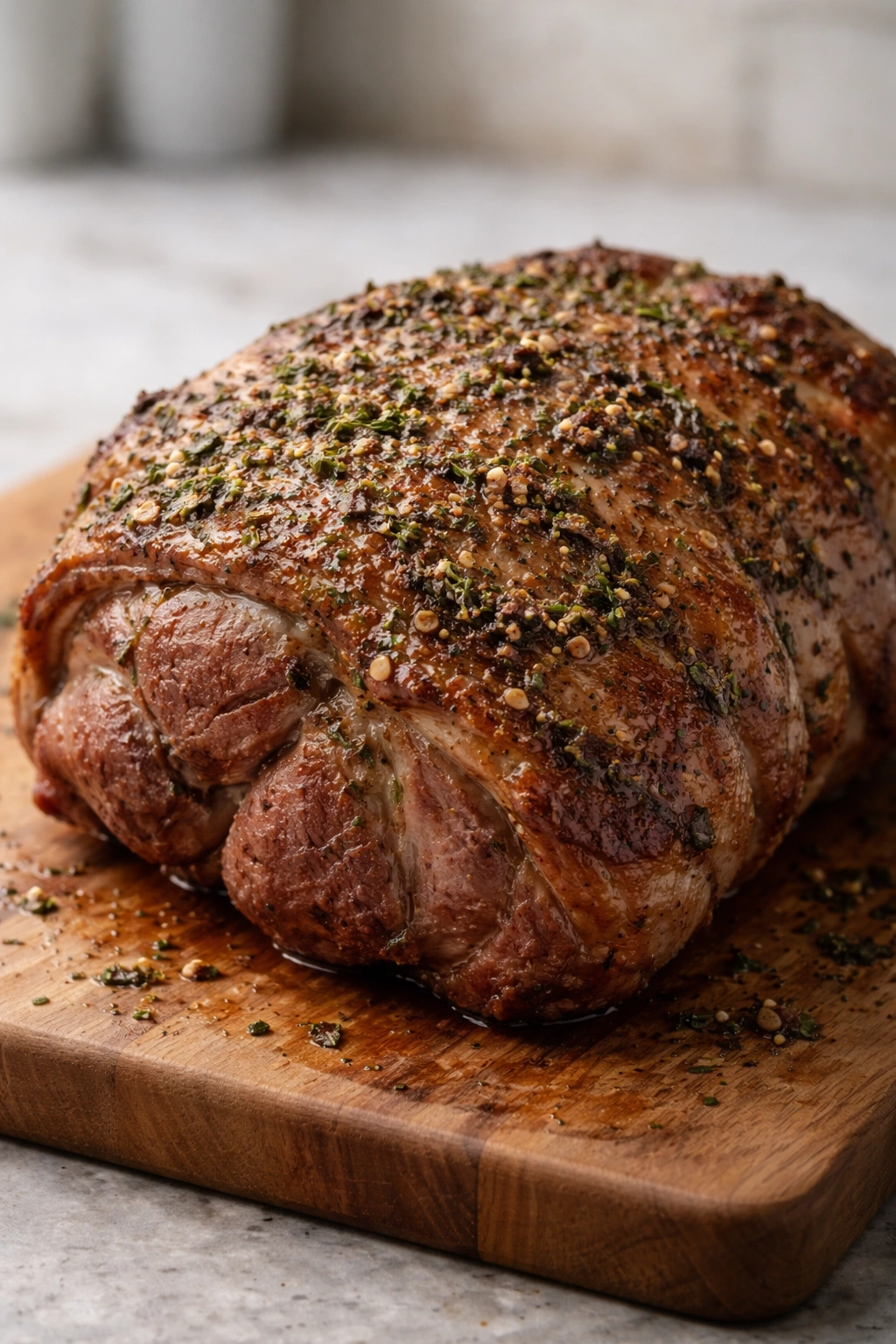
This might sound counterintuitive when we’re discussing special occasion food, but some of the best boneless leg of lamb recipes rely on just four or five key ingredients: the lamb itself, good olive oil, fresh garlic, and dried or fresh rosemary. Some versions add salt, pepper, and lemon zest. That’s it. The genius is in restraint.
Lamb has a distinctly savory, slightly sweet, earthy flavor profile. It doesn’t need heavy spice blends or complex sauce preparations. What it needs is amplification of its own best qualities. Garlic is naturally complementary to lamb’s richness—it adds savory depth without competing. Rosemary is nearly traditional with lamb, partly because the herbal, slightly piney notes cut through the richness of the meat and add brightness. Lemon zest contributes acidity and freshness that rounds everything out without adding moisture that would interfere with the roasting process.
When you avoid overcomplicating the seasoning, you also avoid the risk of one element overpowering another. A perfectly roasted lamb with simple garlic, rosemary, and lemon should taste like the best version of itself, not like the seasonings. That’s the entire goal.
Choosing and Preparing Your Lamb
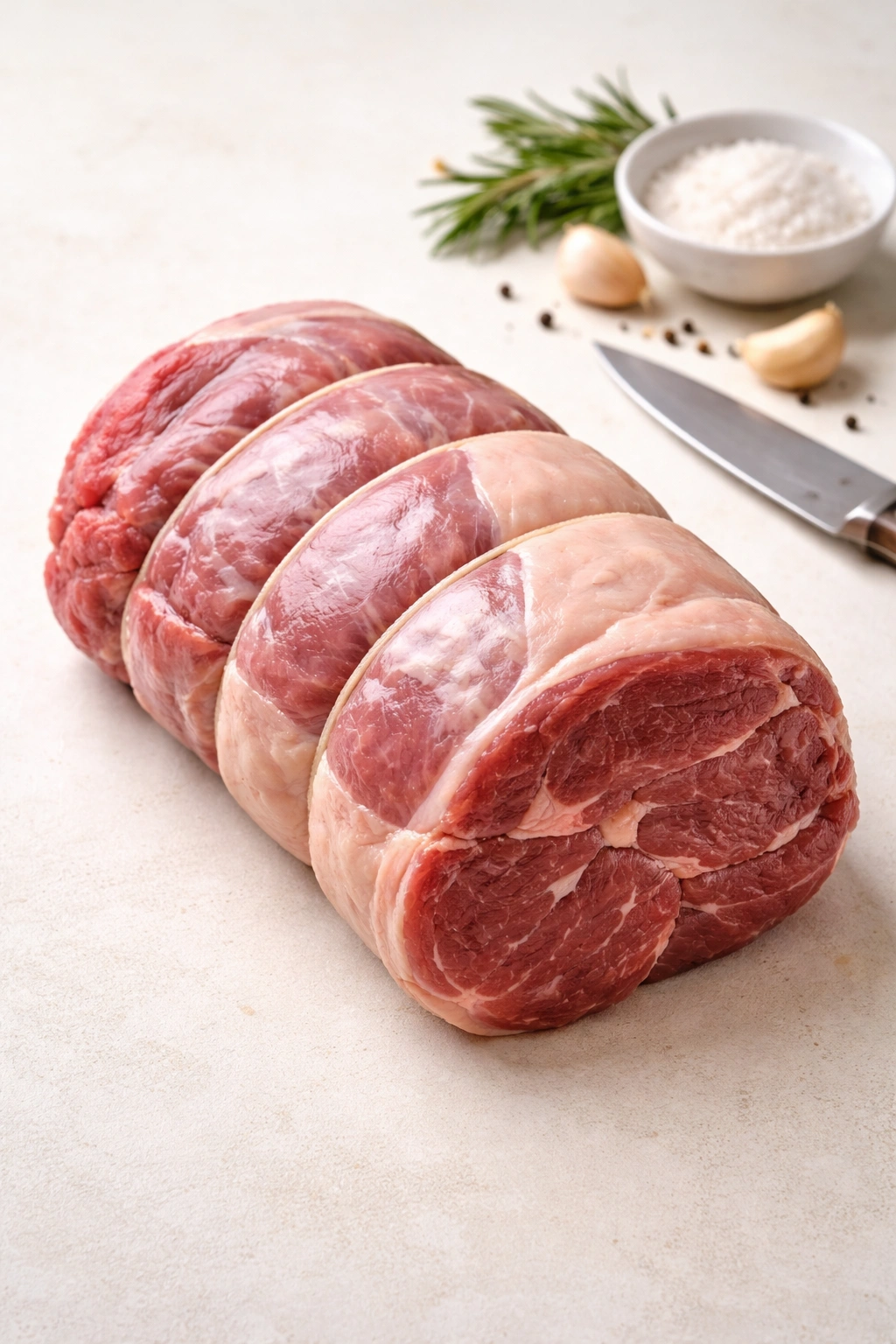
The single most important factor in getting excellent results is the quality of the lamb you start with. A high-quality boneless leg of lamb makes a dramatic difference. If possible, source this from a trusted butcher rather than a supermarket, and ask them to remove the silver skin (that tough connective tissue layer on the interior), trim excess fat, and tie it for you. If you’re doing this yourself, it’s the extra few minutes worth spending.
When you bring the lamb home, it will likely be wrapped in netting. You need to remove this carefully—slide a sharp knife under the netting and cut it away gently so you don’t puncture the meat. Once unwrapped, open it up like a book and examine the interior. You’ll see areas of thick, hard fat that don’t cook into the meat—trim these away, but leave a thin layer of fat on the exterior. Fat provides flavor and protects the meat from drying out during roasting.
The shape matters. You want to roll the lamb back into a roughly cylindrical shape so it cooks evenly. If one end is much thicker than the other, you’ll have overcooked edges and an underdone center. Tie it with cotton kitchen twine in three or four places—center, and at the ends, with maybe one more in between for larger roasts. Don’t worry about perfect butcher’s knots; just tie snugly enough that the roast holds its shape.
The Essential Seasonings and How They Work
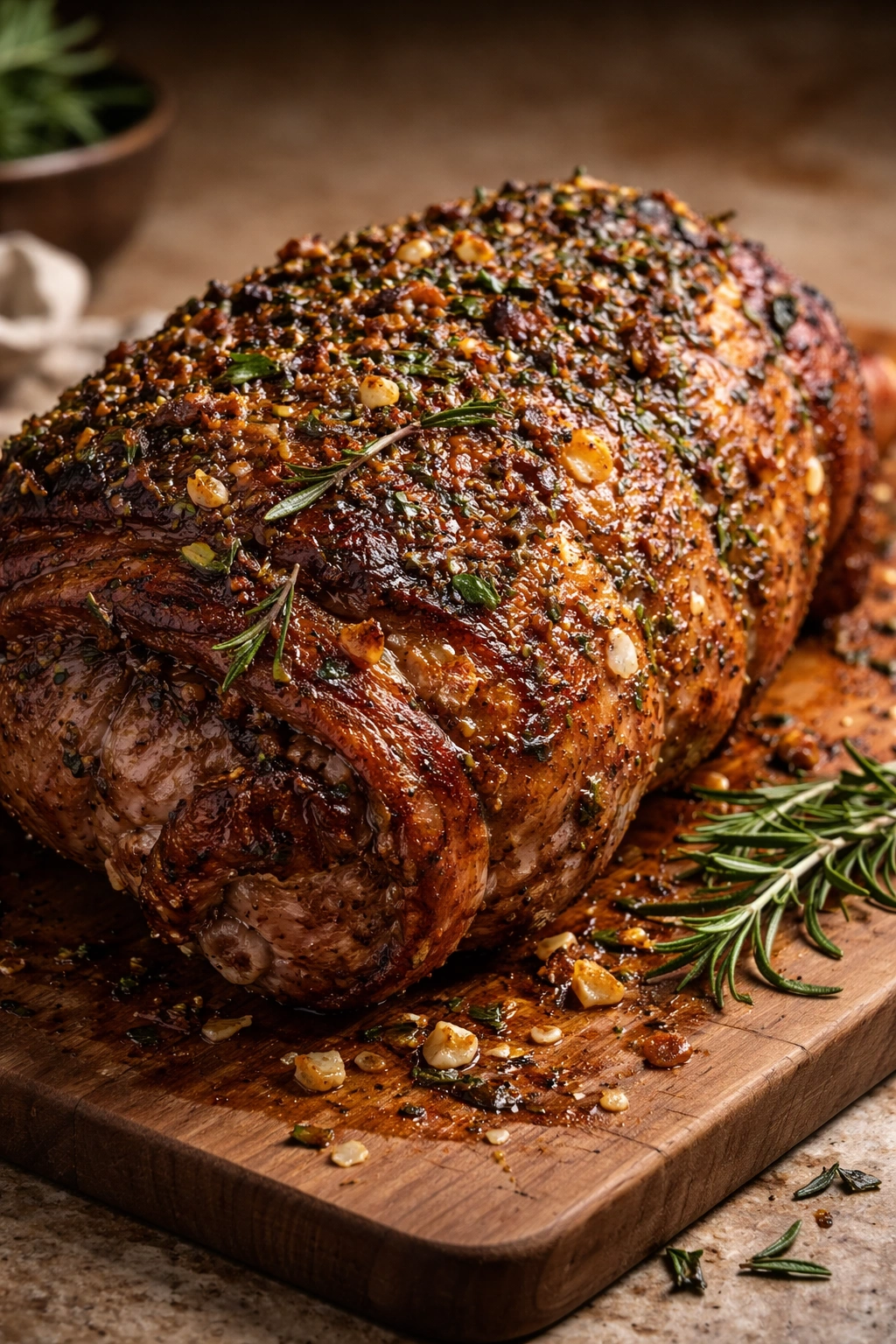
For the core herb paste, you’ll combine minced garlic, fresh or dried rosemary, salt, pepper, and lemon zest (if using). Some recipes add a touch of Dijon mustard, which acts as an emulsifier and helps the paste adhere to the meat while adding subtle complexity. Others add Italian seasoning—a blend of basil, oregano, and parsley that works beautifully with lamb even though rosemary is the star.
The technique of seasoning inside and out is crucial. Mix your herb paste, spread about one-third of it over the inside of the unrolled lamb, then roll and tie the roast. This means as the lamb roasts, the herbs and garlic infuse throughout the meat, not just flavor the exterior crust. Rub the remaining paste all over the outside. You want every surface coated—this creates that beautiful herb crust that people comment on.
If you’re using fresh rosemary, mince it finely. Nobody wants a large piece of woody herb to chew on. Dried rosemary is actually excellent here and more convenient; it distributes more evenly and has a slightly more intense flavor that holds up beautifully to roasting. Fresh garlic should be plump, firm, and fragrant. Old, sprouted garlic will taste sulfurous and harsh. If you’re inserting garlic slivers into the roast (a technique many recipes include), slice them thin and deep enough that they’re genuinely inside the meat, where they’ll become tender and mild as they roast.
Serving and Timing Information
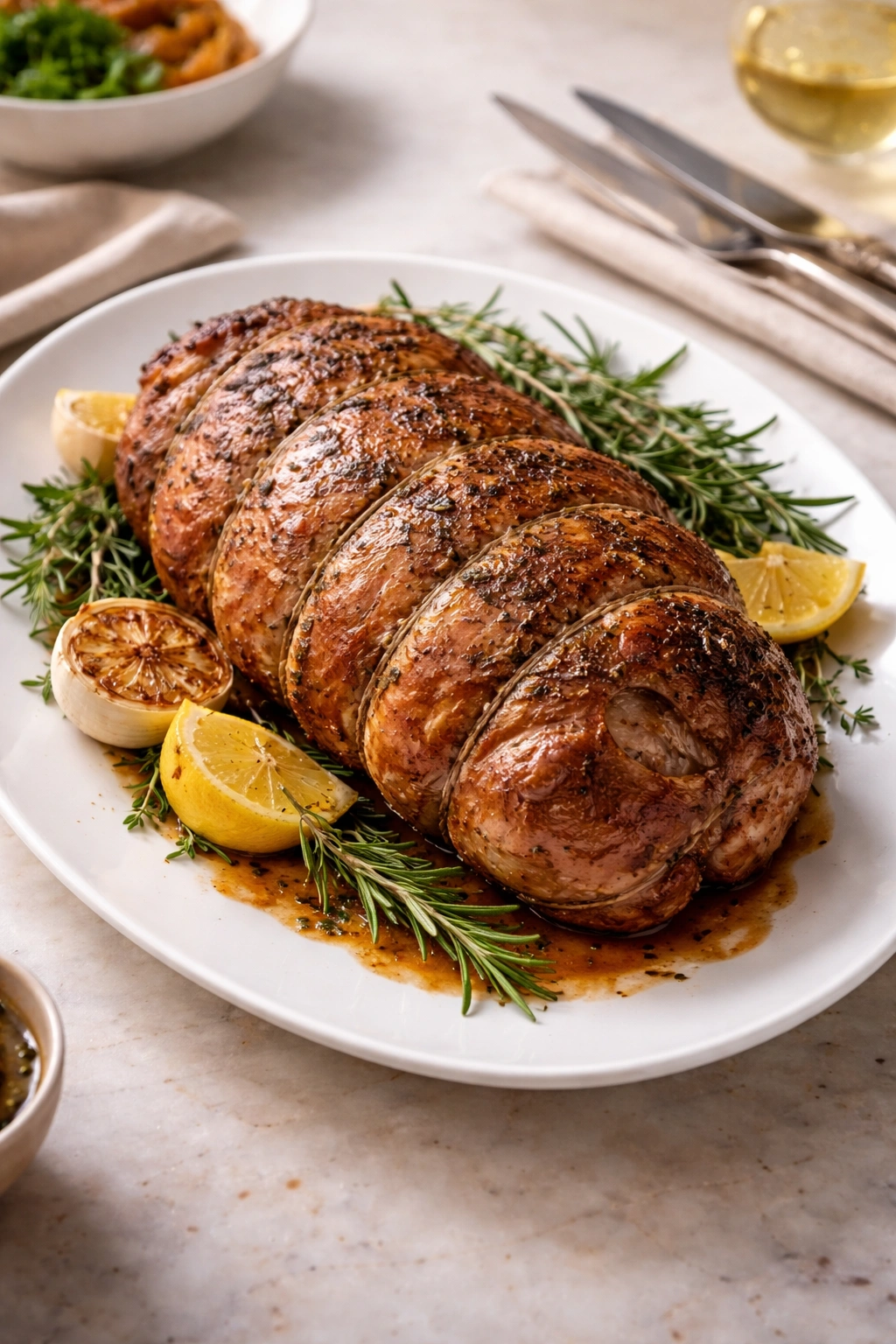
Yield: Serves 8 to 10 people | Approximately 2 ounces cooked meat per person
Prep Time: 20 minutes (includes untying, seasoning, retying, and inserting garlic if using that method)
Cook Time: 1 hour 30 minutes to 2 hours (depending on oven and desired doneness)
Total Time: 2 hours 15 minutes active time, plus 15 to 30 minutes resting (which happens after cooking)
Difficulty: Intermediate — The technique is straightforward, but success depends on using an accurate meat thermometer and understanding carry-over cooking. No special equipment beyond a roasting pan and instant-read thermometer is required.
Complete Ingredient List
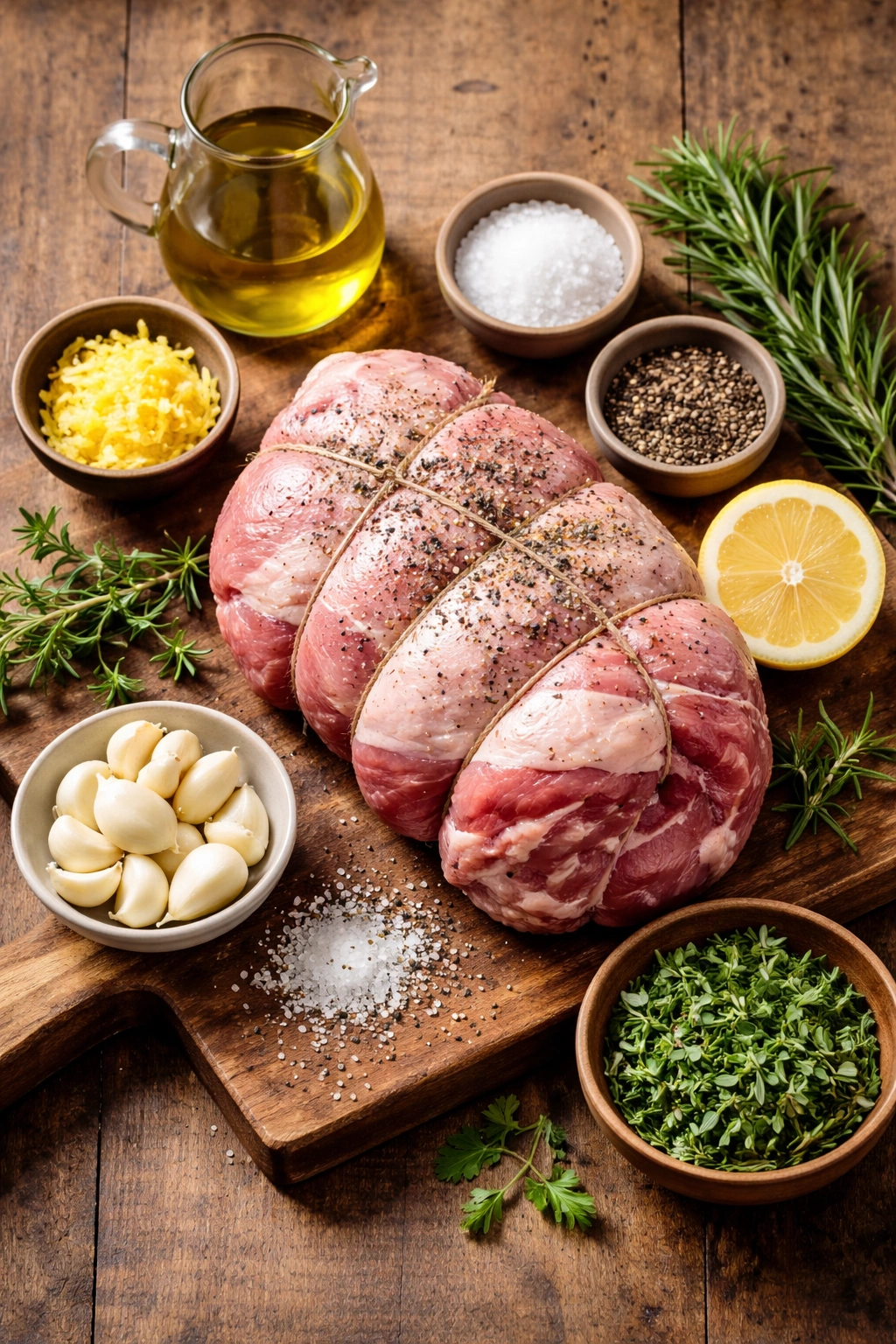
For the Lamb and Herb Paste:
- 1 boneless leg of lamb, 4 to 5 pounds, netting removed and interior trimmed of excess hard fat
- 5 to 7 garlic cloves, minced into a paste (about 2 tablespoons)
- 2 to 3 additional garlic cloves, sliced into thin slivers (optional, for inserting into the roast)
- 2 tablespoons fresh rosemary, finely minced (or 1½ teaspoons dried rosemary)
- 1 tablespoon fine sea salt (or kosher salt—adjust down to 2 teaspoons if using Morton’s, which is saltier)
- 1 teaspoon freshly ground black pepper
- 1 to 2 teaspoons fresh lemon zest (optional but recommended)
- 3 tablespoons extra-virgin olive oil, divided
- Optional: 1 tablespoon Dijon mustard, to help paste emulsify
- Optional: 1 tablespoon fresh parsley, minced
For Roasting:
- 1½ cups water or lamb stock (for the roasting pan)
- 1 tablespoon melted butter (optional, for final basting)
Complete Step-by-Step Instructions
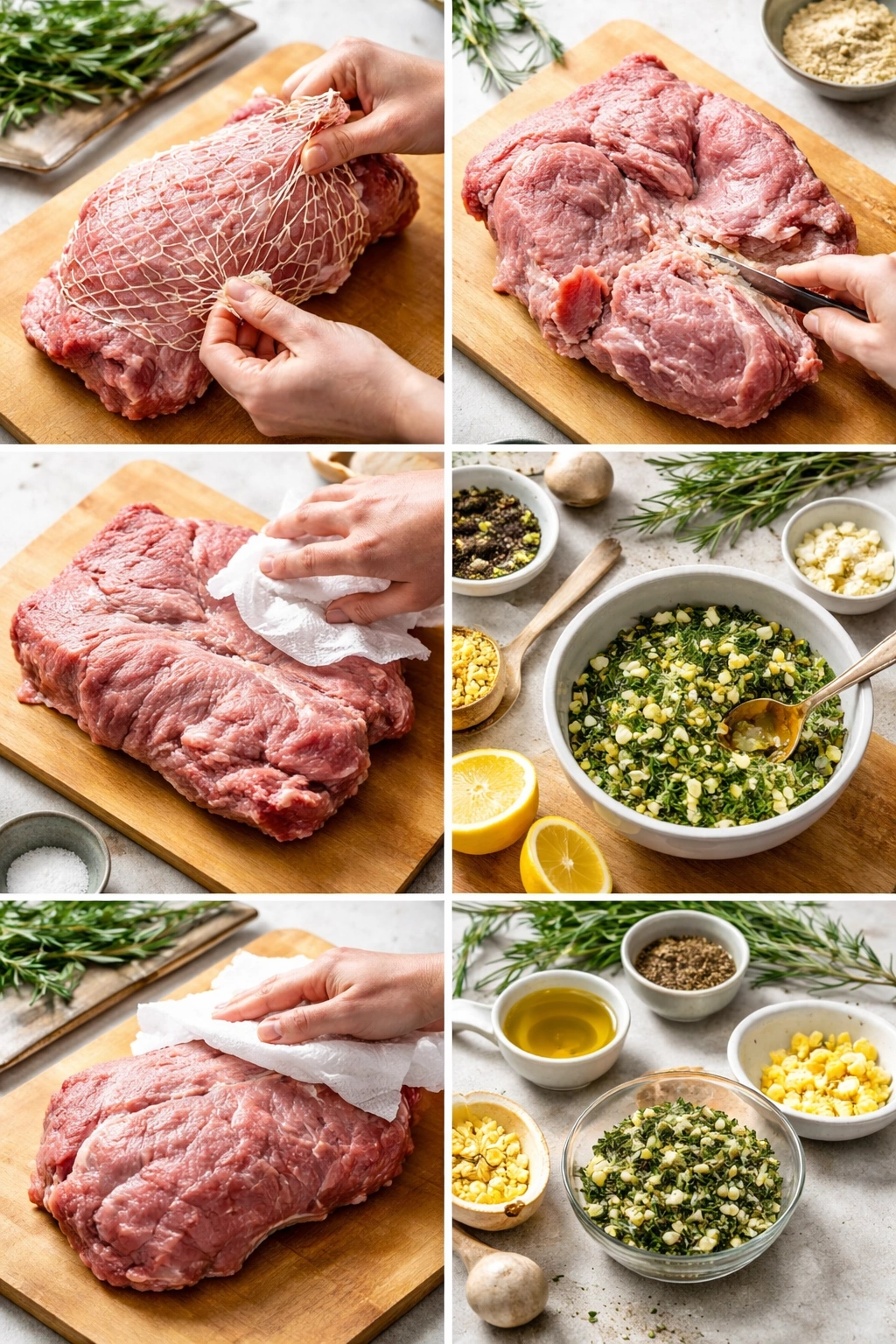
Prepare the Lamb:
-
Remove the lamb from the refrigerator and set it on a cutting board. If it’s still in netting, use a sharp knife to carefully cut and remove the netting by sliding the blade under it rather than piercing through the meat.
-
Open the lamb up like a book, interior side facing up. Using your hands and a sharp knife, remove any large, hard pieces of fat from the inside, but leave a thin natural layer of fat on the outside of the roast—this provides flavor and moisture as it cooks.
-
Pat the interior and exterior of the lamb dry with paper towels. Moisture interferes with browning and proper seasoning adhesion.
Make the Herb Paste:
-
In a small bowl, combine the minced garlic, finely minced fresh rosemary (or dried rosemary), salt, black pepper, and lemon zest if using. Stir together until roughly combined. If using Dijon mustard, add it now and stir until the mixture forms a rough paste that’s slightly thick and spreadable. If the paste is too dry, drizzle in a small amount of olive oil (about 1 teaspoon) to bring it together.
-
Divide the herb paste into two portions—roughly one-third in one bowl and two-thirds in another. You’ll use the smaller portion for the inside of the lamb and the larger portion for the outside.
Season and Roll the Lamb:
-
Spread the smaller portion of herb paste evenly over the entire interior surface of the unrolled lamb, using the back of a spoon or your fingertips to work it into all the crevices. Don’t be shy—the interior seasoning is what makes every bite flavorful, not just the surface.
-
If you’re inserting garlic slivers for extra flavor, take the thin-sliced garlic cloves and gently push them into the flesh of the interior, spacing them roughly 2 inches apart. About 8 to 12 slices is ideal for a 4- to 5-pound roast.
-
Roll the lamb back up into its original cylindrical shape, tucking the edges in so it’s as uniform as possible. The goal is an even cylinder so it cooks uniformly from edge to center.
-
Using three or four pieces of cotton kitchen twine, tie the roast securely—one tie in the center, one near each end, and possibly one more in between for larger roasts. Tie snugly but not so tight that you’re compressing the meat excessively. The twine should hold the roast in its cylinder shape.
Season the Exterior:
-
Rub about 1½ tablespoons of the remaining olive oil all over the exterior of the roast, using your hands to coat every surface. Once oiled, take the larger portion of herb paste and spread it all over the outside of the roast—top, bottom, sides, and ends. Use your hands to press the paste gently into the surface so it adheres and creates maximum contact with the heat.
-
Place the seasoned lamb on a work surface and let it come to room temperature while you preheat the oven. This takes about 45 minutes to an hour and is essential for even cooking. A cold roast will cook slower at the edges than the center, resulting in uneven doneness.
Advertisements
Preheat and Prepare the Pan:
-
Position an oven rack in the center of the oven and preheat to 275°F (135°C) for a slow-roast method that produces exceptionally tender results, OR preheat to 425°F (220°C) for a high-heat sear followed by lower-temperature roasting. Both methods work beautifully; the high-heat method creates a more visible herb crust, while the low-and-slow method produces incredibly tender meat. We’ll use the low-and-slow method in these instructions.
-
Line a roasting pan with foil for easier cleanup. Place the seasoned lamb directly in the center of the pan, fat side up. The fat layer on top acts like an insulating blanket, keeping the meat moist as it cooks. Pour water or lamb stock into the bottom of the pan—you want about 1½ cups of liquid, but make sure it doesn’t splash up onto the lamb itself. This liquid creates steam that helps the meat cook gently and forms the base for a simple pan sauce.
Roast the Lamb:
-
Place the roasting pan in the preheated 275°F oven. Do not cover the pan with foil or a lid. The lamb needs direct heat exposure to develop proper color and the herb crust. Set a timer for 2 hours as a checkpoint, but you’ll begin checking the internal temperature after 1 hour 45 minutes.
-
Roast until an instant-read meat thermometer inserted into the very center of the thickest part of the roast reads 125°F to 130°F (52°C to 54°C). Remember: the internal temperature will continue to rise another 5 to 10 degrees as the lamb rests out of the oven. If you remove the roast when it hits 130°F, it will reach 135°F to 140°F (medium-rare to medium) by the time it’s rested, which is the ideal serving temperature for lamb. If the roast hasn’t reached 125°F after 1 hour 45 minutes, continue cooking and check every 10 to 15 minutes. Every oven behaves differently, and the size of your roast will affect cooking time, but plan on roughly 15 to 20 minutes per pound for medium-rare doneness.
-
If using the high-heat method instead: Preheat to 425°F, place the lamb in the pan, and roast for 15 minutes to build a crust. Then reduce the oven temperature to 350°F (175°C) and roast for an additional 1 hour to 1 hour 30 minutes, until the thermometer reads 125°F to 130°F.
-
During the final 10 to 15 minutes of roasting, if you wish to add extra richness and encourage browning, brush the lamb with melted butter. This step is optional but creates a lovely glossy finish.
Rest the Lamb:
- Remove the roasting pan from the oven and carefully transfer the lamb to a cutting board or serving platter. This resting period is absolutely essential and should never be skipped. Loosely tent the lamb with foil to keep it warm while it rests for 15 to 30 minutes. During this time, the muscle fibers relax and reabsorb the meat juices, which ensures maximum tenderness and juiciness. If you skip the rest or cut into the meat immediately, those precious juices will flow out onto the cutting board instead of staying inside the meat.
Carve and Serve:
-
Using kitchen shears, carefully snip and remove the kitchen twine from around the roast and discard. Using a sharp carving knife (a serrated bread knife works well), slice the lamb into ¼-inch-thick slices. Slice against the grain, which means looking at the direction the muscle fibers run and cutting perpendicular to them. This produces tender slices rather than chewy ones. The outside slices will be slightly more cooked than the center slices—this is desirable because it gives guests who prefer more-done meat the option to take from the ends, while those who prefer medium-rare can take from the center.
-
Arrange the sliced lamb on a serving platter. Optional: strain the pan drippings into a small saucepan, skim any excess fat from the surface, and serve as a simple pan sauce alongside the meat. The garlic and herb flavors will have infused into the liquid, making it deeply flavorful. If the drippings are too fat-heavy, let them sit for a minute, and the fat will rise to the top and be easy to remove.
Pro Tips for Absolutely Perfect Results
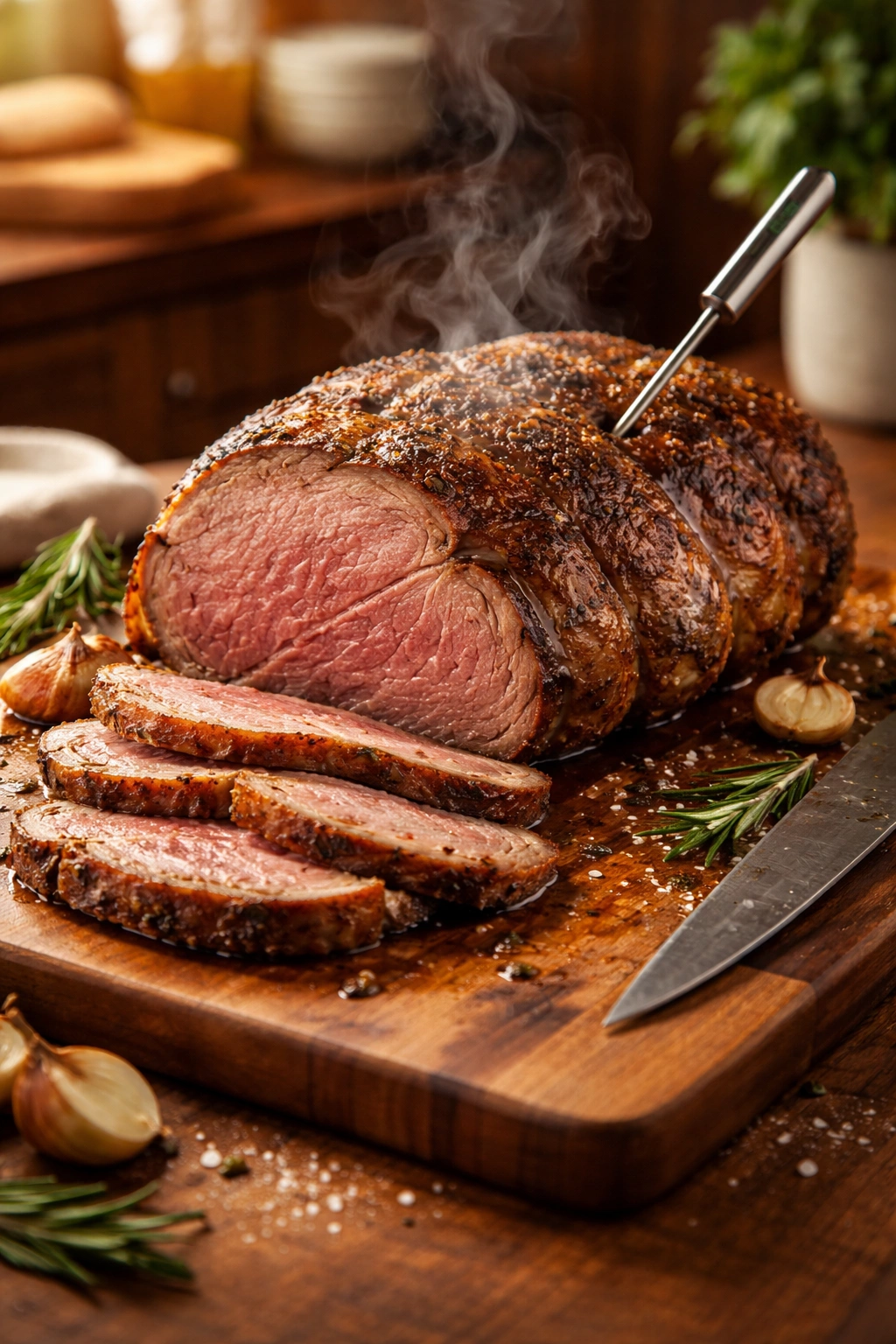
Trust your thermometer more than your intuition. Lamb continues cooking as it rests—this is called carry-over cooking. The internal temperature will rise another 5 to 10 degrees after you pull the roast from the oven. This is why you pull it at 125°F to 130°F, not at your target final temperature. It feels counterintuitive the first time you do it (the meat will look a bit underdone when you pull it out), but this technique is what separates perfectly cooked lamb from dry, overcooked lamb.
Slice thinly and against the grain. Lamb is a lean meat without much intramuscular fat, so slice thickness matters. Thick slices can feel chewy; thin slices (about ¼ inch) are naturally more tender. Identifying the grain (the direction the muscle fibers run) and slicing perpendicular to it breaks those fibers into shorter lengths, which your teeth don’t have to work as hard to tear through. This makes an enormous difference in perceived tenderness.
Don’t trim all the fat. This sounds like contradictory advice in an era of fat-conscious cooking, but the thin layer of fat on the exterior of the lamb serves multiple purposes. It protects the meat from drying out, it seasons the meat as it renders, and it creates that appealing browned, crust-like exterior that makes the dish look special. Remove only the large, hard pieces of connective tissue—the silvery white stuff that never softens no matter how long you cook it. Leave the thinner fat layer.
Make sure the lamb is truly at room temperature before roasting. A roast pulled straight from the refrigerator will have a cold center and hot edges by the time the interior reaches the target temperature. Letting it sit on the counter for 45 minutes to an hour allows the interior to warm up, ensuring even cooking. You can plan your meal around this by seasoning the lamb and setting it out while you prep sides or shower and change.
Use an instant-read thermometer, not the pop-up kind. The built-in pop-up thermometers in some pans and the ones sometimes sold separately are notoriously inaccurate. A good instant-read digital thermometer costs $15 to $25 and will be the most useful tool in your kitchen. It’s the only way to know with certainty that your lamb is cooked to your exact preference.
Assemble your serving platter ahead of time. Once the lamb comes out of the oven, you want to transfer it to a beautiful serving dish immediately. Have your platter warming in a low oven (200°F) so the meat doesn’t cool too quickly. Arrange any garnishes (fresh herbs, lemon wedges) ahead of time so plating takes 30 seconds rather than holding the lamb while you scramble to set up.
How to Know When It’s Truly Done
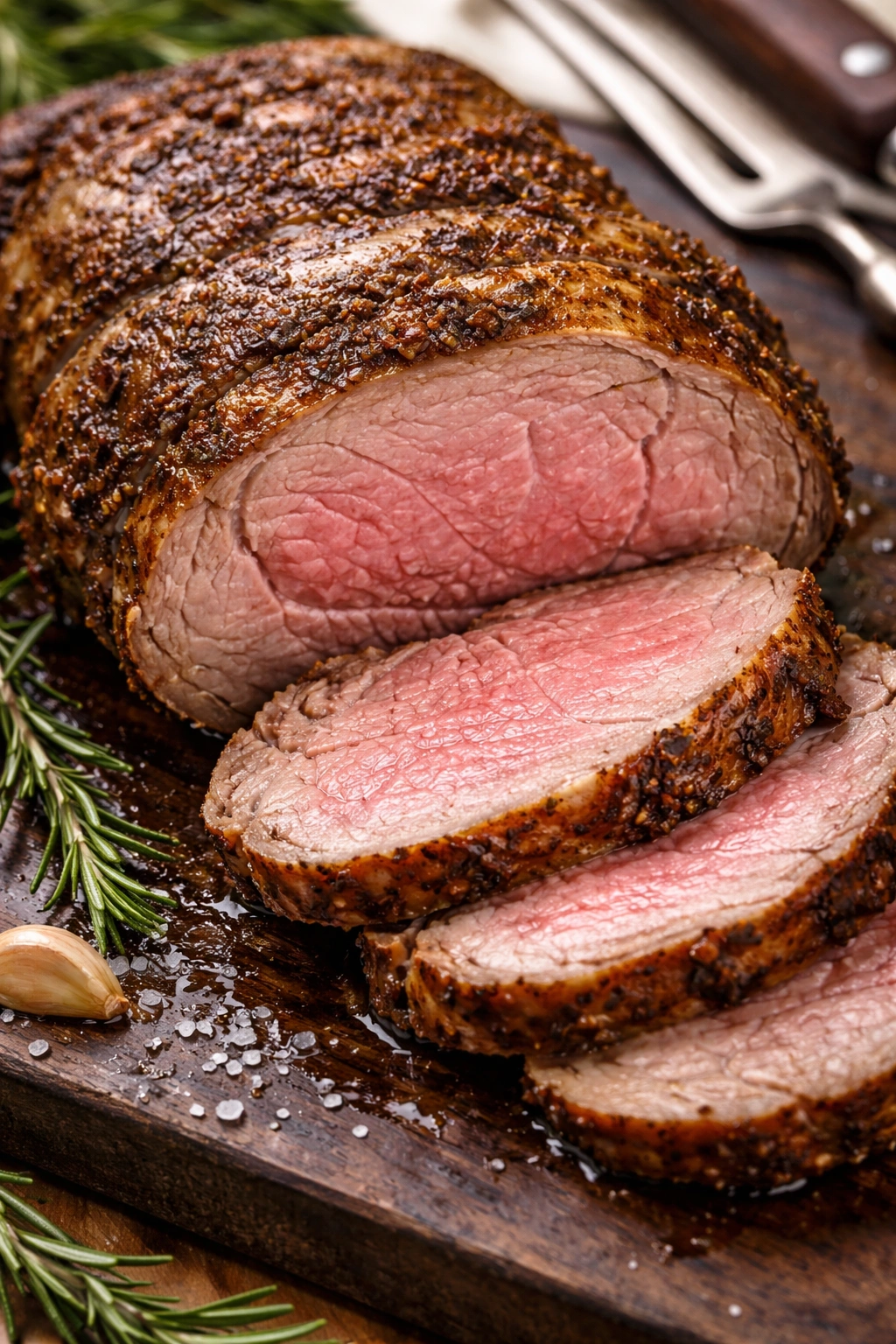
The internal temperature is your only reliable guide. Visual cues like color are misleading because it’s completely normal for lamb to look slightly pink in the center even when it’s at the ideal serving temperature. The USDA recommends cooking all lamb cuts (except ground lamb) to 145°F (63°C), which produces medium to medium-well doneness. However, chefs and most experienced home cooks prefer lamb at 130°F to 140°F (medium-rare to medium), where the meat is most tender and juicy.
Here’s a quick reference for desired doneness:
- Rare: 125°F (52°C) — Pink throughout. Lovely, but some guests may be uncomfortable with this.
- Medium-Rare: 130°F to 135°F (54°C to 57°C) — Warm pink center, mostly cooked exterior. This is the ideal serving temperature and most chefs’ recommendation.
- Medium: 135°F to 145°F (57°C to 63°C) — Mostly cooked with just a hint of pink. A good compromise for mixed preferences.
- Medium-Well and Beyond: 145°F+ (63°C+) — Mostly gray throughout. Perfectly safe, but lamb becomes drier and loses some tenderness at this temperature.
When you take the lamb’s temperature, insert the thermometer into the very center of the thickest part of the roast. If you’re cooking a bone-in roast, make sure the tip of the thermometer isn’t touching the bone—bone conducts heat and will give you a falsely high reading. For a boneless roast, the center of the thickest part is your target. Wait about 15 seconds for the reading to stabilize.
Resting, Carving, and Presentation
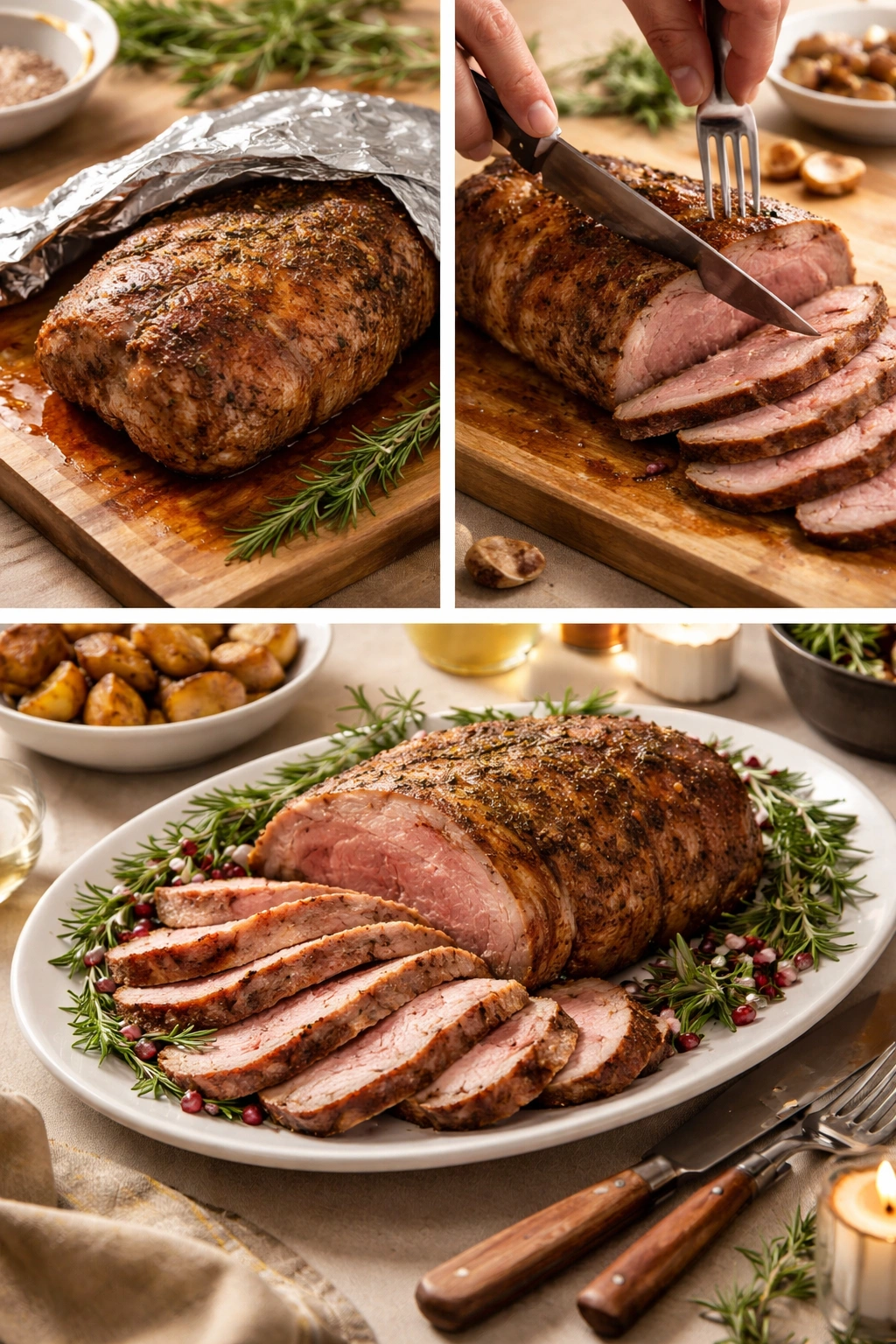
The 15- to 30-minute rest is when most people make a critical mistake—they forget to do it or try to rush it because they’re eager to serve. Don’t do this. Resting is when the magic happens. The residual heat from the roast finishes cooking the interior to your desired temperature, the muscle fibers relax and reabsorb the juices that have been pushed to the edges by heat, and the overall texture becomes more tender throughout.
To rest the lamb properly: Transfer it carefully to a serving platter or cutting board. Loosely tent it with foil—this keeps it warm and prevents it from cooling too quickly while still allowing steam to escape so the exterior remains crispy. Loose tenting is key; a tight cover will trap steam and make the crust soggy. Set a timer for at least 15 minutes. If you’re not quite ready to serve, the lamb will stay warm and comfortable under that loose foil for up to 30 minutes.
For carving, use a sharp knife—dull knives tear the meat and compress the fibers. A long serrated knife works beautifully for this application. Carve the lamb at the table if you want the theatrical presentation, or carve it in the kitchen and arrange it on a platter for a more casual approach. Identify which direction the grain runs (the lines in the muscle) and slice perpendicular to those lines, making your slices about ¼ inch thick. The outside slices will be more cooked than the center slices, which is perfect—guests can choose their preferred doneness.
Presentation matters at a holiday table. Arrange the sliced lamb slightly overlapping on a platter, garnish with fresh herb sprigs (rosemary or parsley look beautiful), add lemon wedges, and perhaps a small dish of fleur de sel (fancy sea salt) for people who like to add finishing salt. This extra two minutes of attention makes the dish look restaurant-quality.
Delicious Serving Suggestions and Flavor Pairings
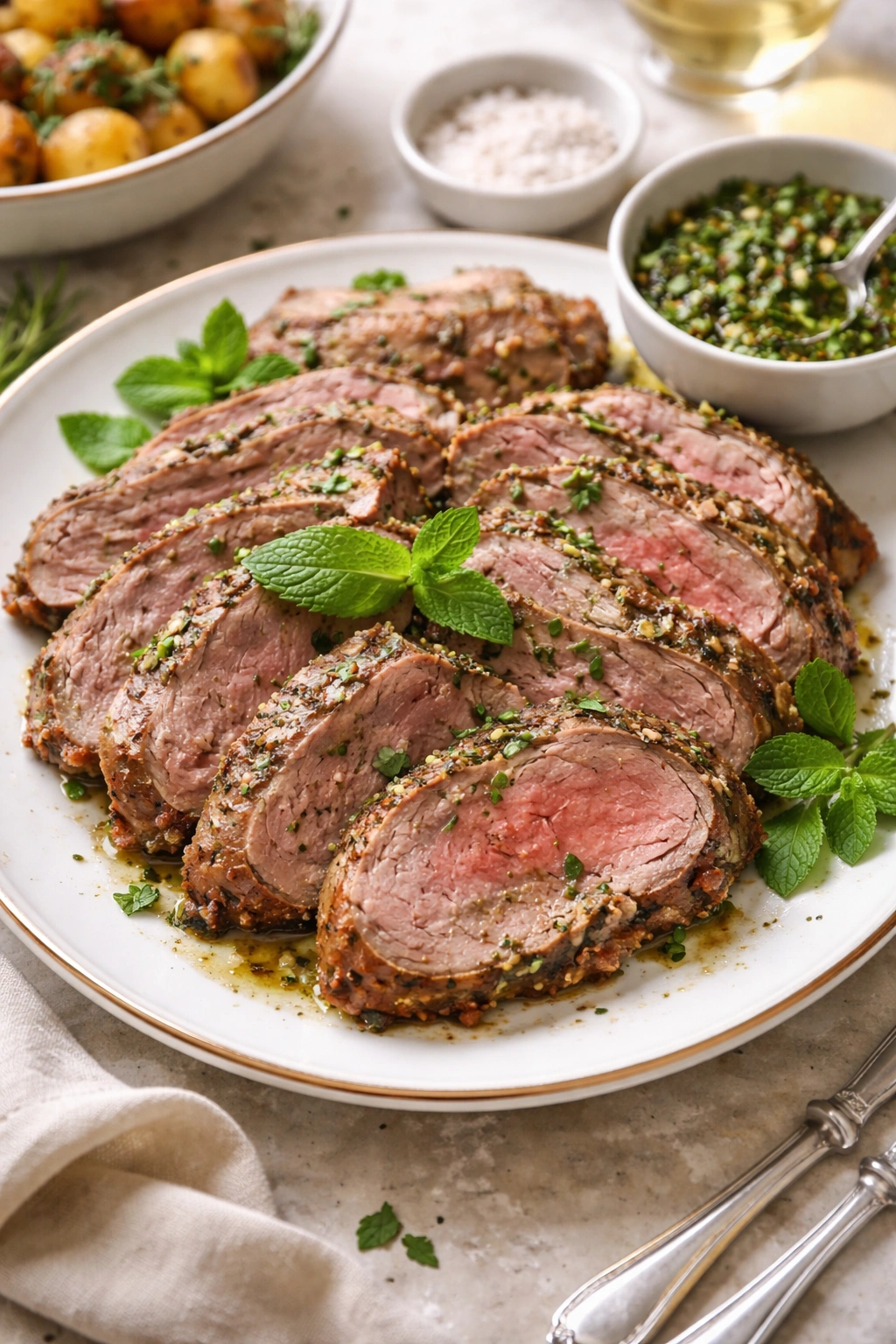
Roasted boneless leg of lamb is rich and savory, so it pairs beautifully with bright, fresh flavors that cut through the richness. Fresh mint is the classic pairing—serve mint jelly on the side, or better yet, make a quick mint chimichurri by blending fresh mint, parsley, garlic, olive oil, lemon juice, and red wine vinegar. This bright, tangy sauce is the perfect complement.
Side dishes that pair beautifully:
Crispy roasted potatoes seasoned with garlic, rosemary, and fleur de sel become even more special when you roast them in the lamb fat drippings from the pan. New potatoes, fingerling potatoes, or even baby potatoes work beautifully here.
Creamy mashed potatoes with butter and fresh herbs ground the meal with comfort and richness that balances the lamb’s leanness.
Roasted or grilled asparagus with a squeeze of fresh lemon and good olive oil is light and elegant, perfect for spring holidays.
Green beans braised with garlic and tomato—a Mediterranean preparation that’s traditional with lamb in many cuisines.
Roasted carrots with a splash of balsamic vinegar and fresh thyme add sweetness and color to the plate.
Roasted artichoke hearts or baked eggplant preparations provide substance without heaviness.
Fresh salads with bitter greens (arugula, frisée), soft cheeses, and bright vinaigrettes cut through the richness of the lamb beautifully.
Sauces and finishing touches:
Pan drippings: Skim the fat from the roasting pan and serve the deglazed drippings as a simple sauce.
Mint chimichurri: Fresh herbs, garlic, lemon, olive oil, and red wine vinegar blended together.
Red wine reduction: Simmer the pan drippings with red wine until slightly thickened for a more elegant presentation.
Salsa verde: Bright, garlicky green sauce made with parsley, capers, anchovies, and olive oil.
Lemon and herb butter: Softened butter mixed with fresh herbs and lemon zest, melted over the carved meat.
Storing and Reheating Leftovers
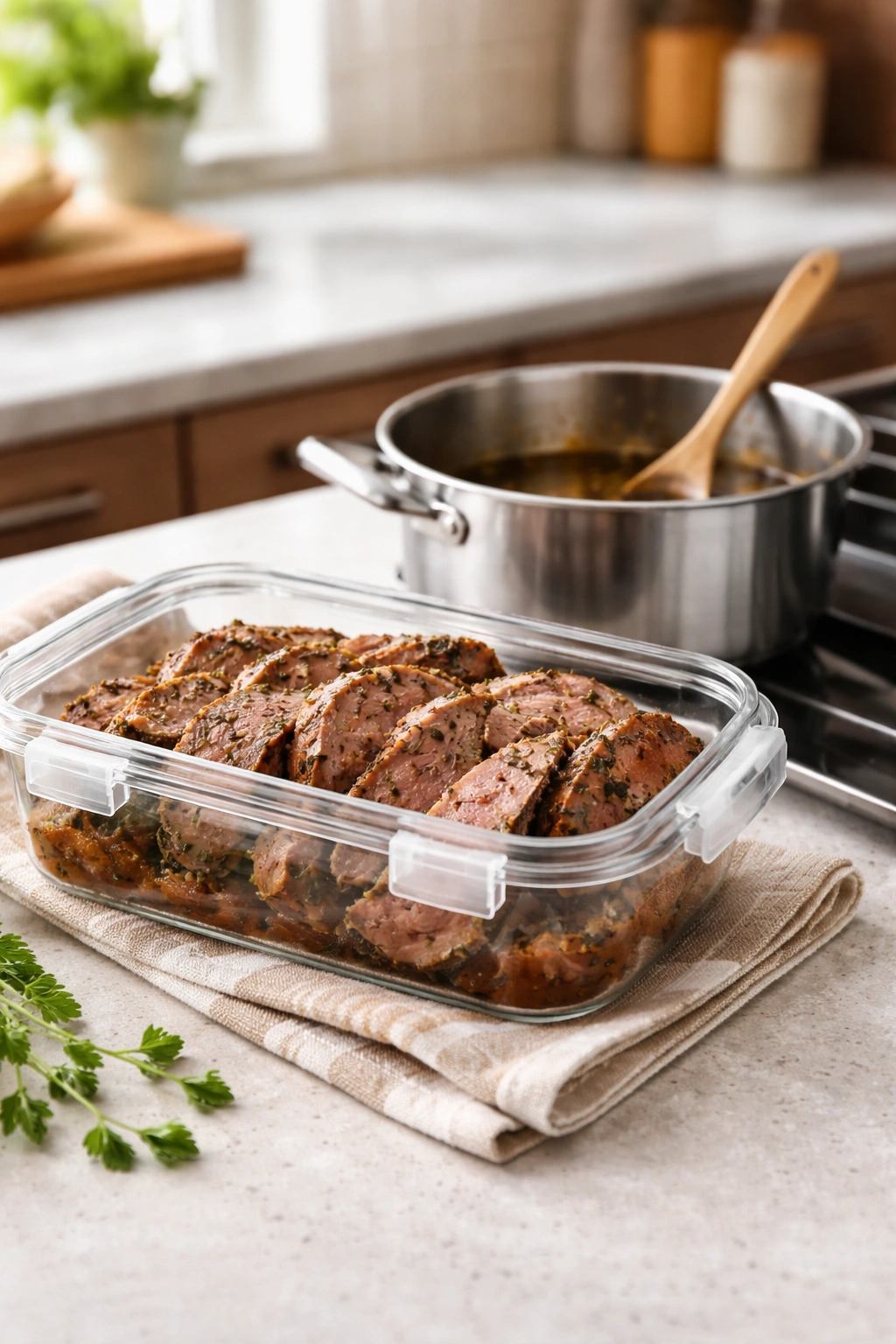
Boneless leg of lamb actually tastes excellent the next day or even two days later. In fact, many people think the flavors have deepened and mellowed beautifully by the following day.
To store: Let any leftover lamb cool to room temperature, then transfer it to an airtight container (you can leave it whole as a roast or slice it first—both work fine). Refrigerate for up to 4 to 5 days. Store any pan drippings in a separate container. The meat is delicious served cold on sandwiches the next day, or reheated gently.
To freeze: Slice the lamb or cut it into bite-sized pieces, transfer to an airtight freezer container or freezer bag, and freeze for up to 3 months. Freeze some of the pan drippings separately in a small container to reheat alongside the meat.
To reheat: The gentlest method is to place the cold lamb (whole or sliced) in a baking dish, pour the reserved pan drippings (or a splash of lamb or beef broth) over it, cover with foil, and warm in a 275°F to 300°F (135°C to 150°C) oven for 15 to 25 minutes, depending on the amount. The low heat prevents the meat from drying out. For small portions, you can reheat gently in a skillet over medium heat with a splash of drippings, just until warmed through.
The reheated lamb can be eaten as is, served with fresh sides, or shredded and used in sandwiches, grain bowls, salads, or even tacos.
Variations and Flavor Twists
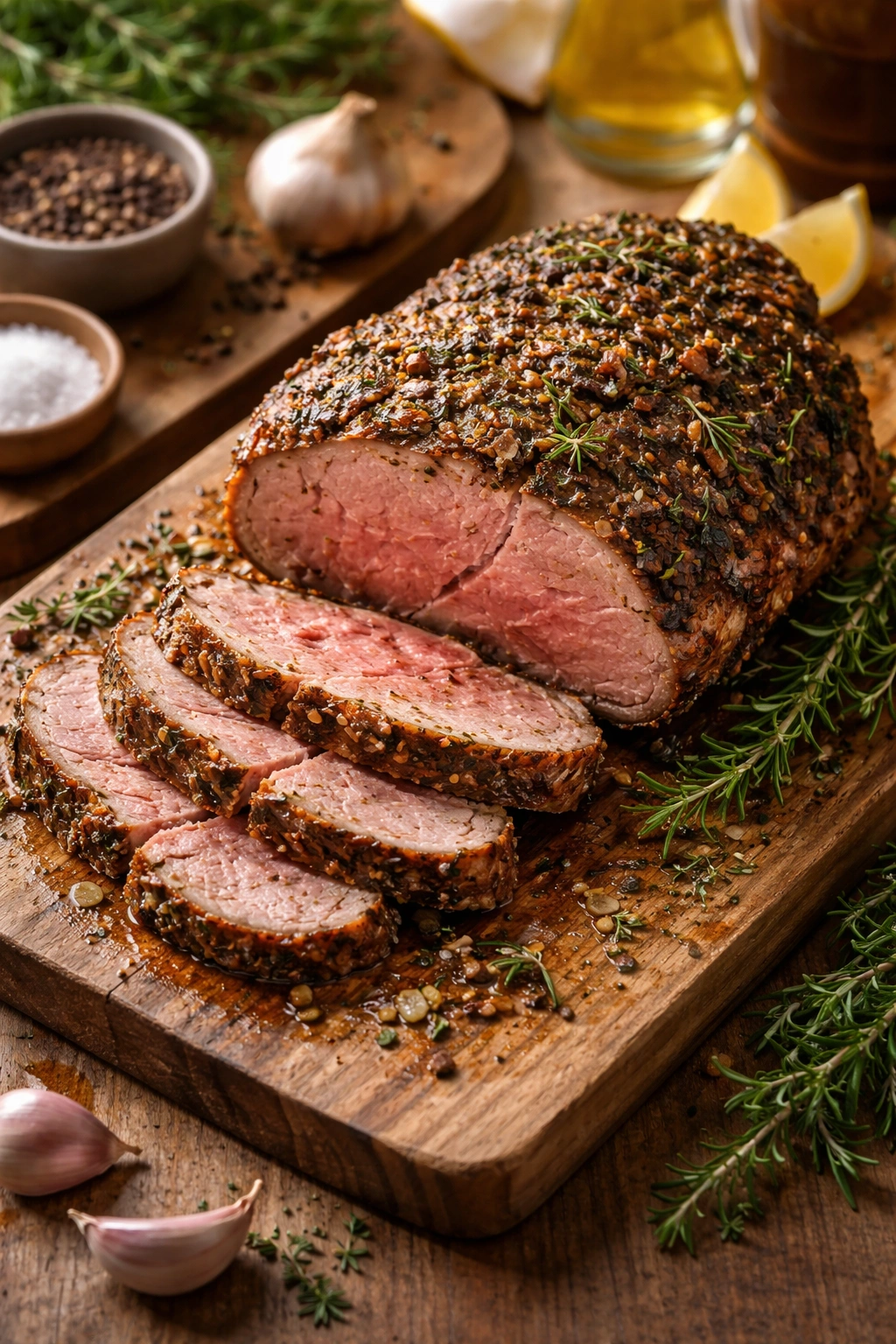
Mediterranean version: Add ½ teaspoon of dried oregano and ½ teaspoon of dried thyme to the herb paste alongside the rosemary. Serve with lemon, olives, and tomatoes.
French version: Replace the rosemary with Herbes de Provence (a blend that typically includes rosemary, thyme, marjoram, and sometimes lavender). Add ½ teaspoon of Dijon mustard to the herb paste for subtle depth.
Middle Eastern version: Add 1 teaspoon of ground cumin and ½ teaspoon of ground coriander to the herb paste. Replace the lemon zest with orange zest. Serve with pomegranate molasses, fresh herbs, and warm pita.
Italian version: Add ½ teaspoon of dried basil and ½ cup of minced fresh parsley to the herb paste. Serve with a salsa verde and roasted vegetables.
Mint-forward version: If you love mint, add 2 tablespoons of finely minced fresh mint to the herb paste alongside (or instead of) some of the rosemary. Serve with mint chimichurri.
For a deeper crust: After seasoning the lamb, let it sit uncovered on a plate in the refrigerator for 12 to 24 hours before roasting. This dry-brine effect helps develop a darker, more flavorful crust.
For a faster cook: Increase the oven temperature to 400°F (200°C), roast for 15 minutes to build a crust, then reduce to 350°F (175°C) and roast until the internal temperature is 125°F to 130°F. This typically takes 45 minutes to 1 hour for a 4- to 5-pound roast. The cooking time is shorter, but the texture will be slightly less tender than the low-and-slow method.
Make-Ahead and Strategic Timing
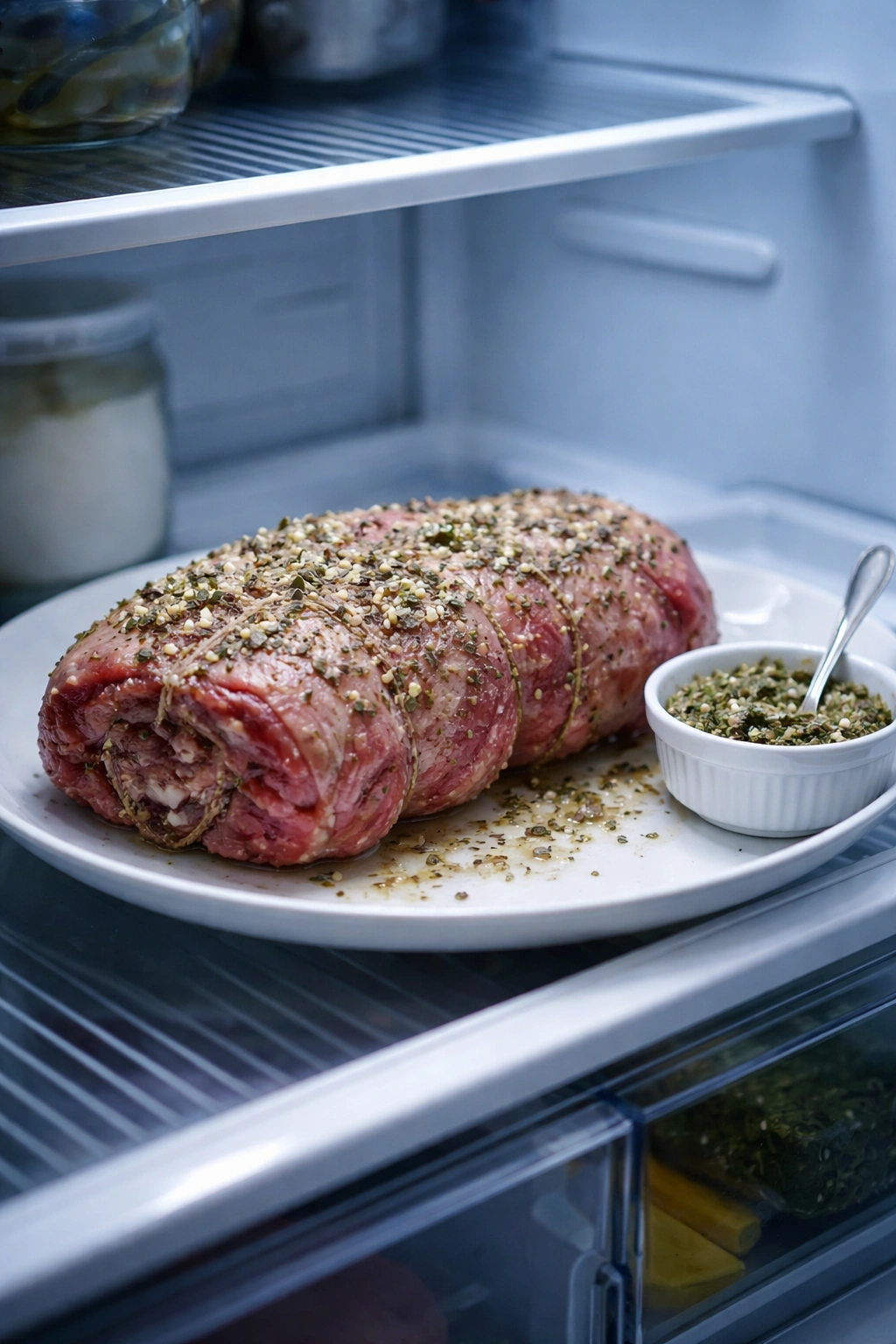
One of the greatest advantages of this recipe is how well it fits into a holiday cooking schedule. Here’s the strategic timeline:
The day before or up to 24 hours ahead: Untie and unroll the lamb, remove the netting, and trim excess fat. Mix your herb paste and spread it inside the roast, insert garlic slivers if using, roll, and retie the roast with kitchen twine. Spread the remaining herb paste over the exterior. Place the seasoned lamb uncovered on a plate, cover loosely with plastic wrap, and refrigerate. This overnight seasoning actually improves the flavor—it’s essentially a dry brine.
The morning of serving: Remove the lamb from the refrigerator and set it on the counter to come to room temperature. This takes 45 minutes to an hour and is crucial for even cooking. Use this time to prep vegetables, set the table, or shower and change. While you’re waiting for the lamb to warm up, you can prep your sides—chop vegetables, get them ready to roast, or if making mashed potatoes, get that started if your oven allows.
One to two hours before serving: Get your oven preheating and prepare your roasting pan. This gives you time to finish side dishes or attend to other elements of the meal.
Check-in schedule: Set a timer for 1 hour 45 minutes into roasting as a checkpoint. Begin checking the internal temperature every 10 to 15 minutes until it reads 125°F to 130°F. Once done, transfer to the serving platter and begin the rest period.
Final timing: The 15- to 30-minute rest is your buffer. If guests are running a bit late, the lamb stays warm under its foil tent. If you’re ahead of schedule, you have time to finish last-minute plating or set out appetizers.
This makes for remarkably stress-free holiday cooking. You’re not rushing at the last minute or coordinating multiple dishes finishing at exactly the same moment. You have flexibility, which is everything when entertaining.
Final Thoughts
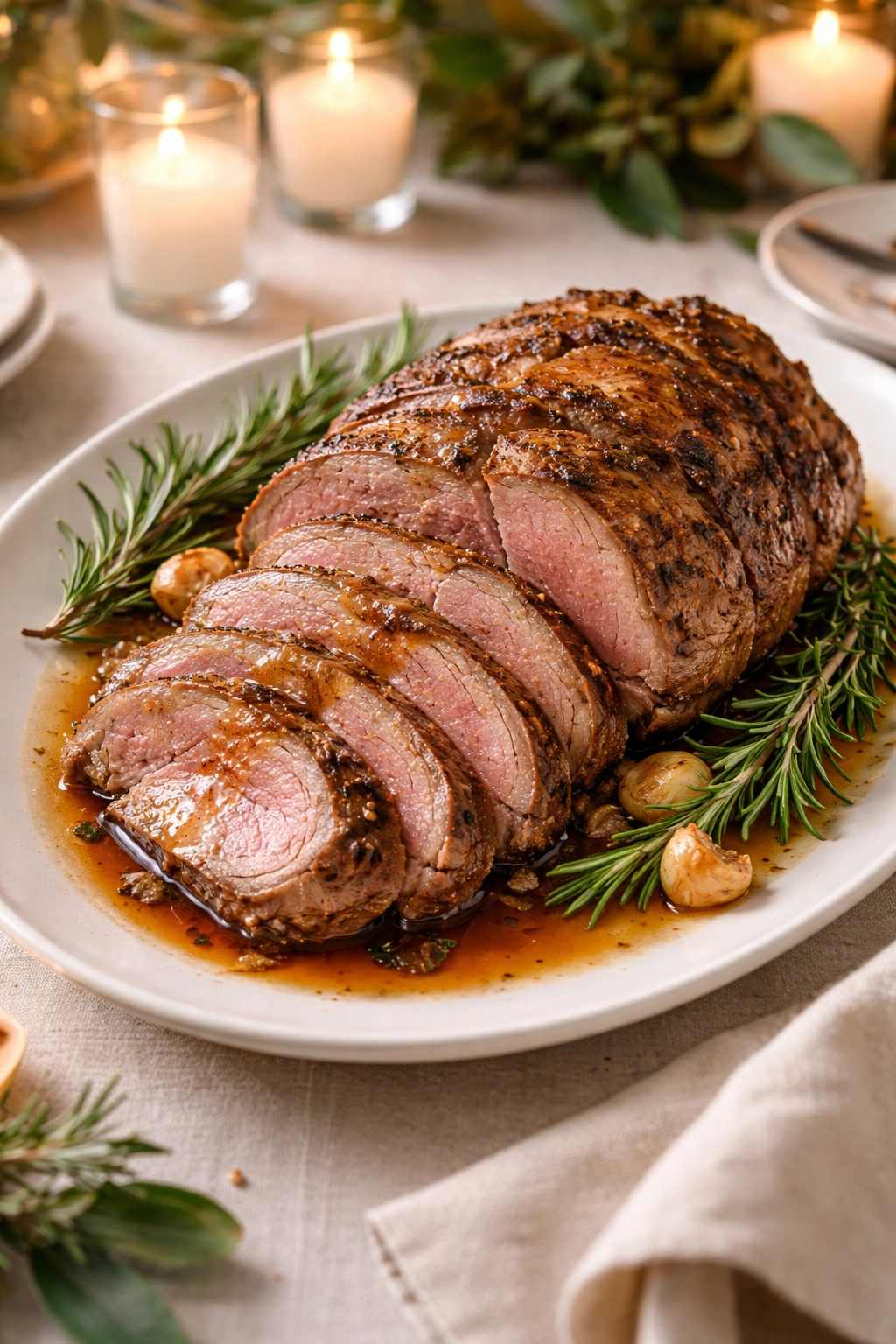
A roasted boneless leg of lamb feels like an accomplishment on the plate, but the truth is that the technique is straightforward and forgiving. You’re working with a naturally tender cut, simple seasonings that complement rather than overwhelm, and a low-and-slow cooking method that’s nearly impossible to get wrong if you use a thermometer. The biggest secrets are: season generously both inside and out, bring the meat to room temperature before roasting, trust the thermometer over visual cues, and never skip the resting period.
This is the main dish that will have guests thinking you spent the day in the kitchen when really you spent 20 minutes on prep and the oven did most of the work. It’s elegant enough for formal holiday celebrations and simple enough that you can make it confidently even if your entertaining experience is limited. Whether it’s Easter, a spring celebration, a milestone birthday, or simply a night when you want to feel like a confident cook, this recipe delivers beautifully every single time you make it.
