



The truth about cabbage soup is that it shouldn’t exist. A bowl of chopped cabbage, some basic vegetables, and broth sounds about as exciting as doing laundry on a Tuesday. Yet somehow, when you ladle it into a bowl and taste it—particularly on a cold evening when you’re hungry and tired—this humble soup becomes exactly what you needed. That’s the magic here: cabbage soup delivers profound comfort and genuine nourishment with almost embarrassing simplicity, asking nothing of you but a cutting board and a single pot.
This isn’t the cabbage soup diet fad that swept through office buildings in the 1990s. This is the real thing—a soup that tastes so good you’ll want to make it again by choice, not because you’re following some restrictive eating plan. It’s deeply flavorful, naturally low in calories, genuinely filling, and built on the kind of ingredients that are already living in your pantry or sitting in the bottom drawer of your refrigerator.
The reason this soup works so well is that cabbage is a nutritional powerhouse that nobody talks enough about. It’s loaded with vitamin C for immune support, fiber to keep you full, and a collection of phytonutrients—those naturally occurring plant compounds that help your body fight inflammation. But here’s what matters more: cabbage becomes sweet and tender when it simmers, developing a subtle depth that makes you think there’s been more effort than there actually has. Add some aromatic vegetables, a good broth, the brightness of lemon juice, and you’ve got something that tastes like you’ve been in the kitchen for hours when you’ve actually invested maybe forty-five minutes of mostly passive simmering time.
Why Cabbage Soup Belongs in Your Regular Rotation
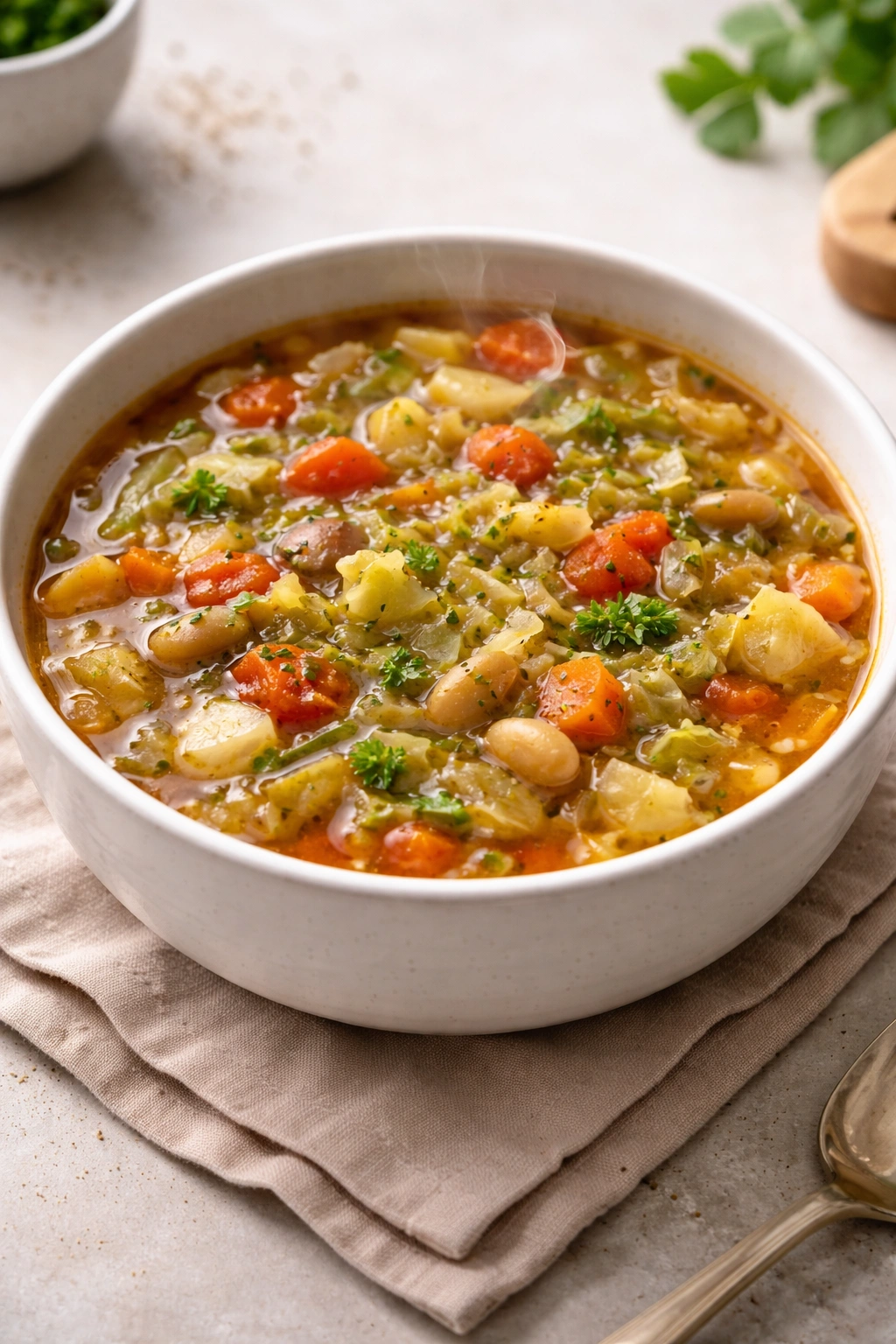
There are excellent reasons this soup deserves a permanent place in your cooking repertoire, beyond just the fact that it tastes unexpectedly good. This is the kind of meal that works on multiple levels—it’s comforting without being heavy, healthy without announcing that it’s healthy, and adaptable enough that you can make it slightly differently every time depending on what you have on hand.
From a practical standpoint, cabbage soup is a one-pot meal, which means you’re done with cleanup in minutes. There’s no complicated layering of flavors, no techniques you need to master, no specialized equipment. A Dutch oven or large stock pot, a cutting board, and a knife are genuinely all you need. The vegetables go into the pot in logical batches, sautéing briefly before the broth goes in, and then the whole thing just simmers until everything is tender. This is the soup you make when you want something nourishing but don’t have the mental bandwidth for fussy cooking.
From a budget perspective, cabbage soup is absurdly economical. A head of cabbage costs a couple of dollars. Carrots, celery, onions—these are pantry staples at rock-bottom prices. Even if you’re using good quality broth and fresh herbs, you’re creating six generous servings for less than what you’d spend on a fast-casual lunch for two people. This matters. Real food for real money is increasingly hard to find, and cabbage soup is proof that it exists.
From a meal-prep angle, cabbage soup is your secret weapon. Make a double batch on Sunday, and you have lunch for the week. It actually improves as it sits—the flavors deepen and meld overnight, making day-three leftovers better than day-one soup. It freezes beautifully, holding its texture and taste for months. You can eat it straight from the pot when you’re in a hurry, or dress it up with fresh herbs and a dollop of sour cream when you have time.
The Secret to Flavorful Cabbage Soup
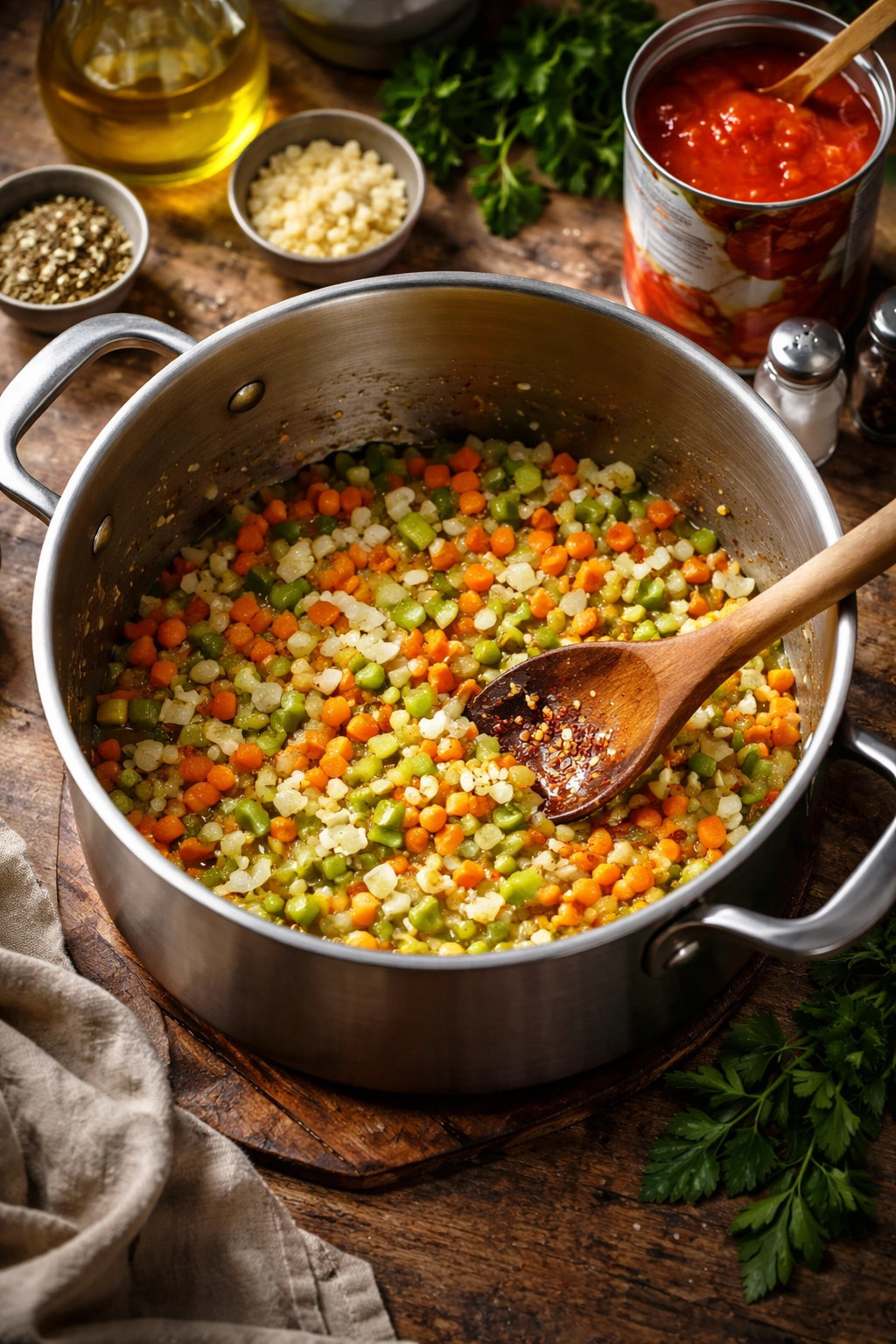
The thing most people don’t realize about cabbage soup is that the cabbage itself contributes surprisingly little flavor on its own. It’s the supporting cast—the mirepoix vegetables, the tomatoes, the herbs, and the broth—that create the actual flavor foundation. Understanding this balance is what separates a boring bowl of cooked vegetables from a genuinely delicious soup.
Start with the aromatics. Dice your onion, carrots, and celery, and give them a proper sauté in a heavy pot with good olive oil. You want these vegetables to soften noticeably and develop slightly caramelized edges—this takes about five minutes over medium-high heat. This step is non-negotiable. You’re not just cooking them; you’re extracting and concentrating their natural sugars and creating a flavorful foundation that everything else will build upon. When you add the garlic, use fresh minced garlic, not powder. Add it right at the end of the aromatics sauté, let it bloom for just thirty seconds, and then immediately add the next components so it doesn’t burn and turn bitter.
The tomatoes are crucial. Fire-roasted canned tomatoes deliver more depth and slight smokiness than regular canned tomatoes, which sounds like a small detail until you actually taste the difference. They bring acidity that brightens the soup and prevents it from tasting flat or heavy. The broth quality matters enormously. Use vegetable broth if you’re keeping things vegetarian, but honestly, a good chicken broth adds savory depth that elevates the entire pot. If you’re using store-bought broth, taste it first—some brands are aggressively salty, and you’ll need to adjust seasonings accordingly. Better yet, make your own or use a quality brand where you recognize the ingredients.
The herbs are where personality enters the picture. Dried oregano, basil, and thyme are the backbone—these are the flavors people recognize and love in vegetable soups. Fresh parsley added at the end adds brightness and visual appeal. But here’s the secret most recipes don’t tell you: fresh lemon juice at the very end is the real magic. It’s not about making the soup taste lemony; it’s about cutting through the heaviness of the vegetables and broth, making all the other flavors pop and feel cleaner. Don’t skip this step. Seriously.
Serving and Timing Block
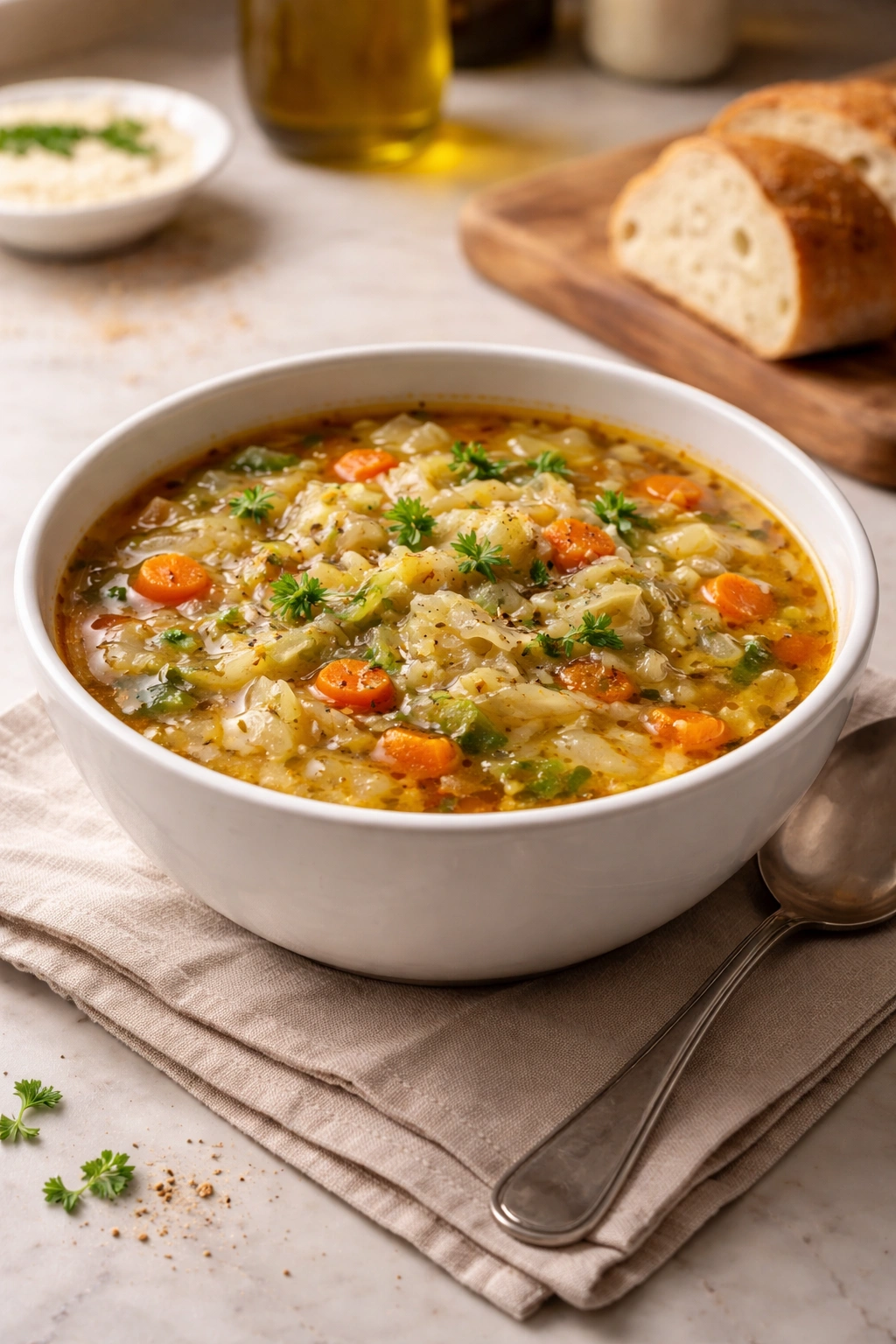
Yield: Serves 4 to 6 (approximately 2 cups per serving)
Prep Time: 15 minutes (cutting vegetables)
Cook Time: 30 to 35 minutes (simmering)
Total Time: 45 to 50 minutes
Difficulty: Beginner — No special skills required, only basic knife work and the ability to follow a straightforward simmering process. This recipe is completely forgiving for first-time soup makers.
Best Served: Warm and immediately after finishing, or at room temperature if you prefer a lighter, chilled version (though warm is far superior). Leftovers are actually better the next day after flavors have melded.
The Complete Recipe
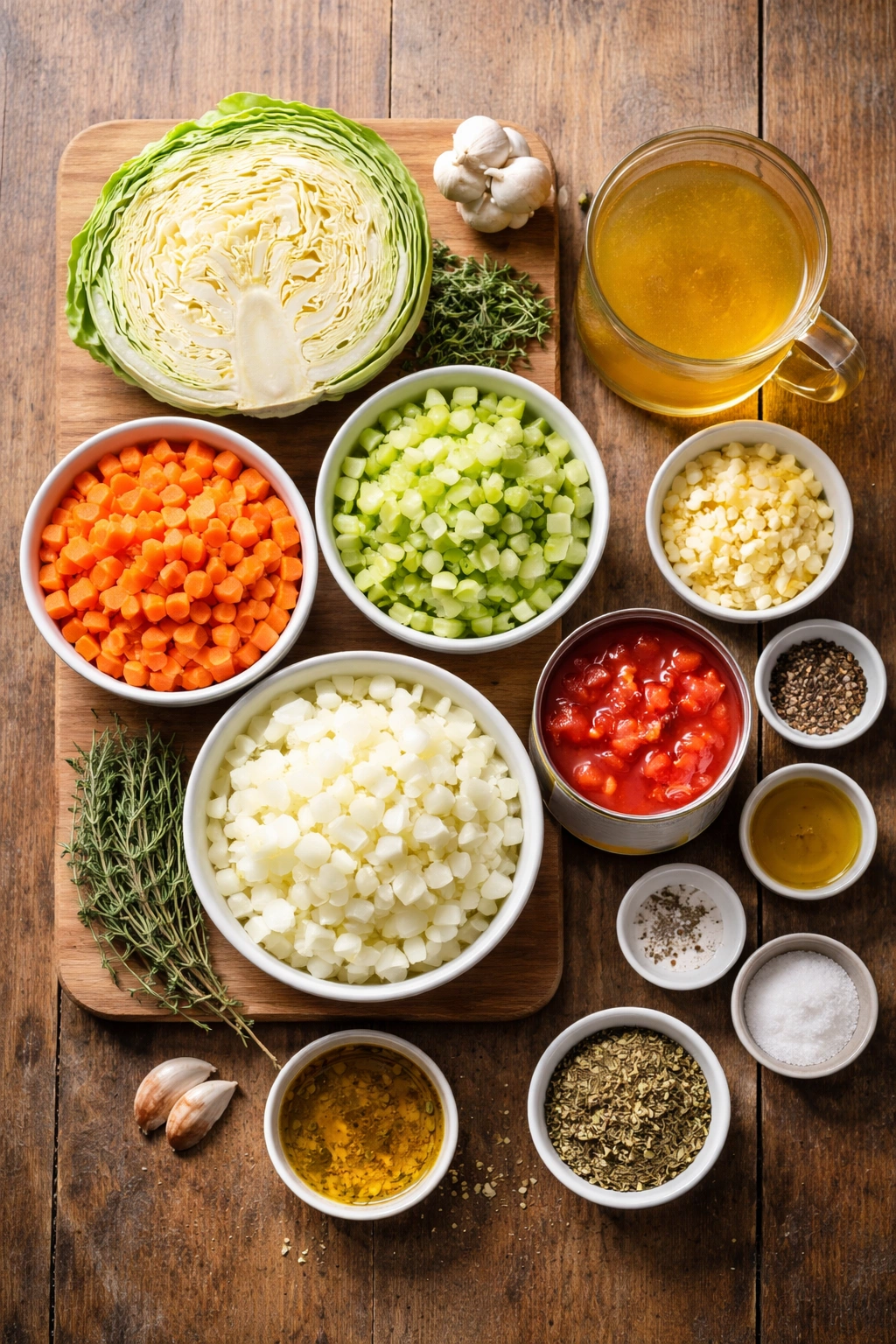
Ingredients
For the Base:
- 2 tablespoons extra-virgin olive oil
- 1 large yellow onion, diced
- 2 large carrots, sliced or diced into bite-sized pieces
- 2 celery ribs, diced
- 4 garlic cloves, minced
- 1 teaspoon kosher salt, plus more to taste
- ½ teaspoon freshly cracked black pepper, plus more to taste
For the Soup:
- ½ medium head green cabbage, chopped into roughly 1-inch pieces (about 6 to 7 cups once chopped)
- 1 (28-ounce) can diced fire-roasted tomatoes, with their juices
- 1 (14.5-ounce) can diced tomatoes (optional, for deeper tomato flavor)
- 4 to 5 cups vegetable broth or chicken broth (use more if you prefer a brothier consistency, less if you like it thicker)
- 1 bay leaf
- ½ teaspoon dried oregano
- ½ teaspoon dried basil
- ¼ teaspoon dried thyme
- 1 to 2 tablespoons fresh lemon juice, or to taste
- ¼ cup fresh parsley, roughly chopped (for garnish and brightness)
Optional additions:
- 1 tablespoon tomato paste (for deeper, richer tomato flavor)
- A pinch of red pepper flakes (if you like a hint of heat)
- 1 tablespoon balsamic vinegar (for subtle sweetness and depth)
Step-by-Step Instructions
Prepare and Sauté the Aromatic Vegetables:
-
Heat the olive oil in a large Dutch oven or heavy-bottomed stockpot over medium-high heat until the oil is shimmering and moves fluidly across the pan—this takes about one minute. Do not let the oil smoke; if it does, your heat is too high.
-
Add the diced onion, carrots, and celery to the hot oil. Stir occasionally with a wooden spoon or sturdy spatula, allowing the vegetables to cook undisturbed for 30 to 60 seconds between stirs so they can develop light golden-brown edges. Cook for 4 to 5 minutes, until the onion is translucent and softened and the carrots have begun to soften slightly at the edges. You should smell the sweet, caramelized aroma of cooking vegetables—this indicates proper browning.
-
Add the minced garlic directly to the pan. Stir constantly for 30 seconds—just long enough to release the garlic’s fragrance and allow it to begin cooking. Stop stirring at the 30-second mark; garlic burns quickly once it starts to brown, and burned garlic turns bitter and ruins the entire pot. Immediately proceed to the next step.
-
Sprinkle the salt and black pepper over the vegetables and stir once more to distribute evenly.
Build the Soup:
-
Add the chopped cabbage to the pot. You’ll notice it looks like far too much cabbage—it absolutely will not fit neatly. This is correct. Stir it around with the other vegetables, and it will begin to wilt almost immediately as the heat and moisture release from the other ingredients. Stir frequently for about 2 minutes, allowing the cabbage to become noticeably softer and to start releasing moisture.
-
Pour the fire-roasted diced tomatoes with all of their juices directly into the pot. If using the optional second can of tomatoes, add that as well. Stir to combine everything together. The tomato juices will release even more moisture, further wilting the cabbage.
-
Add the bay leaf, oregano, basil, and thyme to the pot. Stir well, making sure all the herbs are distributed throughout and not clumping in one spot. Smell the pot at this point—you should notice a distinct herbal aroma layering with the vegetable and tomato scents.
-
If you’re using tomato paste for extra depth, add it now and stir it thoroughly throughout the vegetables so no clumps remain.
Advertisements -
Pour the broth into the pot slowly, stirring as you go. Use 4 cups of broth if you prefer a thicker, more stew-like consistency with less liquid, or 5 cups if you prefer a brothier soup. You can always add more broth later if the soup seems too thick as it cooks.
-
Stir everything together until well combined. The pot should smell incredibly good at this point—deep, aromatic, and complex.
Simmer to Completion:
-
Increase the heat to medium-high and bring the soup to a gentle boil. You’ll notice bubbles breaking the surface regularly. Once it reaches a boil, immediately reduce the heat to low or medium-low so the soup simmers gently rather than rolling boil.
-
Simmer uncovered for 20 to 30 minutes, stirring occasionally (about every 5 to 7 minutes), until the cabbage is completely tender, collapsing slightly when you press it with the back of a spoon. The carrots should also be completely soft with no resistance when pierced. The longer you simmer, the more the flavors will meld and deepen, so don’t rush this—20 minutes is the absolute minimum, but 30 minutes is better.
-
As the soup simmers, taste it around the 20-minute mark. The vegetables should be becoming noticeably softer. If your broth is particularly salty, you might notice excessive saltiness at this point. Don’t add more salt yet; wait until the end to adjust.
Finish with Brightness:
-
Remove the pot from heat. Fish out and discard the bay leaf.
-
Stir in the fresh lemon juice—1 tablespoon first, then taste the soup. Add another ½ tablespoon if needed, but remember that you’re looking for brightness and lift, not a lemony taste. The lemon juice should be subtle and almost unidentifiable to someone eating the soup, but its absence would be immediately obvious.
-
Add the fresh chopped parsley and stir gently to distribute it throughout. Reserve a small handful of parsley for garnishing individual bowls.
Advertisements -
Taste the soup carefully. Season with additional salt and black pepper to your preference, adding in small pinches and stirring thoroughly before tasting again. Keep in mind that the flavors will concentrate slightly as the soup cools, so don’t over-salt.
-
Ladle the soup into bowls immediately. Garnish each bowl with a sprinkle of the reserved fresh parsley, a crack of fresh black pepper, and if desired, a small dollop of sour cream or a drizzle of good quality olive oil.
Pro Tips for Perfect Results Every Time
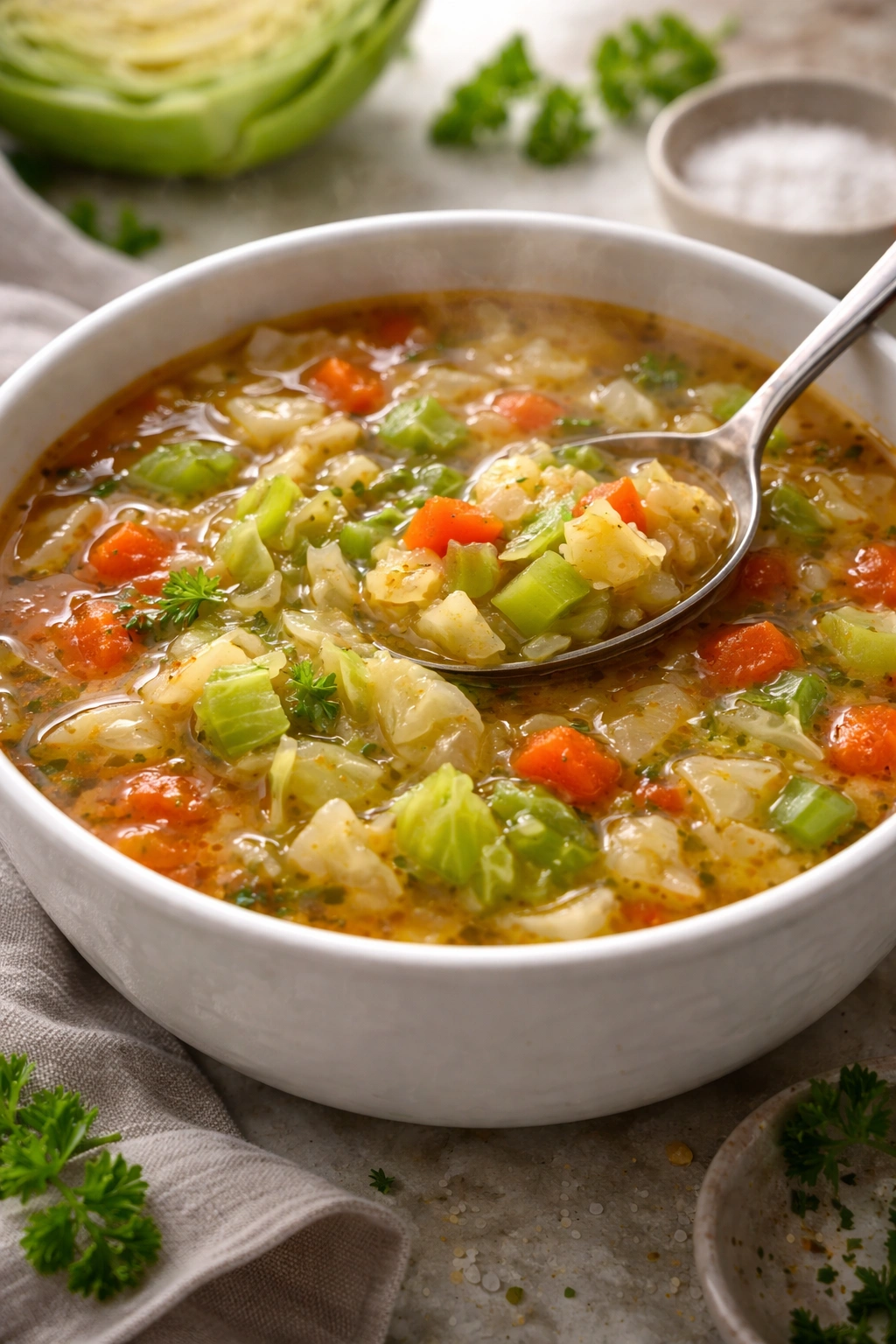
Cabbage selection matters more than you’d think. Green cabbage (the most common variety) is ideal because it becomes tender and slightly sweet when cooked. Avoid red cabbage, which can turn the entire soup murky purple and slightly more bitter. Napa cabbage works but tends to wilt into almost nothing, leaving you with less textural interest.
Don’t skip the caramelization of aromatics. That initial five-minute sauté of onion, carrot, and celery creates the flavor foundation for the entire pot. You’re not trying to brown them until dark, just until they’re noticeably softened and have developed pale golden edges. This step is where most of the soup’s actual flavor comes from—the tomatoes and broth are supporting players.
Invest in decent broth. The broth is literally more than half the soup by volume, and a flat, overly salty, or noticeably artificial-tasting broth will make the entire pot taste flat, salty, or artificial. Taste your broth before adding it to the pot. If it’s aggressively salty, reduce the salt you add to the vegetables and adjust more carefully at the end.
The cabbage should be chopped reasonably small. Aim for pieces roughly the size of a dice—about ½ to ¾ inch. This ensures even cooking and means you actually get pieces of cabbage in every spoonful rather than enormous chunks that overwhelm the spoon.
Fresh lemon juice at the end is non-negotiable. This is the single secret that transforms cabbage soup from “pretty good vegetable soup” to “why is this so delicious?” The acidity cuts through the richness of the broth and vegetables and makes everything taste brighter and more alive. Don’t use bottled lemon juice; it tastes noticeably stale and artificial. Fresh lemon takes thirty seconds to squeeze.
Taste and adjust seasonings in layers, never all at once. Add salt in small increments—half a teaspoon at a time—and taste after each addition. Soup is forgiving until you oversalt it, and then it’s ruined. The same applies to herbs: if you feel like the soup needs more herbal flavor, add dried herbs in ¼-teaspoon increments, stir, and taste.
Common Mistakes and How to Avoid Them
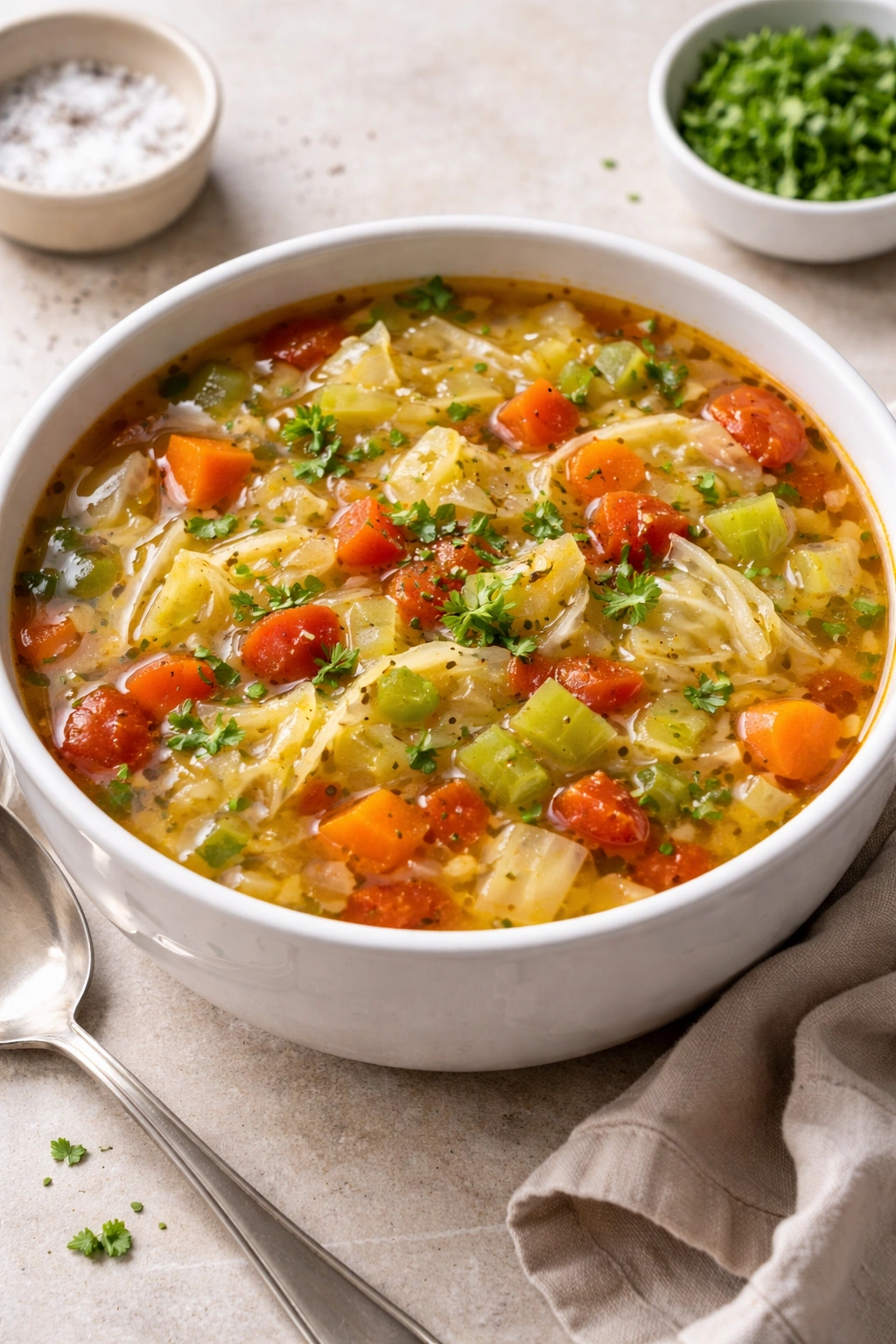
The biggest mistake people make is skipping the sauté step and dumping everything in raw. Raw onions, carrots, and celery don’t have the same sweetness or depth as vegetables that have been cooked first. If you skip this step, your soup will taste thin, watery, and one-dimensional. Don’t do it.
Adding the cabbage too early is another common error. If you add cabbage while the aromatics are still raw or barely cooked, it will wilt into mush before the other vegetables have a chance to develop flavor. Add the cabbage after the aromatics have had their initial sauté but before the broth goes in.
Oversalting happens when people add salt at multiple stages and don’t account for concentration. Add most of your salt upfront with the aromatics, but wait until the end to adjust further. Remember that as the soup simmers, the liquid reduces slightly and flavors concentrate.
Using old, stale dried herbs creates a dusty, flat taste. Dried herbs lose potency over time. If your oregano, basil, or thyme has been sitting in your cabinet for more than a year, buy fresh. You’ll notice an immediate difference in how vibrant the soup tastes.
Not simmering long enough means you’ll miss the deepening of flavors. Twenty minutes is technically enough time for the vegetables to become tender, but thirty minutes allows the flavors to truly meld and the cabbage to become genuinely sweet and silky. If you’re in a rush, twenty minutes will work, but know that you’re trading depth for speed.
Skipping the fresh parsley garnish and lemon juice might seem like corners you can cut, but they fundamentally change the soup. These finishing touches add brightness, freshness, and visual appeal that raw cabbage and simmered vegetables simply cannot provide on their own.
Making It Heartier: Protein Additions
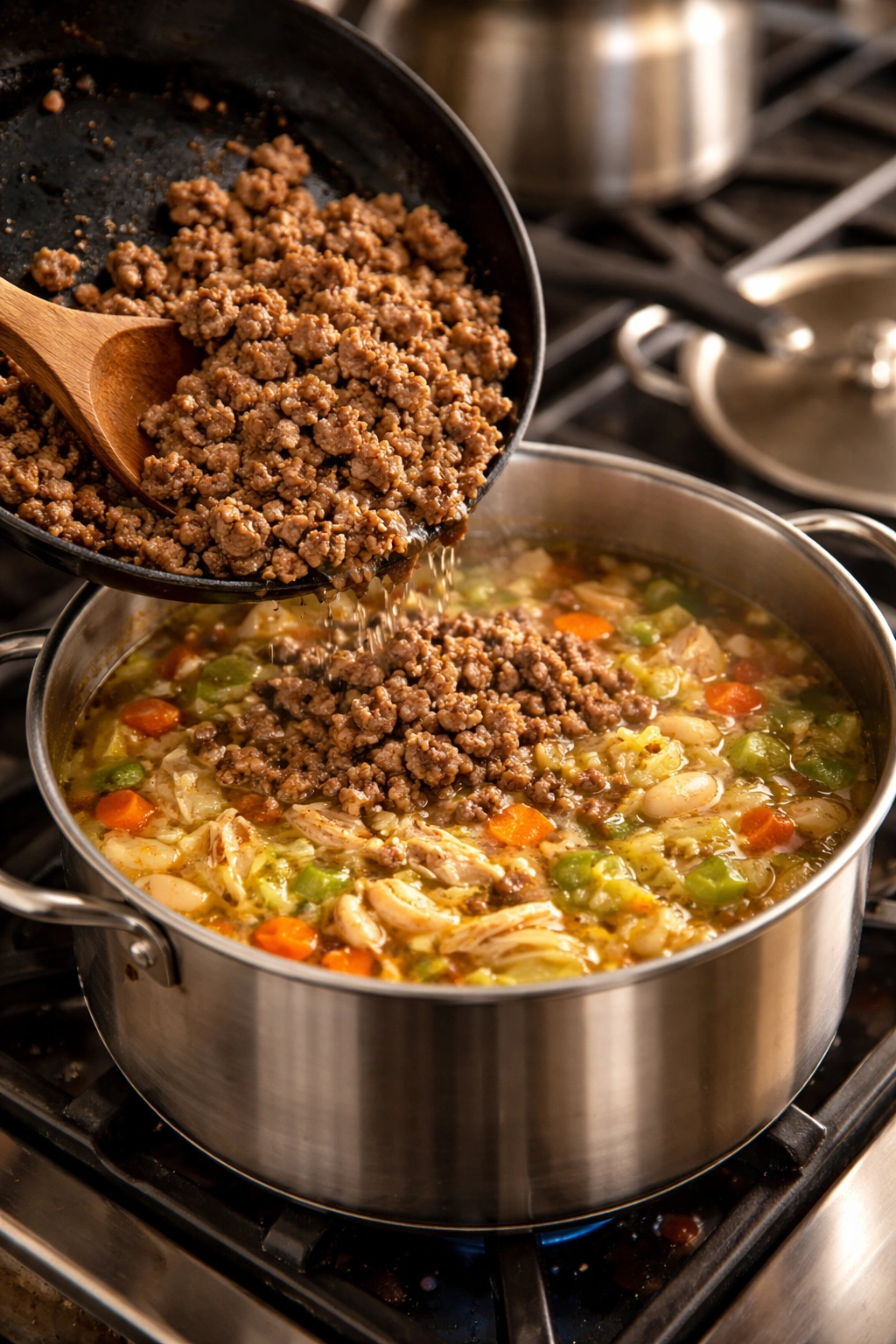
The base cabbage soup is satisfying on its own—cabbage is full of fiber, and the broth is filling—but there are several ways to add protein and substance if you want a heavier meal.
Ground meat is the classic addition and turns this into something closer to a stuffed-cabbage-rolls situation without any of the rolling effort. Brown 1 pound of ground beef, ground turkey, or ground pork in a separate skillet over medium-high heat, breaking it apart as it cooks (about 5 to 7 minutes). Drain if there’s significant fat, then add it to the soup after the broth is in but before you begin simmering. The meat will finish cooking in the simmering broth and absorb all the flavors.
White beans or chickpeas add plant-based protein and create a creamier texture. Drain and rinse 1 (15-ounce) can of white beans or chickpeas and add them to the soup with the broth. The beans will warm through during simmering and won’t fall apart or become mushy.
Shredded chicken works beautifully if you have rotisserie chicken on hand. Shred about 1½ to 2 cups of meat and add it during the last 5 minutes of simmering just so it has time to heat through and absorb some broth flavor. Don’t add chicken too early, or it will dry out.
Diced tofu for a vegetarian protein option requires a light pan-sear first. Slice extra-firm tofu into bite-sized cubes, pan-fry them in a separate skillet in a little oil over medium heat until they develop golden edges (about 5 to 7 minutes), then add to the soup during the last few minutes of cooking.
Sausage—spicy, Italian, or andouille—brings incredible depth of flavor. Use ½ to 1 pound of sausage, remove it from its casing if needed, and brown it in the pot before adding the aromatics. This flavors the oil and creates a richer base for everything else.
Flavor Variations Worth Trying
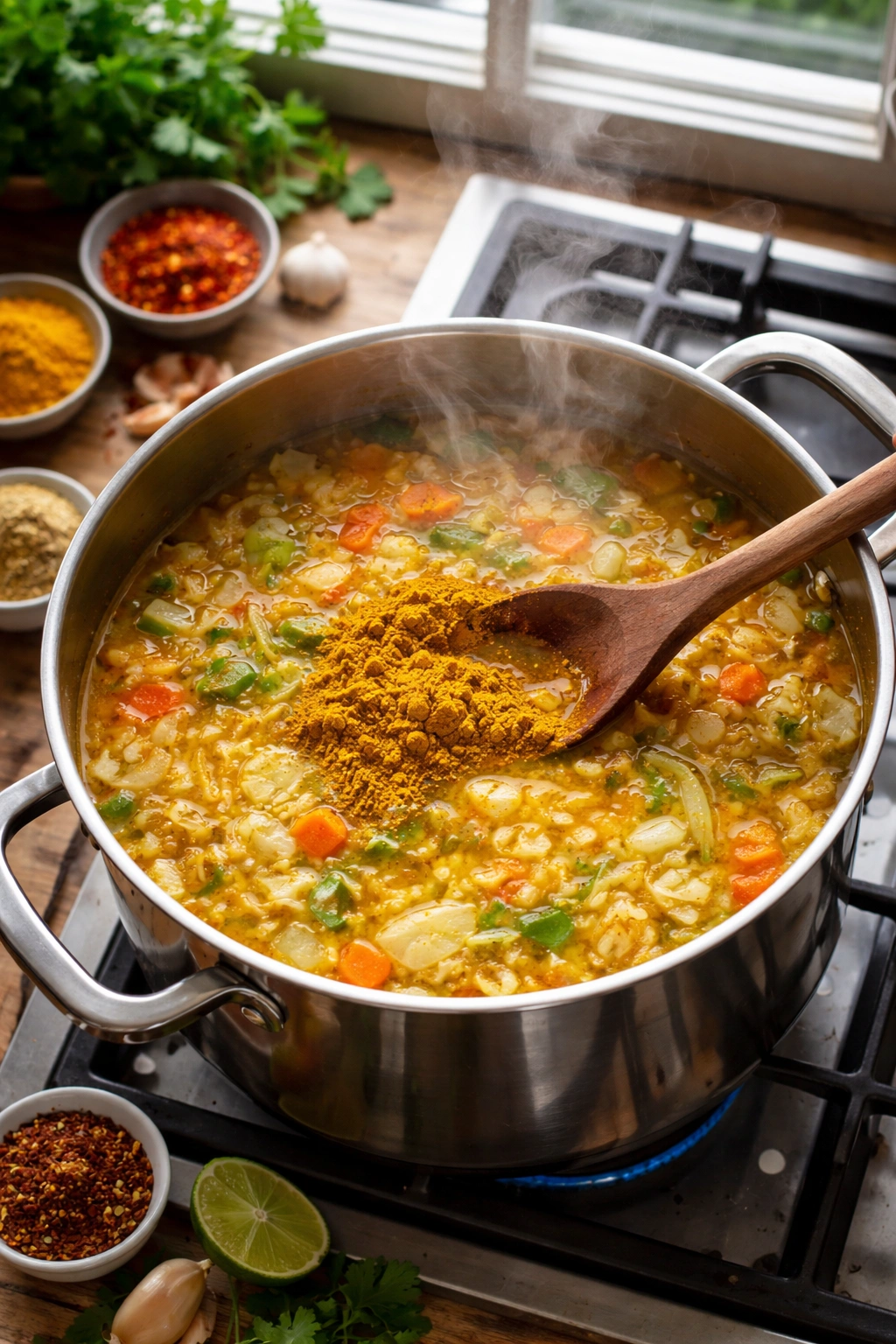
The curry version is inspired and completely changes the soup’s character. Add 1 to 2 teaspoons of curry powder (or curry paste if you prefer) to the pot right after the aromatics are cooked and fragrant. This adds warmth and an Indian-influenced spice profile that plays beautifully with cabbage. Some people add a splash of coconut milk for creaminess, which is absolutely stellar.
For a spicy kick, add ¼ to ½ teaspoon of red pepper flakes or crushed red chili flakes. Add them early so they infuse the oil and broth, or add them at the end if you want the heat to be more pronounced and sharp rather than integrated. You can also add sliced fresh jalapeños or a splash of hot sauce at the end.
The herb version lets you play with fresh herbs beyond just parsley. Add fresh dill, cilantro, or chives at the very end. Some people add a Parmesan rind while the soup simmers, which imparts savory umami depth that’s almost impossible to describe but immediately noticeable when it’s absent.
For a creamier version, stir in 2 to 3 tablespoons of sour cream, heavy cream, or coconut milk right at the end, or swirl it into individual bowls as you serve. This softens the sharp vegetable flavors and creates richness without making the soup heavy.
The Spanish-influenced version adds smoked paprika, a pinch of saffron if you’re feeling fancy, and perhaps some diced chorizo. The paprika should go in early so it distributes throughout the oil.
A deeply savory version uses beef broth instead of vegetable broth and adds 1 to 2 tablespoons of balsamic vinegar and perhaps a tablespoon of tomato paste. This creates something that feels more like a braise than a traditional soup—deeper, richer, and more complex.
Storage, Reheating, and Make-Ahead Guide
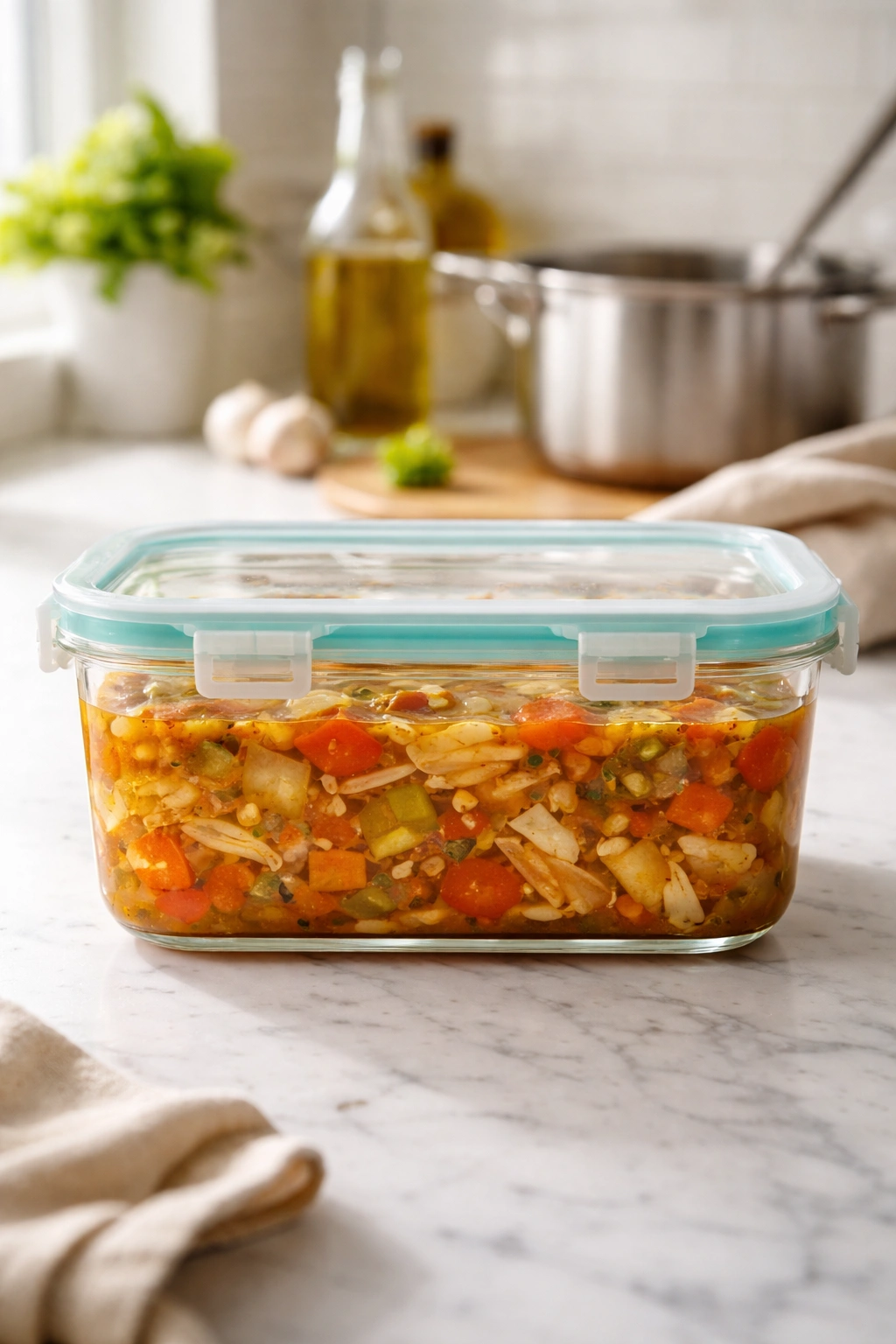
Cabbage soup is genuinely better the next day, which is unusual for vegetable soups. The flavors have time to meld and deepen, and the vegetables absorb more of the broth. This makes it ideal for meal prep.
For refrigerator storage, allow the soup to cool to room temperature (do this at room temperature in the pot or transfer to a shallow bowl so it cools faster—never put hot soup directly into the fridge). Once cool, transfer it to airtight containers. It will keep for 4 to 5 days. The soup will thicken as it cools because the vegetables continue to absorb liquid; this is normal and actually improves the texture.
For freezer storage, the same cooling process applies. Transfer cooled soup to freezer-safe containers, leaving about an inch of headspace at the top for expansion. Cabbage soup freezes beautifully for up to 3 months. Label your container with the date so you know how long it’s been sitting there.
To reheat from refrigerated, you have two options. On the stovetop: pour the desired amount into a pot or saucepan and heat over medium heat, stirring occasionally, until it reaches a simmer. This takes about 5 to 10 minutes depending on the quantity. In the microwave: transfer soup to a microwave-safe bowl and heat in 2-minute increments, stirring between each, until it’s hot through. Depending on the amount, this typically takes 3 to 5 minutes.
To reheat from frozen, you have two options. Thaw overnight in the refrigerator and then reheat using either method above. Alternatively, you can reheat directly from frozen on the stovetop over low heat, stirring frequently and adding a splash of water or broth if the soup seems too thick. This takes longer (about 15 to 20 minutes) but works perfectly fine. Do not microwave from frozen; it will heat unevenly.
The vegetables may soften further as the soup sits and reheats. This is not a problem; it actually creates an even more cohesive, comfort-food texture. If you prefer a brothier consistency when reheating, add a splash of water or additional broth to thin it out.
Perfect Pairing Ideas
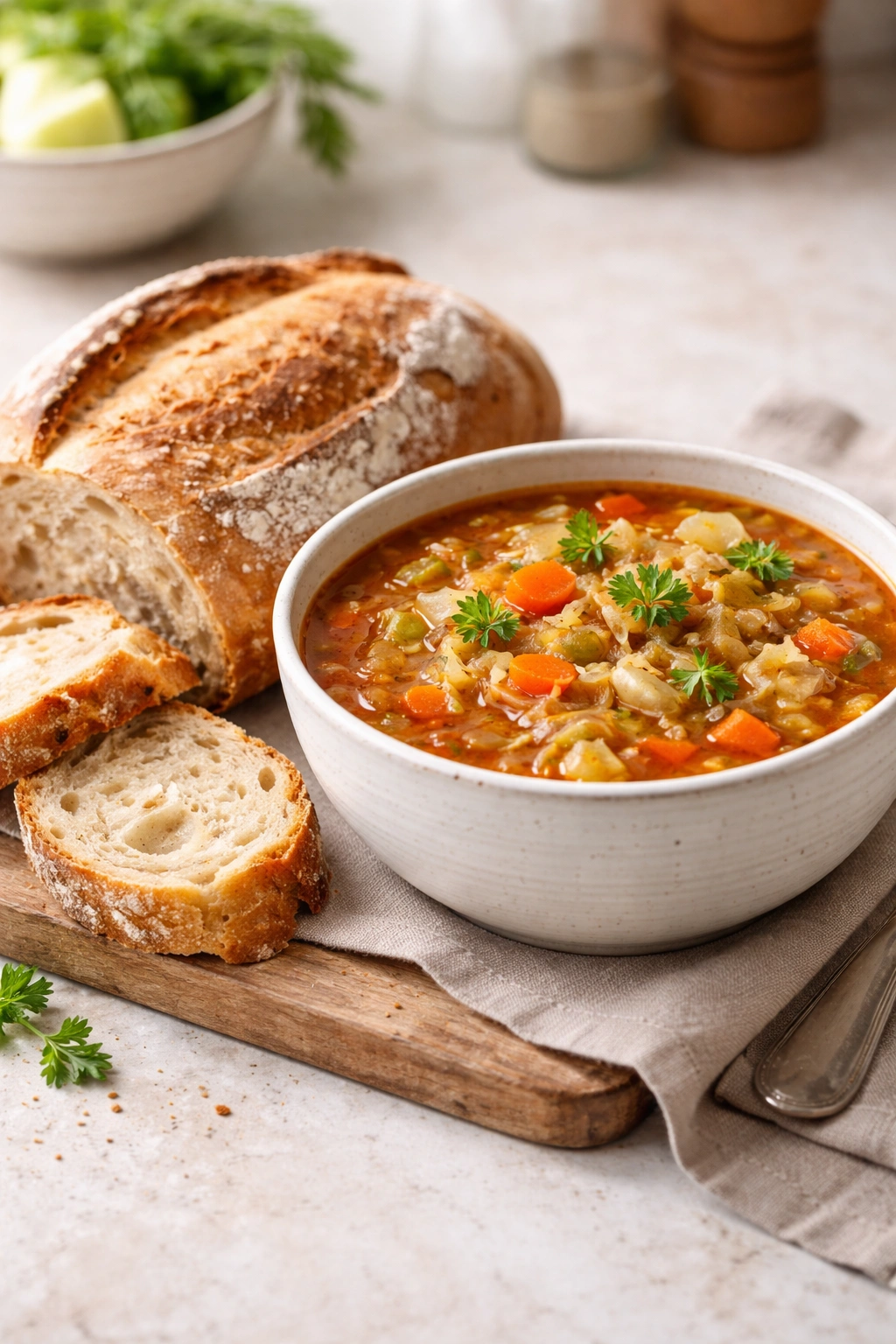
Cabbage soup is wonderful on its own, but pairing it with something else transforms it into a more complete, satisfying meal.
Crusty bread is the classic pairing. A good sourdough, French bread, or even simple dinner rolls are meant for sopping up this broth. Toasted bread with a rub of garlic and olive oil is even better. The bread provides textural contrast and absorbs the flavorful liquid in a way that makes every bite feel more substantial.
A simple salad provides textural contrast and brightness. A sharp vinaigrette-dressed green salad, a coleslaw, or even a simple arugula salad with lemon dressing cuts through the warmth of the soup and prevents the meal from feeling heavy.
Grilled cheese sandwiches are objectively the best soup companion. The richness of melted cheese and buttered bread balances the light, vegetable-forward soup perfectly.
Roasted vegetables on the side—such as roasted broccoli, roasted Brussels sprouts, or roasted root vegetables—add substance and create a more vegetable-focused meal. You can roast them while the soup simmers.
A simple cheese: aged cheddar, Parmesan, or even a pungent blue cheese crumbled over the top adds richness and umami.
Fresh herbs on top—beyond just parsley—like dill, cilantro, or chives add brightness and visual appeal.
Nutritional Benefits of Cabbage
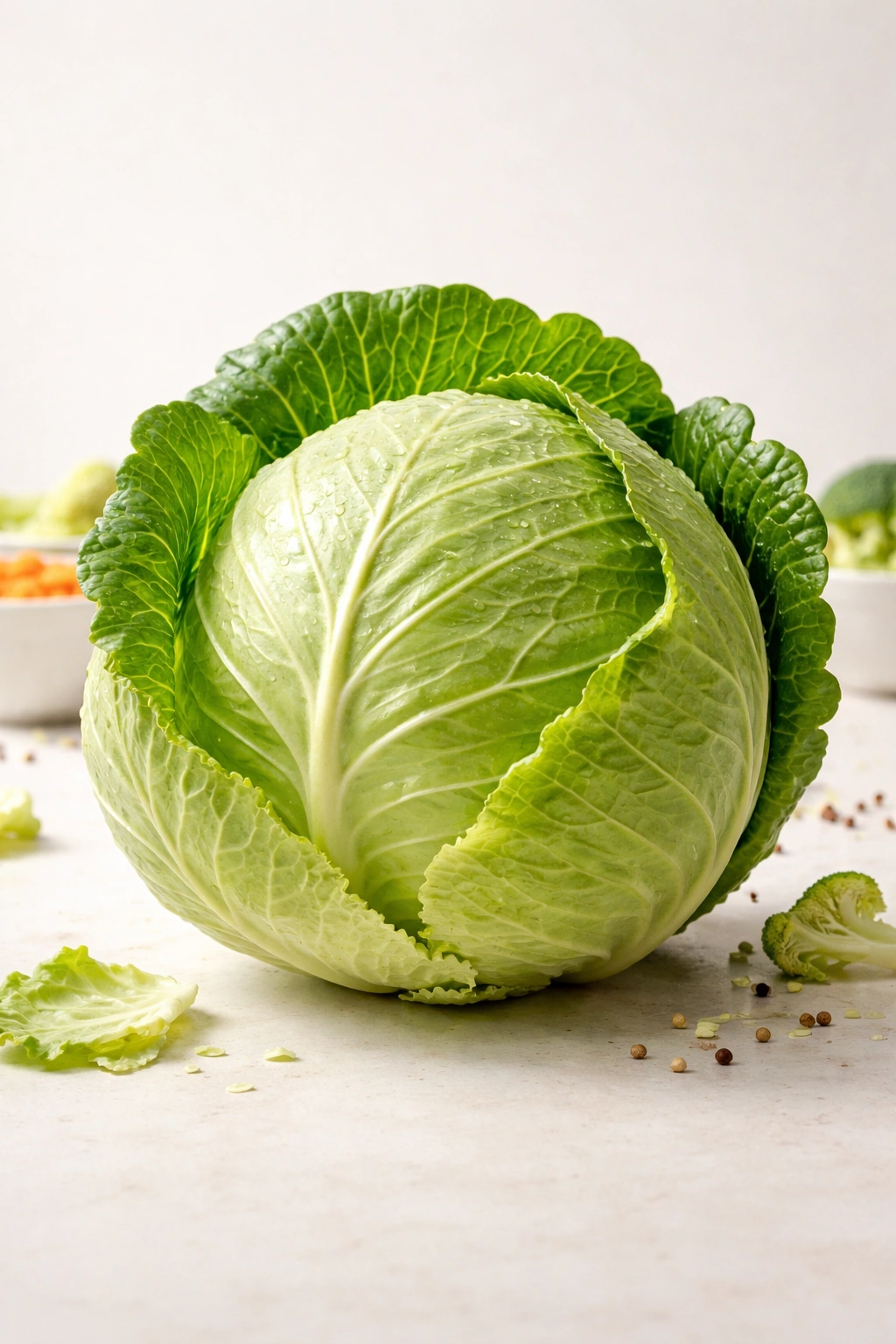
Understanding what you’re actually eating in this soup explains why it’s so satisfying despite being low in calories. Cabbage is legitimately one of the most nutrient-dense vegetables available, offering far more than just fiber and water.
A single cup of raw cabbage contains about 22 calories but delivers 1 gram of fiber (helping keep you full), 1 gram of protein, and substantial amounts of vitamins C and K. Vitamin C is crucial for immune function, and cabbage provides about 35% of your daily needs in just one cup. Vitamin K is essential for bone health and blood clotting, and cabbage is exceptionally rich in it.
The real benefit comes from cabbage’s phytonutrient profile. These are natural compounds that plants produce to protect themselves from damage, and they offer your body powerful anti-inflammatory and antioxidant benefits. Sulforaphane (also found in broccoli) and other sulfur-containing compounds in cabbage help reduce inflammation throughout your body, which is why people report feeling genuinely good after eating cabbage soup—it’s not just comfort; it’s genuine physiological support.
The fiber in cabbage isn’t just helpful for digestion; it feeds your beneficial gut bacteria, which is increasingly recognized as crucial for overall health. You’re not just filling your stomach; you’re supporting your microbiome.
Tomatoes add lycopene, a carotenoid that acts as a powerful antioxidant and is associated with heart and eye health. Fire-roasted tomatoes actually have slightly higher lycopene levels than raw tomatoes because the heat breaks down cell walls, making the lycopene more bioavailable to your body.
The vegetable broth provides minerals like sodium (necessary for electrolyte balance, despite sodium’s bad reputation), potassium, and magnesium—minerals that most modern diets lack and that your body needs for countless functions.
This is why cabbage soup is so satisfying despite being light. You’re not just eating empty calories; you’re delivering genuine nutrition that your body recognizes and utilizes.
Scaling the Recipe
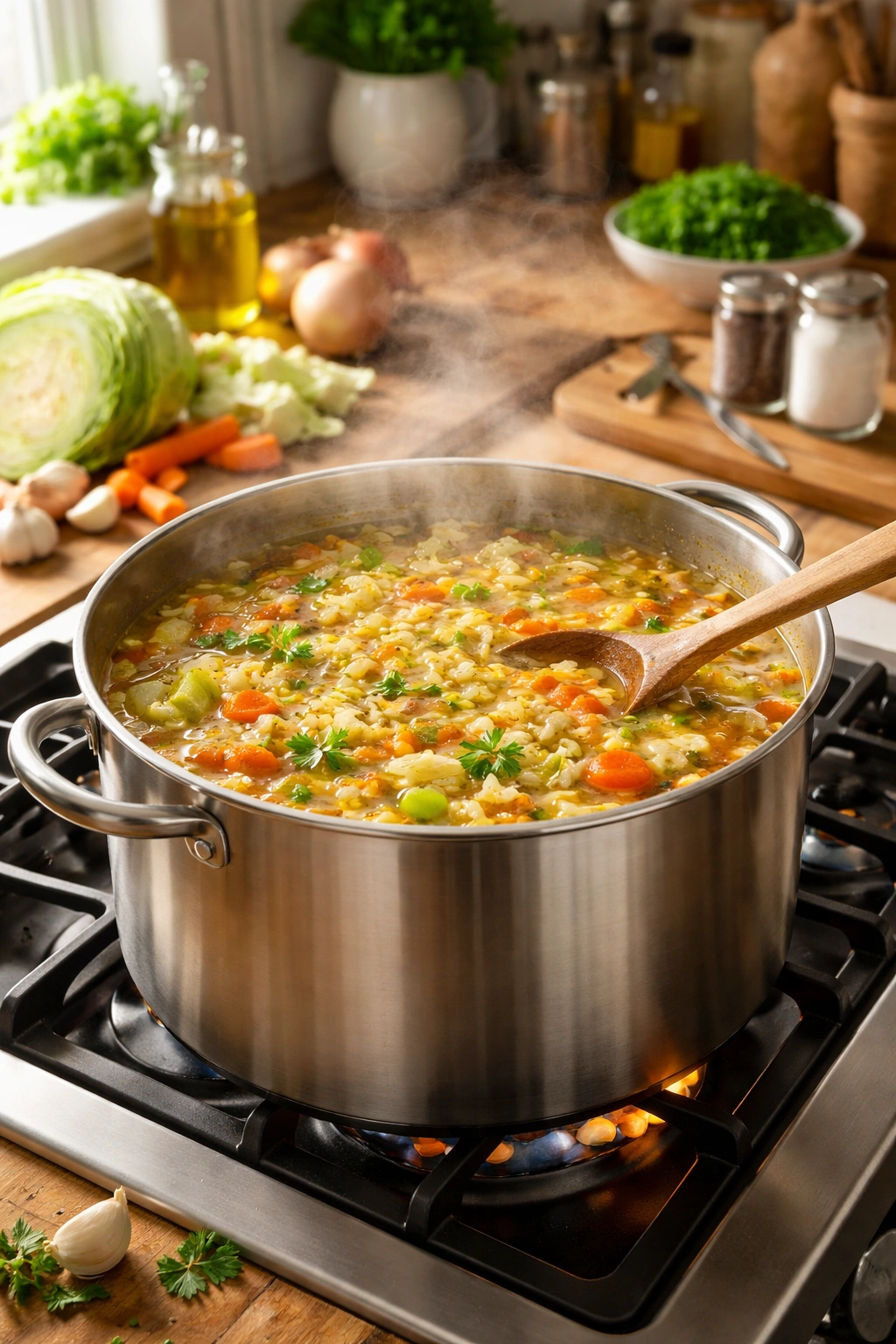
To make a half batch, divide all ingredients by half. This yields about 2 to 3 servings. The cooking times remain roughly the same.
To double the recipe, multiply all ingredients by two. Use the largest pot you own—ideally a 7 to 8-quart Dutch oven—because you need adequate headspace for stirring and for steam to escape. The sautéing times remain the same, but the simmering time may increase by 5 to 10 minutes since there’s more volume to heat and more flavor development to occur.
To make a massive batch for freezing, you can multiply the recipe by three or four. Make sure you have an appropriately sized pot and adequate freezer containers. The beauty of scaling up is that you’re essentially doing all the prep work once and getting multiple meals, which makes meal prep extraordinarily efficient.
Final Thoughts
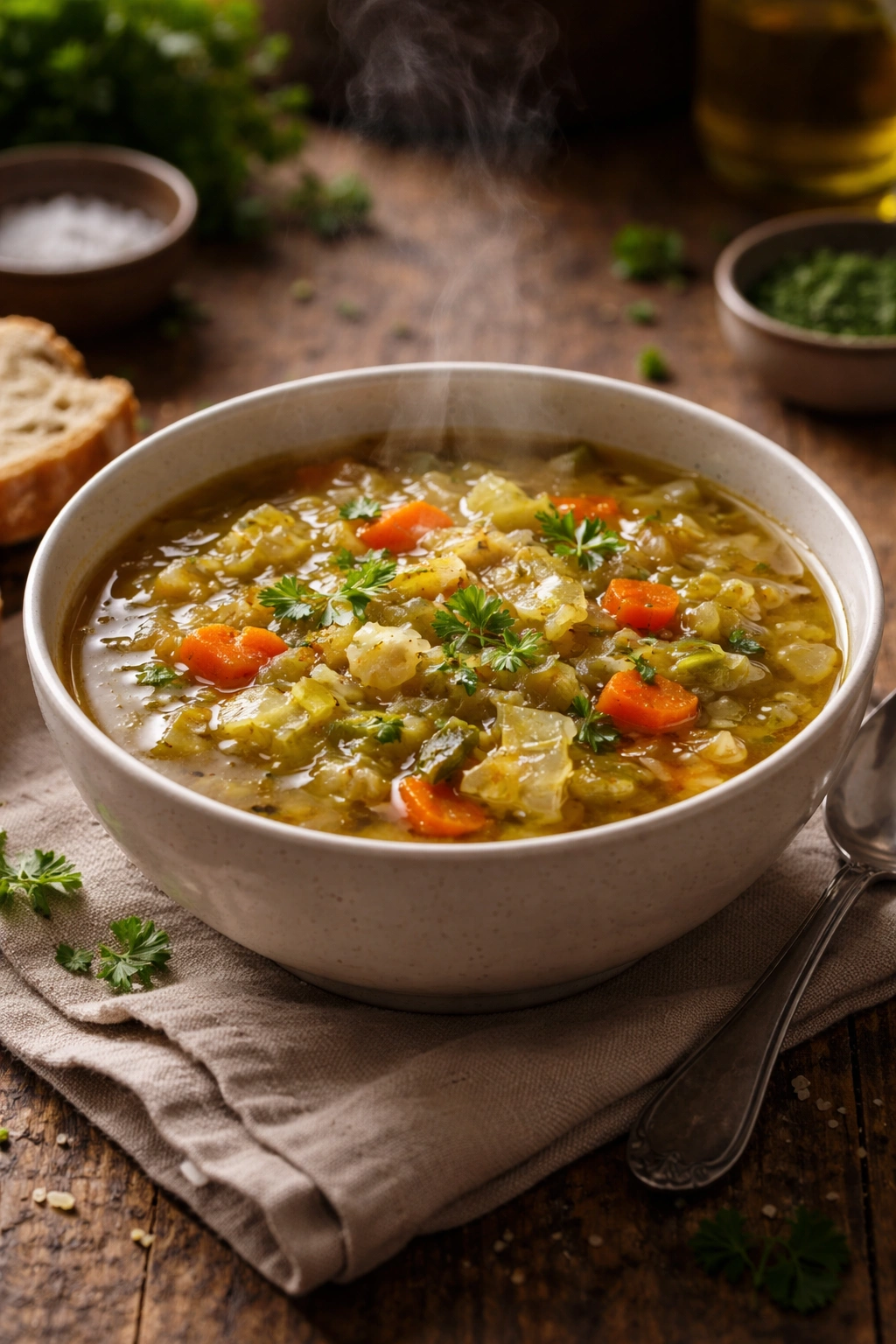
What makes this cabbage soup special isn’t any single ingredient or technique—it’s the combination of simplicity with genuine care. You’re not shortcuts cutting corners or using inferior ingredients. You’re taking basic, affordable, nourishing vegetables and treating them with respect: sautéing them properly, building flavors thoughtfully, and finishing with brightness.
This is the kind of soup that reminds you why home cooking matters. It’s cheaper than takeout, healthier than fast food, and more satisfying than either. It’s the meal you make when you want to feel cared for but don’t have the energy for complexity. It’s the meal you double so you have lunch for the week. It’s the meal that actually tastes better the next day.
Cook this soup this week. Taste the difference between a proper vegetable sauté and one that’s rushed. Notice how the lemon juice changes everything in the last moment. Pay attention to how the flavors deepen and meld as it simmers. Once you’ve made it once, you’ll understand why people keep coming back to it, season after season, year after year.
