



There’s something almost magical about candied pecans—they’re the snack that makes people stop mid-conversation to ask what you’re serving, the topping that transforms a simple salad from ordinary to impressive, and the gift that arrives in a homemade package that somehow feels more thoughtful than anything store-bought could ever be. The best part? You can make restaurant-quality candied pecans in your own kitchen in about 20 minutes, with just a handful of pantry staples and zero culinary school training required.
The divide between homemade and grocery-store versions is staggering once you taste both side by side. Commercial candied pecans are often stale before they hit the shelf, coated in a thick, waxy sugar shell that cracks unpleasantly between your teeth. Homemade candied pecans stay crispy through the center, with a thin, delicate candy shell that shatters satisfyingly and lets the actual pecan flavor shine through. You control the sweetness level, the spice blend, and the freshness—making a batch that’s genuinely better than anything you can buy.
This is also the kind of recipe that creates an almost unfair advantage in the kitchen. Serve these at a gathering and suddenly you’re the host who “really puts in the effort.” Use them as gifts and you’ll have friends texting you months later saying they’re still thinking about them. Sprinkle them on salads, appetizer boards, or desserts, and people will automatically assume you’re more sophisticated than you actually are—which isn’t dishonest; homemade candied pecans genuinely are a mark of someone who knows their way around good food.
Why Homemade Candied Pecans Beat Store-Bought Versions
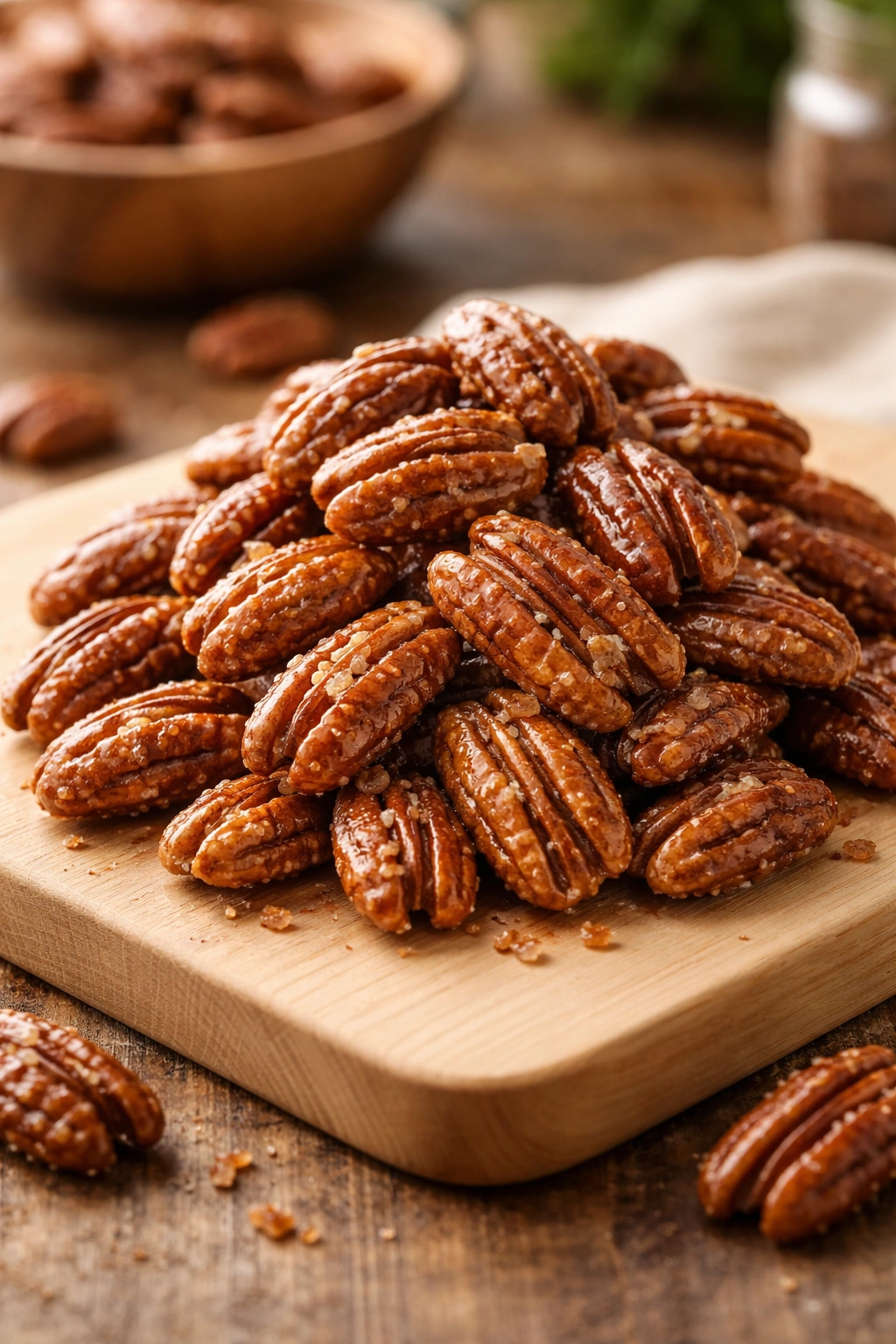
The differences between homemade and commercial candied pecans go far beyond just taste—they’re structural and chemical. When you make candied pecans yourself, you’re creating a fresh, thin candy coat that adheres to the pecan while still letting it breathe. That crispy texture you love comes from the precise balance of moisture and heat during toasting and cooling, something that’s almost impossible to maintain during commercial packaging and shipping.
Store-bought versions rely on shelf stability over everything else, which means thicker, heavier sugar coatings and often gums or stabilizers that create that unpleasant waxy mouthfeel. Homemade pecans can use real butter, pure vanilla extract, and just a whisper of salt to let the pecan’s natural oils and flavor take center stage. There’s also the freshness factor—homemade pecans stay crispy and delicious for weeks, while many commercial versions lose their appeal within days of opening.
Cost is another surprisingly significant advantage. A pound of quality pecans plus the butter, sugar, and spices you probably already have in your kitchen costs roughly half to two-thirds the price of pre-candied pecans from a specialty grocer. Making a double or triple batch takes maybe five extra minutes, so the per-serving cost drops even further. If you’re serving these regularly or giving them as gifts, the math becomes even more compelling.
The Essential Ingredients for Perfect Candied Pecans
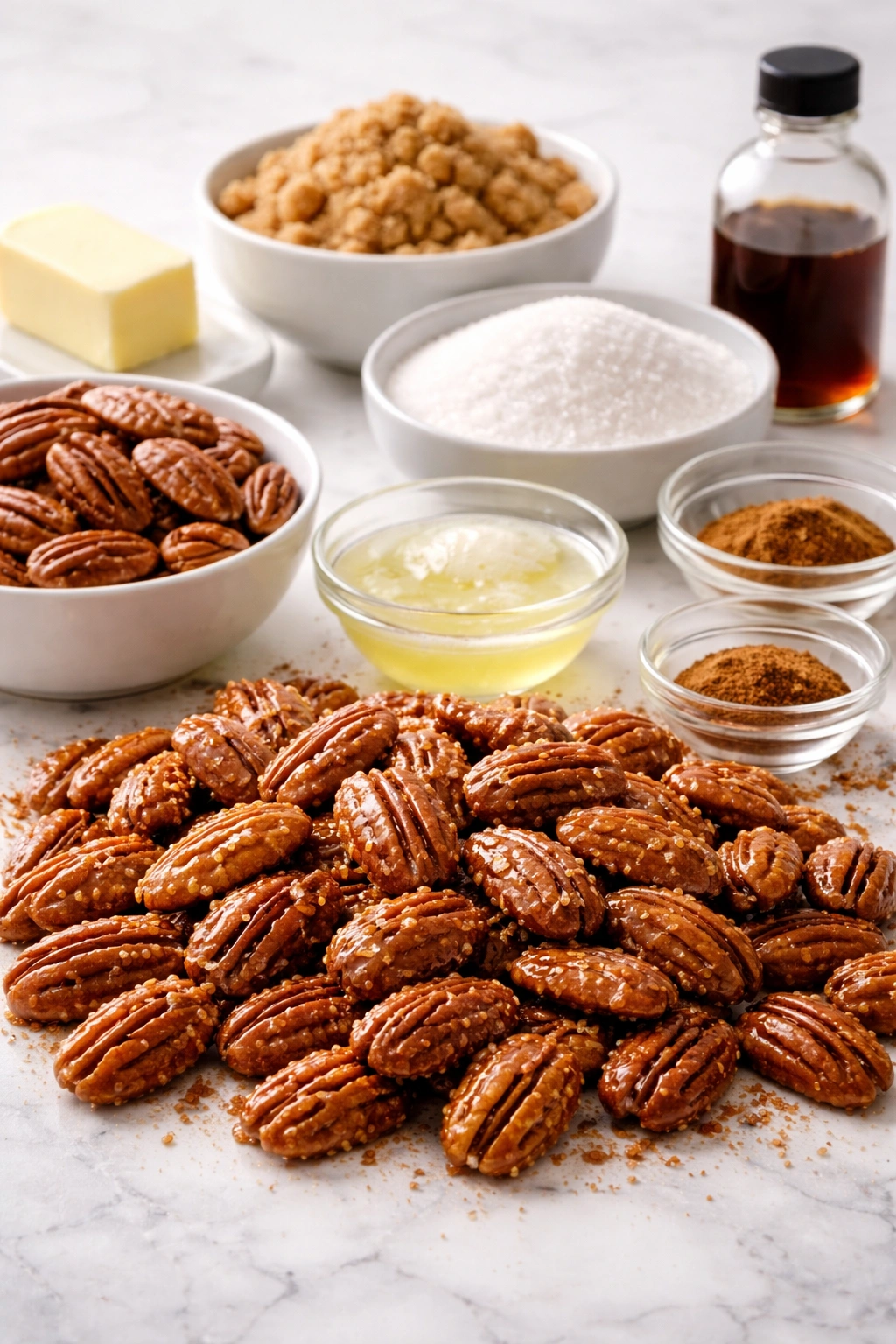
The ingredient list for candied pecans reads like a primer on flavor balance: butter for richness, brown sugar for depth and moisture control, white sugar for crispiness, egg white for adhesion, and vanilla for complexity. The egg white is the secret ingredient most people miss—it’s not about making the coating eggy or thick, but creating an emulsion that helps the sugar and spices coat evenly and stick properly without clumping.
Choosing quality pecans matters more here than in almost any other recipe, because the pecan flavor is the entire point. Fresh pecans have a sweet, buttery quality that tastes almost creamy—stale pecans taste flat, bitter, or slightly rancid. Buy pecans from a source with good turnover, taste one before committing to a full pound if you’re unsure, and store any extras in the freezer to preserve their flavor. Halves work beautifully here (they’re less expensive and easier to coat evenly than whole pecans), or use pieces if you prefer smaller, crunchier candied pecan chips.
The spices are where you can really make this recipe your own, but a foundation of cinnamon, nutmeg, and a whisper of cayenne creates that perfect balance of warm and slightly spicy sweetness that feels more sophisticated than it has any right to. The cayenne is optional but genuinely transformative—just a quarter teaspoon adds a subtle heat that makes people say “wow, what is that?” without ever knowing it’s a pinch of spicy pepper.
Serving and Timing Information
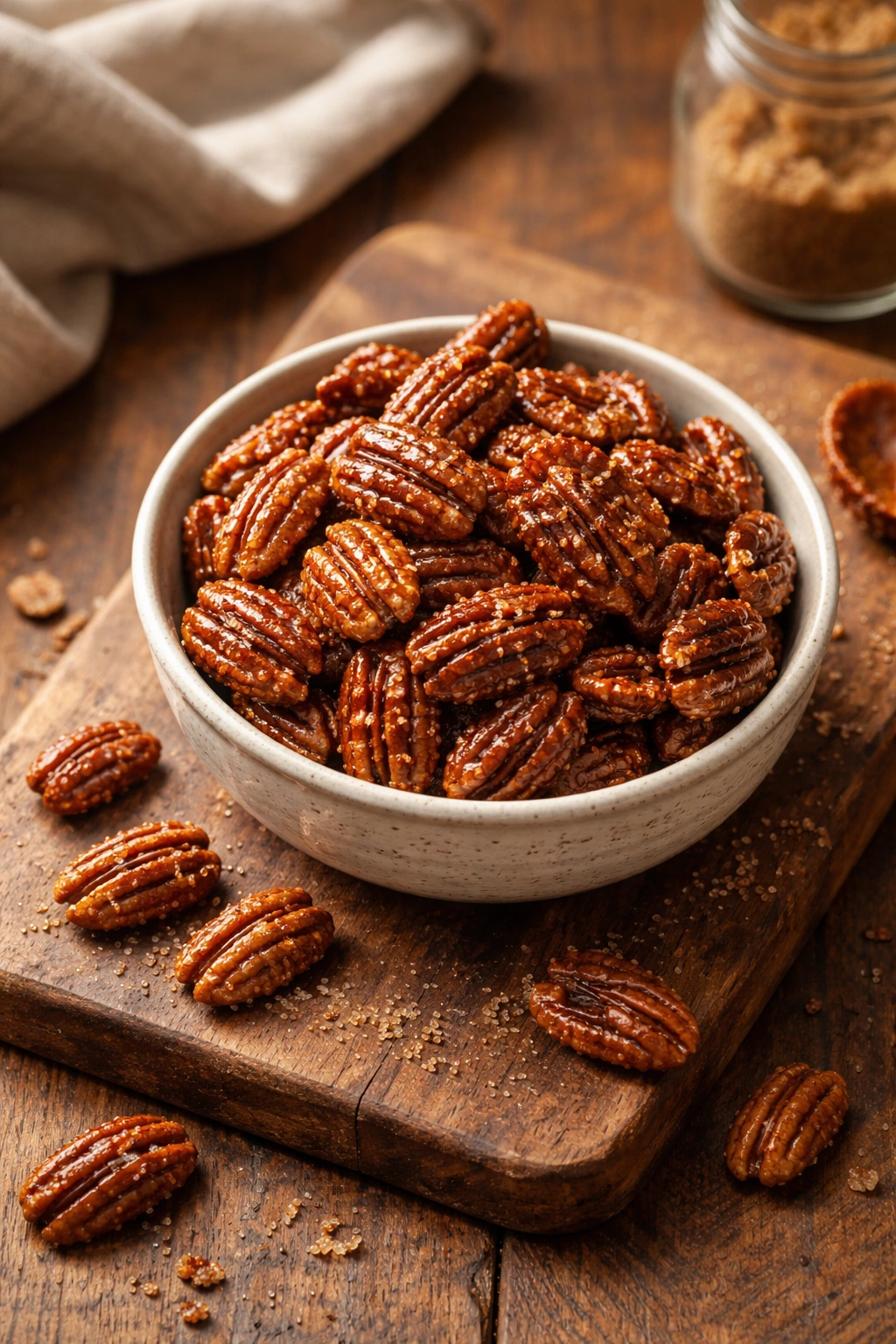
Yield: Makes about 3 cups candied pecans (roughly 1 pound)
Prep Time: 15 minutes
Cook Time: 20 minutes
Total Time: 35 minutes active time + 30 minutes cooling and setting
Difficulty: Beginner — no special equipment required beyond a simple whisk and baking sheet; the steps are straightforward and nearly impossible to mess up
These candied pecans taste best when served at room temperature, when the sugar shell has set completely and offers that satisfying crunch. They’re equally delicious eaten straight from a bowl, scattered over salads or grain bowls, or arranged on a cheese board. Make them a day or two ahead if you’re hosting; they actually improve slightly as the flavors settle and the texture becomes more uniform. Unlike some garnishes, candied pecans stay crispy and delicious even when they sit at room temperature for several hours, making them perfect for parties and entertaining.
Complete Ingredient List
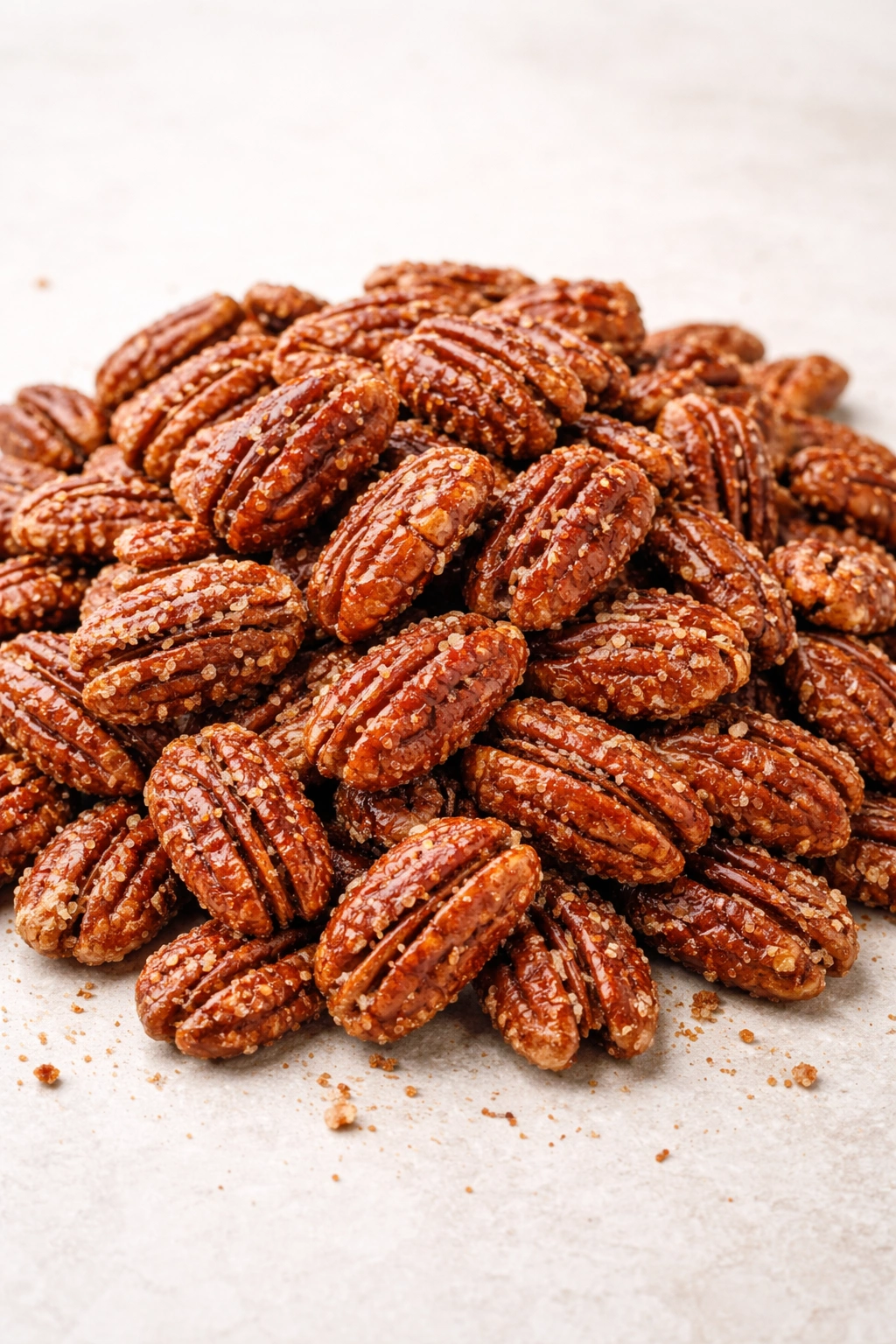
For the Candied Pecans:
- 1 pound (about 4 cups) pecan halves, raw or lightly roasted
- 1 large egg white, room temperature
- ½ cup packed light or dark brown sugar
- ¼ cup white granulated sugar
- 3 tablespoons unsalted butter, melted
- 1 teaspoon pure vanilla extract
- 1½ teaspoons ground cinnamon
- ½ teaspoon ground nutmeg
- ⅛ teaspoon cayenne pepper (optional, but highly recommended)
- ½ teaspoon fine sea salt (plus an extra pinch for topping, optional)
Step-by-Step Instructions
Prepare Your Equipment:
-
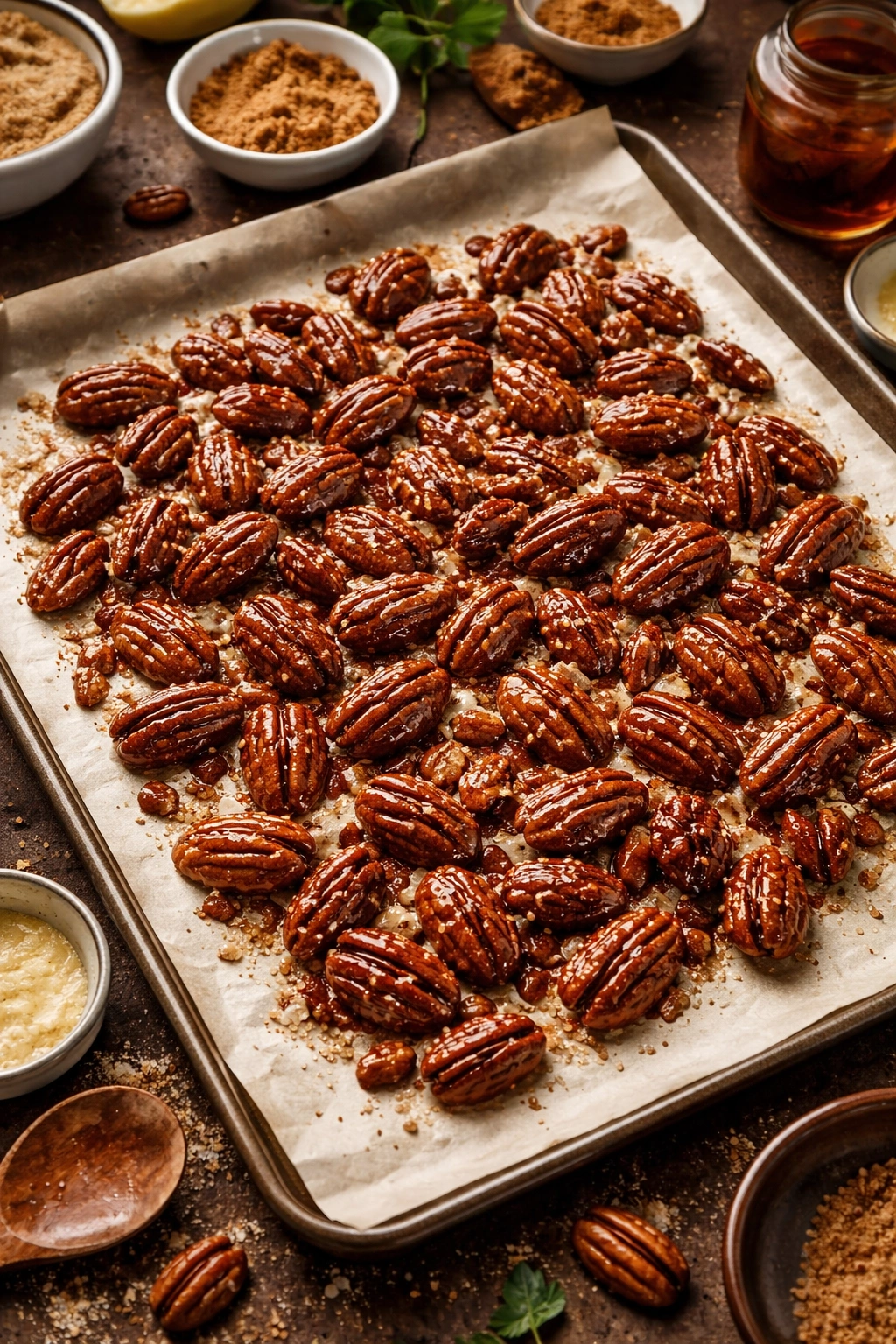
Preheat the oven to 325°F (163°C) and position the rack in the center. Line a large baking sheet with parchment paper, leaving the edges bare so you can easily slide a spatula under the pecans once they’re toasted.
-
In a small bowl, whisk the egg white for about 30 seconds until it’s slightly foamy and broken up — you don’t need stiff peaks, just enough whisking that it’s no longer entirely clear. This slight foaming helps the coating adhere evenly to the pecans.
Make the Sugar and Spice Mixture:
-
In a medium bowl, whisk together the brown sugar, white sugar, cinnamon, nutmeg, cayenne, and salt until completely combined and no clumps of brown sugar remain. Break up any lumps by pressing them gently against the side of the bowl with the back of a spoon.
-
Add the melted butter and vanilla extract to the sugar mixture and stir with a wooden spoon or sturdy whisk until the mixture resembles wet sand — everything should be evenly moistened, with no dry pockets of sugar remaining.
-
Add the whisked egg white to the sugar mixture and stir vigorously for about 1 minute, until you have a thick, uniform paste that coats the back of the spoon. At this point, the mixture should be smooth and cohesive, with no streaks of unmixed egg white. Important: If the mixture seems too dry or the egg white isn’t combining smoothly, add a teaspoon of water at a time and stir until you reach a paste-like consistency. The mixture should hold together when you press it between your fingers, but shouldn’t be wet or clumpy.
Coat the Pecans:
-
Transfer the pecans to a large bowl and pour the sugar-spice paste over them. Using a sturdy wooden spoon or a flexible silicone spatula, stir and fold the mixture continuously for 2 to 3 minutes, making sure every pecan gets coated in the sugar paste. Work deliberately but gently — you’re not trying to break the pecans, just to ensure even coverage. After 2 minutes of folding, every single pecan should be visible and coated with the sugar mixture; there shouldn’t be dry patches or clumps of unmixed paste at the bottom of the bowl.
-
Spread the coated pecans in a single layer on the prepared baking sheet, spacing them out as much as possible so they roast evenly without crowding. Don’t worry if some pecans are touching or if the coating looks chunky at this stage — this is completely normal and they’ll smooth out as they roast.
Roast and Stir:
-
Bake for 10 minutes, then remove the baking sheet from the oven and stir the pecans with a wooden spoon or silicone spatula, breaking up any that have stuck together. Spread them back into a single layer and return to the oven for another 8 to 12 minutes, depending on your oven and how dark you like your pecans. The sugar coating should look dry and matte, not shiny, and the nuts should smell toasted and caramelized.
-
Watch carefully during the final 5 minutes — the sugar can go from perfectly caramelized to slightly burnt quickly, especially if your oven runs hot. The pecans are done when the coating appears dry and light brown, and you can smell that toasty, caramelized sugar aroma. The edges may look slightly darker than the centers, and that’s exactly what you want.
-
Remove the baking sheet from the oven and let the pecans cool on the hot pan for exactly 3 minutes — this gives the sugar coating time to set slightly and become crispy without becoming so cool that it hardens into one solid clump.
Advertisements
Cool and Finish:
-
While the pecans are still slightly warm, use a wooden spoon or silicone spatula to gently stir them, breaking apart any pecans that have stuck to their neighbors. Return them to the hot pan and let them cool completely at room temperature for at least 25 to 30 minutes, stirring gently every 10 minutes to prevent clumping. Do not put them in the refrigerator at this stage — they’ll texture better if they cool slowly at room temperature, allowing the sugar to set evenly.
-
Once completely cooled, transfer the candied pecans to an airtight container. If you’d like to add a final flourish, sprinkle with a tiny pinch of sea salt or a whisper of cinnamon while they’re still slightly warm — this creates a more sophisticated, nuanced flavor.
Why Your Pecans Are Coming Out Candied Perfectly (or What Went Wrong)
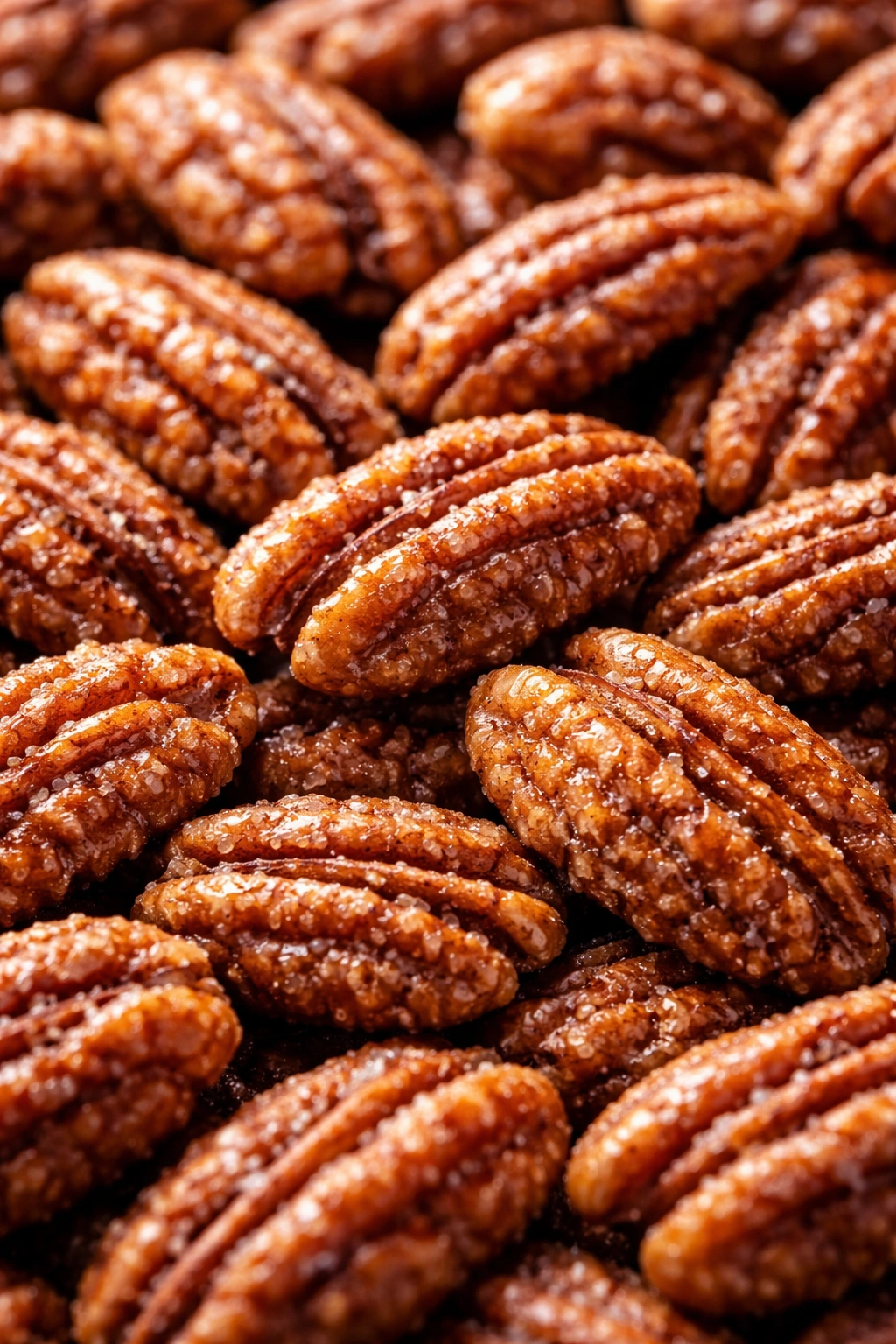
If you’ve made a batch and they turned out crispy, delicious, and exactly what you were imagining, congratulations—you’ve nailed one of the easiest ways to look impressive in the kitchen. But if something didn’t go quite right, understanding what happened makes everything crystal clear for the next attempt.
The Clumpy Disaster and How to Prevent It
Pecans clumping together into one stuck-together mass is by far the most common issue, and it’s almost always caused by undercooking or not stirring enough during and after roasting. The sugar needs enough heat to fully crystallize and set; if the oven temperature is too low or the roasting time is too short, the coating stays slightly tacky and pecans stick together as they cool. The fix is simple: roast them a full 20 minutes at 325°F and stir them at the midway point and immediately after removing them from the oven.
The second clumping culprit is skipping the stirring during the cooling phase. As the pecans cool, the sugar is still setting, and if you leave them undisturbed, they’ll naturally bond together. Stir them gently every 10 minutes for the first 30 minutes out of the oven, and you’ll prevent this entirely. A wooden spoon is better than a fork or whisk here because it’s gentler and less likely to crack off bits of the sugar coating.
Too Soft or Chewy Coating
If your pecans taste good but the coating is soft or slightly chewy instead of crispy, the issue is usually moisture. Check that your egg white was truly at room temperature (cold eggs can throw off the moisture balance), and verify that you’re not over-stirring the coating mixture before you roast—over-mixing can incorporate extra moisture and prevent the sugar from crystallizing properly. Also make sure you’re roasting for the full 20 minutes and stirring just enough to prevent sticking, but not so much that you’re pulling moisture back into the sugar coating.
Sugar Coating That’s Too Dark or Bitter
A slightly caramelized, medium-brown coating is gorgeous and delicious, but a dark brown or blackened coating tastes bitter and harsh. This usually means your oven is running hot, the roasting time was too long, or you left the pecans on the hot pan too long after removing them from the oven. The fix: after the initial 10-minute roast and stir, watch the oven carefully for those final 8 to 10 minutes. As soon as the coating looks dry and matte with golden-brown edges, pull them out. If your oven tends to run hot, you might also reduce the temperature to 300°F and add a few minutes to the roasting time.
Pecans That Taste Bland or Over-Salted
If the flavor is flat, you likely need more spice and vanilla—don’t be shy with the cinnamon and vanilla extract. They’re the flavor anchors here. If the coating tastes aggressively salty, you probably included too much salt or used salted butter when the recipe calls for unsalted. Use a light hand with the salt, tasting a cooled pecan before deciding if you need more. Salt is easy to overdo and nearly impossible to fix once it’s roasted into the coating.
The Best Flavor Variations to Try
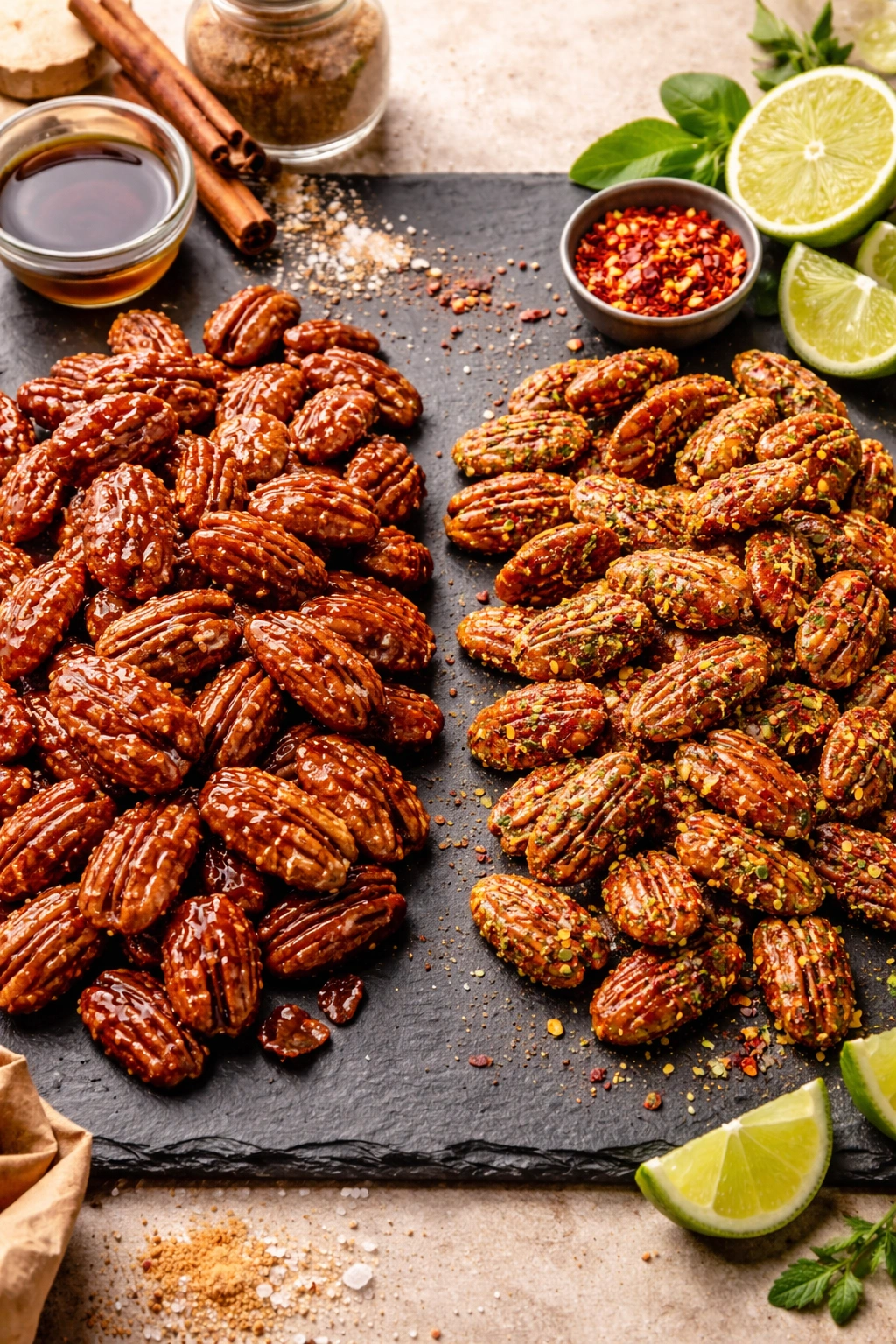
The basic candied pecan formula is so versatile that you can create a completely different snack just by swapping spices, extracts, or sweeteners. Each variation should be roasted using the exact same temperature and timing as the original—the only changes are in the ingredients going into the sugar-spice mixture.
Maple Pecan Variation
Replace the brown sugar with packed light brown sugar mixed with 2 tablespoons of pure maple syrup, reduce the white sugar to 3 tablespoons, and add ½ teaspoon of fine sea salt instead of the standard salt. The maple adds an earthy, complex sweetness that feels deeply autumnal and sophisticated. These pair beautifully with grain bowls, roasted vegetables, or simply eaten by the handful on a crisp afternoon.
Spicy Chili Lime Pecans
Keep the butter, egg white, and vanilla, but replace the sugar spice blend entirely with ½ cup packed light brown sugar, ¼ cup white sugar, 1½ teaspoons ancho chili powder, ½ teaspoon smoked paprika, ½ teaspoon cumin, ¼ teaspoon cayenne, ½ teaspoon fine sea salt, and 1 tablespoon fresh lime zest stirred in just before coating the pecans. These are spicy, slightly smoky, and have an unexpected citrus brightness that makes them addictive. Serve alongside cocktails or scatter over avocado toast for a show-stopping breakfast.
Brown Butter and Sage Pecans
This variation is elegant and savory—perfect for a cheese board or served as a bar snack with wine. Use 3 tablespoons brown butter (melted and cooled slightly) instead of regular butter, replace the cinnamon and nutmeg with 1 teaspoon dried sage leaves (crushed finely) and ¼ teaspoon black pepper, and keep the rest of the recipe the same. The brown butter adds a nutty, slightly caramelized depth that pairs beautifully with the earthy sage.
Espresso and Cocoa Pecans
For a more dessert-like variation, replace the cinnamon with 1 tablespoon unsweetened cocoa powder and 1 teaspoon finely ground espresso powder (or 1½ teaspoons instant espresso dissolved in the vanilla extract). These are intensely flavored, almost like a dark chocolate-covered pecan without the heaviness of actual chocolate. They’re sophisticated enough for a dessert platter but still work beautifully as an afternoon snack.
Rosemary and Sea Salt Pecans
A more herbaceous, sophisticated option: replace the cinnamon and nutmeg with 1½ teaspoons finely chopped fresh rosemary (or 1 teaspoon dried), add ¼ teaspoon fresh cracked black pepper, and finish with a generous pinch of fleur de sel or Maldon sea salt while the pecans are still warm. These pair exceptionally well with sharp cheeses, crackers, or alongside roasted meats.
How to Make Candied Pecans in Bulk for Gifting
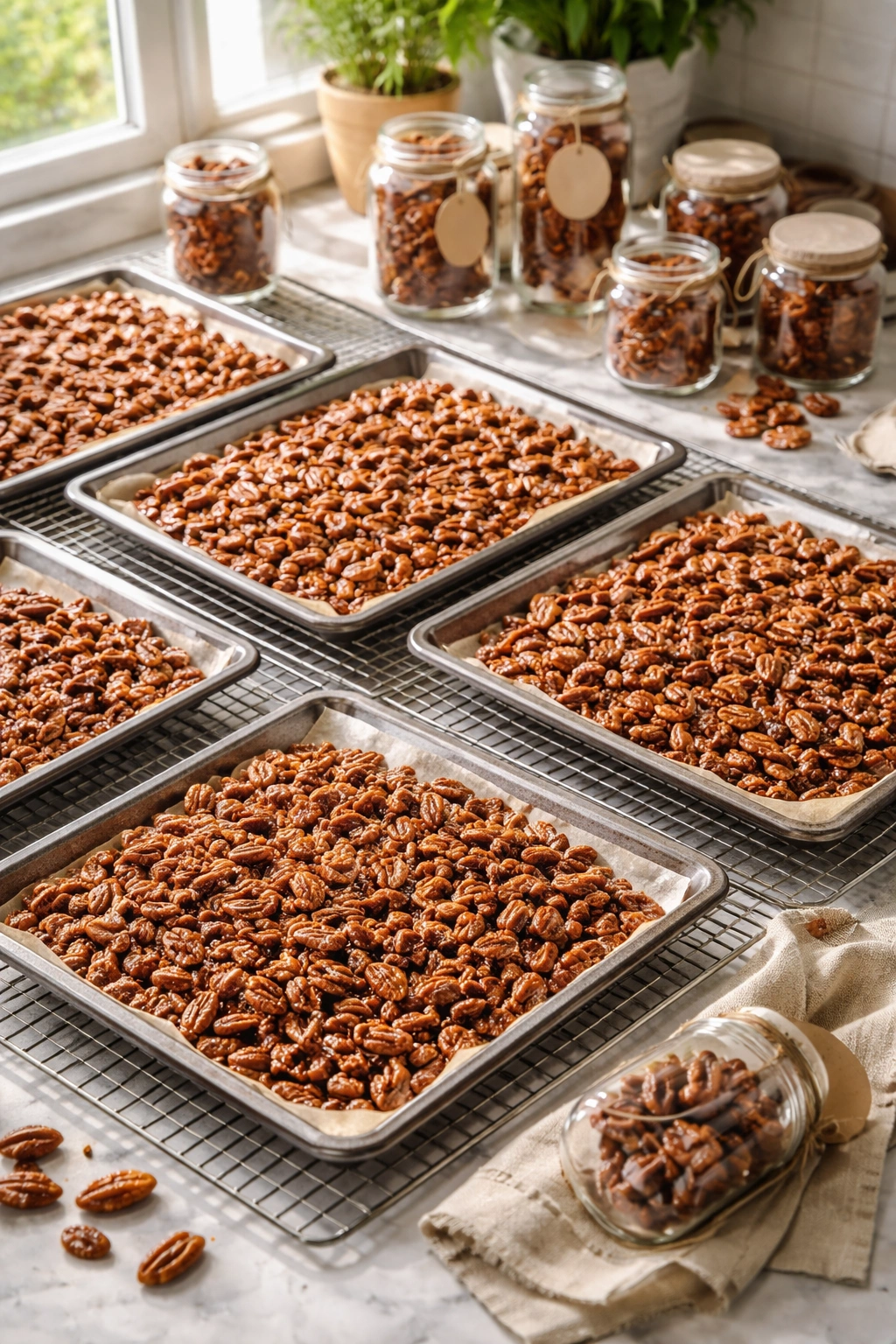
One batch of candied pecans makes about 3 cups, which is a beautiful, generous gift but also a perfect amount for serving at a gathering. If you want to make several batches at once for holiday gifts or entertaining multiple guests, the process scales seamlessly—just use multiple baking sheets and give yourself adequate oven space.
Doubling the recipe is straightforward: use 2 pounds of pecans and double every ingredient in the coating mixture, then spread the pecans across two baking sheets roasting at the same temperature. They’ll still finish in the same 20-minute window, but you’ll need to rotate the baking sheets halfway through so they cook evenly. Tripling or quadrupling the recipe follows the same logic—just ensure you’re not overcrowding your oven, as you need decent air circulation for the sugar to crystallize properly.
For gifting, candied pecans deserve proper packaging. Transfer cooled pecans to mason jars, pretty glass containers, or decorative bags with a handwritten label noting the flavor and the date made. Include a tiny note mentioning that they’ll keep fresh for several weeks stored in an airtight container at room temperature, or up to three months in the refrigerator or freezer. The presentation matters less than the pecan quality itself—homemade candied pecans are inherently impressive simply because they’re homemade.
Storage, Freezing, and Make-Ahead Tips
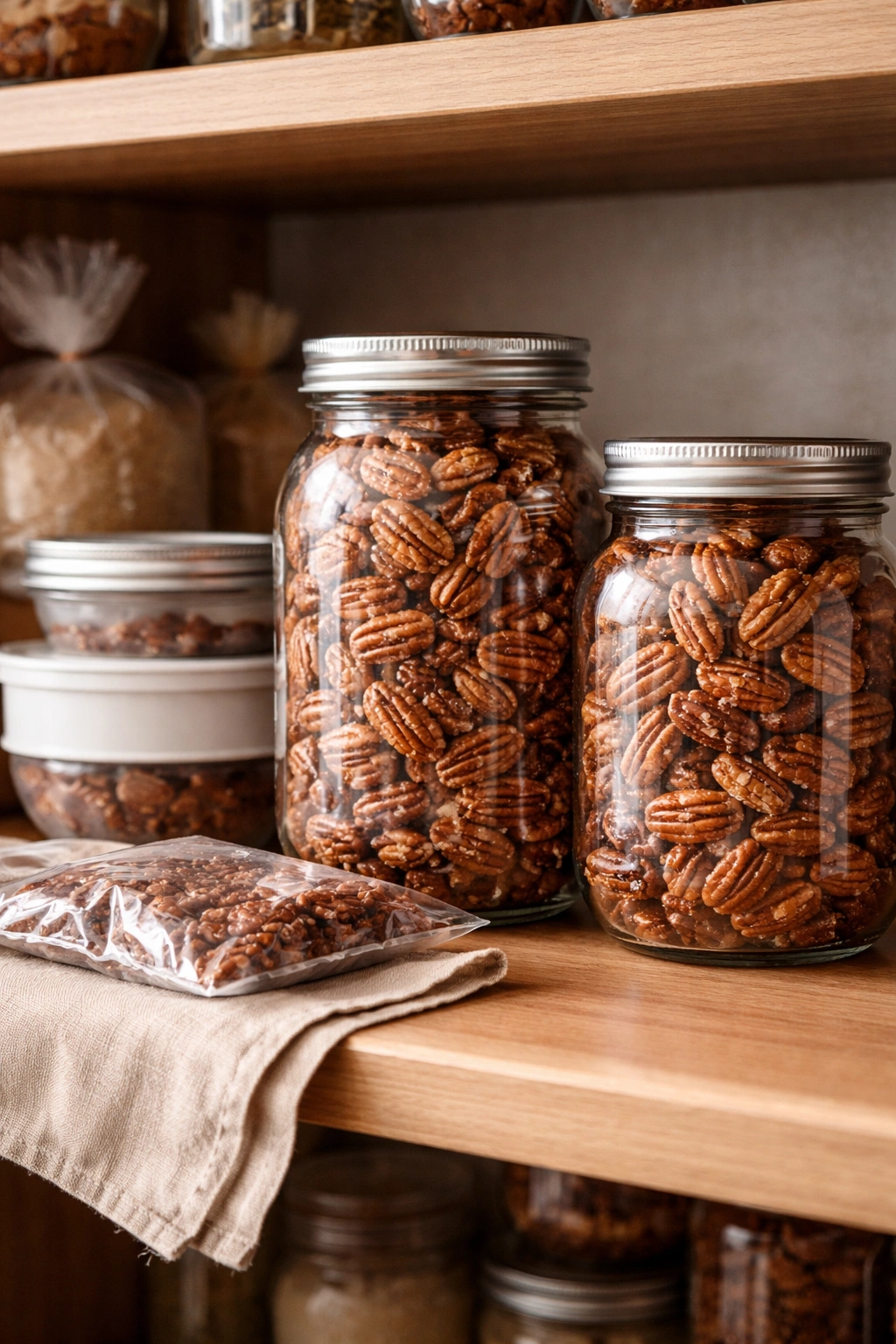
Properly stored candied pecans stay crispy and delicious for an impressive amount of time, making them one of the best make-ahead snacks you can prepare. The key to maintaining that satisfying crunch is keeping them sealed away from humidity, which softens the sugar coating and can make them stick together.
Store candied pecans in an airtight container at room temperature for up to two weeks, or in the refrigerator for up to one month. Avoid storing them in the freezer’s main compartment where they’re exposed to moisture from ice crystals; instead, freeze them in a dedicated airtight container on a shelf where they’ll stay dry. Properly frozen candied pecans last three to four months and thaw back to crispiness in just 15 minutes at room temperature. Never attempt to reheat them; the sugar will melt and they’ll lose that delicate crunch you worked to create.
If you notice your candied pecans have softened slightly during storage, you can revive them by spreading them on a baking sheet and warming them in a 250°F oven for 5 to 8 minutes, just until they regain their crispness. Let them cool completely before storing again. This trick works because gentle, low heat re-sets the sugar coating without burning or darkening it further.
Making them a day or two ahead is actually ideal for serving or gifting. The flavors meld overnight, the texture becomes more uniform, and you eliminate the stress of preparing them last-minute while managing other entertaining. Prepare them up to three days ahead, store them in an airtight container, and you’ve eliminated one task on the day you’re hosting or giving gifts.
Perfect Serving Ideas and Flavor Pairings
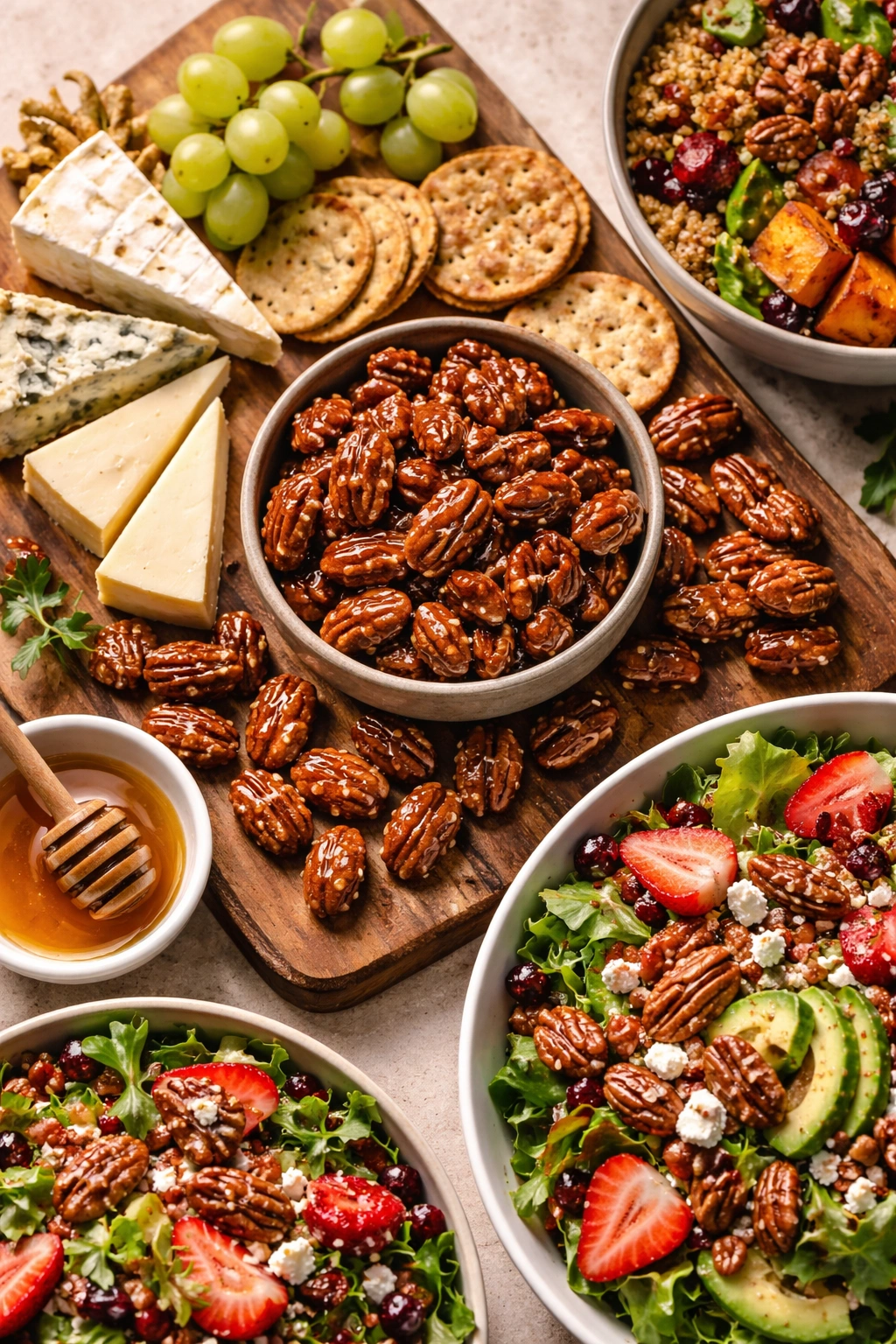
The versatility of candied pecans is part of their genius—they’re equally at home on a dessert platter or perched on top of a grain salad, making them one of the most useful recipes to have on rotation. Understanding their best flavor contexts helps you deploy them strategically for maximum impact.
On Cheese Boards and Charcuterie Spreads: Candied pecans are the unofficial official garnish of the entertaining world, and for good reason. They provide sweetness, crunch, and visual interest without overwhelming delicate cheeses or cured meats. They pair beautifully with sharp aged cheddars, creamy goat cheese, funky blue cheese, and soft-ripened bries. Scatter them loosely across the board or pile them in a small bowl for guests to grab.
With Fresh Salads: A handful of candied pecans transforms a simple green salad into something restaurant-worthy. They work particularly well over mixed greens with apple slices, dried cranberries, and a sharp vinaigrette—the sweetness of the pecans complements the tartness of the dressing and the crisp apple texture. Arugula salads with pears and candied pecans are a classic combination for a reason.
As a Grain Bowl Topper: Roasted vegetable and grain bowls get serious depth from a scattering of candied pecans on top. They add crunch, natural sweetness, and a sophisticated finish to bowls built around quinoa, farro, or wheat berries. Particularly delicious over bowls with roasted Brussels sprouts, butternut squash, or beets.
Scattered Over Desserts: Candied pecans can garnish brownies, chocolate cakes, cheesecakes, or ice cream with an understated elegance. They’re especially lovely over vanilla ice cream or atop creamy desserts where their crunch offers textural contrast.
With Roasted Vegetables: A small handful scattered over roasted carrots, parsnips, or root vegetables adds a sweet note that balances the caramelized, slightly savory vegetable flavors. They’re particularly stunning scattered over a butternut squash gratin or sweet potato side dish.
As a Cocktail and Wine Snack: Set out a small bowl of candied pecans alongside your cheese and charcuterie when serving wine or cocktails. The slight sweetness and richness make them particularly compatible with aged spirits, wine, or craft cocktails, and they’re less messy than many other snack options.
How Candied Pecans Elevate Your Entertaining
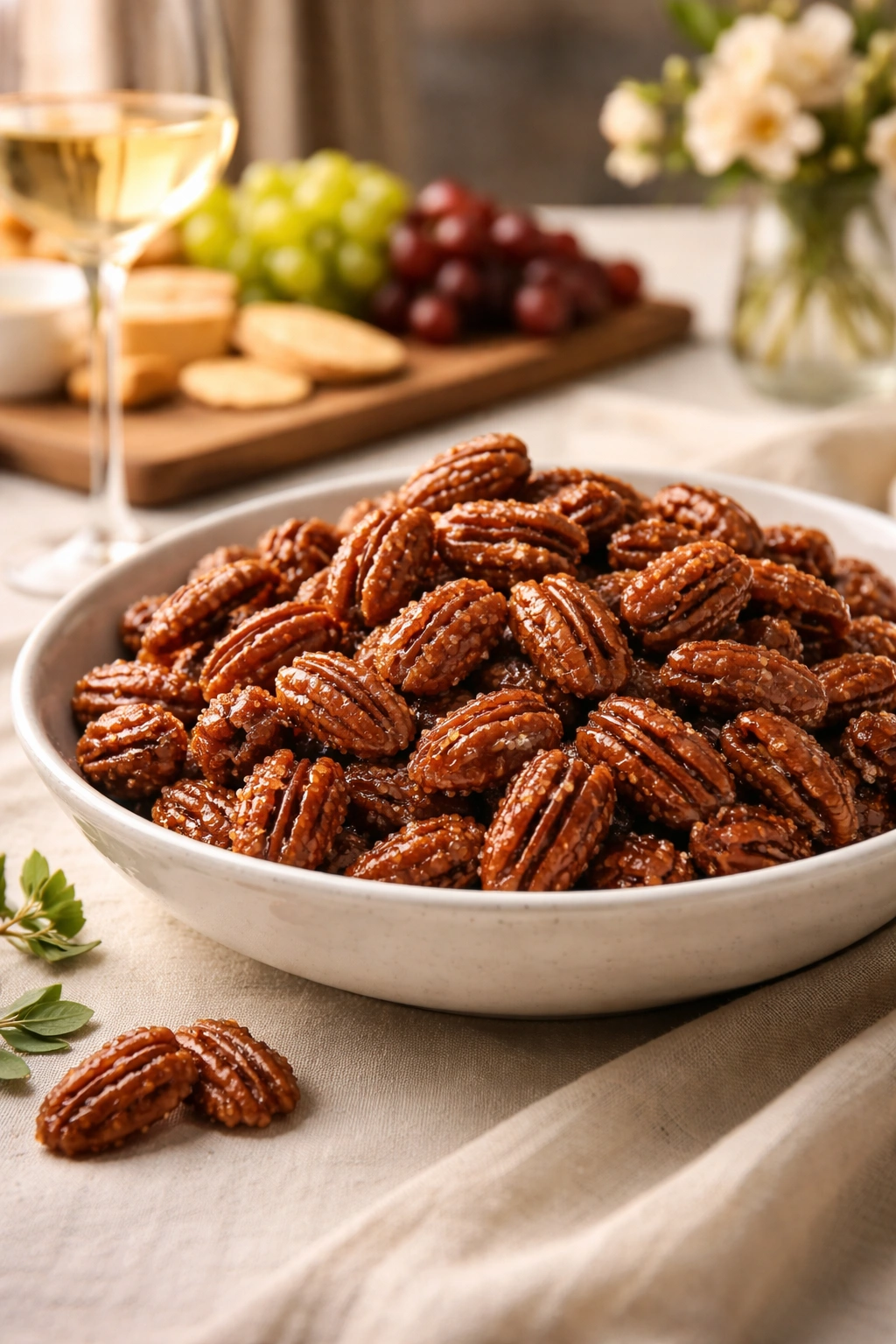
There’s a reason candied pecans appear on every sophisticate’s entertaining table—they signal attention to detail and knowledge of good food, but they also actually taste incredible. They’re one of the easiest ways to make an ordinary gathering feel elevated and intentional.
When you’re hosting, candied pecans allow you to build complexity into your spread without significant effort. A simple arrangement of cheeses, crackers, and cured meats becomes a proper, thought-out board when topped with candied pecans. A basic green salad becomes a composed salad worthy of remark. They also solve the “what do I serve while people are arriving” problem—candied pecans are substantial enough to feel like a real snack but light enough that they won’t fill people up before your meal.
The other magic trick candied pecans perform is they’re conversation starters. People taste them, pause, and ask “what are these?” That moment of surprise and delight is worth the fifteen minutes of active preparation. You get to casually mention they’re homemade, and suddenly you’re the person who makes incredible candied pecans—a small detail that accumulates into a reputation for knowing your way around a kitchen.
Final Tips for Success
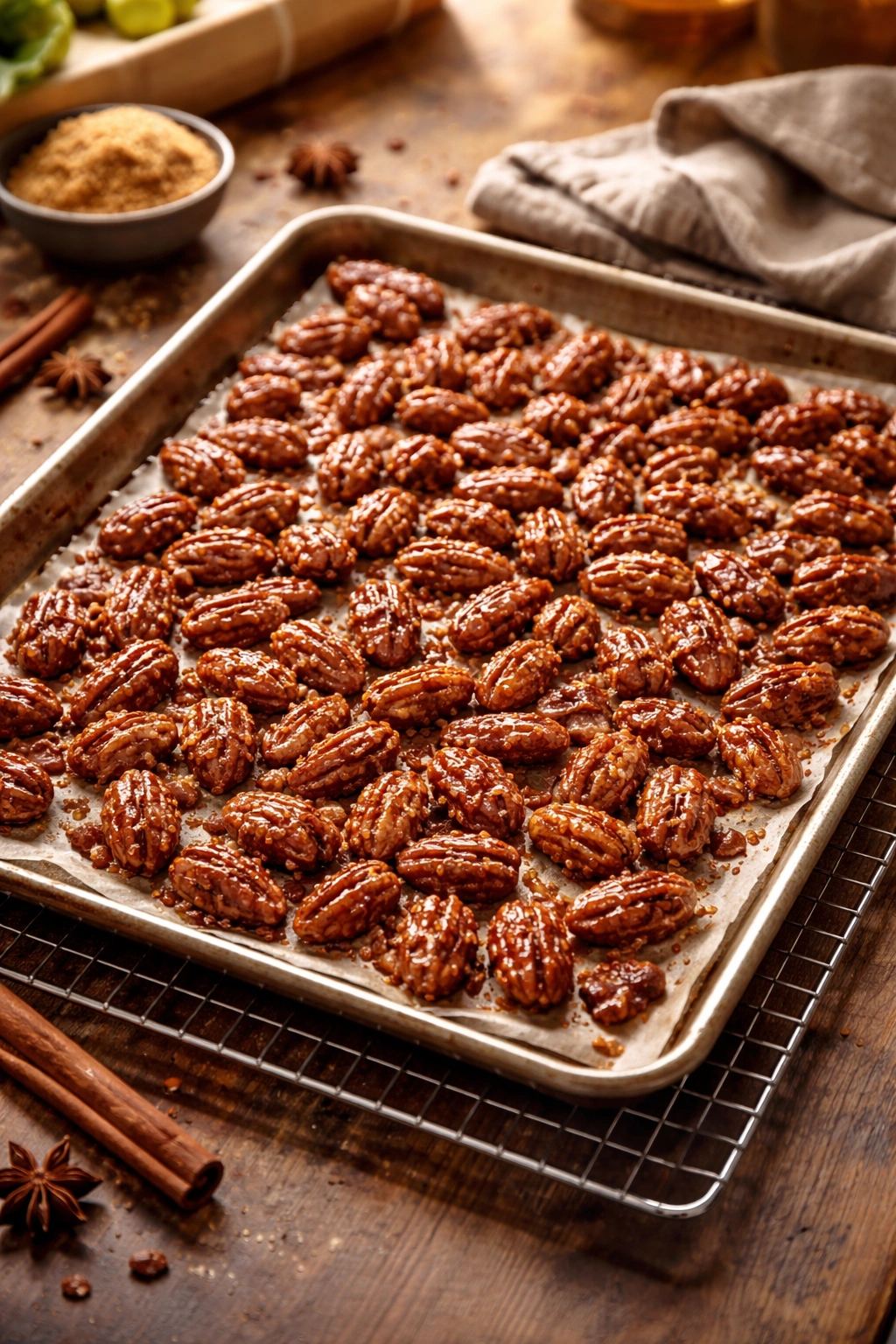
The single most important factor in candied pecan success is not fussing too much once they’re roasting. Set your timer, trust the process, and let the oven temperature do its work. Over-stirring during the coating phase or the cooling phase can introduce moisture and prevent proper crystallization, so stir just enough to ensure even distribution but not so obsessively that you’re constantly poking at the mixture.
Temperature matters more than most people realize—if your oven runs hot or cold, the timing will shift. If your first batch came out too dark, reduce either the oven temperature or the roasting time by a few minutes on your next attempt. If they were under-done and soft, add time. A few batches will teach you your specific oven’s personality.
Start with the basic recipe and salt-cinnamon-nutmeg version before experimenting with the variations. Once you’ve made that version successfully a couple of times, you’ll have intuitive knowledge about when the coating looks right and when the pecans smell done—that intuition is actually the most valuable thing you can take away from this recipe.
Invest in quality pecans even though they cost more, because the pecan flavor is absolutely the star here. A slightly thinner sugar coating that lets beautiful pecan flavor shine through will always trump a heavier, sweeter coating that masks what the pecan actually tastes like. Taste a raw pecan before you commit to a pound—it should taste sweet and buttery, with no bitterness or off-flavors.
Most importantly, accept that homemade candied pecans are almost impossible to mess up badly. Even if the batch doesn’t look perfect coming out of the oven, it will probably taste delicious. The only real failure would be not making them at all when the recipe is this straightforward and the result is this impressive.
