



When the temperature climbs and your kitchen feels like an oven, the last thing you want to do is spend hours cooking. Cold soups offer the perfect escape—they’re refreshing, require minimal or no heat, and often taste better after they’ve spent a day or two in the fridge. Rather than forcing yourself to eat hot food in sweltering weather, you can blend fresh, peak-season produce into something deeply satisfying that actually cools your body and mind.
The beautiful part about chilled soups is their versatility. You can go savory with vegetables, creamy with yogurt or nuts, fruity with stone fruits, or even experiment with unexpected flavor combinations. Many require nothing more than a blender and your kitchen counter—no stove required. They’re also make-ahead champions, which means you can prepare a big batch when you have energy and energy, then enjoy it throughout the week with zero additional effort.
Whether you’re dealing with a garden overflowing with zucchini, a farmer’s market haul of perfect tomatoes, or simply want an elegant appetizer that doesn’t heat up your kitchen, cold soups solve the problem. They hydrate, refresh, and deliver maximum flavor with minimal fuss. Here are ten of the best to rotate into your summer dinner rotation.
1. Classic Spanish Gazpacho With Crusty Bread

Gazpacho stands as perhaps the world’s most iconic cold soup—a Spanish invention that transforms ripe tomatoes, cucumbers, and peppers into something utterly sublime when served ice-cold. This is the soup that proves you don’t need to cook to create incredible depth of flavor. The key to exceptional gazpacho is using the ripest, most flavorful tomatoes you can find, ideally from a farmer’s market at peak season when they’re bursting with natural sweetness and acidity.
Why This Classic Endures
Traditional gazpacho recipes incorporate torn bread—often stale baguette—which does more than add substance. The bread acts as a thickening agent and helps distribute flavors evenly throughout the soup while adding a subtle, satisfying creaminess without any dairy. Some recipes blend the bread completely smooth, while others prefer leaving it slightly chunky for textural contrast. The beauty of gazpacho is that it improves with time; flavors meld and deepen overnight, making it the ideal make-ahead soup.
What You Need to Know
- Ripe tomatoes are non-negotiable; underripe ones will taste thin and acidic rather than sweet and complex
- A quality extra-virgin olive oil makes an enormous difference in the final flavor and richness
- Red wine vinegar or sherry vinegar provides essential tanginess that balances the sweetness
- Serve it ice-cold with chunky garnishes like diced cucumber, bell pepper, red onion, and a drizzle more olive oil
- Gazpacho keeps beautifully for 2-3 days in an airtight container, making it perfect for meal prep
Pro tip: Toast and cube pieces of stale bread separately, then add them just before serving to maintain their crunch—they’ll soften if mixed in too early.
2. Silky Cucumber Yogurt Soup With Fresh Dill
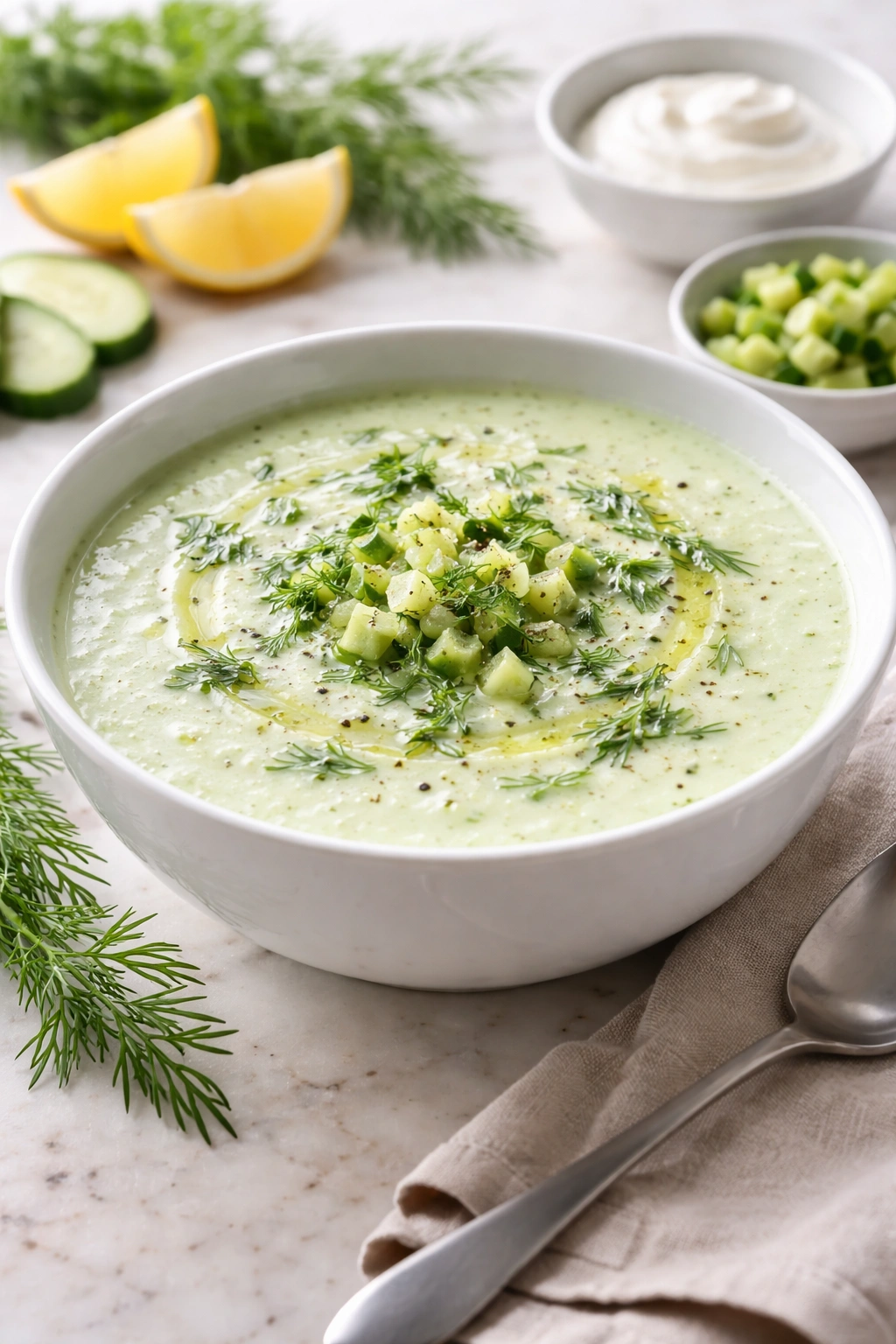
This soup represents everything you crave on a scorching day: cool, creamy, herbaceous, and ready in minutes. Cucumber and yogurt are a time-tested pairing across many cuisines, and when you add fresh dill, mint, or cilantro depending on your preference, you create something impossibly refreshing. Unlike gazpacho, which requires perfectly ripe produce at its peak, this soup works beautifully with regular grocery-store cucumbers and yogurt, making it accessible year-round.
What Makes It Stand Out
Greek yogurt provides tangy richness without requiring cream, while cucumbers offer hydrating freshness and subtle sweetness. The high water content of cucumbers means this soup naturally thins out without needing excessive broth, and the cooling properties of cucumber actually lower your body temperature when consumed. A squeeze of lemon juice or lime, depending on your flavor direction, brightens everything without overwhelming delicate herb flavors. Some versions add a touch of garlic or shallot for savory depth, while others stay purely herbaceous and clean.
How to Build Your Bowl
- Blend peeled and chopped cucumbers with Greek yogurt, fresh herbs, and a splash of vegetable broth until completely smooth
- Season generously with salt, pepper, and acid (lemon juice works beautifully here)
- Chill for at least 30 minutes before serving, or make it ahead and store for up to 3 days
- Top each bowl with more fresh herbs, a drizzle of good olive oil, and crispy croutons or toasted bread for textural contrast
- Optional additions: diced shrimp for protein, crumbled feta cheese, or crispy bacon bits
Worth knowing: If your soup thickens too much overnight, whisk in a splash of milk or broth to reach your desired consistency—the cucumbers continue to release liquid as they sit.
3. Vibrant Green Gazpacho Made With Fresh Herbs
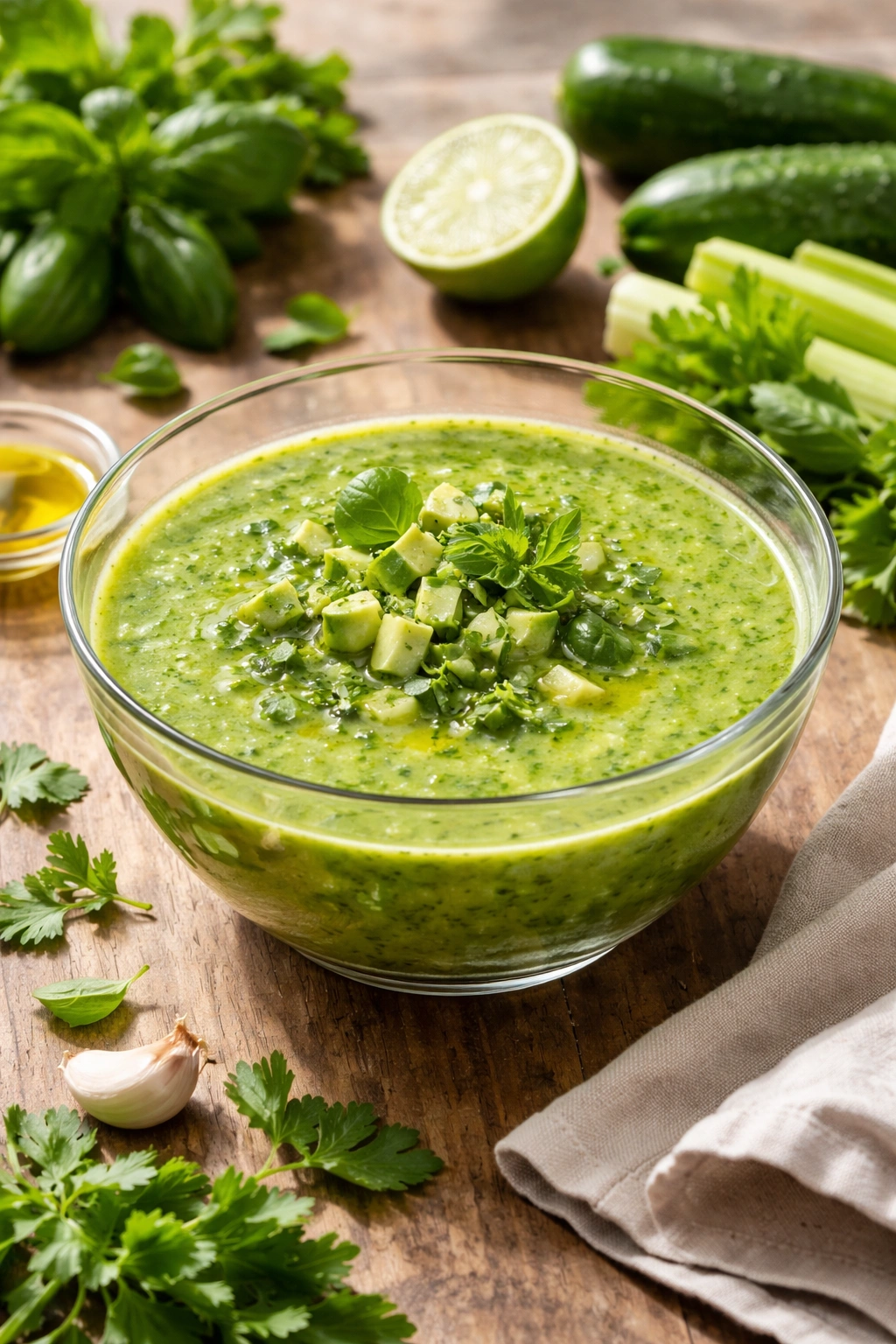
Not all gazpachos are red. This herbaceous version swaps traditional tomatoes for green ingredients—cucumbers, green bell peppers, celery, and loads of fresh parsley, cilantro, or basil depending on what’s available and what direction you want to take it. The result is a stunning jade-colored soup that tastes like pure summer vegetation in the best possible way. It’s lighter and more delicate than red gazpacho, with a grassy, fresh-picked quality that makes it feel less like “soup” and more like a drinkable salad.
The Science Behind It
Green gazpacho works because the high chlorophyll content of fresh herbs and green vegetables creates natural sweetness and complexity without any added sugar. The vegetables release their juices when blended, creating body without requiring bread or other thickeners. Raw almonds or sunflower seeds can be added to traditional blends to provide creaminess and richness, creating a vegan version with real substance. The key is not over-blending—you want to maintain a bright green color, which means stopping before the soup becomes too smooth or turns an unappetizing olive tone.
Building Your Green Gazpacho
- Start with fresh cucumber, green bell pepper, and celery as your vegetable base
- Add handfuls of fresh herbs—parsley, cilantro, basil, or a combination
- Include garlic, sherry vinegar, and good olive oil for flavor depth
- Blend until you reach your desired consistency (some prefer completely smooth, others like a slightly chunky texture)
- If using nuts or seeds, blend them with the liquid first to create a creamy base
- Top with croutons, diced green tomatoes, or a drizzle of herbed oil
Pro tip: Make this soup earlier in the day rather than the night before—fresh herbs lose their bright color and some of their punch if the soup sits too long. It’s best consumed within 24 hours.
4. Creamy Avocado Soup With Lime and Cilantro
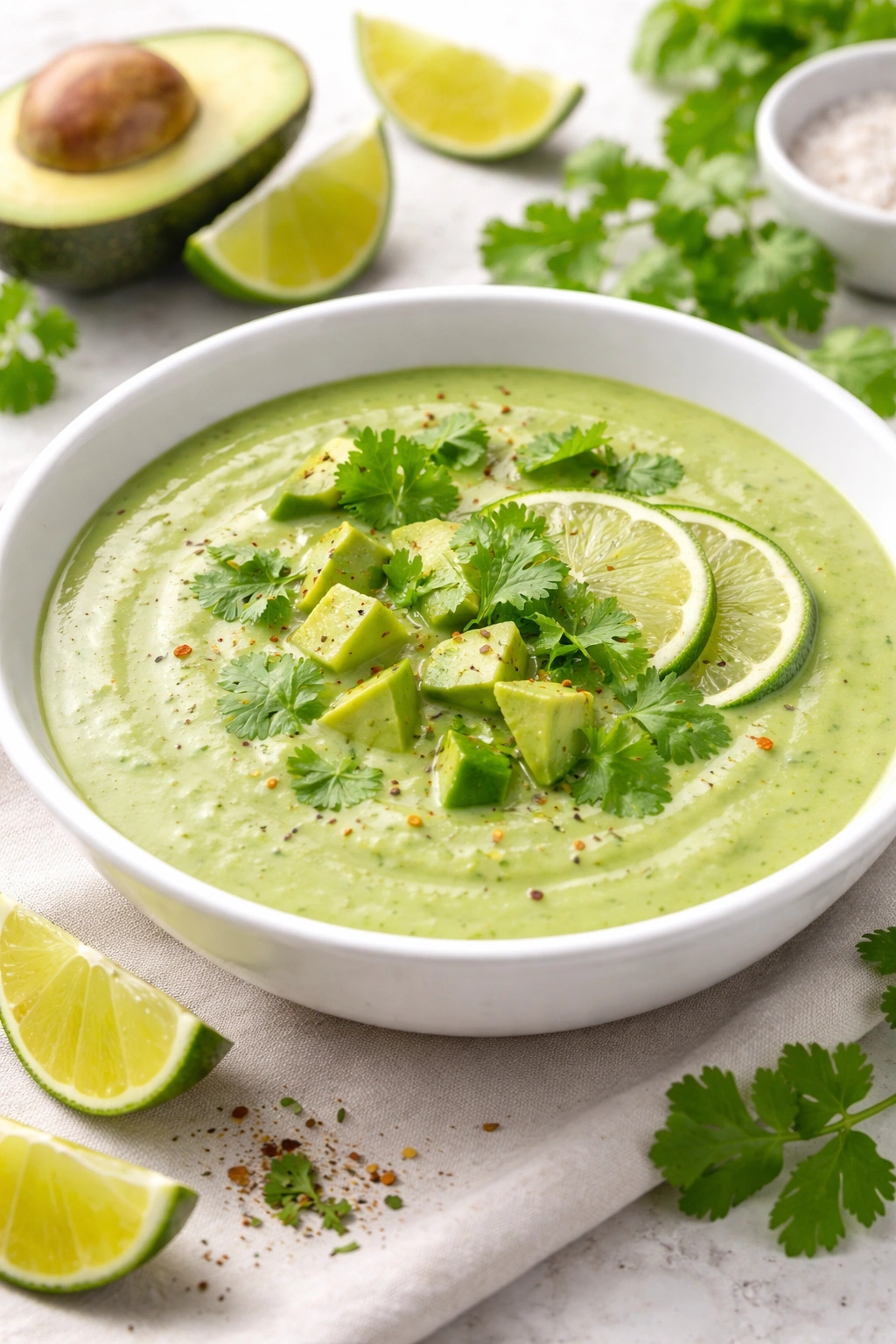
Avocados become something magical when blended into cold soup. This isn’t quite guacamole, but it captures similar flavors in a lighter, more elegant form that works as an appetizer, side dish, or light lunch. The natural creaminess of avocado means you don’t need dairy to achieve a luxurious texture, making it inherently vegan and naturally gluten-free. It’s also one of the fastest soups to prepare—you can have it on the table in 15 minutes.
Why Avocado Works as a Soup Base
Avocado’s fat content creates body and richness that tricks your palate into feeling satisfied and nourished despite the soup’s lightness. Unlike cream-based soups that sit heavy in your stomach, avocado soup is naturally nutritious with healthy fats, fiber, and potassium. The mild, buttery flavor acts as a canvas for other ingredients—lime and cilantro brighten it, while garlic and jalapeño add heat and savory depth. Cucumber adds additional cooling properties and fresh crunch, while shallot or red onion provides subtle sweetness and texture.
Creating Your Perfect Bowl
- Blend ripe avocados with vegetable broth, lime juice, cilantro, and garlic until silky smooth
- Add diced cucumber, crispy croutons, or shrimp for texture and substance
- Season assertively with salt, pepper, and additional lime juice to taste
- Serve immediately (avocado oxidizes and browns, so this is best consumed fresh)
- Optional toppings: crumbled queso fresco, crispy tortilla strips, diced jalapeño, or a dollop of crème fraîche
Worth knowing: Prepare all your ingredients ahead, but blend only immediately before serving. The soup will begin to discolor and oxidize if made more than an hour in advance.
5. Chilled Beet Soup With Sour Cream and Fresh Herbs
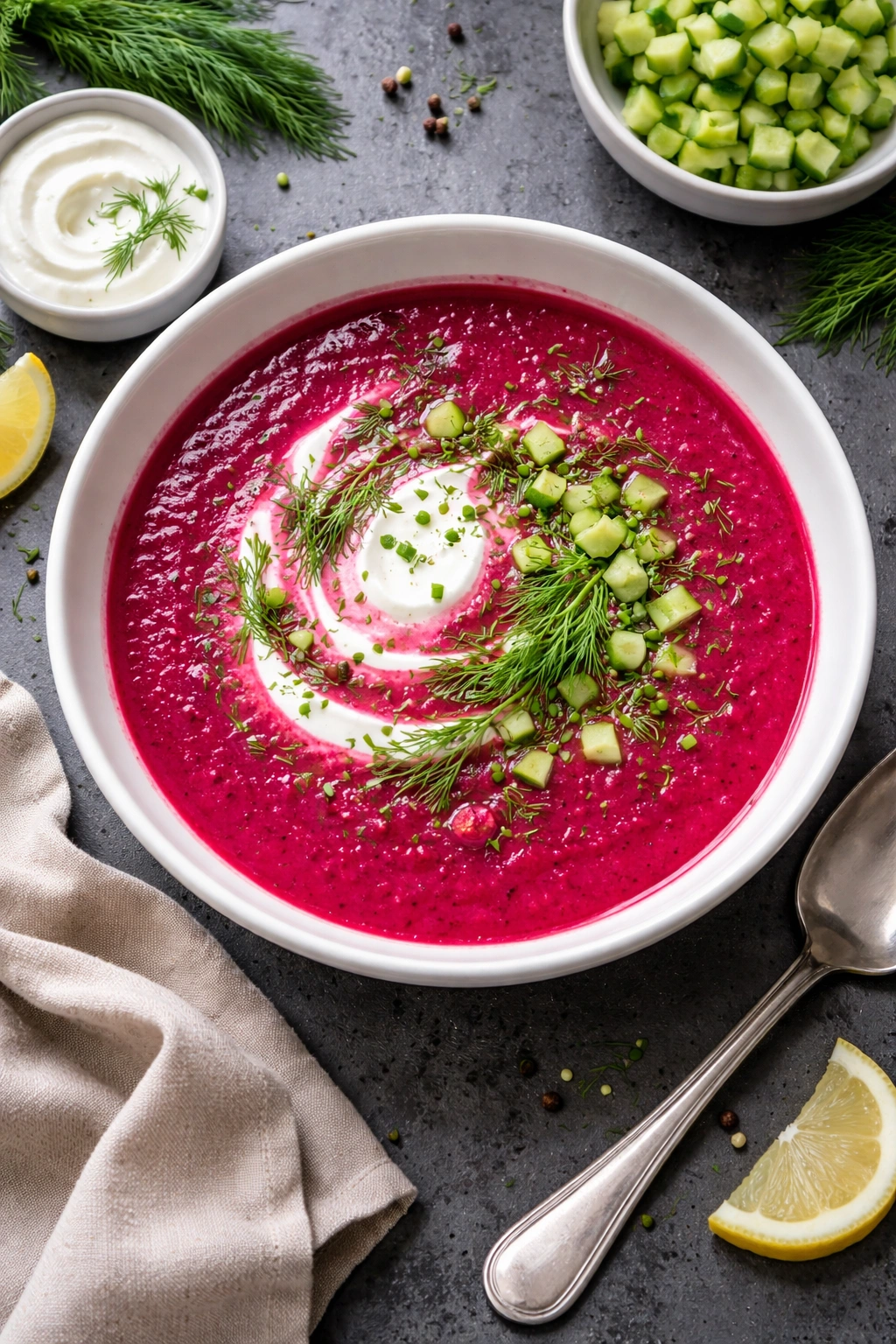
Beets create one of the most visually stunning cold soups imaginable—a deep fuchsia or burgundy color that looks like something from a fairy tale. Beet soup carries an earthy, slightly sweet flavor that becomes more elegant when served cold. Traditional versions hail from Eastern Europe, where sour cream and fresh dill are classic accompaniments. This soup requires minimal cooking (often just 30 minutes of simmering), making it perfect for early morning or late evening cooking when temperatures are cooler.
The Earthy Beauty of Beets
Beets contain natural sugars that intensify when cooked, creating a soup that’s satisfying without any added sweetness. The earthiness of beets pairs beautifully with acidic elements like vinegar, lemon juice, or balsamic, which brighten the soup and prevent it from tasting one-dimensional. Fresh dill is the classic herb pairing, but mint, cilantro, or parsley work equally well depending on the flavor profile you prefer. Sour cream or Greek yogurt provides tangy richness and visual drama when swirled into each bowl just before serving.
Making Your Beet Soup
- Peel and grate fresh beets, then cook them with their greens (if available) in vegetable broth for about 30 minutes
- Add lemon juice or vinegar to brighten the flavor and enhance the deep color
- Cool completely, then chill for at least 2 hours before serving
- Serve with a generous dollop of sour cream, chopped fresh dill, diced cucumber, and crispy croutons
- Optional additions: grated horseradish for heat, crispy bacon bits for smokiness, or hard-boiled egg for protein
Pro tip: Don’t skip the acid—a tablespoon of good vinegar or lemon juice transforms beet soup from one-note to complex and balanced. Taste and adjust just before serving.
6. Chilled Corn Bisque With Charred Corn and Lime

Sweet corn at peak season becomes something almost dessert-like when blended into cold soup. This version celebrates corn’s natural sugars while balancing them with lime juice and aromatics for a sophisticated, unexpected dish. Charring the corn before blending adds depth and slight bitterness that prevents the soup from tasting cloying. You can make this soup with fresh corn kernels cut straight from the cob, or use high-quality frozen corn when fresh isn’t available—frozen actually works remarkably well because it’s picked and frozen at peak ripeness.
Building Corn’s Deep Flavor
The secret to exceptional corn soup is using the corncobs themselves to make a quick stock. Simmering cobs in water extracts subtle corn flavor that you can’t replicate any other way. The combination of fresh corn sweetness with the depth of corn cob stock creates a soup that tastes intensely corny without being one-dimensional. Charring a portion of the kernels in a dry skillet (or under the broiler) adds caramelized notes and slight smokiness. Coconut milk, cream, or even cashew cream provides richness without making the soup heavy.
Your Corn Soup Strategy
- If using fresh corn, cut kernels from the cob and simmer the cobs in vegetable broth for 20 minutes to make quick stock
- Char half the corn kernels in a dry skillet until lightly blackened, then set aside
- Sauté remaining corn with onion and aromatics, add stock and corn cob broth, then simmer until tender
- Blend until silky smooth, then stir in cream and lime juice
- Serve with charred corn kernels, crispy jalapeño strips, cilantro, and a lime wedge
- Optional: top with crispy prosciutto, crumbled queso fresco, or avocado slices
Pro tip: Make corn stock whenever you have fresh corn on hand—freeze it in ice cube trays to have on hand for quick cold soup whenever the heat strikes.
7. Watermelon Gazpacho With Feta and Mint
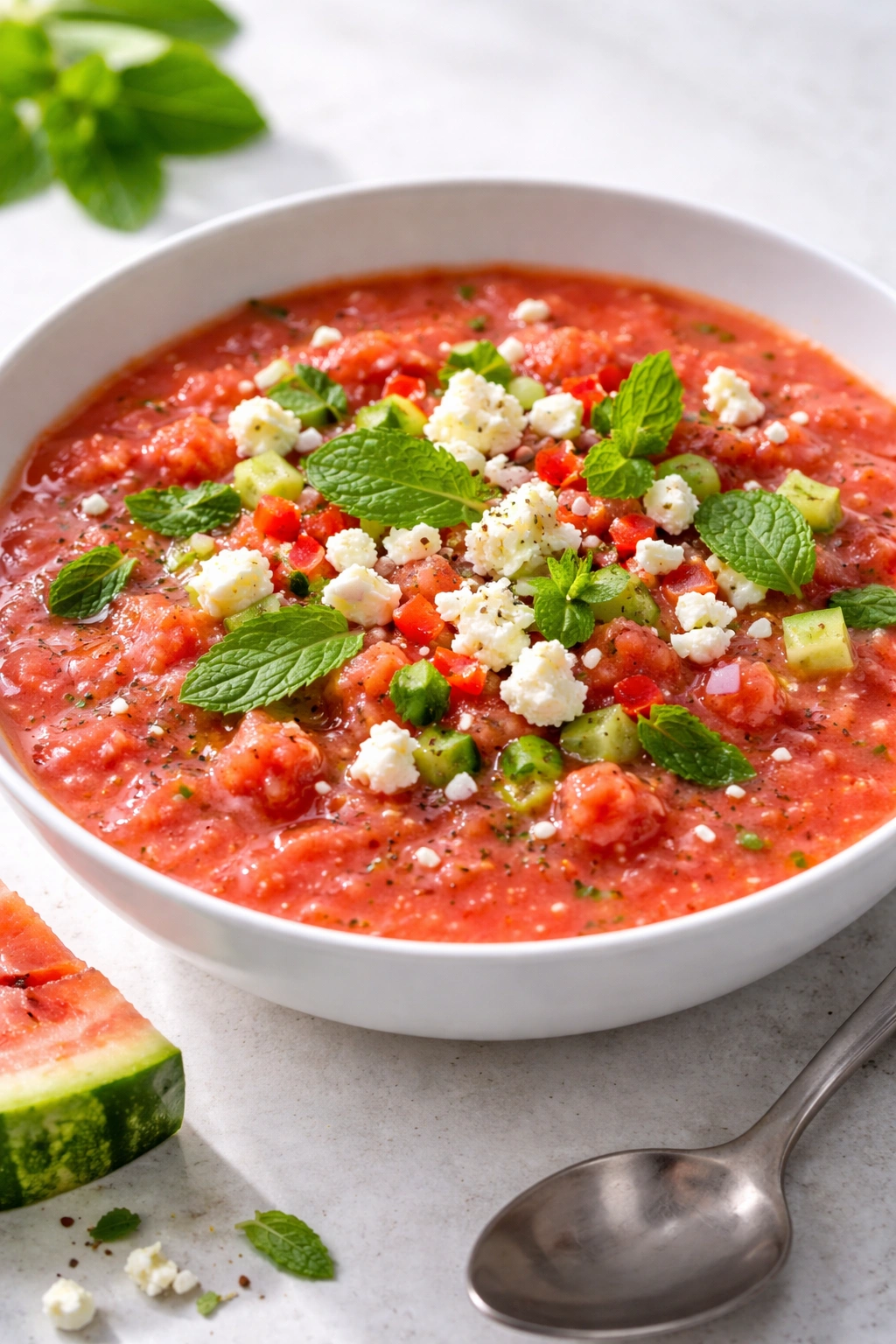
Watermelon and gazpacho might seem like an unlikely pairing, but the combination is surprisingly sophisticated and absolutely refreshing on the hottest days. The melon’s natural sweetness plays beautifully against the acidity of vinegar and the savory notes of garlic and tomato. Unlike fruit soups that veer toward dessert territory, watermelon gazpacho remains resolutely savory with its balance of salt, acid, and herb. It’s perfect for summer entertaining because it looks stunning in a bowl and tastes like something complex despite being effortlessly simple.
Why This Unlikely Combination Works
Watermelon’s high water content (about 92%) makes it incredibly hydrating while its natural sugars balance the sharp notes of vinegar and garlic. When you combine it with ripe tomatoes, you get both sweetness and savory umami. The cooling effect of melon actually makes your body feel cooler when consumed, which is why cultures in hot climates have long paired watermelon with savory flavors. Fresh mint echoes the cooling sensation, while feta provides salty richness and textural contrast. A good quality red wine vinegar or sherry vinegar is essential—it must be balanced enough not to overpower the delicate melon flavor.
Assembling Your Watermelon Soup
- Blend watermelon chunks with ripe tomatoes, cucumber, red onion, and garlic
- Add vinegar, olive oil, and salt to taste—the acid is crucial for balancing sweetness
- Chill for at least 2 hours before serving
- Top each bowl with crumbled feta cheese, fresh mint leaves, crispy croutons, and a crack of black pepper
- Optional: add diced jalapeño for heat, crispy prosciutto for saltiness, or grilled shrimp for protein
Worth knowing: Choose a watermelon that feels heavy for its size and sounds hollow when tapped—these indicators suggest it’s ripe and full of juice, which translates to better-flavored soup.
8. Smooth Cucumber and Melon Soup With Aromatic Spices
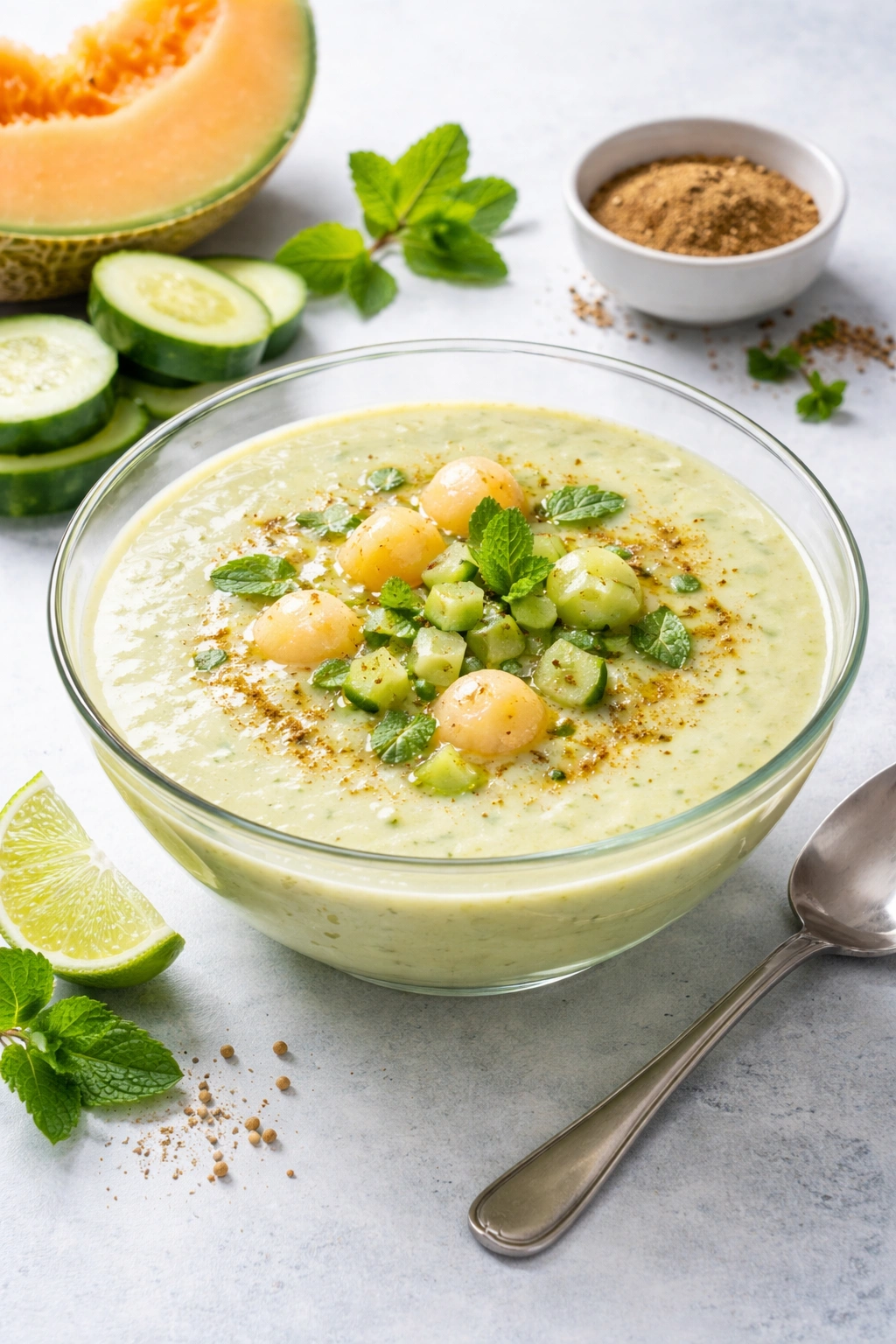
This soup bridges the gap between gazpacho and melon soup—it’s light, delicate, and surprisingly complex despite containing relatively few ingredients. Cucumber provides freshness and hydration, while melon (cantaloupe, honeydew, or even casaba) adds sweetness and creaminess. A touch of warming spice like coriander or cardamom adds an unexpected aromatic note that makes people pause and wonder what’s in the bowl. It’s the kind of soup that seems simple but tastes like you spent hours developing it.
The Aromatics Make the Difference
Ground coriander, a whisper of cumin, or a hint of cardamom transform this from a simple blend of cold produce into something with personality and depth. These warm spices don’t actually make the soup hot—instead, they add complexity and elegance that elevates what could be a boring combination into something memorable. A touch of white wine vinegar or fresh lime juice provides the acid that’s crucial for balancing sweetness. Some versions incorporate yogurt or a touch of cream for richness, while others stay completely vegan with just the natural creaminess of the melon.
Building Your Aromatic Melon Soup
- Blend chunks of cucumber, ripe melon, and vegetable broth until completely smooth
- Toast spices briefly (coriander seeds, cumin seeds, or cardamom pods) then grind or add as ground spices
- Add spices to the soup along with vinegar or lime juice and salt to taste
- Chill thoroughly before serving
- Top with crispy croutons, fresh mint, and a drizzle of good olive oil
- Optional: serve in small bowls as an elegant appetizer, or add crispy prosciutto and shrimp for a more substantial meal
Pro tip: Toast and grind whole spices fresh rather than using pre-ground—the flavor difference is remarkable and worth the minimal extra effort.
9. Thai-Inspired Coconut Carrot Soup With Lemongrass and Ginger

This soup brings warming Thai flavors into a cooling summer format—coconut milk creates richness, while lemongrass, ginger, and curry paste add aromatic complexity. Unlike traditional Thai soup which is served hot, this chilled version becomes something entirely new: refreshing yet deeply flavorful, with all the satisfaction of curry in a light, elegant package. It’s naturally vegan, requires only 40 minutes of cooking time, and gets better with a day in the refrigerator as flavors develop and meld.
Thai Ingredients Create Magic
Lemongrass provides a bright, citrusy note that prevents coconut from becoming heavy or cloying. Fresh ginger adds heat and digestive benefits, while curry paste (red, green, or yellow depending on your heat preference) creates depth and umami. The combination of these ingredients with naturally sweet carrots creates a soup that tastes indulgent without any cream—just coconut milk doing all the heavy lifting. The soup works hot or cold depending on the season, giving you year-round utility.
Creating Your Thai Carrot Soup
- Sauté minced lemongrass and ginger in a bit of oil until fragrant
- Add diced carrots, onion, and curry paste, cooking until vegetables begin to soften
- Add vegetable broth and coconut milk, then simmer until carrots are completely tender
- Blend until smooth or leave slightly chunky depending on preference
- Season with lime juice, fish sauce (if not vegetarian), and salt to taste
- Chill thoroughly, then serve with fresh cilantro, lime wedge, and crispy shallots
- Optional: add coconut cream for extra richness, crispy chili oil for heat, or grilled chicken for substance
Worth knowing: Make a double batch and freeze half for later—this soup freezes beautifully for up to three months, giving you a head start on cooking on future hot days.
10. Elegant Chilled Pea Soup With Crème Fraîche and Fresh Mint
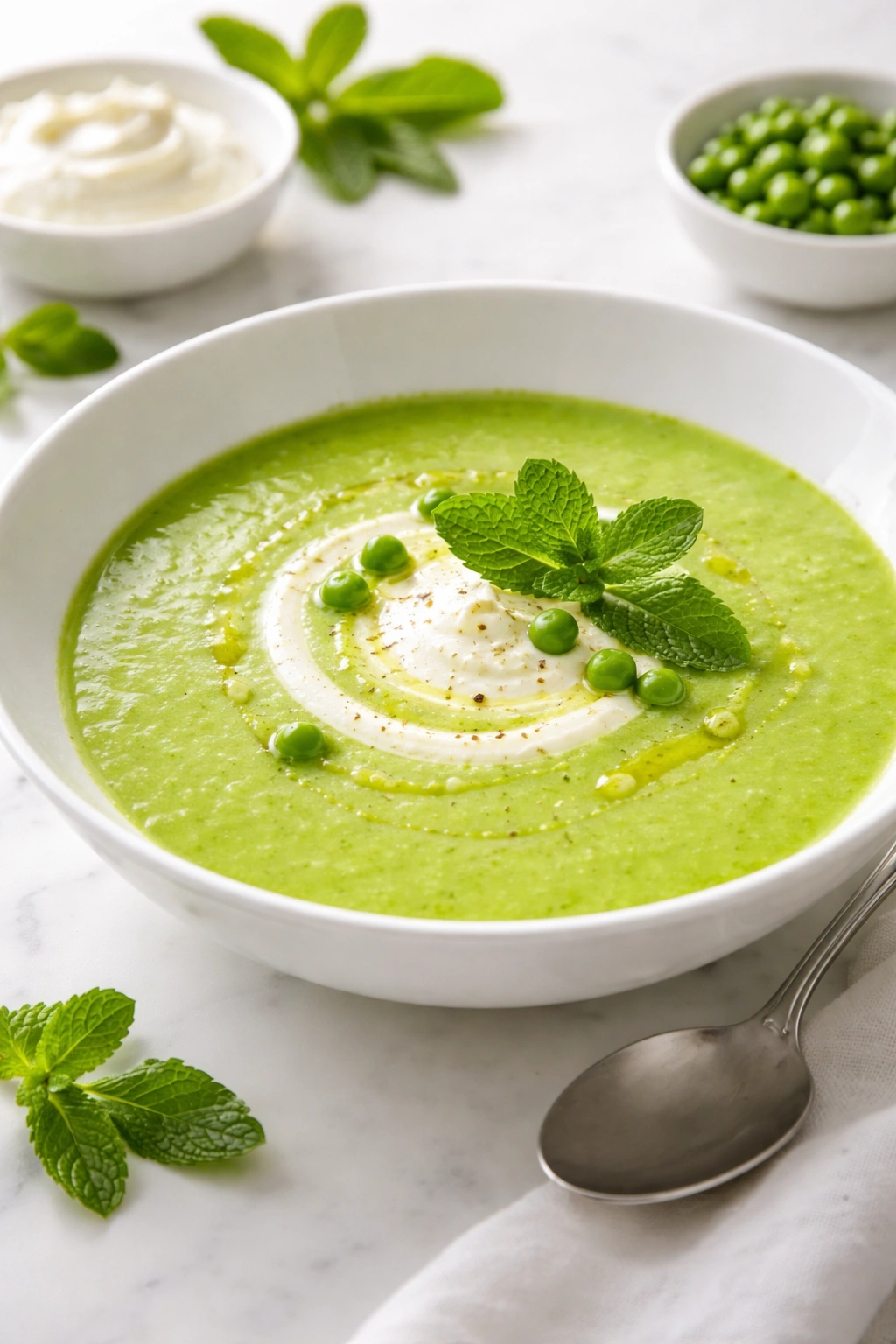
This soup is springtime in a bowl—bright green, delicate, and bursting with fresh herb flavor. It celebrates the particular sweetness and tender texture of fresh or frozen peas at their peak. Unlike thick, starchy split pea soup, this version is light and elegant, making it perfect as an appetizer before a summer dinner. The high chlorophyll content of peas and mint creates a naturally beautiful color that requires no food coloring or artistic manipulation—just vibrant green goodness.
Why Fresh and Frozen Both Work
Fresh peas from farmers’ markets are incredible, but frozen peas are actually picked and frozen at peak ripeness, making them nutritionally superior and often more flavorful than fresh peas that have spent days in transit. Either works beautifully. The brief cooking time (just a few minutes) preserves the bright color and delicate flavor that makes this soup sing. Greek yogurt or crème fraîche adds richness and tang without requiring heavy cream, while fresh mint provides aromatic brightness that prevents the soup from tasting flat or starchy.
Preparing Your Pea Soup
- Lightly cook fresh or frozen peas in vegetable broth for just a few minutes until tender but still bright green
- Blend with Greek yogurt or crème fraîche, fresh mint leaves, and a squeeze of lemon juice until silky smooth
- Season with salt and white pepper (black pepper would mar the bright color)
- Chill for at least 2 hours before serving
- Top each bowl with a dollop of crème fraîche, fresh mint leaf, crispy croutons, and a drizzle of herbed oil
- Optional: add crispy prosciutto, shrimp, or grilled chicken for a more substantial meal
Pro tip: Don’t overcook the peas—they go from tender to mealy quickly, and you want to preserve that bright color and delicate flavor that makes this soup special.
Final Thoughts

Cold soups transform how you eat during hot weather, removing the barrier of a hot kitchen while delivering maximum flavor and nutrition. Each of these ten options offers something different—from purely vegetable-based gazpachos to creamy avocado or coconut soups, from elegant appetizer portions to substantial meal-in-a-bowl options. The real magic of cold soup is that it often tastes better the next day as flavors have time to meld and deepen, making it the ultimate make-ahead meal for busy seasons when you need solutions, not complicated recipes.
Stock your blender with whatever fresh produce looks best at the farmers’ market or grocery store, follow the basic formula of vegetables + acid + fat + seasoning, and you’ll have endless variations to keep you cool and satisfied all season long. Start with whichever appeals to you most, then work through the list as your preferences shift and different produce comes into season. By summer’s end, you’ll wonder how you ever survived hot weather without cold soup.
