



There’s nothing quite like the moment a steaming bowl of potato soup hits the table on a cold night. The way it warms your hands through the bowl, the creamy comfort with every spoonful, the way it fills your kitchen with that rich, buttery aroma—it’s the kind of meal that makes everything feel right again. This isn’t fancy restaurant cooking; it’s the honest, soul-warming kind of food that brings people back to the table and asks for seconds before they’ve even finished their first bite.
The beauty of homemade potato soup is that it doesn’t require fancy techniques or hard-to-find ingredients. What it does require is time in your kitchen and the willingness to build flavor intentionally, layering warmth and richness in ways that make the final bowl taste like it took hours to prepare, even though you’ll have it ready in less than an hour. I’ve spent years perfecting this recipe, testing everything from potato variety to the exact moment to add the cream, and I’m sharing every trick I’ve learned—the ones that make the difference between good potato soup and the kind you genuinely crave on cold nights.
This soup comes together in one pot, tastes deeply satisfying without being complicated, and welcomes endless customization depending on what you have in your kitchen and what your family loves. Whether you’re cooking for a quiet weeknight dinner or feeding a gathering of friends, this potato soup proves that the best comfort foods don’t require complexity—they require intention.
Why Homemade Potato Soup Is Worth Your Time

Store-bought versions promise convenience, but they never quite deliver that perfect balance of creamy texture, rich flavor, and homemade comfort that makes this dish worth making from scratch. When you build potato soup in your own kitchen, you control every element—how thick it gets, whether the potatoes stay chunky or become silky smooth, how much cheese goes in, whether you add bacon for depth or keep it vegetarian and let the potatoes shine.
There’s also something deeply satisfying about transforming humble potatoes, onions, and cream into a meal that tastes indulgent. This soup tastes like you spent all day on it, yet it comes together in about 35 to 45 minutes of actual cooking time. That’s the magic of understanding how flavors build, how to create body without overcomplexity, and when to add ingredients so they contribute their best qualities to the final pot.
Cold nights demand food that warms you from the inside out. Potato soup delivers that in a way that few other dishes can—it’s hearty enough to satisfy, creamy enough to feel luxurious, and emotionally comforting in a way that speaks to something deeper than just hunger.
Why Homemade Potato Soup Is Worth Your Time
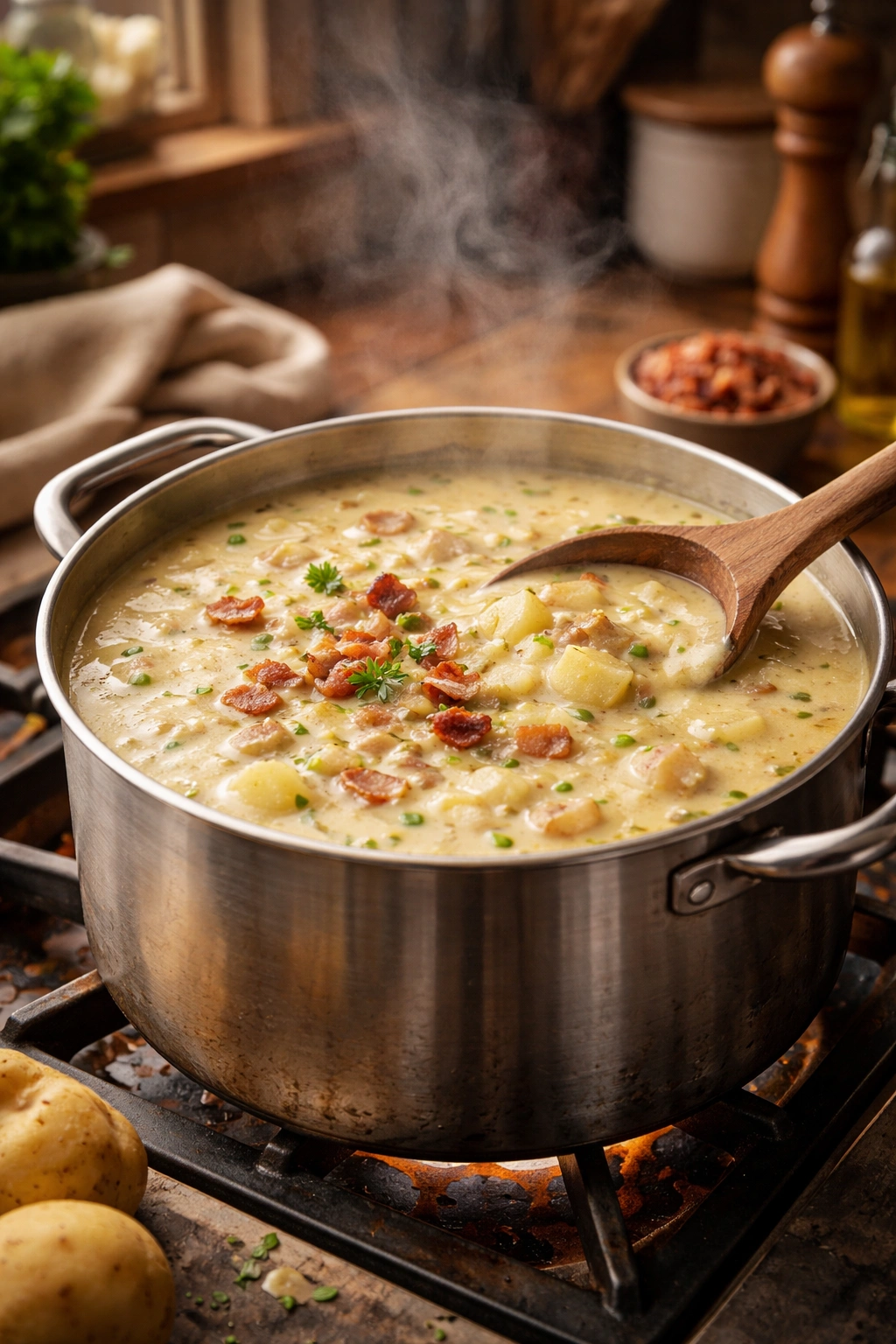
Store-bought versions promise convenience, but they never quite deliver that perfect balance of creamy texture, rich flavor, and homemade comfort that makes this dish worth making from scratch. When you build potato soup in your own kitchen, you control every element—how thick it gets, whether the potatoes stay chunky or become silky smooth, how much cheese goes in, whether you add bacon for depth or keep it vegetarian and let the potatoes shine.
There’s also something deeply satisfying about transforming humble potatoes, onions, and cream into a meal that tastes indulgent. This soup tastes like you spent all day on it, yet it comes together in about 35 to 45 minutes of actual cooking time. That’s the magic of understanding how flavors build, how to create body without overcomplexity, and when to add ingredients so they contribute their best qualities to the final pot.
Cold nights demand food that warms you from the inside out. Potato soup delivers that in a way that few other dishes can—it’s hearty enough to satisfy, creamy enough to feel luxurious, and emotionally comforting in a way that speaks to something deeper than just hunger.
Choosing the Right Potatoes for Creamy Soup
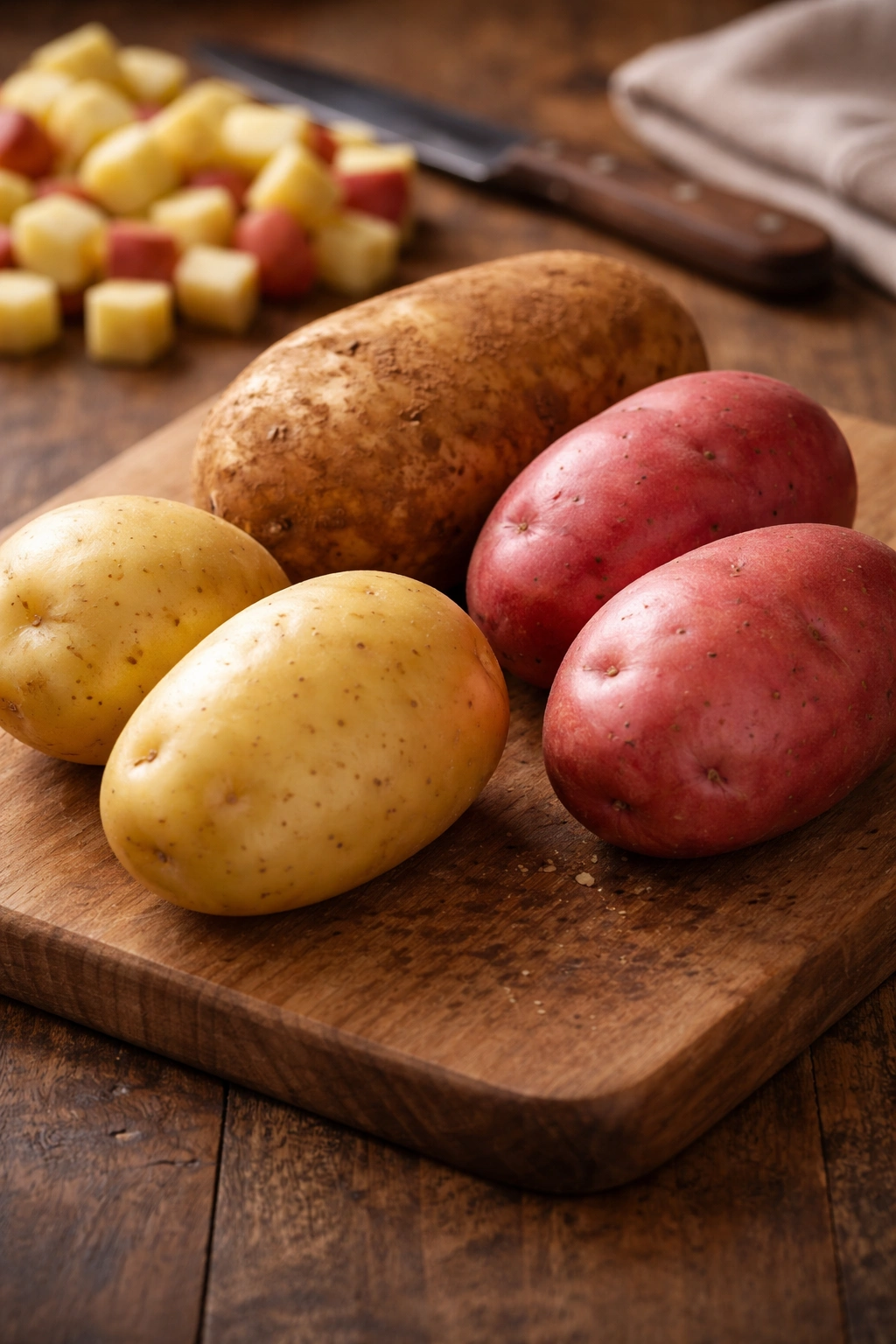
Not all potatoes perform the same way in soup, and this single decision influences whether your final bowl is thick and velvety or thin and watery. Yukon Gold potatoes are my top choice because they have a naturally buttery, creamy texture that breaks down slightly during cooking without becoming completely mushy. They also hold their shape better than russet potatoes, so you get tender bites of potato throughout the soup rather than a purely smooth puree.
Russet potatoes are the starchy option—they fall apart more readily during cooking, giving you a naturally thicker, fluffier soup with less effort. If you want maximum creaminess with minimal blending, russets get you there faster. The trade-off is that you’ll have fewer visible potato pieces in the final soup unless you’re careful with timing.
Red potatoes with their skins left on add color and a slightly firmer texture, but they’re less creamy than either Yukon Gold or russets. You can use them, but you’ll need to rely more on dairy and roux to build creaminess rather than letting the potatoes do part of that work naturally.
The key is cutting your potatoes into uniform pieces—roughly ½-inch to ¾-inch cubes. Uniform size means even cooking, so you don’t end up with some pieces that are fork-tender while others are still firm. Smaller pieces cook faster, which is an advantage if you’re rushed, but they also release more starch into the broth and can make the soup thicker than you might want if you’re not paying attention.
Building Flavor: The Foundation of Great Potato Soup
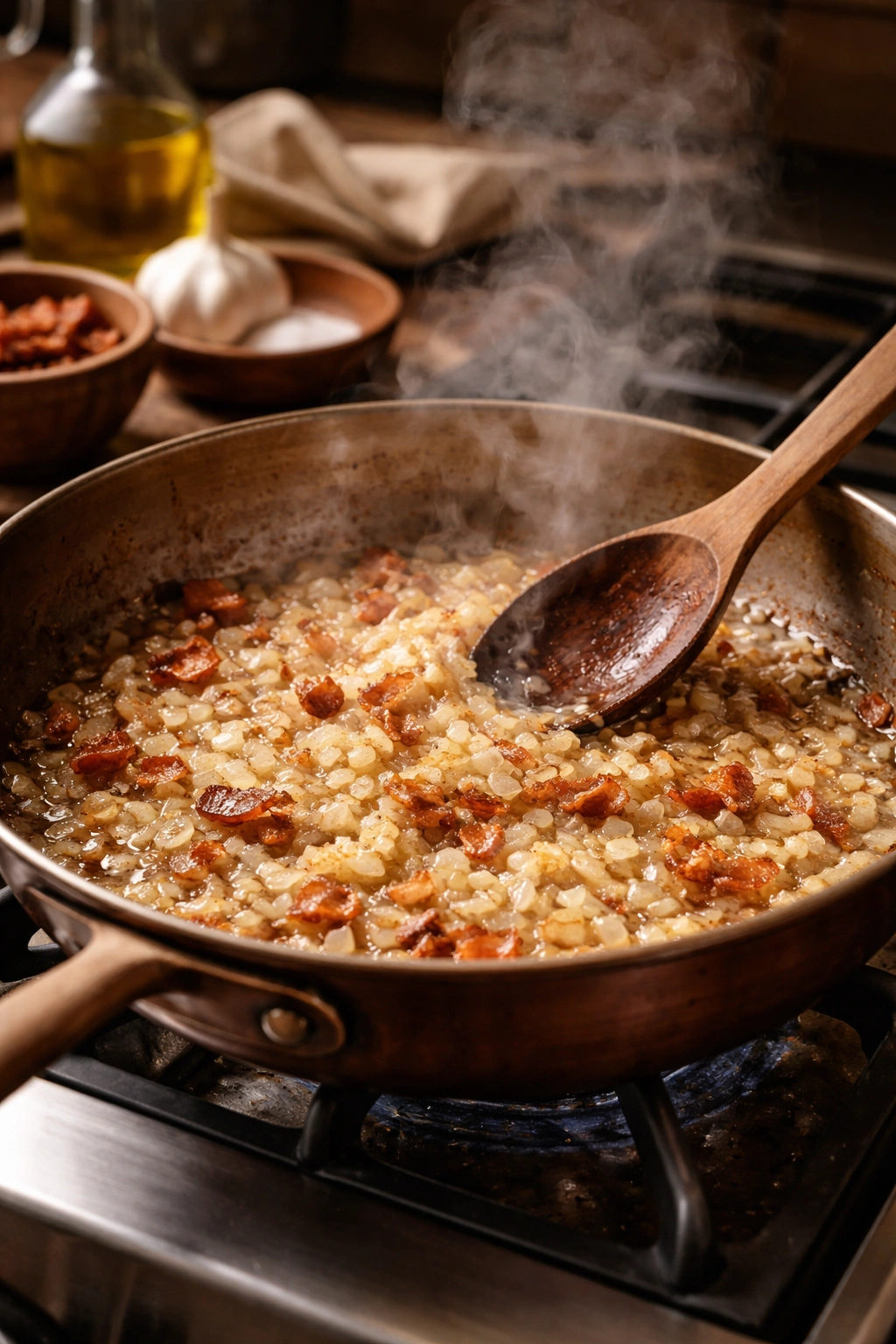
The difference between forgettable potato soup and the kind you make over and over comes down to how early and intentionally you build flavor. This isn’t a recipe where you throw everything into a pot and hope for the best. Instead, you’re layering flavors from the first moment heat hits the pan, building depth that makes the final bowl taste complex and satisfying.
Start by rendering bacon if you’re using it—don’t skip this step even if you think you’re in a rush. The bacon fat is pure flavor, and it becomes the foundation for everything that follows. If you’re keeping things vegetarian, butter serves the same function: it’s where your aromatics swim, where spices bloom, and where the flavor foundation develops.
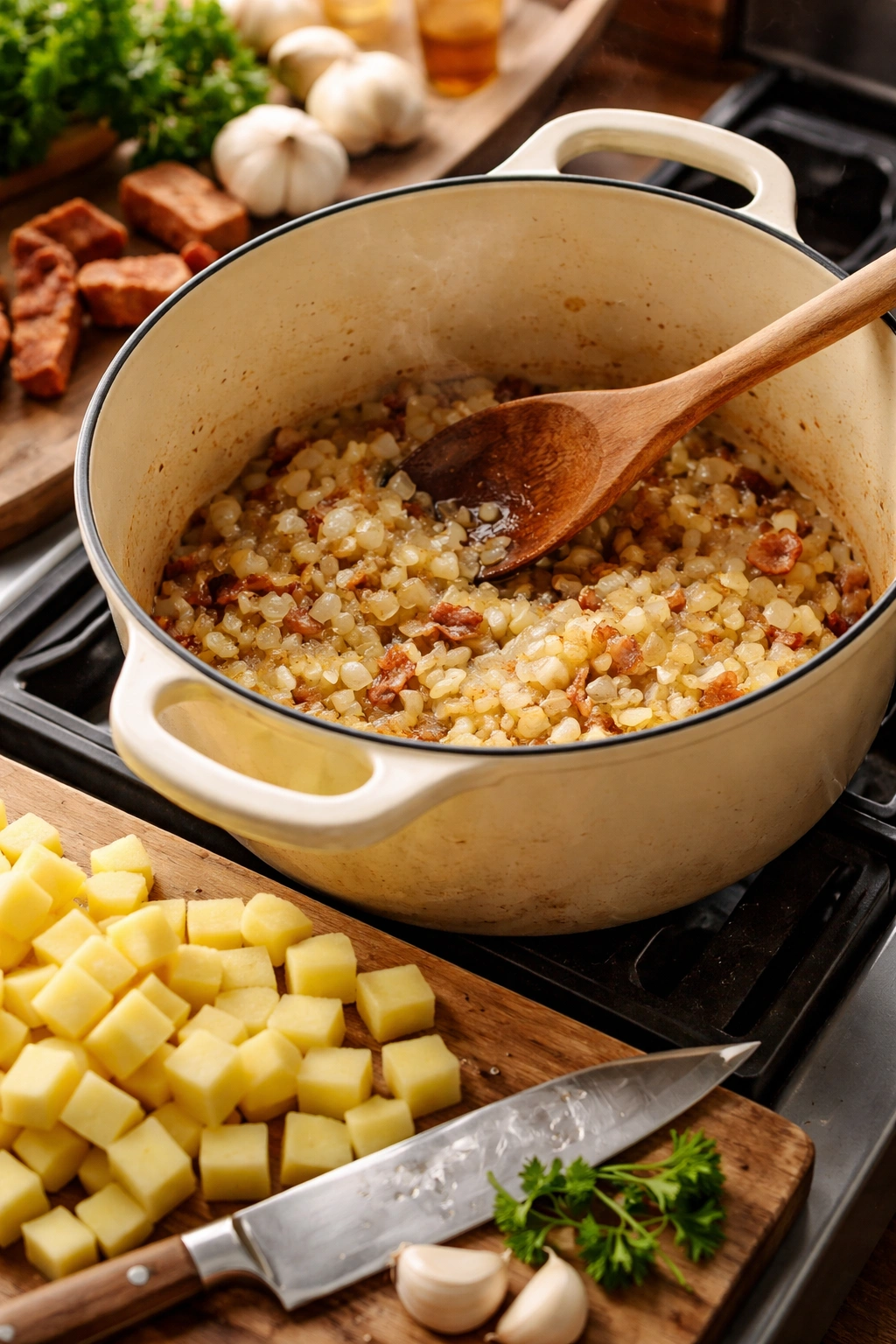
Once your fat is ready, the onions go in next. Let them cook for a full 5 minutes, stirring occasionally, until they’re soft and just beginning to turn translucent at the edges. This isn’t rushed—you’re coaxing sweetness out of the onions, building a savory backbone that other flavors will build upon. Add your garlic after the onions have softened (not before, or it’ll burn), cook it just until fragrant, about 30 seconds to a minute.
This is where many recipes skip an important step: they move straight to the potatoes. Instead, add your flour now and cook it in the fat for 1 to 2 minutes, stirring constantly. You’re cooking off the raw flour taste and creating what’s called a roux—a thickening agent that’ll help your soup achieve that creamy body without needing excessive amounts of dairy. When you pour in the broth while stirring, you’re creating a smooth thickening base rather than lumpy pockets of raw flour floating through the soup.
Essential Ingredients for a One-Pot Masterpiece
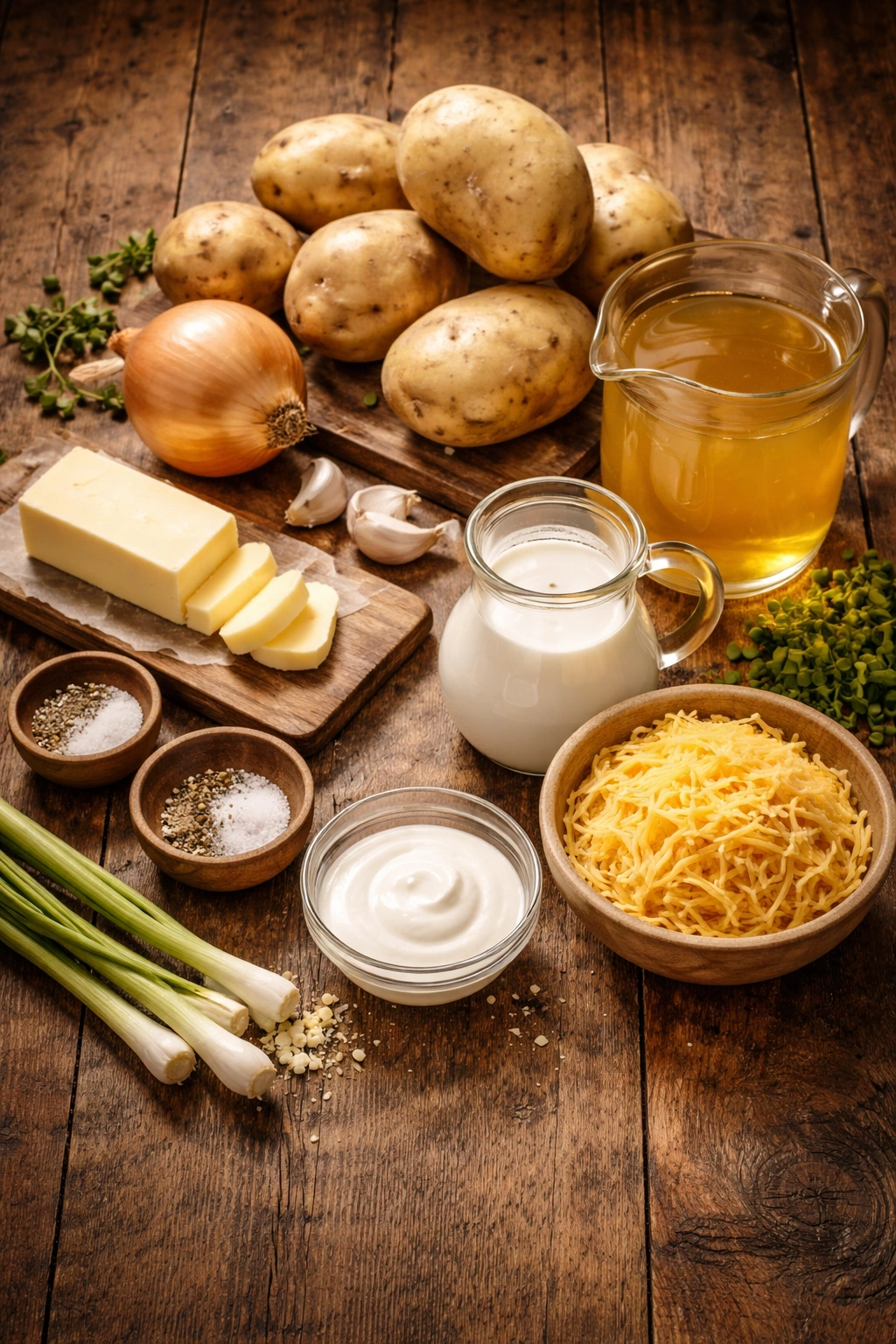
Yield: Serves 6 to 8 | Makes about 10 cups
Prep Time: 15 minutes
Cook Time: 30 to 35 minutes
Total Time: 45 to 50 minutes
Difficulty: Beginner — This recipe requires only basic knife skills and stovetop cooking. There’s no special equipment needed, and the steps are straightforward even if you’ve never made potato soup before.
Best Served: Immediately while hot, topped generously with your choice of garnishes. Leftovers reheat beautifully.
For the Soup Base:
- 3 tablespoons unsalted butter (or reserved bacon grease if using bacon)
- 1 medium yellow onion, diced (about 1 cup)
- 3 cloves garlic, minced
- 2 pounds Yukon Gold potatoes (or russet potatoes), peeled and cut into ½-inch to ¾-inch cubes
- 4 cups low-sodium chicken or vegetable broth
- 1 teaspoon kosher salt (adjust to taste at the end)
- ½ teaspoon freshly ground black pepper
- ¼ cup all-purpose flour
For Creaminess and Richness:
- 1 cup whole milk, warmed
- 1 cup heavy cream (or substitute half-and-half for a lighter version)
- ½ cup sour cream or plain Greek yogurt, stirred until smooth
- ½ cup shredded sharp cheddar cheese (or more if you love cheese; use freshly grated, not pre-shredded)
For Extra Flavor (Optional but Recommended):
- 6 slices bacon, chopped (cook first, reserve ¼ cup bacon grease, set cooked bacon aside)
- 1 teaspoon smoked paprika
- 1 teaspoon fresh thyme leaves (or ½ teaspoon dried thyme)
- ¼ teaspoon ground nutmeg (just a pinch—this adds warmth without being noticeable)
For Serving:
- Sliced fresh green onions or chives
- Extra shredded cheddar cheese
- Crumbled bacon (if using)
- Additional sour cream or Greek yogurt
- Freshly ground black pepper
- Optional: crusty bread for dipping
How to Make Potato Soup: Complete Step-by-Step Instructions
Prepare Your Ingredients:
-
If using bacon, chop it into small pieces and place in a large stockpot or Dutch oven. Cook over medium-high heat, stirring occasionally, until the bacon is crispy and the fat has rendered, about 7 to 8 minutes. Use a slotted spoon to transfer the cooked bacon to a paper towel-lined plate, leaving about 3 tablespoons of bacon grease in the pot. If you’re not using bacon, skip this step and instead melt the butter directly in the pot.
-
While the bacon cooks (or while your butter comes to temperature), dice your onion, mince your garlic, and cut your potatoes into uniform ½-inch to ¾-inch cubes. Uniform size is important because it ensures even cooking. Place the potatoes in a bowl of cold water to prevent them from oxidizing—you can do this while you finish prepping other ingredients, then drain them just before adding to the pot.
Advertisements
Build the Flavor Base:
-
Add the butter to the pot if you’re not using bacon, or proceed with the bacon grease already in the pot. Once melted and warm, add the diced onion. Cook for 5 minutes, stirring occasionally, until the onion becomes soft and translucent at the edges. You’ll notice it releasing water at first, then becoming sweet and soft. Don’t rush this step—this is where foundational flavor develops.
-
Stir in the minced garlic and cook for about 30 seconds to 1 minute, stirring frequently, until the kitchen smells fragrant and you can smell that raw garlic edge disappearing. Do not let the garlic brown, or it’ll become bitter.
-
Sprinkle the flour over the softened onions and garlic, stirring constantly to coat everything evenly. Cook for 1 to 2 minutes, stirring, until the raw flour taste cooks out and the mixture looks like wet sand. This is your roux—it’s what’ll thicken the soup and give it body.
Create the Broth Base:
-
While stirring constantly, slowly pour in the chicken or vegetable broth. Keep stirring as you pour so the flour dissolves smoothly and you don’t end up with lumps. Scrape the bottom of the pot with your wooden spoon to loosen any browned bits sticking there—these are pure flavor and they’ll dissolve into the broth as you stir.
-
Add the drained potatoes to the pot, along with the kosher salt, black pepper, and any optional seasonings (smoked paprika, thyme, nutmeg). Stir everything together so the potatoes are evenly distributed and coated with the broth.
-
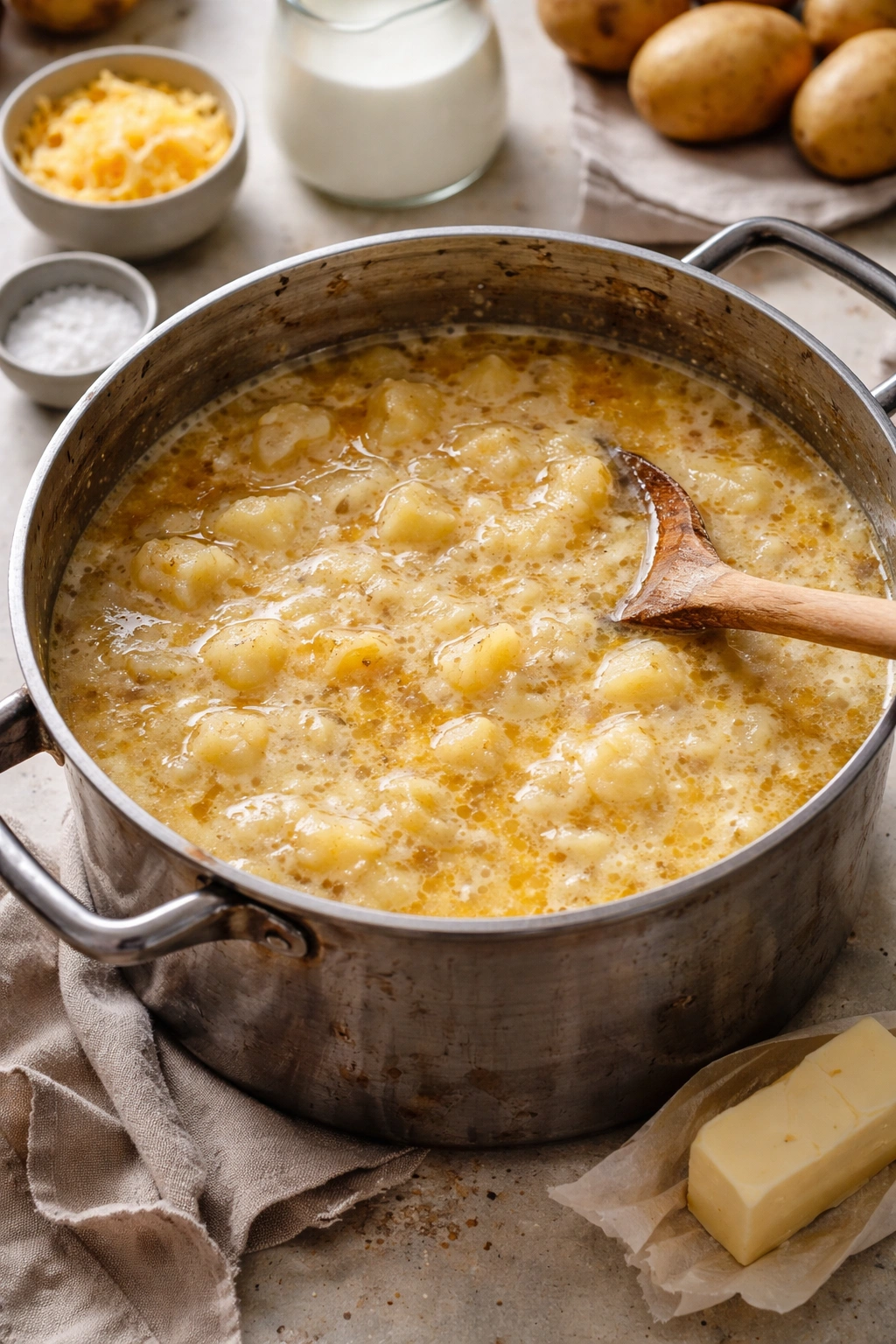
Bring the pot to a gentle boil over medium heat, then immediately reduce the heat to medium-low. Do not maintain a rolling boil once the dairy goes in, as this can cause separation. Cover the pot partway (leaving the lid slightly ajar) and let it simmer for 15 to 20 minutes, or until the potatoes are completely tender and easily pierced with a fork. Stir occasionally to ensure nothing sticks to the bottom.
Create the Creamy Texture:
-
Once the potatoes are fork-tender, remove the pot from heat. Pour in the warmed milk and heavy cream, stirring gently to combine. Use warmed milk rather than cold milk to prevent the soup from dropping in temperature too rapidly, which can cause the dairy to break or separate. Stir until everything is evenly distributed.
Advertisements -
Stir in the sour cream or Greek yogurt slowly, whisking it smooth as you add it so there are no lumps. Then add the shredded cheddar cheese, stirring until it melts completely into the soup. The residual heat will melt the cheese without needing to return the pot to high heat.
-
If you cooked bacon, add it back to the pot now along with any reserved drippings. Stir to combine.
Adjust Texture and Seasoning:
-
At this point, you can adjust the texture based on your preference. For a chunky soup, leave it as is. For a creamier, more blended soup, you have two options: Use an immersion blender directly in the pot, pulsing gently until you reach your desired consistency—blend about half the soup for a texture that’s still chunky but creamy, or blend up to 80% for a smooth soup with just a few potato pieces. Alternatively, carefully transfer about half the soup to an upright blender (never fill it more than halfway with hot soup, as it expands and can pop the lid off), blend until smooth, then return it to the pot and stir to combine.
-
Taste the soup and adjust the seasoning. Add more salt and pepper if needed. If you’d like more depth, add a pinch more smoked paprika or a tiny pinch of nutmeg. Remember that cheese is salty, so taste before adding more salt.
-
If the soup is thicker than you’d like, stir in a splash of broth or warm milk, ¼ cup at a time, until you reach your preferred consistency. If it’s thinner than you’d like, you can let it simmer uncovered on low heat for a few minutes, stirring occasionally, to reduce and thicken.
Serve:
- Ladle the hot potato soup into bowls and top generously with sliced green onions, extra shredded cheddar cheese, crumbled bacon, a dollop of sour cream, and a crack of freshly ground black pepper. Serve immediately while hot, with crusty bread on the side for dipping if desired.
The Secret to Creamy, Smooth Texture Without Gluey Consistency

The line between creamy potato soup and gluey potato soup is thinner than you might think, and it comes down to understanding what happens when you blend potatoes. Potatoes contain starch—lots of it. When you cut into raw potatoes, you’re exposing that starch. When those potatoes cook in liquid, starch begins leaching into the broth. That starch is actually what makes the soup creamy—it binds water and creates a silky mouthfeel.
The problem comes when you over-blend. When you blend potatoes too aggressively or for too long, you’re breaking down the cell walls so completely that the starch releases excessively, and the soup becomes thick, gluey, and pasty rather than creamy and luxurious. This is why partial blending is the secret. You want to blend enough to create creaminess from the released starch, but not so much that you’re turning every potato cell into starch soup.
My approach is to use an immersion blender gently, pulsing rather than running it continuously. I blend roughly half to two-thirds of the soup, leaving the rest chunky. This gives you the best of both worlds: a creamy base with visible, tender pieces of potato throughout. If you prefer a completely smooth soup, blend more. If you prefer a chunky soup, blend less. The point is to stop before the soup becomes gluey.
The warmed milk also matters. Cold milk hitting hot soup causes the temperature to drop suddenly, which can shock the dairy proteins and cause them to separate or curdle. Warming the milk first (just 1 to 2 minutes in the microwave is enough) prevents this and helps everything integrate smoothly.
Adding the sour cream off the heat is another important detail. Sour cream is sensitive to high heat, and if you add it while the soup is at a rolling boil, it can separate and become grainy. By adding it to soup that’s been removed from the heat, you’re letting the residual warmth gently incorporate it without damaging its texture.
Common Mistakes That Ruin Potato Soup
Using waxy potatoes instead of starchy ones. Waxy potatoes like red potatoes don’t break down the way russets or Yukon golds do. They’ll stay firm and won’t release the starch that creates natural creaminess. You’ll end up with a thin soup that never becomes truly creamy no matter how much dairy you add. Stick with russet or Yukon gold potatoes.
Skipping the roux. The flour cooked in butter creates a thickening base that gives the soup body and creaminess without needing enormous amounts of heavy cream. If you skip the roux and rely only on dairy for creaminess, you’ll either need way more cream (which makes the soup heavy and one-note) or end up with thin, soupy results. The roux is worth the two extra minutes.
Cutting potatoes into uneven sizes. Large chunks and tiny pieces in the same pot means the large pieces are still firm when the small pieces are disintegrating. Cook everything for the small pieces and you have mushy soup with almost no visible potato. Cut everything to the same size and they cook evenly.
Not warming the milk. Cold milk hitting hot soup causes it to separate or curdle. It’s a small thing, but it makes a noticeable difference in texture. Two minutes in the microwave solves this.
Adding all the cream too fast. If you dump cold cream into boiling soup, you get separation and graininess. Add slowly while stirring, and add it to soup that’s been removed from high heat.
Over-blending. This is the mistake that turns silky soup into library paste. You want partial blending—enough to be creamy, not enough to be gluey. Pulse with an immersion blender; don’t run it continuously.
Forgetting to adjust seasoning. The soup tastes underseasoned when it’s hot because heat makes your taste buds less sensitive. This changes as it cools. It’s better to under-season while cooking and adjust at the end, tasting carefully. Remember that adding cheese adds salt, so account for that.
Boiling the soup after dairy is added. Vigorous boiling causes dairy to break and separate. Once milk or cream is in the pot, keep the heat at medium-low for a gentle simmer.
Quick Flavor Variations to Keep It Interesting

Smoked ham and cheese. Skip the bacon and instead add 1 cup of diced smoked ham or chopped cooked sausage after the potatoes are tender. This adds richness and smokiness without the hassle of cooking bacon. Italian sausage works beautifully here too—just break it up as it cooks and drain excess grease before adding.
Loaded baked potato style. Make the soup as directed, but increase the cheese and sour cream at the end. Top each bowl with extra cheddar, extra sour cream, crumbled bacon, green onions, and a drizzle of olive oil. It tastes like a baked potato in soup form, which is exactly the point.
Broccoli cheddar variation. Add 2 cups of chopped broccoli florets (fresh or frozen) in the last 5 minutes of cooking before adding the dairy. They’ll soften slightly but stay bright green. This adds nutrition and color without changing the cooking time significantly.
Roasted garlic and herb. Instead of fresh garlic, use 3 to 4 cloves of roasted garlic (mash them into the onions early on). Add fresh rosemary and thyme earlier in cooking so they can infuse throughout. This creates a more earthy, sophisticated flavor profile.
Creamy dill and green onion. Make the soup as directed but add 2 tablespoons of fresh chopped dill in the last minute of cooking. Top with plenty of sliced green onions and a dollop of sour cream mixed with more fresh dill. This creates a brighter, fresher flavor that’s delicious in warmer months.
Roasted red pepper and bacon. Add 1 cup of roasted red peppers (from a jar is fine) after the potatoes are cooked, breaking them into pieces. The sweetness of the peppers pairs beautifully with bacon and cheese. Blend partially so the peppers create color throughout.
White cheddar and thyme. Use sharp white cheddar instead of orange cheddar—it has a slightly more complex flavor. Add extra fresh thyme (1 tablespoon fresh instead of 1 teaspoon dried) and a squeeze of fresh lemon juice at the end. This version tastes more refined and pairs beautifully with a crisp white wine.
Cauliflower and cheese. Add 2 cups of chopped cauliflower florets along with the potatoes. They cook in the same time and add creaminess as they break down. Use half cheddar and half sharp white cheddar for more complexity.
Customizing Your Soup for Dietary Needs

Vegetarian or vegan. Skip the bacon entirely and use butter or olive oil to sauté the aromatics. Everything else proceeds exactly the same way. For vegan, use vegan butter and substitute the milk with unsweetened, unflavored plant-based milk (oat milk works beautifully because it has a natural creaminess). Use cashew cream or coconut cream for extra richness, or simply rely on the roux and blended potatoes for body. Swap the sour cream for vegan sour cream or a cashew-based alternative.
Dairy-free. Use olive oil instead of butter, skip the sour cream, and substitute all dairy milk with your preferred non-dairy alternative. Oat milk, cashew milk, and coconut milk all work—each brings slightly different richness. You might need to increase the amount of non-dairy milk slightly because it tends to be thinner than heavy cream. Start with what the recipe calls for and adjust as needed.
Gluten-free. Substitute the all-purpose flour with cornstarch or a gluten-free flour blend. Use 3 tablespoons cornstarch instead of ¼ cup all-purpose flour, whisked into a slurry with a little cold broth before adding to the pot (this prevents lumps). Or skip the roux altogether and rely on blending the potatoes to create creaminess naturally—the soup will be slightly thinner, but perfectly delicious.
Lower fat. Use half-and-half instead of heavy cream, or use whole milk with just ½ cup of cream. Use plain Greek yogurt instead of sour cream (it has more protein and tanginess, which adds interest). You can also reduce the butter to 2 tablespoons and use olive oil for the rest. The soup will be lighter but still creamy and satisfying.
Lower sodium. Use low-sodium broth (most store-bought broths are already lower sodium if you look for them), taste very carefully before adding more salt, and skip the bacon or use low-sodium bacon. Cheese is naturally salty, so go easy on it and taste as you go.
How to Store and Reheat Without Losing Creaminess

Refrigerator storage. Cool the soup completely to room temperature before transferring to an airtight container—this takes about 30 minutes. Store in the fridge for up to 4 days. The soup will thicken as it sits because the starch continues to absorb liquid. This is completely normal and actually makes the leftover soup perfect for serving.
Freezing. Creamy soups can be finicky when frozen because the dairy can separate as it thaws. However, this potato soup freezes reasonably well if you take care. Cool completely, then transfer to freezer bags or containers in serving-sized portions. Freeze for up to 3 months. Thaw overnight in the refrigerator before reheating. The cream may separate slightly—a quick stir while reheating brings it right back together.
Reheating on the stovetop. This is the best method for preserving texture. Place the soup in a pot over medium-low heat, stirring frequently. Add a splash of broth or milk if it’s thicker than you’d like (the soup always thickens when refrigerated). Heat gently—never boil—until it’s warmed through, about 5 to 10 minutes depending on the amount. The low, gentle heat prevents the dairy from separating.
Reheating in the microwave. Transfer a single serving to a microwave-safe bowl and heat in 60-second intervals, stirring between each interval, until heated through. Don’t overheat—once it’s hot, stop. This method is faster but gives you less control, so pay attention.
Making it ahead. You can prep this soup through step 8 (right before adding the dairy) and refrigerate it for up to 24 hours. When you’re ready to serve, reheat the base gently, then add the warm milk, cream, and sour cream as directed. This saves time on busy nights because you only need 10 to 15 minutes to finish instead of 45.
What to Serve Alongside Your Potato Soup

Crusty bread for dipping. This is essential. A thick slice of crusty bread, maybe brushed with olive oil and toasted until golden, is the perfect vehicle for soaking up every last bit of creamy soup from your bowl. Focaccia is particularly good here, or a rustic sourdough, or even garlic bread if you’re feeling indulgent.
Grilled cheese sandwich. Pair the soup with a classic grilled cheese made with sharp cheddar, good butter, and sourdough bread. The contrast between the warm soup and the crispy, cheesy sandwich creates a meal that feels both casual and satisfying.
Green salad. A simple green salad with a bright vinaigrette (lemon-based or balsamic) balances the richness of the soup. The acidity cuts through the creaminess and adds a fresh element that makes the entire meal feel lighter.
Roasted vegetables. Roasted broccoli, Brussels sprouts, or asparagus add nutrition and texture. The slightly charred edges and savory roasted flavor complement the creamy soup beautifully.
Cornbread or jalapeño cornbread. Sweet cornbread with a spicy kick pairs wonderfully with loaded potato soup. The slight sweetness of the cornbread balances the savory, cheesy soup.
Crispy bacon and green onion toppings. Even if you made the soup without bacon, crispy bacon crumbles on top and a generous handful of sliced green onions add texture and freshness that elevate the final bowl.
Side of vegetables. A simple coleslaw or marinated vegetable salad provides a fresh, crunchy counterpoint to the creamy soup. This is particularly nice if you’re making a hearty meal.
Roasted potatoes or potato wedges. Yes, more potatoes—but roasted until crispy and golden. Serve them on the side for extra texture and substance. The contrast between the roasted crispy exterior and the creamy soup creates an interesting eating experience.
Final Thoughts

Great potato soup isn’t about complicated techniques or exotic ingredients. It’s about understanding how heat builds flavor, how starch creates creaminess, and when to add ingredients so they contribute their best qualities to the final pot. It’s about tasting as you cook and adjusting to your preference rather than following a recipe blindly. It’s about the warm bowl in your hands on a cold night, the way it fills your kitchen with rich, buttery aroma, and the satisfaction of serving something truly homemade.
This recipe is your foundation. Use it exactly as written the first time so you understand how all the elements work together. Then make it your own—add different vegetables, experiment with cheeses, play with toppings. The more you make it, the more intuitive it becomes, and eventually you’ll be able to make it without measuring, adjusting by taste and texture just like the best home cooks do.
The warmth of a bowl of homemade potato soup is one of life’s simple luxuries, and it’s one you can create in your own kitchen on any cold night. There’s nothing fancy about it, but there’s everything comforting about it.
