



Nothing says “I put thought into this” quite like a beautifully roasted rack of lamb with a crusty herb coating, brought straight to the table with candles flickering and a good bottle of wine chilling nearby. The thing is, rack of lamb looks like you’ve been cooking all day—like you need culinary school credentials to pull it off—but the truth is far simpler: this is one of the easiest impressive proteins you can prepare at home. It takes roughly 30 minutes from oven to plate, requires no advanced techniques, and somehow always tastes like you’re dining at a Michelin-starred restaurant. Your date will be absolutely convinced you’re a secret chef.
What makes this dish so magical is that lamb’s natural richness means it doesn’t need much. A simple marinade of garlic, rosemary, and fresh herbs; a screaming hot oven; and your meat thermometer are genuinely all that stand between you and restaurant-caliber results. The lamb emerges from the oven with a gorgeous herb-crusted exterior and a perfectly pink, tender interior—the kind of centerpiece that steals the show without demanding you’re stressed in the kitchen. You’ll have time to set a proper table, light candles, maybe even take a shower before your guest arrives.
The elegance of rack of lamb lies in its simplicity. Each serving becomes individual lamb chops with exposed bones that look stunning on the plate. It’s the equivalent of prime rib for beef or tenderloin for pork—it’s the luxurious part of the lamb, and it cooks so quickly that you can’t accidentally overcook it if you’re paying attention. This is exactly the kind of dish that bridges the gap between “I want to feel special” and “I don’t want to spend six hours cooking,” which makes it absolutely perfect for a date night at home.
Why Rack of Lamb Is the Ultimate Date Night Protein
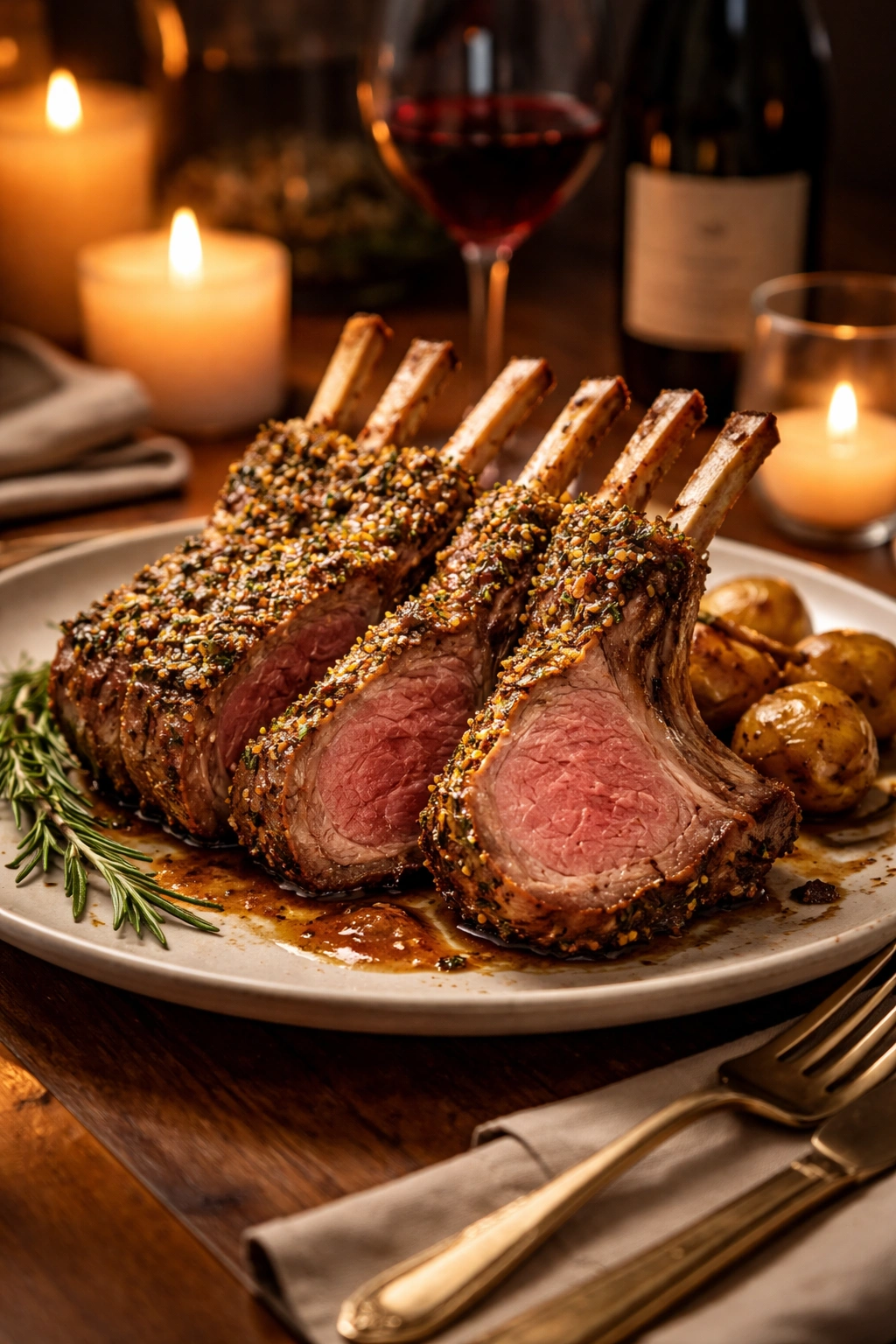
Rack of lamb occupies this beautiful sweet spot in the world of elegant proteins—it’s genuinely easier than it looks, but nobody knows that except people who’ve actually cooked it. The cuts themselves are naturally portioned (eight individual chops per rack), they cook in less than half an hour, and they arrive at the table looking like you’ve been practicing restaurant techniques all your life. There’s real psychological power in that kind of meal.
The flavor profile works in your favor too. Lamb has a distinctive richness that tastes expensive and special without requiring any complicated preparation. That minerally, slightly gamey quality—which comes from the animal’s grass-fed diet—pairs perfectly with bright herbs like rosemary, thyme, and fresh parsley. These aren’t subtle flavors that compete with the lamb; they complement and elevate it. The meat doesn’t need a complicated sauce, a 24-hour marinade, or any fussy techniques. Just season it, roast it, and get out of your own way.
From a logistical standpoint, rack of lamb is genuinely low-stress to cook. Unlike a whole fish that can flake apart, or chicken that requires careful temperature management across different parts, lamb chops cook evenly because of their shape. The bone actually helps—it distributes heat and makes it nearly impossible to dry out the meat. A meat thermometer becomes your guarantee of perfect results, so you’re not guessing or relying on timing that varies by oven.
What You Need to Know About Buying Quality Rack of Lamb
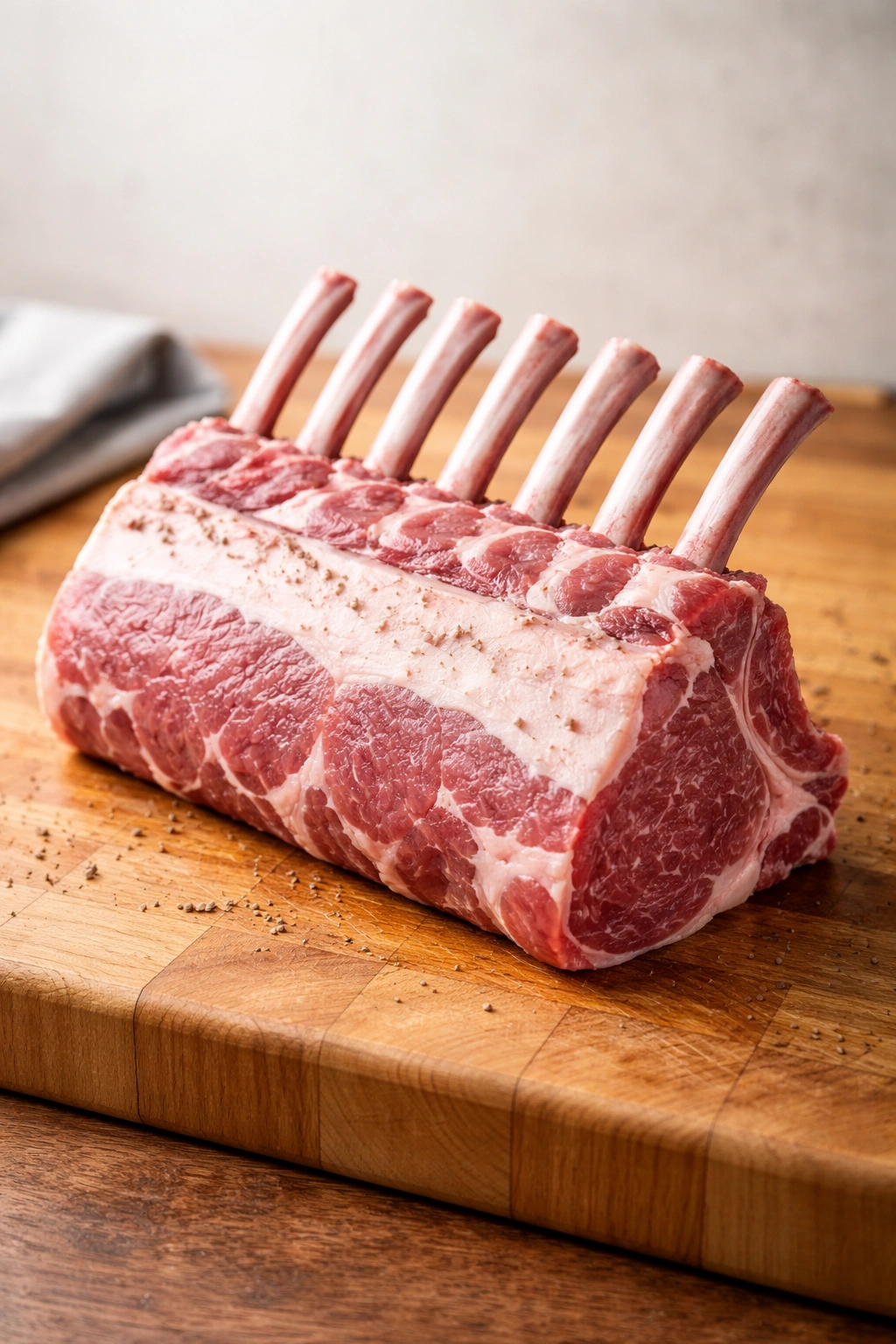
Start at your butcher counter, not the pre-packaged meat case. Ask for a frenched rack of lamb, which means the meat and fat around the rib bones have been trimmed away so the bones are exposed and gleaming. This is partly presentation (which matters for date night) and partly practical—it means less trim waste and a cleaner eating experience. One rack feeds two people generously, with each person getting four chops.
When you’re looking at the meat itself, you want something with a pink or rosy-red color, not dark red. Darker meat suggests the lamb is older and won’t have the same tenderness you’re looking for. The fat should be white or creamy-white, which indicates freshness and proper handling. Run your eye over the meat—you want fine grain and good marbling (little flecks of fat running through the muscle). This marbling is your friend; it keeps the meat moist and flavorful during roasting.
Size matters more than you’d think here. A rack of lamb typically weighs between 1.5 and 2 pounds and includes eight ribs. Smaller racks tend to be more tender and have a milder flavor than larger ones, which makes them ideal for a first-timer or if you’re not a huge gamey-flavor person. If your butcher has spring lamb or lamb from a local farm, that’s often a win—these tend to be smaller and more delicate. Ask when the lamb was butchered; fresher is always better. If your butcher hasn’t frenched it already, they will do it for you in about two minutes—always ask rather than trying to do it yourself unless you’re confident with a sharp boning knife.
How to Prepare the Lamb Before It Goes in the Oven
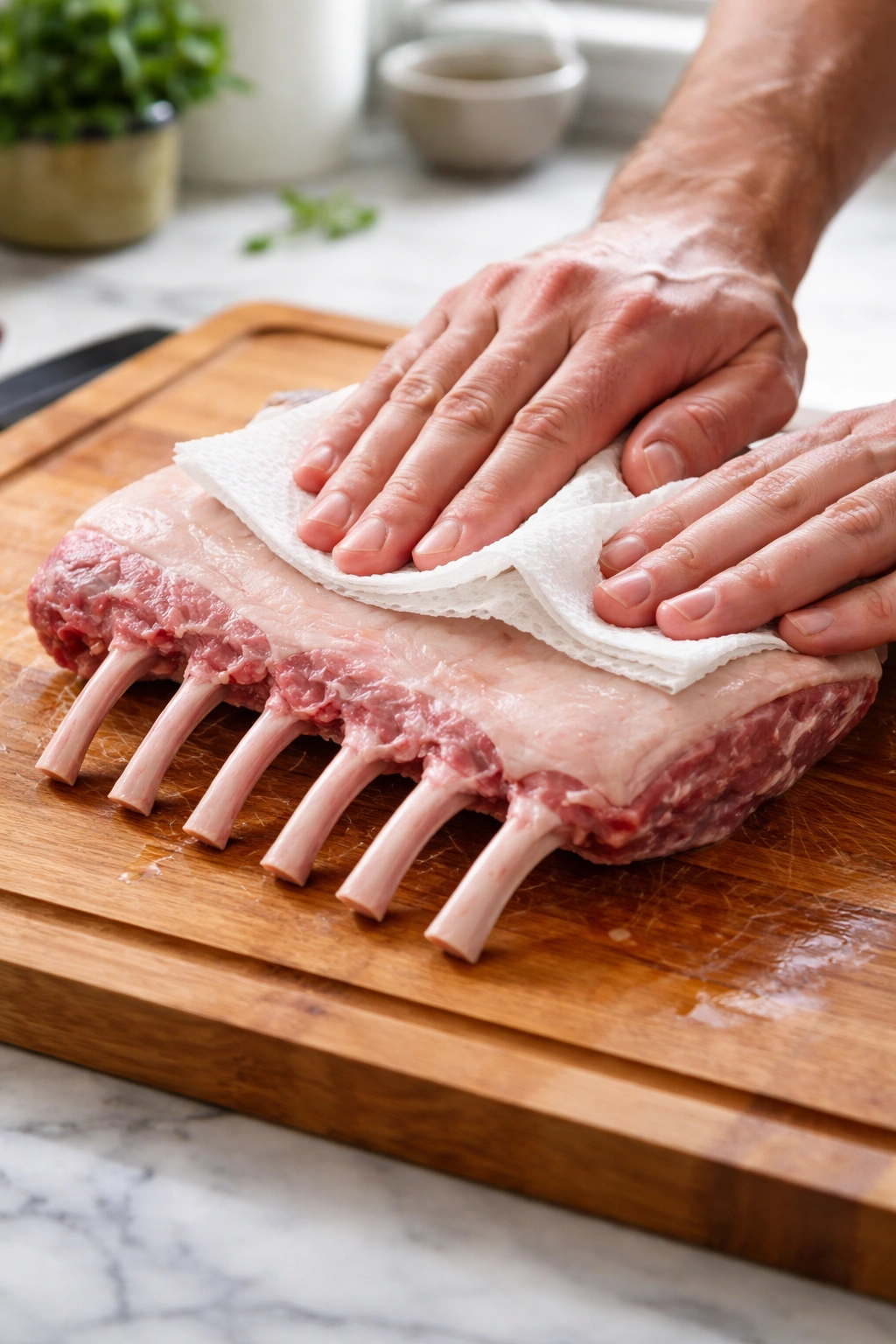
Pat your rack completely dry with paper towels. This might seem like a small step, but surface moisture prevents browning, and browning is where the flavor magic happens. Take your time here—a few extra seconds with a paper towel will directly impact the crust quality.
Next, examine the fat cap. You want to trim it back to roughly a quarter-inch thickness on the top surface of the meat. Too much fat creates a barrier between the herb coating and the meat, and it won’t render away in the short cooking time. Use a sharp boning knife and take smooth, confident strokes. If you’re not comfortable doing this, your butcher absolutely will have already done it, and it never hurts to ask them to trim it to a quarter-inch when you purchase the lamb.
Now for the bones—if they’ve browned during searing (and they will), you can wrap them loosely in aluminum foil after the marinade goes on and before roasting. This protects them from burning and keeps the presentation pristine. Some restaurants use paper caps for this purpose, but foil works perfectly well at home. Don’t worry about the bones getting too dark; they’re meant to show some color, but wrapping prevents them from looking charred.
Building the Perfect Herb Marinade
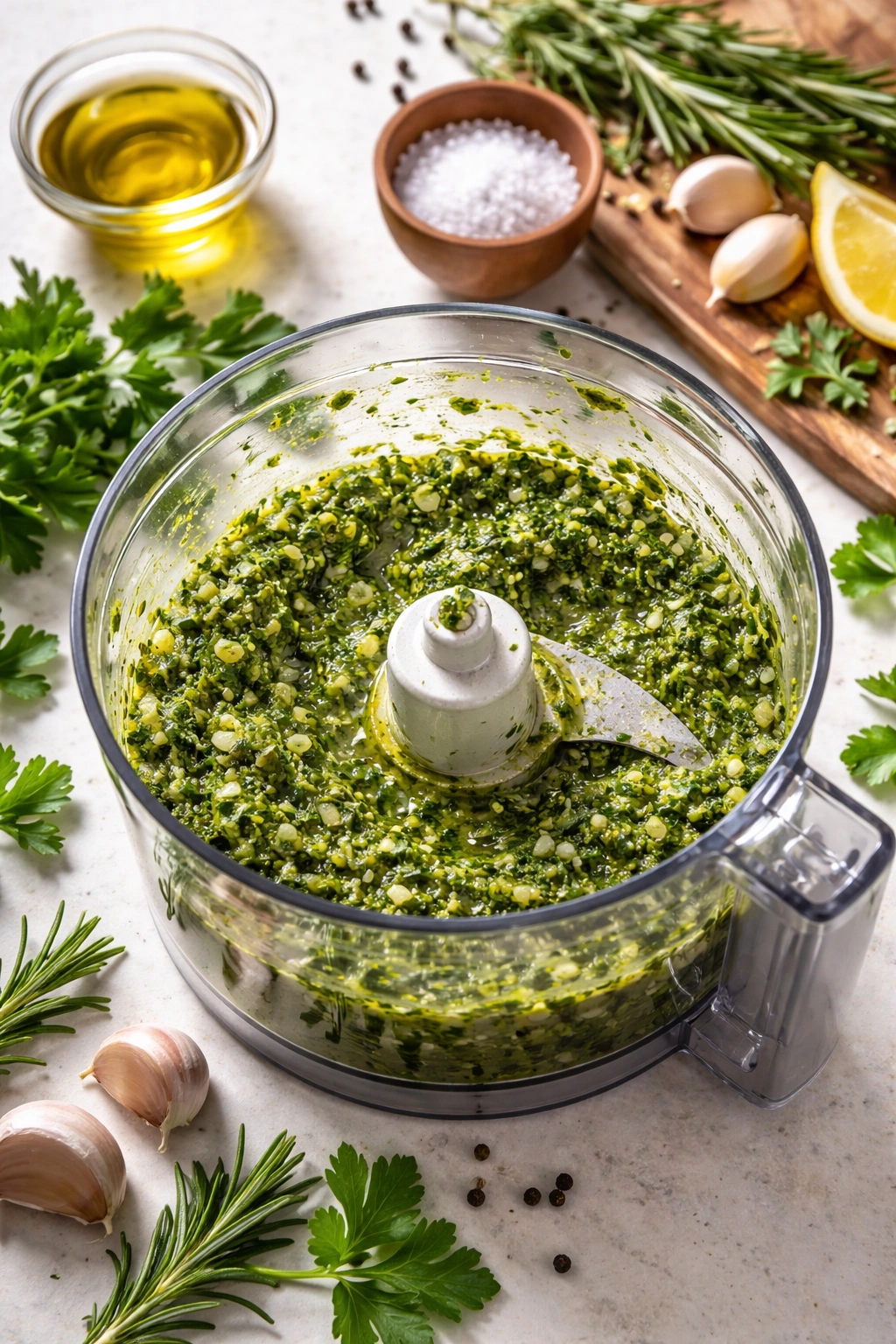
The magic happens in a food processor—this takes literally two minutes. Combine peeled garlic cloves, fresh rosemary leaves, fresh parsley (roughly chopped), a pinch of red pepper flakes, and really good extra virgin olive oil. Pulse everything until you’ve got a coarse paste, not a smooth puree. The texture should still have some texture to it; you want the herbs to stay visible and somewhat chunky.
Don’t skimp on the garlic. Lamb and garlic are practically soulmates, and you need enough garlic so it’s actually noticeable in the final crust. This isn’t the time for restraint. If your food processor seems small, work in batches rather than overfilling it—you want a proper marinade, not a smoothie.
Once your mixture is ready, season the lamb generously with kosher salt and freshly cracked black pepper on both sides, then coat it thoroughly with the herb paste, making sure to work it into all the crevices. If you have time, let it sit at room temperature for an hour before roasting. If you’re in a hurry, 30 minutes works, but the longer it sits, the more the flavors penetrate. You can also marinate it covered in the refrigerator overnight—just pull it out 45 minutes to an hour before cooking so it returns to room temperature before it hits the oven.
Preparing Your Kitchen for High-Heat Roasting
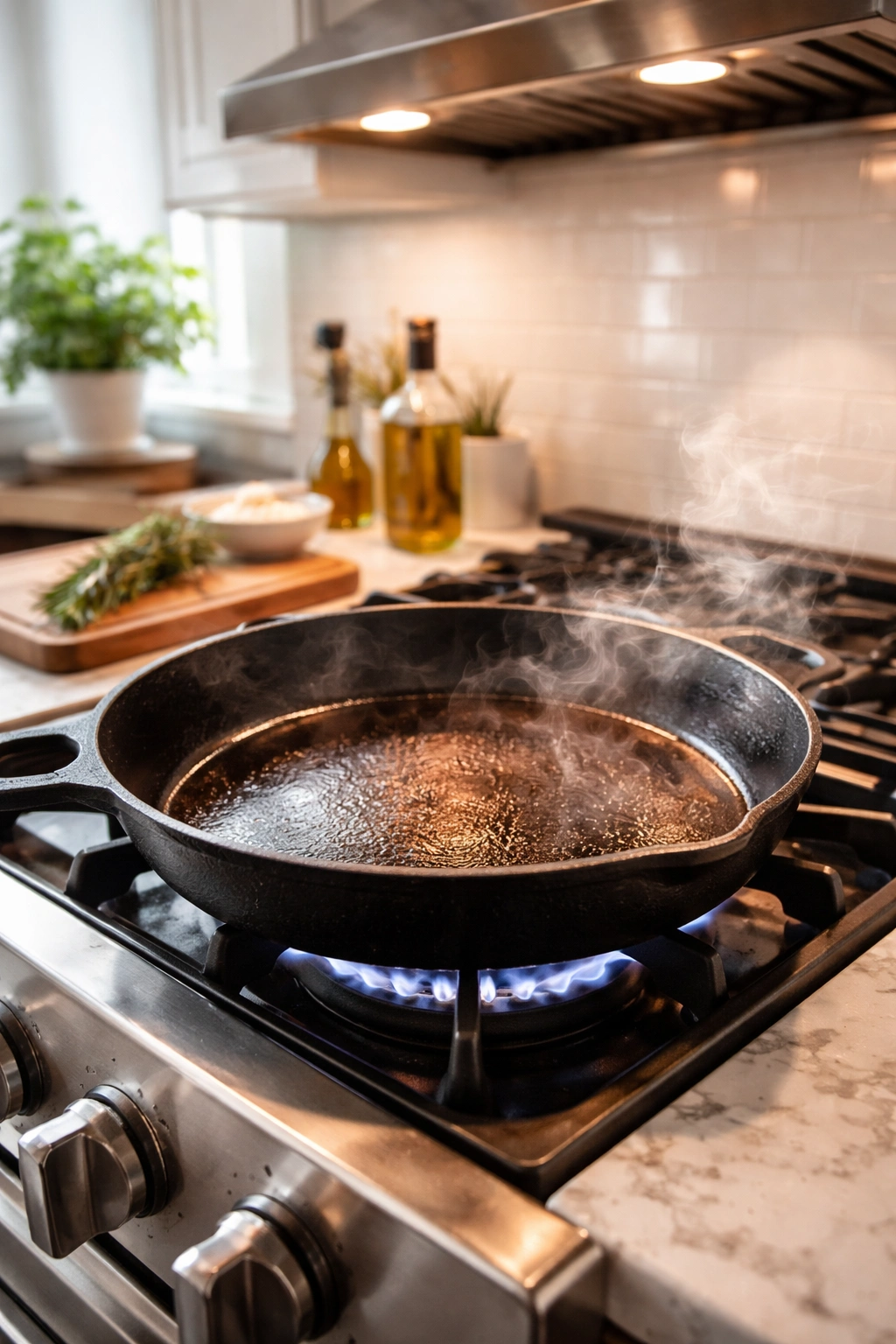
Here’s something nobody tells you: searing lamb creates significant smoke. Turn on your range hood to high before you even heat the oil. Open windows if you can. This isn’t a step to skip because ventilation directly affects your cooking experience and your home won’t smell like a charred meat warehouse for the next three days.
Use a heavy, oven-safe skillet—cast iron is ideal because it retains and distributes heat beautifully, but a stainless steel skillet with an oven-safe handle works perfectly well too. The skillet needs to hold heat reliably so you get good browning on the lamb. Avoid nonstick pans for this application; they don’t get hot enough and they don’t develop the kind of crust you’re going for.
Have your meat thermometer ready—actually read the instructions beforehand if you’ve never used it before. You want to know exactly where the thickest part of the meat is so you can accurately gauge doneness without cutting into the lamb (which would release precious juices). Place a clean cutting board nearby where your rested lamb will go before carving. And grab a piece of aluminum foil for tenting once the lamb comes out of the oven—this critical step keeps it warm during the rest while trapping some steam, which helps the meat stay moist.
Yield: Serves 2
Prep Time: 15 minutes
Cook Time: 20 to 25 minutes
Marinating Time: 30 minutes to 1 hour (or overnight, refrigerated)
Total Time: 1 hour to 1 hour 15 minutes
Difficulty: Beginner — The steps are straightforward, and a meat thermometer takes all guesswork out of doneness.
The Ingredients for Restaurant-Quality Lamb
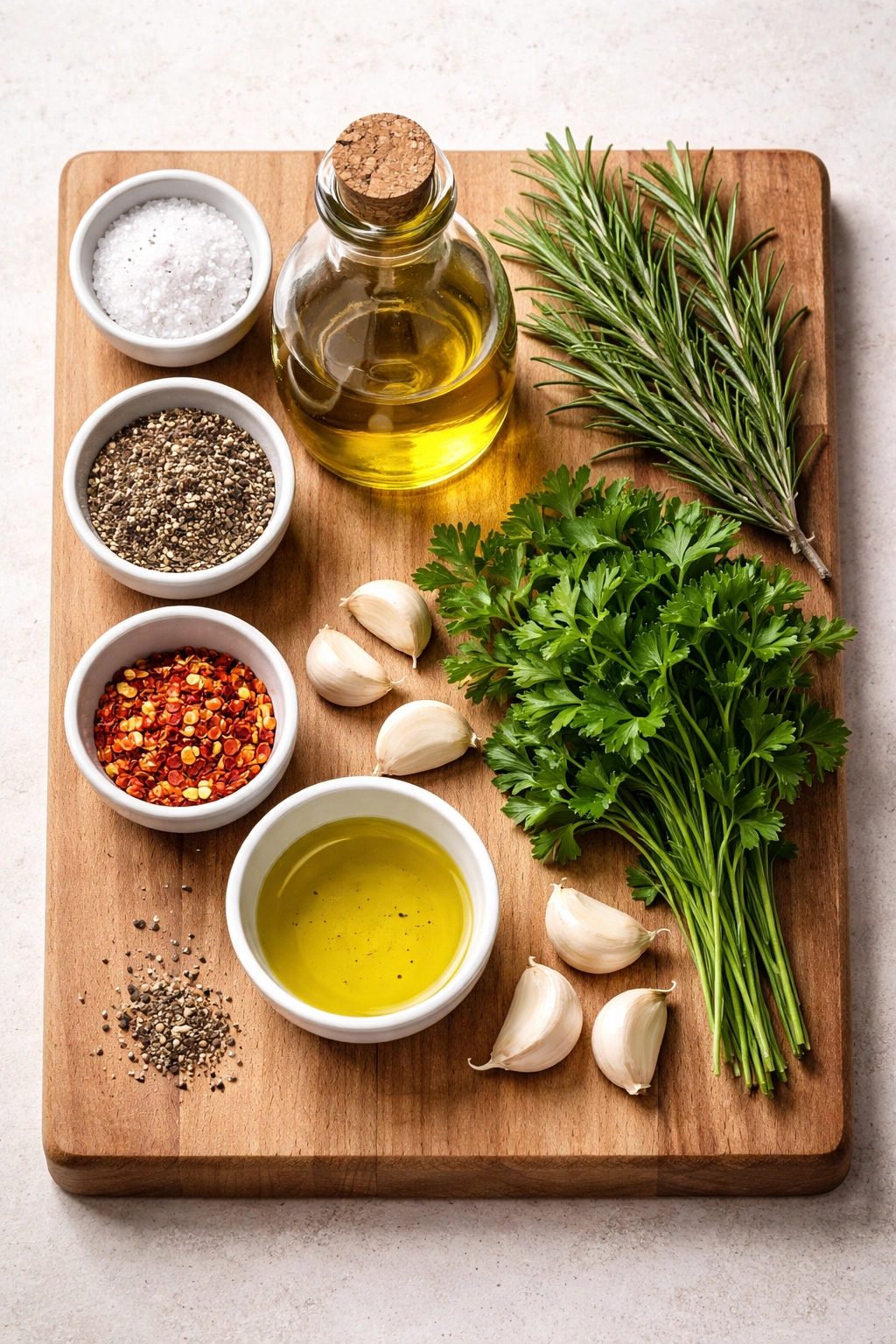
For the Herb Marinade:
- 8 to 10 garlic cloves, peeled
- ¼ cup extra virgin olive oil
- 2 tablespoons fresh rosemary leaves, loosely packed
- 3 tablespoons fresh parsley, roughly chopped
- ⅛ teaspoon red pepper flakes (or a tiny pinch)
For the Rack of Lamb:
- 1 frenched rack of lamb, about 1.5 to 2 pounds with 8 ribs
- Kosher salt, to taste
- Freshly cracked black pepper, to taste
- 2 teaspoons high-heat oil (avocado, grapeseed, or refined vegetable oil) for searing
Step-by-Step Instructions for Perfect Roasted Lamb
Prepare the Lamb:
-
Remove the lamb from the refrigerator and place it on a cutting board. Pat it completely dry with paper towels—any surface moisture will prevent browning.
-
Trim the fat cap on top of the lamb to approximately ¼ inch thickness, using a sharp boning knife and smooth, confident strokes. You want some fat for flavor, but not so much that it creates a barrier between the herb crust and the meat.
-
Preheat your oven to 450°F (230°C) with a rack positioned in the center of the oven. Position your range hood vent to high.
Make the Marinade:
- Add the peeled garlic cloves, olive oil, rosemary leaves, parsley, and red pepper flakes to a food processor fitted with a blade. Pulse 4 to 5 times until the mixture is coarse and chunky, not smooth—you want visible herbs in the finished paste.
Season and Marinate the Lamb:
-
Season the lamb generously on both sides with kosher salt and freshly cracked black pepper, working the seasonings into the meat with your fingers.
-
Using the back of a spoon or your fingers, spread the herb marinade evenly over all sides of the lamb, pressing it gently into the meat. Let the lamb sit at room temperature for at least 30 minutes (preferably 1 hour), allowing the flavors to meld and the meat to reach proper temperature for even cooking.
Sear the Lamb:
-
Heat the oil in a heavy, oven-safe skillet over medium-high heat. When the oil is shimmering and just beginning to smoke slightly, carefully place the lamb fat side down into the skillet. Do not move it for 3 to 4 minutes—this is how you build a beautiful golden crust. The kitchen will smoke; this is normal and expected.
-
Using kitchen tongs, flip the lamb to sear the other side for 2 to 3 minutes until that side is also golden-brown. The meat should have a gorgeous caramelized crust on all exposed surfaces.
Wrap and Roast:
-
If desired, wrap the exposed rib bones loosely with aluminum foil to prevent them from burning during roasting. (This is optional but keeps the bones pristine and white.)
-
Immediately transfer the skillet to the preheated 450°F oven. Roast on the center rack for 15 to 25 minutes, depending on your desired doneness and the exact size of your rack.
Check Doneness Using Temperature:
-
At the 15-minute mark, carefully insert an instant-read meat thermometer into the thickest part of the meat, away from the bone. For rare, aim for 120 to 125°F; for medium-rare (recommended), aim for 130 to 135°F; for medium, aim for 140 to 145°F. Remember that carryover cooking will raise the temperature by 5 to 10 degrees as the meat rests, so pull it out 5 degrees before your target temperature.
-
Remove the skillet from the oven and transfer the lamb to a cutting board. Tent loosely with aluminum foil (not tightly sealed, or it will steam).
Rest and Serve:
-
Let the lamb rest for 10 to 15 minutes. This critical step allows the protein fibers to relax and the juices to redistribute throughout the meat, resulting in a more tender, juicy final bite. Do not skip this step or cut into the lamb early.
Advertisements -
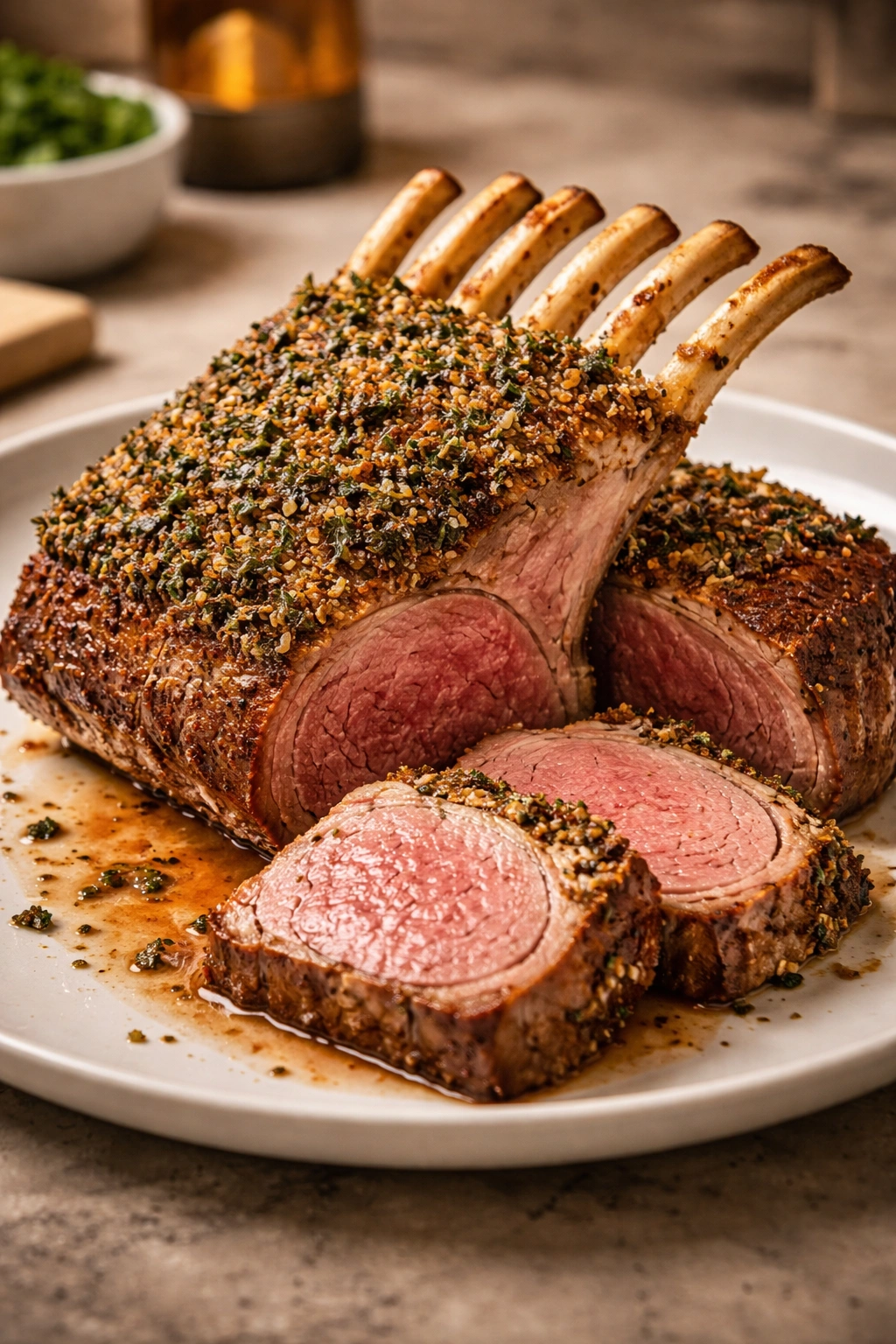
After resting, use a sharp carving knife to slice between each rib bone, creating individual lamb chops. You’ll have eight chops total. Arrange them on a warm plate and serve immediately with your chosen sides.
Nailing the Sear for Maximum Flavor
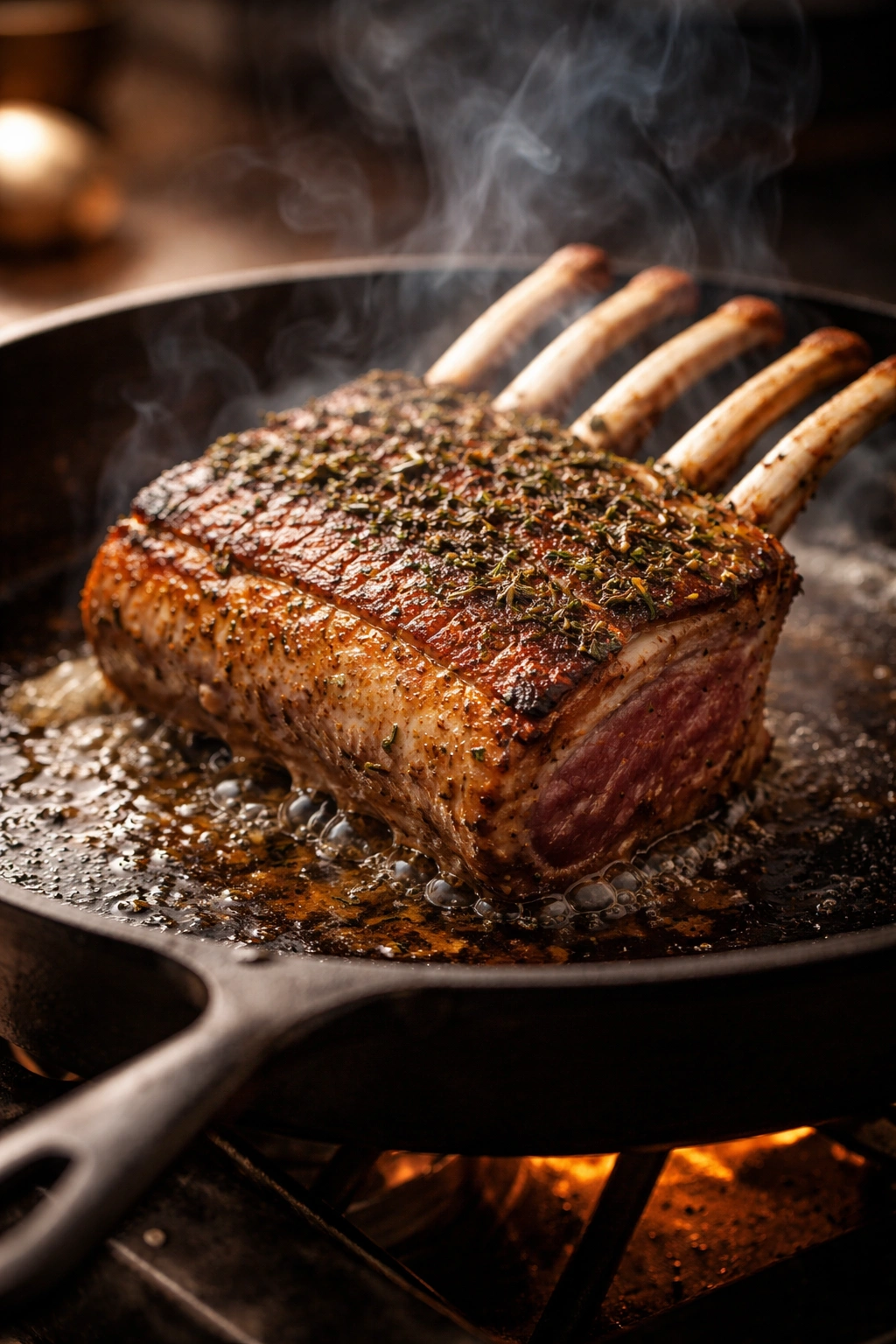
This is where most home cooks miss an opportunity. The searing step is not optional; it’s where the flavor is created. That golden-brown crust (the Maillard reaction, if you want to get technical) is what separates a bland roasted piece of meat from something extraordinary. Don’t rush it or lower the heat. You need the skillet hot enough that the meat makes a pronounced sizzle when it hits the pan.
Here’s the specific technique: place the lamb fat side down first. The fat needs direct contact with the hot surface to render and brown. Resist every urge to move it around. Let it sit undisturbed for the full 3 to 4 minutes. You might hear it crackling or popping; that’s exactly what you want. Then flip it once and sear the meaty sides quickly—they need less time because they’re thinner and will brown faster.
If your kitchen setup is open to your dining area and you’re concerned about smoke, understand that you only have about 7 to 8 minutes total of high-heat searing, and most of that happens when your guest isn’t yet seated. Sear earlier in the day if needed, then finish the cooking an hour or two later. But honestly, a little bit of smoke is part of the romance—it means you’re cooking something worthwhile.
How to Know Exactly When Your Lamb Is Done
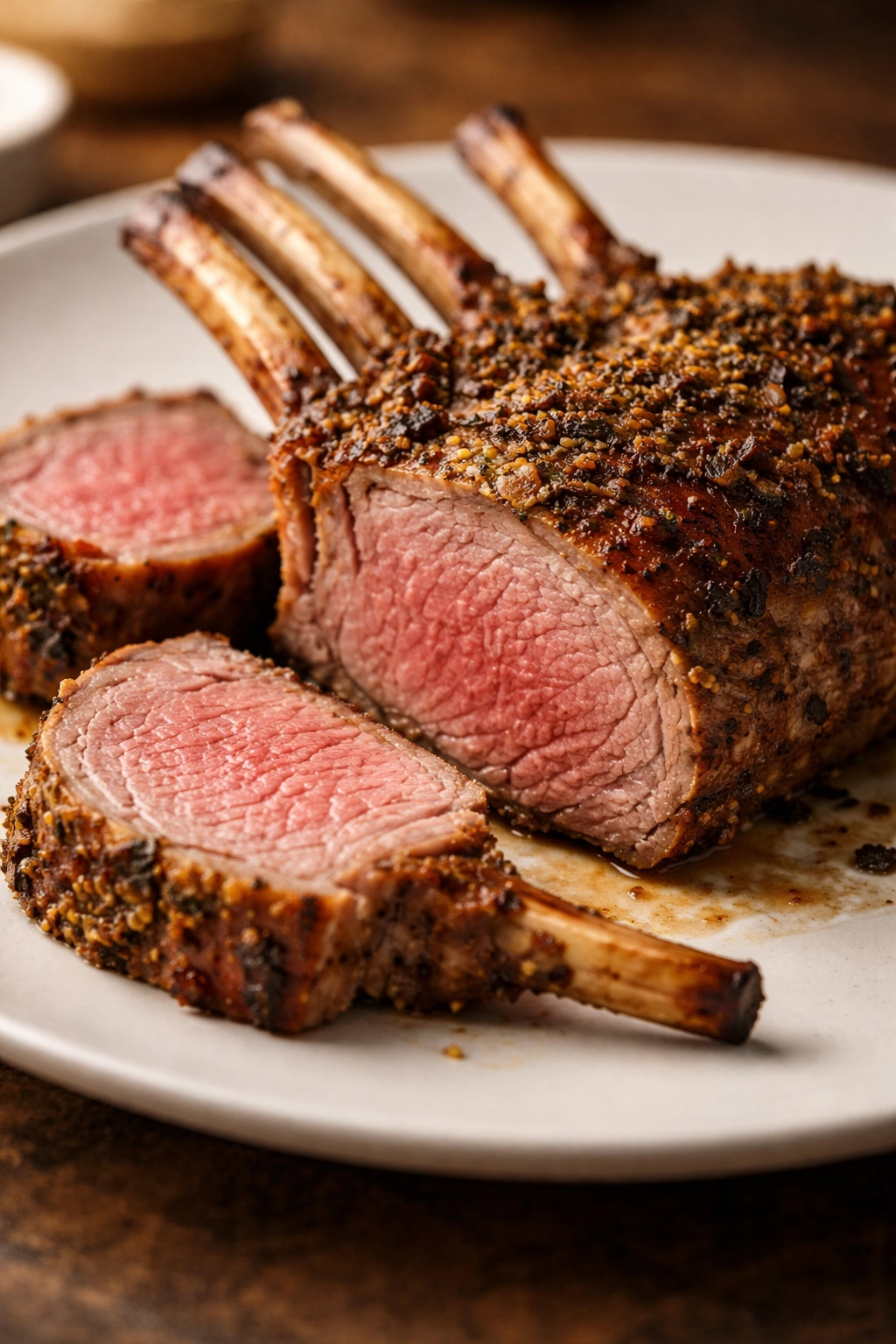
Use a meat thermometer, full stop. This removes all guesswork and anxiety. Digital instant-read thermometers are inexpensive, reliable, and take the guess work out of an expensive cut of meat.
Here’s how to use it properly: Once the lamb has been in the oven for about 15 minutes, remove the skillet carefully (the handle will be extremely hot—use an oven mitt). Insert the thermometer probe into the thickest part of the meat, roughly in the center. Make sure the probe isn’t touching bone, which conducts heat and will give you an inaccurate reading. Wait for the reading to stabilize—this takes just a few seconds.
For a first-time cook, aim for medium-rare at 130 to 135°F. This hits that sweet spot where the exterior is properly seared and golden, the interior is that beautiful deep pink that makes lamb special, and the meat is still incredibly tender and juicy. If you prefer more well-done meat, go to 140 to 145°F, but don’t go higher than 145°F or the lamb will begin to tighten and become firmer than ideal.
Remember that carryover cooking happens. The lamb will continue to cook for 5 to 10 degrees while it rests outside the oven. Pull it out at 125 to 130°F if you want it to land at 130 to 135°F after resting. If you wait until it reads 135°F in the oven, it’ll end up at 140 to 145°F after resting.
The Critical Resting Step That Changes Everything
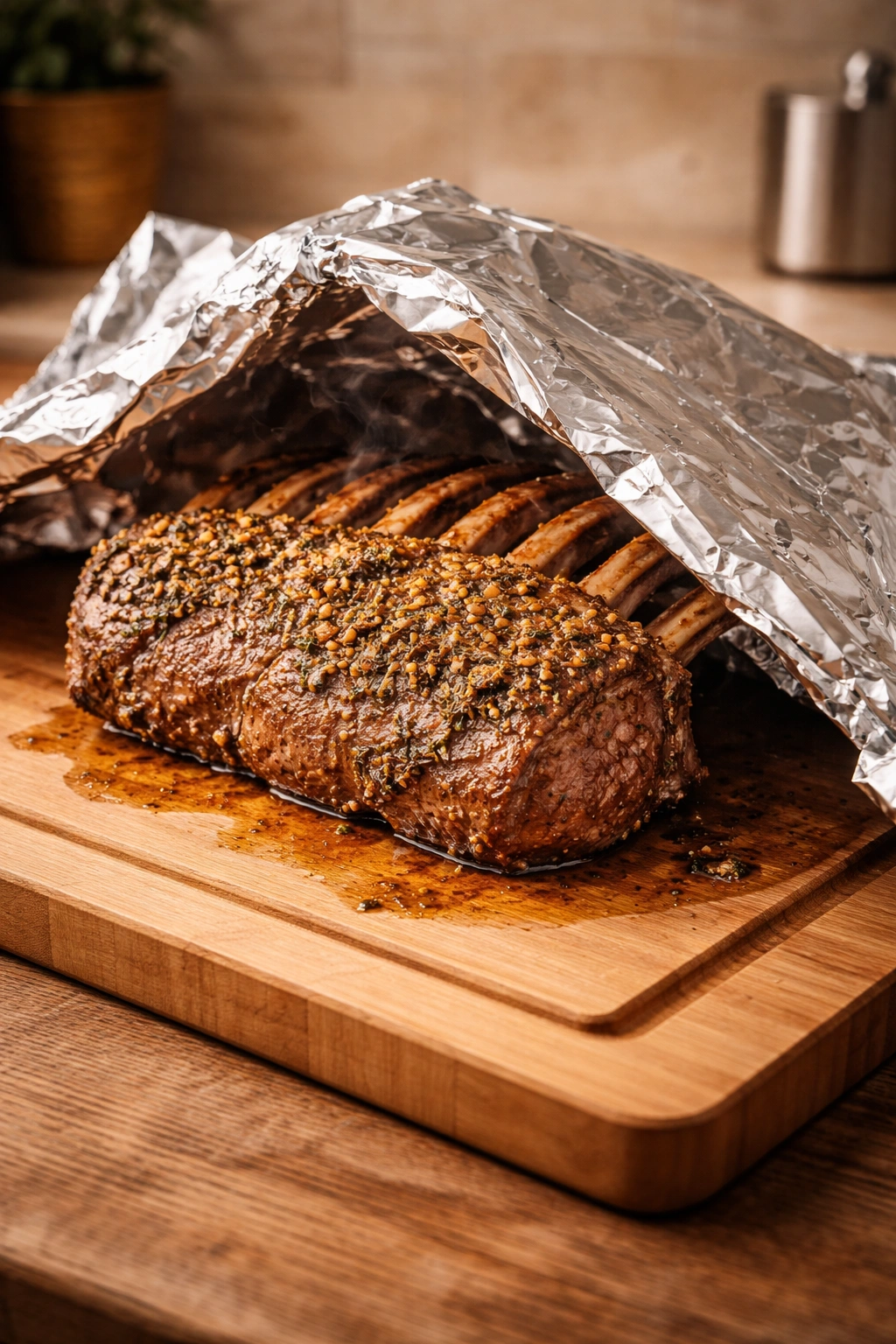
After you pull the lamb from the oven, you absolutely must let it rest for 10 to 15 minutes. This isn’t laziness or a delay tactic—this is when the magic happens. While the meat was cooking, the proteins contracted and the juices were driven toward the center. During resting, those fibers relax and the juices redistribute throughout the meat, ensuring every bite is moist and tender.
If you cut into the lamb immediately, all those juices spill out onto the cutting board and plate instead of staying in the meat where they belong. You’d have a drier, less flavorful result. If you wait those 10 to 15 minutes, you get maximum juiciness and tenderness.
Tent the lamb loosely with aluminum foil—this means just laying a sheet of foil over the top without sealing it. You want some of the heat to escape so the exterior crust stays crispy, not steamed into a soggy mess. If you’re worried about it cooling too much during the rest, a tent with foil is perfect. Some chefs even place a clean kitchen towel over the foil, which traps heat while still allowing some airflow.
Elegant Sides That Elevate the Entire Meal
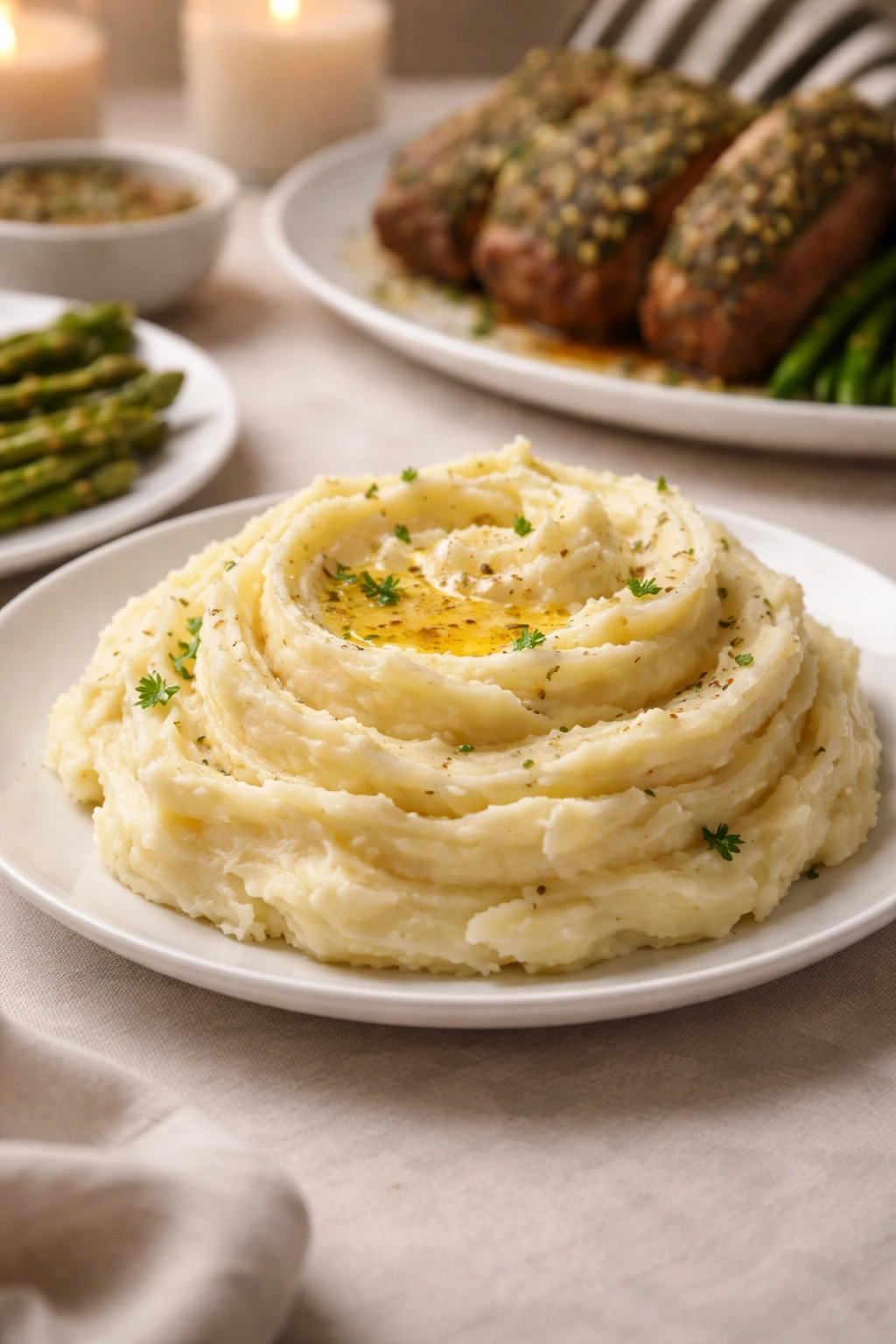
Rack of lamb is luxurious enough that it deserves thoughtful sides that complement rather than overshadow it. Roasted garlic mashed potatoes are absolutely classic for a reason—creamy, rich, and the garlic echoes the flavors in the herb crust. Make them ahead, then reheat gently while the lamb rests. A simple lemon-dressed arugula salad or shaved Brussels sprouts salad adds brightness and acidity that cuts through the richness beautifully.
Roasted asparagus or haricots verts (thin French green beans) sautéed with a touch of garlic and finished with lemon juice are elegant and require minimal attention while you’re focused on the lamb. If you want something starchy, crispy roasted potatoes tossed with rosemary and sea salt bridge the gap between comfort and sophistication.
For a dinner-party vibe, consider cauliflower gratin or creamed spinach—both can be partially prepared ahead and finished while the lamb rests. The key is choosing sides that don’t require last-minute hovering. You want to be present and relaxed during the meal, not juggling three pans on the stove.
Wine Pairing That Makes the Entire Experience
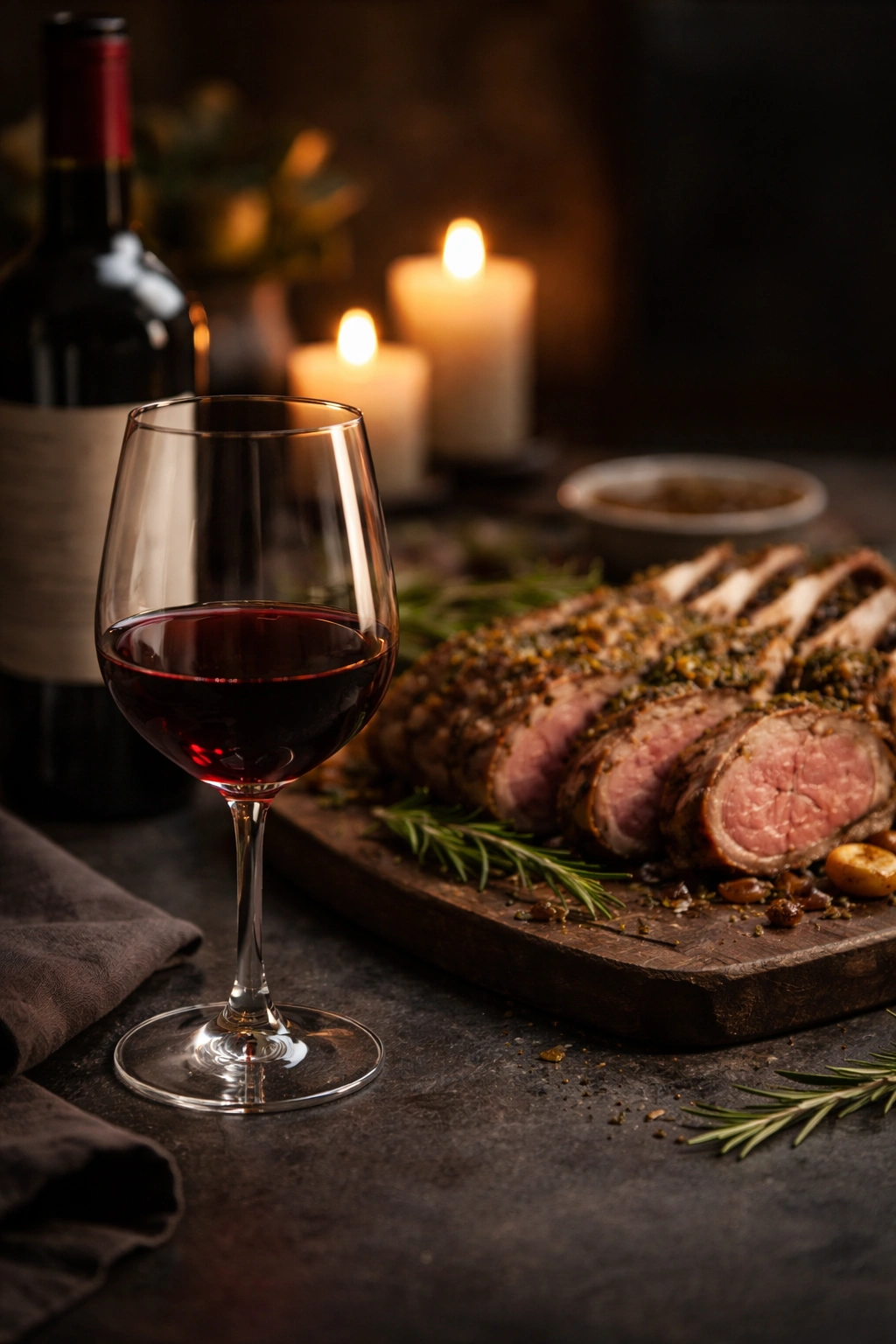
Wine and lamb are practically made for each other, and choosing the right pairing elevates everything. Medium-bodied red wines with good acidity are your sweet spot here. A Bordeaux-style blend (Cabernet Sauvignon with Merlot), a good Côtes du Rhône, or a Grenache-based wine will complement the herb-roasted lamb beautifully without overwhelming it. The acidity in these wines cuts through the richness of the meat, and their tannin structure stands up to the bold garlic and rosemary flavors.
If you want something slightly lighter, Pinot Noir is an absolutely gorgeous choice—it has enough body to match the lamb but enough elegance that it feels refined. For a rosé lover, a dry Provence rosé with good minerality works surprisingly well, especially if you’ve included lemon or citrus notes in your sides.
Avoid heavily oaked wines or overly fruity wines that would clash with the lamb. Avoid white wine unless you’re doing something specifically Mediterranean with lighter sides. Budget for a wine in the $20 to $35 range—you don’t need to spend a fortune, but the quality difference between a $12 bottle and a $25 bottle is noticeable and worth it for a special meal.
Make-Ahead Strategies for Stress-Free Date Night
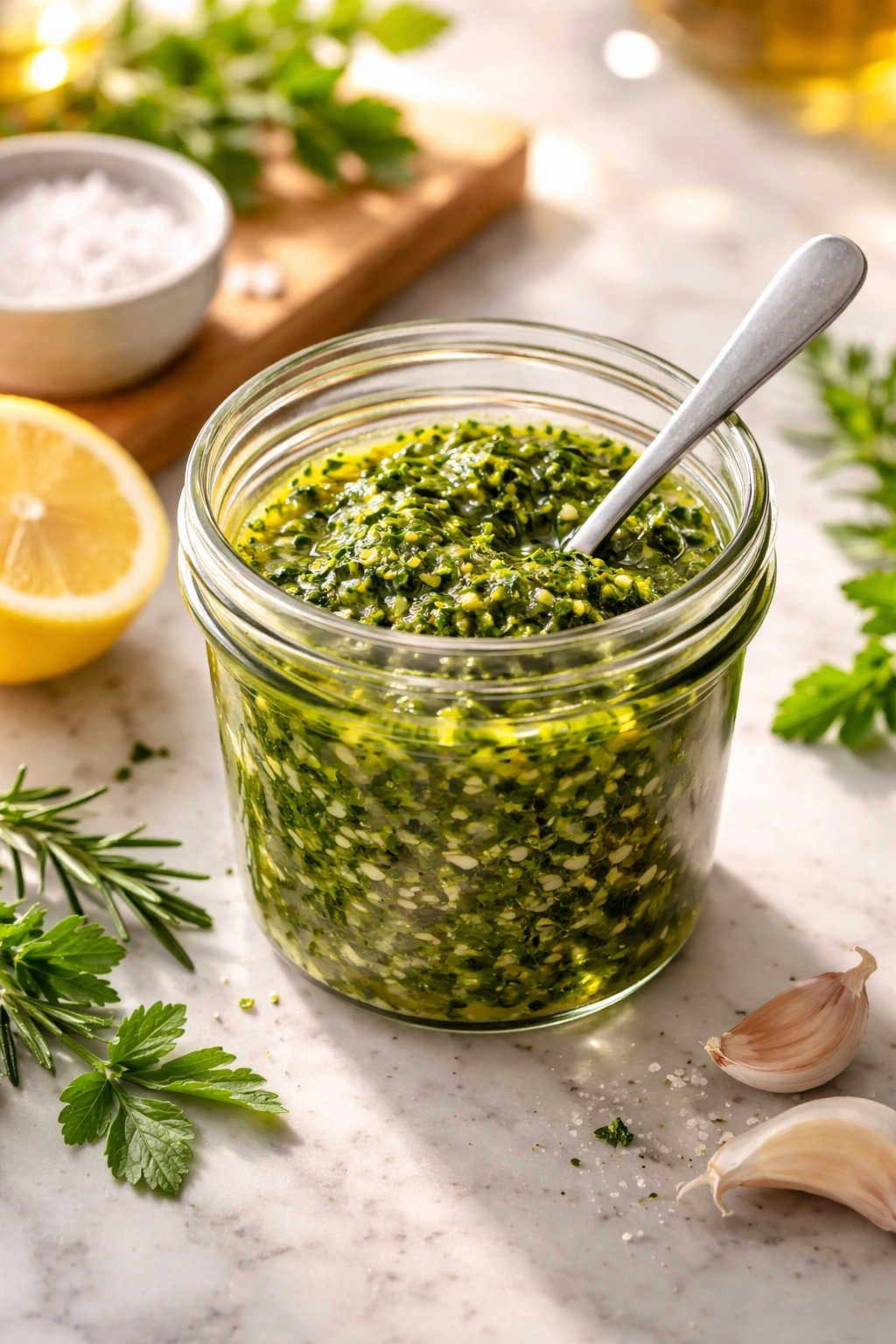
The herb marinade can be made up to 3 days ahead. Store it in an airtight container in the refrigerator. This means you can do the most flavorful step days in advance, which removes mental load on the actual day.
The lamb can be purchased and trimmed up to 24 hours ahead. Pat it dry, wrap it loosely in butcher paper (not plastic, which creates condensation), and store it in the coldest part of your refrigerator. This is genuine flexibility—you can get this done on your way home from work, knowing the hardest shopping step is already handled.
You can apply the marinade 4 to 6 hours ahead, cover the skillet loosely with plastic wrap, and refrigerate. About an hour before you want to cook, remove it from the fridge and let it come to room temperature on the counter. The oil in the marinade will warm and the meat will actually be easier to sear when it’s not ice-cold.
Vegetables can be prepped hours ahead. Chop, arrange on a baking sheet, and cover until you’re ready to roast them alongside the lamb or just before.
Potatoes can be boiled and smashed up to 4 hours ahead. Reheat gently in a saucepan with a splash of cream or milk while the lamb rests, and they’ll be warm and perfect.
Storage and Reheating Leftover Lamb
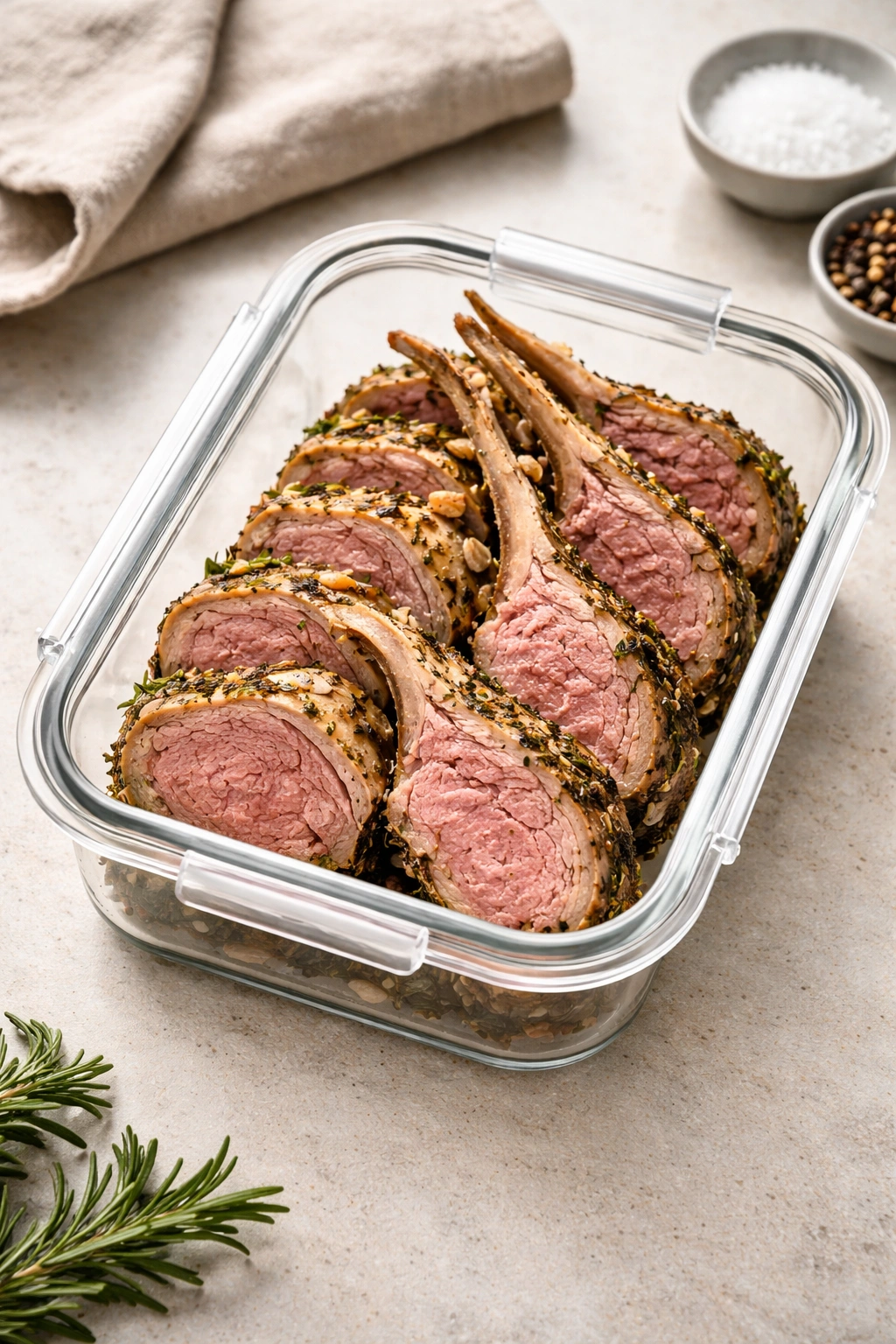
If miraculously you have leftovers, store them in an airtight container in the refrigerator for up to 3 days. Lamb actually tastes beautiful at room temperature or cold, so leftover chops are perfect for next-day salads, grain bowls, or just snacking straight from the fridge.
To reheat, wrap the lamb loosely in foil and place it in a 325°F oven for about 8 to 10 minutes until warmed through. Don’t overdo it—you’re reheating, not recooking. The goal is a warm interior without drying out the meat further. Some people prefer their leftover lamb at room temperature, which honestly requires no reheating at all.
You can freeze cooked lamb for up to 3 months. Wrap individual chops tightly in plastic wrap, then in aluminum foil, and place them in a freezer-safe container. Thaw in the refrigerator overnight before reheating.
Flavor Variations to Make It Your Own
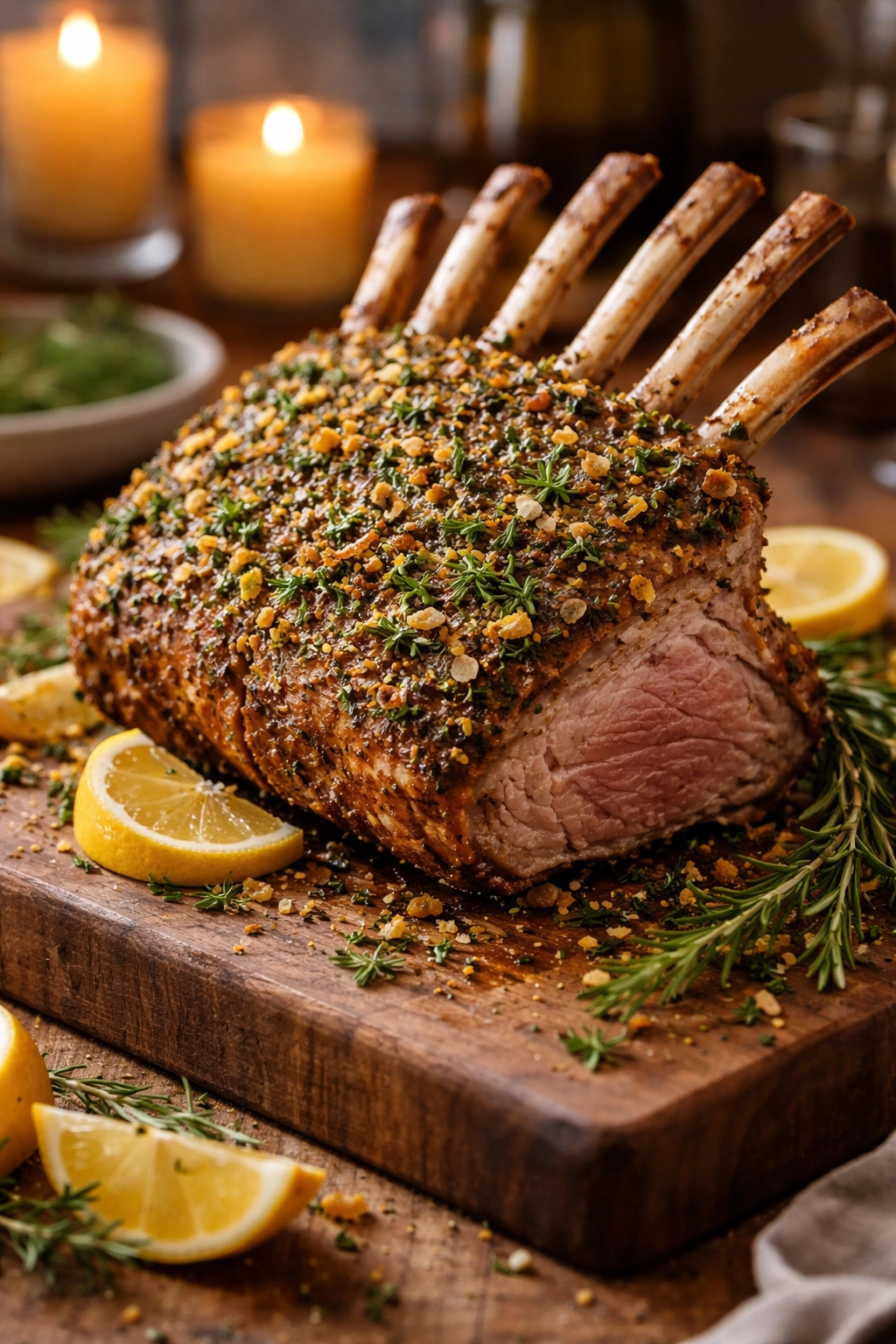
Once you’ve nailed the classic version, try swapping the herb blend. Mediterranean lamb loves thyme and oregano alongside rosemary. North African versions often use cumin, coriander, and a tiny pinch of cinnamon with garlic. Middle Eastern versions sometimes include sumac, za’atar, and fresh mint. The technique stays exactly the same; only the herb marinade changes.
Add citrus brightness by incorporating lemon zest or orange zest into your marinade. The acidity will lighten the richness of the lamb and add complexity. You can also finish the cooked lamb with a squeeze of fresh lemon juice just before serving.
Layer flavors with Dijon mustard spread on the meat before the herb crust goes on. The mustard creates a mild tang that plays beautifully with the herbs and adds another dimension of flavor. Some cooks prefer mustard over olive oil as the “glue” for the herbs to stick to the meat.
Double the garlic or try roasted garlic instead of fresh if you’re a true garlic lover. Roasted garlic has a sweeter, mellower profile that’s sophisticated and complex.
Final Thoughts
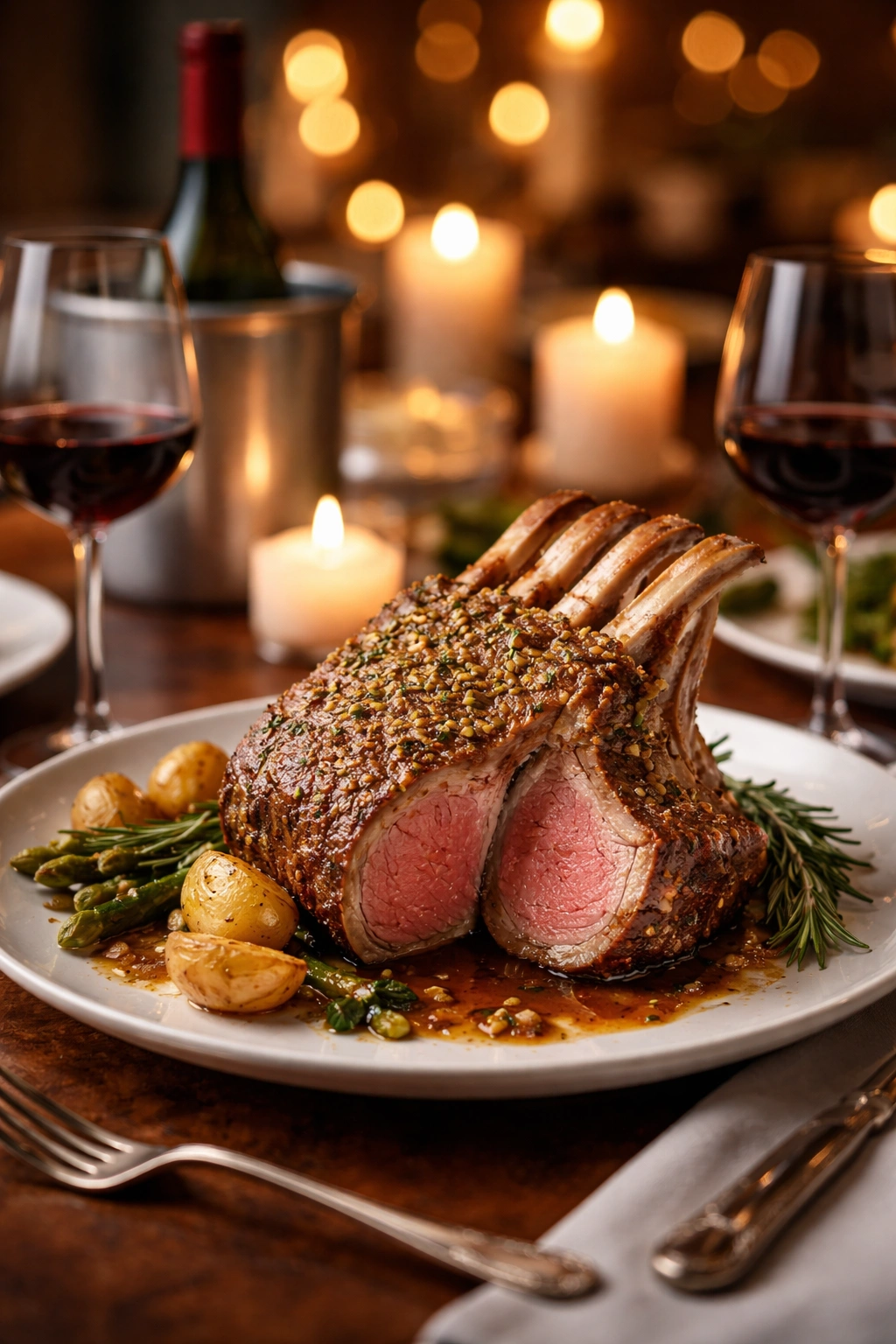
Rack of lamb is the dinner-party secret that separates people who stress about impressing their date from people who actually do impress them. It looks spectacular, tastes incredible, and requires roughly 30 minutes of your actual time. Everything else is just sitting around looking beautiful while the oven does the heavy lifting.
The confidence you’ll feel walking that sizzling skillet to the table, sliding perfectly pink lamb chops onto warm plates, and seeing your guest’s face light up — that’s worth every single minute of preparation. This is genuinely achievable for anyone with a basic kitchen and a meat thermometer. Stop thinking of it as intimidating and start thinking of it as your secret advantage. Your date night just became unforgettable.
