



There’s a particular kind of magic that happens when you’re chilled to the bone and a bowl of creamy, soul-warming soup appears in front of you. Tuscan chicken soup isn’t just about temperature—it’s about the way sun-dried tomatoes burst with concentrated, tangy sweetness, the way fresh spinach wilts into silky ribbons, and the way that first spoonful convinces your tired body that everything is going to be okay. This isn’t your grandmother’s basic chicken noodle soup. This is the kind of dish that tastes like it’s been simmering for hours, building complexity and depth, yet comes together in less than 45 minutes on a busy weeknight.
I’ve made versions of this soup dozens of times, and I keep coming back to it because it delivers something rare: genuine restaurant-quality flavor without the fuss or the fancy equipment. The magic lies in how few ingredients you actually need—chicken broth, cream, garlic, onion, fresh spinach, pasta, and sun-dried tomatoes—yet how that simple combination transforms into something that feels indulgent and special. The creamy broth wraps around tender chicken, the pasta adds substance without heaviness, and those jewel-like sun-dried tomatoes provide pops of intense umami flavor that keep people asking for the recipe.
What makes this version different from the dozens of Tuscan chicken soups floating around online is that it balances richness with restraint. It’s creamy enough to feel like a treat, but not so heavy that you can’t enjoy a second bowl. The techniques are straightforward enough for a beginner, yet the results are impressive enough to serve to people you want to impress. This is your new weeknight dinner secret, and honestly, it might become the soup you make all through the cooler months.
Why This Soup Matters on Cold Evenings
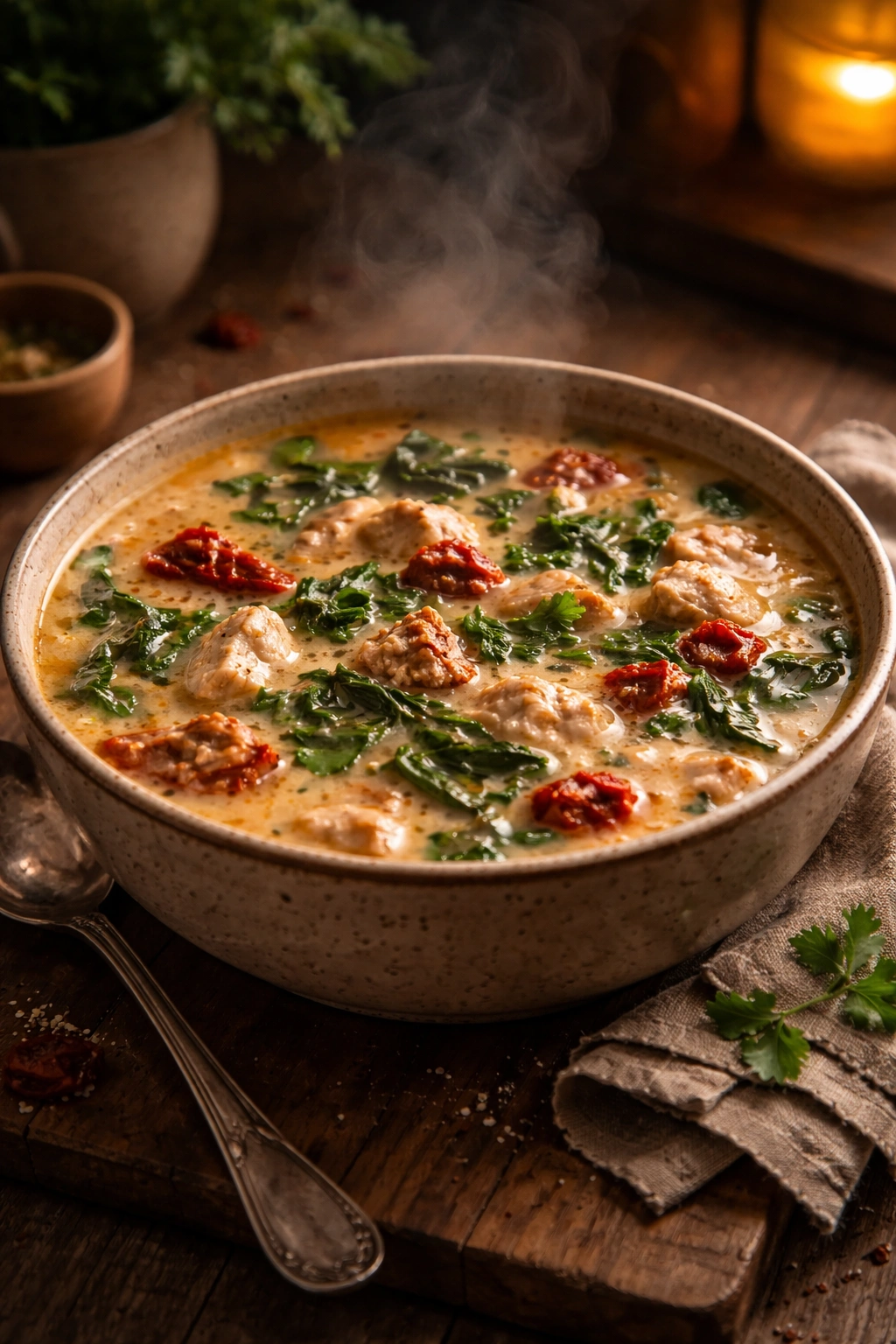
There’s actual science behind why soup feels so restorative when the weather turns chilly. A warm bowl of soup slowly raises your core body temperature, but more importantly, it triggers a relaxation response—your nervous system actually calms down when you’re consuming something warm and nourishing. Tuscan chicken soup does all of that, but it also delivers protein (from the chicken), vegetables (spinach and aromatics), and enough cream and cheese to trigger genuine satisfaction signals in your brain.
The beauty of this particular soup is that it works year-round, but it truly shines when the temperature drops. Something about the combination of creaminess and the bright, slightly acidic tang from sun-dried tomatoes feels deeply comforting without being heavy. You can eat this on a cold weeknight and actually feel restored, not weighed down. It’s the kind of soup that makes people slow down from whatever rushed thing they were doing and actually sit with their bowl for a few minutes.
What Makes Tuscan Chicken Soup So Craveable
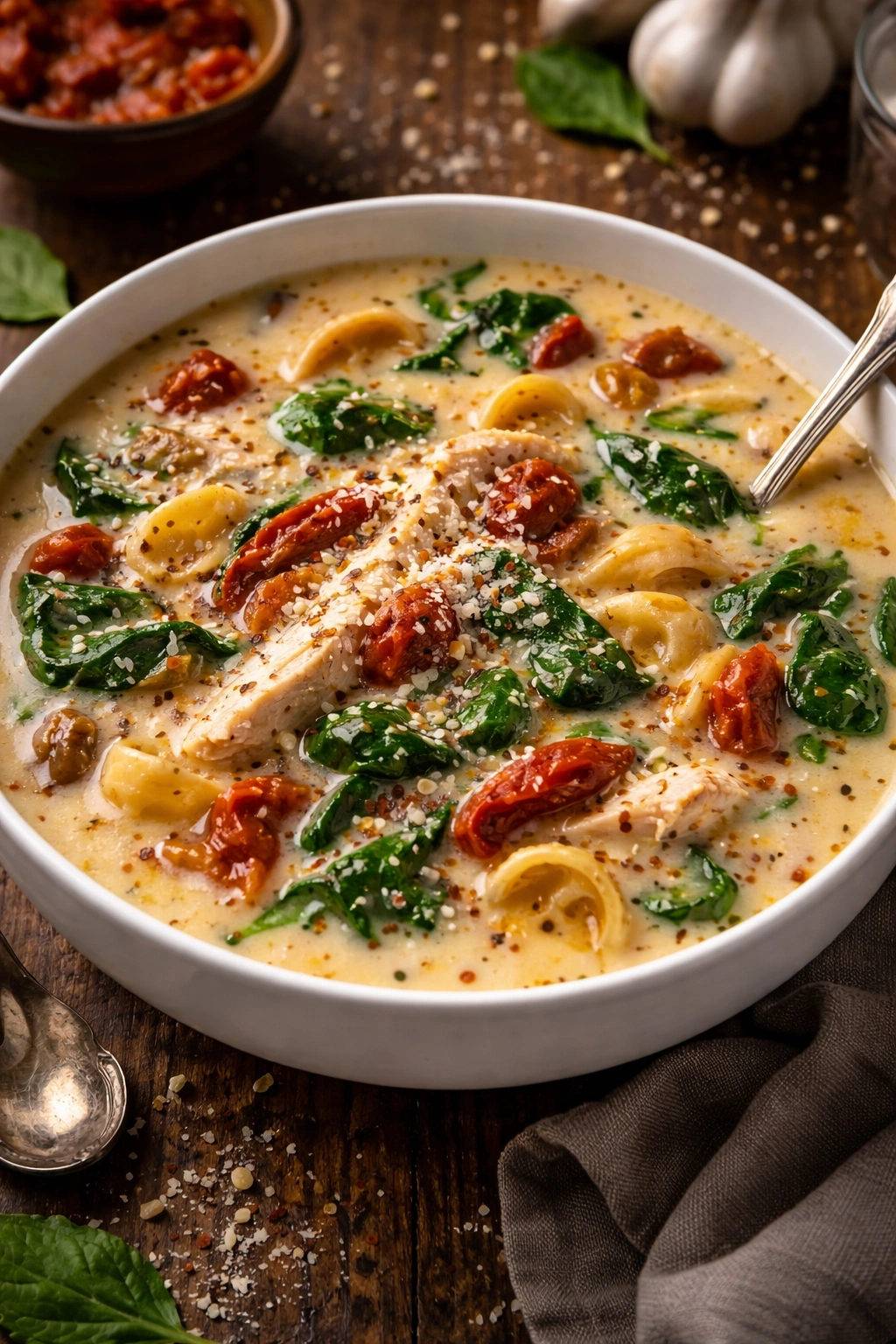
The secret to this soup’s addictive quality is the layering of flavors. You’re not just mixing ingredients together—you’re building a foundation with aromatics, adding depth with sun-dried tomatoes and their concentrated oil, then finishing with cream and fresh spinach that provides brightness and textural contrast. Each of these elements serves a purpose. The onion and garlic create a savory base. The sun-dried tomatoes bring intense, almost sweet-and-salty complexity. The cream rounds everything out and makes the broth silky. The spinach adds freshness and prevents the whole thing from feeling one-dimensional.
What people often miss is that proper pasta selection matters more than you’d think. Using small pasta shapes like shells, ditalini, or small macaroni means every spoonful contains a balanced mix of broth, pasta, chicken, and vegetables. Broken spaghetti or larger pasta shapes just don’t integrate the same way. The pasta should feel like it belongs in the soup, not like an afterthought dropped on top.
The chicken itself deserves attention too. You have three realistic options here: a rotisserie chicken (fastest, adds flavor from the roasting process), precooked shredded chicken (convenient, though less flavorful than rotisserie), or cooking fresh chicken breasts in the soup itself (gives you control and adds flavor to the broth, though it takes longer). Each approach works—it’s about what fits your schedule and energy level that particular evening.
Yield: Serves 4 to 6 (makes about 8 cups)
Prep Time: 15 minutes
Cook Time: 25–30 minutes
Total Time: 40–45 minutes
Difficulty: Beginner — This is genuinely one of the most forgiving soups to make. There’s minimal technique required, and it’s nearly impossible to mess up as long as you don’t overcook the pasta.
Complete Ingredient List
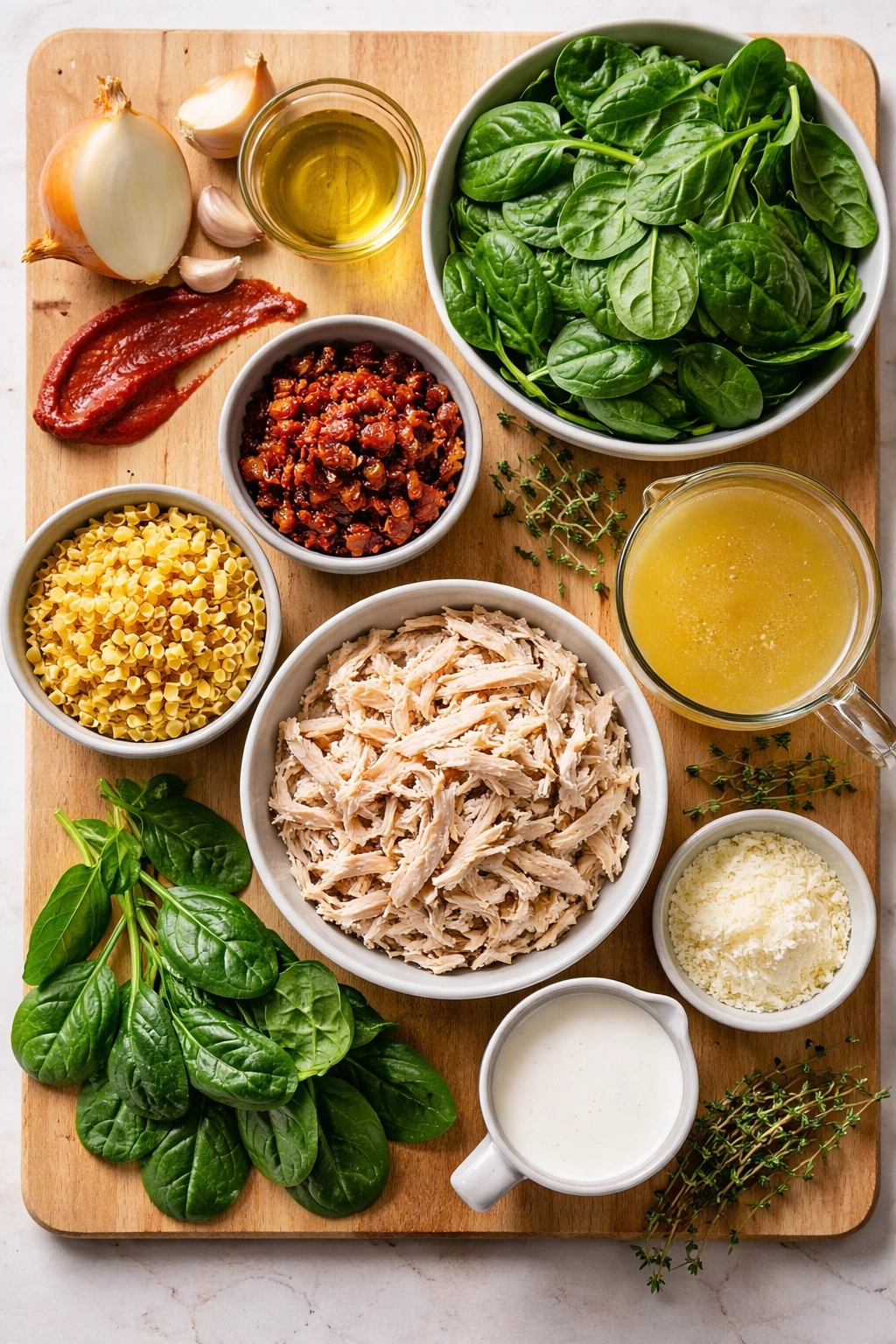
For the Soup Base:
- 2 tablespoons good olive oil
- 1 large yellow onion, diced (about 1½ cups)
- 4 garlic cloves, minced (or 1½ teaspoons jarred minced garlic in a pinch)
- 1 tablespoon tomato paste
- 4 cups low-sodium chicken broth (or homemade if you have it)
- ½ cup dry white wine, optional but genuinely helpful (or substitute with additional broth)
- 1 teaspoon dried Italian seasoning
- ½ teaspoon dried thyme, or 1 fresh sprig
- 1 bay leaf
- ½ teaspoon fine sea salt, plus more for tasting
- ¼ teaspoon freshly ground black pepper
For the Protein and Vegetables:
- 3 cups cooked shredded chicken (rotisserie chicken, store-bought shredded chicken, or one 1½-pound rotisserie chicken, meat pulled from bones)
- 2 cups fresh baby spinach (or chopped fresh spinach if that’s what you have), roughly chopped
- ½ cup sun-dried tomatoes packed in oil, drained and roughly chopped (reserve 1 tablespoon of the oil from the jar for cooking if you wish)
For Body and Finish:
- ¾ cup small pasta shapes (shells, ditalini, small macaroni, or other small pasta — approximately 3 ounces by weight)
- ½ cup heavy cream, or half-and-half for a lighter version
- ⅓ cup freshly grated Parmesan cheese (or the best quality pre-grated if that’s what you have — fridge-case style, not the green shaker can)
For Serving (Optional but Recommended):
- Additional grated Parmesan for garnish
- Fresh basil leaves, roughly torn
- Red pepper flakes if you like a hint of heat
- Extra sun-dried tomatoes for garnish, chopped
Step-by-Step Cooking Instructions
Begin the Flavor Base:
-
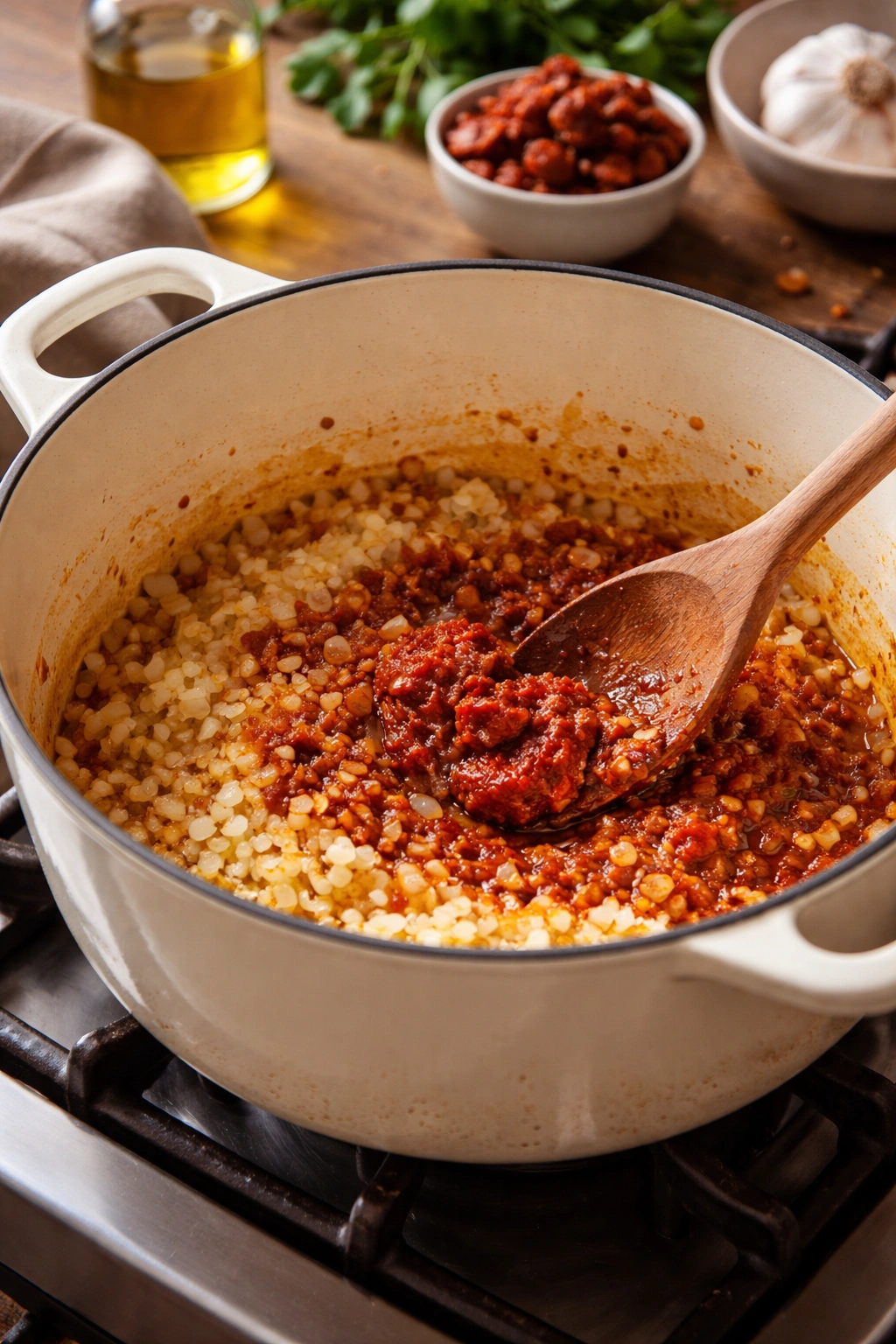
Pour the olive oil into a large heavy-bottomed pot or Dutch oven and place it over medium heat. Let the oil warm for about 30 seconds — you want it hot enough to sizzle when you add the onion, but not smoking.
-
Add the diced onion to the hot oil and cook for 4 to 5 minutes, stirring occasionally, until the onion becomes soft and translucent with just the slightest golden color at the edges. You’re building flavor here, not caramelizing deeply, but don’t rush this step by pushing the heat higher.
-
Stir in the minced garlic and cook for exactly 1 minute, stirring constantly. Garlic burns fast and tastes bitter when it does, so pay attention — you’re just looking for the kitchen to smell unmistakably garlicky and for the raw garlic flavor to soften.
-
Add the tomato paste directly to the pot and stir it thoroughly into the onion and garlic, cooking for 1 to 2 minutes. The tomato paste should darken slightly and caramelize just a bit against the bottom of the pot — this concentrates its flavor and removes that raw, tinny taste raw tomato paste sometimes has.
Build the Broth:
-
If you’re using it, pour in the white wine and let it simmer over medium-high heat for 2 to 3 minutes, stirring occasionally, until the liquid reduces by about half and the sharp alcohol smell dissipates. The wine reduces to its essence — a savory, slightly sweet depth that’s genuinely worth the effort. If you’re skipping wine, that’s fine; just move to the next step.
Advertisements -
Pour in the chicken broth, then add the Italian seasoning, thyme, bay leaf, salt, and pepper. Stir everything together and bring it to a gentle boil over medium-high heat — you should see small bubbles breaking the surface consistently, not a rolling, aggressive boil.
-
Once the broth reaches a boil, add the pasta directly to the pot and stir to prevent it from sticking to the bottom. Check the pasta package for the recommended cooking time (usually around 8 to 10 minutes for small shapes) and set a mental timer. Cook the pasta for about half that time before moving to the next step.
Add the Protein:
-
While the pasta is cooking, add the shredded chicken to the pot. Stir it in gently — you’re distributing the chicken throughout the broth so it heats evenly. If you’re using raw chicken breasts instead of pre-cooked chicken, add them now instead, along with the sun-dried tomatoes, and let them simmer for 15 minutes before continuing. Then remove the chicken, shred it, and return it to the pot.
-
Continue cooking until the pasta is tender with just a slight bite — the texture should be pleasant to chew, not mushy or hard. This usually takes 10 to 12 minutes total from when you added the pasta, but taste a piece to be sure.
Create the Creamy Finish:
-
Turn the heat down to medium-low. Sprinkle the Parmesan cheese directly into the pot and stir for about 1 minute until the cheese melts completely and distributes throughout the broth. The broth should look slightly thicker and more luxurious now.
-
Pour in the heavy cream slowly, stirring as you go. The soup will take on a beautiful pale, creamy appearance. Stir for another minute to ensure the cream is fully incorporated and the temperature is even throughout.
-
Add the chopped sun-dried tomatoes and the fresh spinach to the pot. Stir gently and let it sit for 2 to 3 minutes — the residual heat will wilt the spinach into tender ribbons without cooking it to death. You want to see swirls of green throughout the creamy broth.
Taste and Adjust:
-
Taste a spoonful. This is important. The soup should taste rich and savory, with a subtle brightness from the spinach and bursts of tangy sweetness from the sun-dried tomatoes. Add a pinch more salt and pepper if needed — creamy soups typically need a bit more seasoning than you’d expect, because the fat coats your palate slightly.
-
Fish out and discard the bay leaf if you used one. Ladle the soup into bowls immediately while it’s hot. Do not let the pasta sit in the soup for more than a few minutes before serving, or it will continue absorbing liquid and become mushy, especially if you have leftovers.
Tips for Restaurant-Quality Results
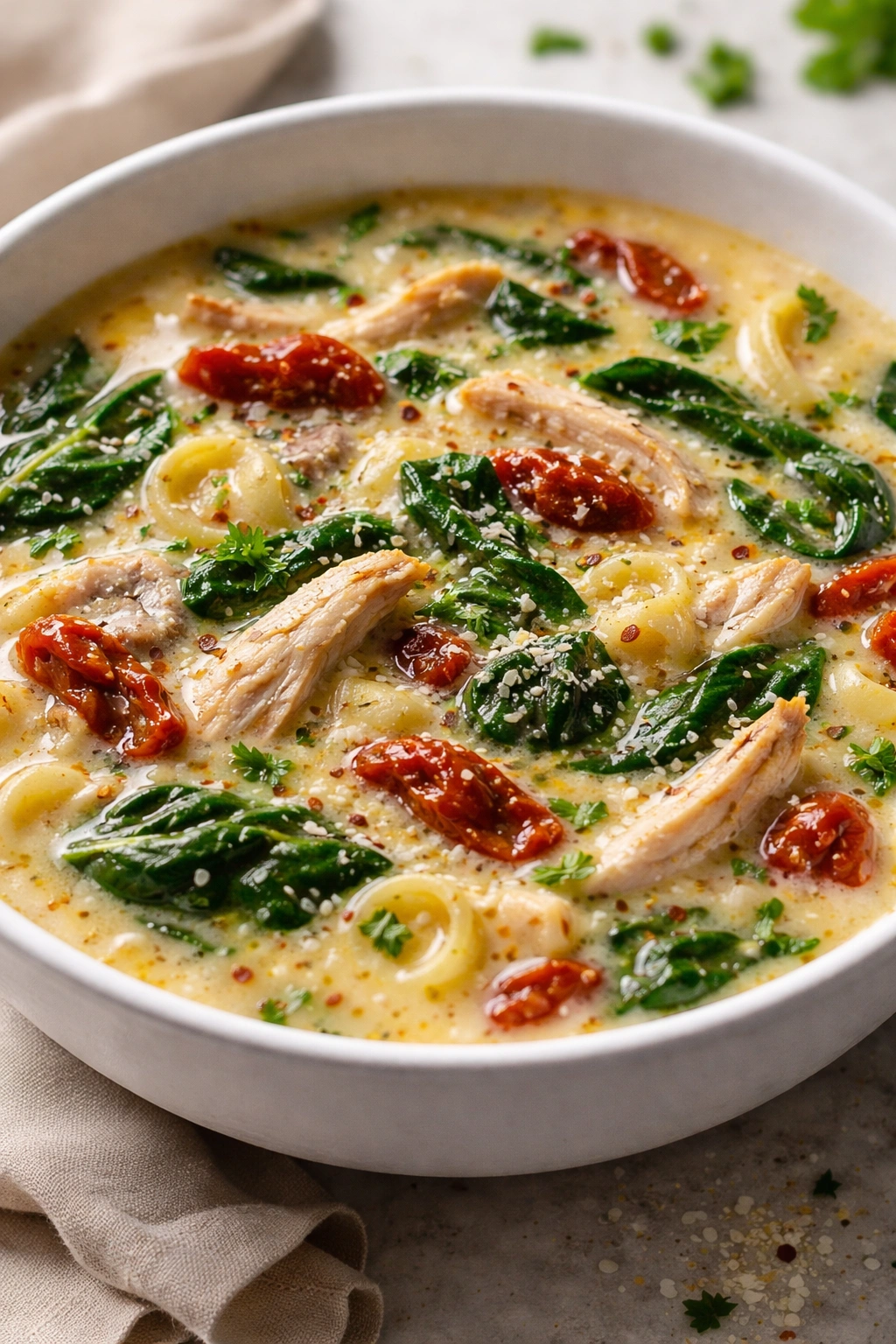
Don’t skip the tomato paste step. Raw tomato paste tastes tinny and one-dimensional. Cooking it in the fat for a minute or two brings out its deep, sweet tomato essence and transforms it into something that adds genuine richness to the broth. This is a small move with a big payoff.
The quality of your chicken broth matters more than you might think. A good broth has actual body and flavor—it tastes like it was made from chicken bones and vegetables, not just salt and water. If you have access to homemade chicken broth, use it here. Store-bought is fine, but choose low-sodium so you can control the seasoning. Avoid bouillon cubes or instant broth powders if possible; they tend to taste metallic and salty in comparison.
Pre-grated Parmesan from the refrigerated section (not the green shaker can) works perfectly fine in this soup, despite what cheese snobs might tell you. The fridge-case stuff is designed to melt, and it does. Save the artisanal whole-block Parmigiano-Reggiano for finishing dishes where it stands alone—in a creamy soup, nobody will taste the difference, and you’ll save yourself effort.
Don’t overcrowd the pasta. Use ¾ cup max, which is roughly 3 ounces. A heavy hand with pasta turns this soup into pasta water with some chicken and cream stirred in. You want pasta as an accent, not the main event.
The wine really is worth it. A simple, inexpensive dry white wine (anything you wouldn’t mind drinking yourself) adds a savory complexity that’s genuinely hard to replicate. The alcohol burns off completely—after 3 minutes of simmering, there’s no alcohol taste left, just a subtle depth that makes people wonder what you did to make the soup taste so good.
Fresh spinach makes a textural difference that frozen spinach simply can’t replicate. When you add fresh spinach at the end, it wilts into tender, delicate ribbons. Frozen spinach, even thawed, becomes mushy and releases extra liquid. If you only have frozen, thaw it completely, squeeze out every drop of moisture, and add it in the second-to-last step.
Common Mistakes to Avoid
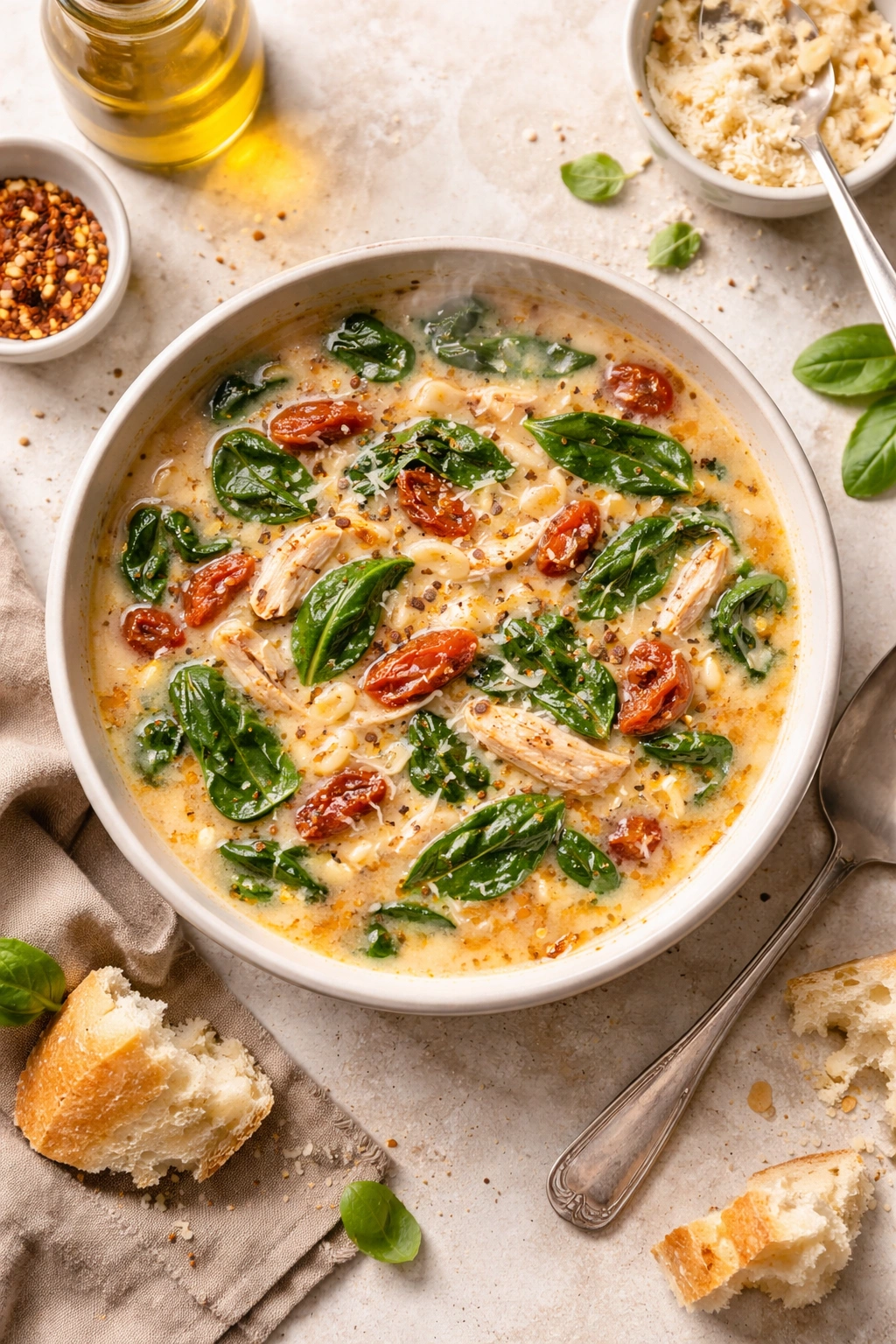
The soup tastes flat or one-dimensional. This almost always means the salt level is too low. Creamy soups need more seasoning than broth-based soups because the fat suppresses flavor perception slightly. Taste it before serving and don’t be shy with salt. You should taste individual notes—the saltiness of the Parmesan, the sweetness of sun-dried tomatoes, the savory herbs—not just “cream.”
The soup tastes too rich or heavy. You’ve likely used too much cream or heavy cream when half-and-half would’ve worked better. Next time, use half-and-half instead, or use cream but reduce the amount to ⅓ cup. The soup should feel luxurious, not like drinking liquid butter.
The pasta turned to mush. This happens because either the pasta was cooking too long before serving, or you let the finished soup sit for too long with the pasta in it. Pasta continues to absorb liquid and soften as it sits. Cook the pasta just until tender, and serve immediately. If you have leftovers, store the pasta separately from the broth (scoop the pasta out with a slotted spoon into a separate container).
The spinach looks gray and sad. You cooked it too long. Add it at the very end and let the residual heat wilt it for just 2 to 3 minutes. The spinach should be tender but still vibrant green, and it should just barely wilt while you stir.
There’s graininess or separation in the broth. The cream likely got too hot or was added too quickly and curdled. Turn the heat down to medium-low before adding cream, and pour it in slowly while stirring. If it’s already happened, you can sometimes save it by removing the pot from heat, letting it cool for a minute, then slowly whisking in a tablespoon of cold heavy cream.
The sun-dried tomatoes taste like rubber. You’re using the wrong kind—make sure you get oil-packed sun-dried tomatoes, not the dry kind sold in bulk bins. The oil-packed versions are already softened and ready to eat. If you accidentally bought dry sun-dried tomatoes, rehydrate them in warm water for 10 minutes before chopping and adding them.
Variations to Make It Your Own
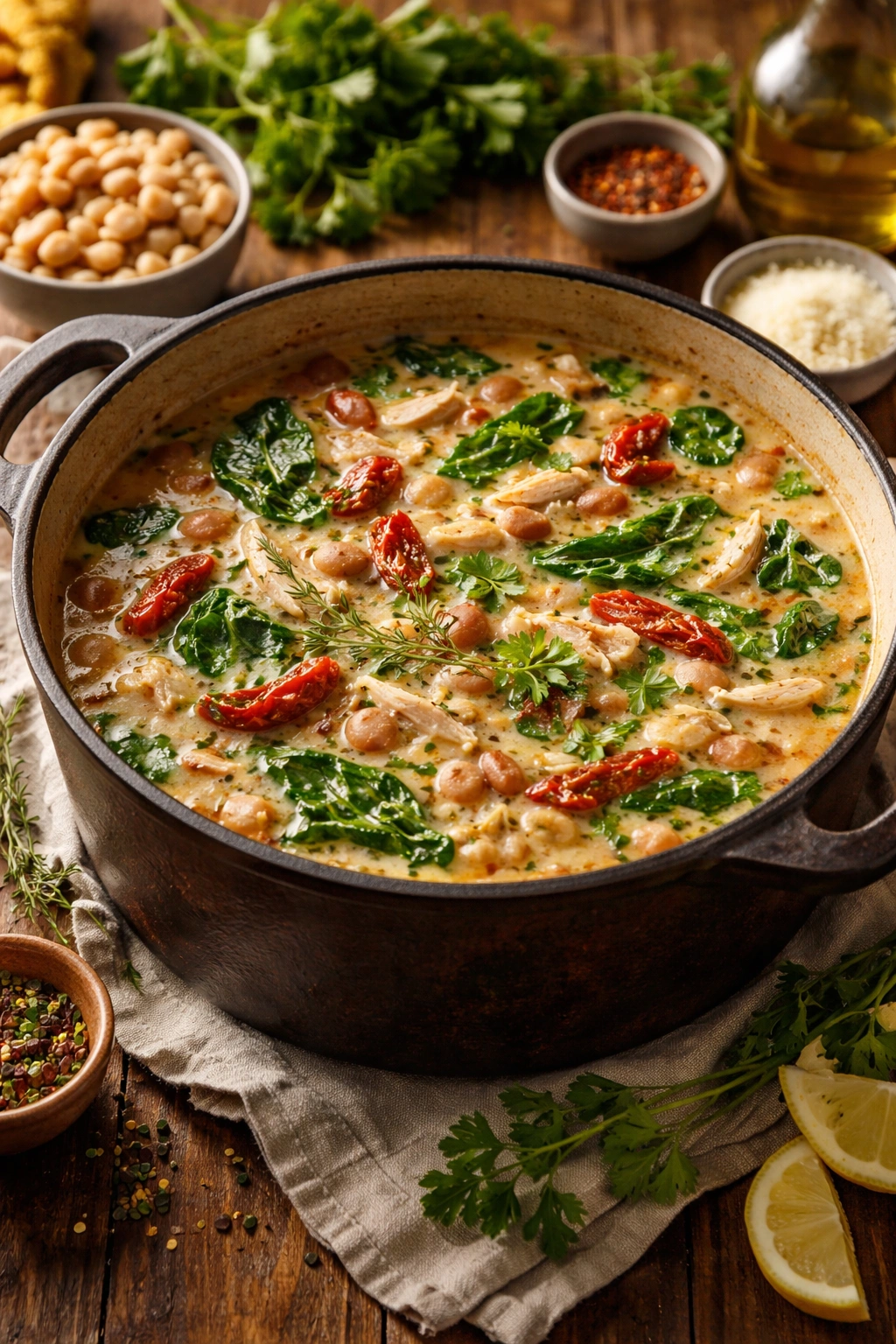
White Bean Version: This is genuinely popular and it works beautifully. Add one 15-ounce can of cannellini or Great Northern beans (drained and rinsed) along with the broth. The beans add earthiness and protein, making the soup even more filling. The creamy texture of the beans also helps thicken the broth slightly.
Vegetarian or Vegan: Simply omit the chicken and use vegetable broth instead of chicken broth. Increase the beans to 2 cans for protein. You can either omit the cream and cheese entirely for a vegan version (use a plant-based cream alternative if you want richness), or use a dairy-free cream and vegan Parmesan alternative. The soup will be lighter but still deeply flavorful from the sun-dried tomatoes and herbs.
With Fresh Herbs: If you have fresh basil, fresh thyme, or fresh oregano on hand, use it. Add a small handful of fresh herbs in the last minute of cooking for brightness. Fresh dill also works surprisingly well with the sun-dried tomatoes.
Roasted Red Pepper Version: Replace or supplement the sun-dried tomatoes with jarred roasted red peppers (about ½ cup, chopped). The peppers are sweeter and milder than sun-dried tomatoes, creating a slightly different but equally delicious flavor profile.
With Artichoke Hearts: Add one 14-ounce can of artichoke hearts (drained and quartered) along with the broth. Artichokes complement sun-dried tomatoes beautifully and add another dimension of flavor that feels very Mediterranean.
Tortellini Version: Replace the small pasta shapes with frozen cheese tortellini. Add the tortellini 30 minutes before the end of the cooking time, or add it to the finished soup 5 minutes before serving if you’re using store-bought. It creates a more indulgent, restaurant-style version.
Spicy Version: Add ¼ to ½ teaspoon of red pepper flakes along with the herbs, or finish the bowl with a pinch of red pepper flakes and a drizzle of chili oil. This adds heat without overpowering the other delicate flavors.
With Mushrooms: Sauté 8 ounces of sliced mushrooms (cremini, button, or a mix) in a separate pan with a tablespoon of olive oil and a pinch of salt until they’re golden, then add them to the soup just before serving. Mushrooms add an earthy depth that works beautifully with sun-dried tomatoes and spinach.
Storage and Make-Ahead Guidance
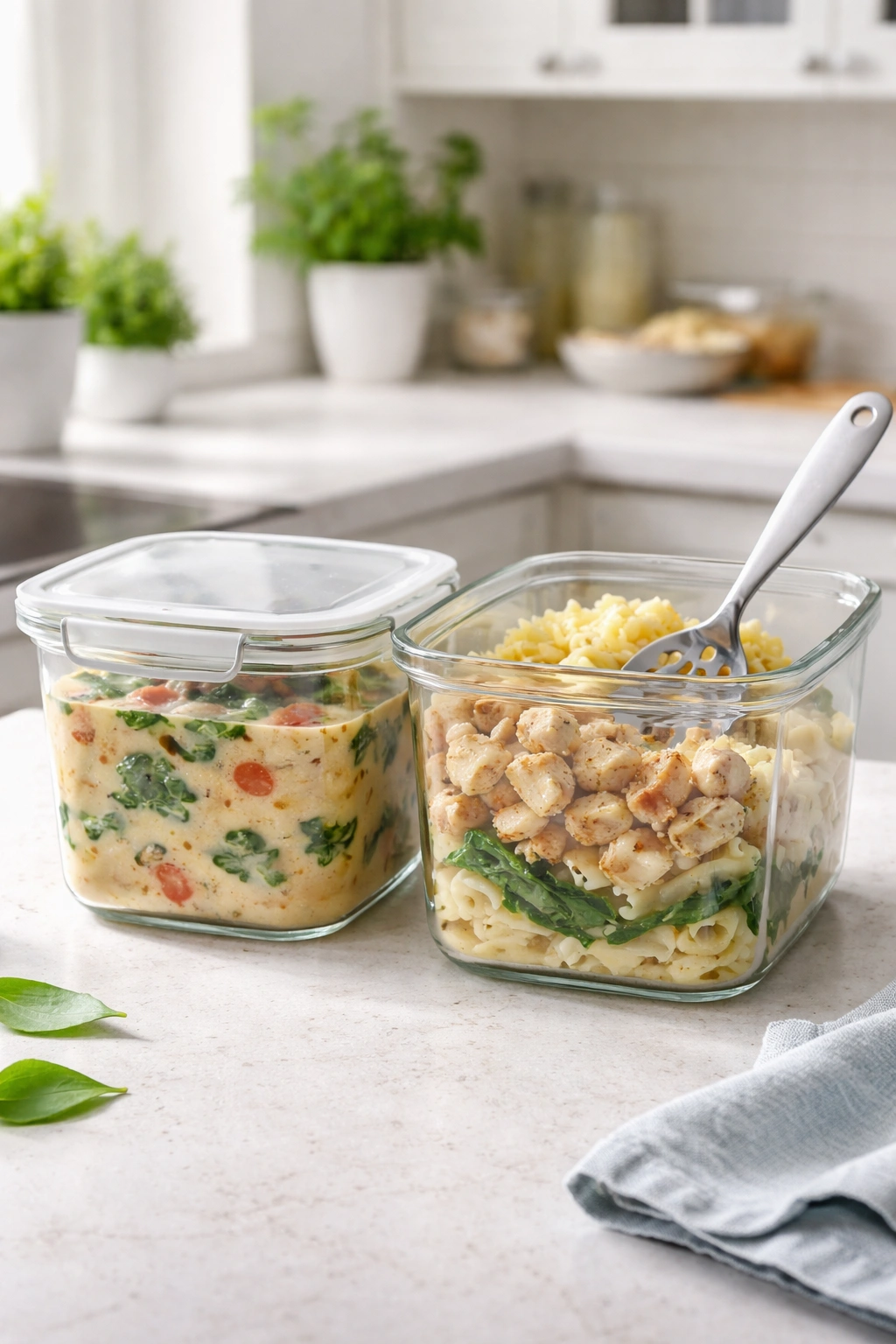
This soup keeps beautifully in the refrigerator for 3 to 4 days, but here’s the crucial detail: store the pasta separately from the broth. Use a slotted spoon to remove the pasta, chicken, and vegetables into one container, then pour the broth into another. When you reheat, combine them just before serving. If you leave the pasta sitting in the broth, it will continue absorbing liquid and become unpleasantly soft by day two.
To reheat, pour the broth into a pot and warm it over medium heat until steaming. Add the pasta and chicken mixture and stir gently until heated through, about 5 minutes. If the soup seems too thick (because the pasta absorbed some liquid during storage), add a splash of chicken broth or cream to restore the consistency you want.
For freezing: This soup freezes well for up to one month, but again, separate the components. Cool the soup completely, then portion the broth into a freezer-safe container, and store the pasta mixture separately. Thaw the broth in the refrigerator overnight, then reheat gently and add the pasta mixture. Creamy soups can separate slightly when frozen and reheated, so stir well during reheating and add a splash of cream if needed to restore smoothness.
You can also make this soup completely ahead of time—cook through step 12, cool it completely, and refrigerate it for up to 2 days before reheating. This is perfect for meal prep on a weekend for weeknight dinners during the week.
Perfect Pairings and Serving Ideas
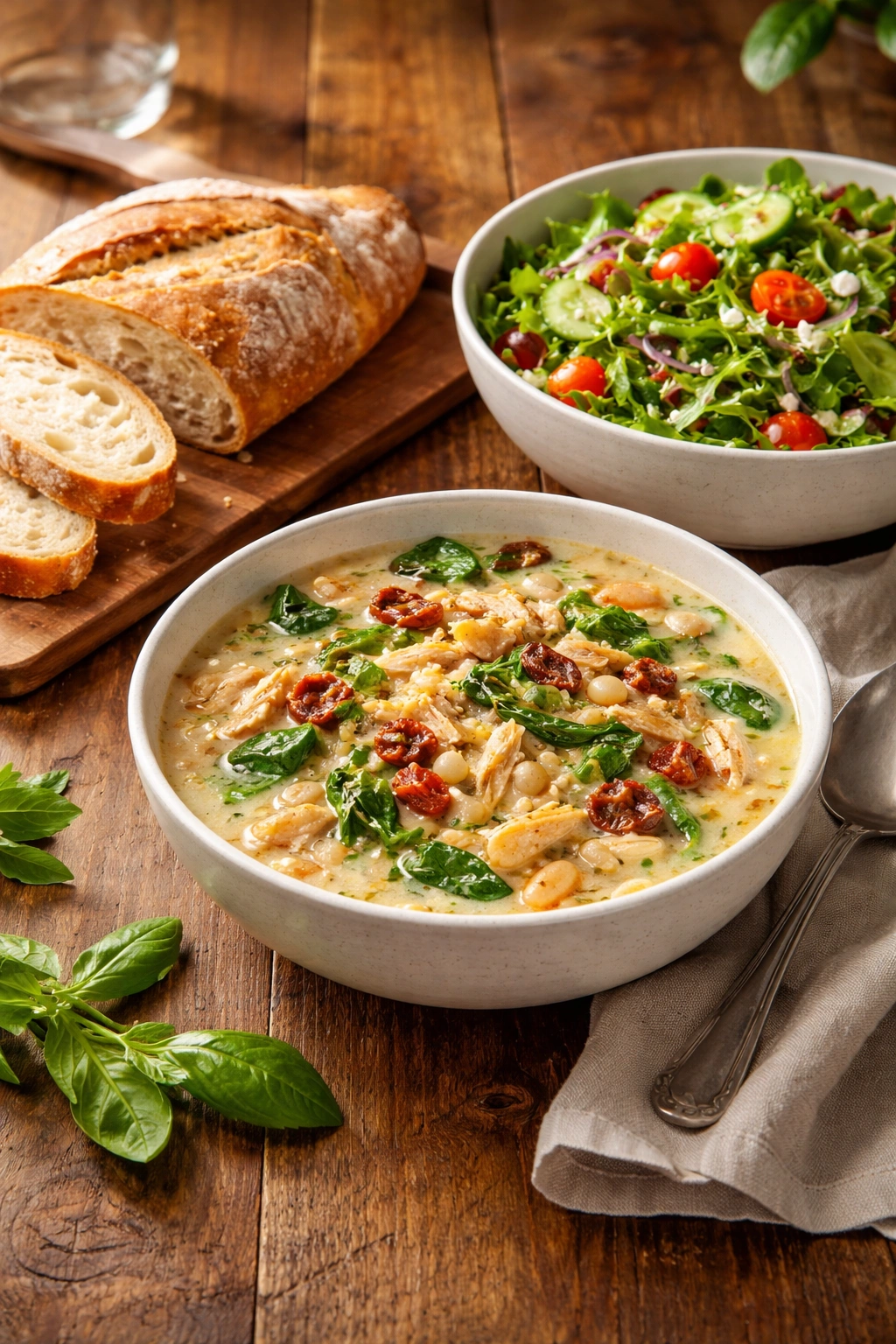
Tuscan chicken soup stands completely on its own as a meal, but it’s also generous enough to be part of a larger dinner. A simple green salad with a bright vinaigrette cuts through the creaminess beautifully—try a lemon vinaigrette or a classic balsamic. The acidity refreshes your palate between spoonfuls.
Crusty bread is the obvious choice, and it’s the right choice. Something with structure—a rustic sourdough, a hearty whole grain loaf, or even focaccia—gives you something to soak up the last precious drops of broth. Avoid soft bread that falls apart in the soup; you want bread that stays intact.
Garlic bread is decadent but works perfectly. Brush baguette slices with olive oil infused with minced garlic and fresh parsley, toast until crispy, and serve alongside. You essentially have a deconstructed piece of Italian garlic bread to dip into the soup.
A simple cheese course afterward—some Parmigiano-Reggiano shards, a wedge of fresh mozzarella, or a soft cheese like burrata—extends the meal and plays beautifully with the Tuscan flavors of the soup.
If you’re serving this at a dinner party, ladle it into wide, shallow bowls (not deep soup bowls—the shallower shape shows off the colors better). Top each bowl with a small amount of freshly grated Parmesan, a few torn basil leaves, a few chopped sun-dried tomatoes, and a tiny drizzle of good olive oil. The presentation should look intentional and restaurant-quality.
For a casual weeknight dinner, serve it as-is in whatever bowls you have. Nobody cares about plating when they’re cold and hungry, and the soup is delicious regardless.
Why Rotisserie Chicken Saves the Day
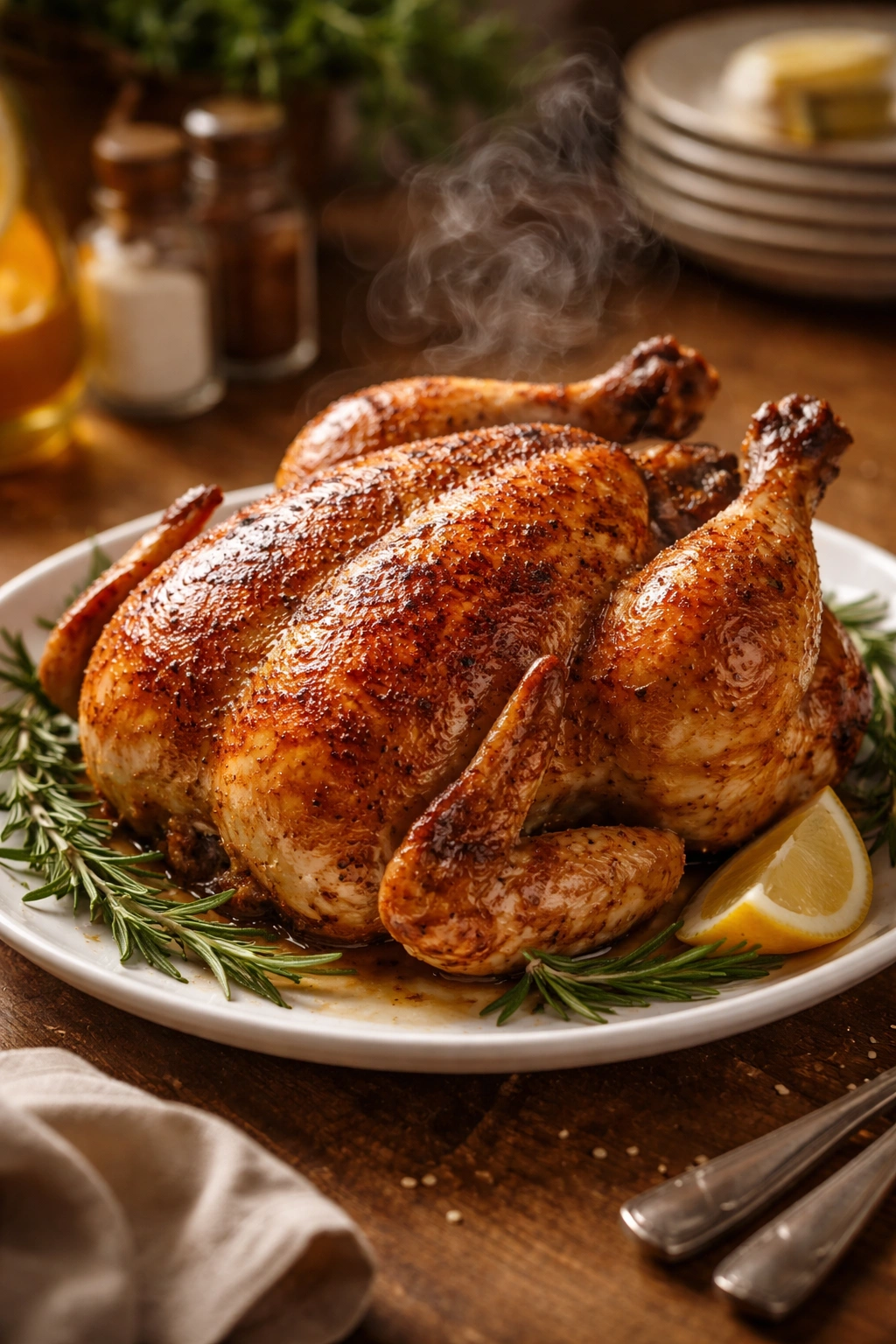
Rotisserie chicken is the secret weapon for this soup, honestly. A whole rotisserie chicken from the grocery store delivers multiple benefits that you might not immediately notice. First, the chicken has already been roasted, which means the meat is flavorful in a way that steamed or boiled chicken simply isn’t. The roasting process creates browning and develops deeper, more complex flavors in the meat itself.
Second, rotisserie chicken is infinitely faster than cooking chicken from scratch. You buy it, pull the meat from the bones (which takes maybe 3 minutes if you’re being careful), and you’re done. No waiting for chicken breasts to poach or bake. No dealing with raw chicken. No timing coordination.
Third, rotisserie chicken actually adds flavor to the soup broth. Those bones and skin still have gelatin and collagen that release into the liquid. If you have time, throw the leftover bones and skin into the broth while it’s simmering—let it sit for 10 minutes, then fish them out before serving. Your broth will be richer and more complex-tasting.
The only real alternative to rotisserie chicken that works just as well is pre-cooked shredded chicken, which you can find in the meat section of most supermarkets. It’s convenient if you don’t want to shred the rotisserie chicken yourself. Store-bought shredded chicken is perfectly acceptable, though it tends to be slightly less flavorful than rotisserie.
If you’re cooking fresh chicken breasts for this soup, do it in the soup itself. Cut the breasts into bite-sized pieces and add them to the broth along with the sun-dried tomatoes in step 8, then simmer for 15 to 20 minutes until the chicken is cooked through and tender. This is actually the best way to ensure the most flavorful broth, because the chicken releases its flavors into the liquid as it cooks.
The Magic of Sun-Dried Tomatoes
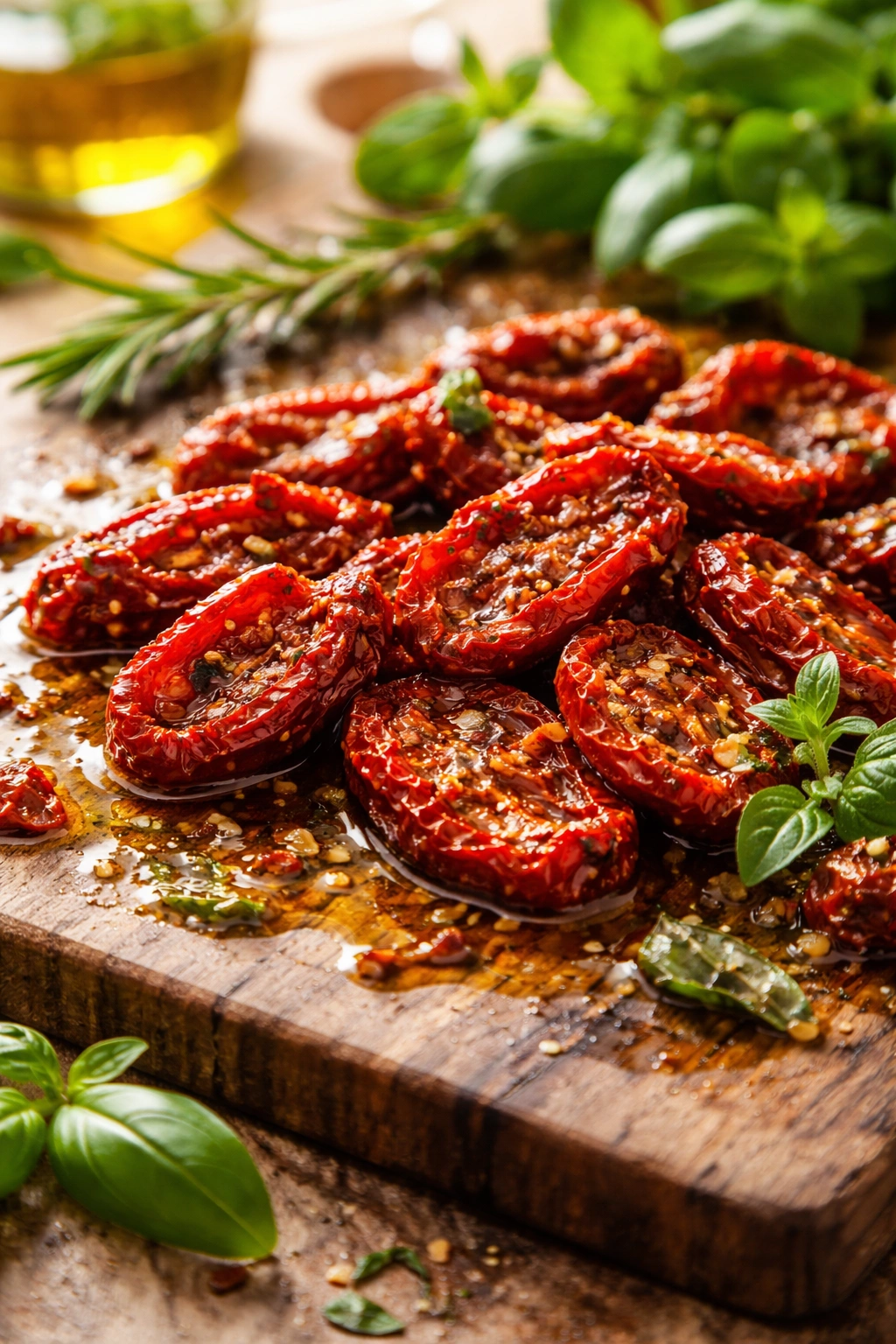
Sun-dried tomatoes are essentially tomatoes with 90 percent of their water removed, which means you’re tasting tomato in its most concentrated, intense form. A single sun-dried tomato has probably 8 to 10 times the flavor of a fresh tomato, which is why a small amount goes such a long way in this soup.
Oil-packed sun-dried tomatoes (which is what you want) are softened and ready to use directly from the jar. They’re packed in olive oil infused with herbs—typically basil, oregano, or thyme. That flavored oil is liquid gold for cooking. You can actually use a tablespoon of it instead of plain olive oil to sauté your onions and garlic at the beginning, which adds an extra layer of flavor to the entire soup.
The flavor profile of sun-dried tomatoes is unusual—they’re sweet (more so than fresh tomatoes), salty, and deeply savory all at once. That combination is what makes this soup taste so sophisticated. If someone tastes it and says “I can’t quite put my finger on what makes this so good,” that’s likely the sun-dried tomatoes doing their job perfectly.
You can also use sun-dried tomatoes packed in water, though they won’t be quite as flavorful, and you’ll lose the benefit of that seasoned oil. If that’s all you can find, it still works—just make sure to drain them well before adding them to the soup.
The chopped or julienned varieties work fine. Whole sun-dried tomatoes are beautiful but a pain to chop, and they take up a lot of jar space. Go for pre-chopped if you find them; it saves time and frustration.
Final Thoughts
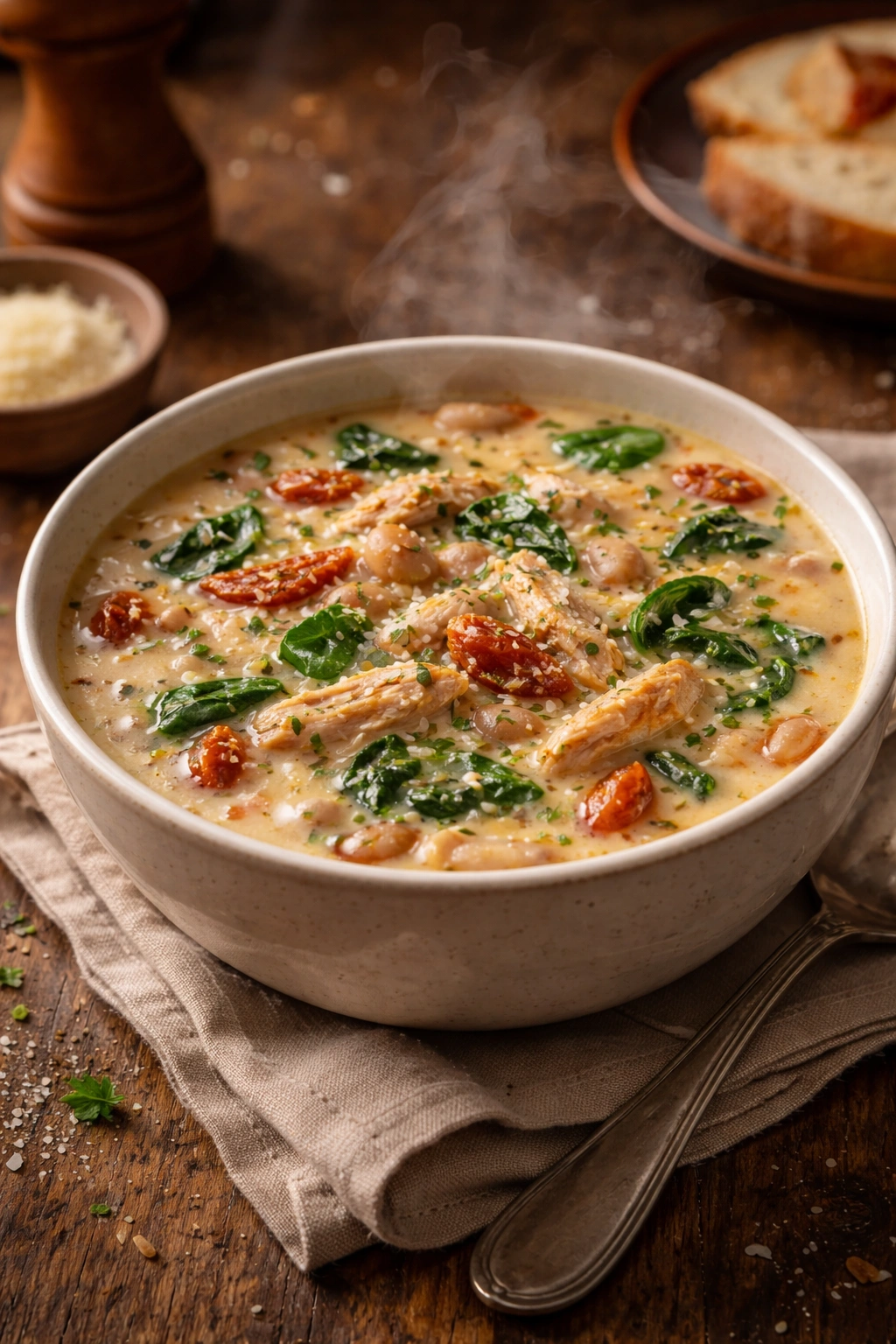
This soup exists for those moments when the world feels too cold, too fast, or too much. When you need something that feels like a hug in a bowl but doesn’t require an hour of active cooking or a complicated shopping list. It’s the kind of soup that tastes impressive enough to serve to people you want to impress, yet simple enough that you’ll actually make it on a random Tuesday night when it’s dark at 5 p.m. and you need comfort food.
The real beauty of Tuscan chicken soup is that it never tastes the same twice, even when you follow the exact same recipe. The broth you use, the specific sun-dried tomatoes you buy, even the water quality in your area affects how it comes together. This means the soup invites experimentation. Once you’ve made it a few times and gotten comfortable with the basic formula, you’ll start tasting where you can add your own touches.
Make it, eat it warm straight from the pot on a chilly evening, then make it again next week. It’s the kind of soup that becomes a regular part of your rotation, the one you reach for when you want something that works without trying too hard, tastes like you actually know what you’re doing in the kitchen, and somehow makes everything feel a little bit better.
