



Chinese takeout cravings don’t have to mean waiting 30 minutes for delivery or spending money on soup you can make yourself in less time than it takes to order. Egg drop soup — that silky, golden broth studded with delicate ribbons of cooked egg — isn’t just restaurant fare. It’s one of the quickest, most satisfying soups you can make at home, and it’ll taste better than most takeout versions because you control exactly what goes into it.
The truth is, if you have chicken broth, eggs, and a few pantry staples on hand, you’re already just 10 minutes away from a bowl of this comforting classic. No special equipment. No complicated techniques. Just a few smart moves that make all the difference between cloudy, rubbery eggs and those signature silky, flower-like ribbons that make this soup legendary.
What makes this soup remarkable isn’t just how fast it comes together — it’s that the simplicity of the ingredients belies the depth of flavor and texture you get in the finished bowl. A perfectly made egg drop soup tastes luxurious, feels indulgent, and nourishes you deeply, all while being naturally low in calories and packed with protein. Whether you’re looking for a light lunch, a starter before other Chinese dishes, or something warm and soothing when you’re not feeling well, this is the recipe that delivers every single time.
Why This Soup Deserves a Place in Your Regular Rotation
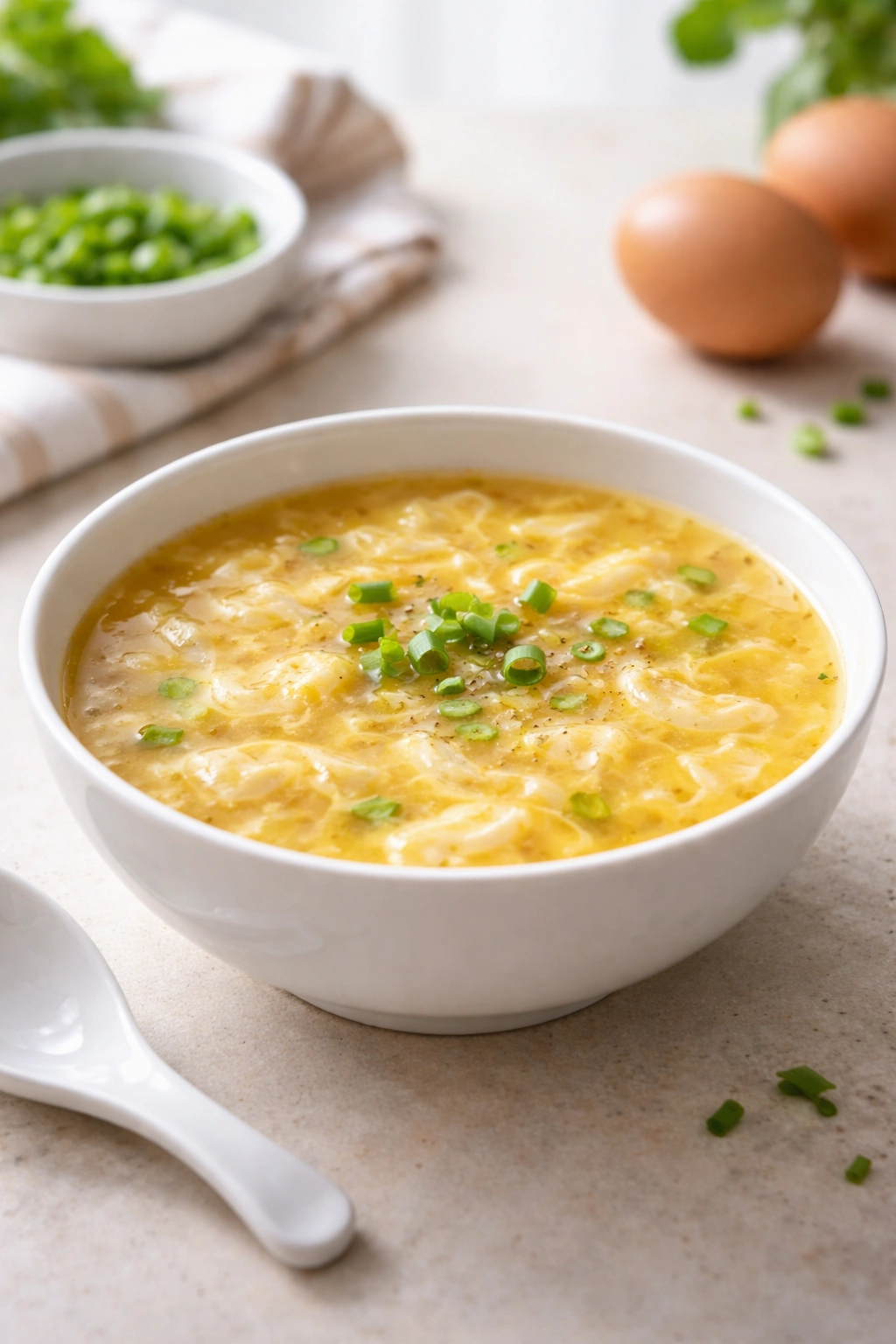
Most people associate egg drop soup with Chinese takeout menus and restaurant orders, but that’s where the limitations end. Once you realize how genuinely simple this soup is to make, you’ll find yourself craving it far more often than takeout economics would allow. This isn’t the kind of recipe you make once and file away — it becomes a go-to meal you turn to when you want something fast, nourishing, and completely satisfying.
The appeal runs deeper than convenience. Egg drop soup hits a sweet spot between comfort and restraint. It’s not heavy or starchy like many soups. It won’t leave you feeling sluggish or overly full. Instead, you get warmth, flavor, silky texture, and genuine nutrition without any of the guilt. The broth coats your mouth in the most pleasant way, the eggs provide easily digestible protein, and the whole experience feels much more indulgent than the minimal ingredients suggest.
Home cooks who’ve grown up with this soup report making it for their children, and those children now making it for their own families. It’s the kind of recipe that transcends generations because it works, it’s accessible, and nothing about it ever gets old. Whether you’re a busy parent needing something fast, a student on a tight budget, or someone who simply loves good food made simply, this soup belongs in your rotation.
The Magic Behind Egg Drop Soup
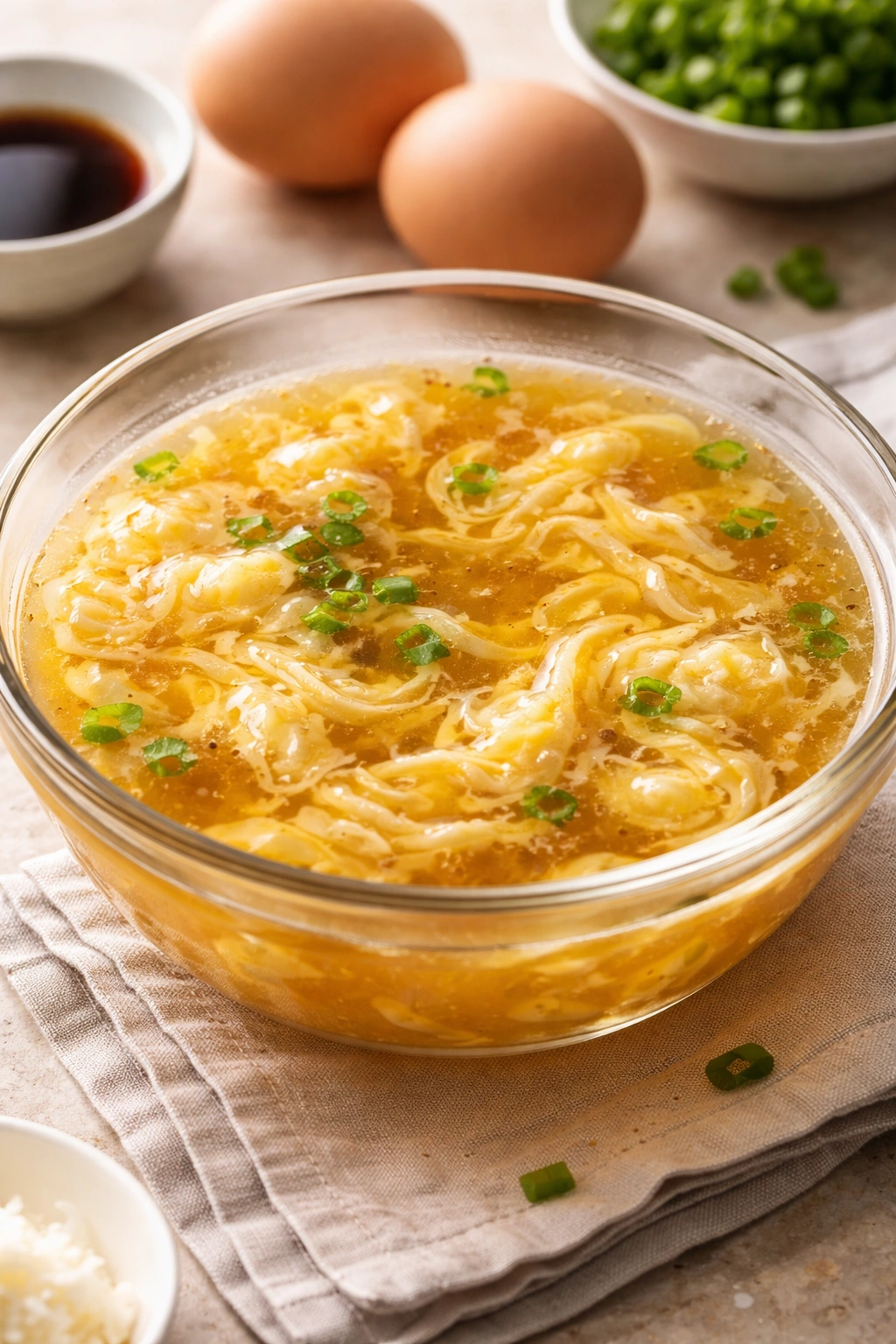
Understanding what egg drop soup actually is makes everything about creating it at home click into place. The name comes from the cooking method — you literally drop beaten egg into hot broth. But the real magic lies in what happens next. As the egg hits the simmering liquid, it cooks almost instantly, creating those iconic silky strands that the Chinese call “egg flowers” because they swirl and bloom like petals in the broth.
This isn’t accidental. The heat of the broth, the movement of your stirring, and the timing of how quickly you pour the egg all work together to determine whether you end up with delicate ribbons, small wispy flakes, or larger chunks of egg. Different regions and different cooks have different preferences — there’s no single “correct” way. The beauty is that once you understand the mechanics, you can control exactly what texture you prefer.
The thickening agent in this soup is where the restaurant magic happens. Most authentic versions use a cornstarch slurry — cornstarch mixed with cold water, which you add to the simmering broth to create a light, velvety consistency. This thickening serves multiple purposes. It gives the broth body and mouthfeel. It helps suspend the egg ribbons so they float rather than sink. And it creates that silky texture that makes the soup feel more luxurious than the ingredient list suggests.
The seasonings are minimalist but precise. Sesame oil provides a toasted, nutty depth. Soy sauce adds umami richness. White pepper (not black) contributes a subtle heat without visual specks. Together, these seasonings are what transform plain chicken broth into something that tastes exactly like your favorite Chinese restaurant — sometimes even better because you’ve tailored everything to your exact taste preferences.
What Makes This Version So Fast
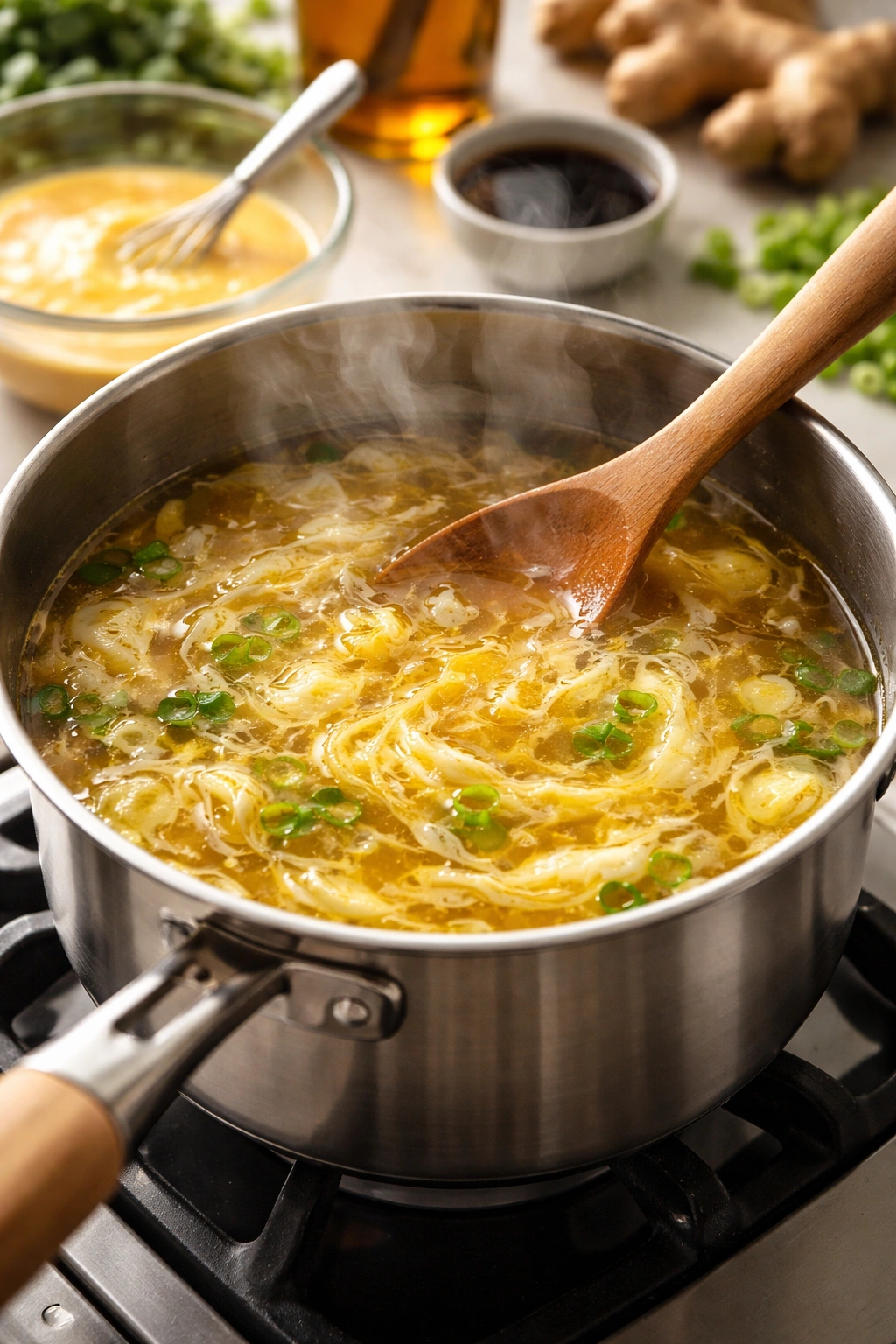
Forget everything you think you know about soup taking time to develop flavor. Egg drop soup isn’t like a bone broth that simmers for hours or a vegetable soup that needs time for flavors to meld. This soup gets its flavor from the broth you start with and the seasonings you add — both of which work instantly. The moment you add sesame oil, soy sauce, and white pepper to hot broth, those flavors are there. No waiting required.
The 10-minute timeline breaks down like this: about 2-3 minutes to bring the broth to a simmer, 1-2 minutes to thicken it with the cornstarch slurry, and another 2-3 minutes to add the eggs and let them cook. The remaining time is prep — beating the eggs, measuring the cornstarch, chopping the green onions. In reality, most of that overlap, so you’re not actually waiting around much at all.
What makes this soup faster than ordering takeout is that you’re not waiting for a restaurant to acknowledge your order, prepare it, or have it ready for pickup. You’re literally stirring a pot. That’s it. No trips to pick up food, no sitting in a car, no arriving home only to realize they forgot to include a crucial ingredient. You start cooking and 10 minutes later you’re eating. That’s genuinely faster.
Essential Ingredients for Restaurant-Quality Results
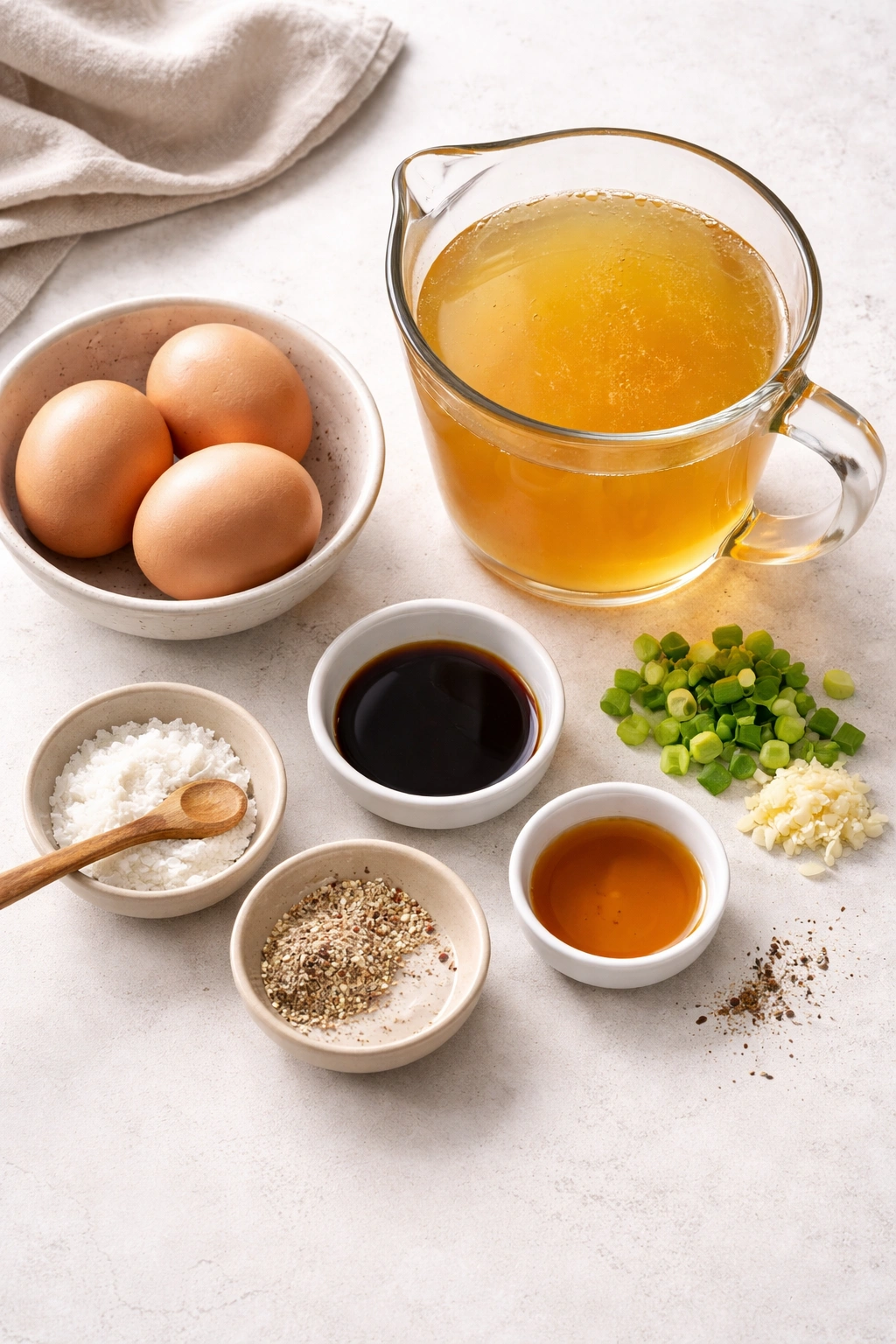
The ingredient list is refreshingly short, but each component matters. The quality of your chicken broth sets the foundation for everything else. If you’re using a thin, watery, heavily salted commercial broth, your soup will taste thin and overly salty no matter what you do. If you start with a good broth — organic store-bought, homemade from roasted chicken, or even a quality bone broth — you’re already halfway to restaurant-quality results.
Eggs are the star of this soup, so they deserve attention. Use fresh, high-quality eggs if you can. They’ll have richer, more vibrant yolks, and that golden color will shine through in the finished soup. Conventional eggs work just fine, but if you have access to pastured or omega-3 enriched eggs, they’ll give you noticeably more colorful results. You don’t need many — just 2-3 large eggs for 4 servings.
Sesame oil is non-negotiable for authentic flavor. Use toasted sesame oil, which has already been roasted — that’s what gives it the distinctive deep, nutty character you’re after. Regular sesame oil, sometimes labeled “light” sesame oil, hasn’t been roasted and tastes completely different. Buy a small bottle because a little goes a long way, and it’ll keep for months in your pantry.
Cornstarch is the thickening agent that gives the soup its signature texture. Some cooks skip it to keep the soup thinner, but it makes a real difference in how the egg ribbons suspend in the broth and how silky the overall mouthfeel becomes. If you have arrowroot powder, tapioca starch, or potato starch on hand, any of those work as substitutes.
White pepper is more delicate than black pepper and doesn’t leave visible specks in the broth, which is why traditional recipes call for it. If you only have black pepper, use slightly less and understand that the soup will have a different appearance — the taste will still be good.
Soy sauce contributes umami and salty depth. Use low-sodium varieties so you can control the salt level, or use full-strength soy sauce but reduce the salt you add separately. Soy sauce is forgiving — you can always add more, but you can’t take it out.
Green onions (scallions) are the final garnish that adds a fresh, bright note. The white and light green parts have more punch; the darker green tops are milder. Using both gives you complexity.
Equipment You’ll Actually Use
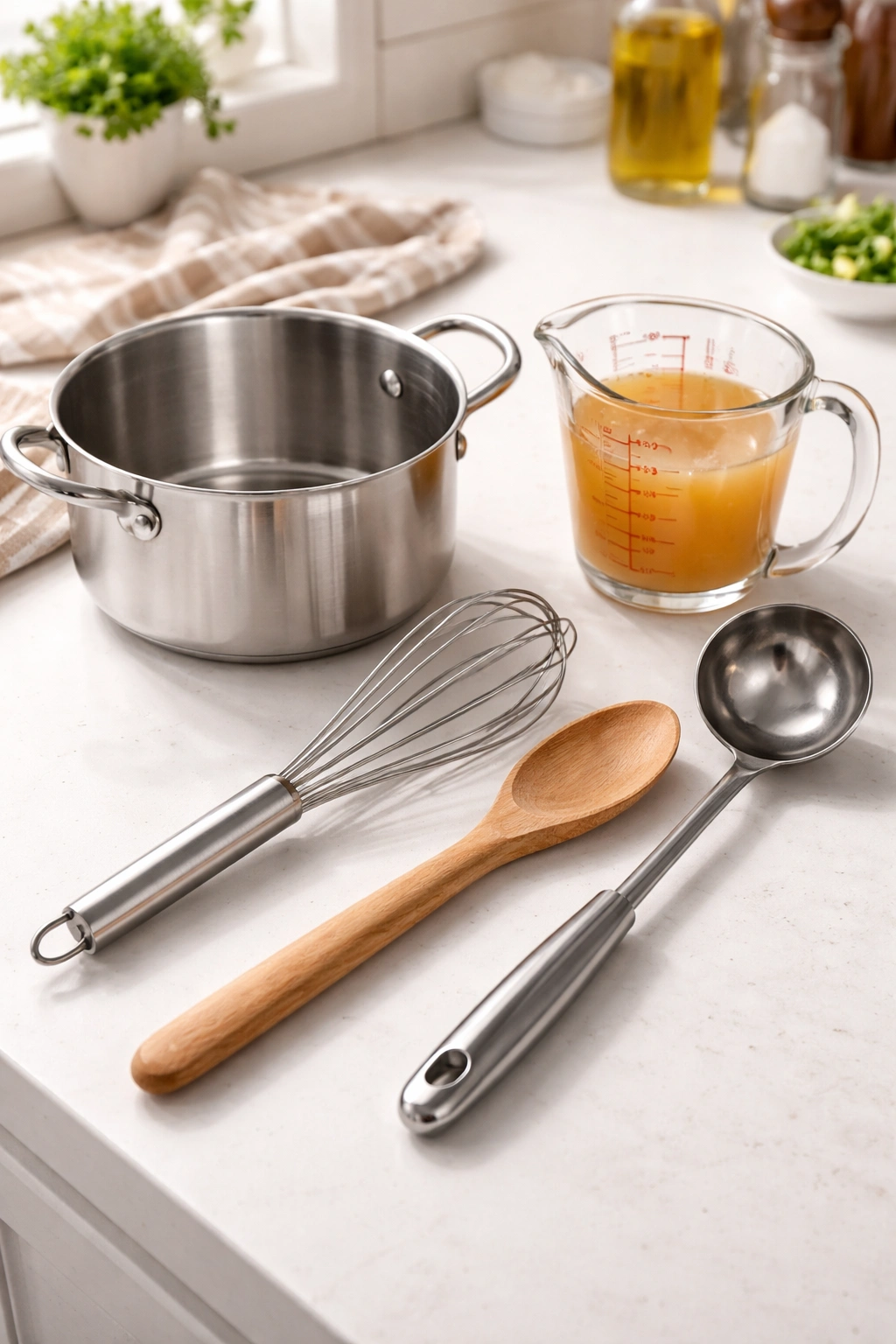
This is one of the few recipes where your equipment list doesn’t matter much, but a couple of tools make life easier. You need a medium pot — 2-3 quarts is ideal. A smaller pot gets crowded; a larger one means more broth to heat.
A measuring cup with a spout is genuinely helpful for pouring the eggs. The spout creates a steady, thin stream that translates directly into thinner, more delicate egg ribbons. You can pour from a regular bowl or mug, but a measuring cup genuinely improves your results. Many home cooks report this single tool made the biggest difference in getting restaurant-quality egg ribbons.
Whisks matter. A good whisk — even an inexpensive one — makes beating the eggs smooth and quick. Forks work, but they take longer and don’t incorporate the whites and yolks as evenly.
A wooden spoon or ladle for stirring is helpful. Use a ladle specifically for creating that vortex (the circular motion that helps eggs spread into ribbons) — it’s wider and deeper than a spoon, making the motion more effective.
Everything else is standard kitchen equipment you already have.
Yield: Serves 4 as an appetizer or light meal
Prep Time: 5 minutes
Cook Time: 5 minutes
Total Time: 10 minutes
Difficulty: Beginner — the technique is straightforward, the ingredient list is short, and there’s no risk of failure with this one. Even first-time soup makers succeed every time.
Ingredients
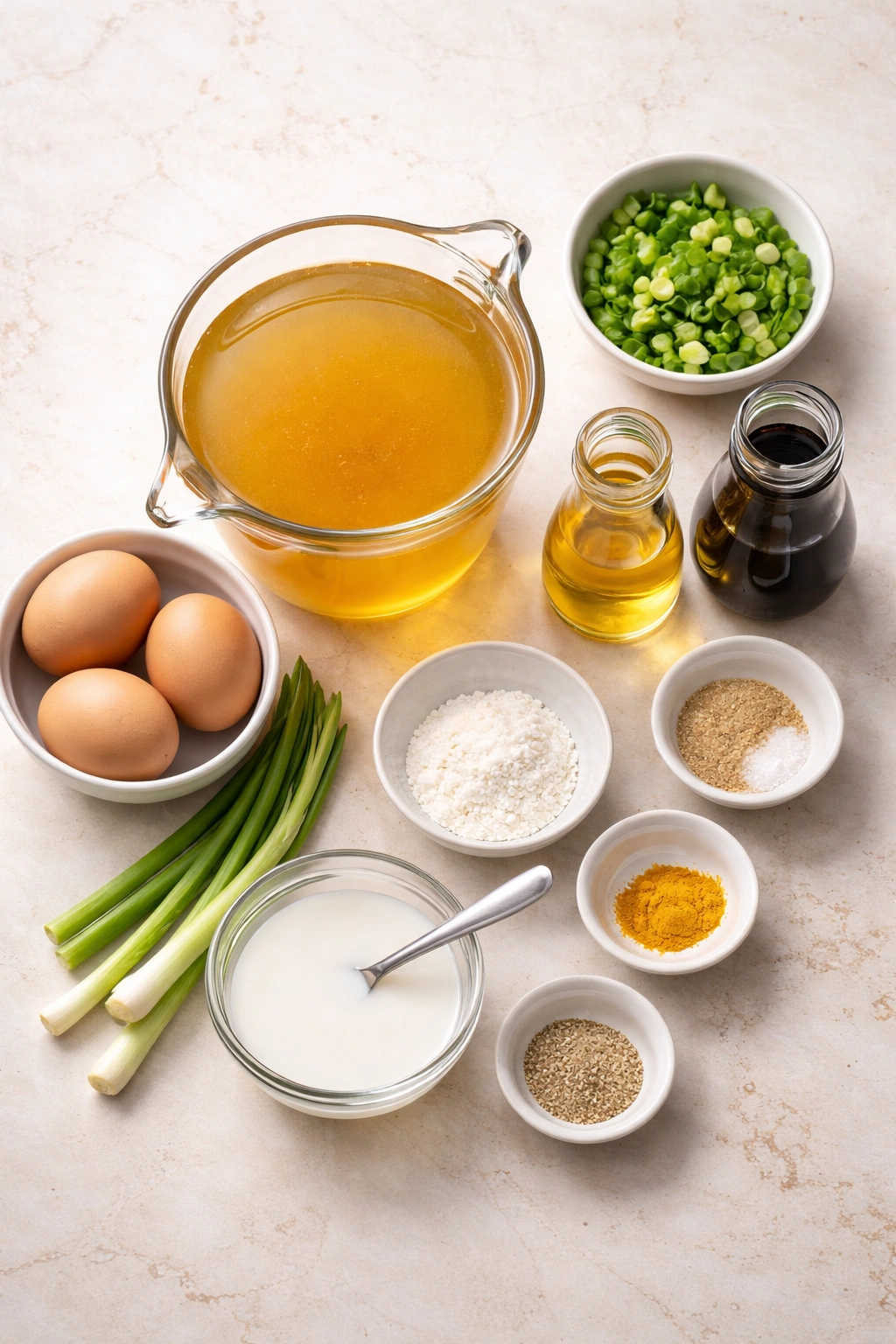
For the Broth:
- 4 cups chicken broth or chicken stock (low-sodium preferred, so you can control saltiness)
- 1 teaspoon sesame oil (toasted)
- 1 tablespoon soy sauce (low-sodium, or adjust based on brand)
- ¼ teaspoon white pepper (or ⅛ teaspoon black pepper if that’s all you have)
- ½ teaspoon salt (adjust to taste, depending on broth saltiness)
- ⅛ teaspoon turmeric powder, or 5 drops yellow food coloring (optional, for restaurant-style yellow color)
For the Thickening Slurry:
- 2 tablespoons cornstarch (or arrowroot powder, tapioca starch, potato starch)
- 3 tablespoons cold water (never hot — this prevents lumping)
For the Eggs:
- 3 large eggs (room temperature if possible, though cold eggs work fine)
For Garnish:
- 1 green onion, thinly sliced (separate white parts from green parts if you like complexity)
- Optional: fresh cilantro, chives, sliced ginger, sesame seeds, or crispy wonton strips
Preparing Your Workspace
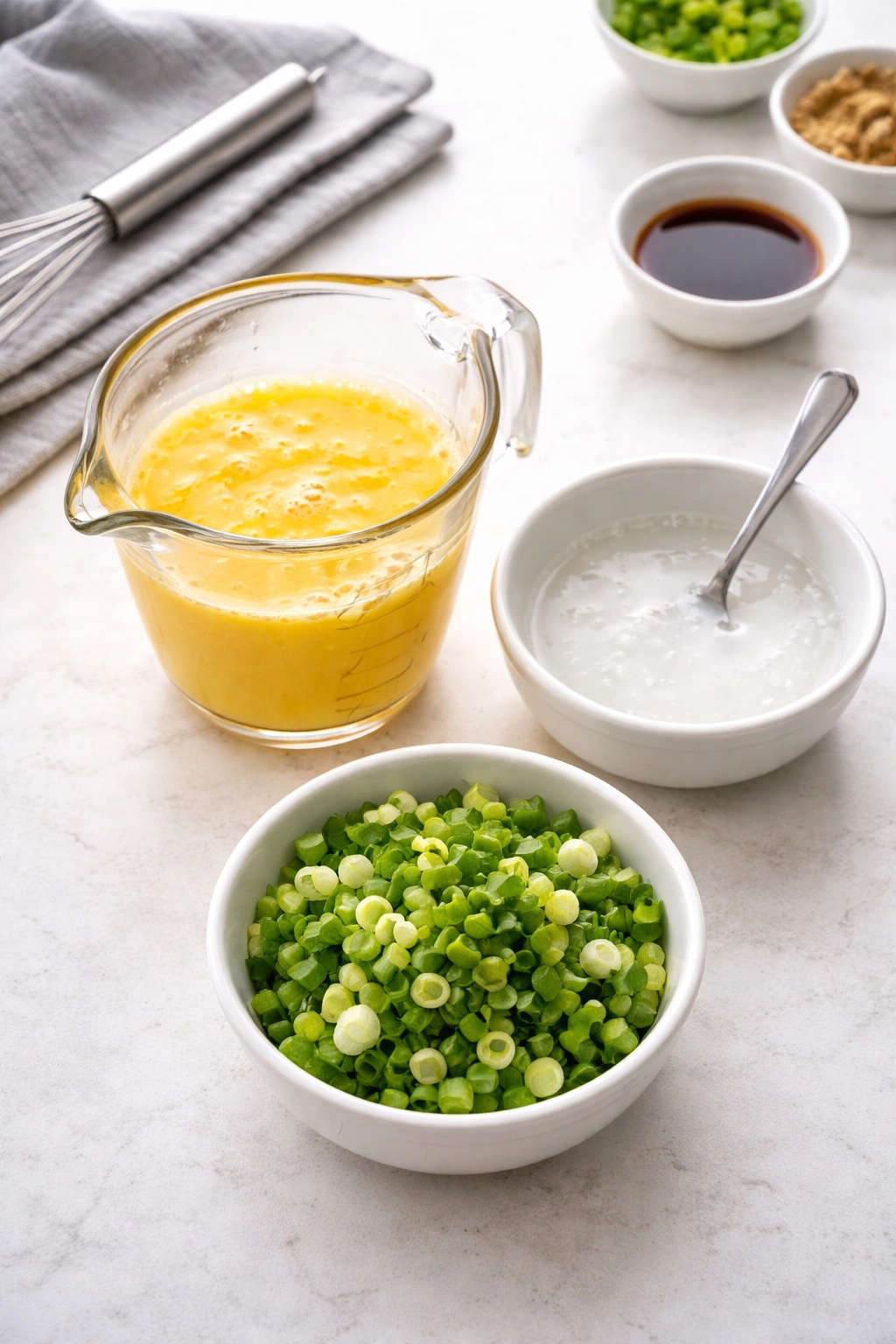
Before you start cooking, set yourself up for success. Have your eggs beaten in a measuring cup with a spout before you turn on the heat. This sounds trivial, but it matters — once the broth is ready for the eggs, you need to add them immediately. No scrambling to find a bowl or beat the eggs while your broth is sitting there cooling.
Combine your cornstarch and cold water in a small bowl and stir until the cornstarch is completely dissolved. This is critical. If you skip this step and add dry cornstarch to the hot broth, you’ll get lumps. The lumps won’t dissolve, and your soup will be gritty instead of silky. Taking 30 seconds to dissolve it in cold water beforehand eliminates that risk entirely.
Have your green onions chopped and ready. Have any other garnishes prepared. The actual cooking happens so quickly that you won’t have time to prep while things are heating.
Creating the Perfect Egg Drop Soup
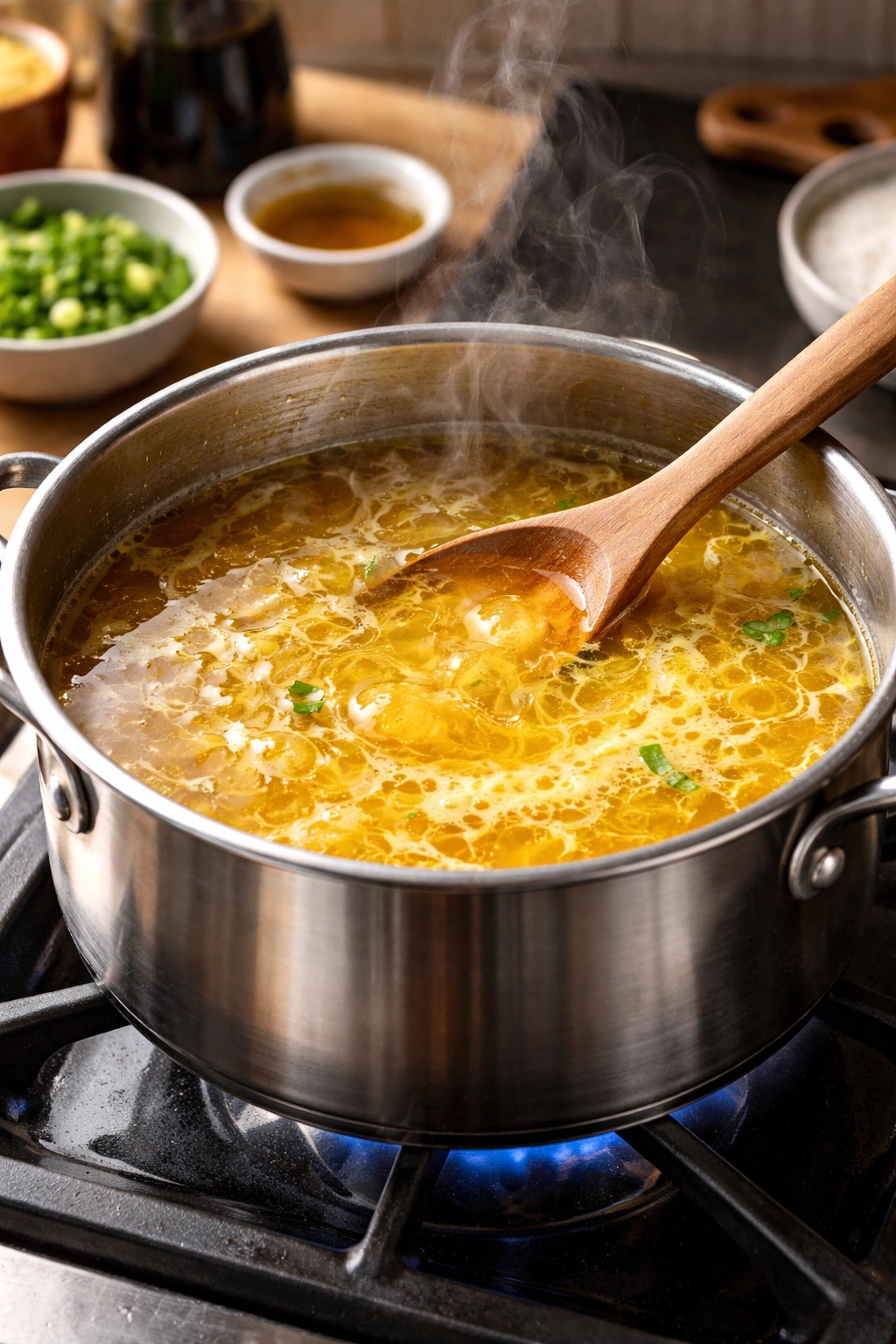
Simmer the Broth Base:
-
Pour the chicken broth into a medium pot and place it over medium-high heat.
-
Bring the broth to a gentle simmer — you’ll see small bubbles breaking the surface, not a rolling boil yet. This takes about 2-3 minutes depending on your stove and starting temperature.
Advertisements -
Once simmering, stir in the sesame oil, soy sauce, white pepper, salt, and turmeric or food coloring if using. The turmeric will turn the broth a warm golden yellow that matches restaurant versions perfectly; food coloring works too but tastes like nothing, while turmeric adds subtle spice and earthiness.
-
Taste the broth. Does it taste good on its own? It should be flavorful but not overpowering — the eggs will add richness and protein but not much flavor. Adjust seasoning now if needed. Add more salt if it tastes flat, more soy sauce if it needs umami depth, more white pepper if you want more heat.
Thicken the Broth:
-
Reduce the heat to medium and give your cornstarch slurry a final stir — cornstarch settles quickly even though you already mixed it. Pour the slurry into the simmering broth while stirring constantly in one direction. Keep stirring continuously as you add it. This prevents clumps from forming. If you stop stirring, the cornstarch will cook and set before it’s fully distributed.
-
Continue stirring for 1-2 minutes as the broth simmers. You’ll see it thicken gradually into a silky, velvety consistency. It should be noticeably thicker than when you started but still pourable — think gravy consistency, not pudding.
Create the Vortex and Add the Eggs:
-
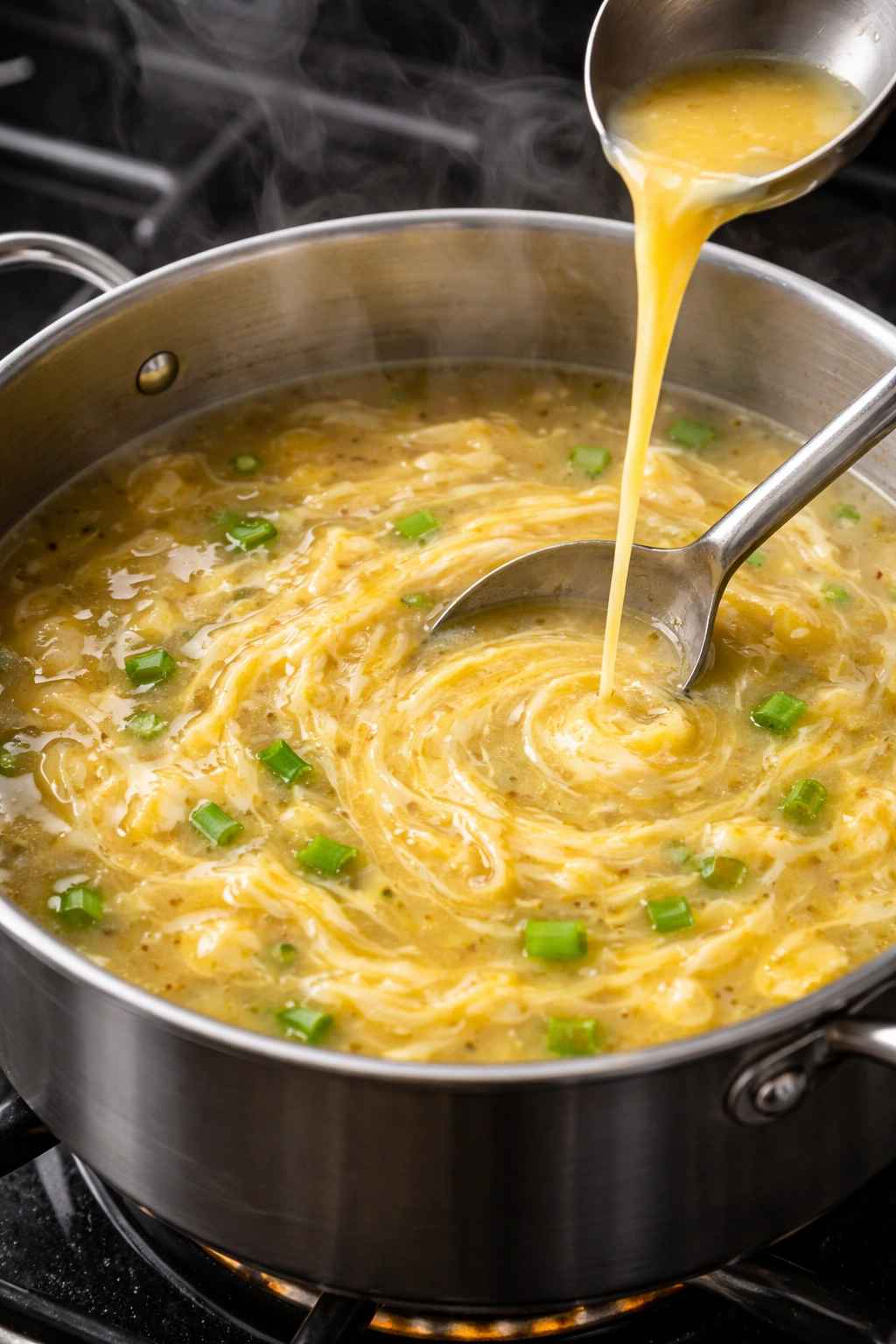
Use a ladle to stir the broth in a large circular motion, creating a gentle vortex. This swirling motion helps the eggs spread out into fine ribbons instead of clumping together.
-
While maintaining that circular stirring motion with one hand, slowly pour the beaten eggs from your measuring cup in a very thin, steady stream. The slower you pour and the gentler you stir, the more delicate and ribbon-like your egg strands will be. If you pour quickly or stir vigorously, you’ll get smaller wisps. Both are delicious — it’s personal preference. The key is that you’re pouring continuously as you stir, not dumping all the eggs in at once.
-
As the egg hits the hot broth, it’ll cook almost instantly, creating those characteristic flower-like swirls. The entire egg should be incorporated within 30-45 seconds of starting to pour.
-
Let the soup simmer for another 30 seconds to 1 minute after all the egg is in, just to make sure everything is cooked through and the flavors have melded.
Advertisements
Finish and Serve:
-
Remove the pot from heat. Taste one more time and adjust salt, pepper, or sesame oil if needed — this is your last chance to tweak seasoning.
-
Ladle the soup into bowls and garnish with sliced green onions, and any other toppings you choose.
-
Serve immediately. This soup is best eaten right away while the broth is hot and the eggs are still tender.
The Critical Techniques That Make Perfect Egg Ribbons
The temperature of your broth matters more than you’d think. The broth needs to be actively simmering — not quite at a rolling boil, but definitely hot enough that when the egg hits it, it cooks instantly. If your broth is barely warm, the eggs will scramble into chunky bits. If it’s a rolling boil, the eggs can become tough. That gentle simmer is the sweet spot.
The cornstarch slurry is non-negotiable for achieving the right texture. It does three things: it thickens the broth into a silky consistency, it helps the egg ribbons float suspended in the liquid instead of sinking, and it creates that luxurious mouthfeel that makes the soup feel restaurant-quality. Some home cooks skip it to keep the soup thinner, and that’s fine if that’s your preference — but the traditional version includes it for good reason.
Your stirring motion when adding the eggs determines the final texture. A slow, gentle circular stir creates long, delicate ribbons. A faster or more chaotic stir creates smaller, fluffier wisps. There’s no wrong choice — it’s entirely about what appeals to you. The critical part is that you’re stirring continuously as you pour the eggs, not dumping them all in at once and then stirring. Continuous pouring while stirring is what creates those signature ribbons.
The measuring cup with a spout genuinely improves your results. It’s not essential, but it creates a steady, thin stream that translates directly into thinner, more delicate egg ribbons. Many cooks report this single tool made their results jump from good to restaurant-quality.
Temperature of your eggs doesn’t matter much, but room-temperature eggs incorporate slightly more smoothly. Cold eggs straight from the fridge work fine — the hot broth warms them instantly. If you think ahead, let them sit out for a few minutes, but don’t stress if you can’t.
Common Mistakes and How to Avoid Them
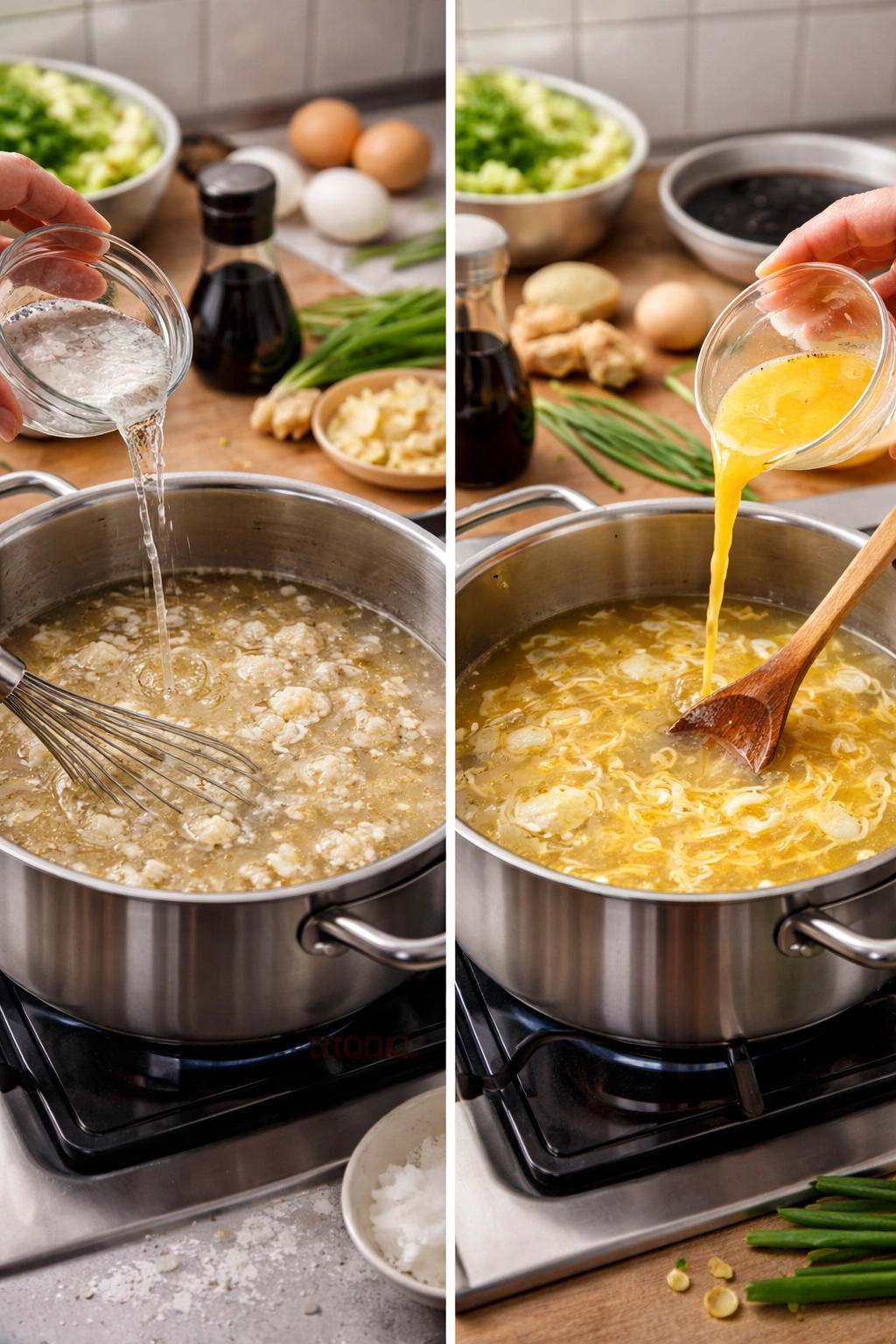
Lumpy cornstarch is the most common problem. This happens when dry cornstarch hits hot liquid and cooks immediately without dispersing. Solution: always mix cornstarch with cold water first, and stir constantly as you pour the mixture into the hot broth. If you do end up with lumps, you can strain the soup through a fine mesh sieve into another pot.
Rubbery, scrambled eggs instead of silky ribbons happen when the broth isn’t hot enough or when you dump all the eggs in at once instead of pouring slowly while stirring. The broth needs to be actively simmering, and you need to pour the eggs in a thin stream over several seconds, not all at once.
Flat, bland soup usually means the broth wasn’t good quality to start with, or you didn’t add enough seasoning. Taste the broth before adding eggs and adjust salt and soy sauce at that point. Remember that the eggs will add richness but not much flavor, so the broth itself needs to taste delicious.
Broth that’s too thin happens when you use less cornstarch or skip it entirely. If this happens and you want it thicker next time, increase the cornstarch slurry to 3 tablespoons cornstarch mixed with 4 tablespoons water. If it happens this time around, you can always make a small amount of cornstarch slurry and stir it in again.
Eggs that sink instead of float usually means there wasn’t enough thickener in the broth. The cornstarch creates just enough body to suspend the egg ribbons. Without it, the eggs sink as they cool.
Not enough egg in the final soup is a easy fix for next time — just add another egg or even half an egg. The recipe gives you 3 large eggs for 4 servings, which is standard, but some people prefer more egg. Go up to 4 eggs if you like a richer, more egg-forward soup.
Flavor Variations to Try
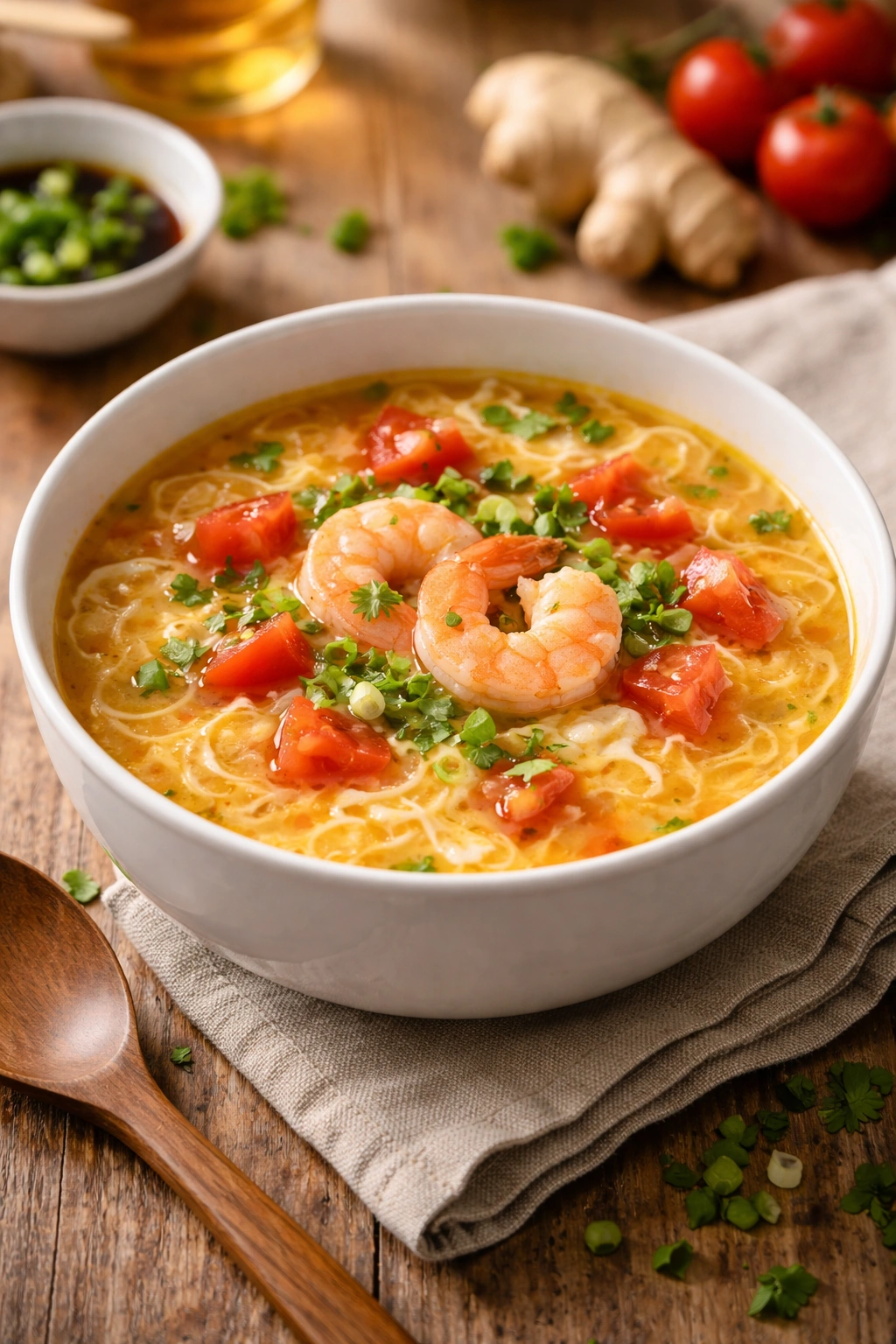
The beauty of egg drop soup is that it’s a platform for flavor. The basic recipe is perfect on its own, but once you master it, you can take it in any direction you want.
Spiced version: Add ½ teaspoon of ground ginger, a pinch of cayenne pepper, or a dash or two of sriracha to the broth before adding eggs. This creates a soup with subtle heat and complexity that still feels light. Ground ginger gives you warmth and subtle spice; sriracha adds sharp heat and a bit of sweetness.
Tomato egg drop soup: Add ½ cup of diced fresh tomatoes or one small can (about 6 ounces) of diced tomatoes to the broth before simmering. The acidity of the tomatoes brightens everything. This variation is especially nice in summer when tomatoes are in season.
Seafood version: Add a handful of small cooked shrimp or lump crab meat to the broth just before adding the eggs. This transforms it into a more substantial appetizer. Some versions include a small piece of Chinese ham or bacon for salty depth.
Vegetable-loaded version: This isn’t traditional, but it works beautifully. Add thin slices of mushrooms, snow peas, corn kernels, or matchstick-cut carrots to the broth about 2-3 minutes before finishing. They’ll cook gently in the simmering broth. You could even add soft tofu cut into small cubes.
Corn and egg drop soup: This has become a popular variation in many Asian restaurants. Add ½ cup of fresh or frozen corn kernels to the simmering broth before adding the cornstarch slurry. The sweetness of the corn plays beautifully with the savory broth.
Creamy sesame version: Increase the sesame oil to 1 teaspoon and add a splash of whole milk or coconut milk (about 2-3 tablespoons) after cooking the eggs. This creates a richer, more luxurious version. It’s not traditional but it’s genuinely delicious.
Five-spice version: Add ⅛ teaspoon of Chinese five-spice powder to the broth. This adds warm, complex spice notes without being overwhelming.
Storage, Reheating, and Make-Ahead Tips
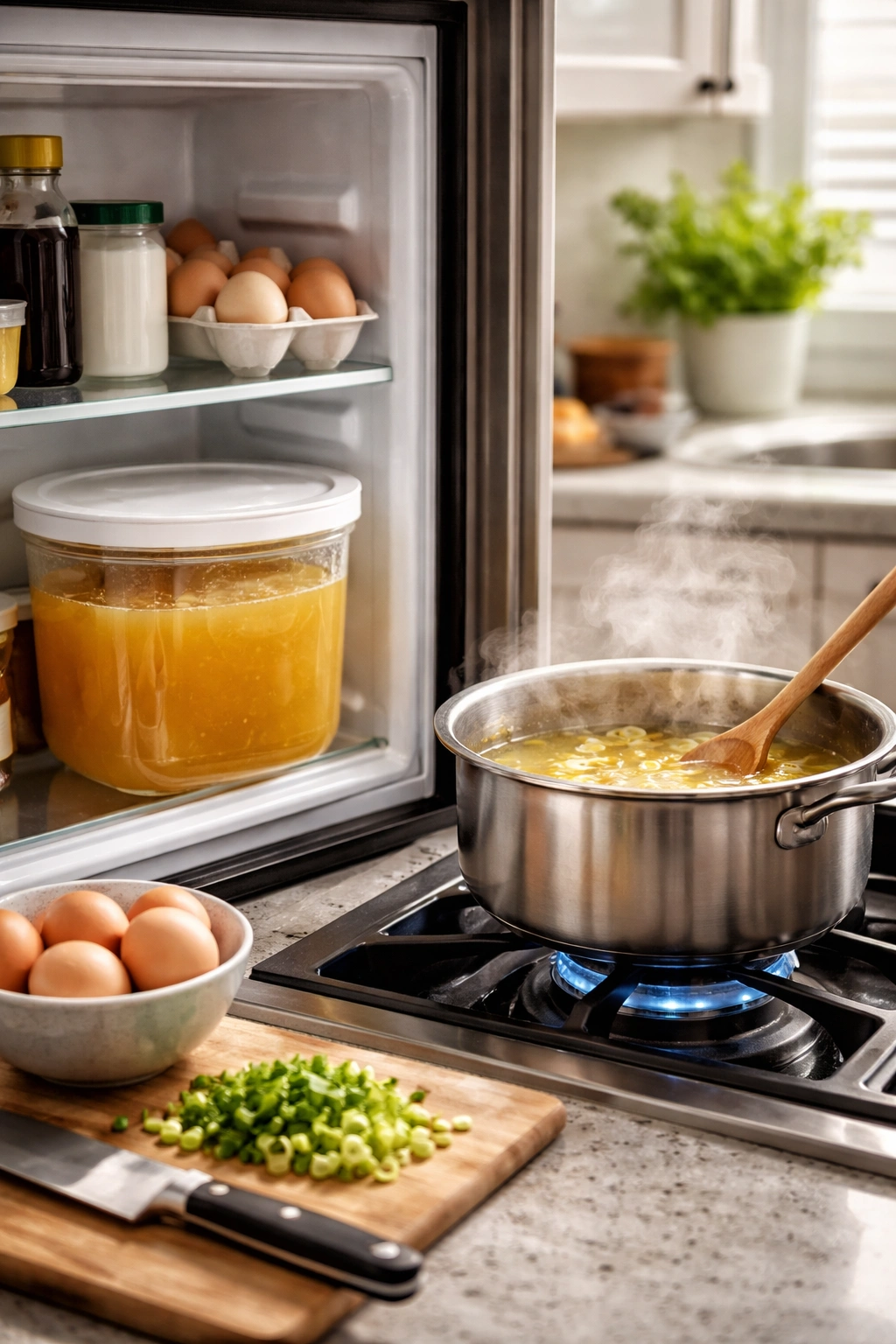
Egg drop soup is best eaten immediately, but leftovers can be stored and enjoyed within reason. The broth itself keeps beautifully for up to 4 days in the refrigerator in an airtight container. The eggs, however, will become slightly rubbery as they cool and are reheated. They won’t be bad — they’ll still taste good — but they won’t have that fresh, silky texture of the just-cooked version.
If you want to make this ahead, prepare everything except the eggs. Make the broth base, season it, add the cornstarch slurry, and bring it to that perfect simmering consistency. Let it cool, cover it, and refrigerate it. When you’re ready to eat, reheat the broth gently over medium heat until it’s simmering again, then add fresh beaten eggs and cook as directed. This way you get that just-made silkiness every single time.
To reheat leftover soup with eggs already in it, use gentle heat. Microwave in 15-second increments, stirring between each burst, rather than heating it all at once. Or reheat it in a saucepan over medium-low heat, stirring occasionally. The goal is to heat it through without bringing it to a boil, which will make the already-cooked eggs even tougher.
Don’t freeze this soup. The eggs become unpleasantly rubbery when frozen and thawed. You can freeze just the broth (without eggs), thaw it, reheat it, and add fresh eggs, but the cooked-egg version doesn’t freeze well.
The best approach is to make this fresh whenever you want it. It genuinely only takes 10 minutes, and the difference between fresh and reheated is noticeable enough that it’s worth the minimal time investment.
Serving Suggestions and Pairings
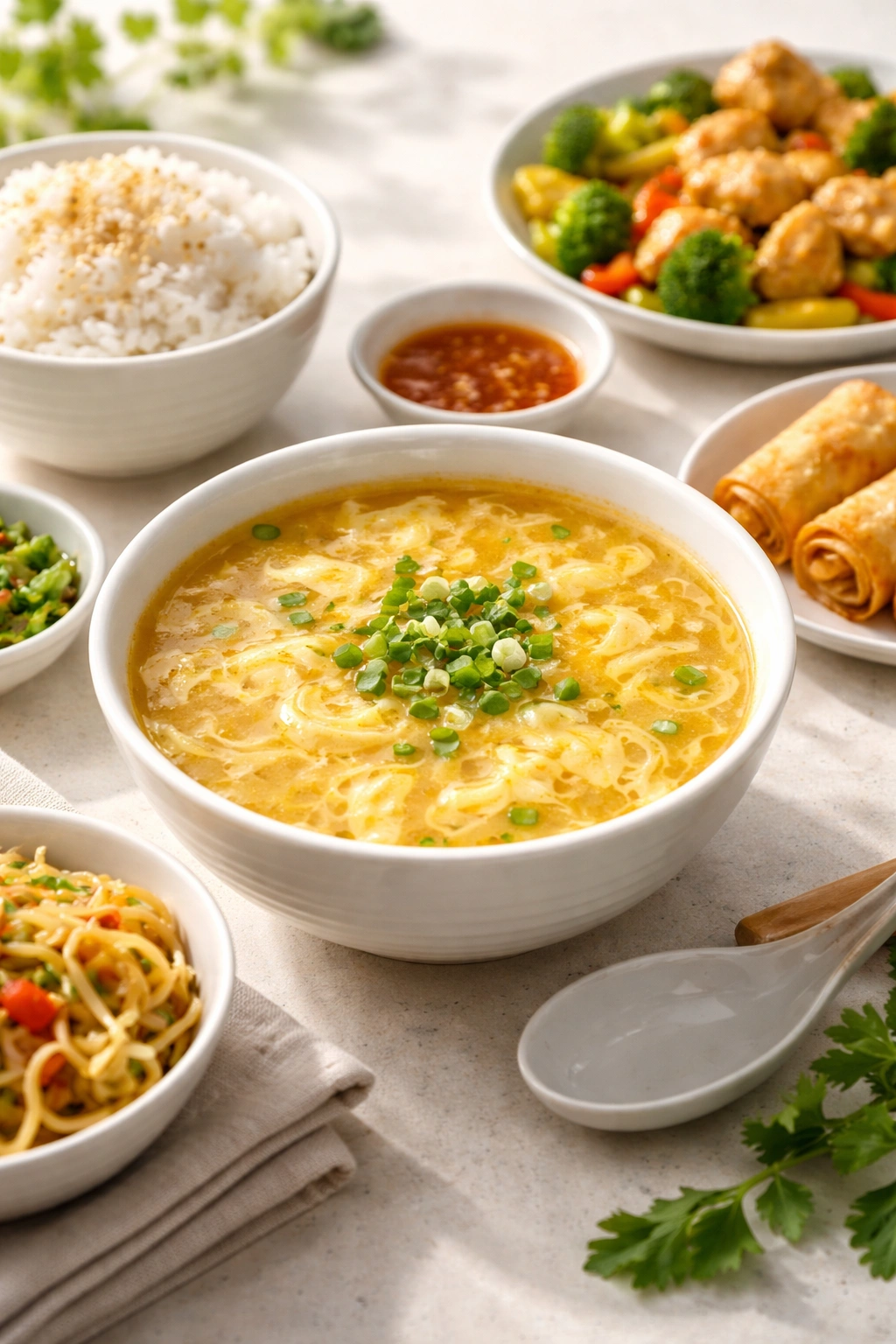
Egg drop soup is traditionally served as an appetizer or starter before other Chinese dishes, but it also works beautifully as a light meal on its own. If you’re serving it as a complete meal, pair it with rice or noodles and perhaps a simple vegetable side or protein.
With fried rice, egg drop soup is a classic pairing. The richness of the rice balances the lightness of the soup. Try this combination: egg drop soup followed by chicken fried rice and stir-fried bok choy with garlic. You have vegetables, protein, carbs, and broth — a complete, satisfying meal.
With lo mein or chow mein, egg drop soup makes sense as a starter that prepares your palate for the heavier noodle dish without overfilling you. The soup cleanses and warms; the noodles satisfy.
As part of a larger Chinese takeout spread, egg drop soup fits alongside hot and sour soup, wonton soup, spring rolls, dumplings, and any protein you’re making. It’s light enough that you can have a cup of it without feeling stuffed, allowing room to enjoy other dishes.
Egg drop soup also pairs beautifully with Asian-inspired proteins. Make this soup alongside orange chicken, sesame chicken, beef and broccoli, or honey garlic shrimp. The soup’s lightness balances richer mains.
On cold or sick days, egg drop soup stands alone beautifully. The warmth, the broth, the easily digestible protein, and the comfort factor make it a perfect light meal when you need something nourishing but not heavy.
Why This Soup Matters More Than You’d Think
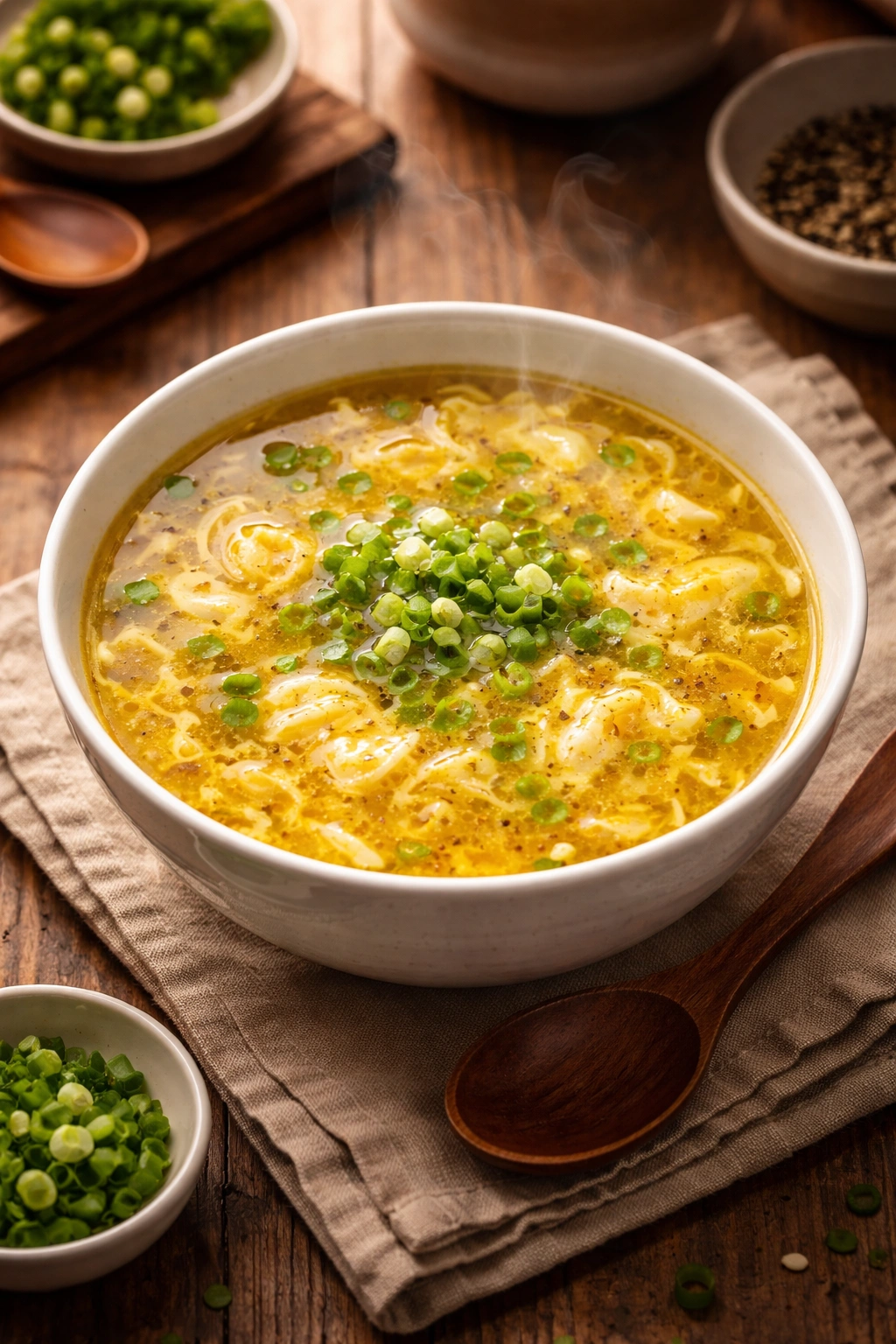
The first time you realize you can make restaurant-quality egg drop soup in 10 minutes is genuinely freeing. You stop thinking of this soup as something you have to order. You realize you can have it whenever you want — late night cravings, lunch on a busy day, comfort food when you’re under the weather, a fast appetizer when friends drop by. The barrier to entry is so low that it becomes something you actually make instead of something you aspire to make someday.
This soup teaches you something important about cooking: sometimes the simplest recipes are the most rewarding. There’s nowhere to hide in something this minimal. No complicated techniques to distract from quality ingredients. No long ingredient list to mask mediocre planning. Just technique, timing, and understanding how a few simple things interact with each other to create something greater than the sum of their parts.
Beyond that, egg drop soup is genuinely nourishing. It’s naturally gluten-free (assuming you use gluten-free soy sauce or tamari), naturally low in calories, packed with quality protein from the eggs, and hydrating from the broth base. It’s the kind of soup that leaves you feeling good — satisfied but not overstuffed, energized but not jangled.
Final Thoughts
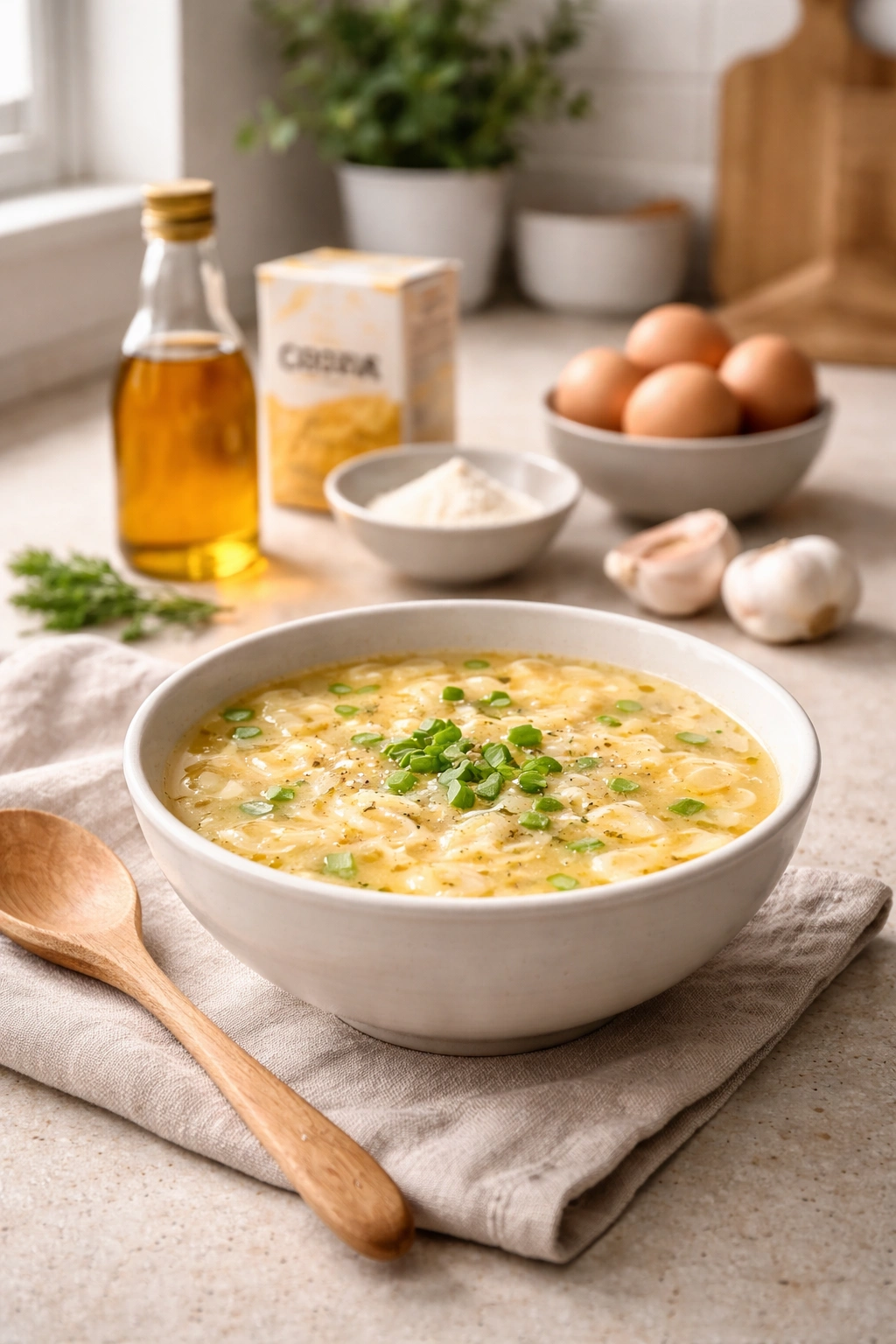
Making egg drop soup at home is one of those small kitchen victories that has outsized impact on how you eat and what you enjoy. Once you’ve made it successfully a few times, it becomes effortless. The measuring, the timing, the stirring motion — it all becomes automatic. You can teach it to someone else in the time it takes to cook. You can make it with your eyes closed on a bad day. It becomes comfort in the most literal sense.
Keep the ingredients on hand — broth in your pantry, eggs in your refrigerator, sesame oil and cornstarch in your cabinet. That’s it. When you want something fast, warm, and genuinely delicious, you’ll have everything you need. No takeout menu. No waiting. No compromises.
The 10-minute timeline isn’t just about speed. It’s about accessibility. It’s about proving to yourself that restaurant-quality food doesn’t require hours in the kitchen. It’s about knowing that something this good can be this simple, and learning to trust that sometimes the best meals are the ones made quickly with honest ingredients and genuine technique. Make this soup. Make it again. Make it for people you care about. You’ll understand immediately why it’s been a beloved dish across generations and continents.
