



There’s something deeply satisfying about crafting a perfectly balanced mojito at home. The ritual of crushing fresh mint, the sharp tartness of lime, the clarity of white rum—it’s the kind of drink that tastes like summer in a glass, whether you’re poolside in July or craving that feeling on a ordinary Tuesday. And here’s the beautiful part: the classic mojito is dead simple to master, and once you do, it opens up a world of creative flavor variations that transform this already iconic drink into something that feels uniquely yours.
The mojito often gets overshadowed by more Instagram-worthy cocktails, but that’s honestly a shame. A truly excellent mojito requires only precision and quality ingredients—no fancy techniques, no special equipment, no intimidation. The challenge isn’t technical; it’s understanding the balance. Too much muddling and your mint becomes bitter and bruised. Too much lime and it becomes a sour pucker. But nail that balance, and you’ve got a refreshing, herbaceous, spirit-forward cocktail that people will actually want to drink, not just photograph.
What makes this drink so fun is that the foundation is so clean and flexible. Once you master the classic version—and it genuinely takes practice to get there—you can pivot the flavor profile in almost any direction. Think tropical twists with pineapple and coconut, berry versions that shift the vibe entirely, spiced variations that bring warmth and complexity, or even savory takes with cucumber and jalapeño. Each variation feels completely different from the others, yet they all maintain that core mojito character: refreshing, balanced, and bright.
What Makes a Perfect Mojito
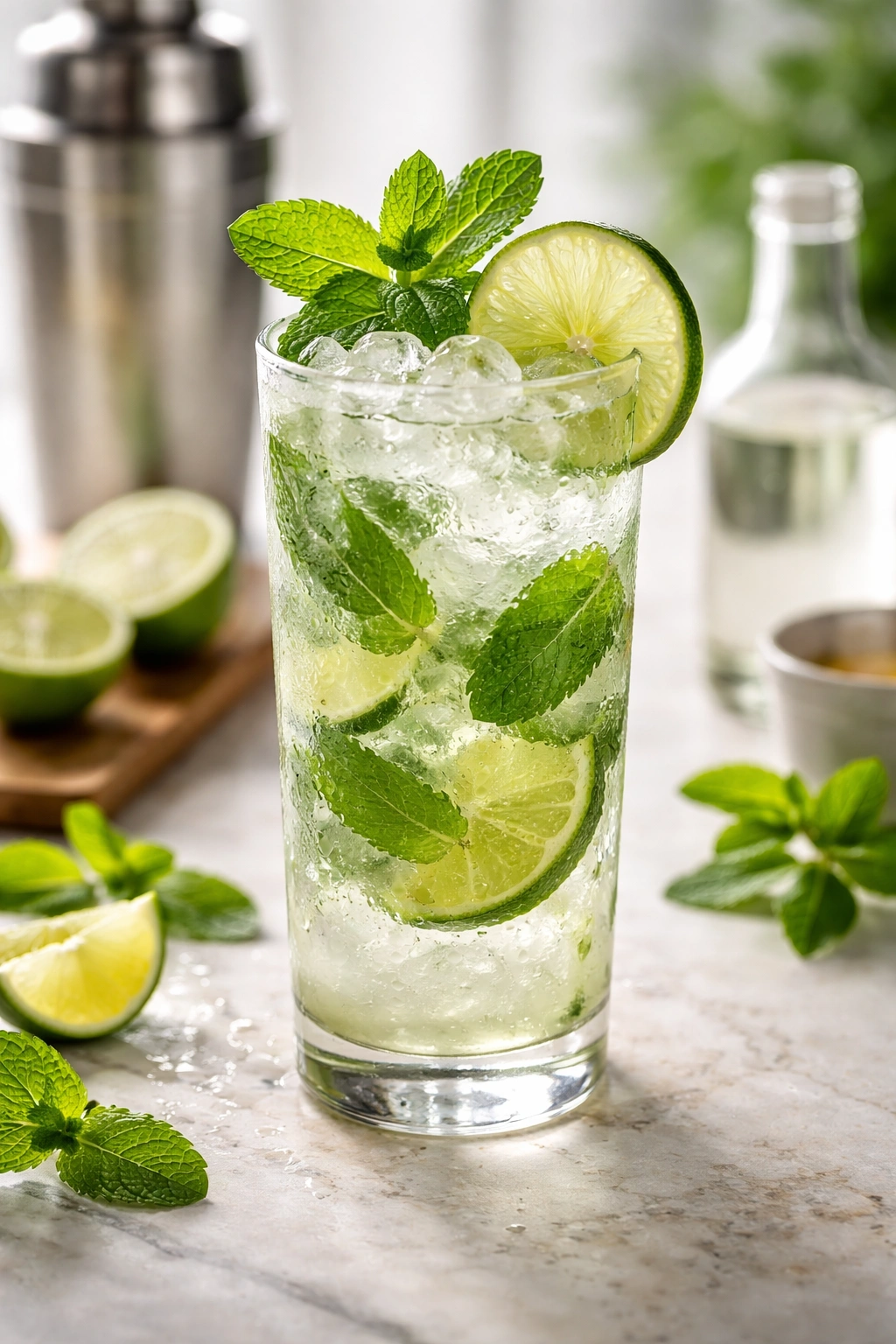
The mojito’s strength is in its simplicity, but simplicity can be deceiving. The drink is built on just five core components: white rum, fresh lime juice, simple syrup, fresh mint, and soda water. That’s it. Yet somehow, most mojitos served in bars and at home are mediocre at best. The difference between a forgettable mojito and one you actually crave comes down to technique, ingredient quality, and understanding how each element contributes to the whole.
Fresh mint is non-negotiable. Dried mint, bottled mint syrup, or mint extracts will ruin this drink instantly. You need live, fragrant mint leaves with bright green color and no brown spots or wilting. When you gently bruise the mint (never pulverize it), you’re releasing essential oils that carry the herbaceous character. This is why technique matters so much—you’re extracting flavor through pressure and some alcohol, not destroying the leaf.
Lime is your acid and your brightness. Fresh-squeezed lime juice has a completely different character than bottled, with more complexity and less oxidized sharpness. The amount matters too. There’s a sweet spot between “refreshing tart” and “puckering sour” that changes based on the lime itself, how ripe it is, and how much natural juice it contains. This is why recipes can feel imprecise—real limes aren’t standardized. You need to taste and adjust.
The rum is the backbone. White/light rum is traditional because it’s clean and doesn’t compete with the fresh flavors. But “white rum” covers a spectrum—some are nearly flavorless, others have subtle vanilla or coconut notes. Finding a rum you actually enjoy drinking straight is the first step. If you hate the rum in a glass by itself, it won’t magically become good in a mojito.
Simple syrup balances the acid and brings smoothness. Homemade simple syrup (equal parts sugar and hot water, cooled) dissolves perfectly and doesn’t carry the staleness that bottled versions sometimes have. The proportions matter because you’re not just sweetening—you’re creating the right texture and mouthfeel.
Soda water is the final element that transforms this from a spirit-forward drink to something refreshing and approachable. Fresh, cold soda water with good carbonation makes a difference. Flat or warm soda water will underwhelm your finished drink.
The Classic Mojito Technique
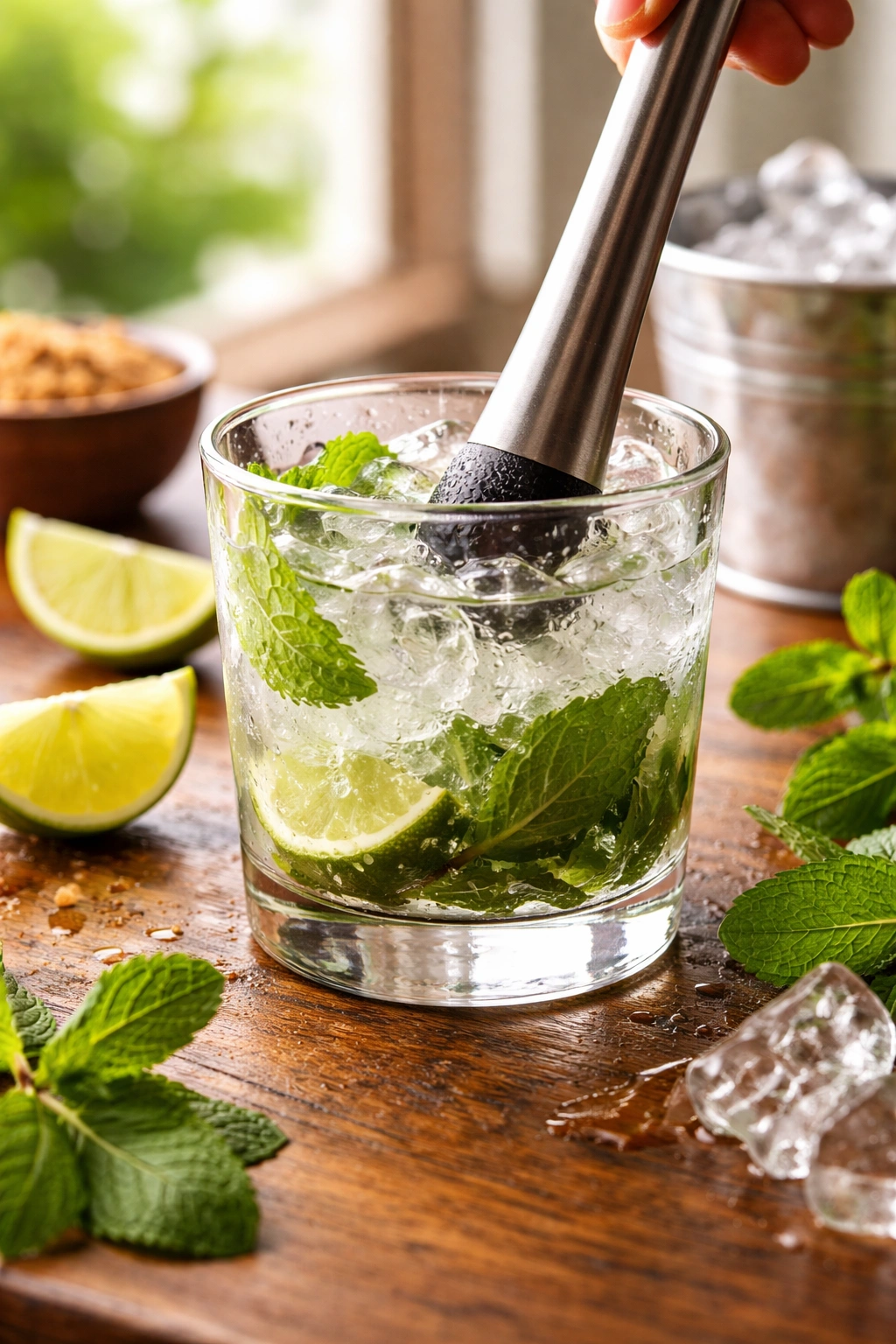
The order of operations matters more in a mojito than it might seem. Building the drink correctly ensures you extract flavor from the mint without bruising it to bitterness, dissolve the syrup properly, and maintain carbonation through the final shake. Getting this right from the start means you’ll make better mojitos every single time, whether you’re making one or a batch.
Start with your glassware. A sturdy rocks glass or highball glass works best—you need something that won’t crack when you’re gently pressing the mint. Chill your glass beforehand if possible. A warm glass is the enemy of a refreshing drink.
Add fresh mint leaves to the glass first. Don’t grab a whole bunch and cram it in. You want enough to provide herbal flavor—about 8-12 leaves depending on size—without making the drink taste aggressively minty. The quality of your mint matters here. If the leaves are already slightly wilted or smell dull, pass and get fresh mint.
Add your simple syrup next. The ratio is typically about ½ ounce (about 15 ml) per drink, though you can adjust based on how sweet you prefer it. Slightly under-sweeten rather than over-sweeten; you can always add more, and acidity from the lime will make the syrup more noticeable than it tastes in the glass.
Now comes the muddling—the part where most people go wrong. You’re not smashing. You’re gently pressing the mint against the bottom and sides of the glass to release the oils. This should take about 10-15 seconds total, maybe 6-8 gentle presses. The mint leaves should bruise slightly and release their fragrance, but they shouldn’t shred or become dark. You’re looking for green, not brown.
Immediately add fresh lime juice—about ¾ ounce (roughly ½ a lime, depending on size and juiciness). The lime juice will continue to extract flavor from the mint without the bitter compounds that over-muddling creates.
Add your rum—typically 1.5 ounces (45 ml) of white rum. This is a strong pour, which is what makes mojitos so spirit-forward and why they feel sophisticated. Add a big handful of fresh ice (crushed ice works beautifully, as does regular cubed ice). Stir everything together for about 10 seconds until the ice chills the drink and everything is well-incorporated.
Top with about 4-6 ounces of fresh, cold soda water. The exact amount depends on whether you like a more spirit-forward drink or something lighter and more refreshing. Stir gently one more time.
Garnish with a sprig of fresh mint and a lime wheel or wedge. The mint garnish does more than look pretty—it adds another aromatic element as you bring the glass to your nose.
Yield: Makes 1 cocktail
Prep Time: 5 minutes
Total Time: 5 minutes
Difficulty: Beginner — No special equipment required beyond a glass and a bar spoon or any spoon you have. The technique is straightforward even if you’ve never made a cocktail before.
For One Classic Mojito:
- 8-12 fresh mint leaves (about ½ packed cup, no wilting or dark spots)
- ½ ounce (15 ml) fresh simple syrup (equal parts sugar and hot water, cooled)
- ¾ ounce fresh-squeezed lime juice (from about ½ a lime, depending on size)
- 1.5 ounces (45 ml) white rum (a quality you’d drink straight)
- Large handful of fresh ice (crushed or cubed)
- 4-6 ounces (120-180 ml) cold soda water or club soda
- Fresh mint sprig and lime wheel for garnish
For a Batch Serving 6-8 People:
- 1 cup fresh mint leaves (loosely packed, no wilting)
- ¼ cup (60 ml) fresh simple syrup
- ¾ cup (180 ml) fresh-squeezed lime juice (about 10-12 limes)
- 2 cups (480 ml) white rum
- Ice for shaking and serving
- 2-3 cups (480-720 ml) cold soda water
- Fresh mint sprigs and lime wheels for garnish
Make the Drink (For One):
-
Chill a rocks glass or highball glass in the freezer for at least 2 minutes while you prepare the other ingredients.
-
Add 8-12 fresh mint leaves to the chilled glass. Choose leaves that are fragrant and bright green, avoiding any with brown spots or wilting.
-
Pour ½ ounce (15 ml) of fresh simple syrup into the glass over the mint leaves.
-
Using a bar spoon, wooden spoon, or the handle of any sturdy spoon, gently press the mint against the bottom and sides of the glass 6-8 times over about 10-15 seconds total. The mint should bruise slightly and release its fragrance, but the leaves should remain mostly whole and bright green. Do not smash or pulverize the leaves, as this will extract bitter compounds and darken the color.
-
Immediately add ¾ ounce (about 45 ml) of fresh-squeezed lime juice. Fresh lime juice is essential here—bottled or concentrate will noticeably change the flavor and character of the drink.
Advertisements -
Pour 1.5 ounces (45 ml) of white rum into the glass. Choose a rum you’d be happy drinking on its own; the quality of the rum directly affects the quality of the finished drink.
-
Add a large handful of fresh ice (crushed ice is ideal, but regular cubed ice works perfectly well). Stir gently with a bar spoon for about 10 seconds until everything is well-combined and the drink is fully chilled.
-
Top the drink with 4-6 ounces (120-180 ml) of cold soda water, depending on how spirit-forward you prefer your mojito. Stir once more, very gently, to combine.
-
Garnish with a fresh mint sprig positioned so you catch its aroma as you bring the glass to your lips, and add a lime wheel or wedge on the rim or in the drink.
-
Serve immediately while the ice is still fully frozen and the carbonation is at its peak.
For a Batch (Serves 6-8):
-
In a large pitcher, combine 1 cup of loosely packed fresh mint leaves and ¼ cup (60 ml) of fresh simple syrup.
-
Gently press the mint against the sides and bottom of the pitcher 6-8 times over about 15 seconds, using a wooden spoon or muddler. You’re releasing the mint’s oils without bruising the leaves to bitterness. The mint should be fragrant and show light bruising but remain bright green.
-
Immediately add ¾ cup (180 ml) of fresh-squeezed lime juice to stop any further extraction from the mint.
-
Pour in 2 cups (480 ml) of white rum and stir to combine everything thoroughly.
Advertisements -
Fill the pitcher with ice (a mix of cubed and crushed ice works well for batch drinks).
-
Top the pitcher with 2-3 cups (480-720 ml) of cold soda water, depending on how many drinks you’re serving and how light you prefer them. Stir gently but thoroughly to combine everything and chill the entire batch.
-
Prepare individual glasses by filling each with a large handful of fresh ice. Pour the mojito mixture evenly among the glasses, aiming for about 6 ounces per drink.
-
Top each glass with an additional splash of soda water if needed to reach your preferred level of dilution and refreshment.
-
Garnish each drink with a fresh mint sprig and a lime wheel or wedge.
-
Serve immediately while the drinks are fully chilled and the carbonation is still lively.
Mastering the Muddling Technique
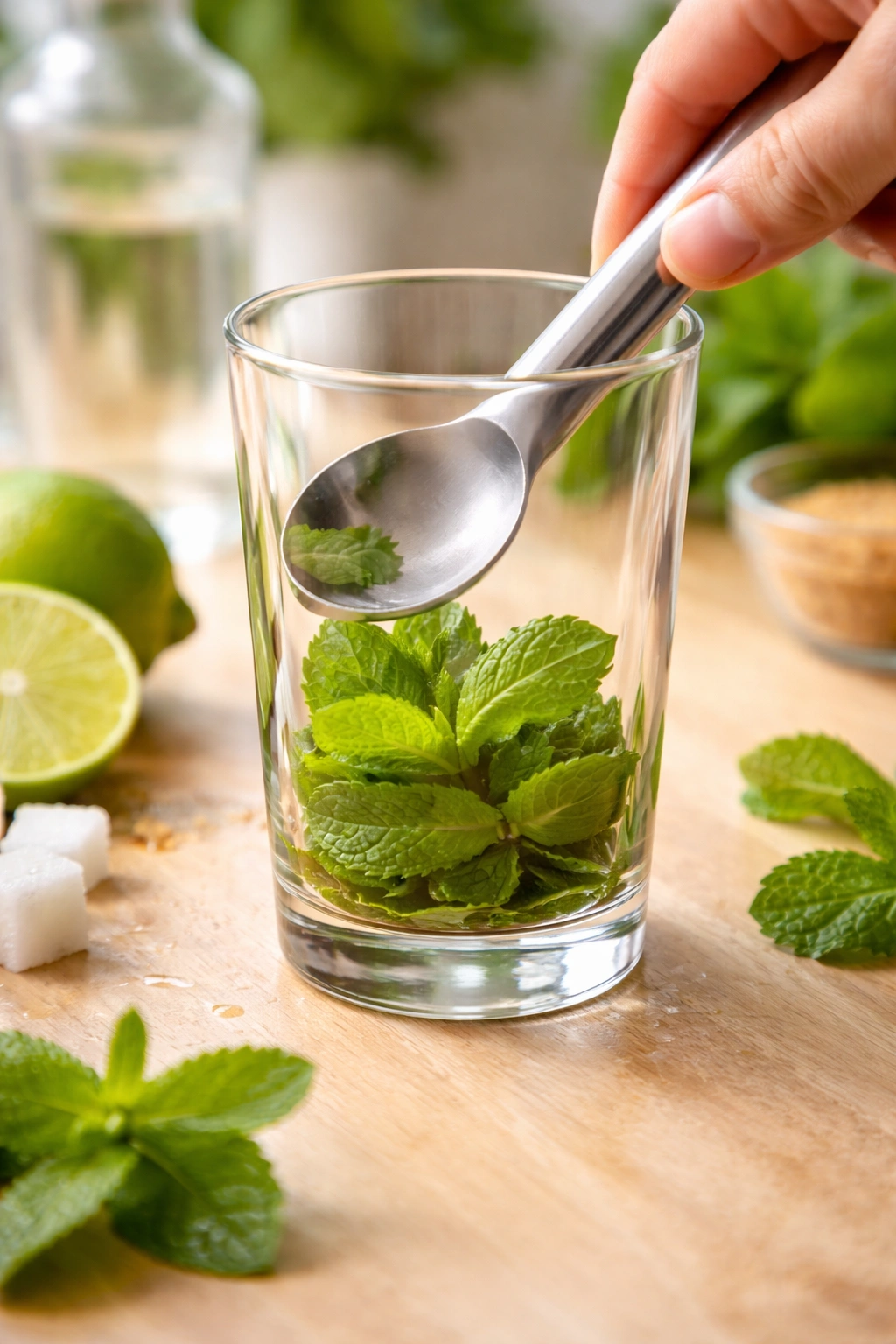
The muddling step is where most home bartenders either nail it or wreck it. There’s no in-between. Understanding what you’re actually trying to do—and what you’re trying to avoid—is the difference between a mojito that tastes herbaceous and balanced, and one that tastes bitter, bruised, and over-extracted.
The goal is to gently bruise the mint leaves in a way that ruptures the cell walls and releases the fragrant essential oils. You’re not crushing or pulping. If you’ve ever accidentally stepped on a fresh herb on the kitchen floor, that’s too much. You’re aiming for something much gentler—the kind of pressure that would barely bruise an apricot.
Use the flat of your spoon and apply steady, gentle downward pressure for about 2 seconds. Then move to a different section of the glass and repeat. Six to eight gentle presses across the bottom and sides should take about 15 seconds total. The mint leaves should still be visibly whole and bright green when you’re finished. If the leaves are shredded, dark, or smell fermented or grassy, you’ve gone too far.
The timing also matters. Muddling should happen right before you add the lime juice. The moment the acidic lime juice hits those bruised mint leaves, it stops the extraction process and preserves the fresh, bright flavor. This is why old recipes that muddle mint and let it sit for minutes before adding the other ingredients produce disappointing results—you’re extracting too much of the wrong compounds.
The Importance of Fresh, Quality Ingredients
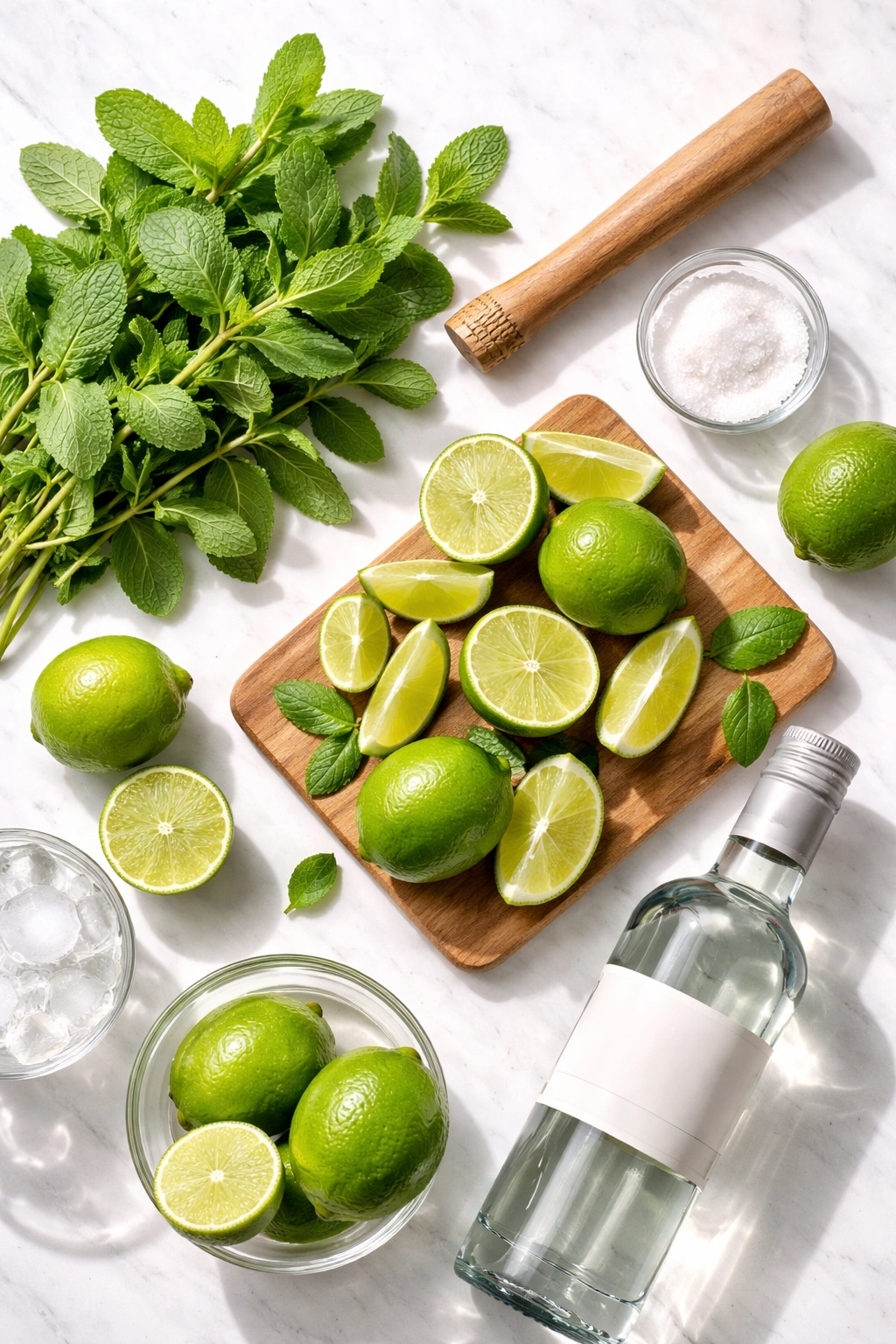
You cannot make an excellent mojito with mediocre ingredients. There’s nowhere to hide in a drink this simple. Every element shows. If your rum is harsh and unbalanced, that harshness will dominate the drink. If your lime juice is bottled and oxidized, the entire drink tastes dull. If your mint is wilted or has any off-flavors, the drink will be noticeably disappointing.
Start with fresh mint from the produce section or, ideally, grown in a pot on your windowsill. Mint keeps for a week or more in the refrigerator in a sealed bag or wrapped in a damp paper towel. Before you use it, run it under cold water and gently pat it dry—wet mint muddled poorly leads to a watered-down drink.
Always juice your limes fresh. A single lime should yield about ½ ounce of juice. Use room-temperature limes and roll them gently on the counter before cutting to break down the membranes and release more juice. If your lime seems dry, microwave it for 10-15 seconds before juicing. The difference between fresh lime juice and bottled is night and day in a mojito.
Choose a white rum that you actually want to drink. There’s enormous variation in quality and flavor profile at every price point. Inexpensive white rums can be harsh or one-dimensional; mid-range and premium white rums often have subtle vanilla, coconut, or grassy notes that add complexity. The best way to find a rum you love is to taste it straight (just a small amount) and ask yourself if you’d be happy sipping it in a drink.
Make your own simple syrup. It takes five minutes and costs pennies. Combine equal parts sugar and hot water (say, ½ cup of each), stir until the sugar dissolves completely, and let it cool. Store it in the refrigerator for up to a month. Homemade syrup dissolves instantly and doesn’t have the slightly off-taste that some commercial bottled syrups develop over time.
Tropical Mojito Twist With Pineapple and Coconut
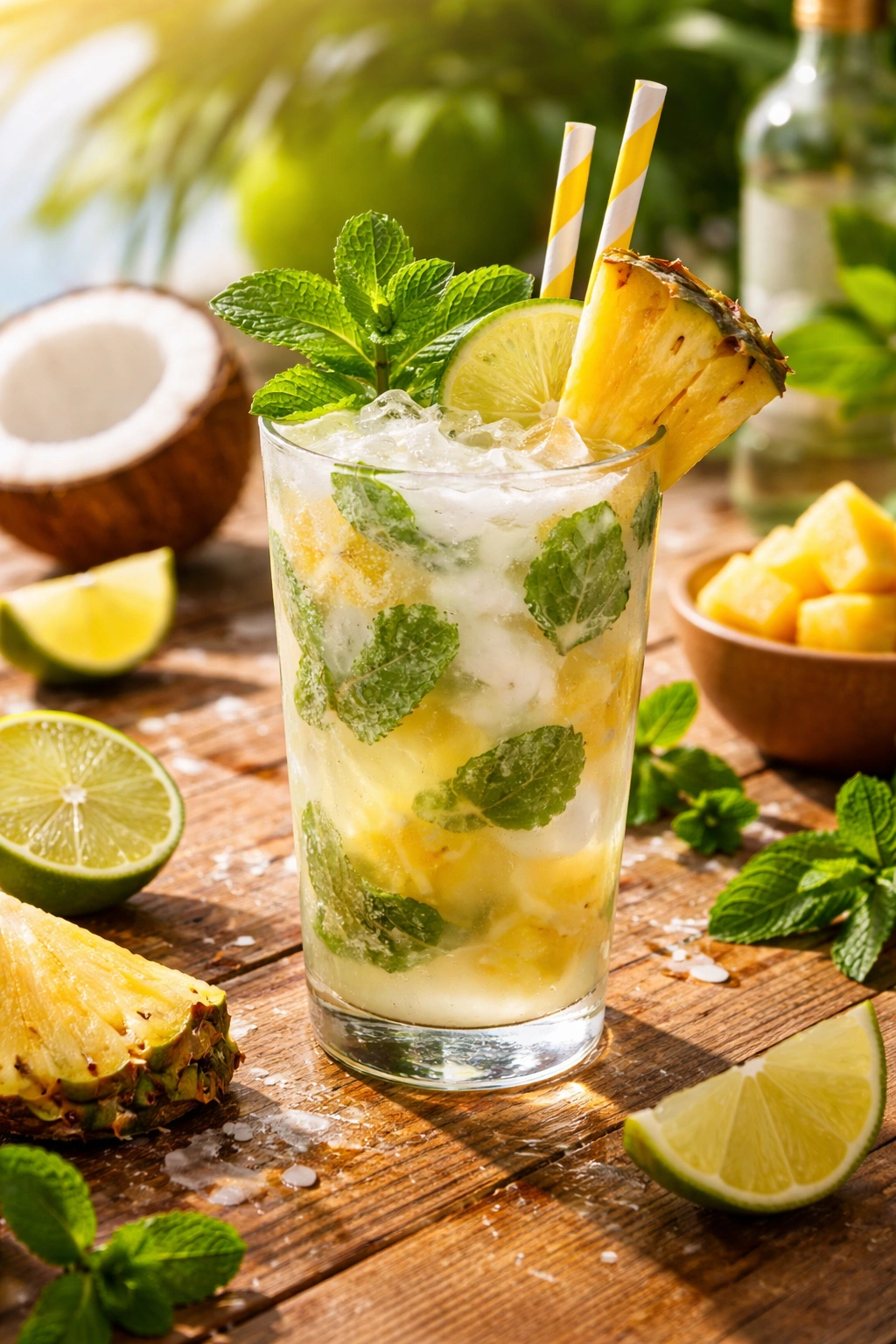
If you want to shift the mojito from refreshing and herbaceous to tropical and summery, swap a portion of the lime juice for fresh pineapple juice and add a touch of coconut for depth. This version feels vacation-adjacent but still maintains the mojito’s essential character.
The key is balance. If you use too much pineapple juice, the drink becomes more piña colada than mojito. You’re aiming for a subtle tropical undertone that complements the mint and lime, not dominates them.
Use fresh pineapple juice if you can—either freshly pressed or the kind you find in the refrigerated section that’s just pineapple with no added sugar or preservatives. If you’re using bottled, choose one without added sugar. The pineapple should be a supporting player, not the main event.
For the coconut element, a small amount of coconut cream (the thick part from a can of coconut milk) works beautifully. Just ¼ ounce stirred into your simple syrup before you use it adds richness and a subtle coconut note without making the drink heavy or overly sweet. Alternatively, use coconut-flavored rum (about ½ ounce of it, reducing your regular white rum to 1 ounce) for a more integrated coconut flavor that doesn’t add texture.
Tropical Mojito Per Drink:
- 8-12 fresh mint leaves
- ½ ounce (15 ml) fresh simple syrup mixed with ¼ ounce coconut cream
- ½ ounce fresh-squeezed lime juice
- ¼ ounce fresh pineapple juice
- 1.5 ounces (45 ml) white rum (or 1 ounce white rum + ½ ounce coconut rum)
- Large handful of fresh ice
- 4-6 ounces cold soda water
- Fresh mint sprig and a pineapple wedge for garnish
Build it exactly like the classic mojito, but use the coconut-enriched syrup and add the pineapple juice at the same time as your lime juice. The result is bright, tropical, and completely refreshing.
Berry Mojito Variations
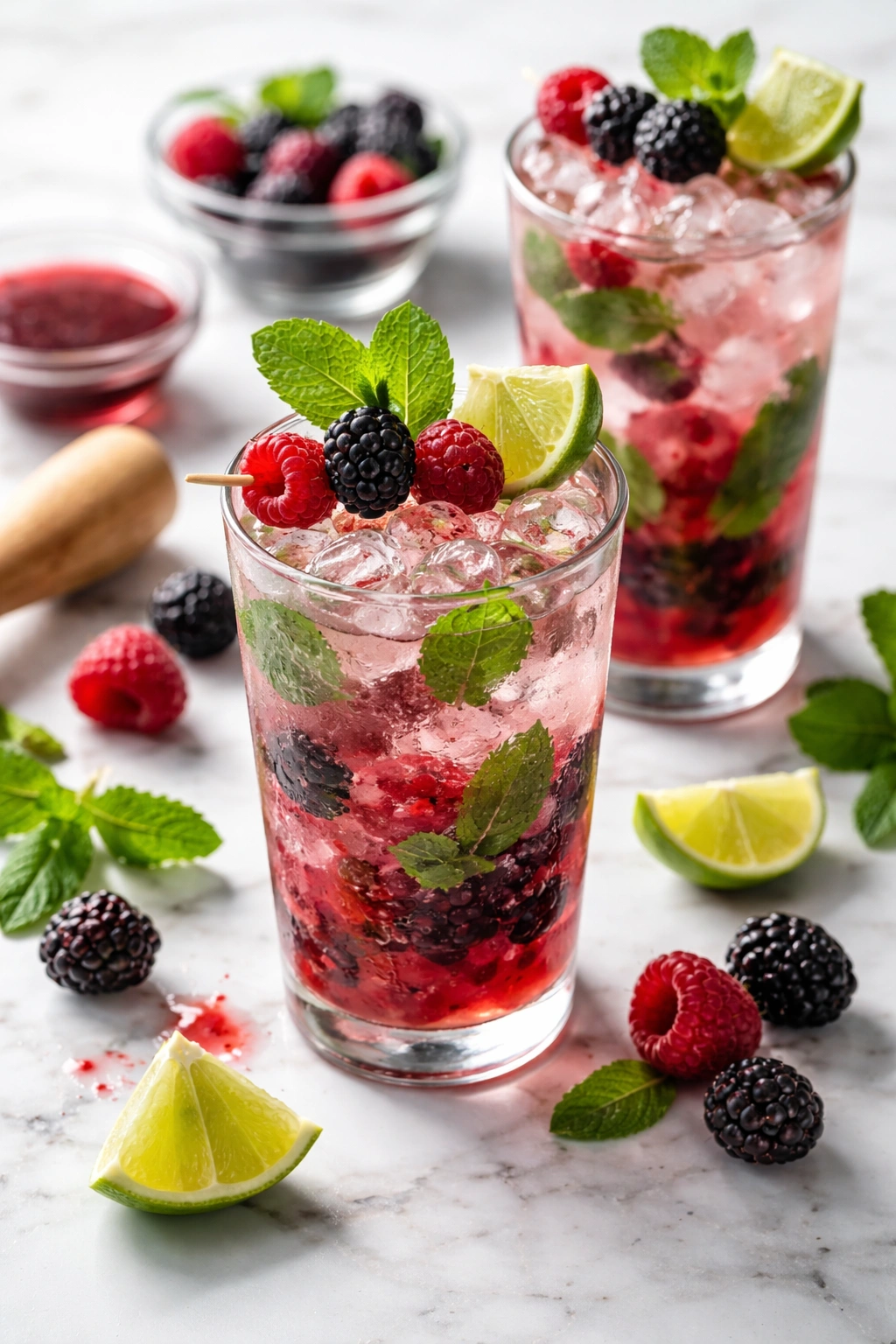
Berries bring a completely different energy to the mojito—less herbaceous brightness, more subtle fruit sweetness and tartness. The beauty of berry mojitos is that you can shift the entire flavor profile while keeping the technique and structure completely familiar.
Muddled fresh berries work best. Raspberries, blackberries, strawberries, or blueberries all work, and you can mix them or stick to one type. The berries themselves provide natural pectin that creates a slight texture and adds body to the drink. Frozen berries thaw during the drinking experience, so use fresh when possible.
Muddle about 6-8 fresh raspberries or blackberries (or about 10-12 sliced strawberries, or a combination) along with your mint leaves. This requires slightly more careful pressure—you’re trying to crush the berries to release their juice without pulverizing the mint. It’s a more delicate balance than a straight mint muddle.
Add just a small amount of berry juice or berry-infused simple syrup (you can make this by steeping berries in warm simple syrup for 30 minutes, then straining and cooling). The berry element should be present but not overwhelming. Too much fruit juice and you lose the mojito quality.
Raspberry Mojito Per Drink:
- 6-10 fresh mint leaves
- 6-8 fresh raspberries or blackberries
- ½ ounce (15 ml) fresh simple syrup (plain or berry-infused)
- ¾ ounce fresh-squeezed lime juice
- 1.5 ounces (45 ml) white rum
- Large handful of fresh ice
- 4-6 ounces cold soda water
- Fresh mint sprig and a fresh raspberry for garnish
Muddle the mint and berries together gently, then proceed with the classic technique. The result is slightly fruity, herbaceous, and sophisticated.
Spiced Mojito With Jalapeño Heat
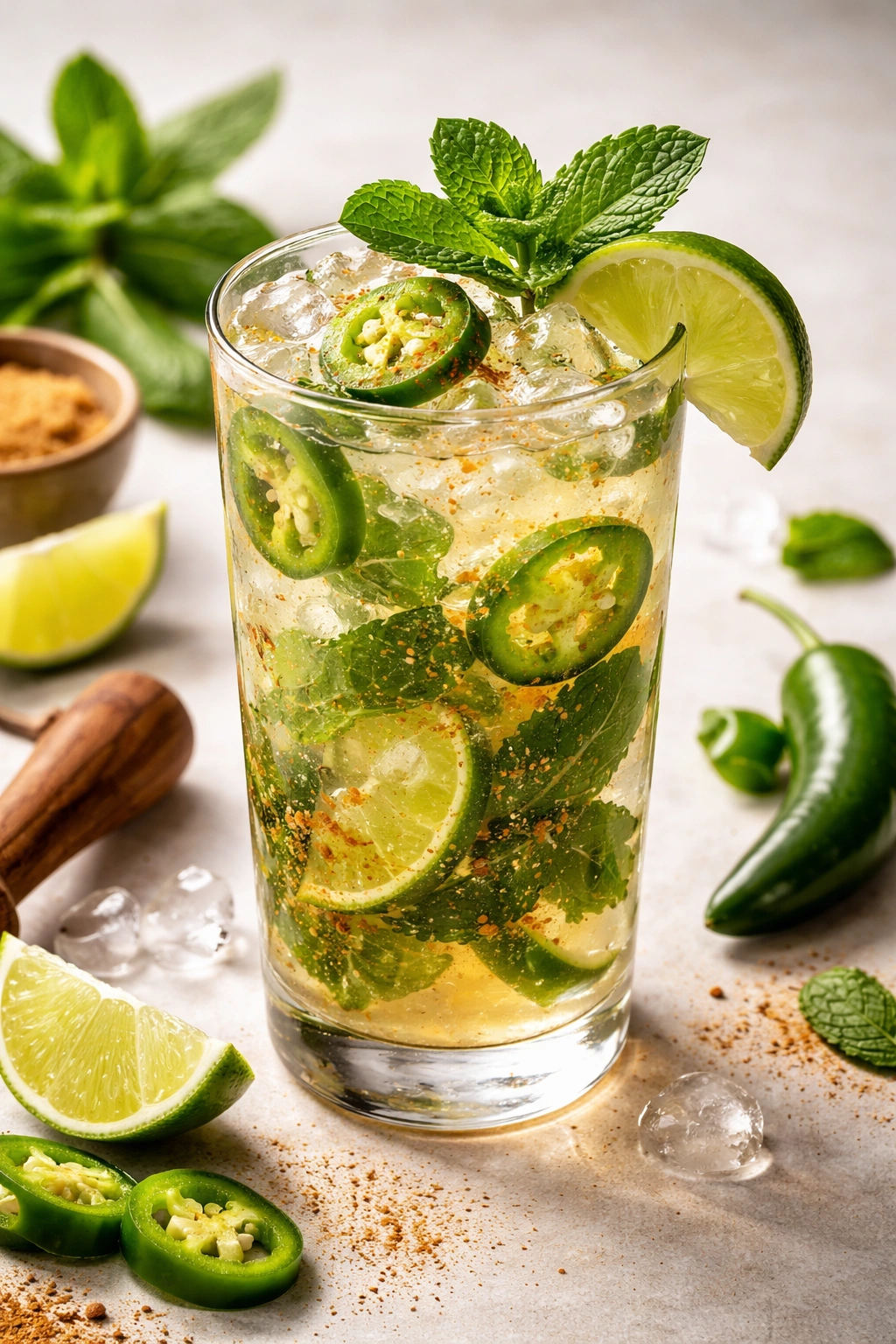
For those who want something more complex and warming, a spiced mojito brings unexpected depth. Jalapeño slices add a clean heat that builds gradually rather than exploding on your palate, while warming spices like cinnamon or a dash of angostura bitters add sophistication.
Slice a fresh jalapeño thinly, removing most of the seeds to control the heat level. Muddle the jalapeño slices along with your mint, but use even gentler pressure than you would for straight mint. You’re releasing the oils from the jalapeño skin without pulverizing the flesh into bitterness.
The spice element can come from several directions. A tiny pinch of ground cinnamon or a single dash of angostura bitters stirred into your simple syrup before muddling adds warmth without the jalapeño’s literal heat. Or use a spiced rum (typically amber rum with cinnamon, clove, and vanilla notes) instead of plain white rum, reducing the amount to 1 ounce and adding 1 ounce of white rum to maintain the drink’s balance.
This version pairs beautifully with slightly less soda water (toward the 4-ounce side rather than 6) because the spice and heat feel bolder in a slightly more spirit-forward drink.
Jalapeño-Spiced Mojito Per Drink:
- 8-10 fresh mint leaves
- 3-4 thin slices of fresh jalapeño (seeds mostly removed)
- ½ ounce (15 ml) fresh simple syrup with a pinch of ground cinnamon or a dash of angostura bitters
- ¾ ounce fresh-squeezed lime juice
- 1.5 ounces (45 ml) white rum (or 1 ounce white rum + ½ ounce spiced rum)
- Large handful of fresh ice
- 4-5 ounces cold soda water
- Fresh mint sprig and a jalapeño slice for garnish
Muddle the mint and jalapeño together very gently, then add your spice-infused syrup and follow the classic technique. The heat builds gently as you drink, and the mint cools it slightly—a beautiful balance.
Cucumber and Herb Mojito
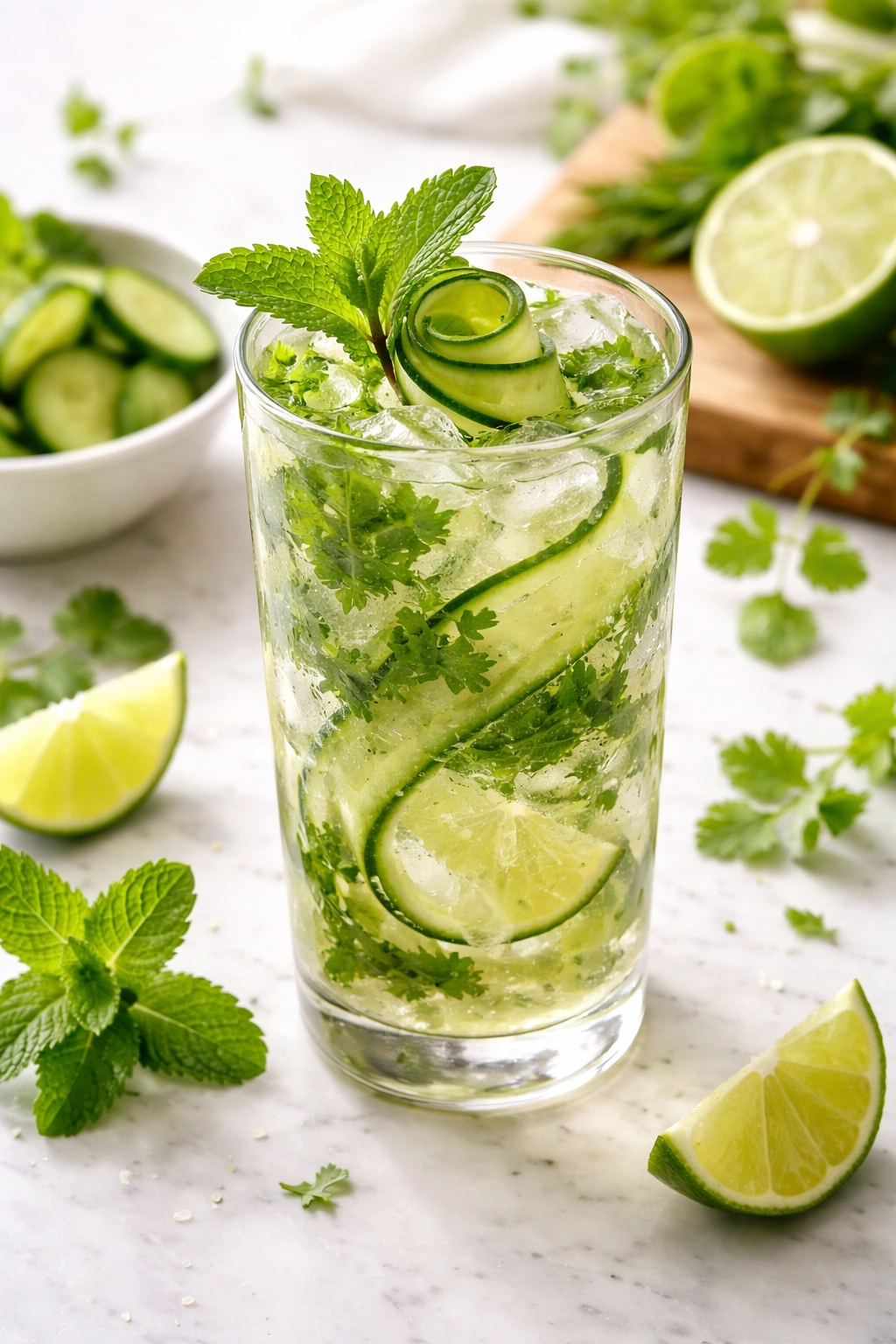
For a more savory, elegant direction, cucumber and additional fresh herbs create a mojito that feels more like a refined aperitif than a casual drink. This works beautifully as a warm-weather before-dinner drink.
Peel a cucumber with a vegetable peeler to create 3-4 thin slices. These slices add subtle, cooling cucumber flavor without releasing a flood of water into the drink. Muddle the cucumber gently along with your mint leaves (use perhaps 10-12 mint leaves and 2-3 additional basil or cilantro leaves for complexity).
The cucumber and herbs mean you can reduce the lime juice slightly—to about ½ ounce—since the drink will already have plenty of brightness from the herbs and the natural flavor of fresh cucumber.
This version also works beautifully with a neutral white rum and just a touch of elderflower liqueur (about ¼ ounce, reducing your white rum to 1.25 ounces) for a more delicate, sophisticated flavor profile.
Cucumber-Herb Mojito Per Drink:
- 10-12 fresh mint leaves
- 2-3 fresh basil or cilantro leaves
- 3-4 thin slices of fresh cucumber (peeled)
- ½ ounce (15 ml) fresh simple syrup
- ½ ounce fresh-squeezed lime juice
- 1.5 ounces (45 ml) white rum (or 1.25 ounces white rum + ¼ ounce elderflower liqueur)
- Large handful of fresh ice
- 5-6 ounces cold soda water
- Fresh cucumber slice and a mint sprig for garnish
Build exactly like the classic mojito. This version feels more herbaceous and less sweet-fruity than the standard mojito—more sophisticated aperitif, less poolside party.
Passion Fruit and Mango Mojito
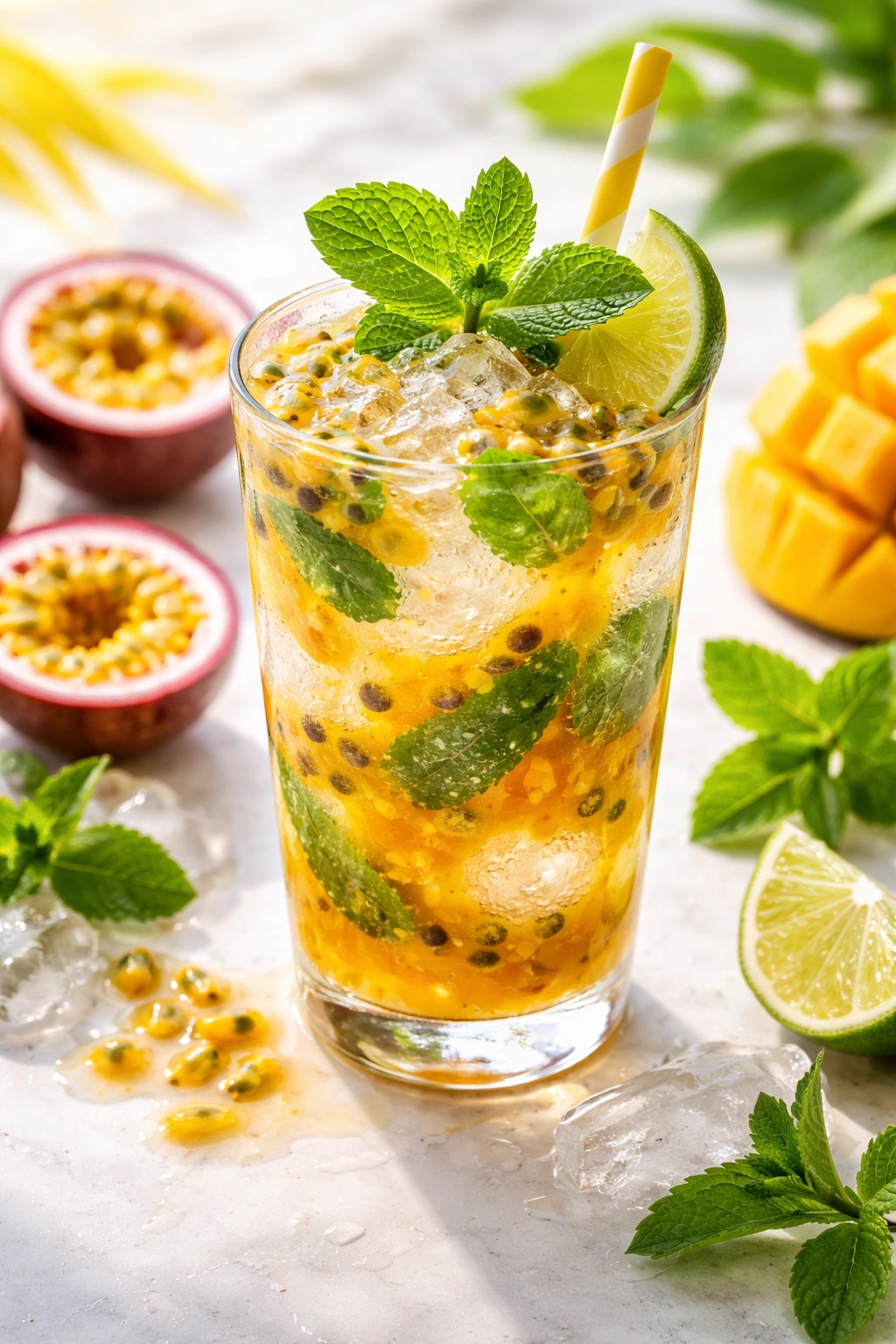
Tropical stone fruits bring their own character to mojitos. Passion fruit in particular—tart, exotic, and intensely aromatic—creates a drink that feels special and considered.
Use fresh passion fruit if you can find it, cutting the fruit in half and scooping the seeds and juice into your muddler. The seeds and their juice create a strained, seed-studded texture that’s part of the drink’s appeal. If fresh passion fruit isn’t available, passion fruit juice or puree (available frozen at specialty grocery stores) works beautifully.
Mango is sweeter and more tropical than passion fruit. Puree a small amount of fresh mango (about ¼ cup) and strain out any fibrous bits. Mix it with your simple syrup before you muddle your mint, so the mango sweetness and tropical character integrate throughout the drink.
These two fruits together create a drink that’s tropical, tart, herbaceous, and sophisticated all at once. The mango sweetness balances passion fruit’s tartness, and the mint keeps the whole drink feeling fresh rather than heavy.
Passion Fruit and Mango Mojito Per Drink:
- 8-10 fresh mint leaves
- ½ ounce (15 ml) fresh simple syrup mixed with ½ ounce fresh mango puree (or ¼ ounce mango juice)
- ½ ounce fresh passion fruit juice and seeds
- ¼ ounce fresh-squeezed lime juice
- 1.5 ounces (45 ml) white rum
- Large handful of fresh ice
- 4-5 ounces cold soda water
- Mint sprig and a thin mango slice for garnish
Build like the classic mojito, using your fruit-infused syrup and adding the passion fruit juice along with your lime juice. The result is elegantly tropical and completely different from a standard mojito.
Common Mistakes and How to Avoid Them
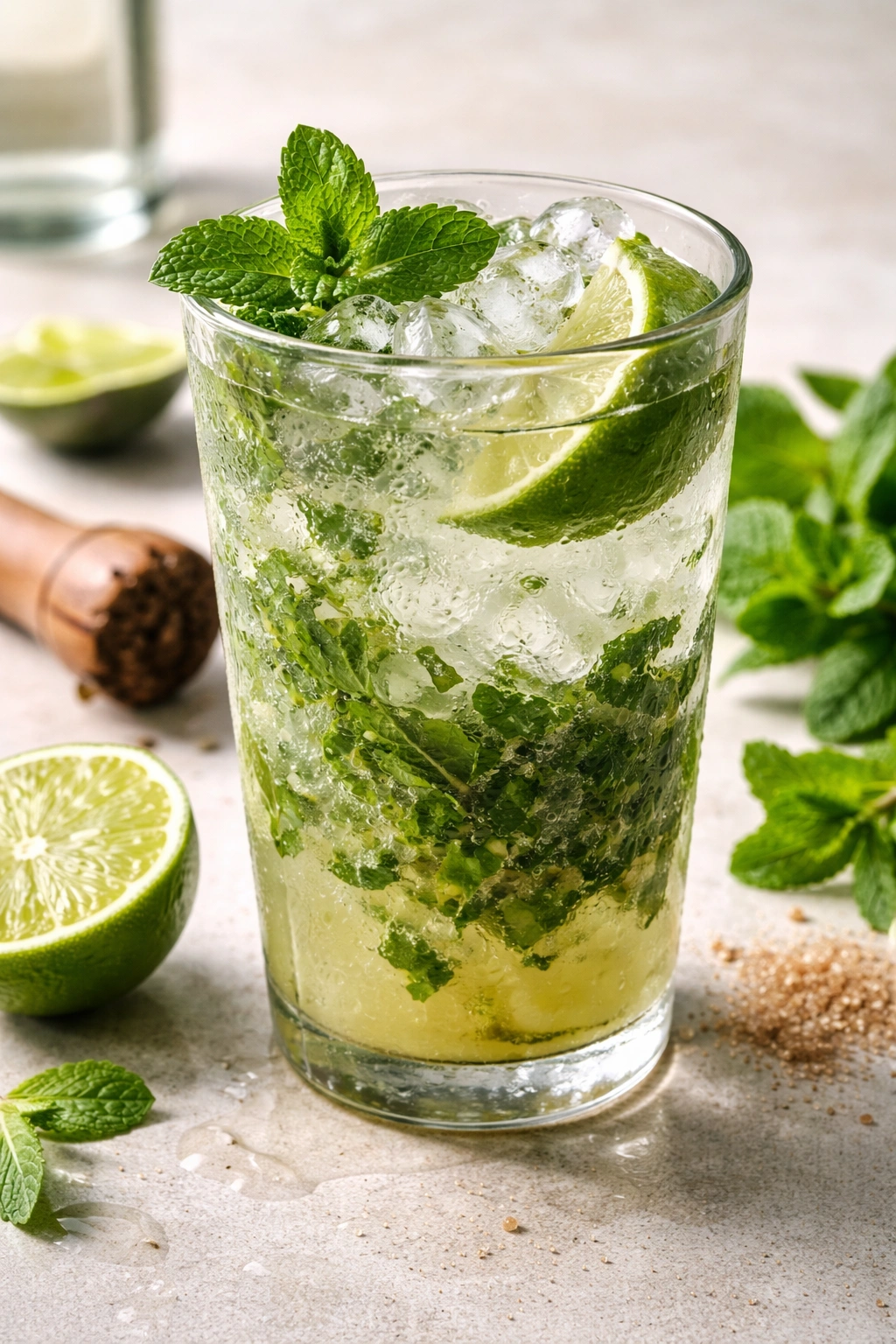
Understanding the pitfalls that derail most home mojitos helps you sidestep them completely. These aren’t obscure technical mistakes—they’re the same few issues that come up again and again when people make this drink at home.
Over-muddling is probably the single most common mistake. People get enthusiastic and smash the mint like they’re angry with it. The moment the mint leaves bruise past that delicate point, they release bitter compounds and oxidize. Your drink tastes grassy, medicinal, or unpleasantly herbaceous. The fix is simple but requires a mindset shift: treat the mint gently. Six to eight gentle presses should feel almost delicate.
Using bottled lime juice instead of fresh is the next frequent culprit. Bottled lime juice tastes dull, metallic, and one-dimensional compared to fresh. The difference isn’t subtle. If you’ve only had mojitos made with bottled lime, try one made with fresh lime juice and you’ll immediately understand why bartenders are so insistent about this point.
Making mojitos ahead and letting them sit is a classic host mistake. A mojito starts to oxidize and lose its carbonation within minutes. The ice melts and dilutes the drink. The mint continues to extract and becomes unpleasantly bitter. Always make mojitos to order or no more than 5-10 minutes before you’re serving them.
Using warm rum or flat soda water undermines everything you’ve done right with the other ingredients. Chill your bottles in the freezer for 30 minutes before you start making drinks. Use soda water that’s been chilled and is actively carbonated (you should hear that satisfying fizz when you open it).
Skimping on ice is another underminer. A mojito needs plenty of ice to dilute and chill properly. A small, sad handful of ice means the drink tastes too strong and doesn’t reach the right temperature. Fill your glass generously—the ice is part of the structure.
Making Mojitos for a Crowd
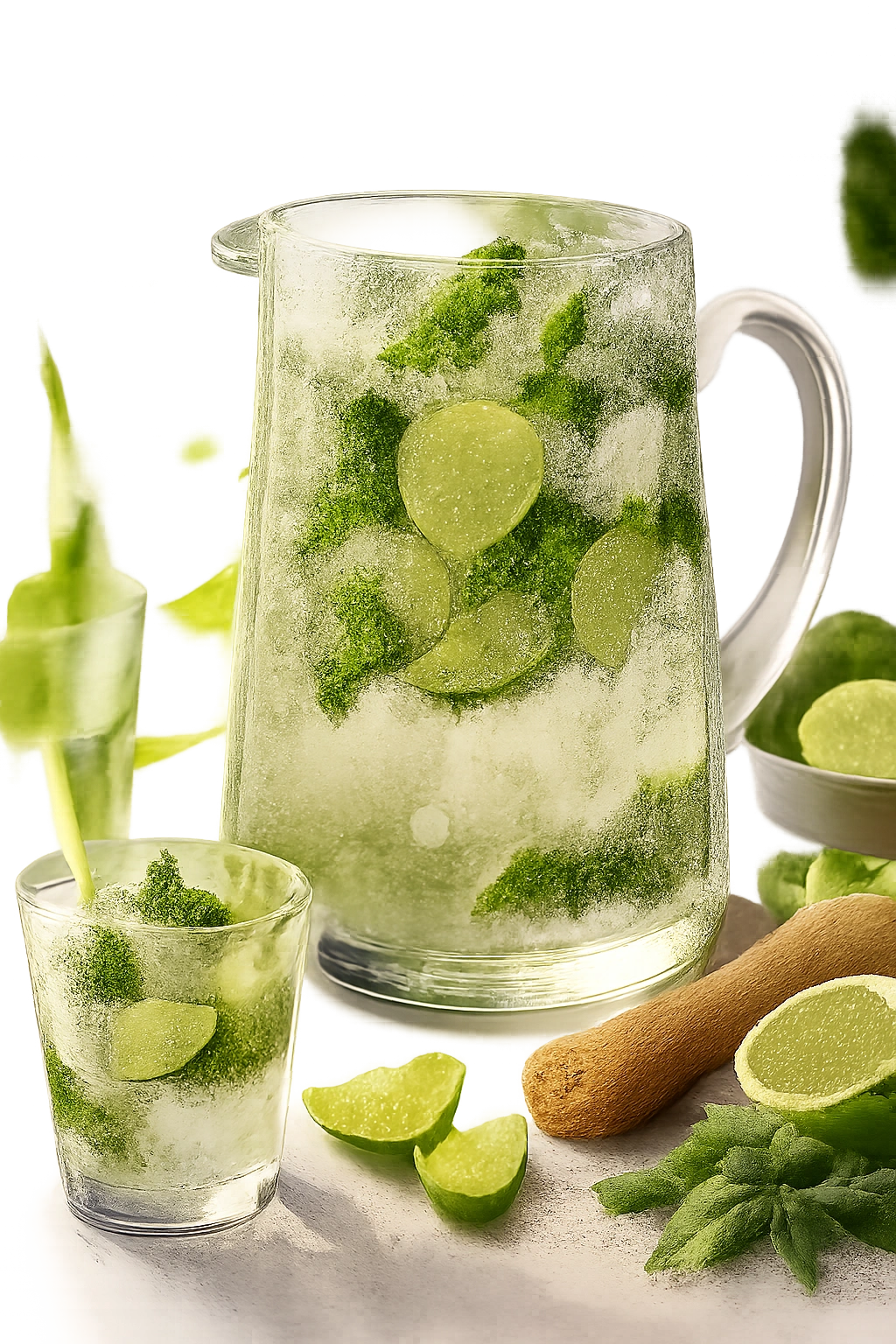
Batch mojitos require a slightly different approach than individual ones. You can’t muddle as aggressively with a whole pitcher of mint; the technique needs to scale gracefully.
Start by chilling a large pitcher in the freezer for 10 minutes. Combine your mint and simple syrup in the pitcher and muddle very gently—think of it as a rolling, pressing motion rather than distinct downward presses. You’re trying to bruise everything evenly without overworking any particular area.
Add your lime juice immediately to stop extraction. Then add your rum and stir thoroughly. Fill the pitcher with a mix of crushed and cubed ice, which creates better cooling surface area and has a nicer visual appeal than just cubes.
Add your soda water right before serving. The drink will stay better for longer this way (though ideally you’re still serving within 15-20 minutes of building it).
Pour into individual glasses with fresh ice, top with a splash of additional soda water, and garnish right before serving. This approach lets you serve several people quickly without making individual drinks one at a time.
If you’re making a big batch for a party, consider setting up a mojito station where guests can help themselves. Pre-batch your rum, lime juice, and simple syrup in one pitcher; keep your mint in a separate container; provide fresh ice, soda water, and garnishes; and let people muddle and build their own. This feels interactive and ensures the mojitos are made fresh right before they’re consumed.
Storage and Make-Ahead Tips
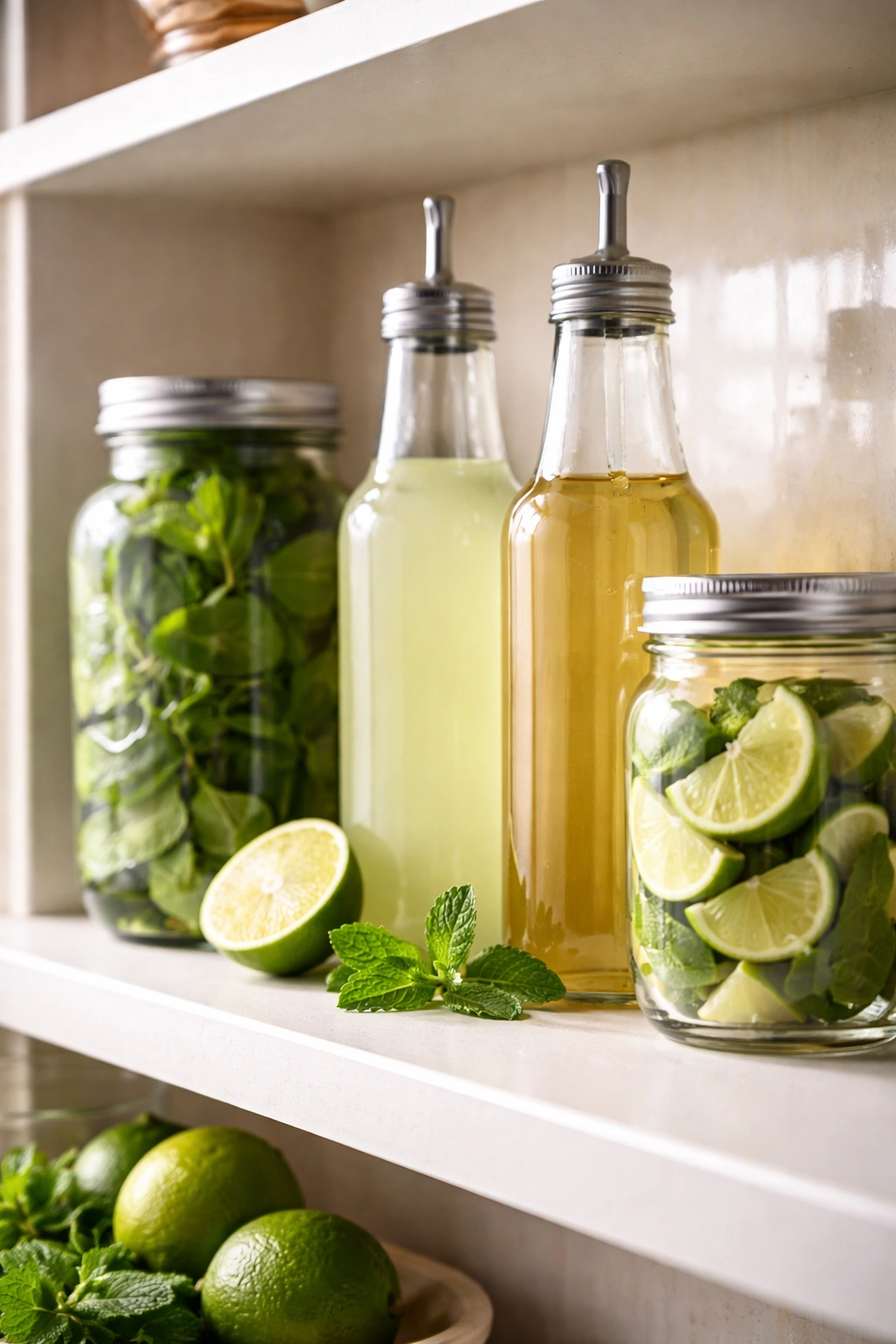
Raw ingredients prepared in advance (the real time-saver) work beautifully. You can prepare your simple syrup days ahead and store it in the refrigerator. You can juice your limes that morning and store the juice in a sealed container in the refrigerator (it’ll stay fresh for about 8 hours). You can wash and dry your mint and store it wrapped in a damp paper towel in a sealed bag (it’ll keep for several days).
What you can’t do is make the actual cocktail ahead. The moment mint touches rum and lime juice, oxidation begins. The ice starts melting. Carbonation dissipates. A mojito made even 30 minutes before serving will be noticeably diminished.
If you’re hosting, prepare all your components during the day, then make drinks to order or in small batches right as people arrive. The 5-10 minutes it takes to make a batch of mojitos is well worth the difference in quality.
Leftover simple syrup, lime juice, and rum keep well in sealed containers in the refrigerator. Any unused mint will stay fresh for several days, though it’s best used within 2-3 days of purchase for maximum flavor.
Serving and Pairing
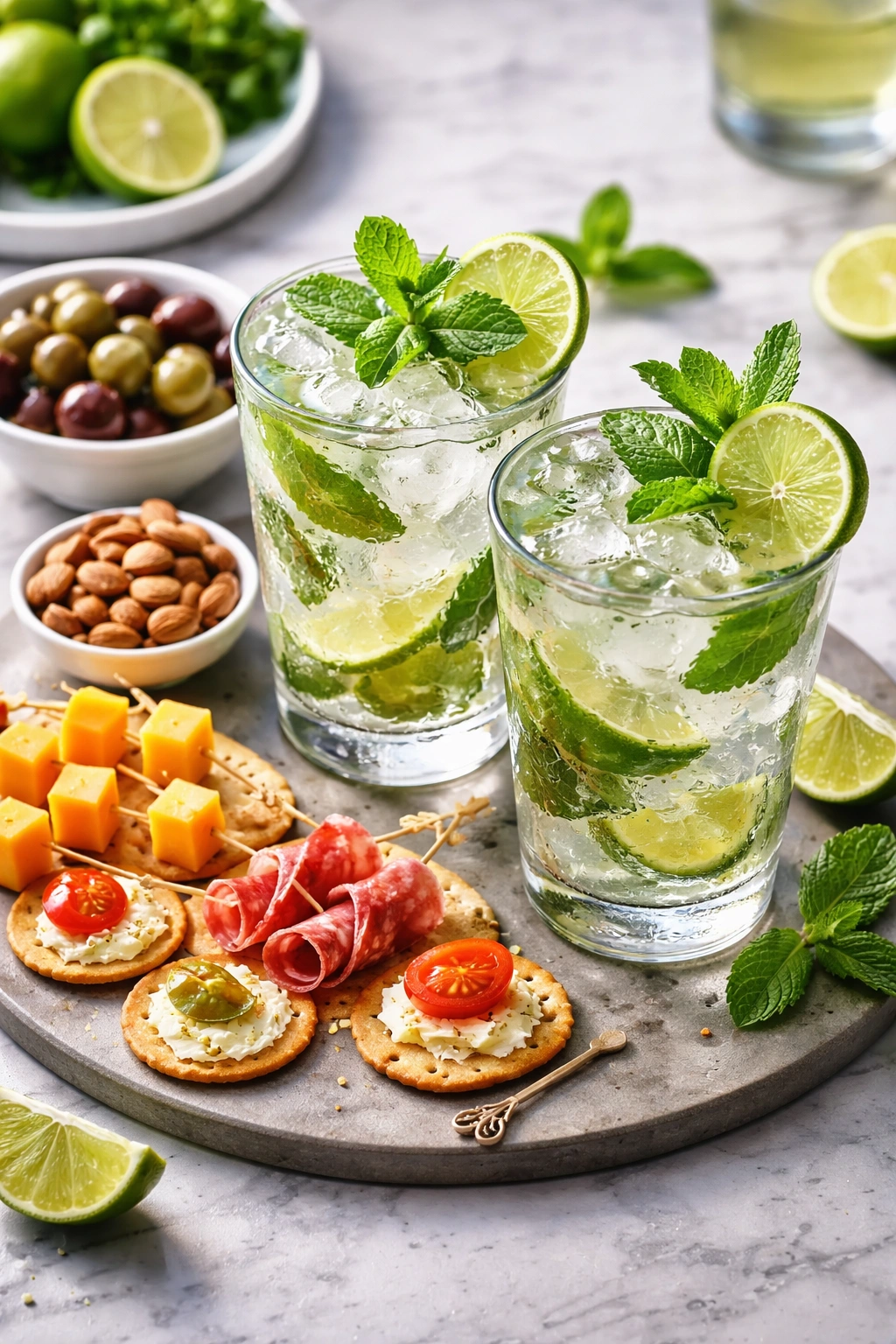
Mojitos are inherently appetizer-friendly because they’re refreshing and spirit-forward without being heavy. Serve them as a before-dinner drink with small bites—fresh cheeses, cured meats, fresh fruit, nuts, or delicate pastries. The herbaceous mintiness cuts through richness and prepares the palate for what’s coming.
They also work beautifully as a social drink throughout a gathering—less formal than a full cocktail hour, more sophisticated than beer or soda. People will naturally nurse a mojito, which means one drink can entertain someone for 30-45 minutes.
Food pairings work best when you consider the variation you’re serving. The tropical versions (pineapple coconut, passion fruit mango) pair beautifully with Caribbean or Latin-influenced food, seafood, and grilled items. The herbaceous straight mojito works with almost anything but particularly shines alongside Mediterranean flavors, grilled vegetables, and fresh fish. The spiced version complements dishes with warmth or heat, and pairs nicely with grilled meats and rich foods.
Serve mojitos in chilled glasses with plenty of ice, garnished with fresh mint sprigs and lime wheels. The presentation is part of the experience—the bright green mint, the clear ice, the clarity of the drink itself all contribute to that feeling of refreshment and sophistication.
Final Thoughts
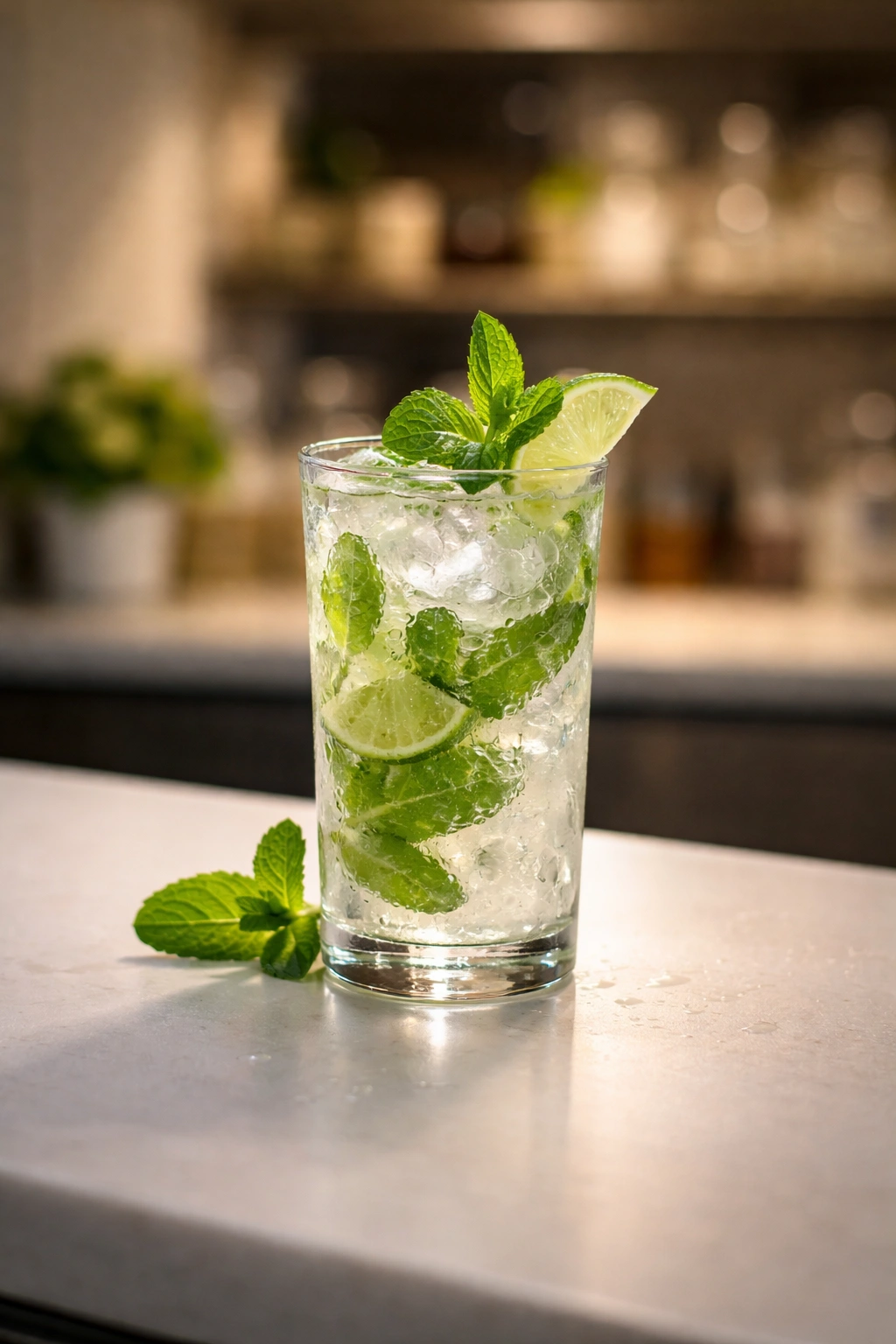
The mojito rewards precision more than any other simple drink. It’s not complicated, but it is exacting. Master the classic technique—gentle muddling, fresh ingredients, proper proportions—and you’ve got a drink you can serve with confidence to anyone, any time. Then, once you’ve internalized that foundation, the flavor variations become genuinely fun. A tropical twist one day, a spiced version the next, a sophisticated cucumber-herb version for dinner—each one feels new because you’ve built on a solid understanding of what works.
The beauty of these variations is that they’re not gimmicks. They’re thoughtful pivots that maintain the mojito’s essential character—refreshing, herbaceous, balanced, bright—while shifting the overall impression. Whether you’re making a batch for a summer party or crafting a single drink for yourself on an ordinary evening, the same principles apply: quality ingredients, gentle technique, and respect for the drink’s elegant simplicity. That’s what transforms a mojito from forgettable to unforgettable.
