



If you’ve been starting your mornings with toast, cereal, or the same old oatmeal routine, cottage cheese might just be the breakfast breakthrough you’ve been missing. It’s not the most obvious choice for a morning meal — most of us grew up thinking of it as a side dish or snack — but cottage cheese is actually one of the most underrated high-protein breakfast options available. A single cup of cottage cheese delivers 25 to 30 grams of protein, making it rival Greek yogurt while offering a creamier texture and more versatility than you’d expect.
The beauty of a cottage cheese breakfast is that it works whether you’re hunting for sustained energy, trying to build muscle, or looking to feel genuinely full until lunch. Protein at breakfast matters more than most people realize — it stabilizes blood sugar, reduces cravings, and supports muscle recovery if you’ve just finished a workout. Unlike a breakfast of refined carbs or sugar-heavy granola, cottage cheese keeps your energy steady and your hunger hormones in check.
What makes cottage cheese such a winning breakfast ingredient is its adaptability. You can eat it straight from the container with toppings, blend it into pancakes, layer it into parfaits, scramble it with eggs, or blend it into smoothie bowls. Each approach tastes completely different and keeps breakfast from ever feeling repetitive. The trick is knowing which combinations work best, how to maximize the protein content even further, and how to make cottage cheese taste genuinely exciting rather than like diet food.
Why Cottage Cheese Is a Breakfast Game-Changer
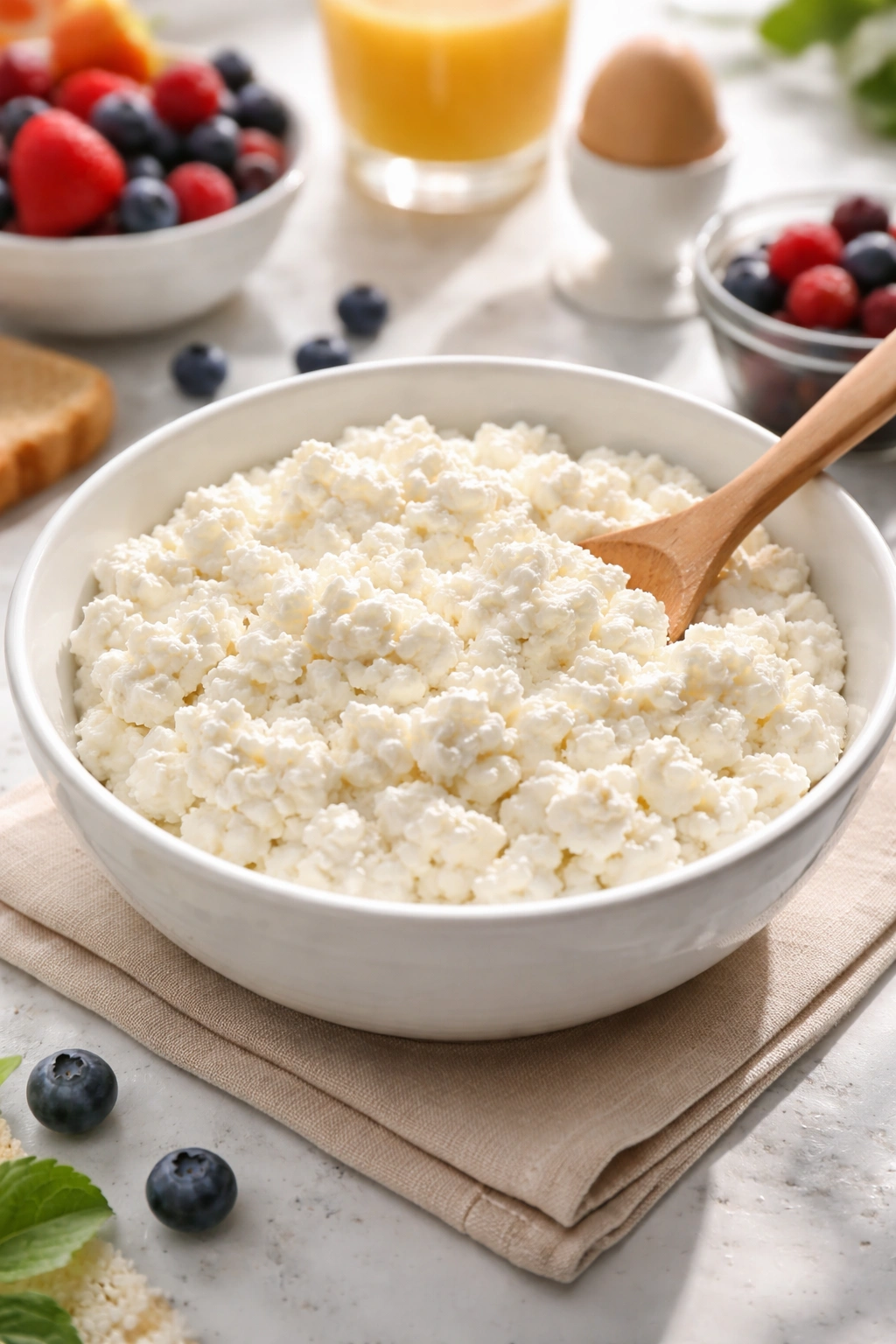
Cottage cheese has been quietly gaining momentum among fitness enthusiasts and busy professionals, and once you understand why, you’ll understand why it deserves a permanent spot in your breakfast rotation. The curds-and-whey texture might take some getting used to if you’ve never eaten it before, but that texture is actually part of what makes it so satisfying. It’s substantial and filling in a way that smooth yogurt sometimes isn’t.
The protein-to-calorie ratio is genuinely impressive. A standard serving of cottage cheese delivers 110 to 150 calories per half-cup, depending on the fat content you choose, with nearly a third of those calories coming from pure protein. This means you’re getting real nutritional density — not empty calories that leave you hungry an hour later. Compare that to a typical bowl of cereal, which might have 3 to 5 grams of protein and leave you ravenous by mid-morning.
Beyond the macros, cottage cheese contains casein protein, which is absorbed slowly and steadily into your bloodstream. This is actually different from the whey protein in Greek yogurt or the casein you’d get from milk itself. Slow absorption means sustained energy and a genuinely extended feeling of fullness — the kind of satiety that actually gets you through a busy morning without reaching for a snack at 10 AM.
It’s also considerably cheaper than Greek yogurt or specialty protein powders, and it lasts longer in your fridge once opened. A tub of cottage cheese often costs half the price of an equivalent amount of Greek yogurt, and one container can provide multiple breakfasts for the entire household.
Understanding Cottage Cheese Protein Content
Not all cottage cheese is created equal, and the protein content can vary more than you’d think depending on the brand, fat content, and processing method you choose. Understanding these differences helps you make the most nutritionally intelligent choice for your breakfast.
Full-fat cottage cheese (4 to 5% milk fat) typically delivers about 25 grams of protein per cup, with richer, creamier texture and better flavor. Low-fat versions (1 to 2% milk fat) pack roughly 28 grams of protein per cup because there’s less water and fat taking up space — the protein concentration is actually higher. Non-fat cottage cheese can reach 30 grams of protein per cup, but the texture suffers and it tends to separate more easily.
For breakfast purposes, I’d recommend sticking with low-fat cottage cheese as a sweet spot. You get the protein density of the non-fat versions while maintaining enough fat to create a pleasant mouthfeel that makes your breakfast actually enjoyable. The key is that eating something delicious is more sustainable than eating something that tastes like a nutritional sacrifice.
Brand matters too. Some cottage cheese is acid-set, meaning the curds are formed by lowering the pH with an acid (usually acetic acid), while others are rennet-set, using an enzyme that creates a slightly different texture and flavor profile. Rennet-set varieties tend to have smaller, more uniform curds and a milder flavor — they often work better in sweet breakfast applications.
Buy a few different brands and taste them side by side. You’ll notice real flavor differences. Some cottage cheese tastes tangy and complex; others taste bland and watery. Once you find a brand you genuinely enjoy eating, the habit of choosing cottage cheese for breakfast becomes automatic.
The Science Behind Cottage Cheese and Satiety
One of the most powerful reasons to eat cottage cheese at breakfast is the way it affects your appetite for the rest of the day, and understanding the mechanism behind this makes the choice feel more intentional and science-backed rather than just trend-chasing.
Protein is the most satiating macronutrient available. Gram for gram, it suppresses hunger hormones more effectively than carbohydrates or fat. When you eat 25 to 30 grams of protein at breakfast, you’re sending a strong signal to your brain that you’ve consumed something substantial and nourishing. This signal reaches your satiety centers before sugar spikes can trigger the hunger-crash cycle that derails so many breakfast plans.
Casein protein is particularly effective at this satiety game because it forms a gel-like substance in your stomach, physically slowing digestion and creating a sustained sense of fullness. Research consistently shows that casein-based proteins keep people satisfied longer than whey proteins or carbs alone. This is why cottage cheese breakfasts tend to extend hunger suppression well into the afternoon without the energy crash that comes from high-sugar options.
The texture also matters more than you’d think. Foods that require chewing — foods with some resistance or creaminess rather than liquid smoothness — trigger more satiety signals than foods we swallow quickly. Cottage cheese’s curds naturally require a bit more chewing and attention during eating, which subconsciously cues your body that you’re consuming something substantial.
Pair this protein with fiber-rich toppings like berries or nuts, and you amplify the satiety effect even further. The combination of protein, fat, and fiber creates a breakfast that genuinely sustains you, rather than one that leaves you hunting for a second meal an hour later.
Greek Yogurt vs Cottage Cheese for Breakfast
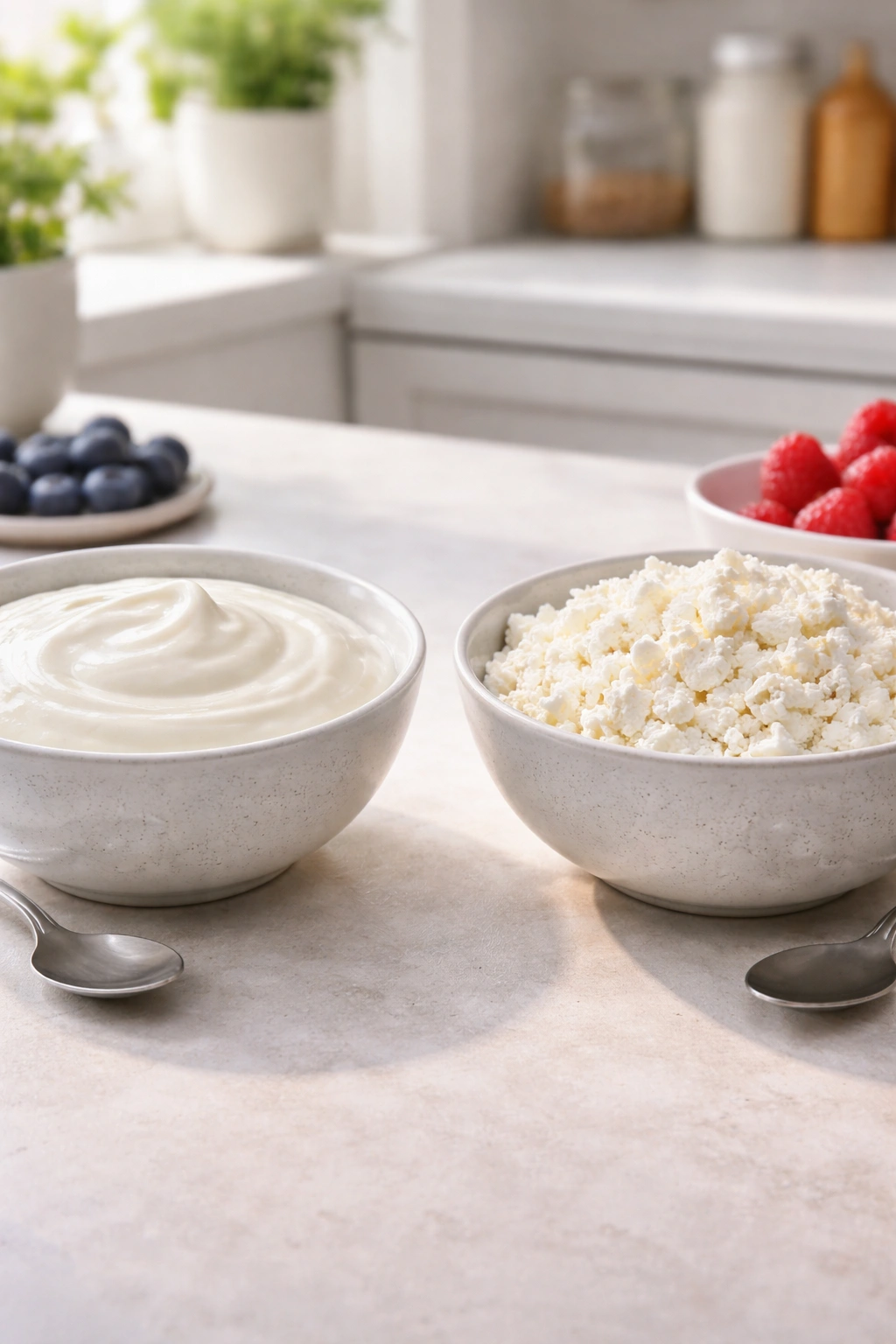
This comparison comes up constantly, and it’s worth addressing directly because both are excellent breakfast options — they’re just different in important ways that affect which one works best for your goals and preferences.
Greek yogurt has a smooth, spoon-friendly texture and tends to taste milder or slightly sweet, depending on the brand. It’s been more aggressively marketed and has stronger brand recognition, so it feels like the “default” protein breakfast option for most people. The protein content is comparable (20 to 25 grams per serving), though cottage cheese typically edges it out slightly.
The main difference is that cottage cheese is creamier and has more pronounced curds, while Greek yogurt is thicker and more uniform. Some people find cottage cheese’s texture off-putting at first, while others immediately prefer it for its richness. This is purely a personal preference, and if you hate the texture of cottage cheese, Greek yogurt is absolutely a legitimate alternative.
Cost-wise, cottage cheese is cheaper in most grocery stores. You can typically buy a large container of cottage cheese for $2 to $4, while equivalent Greek yogurt often runs $5 to $7. If you’re eating this daily, that difference adds up.
Flavor-wise, cottage cheese takes toppings better. Its mild, slightly savory base means it works beautifully with both sweet toppings (berries, honey, granola) and savory add-ins (salt, pepper, everything bagel seasoning, diced tomatoes). Greek yogurt works well with sweet additions but feels a bit odd when you start adding savory elements.
The honest answer is that you don’t have to choose. Rotate between them, use cottage cheese for the bulk of your breakfasts, and grab Greek yogurt when you want something with a different texture. Both are solid high-protein choices that beat most breakfast alternatives by a significant margin.
Cottage Cheese Bowls with Berries and Granola
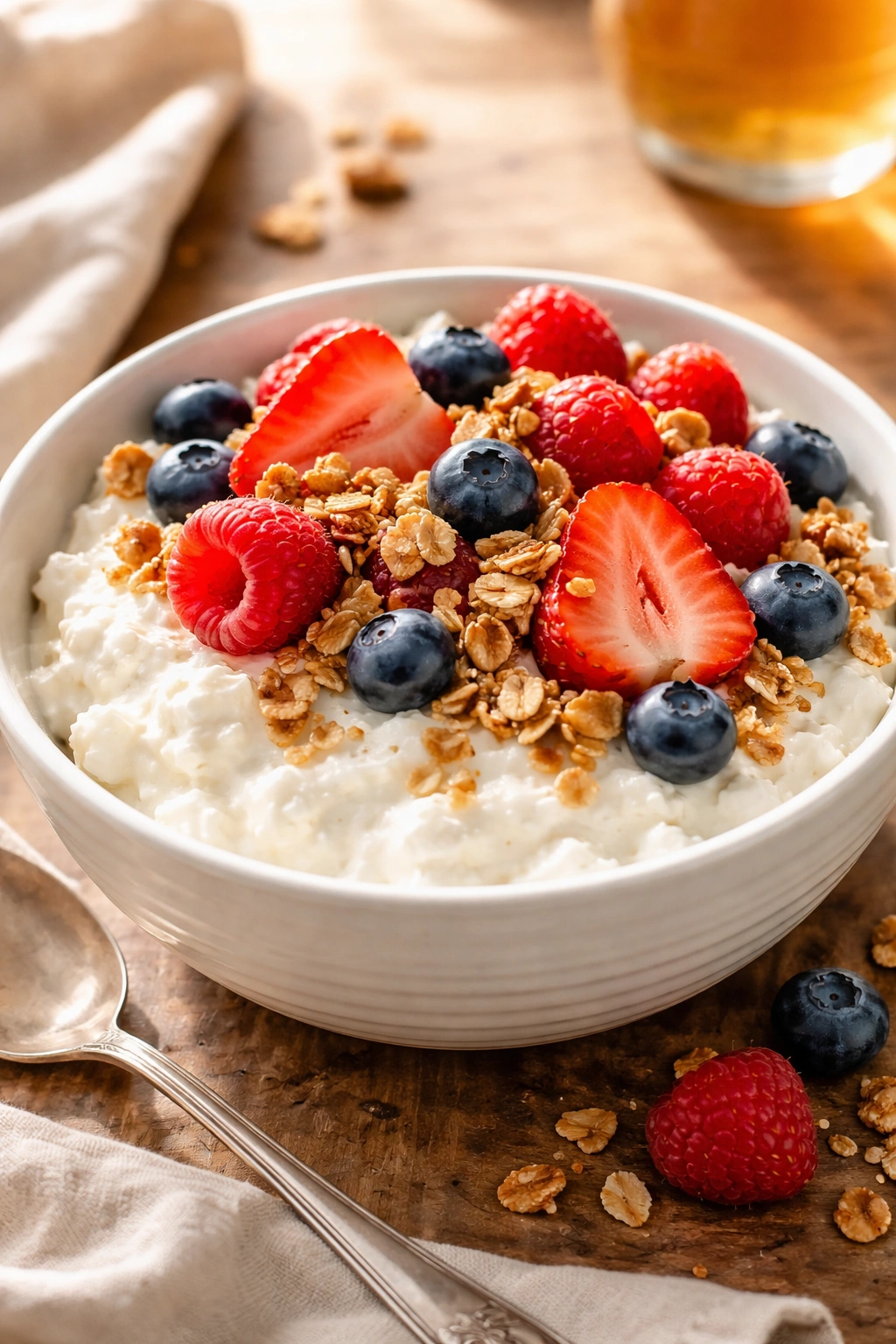
This is the most straightforward cottage cheese breakfast setup, and it’s exactly as simple as it sounds — but simplicity doesn’t mean boring when you choose your components intentionally and pay attention to ratios.
Start with a base of about three-quarters of a cup of cottage cheese in a bowl. This gives you roughly 22 grams of protein right off the start. If you want to push the protein content higher, you can use a full cup, which brings you to 28 to 30 grams. The next layer is fresh berries — blueberries, raspberries, strawberries, or blackberries all work beautifully. Use about a half-cup of berries, which adds fiber, natural sweetness, and a nutritional boost with virtually no calories.
The berries do something important: they add liquid to the bowl as they sit, which softens the cottage cheese slightly and creates a more integrated texture. If you eat the bowl right away, the berries stay firm. If you let it sit for five or ten minutes, the berries release their juice and the whole bowl becomes creamier and more cohesive. Neither version is wrong — it’s just a texture preference.
For crunch and additional protein, add about one-quarter cup of granola. Look for a granola with less than 8 grams of sugar per quarter-cup serving — many commercial brands load granola with unnecessary sweetener. Alternatively, you could use chopped nuts (almonds, walnuts, or pecans all add genuine crunch and extra protein) mixed with a drizzle of honey or maple syrup.
The whole assembly takes about two minutes and delivers a balanced breakfast with roughly 30 to 35 grams of protein, 25 to 30 grams of carbs, and healthy fat from the nuts or granola. You’ll stay satisfied for hours, and the textures — creamy cottage cheese, soft berries, and crunchy granola — keep every spoonful interesting.
Cottage Cheese Pancakes with Protein Boost
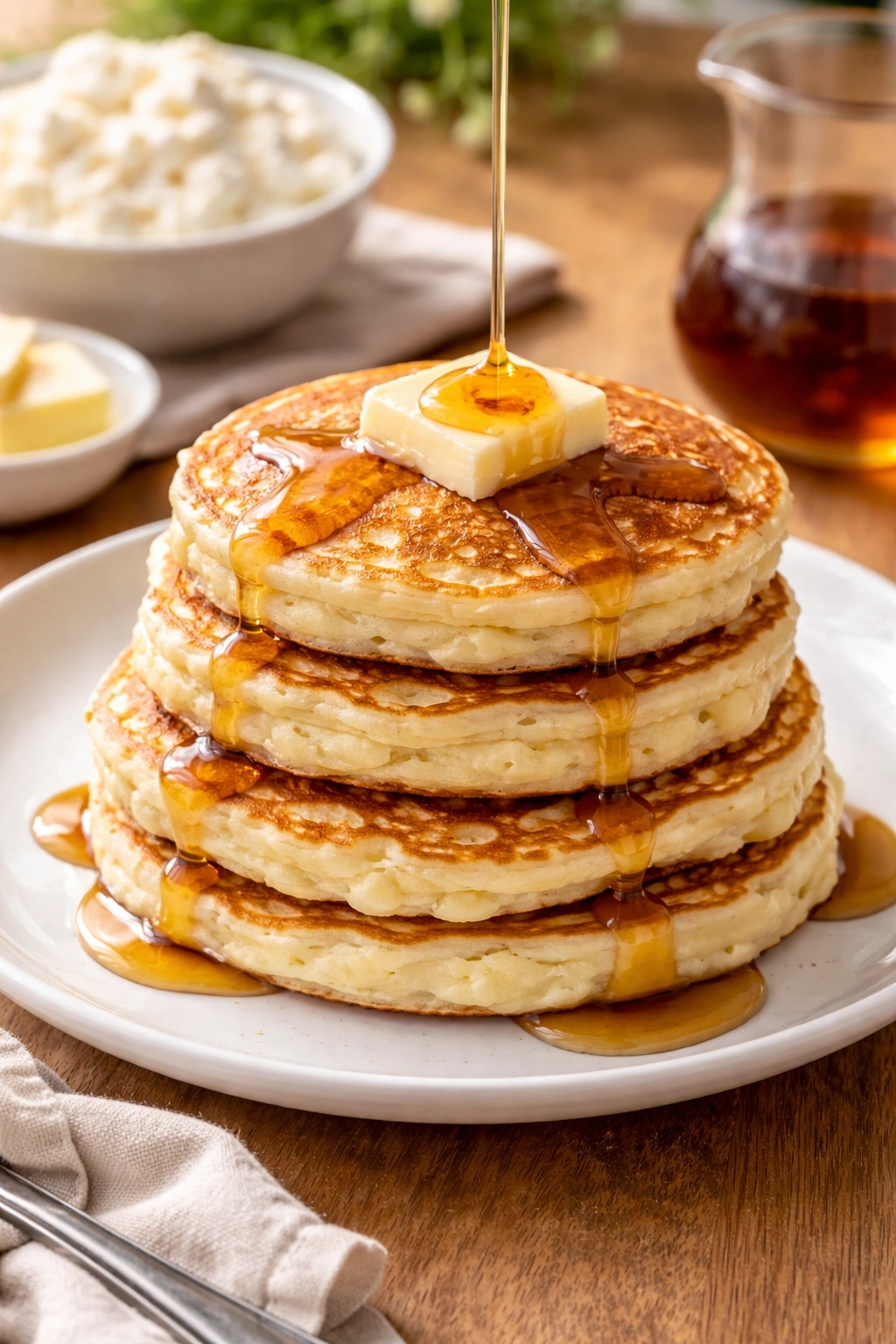
Cottage cheese pancakes sound strange until you make them once and realize they’re actually one of the best-kept breakfast secrets. These aren’t dense protein pancakes made from powders — they’re real, fluffy pancakes that just happen to be loaded with protein.
The basic formula is simple: blend one cup of cottage cheese with four large eggs and a quarter-teaspoon of salt until completely smooth. This creates a thick batter. Pour it directly onto a preheated skillet or griddle over medium heat, using about a quarter-cup of batter per pancake. Cook for about two to three minutes on the first side until the bottom is golden and set, then flip carefully and cook another one to two minutes on the second side until the center feels set when you press it gently.
These pancakes deliver roughly 10 to 12 grams of protein per pancake, and they’re much lighter than you’d expect from a protein pancake. They don’t have that dense, rubbery texture that pure egg-white pancakes sometimes develop. The cottage cheese adds moisture and creates a more tender crumb while the eggs bind everything together.
The flavor is neutral and slightly savory, which means they pair beautifully with sweet toppings or, honestly, with savory elements like smoked salmon and everything bagel seasoning. A stack of three pancakes delivers about 30 grams of protein before you even add toppings. Add berries, a dollop of Greek yogurt, or a light drizzle of maple syrup, and you’ve got a breakfast that’s completely satisfying.
The best part is that cottage cheese pancakes are naturally gluten-free, low-carb, and require absolutely no special ingredients or powders. If you’re trying to pack protein into a format that actually feels like a real breakfast rather than a diet version of breakfast, these deliver.
Cottage Cheese Egg Scramble for Maximum Protein
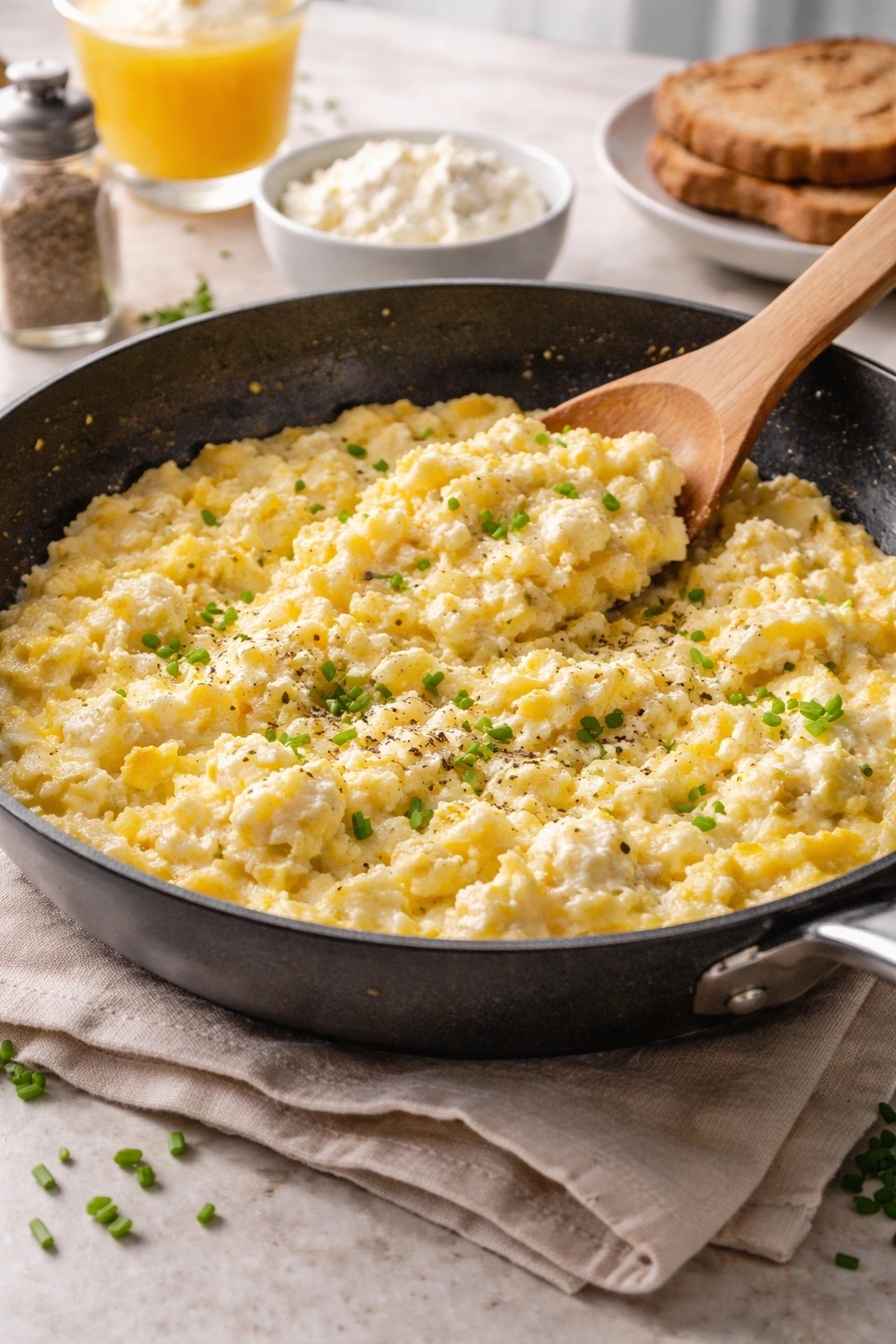
If you want to push the protein content to its absolute limit while still eating something delicious, a cottage cheese and egg scramble is your answer. This approach delivers the highest protein count of any breakfast we’re discussing — we’re talking 40+ grams per serving.
The technique is straightforward. Heat a non-stick skillet over medium heat with a tablespoon of butter or oil. While the skillet is heating, whisk together four large eggs in a bowl with a quarter-cup of cottage cheese, a pinch of salt, and a few grinds of fresh black pepper. The goal is to incorporate the cottage cheese evenly throughout, so the mixture looks relatively uniform.
Pour this into the hot skillet and let it sit for about 15 to 20 seconds without stirring — you want to get some color and develop a slight crust on the bottom. Then, using a heat-resistant spatula, start gently pushing the mixture from the edges toward the center, letting the uncooked egg flow to the edges. Continue this process for about three to four minutes until the eggs are mostly set but still look slightly underdone — they’ll continue cooking from residual heat.
The cottage cheese creates a creamier scramble than eggs alone, almost like a very loose omelette. It distributes throughout the eggs, and because cottage cheese is milder than aged cheddar or similar cheeses, it doesn’t overpower the pure eggy flavor. The curds add a subtle texture that makes the scramble more interesting than a standard preparation.
Top this with fresh herbs (dill, chives, or cilantro), diced tomatoes, sautéed mushrooms, or sautéed spinach. Each addition boosts the nutritional profile and adds flavor complexity. A portion with four eggs and one-quarter cup of cottage cheese delivers roughly 25 grams of protein from the eggs and another 7 to 8 grams from the cottage cheese, landing you at 32 to 33 grams of protein, plus whatever protein your vegetable toppings add.
Cottage Cheese Parfaits with Layered Texture
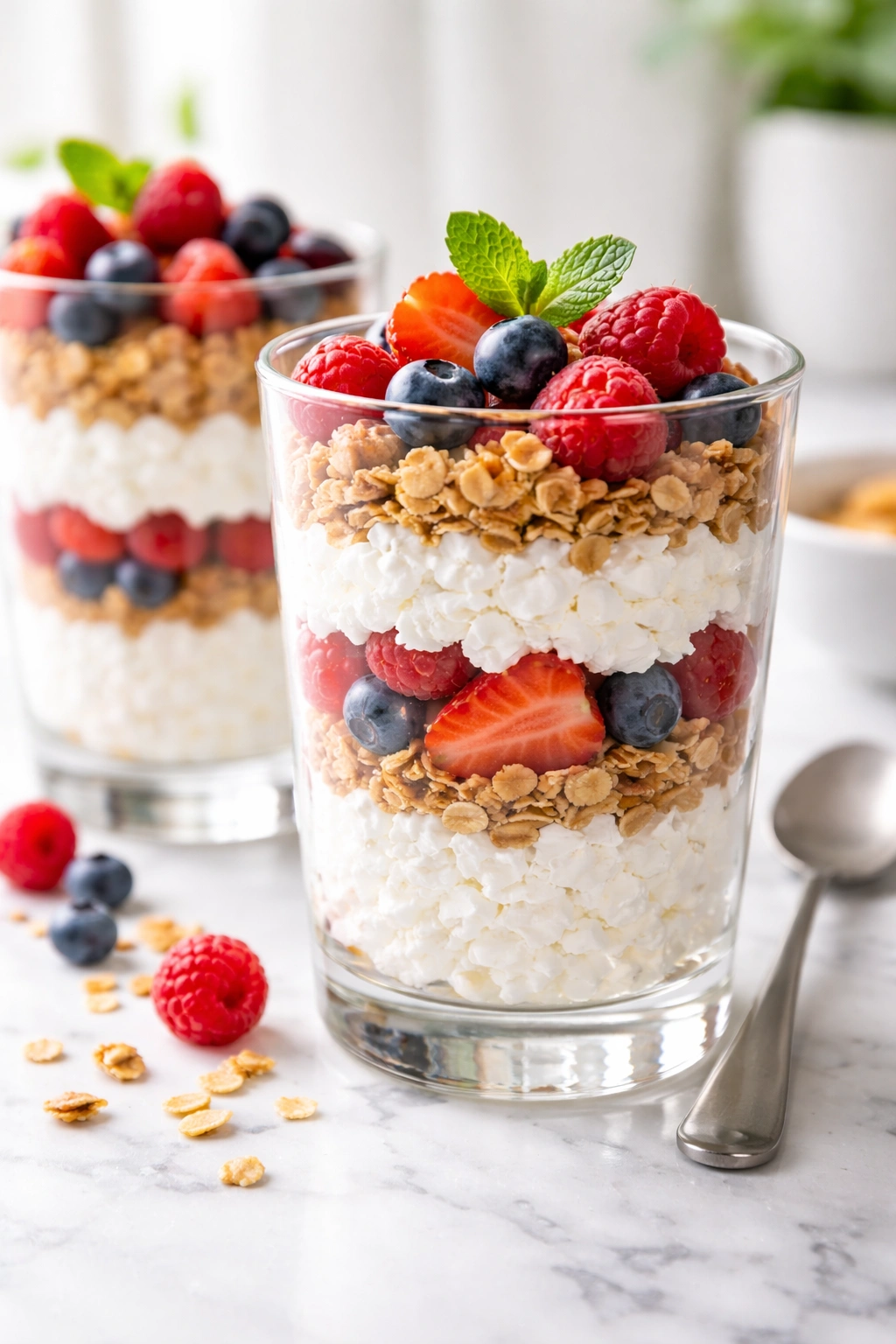
Parfaits are a classic format that everyone understands and loves, and cottage cheese parfaits are visually stunning while remaining incredibly practical to prepare. The beauty of this approach is that you can prep them the night before, grab them from the fridge in the morning, and eat them at your desk or while you’re busy.
Start with a clear glass or container so the layers are visible and appealing. Layer it as follows: one-third cup of cottage cheese on the bottom, followed by one-quarter cup of granola, then a half-cup of mixed berries (fresh or frozen), another one-third cup of cottage cheese, another quarter-cup of granola, and top the whole thing with a few berries and a light drizzle of honey.
This two-cottage-cheese layer approach distributes the protein throughout and creates interesting textural variation from spoonful to spoonful. You’re not just eating the same thing repeatedly — each bite is slightly different. The granola softens from contact with the berries and cottage cheese as it sits, creating a less-crunchy but more integrated experience than eating them separately.
Make three to four of these parfaits on a Sunday evening, cover them, and refrigerate. They’ll keep for three to four days, and you’ve just bought yourself several grab-and-go breakfasts. The cottage cheese will release a bit of whey as it sits, but that just means your parfait gets creamier over time rather than drier.
For variety, experiment with different flavors: a honey-vanilla version with sliced peaches, a cocoa powder mixed into the cottage cheese layer with dark chocolate chips and almonds, or a berry compote made from frozen berries you’ve cooked down slightly with a touch of maple syrup. Each variation feels completely different but follows the same simple layering concept.
Cottage Cheese Smoothie Bowls
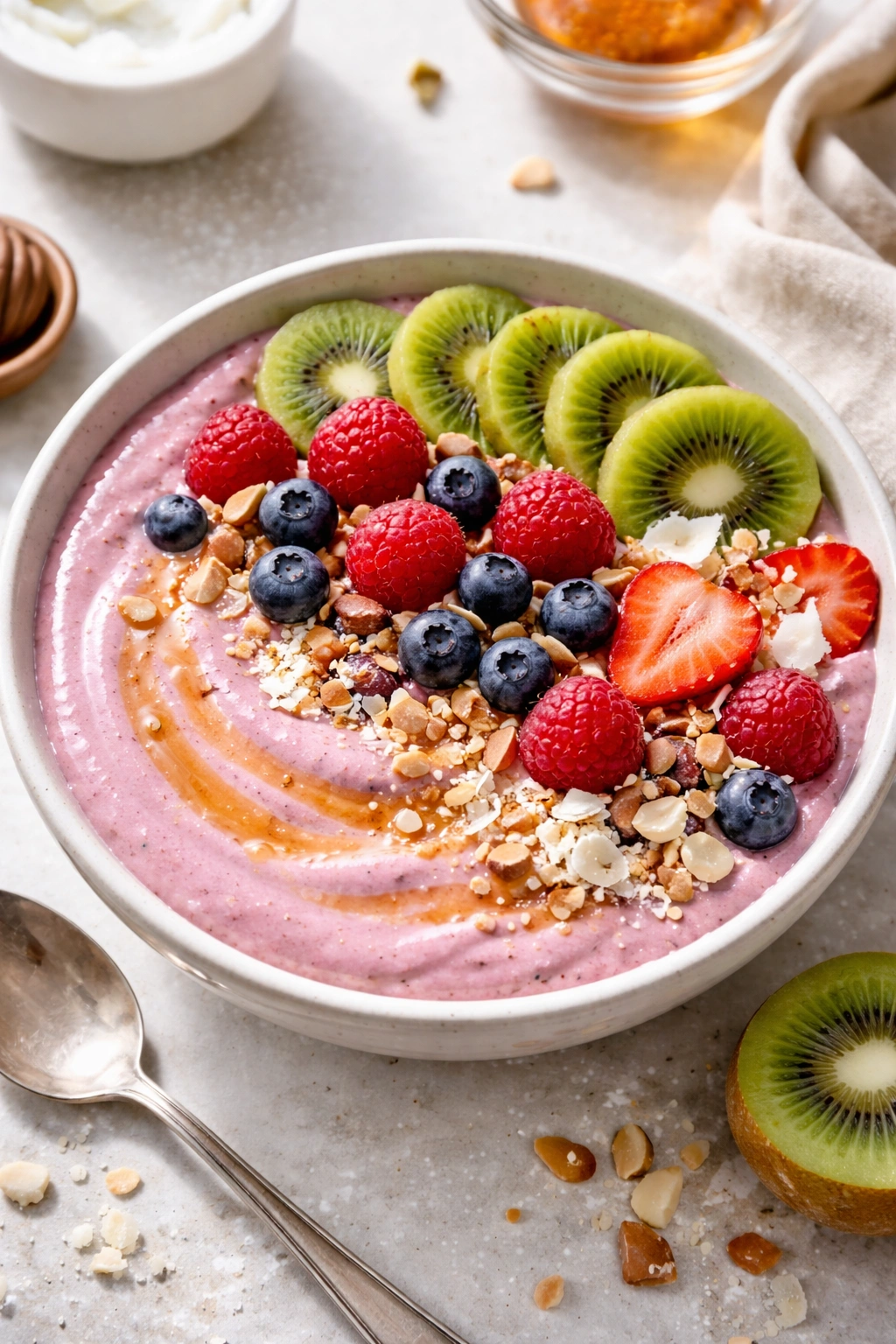
Smoothie bowls sound indulgent, but when you build them around cottage cheese, they’re actually nutritionally dense without being bloated with sugar. The cottage cheese blends in invisibly, adding protein and creaminess while you taste the fruit and vanilla.
Blend one cup of cottage cheese with one cup of frozen berries (blueberries, raspberries, or strawberries), a half-cup of milk (dairy or non-dairy), a quarter-teaspoon of vanilla extract, and one tablespoon of honey until completely smooth. The result is a thick, creamy base that’s somewhere between a smoothie and a pudding. It should be thick enough to hold toppings without sinking in.
Pour this into a bowl and immediately top it with your chosen toppings before it starts to melt: sliced kiwi, fresh berries, coconut flakes, chopped nuts, a sprinkle of granola, or a drizzle of nut butter. The thick base allows you to pile toppings higher without them sinking, creating a visually impressive and genuinely satisfying bowl.
The cottage cheese here is doing crucial work. It adds about 25 to 30 grams of protein, while the frozen berries add creaminess and sweetness without requiring added sugar or sweeteners. The milk ties everything together and makes the blending easier. The vanilla is optional but creates a slightly sweeter, more dessert-like experience that makes breakfast feel indulgent even though it’s genuinely nutritious.
Smoothie bowls work particularly well in warm weather or if you’re someone who doesn’t feel hungry in the morning but needs to eat something. The cold, spoonable format feels less heavy than eating something warm, and the visual appeal might actually make you excited to eat breakfast.
Savory Cottage Cheese Toast Ideas
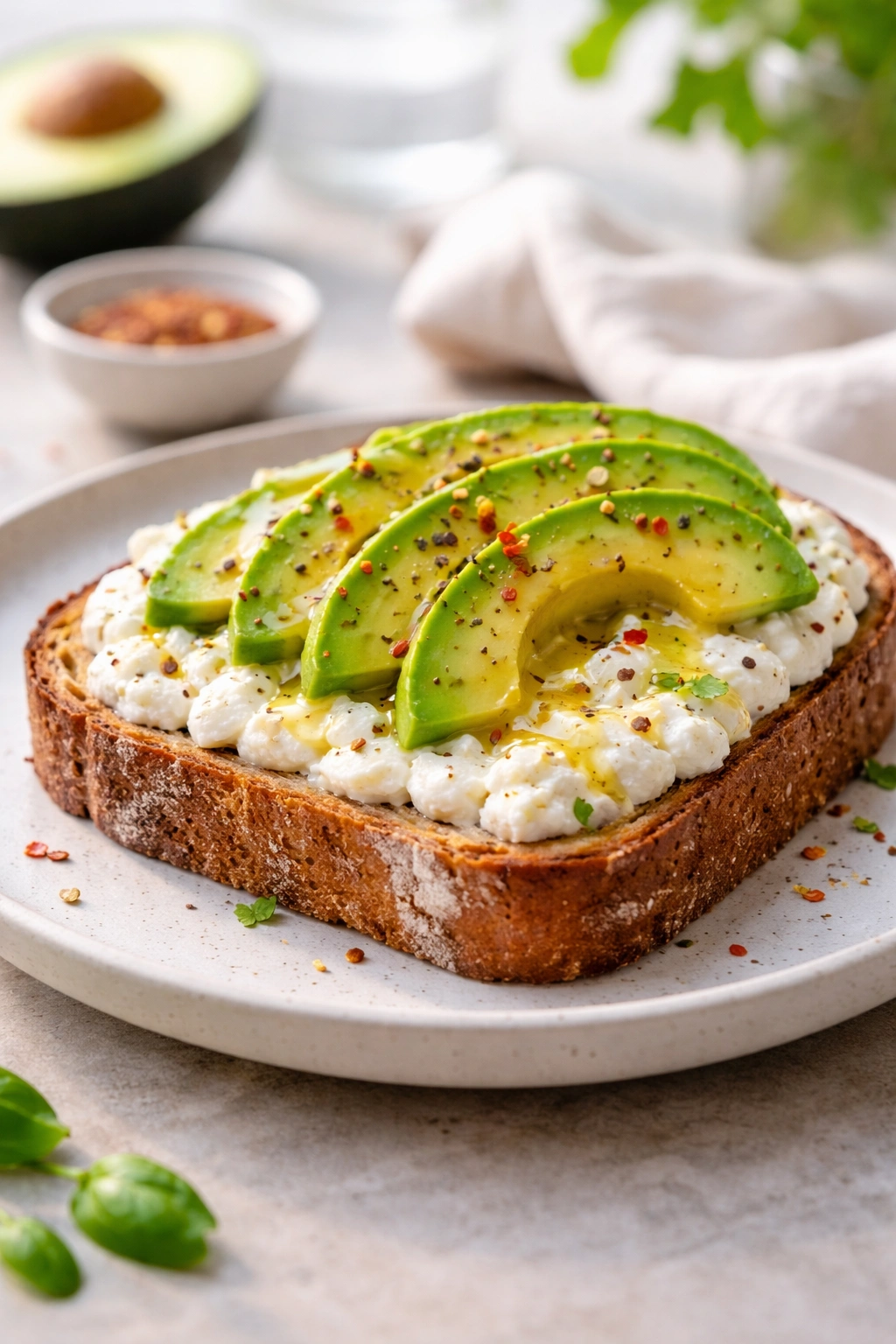
Breakfast doesn’t have to be sweet, and cottage cheese embraces savory flavors just as beautifully as sweet ones. Cottage cheese toast is fast, filling, and feels more substantial than regular toast because of the protein and creaminess the cottage cheese adds.
Toast one thick slice of high-quality bread (sourdough, whole grain, or multigrain all work well). Spread about one-third cup of cottage cheese over the warm toast, then top it with your choice of flavor builders. Try everything bagel seasoning with sliced cucumbers and lemon zest, or mashed avocado with red pepper flakes and a sprinkle of sea salt. A classic combination is cottage cheese topped with sliced smoked salmon, capers, and thinly sliced red onion with a squeeze of fresh lemon. Alternatively, go Mediterranean with cottage cheese, crumbled feta, fresh dill, and roasted red peppers.
Each of these versions delivers 15 to 20 grams of protein from the cottage cheese alone, plus additional protein from any fish or other add-ins. The whole thing comes together in about five minutes and tastes sophisticated enough that you might actually feel excited about eating breakfast, rather than just treating it as a chore before your day starts.
The warm toast matters here. It softens the cottage cheese slightly and makes it spread more easily, creating a creamy base for toppings rather than lumpy curd situations. By the time you bite into the toast, the cottage cheese has melded with the warm bread into something that feels integrated rather than layered.
Make a few different versions throughout the week and taste which flavor combinations you gravitate toward. You might discover that you’d rather have a savory breakfast than a sweet one — a preference that cottage cheese makes delicious and convenient to support.
Cottage Cheese Waffles and French Toast
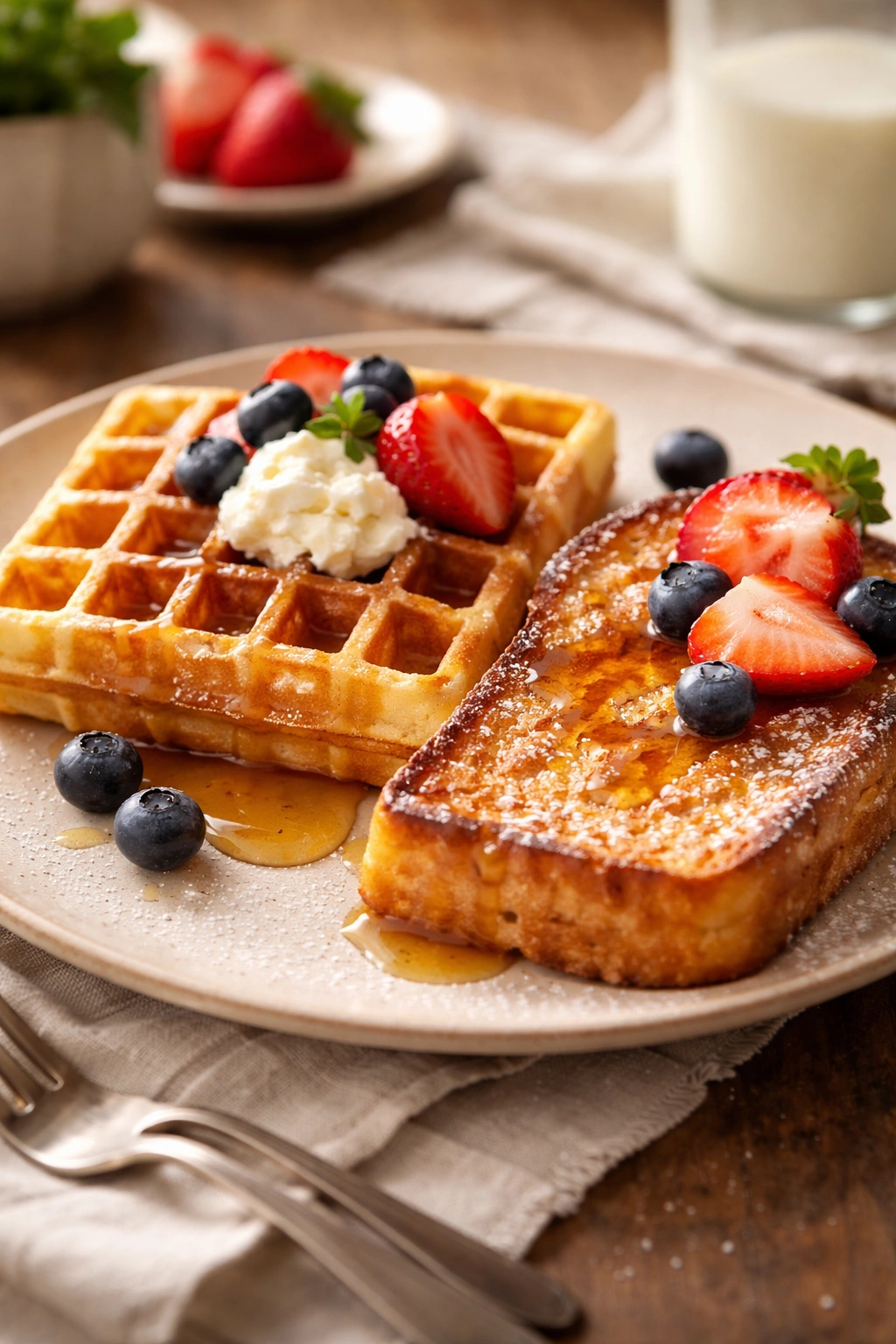
If cottage cheese pancakes appeal to you, cottage cheese waffles and French toast will probably become favorites too. The cottage cheese does the same magic it does in pancakes: it adds moisture, protein, and a tender crumb that standard recipes sometimes struggle to achieve.
For waffles, blend one cup of cottage cheese with four eggs and half a teaspoon of vanilla extract until completely smooth. Add one-quarter cup of flour, two tablespoons of sugar (or one tablespoon if you prefer less sweetness), one teaspoon of baking powder, and one-quarter teaspoon of salt. Blend until just combined — you want a thick batter, not a thin one.
Pour into a preheated waffle iron and cook according to your waffle iron’s instructions, usually three to four minutes until they’re golden and release easily. These waffles have a light, airy interior and crispy exterior, and they deliver roughly 10 to 12 grams of protein per waffle. They’re also naturally lower in carbs than traditional flour-only waffles because the protein-rich cottage cheese does some of the structural work.
For French toast, whisk together two large eggs, one-quarter cup of cottage cheese (blend it smooth first if you want a completely uniform mixture), one-quarter cup of milk, one-half teaspoon of vanilla extract, and a pinch of cinnamon. Dip thick slices of bread into this mixture, coating both sides, and cook them on a buttered griddle or skillet over medium heat for about two to three minutes per side until golden and slightly crispy.
These come out with a custardy interior that’s slightly different from traditional French toast — more tender and almost creamy. The cottage cheese doesn’t flavor the finished dish at all; it just improves the texture and protein content invisibly. A stack of three slices delivers about 20 to 25 grams of protein before any toppings.
Make-Ahead Cottage Cheese Breakfast Prep Ideas
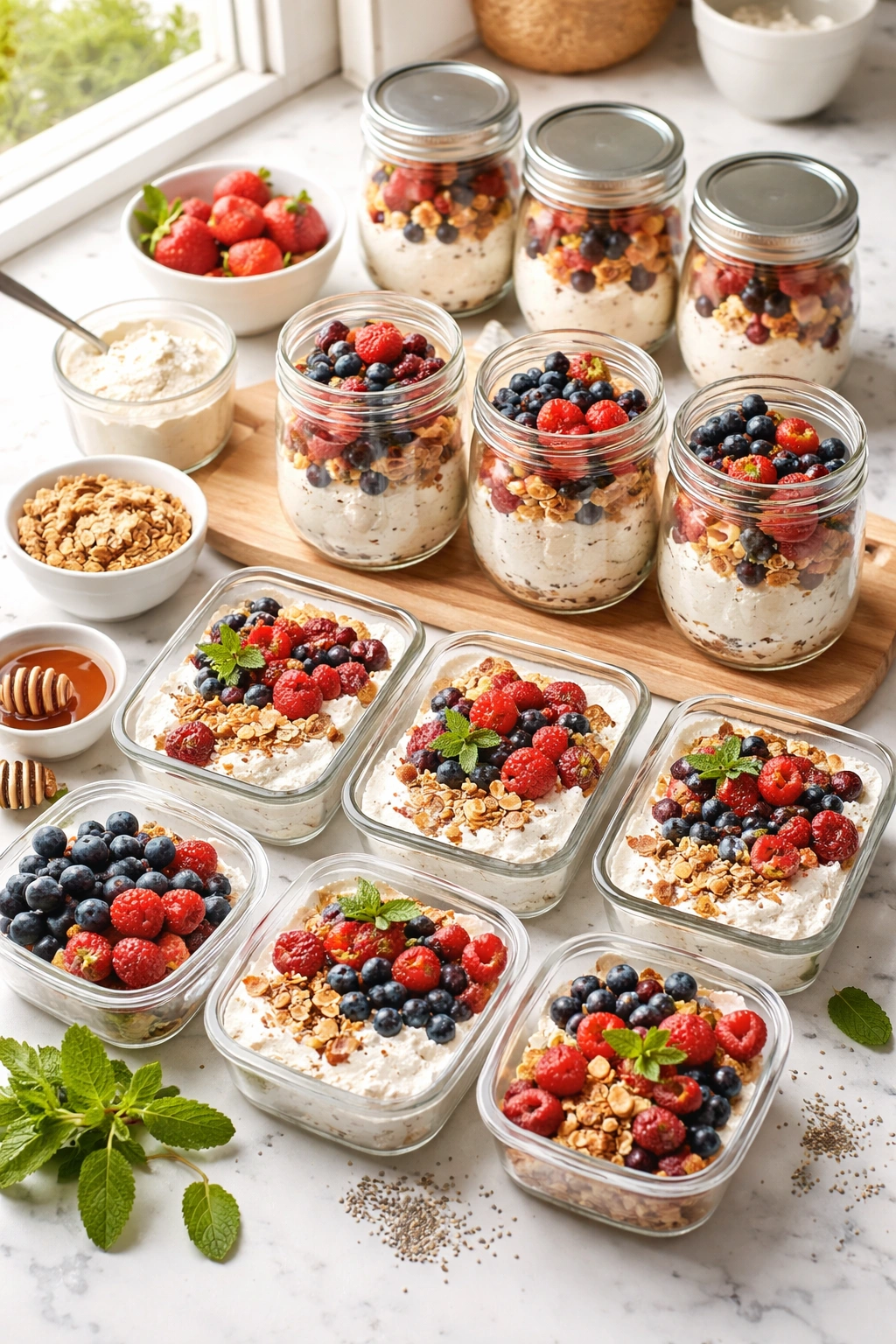
Batch-prepping your breakfast is one of the most powerful ways to ensure you actually eat a high-protein breakfast every single morning, rather than defaulting to whatever’s easiest. Cottage cheese breakfasts are particularly suited to make-ahead preparation because they hold up well and actually improve when flavors have time to meld.
Start with simple components. Cook a big batch of cottage cheese pancakes or waffles on a Sunday and store them in the fridge in an airtight container, layering them with parchment paper so they don’t stick together. They’ll keep for four to five days and reheat beautifully in a toaster oven at 350°F for three to five minutes until warm.
Prepare three or four parfait glasses by layering cottage cheese, granola, and berries. Cover them tightly and refrigerate. As I mentioned earlier, they keep for three to four days and actually taste better on day two or three after the flavors have had time to integrate.
Mix up a batch of savory cottage cheese spread: combine one container of cottage cheese with minced fresh herbs (dill, parsley, or chives), lemon zest, salt, and pepper. Keep this in an airtight container and use it throughout the week on toast, crackers, or as a dip. This lasts nearly a week and takes only five minutes to prepare.
Prep your toppings in advance too. Wash and portion berries into containers. Chop nuts and store them in an airtight container. Make a batch of homemade granola if you want to control the sugar content. When your components are ready, assembly becomes a two-minute operation rather than something that requires thinking and chopping when you’re barely awake.
The key to making this sustainable is setting up a system that requires minimal decision-making on busy mornings. If you’ve already decided what you’re eating and prepared most of it, the likelihood that you’ll actually eat that high-protein breakfast increases dramatically.
Best Toppings and Mix-Ins for Extra Protein
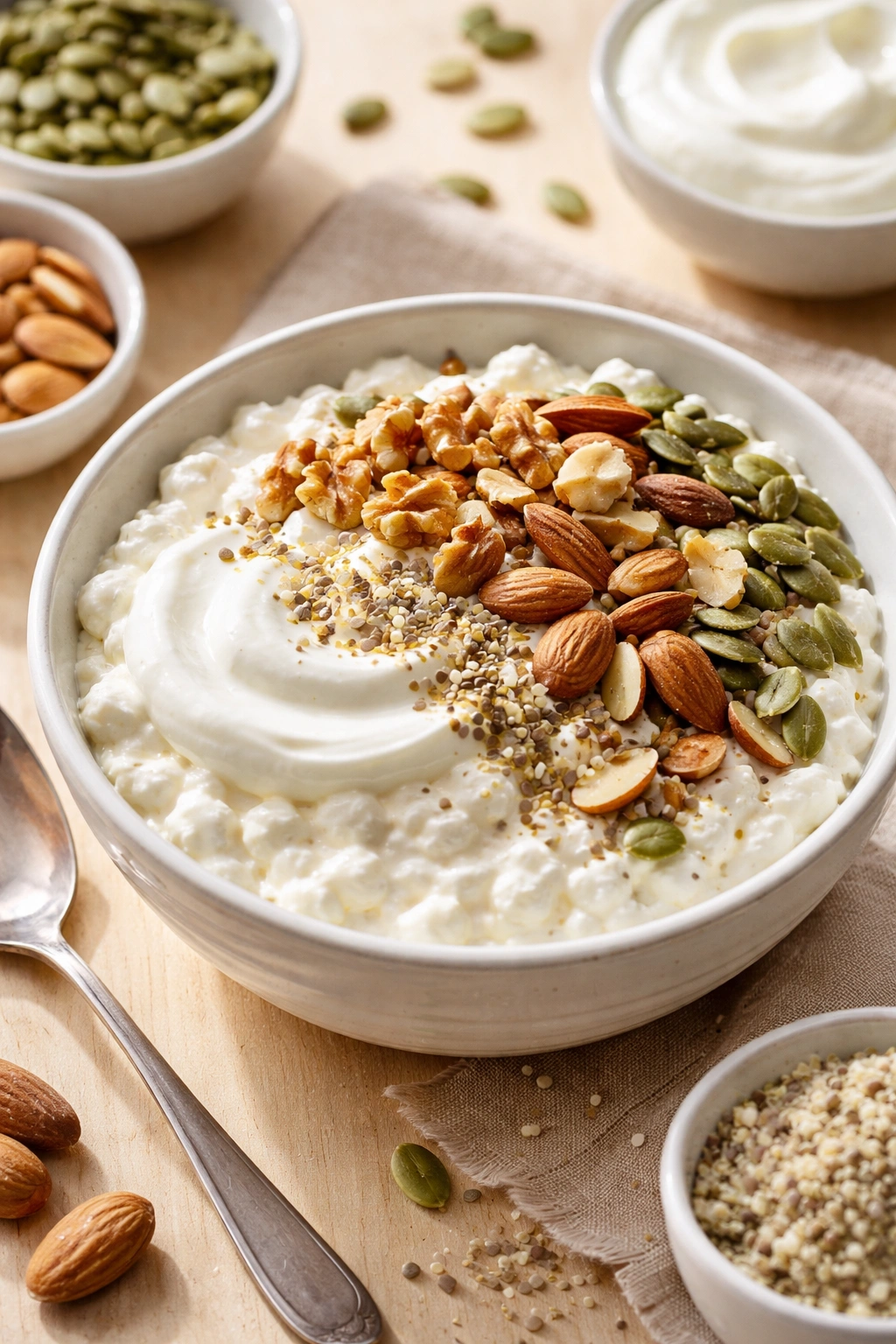
While cottage cheese itself is a protein powerhouse, strategic toppings and mix-ins can push the protein content even higher and create more interesting flavor and texture profiles. Understanding which additions work best helps you build breakfasts that are both nutritious and genuinely enjoyable to eat.
Nuts and seeds are the obvious choice: almonds, walnuts, pecans, sunflower seeds, pumpkin seeds, and hemp seeds all add significant protein plus healthy fats that slow digestion and extend satiety. A quarter-cup of almonds adds roughly 6 to 7 grams of protein and keeps for weeks in your pantry.
Greek yogurt layered into or stirred into cottage cheese creates a texture that’s somewhere between the two — creamier than cottage cheese alone but with the protein density of both dairy sources. This combination delivers roughly 35 to 40 grams of protein per serving depending on the ratio you use.
Protein-rich granolas are worth seeking out. Many mainstream granola brands contain 3 to 5 grams of protein per quarter-cup serving, but some specialty versions designed for fitness audiences deliver 8 to 10 grams per serving. These cost more, but they make your breakfast more substantially protein-forward without requiring you to add powder or other supplements.
Nut butters (almond, peanut, or tahini) stirred into cottage cheese or drizzled on top add creaminess, richness, and additional protein. Two tablespoons of natural peanut butter adds about 8 grams of protein plus healthy fats that make your breakfast feel luxurious and satisfying.
Chopped hard-boiled eggs stirred into cottage cheese create a surprisingly delicious combination that tastes like an elevated egg salad. Each large egg adds 6 grams of protein, and combining eggs with cottage cheese creates a texture that’s interesting and filling.
Granola clusters made with protein powder, nuts, and seeds offer another path to higher protein content if you’re willing to spend a bit of prep time. Making a batch on the weekend means you have a custom, high-protein granola ready to go for the week.
Storage and Shelf-Life Tips
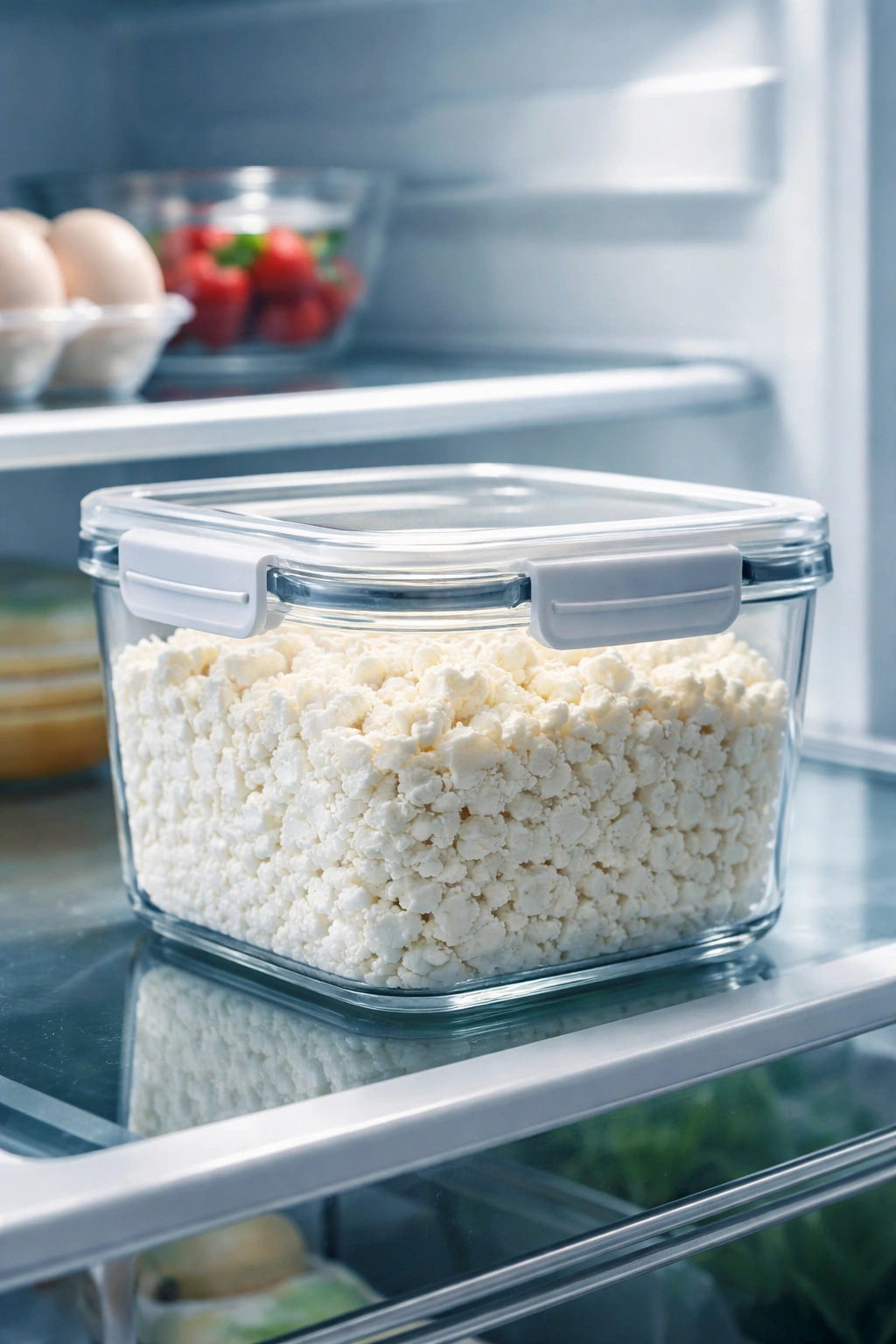
Understanding how to properly store cottage cheese and how long it actually keeps helps you feel confident buying it in bulk for the week and ensures you’re never wasting expensive protein.
Unopened cottage cheese lasts until the expiration date on the container, usually seven to fourteen days from purchase depending on the brand. Store it in the coldest part of your refrigerator — usually the back of a lower shelf where temperature stays most consistent. Once you open it, cottage cheese keeps for about five to seven days in an airtight container.
The key to extending its shelf-life is minimizing your contact with it. Don’t eat directly out of the container if you can help it — use a clean spoon each time you scoop. Cross-contamination from your spoon to the container can introduce bacteria that speeds spoilage. Store it in a glass container rather than the original plastic if you can; glass doesn’t retain odors or bacteria the way plastic sometimes does.
If you’re worried about cottage cheese going bad before you use it, freeze it. Cottage cheese freezes beautifully and thaws without major texture changes — there might be slightly more separation between curds and whey, but this actually improves smoothie applications since you’re blending it anyway. It’ll keep for up to three months in the freezer.
Cooked cottage cheese items like pancakes and waffles keep for five to six days in the refrigerator in an airtight container, and freeze well for up to three months. Thaw them overnight in the fridge or reheat them straight from frozen at 350°F for five to seven minutes until warm.
Prepped toppings and mix-ins keep according to their individual shelf-lives: fresh berries keep for three to five days, granola keeps for two to three weeks in an airtight container, nuts keep for several weeks, and nut butters keep for weeks once opened.
Develop a routine of checking your containers on Wednesday and Saturday to see what’s running low or about to expire. This helps you rotate through your inventory intentionally and prevents waste.
Final Thoughts
A cottage cheese breakfast is one of those nutritional choices that sounds simple but actually changes how your entire morning and mid-day feels. You’re not trying to follow a restrictive diet or eat food that tastes like nutrition; you’re eating something that’s genuinely delicious while also being remarkably nourishing.
The versatility is what makes this sustainable long-term. You can eat cottage cheese the exact same way every day, or you can rotate between pancakes, parfaits, bowls, toast, and egg scrambles and never repeat a breakfast twice in a week. The protein content stays high regardless of which format you choose, and you’re building a genuine habit rather than forcing yourself through something unpleasant.
Start with whichever format appeals most to your taste buds and schedule. If you’re someone who appreciates speed, the toast or simple bowl approach takes five minutes. If you prefer something more interactive, try the pancakes or waffles. If you value convenience, prep parfaits on the weekend and grab one each morning. The specific choice matters far less than the commitment to actually eating breakfast with this much protein, because that choice — more than any other breakfast decision — will determine whether your energy, focus, and satiety sustain you through your morning.
