



Meal Prep for Beginners: A Simple Step-by-Step Guide
Meal prep sounds like one of those perfect-person activities, right? Something that requires military-level organization, three hours on Sunday, and the kind of discipline you’re pretty sure you don’t have. The truth is, meal prep isn’t about being perfect — it’s about being intentional. It’s about spending a little focused time now so that the rest of your week flows smoothly, your food choices stay aligned with your goals, and you’re not standing in front of the fridge at 6 p.m. wondering what on earth you’re eating.
The biggest myth about meal prep is that it has to be complicated. It doesn’t. You don’t need fancy containers, a Pinterest-worthy kitchen, or recipes that require a culinary degree. You need a simple plan, about two hours on the weekend (maybe less if you’re efficient), and a willingness to spend fifteen minutes the first time doing something that will save you hours throughout the week. Beginners who try meal prep often fail because they attempt to do too much at once. They prep seven days of food, use overcomplicated recipes, or buy equipment they don’t actually need.
What actually works is starting small. Pick three or four simple recipes you genuinely like, prep for three or four days instead of a full week, and build from there. Once the rhythm becomes automatic, you can expand. The goal of this guide is to walk you through that process — not to transform you into a meal prep obsessive, but to help you build a sustainable system that actually saves you time and money without feeling like another task on your endless to-do list.
Why Meal Prep Works for Busy People
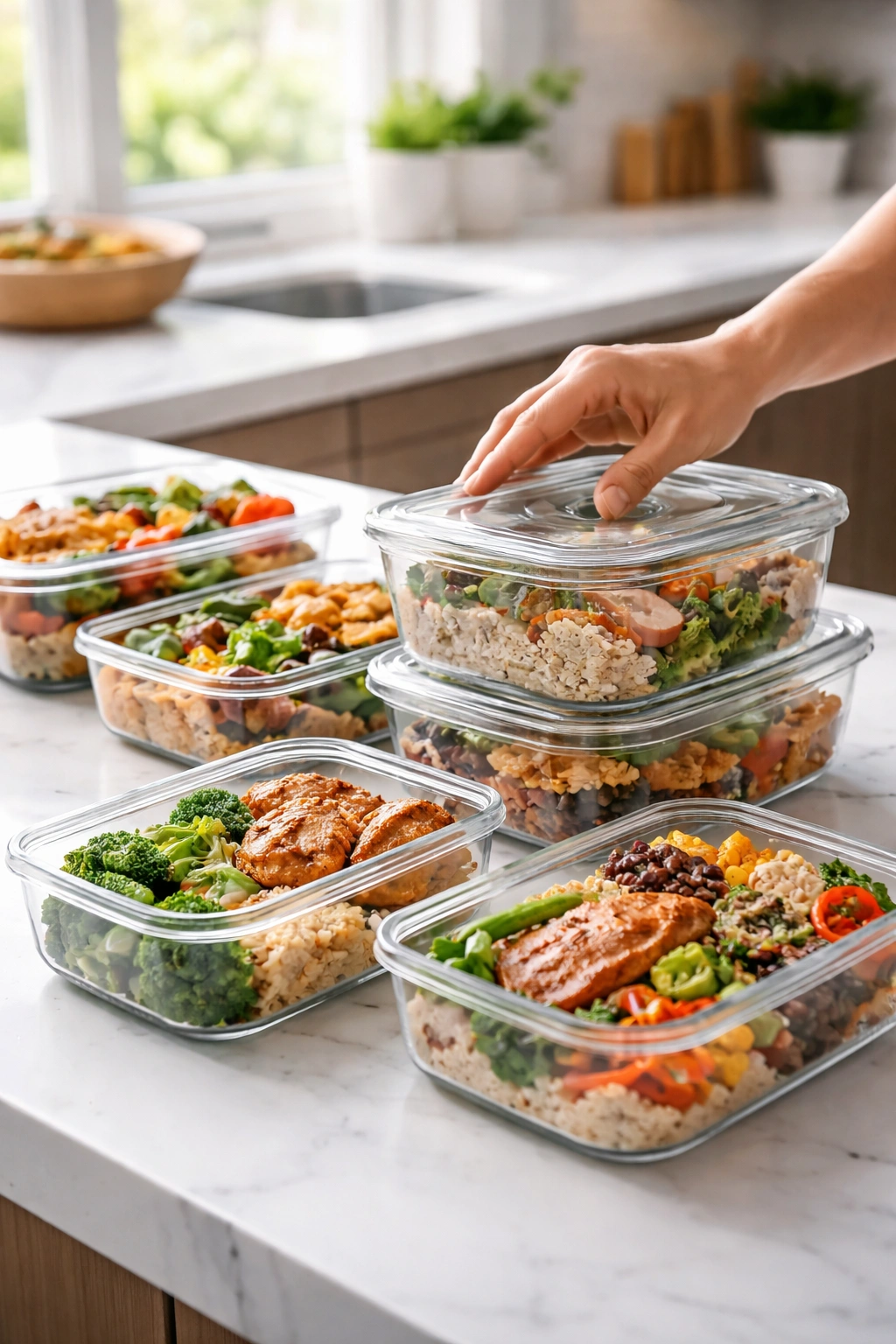
The real power of meal prep isn’t just that it saves time — it’s that it removes decision fatigue. Your brain makes roughly 35,000 decisions every day, from the moment you wake up. By the time you’re hungry in the evening, your decision-making capacity is depleted. That’s why you end up ordering takeout or reaching for something fast and processed, even though you had good intentions that morning.
When your meals are already prepared and waiting, you remove that entire decision-making step. You’re not choosing what to eat; you’re simply reaching for what’s already there. This is why meal prep is so effective for people trying to stick to specific eating goals — whether that’s losing weight, building muscle, eating more vegetables, or managing dietary restrictions like gluten-free or dairy-free living.
The Time Advantage
Cooking dinner five nights a week takes roughly an hour per night minimum — chopping vegetables, monitoring pots, cleaning up. That’s five hours throughout your week. Spending two to three focused hours on meal prep condenses that work into one concentrated block. You’re not just cooking; you’re cooking efficiently, using the same cutting board for multiple ingredients, batching similar tasks, and minimizing cleanup.
The Money Advantage
Prepared meals cost significantly less than the alternative — takeout, restaurant visits, or buying pre-made convenience foods. A home-cooked meal costs roughly $2 to $4 per serving. The same meal from a restaurant costs $12 to $18. Over a week, meal prep can save you $30 to $60 or more, depending on how much you’d normally spend on eating out.
Getting Your Kitchen Setup Right
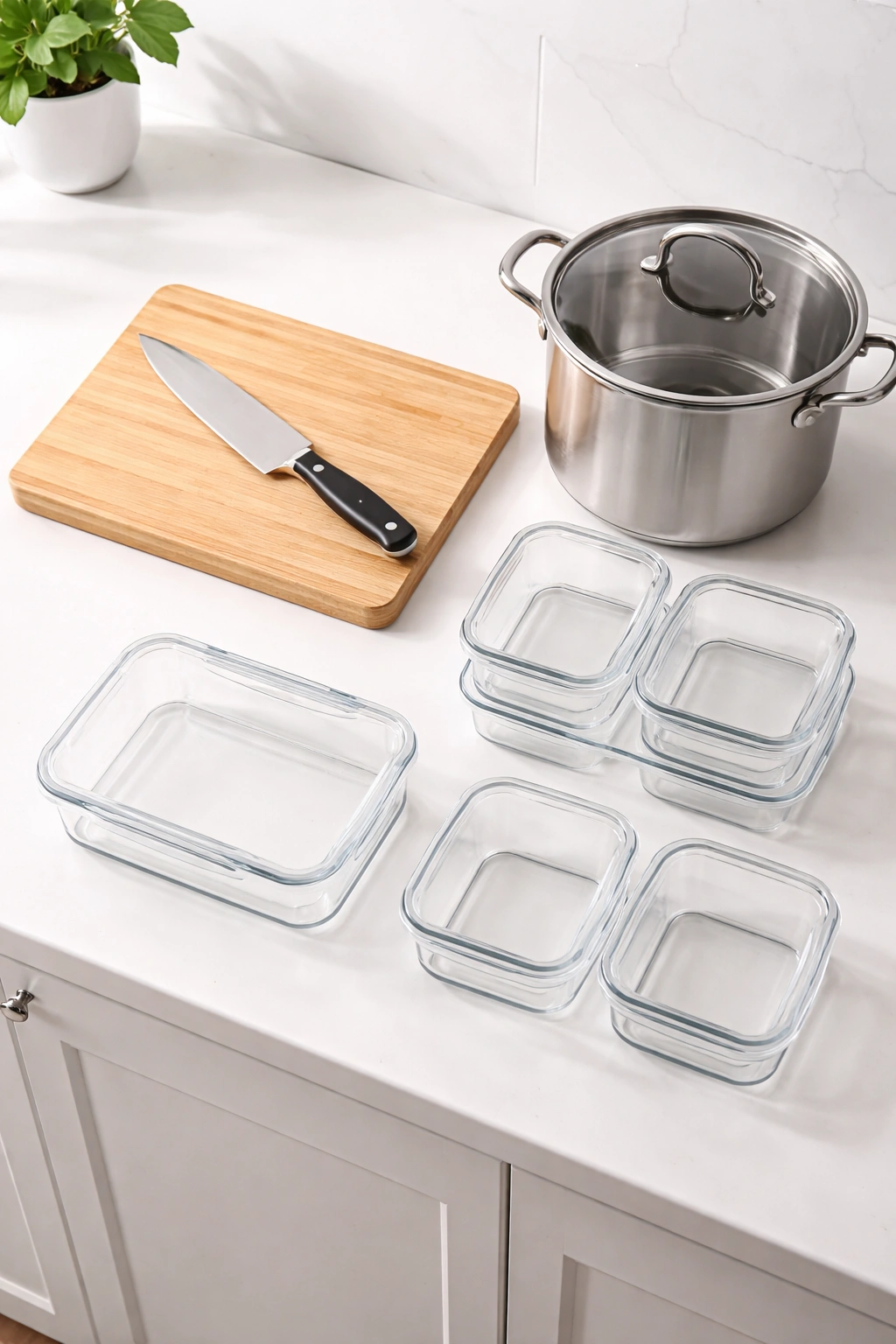
You don’t need a fully equipped kitchen to start meal prep. You need maybe three things, and one of them you probably already own. Don’t buy kitchen equipment until you’ve actually identified what you need. Many beginners invest in gadgets they use once and then abandon.
Essential Tools You Actually Need
The absolute minimum for beginner meal prep is a sharp knife, a large cutting board, and at least one large pot or sheet pan. That’s it. Everything else is optional. A dull knife makes prep tedious and frustrating, so if your knife is genuinely dull, sharpen it or invest in one quality eight-inch chef’s knife (around $30 to $50 for something reliable). A large, stable cutting board gives you plenty of room and makes the chopping phase feel less chaotic.
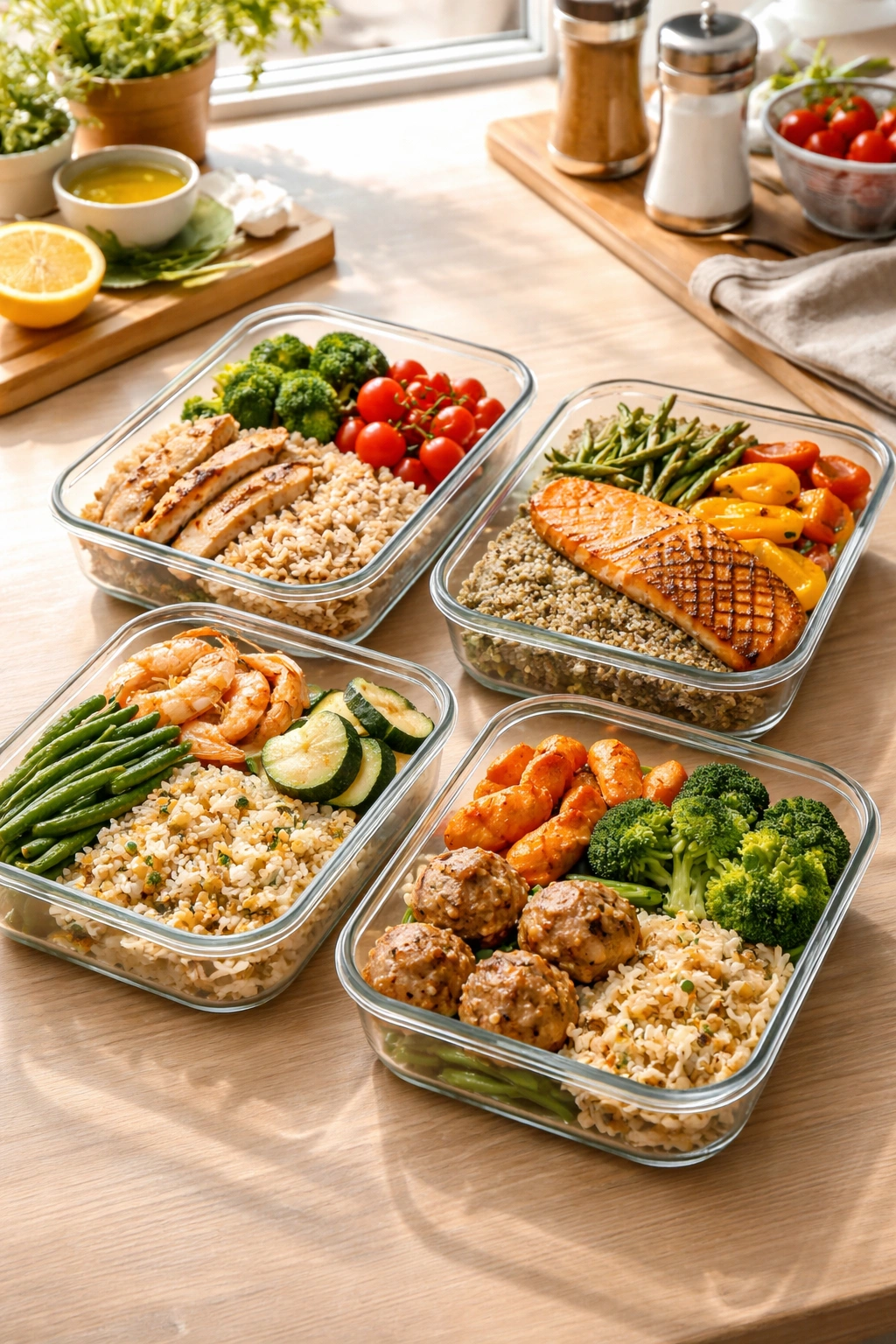
Beyond that, consider storage containers. Glass containers with locking lids are ideal because they’re durable, you can see what’s inside, and they won’t hold onto odors or stains. You don’t need a matching set — mismatched containers work fine. Aim for enough containers to hold three to four days of meals per person; you can wash containers mid-week and reuse them.
Nice-to-Have Extras
A sheet pan (a large rimmed baking pan) makes roasting vegetables and proteins absurdly easy. One 30-minute roast with minimal effort is one of the best ways to generate prepared food. A slow cooker or instant pot lets you throw ingredients in the morning and have dinner ready by evening — minimal active time. A rice cooker or food processor can speed up specific tasks, but you can definitely do meal prep without them.
Creating Your First Meal Prep Plan
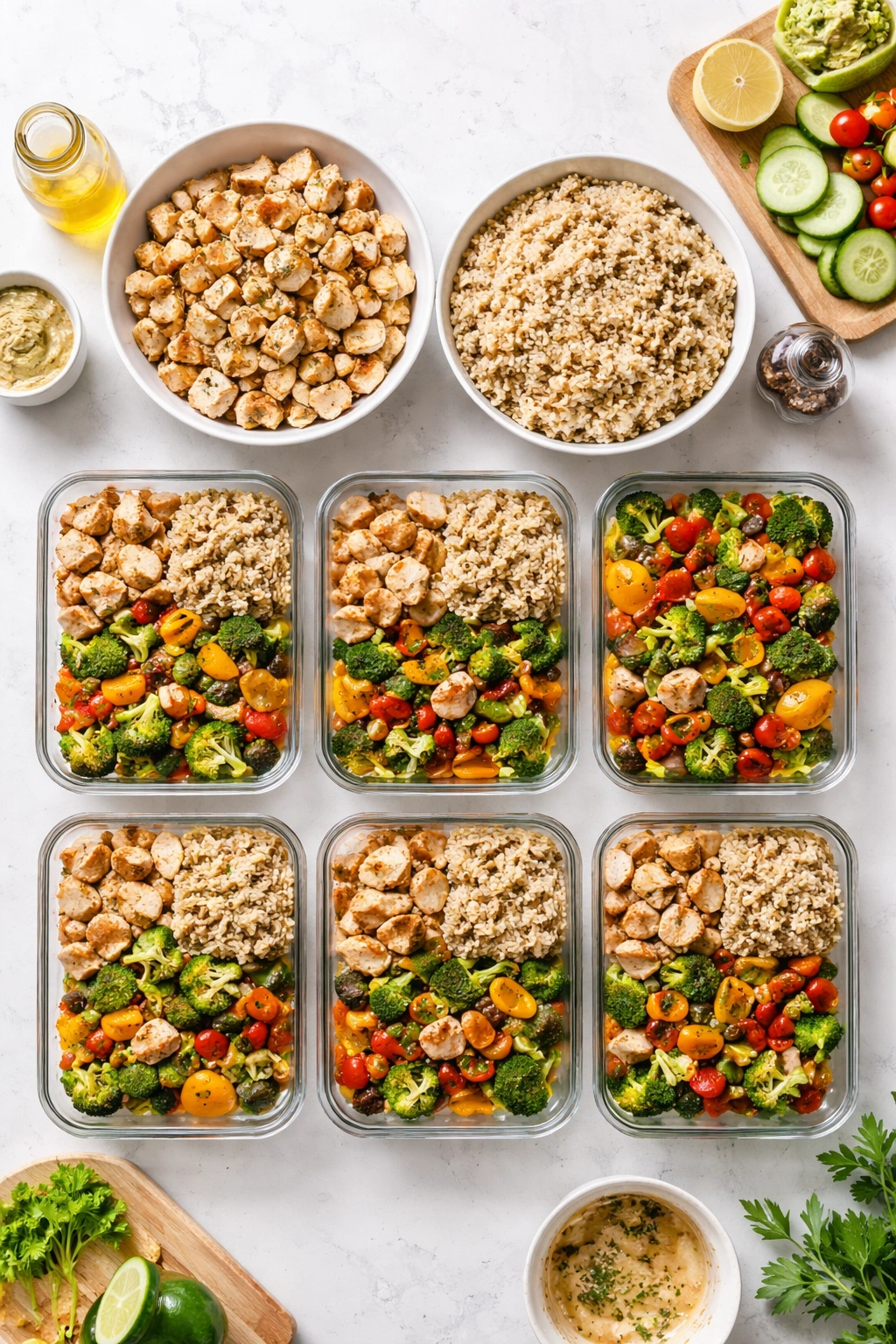
The beginner mistake is deciding what to cook based on fancy recipes or restrictive meal plans. Instead, start with foods you already eat and enjoy. The question isn’t “What should I eat?” but rather “What do I actually want to eat this week?” If you don’t like ground turkey, don’t prep ground turkey just because someone on the internet said it’s healthy.
The Simple Framework
Pick your protein (chicken, beef, fish, beans, lentils, tofu — whatever you eat), pick your carb base (rice, pasta, potatoes, quinoa), and pick vegetables you genuinely enjoy. That’s your framework. A simple meal structure might be: four ounces of grilled chicken, one cup of cooked rice, and one cup of roasted vegetables. Cook enough of each to create four to five days of meals, store them separately in containers, and mix and match throughout the week.
This approach works because the components don’t get boring in the same way a pre-mixed meal might. If you’re tired of rice, you can swap it for pasta. If you want something different Monday than you wanted Saturday, you can recombine the same ingredients into a different format.
Writing Down Your Plan
Before you shop, spend 10 minutes writing down what you’re prepping. The goal isn’t a gourmet meal plan; it’s a simple note like: “Grilled chicken, brown rice, roasted broccoli, roasted sweet potato.” That’s enough. It helps you remember what you need at the store and keeps you focused when you’re prepping. Don’t overthink it.
Smart Shopping Strategies
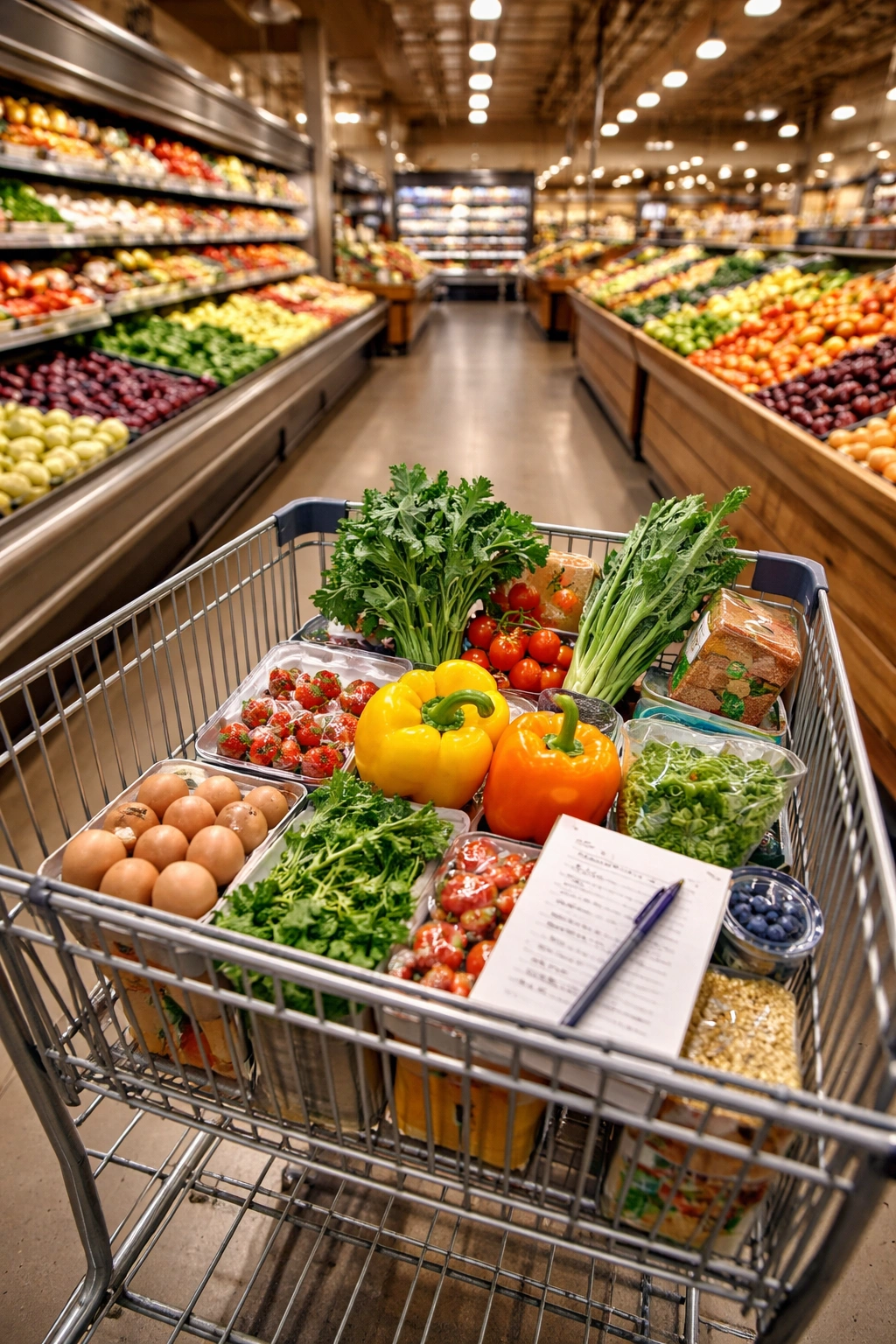
The grocery store is designed to separate you from your money through impulse purchases, overwhelming choices, and strategic product placement. A shopping list prevents this. Write down exactly what you need based on your meal prep plan, and stick to it.
Buying the Right Quantities
For a beginner, aim to prep for three to four days on your first attempt. That might mean two pounds of chicken, two cups of dry rice, and about four cups of vegetables (raw weight). How much you buy depends on serving size — are you prepping for one person or two? Are you eating the prepped meals for lunch and dinner, or just lunch? Write this down before you shop so you’re not standing in the store doing math.
Buy proteins on sale when possible and freeze extras. Vegetables are usually cheaper when they’re in season, but frozen vegetables work just as well and are often cheaper than fresh. Frozen vegetables are picked at peak ripeness and flash-frozen, so they retain more nutrients than fresh vegetables shipped across the country and sitting in your crisper drawer for a week.
The Perimeter Strategy
Most grocery stores stock staple, whole foods around the perimeter — produce, meat, eggs, dairy. The center aisles contain more processed foods. A simple rule: spend most of your shopping time around the perimeter, buy what you planned, and skip the center aisles unless you’re looking for something specific like rice or beans.
Essential Prep Techniques Everyone Should Know
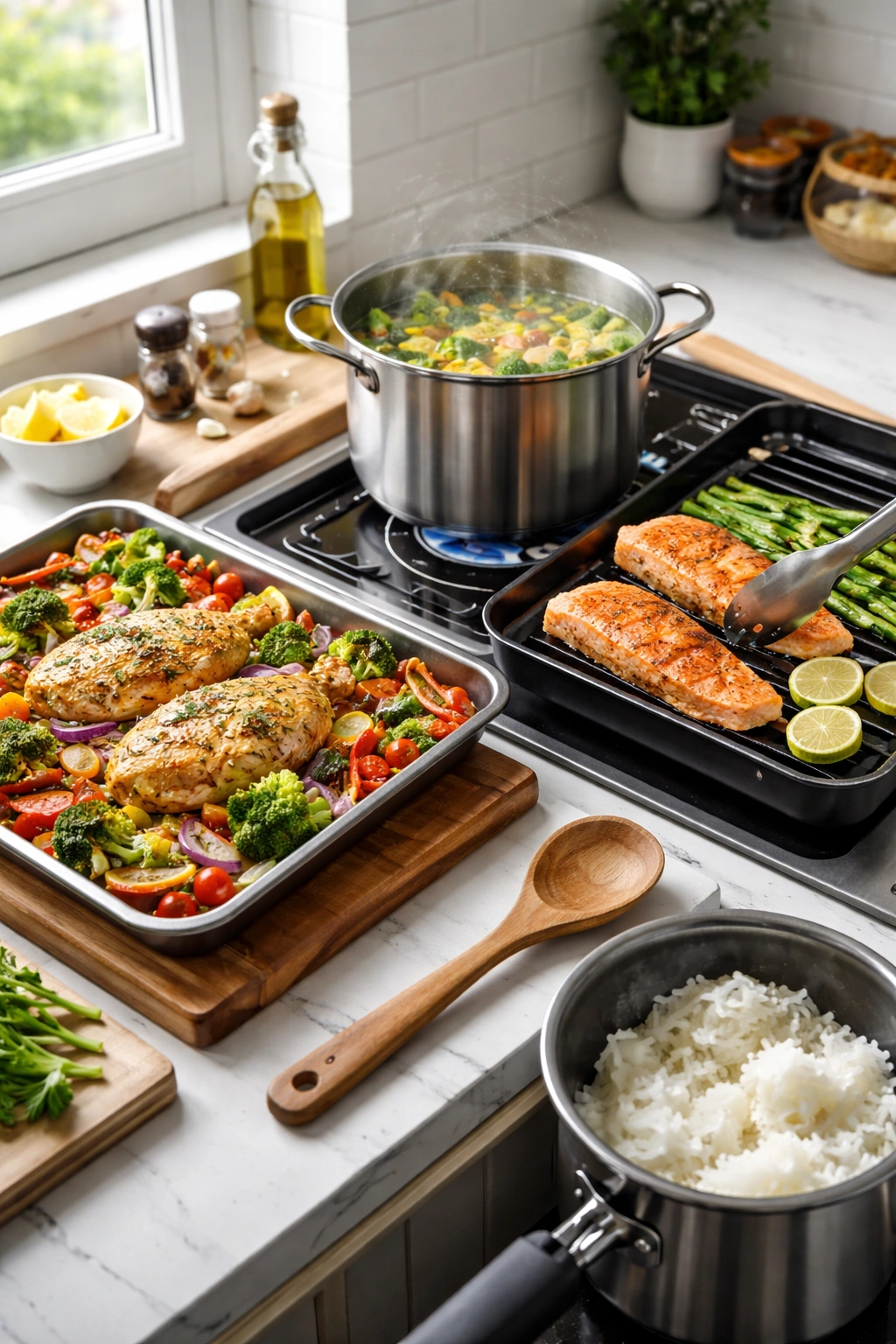
You don’t need to be a trained chef to prep food efficiently. Three techniques will handle about 95 percent of beginner meal prep: roasting, boiling, and grilling.
Roasting: The Easiest Technique
Roasting is basically chopping something, tossing it with oil and salt, and letting the oven do the work. Toss chicken breasts with olive oil, salt, and pepper, spread them on a sheet pan, and roast at 375°F for 20 to 25 minutes. At the same time, toss cut vegetables — broccoli, cauliflower, Brussels sprouts, sweet potatoes, regular potatoes — with oil, salt, and pepper on another pan and roast at 400°F for 25 to 35 minutes depending on size. Both are done in roughly the same time. This single technique creates multiple prepared components with minimal effort.
Boiling: For Grains and Some Vegetables
Rice, pasta, beans, and potatoes are all cooked the same way: place them in a pot, cover with water, bring to a boil, then simmer until tender. Use a 2:1 water-to-rice ratio for most types, bring it to a boil, cover, reduce heat to low, and cook for 18 to 20 minutes. This requires active attention for maybe two minutes, then you’re just waiting. Make a larger batch than you think you need; leftovers keep for four to five days and are incredibly useful.
Simple Seasoning
The biggest beginner mistake is underseasoning. Salt enhances flavor; it doesn’t just make food salty. Use it generously while cooking. Pepper, garlic powder, and paprika are three affordable spices that make almost everything taste better. A splash of soy sauce, hot sauce, or vinegar adds brightness. You don’t need a spice rack — start with four basics: salt, pepper, garlic powder, and paprika. Everything else is optional.
How to Properly Store Prepped Foods
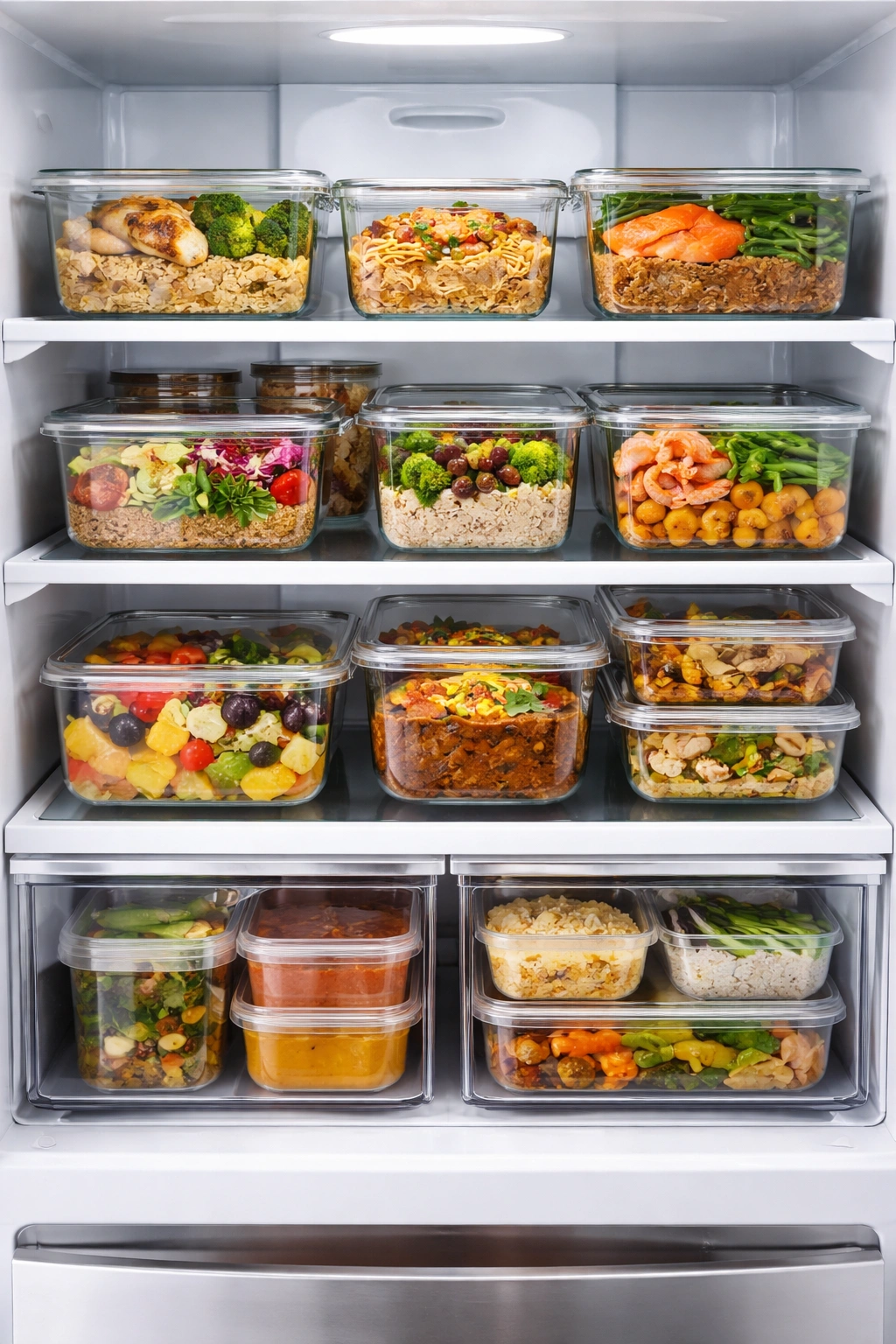
Storage makes or breaks meal prep. Food that goes bad defeats the entire purpose. Different foods store for different lengths of time, so knowing what you’re doing prevents waste and foodborne illness.
Temperature and Containers
Store hot food in the refrigerator within two hours of cooking; let it cool slightly first if it’s very hot. Use glass containers with tight-fitting lids, or store food in containers and cover with foil. Properly stored cooked food lasts three to four days in the refrigerator for most proteins and vegetables. Rice and pasta last slightly longer, up to five days.
Keep track of what day you prepped by writing the date on containers or remembering when you cooked. The basic rule: if it smells off or looks slimy, don’t eat it. Trust your senses.
Freezing for Longer Storage
If you’re prepping more than you can eat in four days, freeze the extras. Most prepared meals freeze well for one to three months. Cooked grains, proteins, and vegetables all freeze successfully. The exception is salads and anything with a delicate texture — those get watery and unappealing when thawed.
Label containers with the date before freezing. Thaw food in the refrigerator overnight (safest method) or reheat directly from frozen on the stovetop or in the microwave.
Time-Saving Equipment and Tools
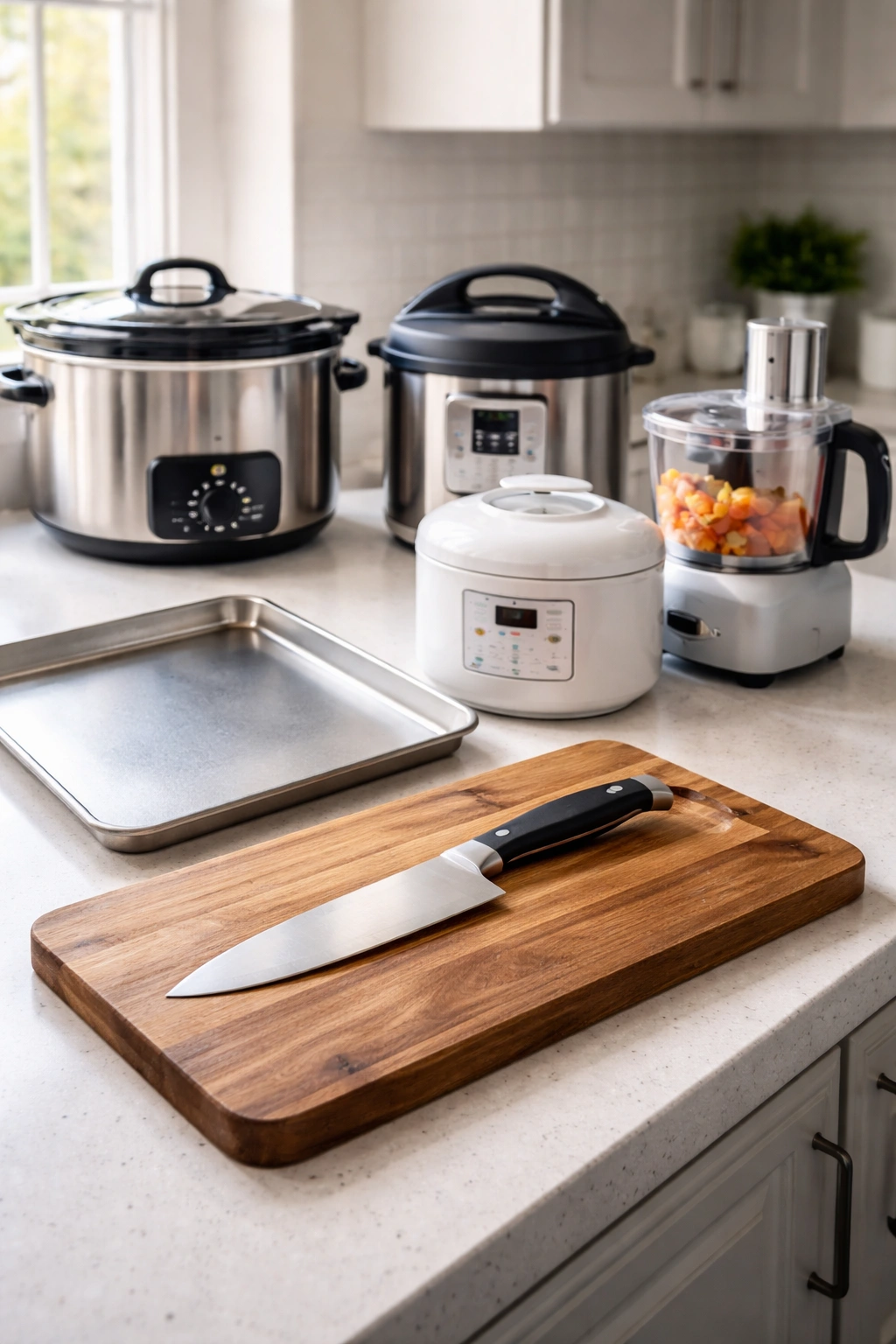
Once you understand the basics, a few tools can genuinely speed up your process. But these are optional. Don’t buy anything until you’ve done meal prep manually at least a few times.
The Most Worthwhile Investment
A large, sharp chef’s knife cuts your prep time by roughly 30 percent. A quality eight-inch knife from a brand like Victorinox or Wüsthof is efficient and relatively inexpensive. A dull knife is dangerous and tedious; if you upgrade one thing, make it this.
A sheet pan (or two) is the next best investment. Roasting is the fastest cooking method for generating prepared food, and you can’t roast without a proper pan. They cost $15 to $30 and last for years.
Helpful But Non-Essential
A slow cooker or instant pot lets you set-and-forget a meal. A rice cooker frees up a stovetop and makes perfect rice consistently. A food processor speeds up chopping significantly if you’re preparing large quantities. A blender is useful if you make smoothies or soups. These are all legitimate time-savers, but you can accomplish meal prep without them.
Common Beginner Mistakes to Avoid
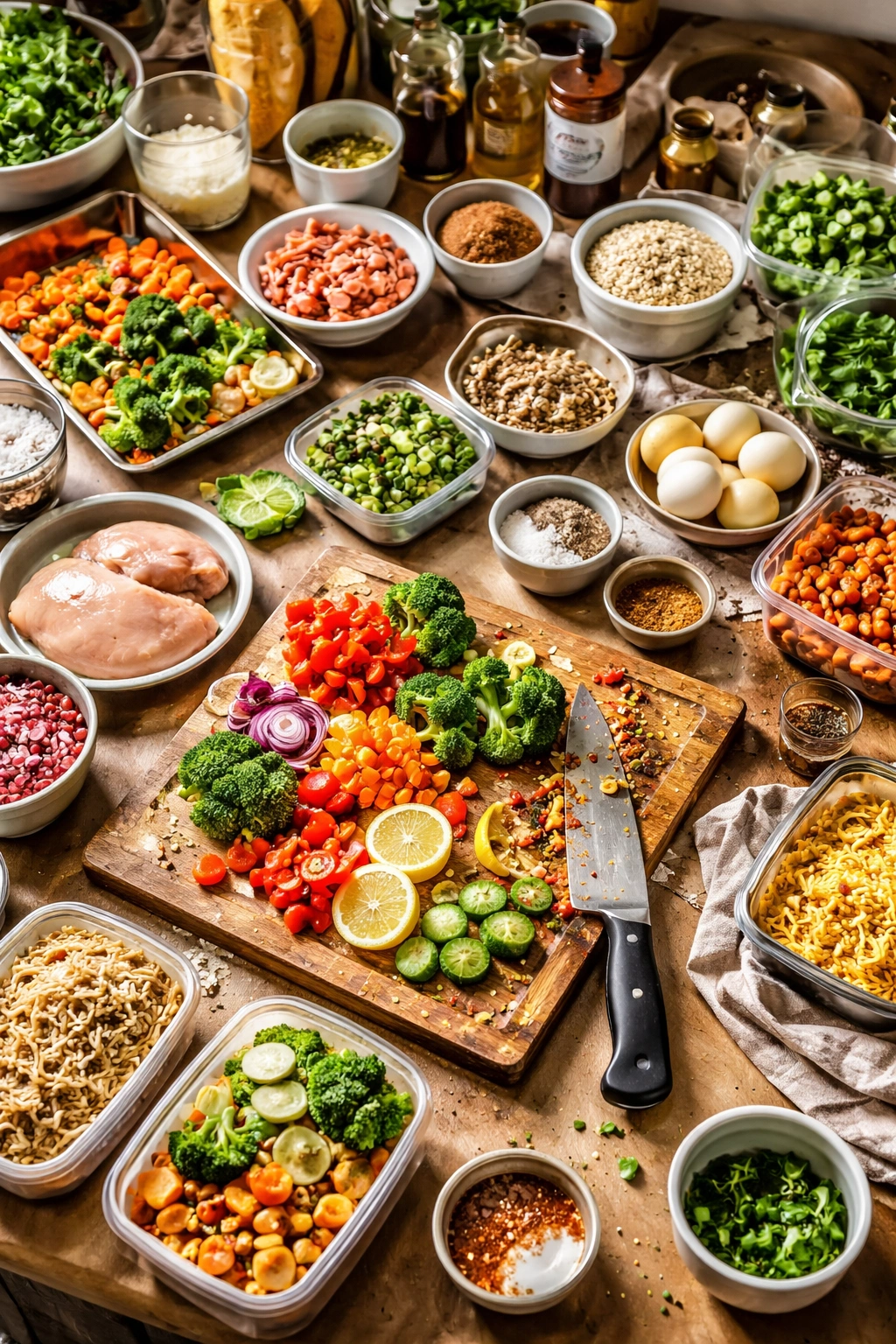
Most beginners fail at meal prep not because they lack skill, but because they attempt something unsustainable from the start.
The “Do Everything at Once” Trap
Prepping seven full days of meals, with four separate recipes, using techniques you’ve never tried before, is a recipe for burnout. Start smaller. Three days, two or three simple recipes, familiar techniques. Once you’ve done this a few times and it feels natural, expand to four or five days. Build gradually.
Overcomplicated Recipes
If a recipe has more than five ingredients, requires special equipment, or takes longer than 15 minutes of active prep, it’s probably too ambitious for your first few weeks. Stick to simple formula meals: protein plus carb plus vegetables. Season generously, don’t overthink it.
Not Tasting as You Cook
The most common beginner mistake is prepping an entire week of underseasoned food. Taste everything as you cook. A pinch more salt makes the difference between bland and delicious. You can always add more; you can’t remove it.
Ignoring What You Actually Like
If you don’t like grilled chicken, don’t prep grilled chicken. If you hate Brussels sprouts, don’t roast them because some article said they’re healthy. Meal prep only works if you’re genuinely satisfied with what you’re eating. You’ll stick with it, and you won’t feel deprived.
Your First 2-Hour Meal Prep Session
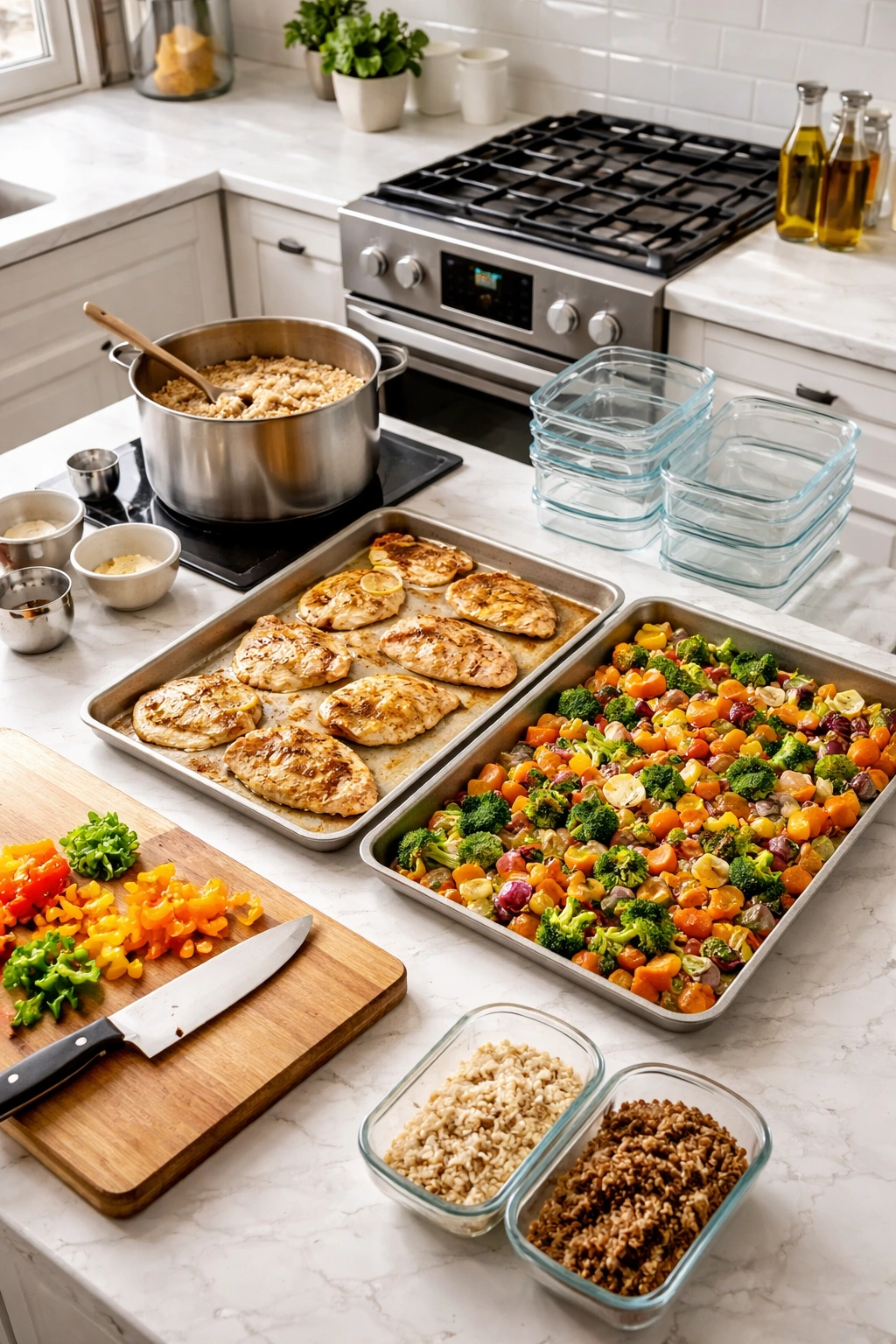
This is a real, actionable walk-through of a beginner meal prep session. Not theoretical, but the actual steps.
Before You Start (10 minutes)
Gather everything you need: your ingredients, cutting board, knife, sheet pans, a large pot, containers, and measuring cups if you want to. Wash your hands. Preheat the oven to 400°F. Clear space on your counters. This setup phase is crucial — you don’t want to be hunting for things once you start.
The Protein and Vegetables (45 minutes active)
Cut two pounds of chicken breast into single-serving portions (roughly four to five ounces each) and season with salt, pepper, and garlic powder. Spread on a sheet pan. Cut vegetables (two cups of broccoli florets, two medium sweet potatoes cut into half-inch pieces, two cups of regular potatoes) and toss with olive oil, salt, and pepper on another sheet pan. Both go into the oven. Set a timer for 25 minutes.
While those cook, you can clean up your cutting board and prep your carbs. This is the beauty of roasting: you have a 25-minute window to do other tasks instead of standing at a stove.
The Carbs (30 minutes)
Start two cups of rice in a large pot with four cups of water. Bring to a boil, then cover and reduce heat to low. It will cook while the oven-roasted food finishes. If you’re using pasta instead, you can cook it at any point; just have water boiling. Most pasta cooks in 8 to 12 minutes.
Assembly and Storage (15 minutes)
Once everything is cooked and cooled slightly, divide into containers. You might create five containers, each with one cup of rice, one chicken portion, and half a cup of vegetables. Store in the refrigerator. Total active time: about two hours, and you’ve just created five meals.
Building Flexible Meal Prep Combinations
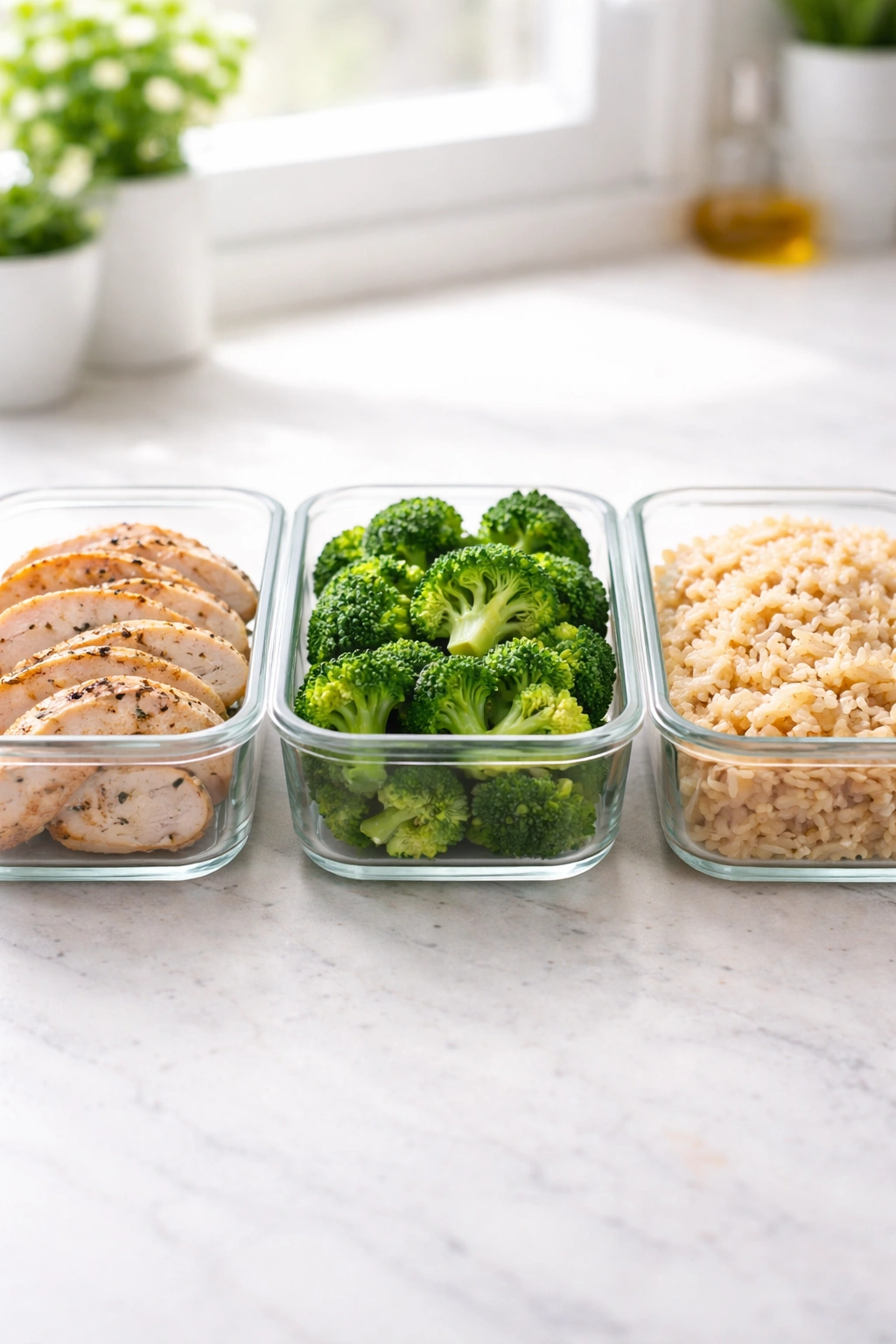
The real power of meal prep comes from realizing that your components don’t have to stay in the same combination.
The Mix-and-Match Approach
If Monday you eat your prepped chicken with rice and broccoli, Wednesday you can eat the same chicken with the same rice but mixed into a quick stir-fry with soy sauce and the broccoli you prepped. Friday, crumble the leftover chicken into a salad. The same base ingredients transform based on what you’re craving and how you present them.
Prep your proteins and vegetables separately from your carbs. Store them in different containers. This flexibility is what makes meal prep sustainable — you’re not eating the exact same thing every day, even though you prepped once.
Simple Flavor Variations
A single batch of grilled chicken becomes three different meals depending on seasoning and pairing. Toss it in buffalo sauce with your vegetables and rice for a buffalo bowl. Mix it with mayo and herbs for a chicken salad. Use it in a wrap with hummus and vegetables. The prep work is identical; the eating experience is completely different.
Scaling Meal Prep to Fit Your Life
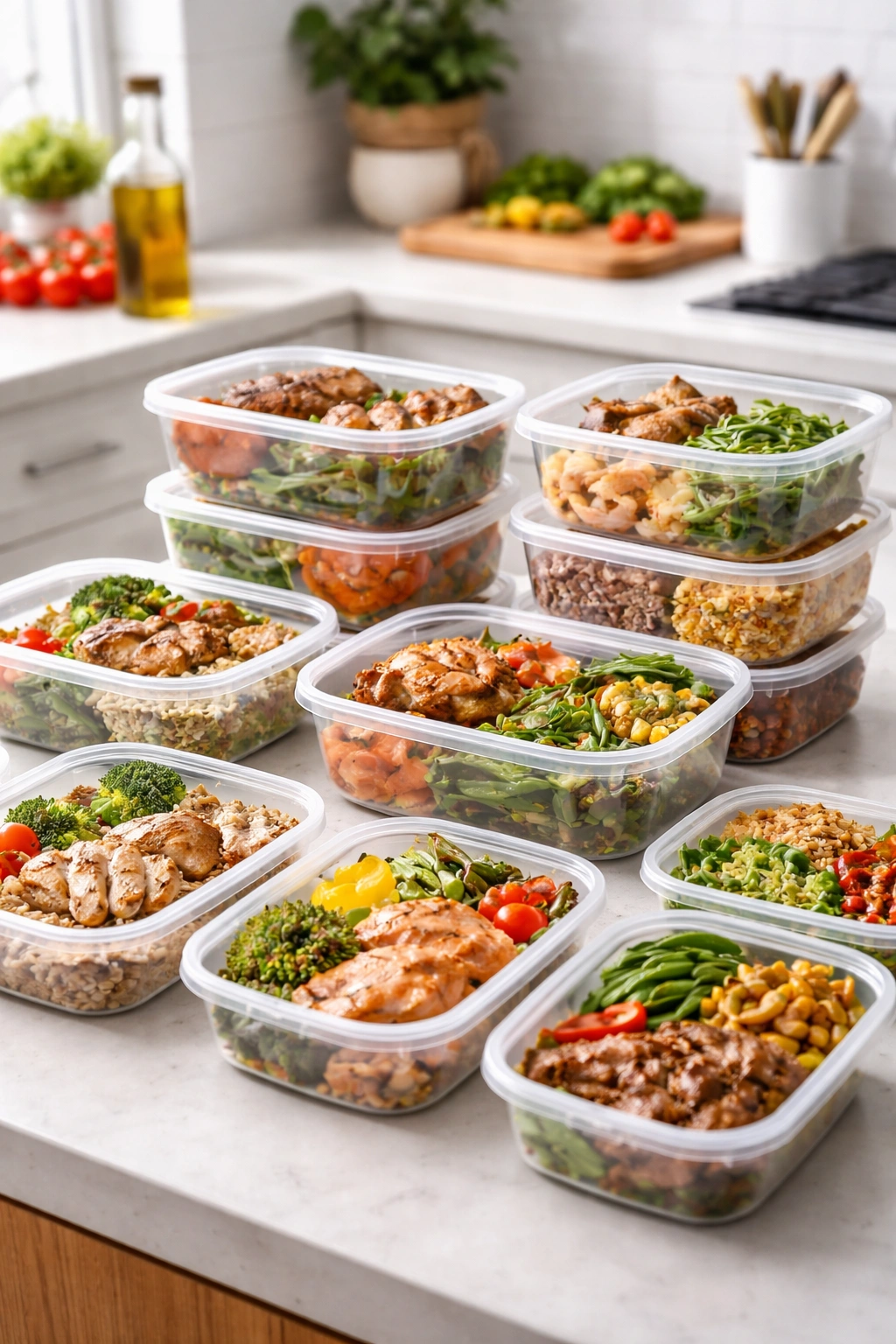
As meal prep becomes a habit, you’ll naturally find the rhythm that works for your schedule and preferences.
The Weekly vs. Twice-Weekly Approach
Some people prep all seven days at once. Others prep three or four days, then repeat the process mid-week. The twice-weekly approach works well if you find that four-day-old rice tastes stale or if your schedule is too unpredictable to plan a full week. Neither approach is better — pick what fits your life.
Adjusting Quantities
A single person might prep just two to three servings. A family might prep for four people for five days. The technique remains identical; the quantities scale up. A family of four eating the same meal for lunch and dinner for five days might prep four pounds of protein, four cups of dry grains, and eight cups of vegetables. The math is simple once you know how much you eat.
Seasonal Adjustments
Different vegetables come in and out of season, and your preferences might shift with the weather. In summer, you might prep lighter meals with fresh vegetables and quick-cooking fish. In winter, you might lean toward heartier proteins and root vegetables. Flexibility is a feature, not a flaw.
Troubleshooting Common Problems
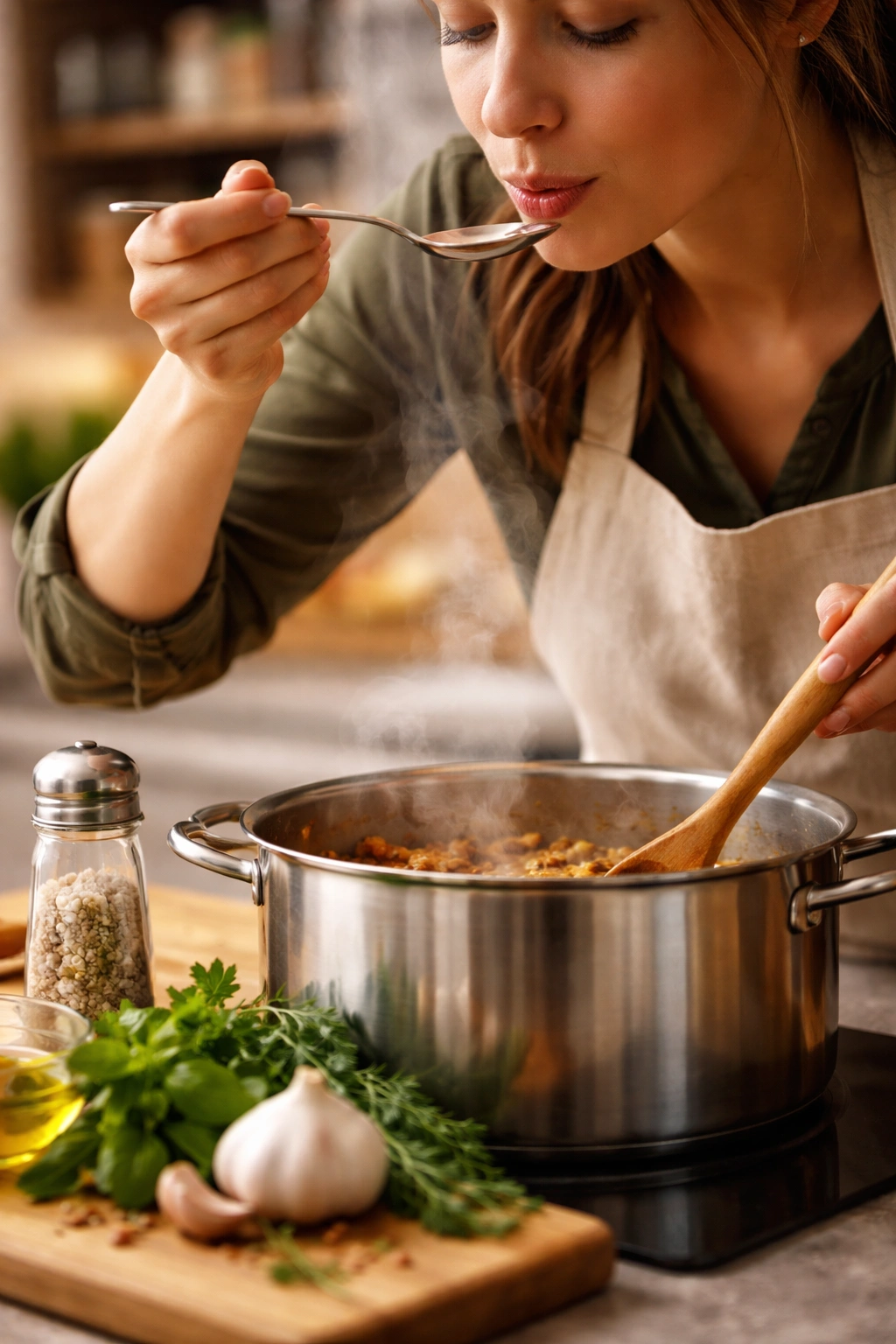
New meal preppers often run into the same handful of issues. Here’s how to solve them.
Food Tastes Bland
You’re probably underseasoning. Salt is not the enemy; bland food is. Season generously while cooking, then taste and adjust. Most people undershoot on salt because they’ve been conditioned to fear it. One quarter teaspoon per serving is reasonable, depending on the dish.
Food Goes Bad Before You Eat It
You’re either prepping too much or choosing foods that don’t store well (like delicate salad greens or foods with wet components). Scale back to four days instead of seven. Choose proteins and vegetables that hold up well: chicken, rice, potatoes, broccoli, Brussels sprouts, green beans. Avoid watery vegetables like tomatoes and cucumber.
You Get Bored Eating the Same Thing
This means your flavor variations aren’t different enough, or you’re not accounting for personal preference. Add hot sauce, fresh herbs, different oils, or different sauces to the same base ingredients. Alternatively, shorten your prep window to four days instead of seven — the food stays fresher, and you don’t get tired of it.
Prep Time Is Taking Much Longer Than Expected
You’re probably being too precious about it. Meal prep doesn’t require restaurant-quality knife work or perfectly uniform pieces. Speed comes from not overthinking. Chop things roughly, use one large cutting board for everything, and move quickly. Your first session might take three hours; by session four or five, you’ll be done in 90 minutes.
Final Takeaways
Meal prep is not a personality type or a sign of supreme discipline — it’s a practical system that works for anyone willing to try it for two or three weeks. The first session feels clunky. By the third or fourth, it becomes a rhythm. By the eighth, it’s automatic.
Start with a simple plan: pick one protein, one carb, and two or three vegetables you actually enjoy. Prep for three or four days. Cook everything at once using basic techniques like roasting and boiling. Store it properly and eat it throughout the week. That’s the entire system.
The real benefit isn’t that you’ll eat perfectly or never eat out again. It’s that you’ll have good options waiting for you when you’re tired, hungry, and making decisions on autopilot. That simple act — removing friction from the decision-making process — changes everything. You don’t become a different person. You just make this one aspect of life slightly easier, which gives you mental space and energy for everything else.
