



Getting perfectly roasted vegetables on the table used to mean heating the oven, waiting for it to preheat, and then standing around for 30-40 minutes while your kitchen gets warm. But there’s a better way now, and if you’re not using your air fryer to roast vegetables, you’re making things harder than they need to be. The air fryer does something genuinely magical with vegetables — it caramelizes the edges, concentrates the natural sweetness, and creates that crispy-on-the-outside, tender-on-the-inside texture that makes even people who claim they don’t like vegetables actually ask for seconds.
The real revelation is the timing. While oven-roasted vegetables demand your patience, air fryer vegetables are ready in about 15 minutes total. That’s not a typo. You’re looking at roughly half the time of traditional roasting, with less oil, fewer calories, and somehow better flavor. It’s the kind of kitchen hack that feels almost too good to be true until you actually make it yourself.
Why Air Fryer Vegetables Are Game-Changing for Weeknight Dinners
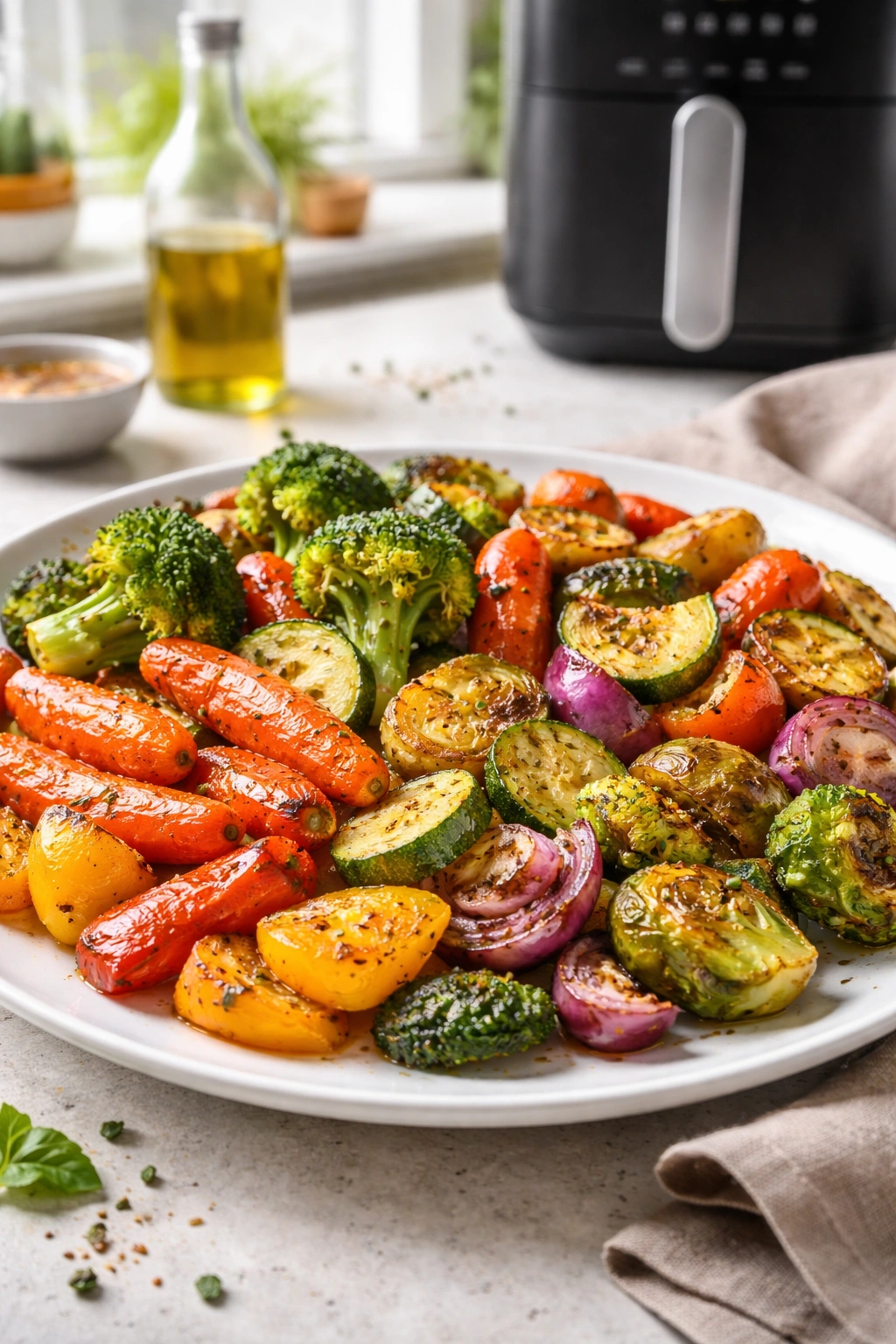
There’s a reason air fryer vegetable recipes have become so wildly popular — they solve a real problem that home cooks face constantly. You want your family to eat more vegetables, but you don’t want to spend hours in the kitchen. You want them to taste genuinely delicious, not like steamed sadness. And you want the texture to be interesting enough that people actually want to eat them instead of pushing them around their plate.
The air fryer handles all three of these requirements without breaking a sweat. These machines are essentially mini convection ovens that use rapidly circulating hot air to cook food with minimal oil. A heating element and fan bathe the vegetables in hot air to produce a crispy finished product, which is exactly what transforms an ordinary side dish into something people actually crave. The speed comes from the fact that the air circulates more efficiently around smaller spaces than it does in a full-sized oven.
Beyond the practical benefits, there’s something genuinely satisfying about air fryer vegetables as a side dish. They pair beautifully with grilled chicken, roasted fish, or even as part of a vegetarian main course. You can make them twice a week without getting bored because the seasoning possibilities are essentially endless. The versatility alone makes this worth mastering.
How Air Fryers Actually Transform Vegetables at the Molecular Level
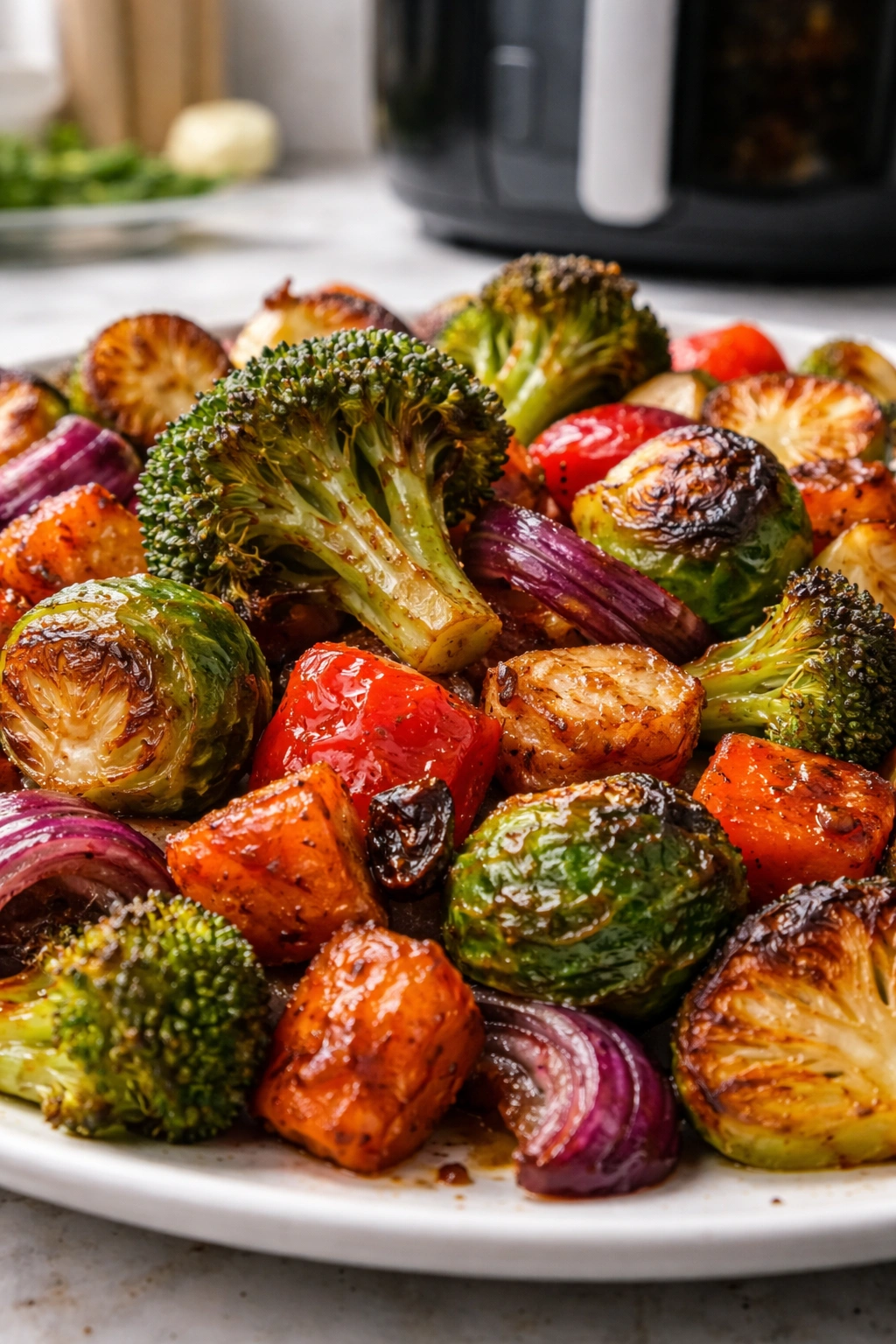
Understanding what’s happening to your vegetables while they cook helps you nail the technique every single time. When you roast any vegetable, you’re triggering something called the Maillard reaction — a chemical process where amino acids and reducing sugars interact at high temperatures to create hundreds of new flavor compounds. This is what gives roasted vegetables their complex, savory depth that you simply can’t get from steaming or boiling.
The air fryer accelerates this process because the heat is more intense and more immediate than traditional oven roasting. The vegetables aren’t just sitting in warm air — they’re being bombarded with rapidly circulating hot air from all directions. This means the exterior starts caramelizing faster while the interior stays tender. Water content in the vegetables evaporates quickly, which is why you get that crispy texture instead of a soggy result.
The oil you use plays a crucial role here too. It’s not just for flavor — it’s what actually helps the browning process happen. Oil conducts heat more efficiently than water, so a light coating helps your vegetables caramelize instead of steam. This is why air fryer vegetables benefit from a small amount of oil (usually around 1 tablespoon per 2 cups of vegetables), whereas you might use much more if you were pan-frying.
The Critical Secret to Crispy Results: The Single Layer Rule
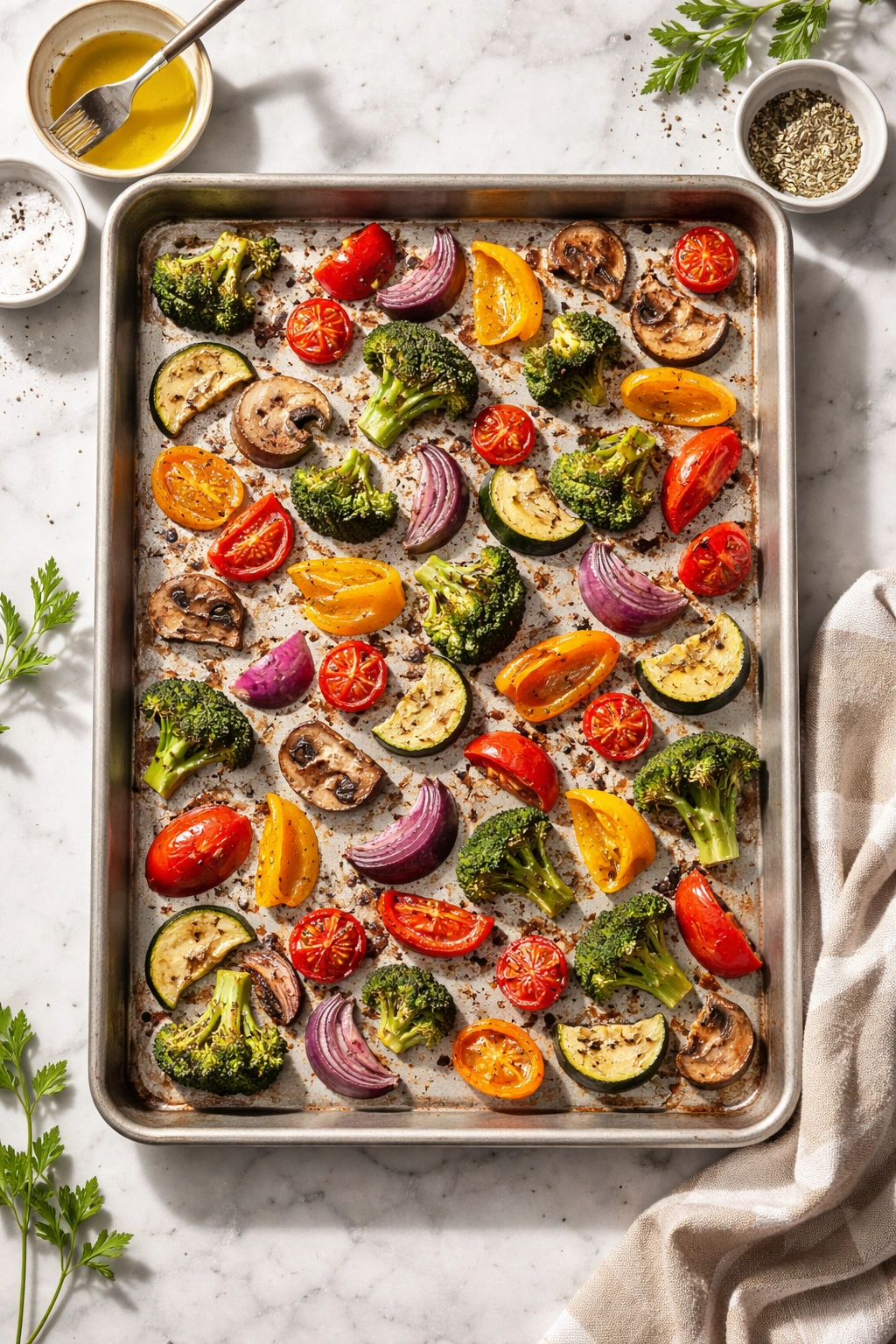
If you’re going to remember one thing about air fryer vegetables, make it this: never, ever overcrowd the basket. This is the single most common mistake that separates successful air fryer vegetables from disappointing, soggy results. When vegetables are stacked on top of each other, the hot air can’t circulate around them on all sides. Instead of roasting, they steam. And steamed vegetables are fine in certain contexts, but crispy is absolutely the whole point here.
Spreading your vegetables in a single layer with a little space between each piece ensures that hot air contacts every surface. This is what creates those caramelized, golden-brown edges that make vegetables actually craveable. If you have more vegetables than fit comfortably in one layer, cook them in two batches. Yes, it adds an extra 15 minutes to your total time. It’s absolutely worth it.
The size of your air fryer matters here, and so does being honest about capacity. A 4-quart air fryer can typically handle about 3-4 cups of vegetables in a single layer, depending on how you’ve cut them. A larger 6-quart model can handle 5-6 cups. When in doubt, err on the side of leaving extra space rather than packing things in tightly.
Choosing Vegetables That Cook Evenly in the Same Batch
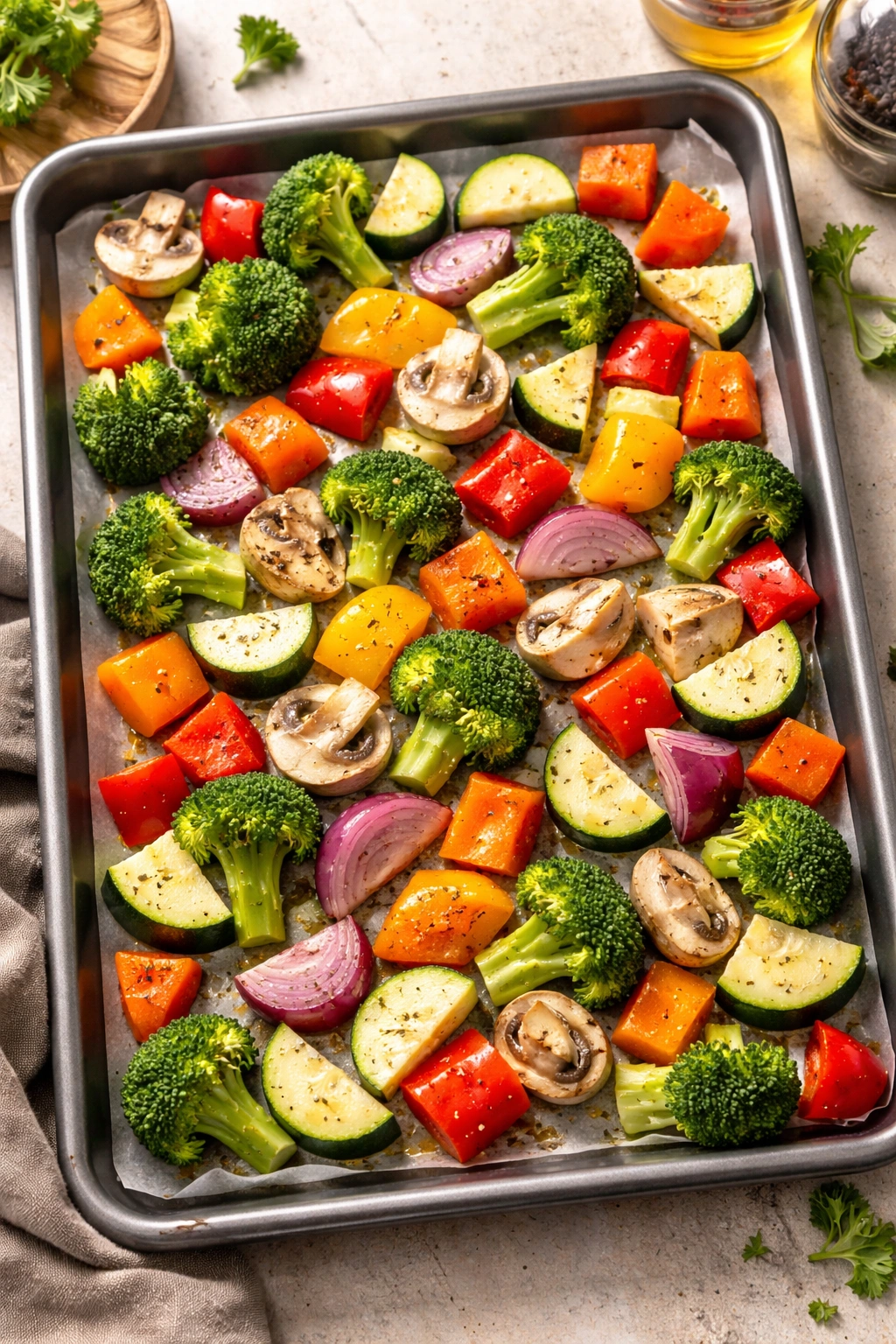
The vegetables you choose matter more than you might think, particularly if you’re mixing different types in a single batch. Not all vegetables are created equal when it comes to cooking time. Some vegetables have high water content and cook through quickly, while others are dense and require more time. Mixing them successfully is about understanding these differences and cutting accordingly.
Tender or fast-cooking vegetables like zucchini, yellow squash, bell peppers, mushrooms, and onions are done in about 10-12 minutes. These have higher water content and thinner cell walls, so heat penetrates them quickly. When you’re using these vegetables, you can cut them on the larger side — think 1-inch pieces — and they’ll still cook through evenly.
Medium-density vegetables like broccoli, cauliflower, green beans, and asparagus fall in the middle ground. They typically need 12-15 minutes and benefit from being cut into smaller, bite-sized florets or pieces so they cook at the same rate as your other vegetables.
Firm or slow-cooking vegetables like carrots, baby potatoes, beets, Brussels sprouts, and winter squash are the densest and require the longest cooking time — usually 15-20 minutes or more. These need to be cut into thinner or smaller pieces to cook through by the same time as softer vegetables. A thick carrot chunk will still be raw in the center while your zucchini has turned to mush.
The easiest approach if you’re just starting out is to choose vegetables that naturally have similar cook times. A combination of bell peppers, zucchini, squash, broccoli, and mushrooms will all be perfectly done at the 15-minute mark. As you get more confident, you can start with the firm vegetables, give them a 3-5 minute head start, and then add the tender ones for the remaining cooking time.
Why the Right Size Matters More Than You’d Think
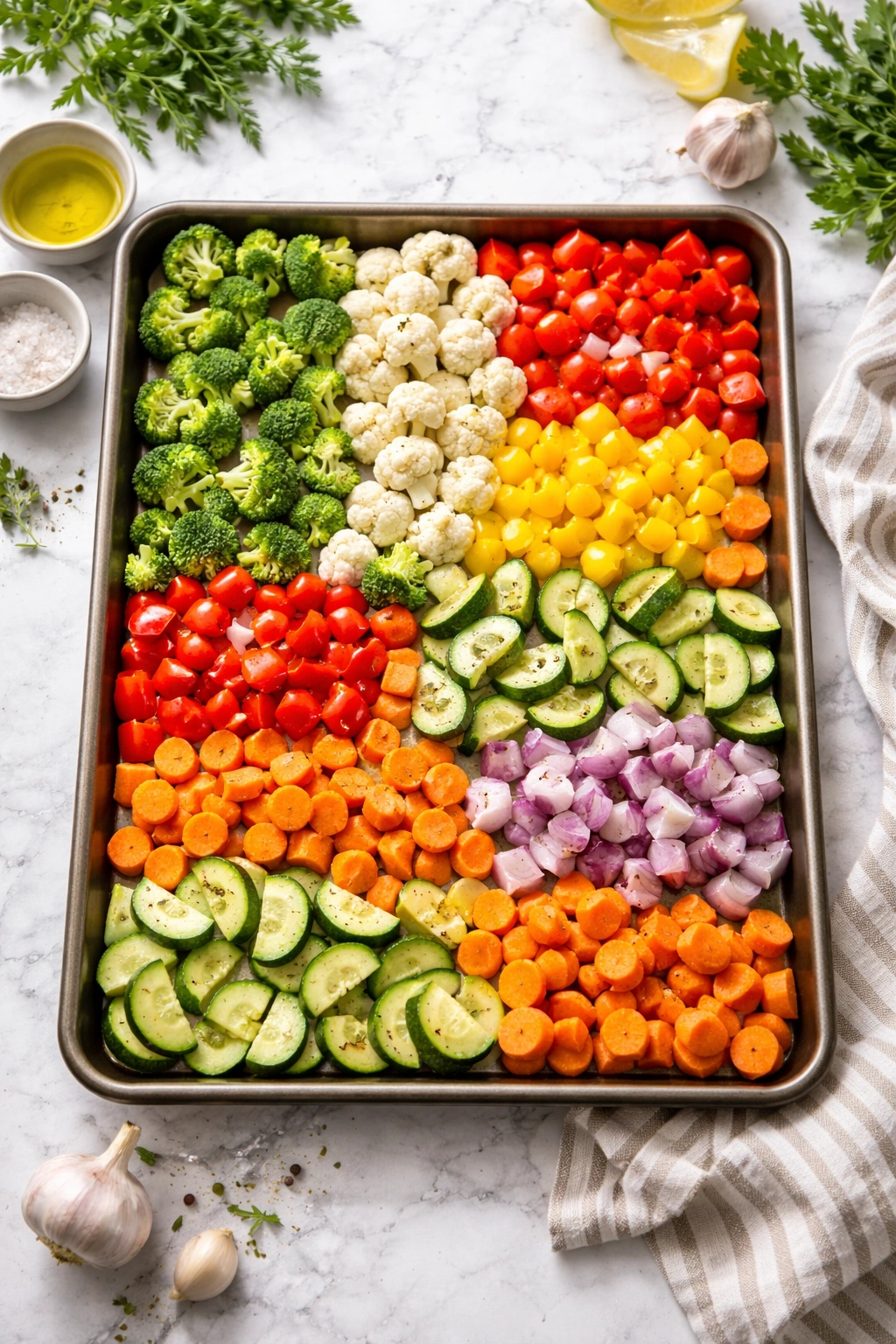
Cutting your vegetables to uniform sizes is genuinely one of the most important technical skills you’ll develop with air fryer cooking. When pieces are drastically different sizes, the smaller pieces overcook and turn to mush while the larger pieces stay undercooked and tough. It’s frustrating and completely preventable.
Aim for consistency — if you’re cutting bell peppers into 1-inch chunks, make your onion pieces roughly the same size. If you’re making broccoli florets, try to keep them all similarly sized. This uniform sizing is what allows everything to finish cooking at the right moment.
There’s also a practical limit to how small you should cut things. If your vegetable pieces are too tiny, they’ll fall through the air fryer basket or get lost. There’s a sweet spot around ½ to 1 inch for most tender vegetables, and slightly smaller (¼ to ½ inch) for denser vegetables to help them cook through.
Yield: Serves 4 to 6 | Makes one 4-cup batch
Prep Time: 10 minutes
Cook Time: 15 minutes
Total Time: 25 minutes
Difficulty: Beginner — This recipe requires no special skills or equipment beyond an air fryer. The steps are straightforward and forgiving, making it perfect for first-time air fryer users.
Perfect Air Fryer Roasted Vegetables
For the Vegetables:
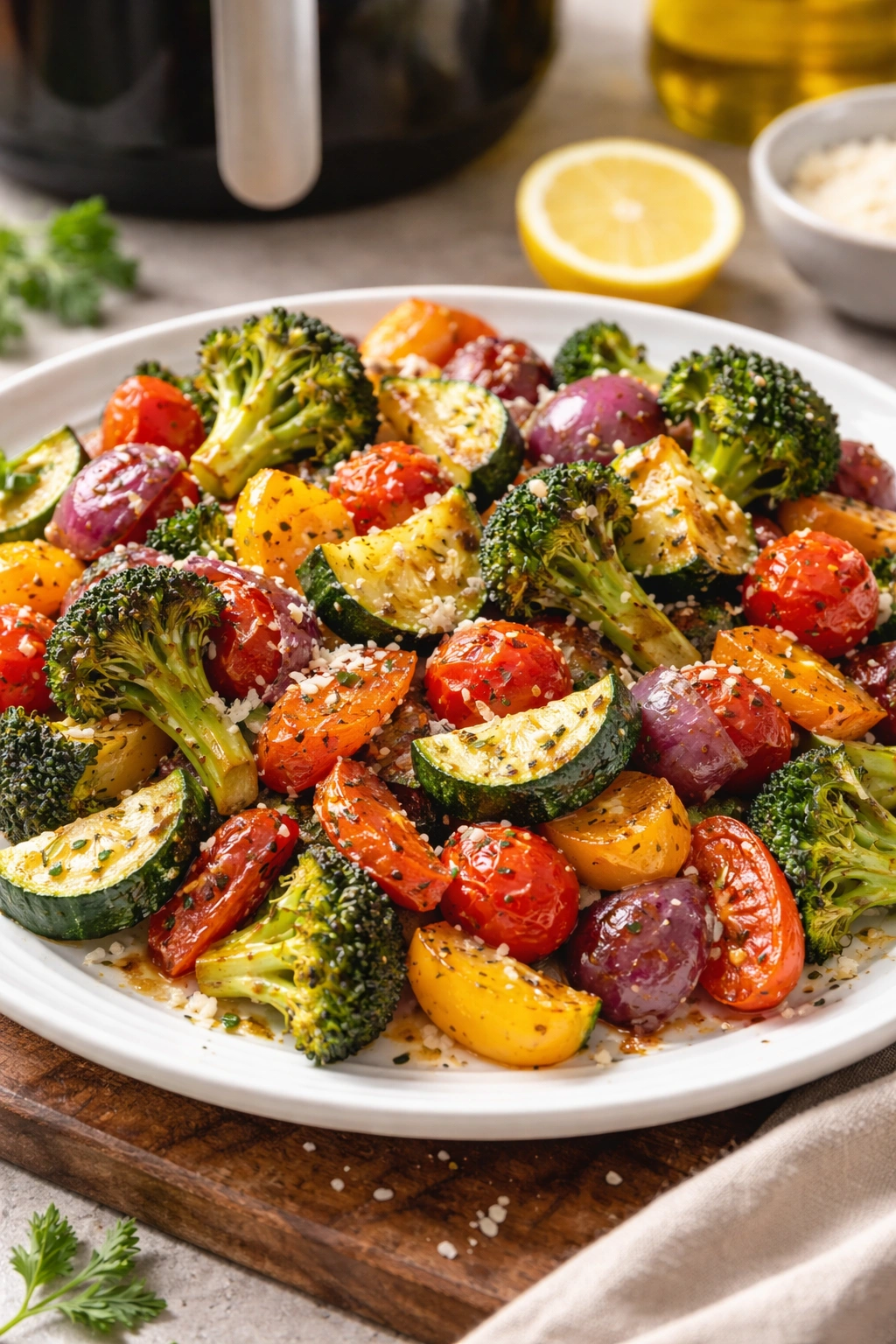
- 1 cup broccoli florets, cut into bite-sized pieces
- 1 cup cauliflower florets, cut into bite-sized pieces
- 1 medium zucchini, halved lengthwise and sliced into ½-inch half-moons
- 1 medium yellow squash, halved lengthwise and sliced into ½-inch half-moons
- 1 large red bell pepper, stemmed, seeded, and cut into 1-inch pieces
- 1 small red onion, peeled and cut into 1-inch chunks
- 8 ounces cremini mushrooms, quartered
- 3 tablespoons extra-virgin olive oil (or avocado oil for a higher smoke point)
- 1½ teaspoons Italian seasoning (or ½ teaspoon each dried oregano, basil, and thyme)
- ½ teaspoon garlic powder
- ½ teaspoon sea salt
- ¼ teaspoon freshly ground black pepper
- Pinch of red pepper flakes (optional)
For Finishing (Optional):
- Fresh lemon juice (juice of ½ lemon)
- ¼ cup freshly grated Parmesan cheese
- Fresh parsley, chopped, for garnish
Step-by-Step Instructions for Crispy Air Fryer Vegetables
Prepare Your Vegetables:
-
Wash all vegetables thoroughly under cold running water and pat them dry with a clean kitchen towel — this step matters more than you’d think, as excess moisture prevents proper browning.
-
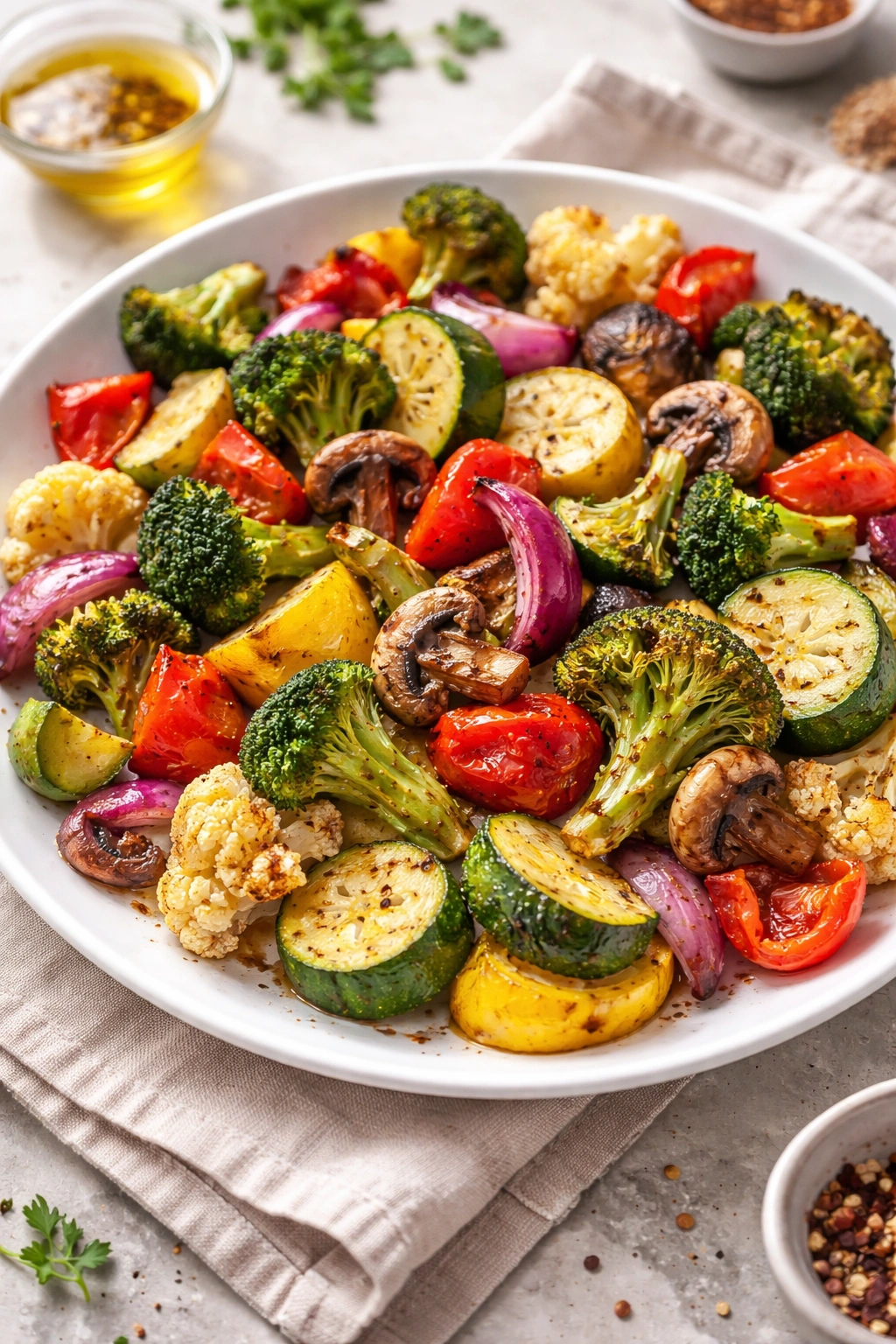
Trim the broccoli and cauliflower into small, uniform florets, leaving just enough stem attached so they hold together during cooking. Florets that are too large won’t cook through in the time frame; too small and they become brittle.
-
Slice the zucchini and yellow squash in half lengthwise, then cut each half into ½-inch thick half-moons. This shape cooks evenly and looks attractive on the plate.
Advertisements -
Cut the red bell pepper in half, remove the stem and seeds, then cut into roughly 1-inch chunks. Try to keep them consistent in size.
-
Peel the red onion, cut it in half, and then cut each half into 1-inch chunks, separating the layers slightly so they don’t clump together.
-
Clean the mushrooms with a damp paper towel (don’t soak them), then cut each mushroom into quarters. If your mushrooms are particularly small, you can leave them halved instead.
Coat and Season the Vegetables:
-
Place all prepared vegetables in a large mixing bowl. Pour the olive oil over them, sprinkle with the Italian seasoning, garlic powder, salt, black pepper, and red pepper flakes if using.
-
Toss everything together thoroughly, using your hands or two spoons, until every piece of vegetable has a light, even coating of oil and seasonings. This usually takes about 30 seconds of tossing — you want visible coverage, but not so much oil that anything is dripping.
Cook in the Air Fryer:
-
Preheat your air fryer to 375°F (190°C) for 3 minutes while you prepare the vegetables. If your air fryer tends to run hot (you’ll know because things char before the center cooks), reduce the temperature to 360°F.
-
Transfer the seasoned vegetables to the air fryer basket, spreading them in as close to a single layer as possible. They can touch slightly, but ideally there’s a tiny bit of space between each piece so air can circulate. If your vegetables are crowded, remove about half and set them aside — you’ll cook them in a second batch after this one finishes.
-
Place the basket in the air fryer and set the timer for 10 minutes. You don’t need to stir yet.
Advertisements -
At the 10-minute mark, shake the basket or use tongs to toss the vegetables, ensuring they turn and any that were on the bottom move to the top. This promotes even browning on all sides.
-
Return the basket to the air fryer and cook for an additional 5 minutes (total time is now 15 minutes). The vegetables are done when they’re tender when pierced with a fork and the edges show light golden-brown caramelization.
-
If you’re cooking a second batch, transfer the finished vegetables to a serving dish and immediately repeat steps 10-13 with your reserved vegetables.
Finish and Serve:
- Transfer the hot roasted vegetables to a serving dish. Squeeze fresh lemon juice over them if desired, and top with grated Parmesan cheese and fresh parsley. Serve immediately while the vegetables are still warm and crispy.
Expert Tips for Achieving Restaurant-Quality Results
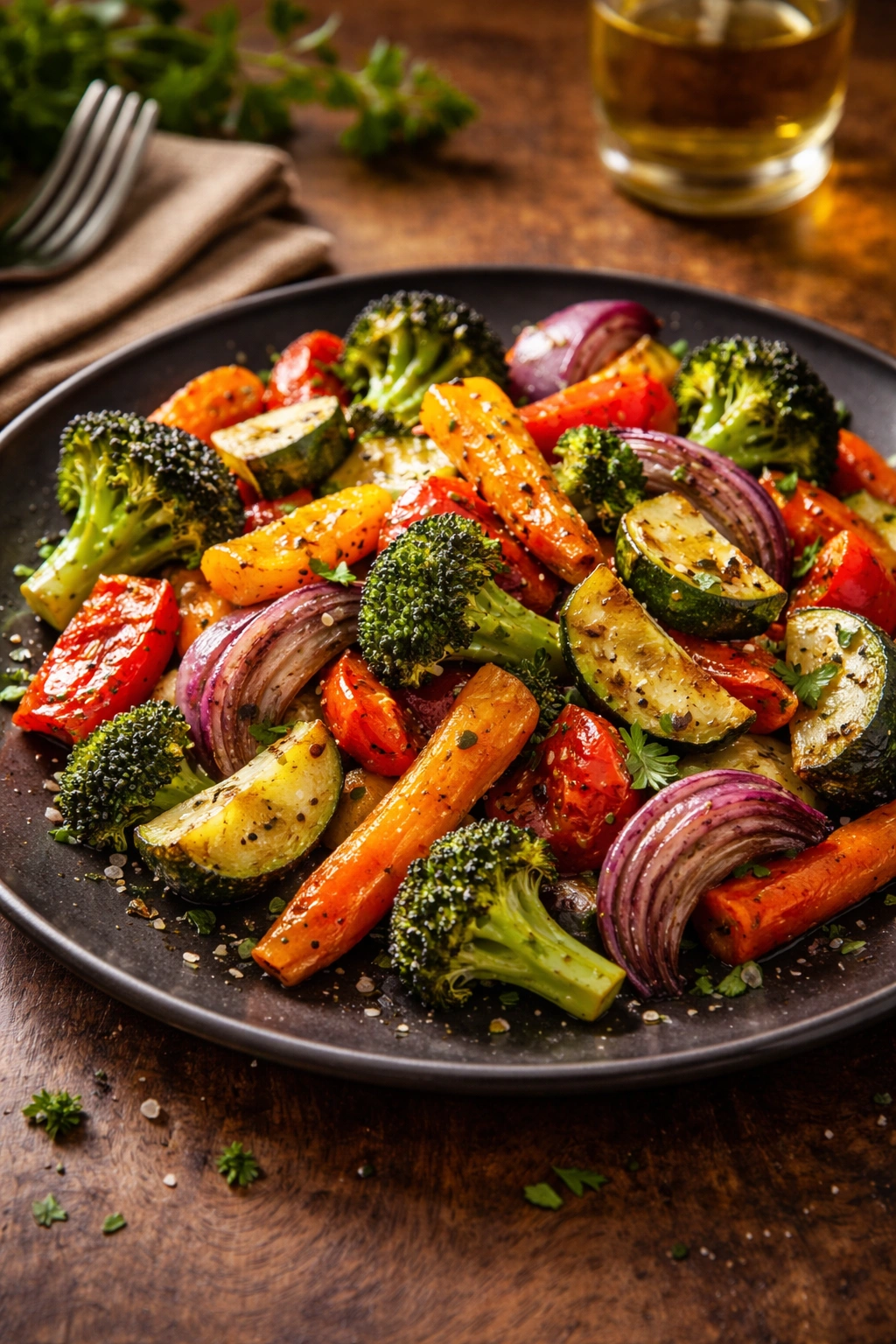
There’s a difference between air fryer vegetables that are technically done and air fryer vegetables that are genuinely crave-worthy. The gap between those two comes down to paying attention to details that seem small but actually make all the difference.
Pat your vegetables completely dry before seasoning them. Any residual water on the surface creates steam, which prevents browning and makes things soggy. It only takes 30 seconds with a clean kitchen towel, but it measurably improves your results. This is especially important if you’ve rinsed mushrooms or other vegetables with high water content.
Use good-quality olive oil. It sounds obvious, but this matters. Extra-virgin olive oil has a lower smoke point than refined oils, which means it can start to break down and taste burnt at high air fryer temperatures. If you want the flavor and health benefits of olive oil, use a regular olive oil (not extra-virgin) or switch to avocado oil, which has a higher smoke point and neutral flavor that won’t interfere with your seasonings.
Don’t be shy with seasoning. It’s easy to think a light sprinkle will be plenty, but remember that you’re only using a small amount of oil, and the vegetables will shrink slightly as they cook. The seasoning gets concentrated on a smaller surface area, so that ½ teaspoon of salt that seemed like plenty often ends up tasting under-seasoned. Taste a piece after cooking and add a pinch of salt if needed — you can always add more, but you can’t take it out.
Shake the basket at the halfway point. This is the step people most often skip, and it’s why they end up with inconsistent results. Some vegetables get perfectly golden while others are pale. A quick shake ensures that vegetables that were in contact with the heating element move to cooler spots, and vegetables that were protected by others move to where they can brown.
Don’t overcook vegetables. There’s a narrow window between “perfectly tender with crispy edges” and “dried out and unpleasant.” For most tender vegetables, that window is roughly 13-15 minutes total. If you’re cooking firm vegetables, it’s more like 18-22 minutes. The exact time depends on your specific air fryer, how tightly you’ve packed the basket, and how large your vegetable pieces are. The first time you make this, check at 12 minutes and see where things stand. Take mental notes so you can adjust next time.
Common Mistakes That Ruin Crispy Vegetables Every Time
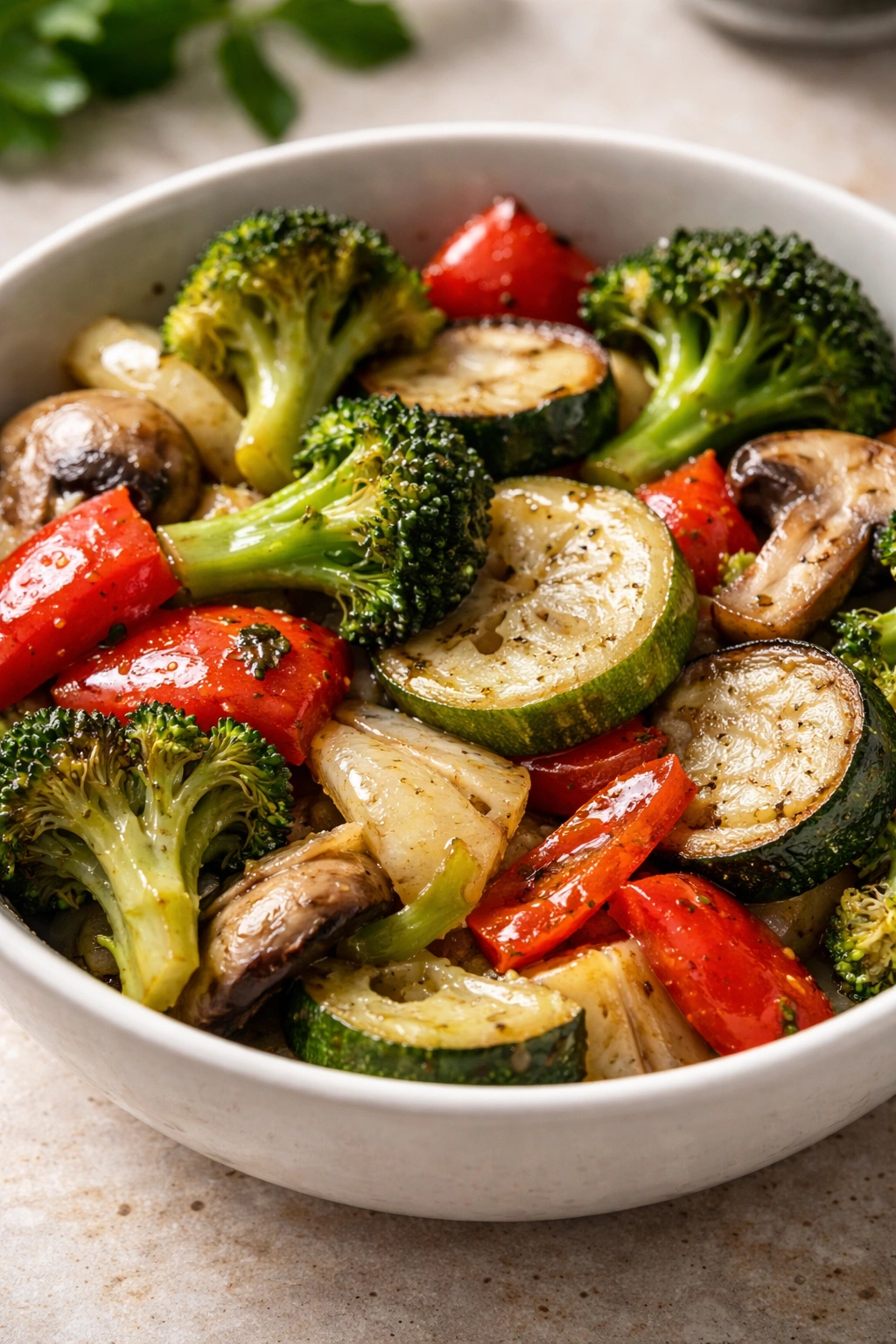
Learning what not to do is sometimes just as valuable as learning the right technique. These are the mistakes that show up again and again in the comments on air fryer vegetable recipes, and they’re all completely preventable.
Overcrowding the basket is the number one culprit behind soggy, steamed vegetables instead of crispy roasted ones. When vegetables are packed tightly together, the hot air can’t reach all the surfaces, and you end up with steam instead of dry heat. This forces moisture to stay on the vegetable surfaces instead of evaporating. The solution is simple: cook in two batches if necessary. Your finished vegetables will be so much better that the extra 15 minutes is genuinely worth it.
Using too much oil creates the opposite problem — instead of promoting browning, excess oil creates a thin layer that traps steam and makes vegetables soggy. You’re not pan-frying these; you’re air-roasting them. A light coating of about 1 tablespoon of oil per 2 cups of vegetables is the sweet spot. If your vegetables look shiny or wet, you’ve used too much.
Mixing vegetables of drastically different densities without adjusting is another common issue. If you throw a chunk of carrot (dense, slow-cooking) in the basket with zucchini (tender, fast-cooking) and don’t adjust your cutting sizes or cooking time, one will be perfectly done and the other will be disappointing. Either choose vegetables with similar cook times, or commit to cutting your dense vegetables much smaller and your tender vegetables larger, or do a head-start approach where firm vegetables cook for 5-7 minutes before you add the tender ones.
Skipping the toss or shake at the halfway point means some vegetables will brown beautifully while others stay pale. Hot air rises and circulates unevenly, so vegetables in direct contact with the heating element brown faster than those in cooler spots. A quick shake ensures even cooking.
Not letting the air fryer preheat means your vegetables start cooking in gradually warming air instead of immediately being hit with full heat. Three to five minutes of preheating makes a measurable difference in browning speed and final texture. It’s also worth noting that your air fryer might take longer to preheat than a traditional oven — sometimes 5-7 minutes — so factor that in when planning.
Seasoning Ideas and Flavor Combinations That Transform Ordinary Vegetables
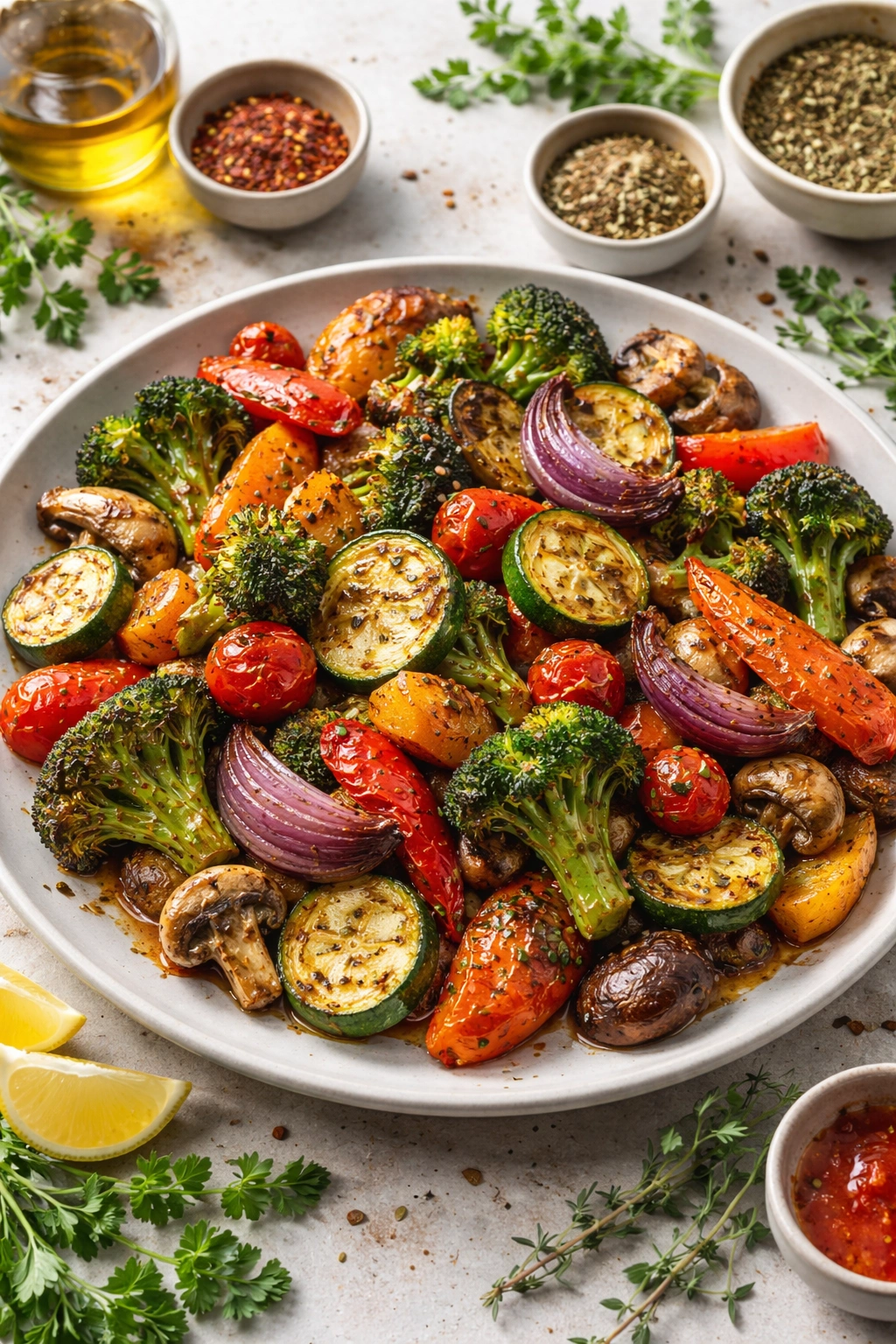
Once you’ve mastered the basic technique, the fun begins. The beauty of air fryer vegetables is that the same base recipe transforms completely depending on how you season it. Here are proven flavor combinations that work beautifully:
Mediterranean Style is the classic approach and for good reason. Use Italian seasoning, add a squeeze of fresh lemon juice after cooking, top with grated Parmesan cheese, and finish with fresh parsley. This combination brings out the natural sweetness in vegetables like zucchini and bell peppers. It’s bright, herbaceous, and completely foolproof.
Smoky and Spicy speaks to people who want a little heat. Add ½ teaspoon smoked paprika to your seasoning mix, increase the garlic powder to ¾ teaspoon, and add ½ teaspoon of cayenne pepper or a generous pinch of red pepper flakes. Finish with a squeeze of lime juice and a sprinkle of fresh cilantro. This works especially well with denser vegetables like broccoli and cauliflower.
Garlic Herb Blend is for people who want bold, savory flavors. Use 1 teaspoon of garlic powder, ½ teaspoon each of dried oregano, basil, and thyme, plus a pinch of dried rosemary. This creates depth and makes even simple zucchini taste restaurant-quality. Some people add a teaspoon of balsamic vinegar to the oil before tossing — the vinegar caramelizes during cooking and adds complexity.
Asian-Inspired swaps out the Mediterranean base entirely. Instead of Italian seasoning, use ½ teaspoon garlic powder, ¼ teaspoon ground ginger, and a pinch of five-spice powder. Drizzle with 1 tablespoon of soy sauce mixed into your oil. After cooking, finish with sesame seeds and sliced green onions instead of Parmesan. Serve with a side of sriracha or ginger sauce for dipping.
Lemon Parmesan emphasizes brightness and umami. Use minimal herbs (just salt, pepper, and ¼ teaspoon garlic powder) and let the vegetables be the star. After cooking, immediately toss with the juice of ½ lemon, ¼ cup grated Parmesan cheese, and 1 tablespoon of fresh parsley. The lemon juice hits the hot vegetables and creates a light glaze.
Balsamic and Garlic is what you make when you want something special without much extra effort. Make your seasoning oil by combining 2 tablespoons of olive oil, 1 tablespoon of balsamic vinegar, 1 teaspoon of minced garlic, salt, and pepper. Toss the vegetables in this mixture before cooking. The vinegar caramelizes beautifully and becomes slightly sweet. You can finish with a small drizzle of balsamic reduction and fresh basil if you want to get fancy.
Adapting the Recipe for Literally Any Vegetable You Have
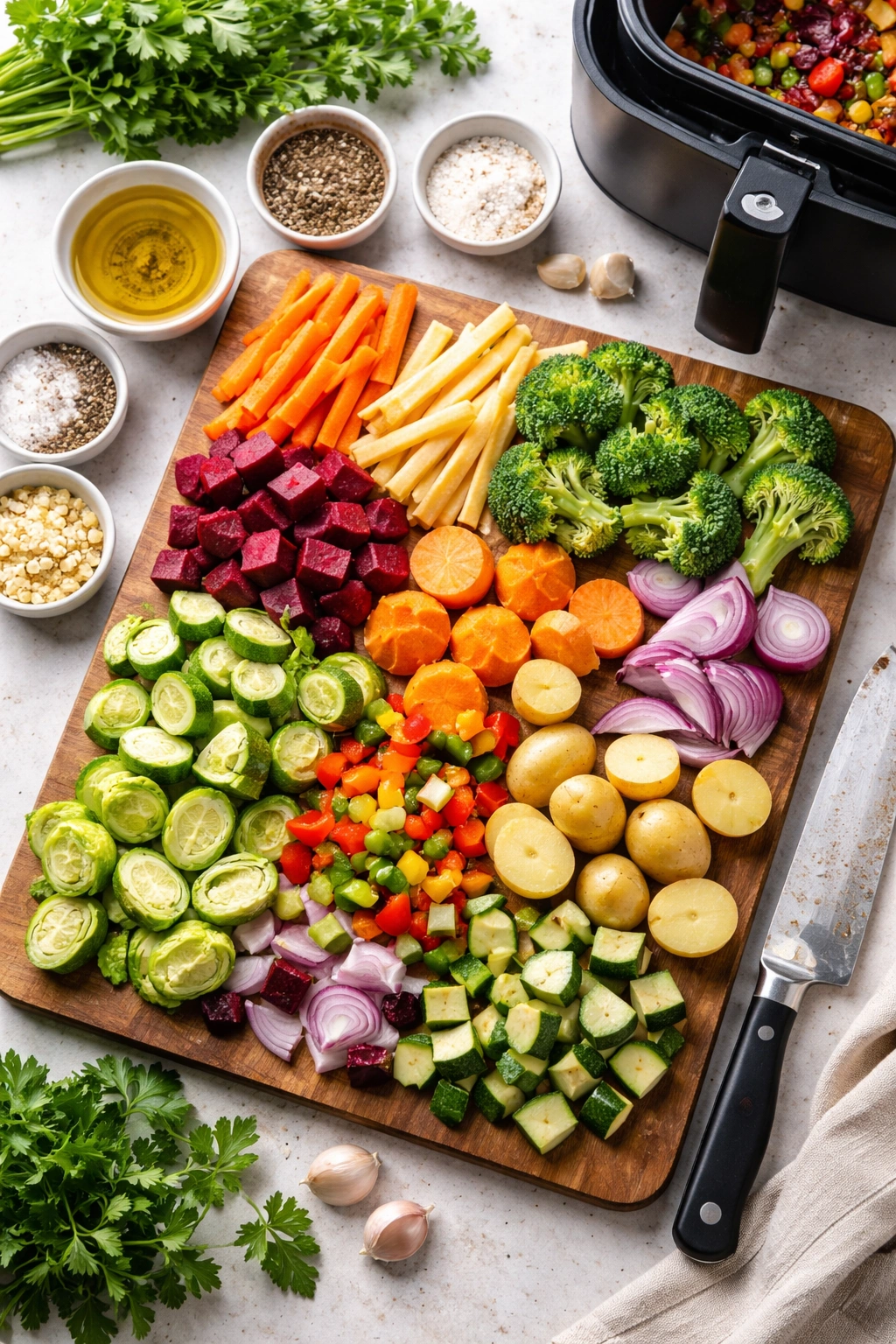
One of the best things about air fryer vegetables is that once you understand the basic technique, you can use it with virtually any vegetable in your fridge. The key is understanding how different vegetables behave and adjusting your approach accordingly.
Root Vegetables like carrots, parsnips, and beets are the densest and slowest to cook. Cut them into thin slices or small cubes (roughly ¼-inch pieces) and plan for 18-22 minutes of cooking time, shaking at the halfway point. Baby carrots are a nice shortcut since they’re already sized appropriately — they typically need about 20 minutes.
Potatoes and Sweet Potatoes benefit from being cut into ½-inch cubes and need about 20 minutes at 375°F for tender interiors with crispy edges. Pro tip: soak cut potatoes in cold water for 10 minutes before tossing with oil and seasonings — this removes some of the starch and helps them crisp up better.
Brussels Sprouts are surprisingly good in the air fryer. Trim the stem end, remove any yellowed or damaged leaves, and cut larger ones in half (leave small ones whole). Toss with oil and seasonings just like your other vegetables, and cook for 15-18 minutes. They come out with crispy outer leaves and tender centers.
Green Beans and Asparagus are tender vegetables that cook in about 12-15 minutes. Trim the woody ends, toss with oil and seasonings, spread in a single layer, and go. These are perfect when you want something that cooks quickly.
Broccoli and Cauliflower are magic in the air fryer. The way the heat browns the florets and keeps the stems tender is genuinely impressive. Cut into small to medium florets, toss, and cook for 12-15 minutes. Don’t be alarmed if some of the outer florets look almost charred — that’s caramelization, and it tastes delicious.
Eggplant is an underrated choice for air frying. Slice it into ¼-inch rounds or cubes, toss with plenty of oil and salt (eggplant is a bit of a sponge), and cook for 10-12 minutes. It becomes creamy inside with slightly crispy edges.
Peppers — beyond the bell peppers in our base recipe — are excellent. Mini peppers, poblanos, and even hot peppers like jalapeños all benefit from air frying. They get a slight char and the flavors intensify.
Winter Squash like butternut and acorn squash needs to be cut into small pieces (½-inch cubes work well) and will need 20-25 minutes. The edges caramelize beautifully and the flesh becomes almost creamy.
Frozen Vegetables can absolutely be used. Don’t thaw them first — the moisture release as they thaw causes problems. Instead, cook them directly from frozen, adding about 5-7 minutes to your total cooking time. They won’t brown quite as much as fresh vegetables, but they’ll still be delicious and tender.
Storage and Reheating for Best Results Throughout the Week
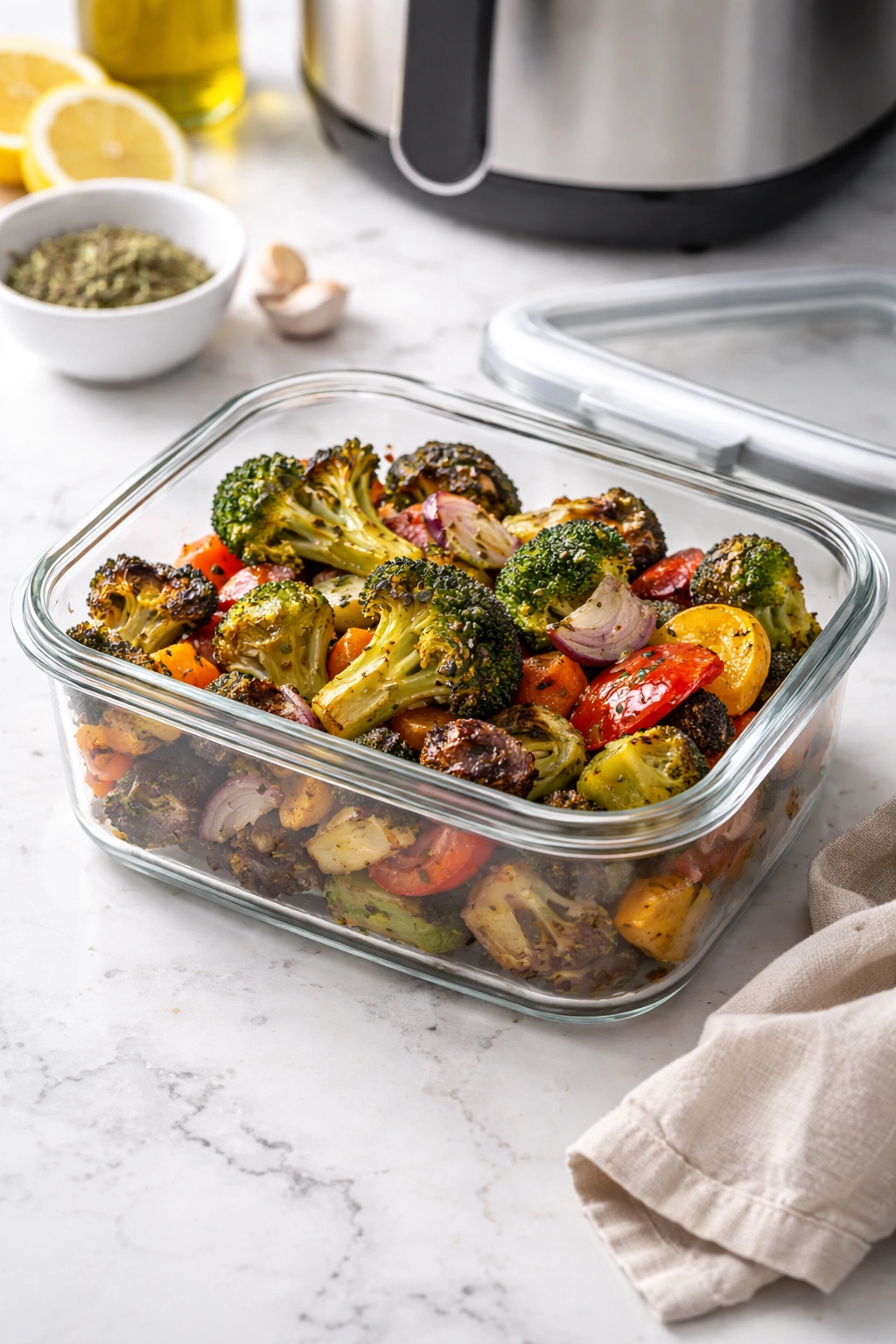
Air fryer vegetables are genuinely best when eaten immediately, while they’re still warm and crispy. But life happens, and sometimes you have leftovers. The good news is that they store and reheat better than oven-roasted vegetables do.
Store leftovers in an airtight container in the refrigerator for up to 3 days. Don’t add fresh garnishes like parsley or lemon juice before storing — these are better added just before serving. If you added Parmesan cheese before storing, it might get a little gummy, so fresh Parmesan after reheating is ideal.
Reheat in the air fryer if you want to restore some of the crispiness. Put the vegetables in your air fryer basket at 375°F for 3-5 minutes, shaking halfway through. This is genuinely the best reheating method and worth the extra 5 minutes. The vegetables come back crispy on the outside and warm throughout.
The microwave works if you’re in a real hurry, but expect the texture to be softer and less appealing. Put the vegetables on a microwave-safe plate, cover loosely with a paper towel, and heat in 1-minute intervals until warm. Check after 1 minute and add more time if needed.
Use leftovers creatively rather than just reheating them as a side dish. Cold roasted vegetables are fantastic on salads, tossed with cooked pasta and olive oil, stirred into grain bowls, added to omelets, or piled into sandwiches and wraps. You can also chop them up and add them to soups, stir-fries, or use them as a pizza topping.
Don’t freeze air fryer vegetables. Unlike some roasted vegetables, these don’t hold up well to freezing because the texture becomes mushy when defrosted. It’s worth just making a fresh batch instead of trying to salvage frozen ones.
Creative Ways to Serve Your Roasted Vegetables
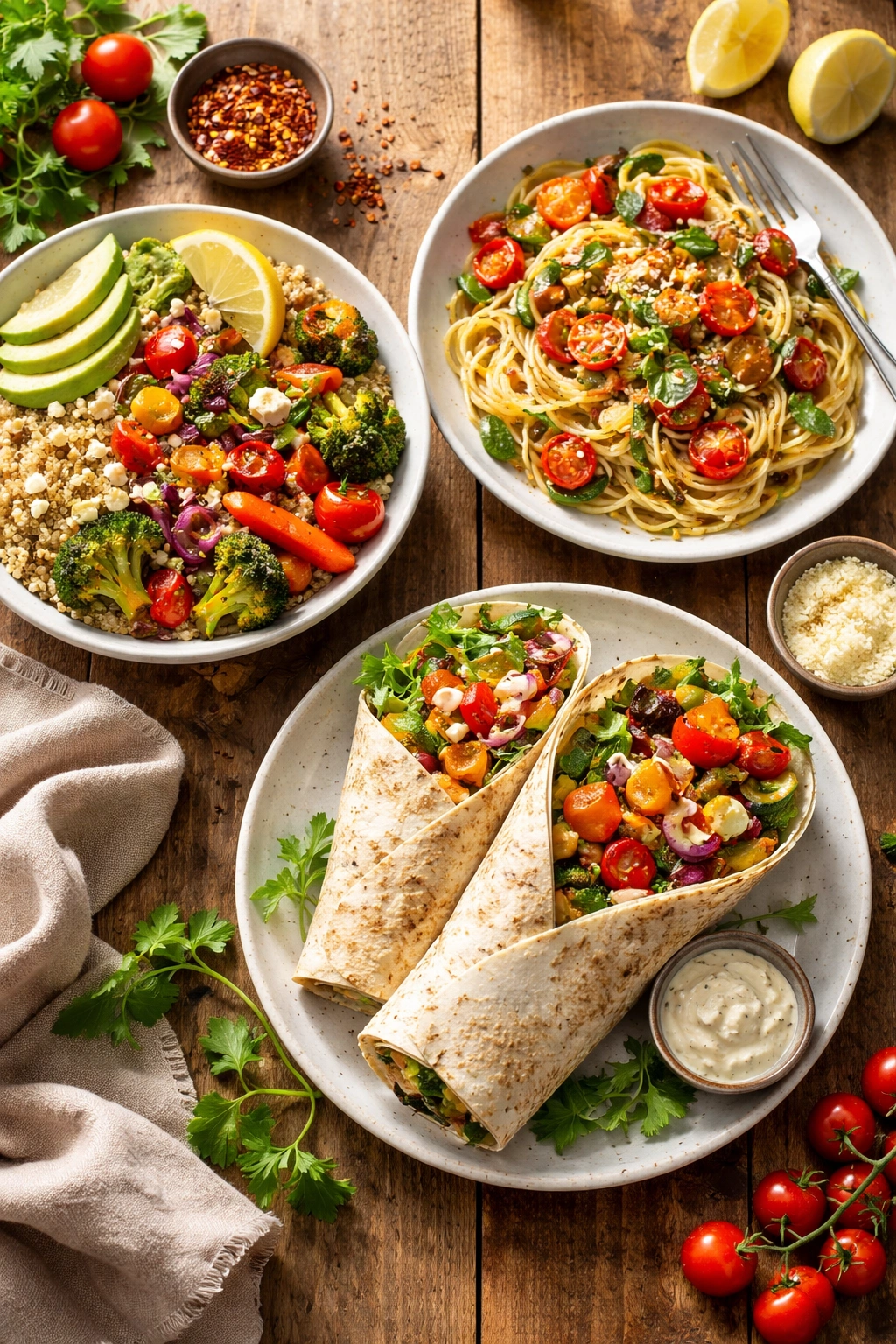
While air fryer roasted vegetables are absolutely delicious as a simple side dish, they’re versatile enough to be the star of the plate in numerous ways. Understanding how to use them beyond the obvious opens up a whole repertoire of dinner ideas.
Grain Bowls are the obvious choice, but they deserve mention because they’re so easy and so good. Serve your roasted vegetables over cooked quinoa, rice, farro, or barley. Add a protein (roasted chickpeas, grilled tofu, shredded chicken), a sauce (tahini dressing, pesto, balsamic glaze), and maybe a sprinkle of nuts or seeds. Suddenly you have a complete, satisfying meal.
Pasta Dishes benefit from roasted vegetables more than most people realize. Toss your vegetables with cooked pasta, olive oil, and a pinch of fresh basil for something rustic and comforting. Or turn them into a light pasta primavera by adding fresh pasta to warm olive oil with your roasted vegetables and a handful of fresh herbs.
Vegetable Sandwiches and Wraps become genuinely exciting when you add roasted vegetables. Spread some hummus or a creamy herb sauce on whole grain bread or in a wrap, add your roasted vegetables, maybe some crumbled feta cheese, and you have a lunch that’s actually satisfying.
Salads are transformed by adding warm (or cooled) roasted vegetables. Toss them with fresh greens, add a simple vinaigrette, maybe some nuts or seeds, and you’ve taken a basic salad from boring to interesting.
Pizza Topping — roasted vegetables on pizza are somehow better than fresh vegetables. Spread some sauce on your crust, add mozzarella and your roasted vegetables, and bake. The vegetables have already developed deep flavors, so they don’t get lost among the other toppings.
Frittatas and Omelets with roasted vegetables inside are restaurant-quality dinners that come together in minutes. The vegetables add flavor, texture, and nutrition without requiring any additional cooking.
Soups and Stews gain depth and character from roasted vegetables. You can add them to minestrone, vegetable barley soup, or even curry. The caramelized flavors they’ve already developed enhance the overall dish.
Final Thoughts
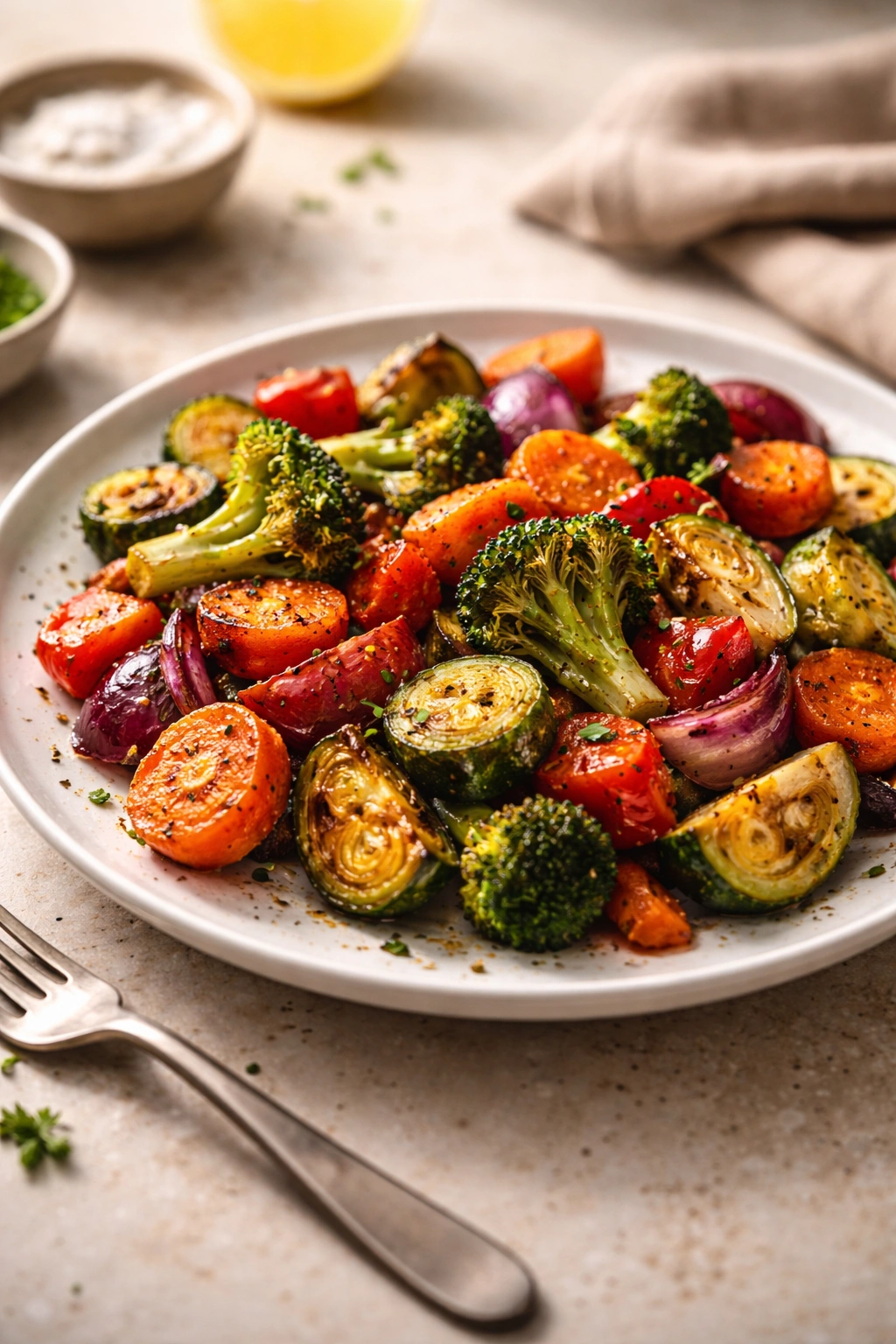
Mastering air fryer roasted vegetables is one of those kitchen skills that pays dividends every single week. You’ve got a technique that produces consistently delicious results, takes about 20 minutes from start to finish, uses minimal oil and cleanup, and adapts endlessly to whatever vegetables you have on hand. You can make these twice a week for months and never get bored because the seasoning possibilities alone are essentially infinite.
The thing that separates good air fryer vegetables from truly crave-worthy ones isn’t complicated. It’s understanding why each step matters — why you don’t overcrowd the basket (hot air circulation), why you pat things dry (browning happens faster on dry surfaces), why you toss at the halfway point (even cooking), and why you use just a light coating of oil (less oil equals more crispy, less soggy).
Start with the base recipe and the Mediterranean seasoning combination if you’re new to this. Master that technique, nail those timings for your specific air fryer, and then start playing with different flavor combinations. Try the smoky and spicy version next, then explore the garlic herb blend. Before you know it, you’ll have a repertoire of air fryer vegetable recipes that feel as natural as boiling water.
