



There’s something almost magical about biting into a warm muffin and discovering a pocket of tangy cream cheese mixed with burst blueberries. These soft blueberry cream cheese muffins deliver that exact experience — a tender crumb studded with tart-sweet berries, ribbons of rich cream cheese swirled throughout, and a subtle vanilla warmth that ties everything together. Unlike dense, dry muffins that leave your mouth feeling parched, these stay impossibly moist for days, thanks to a combination of sour cream and cream cheese in the batter. They’re the kind of breakfast that makes people ask for the recipe before they’ve even finished the first muffin.
This is the recipe I’ve refined over years of weekend baking, tweaking proportions and techniques until I found the exact formula that produces a muffin with the crumb structure you actually want — soft and tender, not cakey, not gummy, just right. The cream cheese doesn’t get lost or turn into hard little pockets; instead, it melts into the batter and creates this luxurious richness that makes them feel special without requiring any complicated technique. Even if you’ve never made a muffin that impressed you before, these will change that.
What Makes These Muffins Special
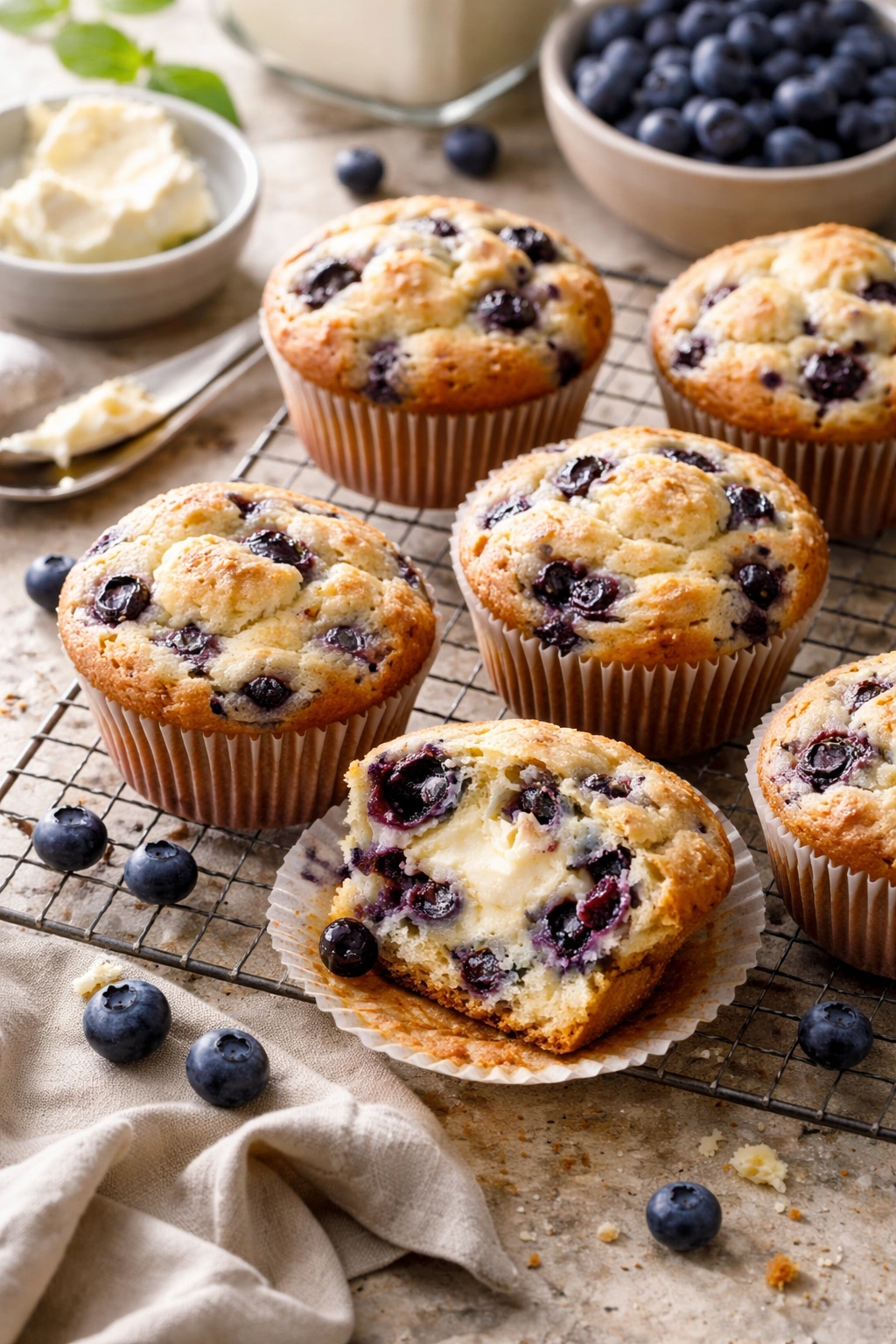
The magic here comes from using both cream cheese and sour cream in the batter, a technique that most basic muffin recipes skip. Sour cream adds moisture and a subtle tang that prevents the blueberries from tasting one-dimensional, while cream cheese contributes tenderness and that signature rich flavor that makes people think you spent way more time on these than you actually did. The acidity from both ingredients also reacts with the baking soda, creating lift without making the muffin crumb too open or airy — you get density that feels substantial without heaviness.
The second secret is folding fresh blueberries into the batter gently and coating them lightly in flour before adding them. This prevents them from sinking to the bottom, so you get blueberries distributed throughout every bite rather than a cluster at the base. If you’ve ever had a muffin where all the good fruit is at the bottom, this technique completely fixes that problem.
The third thing that sets these apart is the swirl of cream cheese filling. Rather than mixing it into the batter (which can make the texture grainy), you dollop batter into the muffin cup, add a spoonful of sweetened cream cheese, then top with more batter. This creates distinct layers of flavor and texture — you bite through tender muffin and hit pockets of creamy, tangy filling that feel intentional and decadent.
Yield: Makes 12 large muffins Prep Time: 15 minutes Cook Time: 22 to 26 minutes Total Time: 40 to 45 minutes Difficulty: Beginner — The technique is straightforward, you need just one bowl and a muffin tin, and the results are reliable every single time.
Ingredients
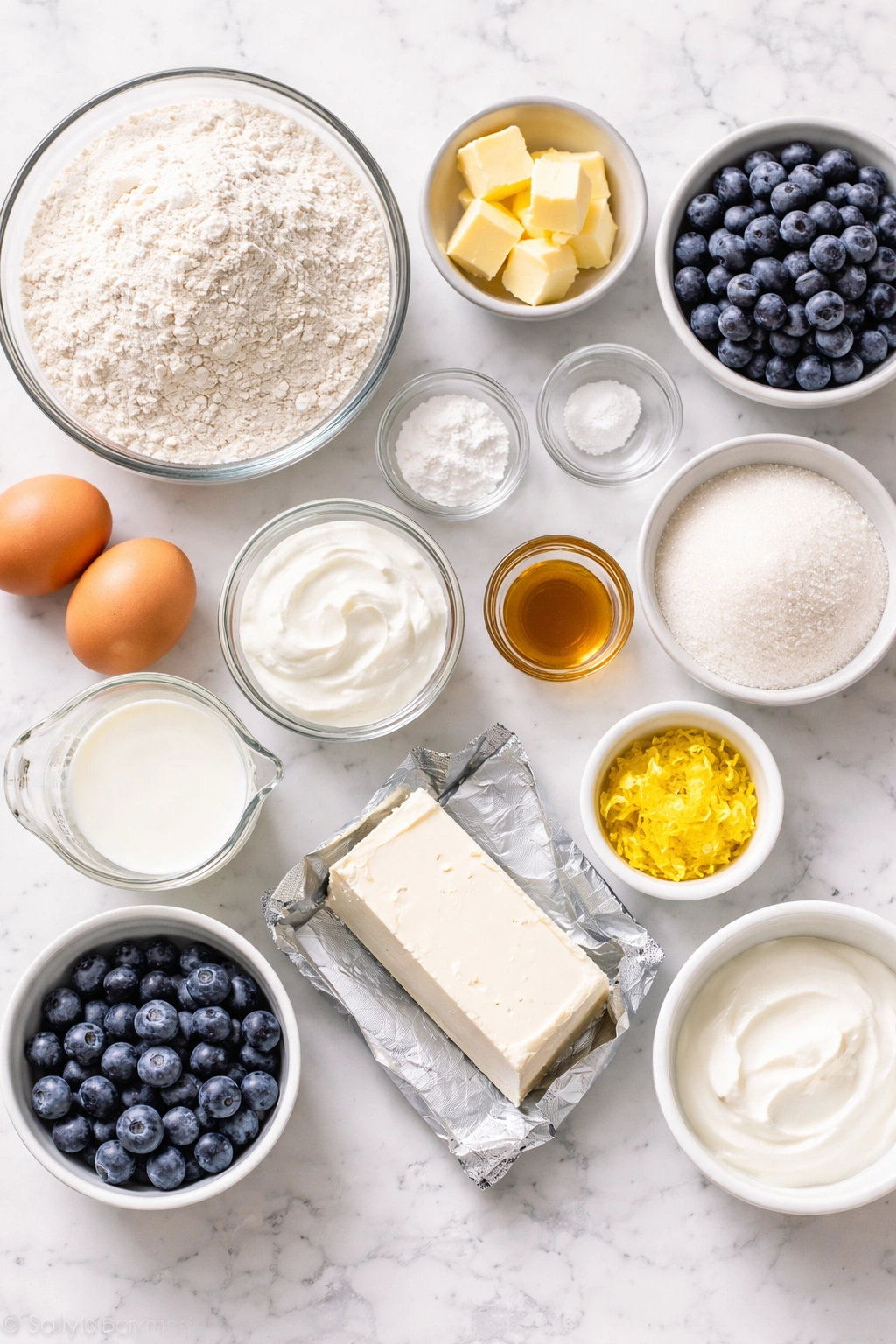
For the Muffin Batter:
- 2¼ cups all-purpose flour
- 1¾ teaspoons baking powder
- ½ teaspoon baking soda
- ½ teaspoon fine sea salt
- ½ cup (1 stick) unsalted butter, softened to room temperature
- ¾ cup granulated sugar
- 2 large eggs, room temperature
- ½ cup sour cream (full-fat works best; don’t use fat-free)
- ½ cup plain whole milk
- 1½ teaspoons pure vanilla extract
- ½ teaspoon lemon zest (optional but recommended — it brightens the blueberry flavor)
- 1¾ cups fresh blueberries (frozen blueberries work; do NOT thaw them)
- 2 tablespoons all-purpose flour (for coating the blueberries)
For the Cream Cheese Filling:
- 4 ounces cream cheese (Philadelphia or store brand), softened to room temperature
- ¼ cup powdered sugar, sifted
- ½ teaspoon vanilla extract
Optional Topping:
- 1 tablespoon coarse sugar (demerara or sanding sugar) mixed with ½ teaspoon ground cinnamon (this adds a subtle crunch, but it’s entirely optional)
Equipment and Prep
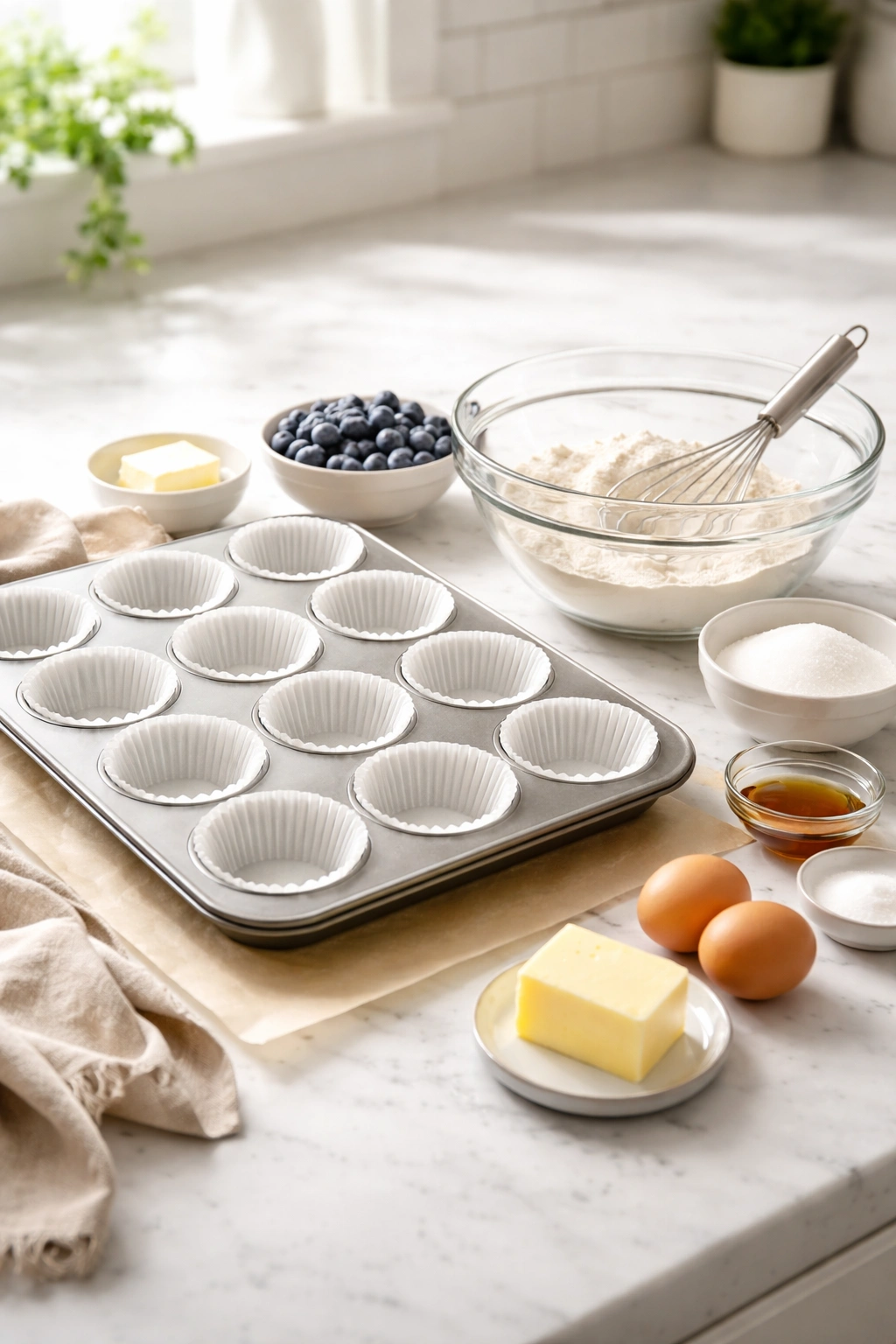
You’ll need a standard 12-cup muffin tin and paper liners or butter for greasing. Preheat your oven to 375°F (190°C) and position the rack in the center — this ensures even, gentle baking without the tops browning too fast.
Before mixing anything, make sure your cream cheese and butter are truly softened. Cold cream cheese will be lumpy in the filling and won’t fold smoothly into the batter, and cold butter won’t cream properly. Set them on the counter for 30 minutes if they’re straight from the fridge.
Measure your dry ingredients first — flour, baking powder, baking soda, and salt — and whisk them together in a medium bowl. This distributes the leavening agents evenly and prevents lumps. It takes 30 seconds and makes a real difference in texture.
Prepare the Cream Cheese Filling
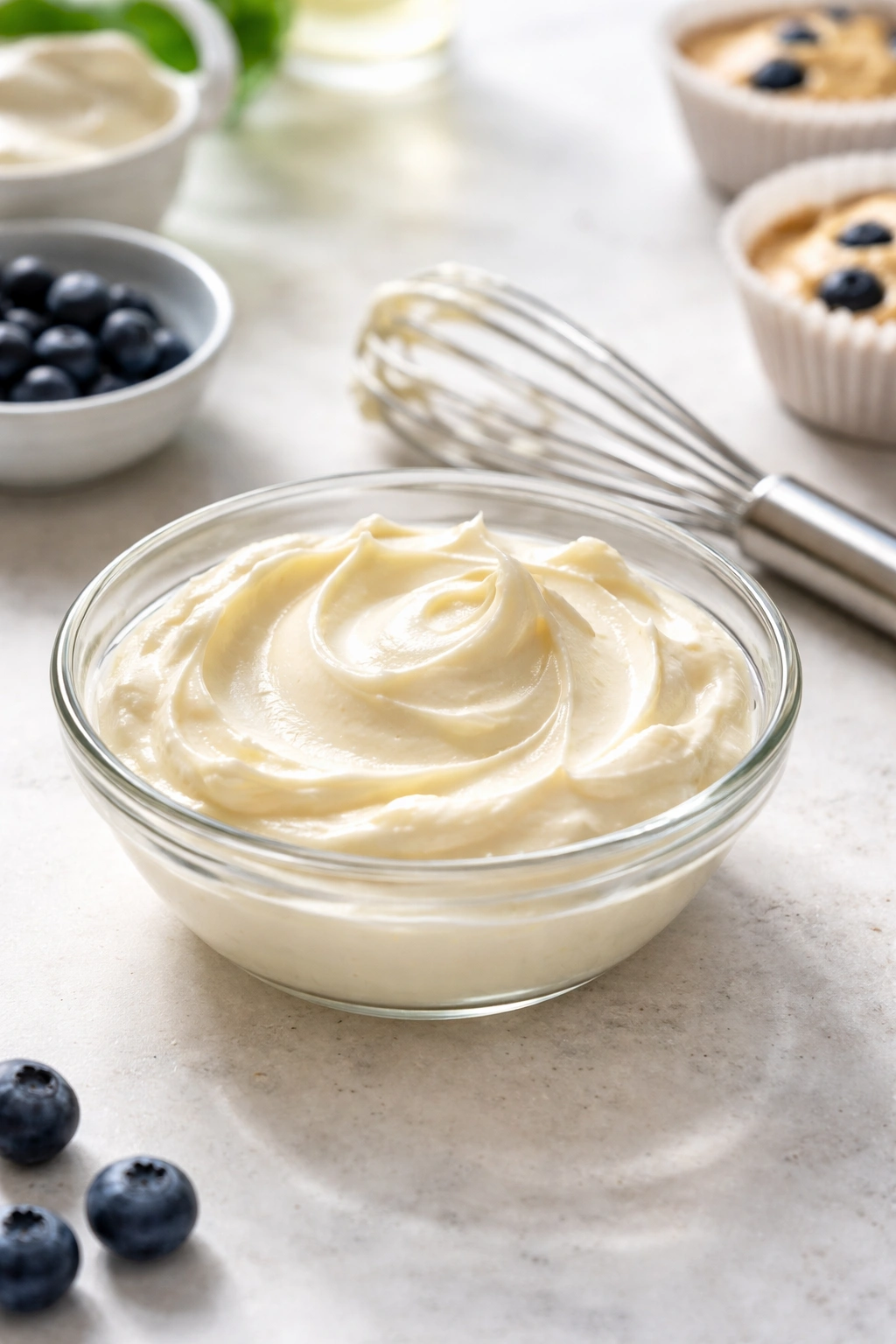
In a small bowl, whisk together the softened cream cheese, powdered sugar, and vanilla extract until completely smooth with no lumps. If there are any cream cheese chunks, press them against the side of the bowl with the back of a spoon and whisk until they disappear. This filling should be thick but spreadable — not stiff, not runny. Set it aside.
Make the Muffin Batter
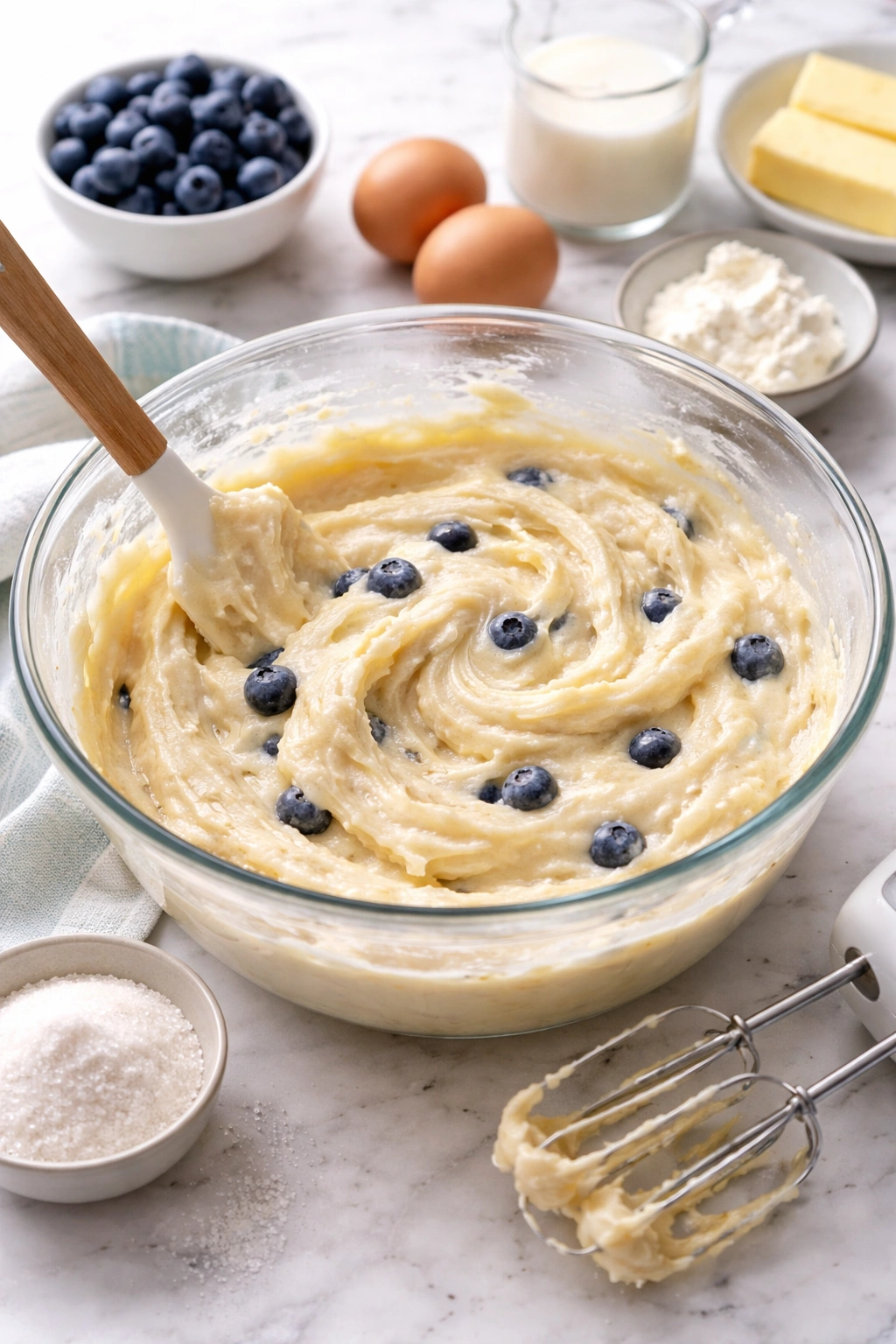
In a large bowl, beat the softened butter and sugar together on medium speed with a hand mixer (or using a stand mixer with the paddle attachment) for 2 to 3 minutes, until the mixture is noticeably pale, fluffy, and increased in volume — it should look like wet sand that’s been whipped into soft clouds. This step is crucial because it incorporates air, which creates lift and a tender crumb.
Add the eggs one at a time, beating for 30 seconds after each addition and scraping down the sides of the bowl with a rubber spatula. The batter may look slightly broken or curdled at this point — that’s completely normal and will come together in the next step.
Reduce the mixer to low speed. Add the flour mixture in three additions, alternating with the sour cream and milk in two additions. The pattern is: flour — sour cream mixture — flour — milk — flour. Mix only until each addition just disappears into the batter. Do not overmix — overworking the batter develops gluten and makes the muffins tough and dense rather than tender.
Remove the bowl from the mixer and fold in the vanilla extract and lemon zest with a rubber spatula, using about 10 gentle folds.
Prepare the Blueberries and Fill the Tins
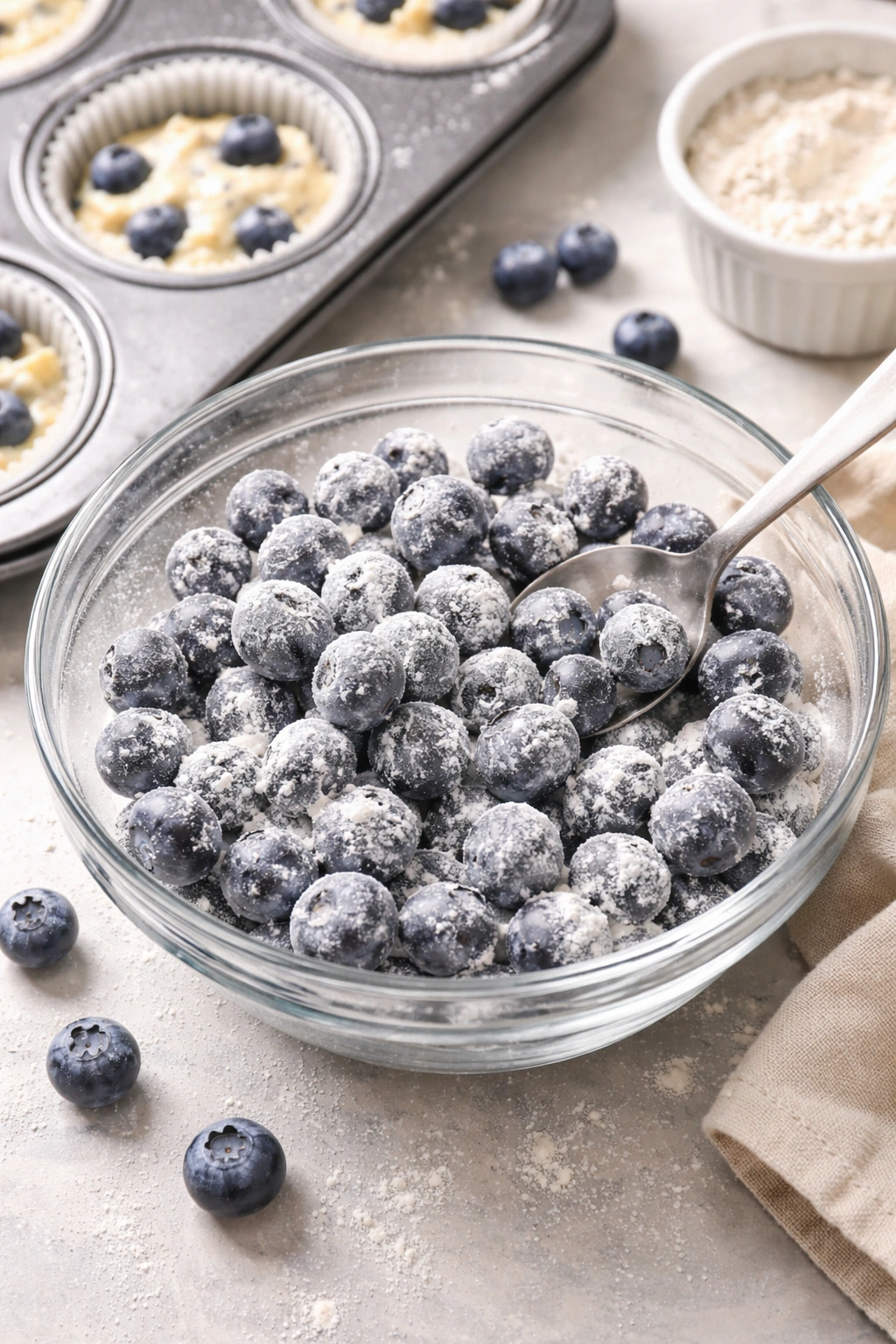
Toss the blueberries with the 2 tablespoons of flour in a small bowl. This coating prevents them from sinking to the bottom and also prevents them from all sticking together in one clump. Fold them gently into the batter using about 8 to 10 folds — use a gentle hand and fold only until they’re distributed, without crushing any berries.
Line your muffin tin with paper liners or lightly grease each cup with butter. Divide the batter among the 12 cups, filling each about one-third full. Spoon about 1 tablespoon of the cream cheese filling onto the center of the batter in each cup. Top with the remaining batter, filling each cup about three-quarters full. The cream cheese should be completely covered and hidden inside the batter.
If you’re using the optional cinnamon-sugar topping, sprinkle a tiny pinch on the top of each muffin now — you don’t need much, just enough to catch the light and add visual interest.
Bake Until Golden
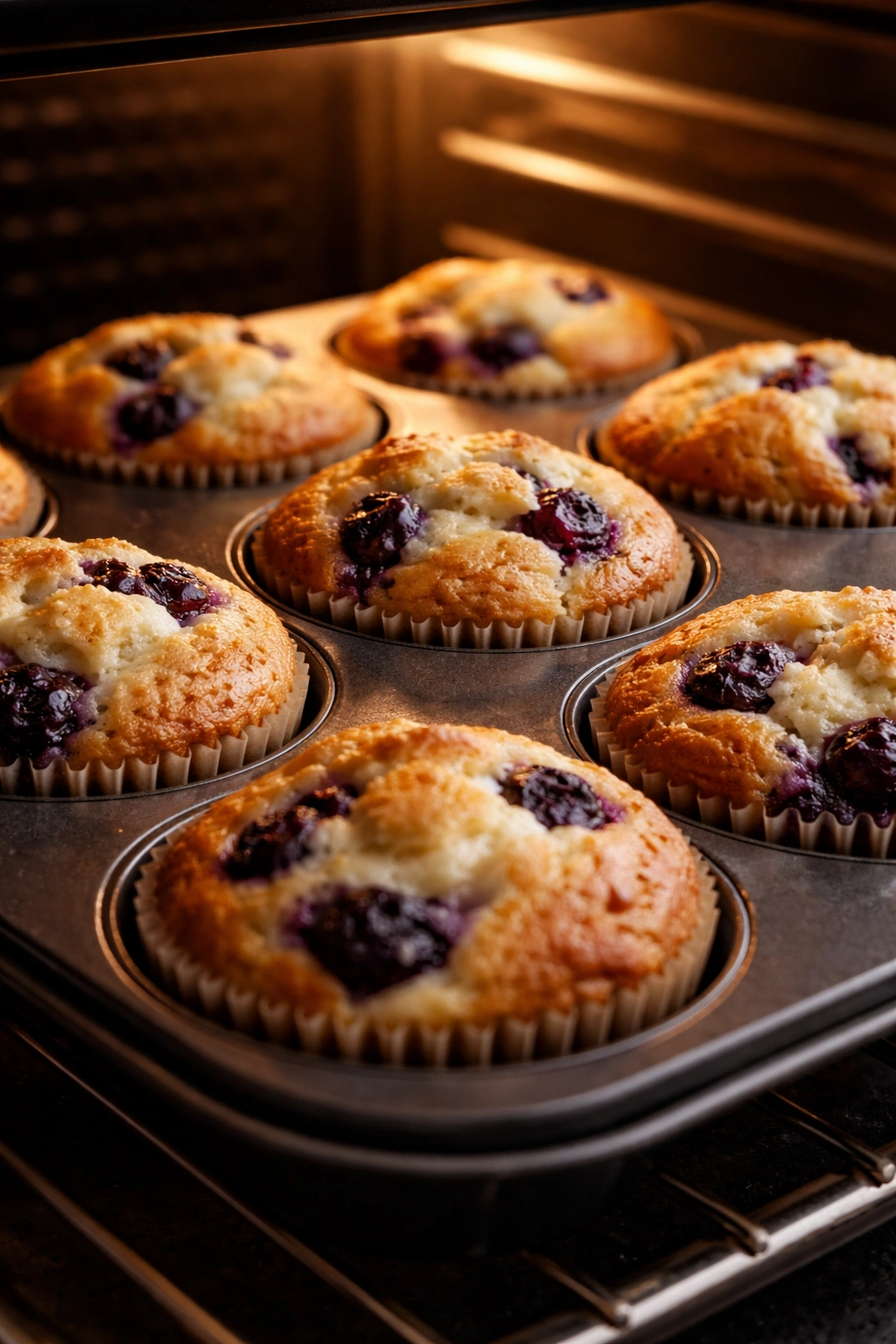
Bake for 22 to 26 minutes, rotating the tin halfway through (around the 12-minute mark), until the tops are deep golden brown and a toothpick inserted into the thickest part of a muffin (avoiding the cream cheese center) comes out clean or with just a few moist crumbs clinging to it. Do not bake longer — the goal is a moist crumb, and even 2 minutes too long can dry them out.
Remove the tin from the oven and set it on a wire cooling rack. Let the muffins cool in the tin for 5 minutes — this allows them to set slightly and makes them easier to remove without crumbling. After 5 minutes, gently lift each muffin (still in its liner) out of the tin and set it on the cooling rack to cool completely.
Tips for Perfect Muffins
Use room-temperature ingredients without exception. Cold eggs, cold butter, and cold cream cheese won’t combine smoothly, and they’ll make the batter lumpy and the crumb dense. A quick way to bring eggs to room temperature is to set them in a bowl of warm (not hot) water for 3 minutes. For butter and cream cheese, set them on the counter for 30 minutes.
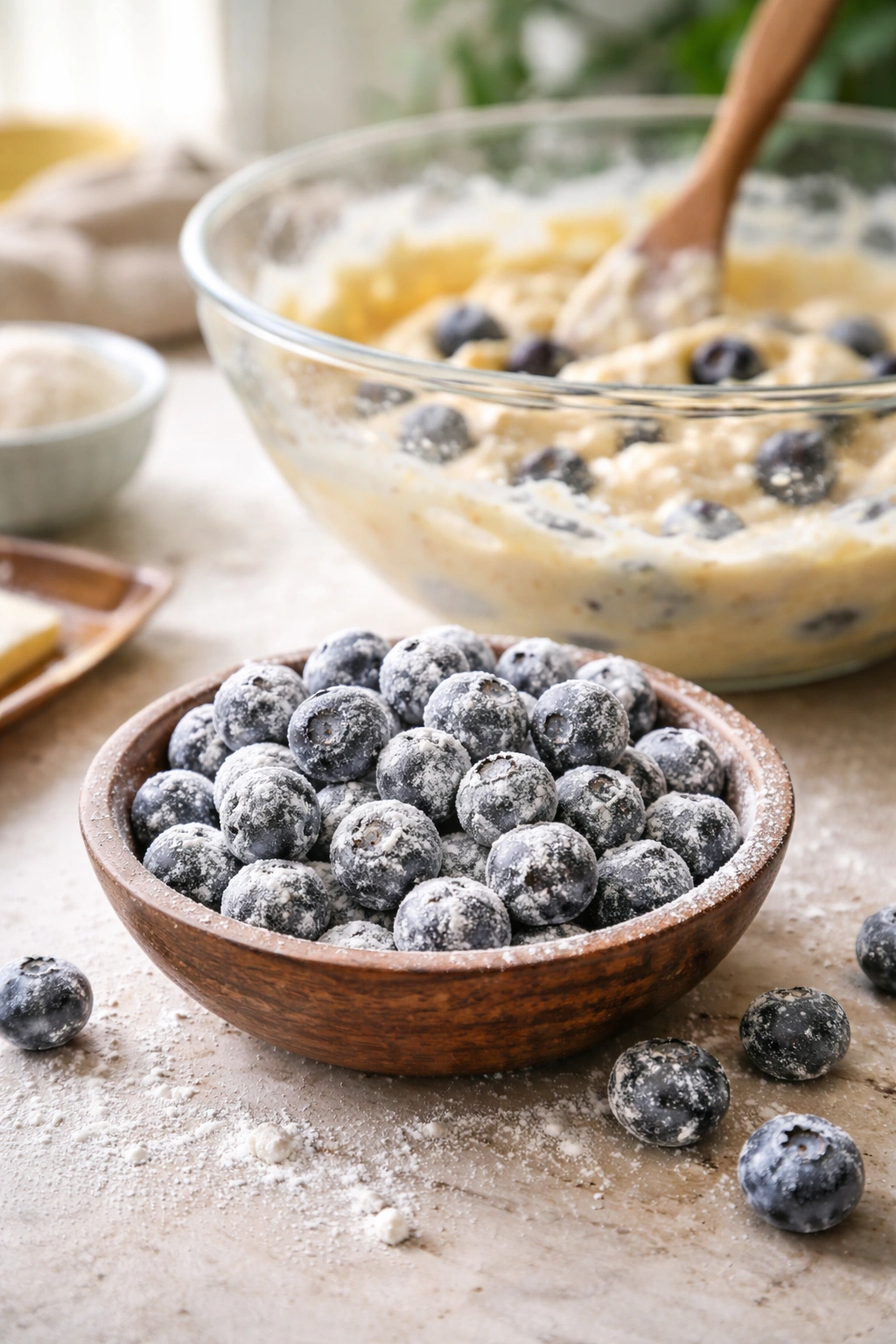
Don’t skip the step of tossing blueberries in flour. It seems small, but it genuinely prevents them from all sinking to the bottom. The flour coating sticks to the moisture on the berries and keeps them suspended in the batter as it bakes.
Watch your oven temperature carefully. If your oven tends to run hot, bake at 370°F instead of 375°F. If it runs cold, 380°F is fine. A muffin that’s overbaked is dry — a muffin that’s underbaked is gummy. The toothpick test is your friend: it should come out clean or with a few moist crumbs, never with batter clinging to it.
Don’t open the oven door before the 20-minute mark. The sudden temperature drop can cause the muffins to collapse or bake unevenly. If you need to rotate the tin, do it quickly.
Fill any empty muffin cups halfway with water. This ensures even heat distribution and prevents the tin from warping. If you’re baking a full tin of 12, you don’t need to do this, but if you’re making a smaller batch and some cups are empty, water in the empty cups helps a lot.
Common Mistakes to Avoid
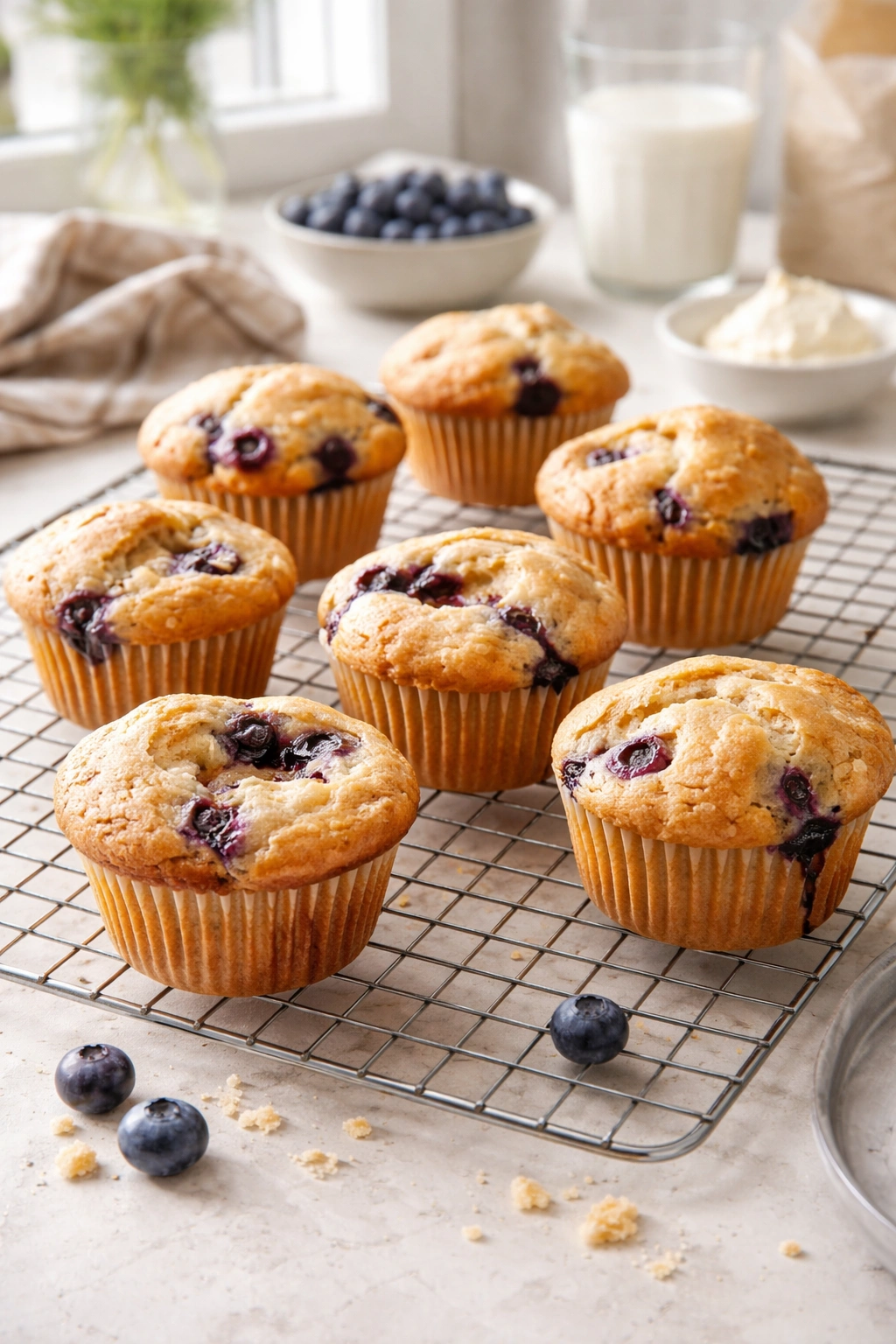
The batter looks curdled after adding the eggs. This happens when the eggs are too cold or when you add them too quickly. It looks scary but it’s not actually a problem — it will come together completely once you add the flour. If you’re worried, warm the bowl slightly by running it under warm water and wiping it dry before continuing.
Blueberries are sinking to the bottom. You either didn’t coat them with flour or you folded them in too vigorously, crushing them and releasing moisture that makes them heavier. Next time, toss them in flour and fold them in gently with a light hand.
The muffin tops are browning too fast. Your oven runs hot, or you’ve filled the cups too full. Lower the temperature by 5 degrees, or try baking on the middle rack if you were using a higher rack. If the tops are browning but the inside isn’t done, you can loosely tent the tin with foil for the last 5 minutes.
The muffins are dry or cakey. You likely overbaked them or overmixed the batter. Check your oven temperature with a separate oven thermometer — many ovens are inaccurate. Use the toothpick test religiously: pull them out at 22-24 minutes, not 26. And remember: less mixing is better. Mix only until the flour disappears; don’t overbeat.
The cream cheese filling turned hard and isn’t creamy. You didn’t soften it enough before making the filling. Cream cheese needs to be truly soft — almost the same consistency as butter. If it was too cold, the filling bakes differently and becomes grainy rather than rich. Next time, soften it for a full 30 minutes on the counter.
Flavor Variations to Try

Lemon blueberry: Add 1 tablespoon of fresh lemon juice to the batter along with the zest, and add ½ teaspoon of lemon extract along with the vanilla. This makes the blueberry flavor pop and adds brightness.
Blueberry brown butter: Brown the butter before creaming it with the sugar. Melt ½ cup butter in a saucepan over medium heat and swirl frequently until it smells nutty and the milk solids are golden brown (about 5-7 minutes). Let it cool completely, then use it in place of regular softened butter. This adds a sophisticated, toasty depth.
Honey-blueberry: Replace ¼ cup of the sugar with ¼ cup of honey. This adds a subtle floral note and keeps the muffins slightly moister. Honey browns a bit more easily, so watch them carefully — they may be done a minute or two earlier.
Blueberry with almond: Add ½ teaspoon of almond extract along with the vanilla, and swirl 2 tablespoons of almond butter into the cream cheese filling in place of using all cream cheese. The almond flavor complements blueberry beautifully and adds richness.
Triple berry: Use ¾ cup blueberries, ½ cup raspberries, and ½ cup blackberries instead of all blueberries. Toss all of them together in flour before folding into the batter. Fresh berries work best here — frozen berries of mixed types can get mushy. The tartness of raspberries and blackberries plays really well against the blueberries.
Cardamom blueberry: Add ½ teaspoon of ground cardamom to the dry ingredients. Cardamom is subtle but magical with blueberries, especially if you also add the lemon zest. This version feels more sophisticated and grown-up.
Dietary Adaptations
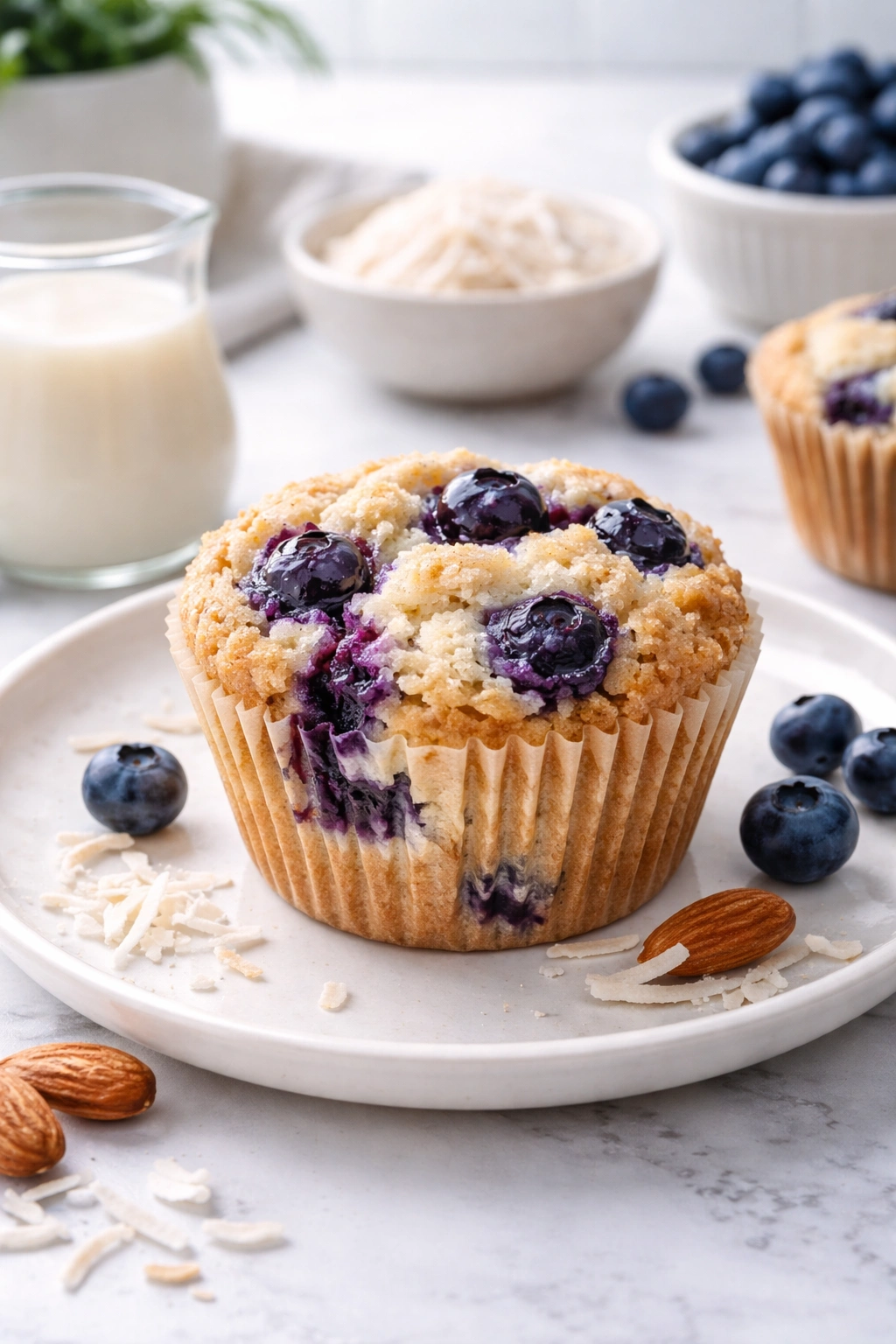
Gluten-free: Replace the all-purpose flour with a 1:1 gluten-free baking flour blend and the 2 tablespoons of flour for coating the blueberries with rice flour (not a blend — just plain rice flour). Reduce the baking soda to ¼ teaspoon and increase the baking powder to 2 teaspoons. Gluten-free blueberry muffins can be trickier to get right, but these proportions work well. The crumb will be slightly less tender than the original, but still very good. You may need to add 1 extra tablespoon of milk if the batter looks too thick.
Dairy-free: Replace the butter with coconut oil or dairy-free butter, the sour cream with dairy-free sour cream or coconut cream, and the milk with almond milk or oat milk. For the cream cheese filling, use dairy-free cream cheese (the Kite Hill brand works very well). The muffins will be slightly different in flavor and texture — dairy-free versions tend to be a bit less tender — but they’re still delicious and no one will feel like they’re missing out.
Vegan: Follow the dairy-free substitutions above, and replace the eggs with 2 tablespoons of ground flaxseed mixed with 6 tablespoons of warm water, letting it sit for 5 minutes before adding to the batter. The texture won’t be quite as tender as the original, but the flavor is still really good, and these hold together well.
Lower sugar: Reduce the sugar in the batter to ½ cup and the powdered sugar in the cream cheese filling to 2 tablespoons. These won’t be quite as sweet, but the natural sweetness of the blueberries comes through more clearly. They’re still delicious and not aggressively tart.
Storage and Make-Ahead Guidance
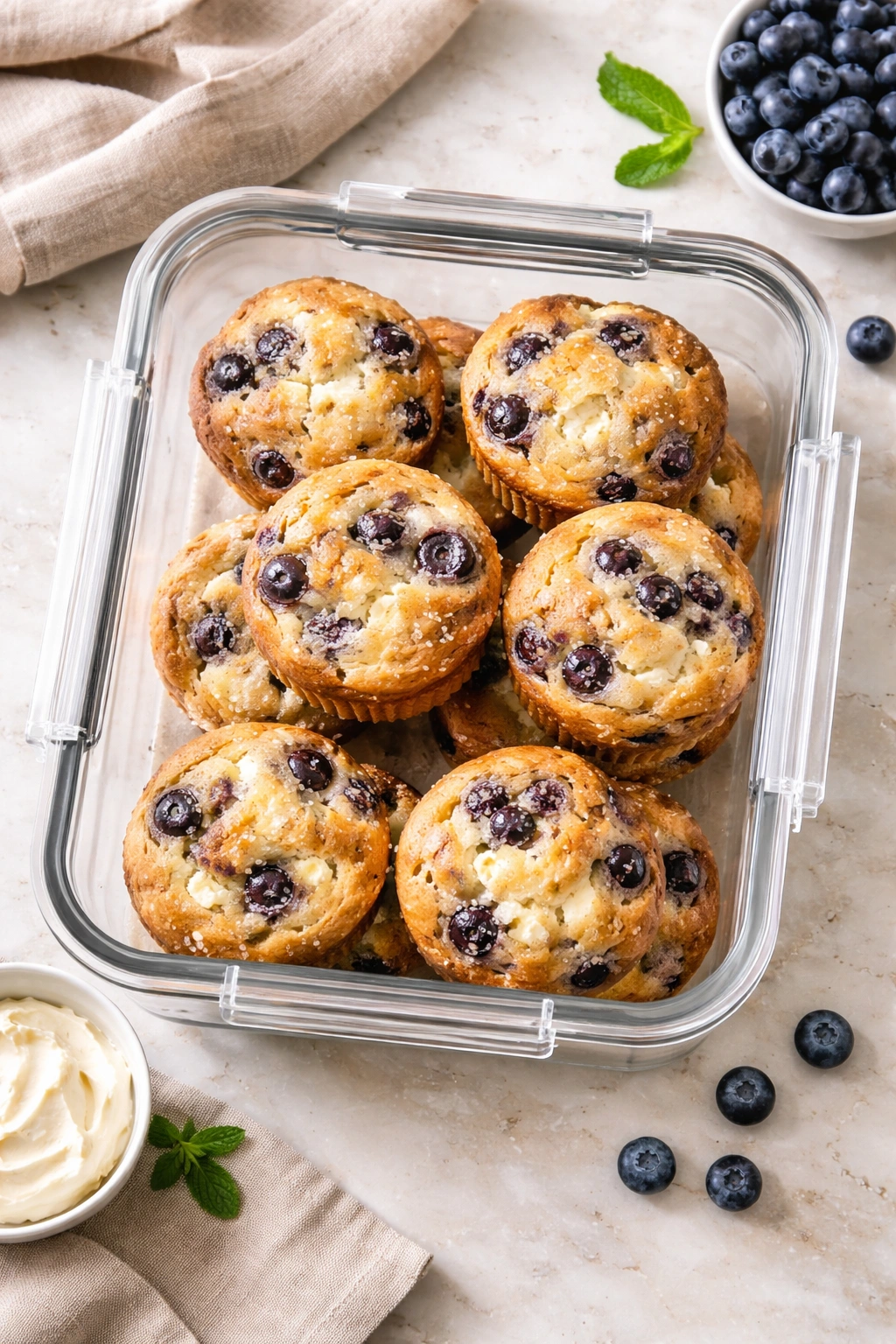
At room temperature: Muffins stay fresh in an airtight container at room temperature for up to 2 days. After that, they start to dry out slightly, though they’re still perfectly edible.
In the refrigerator: Store in an airtight container for up to 4 days. Refrigerated muffins actually stay moister than room temperature muffins for the first few days, which is great if you like to eat them cold or reheat them. They don’t dry out in the fridge the way they do on the counter.
In the freezer: These freeze beautifully for up to 3 months. Wrap cooled muffins individually in plastic wrap, then place them in a freezer bag with the air pressed out. To thaw, unwrap a muffin and let it sit on the counter for 30 minutes, or microwave it for about 30 seconds until warm.
Reheating: Warm refrigerated or frozen muffins in a 325°F oven for about 8 minutes, wrapped loosely in foil. This restores moisture better than a microwave, though microwaving one muffin for 15-20 seconds also works if you’re in a hurry. Do not overheat — the cream cheese can become too soft and the muffin can get rubbery.
Make-ahead strategy: You can make the muffins the night before, cool them completely, and store them in an airtight container. They’re perfect for grab-and-go breakfasts all week. You can also prepare the batter and cream cheese filling separately the night before, keep them covered in the fridge, and bake them fresh in the morning — the batter will be cold, so add 2 minutes to the baking time, and make sure to bring the cream cheese filling to room temperature (or it might not swirl smoothly).
Serving Suggestions and Pairings
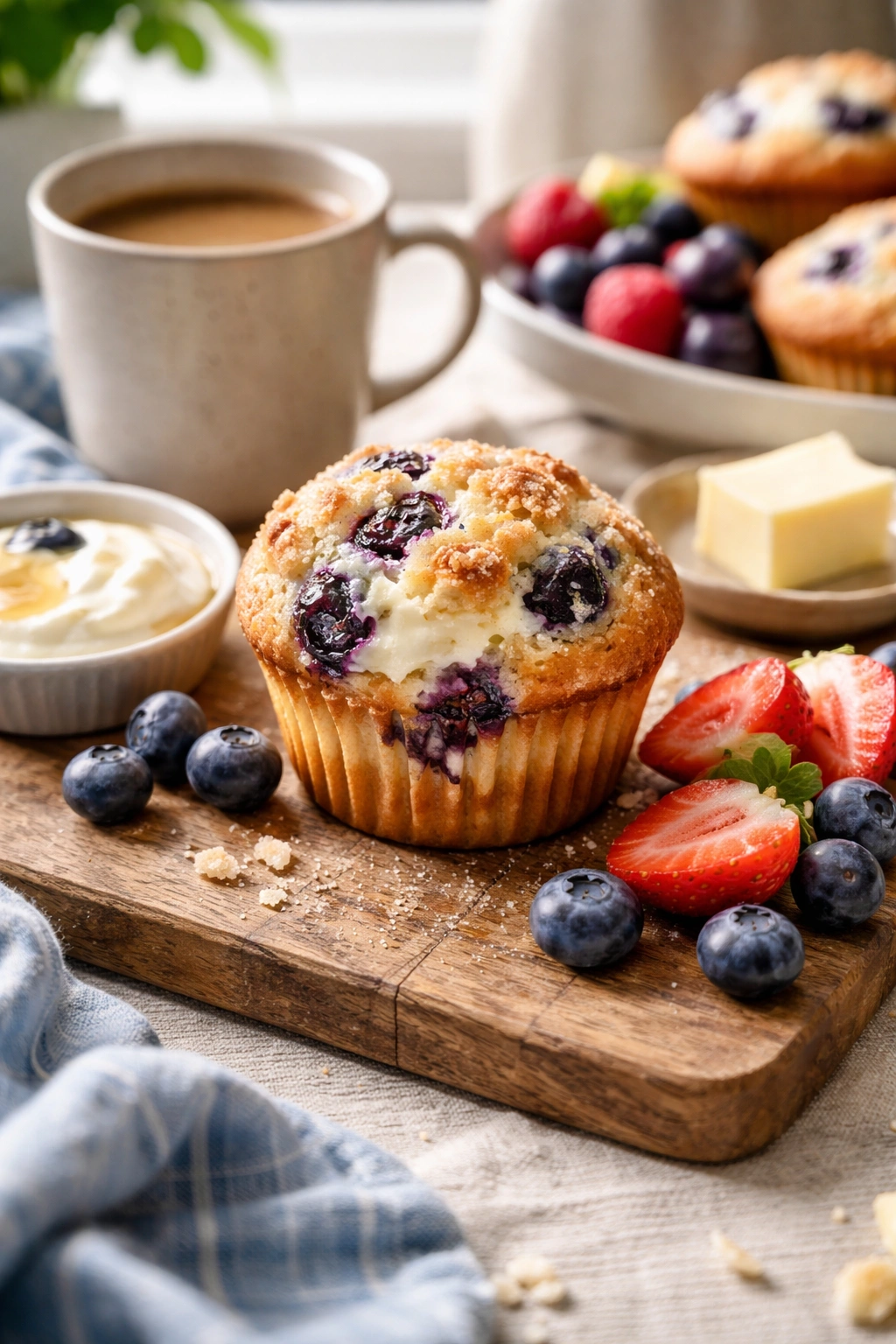
Serve these warm or at room temperature with strong coffee — the tartness of the blueberries and richness of the cream cheese really shines against dark roast. They’re also excellent with hot tea, especially Earl Grey or chamomile.
A simple schmear of butter on a warm muffin is perfect, or skip the butter and enjoy the cream cheese that’s already baked in. If you want to get fancy, a dollop of whipped cream on top or a dusting of powdered sugar makes them feel like dessert for breakfast.
Pair them with fresh fruit on the side — sliced strawberries, fresh peaches in season, or a simple green salad with a light vinaigrette if you want to balance the richness. They’re also great alongside a yogurt parfait or soft scrambled eggs if you’re making a breakfast spread.
For brunch, these work beautifully on a table with smoked salmon, cream cheese, capers, and bagels — the flavors complement each other. Or serve them at a bake sale alongside other breakfast treats; they always sell out first.
You can eat these on their own as a breakfast or snack, or serve them alongside other pastries. They hold their own alongside croissants or Danish pastries because the blueberry and cream cheese flavors are bold enough to stand out, not fade into the background.
Final Thoughts
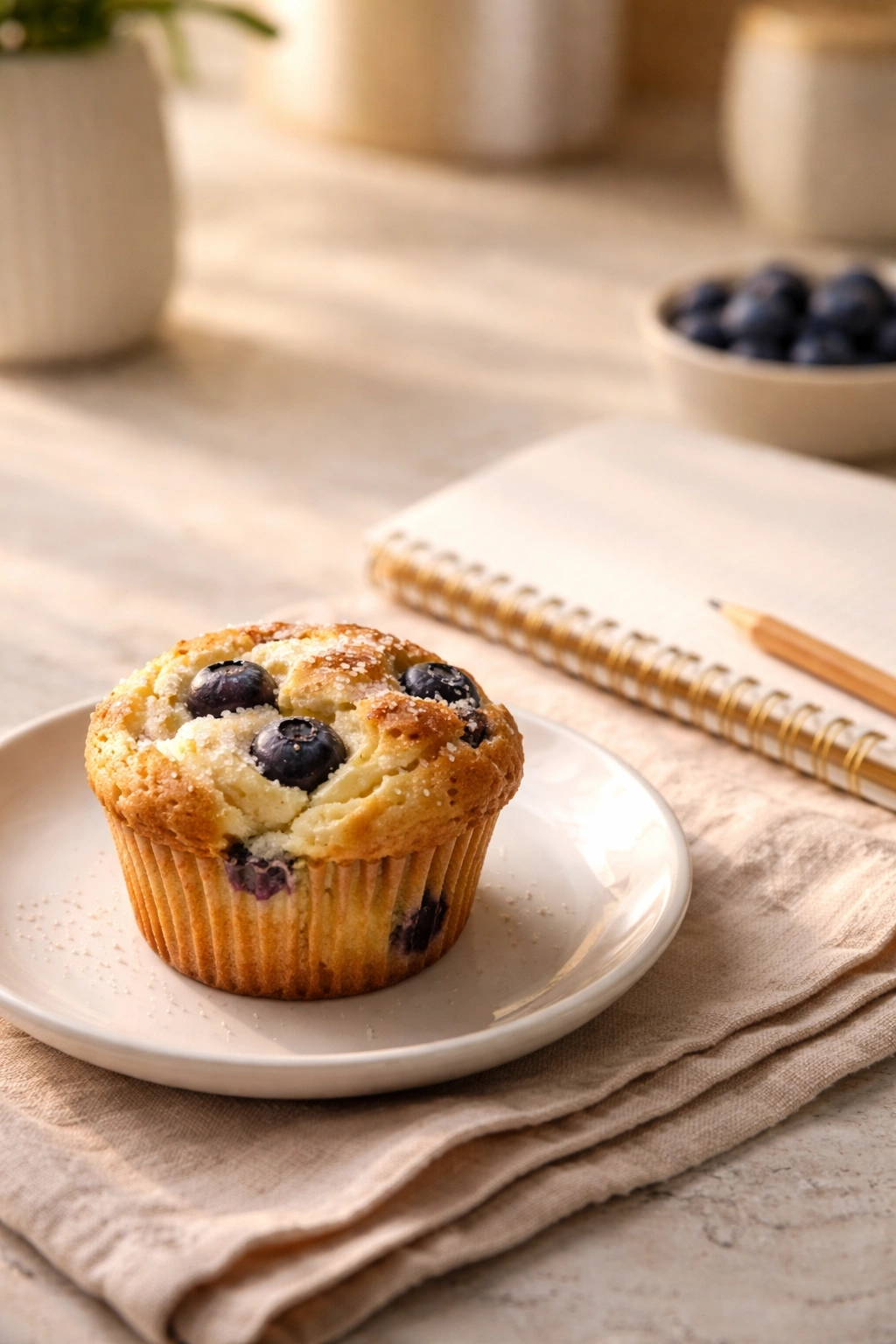
These muffins hit that sweet spot between approachable and impressive. They don’t require any special equipment or advanced technique, they use ingredients you probably already have, and they come together in under an hour from start to finish. Yet they taste like you spent hours perfecting them.
The reason these become a go-to recipe isn’t because they’re trendy or complicated — it’s because they work. Every single time you make them, you get tender, moist, flavorful muffins with hidden cream cheese pockets that make people smile. You can make a batch on Sunday for the week ahead, or bake them fresh on Saturday morning. You can adapt them with different flavors or dietary substitutions without losing what makes them great.
If you’ve been disappointed by dense, dry, boring muffins in the past, this recipe will change your perspective. Once you bite into one of these, warm from the oven with the cream cheese still soft and the blueberries still tart-sweet, you’ll understand why they’re worth keeping in your regular rotation.
