



Tuna noodle casserole might be the ultimate dish that bridges generations. It sits at the intersection of nostalgia and practicality—a recipe that tastes like a specific memory for almost everyone who eats it. Whether it’s the creamy sauce clinging to tender egg noodles, the sweet green peas scattered throughout, or that satisfying crunch of the buttery breadcrumb topping, there’s something about this casserole that transports people back to their mother’s kitchen, their grandmother’s table, or an imagined version of home that feels deeply familiar regardless.
The beautiful part? This isn’t a complicated dish masquerading as comfort food. It’s genuinely straightforward to make, which is precisely why it’s been a family staple for generations. Yet there are meaningful differences between a truly exceptional version—one that’s creamy without being heavy, flavorful without being fishy, and properly textured throughout—and the versions that disappoint. The secrets aren’t complicated, but they matter.
This guide will walk you through making a tuna noodle casserole that tastes like the best version you remember, whether you’re recreating a family recipe or discovering this classic for the first time. We’ll focus on ingredient quality, technique nuances, and the small decisions that make an outsized difference in the final result.
The Story Behind This Comfort Food Classic
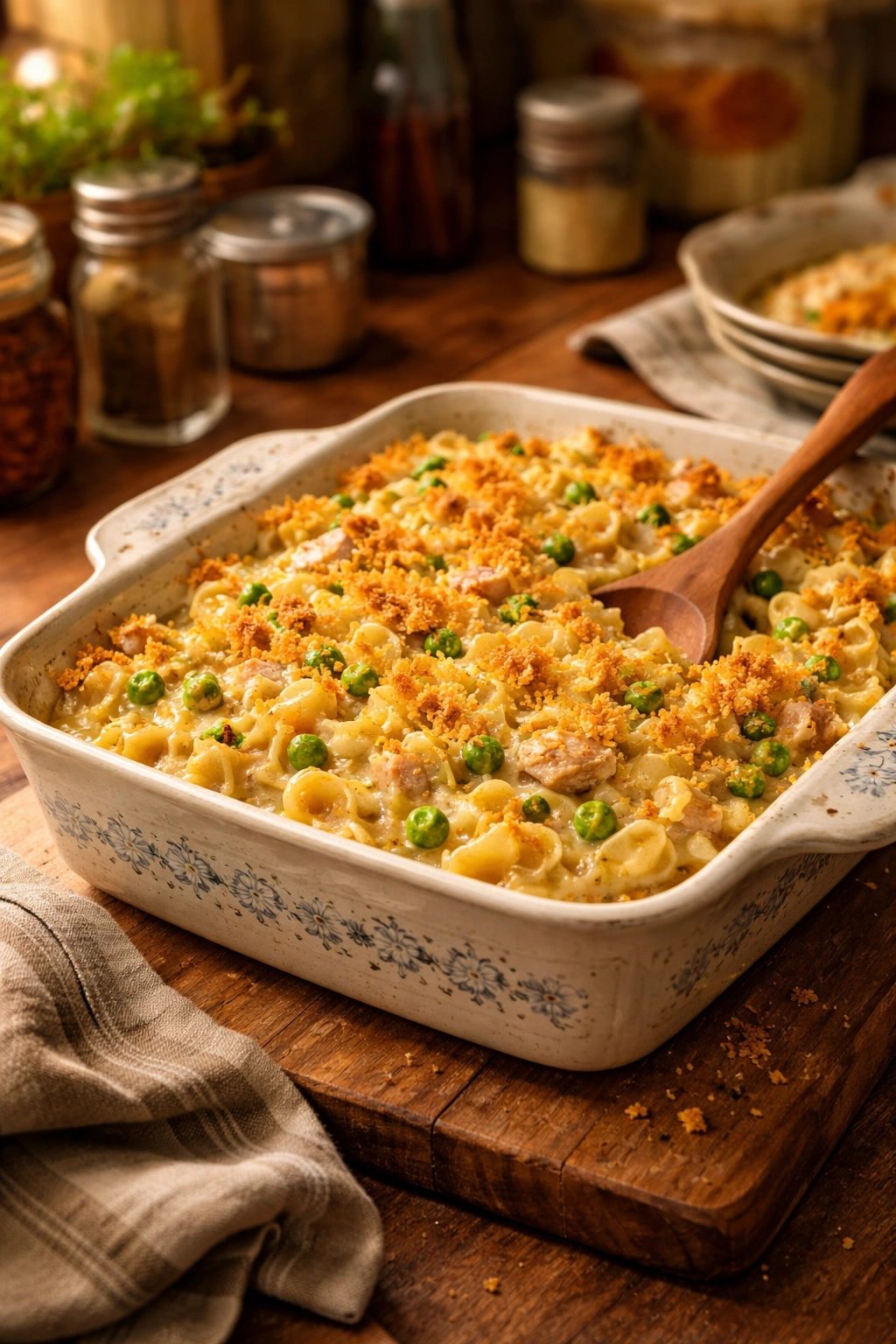
Tuna noodle casserole emerged in the United States somewhere around the mid-twentieth century, born from a particular moment in American culinary history. Families needed quick, budget-friendly meals that could feed everyone without requiring elaborate techniques or expensive ingredients. Condensed cream soups became pantry staples that simplified sauce-making, canned tuna offered affordable protein, and pasta provided substance.
The formula stuck because it worked. It still works. For Catholics observing meatless Fridays, tuna casserole became a tradition that persisted long after the rule relaxed. For working parents managing tight schedules and tighter budgets, it represented a weeknight dinner solution that didn’t feel like sacrifice. For children growing up in these homes, the casserole became a taste-memory that shaped what “comfort food” meant for the rest of their lives.
What’s remarkable is how this recipe has maintained its hold on the American dinner table. Despite decades of culinary evolution and access to vastly different ingredients, families still reach for tuna casserole. More specifically, they reach for their own family’s version—the one their mother made, with whatever adjustments she preferred. That personal connection is what transforms a simple casserole into something with real emotional weight.
What Makes This Recipe Taste Like Home
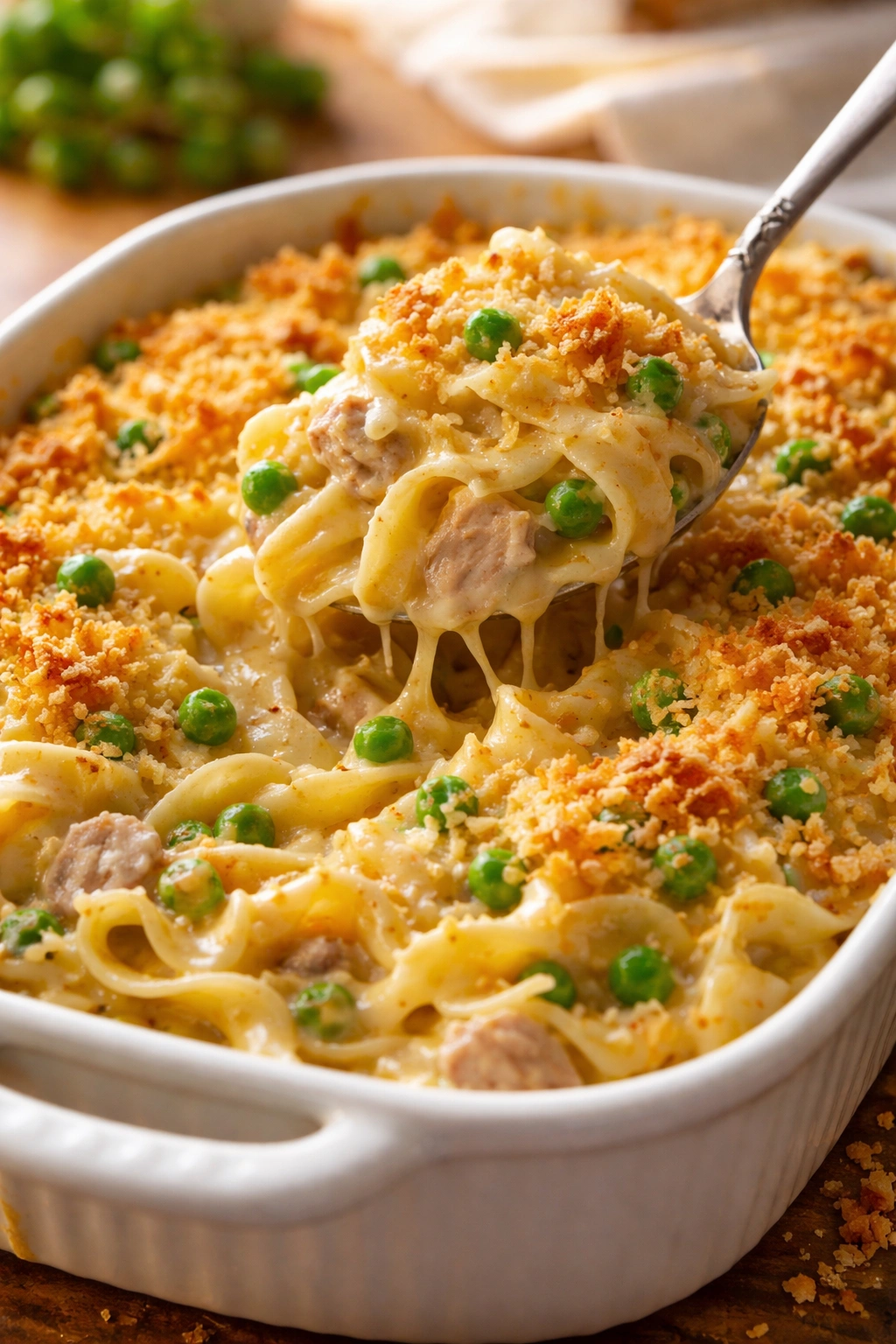
Your memory of the “best” tuna noodle casserole is genuinely the best version for you. That said, certain elements appear consistently in casseroles that people actually return to and request repeatedly rather than merely tolerate.
A truly great tuna casserole begins with the sauce. It should be creamy enough to coat every noodle generously, but not so thick that it feels gluey or stodgy. The sauce should taste genuinely savory and buttery, with enough cheese to register without tasting overwhelmingly sharp. There should be no weird metallic tang, no graininess, and no sense that you’re eating “cream soup” directly from a can.
The noodles themselves matter tremendously. They need to be tender but with enough structural integrity that they don’t dissolve into the sauce or turn mushy during baking. This requires both restraint in the initial cooking and timing precision so they don’t overcook in the oven.
The vegetables—most traditionally peas—should taste fresh and should have retained some slight firmness rather than becoming soft mush. They’re there to provide texture contrast, brightness, and visual interest alongside the overall richness of the dish.
Finally, the topping should provide genuine crunch when you first scoop into the casserole, and that crunch should persist through a few bites before softening slightly from the heat and sauce below. It shouldn’t be so heavy that it’s unpleasant to bite through, and it shouldn’t be so minimal that you forget it’s there.
The Secret to Creamy Sauce Without Canned Soup
Many cherished tuna casserole recipes lean on condensed cream of mushroom soup as their sauce foundation, and there’s absolutely nothing wrong with that approach. Condensed soup is a genuinely useful ingredient that produces a specific flavor and texture profile that many people adore.
However, making your sauce from scratch using real butter, flour, milk, and cheese opens up new possibilities. You have complete control over creaminess, flavor intensity, and texture. You can taste as you go and adjust seasonings to match your preferences. The sauce tastes fresher and less “processed,” even though the ingredient list remains simple.
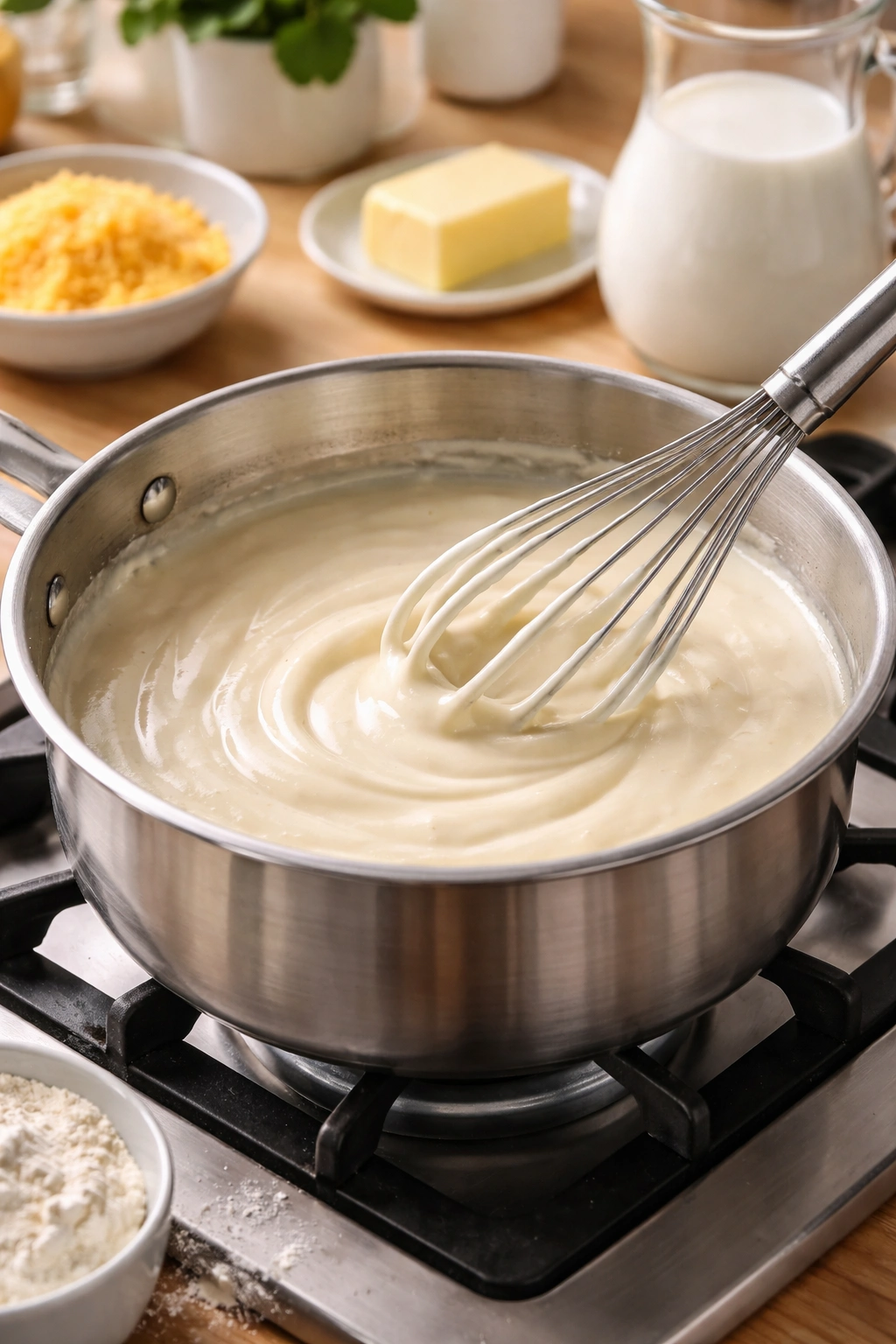
The technique is a classic roux-based cream sauce, which is foundational cooking knowledge worth understanding. You melt butter, whisk in an equal amount of flour, cook this mixture briefly to cook out the raw flour taste, then slowly add milk while whisking constantly to create a smooth, thickened sauce. Once the sauce reaches the right consistency, you can stir in cheese and seasonings.
This method requires attention and a little care—primarily because you need to prevent the dairy from curdling or the sauce from becoming lumpy—but neither outcome is difficult to avoid if you follow a few straightforward guidelines. The entire process takes about 10 minutes, which is hardly longer than opening and heating canned soup.
Choosing the Right Tuna and Fresh Cheese
Tuna quality varies meaningfully, and this matters because tuna represents the primary protein and flavor anchor in your casserole. Canned tuna packed in water is the traditional choice and remains the most economical option. Light tuna (yellowfin and skipjack species) is less expensive than white tuna (albacore), though it does have a stronger, more distinctly “fishy” flavor that some people find off-putting.
Albacore tuna is firmer, milder, and produces a less intense fish flavor. It’s considerably more expensive per can, but if you’re sensitive to strong fish flavors, the upgrade is worth considering. Tuna packed in oil retains more flavor and moisture, making for a more luxurious texture, but it adds extra fat and calories. For this casserole specifically, water-packed tuna works beautifully because the creamy sauce provides richness regardless.
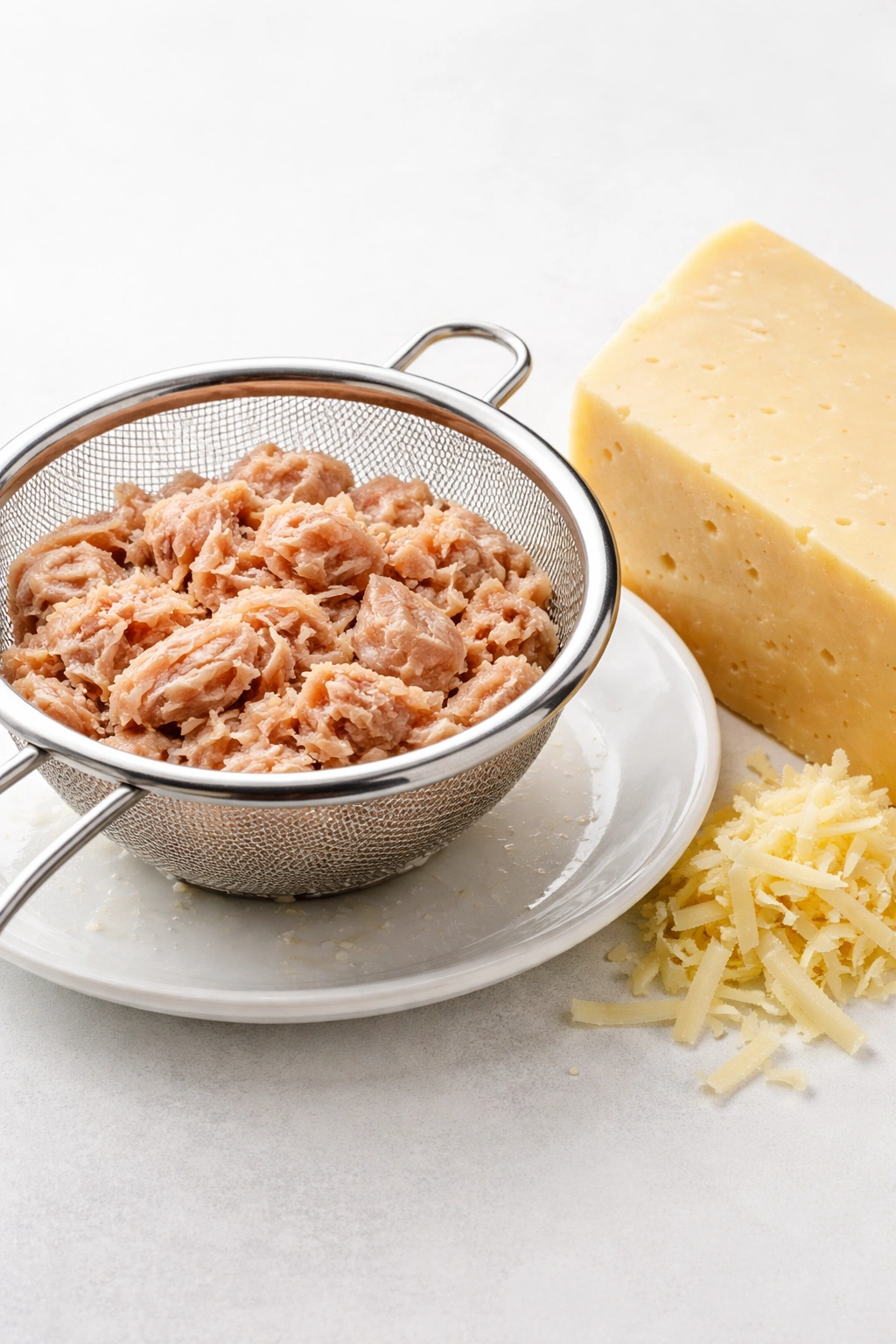
Regardless of what type you choose, always drain tuna very thoroughly. Place it in a fine-mesh strainer and press gently with the back of a spoon to remove excess liquid. Liquid tuna creates a watery casserole rather than a creamy one, so this step genuinely matters.
Cheese selection also carries weight. If your recipe calls for shredded cheddar cheese, buy a block of fresh sharp cheddar and grate it yourself. Pre-shredded cheese from a bag contains anti-caking agents (usually cellulose or potato starch) that prevent the cheese from melting smoothly. The result is a grainy, slightly separated sauce rather than a luxuriously smooth one. Fresh-grated cheese melts evenly and creates a genuinely creamy texture.
Building Layers of Flavor in Your Casserole
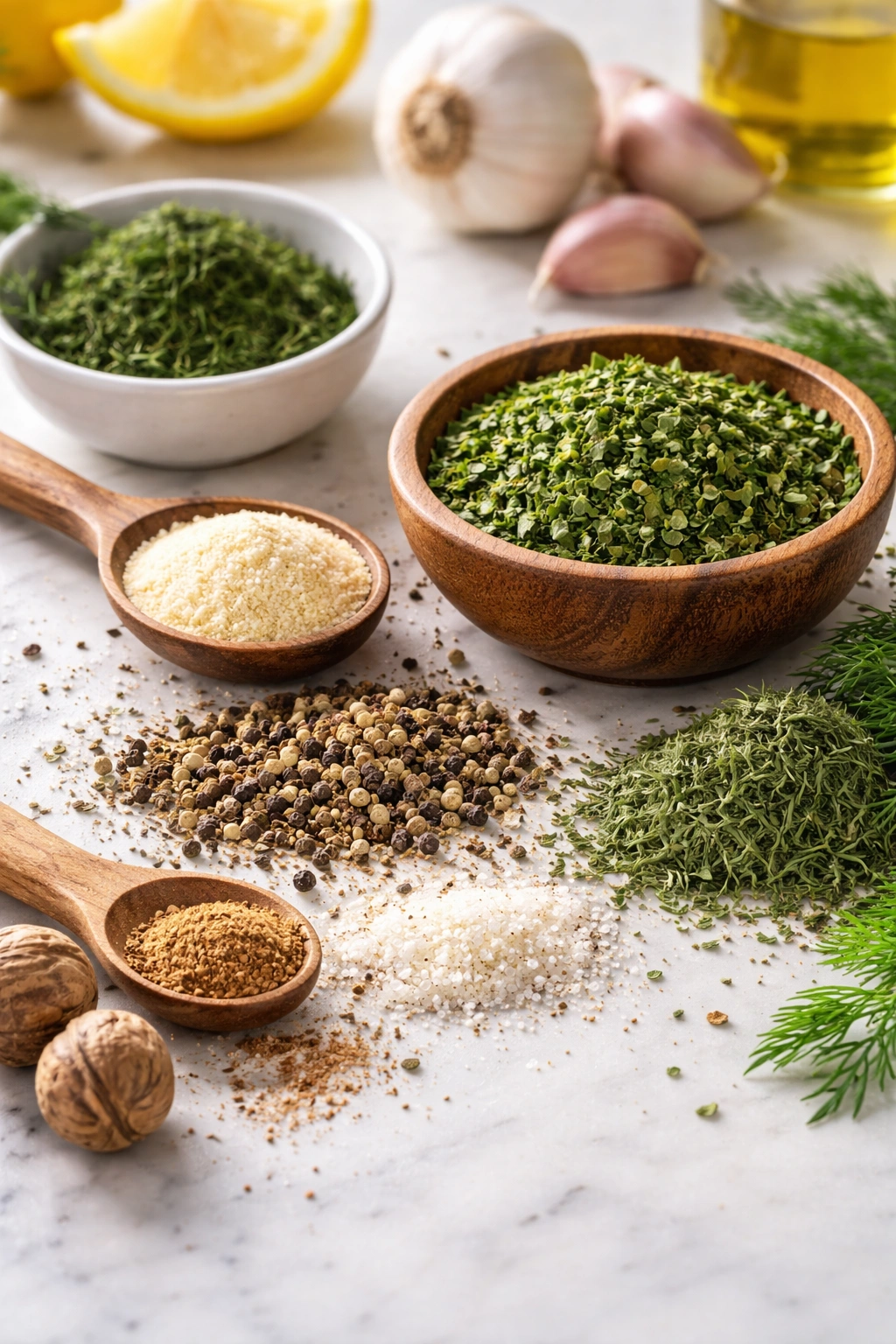
A common trap in tuna casserole is under-seasoning. The combination of mild tuna, neutral egg noodles, and creamy sauce can easily turn bland if you don’t intentionally build flavor through seasoning.
Start with salt and freshly ground black pepper—not the pre-ground pepper from a tin that’s been sitting in your cabinet for two years, but pepper you’ve just cracked. Fresh pepper has a brightness and depth that aged pepper cannot match. A quarter teaspoon of black pepper might seem subtle, but it genuinely registers.
Garlic powder adds savory depth without introducing actual garlic pieces (which most people find inconsistent in a casserole texture). Half a teaspoon makes a difference; a full teaspoon begins to dominate. Dried parsley contributes a subtle herbaceous note that makes the casserole taste less one-dimensional. Some recipes include dried dill, which pairs beautifully with tuna and brightens the overall flavor.
If you’re making your sauce from scratch, a small pinch of nutmeg whisked into the finished sauce is transformative. Nutmeg is a classic finishing touch in cream sauces (particularly in Scandinavian and Northern European cooking) and it adds complexity without being recognizable as “nutmeg flavor.” A quarter teaspoon is all you need. More than that becomes obvious and overwhelming.
Taste your finished casserole mixture before it goes in the oven and adjust salt, pepper, and seasonings one more time. The casserole won’t develop new flavors during baking, so what you taste when it’s raw is what you’ll taste when it’s baked.
The Perfect Buttery Breadcrumb Topping
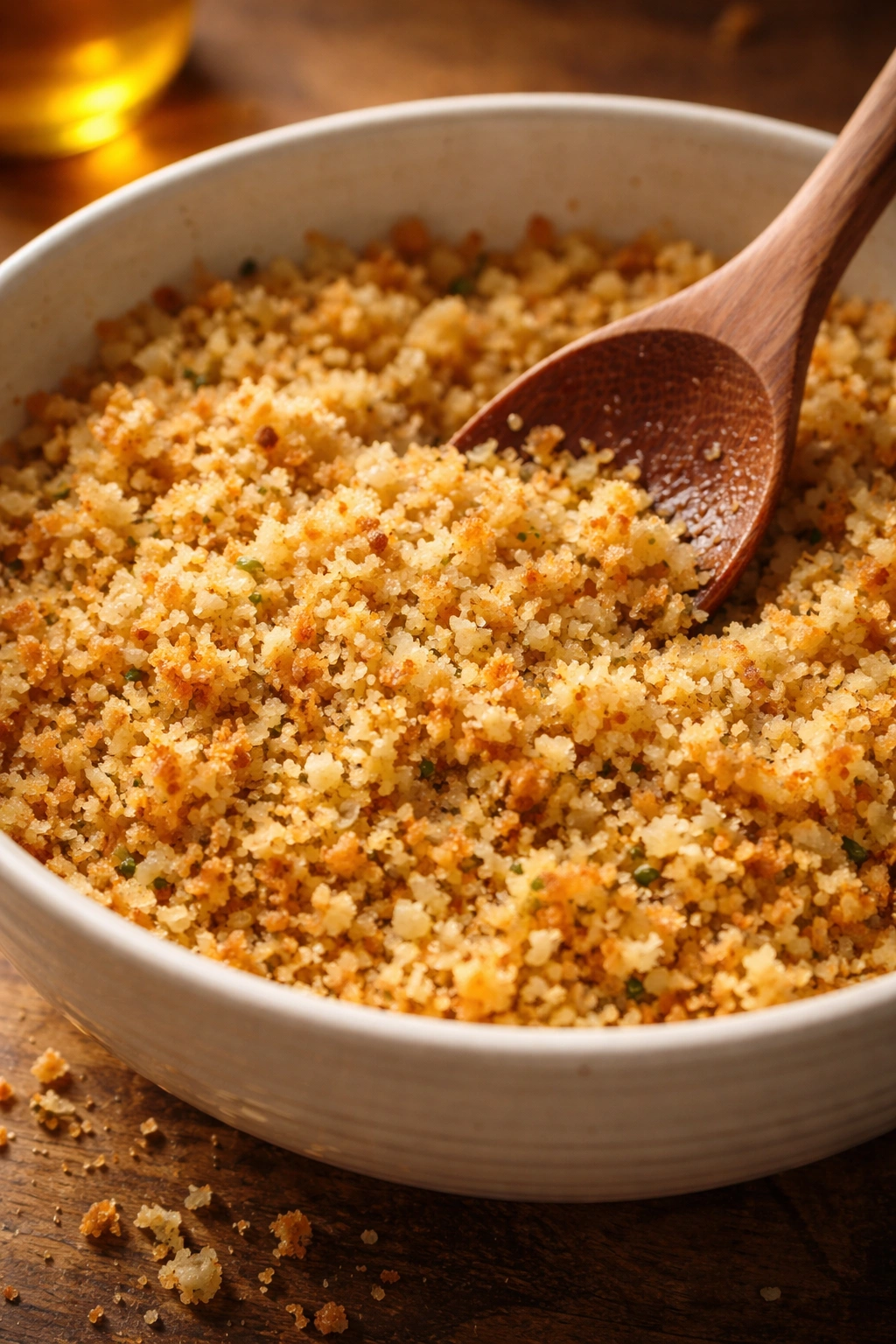
The topping separates a good casserole from a truly craveable one. This is where that satisfying crunch comes from, and it’s also where a lot of home cooks either over-complicate things or fail to give the detail appropriate attention.
Plain breadcrumbs work fine, but panko breadcrumbs (the larger, fluffier Japanese-style crumbs) toast more evenly and maintain their crunch better than regular breadcrumbs. Seasoned breadcrumbs can work if you like the extra flavor, but they can sometimes overpower the rest of the dish. Start with plain and add your own seasonings if you prefer.
The key is to toast the breadcrumbs in melted butter before spreading them over the casserole. Don’t just sprinkle dry crumbs over the top—they’ll absorb moisture from the sauce below and turn soggy and unpleasant. Instead, melt your butter (about one tablespoon per half cup of crumbs), mix the crumbs in the melted butter until they’re evenly coated, then add a light pinch of salt. Spread this buttered-crumb mixture evenly across the top.
Some people prefer to add the breadcrumb topping partway through baking—after about 15 minutes when the casserole has heated through but the crumbs have time to toast before the top can burn. This prevents the outside of the crumbs from browning too much while leaving the inside still raw. Alternatively, you can add the topping at the beginning of baking and watch carefully during the last few minutes, covering with foil if the crumbs are browning too aggressively.
Crushed potato chips are a classic alternative topping, and there’s genuine wisdom in this choice. The salt and fat from the chips create an irresistible texture and flavor. Crushed crackers (Ritz crackers are traditional) work similarly. Some people prefer a mixture of breadcrumbs and grated Parmesan cheese for a more savory, aged-cheese flavor. The flexibility here is part of what makes this recipe so enduringly appealing—you can dress it according to your own preferences.
Serving and Timing Information
Yield: Serves 6 to 8 | Makes one 9×13-inch casserole
Prep Time: 20 minutes
Cook Time: 35 to 40 minutes
Total Time: 55 to 60 minutes
Difficulty: Beginner — The recipe requires only basic cooking skills, straightforward ingredients, and simple techniques. Even first-time cooks will succeed by following the instructions carefully and watching for visual cues like when the sauce thickens and when the casserole is bubbling throughout.
The Complete Ingredient List
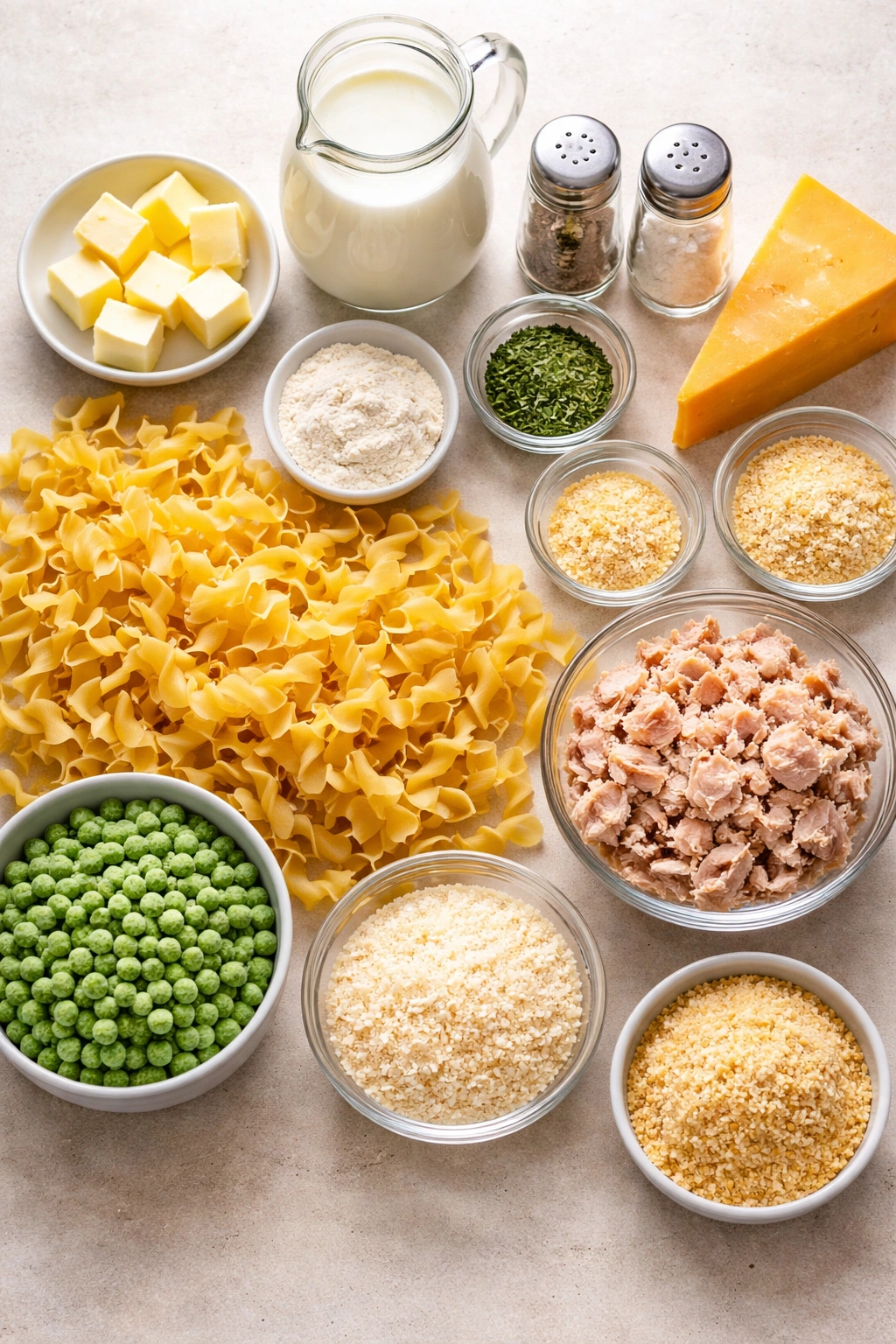
For the Cream Sauce:
- 5 tablespoons unsalted butter, at room temperature
- 5 tablespoons all-purpose flour
- 2½ cups whole milk, at room temperature
- ½ teaspoon fine sea salt, plus more to taste
- ¼ teaspoon freshly ground black pepper, plus more to taste
- ½ teaspoon garlic powder
- 1 teaspoon dried parsley (optional, but recommended)
- ¼ teaspoon freshly grated nutmeg (optional, but genuinely transforms the sauce)
- 1 cup fresh sharp cheddar cheese, shredded from a block
For the Casserole:
- 8 ounces uncooked wide egg noodles (or medium egg noodles)
- ¾ cup frozen green peas
- 2 (5-ounce) cans chunk light tuna in water, drained very thoroughly and flaked
- ½ cup additional shredded fresh cheddar cheese
For the Breadcrumb Topping:
- 1 tablespoon unsalted butter
- ½ cup panko breadcrumbs (or plain breadcrumbs, or crushed potato chips)
- 1 large pinch fine sea salt
- Optional: 2 tablespoons grated Parmesan cheese mixed with the breadcrumbs
Step-by-Step Instructions for Perfect Results
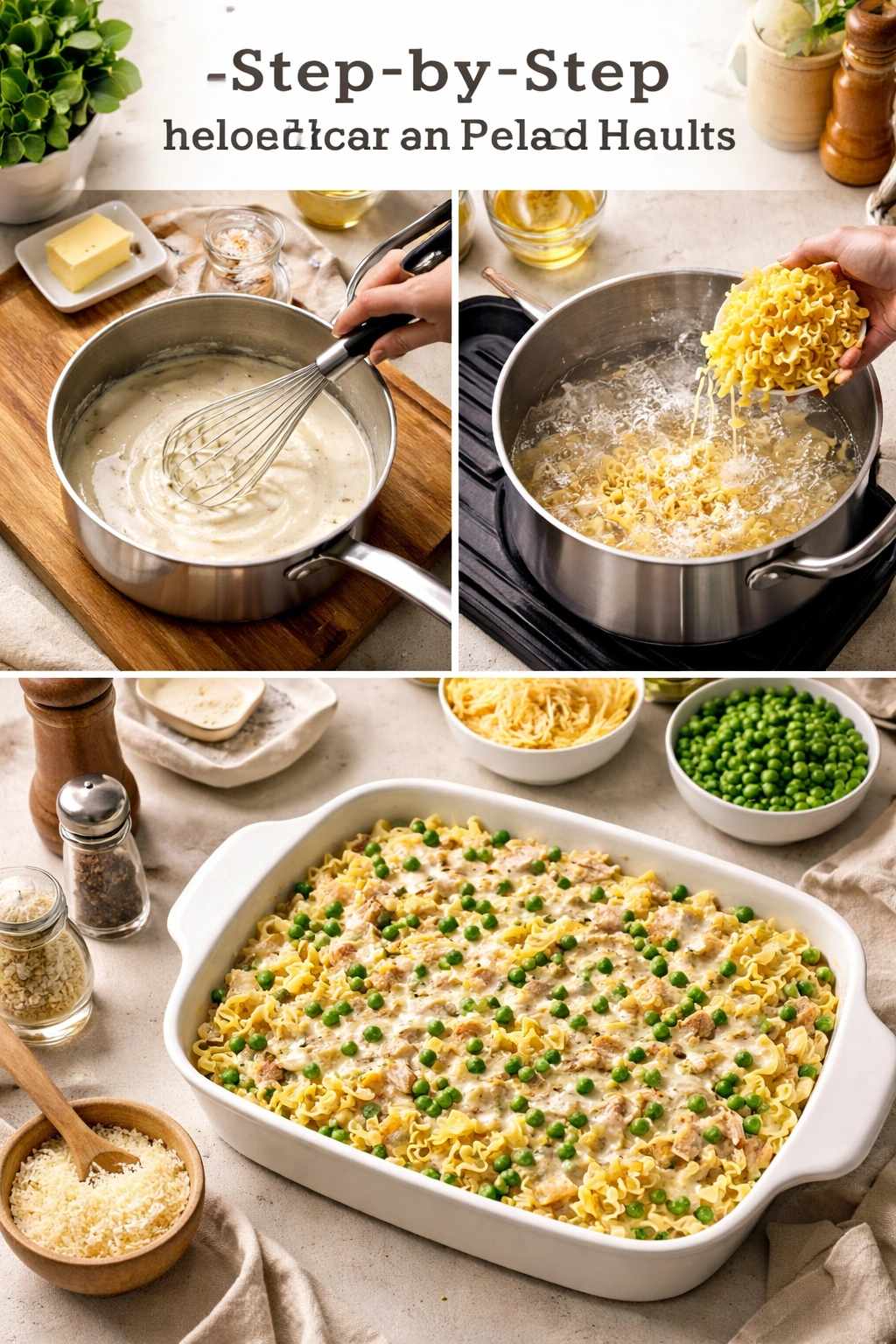
Prepare Your Pan and Preheat:
-
Position a rack in the center of your oven and preheat to 350°F (175°C).
-
Lightly coat a 9×13-inch baking dish (2½ quarts) with cooking spray or butter. Set aside.
Advertisements
Cook the Noodles:
-
Fill a large pot with water and bring to a rolling boil over medium-high heat. Add ½ to 1 tablespoon of salt to the water—it should taste noticeably salty, like sea water.
-
Once the water is boiling, add 8 ounces of egg noodles and stir to separate them. Follow the package directions for cooking time, but aim to cook them for about 1 minute less than the package suggests. The noodles should be tender but still have a slight firmness when you bite them—they’ll continue cooking slightly in the oven.
-
When the noodles reach the correct doneness, drain them in a colander, shaking gently to remove excess water. Pour them into your prepared baking dish and set aside.
Make the Cream Sauce:
-
Place a medium heavy-bottomed saucepan over medium-low heat. Add 5 tablespoons of room-temperature butter to the pan. Stir occasionally as the butter melts completely. This should take about 2 minutes.
-
Once the butter is melted, add 5 tablespoons of all-purpose flour directly to the pan. Using a whisk, vigorously combine the butter and flour together, stirring constantly. The mixture should look like wet sand at first, then become a smooth paste.
-
Continue whisking the flour-and-butter mixture (called a roux) over low heat for approximately 1 minute, stirring constantly. You’ll notice it begins to bubble slightly and turns a pale golden color. This step cooks out the raw flour taste and is essential, though brief.
-
Remove the saucepan from the heat entirely. This step is critical: never add cold milk to hot flour mixture, as this creates lumps. By removing the pan from heat, you lower the temperature slightly and prevent the milk from curdling.
-
Pour 2½ cups of room-temperature milk into a measuring cup. Slowly add about ¼ cup of the milk to the flour mixture while whisking constantly and vigorously. Once this small amount is fully incorporated and smooth, continue adding the remaining milk in small increments (about ¼ cup at a time), whisking constantly between each addition. Take your time here—rushing this step invites lumps.
Advertisements -
Once all the milk has been incorporated and the mixture is smooth with no visible lumps, return the saucepan to medium heat. Increase the heat slightly and whisk constantly as the mixture heats. You’ll feel it begin to thicken after about 3 to 4 minutes of heating. Continue whisking until the sauce has noticeably thickened enough to coat the back of a spoon—when you run your finger across the spoon, it should leave a clean trail.
-
The sauce should reach a gentle bubble and appear slightly thicker than heavy cream. Remove from heat.
-
Add ½ teaspoon fine sea salt, ¼ teaspoon freshly ground black pepper, ½ teaspoon garlic powder, 1 teaspoon dried parsley, and ¼ teaspoon freshly grated nutmeg (if using). Whisk gently to combine the seasonings evenly throughout.
-
Add 1 cup of fresh shredded cheddar cheese in two additions, whisking gently until all the cheese has melted and fully incorporated. The sauce should look smooth, creamy, and unified. Taste the sauce now and adjust seasonings—add more salt, pepper, or garlic powder if you prefer stronger flavors.
Assemble the Casserole:
-
Pour the prepared cream sauce directly over the egg noodles in the baking dish. Using a silicone spatula or large spoon, gently fold the sauce and noodles together until all the noodles are evenly coated and no dry pasta is visible.
-
Scatter ¾ cup of frozen green peas over the noodle mixture. You don’t need to thaw them; they’ll heat through in the oven.
-
Drain your tuna very thoroughly by placing it in a fine-mesh strainer and pressing gently with the back of a spoon. You should hear liquid draining out. Flake the drained tuna with a fork to break up any large chunks, then add it to the casserole. Gently fold the tuna into the noodle mixture until evenly distributed.
-
Sprinkle the remaining ½ cup of fresh shredded cheddar cheese evenly across the top of the casserole, distributing it so you have cheese visible across the entire surface.
-
Spread the casserole mixture into an even layer, making sure it fills all corners of the dish and reaches the edges. Do not stir it any further at this point.
Advertisements
Make the Topping:
-
While the casserole is settling, prepare the breadcrumb topping. Place 1 tablespoon of unsalted butter in a small microwave-safe bowl. Microwave the butter in 15-second increments, stirring well between each burst, until it’s completely melted but not bubbling or sizzling.
-
Add ½ cup of panko breadcrumbs (or breadcrumbs of your choice) and 1 large pinch of fine sea salt to the bowl with the melted butter. Stir well until all the breadcrumbs are evenly coated with butter. If you’re using Parmesan cheese in your topping, add 2 tablespoons now and mix well.
-
Sprinkle the buttered breadcrumb mixture evenly over the top of the casserole. Distribute it so there are no bare spots, and you can see some of the cheese underneath showing through in spots.
Bake:
-
Place the baking dish in the preheated 350°F oven. Bake for 30 to 35 minutes, rotating the dish halfway through (at about the 15-minute mark). The casserole is finished when the sauce is bubbling visibly around the edges and in spots across the top, and the breadcrumb topping is golden brown.
-
If the breadcrumb topping is browning too quickly before the casserole has finished cooking, loosely tent the top with aluminum foil and continue baking. Remove the foil in the last 5 minutes to allow the crumbs to finish crisping.
-
Do not skip cooling time. Remove the casserole from the oven and let it rest on the counter for 5 minutes before serving. This brief rest allows the sauce to set slightly, making the casserole easier to portion without it being soupy.
-
Serve warm. A light sprinkle of fresh parsley or a few cracked black pepper flakes on individual portions adds visual appeal and a fresh herbaceous note.
Mistakes That Make Tuna Casserole Dry or Mushy
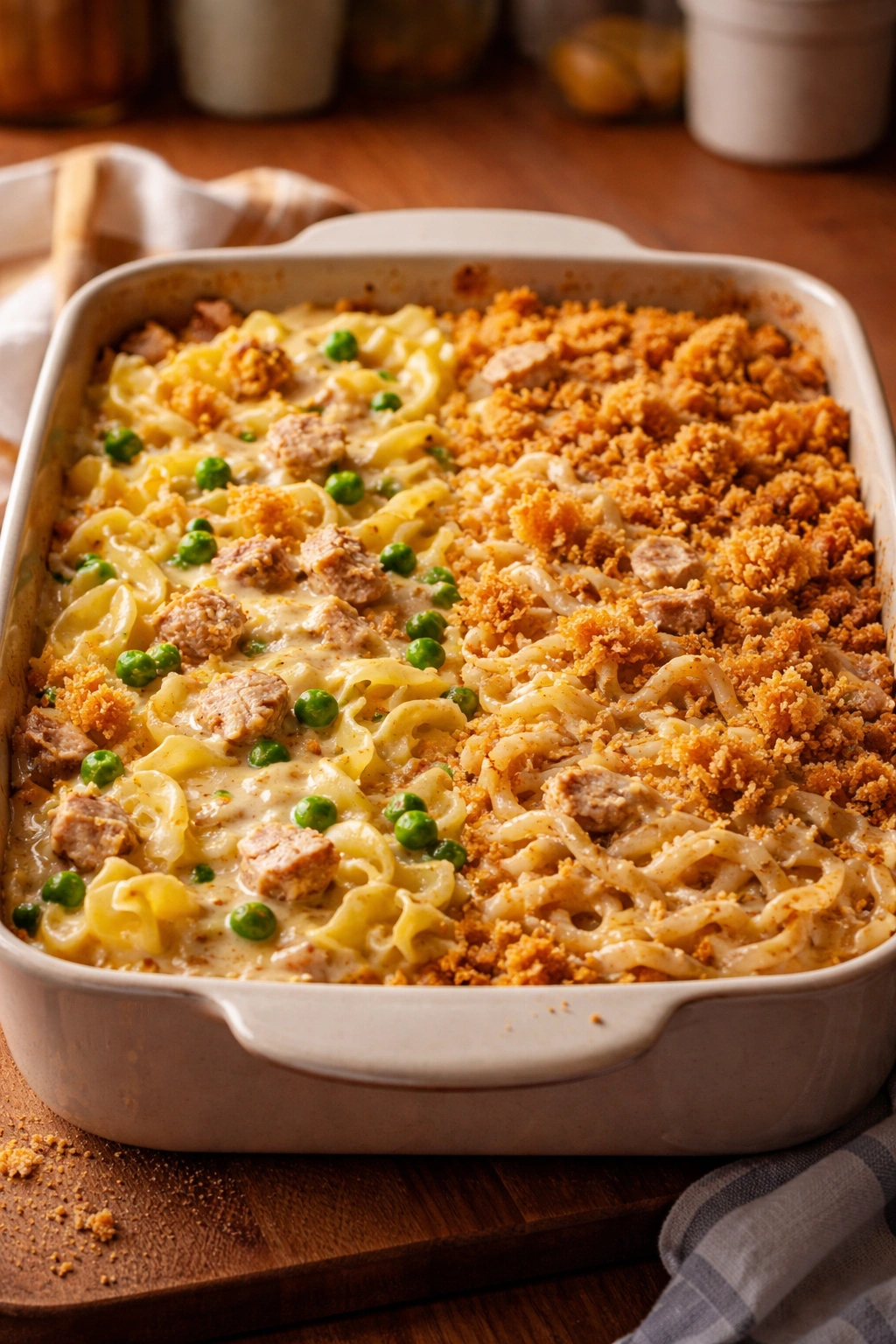
The most common problem people encounter is a casserole that tastes dry and separated rather than creamy and cohesive. This typically results from one of three causes.
First is overcooking the noodles before they go into the casserole. If you cook them all the way to the package’s suggested time, they’ll continue softening in the oven and end up mushy. Cook them about one minute short of the package suggestion so they’re tender but with a hint of firmness remaining. This is called cooking them al dente, and it’s non-negotiable for this dish.
Second is using too little sauce relative to the noodles and fillings. The sauce should generously coat every noodle and should look almost soupy when you first assemble the casserole—it will thicken slightly during baking. If you’re concerned your sauce seems too thin, remember that it will reduce and concentrate during the 30-plus minutes in the oven.
Third is not draining the tuna thoroughly. Excess liquid from the tuna thins out the sauce and creates a watery texture instead of creamy. Drain your tuna carefully, pressing out as much liquid as possible.
Conversely, a casserole that’s too thick and gluey usually means you either used too little milk in your sauce or you cooked the sauce too long before adding it to the noodles. The cream sauce should flow easily when you first pour it over the noodles—if it’s the consistency of pudding, add a splash more milk and whisk it in.
Elevating Your Casserole with Mix-In Variations
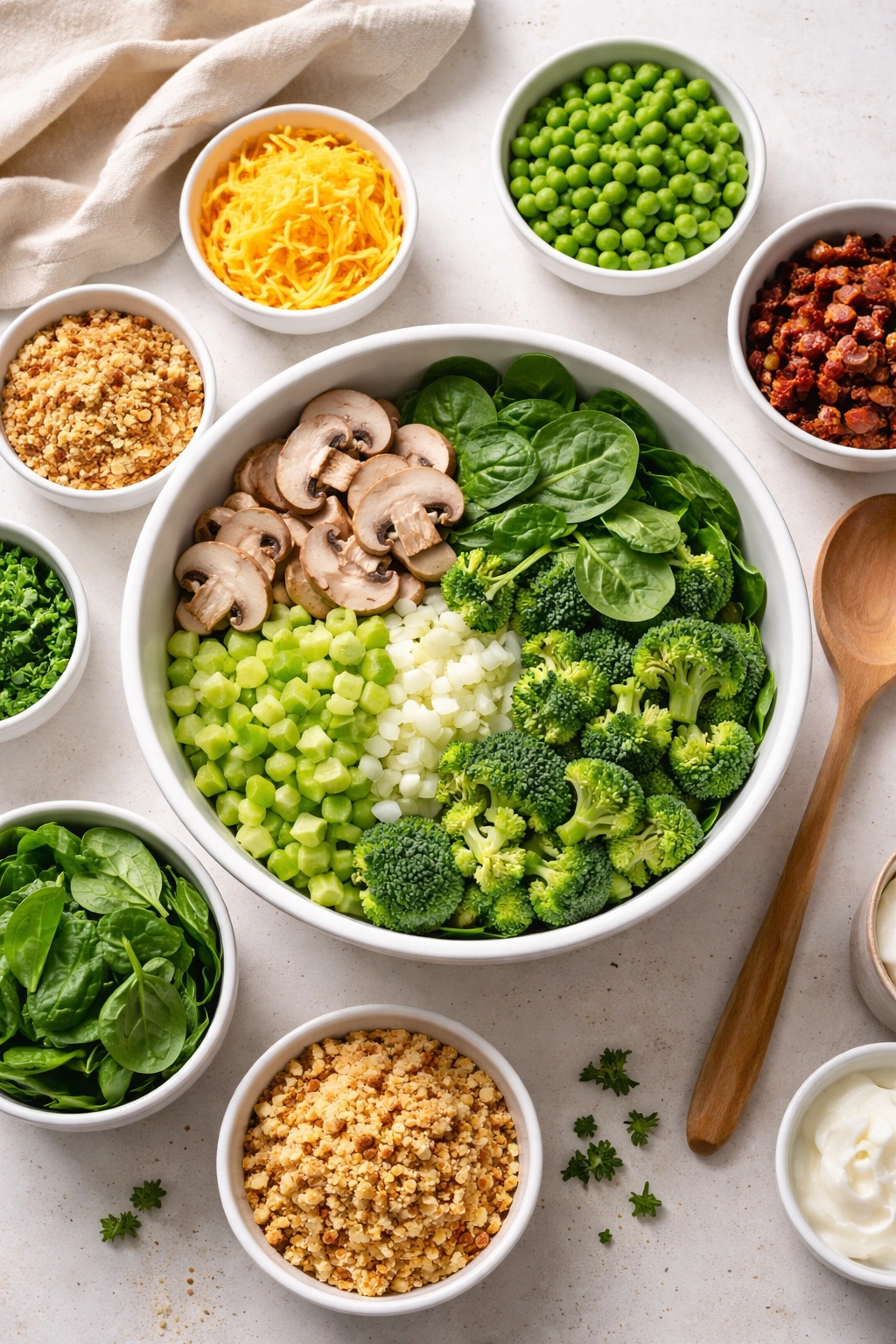
While the classic version of this casserole is perfection as-is, small additions can personalize it and add subtle dimension without straying from the spirit of the dish.
Sautéed mushrooms are a natural addition. Fresh mushrooms contain a lot of water, so slice them and cook them in a skillet over medium-high heat for 5 to 8 minutes until they’ve released their moisture and the liquid has mostly evaporated. This concentrates their umami flavor and prevents them from making the casserole watery. Add them to the casserole mixture before baking.
Diced celery and onion add a subtle aromatic quality. Some people prefer to sauté these briefly in butter (about 3 to 4 minutes) to soften them, while others add them raw and rely on the oven heat to gently cook them. Raw additions will retain more crunch and brightness, while sautéed additions will be softer and more integrated.
A handful of fresh spinach or a cup of chopped broccoli florets introduces green vegetables and nutritional density. Fresh spinach can go in raw; it will wilt during baking. Broccoli should be cut small and added raw—it’ll soften during cooking but won’t turn to mush.
Some people add a quarter cup of sour cream or mayonnaise to the sauce mixture for extra creaminess and richness. This works beautifully and creates a noticeably luxurious texture. Add it after you’ve made your cream sauce, stirring it in gently before adding the cheese.
A tablespoon of Dijon mustard or a squeeze of fresh lemon juice adds subtle brightness and complexity. These flavors don’t make the casserole taste “lemony” or “mustard-y”—they simply sharpen and deepen the overall flavor profile. Add them to the finished sauce, tasting as you go.
Making Ahead and Freezing Your Casserole
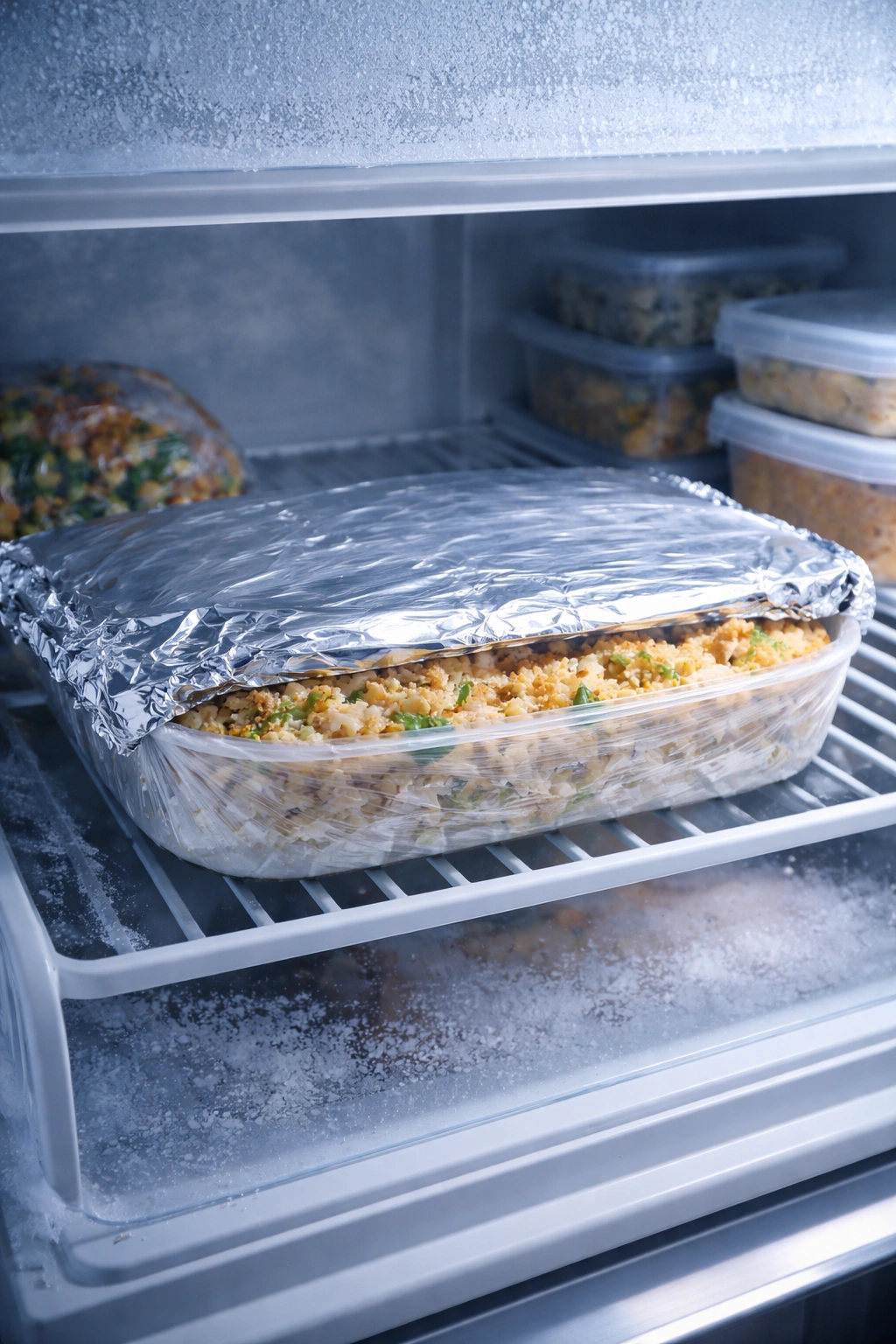
Tuna casserole is genuinely one of the best make-ahead dishes because it actually tastes better the next day. The flavors meld, the creamy sauce distributes more evenly, and the whole dish becomes more unified.
You can assemble the casserole fully (including the breadcrumb topping) up to one day ahead. Cover it tightly with plastic wrap or aluminum foil and refrigerate. When you’re ready to bake, add about 5 to 10 minutes to the baking time since the casserole will be cold going into the oven.
For longer storage, assemble the casserole without the breadcrumb topping, wrap it tightly in plastic wrap, then wrap the entire dish in aluminum foil. Freeze for up to three months. When you’re ready to bake, you can take it straight from the freezer—no thawing necessary. Add about 15 to 20 minutes to the baking time, then add your breadcrumb topping during the last 10 minutes so the crumbs toast properly without becoming burnt.
Alternatively, you can make the components separately and assemble the casserole fresh. The cream sauce keeps refrigerated for up to three days. The noodles (cooked and tossed lightly with a tiny bit of olive oil to prevent sticking) keep for three days. The breadcrumb topping can be made hours ahead and held at room temperature. Assembling fresh takes only about 5 minutes and ensures the noodles haven’t absorbed too much sauce and turned gluey.
How to Reheat Leftovers Without Losing Texture
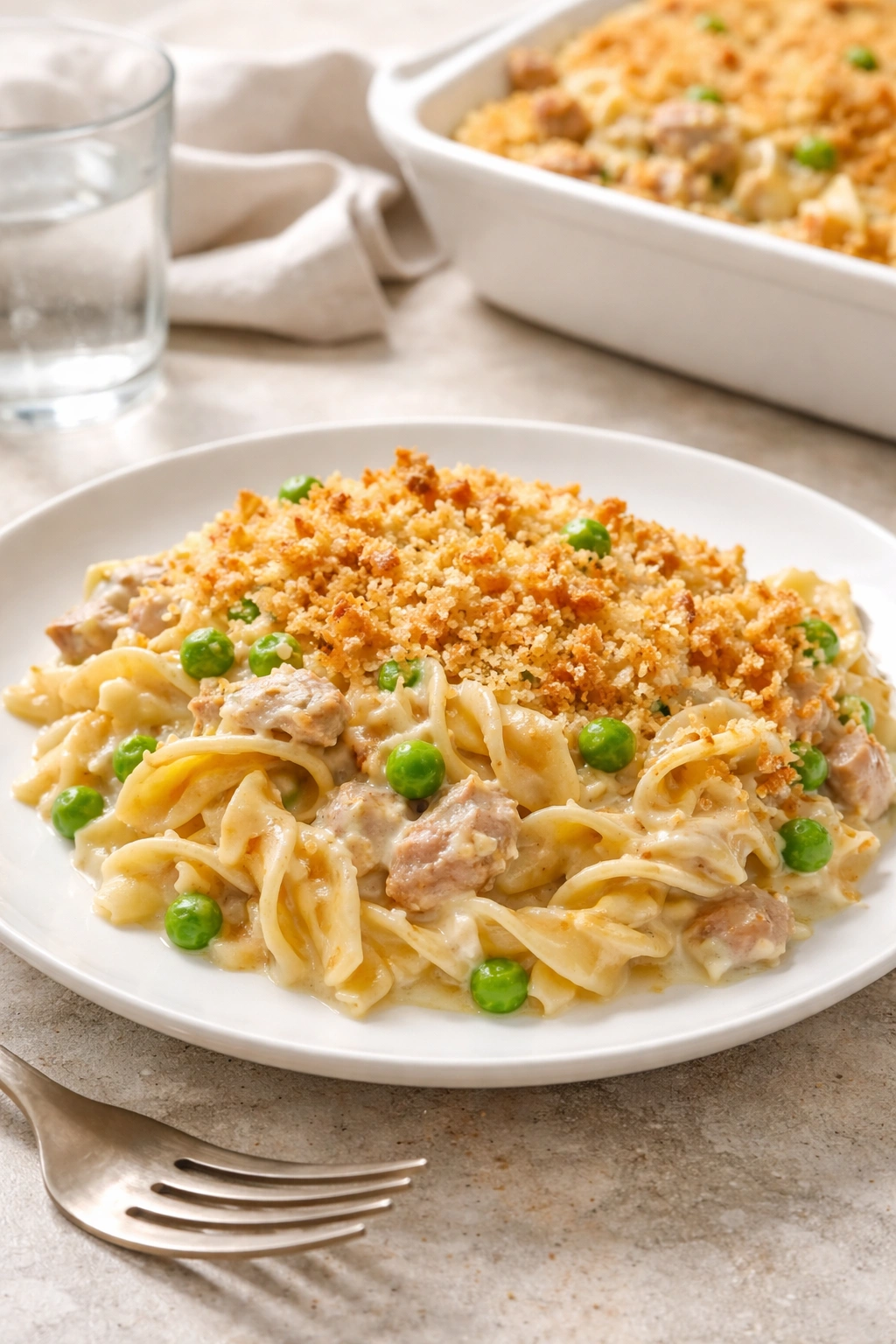
Leftover casserole reheats beautifully using two different methods, each with advantages depending on the amount you’re reheating.
For individual portions, the microwave is fastest. Place a portion (the breadcrumb topping and sauce and all) on a microwave-safe plate. Cover it loosely with a paper towel to prevent splatters. Microwave on medium power (not high) for 60 to 90 seconds, checking halfway through to ensure even heating. Medium power heats more gently than high power, which prevents the noodles from becoming tough or the sauce from heating unevenly.
For reheating a larger portion or the entire casserole, the oven is superior because it heats evenly and won’t overcook the edges while the center remains cold. Preheat your oven to 325°F (160°C). Place the casserole (covered loosely with foil) in the oven for 15 to 20 minutes, until it’s heated through and steaming. You can remove the foil in the last 5 minutes if you want the top to recrisp slightly, though the breadcrumbs will have softened somewhat by this point.
The stovetop method works well if you want to recrisp the topping. Transfer leftovers to an oven-safe skillet, cover loosely with foil, and warm over medium-low heat for about 8 to 10 minutes, stirring occasionally and gently. The direct heat will warm the casserole faster than the oven while keeping the bottom from burning.
Never reheat in a way that boils the casserole or exposes it to high heat for extended time. High heat will cause the sauce to separate and the noodles to toughen. Gentle, moderate heat maintains the creamy texture and tender noodles.
Serving Suggestions and Perfect Pairings
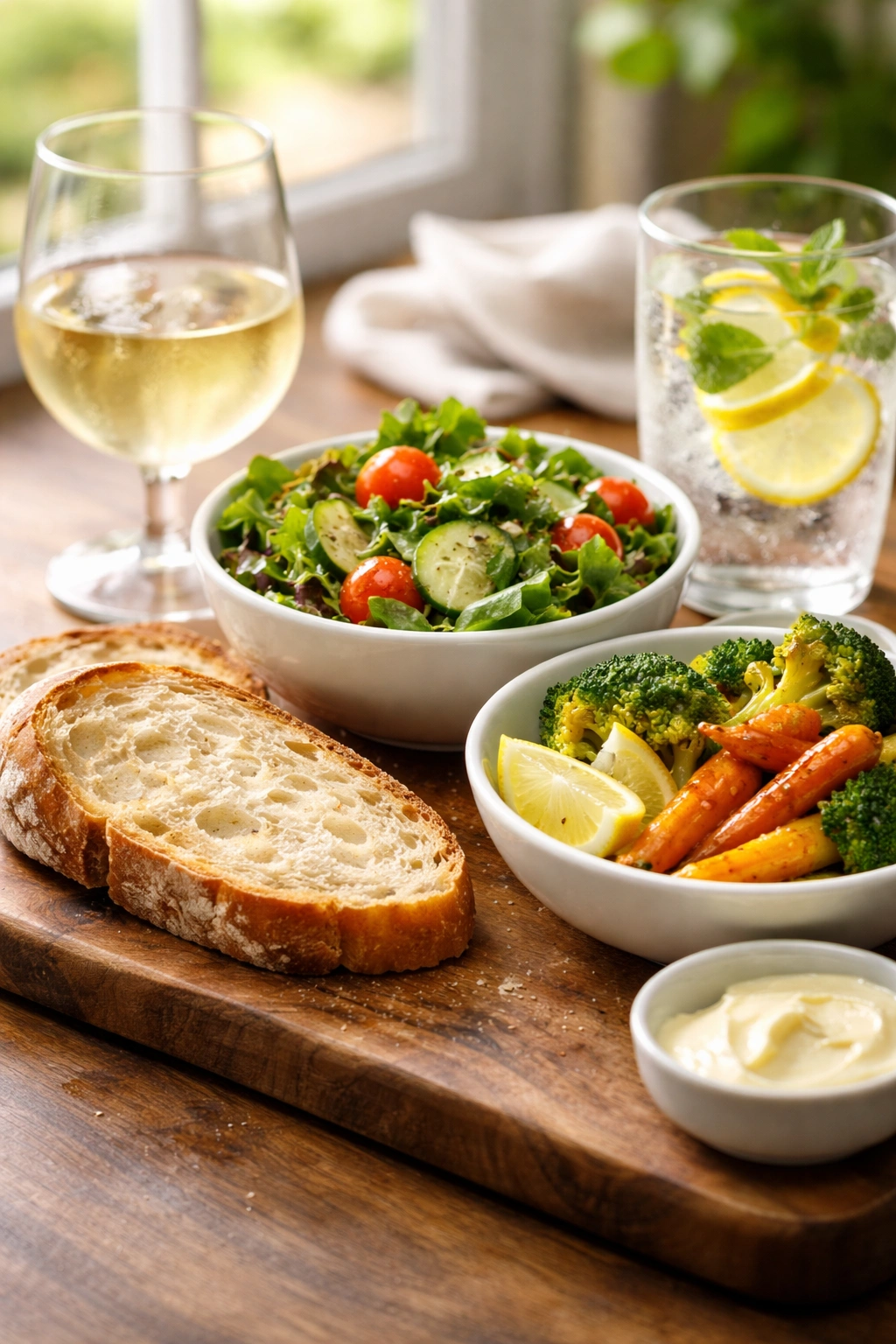
Tuna casserole is a complete main dish that doesn’t strictly need accompaniments, but certain sides complement it beautifully.
A simple green salad with a sharp vinaigrette provides acidity and crispness that contrast with the casserole’s richness. The brightness cuts through the creaminess and makes the meal feel balanced. Dress the salad with just lemon juice and olive oil, or use a Dijon vinaigrette.
Steamed or roasted fresh vegetables on the side add nutrition and textural variety. Roasted asparagus, sautéed zucchini, or steamed broccoli all work beautifully. The casserole is rich enough that you don’t need heavy vegetable preparations—simple, lightly seasoned vegetables are perfect.
Crusty bread or garlic bread is almost traditional with casserole. It serves the practical purpose of soaking up sauce and also provides a textural contrast. If you’re serving this casserole, someone at the table will inevitably use bread to clean their plate, so embrace that and provide good bread.
A light beverage works better than something heavy. Iced tea, sparkling water with lemon, or a crisp white wine if you drink alcohol. The casserole is creamy and substantial, so you want a beverage that won’t make you feel overstuffed.
For dessert, something light and refreshing is ideal. Fresh fruit, sorbet, or a simple cake with fruit are all better choices than dense chocolate cake or heavy pie. You want to finish the meal feeling satisfied but not weighted down.
Final Thoughts

Tuna noodle casserole endures because it delivers exactly what it promises: comfort, simplicity, and genuine deliciousness. There’s no pretense here, no complicated techniques attempting to impress. It’s honest food that nourishes and satisfies.
Making it from scratch, with real butter, fresh cheese, and your own cream sauce, elevates it from a quick weeknight solution to something genuinely worth requesting and worth remembering. The small details—room-temperature dairy so your sauce stays smooth, noodles cooked just short of al dente so they remain tender but not mushy, properly drained tuna so you get creaminess not wateriness, buttered breadcrumbs toasted until golden and crispy—these aren’t complicated, but they do make the difference between a good casserole and one that earns a place in someone’s memory.
This is the casserole to make when you want to feed people something that feels like home, whether they grew up eating casserole or they’re experiencing this dish for the first time. It’s the casserole that tastes better the next day, that freezes beautifully for busy weeks, that comes together in under an hour from start to finish. It’s the casserole that deserves its place at your table, just like it’s earned its place at tables across this country for generations.
