



Most people skip breakfast or grab something sugary because they assume healthy, filling meals have to be time-consuming or calorie-heavy. The truth? You can fuel your entire morning with nutrient-dense protein breakfasts that clock in under 300 calories — and actually taste good enough that you’ll look forward to eating them. When you nail the protein ratio at breakfast, something magical happens: your energy stays stable, your hunger hormones settle down, and you’re not raiding the pantry by mid-morning.
The challenge isn’t finding protein sources. It’s knowing exactly how to combine them so you get genuine satiety, real flavor, and a meal that fits your calorie goals without feeling like deprivation. That’s where specificity matters. A bowl of plain egg whites and oatmeal feels punishing. But a fluffy Greek yogurt parfait layered with crunchy granola and berries, or savory scrambled egg muffins loaded with vegetables and cheese — those feel like real food, and they happen to be the exact kind of breakfast that keeps your metabolism steady and your focus sharp throughout the morning.
The breakfasts below aren’t gimmicks or “hacks.” They’re tested, practical meals that happen to deliver 20-35 grams of protein while staying firmly under 300 calories. Each one comes together in minutes, uses ingredients you can actually find, and scales easily for meal prep if you want to make several servings at once. Pick your favorite, build it once, and you’ll know exactly what a sustainable, satisfying breakfast looks like.
1. Greek Yogurt Parfait with Granola and Berries
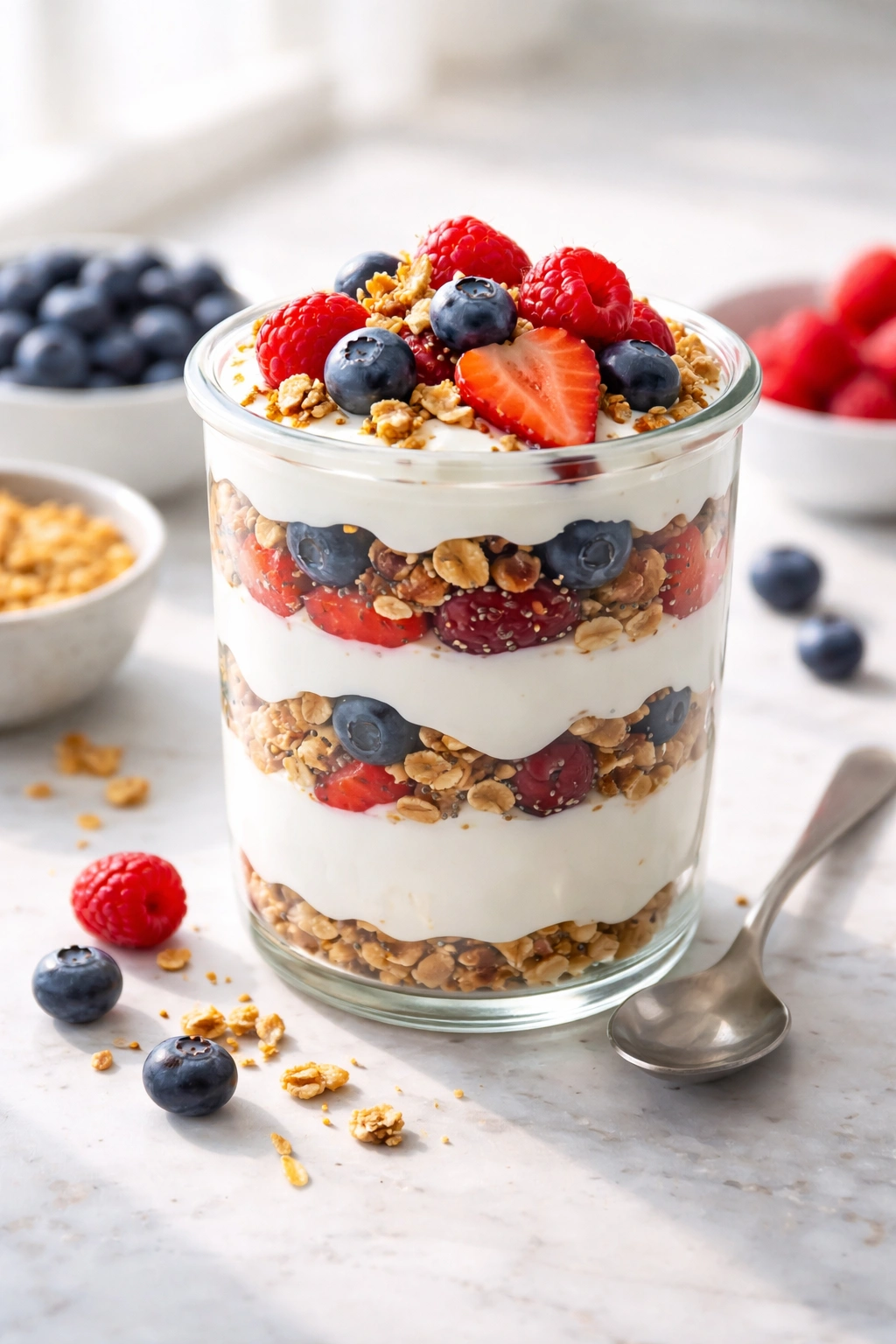
This is the breakfast that looks like dessert but actually functions as a lean protein powerhouse. A single container of plain, nonfat Greek yogurt delivers around 18-20 grams of protein in just 100 calories — which gives you serious room to build a layered, visually stunning bowl without blowing your calorie budget. The key is resisting the urge to buy pre-sweetened yogurt, which hides added sugars that’ll send your blood sugar spiking and crashing by 10 a.m.
Why It Stands Out for Sustained Energy
Greek yogurt contains a unique amino acid profile that supports muscle repair and keeps you feeling satisfied far longer than regular yogurt. The probiotics in unsweetened yogurt also feed the beneficial bacteria in your digestive system, which actually improves your ability to absorb nutrients throughout the day. When you layer it with berries — which contain polyphenols that support steady energy — you’re not just eating breakfast; you’re supporting your body’s metabolic processes at a cellular level.
How to Layer It Perfectly
Start with 1 cup (200g) of plain nonfat Greek yogurt as your base — that’s about 18 grams of protein and 100 calories. Top it with a handful of fresh berries (blueberries, raspberries, or strawberries work equally well) for another 40-50 calories and fiber that slows your digestion. Add just 2 tablespoons of granola for the crunch (this is the precision part — pre-measured, not a handful) for roughly 80 calories. A drizzle of raw honey (1 teaspoon) adds complexity and brings your total to about 260 calories with 18 grams of protein. If you want to boost the protein even higher, stir 1 tablespoon of unsweetened almond butter directly into the yogurt before layering.
Pro tip: Make this the night before in a mason jar, but keep the granola separate in a small container and add it just before eating — this prevents sogginess and keeps the texture crispy where it matters most.
2. Scrambled Egg Muffins with Vegetables and Cheese

Egg muffins are a game-changer for busy mornings because you’re doing the work once on Sunday, then reheating individual portions all week. Each muffin-sized portion delivers nearly 15 grams of protein from whole eggs, plus fiber and micronutrients from the vegetables baked directly into the mixture. They’re savory, filling, and genuinely taste like you spent time cooking — not like you grabbed a sad diet food.
Why This Method Maximizes Nutrition
When you bake eggs instead of scrambling them, the protein structure develops differently, and you retain more of the heat-sensitive nutrients in the vegetables. A single large egg contains all nine essential amino acids your body cannot produce on its own — meaning two eggs give you a complete, functional protein source. Adding vegetables to the egg base means you’re getting vitamins and minerals that support energy production, not just protein and calories.
The Basic Formula for Four Muffins
Whisk together 8 large eggs, ½ cup unsweetened almond milk, salt, and pepper in a bowl. Fold in 1 cup of finely chopped vegetables (spinach, diced bell peppers, mushrooms, or broccoli work well), and ½ cup shredded cheddar cheese. Divide the mixture evenly among four muffin cups in a muffin tin (greased lightly). Bake at 350°F for 18-22 minutes, until the centers are set and the tops are just beginning to brown. Each finished muffin is approximately 140 calories with 14-15 grams of protein. Pair one muffin with a slice of whole-grain toast (80-100 calories) for a complete 240-calorie breakfast, or eat one plain for a lighter option.
Worth knowing: These keep in the refrigerator for up to five days and freeze beautifully for up to a month. Reheat in the microwave for 45-60 seconds, and they taste nearly identical to freshly baked.
3. Protein Smoothie Bowl with Layered Toppings
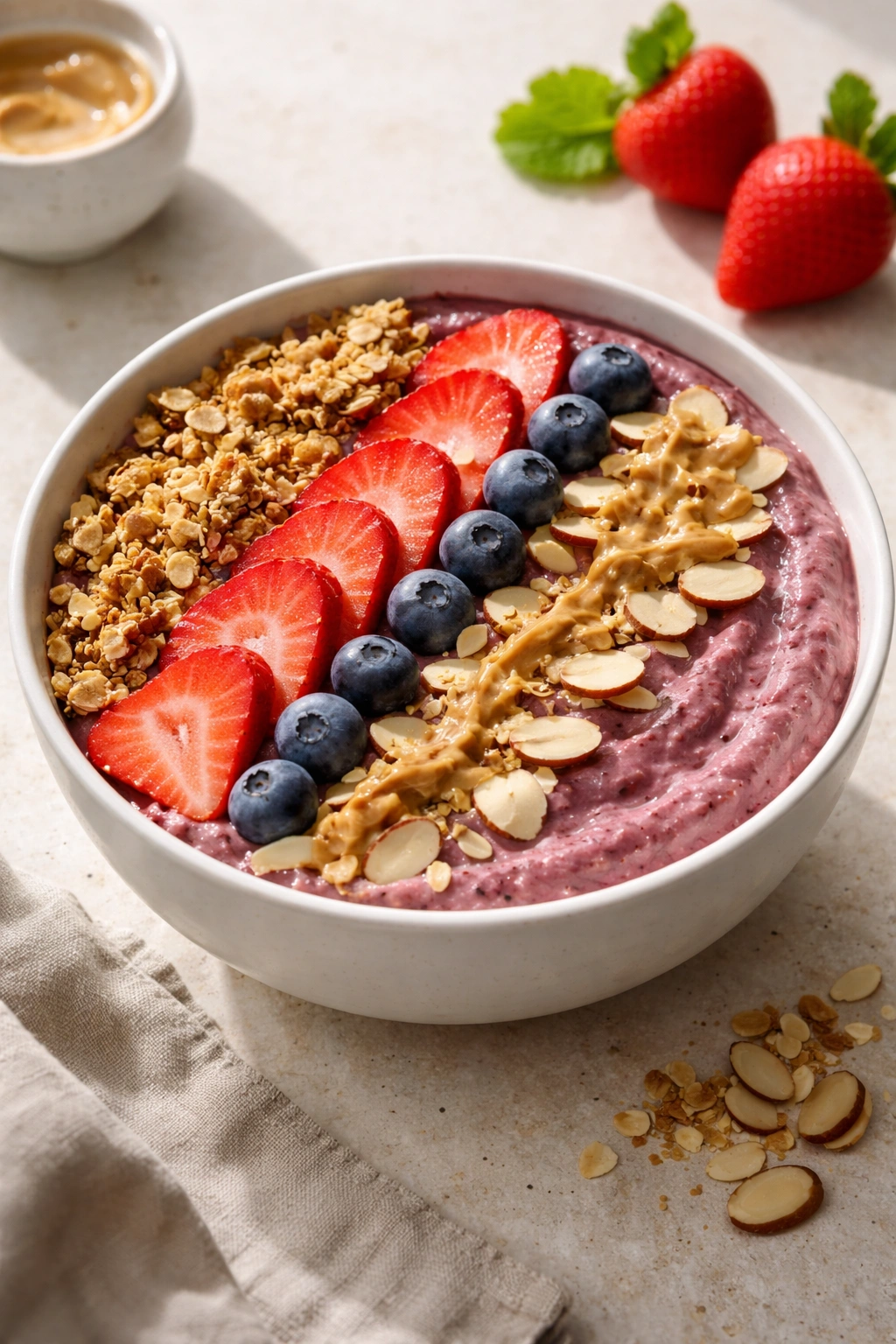
A smoothie bowl is essentially a blended protein drink poured into a bowl instead of a glass, then topped with crunchy and chewy ingredients that you actually interact with while eating. This method transforms a liquid meal into something textured and satisfying, and the layering ritual makes breakfast feel intentional rather than rushed.
How to Build One Under 300 Calories
Blend 1 cup unsweetened almond milk with ¾ cup plain nonfat Greek yogurt, ½ frozen banana, and ½ cup frozen berries — this creates a thick, creamy base that pours like soft-serve ice cream. Add a scoop of vanilla protein powder (about 20-25 grams of additional protein) if you want extra density. Pour the mixture into a bowl, then top with thin layers: a tablespoon of unsweetened granola for crunch, a small handful of berries for color and freshness, 1 tablespoon of sliced almonds for healthy fat, and a light drizzle of almond butter. This entire bowl delivers approximately 280 calories with 35-40 grams of protein, depending on your protein powder choice.
The Secret to the Perfect Texture
The trick is making your base thick enough that it holds the toppings without becoming a smoothie again. This means blending it for less time than you normally would for a drinkable smoothie — the mixture should have some texture, almost like frozen yogurt. If it’s too thin, add a tablespoon of chia seeds to the base before pouring, which will thicken it and add fiber without many additional calories.
Insider note: Prep your smoothie base in ice-cube trays the night before, then blend the frozen cubes with milk in the morning for an ultra-creamy consistency that tastes like a protein milkshake.
4. Cottage Cheese Toast with Everything Bagel Seasoning
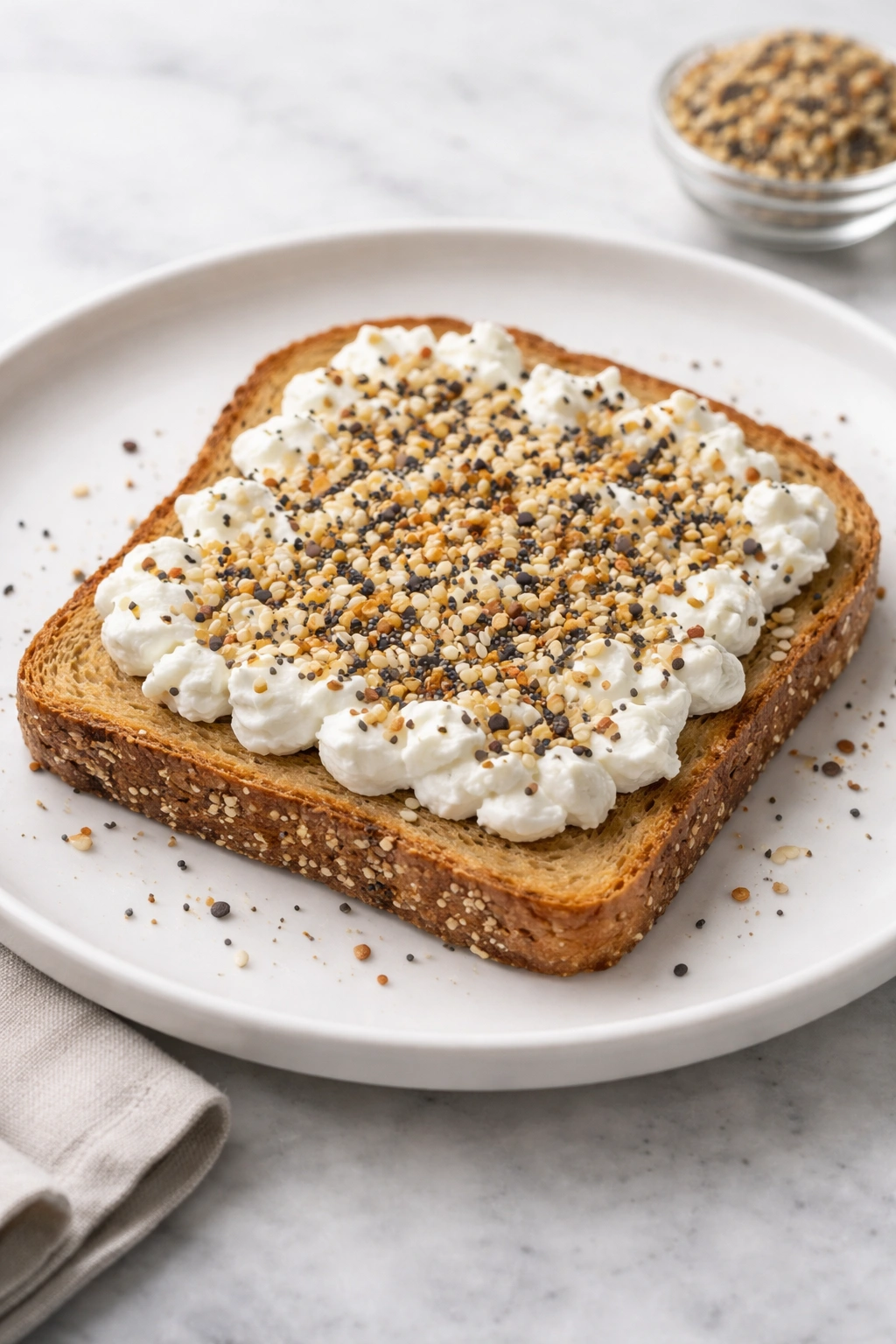
Cottage cheese has quietly become one of the most underrated breakfast proteins — it delivers 28 grams of protein per cup while remaining incredibly affordable and shelf-stable. Unlike Greek yogurt, which has a tangy creaminess, cottage cheese has a slightly firmer texture with distinct curds, which creates an interesting contrast when spread on toasted whole-grain bread.
Why Cottage Cheese Belongs in Your Breakfast Rotation
Recent research consistently shows that cottage cheese has one of the highest thermic effects of any protein source, meaning your body burns more calories digesting it than it burns digesting other foods. It’s also rich in casein protein, which digests slowly and keeps you feeling satisfied for hours. If you’ve tried it before and found it bland, the seasoning method below transforms that into an addictive breakfast in under five minutes.
The Exact Method That Makes It Taste Good
Toast one slice of whole-grain bread (about 80-100 calories) until it’s golden and crispy. Spread ½ cup of full-fat cottage cheese (roughly 110 calories, 14 grams of protein) across the surface of the toast. Sprinkle generously with everything bagel seasoning — this combination of sesame seeds, poppy seeds, dried garlic, dried onion, and sea salt transforms plain cottage cheese into something genuinely crave-worthy. Add a handful of fresh microgreens or arugula on top if you want color and a peppery bite. Total: approximately 210-230 calories with 16-18 grams of protein. If you have room in your calorie budget, add a sliced hard-boiled egg or a few slices of smoked salmon.
Pro tip: Buy full-fat cottage cheese instead of nonfat. The extra fat makes it creamier, more satisfying, and the additional calories are minimal while the satiety boost is significant.
5. Smoked Salmon and Cream Cheese Roll-Ups
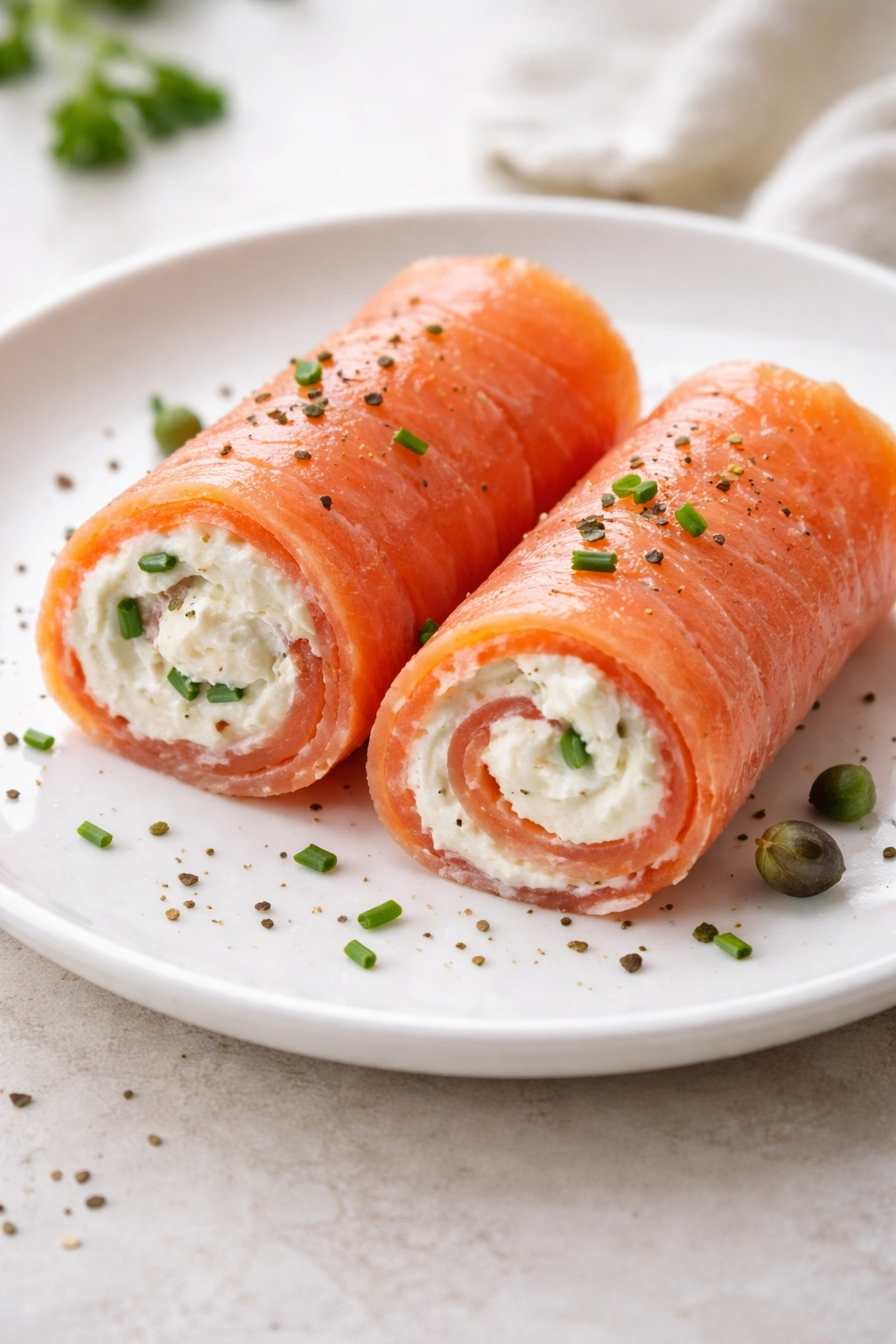
This is the breakfast that tastes like brunch without requiring any cooking. Smoked salmon is a concentrated source of protein and omega-3 fatty acids — the exact nutrients your brain and heart want first thing in the morning. Pairing it with a small amount of cream cheese creates something savory, elegant, and genuinely satisfying that doesn’t feel like diet food.
The Nutritional Advantage of Smoked Fish
A serving of smoked salmon contains approximately 25 grams of protein in just 3 ounces, plus selenium, vitamin D, and astaxanthin — a powerful antioxidant that gives salmon its pink color. These nutrients support cognitive function, reduce inflammation, and stabilize your energy throughout the morning. The omega-3 fatty acids also improve your body’s sensitivity to insulin, which means more stable blood sugar and fewer energy crashes.
Building the Perfect Roll-Up
Lay out one large romaine lettuce leaf or a thin slice of whole-grain bread as your base. Spread 2 tablespoons of whipped cream cheese (about 90 calories) across the surface. Layer 2-3 ounces of smoked salmon (about 50 calories) on top. Add thin slices of cucumber, a squeeze of fresh lemon juice, and a small pinch of capers if you want extra brightness. Roll it tightly, slice in half, and eat with your hands. Make two of these roll-ups and you’re at approximately 280 calories with 28-30 grams of protein. Serve with a small bowl of berries on the side for carbohydrates and antioxidants.
Worth knowing: This breakfast actually improves over a few hours as the flavors meld together, making it perfect for make-ahead eating or eating at your desk if you work outside the home.
6. Spinach and Feta Egg Scramble with Whole-Grain Toast
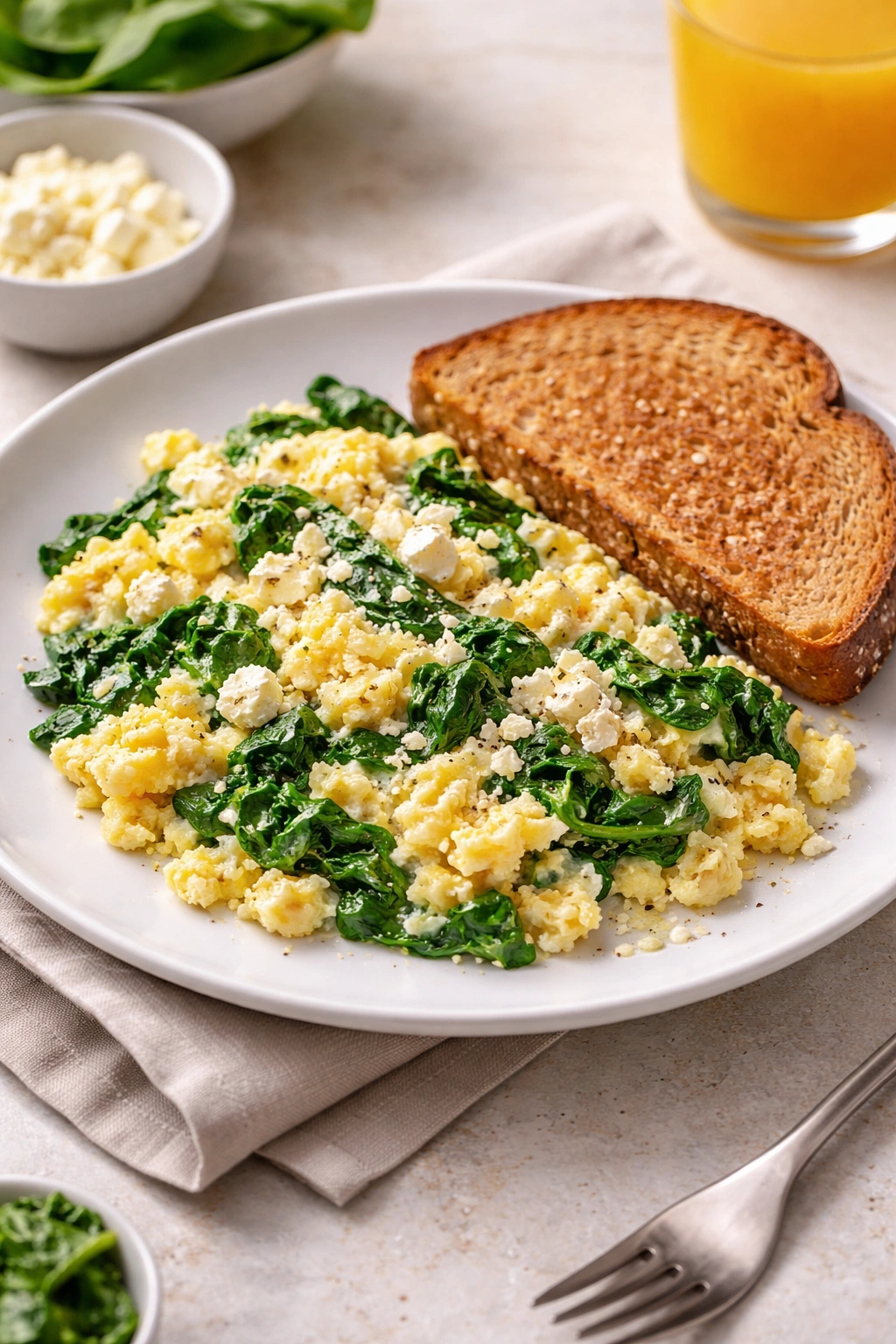
A well-executed egg scramble is comfort food that happens to be efficient nutrition. The key to preventing rubbery, overcooked eggs is understanding the exact moment to remove them from the heat — they’ll continue cooking from residual warmth, so you want them to look almost underdone when they hit your plate.
Why This Combination Works Nutritionally
Spinach contains lutein and zeaxanthin, two plant compounds that protect your eyes and support visual acuity throughout the day. When you combine spinach with eggs, the fat in the yolks actually increases your absorption of these fat-soluble nutrients by up to 300 percent compared to eating spinach alone. Feta cheese adds a salty punch that makes the entire dish crave-worthy while contributing 4-5 grams of protein per ounce.
The Technique That Prevents Watery Scrambled Eggs
Whisk 3 large eggs in a bowl with a pinch of salt and pepper. Heat a nonstick skillet over medium heat with a light coating of olive oil spray or butter. Once the pan is hot, add 2 cups of fresh spinach and let it wilt for about 30 seconds, stirring gently. Pour in the whisked eggs and let them sit undisturbed for about 15 seconds — this creates a slight crust on the bottom. Then push the eggs gently from the edges toward the center, tilting the pan so uncooked egg flows to the hot surface. When the eggs are about 80 percent set (they’ll still have slight moisture on top), remove the pan from heat and fold in ¼ cup crumbled feta cheese. The carryover heat will finish the cooking without overcooking the protein.
Pair this with one slice of whole-grain toast (80-100 calories) for a complete breakfast of approximately 280 calories with 24-26 grams of protein.
Pro tip: Add a tablespoon of water to your whisked eggs before cooking — this creates steam inside the mixture and produces a fluffier scramble with better texture.
7. Almond Butter and Banana Toast with Chia Seeds
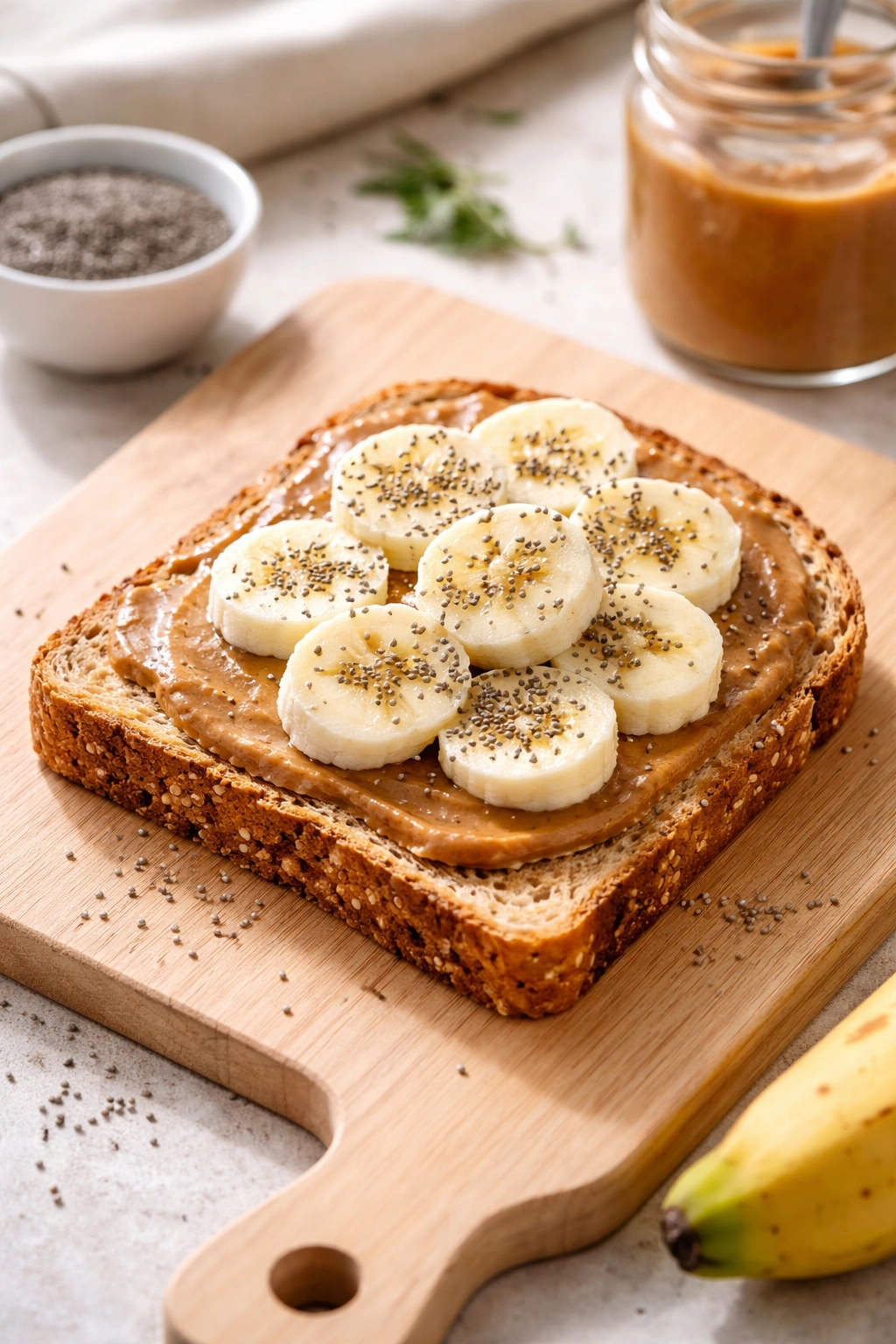
This is the breakfast that leans slightly toward the carbohydrate side of the spectrum but gets away with it because the protein and fat content prevents blood sugar spikes. The combination of almond butter’s healthy fats, banana’s resistant starch (especially if you use a slightly underripe banana), and chia seeds’ soluble fiber creates a breakfast that delivers sustained energy without the crash.
Understanding the Protein Profile Here
While this breakfast isn’t as protein-heavy as others on this list (it delivers around 12-15 grams of protein), the fat and fiber composition means those protein grams are incredibly efficiently utilized. Almond butter contains 3.5 grams of protein per tablespoon, plus arginine and magnesium, minerals that support heart health and energy production. Chia seeds contribute additional protein while their gel-forming fiber slows carbohydrate digestion, preventing the insulin spike that would make you hungry again by 10 a.m.
The Exact Assembly
Toast one slice of whole-grain bread until golden. Spread 1.5 tablespoons of natural almond butter (about 150 calories, 5.5 grams of protein) across the surface. Layer thin slices from half a medium banana on top. Sprinkle 1 tablespoon of chia seeds across the banana (about 60 calories, 3 grams of protein). A light drizzle of raw honey (½ teaspoon) brings everything together. Total: approximately 280 calories with 13-15 grams of protein. The beauty of this breakfast is that it’s literally impossible to mess up, and it tastes satisfying enough that you’ll actually enjoy eating it.
Insider note: If you’re sensitive to the texture of chia seeds, soak them in a tablespoon of water for five minutes before sprinkling them on your toast — this hydrates them and creates a more pleasant texture that doesn’t stick to the roof of your mouth.
8. Turkey Sausage and Vegetable Frittata Portion

A frittata is essentially a baked scrambled egg dish that’s cooked in a skillet and sliced into portions — it’s more forgiving than a traditional scramble because you’re not actively cooking it at the stove, and it actually tastes better on the second or third day after the flavors have set. Making one on Sunday gives you three to four ready-to-heat breakfasts for the week.
Why Lean Meat Amplifies Protein Efficiency
Turkey sausage delivers around 12 grams of protein per two-ounce patty (compared to pork sausage, which carries significantly more fat). When you combine it with eggs, you’re creating a complete amino acid profile that supports muscle maintenance and recovery from exercise or daily activity. The B vitamins in turkey also support energy metabolism, meaning the calories you eat actually get converted to usable energy more efficiently.
Building a Simple Frittata
Brown 6 ounces of ground turkey sausage in an oven-safe skillet over medium heat, breaking it into small pieces as it cooks (about 5-6 minutes). Remove the sausage and set aside, leaving about 1 tablespoon of the fat in the pan. Add 2 cups of chopped vegetables (bell peppers, zucchini, onions, mushrooms — whatever you have) and sauté until softened, about 5 minutes. Return the cooked sausage to the pan and add ½ cup shredded cheddar cheese. In a bowl, whisk 8 large eggs with ¼ cup unsweetened almond milk, salt, and pepper, then pour this mixture over the sausage and vegetables in the skillet. Let it cook on the stovetop for 2-3 minutes until the edges begin to set, then transfer the entire skillet to a preheated 375°F oven for 12-15 minutes, until the center is set and the top is lightly golden.
Slice the finished frittata into four equal portions. Each portion is approximately 240-260 calories with 28-30 grams of protein. Reheat individual slices for about 30 seconds in the microwave before eating.
9. Chia Seed Pudding with Protein Powder
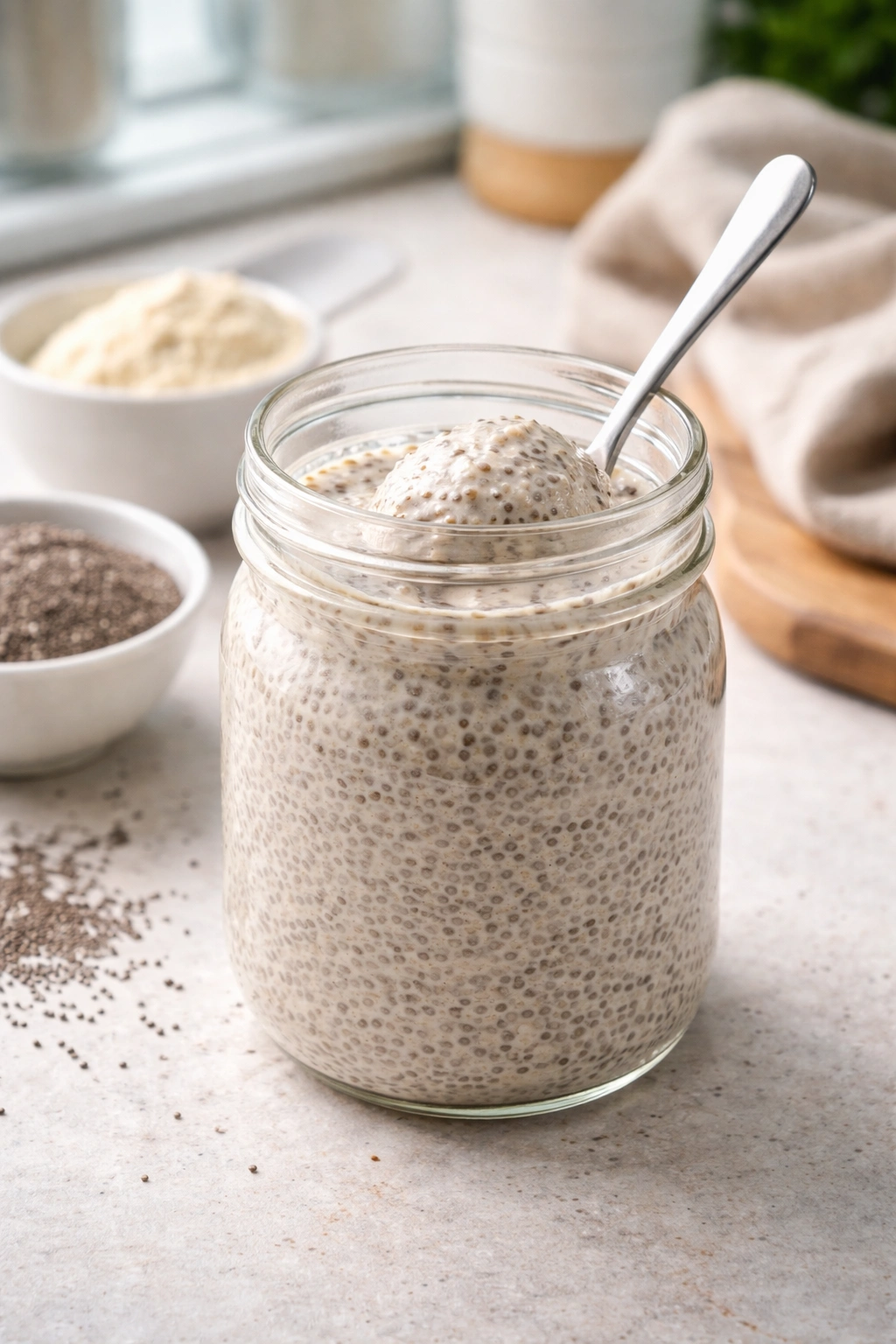
Chia seed pudding is one of those breakfasts that looks like you spent 20 minutes preparing it when you actually invested five minutes of active work the night before. The pudding thickens overnight as the chia seeds absorb liquid, creating a texture that’s simultaneously creamy and crunchy — it’s almost like eating a high-protein tapioca pudding.
The Science Behind Chia Seed Absorption
Chia seeds contain soluble fiber that forms a gel when exposed to liquid — this is what thickens your pudding overnight. This same fiber slows your digestion and stabilizes blood sugar, meaning the carbohydrates from your pudding are released slowly into your bloodstream. The result is steady energy and sustained satiety that far outlasts the actual time spent eating.
The Exact Pudding Formula
In a mason jar or container, combine ¼ cup chia seeds (about 138 calories, 7 grams of protein), 1 cup unsweetened almond milk (about 30 calories), ½ cup plain nonfat Greek yogurt (about 50 calories, 9 grams of protein), and ½ scoop vanilla protein powder (about 60 calories, 12 grams of protein). Stir well, then cover and refrigerate overnight or for at least 4 hours. The mixture will thicken into a pudding-like consistency. In the morning, give it a quick stir (it may seem too thick initially, but stirring breaks up the clumps). Top with a small handful of fresh berries or granola for texture contrast. Total: approximately 280 calories with 28-29 grams of protein.
Pro tip: Make three or four jars at once and grab a different one each morning — you’ll have five days of zero-prep breakfast ready to go.
10. Chickpea Flour Pancakes with Greek Yogurt
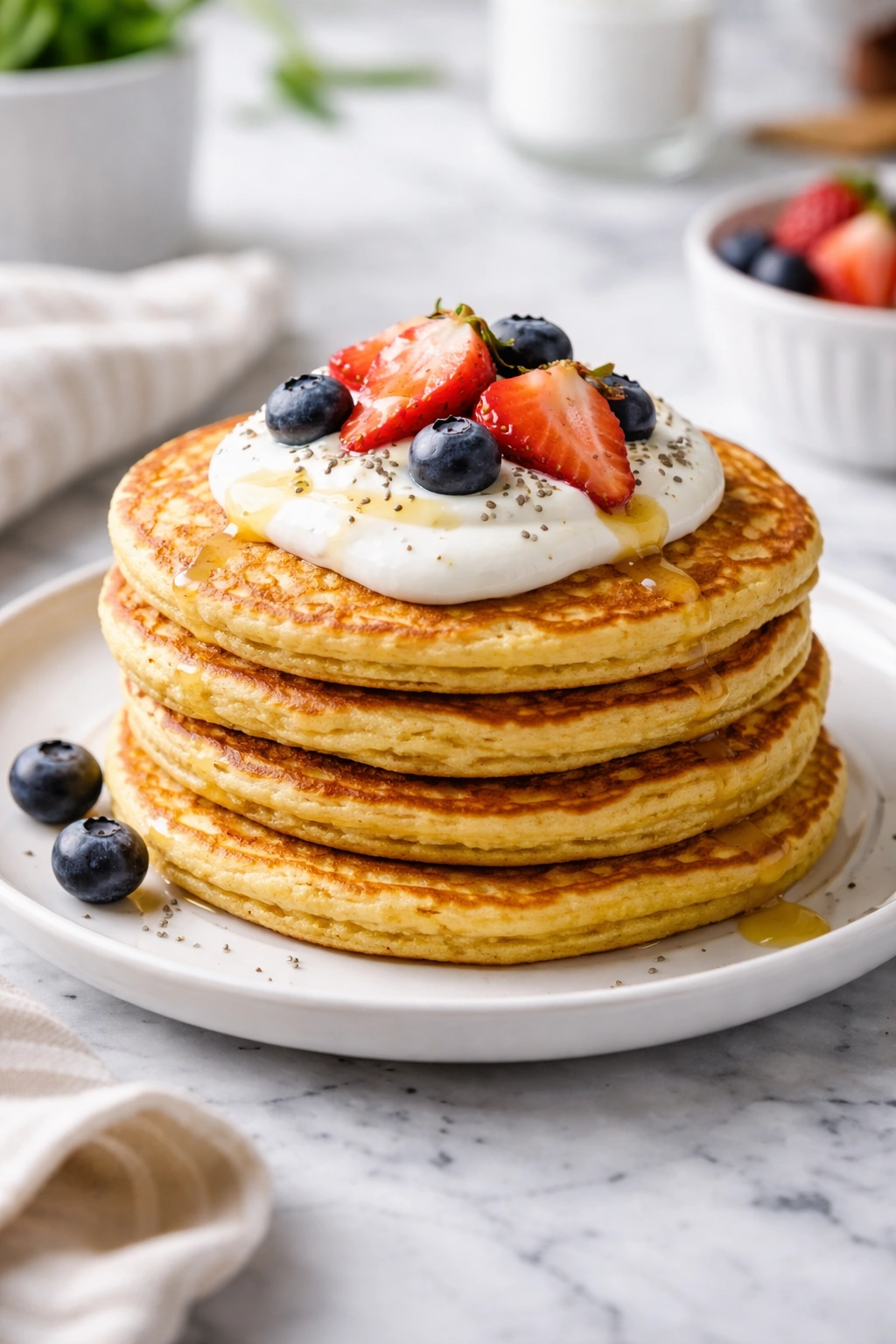
These pancakes are made from chickpea flour rather than wheat flour, which means they’re naturally higher in protein and fiber while being lower in overall carbohydrates. They also have an interesting earthy, almost nutty flavor that pairs beautifully with toppings like Greek yogurt, berries, or a drizzle of almond butter.
Why Chickpea Flour Changes the Pancake Game
One cup of chickpea flour contains approximately 20 grams of protein — compare that to all-purpose wheat flour, which has roughly 3 grams per cup. Chickpea flour also contains resistant starch, which acts similarly to fiber and doesn’t spike your blood sugar the way traditional pancakes do. This means you get a genuinely satisfying, textured breakfast that doesn’t leave you ravenous 90 minutes later.
The Pancake Recipe That Actually Works
In a blender, combine 1 cup unsweetened almond milk, 2 large eggs, ½ cup chickpea flour, 1 teaspoon vanilla extract, 1 teaspoon baking powder, and a pinch of salt. Blend until smooth — the batter will be thinner than traditional pancake batter, which is correct. Heat a nonstick skillet or griddle over medium heat and lightly coat with cooking spray. Pour small pancakes (about 3 inches in diameter) onto the hot surface. They’ll cook in about 2-3 minutes per side. Make four small pancakes.
Each pancake is approximately 50-60 calories with 4-5 grams of protein. Top a stack of two pancakes (120 calories, 9-10 grams of protein) with ½ cup plain nonfat Greek yogurt (about 50 calories, 9 grams of protein) and a handful of berries (about 30-40 calories). This brings your total to approximately 200-210 calories with 28-30 grams of protein, leaving room for a small drizzle of honey or a tablespoon of almond butter if you want additional flavor.
Worth knowing: These pancakes freeze beautifully and reheat perfectly in a toaster oven, making them an ideal make-ahead breakfast for busy weeks.
Final Thoughts

The pattern connecting every breakfast on this list isn’t any single ingredient — it’s the fundamental principle that protein and smart carbohydrate combinations create satiety without excess calories. When you prioritize protein at breakfast, something shifts in your metabolism. You’re not fighting hunger all morning; you’re not reaching for snacks at 10:30 a.m.; you’re not wondering why you’re exhausted by noon despite eating breakfast.
The practical reality is that any of these breakfasts will work for you if you actually make one consistently. Pick whichever one sounds most appealing, commit to eating it three mornings a week for two weeks, and pay attention to your energy, hunger signals, and focus. You’ll quickly notice that a protein-forward breakfast isn’t deprivation — it’s actually the opposite. It’s eating food that tastes good while simultaneously supporting your body’s actual nutritional needs. That’s the entire game.
