



When you’ve got hungry people at home and only 30 minutes to spare, chicken is your best friend. It’s lean, versatile, cooks fast, and takes on whatever flavors you throw at it—whether that’s zesty lemon, rich garlic butter, or bold Asian-inspired sauces. The truth is, you don’t need fancy equipment or hours of prep time to put together a dinner that tastes like you spent the whole afternoon cooking. A hot skillet, a quality piece of chicken, and a handful of smart ingredients are all you need to pull off something genuinely delicious.
The key to quick chicken dinners isn’t rushing through the cooking—it’s understanding how to build flavor fast and choose cooking methods that work with your time constraint rather than against it. Thin cutlets cook through in minutes. Pan-searing creates a golden crust while keeping the inside tender and juicy. A vibrant sauce comes together while your protein cooks. Fresh toppings and thoughtful sides add complexity without adding time. Once you understand these fundamentals, you’ll realize that 30 minutes is actually plenty of time to create something your whole family will genuinely enjoy.
The 12 chicken dinners below are proof. Each one is structured to be realistic for a weeknight cook, with clear timing breakdowns and ingredient lists that don’t require a specialty store run. They’re also built for flexibility—swap the vegetable, swap the starch, use what you have on hand. The framework stays the same, and dinner still comes together fast.
1. Lemon Garlic Butter Chicken with Green Beans
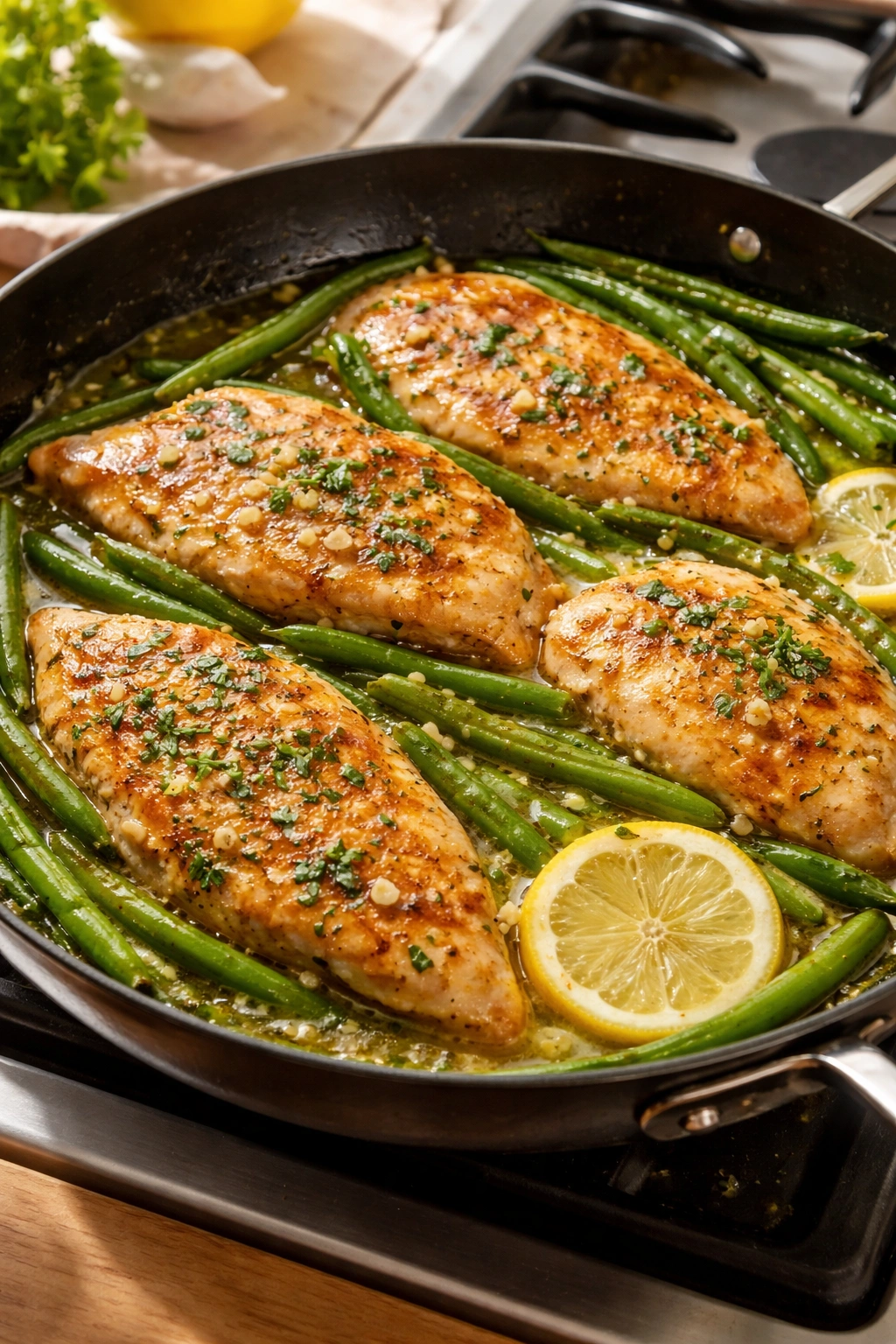
This is the kind of dinner that tastes like you know exactly what you’re doing, even if you threw it together in under 20 minutes. Thin chicken cutlets get a quick sear in a hot skillet, then they’re finished with a silky pan sauce made from lemon juice, fresh garlic, and quality butter. The green beans go into the same pan, absorbing all those bright, lemony flavors.
Why It Works So Well
Lemon and garlic are a classically powerful combination because they build flavor without adding fat or calories. The acid in the lemon brightens the richness of the butter while keeping the chicken from feeling heavy. What makes this dinner feel restaurant-quality is the technique: once your cutlets are seared and cooked through, you remove them temporarily, build the sauce in the residual heat, then toss everything together at the end. This allows each component to develop its own flavor before they meet on the plate.
What to Know Before You Start
- Buy thin cutlets or pound them yourself: If you can only find thick chicken breasts, place them flat on a cutting board and slice horizontally with a sharp knife to create two thinner pieces. Thin cutlets cook through in 3–4 minutes, while thick breasts take 7–8 minutes.
- Fresh lemon juice only: Bottled lemon juice tastes metallic and flat compared to fresh. Squeeze it while the pan is heating.
- Green beans take exactly as long as chicken: Trim them while your skillet heats, then add them to the pan right after the chicken goes in so everything finishes together.
- Don’t overcrowd the pan: If your skillet is too small, the chicken will steam instead of sear. Work in batches if needed—a golden crust is non-negotiable here.
Timing breakdown: 5 minutes prep, 15 minutes cook time, total 20 minutes.
2. Thai Peanut Chicken Stir-Fry
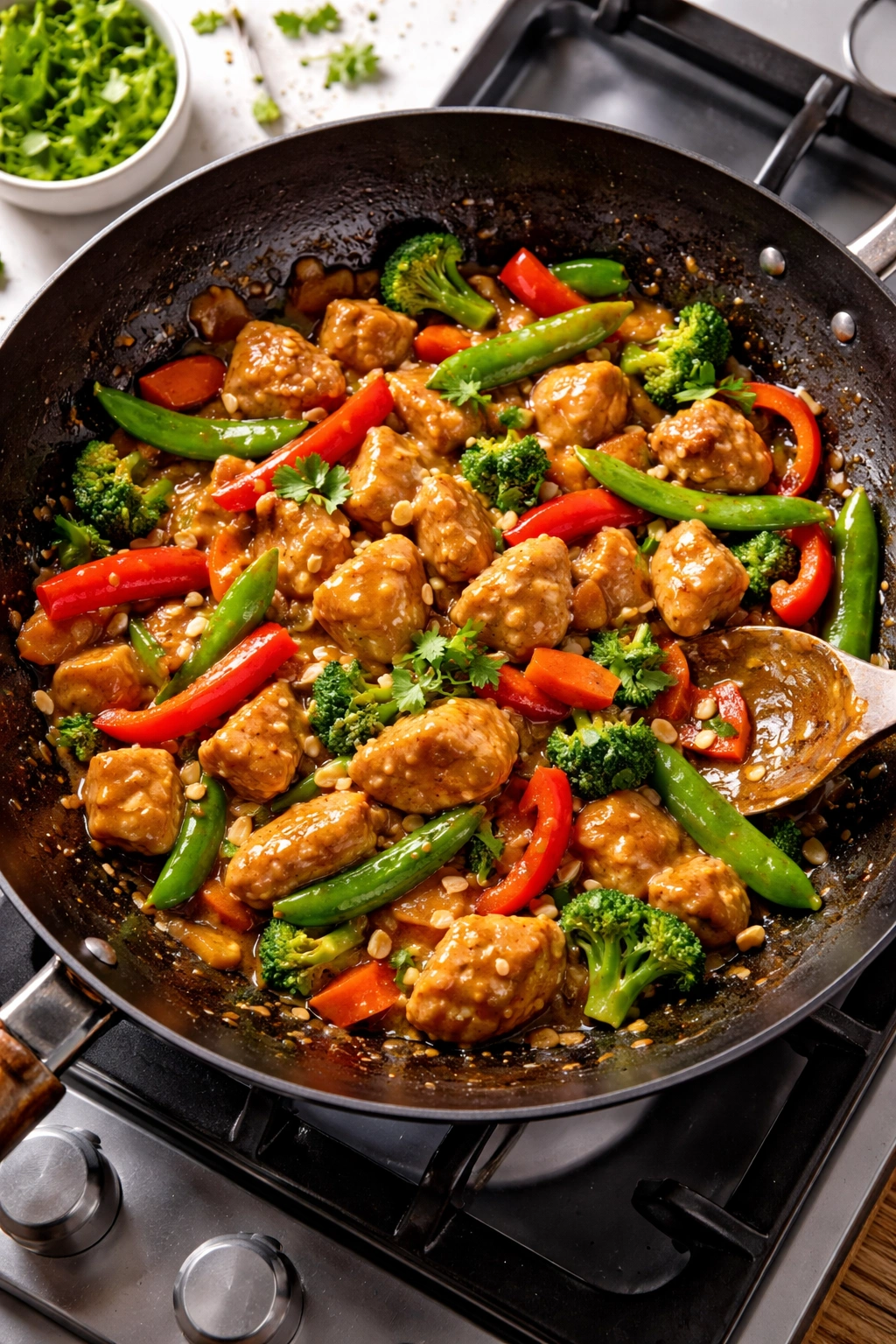
Stir-fries are the weeknight cook’s secret weapon because they’re faster than takeout and infinitely better. This one combines tender chicken, crisp vegetables, and a creamy Thai peanut sauce that tastes complex but comes together in about 10 minutes. Serve it over rice or noodles depending on what you have open in the pantry.
The Sauce Is Everything
Most people skip making their own stir-fry sauce because they think it’s complicated. It’s not. Peanut butter, soy sauce, lime juice, ginger, and garlic are the foundation—five ingredients that transform plain chicken and vegetables into something that tastes like it came from a restaurant kitchen. The peanut butter acts as both thickener and flavor powerhouse, creating a sauce that clings to every piece of chicken and vegetable. Making the sauce first (while your pan heats and your ingredients are being prepped) means it’s ready to go the moment everything hits the skillet.
Prep Strategy for Speed
- Mise en place is non-negotiable: Cut and measure everything before you turn on the heat. Stir-frying happens fast, and stopping mid-cook to chop a bell pepper means overcooked chicken.
- Chicken cut into uniform bite-sized pieces: ¾-inch cubes are ideal. Larger pieces stay tough; smaller pieces dry out. Uniformity ensures even cooking.
- Choose vegetables that cook at similar speeds: Broccoli florets, bell peppers, snap peas, and mushrooms all finish in 4–5 minutes. Carrots and dense vegetables need a 1-minute head start.
Timing breakdown: 10 minutes prep, 10 minutes cook time, total 20 minutes.
3. Creamy Tuscan Chicken
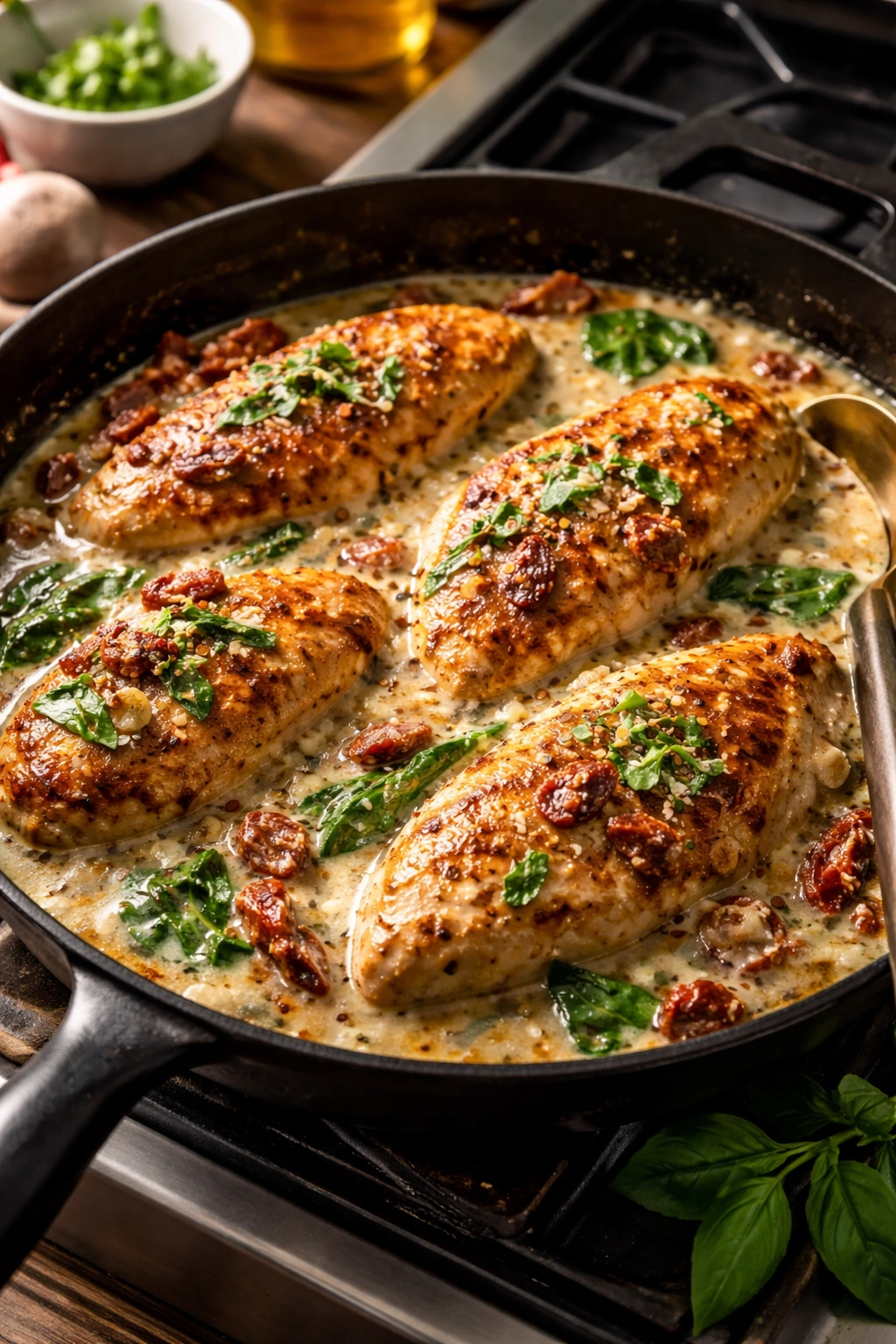
This is the dinner you make when you want something rich and restaurant-worthy but have zero energy for complexity. Chicken cutlets get seared until golden, then they’re finished in a cream sauce loaded with sun-dried tomatoes, garlic, and fresh basil. It’s luxurious without being fussy, and it comes together entirely in one skillet.
Why This Sauce Works
The Tuscan flavor profile—tomatoes, garlic, basil, and cream—is inherently balanced. The acidity in the sun-dried tomatoes prevents the cream from feeling heavy. The fresh basil brightens the whole dish. And because you’re building the sauce directly in the pan where the chicken cooked, you’re capturing all those caramelized bits of protein (what cooks call fond), which add depth and umami to the sauce without any extra work.
Essential Details
- Sun-dried tomatoes packed in oil: These are worth buying. They’ve got concentrated tomato flavor that regular canned tomatoes can’t match, and they soften in seconds.
- Heavy cream or half-and-half: Full-fat versions create the silkiest sauce. Lighter versions can curdle if the heat gets too high—keep your flame at medium-high, not full blast.
- Fresh basil goes in at the very end: It’s delicate and turns bitter if overcooked. Tear it by hand instead of chopping to prevent bruising.
- Serve with something to soak up the sauce: Crusty bread, pasta, mashed potatoes, or polenta all work beautifully.
Timing breakdown: 5 minutes prep, 18 minutes cook time, total 23 minutes.
4. Honey Soy Glazed Chicken Thighs
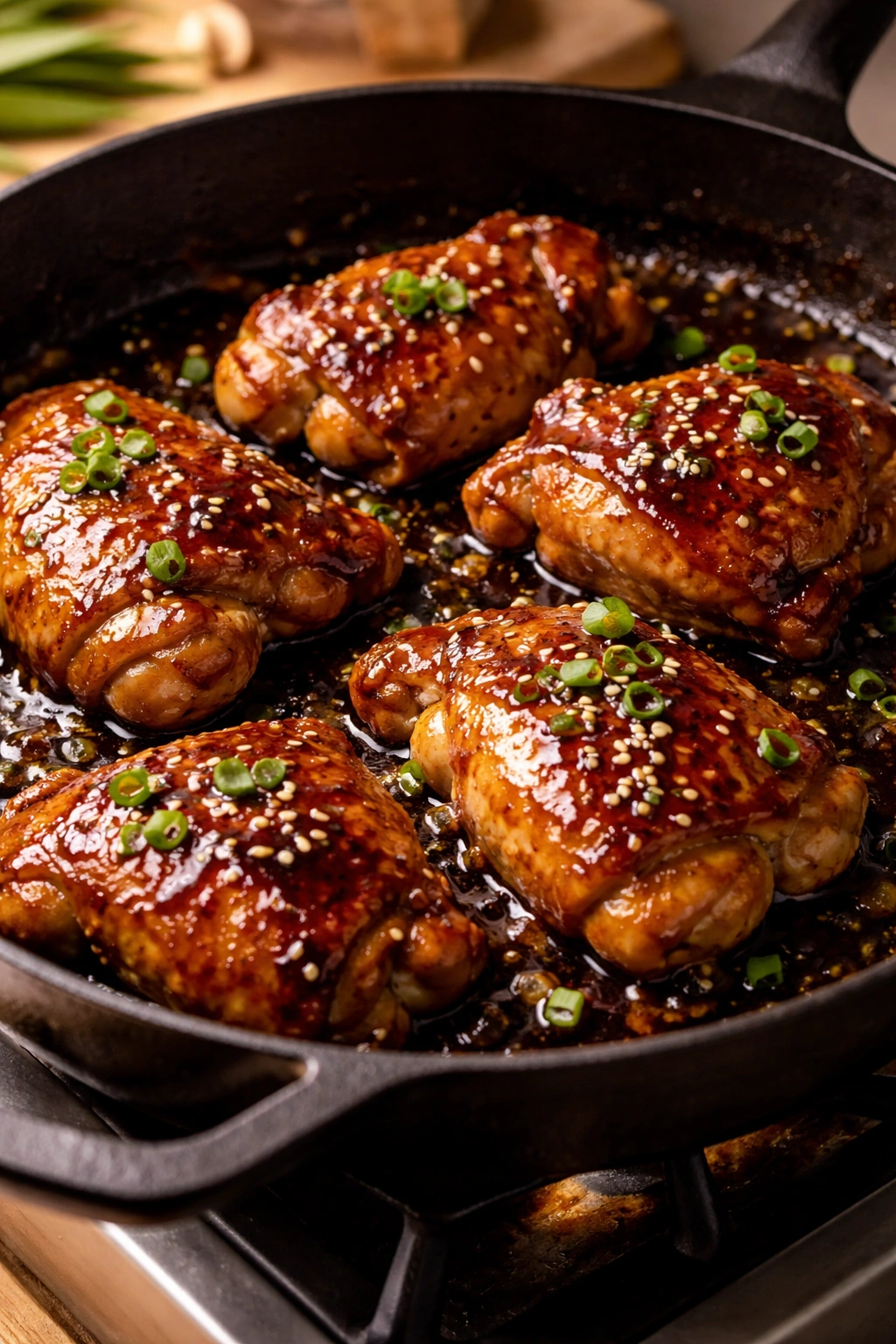
Chicken thighs are an underrated hero for quick dinners. They’re more forgiving than breasts—they stay juicy even if you cook them a minute too long—and their deeper flavor stands up to bold sauces. This honey soy glaze is simultaneously sweet, savory, and umami-rich, with a sticky coating that caramelizes on the chicken as it cooks.
Why Thighs Over Breasts
Thighs have higher fat content, which means more flavor and inherently more moisture. They also cook slightly faster than thick breasts because they’re usually thinner. The dark meat stays tender even with aggressive cooking, which is honestly perfect for busy weeknights when precision timing feels impossible.
The Glaze
Honey, soy sauce, rice vinegar, ginger, and garlic become a glossy glaze that adds multiple layers of flavor in seconds. The honey caramelizes as the chicken cooks, creating both flavor and visual appeal—shiny, golden skin looks homemade fancy. This glaze is also forgiving: even if you accidentally cook the chicken an extra minute, the caramelized glaze is so flavorful that nobody notices.
Practical Notes
- Pat the chicken dry before cooking: Moisture is the enemy of a good sear. A paper towel takes 10 seconds and makes all the difference.
- Don’t move the chicken while it sears: Let it sit in the pan untouched for 2–3 minutes so the skin gets golden. Constantly poking at it prevents browning.
- Make the glaze while the chicken cooks: Whisk honey, soy sauce, rice vinegar, minced ginger, and minced garlic together in a small bowl. By the time the chicken needs it, the glaze is ready.
Timing breakdown: 5 minutes prep, 18 minutes cook time, total 23 minutes.
5. Blackened Chicken with Lime and Cilantro
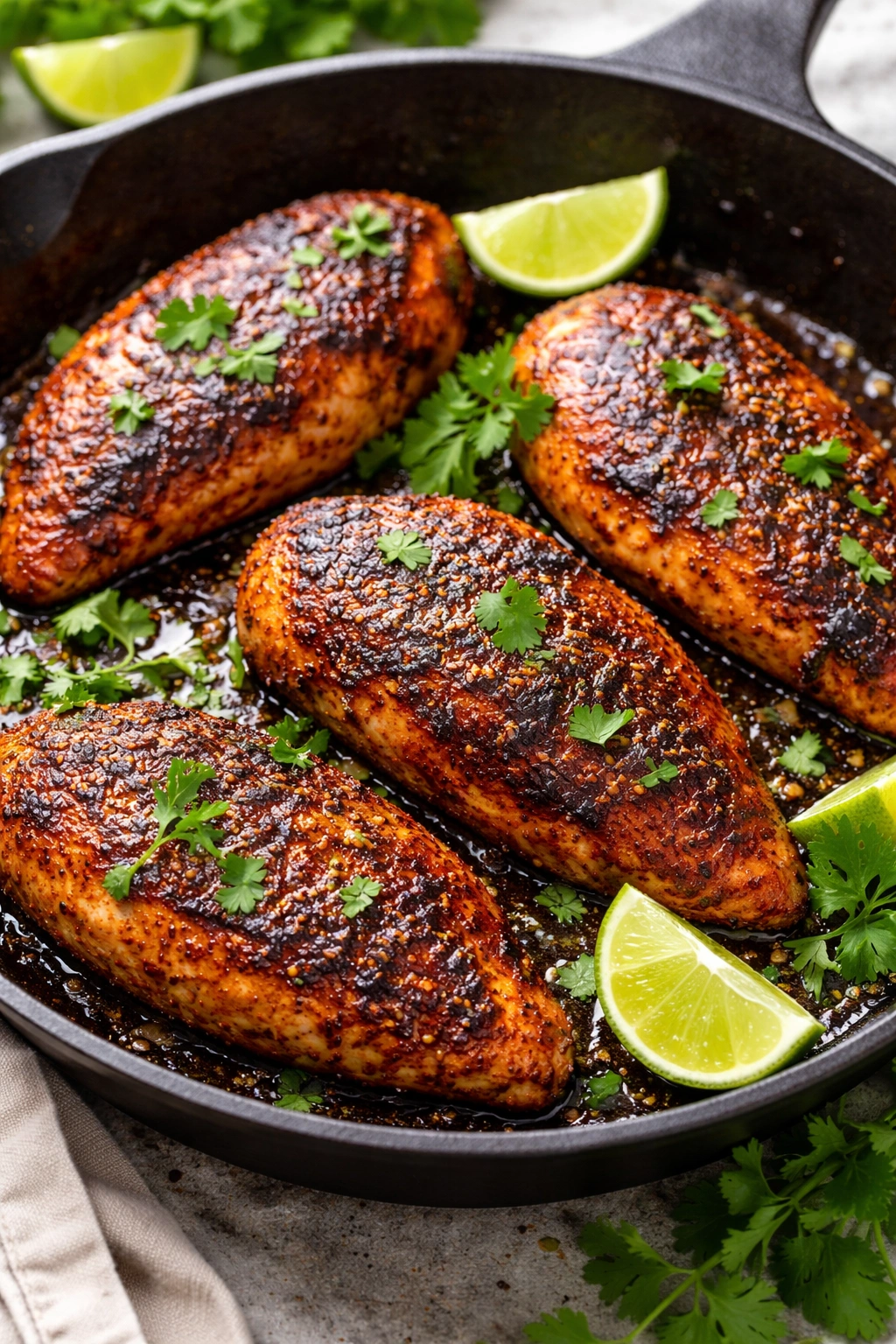
Blackening is a technique that sounds more complicated than it actually is. A spice rub goes on the chicken, the chicken hits a screaming-hot skillet, and in minutes you’ve got a crusty, flavorful exterior with a juicy interior. A lime wedge and fresh cilantro add brightness that cuts through the richness of the spices.
The Spice Blend
Most traditional blackening spices include paprika, cayenne, garlic powder, onion powder, black pepper, and salt. The beauty of this rub is that it uses spices you probably already have. You’re creating a flavor crust that tastes like complicated cooking but is actually just smart seasoning. The spices stick to the chicken as it cooks, building flavor on the surface rather than relying on a sauce.
Technique Matters Here
- Make your skillet very hot: You want it hot enough that when the chicken hits the pan, it sizzles immediately. This high heat creates the characteristic dark crust that gives blackening its name.
- Don’t flip early: Let the chicken sit untouched for 4–5 minutes on the first side so the spice rub can caramelize. Early flipping disturbs the process.
- Use boneless, skinless breasts or thighs: Skin prevents the spice rub from making contact with the meat, and you’ll miss the whole point of the technique.
- Lime wedges and cilantro are not optional: They’re the brightness that makes this dish work. Squeeze the lime over the chicken right before serving.
Timing breakdown: 5 minutes prep, 15 minutes cook time, total 20 minutes.
6. Pesto Chicken Pasta
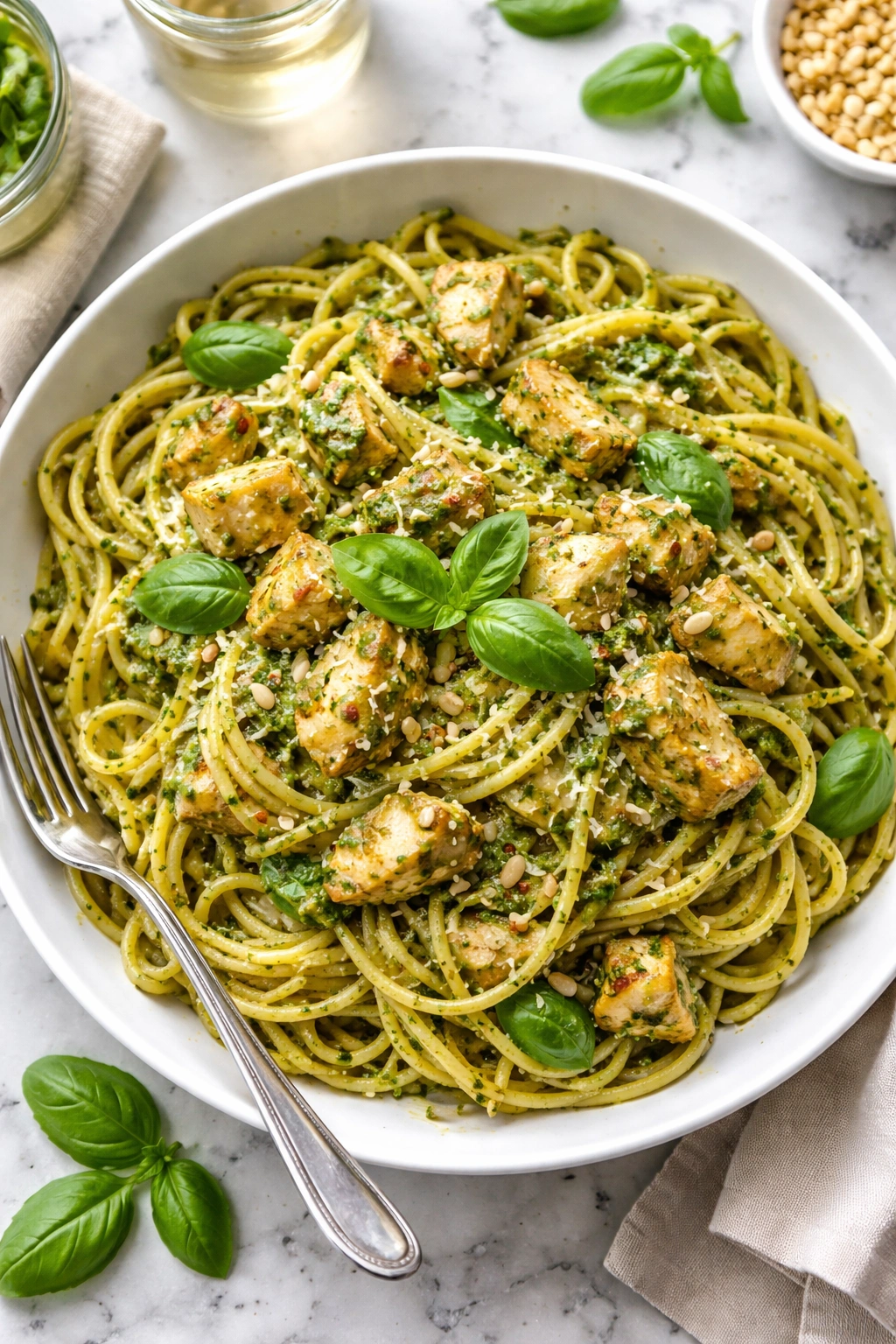
If you’ve got pasta, chicken, and a jar of pesto in the kitchen, you can have a complete dinner on the table in 25 minutes. This is the kind of meal that works for everyday family dinners and also feels special enough to serve to guests—that’s the mark of a truly useful recipe.
Store-Bought Pesto Is Your Friend
Homemade pesto is lovely, but store-bought is genuinely good and saves you 15 minutes. Look for a quality brand—the difference between cheap and good pesto is noticeable. The best ones have visible basil flecks and actual cheese, not fillers.
Building the Dish
The chicken cooks while the pasta water boils, so you can have everything ready at almost the same time. The magic happens when you toss hot pasta with pesto, the reserved starchy pasta water, and the chicken—the starch in the pasta water helps the pesto coat everything evenly, creating a glossy, cohesive dish rather than a dry one.
Smart Moves
- Reserve pasta water before draining: That starchy water is essential. It helps the pesto create a sauce rather than just coating the pasta dryly.
- Cut chicken into bite-sized pieces: This way it integrates into the pasta instead of sitting on top as a separate component.
- Fresh tomatoes and mozzarella if you have them: These aren’t essential, but they add freshness and make the dish feel more special.
- Cook the pasta to just under al dente: It continues cooking slightly when you toss it with the hot chicken and pesto, so you want it slightly underdone at the point of draining.
Timing breakdown: 5 minutes prep, 18 minutes cook time, total 23 minutes.
7. Crispy Parmesan Chicken Cutlets
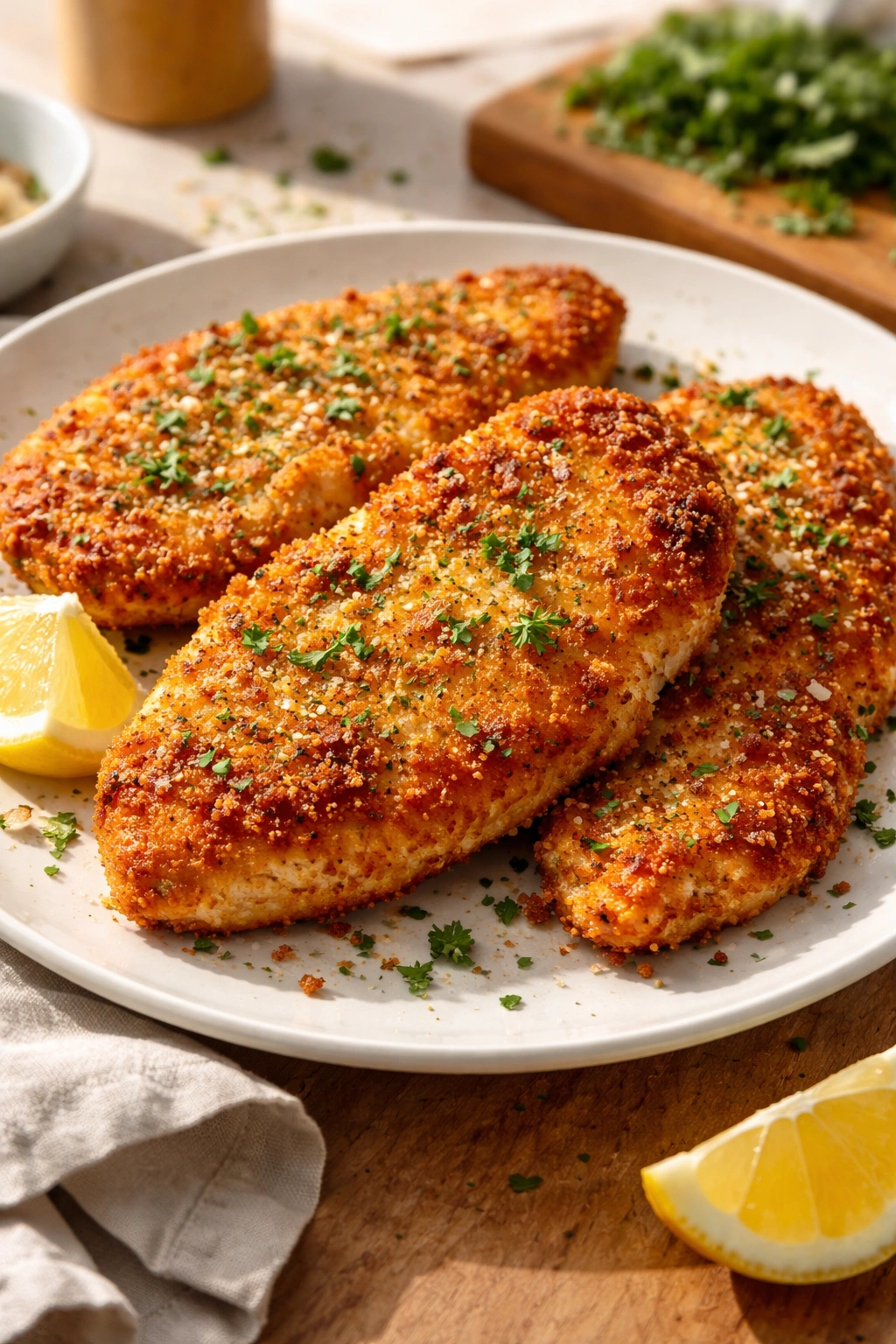
Breaded chicken cutlets sound like a crowd-pleaser that requires a ton of work. They don’t. A quick pan-fry (not deep fry) gets them golden and crispy on the outside while keeping the inside tender. Serve them with a simple lemon wedge, or dress them up with a roasted red pepper sauce.
The Breading Technique
You’re using three bowls: one with flour mixed with salt and pepper, one with beaten eggs, and one with panko breadcrumbs mixed with grated Parmesan. You coat the cutlet in flour (shaking off excess), then egg, then breadcrumbs. This triple-dip creates a crunchy, delicious crust. The egg acts as adhesive, and the Parmesan adds flavor to the crust itself.
Pan-Frying vs. Deep-Frying
Pan-frying uses a shallow amount of oil—maybe ¼ inch in the bottom of your skillet—rather than fully submerging the cutlet. It’s easier to control, uses less oil, and creates less mess than deep frying while still delivering that golden, crispy exterior. The oil should be hot but not smoking—around 350°F, which is hot enough to brown the coating without burning it.
Critical Details
- Pound the chicken to ¼-inch thickness: This ensures even cooking. Too thick and the breading browns before the inside cooks through.
- Let breaded cutlets sit for a minute: This helps the coating adhere so it doesn’t slip off during cooking.
- Use medium-high heat, not full blast: High heat browns the breading too quickly and can burn it before the chicken cooks through.
- Don’t crowd the pan: Cutlets touching each other steam instead of fry. Work in batches if needed.
Timing breakdown: 10 minutes prep, 15 minutes cook time, total 25 minutes.
8. Buffalo Chicken Lettuce Wraps
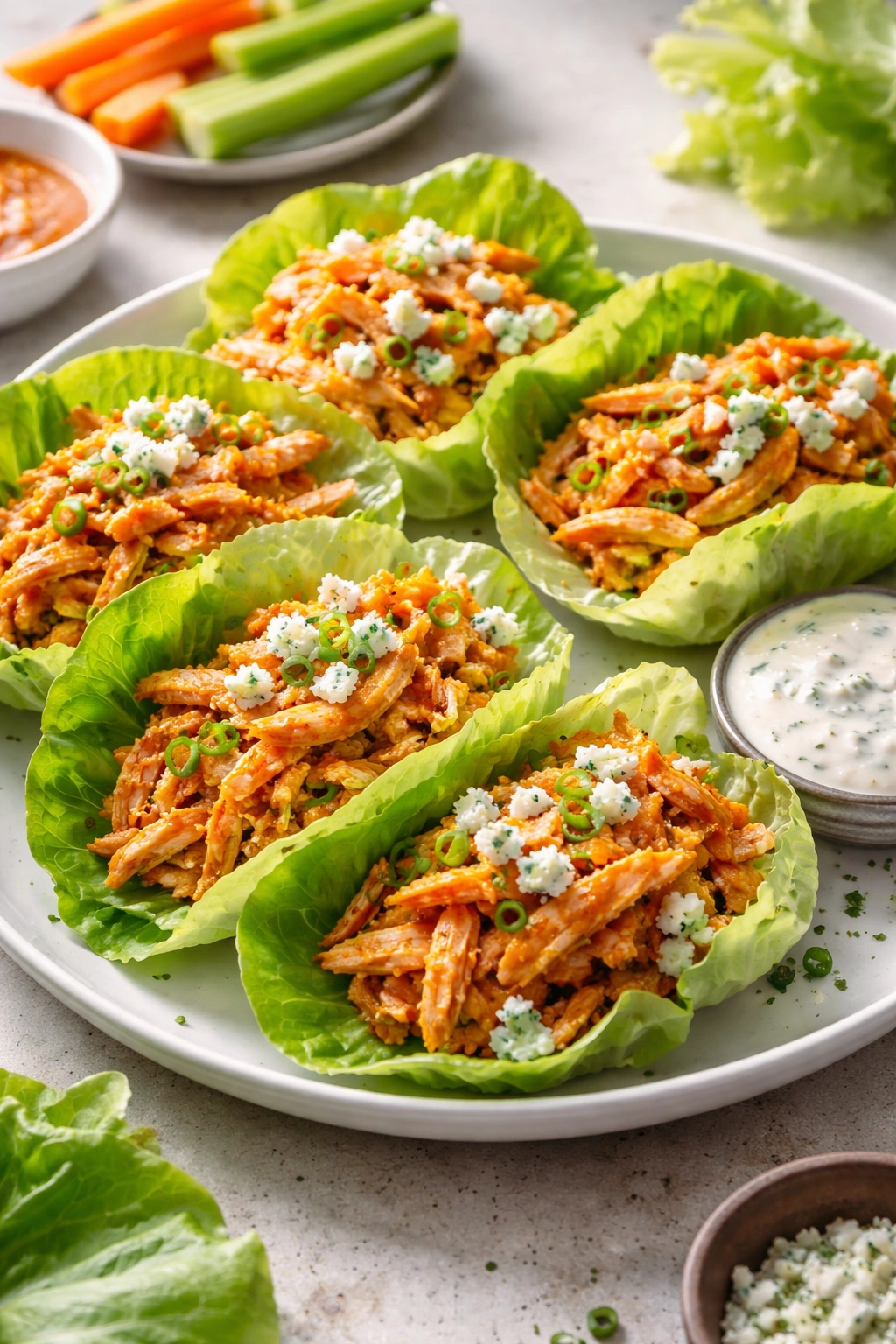
These are as quick as they are healthful. Shredded chicken gets tossed with buffalo sauce (hot sauce mixed with melted butter), then served in crisp lettuce leaves with blue cheese crumbles and celery. It’s a lighter dinner that still feels indulgent, and it comes together in under 20 minutes.
The Lettuce Wrap Advantage
Lettuce wraps are faster than bread-based meals because there’s no toasting, no assembly complexity. You literally put the filling in a leaf and eat it. They’re also naturally lower-carb and feel fresher than bread. Butter lettuce, romaine, or even large spinach leaves all work beautifully.
Building Flavor Quickly
Buffalo sauce is just hot sauce and melted butter. That’s it. The heat from the sauce and the richness of the butter create a complete flavor profile that’s spicy, savory, and satisfying. By tossing shredded chicken in this sauce rather than serving it on the side, you’re making sure every bite is flavorful.
What Makes This Work
- Use rotisserie chicken if you’re truly in a time crunch: Store-bought is perfectly acceptable here and saves you 10 minutes. The buffalo sauce and fresh components are what make this special.
- Blue cheese crumbles are not optional: They add tang and creaminess that balance the heat of the buffalo sauce.
- Celery is texture, not just a vegetable: The crisp texture contrasts beautifully with the soft lettuce and creamy blue cheese.
- Serve immediately: Lettuce wilts if it sits with wet filling, so assemble and serve right away.
Timing breakdown: 5 minutes prep, 12 minutes cook time, total 17 minutes.
9. Mediterranean Chicken Bowl
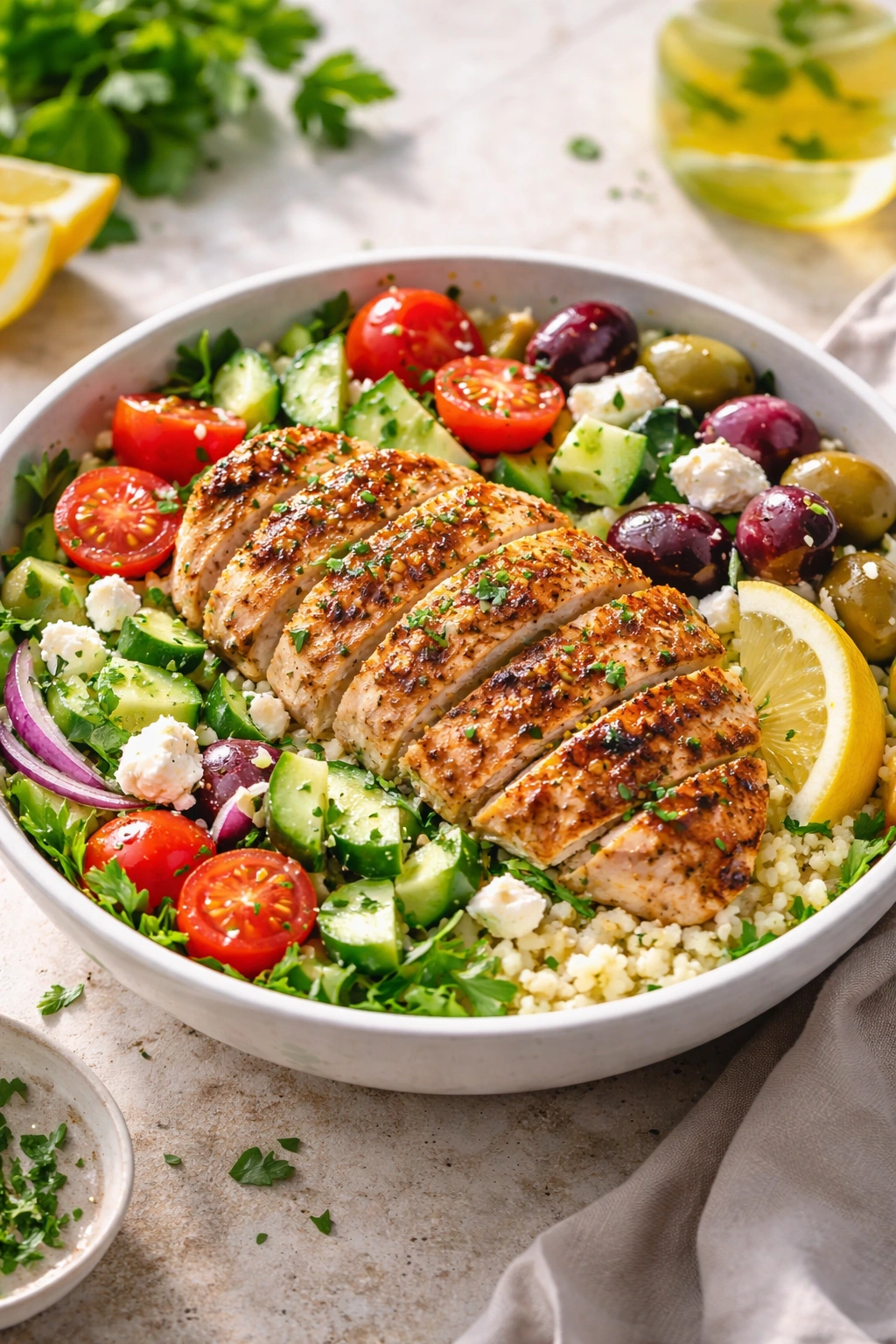
This is the kind of dinner where every component is healthy, interesting, and comes together effortlessly. Seasoned chicken sits on a bed of greens or grain, topped with cherry tomatoes, cucumber, olives, feta, and a bright lemon-olive oil dressing. It’s fast, fresh, and requires almost zero cooking for the toppings.
The Bowl Philosophy
Bowls work because they’re inherently balanced—protein, whole grain or greens, vegetables, and a good fat source (olives, feta, nuts). You can prep everything in advance and assemble at the last minute, or cook the chicken and assemble bowls immediately. Either way, dinner happens fast.
Chicken Preparation
You’re looking for a quick-cooking method here. Grilled chicken, pan-seared chicken, or even air-fried chicken all work beautifully. Season generously with salt, pepper, oregano, and garlic powder, then cook until just done. You want it juicy, not dry, so don’t overcook.
Assembly Strategy
- Prep the vegetables while the chicken cooks: Cherry tomatoes halved, cucumber diced, red onion thinly sliced. Everything stays fresh and doesn’t oxidize if you’re working with an objective timeline.
- Pre-cook grains: Use quinoa, rice, or farro that you’ve made ahead, or grab a fast-cooking grain like instant farro or microwave rice packets.
- The dressing is just lemon juice and olive oil: Whisk with a tiny pinch of salt and the bowl comes together. No complex sauces needed.
- Taste and adjust: This is one place where seasoning matters. A squeeze more lemon, a pinch more salt, a crack more pepper—these small adjustments elevate the dish.
Timing breakdown: 8 minutes prep, 12 minutes cook time, total 20 minutes.
10. Garlic Butter Chicken with Roasted Asparagus
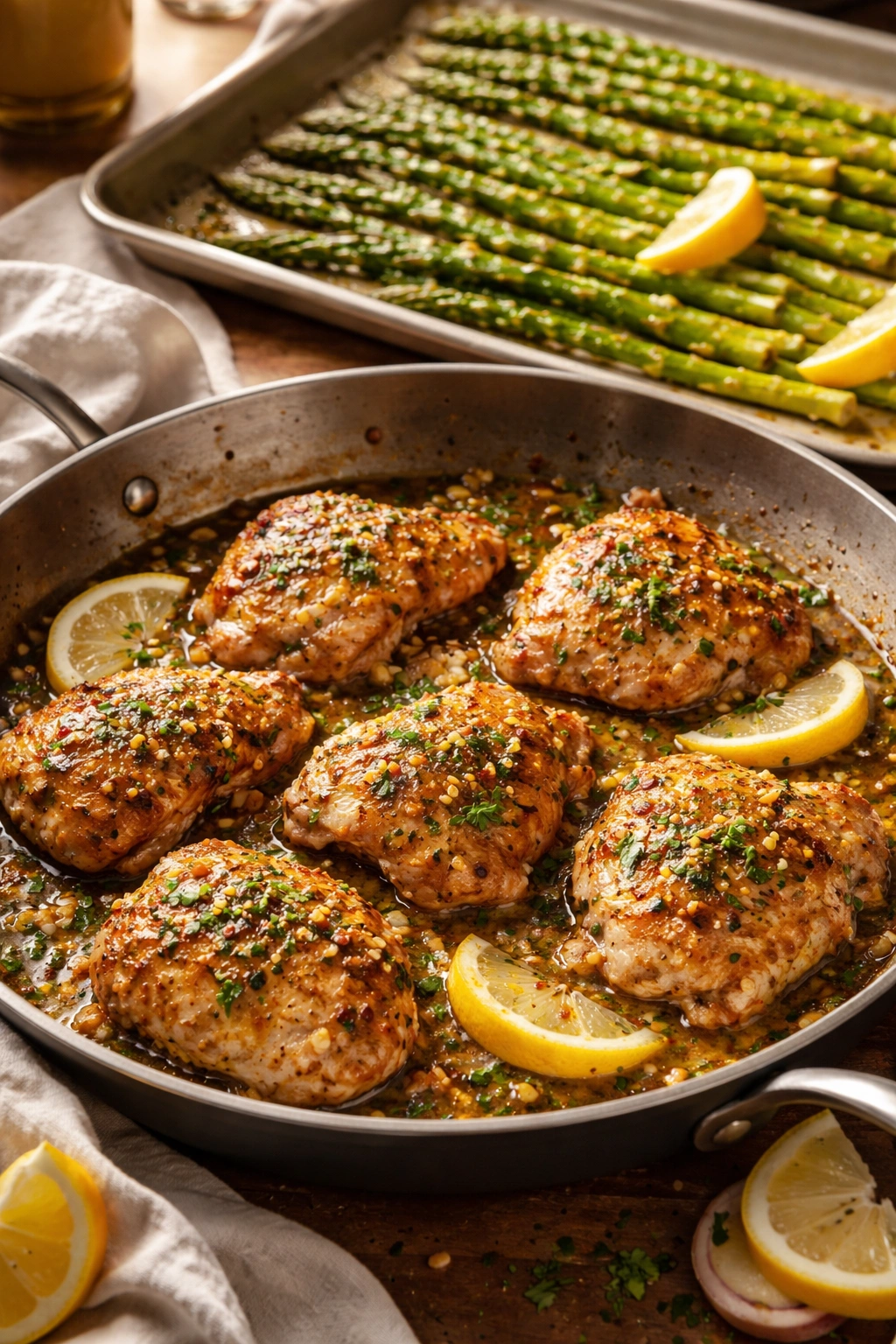
This dinner is elegant enough for company but easy enough for a tired Tuesday night. Chicken thighs cook in a skillet with butter, garlic, and lemon, while asparagus roasts in the oven. Everything finishes at the same time, and you’ve got a restaurant-quality dinner with minimal effort.
Why This Combination Works
Asparagus and chicken are a classic pairing for good reason—they both have clean, slightly earthy flavors that complement each other beautifully. The garlic butter sauce ties them together, and the contrast between the crispy-edged asparagus and the tender, saucy chicken is texturally satisfying.
Timing Coordination
The oven and stovetop work together here. Get your asparagus into a 425°F oven first, then start your chicken in the skillet. Asparagus takes about 15 minutes; chicken takes 18–20 minutes. They’ll finish within a couple of minutes of each other, and you’ve got dinner.
Technical Notes
- Don’t wash asparagus after trimming: Moisture prevents browning. Pat any excess water away with a paper towel.
- Toss asparagus with olive oil, salt, and pepper: Nothing fancy needed. The simplicity lets the vegetable shine.
- Use a mixture of butter and olive oil for the chicken sauce: This creates a sauce that’s richer than oil alone but with a higher smoke point than butter alone.
- Finish with fresh lemon zest: Lemon zest adds brightness that juice alone can’t deliver.
Timing breakdown: 8 minutes prep, 18 minutes cook time, total 26 minutes.
11. Teriyaki Chicken with Rice
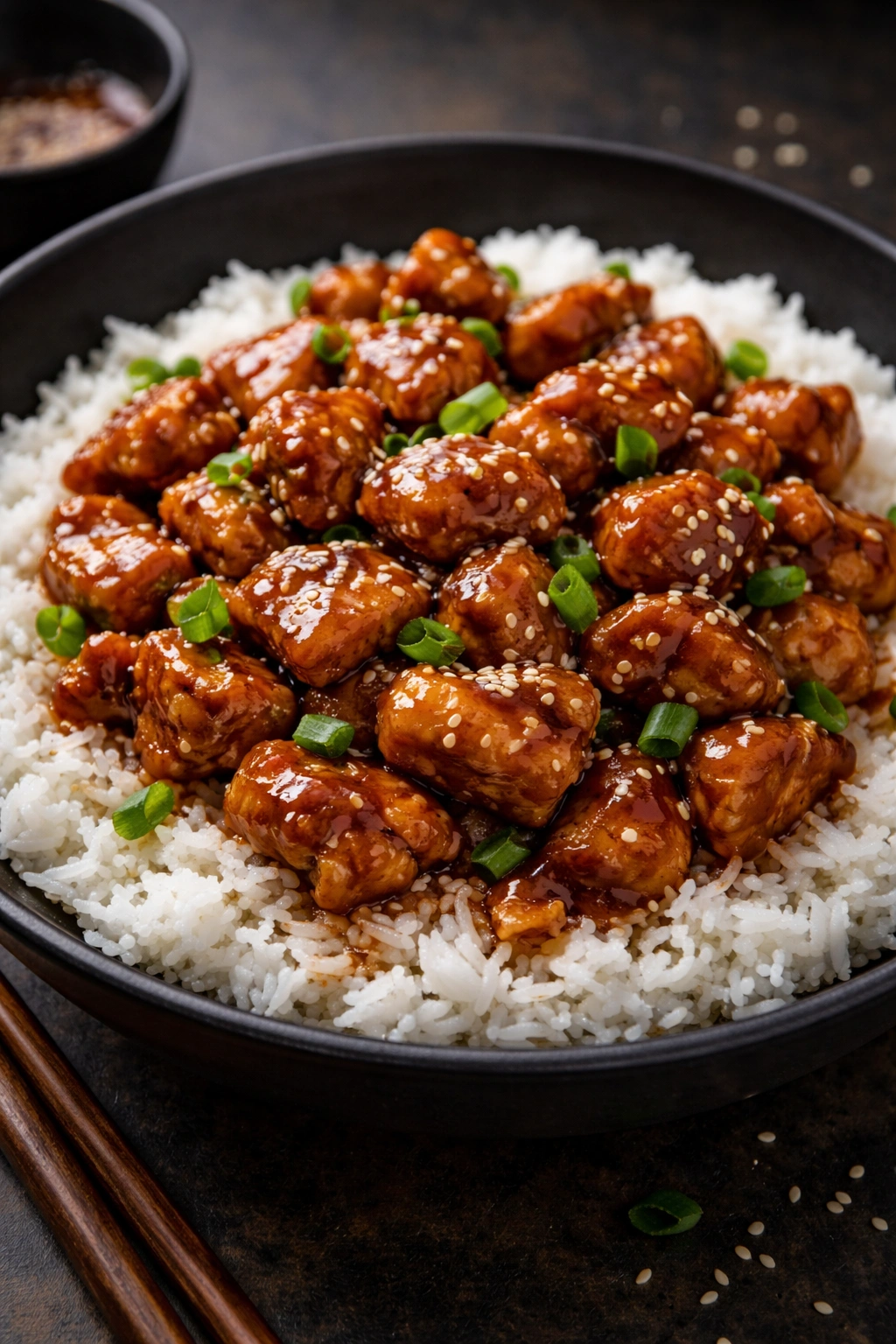
This is the dinner that tastes like takeout but costs a fraction of the price and tastes better. Chicken pieces are coated in a glossy teriyaki sauce made from soy sauce, honey, ginger, and garlic, then served over rice. It’s umami-rich, slightly sweet, and deeply satisfying.
Teriyaki Sauce Logic
The name teriyaki means “grilled with glaze,” and the glaze is actually straightforward. Soy sauce provides saltiness and umami. Honey provides sweetness and helps the glaze stick to the chicken. Ginger and garlic provide warmth and complexity. Rice vinegar provides subtle acidity. That’s it—five ingredients that create a complete, balanced sauce.
The Technique
You cook the chicken first, remove it from the pan, then make the sauce in the residual chicken fat and fond. This sauce coats the chicken evenly and tastes rich because it’s built on the foundation of caramelized chicken drippings. You’re not masking the chicken flavor—you’re amplifying it.
Practical Points
- Cut chicken into bite-sized pieces: This increases surface area so more of the chicken gets coated in glaze.
- Don’t wash your rice unless you prefer it dry: Rinsing removes starch, which creates fluffier rice but less saucy rice. For this dish, unrinsed rice grabs more sauce.
- Make the sauce while rice cooks: You’ve got time—whisk ingredients together while your rice sits covered on the heat.
- Toss the chicken in the sauce, don’t pour sauce over: This ensures every piece is coated and glossy.
Timing breakdown: 8 minutes prep, 18 minutes cook time, total 26 minutes.
12. Creamy Spinach and Mushroom Chicken
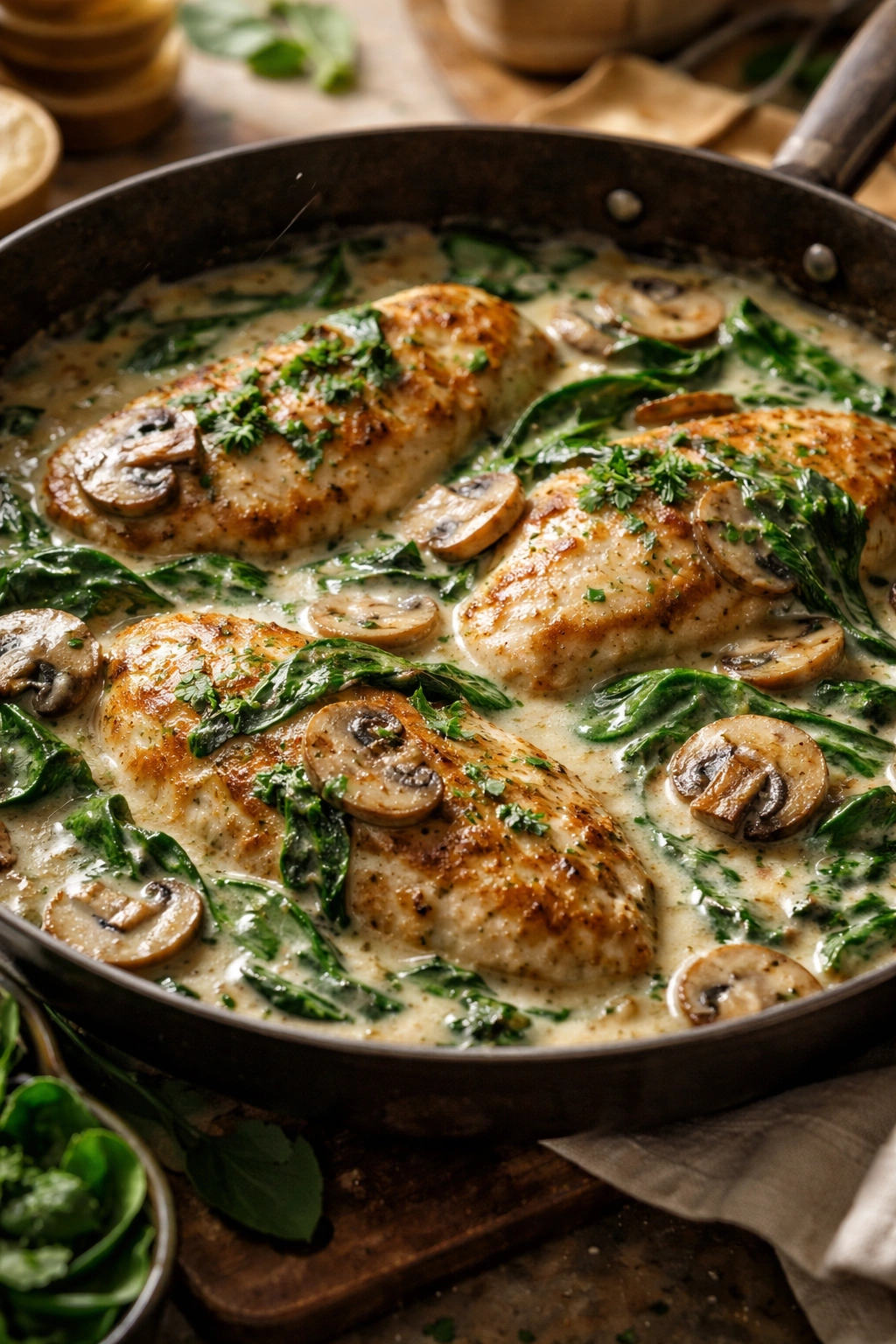
This is comfort food that doesn’t feel heavy or overly rich. Chicken and mushrooms cook together in a skillet, then everything gets finished with cream and fresh spinach. The spinach wilts into the sauce, adding nutrition and a subtle earthy flavor that balances the richness of the cream.
Why Mushrooms Matter
Mushrooms are umami powerhouses—they add depth and savoriness that you’d normally get from long cooking times or concentrated stocks. By using mushrooms, you’re getting restaurant-level depth in a 30-minute weeknight dinner. The longer you cook the mushrooms before adding cream, the more flavor they release, so don’t skip this step.
The Spinach Role
Fresh spinach is not just a vegetable here—it’s a flavor component. As it wilts into the cream sauce, it adds subtle earthiness and color. It also adds iron and other nutrients without adding calories or changing the texture in a bad way. The cream mellows the raw bite of fresh spinach, creating a balanced dish.
Key Details
- Slice mushrooms evenly: This ensures they cook at the same rate. I like a ¼-inch slice for good surface area without making them too thin.
- Cook mushrooms until golden before adding anything else: This concentrates their flavor. Patience here pays off with deeper taste.
- Heavy cream or half-and-half both work: Full-fat creates the silkiest sauce, but half-and-half is lighter and still delicious.
- Fresh spinach, not frozen: Frozen spinach releases water and makes the sauce watery. Fresh spinach is better here, and it’s faster anyway—just tear it and toss it in.
- Taste and season: Cream can sometimes flatten flavors, so you might need a pinch more salt than you think. Adjust carefully.
Timing breakdown: 8 minutes prep, 20 minutes cook time, total 28 minutes.
Final Thoughts

The truth about quick chicken dinners is that they’re not actually quick because you’re cutting corners on flavor—they’re quick because chicken cooks fast and responds beautifully to bold seasonings and smart technique. Whether you’re going for a vibrant Thai peanut sauce, a creamy Tuscan finish, or a glossy teriyaki glaze, the framework is the same: cook your chicken, build your sauce or toppings, and serve immediately.
The real key is confidence. Once you realize that 30 minutes is actually plenty of time to create something genuinely delicious, you’ll stop relying on takeout menus. You’ll have a rotation of dinners that taste better than restaurants, cost less, and come together entirely in your own kitchen. Pick one of these recipes this week, make it once, and by the third time you cook it, you won’t need to check the recipe at all. That’s when weeknight cooking stops feeling like a chore and starts feeling like something you’re actually good at.
