



Sheet-pan dinners are a revelation if you’ve never tried them — everything cooks together on one pan in the oven while you handle other tasks, and cleanup becomes almost nonexistent. The beauty of this approach is that vegetables don’t just soften; they develop deep, caramelized edges and concentrate their natural sweetness in a way that makes them taste almost indulgent. When you remove meat from the equation, you’re not losing substance or satisfaction — you’re actually opening the door to flavors and textures that often get overshadowed by a protein-centric plate.
The meatless sheet-pan dinner is perfect for weeknight cooking because it removes decision fatigue. You build layers of vegetables, grains, legumes, or tofu on a single large pan, toss everything together with one unifying sauce or dressing, and let the oven do the work. Most of these dinners are ready in under 45 minutes from start to table, which means you can have a fully composed, restaurant-quality meal without spending hours in the kitchen or directing a complex dance of pots and pans.
What makes these dinners truly satisfying is the combination of elements — the contrast between crispy roasted vegetables, tender proteins like chickpeas or tofu, aromatic grains or starches, and bright, punchy flavor from herbs and dressings. You’ll notice that each dinner here plays with different global flavor profiles and ingredient combinations, so you can rotate through them across weeks without falling into the trap of vegetable fatigue. Whether you’re vegetarian by choice, cooking for mixed dietary preferences, or simply looking to eat more plants without ceremony or sacrifice, these 15 dinners deliver real flavor, genuine satiety, and the kind of ease that turns weeknight cooking into something you actually look forward to.
1. Roasted Mediterranean Chickpea Sheet Pan
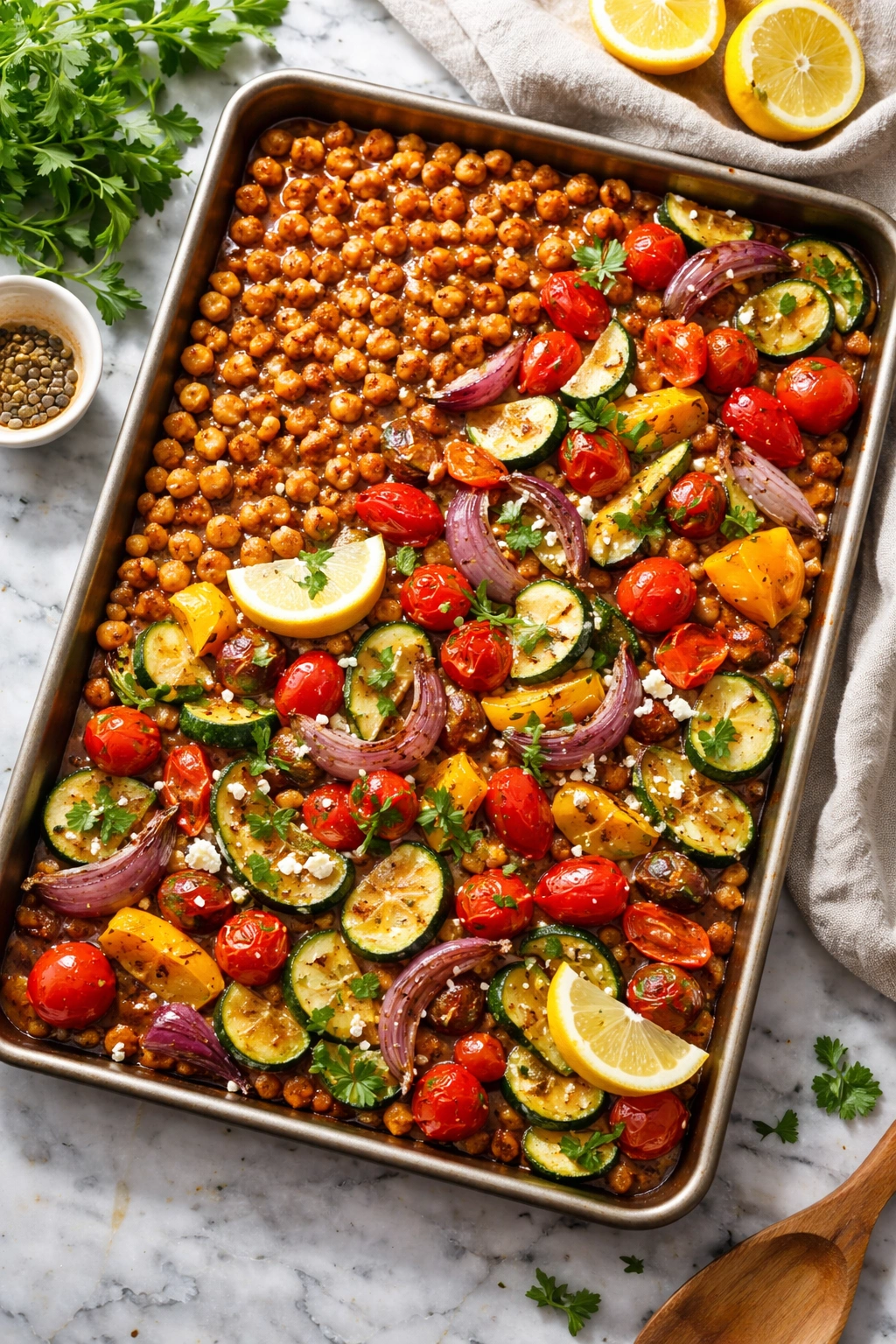
This is the dinner that converts skeptics into sheet-pan enthusiasts. Chickpeas roast until their exteriors turn golden and slightly crispy while remaining creamy inside, and when tossed with bell peppers, red onions, zucchini, and cherry tomatoes that have all caramelized together, they create a complete meal that tastes like it came from a restaurant kitchen. The magic ingredient here is oregano and a final squeeze of fresh lemon that brightens everything at the end.
Why It Works
Mediterranean flavors are inherently satisfying without heaviness — there’s enough garlic, olive oil, and herbs to make every bite taste important, while the vegetables remain light enough that you don’t feel weighed down after eating. The chickpeas provide protein and fiber that keep you full for hours, and the mix of textures (crispy roasted edges against tender centers) makes the dish feel more interesting than vegetable-only versions could manage. Roasting concentrates the natural sugars in the tomatoes and peppers, creating caramelized edges that add complexity without any added sweetness.
Key Ingredients and Components
Start with two large cans of chickpeas, drained and patted very dry — this step matters because dry chickpeas crisp up properly in the oven. Add three bell peppers in large chunks (a mix of colors for visual interest), one large red onion cut into wedges, two medium zucchini cut into thick rounds, and about two cups of cherry tomatoes left whole. Toss everything with four tablespoons of olive oil, four minced garlic cloves, two teaspoons of dried oregano, one teaspoon of dried dill, kosher salt, and black pepper. The final elements are a quarter cup of fresh lemon juice added right before serving and a handful of fresh parsley scattered on top.
How to Build It
Spread the chickpeas and all vegetables across a large rimmed baking sheet in a relatively even layer. Roast at 425°F for 30 to 35 minutes, stirring halfway through, until the chickpeas are golden brown and crispy and the vegetables show deep caramelization on their edges. The timing is important — too short and everything stays slightly tough; too long and the zucchini becomes mushy. Squeeze the lemon juice over the top immediately after removing from the oven and toss gently so the juice coats everything while everything is still hot. Taste and adjust salt — you might need more than you expect because the lemon changes how salt hits your palate.
Pro tip: Keeping the chickpeas extra dry before roasting is the difference between crispy exteriors and soft ones. Pat them with a kitchen towel for a minute — it takes thirty seconds and completely transforms the result.
2. Thai-Inspired Tofu and Vegetable Pan
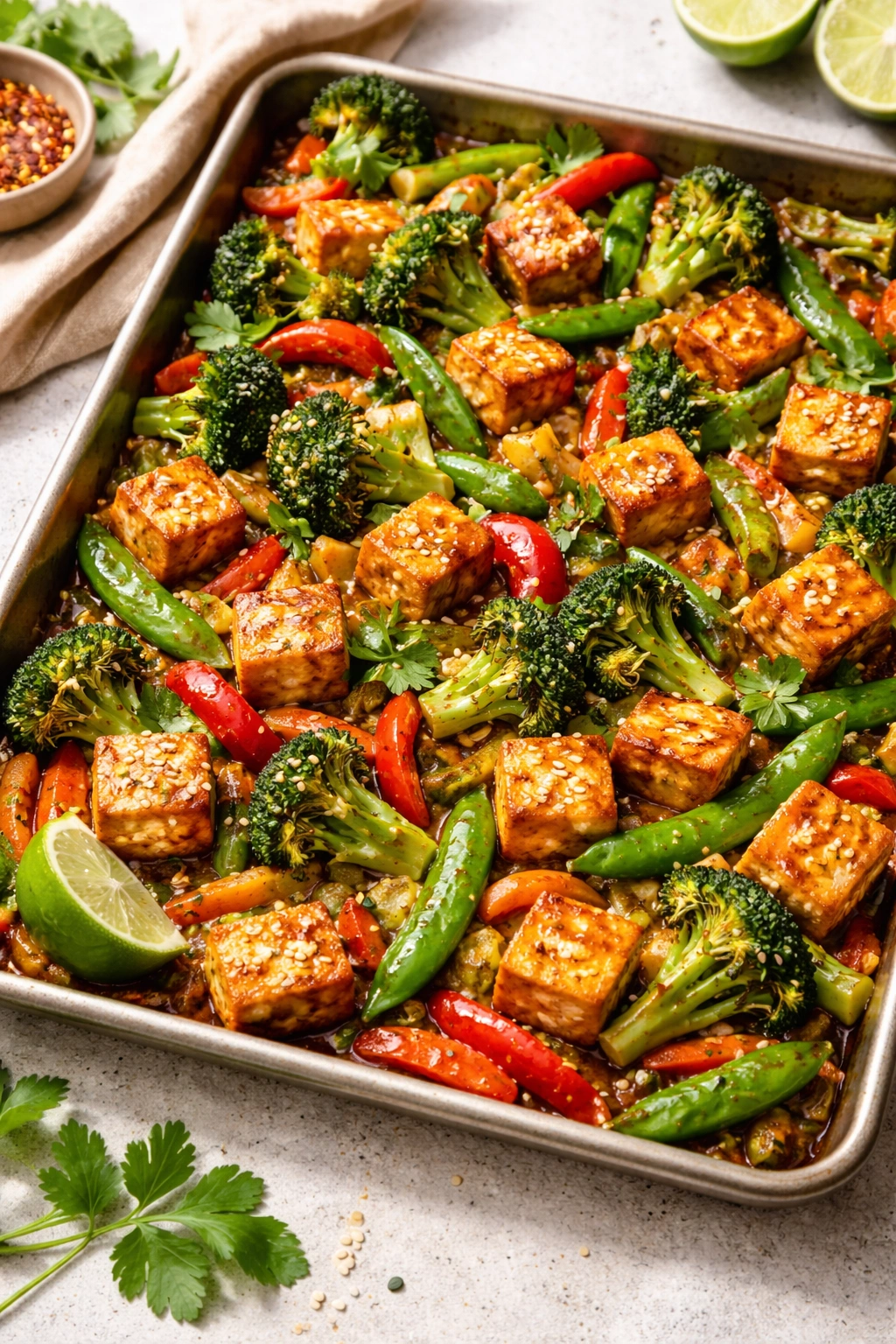
This version hits all the notes of Thai cuisine — aromatic, spicy, sweet, and with that signature umami depth — but without the complexity of making a traditional Thai curry on the stovetop. Extra-firm tofu is pressed, cubed, and roasted until its edges turn golden and slightly crispy, then tossed with broccoli, bell peppers, snap peas, and carrots in a sheet-pan-friendly coconut curry sauce that clings to everything beautifully.
Why It Works
Tofu has a reputation for being bland, but that reputation exists because people cook it wrong. When pressed well and roasted at high heat, it develops a nutty, subtly complex flavor and an exterior that’s almost crispy. The coconut curry sauce does the heavy lifting in terms of flavor — it’s bold enough that the tofu’s mild character becomes an asset rather than a liability, creating a canvas for the sauce rather than competing with it. The vegetables maintain their texture and brightness while absorbing the sauce, giving you contrast and dimension in every bite.
Key Ingredients and Components
One block of extra-firm tofu (pressed for 30 minutes under a weighted plate, then cut into three-quarter-inch cubes) forms the protein base. Combine four large cups of broccoli florets, two bell peppers cut into chunks, one cup of snap peas, and two medium carrots cut into thin diagonal slices. For the sauce, whisk together one can of coconut milk, three tablespoons of red curry paste, two tablespoons of lime juice, one tablespoon of soy sauce or tamari, and one tablespoon of brown sugar. Sesame oil, fresh cilantro, and lime wedges serve as final flourishes.
How to Build It
Toss the pressed tofu cubes with two tablespoons of neutral oil and spread them across one section of your baking sheet. Roast at 400°F for 15 minutes until the edges start to turn golden, then add the vegetables (tossed first with a tablespoon of oil and a pinch of salt) to the pan around the tofu. Continue roasting for another 15 minutes until the vegetables are tender-crisp and the tofu shows real caramelization. Pour the curry sauce over everything, toss gently to coat, and return the pan to the oven for just five more minutes so the sauce warms through and adheres to all the components.
Finish with a generous handful of fresh cilantro, a squeeze of lime juice, and a drizzle of sesame oil. Serve over jasmine rice if you want to catch all that sauce, though the vegetables and tofu have enough flavor that rice becomes optional rather than essential.
3. Crispy Cauliflower and Chickpea Tacos
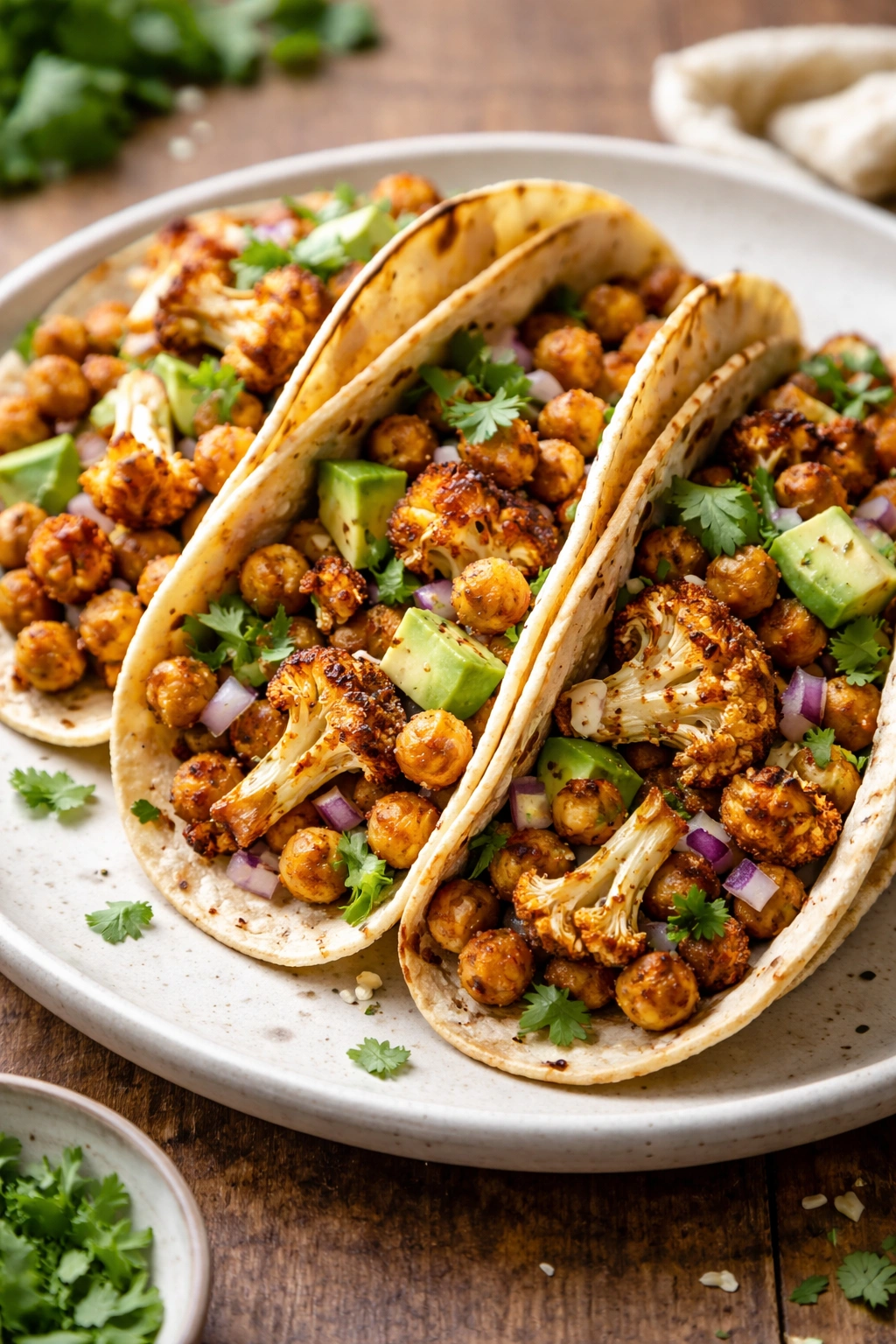
The surprising appeal of this dinner is that roasting creates the exact texture you’d expect from fried fillings — crispy, caramelized, and surprisingly indulgent — but with none of the heaviness. Cauliflower florets roast until their edges turn deep brown and crispy while staying tender inside, then toss with seasoned roasted chickpeas for a textural mix that’s endlessly satisfying tucked into tortillas.
Why It Works
The key to excellent meatless tacos is textural contrast — you need crispy elements alongside tender ones, something that pushes back when you bite it. Roasted cauliflower provides exactly that crispiness, and when combined with chickpeas that have been roasted with cumin, chili powder, smoked paprika, and garlic, you get a filling that’s genuinely crave-worthy. The natural sweetness of cauliflower works beautifully with warm spices, and the chickpeas add protein and earthiness that prevent the taco filling from feeling light or vegetable-forward in a way that might disappoint someone expecting heartiness.
Key Ingredients and Components
One large head of cauliflower (about seven cups of florets), one can of chickpeas (drained and dried), three tablespoons of olive oil, two teaspoons of ground cumin, one and a half teaspoons of smoked paprika, one teaspoon of chili powder, one teaspoon of garlic powder, and kosher salt. The final components are warm tortillas, diced red onion, fresh cilantro, crumbled queso fresco or cotija cheese, lime wedges, and your preferred salsa or hot sauce.
How to Build It
Toss the cauliflower florets with one and a half tablespoons of oil and half the spice mixture, spread on a baking sheet, and roast at 425°F. After 15 minutes, add the chickpeas (tossed with the remaining oil and spices) to another section of the pan. Continue roasting for another 10 to 15 minutes until the cauliflower edges are deep brown and the chickpeas have crisped up slightly. The cauliflower should feel almost crispy on the outside but still tender when you bite into the florets.
Pile the warm filling into tortillas and top with diced red onion, cilantro, cheese, and a squeeze of lime. The quick-pickled red onions add a bright sharpness that cuts through the richness of the roasted vegetables, making each bite feel fresh and complete.
4. Spiced Roasted Vegetables with Falafel Crumbles
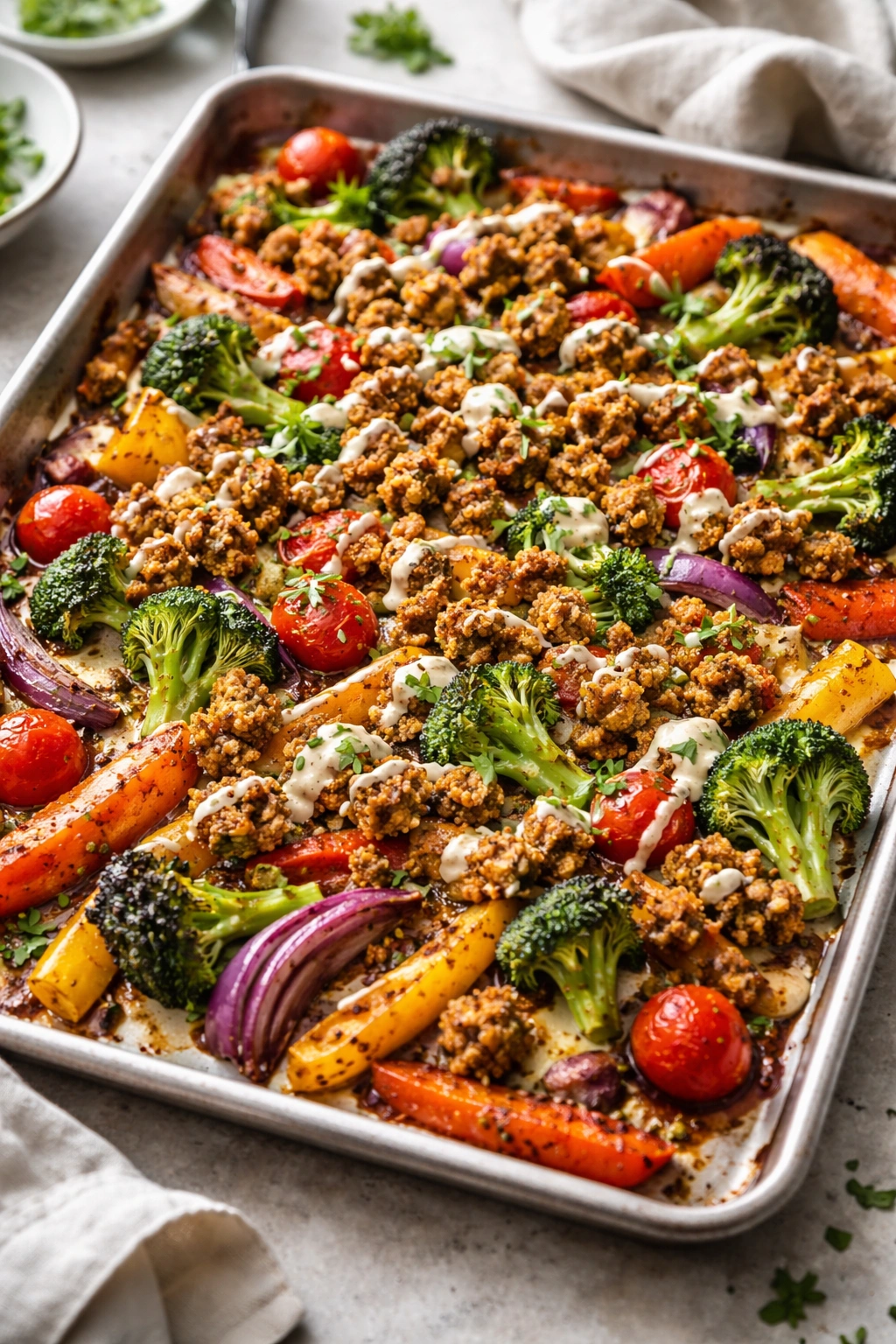
This dinner combines crispy roasted vegetables with homemade falafel baked right on the sheet pan alongside them, then everything gets tossed together with tahini dressing and served over grains or greens. The combination of sweetness from the roasted vegetables, earthiness from the falafel, and nuttiness from the tahini creates a deeply satisfying whole that works as well over cauliflower rice as it does alongside brown rice or farro.
Why It Works
Falafel often feels heavy when it’s deep fried in oil, but baked falafel develops crispness and complex flavor without that greasiness. When baked fresh on the sheet pan, the exterior hardens into something almost chip-like while the inside stays tender and crumbly, then when tossed with the roasted vegetables, everything combines into a single cohesive dish. The tahini dressing brings richness and creaminess without requiring any dairy, and its nutty flavor complements both the spiced vegetables and the herby falafel perfectly.
Key Ingredients and Components
For the vegetables, use four cups of cauliflower florets, three bell peppers in chunks, one large red onion in wedges, and two cups of baby potatoes (halved if large). Season with four tablespoons of olive oil, one tablespoon of ground cumin, one teaspoon of coriander, one teaspoon of paprika, half a teaspoon of cayenne, and salt. For the falafel, pulse together one can of drained chickpeas, half a cup of parsley, half a cup of cilantro, one small onion, four garlic cloves, one tablespoon of flour, one teaspoon of cumin, half a teaspoon of baking powder, and salt — don’t overprocess; you want a crumbly texture. For the tahini dressing, whisk together one-third cup of tahini, three tablespoons of lemon juice, two garlic cloves (minced), and water until you reach a pourable consistency.
How to Build It
Spread the vegetables across a large baking sheet and roast at 400°F for 15 minutes. Form the falafel mixture into small, rough balls (don’t worry about perfect shape — crumbles work better than uniform balls here anyway), place them on the sheet alongside the vegetables, drizzle with oil, and continue roasting for another 15 to 20 minutes until the vegetables are caramelized and the falafel exteriors are crispy.
Crumble any falafel pieces that have already broken apart, toss everything together with the tahini dressing, and serve warm or at room temperature. The beauty of this dish is that it tastes excellent whether it’s fresh from the oven or eaten as leftovers the next day at room temperature.
5. Tuscan White Bean and Kale Sheet Pan
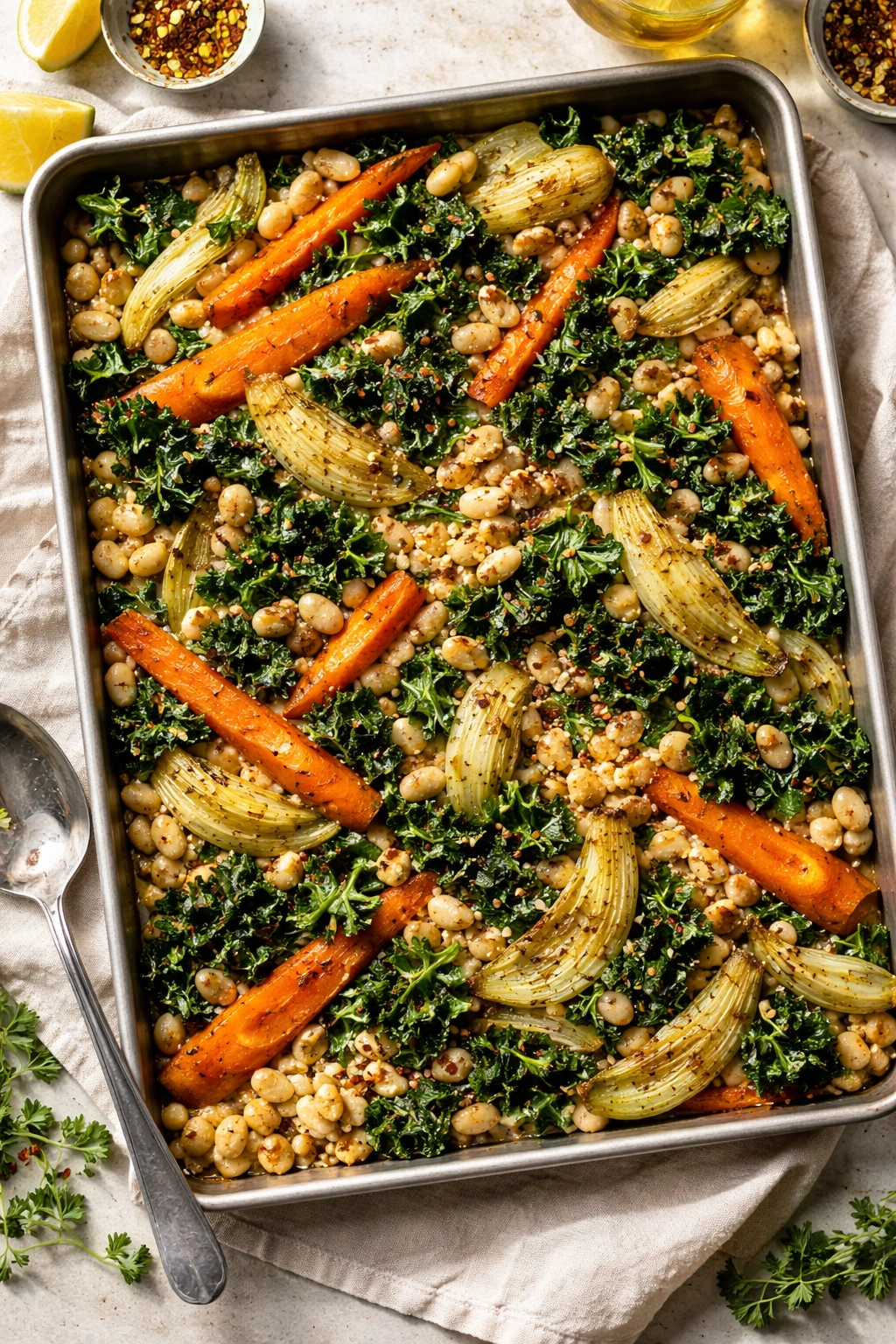
This is comfort food translated into roasted vegetable form — creamy white beans, hearty kale, roasted carrots and fennel, all brought together with garlic, herbs, and a touch of cream that turns everything into something deeply satisfying without feeling heavy. Everything roasts together until the kale becomes crispy at the edges and the carrots turn almost candied with sweetness.
Why It Works
White beans have a creaminess that rivals ground meat when it comes to creating textural satisfaction, and when roasted alongside tender vegetables, they absorb all the flavors in the pan while contributing their own earthy depth. Kale is often tough and bitter when raw, but roasting transforms it completely — the leaves become crispy and lightly charred while losing their bitterness, turning into something that tastes more like a chip than a vegetable. The combination of warm spices (thyme, rosemary) and bright lemon at the end creates the Mediterranean essence without requiring any additional cooking steps.
Key Ingredients and Components
Two large bunches of chopped kale (about eight cups once chopped and packed), two cans of white beans (drained and patted dry), three large carrots cut into half-moons, one large fennel bulb cut into thick wedges, six garlic cloves (smashed), four tablespoons of olive oil, two teaspoons of fresh thyme, one teaspoon of fresh rosemary, two tablespoons of heavy cream or coconut milk, one tablespoon of lemon juice, and salt and pepper to taste.
How to Build It
Toss the kale with two tablespoons of oil and a pinch of salt, spread it across a baking sheet, and roast at 400°F for five minutes to start the crisping process. Add the carrots, fennel, white beans, garlic, and herbs (all tossed with the remaining oil and seasoning) to the pan, and continue roasting for 25 to 30 minutes until the carrots are tender and the beans show some caramelization. The kale should be crackling at the edges by the time you pull everything out.
Drizzle the cream and lemon juice over everything, toss gently, and taste for seasoning. The final dish should taste bright and herby with an underlying richness from the beans and cream — it’s the kind of dinner that makes people surprised there’s no chicken involved.
6. Sesame-Ginger Tofu with Broccoli and Baby Corn
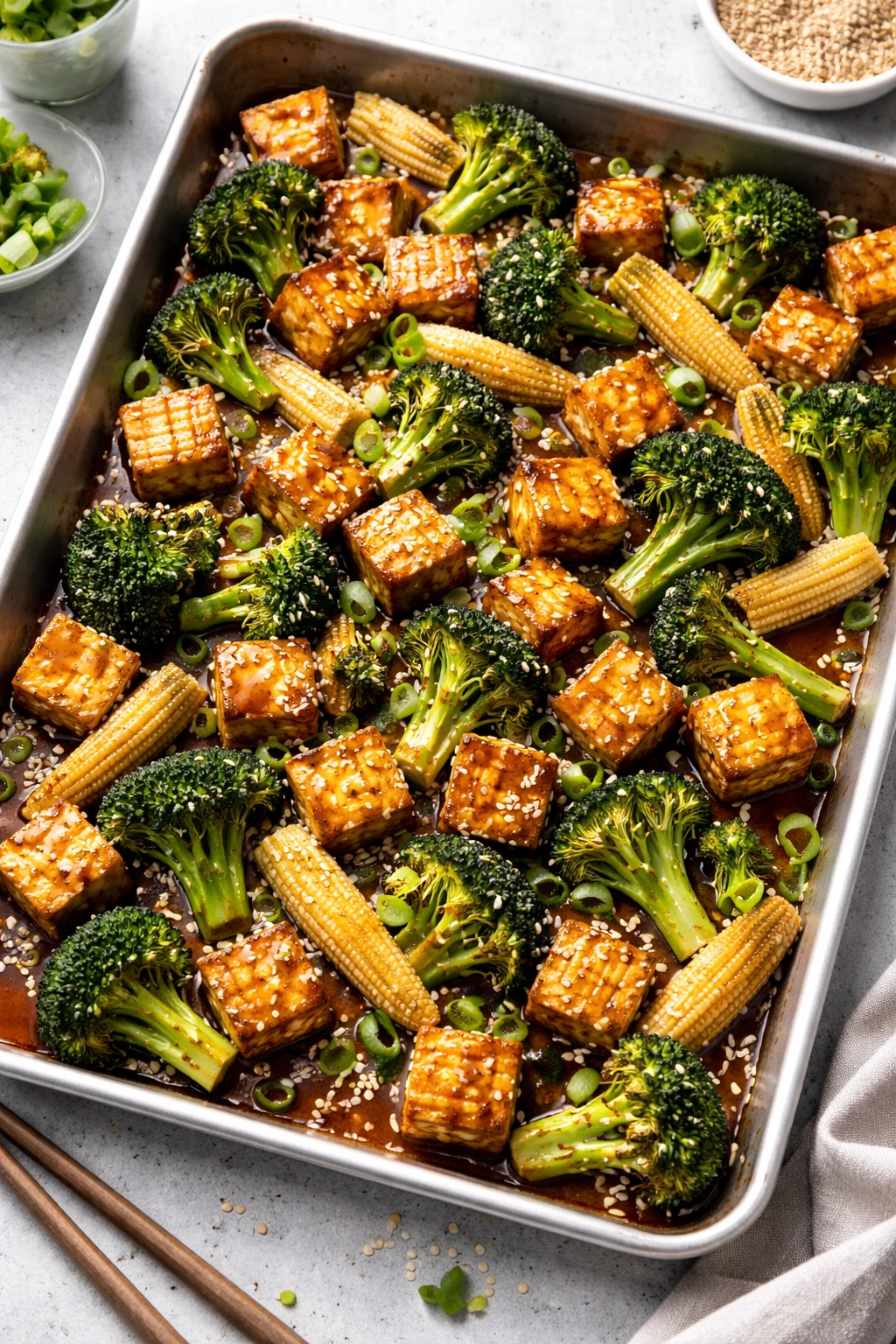
This dinner has the snap and simplicity of a stir-fry but with the hands-off ease of sheet-pan cooking. Tofu and broccoli roast with a ginger-sesame marinade that becomes almost caramelized in the oven, creating depth of flavor that tastes far more complex than the short ingredient list suggests.
Why It Works
The combination of ginger, garlic, and sesame is inherently satisfying — it’s an aromatic profile that registers as restaurant-quality to most people, even when executed simply. Pressing and roasting the tofu ensures it has enough structural integrity and surface area to absorb the marinade and develop flavor. The broccoli gets sweeter as it roasts and its edges turn crispy, creating textural interest that prevents the dish from feeling one-note. Baby corn adds sweetness and a slight crunch that complements both the tender tofu and the crispy broccoli.
Key Ingredients and Components
One block of extra-firm tofu (pressed and cut into three-quarter-inch cubes), five cups of broccoli florets, one cup of baby corn, and a marinade made from four tablespoons of soy sauce or tamari, two tablespoons of rice vinegar, two tablespoons of sesame oil, one tablespoon of honey, one tablespoon of grated fresh ginger, four minced garlic cloves, and one teaspoon of red pepper flakes. Finish with sesame seeds, scallions, and lime wedges.
How to Build It
Toss the pressed tofu with the marinade and let it sit for 15 minutes if you have time (or skip this step and just toss everything together if you’re in a hurry — it still works). Spread the tofu, broccoli, and baby corn across a baking sheet, pour the remaining marinade over everything, and roast at 400°F for 25 to 30 minutes, stirring halfway through. The tofu should develop golden-brown edges and the broccoli should show dark caramelization.
Finish with a sprinkle of sesame seeds and scallions, a squeeze of fresh lime juice, and serve over jasmine rice or quinoa. This is one of those dinners that tastes even better the next day when the flavors have had time to meld together.
7. Harissa-Roasted Vegetables with Chickpeas and Burrata
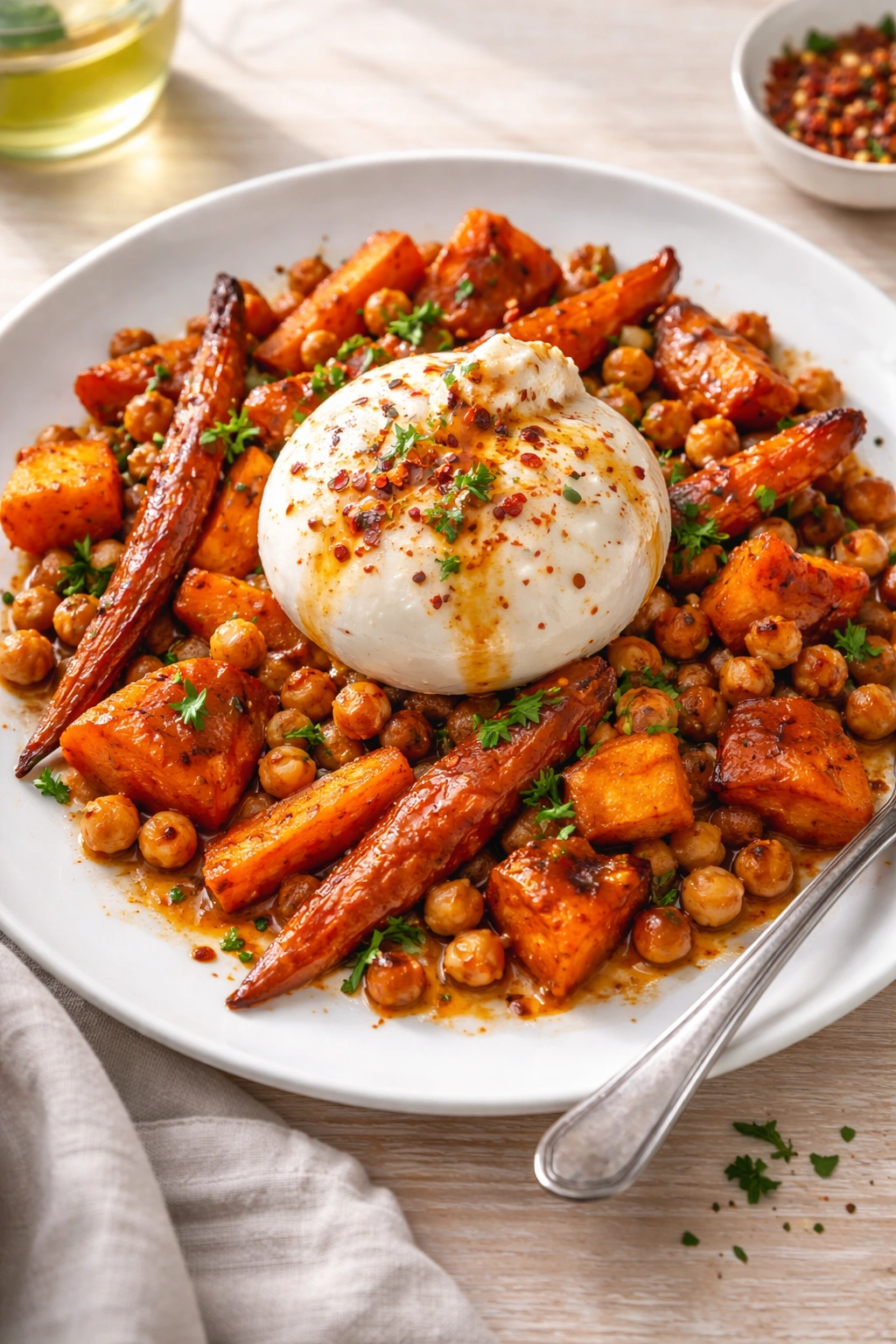
Harissa — a North African chili paste — brings deep, complex heat and earthiness to roasted vegetables, and when combined with burrata cheese (which is creamy, luxurious, and melts slightly when it touches warm roasted vegetables), you get a dinner that feels indulgent despite being entirely plant-based. The combination of heat, creaminess, and the natural sweetness of roasted carrots and sweet potato creates something memorable.
Why It Works
Harissa has become easier to find in most grocery stores, and it’s worth keeping on hand because it adds more complexity to dishes than simple hot sauce could manage. The earthiness of harissa pairs beautifully with roasted root vegetables, and the small amount of cooking mellows the heat slightly while developing the paste’s more subtle spiced flavors. Burrata provides the protein element (though if you want to keep it fully plant-based, cashew cream works nearly as well) and its creaminess balances the spice perfectly. This is one of those dinners where the final plating looks elegant enough to serve to guests.
Key Ingredients and Components
Two tablespoons of harissa paste, four tablespoons of olive oil, three large carrots cut into thick diagonals, one large sweet potato cut into chunks, one head of cauliflower cut into florets, one large red onion in wedges, two cans of chickpeas (drained and dried), two teaspoons of ground cumin, one tablespoon of lemon juice, salt, and fresh burrata cheese (about eight ounces) for serving. Fresh cilantro and a drizzle of tahini complete the plate.
How to Build It
Whisk the harissa paste together with the olive oil and cumin to create a marinade. Toss the vegetables and chickpeas with this mixture, spread across a baking sheet, and roast at 425°F for 30 to 35 minutes, stirring halfway through, until everything is caramelized and tender. The chickpeas should be crispy at the edges and the root vegetables should show deep browning.
Drizzle with lemon juice, scatter the roasted vegetables and chickpeas over a serving platter, and tear the burrata cheese directly on top so it starts to melt into the warm vegetables. Scatter cilantro over everything and drizzle with tahini thinned with a little water. This is impressive enough for dinner guests but easy enough for a weeknight.
8. Cajun-Spiced Vegetables with Black Beans and Okra
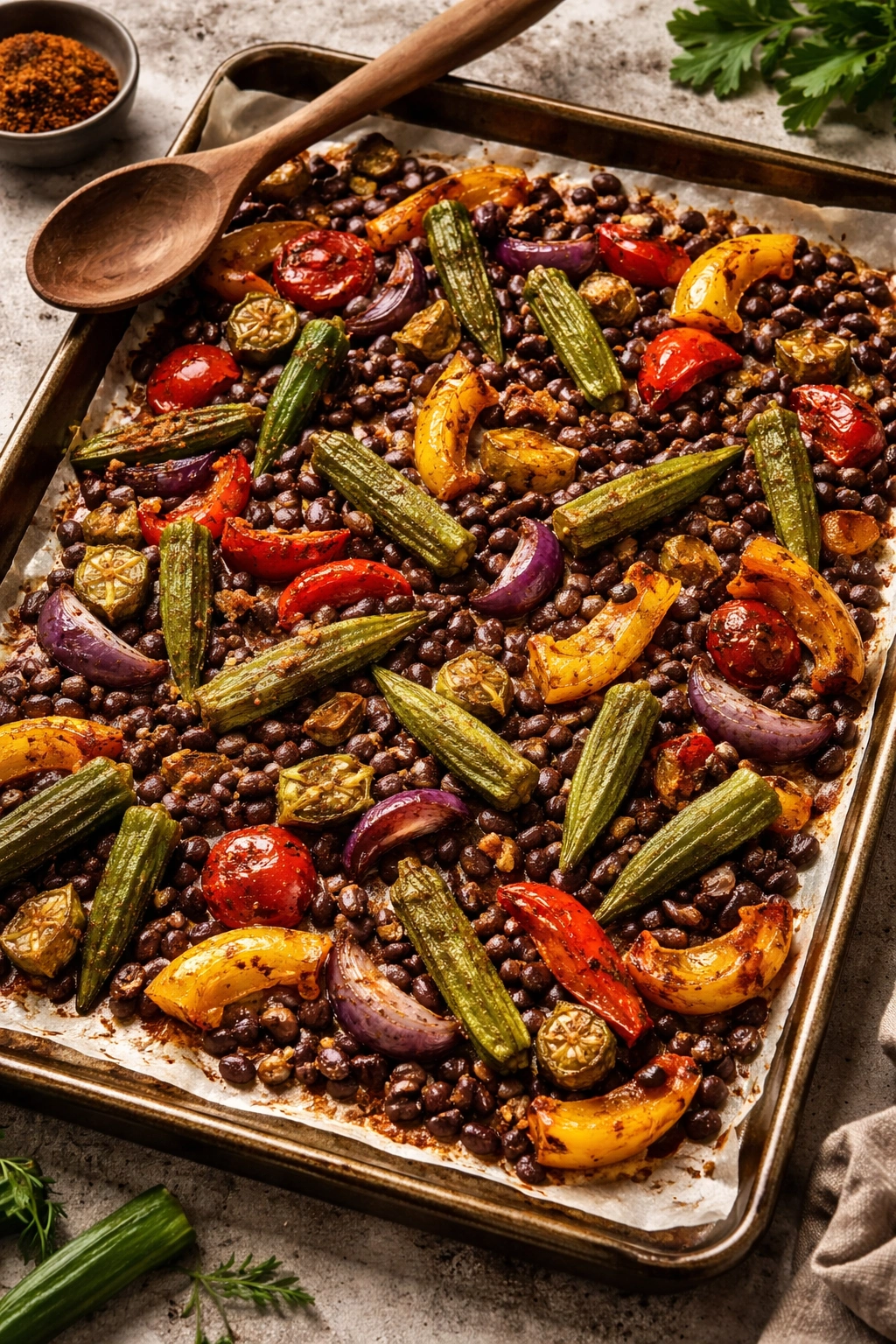
This dinner channels the bold, complex flavors of New Orleans vegetable cooking — deep spices (paprika, thyme, cayenne) combined with bell peppers, okra, and black beans, all roasted until their edges turn crispy and dark. The okra becomes unexpectedly tender and slightly crispy in the oven, losing its reputation for sliminess entirely.
Why It Works
Cajun spice blends are bold enough to make vegetables taste like the star of the plate rather than a supporting element. Black beans provide creaminess and earthiness, while okra — often misunderstood and avoided — becomes a textural asset when roasted properly, developing a tender interior and slight crispness on the outside. The combination of paprika, cayenne, thyme, and garlic creates an almost meat-like savory depth that satisfies even people who usually rely on animal proteins for that umami hit.
Key Ingredients and Components
Three large bell peppers (preferably two red and one yellow) cut into chunks, one pound of fresh okra cut into thick pieces, three cans of black beans (drained and patted dry), four large garlic cloves (minced), four tablespoons of olive oil, one and a half tablespoons of smoked paprika, one tablespoon of dried thyme, one tablespoon of dried oregano, one teaspoon of cayenne (adjust to your heat preference), salt, and black pepper. Serve with hot sauce, lime wedges, and fresh cilantro.
How to Build It
Toss all components (except hot sauce and cilantro) with the oil and spices, spread across a large baking sheet, and roast at 425°F for 25 to 30 minutes, stirring every 10 minutes to ensure even caramelization. You want the peppers to show dark edges, the okra to be tender with slight crispness, and the beans to develop a slightly crispy exterior.
Finish with a squeeze of lime juice and a sprinkle of fresh cilantro. Serve over rice, grits, or with cornbread on the side if you want to lean into the Southern feel. This dinner becomes even better when you have leftovers because the flavors continue to develop.
9. Balsamic Roasted Brussels Sprouts with Lentils and Walnuts
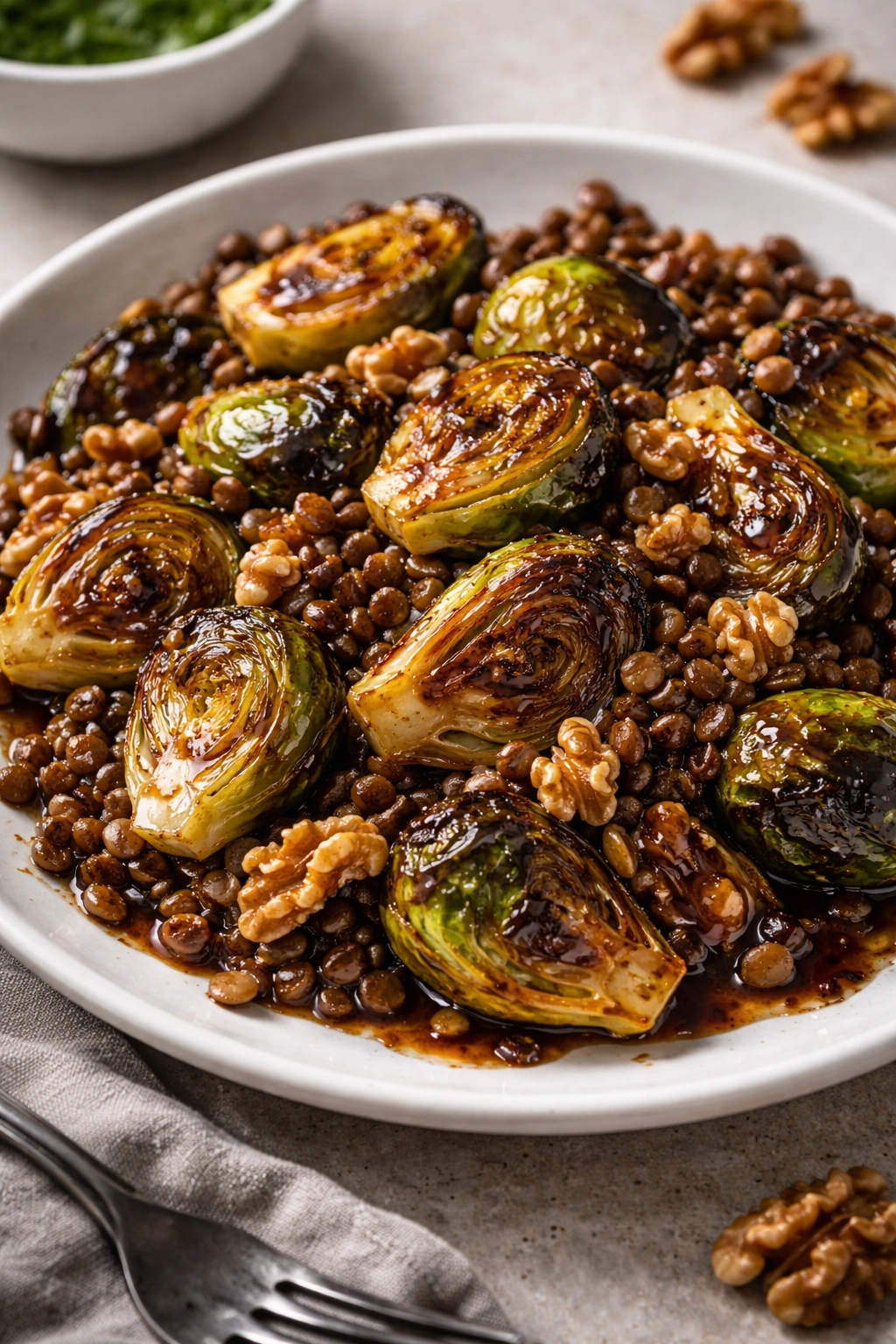
Brussels sprouts are the MVP of roasted vegetable cookery — they become nutty, deeply caramelized, and almost candy-like when roasted hot and undisturbed. Paired with protein-rich lentils and crunchy walnuts, plus a balsamic glaze that brings sweet and tangy depth, this creates a dinner that feels far fancier than the effort required.
Why It Works
Brussels sprouts have a naturally high sugar content that caramelizes beautifully when exposed to high heat, creating an almost umami-rich flavor that makes them taste substantial and savory despite their vegetable status. The lentils add protein and earthiness, while walnuts bring textural crunch and richness that prevents the dish from feeling lean. Balsamic vinegar’s sweetness and depth make it the perfect finishing element — it brings everything together without requiring any additional cooking.
Key Ingredients and Components
One and a half pounds of Brussels sprouts (halved), one can of cooked lentils (or one cup of precooked lentils), one cup of raw walnut pieces, five tablespoons of olive oil divided, four garlic cloves (minced), three tablespoons of balsamic vinegar, one tablespoon of maple syrup or honey, two teaspoons of Dijon mustard, salt, and fresh thyme or rosemary (optional). Finish with fleur de sel and freshly cracked black pepper.
How to Build It
Toss the Brussels sprouts halves with two tablespoons of oil, salt, and pepper, and spread them cut-side down on a baking sheet. Roast at 425°F for 20 minutes without stirring — this is important because the cut side needs extended contact with the hot pan to develop the deep caramelization that makes these special. After 20 minutes, toss the Brussels sprouts, add the lentils and walnuts (tossed first with the remaining oil, garlic, salt, and pepper) to the pan, and continue roasting for another 10 to 15 minutes until the Brussels sprouts are deeply caramelized and the walnuts have toasted.
While everything roasts, whisk together the balsamic vinegar, maple syrup, and mustard. Drizzle this glaze over the roasted vegetables when you pull the pan from the oven, toss gently, and taste for seasoning. The final dish should hit notes of sweet, tangy, nutty, and savory — it’s excellent served warm or at room temperature the next day.
10. Indian-Spiced Chickpeas with Cauliflower and Potatoes
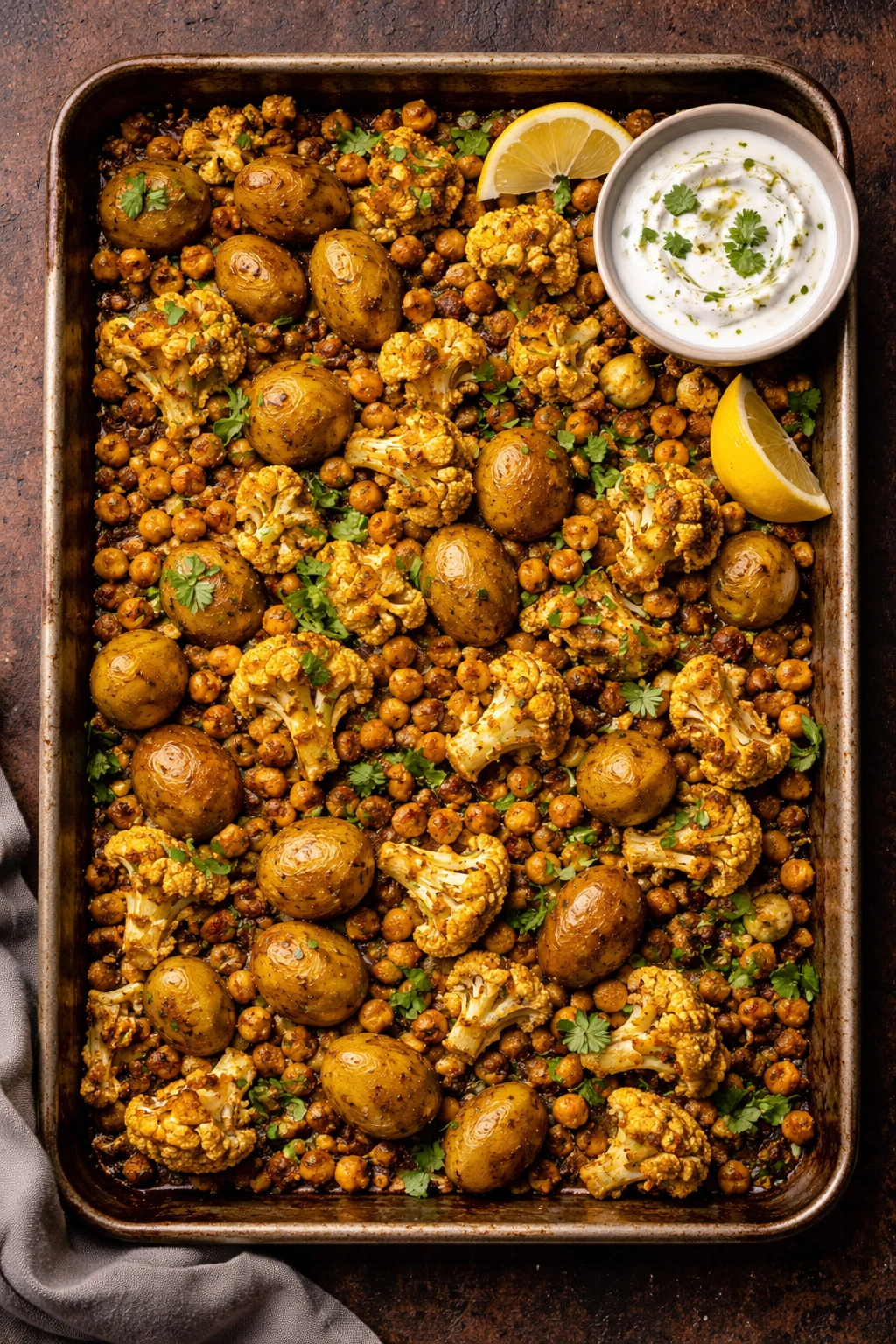
This dinner takes inspiration from chana aloo (a classic Indian potato and chickpea curry) and translates it into sheet-pan form with a dry spice approach instead of a sauce. Everything roasts until the vegetables are tender and slightly crispy at the edges, then a yogurt-based sauce is dolloped on top or served alongside, bringing creaminess without requiring any dairy.
Why It Works
Indian spices are inherently warming and satisfying — cumin, coriander, turmeric, and ginger create a flavor profile that tastes both comforting and exciting. Roasting allows these spices to toast slightly, deepening their flavors and creating complexity that would require much more time if cooked in a wet curry. The combination of chickpeas and potatoes creates the texture and heartiness you’d expect from a traditional curry, while the cauliflower adds vegetables without requiring additional components. The yogurt sauce (or coconut cream if you want to keep it dairy-free) provides creaminess at the end.
Key Ingredients and Components
One pound of baby potatoes (halved), one head of cauliflower (cut into florets), two cans of chickpeas (drained and dried), one medium red onion (in wedges), one tablespoon of ground cumin, one tablespoon of ground coriander, two teaspoons of turmeric, one and a half teaspoons of grated fresh ginger, four minced garlic cloves, four tablespoons of coconut oil or neutral oil, salt, and garnish of fresh cilantro and lime wedges. Optional yogurt sauce: one cup of plain yogurt mixed with one tablespoon of lemon juice and a pinch of salt.
How to Build It
Toss all vegetables and chickpeas with the oil and spices, spread across a baking sheet, and roast at 400°F for 30 to 35 minutes, stirring every 15 minutes, until the potatoes are tender and the chickpeas show some crispy edges. The cauliflower should be caramelized and tender, and the onions should be soft and slightly charred.
Finish with fresh cilantro and lime juice, and serve with the yogurt sauce on the side. This is excellent served over rice, with naan on the side, or even with a simple salad to cut through the richness of the roasted oil.
11. Smoky Roasted Vegetables with Polenta and Smoked Paprika
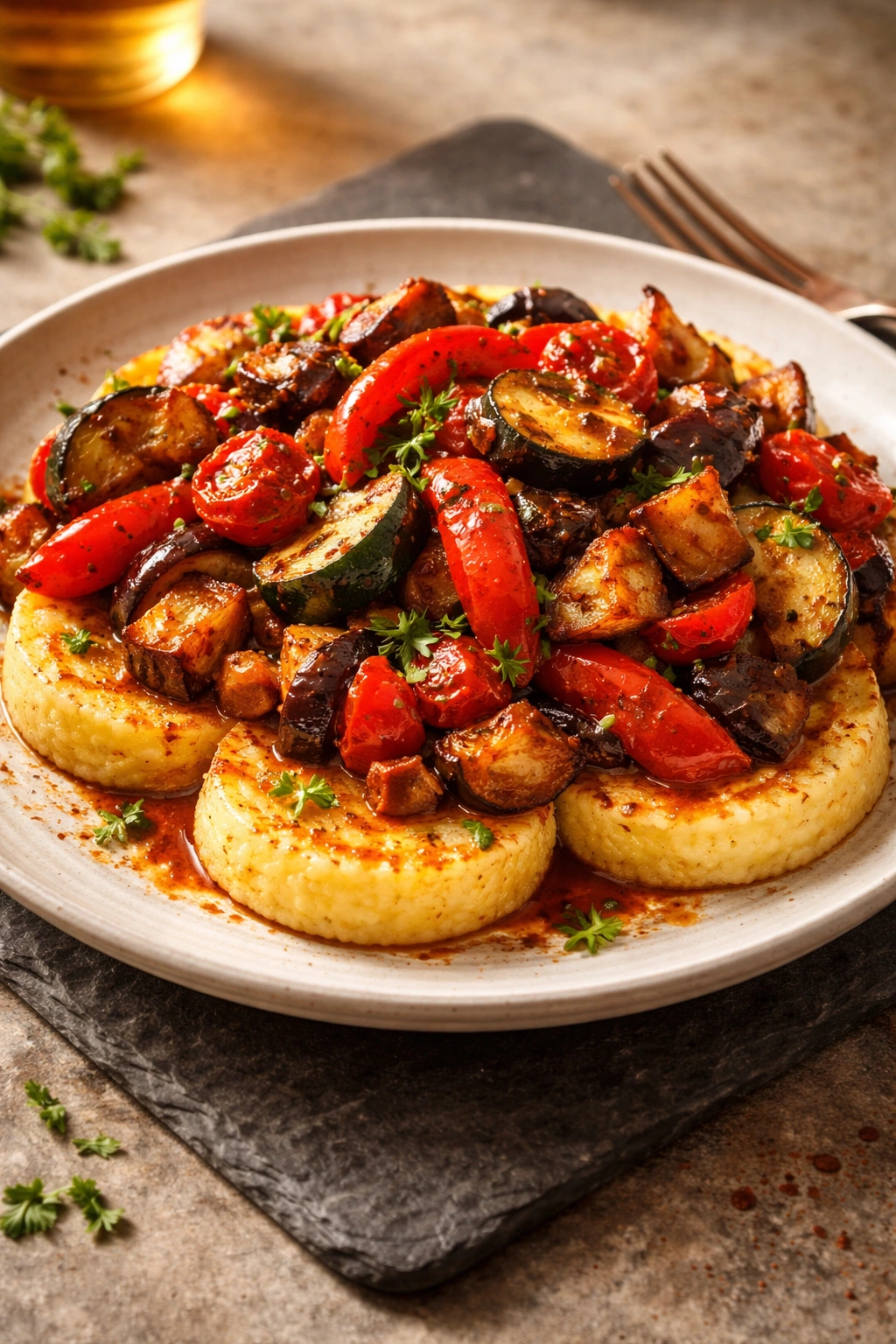
Polenta (creamy cornmeal that’s been cooked and set) pairs beautifully with roasted vegetables — the contrast between the soft, almost creamy polenta and the crispy, caramelized vegetables creates a satisfying texture combination. Smoked paprika brings depth and almost a barbecue-like smokiness that ties everything together.
Why It Works
Polenta often gets overlooked in weeknight cooking because people assume it requires hours of stirring, but prepared polenta (sold in the produce section of most grocery stores, or made ahead and chilled) makes this dinner actually feasible. The creamy nature of polenta means it doesn’t need sauce or additional moisture — it stands well on its own — making it a perfect canvas for roasted vegetables. Smoked paprika is one of those ingredients that creates the impression of complexity without requiring any additional work; it’s the secret to making this dinner taste sophisticated.
Key Ingredients and Components
One package of prepared polenta (about 18 ounces, sliced into half-inch pieces), four cups of mixed roasted vegetables (carrots, bell peppers, zucchini, eggplant, or any combination you prefer), four tablespoons of olive oil, one and a half tablespoons of smoked paprika, two teaspoons of garlic powder, one teaspoon of cumin, salt, and fresh rosemary if available. Optional toppings: fresh basil, grated Parmesan (if not dairy-free), and a squeeze of fresh lemon.
How to Build It
Arrange the polenta slices in a single layer on a baking sheet and toss the vegetables with oil and spices. After arranging the vegetables on the same pan, roast everything together at 425°F for 20 to 25 minutes until the polenta is golden on the bottom and the vegetables are caramelized and tender. The polenta should develop crispy edges while staying soft inside.
Finish with fresh herbs and a squeeze of lemon if you like. This is one of those dinners that feels indulgent without being heavy, and it’s naturally gluten-free if that matters to you.
12. Creamy Dill Roasted Vegetables with White Beans and Potatoes
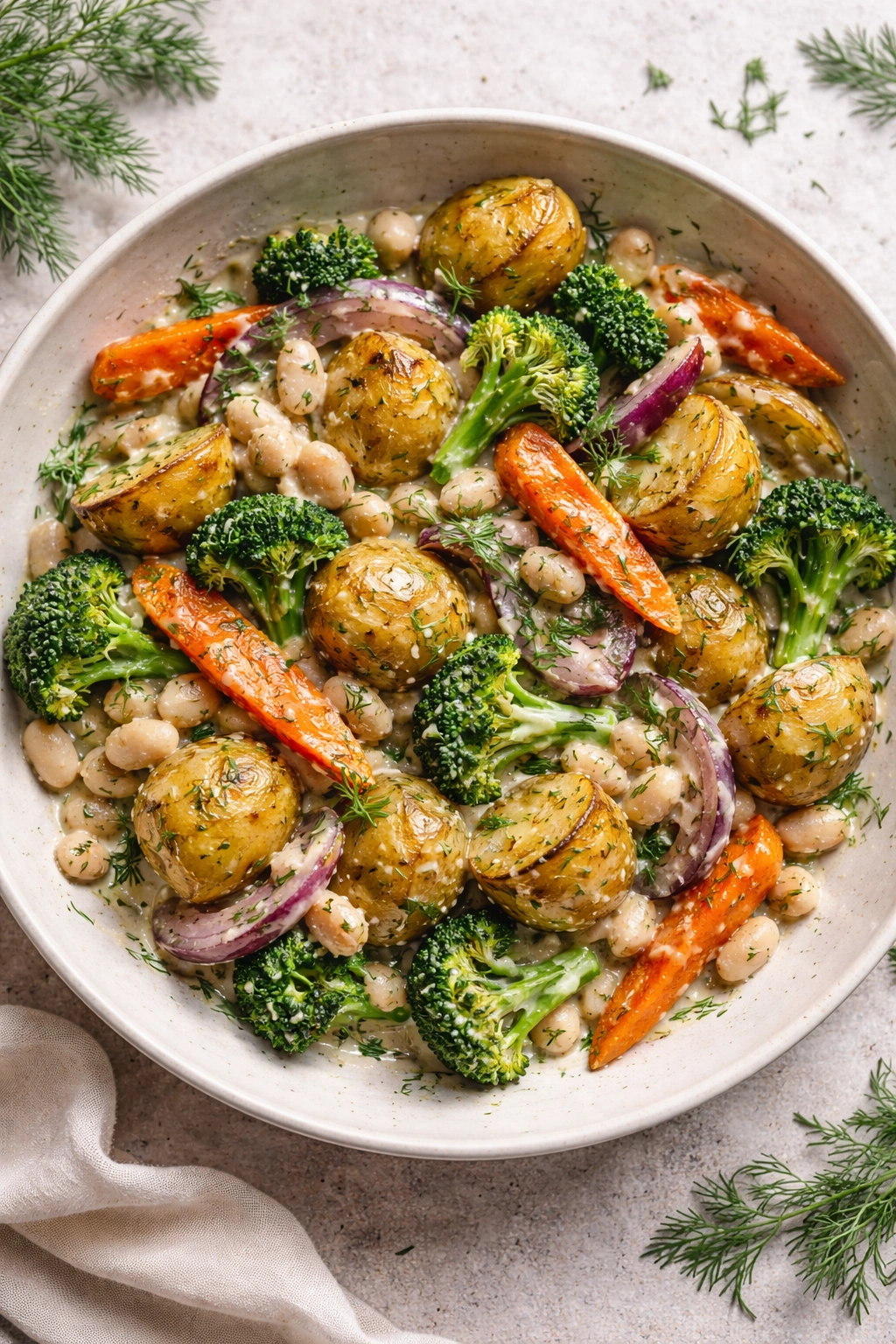
This is comfort food in vegetable form — creamy, herbaceous, and deeply satisfying. Dill is an underused herb in American cooking, but it brings brightness and subtle anise notes that pair beautifully with roasted potatoes and vegetables. A cream-based sauce (or cashew cream if you prefer dairy-free) ties everything together into something that tastes like a vegetable gratin but requires none of the oven preheating or advance preparation.
Why It Works
Dill brings a fresh, slightly sweet flavor that feels both elegant and comforting — it’s the herb that makes something feel homey without being heavy. The white beans provide creaminess and protein, while the potatoes and other vegetables add bulk and heartiness. The sauce component is what transforms this from a simple roasted vegetable plate into something that feels like a complete dinner — it adds richness without requiring cream, butter, or cheese (though they’re optional additions).
Key Ingredients and Components
One pound of baby potatoes (halved), two cups of snap peas, two cups of baby carrots, two cans of white beans (drained), one large red onion (in wedges), four tablespoons of olive oil, one tablespoon of fresh dill (or one and a half teaspoons of dried), four garlic cloves (minced), one cup of vegetable broth, four tablespoons of sour cream or Greek yogurt, one tablespoon of lemon juice, salt, and pepper.
How to Build It
Toss the vegetables and beans with oil, garlic, salt, and pepper, spread across a baking sheet, and roast at 400°F for 25 minutes. While vegetables roast, whisk together the broth, sour cream, dill, and lemon juice. After 25 minutes of roasting, pour the sauce over the vegetables, stir gently to combine, and return to the oven for another 10 minutes until the vegetables are tender and the sauce has warmed through.
The final dish should taste bright from the dill and lemon, rich from the sauce, and completely satisfying despite being entirely meat-free. This is excellent served over rice or with good bread to soak up all the sauce.
13. Za’atar Roasted Vegetables with Feta and Pomegranate
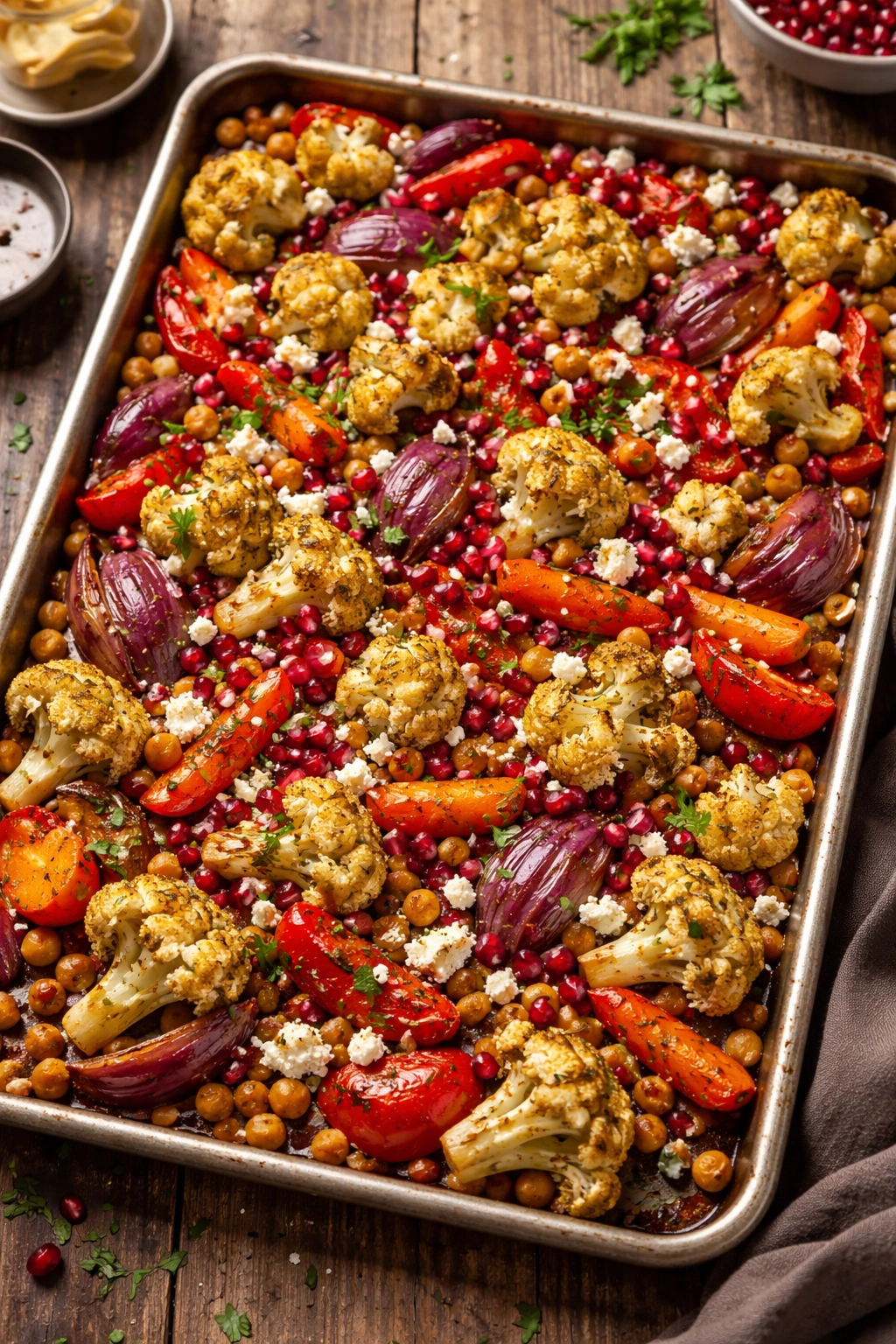
Za’atar is a Middle Eastern spice blend that typically contains sumac, thyme, and sesame seeds — it’s aromatic, slightly tangy from the sumac, and completely transforms simple roasted vegetables into something memorable. The combination with creamy feta and tart pomegranate seeds creates a dinner that’s balanced across sweet, tangy, savory, and creamy — every bite is interesting.
Why It Works
Za’atar has an almost bergamot-like quality from the sumac that creates brightness without requiring citrus, making it perfect for sheet-pan cooking where you want to avoid adding liquid that could steam the vegetables. The tangy pomegranate seeds provide textural contrast and brightness, while the feta brings richness and creaminess that ties everything together. This combination is elegant enough for entertaining but easy enough for a regular weeknight, which is the holy grail of dinner planning.
Key Ingredients and Components
Four cups of cauliflower florets, two bell peppers (cut into chunks), one large red onion (in wedges), two cups of baby carrots, one cup of chickpeas (if you want extra protein) or skip them for vegetable-only, four tablespoons of olive oil, three tablespoons of za’atar, salt and pepper, one cup of crumbled feta cheese, one cup of pomegranate seeds, and fresh parsley for garnish.
How to Build It
Toss the vegetables (and chickpeas if using) with oil, za’atar, salt, and pepper, spread across a baking sheet, and roast at 425°F for 30 to 35 minutes, stirring halfway through, until everything is caramelized and tender. The vegetables should show deep browning on the edges and the chickpeas should be crispy.
Transfer to a serving platter, scatter the feta and pomegranate seeds across the top, and finish with a handful of fresh parsley. This is beautiful enough to serve to guests but takes less than an hour from start to table. It’s excellent served warm or at room temperature, which means great leftovers.
14. Miso-Butter Roasted Delicata Squash with Sage and Walnuts
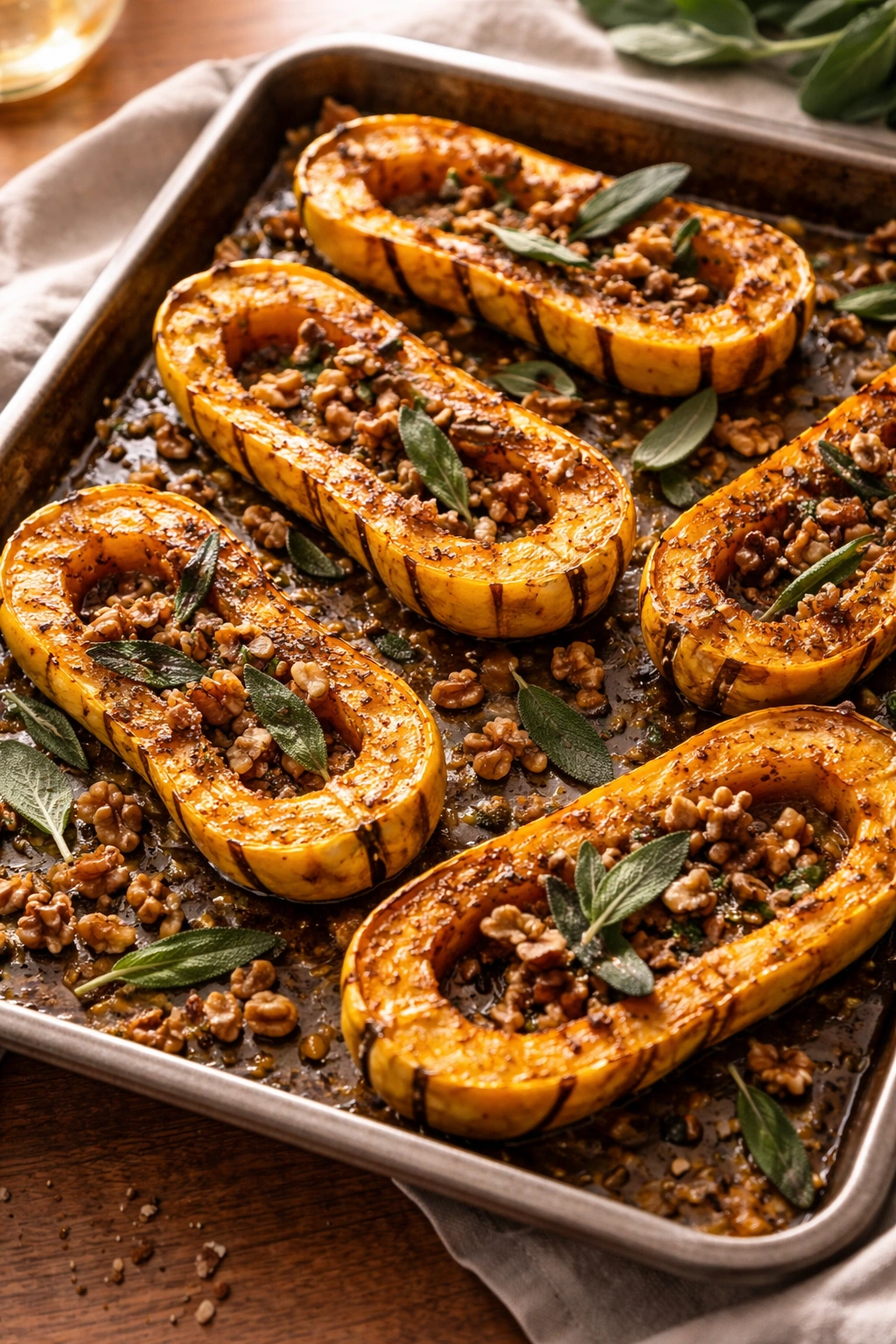
Delicata squash has thinner skin than butternut, so you can eat the skin (which adds nutrition and texture), and when roasted with miso-spiked butter and sage, it becomes something almost decadent. The combination of umami from the miso, herbaceousness from the sage, and richness from the walnuts creates a dinner that tastes warm and indulgent without any animal proteins.
Why It Works
Delicata squash is naturally sweet, and miso amplifies that sweetness while adding a savory depth that prevents the dish from tasting like dessert. Sage brings an almost meaty earthiness that complements the squash’s delicate flavor, while walnuts add textural contrast and richness. This is one of those dinners that feels special enough for entertaining but is simple enough for a weeknight — the beauty is in the ingredients rather than complicated technique.
Key Ingredients and Components
Two large delicata squash (halved lengthwise, seeds removed), three tablespoons of unsalted butter, one and a half tablespoons of white or chickpea miso paste, one tablespoon of lemon juice, eight fresh sage leaves (or one teaspoon of dried), one cup of walnut pieces, salt, and pepper. Optional finishing: fleur de sel and a drizzle of good olive oil.
How to Build It
Cut the delicata squash into half-inch crescents (you can leave the skin on — it’s one of the few squash varieties where this works well). Arrange them on a baking sheet. Whisk the butter, miso, and lemon juice together and brush this mixture over both sides of the squash pieces. Scatter the sage leaves and walnuts across the pan and roast at 400°F for 30 to 35 minutes until the squash is completely tender and caramelized at the edges.
The final dish should taste sweet, savory, herbaceous, and rich all at once. This is excellent served over grains, with a simple green salad, or even on its own as a side dish that could steal the show at any meal.
15. Chili-Lime Roasted Sweet Potato and Black Bean Bowl
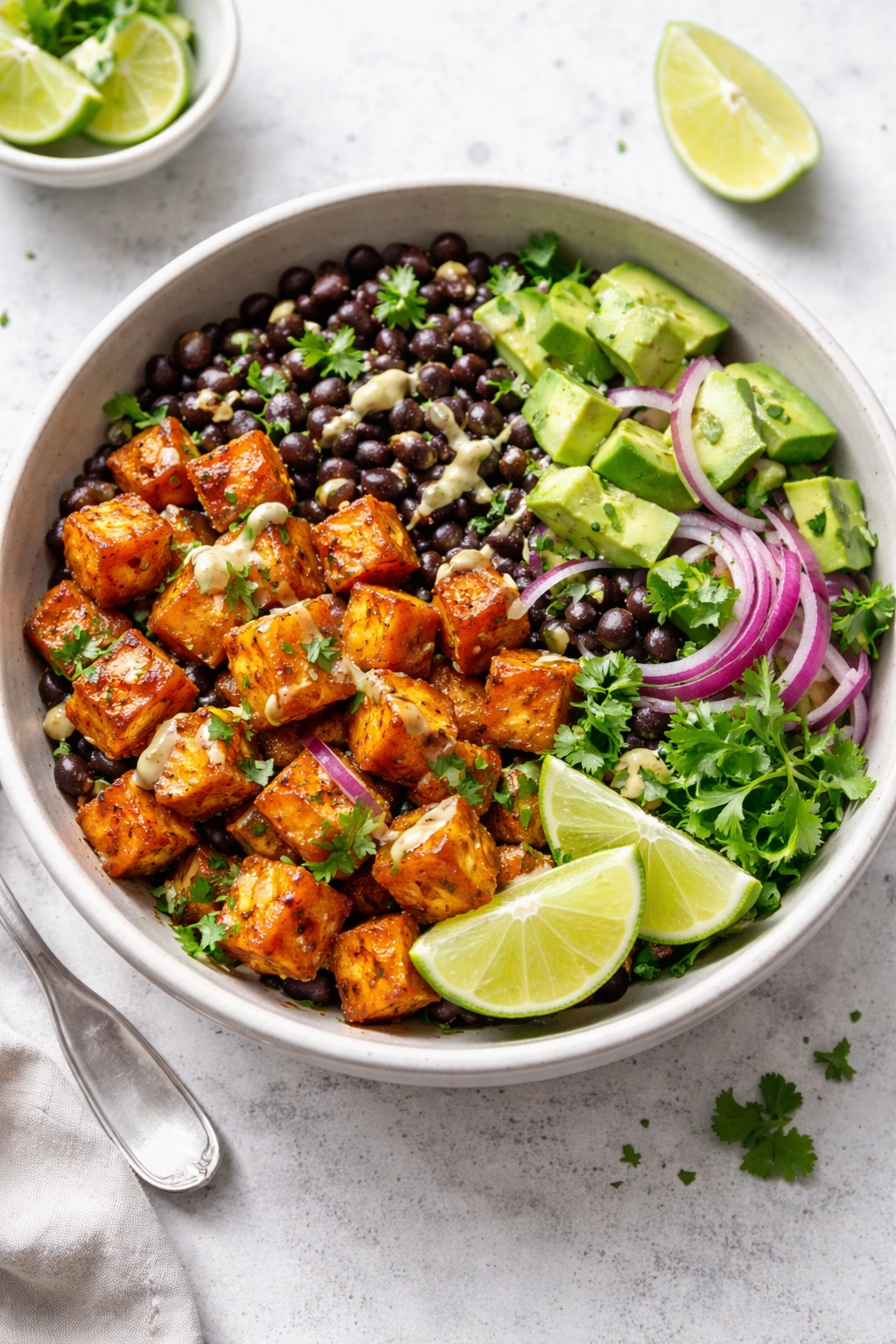
This final dinner brings bright, punchy flavors — chili heat, lime brightness, and cumin’s warm earthiness — combined with sweet potato and black beans for a filling, colorful meal that’s as satisfying as it is beautiful. The combination of heat and brightness makes you keep eating, and the black beans plus sweet potato create a complete protein (when eaten together, beans and grains or certain starches create all nine essential amino acids).
Why It Works
Sweet potato’s natural sweetness pairs beautifully with chili heat, and the lime juice brings a brightness that prevents the dish from feeling one-note. Black beans are one of the most underrated plant proteins — they’re rich, creamy, and earthy in a way that feels substantial and satisfying. This dinner benefits from toppings, so it’s the kind of meal where everyone can customize it slightly, making it perfect for family dinners or when you’re feeding people with different preferences.
Key Ingredients and Components
Two pounds of sweet potato (cut into three-quarter-inch cubes), two cans of black beans (drained and patted dry), one red onion (in wedges), three tablespoons of olive oil, one tablespoon of ground cumin, one to two teaspoons of chili powder (adjust to your heat preference), one teaspoon of smoked paprika, three garlic cloves (minced), salt, and pepper. For serving: lime wedges, fresh cilantro, diced avocado, crumbled queso fresco, and optional hot sauce.
How to Build It
Toss the sweet potato, black beans, onion, and spices with the oil, spread across a baking sheet, and roast at 400°F for 30 to 35 minutes, stirring every 15 minutes, until the sweet potato is tender and caramelized and the black beans show some crispy edges. The time matters here — you want the sweet potato fully cooked through but with some caramelization for depth of flavor.
Finish with a squeeze of lime juice and serve in bowls topped with cilantro, avocado, queso fresco, and a drizzle of hot sauce. This is one of those dinners that tastes completely different depending on your toppings, which means it never gets boring even when you rotate back to it regularly.
Final Thoughts
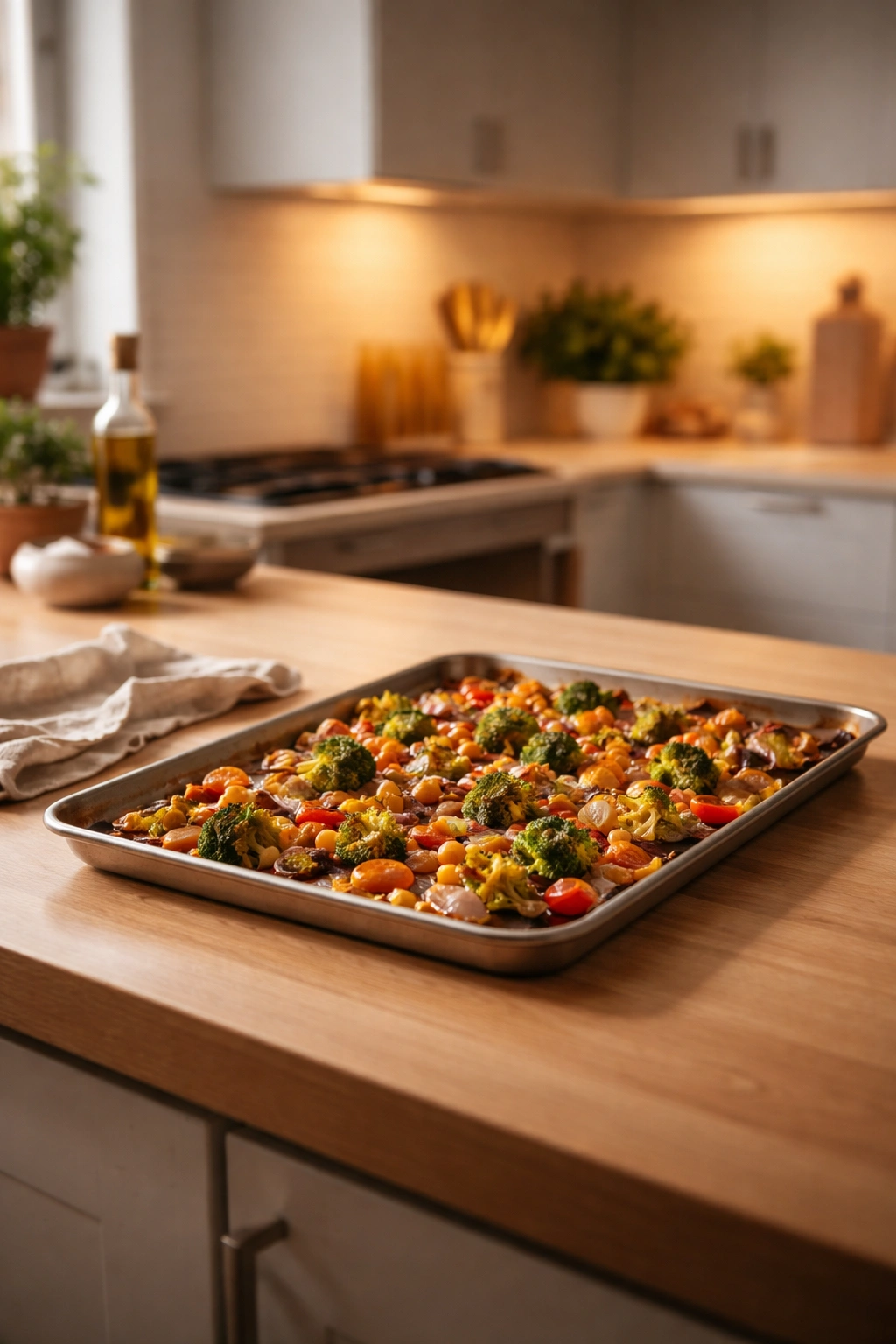
The real revelation of sheet-pan vegetable cooking is how much personality and depth you can build with minimal effort. Each of these dinners takes 40 minutes or less from start to table, and most of that time the oven is doing the work while you handle other tasks. The vegetables don’t taste like you’re eating rabbit food — they taste caramelized, rich, and satisfying because roasting concentrates their natural sugars and proteins in ways that create genuinely crave-worthy meals.
The key to never getting bored is rotation. Cook your way through these 15 dinners across a few weeks, and you’ll start noticing patterns about flavor combinations, roasting temperatures, and timing that let you improvise new versions of your own. Sheet-pan cooking is fundamentally forgiving — vegetables are hard to really ruin, and the biggest variables are timing and how much color you want on the final product.
Keep your pantry stocked with good oils, dried spices, and canned beans, and you’ll always have the building blocks for a satisfying dinner. The investment isn’t in fancy equipment or advanced technique — it’s in choosing good ingredients, tossing them with intentional flavoring, and giving heat and time to do the work. That’s the entire secret to making vegetables taste like the main event rather than a side note.
