



Mornings move fast, and the clock is ticking before you need to head out the door. A proper breakfast should fuel you through mid-morning, but the last thing you have time for is a complicated meal that requires more than a few minutes to assemble. That’s where the humble breakfast sandwich becomes your secret weapon—it’s portable, satisfying, and genuinely delicious when you move beyond the gas station basics.
The right breakfast sandwich strikes a balance between protein, healthy fats, and carbohydrates that actually keeps you full and focused for hours. Unlike toast eaten standing at the counter or a pastry that leaves you hungry by 10 a.m., a well-constructed breakfast sandwich delivers sustained energy with flavors interesting enough to feel like you’re treating yourself rather than just fueling up. The key is layering textures and tastes strategically—crispy elements against creamy ones, savory balanced with subtle sweetness, and components that work together to create something greater than the sum of their parts.
What makes these five sandwiches perfect for busy mornings is that most of the components can be prepped ahead, cooked in batches on a quieter day, and assembled in under five minutes when you’re rushing. You’re not fiddling with complicated techniques or hunting for obscure ingredients—these are all built from items you can find at any grocery store, using equipment you already have in your kitchen.
1. The Classic Egg, Cheese, and Bacon Sandwich

This is the foundation that every other breakfast sandwich builds upon, and for good reason. A perfectly executed egg-and-cheese sandwich on the right bread is genuinely difficult to improve upon, which is exactly why it remains the most reliable choice when you’re running late.
The architecture of this sandwich matters as much as the individual components. Start with bread that has a sturdy structure—a thick English muffin, a bagel, or a fresh croissant that won’t disintegrate when you bite into warm, runny egg yolk. Soft sandwich bread or thin-sliced toast fails the moment the egg hits the surface and starts to soak through, leaving you with a mushy mess by the time you reach your car.
Cook your eggs with intention rather than speed. A quick scramble works, but a single fried or over-easy egg with a set white and a runny center creates a far more luxurious eating experience—the yolk acts as its own sauce. If you’re cooking for a busy week, scrambled eggs actually hold together better for storage and reheating. Cook a large batch of fluffy scrambled eggs on Sunday, portion them into individual breakfast sandwich-sized amounts, and store them in an airtight container in the fridge. They reheat beautifully in a microwave—just 15-20 seconds brings them back to warm without cooking them further.
Why Bacon Matters More Than You Think
Crispy bacon isn’t just flavor; it’s structural integrity. The crispness prevents the sandwich from becoming soggy, and the rendered fat adds richness that makes the sandwich feel indulgent. Soft, floppy bacon gives you neither the textural contrast nor the flavor punch that justifies its place in the sandwich. Cook bacon until it’s deeply golden and crispy—it should break cleanly rather than bend. If you’re batch-cooking for the week, bake it in the oven at 400°F (200°C) for 15-18 minutes on a parchment-lined sheet pan. You’ll get evenly crisp bacon without standing over a skillet, and it stores beautifully for up to five days.
The Cheese Decision
The cheese does more than add creaminess—it bonds the sandwich together emotionally and structurally. American cheese melts into a silky layer and clings to both the egg and the bread. Cheddar adds a sharp flavor note. Swiss brings mild, slightly sweet nuttiness. Cream cheese or a thin smear of spreadable brie transforms the sandwich into something almost decadent. Place your cheese on the warm egg immediately so it softens slightly but doesn’t completely melt into a slick. You want to taste distinct layers, not a homogeneous mass.
2. The Savory Chorizo and Avocado Sandwich
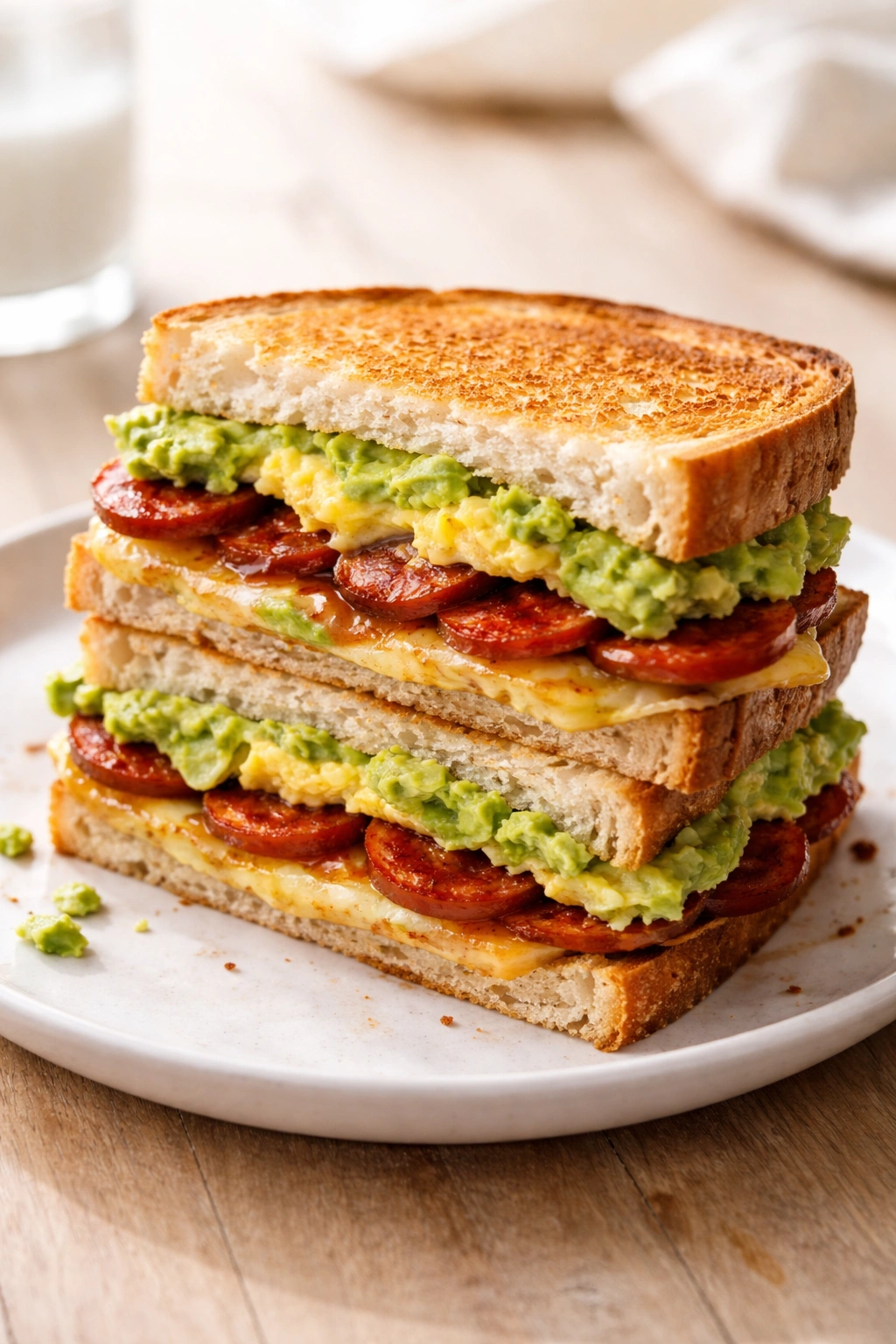
This sandwich steps beyond the breakfast basics and into territory where spice meets richness, creating something that feels special enough for a weekend but quick enough for a regular Tuesday morning.
Chorizo brings heat and deep savory pork flavor that standard breakfast meats can’t match. Spanish chorizo (the sliced, cured variety) or Mexican chorizo (the raw, crumbly kind you cook) both work beautifully—use whichever you find more easily at your market. If you use Spanish chorizo, slice it into rounds about 1/4 inch thick and crisp them in a hot skillet until the edges darken and the fat renders. The chorizo will cook in about three to four minutes total. Mexican chorizo requires removing it from its casing and crumbling it as it cooks, breaking it into small pieces as you go. Either way, you want it browned and crispy, not soft and wet.
The avocado is the counterbalance—creamy, mild, and slightly cooling against the heat. Add it just before eating, not ahead of time, because avocado oxidizes and browns within a few hours. Slice the avocado lengthwise around the pit, twist the halves apart, remove the pit carefully, and scoop the flesh directly onto the sandwich. If you’re prepping the sandwich the night before, store the avocado separately and add it just before eating.
Building the Sandwich Properly
Lightly toast your bread—a thick slice of sourdough, focaccia, or a sturdy roll works beautifully here. Spread a thin layer of Mexican crema or sour cream on the warm bread (it acts as a buffer against sogginess), pile the chorizo on the bottom half, scatter crispy fried onions or raw thinly sliced red onion on top for textural contrast, then layer sliced avocado, fresh cilantro, and a squeeze of lime juice. The lime is crucial; it brightens all the richness and prevents the sandwich from feeling heavy.
Spice Calibration
If you’re sensitive to heat, start with less chorizo or choose a milder Spanish chorizo rather than a fiery Mexican one. You can always layer in extra heat with a thin spread of chipotle mayo or hot sauce, which gives you control. If you love spice, layer jalapeño slices or a dollop of hot salsa verde onto the sandwich.
3. The Plant-Based Veggie Scramble Sandwich
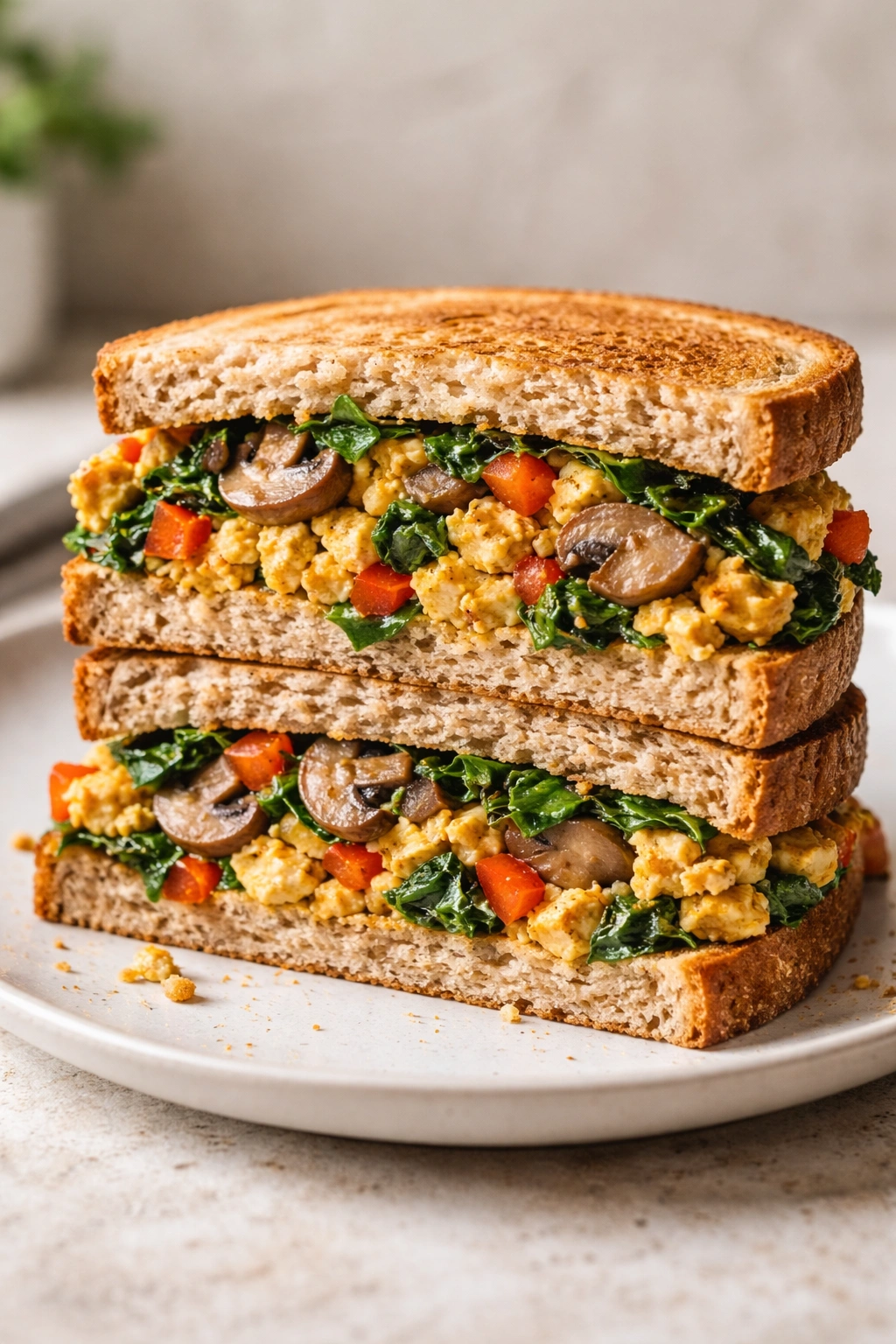
A breakfast sandwich without eggs is absolutely possible—and more satisfying than you’d expect—when you build it around a hearty veggie scramble that has genuine texture and flavor.
The base of this sandwich is a scrambled mixture of crumbled firm tofu, sautéed mushrooms, spinach, and diced bell peppers. The tofu provides the protein and a mild, absorbent texture that takes on the flavors of whatever you season it with. Press extra-firm tofu between paper towels with a plate and some weight on top for at least 15 minutes to remove excess moisture. Crumble it by hand into bite-sized pieces.
Heat a large skillet over medium-high heat with a tablespoon of olive oil. Add diced mushrooms first—cremini, button, or a mix work fine—and cook them until they release their moisture and begin to brown, about five to six minutes. Add minced garlic, then the crumbled tofu, stirring occasionally. Season with salt, pepper, and a pinch of turmeric for color and earthiness. After another three to four minutes, add a few big handfuls of fresh spinach and a quarter cup of diced bell pepper (red, yellow, or orange for sweetness). Stir until the spinach wilts, then taste and adjust seasoning. The whole process takes about 12-15 minutes, and it reheats beautifully.
Cheese and Toppings Strategy
Even though this is plant-based, cheese isn’t excluded unless you’re specifically vegan. A soft cheese like feta or a slice of vegan cheese adds creaminess. Scatter some diced avocado, sliced tomato, or thinly sliced red onion on the sandwich for freshness. A handful of arugula or fresh basil adds peppery brightness. Toast your bread thoroughly to give it enough structure to handle the moisture from the veggies.
Why This Actually Works
The skepticism around plant-based breakfast sandwiches usually comes from the mushroom-and-tofu part feeling like it’s missing something—and the answer is fat and salt. Don’t be shy with either one. Finish the scramble with a drizzle of good olive oil and a generous pinch of flaky sea salt. If it tastes rich and deeply savory, it’ll satisfy you in exactly the way you need.
4. The Mediterranean Feta and Herb Sandwich
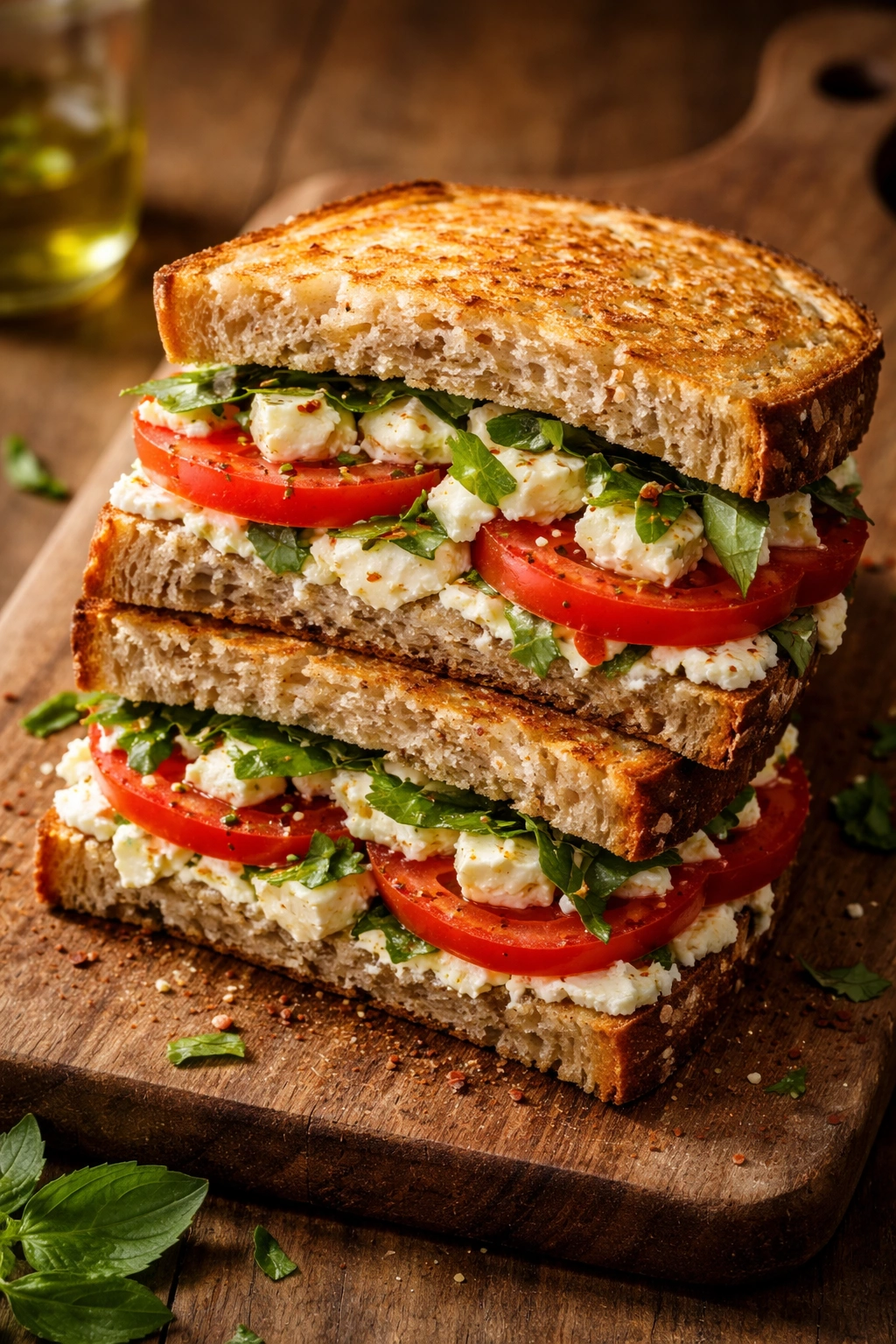
This sandwich brings bright, fresh Mediterranean flavors to breakfast, which might sound unconventional until you actually taste it—then you’ll wonder why you haven’t been eating it every morning.
The heart of this sandwich is soft, creamy burrata or tangy crumbled feta cheese paired with ripe tomato, fresh herbs, and a slick of herbed olive oil. Start with good bread—a ciabatta roll, a thick slice of focaccia, or a sturdy sourdough. Toast it lightly to warm it without making it too crisp. The bread should still have some give so it contrasts with the soft cheese.
Layer the bottom of the sandwich with thin slices of ripe tomato, and salt each slice generously. Salt draws out the tomato’s water content and also seasons the bread directly. Pile crumbled feta (or torn burrata) on top of the tomato. Scatter a generous handful of fresh herbs—mint, basil, dill, or oregano, depending on what’s available. Dress it with a light drizzle of fruity olive oil, a tiny squirt of lemon juice, and a few cracks of black pepper. The acidity from the lemon brightens everything and prevents the sandwich from feeling heavy.
Make it Protein-Complete
Tomato and cheese alone make a lovely sandwich, but they don’t keep hunger away for very long. Add a fried or poached egg, a few slices of good quality prosciutto, or a handful of crispy chickpeas for plant-based crunch. The protein component should complement rather than overwhelm the fresh flavors—it’s a supporting role, not the main event.
Seasonal Vegetable Swaps
Fresh tomato is essential when tomatoes are in season, but during other times of year, substitute roasted red peppers, thinly sliced cucumbers, shredded zucchini, or even caramelized onions. The herb-and-cheese base remains the same, but the sandwich adapts to what’s actually good at your market.
5. The Sweet and Savory Pecan French Toast Sandwich
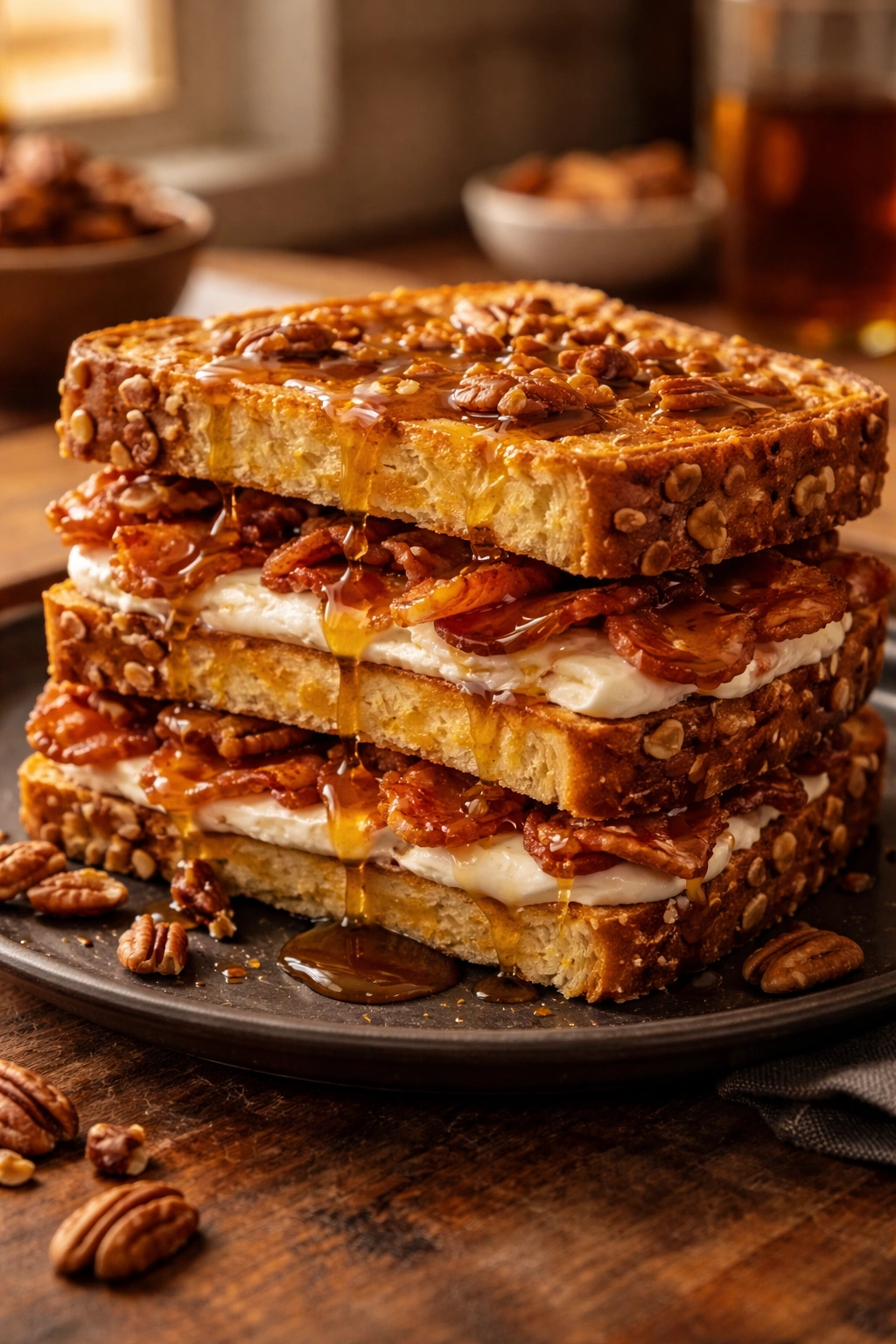
This is the sandwich for the mornings when you want breakfast to feel indulgent without actually taking longer to make. It’s part French toast, part breakfast sandwich, and entirely satisfying.
Make a simple custard: whisk together one egg, a quarter cup of milk, a teaspoon of vanilla extract, and a pinch of cinnamon. Cut thick slices from a brioche loaf or egg bread—you need sturdy bread that won’t fall apart in the custard. Dip each slice quickly in the custard on both sides; don’t soak it or it’ll become soggy. Heat a skillet over medium-high heat with a tablespoon of butter, and cook the bread slices until they’re golden brown and crispy on both sides, about three minutes per side.
The filling is where the sweet-and-savory magic happens. Toast some pecans in a dry skillet until fragrant, about three to four minutes, then roughly chop them. Spread a thin layer of cream cheese or ricotta on the warm French toast. Drizzle a light coating of pure maple syrup or honey. Scatter the toasted pecans on top. Then add a few slices of good quality bacon or a thin layer of prosciutto for salt and umami. The contrast between the sweet bread and syrup against the salty, savory meat is exactly what makes this sandwich work.
Texture and Temperature Balance
The French toast should still be warm when you assemble it—the heat will soften the cheese slightly without melting it into a slick. The pecans should have some crunch that persists even after toasting, so don’t overcook them. The bacon should be crispy enough to provide textural contrast to the soft toast. All of these elements together create a sandwich that’s genuinely more interesting than any one component on its own.
Why It Works for Busy Mornings
You can cook the French toast and bacon in advance and reheat them quickly in a toaster oven (about three minutes at 350°F), then assemble the sandwich fresh. The cream cheese or ricotta is ready to spread immediately. The pecans can be toasted ahead and stored in an airtight container. The only thing you do fresh is the quick assembly, so a sandwich that tastes like weekend-brunch labor actually fits perfectly into a hectic weekday morning.
Make-Ahead Strategies for Weekday Mornings
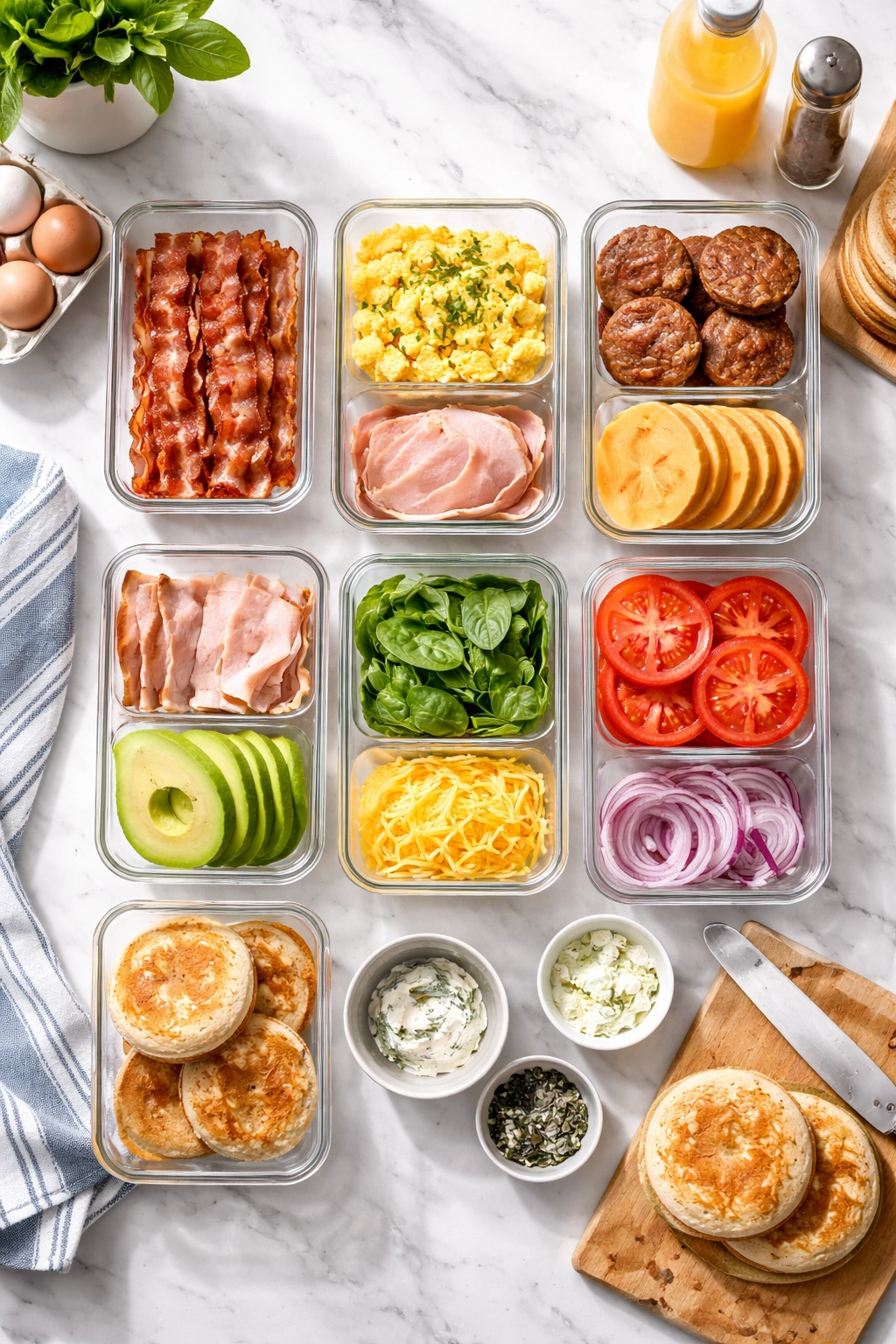
The secret to actually eating one of these sandwiches instead of grabbing something mediocre is removing friction from the process. Every minute you save in the morning is a minute you get to keep in your day.
Cook proteins in batches on your prep day. If you’re making the classic egg-and-cheese sandwich three or four times a week, cook a batch of scrambled eggs on Sunday, a batch of bacon, and a batch of sausage patties. Store them separately in airtight containers in the fridge. They’ll keep for up to five days. In the morning, you’re just assembling, not cooking.
Toast bread in advance and store it. Toasted bread actually stores better than fresh bread because the exterior hardens and slows staleness. Toast a whole batch of your favorite bread on prep day, let it cool completely, and store it in a paper or cloth bag at room temperature. The paper bag allows air circulation, which keeps it from getting soggy.
Prep vegetables the night before. Slice tomatoes, chop herbs, cook mushrooms, or sauté peppers the evening before. Store them separately in airtight containers—don’t mix them together, which will make them soggy and muddy the flavors. Pull them out and assemble quickly in the morning.
Avoid the avocado oxidation problem. If you eat an avocado sandwich every morning, buy avocados at different stages of ripeness so you always have one ready to use. Prepare it literally two minutes before you eat. If you absolutely must prepare it ahead, toss the slices with a light squeeze of lemon or lime juice, which slows browning significantly.
How to Store and Reheat Your Breakfast Sandwiches
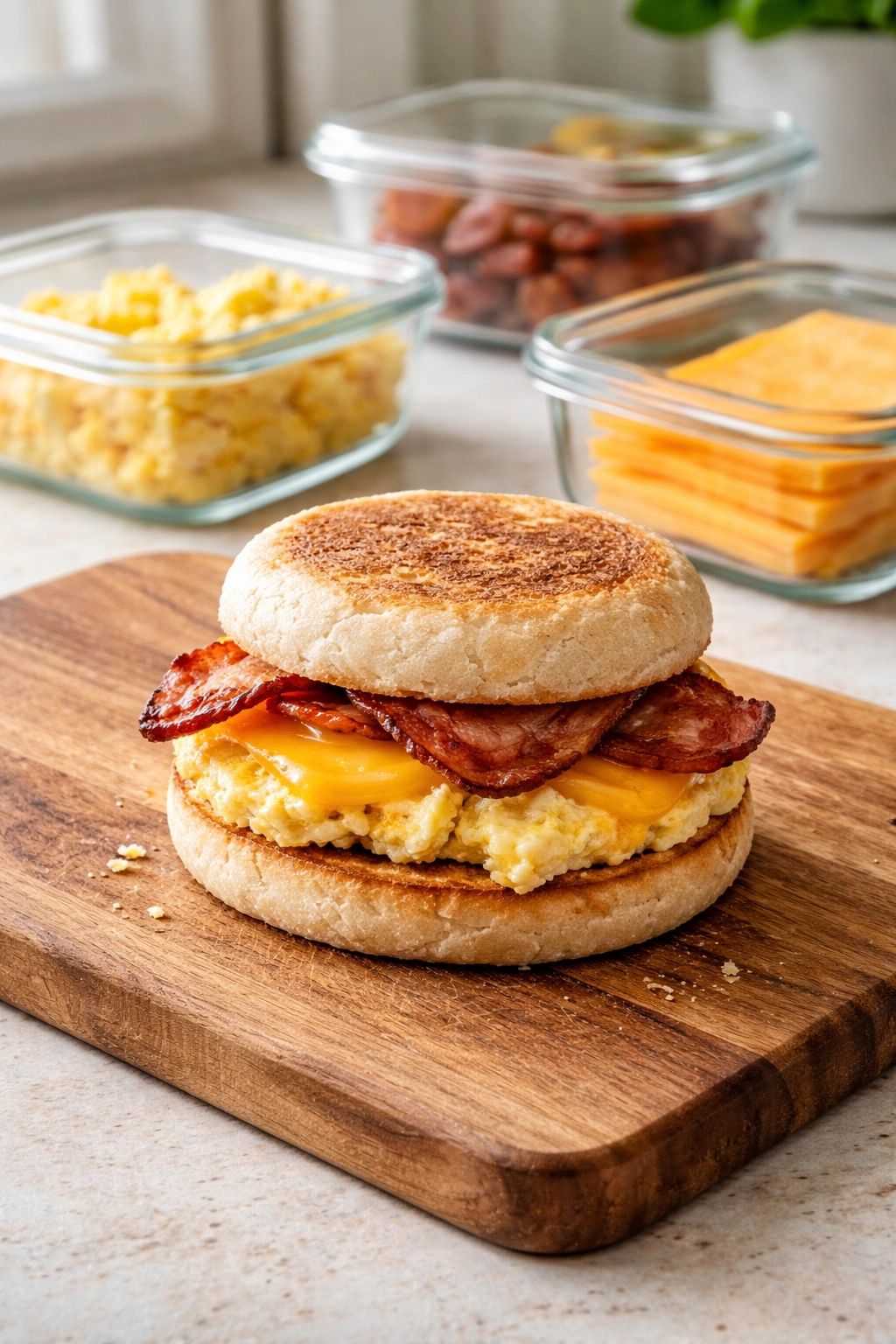
The question everyone asks is whether you can actually make breakfast sandwiches the night before and eat them cold or reheated. The honest answer is it depends on the sandwich.
Storage without assembly. The better strategy is to store all components separately and assemble the sandwich when you need it. Cook your eggs, bacon, and toast ahead. Store them separately in airtight containers. In the morning, your total assembly time is two minutes—just warm the proteins if needed and put it together. This guarantees everything is at the right temperature and texture.
If you must assemble ahead. Wrap the complete sandwich tightly in parchment paper or foil, not plastic wrap. Plastic wrap makes everything steam and get soggy. Store it in the fridge for up to 24 hours. When you’re ready to eat it, unwrap it and reheat gently in a toaster oven at 300°F (150°C) for about five minutes. This warms it without drying it out or melting the cheese all over the place.
Freezer-friendly components. Cook cooked eggs, bacon, sausage, and veggie scrambles freeze beautifully for up to three months. Thaw them in the fridge overnight or run them under warm water in a sealed bag for a few minutes. Reheating is fast—just 20-30 seconds in the microwave brings them back to temperature without cooking them further.
What doesn’t freeze well. Avocado becomes mushy and brown when frozen. Cheese, depending on the variety, can get grainy. Crispy bacon loses its crispness. Fresh herbs wilt. If your sandwich includes these, prep them fresh or store the sandwich components separately for up to 24 hours instead.
Customizing Your Breakfast Sandwich for Different Diets
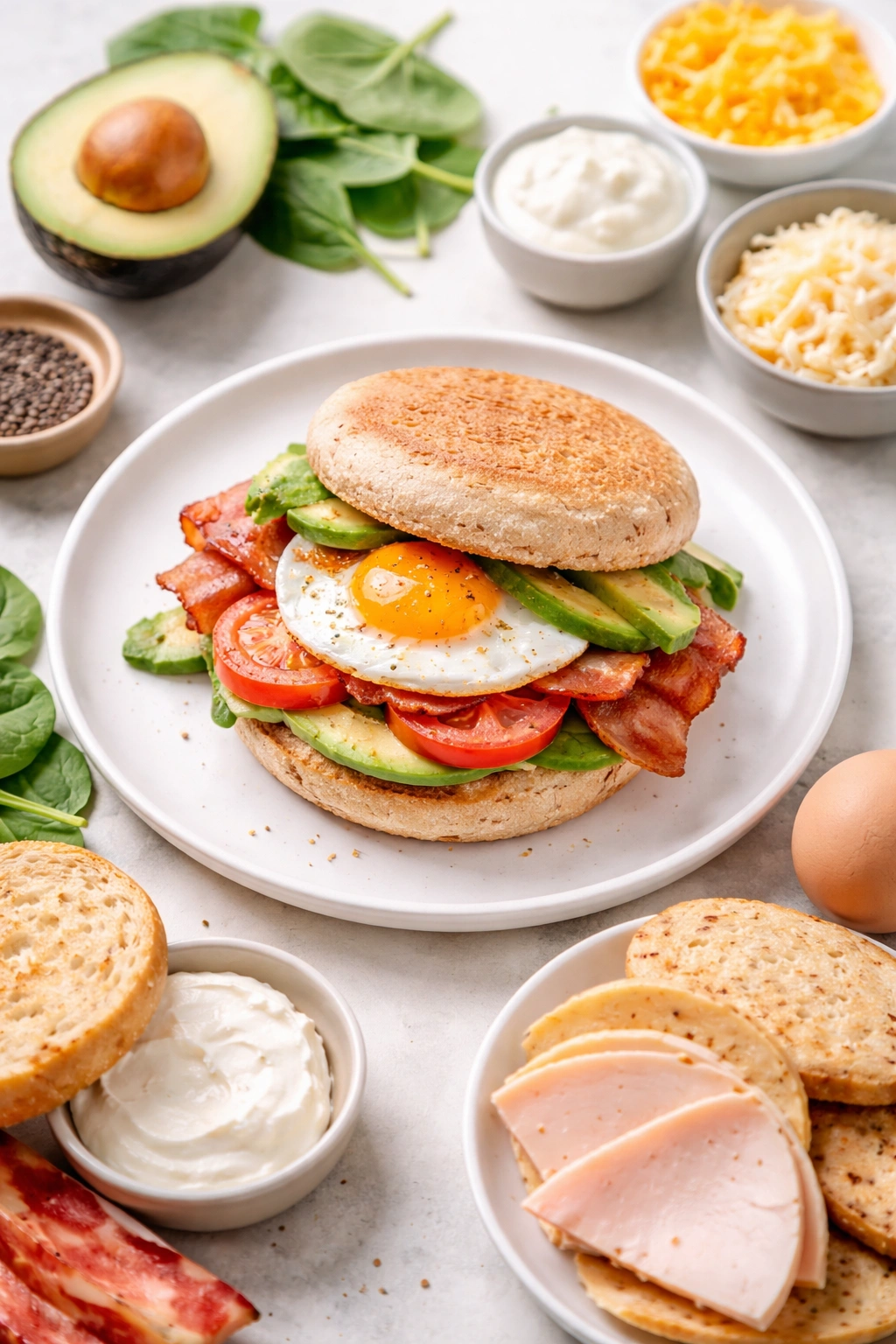
These five base sandwiches adapt beautifully to different dietary preferences without losing their appeal.
For gluten-free. Use thick slices of quality gluten-free bread, or swap bread entirely for halved bagels, English muffins made from gluten-free flour, or even lettuce leaves if you’re going low-carb. Every filling in these five sandwiches is naturally gluten-free.
For vegan. The veggie scramble sandwich is already there for you. For the others, swap dairy cheese for high-quality vegan cheese (cashew-based varieties have the best melt), use plant-based sausage or crumbled tofu seasoned with smoked paprika and soy sauce instead of bacon, and skip the egg or use a tofu scramble instead. The Mediterranean sandwich works beautifully vegan—just skip the cheese or use a vegan feta alternative, and you’ve got something deeply satisfying.
For dairy-free. All five sandwiches work without cheese. Avocado, extra herbs, good olive oil, and a drizzle of lemon juice provide richness and flavor that doesn’t require dairy. The egg sandwiches might feel a bit lean without cheese, so add a layer of creamy avocado or a spread of tahini for fat and richness.
For low-carb. Use lettuce leaves instead of bread, or swap for a thin cloud bread made from eggs and cream cheese. All the fillings are naturally low-carb; you’re just adjusting the vehicle they come in.
For high-protein. Double up on your protein source. Two eggs instead of one, extra bacon, or add cottage cheese as a spread instead of butter. The Mediterranean sandwich gains protein from crumbled feta or a cooked egg. Layer multiple protein sources—egg plus bacon plus cheese—if you need significant protein for your goals.
Final Thoughts

The difference between a breakfast sandwich that becomes your go-to and one you try once comes down to two things: the quality of the individual components and how well they work together. A mediocre sandwich comes from throwing decent ingredients between bread without thinking about texture contrast, flavor balance, or how temperatures interact when you bite into it.
Start with one of these five and make it correctly. Notice what actually keeps you full, what tastes genuinely good to you, and what’s realistic for your schedule. Maybe it’s the classic egg-and-cheese because you love simplicity. Maybe it’s the chorizo sandwich because the spice wakes you up. Maybe you rotate through different ones depending on what’s in your fridge and how much time you have.
The real power of the breakfast sandwich is that it’s the intersection of nutrition, convenience, and genuine enjoyment. You’re not forcing down something bleak just to fuel your body—you’re eating something you actually want to eat, which means you’ll prioritize breakfast and show up to your day actually nourished instead of running on fumes until lunch. That consistency across mornings absolutely ripples through the rest of your day.
