



Looking for a dinner solution that actually works on a hectic weeknight? Air fryer salmon might just become your secret weapon. This isn’t just another quick recipe that sacrifices quality for speed — you’re getting restaurant-quality fish with crispy, caramelized edges and a tender, buttery center that stays perfectly moist. The best part? It’s genuinely ready in 12 minutes, including prep time, which means you can have a nutritious, impressive dinner on the table faster than most takeout arrives.
The air fryer has completely transformed how home cooks approach salmon, and once you understand why, you’ll probably never go back to the oven. The circulating hot air creates an environment that’s almost impossible to replicate with traditional cooking methods — it sears the outside to golden perfection while the interior stays succulent and flaky. You’re not dealing with oil splatters on the stove, you’re not waiting 20 minutes for the oven to preheat, and you don’t need special skills or fancy techniques. Just season, air fry, and eat. That’s genuinely all there is to it.
What makes this method work so reliably is the precise temperature control and rapid air circulation. The air fryer maintains a consistent 400°F, which is hot enough to create that beautiful crust without overcooking the delicate fish inside. Unlike pan-searing, where timing is incredibly unforgiving and one moment of inattention can turn your salmon dry, the air fryer is surprisingly forgiving. The moisture gets sealed in naturally, and as long as you’re within a minute or two, you’ll land on perfectly cooked fish. This is why so many home cooks have made this their go-to preparation method — it removes the guesswork and delivers consistent results every single time.
Why Air Fryer Salmon Works So Well
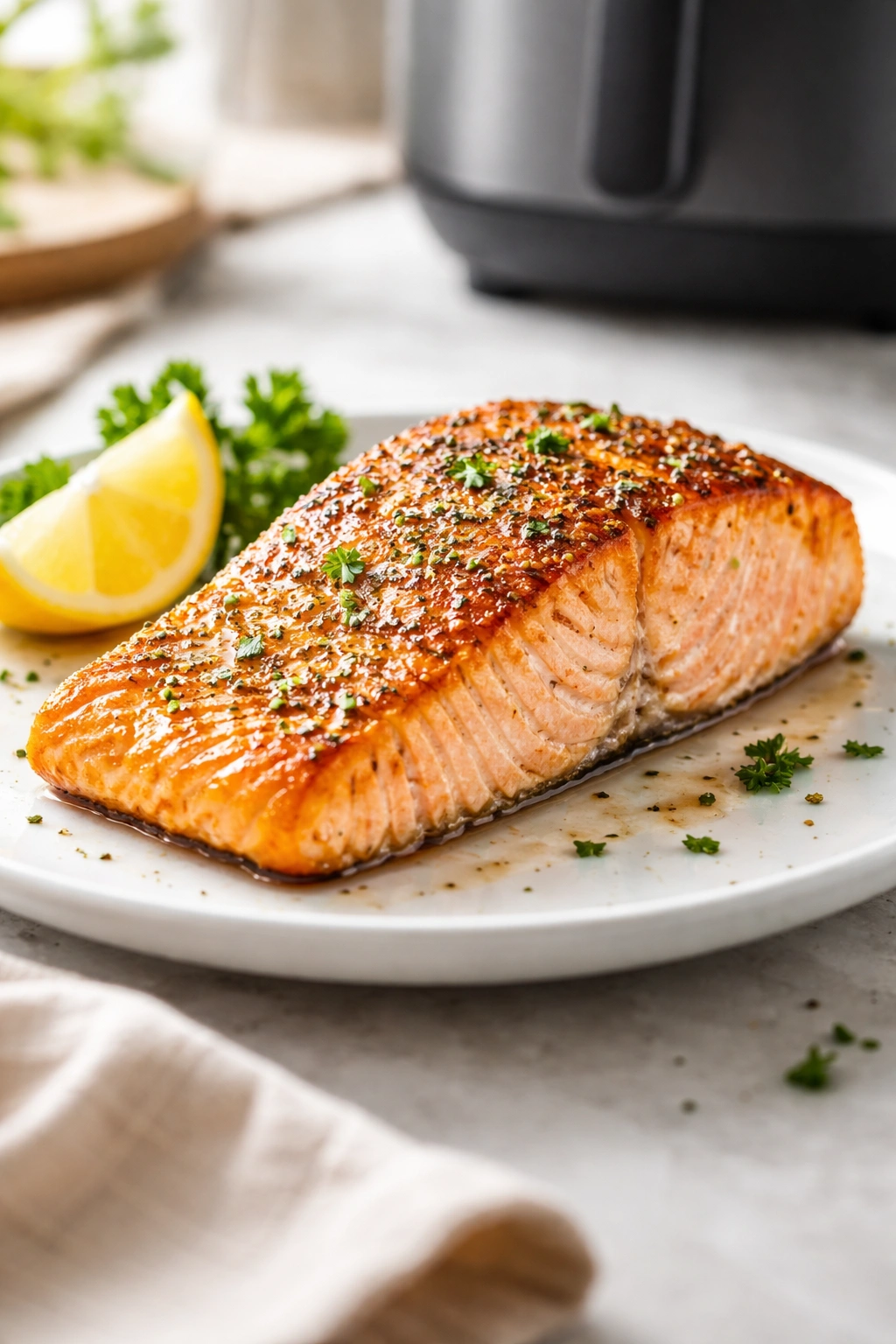
The magic of air fryer salmon comes down to how the appliance cooks. Instead of dry oven heat coming from one or two directions, the air fryer surrounds the fish with rapidly circulating hot air. This means the salmon cooks evenly from all sides simultaneously, without you needing to flip it or rotate the basket. The exterior crisps up and browns beautifully through the Maillard reaction — that chemical process that creates those deeply flavorful, caramelized notes — while the interior stays protected by the fish’s natural moisture.
Salmon is naturally high in fat, which makes it one of the most forgiving fish to cook. Unlike lean white fish that dries out instantly, salmon’s omega-3 and omega-6 content keeps it tender even if you accidentally cook it slightly longer than intended. When you add air frying to this natural advantage, you’re basically stacking the odds in your favor.
Another reason this method works so brilliantly is that you’re cooking with minimal added fat. The air fryer creates crispness through heat circulation alone, not through deep frying or pan-frying. This means you get that desirable texture with far less oil than traditional methods, making it a genuinely healthy option for busy nights when you still want to feel good about what you’re eating.
What You’ll Need for Perfect Air Fryer Salmon
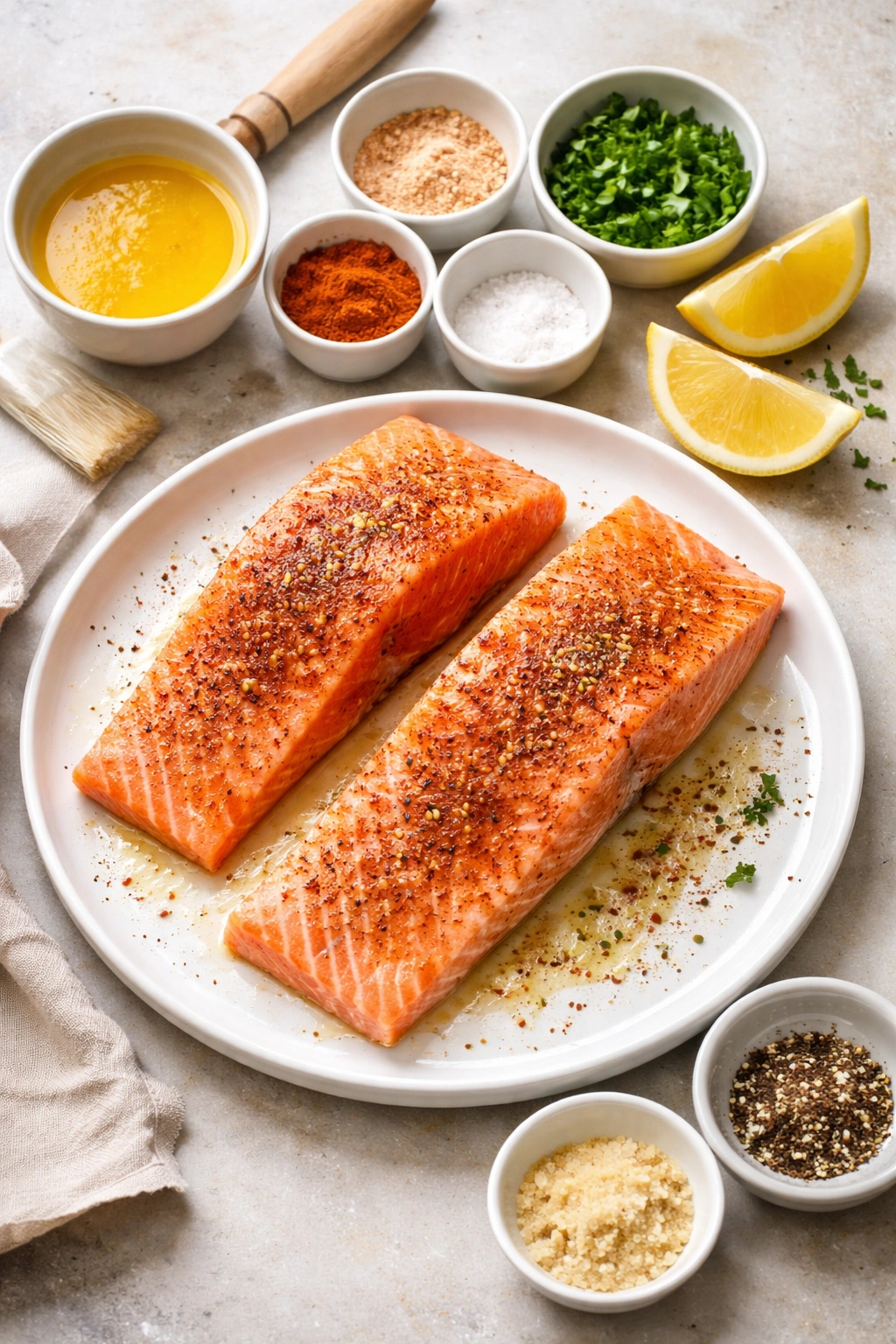
Yield: Serves 4 | 2 fillets per serving
Prep Time: 3 minutes
Cook Time: 10 minutes
Total Time: 13 minutes active
Difficulty: Beginner — The steps are straightforward, no special skills required, and there’s nothing to flip or monitor constantly.
For the Salmon:
- 4 (6-ounce) salmon fillets, skin-on preferred (skinless works too, but skin-on stays moister)
- 1 tablespoon unsalted butter, melted (or olive oil/avocado oil)
- 1 teaspoon garlic powder
- ½ teaspoon paprika (smoked paprika adds deeper flavor if you have it)
- ½ teaspoon fine sea salt
- ¼ teaspoon freshly ground black pepper
- Lemon wedges for serving
- Fresh dill or parsley for garnish (optional but recommended)
Optional Serving Additions:
- Tartar sauce (classic pairing)
- Greek yogurt sauce (lighter option)
- Fresh lemon juice (a squeeze of bright acid makes all the difference)
The beauty of this ingredient list is how intentional it is. Every single ingredient serves a purpose — the butter carries flavor and helps create that golden exterior, the garlic powder and paprika build a savory crust, and the salt enhances everything. You’re not adding unnecessary components or complicating the process. This is flavor through simplicity, which is exactly how salmon should be treated.
Preparing Your Salmon Fillets Properly
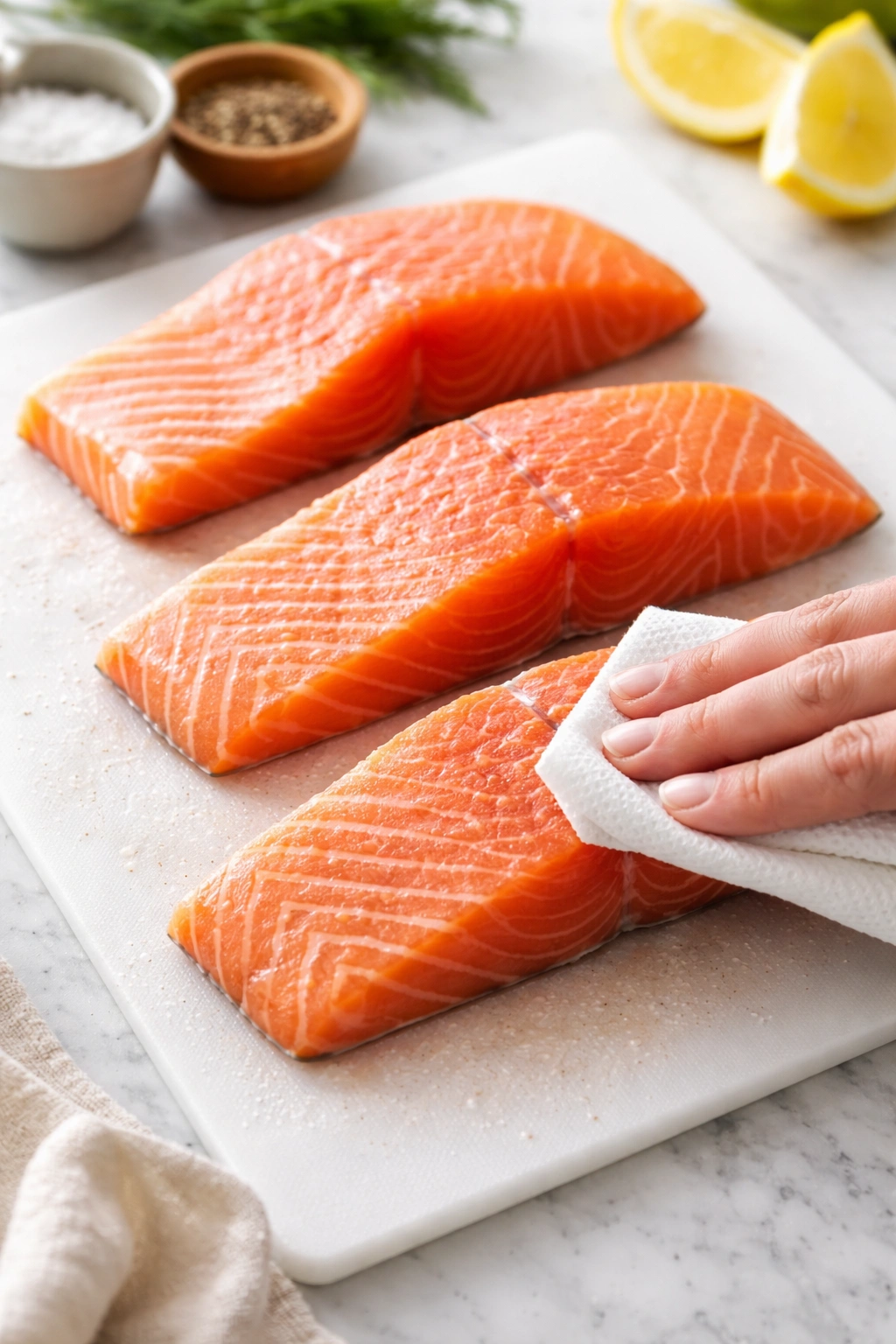
Before you even think about seasoning, the prep work matters enormously. Pat your salmon fillets completely dry with paper towels — this single step makes a measurable difference in how crispy the exterior gets. Moisture is the enemy of browning, and any water clinging to the surface will create steam instead of allowing that beautiful caramelization to happen. If your fillets are quite wet, don’t hesitate to pat them down firmly and thoroughly.
Check the thickness of your fillets and try to select pieces that are roughly the same size. This ensures they all finish cooking at the same time. If one fillet is noticeably thinner than the others, it’ll be overcooked by the time the thicker ones reach the proper doneness. Most 6-ounce fillets are about three-quarters to one inch thick, which is ideal for this cooking time.
Look for salmon with firm flesh and bright color, whether you’re buying fresh or thawed from frozen. The meat should spring back slightly when you press it gently — if it feels mushy or has any soft spots, skip it and pick a different fillet. Fresh salmon should smell clean and briny, never fishy or “off.” If the fishmonger’s counter doesn’t smell good, neither will the fish once you cook it.
Building the Perfect Seasoning Crust
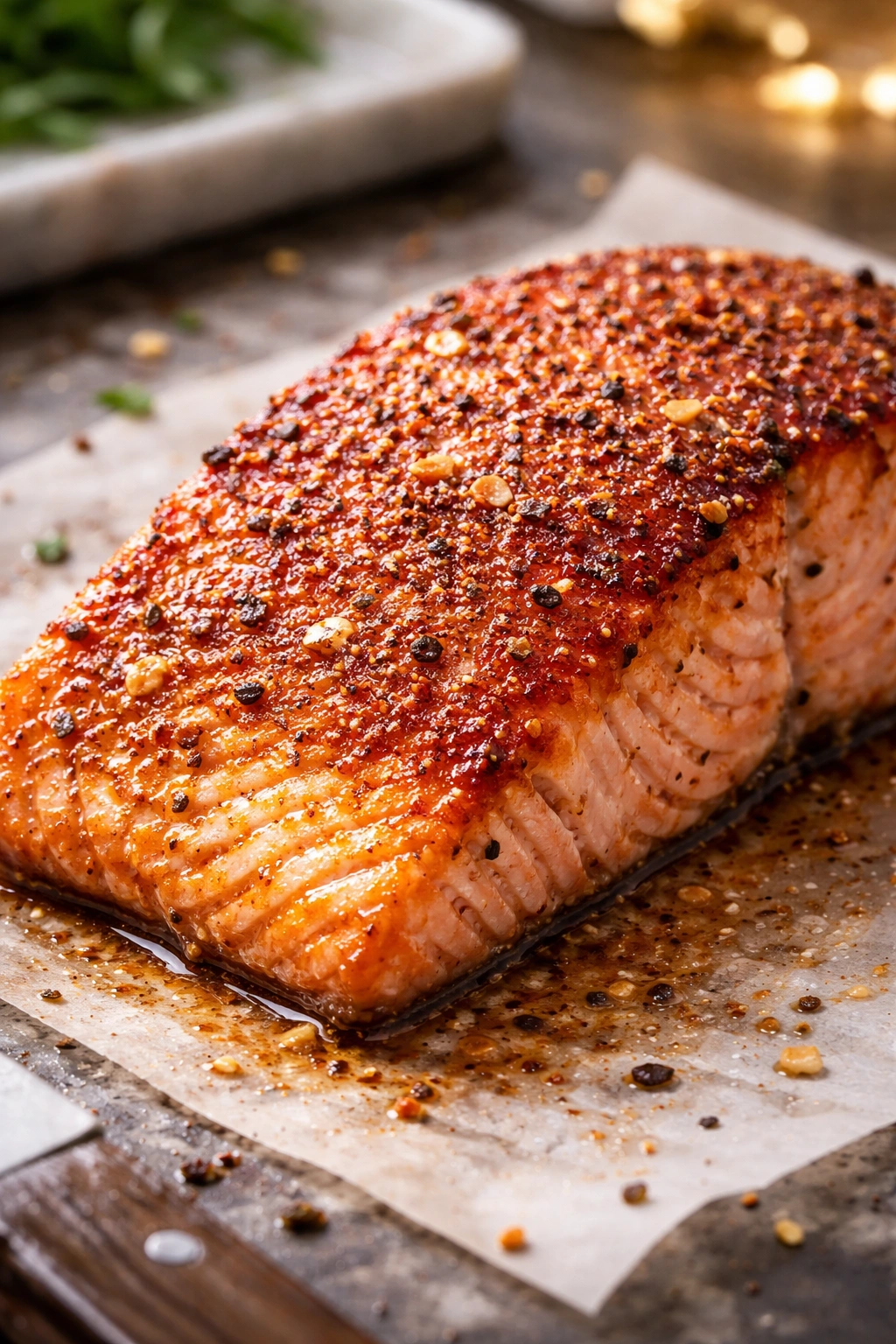
This is where the real flavor happens, and it’s absurdly simple. Brush each fillet with melted butter or oil on both sides — this sounds unnecessary, but it serves two critical functions. First, it helps the seasonings adhere to the fish so they don’t fall off into the air fryer basket. Second, it creates a barrier that helps the exterior brown and crisp while keeping the interior juicy.
Once you’ve brushed on the oil, sprinkle the garlic powder, paprika, salt, and pepper evenly over the top of each fillet. Don’t be shy with the seasoning — the flavors don’t penetrate deeply into fish, so you want enough on the surface to create a flavorful crust. Some people use a measuring spoon to be precise, but honestly, shaking it straight from the spice bottle works beautifully and distributes the seasoning more evenly. Start with the salt and pepper as your base, then be generous with the garlic powder and paprika.
If you prefer, you can season both sides of the salmon. There’s no requirement to do this — one side is enough — but if you’re cooking skinless salmon or you want maximum flavor coverage, go ahead and coat the underside too. The skin-side doesn’t need much seasoning since you’ll likely remove or not eat it anyway.
Setting Up Your Air Fryer for Success
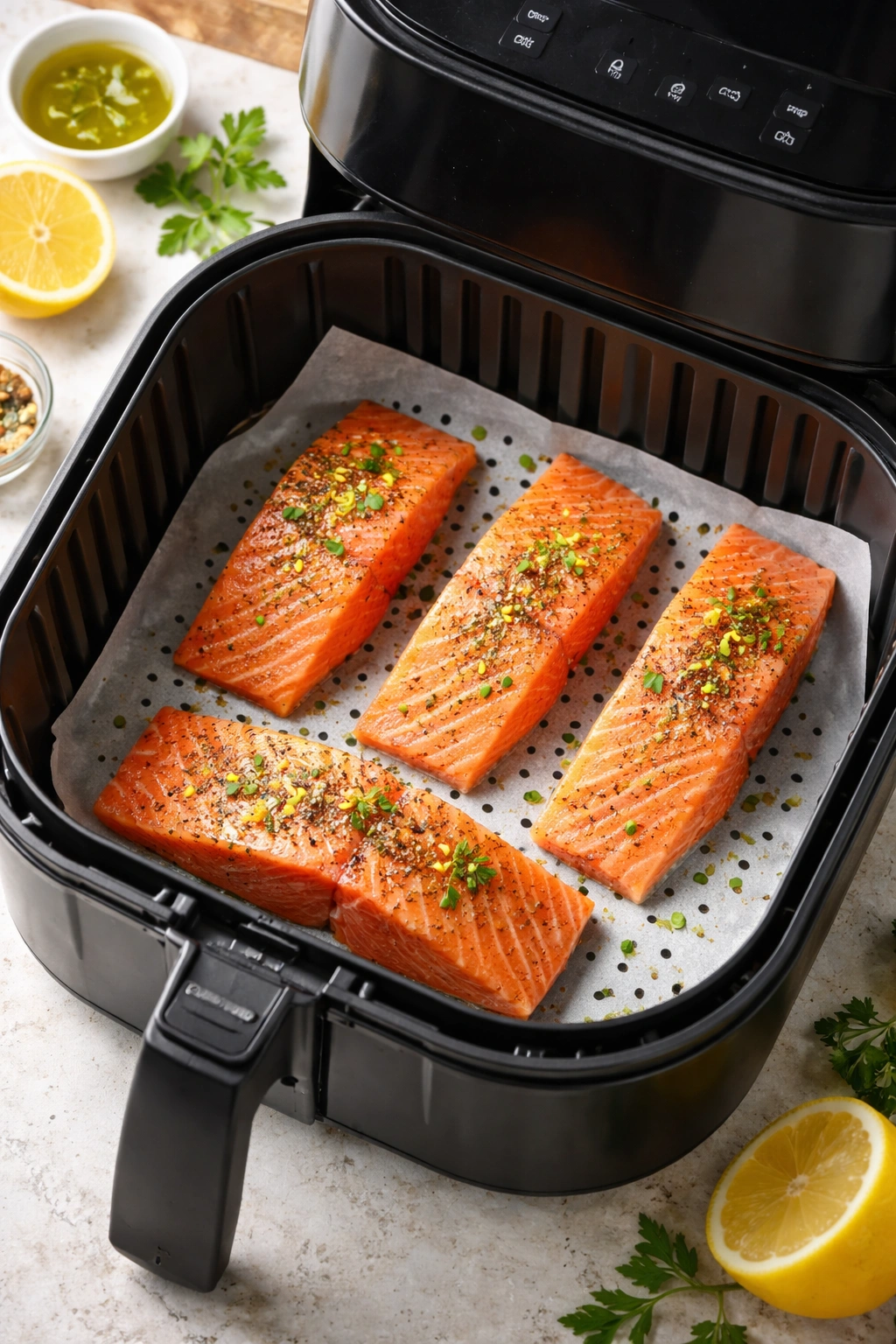
Preheat your air fryer to 400°F and let it heat for about 3-5 minutes. Some recipes suggest skipping the preheat step, but with salmon, this matters. Preheating ensures the fish hits the hot air immediately and starts developing that golden crust right away. It also helps the cooking time stay consistent.
While the air fryer heats, you can have your salmon ready to go. Line the air fryer basket with a piece of parchment paper if you want easier cleanup — this is optional but genuinely helpful if you want to avoid any sticking. Make sure to use parchment paper with perforations or holes; solid parchment can block air circulation and defeat the purpose of air frying.
Arrange your salmon fillets in the basket skin-side down, leaving space between each piece. This spacing is important because it allows the hot air to circulate freely around each fillet. If you crowd the basket or let the fillets touch, they’ll steam instead of air fry, and you’ll end up with less crispy edges and potentially uneven cooking. If your air fryer is small and won’t fit all four fillets with proper spacing, cook them in two batches — this takes an extra 10 minutes, which is still incredibly fast for dinner.
Numbered Steps for Cooking:
-
Preheat your air fryer to 400°F (204°C) for about 3-5 minutes. A fully preheated basket ensures the salmon starts cooking immediately and develops that golden exterior.
-
While the air fryer heats, pat your salmon fillets dry with paper towels. Moisture prevents browning, so don’t skip this step even though it seems minor.
-
Brush each fillet lightly with melted butter or olive oil on both sides, using a pastry brush or your fingertips. The oil should coat the surface evenly without pooling.
-
In a small bowl, combine the garlic powder, paprika, salt, and pepper. Mix together briefly so the salt distributes throughout (this prevents clumping of salt crystals).
-
Sprinkle the seasoning mixture evenly over the top of each fillet. Don’t be stingy — you want a visible seasoning crust that will turn golden as it cooks.
-
Carefully place your seasoned salmon fillets in the air fryer basket, positioning them skin-side down. Ensure there’s at least half an inch of space between each fillet so hot air can circulate freely around all surfaces.
Advertisements -
Set the air fryer to 400°F and cook for 7-10 minutes, depending on the thickness of your fillets. Start checking for doneness at 7 minutes if they’re thin, or 8 minutes if they’re closer to an inch thick.
-
The salmon is perfectly cooked when it reaches an internal temperature of 140-145°F at the thickest part. If you don’t have a thermometer, the fish should be opaque throughout and flake easily when you press it gently with a fork.
-
Once cooked, let the salmon rest in the basket or on a plate for 1-2 minutes before serving. This brief rest allows the juices to redistribute throughout the fillet, making each bite more tender and moist.
-
Transfer to serving plates, squeeze fresh lemon over the top, and serve immediately while the exterior is still warm and crispy.
Achieving the Ideal Level of Doneness
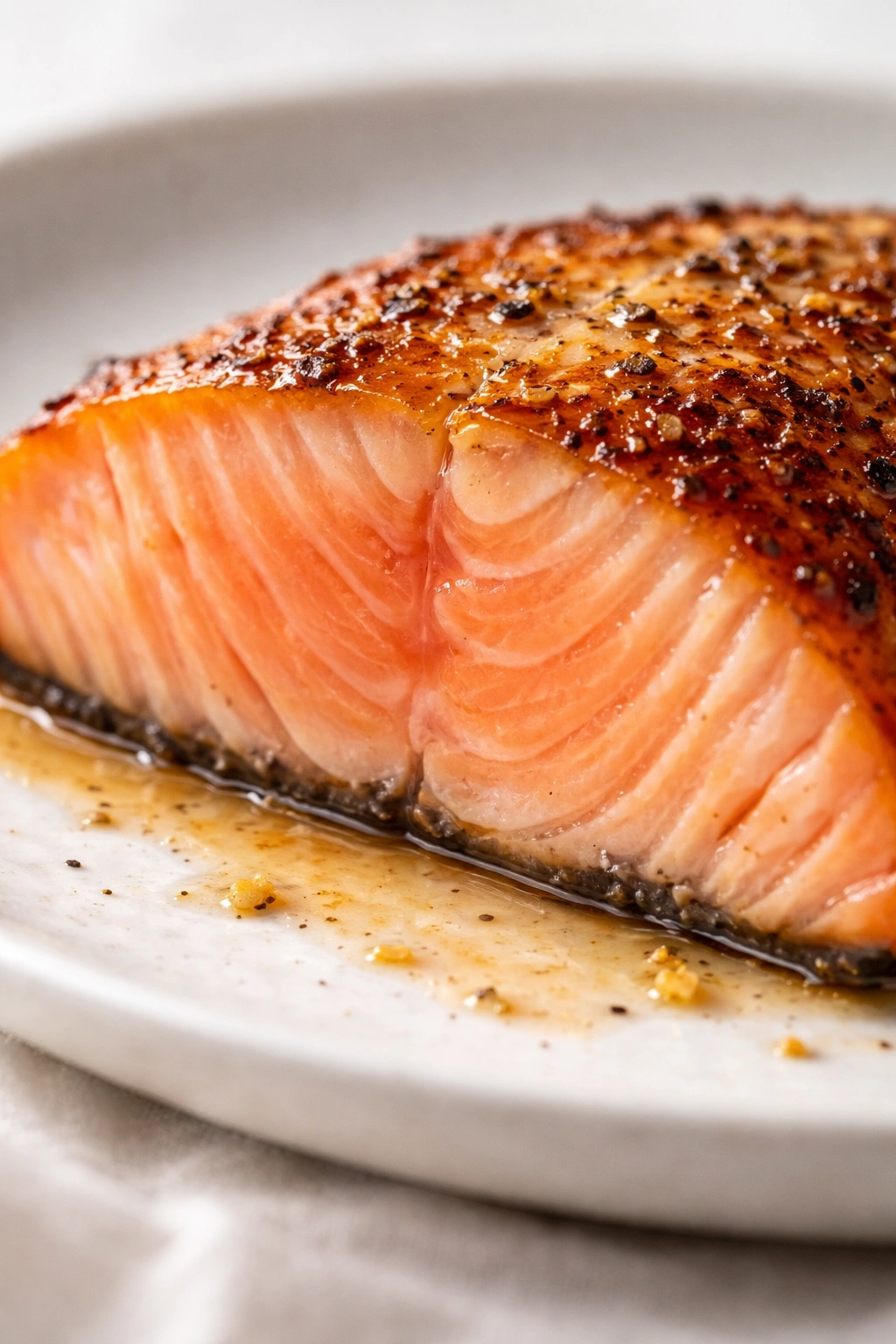
Getting salmon to the perfect doneness is easier with the air fryer than most other methods, but it’s worth understanding the different stages. Medium-rare salmon (the gold standard for most chefs) reaches an internal temperature of 125-130°F. At this temperature, the center stays barely opaque with a slight translucent quality, and the texture is incredibly buttery and tender. Some home cooks find this too rare-feeling, even though it’s completely safe.
Medium doneness, which is what most home cooks prefer, is 130-140°F. At this temperature, the salmon is completely opaque throughout but still incredibly moist and tender. The flesh flakes easily but holds together nicely, and there’s no translucent quality at all. This is the sweet spot for people who want fully cooked fish without any soft or rare appearance.
Well-done salmon reaches 145°F, which is the FDA’s recommendation for food safety. At this point, the fish is completely cooked, fully opaque, and flakes very easily. It’s still moist if you don’t overcook it, but it’s noticeably firmer in texture than medium doneness.
The key is checking doneness starting at 7 minutes for thinner fillets. You can always cook it a bit longer, but you can’t uncook it. Take out a fork and press gently into the thickest part of the fillet — if it flakes easily and looks opaque to your desired level, it’s done. If you have an instant-read thermometer, insert it into the thickest part of the fillet horizontally to get an accurate temperature reading.
Tips and Tricks for Restaurant-Quality Results
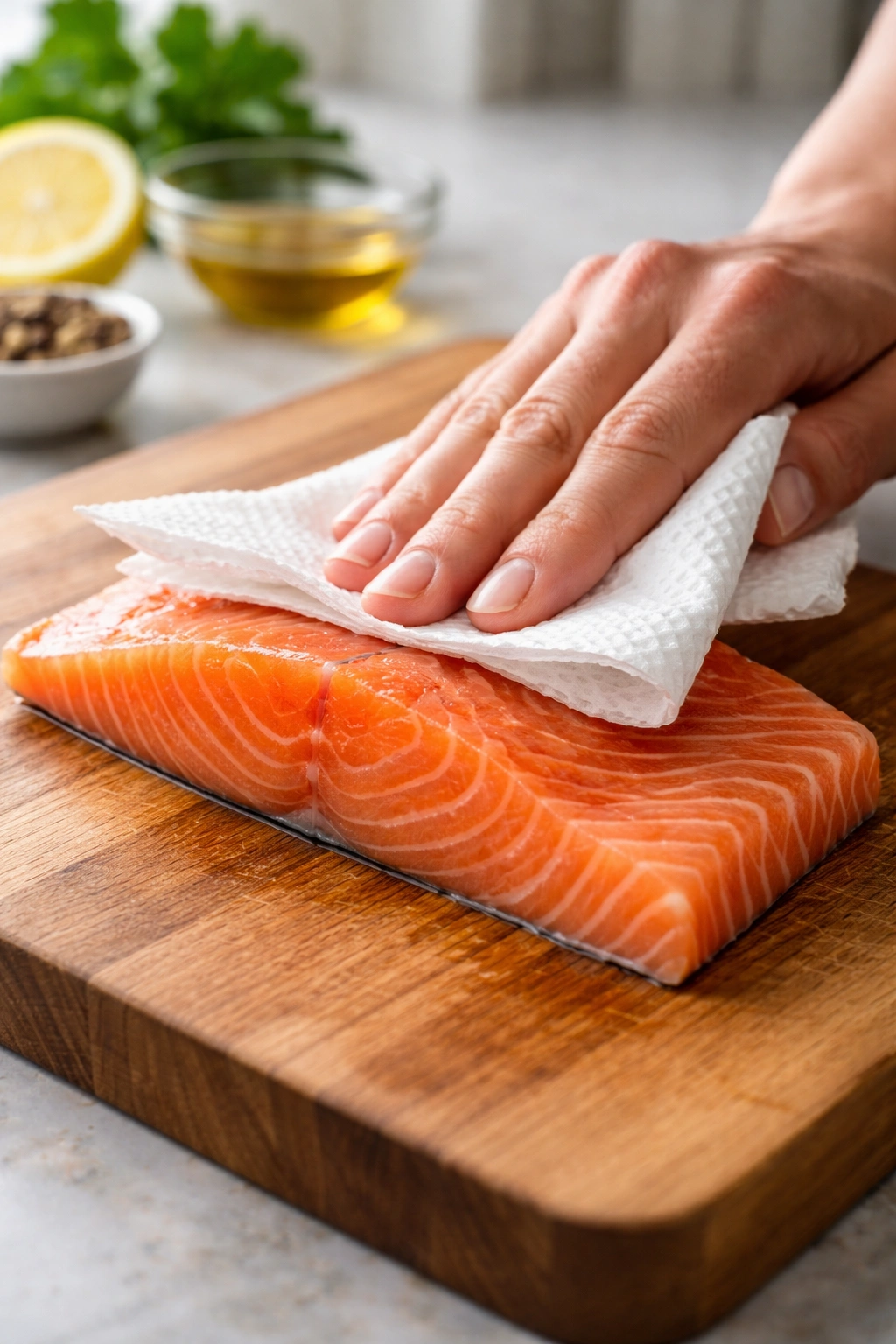
Pat the salmon completely dry before seasoning. This seems obvious but it’s genuinely the most important step after selecting quality fish. Wet fish won’t brown properly, and you’ll miss out on that gorgeous caramelized crust that makes air fryer salmon so appealing.
Don’t overcrowd the air fryer basket. The temptation to cook all four fillets at once is real, but spacing matters. Hot air needs to circulate around each piece for even cooking. If you’re short on time and need to cook everything at once, accept that the edges touching the basket might cook slightly differently than the exposed parts.
Invest in an instant-read thermometer if you cook fish regularly. It removes all the guesswork and takes 5 seconds to check doneness. You’ll know the exact temperature without having to guess based on appearance or texture, which is especially helpful when you’re cooking for guests.
Don’t flip the salmon during cooking. The air fryer cooks it evenly from all sides — the circulating air handles the underside perfectly without you having to manually turn it. Flipping risks breaking the delicate fish and is completely unnecessary.
Use fresh lemon juice, not bottled, if possible. The difference is noticeable when you’re eating something as simple and clean-tasting as air fryer salmon. A squeeze of fresh lemon brightens everything immediately and adds a complexity that bottled juice can’t match.
Reduce the temperature slightly if you’re cooking a glaze. If you want to brush on something sweet like maple or honey, wait until the last 1-2 minutes of cooking time, or use 375°F instead of 400°F so the glaze caramelizes without burning. Alternatively, apply glazes after cooking is finished for zero risk of burning.
Never skip preheating. Cold air fryer baskets mean uneven cooking and longer cooking times. The few extra minutes you spend preheating saves you frustration and ensures consistent results every single time.
Flavor Variations to Keep Things Interesting
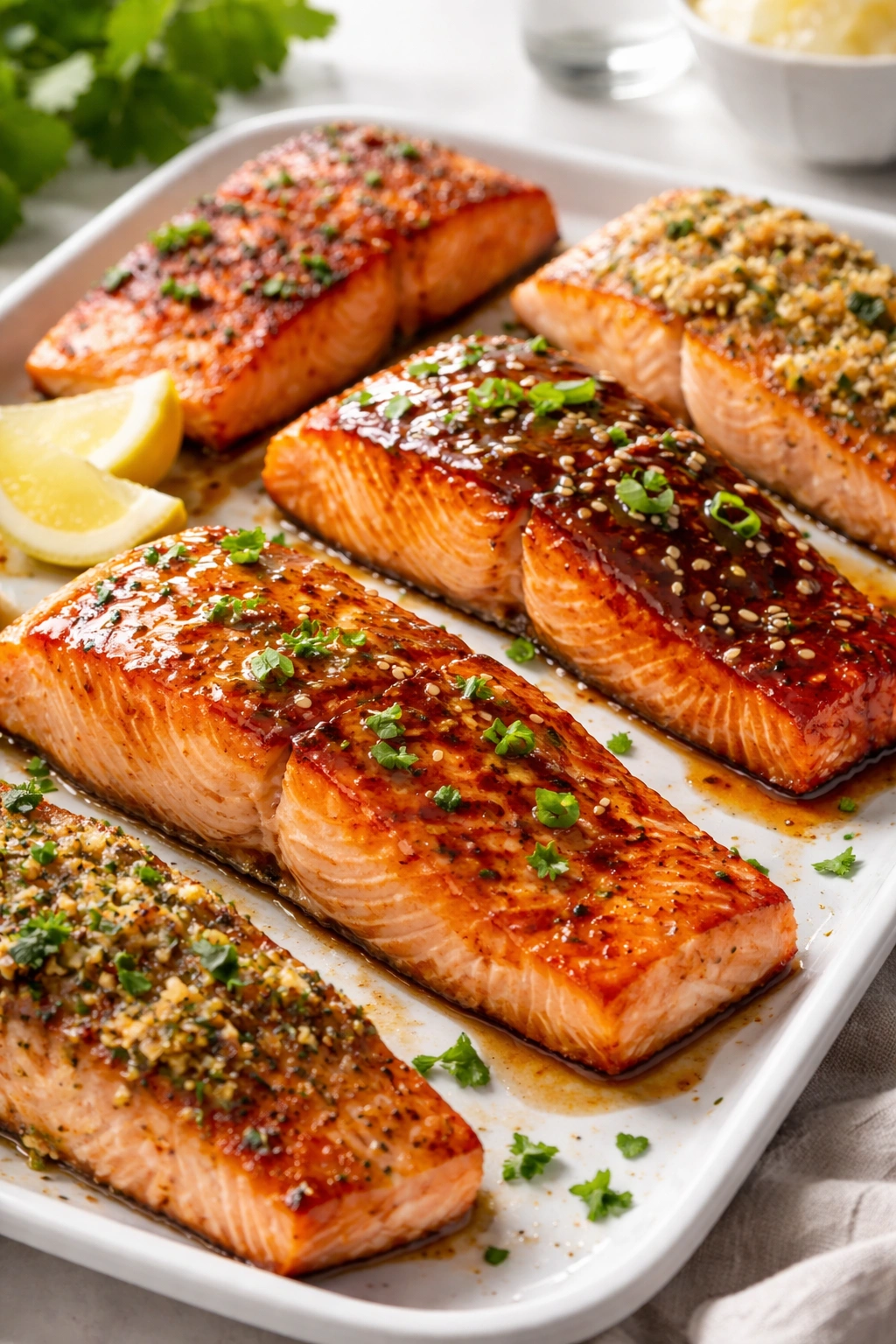
The basic garlic-and-paprika version is perfect, but salmon accepts bold flavors beautifully. Once you’ve mastered the basic technique, these variations are nearly as quick.
Lemon Pepper Perfection: Swap the paprika for 1 teaspoon of lemon pepper seasoning, which gives you bright citrus notes along with the black pepper kick. Everything else stays the same, and the result feels fresher and lighter.
Cajun-Spiced Salmon: Replace the paprika and garlic powder with 1.5 teaspoons of Cajun seasoning for a bolder, slightly spicy version. Check the salt content in your Cajun blend and adjust the additional salt accordingly — some blends are quite salty.
Maple Dijon Glaze: Mix 1 tablespoon of Dijon mustard with 1 teaspoon of maple syrup. Brush this mixture onto the salmon during the last 2 minutes of cooking, letting the heat slightly caramelize it. The sweet-savory combination is sophisticated and impressive.
Asian-Inspired Teriyaki: Brush the cooked salmon with 1 tablespoon of teriyaki sauce (or soy sauce mixed with a touch of honey) during the last minute of cooking. Top with sesame seeds and sliced green onions for extra texture and flavor.
Garlic Herb Crust: Add ½ teaspoon of dried oregano and ½ teaspoon of dried thyme to your basic seasoning blend. These herbs pair beautifully with salmon and add an earthy, Mediterranean-inspired quality.
Everything Bagel Salmon: Season with everything bagel seasoning, which combines sesame, poppy seed, dried onion, and garlic. One teaspoon mixed with your salt and pepper creates an unexpectedly complex crust.
Smoky Paprika with Brown Sugar: Use smoked paprika instead of regular paprika and add ¼ teaspoon of brown sugar to your seasoning. The smoke and subtle sweetness create a barbecue-like flavor that’s completely different from the basic version.
Understanding Why Doneness Matters So Much
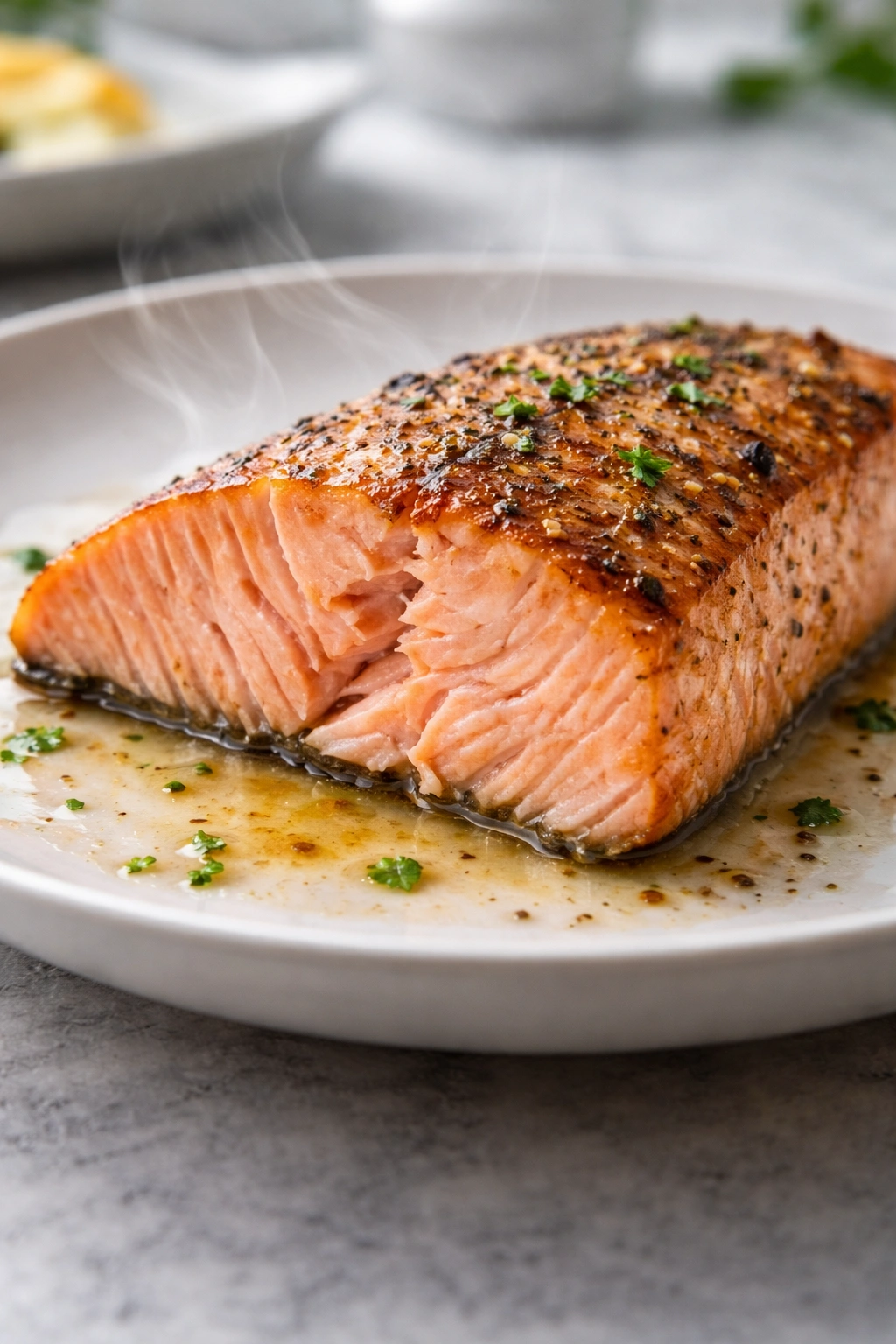
Salmon’s fate is sealed by temperature — get it right, and you have an absolutely transcendent dish; miss it slightly, and you’ve got tough, dry fish. This is because salmon’s protein structure contracts as it heats, squeezing out moisture. At lower temperatures (125-130°F), you’ve reached the minimum point where bacteria are destroyed but the proteins haven’t contracted so much that they squeeze out all their water. At 145°F, you’re at the safe zone but the fish has given up more moisture.
The good news is that salmon is far more forgiving than leaner fish because it has enough fat to stay moist across a wider temperature range. This is why wild salmon (which is slightly leaner) is more unforgiving than farm-raised salmon (which has more marbling). Regardless of type, the air fryer’s quick cooking time means you reach the target temperature before the fish loses too much moisture.
Check temperature at the thickest point of the fillet, not at the edges or near the skin. The edges cook faster than the center, so if you’re measuring near the edge, you’ll get a false reading and might underestimate the actual center temperature.
Common Mistakes and How to Avoid Them
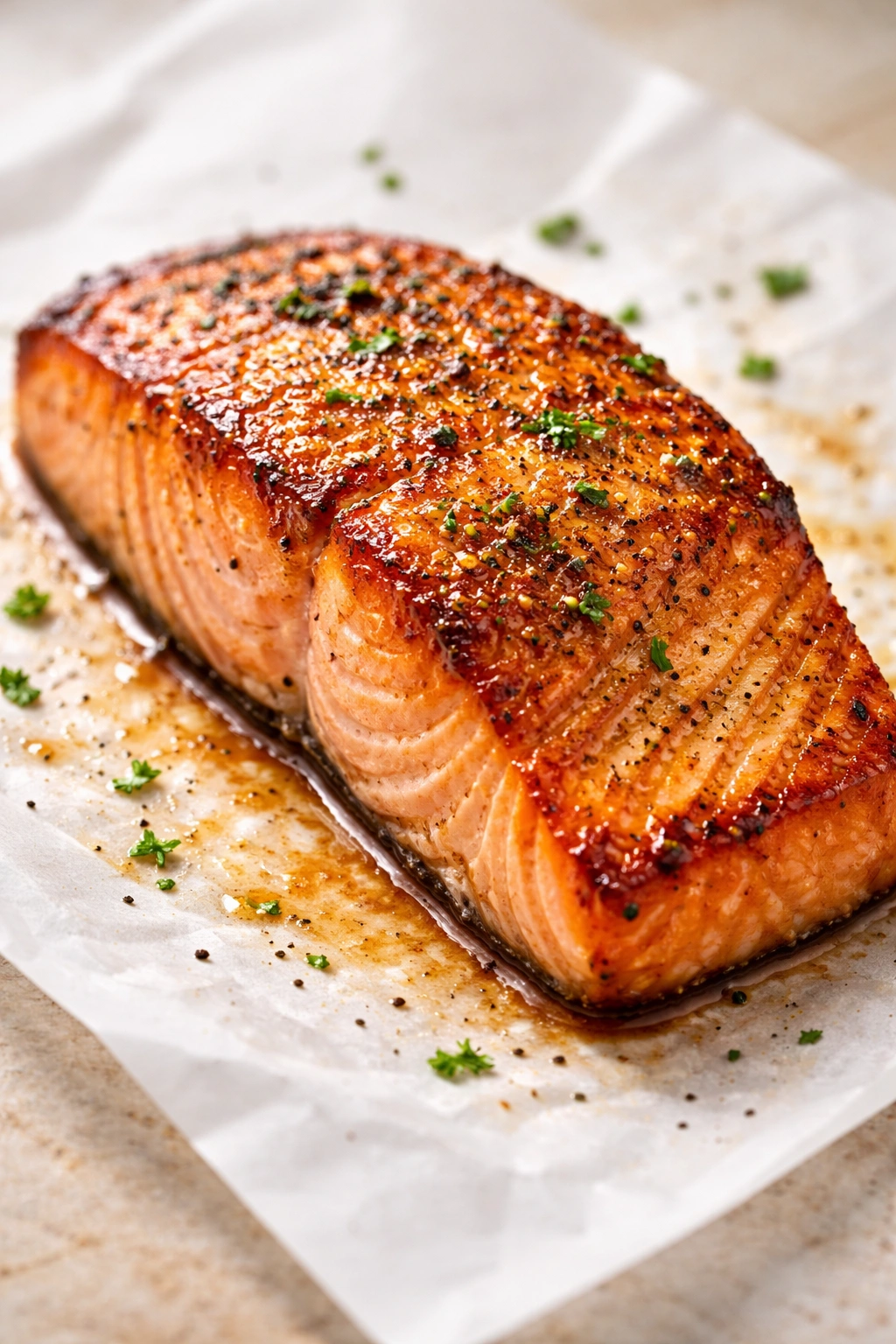
Wet salmon before seasoning. This is the number one reason people end up with salmon that doesn’t brown properly. Pat it dry, really dry, before anything else happens.
Crowding the basket. It’s tempting to cook all four fillets at once, but they’ll end up steaming if they touch each other or the basket walls. Space matters more than time savings here.
Cooking from frozen without adjustments. Frozen salmon takes 12-15 minutes instead of 7-10 minutes. If you forget to thaw, you’ll get cold centers if you cook it for the standard time. Plan ahead when possible, or be prepared to extend the cooking time.
Ignoring the preheat. Some recipes say you don’t need to preheat, and technically you can cook without it, but your cooking time becomes unpredictable and the crust won’t brown as evenly.
Flipping the salmon halfway through. The air fryer is doing all the work for you — flipping just risks breaking the fish and is completely unnecessary.
Using rancid butter or old oil. If your fat has been sitting around opened for months, it’ll taste stale. Fresh butter and good oil make a measurable difference in the final flavor.
Not using enough seasoning. Salmon can handle bold flavoring. If you’re nervous about seasoning and apply it too lightly, your final dish will taste underseasoned. The flavors don’t penetrate deeply into fish, so surface coverage is your only seasoning.
Storage and Make-Ahead Guidance
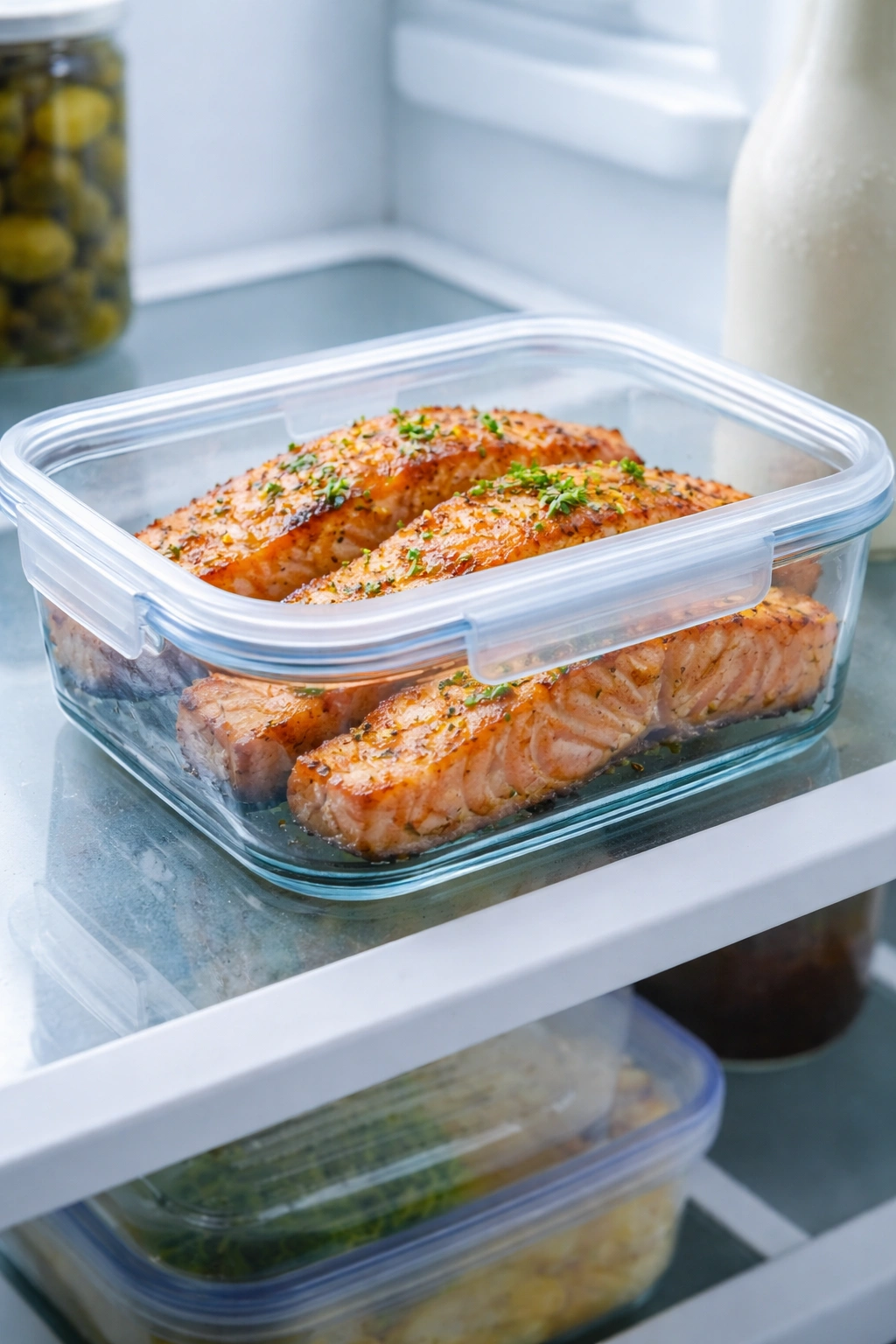
Leftover salmon keeps beautifully for 2-3 days in an airtight container in the refrigerator, which makes it excellent for meal prep. The cooked fish is actually better cold than reheated in many applications — flaked over a salad, mixed into a grain bowl, or spread on whole grain toast with cream cheese and fresh dill.
If you want to reheat cooked salmon, use a low temperature to prevent further drying. The air fryer at 300-325°F for 3-4 minutes works beautifully, or cover the fish loosely with foil and warm it in a 275°F oven for about 5 minutes. The microwave is a last resort — use 50% power in 30-second intervals to minimize damage to the texture.
For freezing, let the cooked salmon cool completely, wrap individual portions in plastic wrap, then place in a freezer-safe container or bag. It’ll keep for up to 3 months, though texture is best within the first 6 weeks. Thaw overnight in the refrigerator before reheating.
You can also prep the salmon ahead of time. Season your fillets up to 4 hours before cooking and refrigerate them. Bring them to room temperature for 10 minutes before air frying for the most even cooking. This is perfect when you want to minimize evening effort — do the seasoning in the morning, then dinner is literally just cooking time.
Serving Suggestions and Complementary Sides
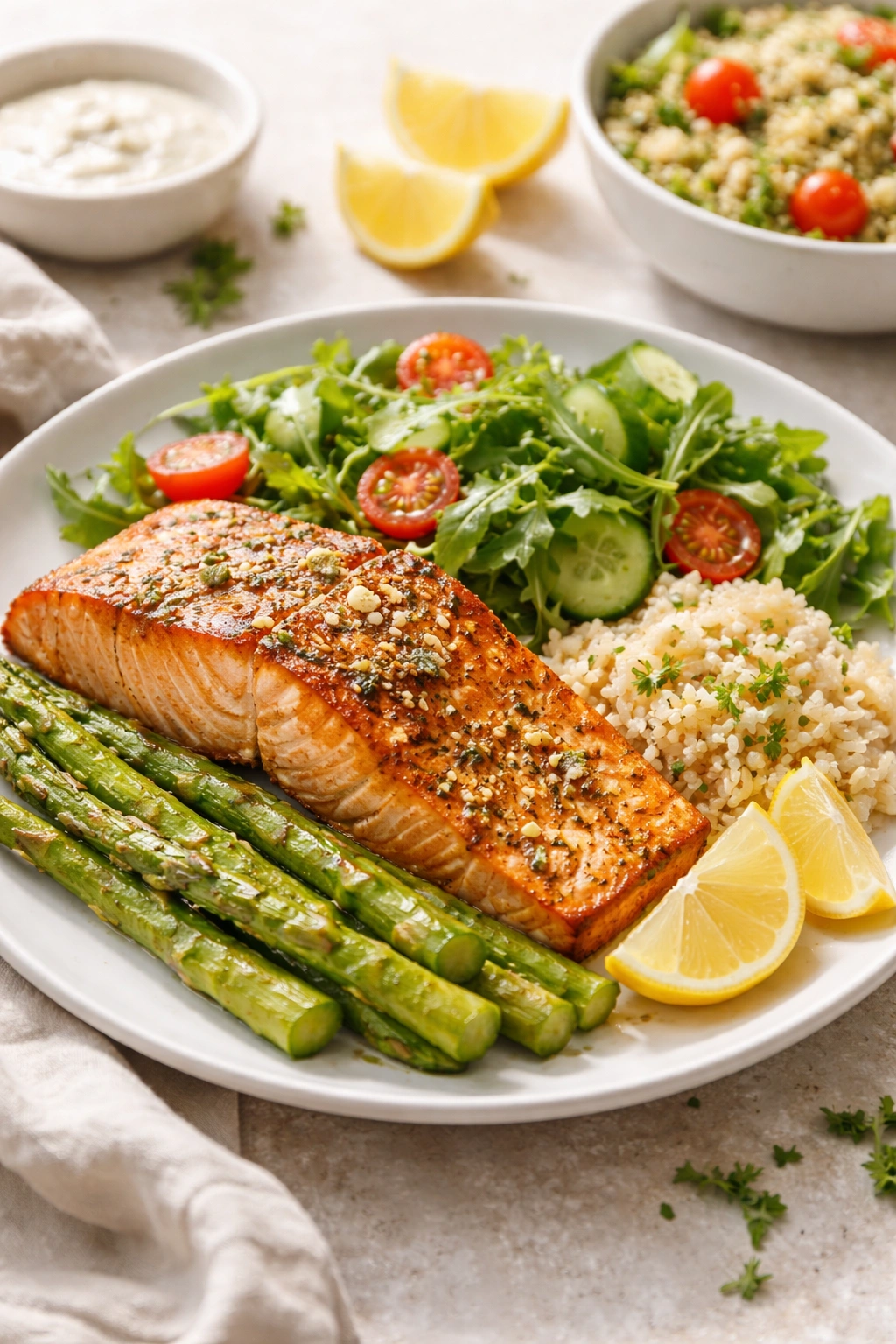
Air fryer salmon is incredibly versatile, working equally well as the centerpiece of a formal dinner or a casual weeknight meal. The beauty is that it cooks so quickly that you have time to prepare sides without the salmon sitting around getting cold.
Vegetables that cook beautifully alongside salmon: Air fryer asparagus (7-8 minutes), air fryer broccoli (8-10 minutes), air fryer green beans (6-8 minutes), or air fryer Brussels sprouts (10-12 minutes). The timing doesn’t align perfectly, so cook vegetables first if they need more time, or add them to the basket partway through the salmon’s cooking time.
Light and fresh sides: A simple arugula salad with lemon vinaigrette, a cucumber-tomato salad, or mixed greens with balsamic dressing. These cool, fresh options balance the richness of the salmon perfectly and add vegetables to round out the meal.
Grain and starch options: Fluffy white or brown rice, quinoa pilaf, roasted baby potatoes, garlic mashed potatoes, or even instant rice if you’re truly short on time. A starch turns this into a more substantial meal, especially important if you’re feeding kids or people with bigger appetites.
Simple flavor additions for the plate: Fresh dill or parsley sprinkled over the salmon, a squeeze of fresh lemon juice, a drizzle of good olive oil, or a small dollop of Greek yogurt mixed with lemon and garlic. These additions feel restaurant-quality but take 30 seconds.
The rule of thumb is to keep everything simple. Salmon is the star, so your sides should support it rather than compete with it. Let the fish shine with its own flavor, supplemented by bright, fresh accompaniments.
Final Thoughts

Air fryer salmon has earned its place as a weeknight staple because it actually delivers on its promises. It’s genuinely fast, the technique is foolproof once you understand the basics, and the results taste like something you paid money for at a restaurant. You’re not sacrificing quality for speed — you’re gaining speed without losing anything.
The biggest secret to perfect air fryer salmon is treating the process with respect. Dry the fish properly, space the fillets appropriately, preheat the basket, and check doneness starting a minute earlier than you think you need to. These small, intentional steps separate perfectly cooked salmon from disappointing batches.
Once you’ve made this recipe a few times, you’ll develop an intuition for it. You’ll know which seasonings your family loves, how your specific air fryer behaves, and exactly how to time it so the salmon finishes right when everything else is plated. That’s when it becomes truly effortless — the kind of dish you make on autopilot because you trust the process completely. And that’s exactly what a good recipe should do.
