



If you’ve been eating oatmeal the same sweet way your entire life—brown sugar, cinnamon, maybe some berries—you’re missing out on one of breakfast’s most satisfying transformations. Savory oatmeal isn’t a trendy detour from tradition; it’s a genuinely delicious, filling, and endlessly adaptable way to start your day. The shift from sweet to savory opens up entire flavor territories: umami-rich broths, crispy vegetables, fresh herbs, eggs, cheese, and proteins that turn a humble bowl of oats into something that feels like a real meal, not a compromise breakfast.
The brilliant part? Savory oatmeal works with any cuisine you’re craving. You can build a Mediterranean bowl one morning, go Asian-inspired the next, and land somewhere hearty and comfort-food focused the morning after that. The oats themselves become a neutral, creamy canvas—more neutral than you’d expect—and they soak up flavors without fighting back the way some grains might. Plus, there’s something satisfying about breaking the “breakfast rules” and eating something genuinely savory while the sun’s still coming up. It feels indulgent without being heavy, familiar without being boring.
What makes savory oatmeal work so well is that it satisfies three breakfast requirements at once: it’s fast enough for a weekday morning, interesting enough that you’ll actually look forward to making it, and filling enough that you won’t be hunting for a snack by 10 AM. The protein-to-carb ratio lands better than sweet oatmeal, and the savory seasonings keep your taste buds engaged rather than lulled into sweetness fatigue.
The Base: Building Your Perfect Savory Oatmeal Foundation
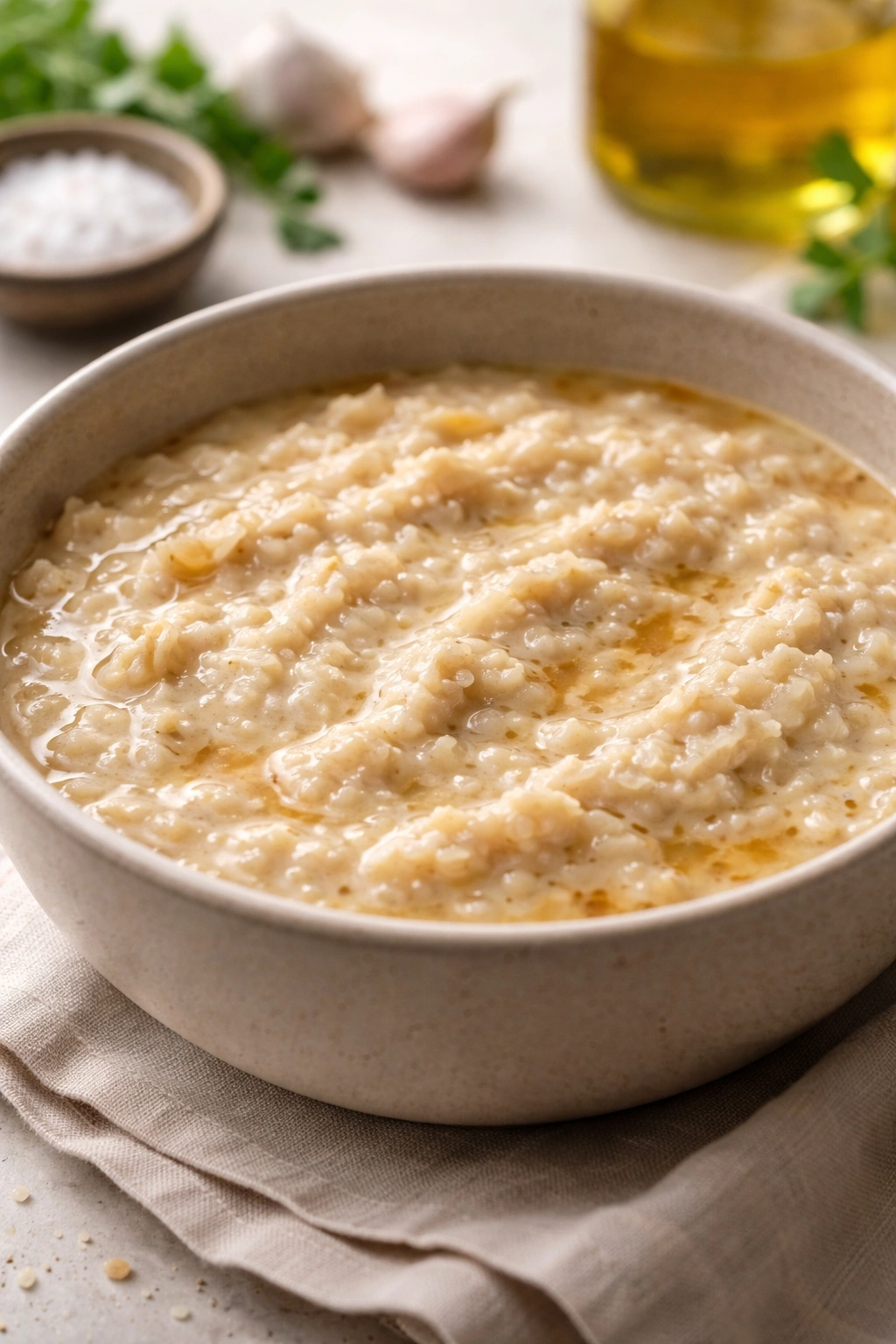
The foundation matters more than you’d think. Plenty of people make bad savory oatmeal not because of what they add, but because they don’t get the base right in the first place. Here’s what you need to know: the liquid you choose—whether it’s water, broth, or a combination—absolutely determines the final flavor and texture.
Liquid choices make a bigger difference than toppings. Using vegetable or chicken broth instead of water adds an immediate savory dimension and a deeper, richer mouthfeel. If you’re going full umami, try bone broth for extra body. Some people do a 50-50 split of broth and water, which gives you all the flavor advantage without making the oatmeal taste one-note. Milk—especially unsweetened almond milk or whole milk—creates a creamier texture and adds subtle richness that works beautifully with herbs and vegetables.
The oat-to-liquid ratio affects both texture and cook time. Use about 1 part rolled oats to 2.5 to 3 parts liquid, depending on how thick you like your final bowl. If you prefer something porridge-like and creamy, lean toward 3 parts liquid. If you want something closer to the consistency of oatmeal you’d eat with milk and toast, stick closer to 2.5 parts. Steel-cut oats take longer and create a chewier, grainier texture—beautiful if you have the time, but rolled oats are faster and achieve a naturally creamy result without constant stirring.
Seasoning the base itself is the step most people skip and regret. Salt is non-negotiable—it awakens everything that comes after. A half teaspoon of salt per cup of oats is a solid starting point. Cracked black pepper, a pinch of garlic powder or onion powder mixed into the liquid while it heats, or even a tiny pinch of smoked paprika shifts the entire personality of the bowl before you’ve added a single topping. Taste the oatmeal before you add anything else and adjust seasoning here; it’s much easier than trying to season afterwards.
Cooking technique matters more than the recipes make it sound. Bring your liquid to a boil, stir in the oats and salt, then immediately reduce heat to low and simmer gently. Frequent stirring—maybe three or four times during cooking—prevents sticking and helps release the starches that make the oatmeal creamy. The whole process takes about 5 minutes for rolled oats, 25-30 minutes for steel-cut oats. Don’t walk away thinking it’ll be fine; babying it produces noticeably better results.
Oatmeal with Egg and Cheese

This is the most straightforward gateway into savory oatmeal, and honestly, it’s still one of the best. The egg cooks right into the warm oats or on top, and the yolk becomes a rich sauce. The cheese—sharp cheddar, Gruyère, or Parmesan all work—adds umami and creates pockets of creamy richness throughout the bowl.
Start with your base oatmeal cooked in a mixture of half vegetable broth, half water, seasoned generously with salt and pepper. Cook the oatmeal until it’s almost done, then make a small well in the center and crack a raw egg into it. Lower the heat even further and let the egg cook gently in the residual heat—about 2-3 minutes for a runny yolk, another minute or two if you want it more set. The whites will turn opaque and the yolk stays liquid, creating a natural sauce as you mix it through the oats.
Grate or crumble your cheese directly over the top while it’s still hot so it melts into the oatmeal slightly. A quarter cup to a third cup per bowl is usually the right amount—enough to be tasted in every spoonful, not so much that it’s cloying. Finish with fresh cracked black pepper, maybe a pinch of fresh thyme or dill, and a tiny drizzle of olive oil. Some people add hot sauce here, and there’s no reason not to if that’s what you love.
The variations are endless: smoked paprika and cheddar, a fried egg on top instead of cooked into the oatmeal, crispy bits of bacon crumbled throughout, a handful of sautéed spinach mixed in just before the egg. Fresh chives scattered over the top right before serving add a sharp onion note that pairs beautifully with egg and cheese. The whole bowl comes together in about 10 minutes and tastes like a savory breakfast you’d pay good money for at a restaurant.
Mediterranean-Style Oatmeal with Tomatoes and Herbs
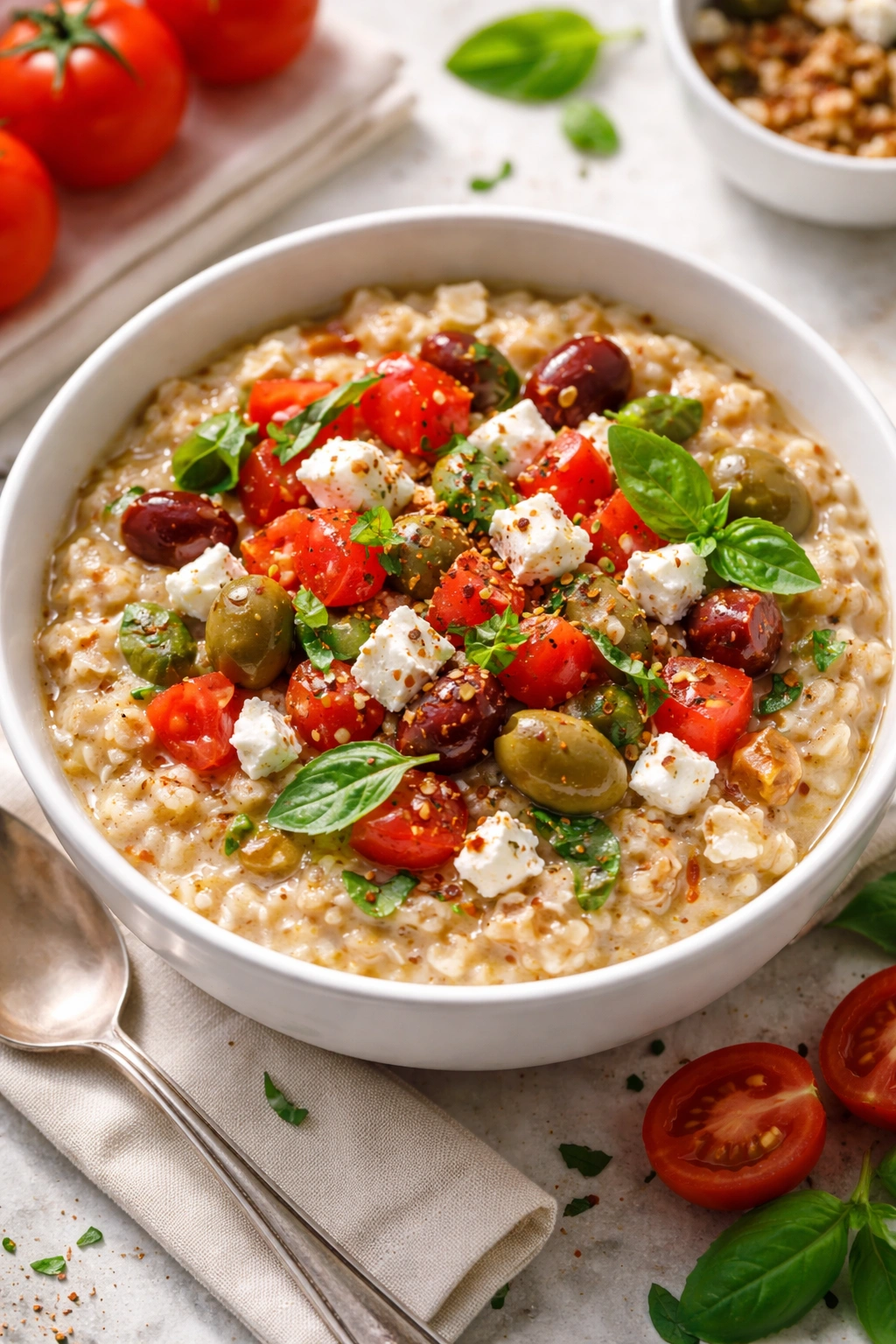
This one tastes like you’ve traveled to Greece or Italy before 7 AM. It’s lighter than the egg-and-cheese version but deeply flavored, with bright acidity from tomatoes and the herbaceous quality of fresh basil, oregano, or mint.
Cook your oatmeal in vegetable broth with a small pinch of garlic powder and dried oregano mixed in. While it’s cooking, dice up some fresh tomatoes—Roma or heirloom varieties work well, but even regular tomatoes are great. If your tomatoes aren’t particularly flavorful, a small can of good-quality diced tomatoes works just as well. Sauté them briefly in olive oil with a minced garlic clove, a pinch of red pepper flakes if you like heat, and another pinch of oregano. The tomatoes should soften and their juices should reduce slightly, concentrating the flavor.
Pour the warm oatmeal into a bowl and top with the tomato mixture, then scatter fresh basil leaves over the top—tearing them gently so they release their aroma. A crumble of feta cheese, a handful of pitted Kalamata olives, and a drizzle of good olive oil transform this into something that feels almost like a deconstructed Mediterranean breakfast salad. Squeeze fresh lemon juice over everything right before you eat it—the acidity brings the whole bowl into focus.
This is a genuinely light breakfast that doesn’t leave you feeling bloated but still keeps you satisfied until lunch. The ratio of oats to toppings skews heavier toward toppings here compared to some savory oatmeal variations, so the oatmeal becomes more of a backdrop for the Mediterranean flavors rather than the main event. It works beautifully on mornings when you want something bright and fresh rather than heavy and cozy.
Asian-Inspired Oatmeal Porridge with Ginger and Soy
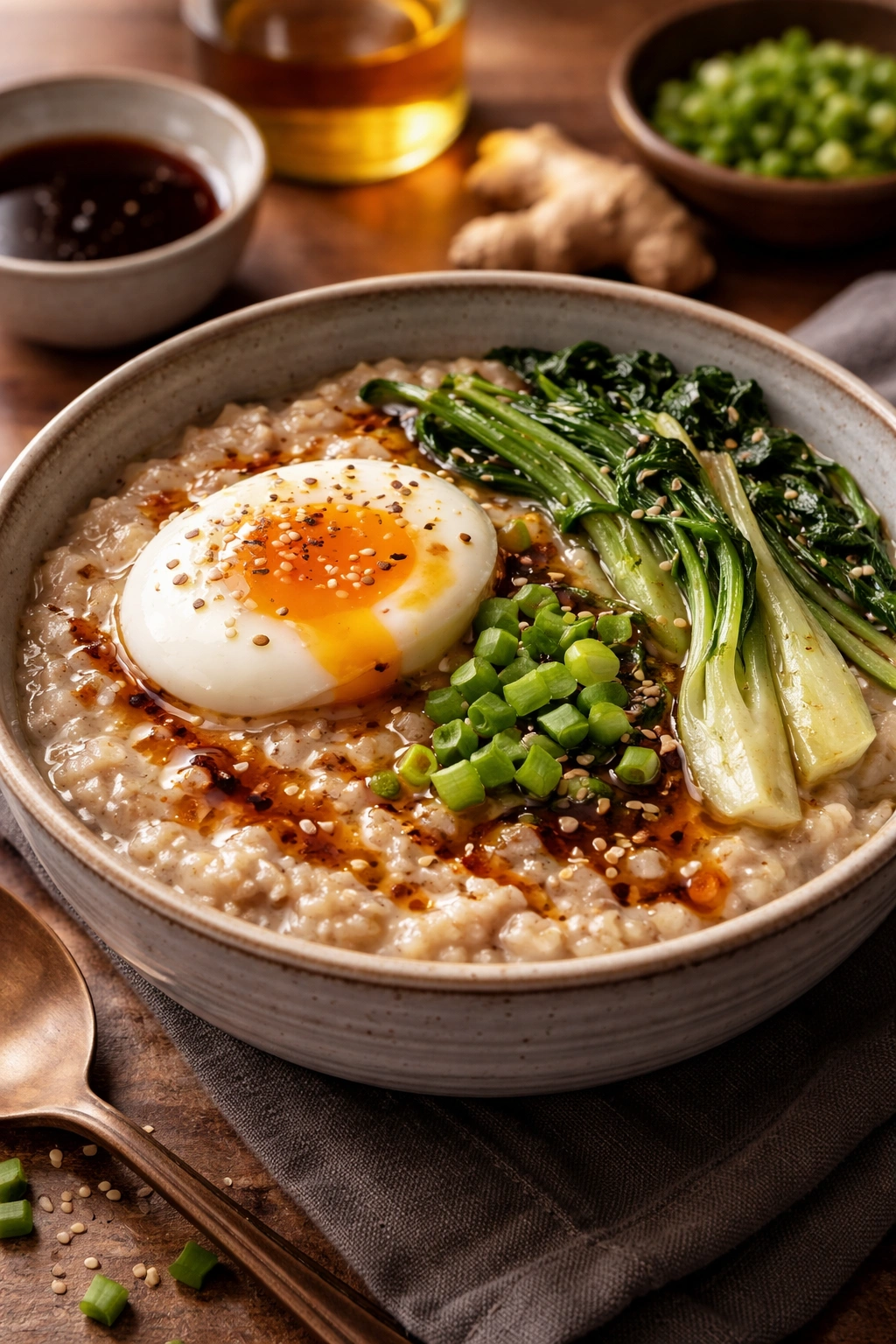
This one tastes like a refined Asian rice porridge, except it’s oatmeal, and it comes together in a fraction of the time. The warmth of fresh ginger, the salty depth of soy sauce, and the richness of sesame oil create a flavor profile that’s completely different from any other savory oatmeal variation.
Cook your oatmeal in a mixture of chicken or vegetable broth with a tablespoon of freshly grated ginger and a star anise pod if you have one (it adds a subtle licorice note that’s incredibly evocative). As the oatmeal nears completion, stir in a tablespoon of soy sauce or tamari, a teaspoon of rice vinegar, and a small drizzle of sesame oil. The soy adds saltiness and umami depth; the vinegar adds brightness; the sesame oil adds nuttiness and richness.
Top the warm oatmeal with soft-boiled or poached eggs (the runny yolk is important here), some sautéed green vegetables like bok choy or Chinese broccoli, sliced scallions, and a sprinkle of toasted sesame seeds. Crispy shallots—either homemade or from a jar—add textural contrast and a sweet, fried depth that’s addictive. A drizzle of chili oil over the top brings welcome heat.
The genius of this version is that it tastes substantial and complex even though you’re using fairly simple ingredients. Most of the work is flavor layering in the cooking liquid itself rather than elaborate toppings. You could make it with just the seasoned oatmeal and an egg on top and still have something special. The version with all the vegetables and crispy elements is more of a weekend breakfast, but the basic version is genuinely fast enough for any morning.
Loaded Vegetable Oatmeal
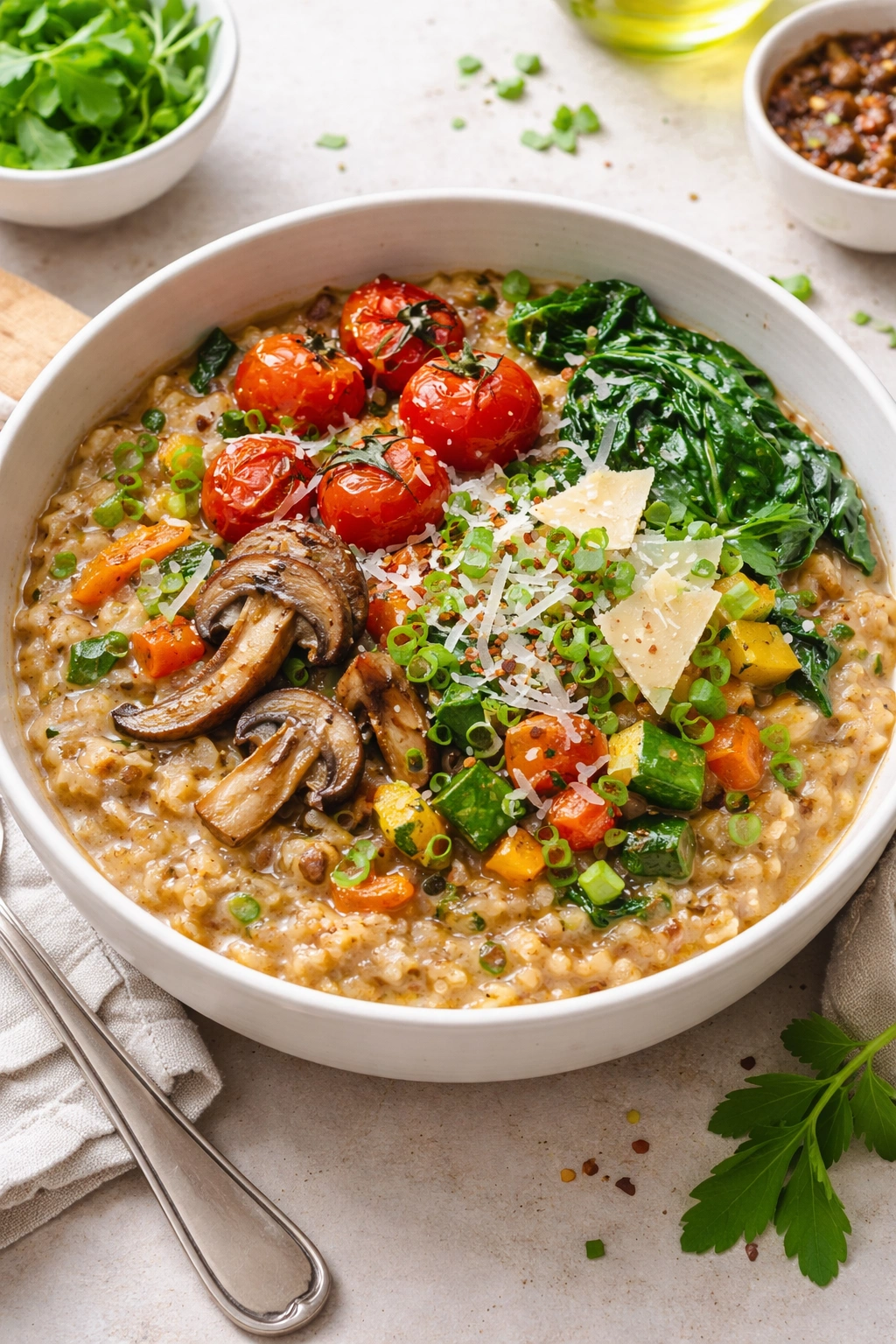
This is oatmeal as a vehicle for vegetables—and if you’re someone who struggles to eat enough vegetables early in the day, this is a genuine game-changer. You’re building a bowl where vegetables are the main player, not an afterthought.
Cook your oatmeal in vegetable broth seasoned with a pinch of garlic powder, salt, and pepper. While it cooks, prepare an assortment of vegetables: sauté diced mushrooms in butter until they’re deeply golden, roast cherry tomatoes until they start to burst, cook some tender greens like spinach or kale, microwave or steam some broccoli or cauliflower until it’s tender-crisp. The vegetables should taste good on their own—properly seasoned, cooked until they develop some flavor—because that’s most of what you’re tasting.
Pour the warm oatmeal into a bowl and arrange the vegetables on top in a way that looks appealing to you. A fried or soft-boiled egg goes in the middle. Grate some Parmesan or another hard cheese over everything, scatter fresh herbs—parsley, chives, dill—wherever they look good, and finish with a drizzle of olive oil and a crack of black pepper.
This version is infinitely customizable based on what’s in your refrigerator and what you’re in the mood for. In summer, you might lean toward tomatoes and zucchini. In winter, roasted root vegetables and hearty greens. Spring could be asparagus and fresh herbs. The beauty is that vegetables provide different textures, flavors, and nutrients depending on what you choose, so you’re never eating the same bowl twice even if you make it multiple mornings a week.
The vegetable-heavy version does require a bit more prep than some other savory oatmeal options, but you can prep vegetables the night before and reheat them quickly while the oatmeal cooks. It’s genuinely the easiest way to get substantial vegetables into your breakfast.
Creamy Mushroom and Thyme Oatmeal
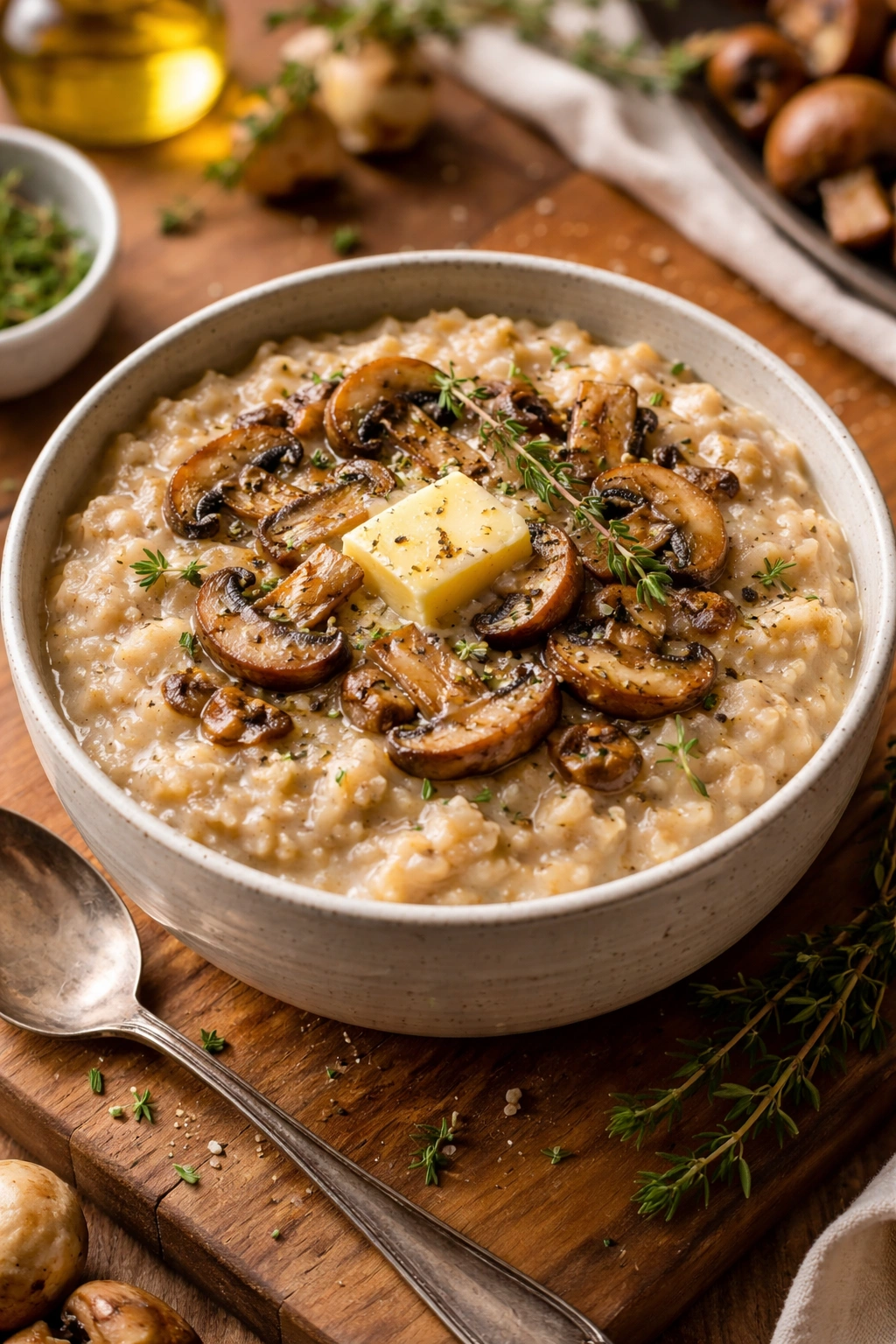
This one tastes almost like a creamy mushroom soup served in a bowl, but it’s oatmeal. The earthiness of mushrooms paired with the piney depth of fresh thyme creates something that feels cozy and sophisticated at the same time.
Slice mushrooms—cremini, baby bella, or a mix—fairly thin and sauté them in butter over medium-high heat until they develop a deep golden color and smell absolutely incredible. This step isn’t optional; it’s where most of the flavor lives. Season them with salt and pepper, add some minced fresh thyme (about a tablespoon for a generous amount), and a squeeze of fresh lemon juice to brighten them up slightly. Set them aside.
Cook your oatmeal in a mixture of half vegetable broth and half whole milk, which creates a creamy base without being heavy. Stir in a small splash of cream or crème fraîche toward the end of cooking to add extra richness and a subtle tang. Season with salt, pepper, and a tiny pinch of garlic powder.
Pour the oatmeal into a bowl and top with the sautéed mushrooms and their cooking liquid. Scatter fresh thyme leaves over the top, add a small piece of butter, and finish with grated Gruyère or aged cheddar. Some people add a poached egg on top for extra richness, though it’s genuinely optional here—the mushrooms and cream make this plenty rich on their own.
This version hits when you want something warming and deeply savory without being too heavy. The ratio of mushrooms to oatmeal is more generous than some other variations, so the mushrooms really are the star. You could make this with sautéed spinach instead of mushrooms and achieve something equally delicious—substitute fresh sage or oregano for the thyme and the whole personality of the bowl shifts.
Oatmeal with Avocado and Citrus
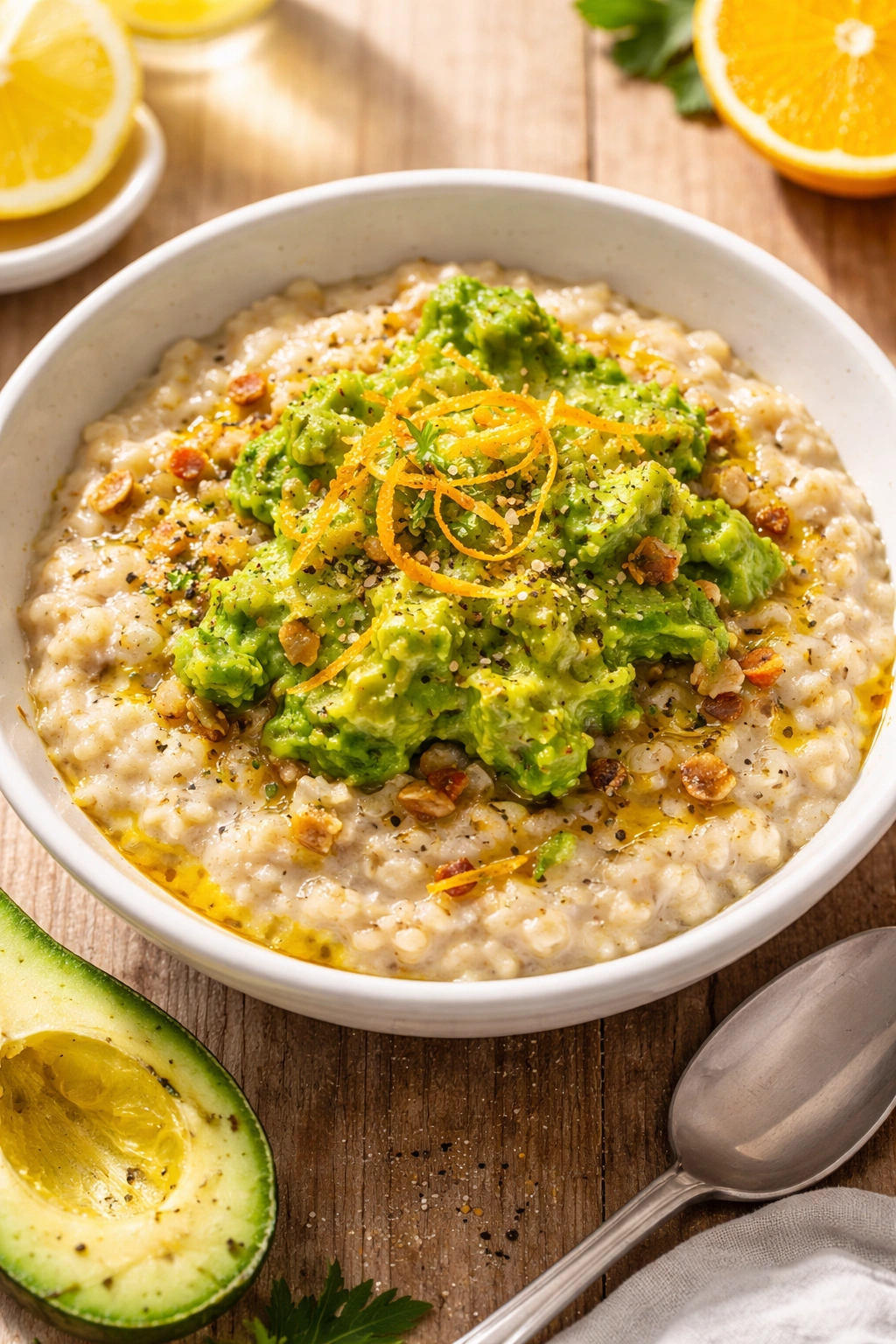
This one is bright and creamy at the same time—the avocado adds richness without any heavy cooking required, while citrus adds acidity and freshness that cuts through the creaminess of the oatmeal and avocado together.
Cook your oatmeal in vegetable broth with a pinch of garlic powder and white pepper—white pepper is noticeably milder and less sharp than black pepper, and it works better with the brightness of citrus and avocado. The oatmeal should be creamy but not too thick.
While the oatmeal cooks, slice an avocado in half, remove the pit, and scoop the flesh into a small bowl. Mash it very roughly with a fork—you want some texture, not a smooth paste. Season it lightly with salt, a squeeze of lime or lemon juice, and a tiny pinch of red pepper flakes if you want heat.
Pour the oatmeal into a bowl and top with the mashed avocado, then scatter some crispy shallots or toasted breadcrumbs over it for textural contrast. Zest a lime or lemon directly over the top, squeeze some fresh juice over everything, and scatter some fresh cilantro or parsley if you have it. A drizzle of olive oil finishes it beautifully.
This is one of the lighter savory oatmeal options—it works well on mornings when you want something filling but not heavy, and it’s ready in about 8 minutes from start to finish. The combination of avocado and citrus is completely familiar to anyone who’s made guacamole, but here it’s paired with creamy oatmeal instead of chips, which changes the whole experience.
Savory Oatmeal with Cured Meats and Greens
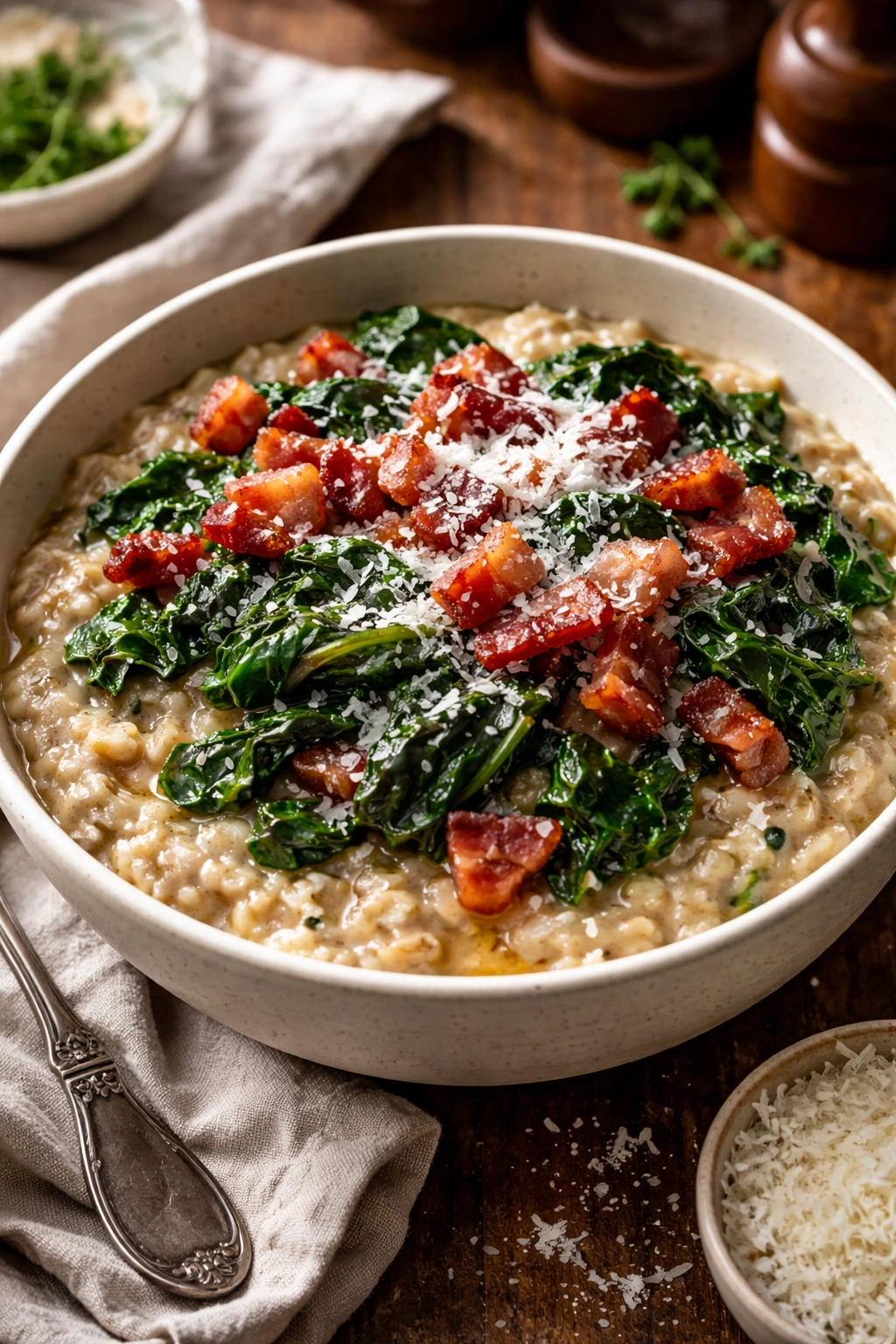
This is the version for when you want maximum richness and depth—cured meats like bacon, pancetta, or prosciutto provide salt, smokiness, and real meatiness. Fresh greens like spinach or arugula provide brightness and a slight bitterness that balances the richness beautifully.
Cook your oatmeal in a mixture of broth and water, seasoned with salt, pepper, and a pinch of garlic powder. While it cooks, crisp up some bacon, pancetta, or other cured meat in a separate pan until it’s deeply golden and the fat is rendered. Chop it roughly and set aside, leaving about a tablespoon of the fat in the pan. In that same pan, wilt down a couple of handfuls of fresh greens—spinach, arugula, kale, whatever you prefer—with a minced garlic clove and a pinch of salt until they’re tender and any liquid has evaporated.
Pour the oatmeal into a bowl and top with the greens and chopped cured meat. Grate some Parmesan or Pecorino Romano over the top—the sharp, salty cheese works beautifully with the cured meat and bitter greens. A fried egg on top is optional but encouraged. Crack some black pepper over everything and finish with a tiny drizzle of the reserved cured meat fat (it’s incredibly flavorful).
This version tastes like a sophisticated breakfast rather than just breakfast food. The cured meat provides enough salt and flavor that you don’t need much seasoning in the oatmeal itself, which means you’re tasting the pure oat flavor paired with meat, greens, and cheese. It’s hearty enough to keep you satisfied through a busy morning and impressive enough that you’d be proud to serve it to a houseguest.
Spiced Chickpea Oatmeal
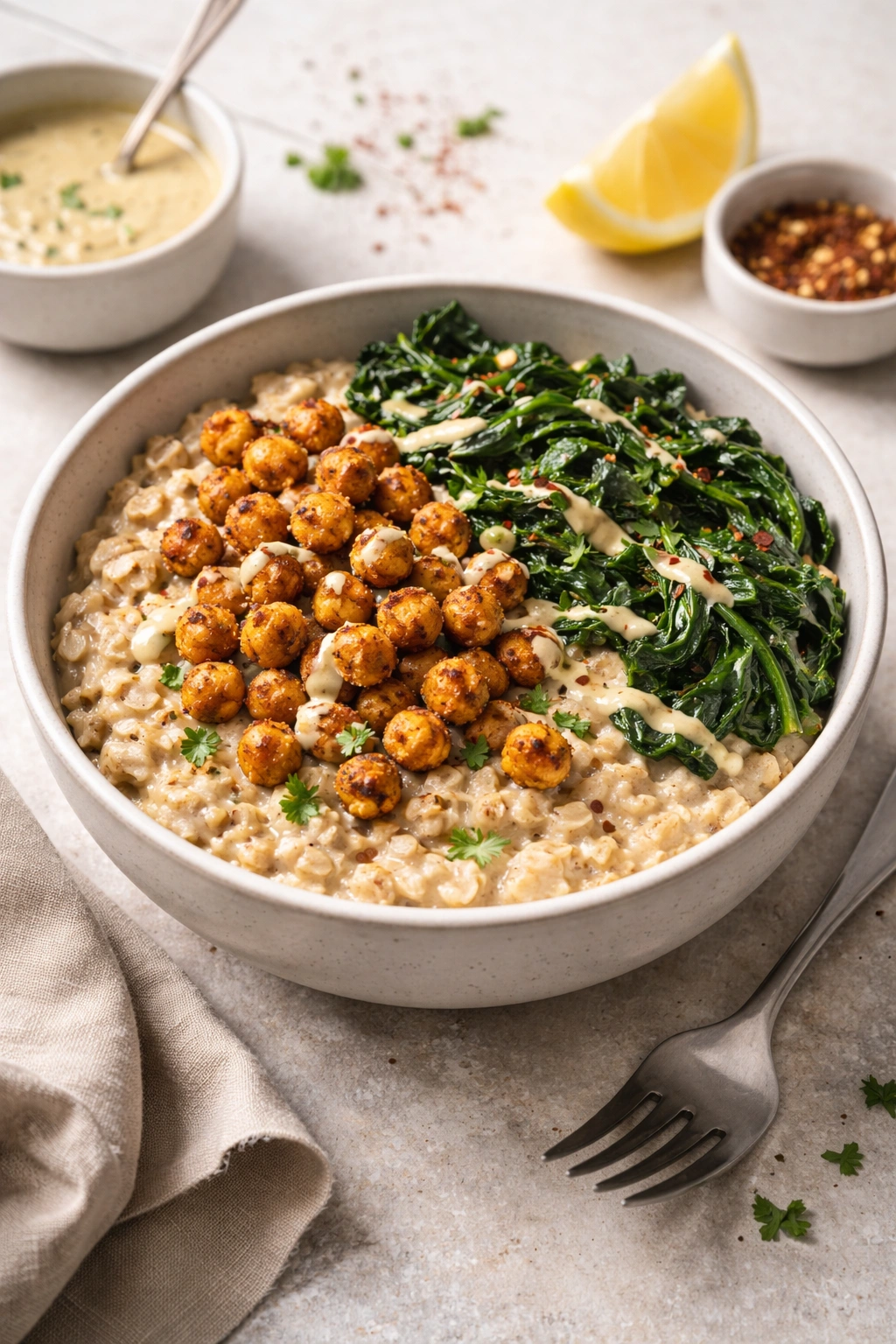
This one transforms oatmeal into something that borders on grain bowl territory—the chickpeas provide protein and a slightly nutty flavor, while spices create warmth and depth. It’s genuinely filling without feeling heavy.
Drain and rinse a can of chickpeas and toss them with olive oil, cumin, coriander, a pinch of smoked paprika, salt, and pepper. Roast them in a 400°F (200°C) oven for about 20 minutes, stirring halfway through, until they’re golden and crispy on the outside. This step can be done ahead of time, and they store beautifully in an airtight container.
Cook your oatmeal in vegetable broth with a pinch of cumin and garlic powder already mixed in. The spices in the oatmeal and the spices on the chickpeas create a cohesive flavor profile rather than two separate things.
Pour the oatmeal into a bowl and top with the roasted chickpeas. Add some wilted spinach or other greens, a drizzle of tahini mixed with lemon juice and water to create a pourable consistency, some fresh cilantro or parsley, and maybe a dollop of Greek yogurt or crème fraîche for creaminess. Finish with a drizzle of olive oil, a squeeze of fresh lemon juice, and a pinch of fleur de sel.
This version is genuinely protein-packed between the oatmeal, the chickpeas, and the yogurt if you include it. It tastes Mediterranean-Middle Eastern fusion and is interesting enough that you’d actually want to make it multiple times a week. The roasted chickpeas can be made in a large batch and kept on hand, so assembly is actually quite quick.
Seafood Oatmeal
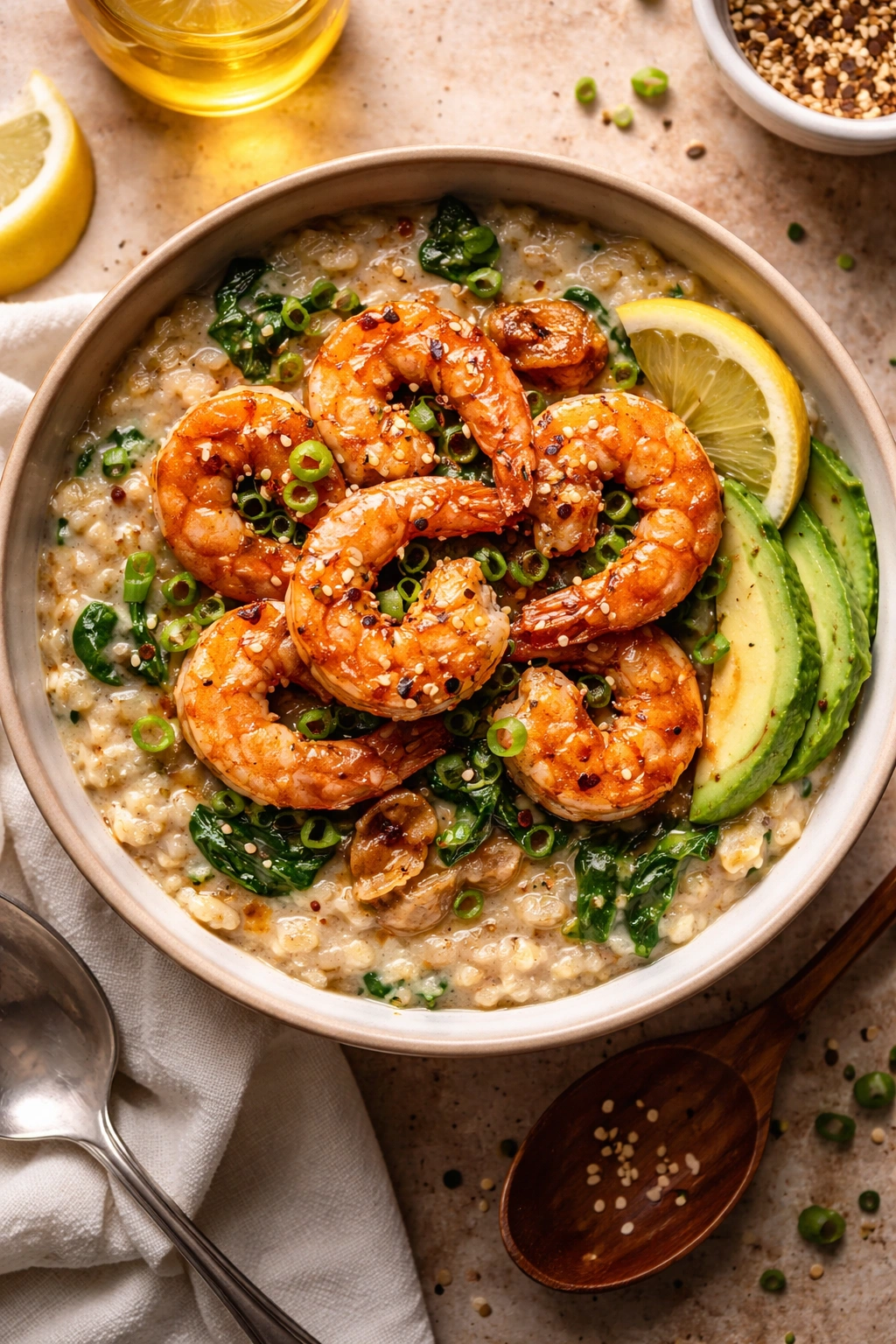
This might sound unconventional until you realize that in many Asian culinary traditions, seafood-and-grain dishes are incredibly common for breakfast. Shrimp, crab, or even smoked salmon work beautifully with oatmeal when everything is seasoned properly.
For a shrimp version: cook your oatmeal in a mixture of chicken broth and a splash of sake or dry white wine, with fresh ginger, soy sauce, and sesame oil mixed in. While the oatmeal cooks, quickly pan-sear some shrimp (doesn’t take more than a couple minutes per side) seasoned with salt, white pepper, and maybe a garlic clove. Arrange the cooked shrimp on top of the warm oatmeal, scatter some crispy shallots, sliced scallions, and a handful of fresh cilantro over the top, and finish with toasted sesame seeds.
For a smoked salmon version: cook your oatmeal in vegetable broth with a pinch of dill and white pepper, then top with thin slices of smoked salmon, a dollop of crème fraîche or sour cream, capers, thinly sliced red onion, and fresh dill. A squeeze of lemon juice brings everything into focus.
The crab version is elegant: cook oatmeal in seafood broth (if you have it) or regular broth with Old Bay seasoning, then top with lump crab meat that’s been gently warmed with a little butter and lemon juice, some sautéed greens, and a drizzle of the lemon-butter sauce over everything.
Seafood oatmeal is definitely more of a special-occasion breakfast than an everyday one, but it’s genuinely impressive and takes maybe 10 minutes from start to finish. The seafood-forward versions tend to be lighter and more delicate than meat-based savory oatmeals, which means they work well on mornings when you want something filling but not super heavy.
Tips for Perfect Savory Oatmeal Every Time
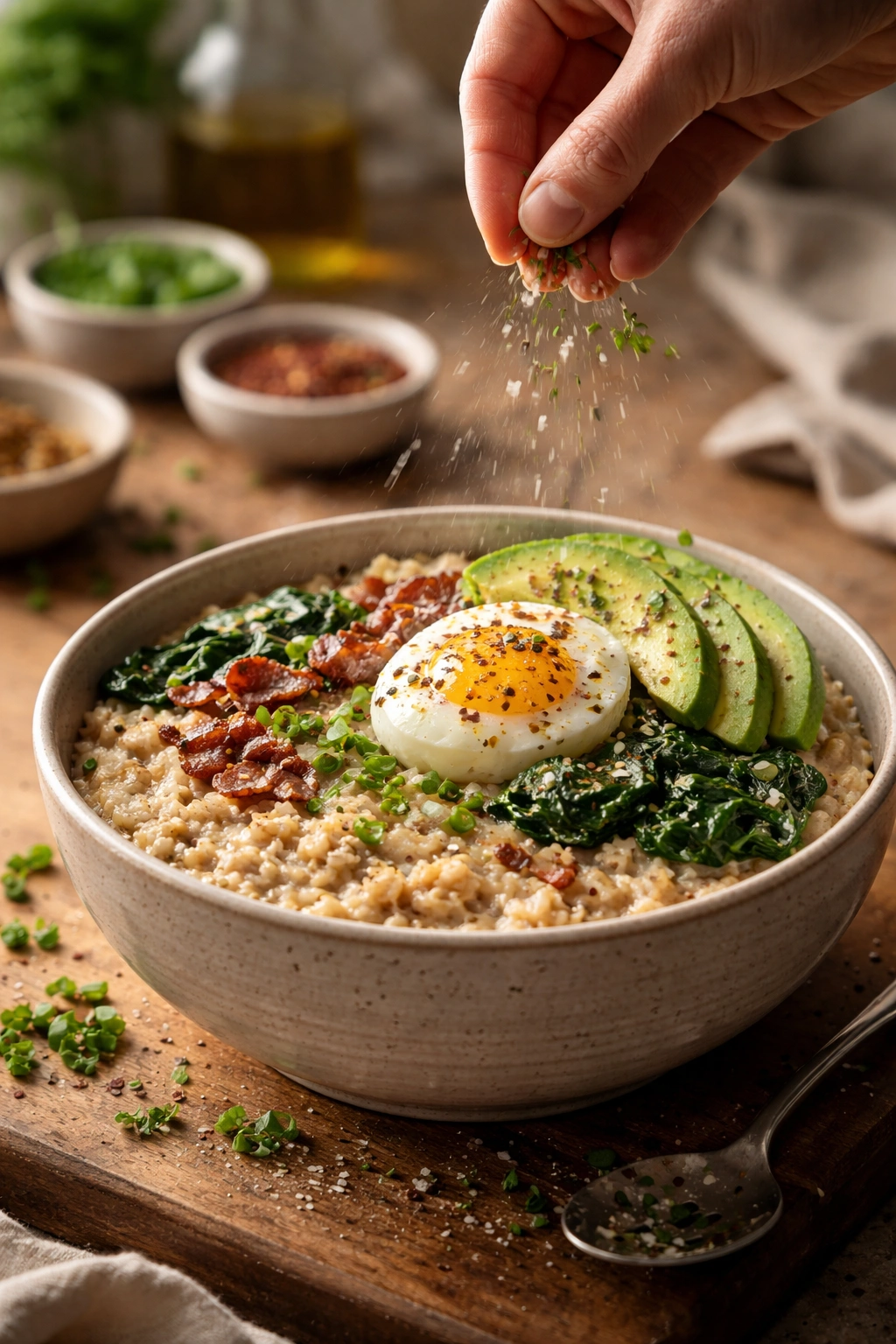
The oatmeal itself should taste good before you add toppings. This is the difference between okay savory oatmeal and genuinely delicious savory oatmeal. Salt the cooking liquid properly—don’t be shy. Add any dry spices or aromatics to the liquid while it heats so they bloom and permeate the oatmeal rather than just sitting on top. Taste the finished oatmeal and adjust seasoning before adding toppings; it’s much easier to fix at that stage.
Cook your oatmeal with adequate liquid. This seems obvious, but so many people make thick, gluey oatmeal and then wonder why it’s not good. The finished oatmeal should be creamy and spoonable, not pasty. You can always add more liquid toward the end of cooking if it’s looking too thick, but you can’t take it out.
Invest in toppings that taste good on their own. Vegetables should be properly cooked and seasoned. Proteins should be flavorful—crispy bacon is better than limp bacon; seared shrimp tastes different from boiled shrimp. Cheese should be good enough that you’d snack on it by itself. When all the components taste good individually, the finished bowl is automatically good.
Use fresh herbs whenever possible. Fresh herbs scattered over the top just before eating add brightness and freshness that dried herbs can’t quite match. Cilantro, parsley, dill, chives, and basil all work beautifully depending on the direction of the bowl. A small handful of fresh herbs can transform something that tastes okay into something that tastes genuinely delicious.
Consider texture contrast. Soft oatmeal benefits from something crispy—toasted breadcrumbs, crispy shallots, crispy bacon, roasted chickpeas, toasted nuts. This prevents the bowl from feeling monotonous and adds a pleasant textural variety with every spoonful.
Don’t skip the fat. A drizzle of good olive oil, a small pat of butter, or a bit of nut oil over the finished bowl adds richness and helps carry flavors. It’s not necessary in huge quantities—a teaspoon or two is usually enough—but it genuinely elevates the final result.
Cook your oatmeal on low heat and stir occasionally. This prevents scorching on the bottom and ensures even cooking. Steel-cut oats especially benefit from this attention. Rolled oats are more forgiving, but gentle heat and occasional stirring produce better results than high heat and ignoring it.
Final Thoughts
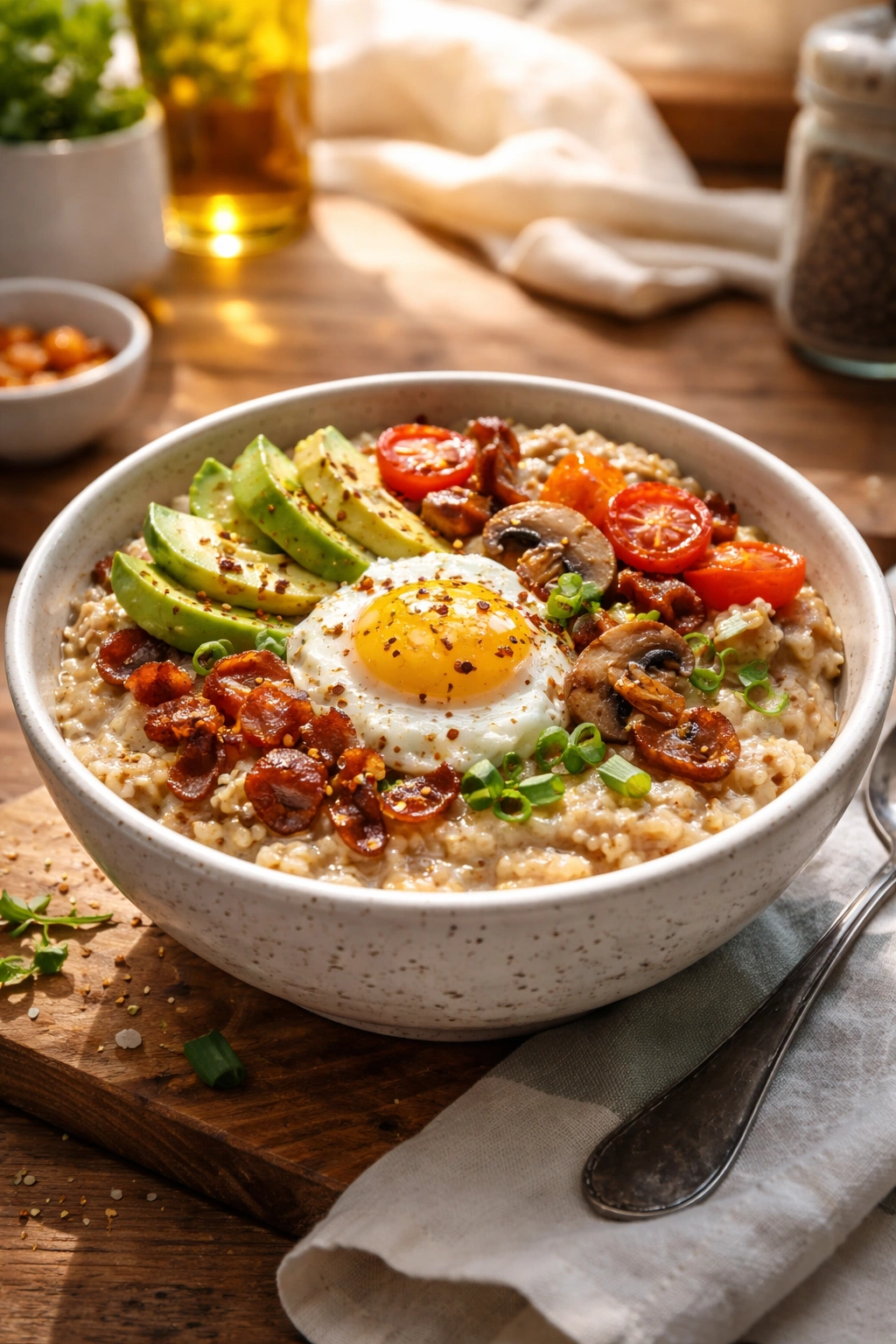
Savory oatmeal is genuinely one of the easiest ways to expand your breakfast repertoire and actually enjoy breakfast again if you’ve gotten tired of the same sweet bowl morning after morning. The foundation is incredibly simple—oats, broth, salt, and heat—and everything that comes after is just flavor building and personal preference.
Start with the version that sounds most appealing to you and make it your own. If egg and cheese sounds comforting, lean into that version and experiment with different cheeses and herbs. If Asian-inspired porridge intrigues you, play with different broths and toppings until you find your favorite combination. The whole point is that savory oatmeal is flexible enough to accommodate whatever ingredients you have on hand and whatever you’re in the mood for.
What makes this genuinely sustainable as a breakfast habit is that it doesn’t feel like you’re eating “healthy breakfast food”—it tastes delicious and indulgent while actually being quite nutritious. The combination of whole grains, vegetables or proteins, and good fats keeps you satisfied and stable in a way that sweet breakfasts often don’t. Once you’ve had one really good bowl of savory oatmeal, you’ll find yourself planning to make it again, and that’s when you know you’ve found something worth keeping in your regular breakfast rotation.
