



There’s a special kind of magic that happens when dinner comes together in just 15 minutes—especially when it tastes like you spent hours perfecting it. Chicken Caesar wraps deliver exactly that kind of satisfaction. They’re the weeknight dinner that actually feels indulgent, the lunch you can pack without guilt, and the meal that somehow makes everyone at the table genuinely happy. What makes them so reliable is the fact that they transform simple, everyday ingredients into something that feels restaurant-quality, but requires nothing more than a mixing bowl and a tortilla.
If you’ve ever found yourself staring into the fridge at 5:30 p.m. with hungry people waiting to eat, chicken Caesar wraps are about to become your secret weapon. They’re forgiving enough for total beginners but interesting enough that you’ll want to make them again and again. The best part? No cooking experience required, minimal equipment needed, and zero stress about whether something will turn out. You literally cannot mess these up, even if you try.
Why Chicken Caesar Wraps Are the Perfect Quick Meal
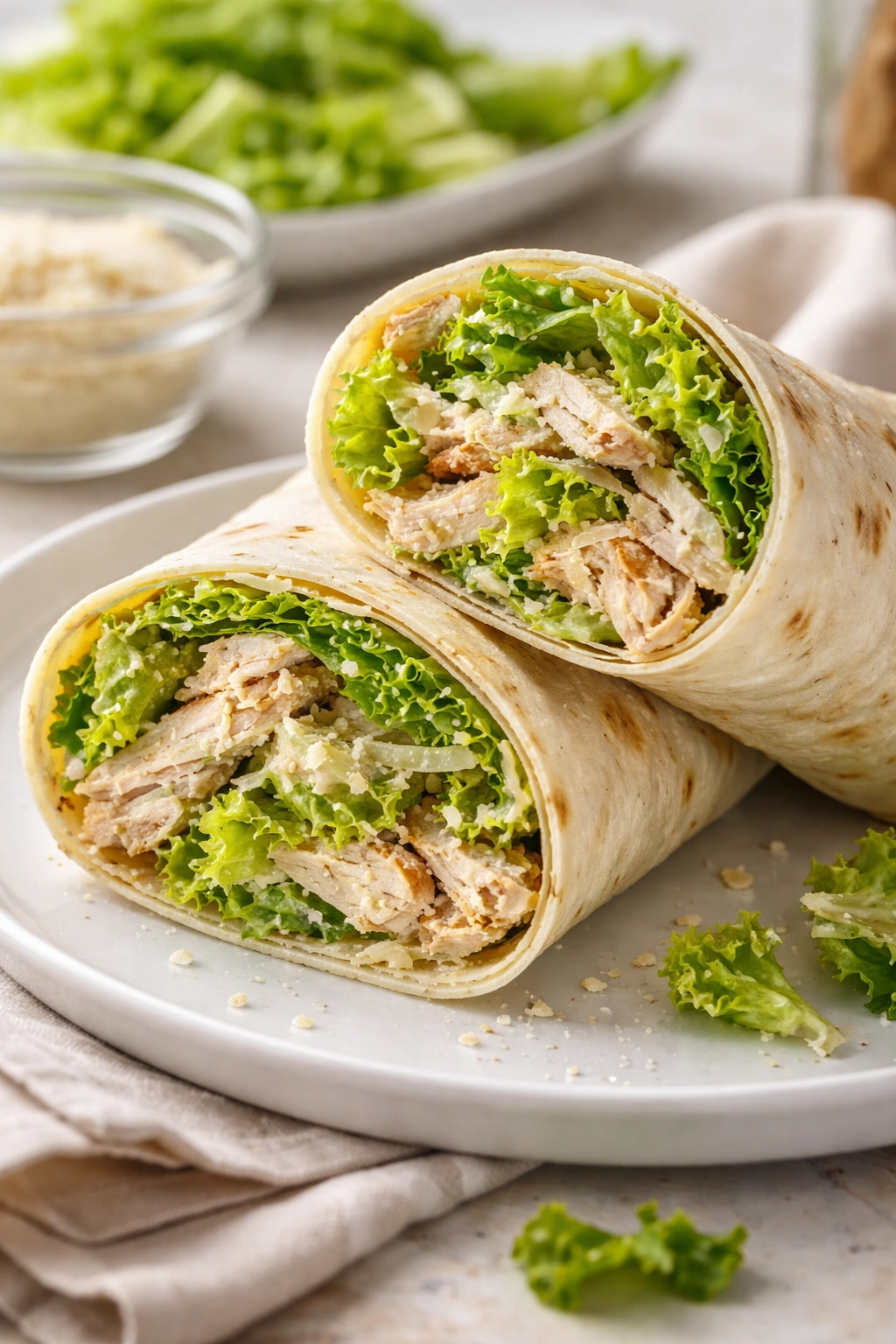
When life gets hectic—and let’s be honest, it always does—you need meals that don’t compromise on flavor or nutrition. Chicken Caesar wraps check every box. They’re not a sad desk lunch; they’re actually nutritionally balanced with lean protein, fresh vegetables, whole grains if you choose the right tortillas, and satisfying fats from the creamy dressing. You get a meal that keeps you full for hours without that post-lunch energy crash.
The appeal of these wraps goes beyond just speed. They scratch multiple cravings at once. If you want something fresh and crisp, the romaine lettuce delivers that crunch. If you want something creamy and comforting, the Caesar dressing brings that richness. The chicken provides substantial protein that makes the meal genuinely satisfying, not just a vehicle for greens. And the whole thing comes together so effortlessly that you won’t feel like you’ve “made dinner”—you’ll feel like you’ve just assembled something brilliant.
What makes the 15-minute timeline realistic is that you’re not cooking anything from scratch. You’re working with ingredients that are either already cooked or require zero cooking. Rotisserie chicken, pre-washed lettuce, store-bought dressing, and a tortilla from your pantry—these are not shortcuts or “cheating.” They’re smart ingredients that professionals use to build delicious meals quickly. There’s absolutely nothing wrong with using them, and honestly, acknowledging that you have limited time and choosing quality components shows respect for yourself and whoever you’re feeding.
The Magic Behind 15-Minute Assembly
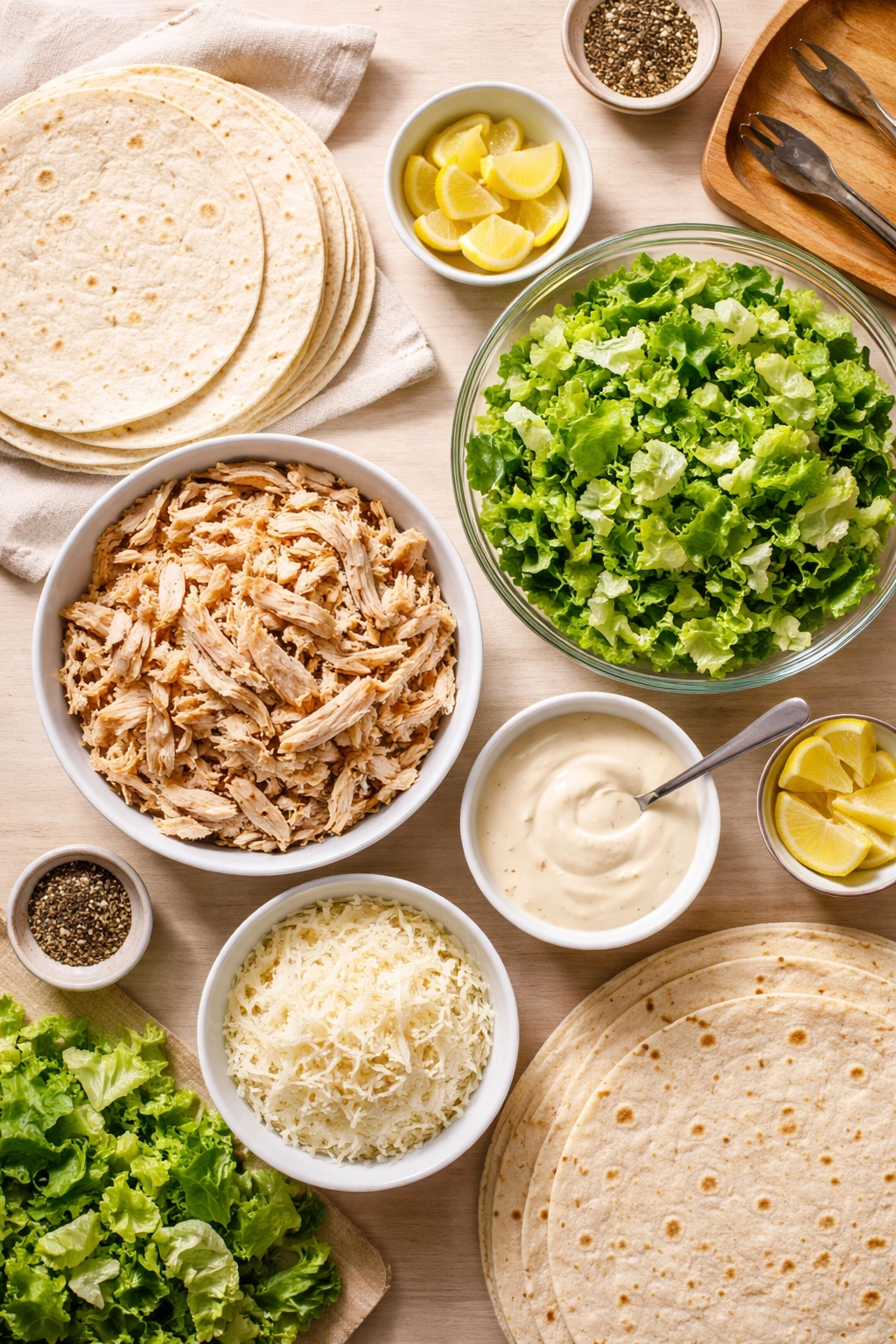
The reason these wraps come together so fast is pure strategy. You’re not multitasking between different cooking methods or waiting for things to cool down. Instead, you’re doing exactly what professional kitchen workers do: gathering all your components first, then assembling everything efficiently.
The first two minutes go to organization. Pull your ingredients from the fridge and gather them on the counter. Get a large mixing bowl, your tortillas, and a cutting board ready. Having everything in view before you start prevents the frustrating hunt for something halfway through assembly. This is called “mise en place” in cooking, and it’s genuinely the difference between feeling calm and feeling rushed.
The next five to seven minutes go to prep. You’re chopping lettuce, dicing tomatoes if you’re using them, shredding or grating cheese if you’re not using pre-shredded, and possibly chopping cooked chicken if your rotisserie chicken isn’t already shredded. If your ingredients are already prepped—like buying pre-shredded cheese and pre-washed lettuce—you can skip this almost entirely and move straight to assembly.
The final portion of time is pure assembly and rolling. You toss your ingredients with dressing in the bowl, divide among tortillas, roll them up, and you’re done. No baking, no simmering, no waiting for anything to cook. Just mix, fill, roll, and serve. That’s the entire process.
Here’s the honest truth: if you buy the most convenience-friendly versions of each ingredient, you can have these wraps ready in less than 10 minutes. Rotisserie chicken that’s already shredded, pre-washed chopped romaine, store-bought dressing, pre-grated Parmesan, packaged croutons—all of these exist specifically so that busy people can eat well. There’s zero shame in using them.
Choosing the Right Ingredients for Speed
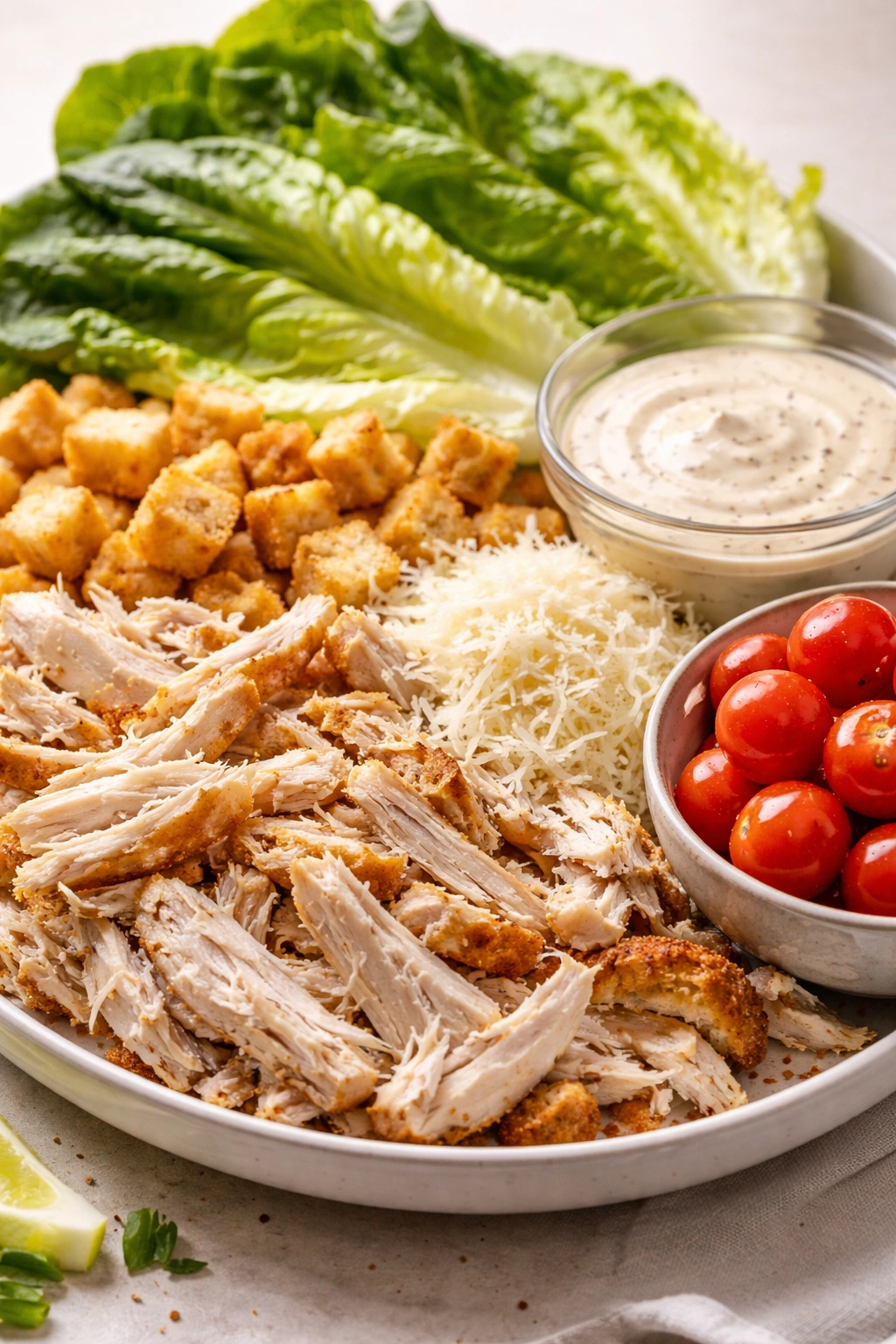
The fastest wraps start with smart ingredient choices. Not all chicken is created equal when you’re racing against the clock. Rotisserie chicken is your best friend here. It’s already cooked, already seasoned, and often already partially shredded. You can literally shred it with two forks in about 30 seconds. If you want to save even those 30 seconds, buy the pre-shredded rotisserie chicken that some grocery stores sell. Yes, it’s slightly more expensive than a whole bird, but the time you save might be worth it on nights when you’re particularly slammed.
If you have leftover cooked chicken from another meal—roasted chicken breasts, grilled chicken, even baked chicken tenders—that works beautifully. Room temperature, warm, it doesn’t matter. You’re not reheating it separately; it’s going straight into the wrap, so temperature isn’t critical. The only thing to avoid is dry chicken. If your leftover chicken is a little dry, toss it lightly with some of the Caesar dressing before adding it to the mixing bowl. The dressing will rehydrate it and make it taste fresher.
For the lettuce, pre-washed and chopped romaine is your friend, not a sign of laziness. It’s already crisp, already clean, and ready to use. You open the bag, measure out what you need, and you’re done. If you want the absolute fastest option, buy the pre-made Caesar salad kits that come with lettuce, dressing, and croutons. You’re literally just adding chicken at that point. Some kits are really quite good, though you can always upgrade the dressing if the included one isn’t to your taste.
For cheese, freshly grated Parmesan is genuinely worth the extra 20 seconds it takes to grate. It tastes noticeably better than pre-shredded, and the difference is significant enough that it’s worth those seconds. But if you’re truly in a time crunch, pre-shredded works. Just understand the tradeoff you’re making.
The dressing deserves its own moment here. Store-bought Caesar dressing is perfectly acceptable, and some brands are really quite good. Creamy, flavorful, and ready to use instantly. There’s no speed advantage to making dressing from scratch—that actually takes more time. Some people swear they can taste the difference between homemade and store-bought, while others are completely happy with bottled. You have to choose based on what matters to you. If you want a fresher taste and don’t mind adding a few minutes, keep reading. If you want to hit the 15-minute window precisely, buy a bottle.
For tortillas, grab the largest ones you can find. Burrito-size tortillas are easier to fill and wrap than regular-size flour tortillas. They’re less likely to tear, they hold more filling without bursting, and they create a more satisfying hand-held meal. If your tortillas are cold from the fridge, microwave them for 10 to 15 seconds before filling. This makes them pliable and far less likely to crack when you fold them.
Yield: Makes 4 wraps (serves 2 to 4 people depending on appetite)
Prep Time: 10 minutes
Cook Time: 0 minutes (no cooking required)
Total Time: 15 minutes active
Difficulty: Beginner — No cooking skills required, no special equipment, assembly only. This is the easiest possible weeknight meal.
Simple Ingredients for Perfect Wraps
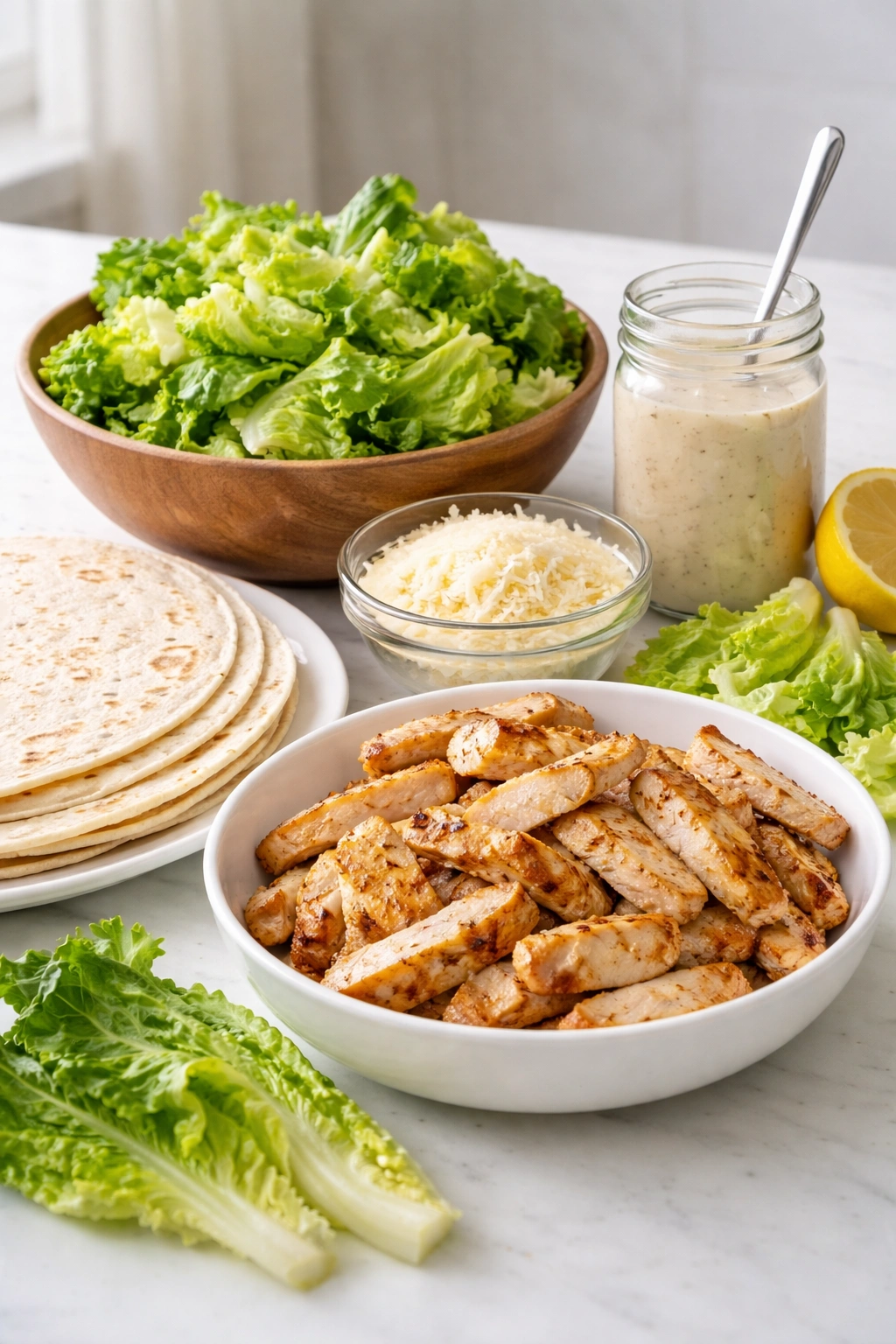
For the Filling:
- 3 cups cooked chicken, shredded or diced (rotisserie chicken is ideal)
- 4 cups romaine lettuce, chopped or torn (pre-washed is perfectly fine)
- ½ cup freshly grated Parmesan cheese (or pre-shredded if you prefer)
- ⅔ cup cherry tomatoes, halved (optional but adds freshness and color)
- ½ cup Caesar salad croutons, roughly chopped or left whole
- ½ cup Caesar salad dressing (store-bought or homemade)
- Freshly cracked black pepper, to taste
For Assembly:
- 4 large burrito-size flour tortillas (or your preferred wrap variety)
Optional Quick Upgrades:
- 2 slices bacon, cooked and crumbled (adds smokiness)
- 1 ripe avocado, sliced (adds creaminess)
- Red onion, thinly sliced (adds sharp flavor)
- Fresh lemon juice (½ fresh lemon squeezed over the filling)
Step-by-Step Instructions for 15-Minute Wraps
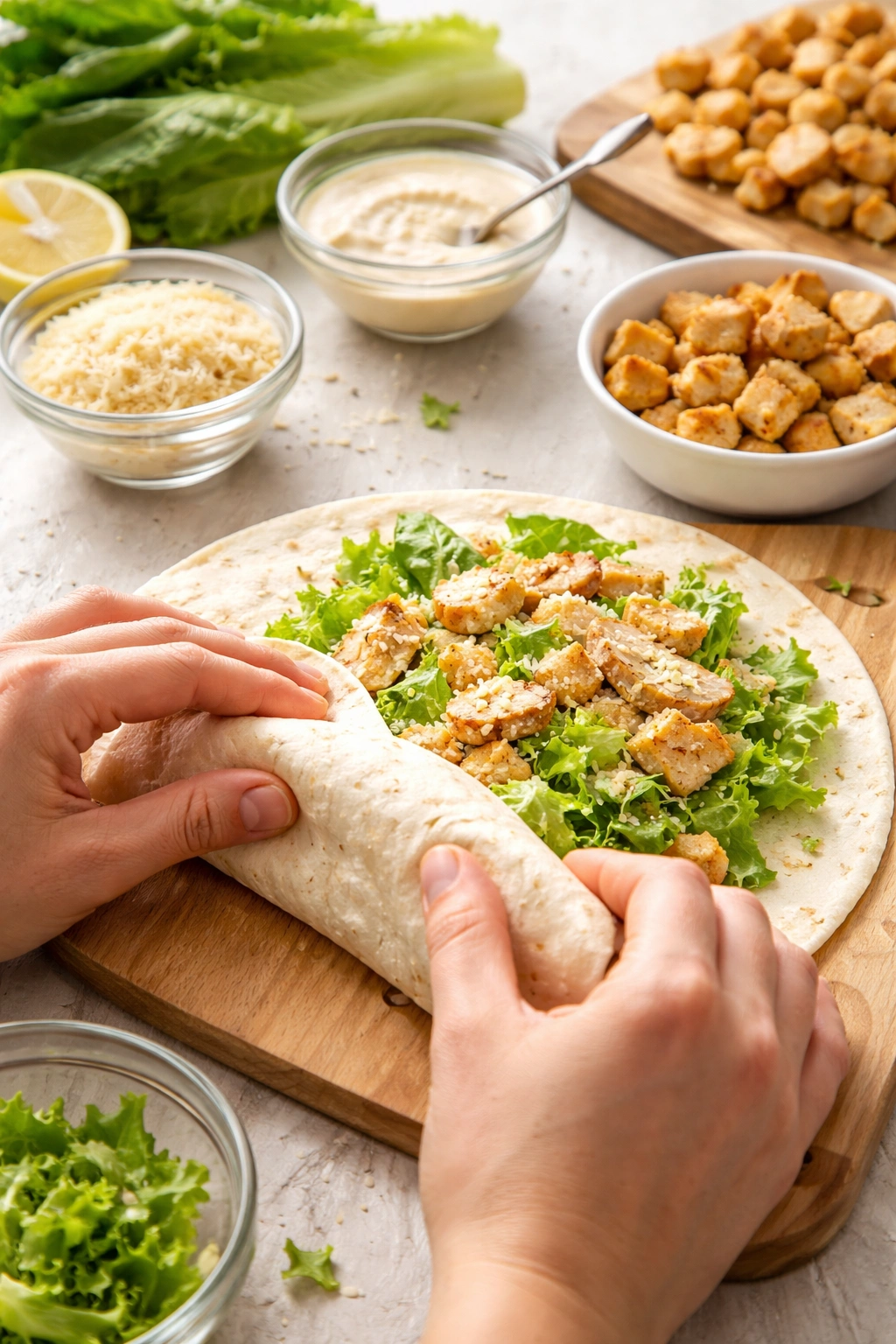
Prep and Gather:
-
Pull your rotisserie chicken from the fridge (or remove your leftover cooked chicken from storage), your lettuce, cheese, croutons, dressing, and tortillas from where you keep them. Arrange them on your counter in the order you’ll use them.
-
If using a whole rotisserie chicken, shred it by holding it steady on a cutting board and pulling apart the meat with two forks, discarding the skin and bones. If you’re using pre-shredded rotisserie chicken or leftover cooked chicken that’s already in usable form, skip this step.
-
Measure out your romaine lettuce into a large mixing bowl—you’re aiming for about 4 cups of loosely packed, chopped or torn lettuce.
Make the Filling:
-
Add the shredded chicken to the bowl with the lettuce.
Advertisements -
Sprinkle the ½ cup of freshly grated Parmesan cheese directly over the chicken and lettuce.
-
Add the ½ cup of Caesar dressing to the bowl. Do not skimp on dressing here—it’s what ties everything together and prevents the final wrap from tasting dry. The dressing should coat everything visibly.
-
Add the halved cherry tomatoes (if using), the croutons, and a few generous cracks of fresh black pepper.
-
Using a large spoon or salad tongs, toss everything together until the dressing coats all the ingredients evenly. The cheese should be incorporated throughout, the lettuce should glisten with dressing, and nothing should look dry. Taste a small bite and adjust salt or pepper if needed. Remember: you can always add more dressing, but you can’t take it out, so be conservative if you’re unsure.
Assemble and Roll:
-
Warm your tortillas in the microwave for 10 to 15 seconds stacked together, or place them one at a time in a dry skillet over medium heat for about 5 seconds per side. Warm tortillas are dramatically easier to roll without tearing.
-
Lay a warm tortilla flat on a clean work surface or a large plate.
-
Spoon approximately 1½ to 2 cups of the Caesar chicken mixture into the center of the tortilla, arranging it in a horizontal line rather than a mound. This makes rolling much easier and prevents overfilling.
-
Fold the bottom edge of the tortilla up and over the filling, then fold in the left and right edges toward the center, creating a seal on both sides. This prevents the filling from spilling out as you roll.
-
Roll the tortilla tightly away from you, over the folded edges, until you’ve created a burrito-shaped wrap. The wrap should be snug but not so tight that it’s about to burst.
Advertisements -
If your wrap seems fragile or loose, use a toothpick inserted diagonally through the center to hold it closed, or wrap the whole thing in a piece of parchment paper or foil to keep it together.
-
Repeat steps 10 through 14 with the remaining three tortillas and filling.
Serve:
-
Place each wrap seam-side down on a plate or serving surface. This hides the seam and makes the wrap look more polished.
-
Cut each wrap in half diagonally if you want to make it easier to hold and eat, or serve whole depending on your preference.
-
Serve immediately while the tortilla is still slightly warm and pliable.
Insider Tips for Perfect Caesar Wraps Every Time
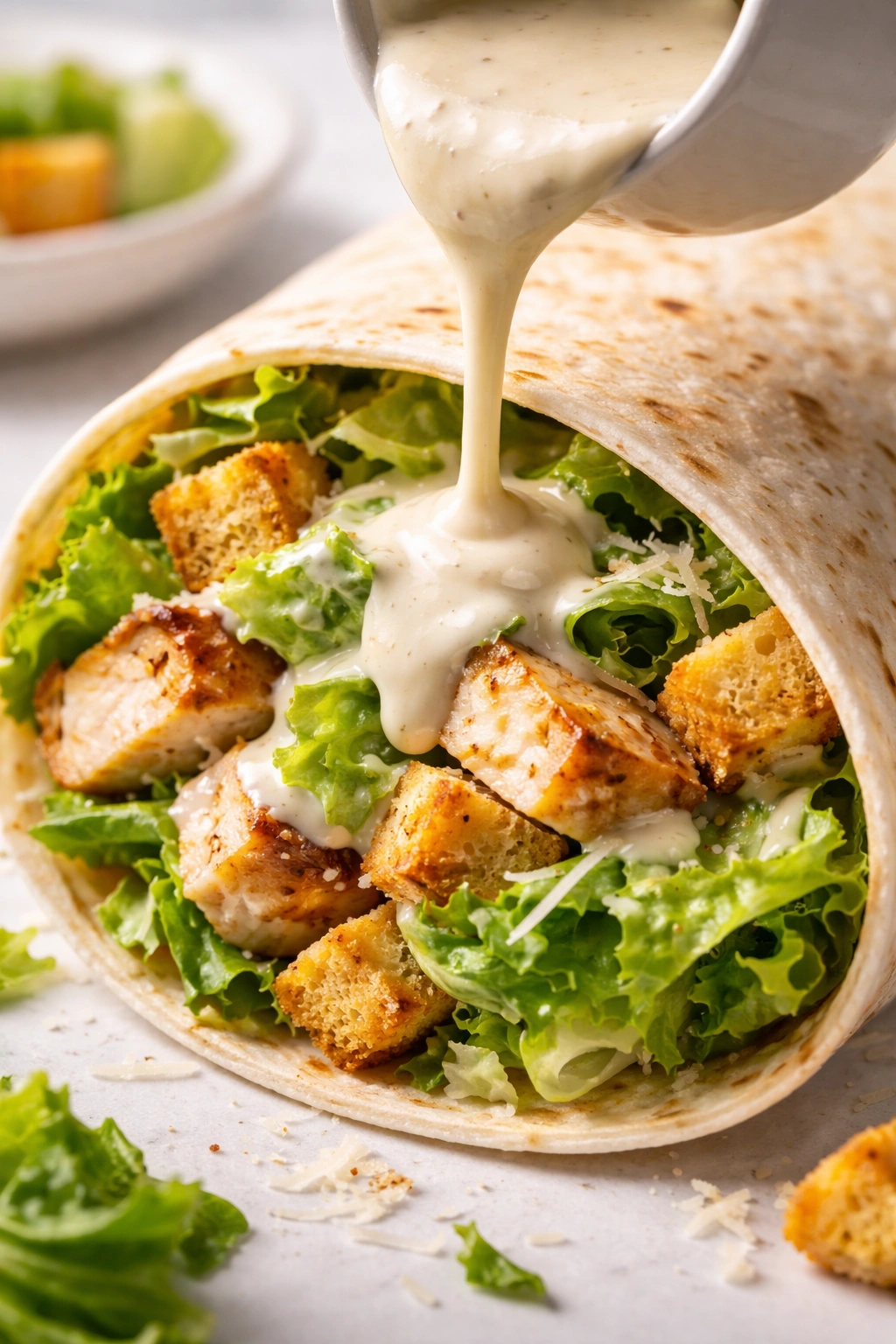
After making these wraps dozens of times, you start to notice patterns about what makes them truly excellent. The most important insight: dressing is everything. It’s not just a flavor component; it’s the glue that holds the wrap together structurally and prevents it from tasting bland or boring. Don’t be shy with it. That said, there’s a difference between well-dressed and drowning. You want enough that everything glistens when you toss it, not enough that it’s pooling at the bottom of the bowl. Aim for the lettuce to look visibly coated, with a light shine to it.
Here’s something that genuinely matters: pat your lettuce dry before chopping if it’s wet. Excess water on the lettuce gets into the bowl, makes the filling watery, and eventually makes your tortilla soggy. If you bought pre-washed lettuce in a clamshell, it’s usually dry enough. If you just rinsed whole romaine, spin it or pat it with a clean kitchen towel before chopping. Those few extra seconds prevent a whole cascade of problems.
The chicken temperature doesn’t matter—it genuinely doesn’t. Rotisserie chicken is delicious warm or room temperature. If you’re using cold leftover chicken, it’s still perfect. Room temperature is actually ideal because you can grab it straight from the fridge without waiting. The Caesar dressing at room temperature is flavorful, and everything comes together seamlessly. There’s absolutely zero reason to reheat or warm anything.
Don’t overcrowd the tortilla. I know it’s tempting to stuff as much filling as possible into each wrap, but a generously but reasonably filled wrap is infinitely better than an overstuffed one that falls apart. You want to be able to fold and roll it without the filling squishing out the sides. Think of it like this: you should be able to hold the finished wrap in one hand without needing two hands or a napkin on standby. That’s the perfect fullness level.
The texture combination is key to why these work so well. The crispy romaine, tender chicken, creamy dressing, and crunchy croutons create an interesting eating experience that keeps your palate engaged. If you’re using soft bread croutons instead of crispy ones, crush them slightly before adding to the bowl so you still get that crunch element. If you’re using salad croutons that are made from dried-out bread cubes, they’ll stay crispy longer and hold up well during the mixing and rolling process.
One technique that separates good wraps from great ones: toss everything in the bowl first, then fill the tortillas immediately. This ensures every single wrap tastes exactly the same, with balanced proportions of chicken, lettuce, cheese, and dressing. It also prevents the filling from sitting around getting watery. Mix, fill, roll, serve. That’s the rhythm that produces the best results.
Common Mistakes That Slow You Down
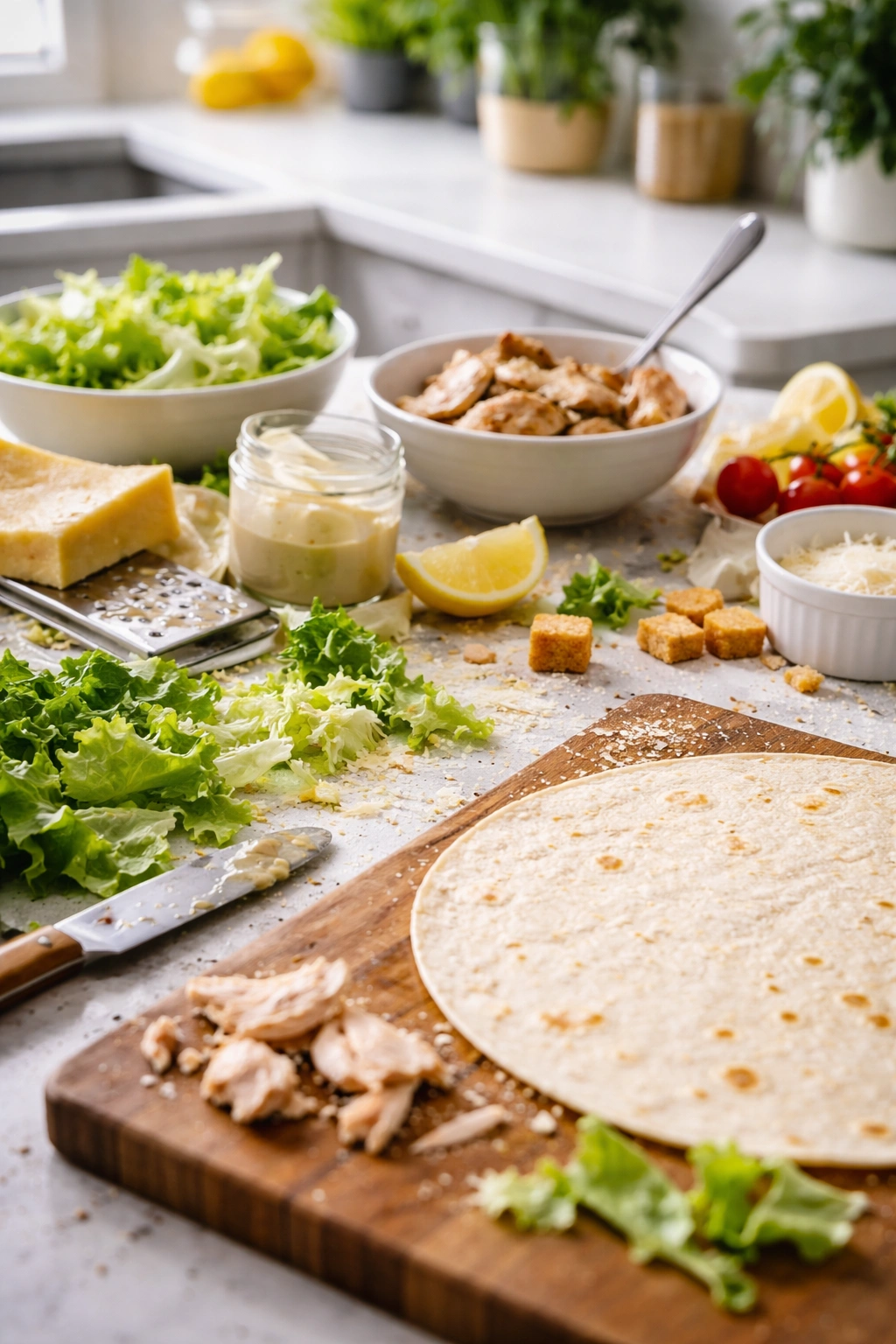
The biggest time-killer is not gathering your ingredients before you start. You spend two minutes looking for something halfway through assembly instead of 30 seconds setting it up at the beginning. Mise en place is not fancy; it’s just smart. Line everything up, and assembly becomes a smooth, uninterrupted process.
Another common mistake is using cold tortillas. Cold tortillas are stiff and crack easily. Warming them for 10 to 15 seconds transforms them into pliable, easy-to-roll vehicles for your filling. This takes less time than fighting with a cold tortilla that keeps tearing.
Overfilling the tortilla is deceptively common. You want each wrap to be satisfying and full, but there’s a practical limit to how much filling a tortilla can hold while still rolling smoothly. If you’re struggling to roll it, you’ve overfilled it. This actually slows you down because you’re wrestling with it instead of efficiently completing the assembly.
Some people skip the dressing-tossing step and instead try to spread dressing on the tortilla. This is slower and produces an unevenly dressed wrap. Mixing everything in a bowl ensures even distribution and is actually faster than trying to spread dressing around inside a tortilla.
Wet lettuce is a slow-motion problem. It makes everything soggy, which means you have to rush to eat the wraps before they fall apart, which creates stress. Dry lettuce means your wraps stay crisp for a couple of hours, giving you flexibility in when you eat them.
Not having the right-size tortillas is surprisingly time-consuming. Small tortillas require more precision and rolling technique. Large burrito-size tortillas are forgiving, hard to tear, and actually faster to fill and roll. Always grab the biggest ones you can find.
Make-Ahead Strategies for Busier Days
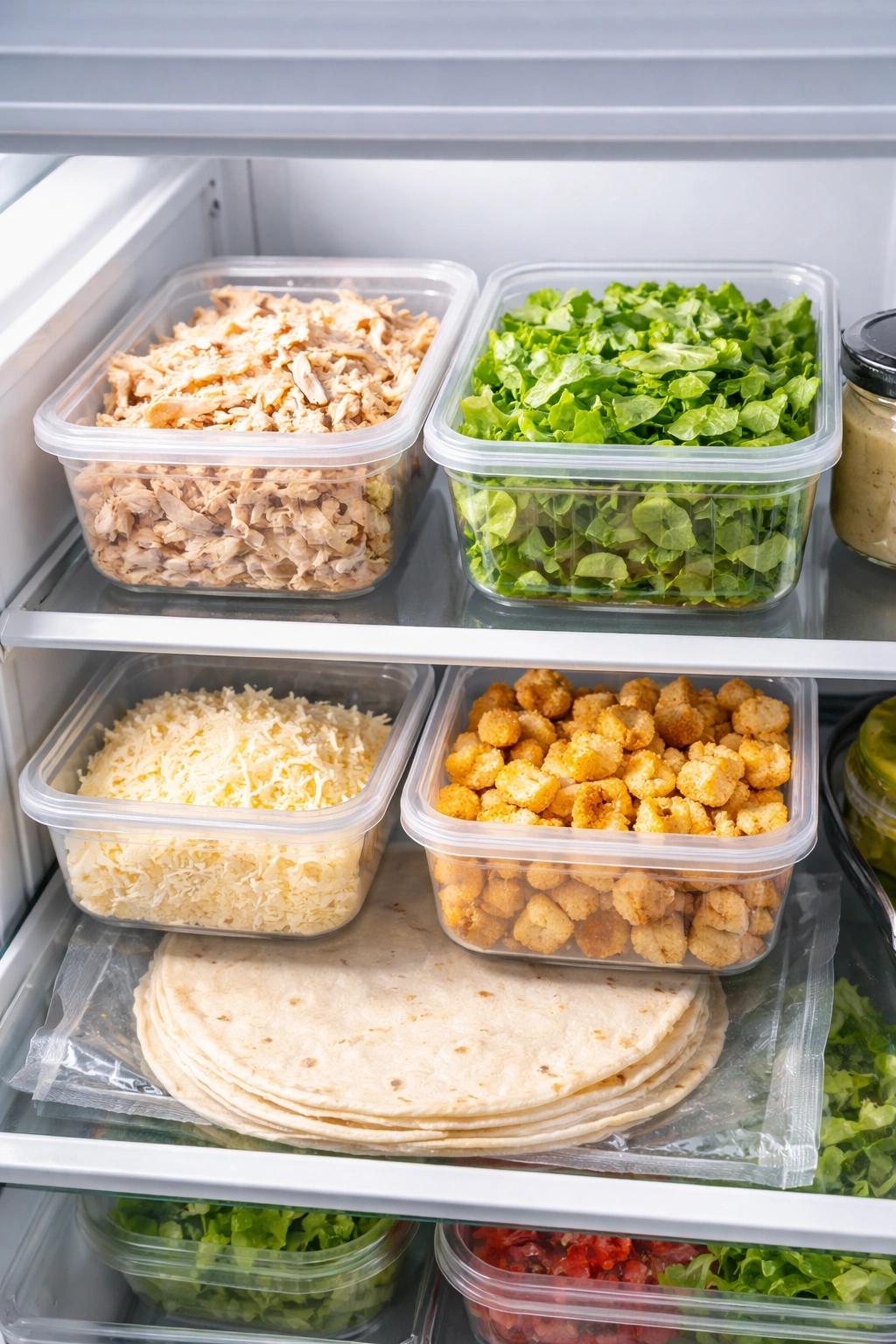
Here’s the beautiful thing about these wraps: they’re genuinely better when you make them within 30 minutes of eating them, but you can get creative about what you prep in advance. The golden rule: store components separately until assembly time. This prevents sogginess and maintains crispness.
On a Sunday evening or whenever you have time, you can do this: Shred and store your rotisserie chicken in an airtight container in the fridge. It’ll keep for three to four days. Chop your lettuce and store it in a container with a paper towel tucked inside to absorb excess moisture. It stays fresh for several days this way. Grate or shred your cheese and keep it in an airtight container. Croutons stay crisp in a sealed bag or container indefinitely.
Then, on the day you want the wraps, you spend literally 5 to 10 minutes tossing everything together and rolling. The assembly portion is so fast that you’re essentially making fresh wraps; you’ve just front-loaded the time-consuming prep work. This is genuinely the best approach for meal prep—you get the benefits of prepared ingredients without the tradeoff of eating something that was assembled two days ago.
If you’re making wraps for a lunch box, you have a few options. Option one: assemble completely, wrap tightly in parchment paper or foil, and eat within a few hours. The wraps will be fine, maybe slightly less crispy by lunchtime but still absolutely delicious. Option two: pack the filling and tortillas separately, then assemble at lunch. This keeps the tortilla from getting soggy but requires eating at a time when you can do assembly. Option three: pack most components separately, keep the dressing in a small container, and assemble during your lunch break. This takes maybe 60 seconds and ensures maximum freshness.
The dressing is the key variable in freshness. If you use store-bought dressing, it has preservatives that help it keep ingredients moist without degrading as quickly. Homemade dressing will make things wetter faster because it doesn’t have those stabilizers. For all-day transport in a lunch box, store-bought dressing is actually more practical.
Flavor Variations You Can Make in Minutes
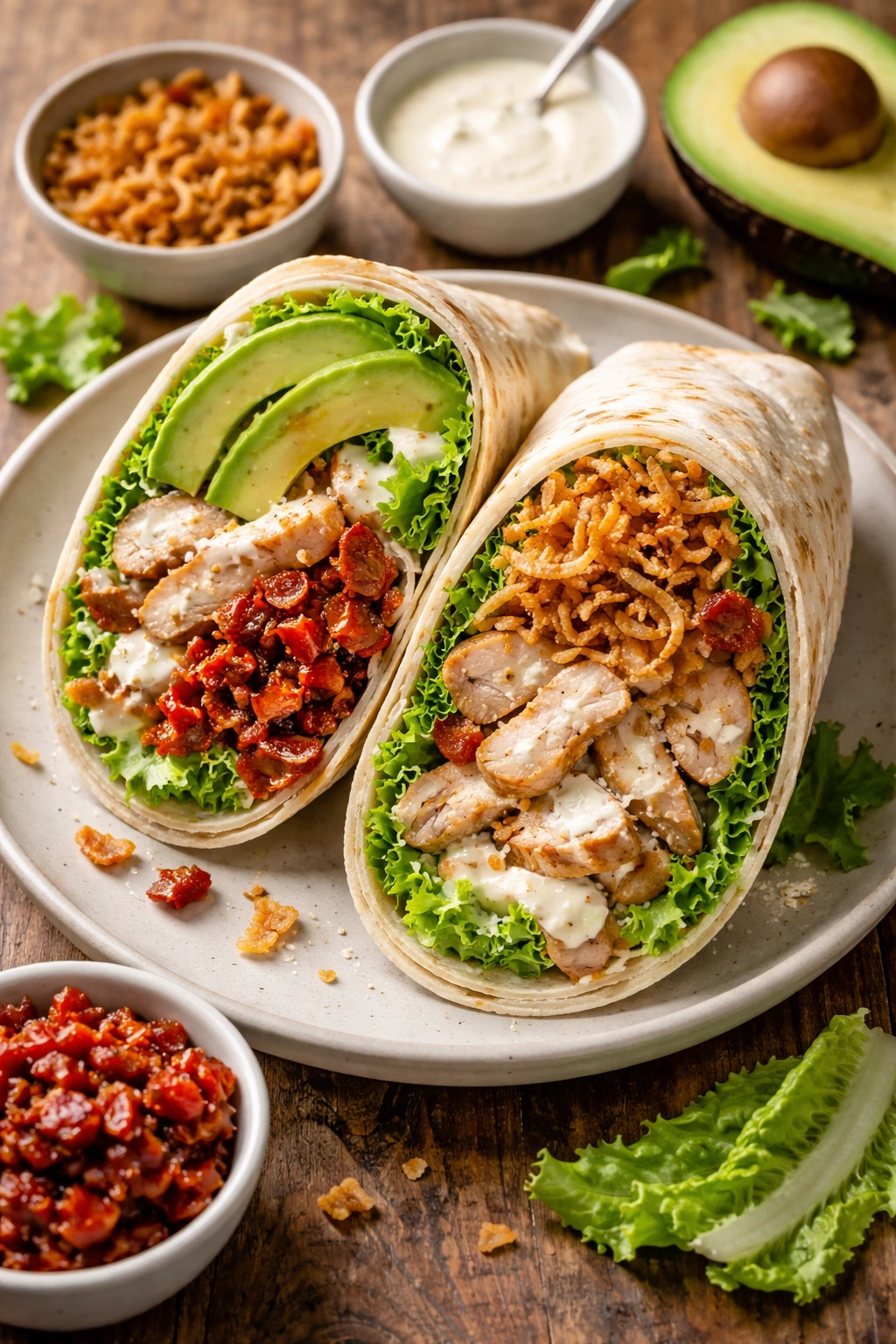
The beauty of the basic chicken Caesar wrap is that it’s a blank canvas for variations. None of these take extra time; they’re just swaps. Add bacon and you’ve got a Caesar BLT wrap—cook bacon ahead of time and you just need to crumble it and add it to the mix. Smoky, salty, and instantly more indulgent.
Swap the dressing: a creamy ranch dressing creates an entirely different flavor profile, still quick and still delicious. You could go Greek goddess dressing, lemon herb dressing, or even a light cilantro lime dressing if you have it on hand. Any creamy dressing that you like works perfectly here.
Add avocado for creaminess and richness. Slice a ripe avocado and add it either mixed into the bowl or as a layer in the tortilla as you roll. You don’t even need to chop it; slices work beautifully. This doesn’t add any time at all if your avocado is ripe and ready to slice.
Include crispy fried onions or fried shallots for a crunchy upgrade. Instead of or in addition to croutons, these add an oniony, deep-fried crunch that elevates the entire wrap. They come in bags in the grocery store and need zero prep.
Add sun-dried tomatoes for something more sophisticated. They’re more intense and flavorful than fresh tomatoes and add a slightly tangy, concentrated tomato flavor. Again, no cooking required; they’re ready straight from the jar or bag.
Make it spicy: add red pepper flakes, hot sauce mixed into the dressing, crispy jalapeños, or cayenne pepper. If you like heat, this transforms the wrap into something with more edge and personality.
Go Italian: add crispy pancetta, roasted red peppers from a jar, and maybe substitute a pesto-based or Italian herb dressing. This takes the Caesar concept in a completely different direction while using the exact same speed-friendly approach.
Make it Mediterranean: add hummus to or instead of some of the dressing, include cucumber slices, Kalamata olives, and feta cheese. You lose the Caesar element but gain a completely different flavor journey in the same time frame.
The practical reality is this: whatever flavors you like, you can add to a wrap. There’s no cooking involved, no technique required. You’re just substituting ingredients. This is why wraps are so good for experimental eating—you can try new flavor combinations without committing much time or money.
Serving Suggestions That Complete the Meal
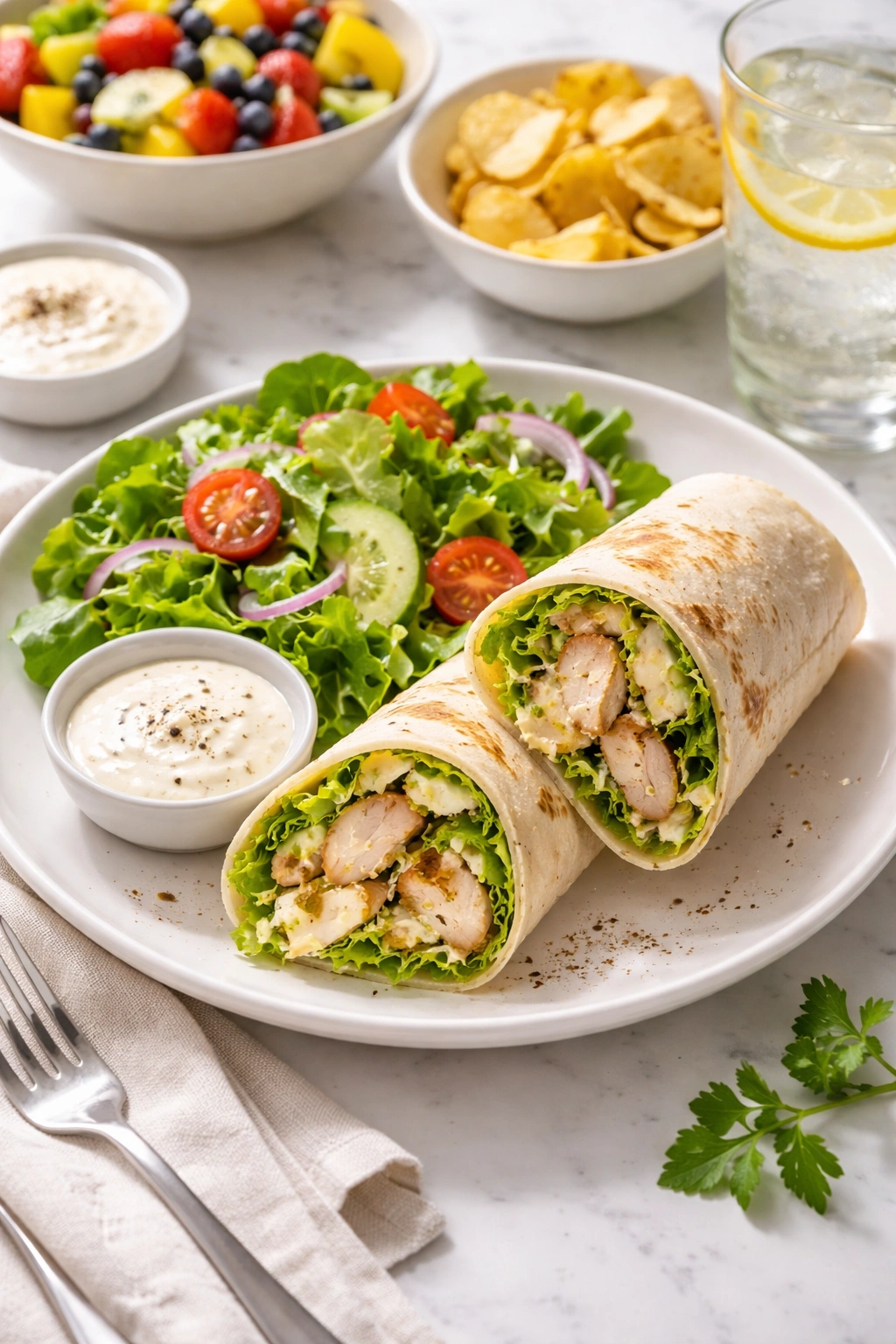
These wraps are absolutely satisfying enough to eat alone, but they pair beautifully with sides if you want a more complete meal or if you’re feeding a crowd. The best side is something light and contrasting: a crisp, acidic salad like a tomato and cucumber salad or a light vinaigrette-dressed green salad. This complements the richness of the wrap without making you feel overly full.
Potato chips or crispy fries add crunch and salt. They’re unapologetically carby and indulgent, but honestly, they pair perfectly with the creamy richness of a Caesar wrap. Air fryer fries are done in minutes and feel like a fresher option than bagged chips, but both work beautifully.
A light soup or broth-based soup is perfect alongside these wraps. Minestrone, vegetable soup, or even a light chicken broth with noodles gives you temperature contrast and makes the meal feel complete without being heavy. The warm soup and cool wrap are a genuinely satisfying combination.
Fresh fruit is an excellent pairing. Berries, melon, grapes, or apple slices provide brightness and natural sweetness that balances the savory richness of the wrap. It’s especially nice in warmer months.
A side of hummus and vegetables is another direction. Carrots, celery, bell peppers, and cherry tomatoes with hummus create a fresh, veggie-forward complement to the protein-heavy wrap.
For drinking, iced tea, lemonade, or sparkling water works brilliantly. These wraps don’t pair particularly well with heavy or sweet drinks; you want something refreshing and light. Wine? A crisp white or rosé would be lovely if you’re eating these for a casual lunch with friends.
If you’re packing these for a picnic, don’t forget wet wipes and napkins. Even with careful rolling, Caesar wraps are naturally a bit messy because of the dressing. It’s part of their charm, but you want to be prepared.
Storage and Keeping Wraps Fresh
The ideal timeline is to eat these wraps within 30 minutes of assembling them. At that point, the tortilla is still soft and pliable, the lettuce is at peak crispness, and everything has maximum texture and flavor. However, real life doesn’t always cooperate with the ideal timeline.
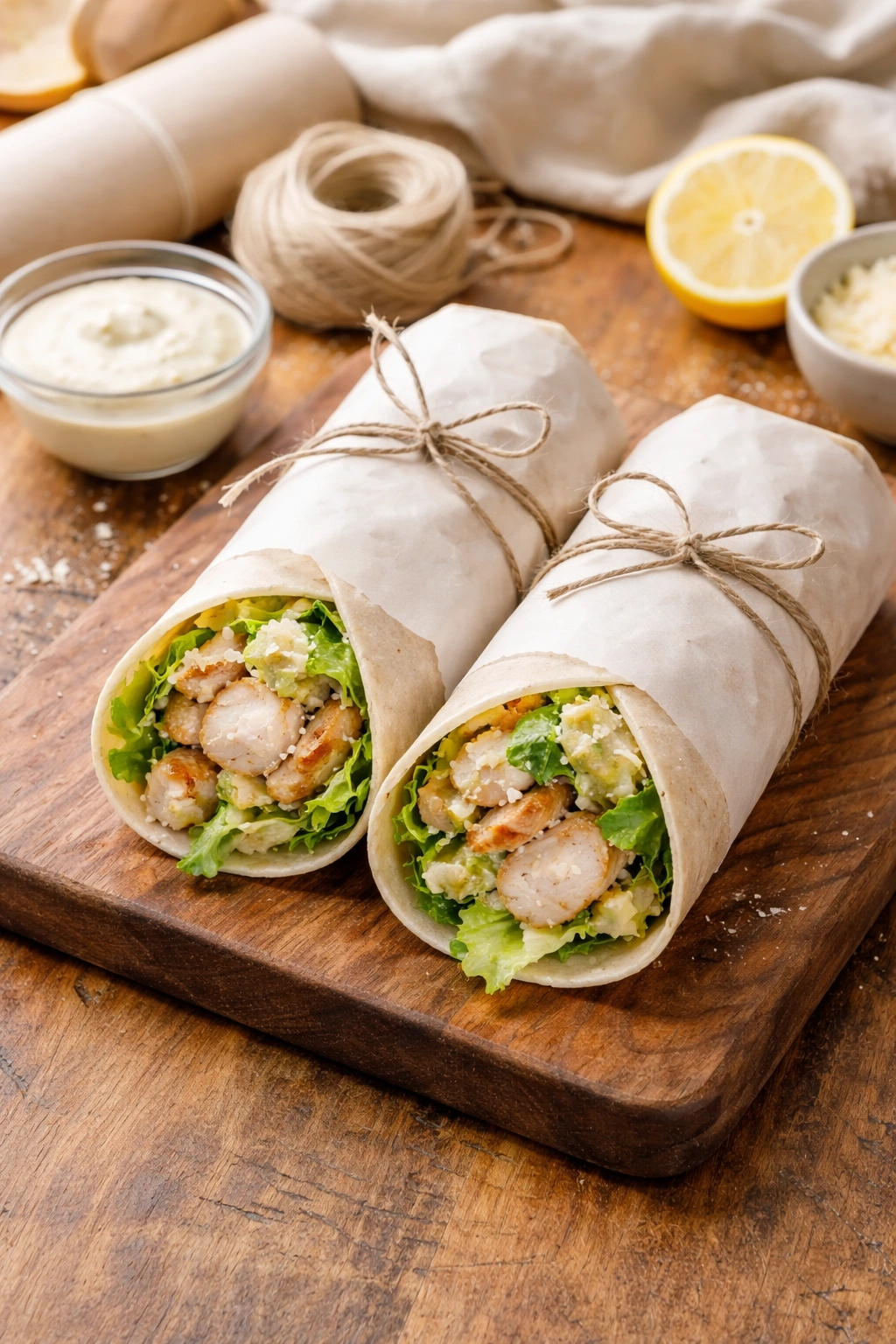
If you need to store assembled wraps, wrap them individually and tightly in parchment paper, foil, or plastic wrap. This prevents them from drying out on the outside while keeping the tortilla from absorbing too much moisture from the filling. Stored this way, they’ll stay reasonably fresh in the refrigerator for up to 24 hours, though the quality is noticeably better within the first few hours.
Don’t stack assembled wraps on top of each other or they’ll compress and the filling will squish out. Store them standing up or lying flat individually.
If you have leftover filling that you didn’t use for wraps, store it separately in an airtight container for two to three days. This opens up fast lunch options—you can toss it on a salad, serve it in a lettuce cup, or assemble fresh wraps whenever you want.
The chicken itself keeps for three to four days if stored properly in an airtight container. Lettuce keeps for three to four days in a container with a paper towel inside to absorb excess moisture. Croutons stay crisp indefinitely in a sealed container. Cheese keeps for a week or more. The dressing, whether store-bought or homemade, keeps according to the bottle or your recipe.
Can you freeze Caesar wraps? Technically, yes, but the result is pretty disappointing. The tortilla gets stiff and strange, the lettuce becomes mushy when it thaws, and the overall texture suffers significantly. Freezing is not recommended. Instead, freeze the chicken if you know you won’t use it within four days, and assemble fresh wraps with thawed chicken when you’re ready. That approach gives you significantly better results.
Final Thoughts
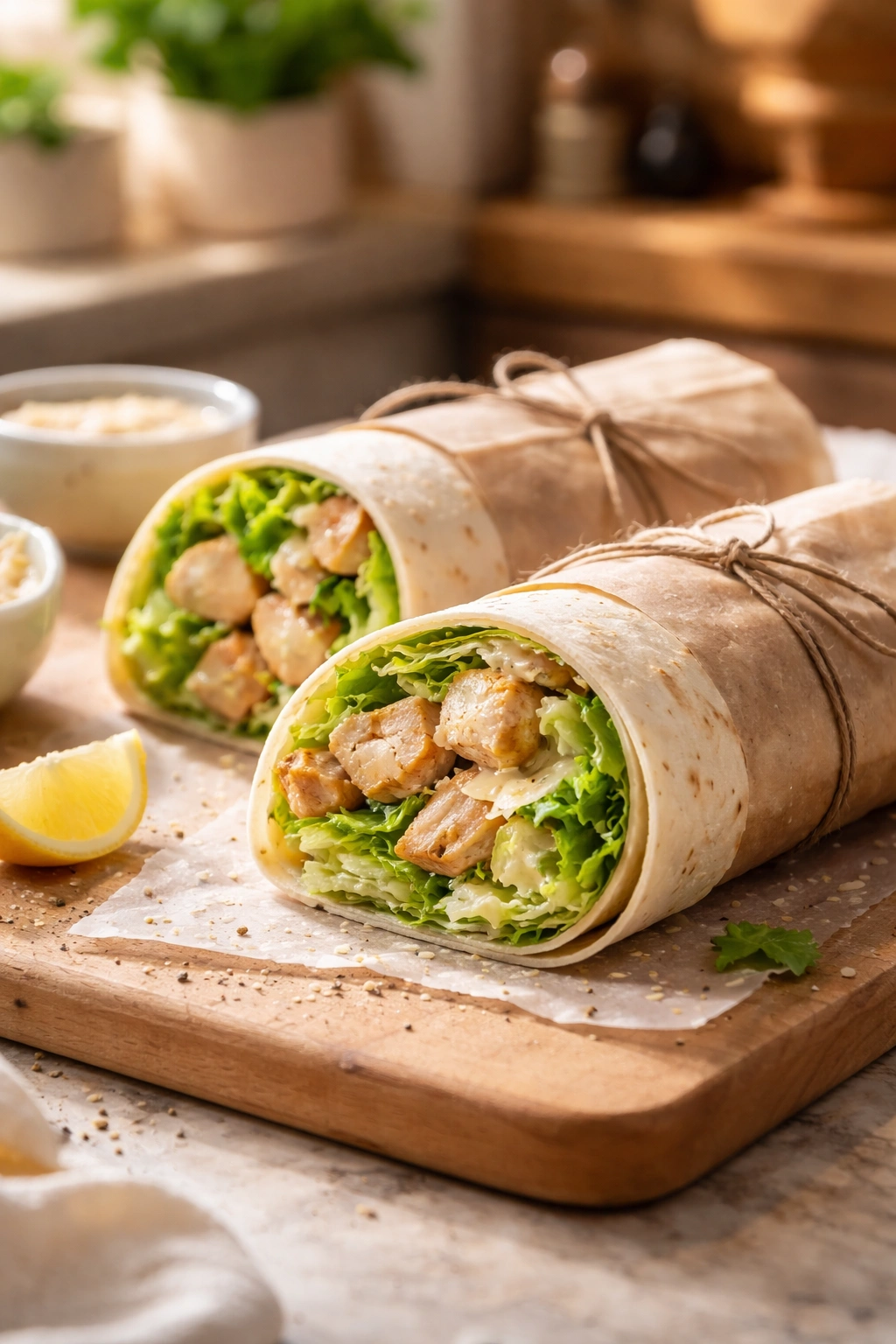
The magic of the 15-minute chicken Caesar wrap is that it proves you don’t need to sacrifice quality, nutrition, or satisfaction just because you’re short on time. These wraps deliver all three. They’re genuinely nutritious—lean protein, fresh vegetables, whole grains if you choose the right tortillas—without tasting like health food. They’re genuinely delicious, with the classic flavors of Caesar salad wrapped up in a format that’s actually convenient to eat. And they’re genuinely quick, requiring nothing more than assembly skills and a willingness to use quality prepared ingredients.
The next time you find yourself in that 5:30 p.m. moment where hunger is rising and your energy for cooking is depleting, remember that rotisserie chicken, a bag of salad, some cheese, and a tortilla are sitting in your kitchen waiting to transform into something genuinely impressive. You don’t need complicated recipes or hours in the kitchen to feed yourself or your family well. Sometimes the best meals are the simplest ones, made with intention and respect for your own time. Chicken Caesar wraps are that meal. Make them whenever you need something quick, satisfying, and genuinely delicious—which, let’s be honest, is probably more often than not.
