



Chia seeds absorb liquid and transform into a pudding with almost magical properties—thick, creamy, and studded with little pockets of flavor that burst on your tongue. But here’s the thing that changes everything: when you pair those seeds with fresh mango, you’re not just making breakfast. You’re creating something that tastes like a vacation in a bowl, something that feels indulgent enough for dessert but nutritious enough to fuel your whole morning. The creaminess comes not from dairy (though you can use it if you want) but from the natural richness of coconut milk, the tropical sweetness of ripe mango, and the way those tiny seeds work their alchemy overnight.
What makes a truly great mango chia pudding isn’t complicated—it’s all about choosing the right mango, getting the texture just right so it’s spoonable but not gluey, and layering in enough flavor that it doesn’t taste like something you’re eating because you “should.” The difference between a pudding that tastes fresh and tropical versus one that tastes thick and gritty comes down to technique, ingredient quality, and knowing exactly what to do the night before. This isn’t a recipe you’ll make once out of curiosity. It’s the kind of breakfast you’ll come back to again and again, especially when you realize how easy it actually is to prepare and how perfectly it fits into a make-ahead lifestyle.
Whether you’re meal-prepping for the week, looking for a no-cook breakfast that still feels special, or searching for something naturally sweetened and packed with omega-3s, this pudding hits all the marks. The beauty is in the simplicity—just a handful of quality ingredients that need about five minutes of hands-on time, then one night in the refrigerator. By morning, you’ve got breakfast handled, and it tastes like you spent far more effort than you actually did.
Why Mango Chia Pudding Becomes Your Go-To Breakfast
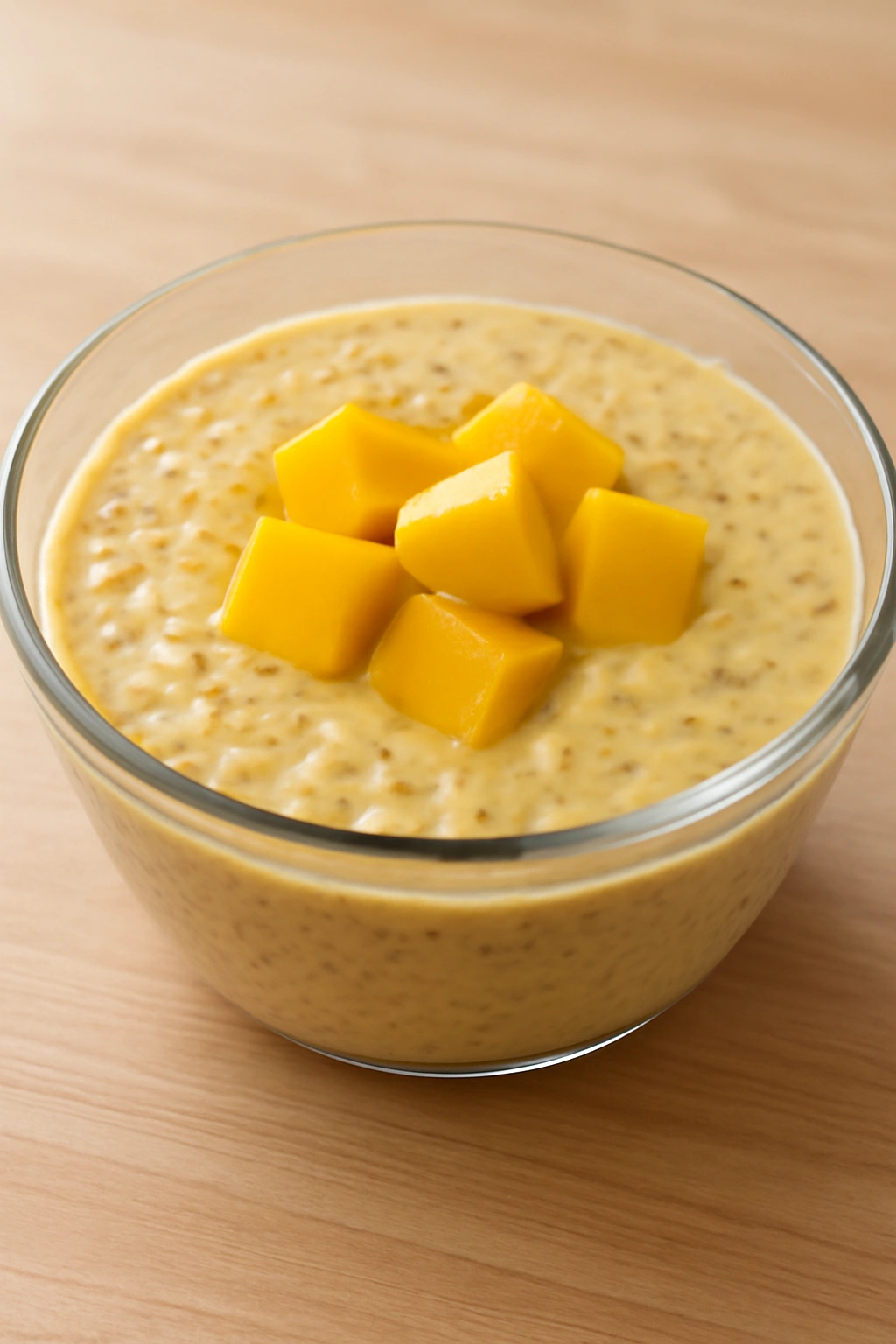
There’s a reason chia pudding has become a staple in kitchens everywhere, and it has nothing to do with trends. Chia seeds contain a type of soluble fiber that absorbs liquid and expands, creating a gel-like coating around each seed. This isn’t just texture for texture’s sake—it means your pudding becomes creamy and substantial without requiring cream, yogurt, or any heavy ingredients. You get the mouthfeel of something indulgent while keeping it light.
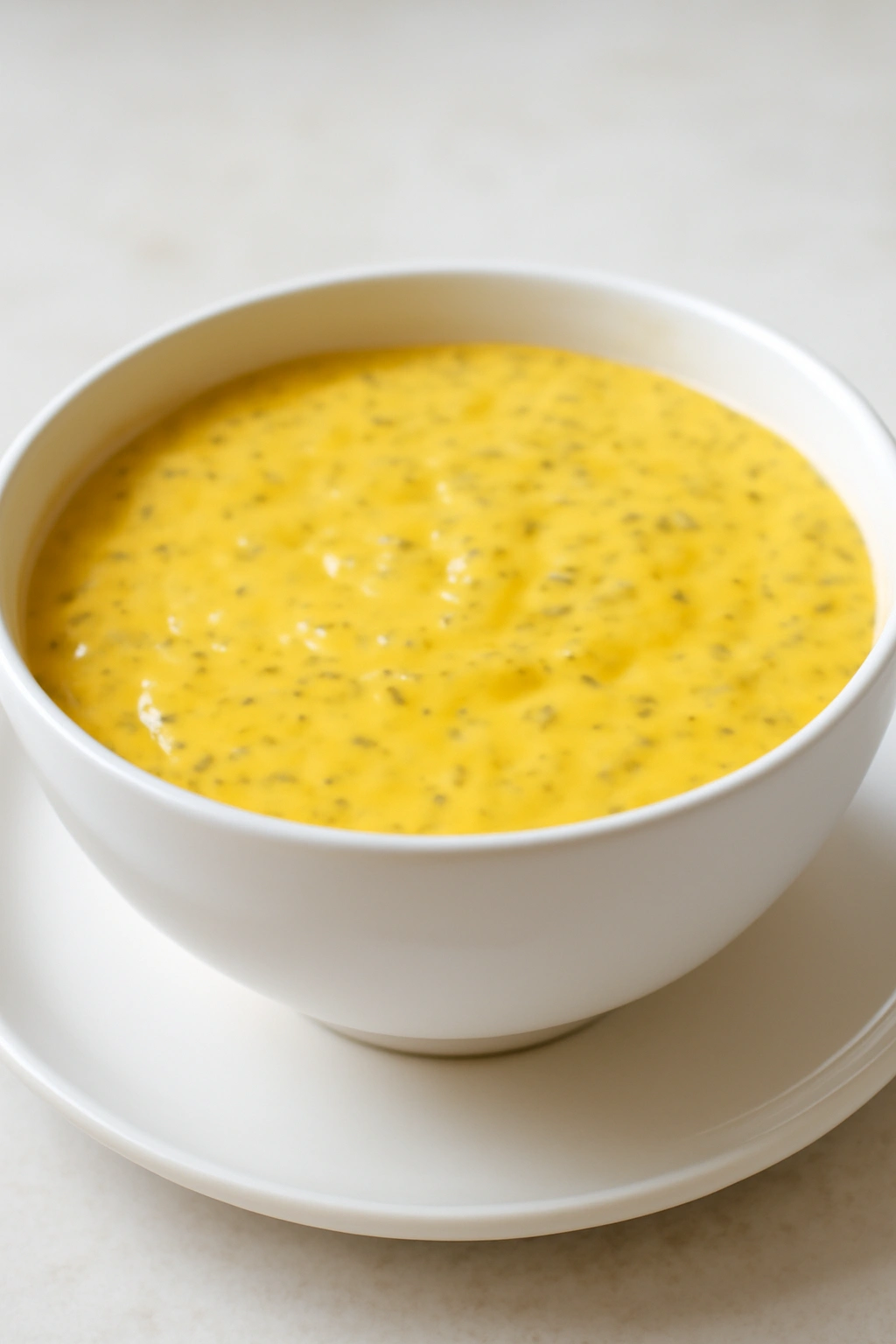
The mango part is equally important. Fresh mango brings a brightness and natural sweetness that balances perfectly with the earthiness of the seeds and the richness of coconut milk. Unlike heavier fruits, mango has an almost delicate flavor that doesn’t overpower—it complements. When you blend it into the pudding base, it creates a silky texture and a pale golden color that’s instantly appetizing.
What really seals the deal is how this breakfast actually works in real life. You make it the night before, store it in the fridge, and in the morning you’ve got a complete, nutrient-dense meal waiting for you. No cooking, no blending, no scrambling to put something together when you’re tired. Just spoon it into a bowl, grab some toppings if you want them, and eat something that tastes like a treat but is genuinely good for you. That’s breakfast done right.
The Nutritional Power of Chia Seeds in Your Morning Bowl
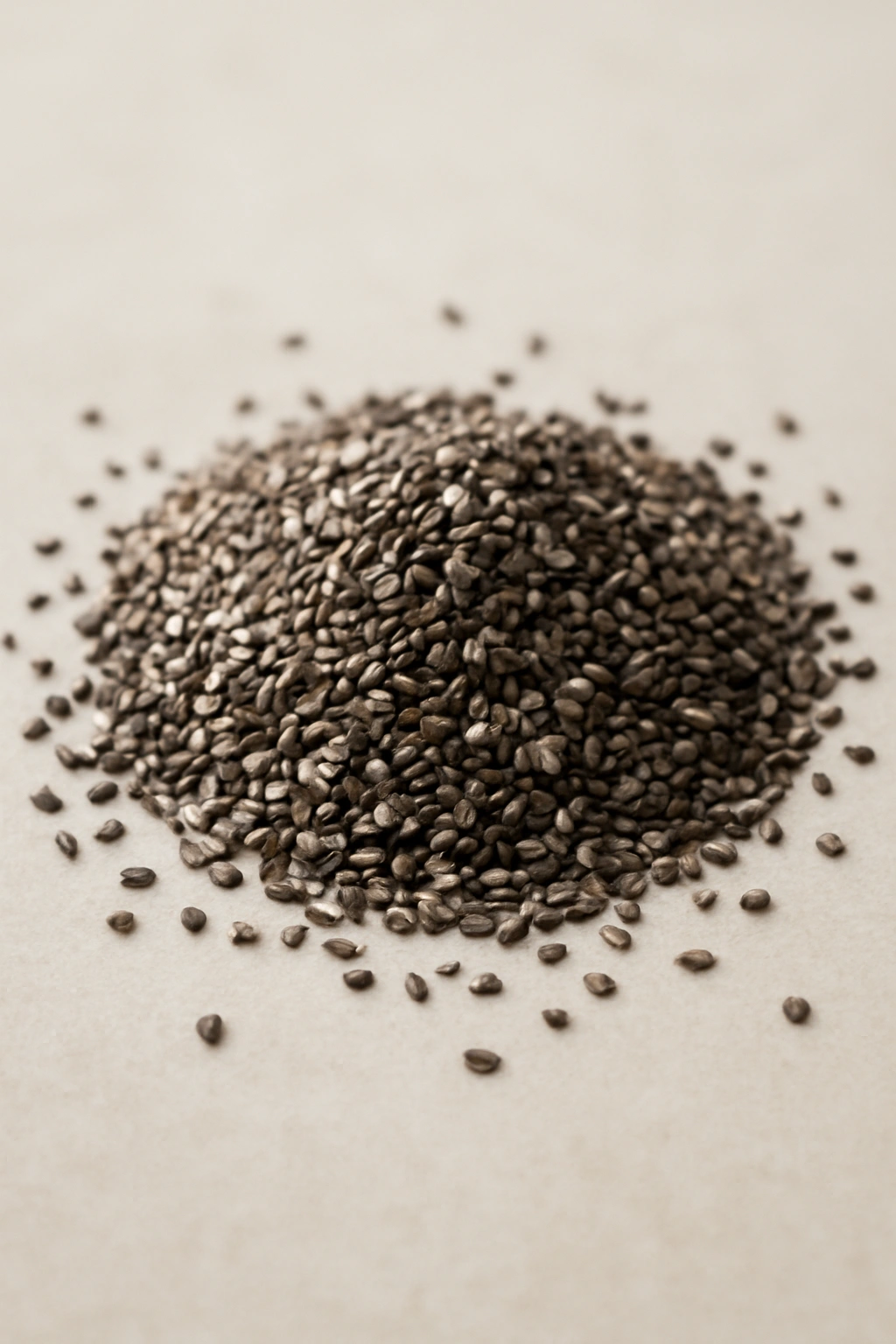
Chia seeds aren’t trendy because they taste amazing—they’re trendy because of what they actually do for your body. These tiny black seeds are packed with omega-3 fatty acids (the kind usually found in fish), fiber that keeps you full for hours, protein that helps stabilize blood sugar, and minerals like magnesium and calcium. A single serving of chia pudding delivers meaningful amounts of all of these without tasting medicinal.
The way chia seeds slow down digestion is part of what makes them so effective for breakfast. That soluble fiber creates a gel that moves through your digestive system gradually, which means you’re not hit with a blood sugar spike followed by a crash two hours later. Instead, you get sustained energy that carries you through to lunch without the 10 a.m. snack cravings. This is especially important if you’re someone who used to think breakfast had to be carb-heavy and leave you starving by mid-morning.
The fiber content is another game-changer that often gets overlooked. Most people don’t get nearly enough fiber in their diet, and chia seeds make it effortless to add more without any effort or weird texture issues. A quarter cup of chia seeds—roughly what goes into one serving of pudding—contains about 10 grams of dietary fiber. That’s a substantial portion of your daily target, and it’s coming from something that doesn’t taste like cardboard. Your gut is genuinely grateful for this breakfast.
Choosing the Perfect Mango for Creamy, Sweet Pudding
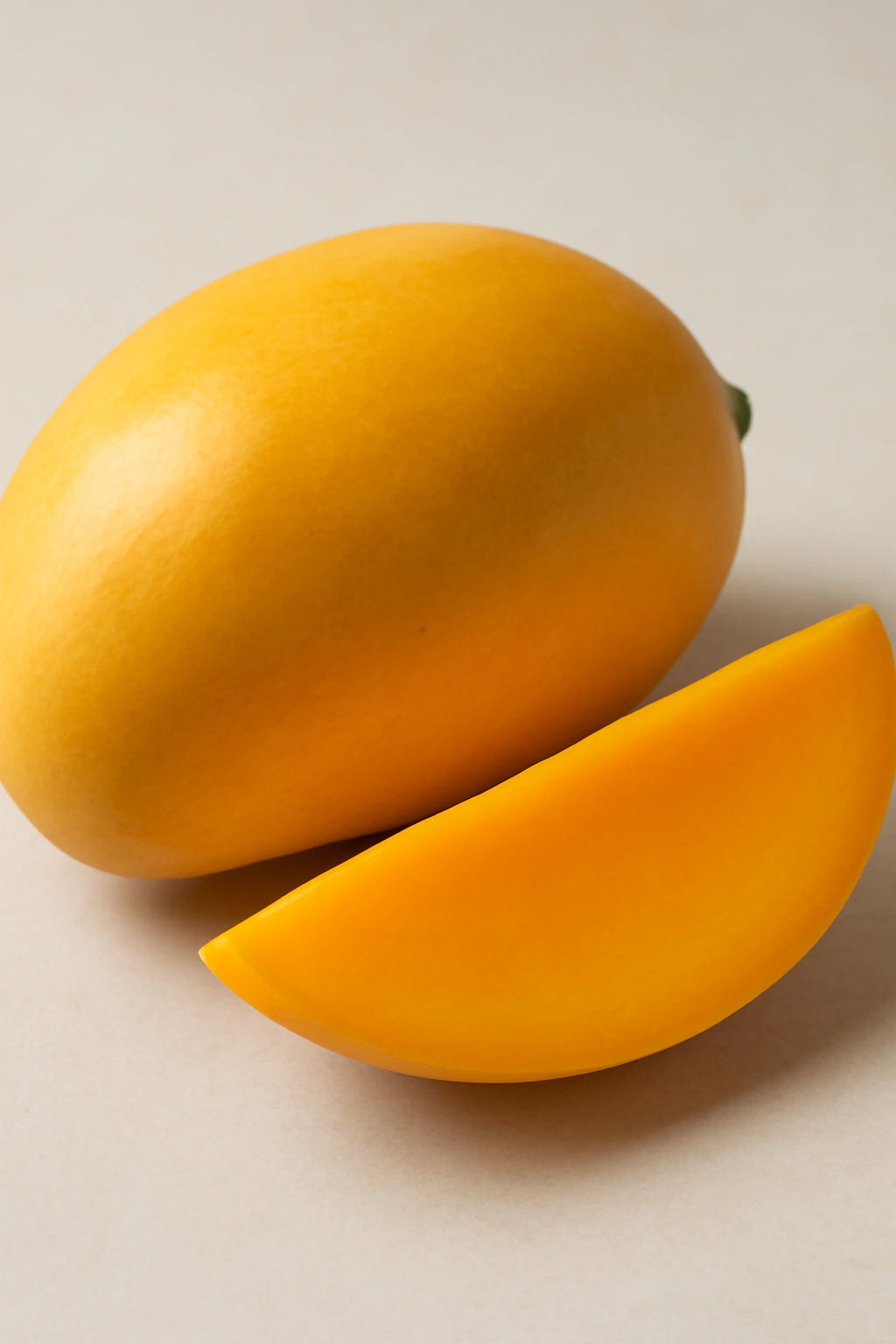
Not all mangoes are equal, and the quality of your mango directly affects the final pudding. What you’re looking for is a mango that’s ripe but not overripe—soft enough to yield slightly when you press it gently, but still firm enough that it has structure and flavor. An overripe mango tastes mushy and loses some of that bright, complex sweetness that makes this pudding sing.
The variety matters too. Ataulfo mangoes are small, buttery, and intensely sweet—they make incredible pudding. Champagne mangoes are another excellent choice, with a subtle flavor that’s neither too mild nor overpowering. Haden mangoes work well if you can’t find the smaller varieties. What you want to avoid are those massive, fibrous mangoes that are better suited to eating fresh with a spoon—they tend to be watery and less flavorful when blended.
Here’s a practical trick: ripeness isn’t just about the color. A ripe mango should have a sweet aroma near the stem end, and when you hold it, it should feel heavy for its size—that density indicates juiciness and sugar content. If a mango smells like nothing, it doesn’t matter if it looks perfect; it won’t make good pudding. Buy your mangoes a day or two before you plan to make the pudding and let them sit on the counter—they’ll develop more flavor and sweetness as they ripen. The moment they reach that perfect point, store them in the fridge to stop the ripening process until you’re ready to use them.
The Essential Ingredients That Make This Pudding Work
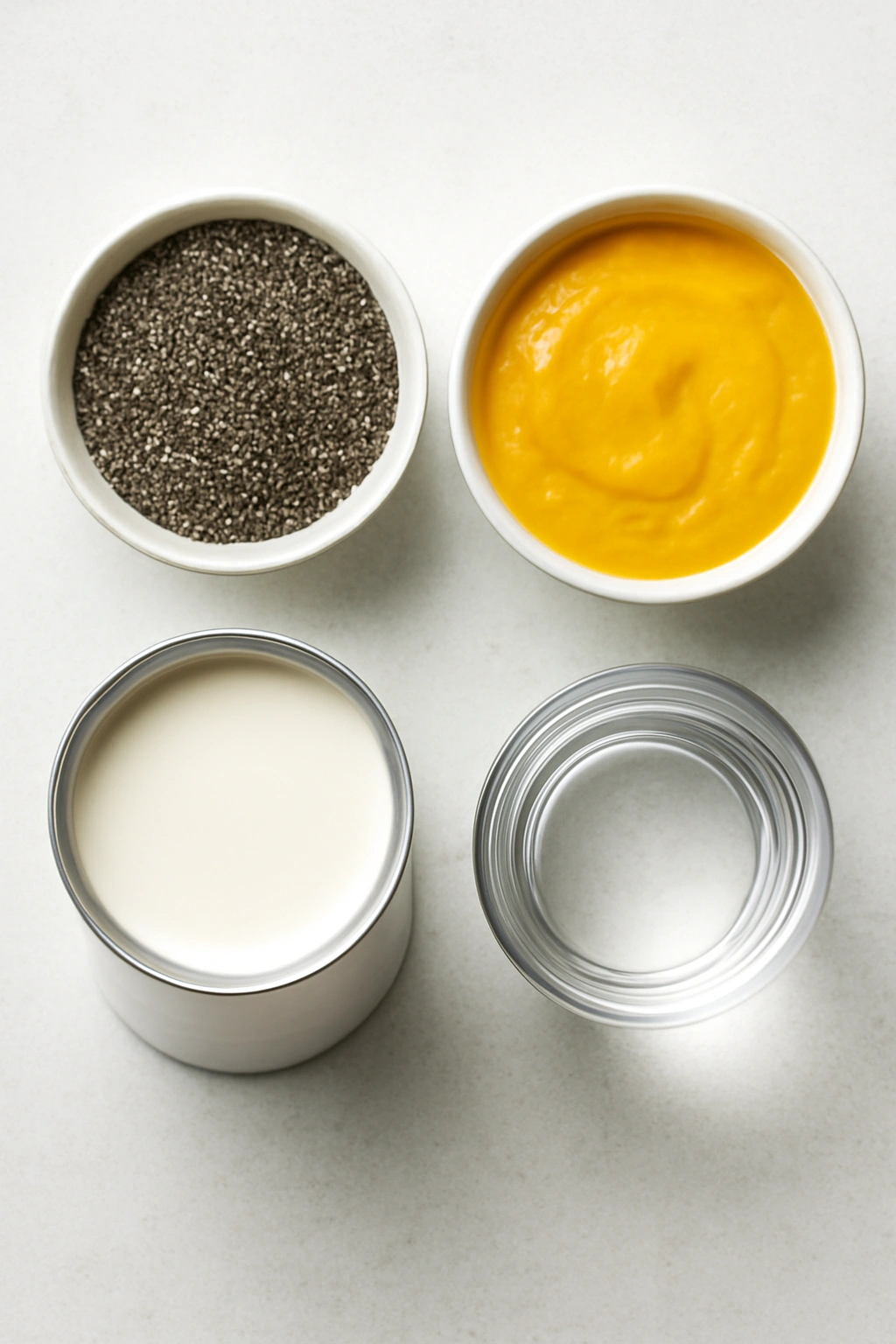
The core of great mango chia pudding is just four ingredients: chia seeds, mango, coconut milk, and liquid. But choosing the right versions of each one changes everything. For chia seeds, buy whole black chia seeds and avoid pre-ground versions, which lose nutritional value over time. Store them in an airtight container away from heat and light—they’ll keep for months, but fresh seeds taste better and have better texture.
Coconut milk is where a lot of recipes go wrong. The canned variety works, but you need to understand that the thick cream that settles at the top is separate from the thinner liquid below. For pudding, you want to shake the can thoroughly to incorporate the cream and liquid, creating a consistent medium that gives you proper texture without being gluey. If you’re dairy-free or vegan, this is your richness. If you prefer using dairy milk mixed with regular yogurt, that works beautifully too—the yogurt adds both creaminess and tang that balances the sweetness.
For the liquid, use what makes sense for your diet. Water works and lets the mango flavor take center stage. Coconut water adds subtle sweetness and electrolytes. Regular milk (dairy or nondairy alternatives like oat or almond) adds creaminess. What matters is that your total liquid-to-seed ratio is right—too much and you get soup, too little and you get paste. The standard ratio is roughly 1 part chia seeds to 3-4 parts liquid, depending on how thick you like your pudding and how much coconut milk is in your mixture.
Yield, Prep Time, and Difficulty Level
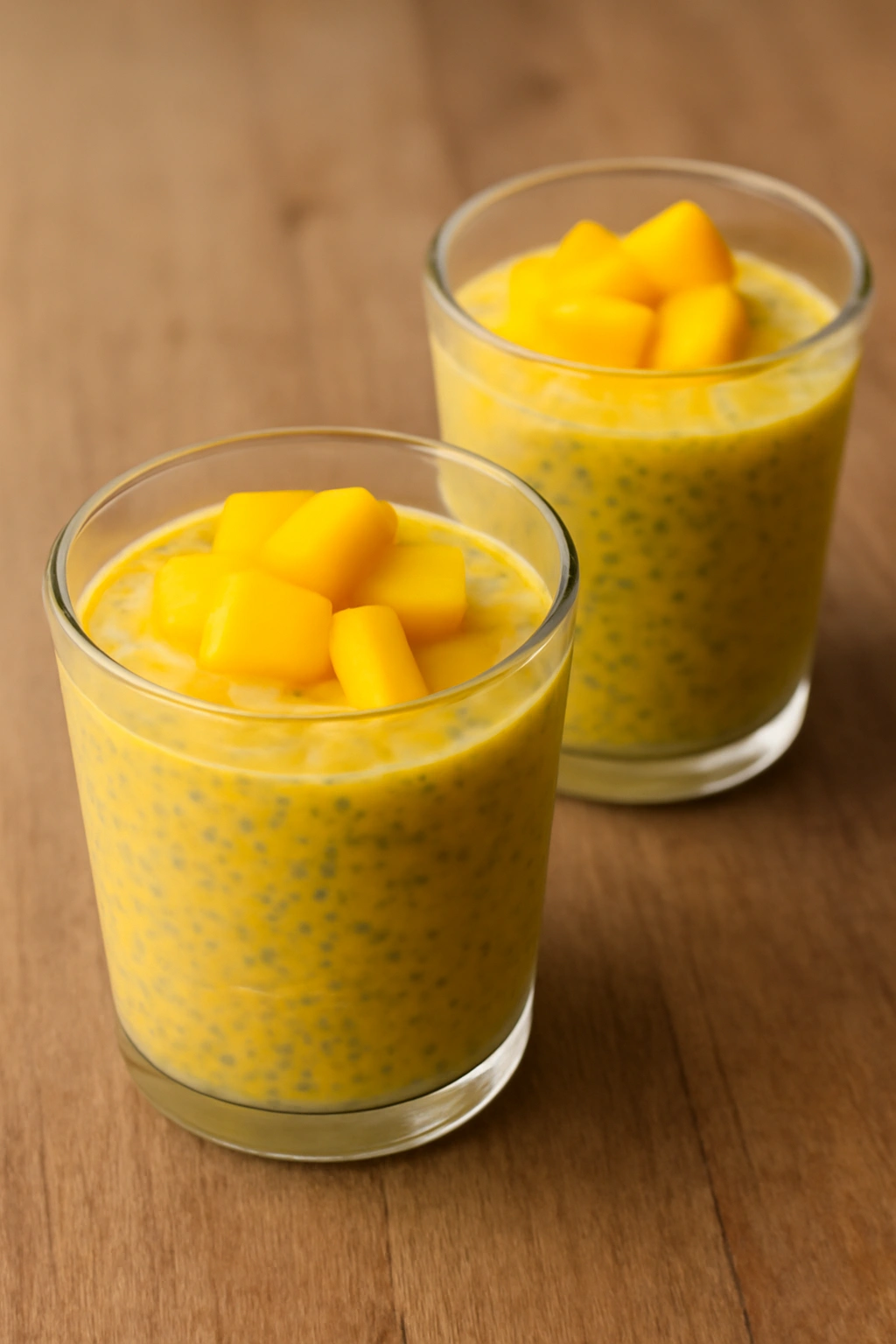
Yield: Serves 2 | Makes approximately 2 cups of pudding
Prep Time: 10 minutes (hands-on time only—no chilling)
Cook Time: None — this is a no-cook recipe
Total Time: 10 minutes active + 4 hours minimum chilling (or overnight refrigeration, which is ideal)
Chill/Rest Time: This pudding requires at least 4 hours in the refrigerator to reach proper consistency, though overnight is recommended. The chia seeds continue absorbing liquid gradually, so if you taste it after 4 hours and it seems too thin, let it sit another 2-3 hours. By morning (8-12 hours in), the texture is absolutely perfect.
Best Served: Fresh and cold, straight from the refrigerator. This pudding is best eaten within 2 days of making for optimal texture and flavor, though it keeps safely for up to 5 days.
Difficulty: Beginner — There’s genuinely no way to mess this up. No cooking involved, no special equipment required, and the ingredient measurements are forgiving. If you can measure and stir, you can make this perfectly every time.
Complete Ingredient List
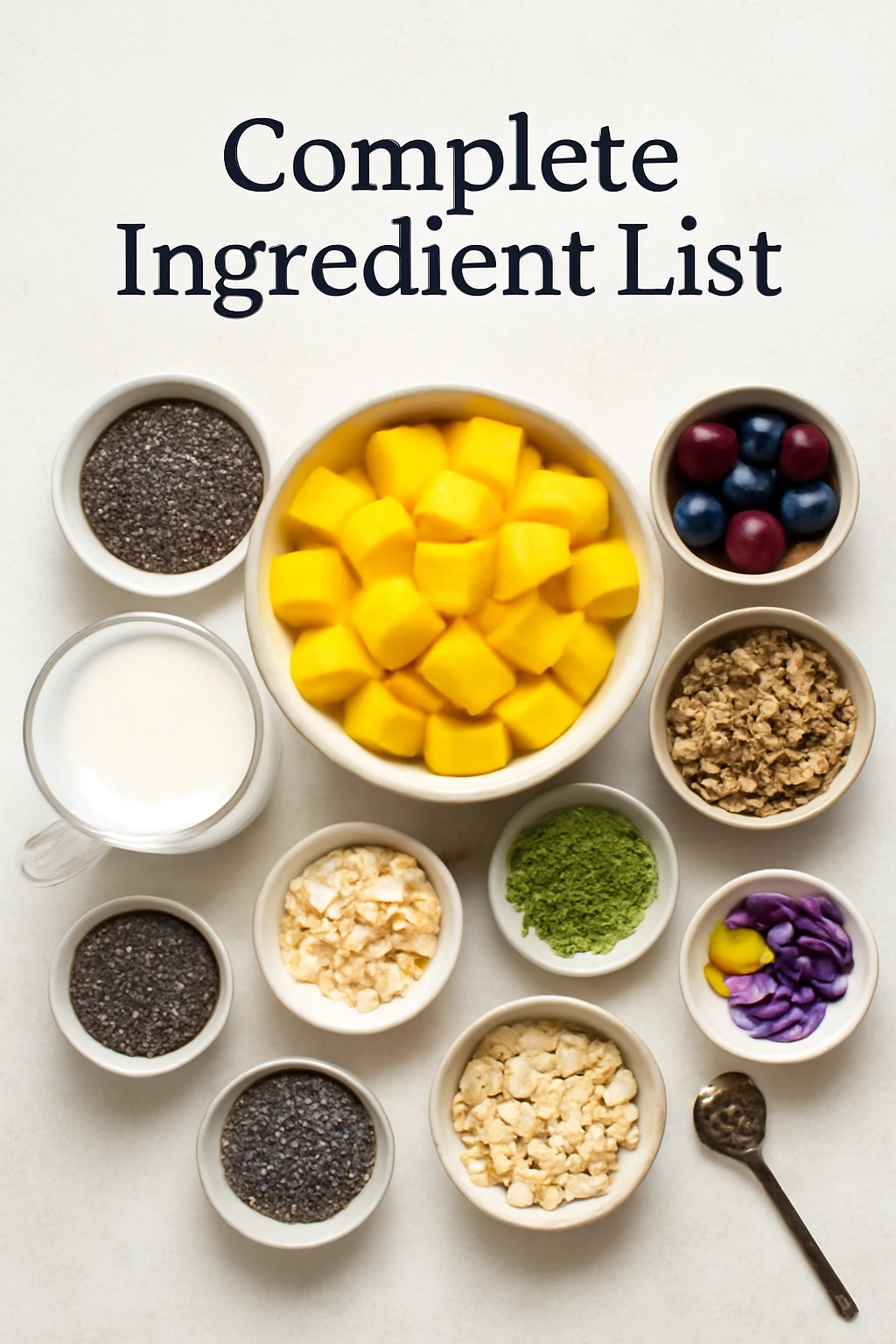
For the Pudding Base:
- ½ cup chia seeds (whole black chia seeds only)
- 1 cup fresh mango puree (from 1 large ripe mango or 2 medium mangoes, roughly 12 ounces of fruit flesh)
- 1 cup unsweetened coconut milk (full-fat canned, shaken thoroughly)
- ¾ cup liquid of choice (coconut water, whole milk, oat milk, almond milk, or filtered water)
- 2 tablespoons pure maple syrup or raw honey (optional, depending on mango sweetness)
- ½ teaspoon pure vanilla extract
- Pinch of fine sea salt
For Topping (Optional but Highly Recommended):
- Fresh diced mango
- Toasted coconut flakes (unsweetened or lightly sweetened)
- Granola of choice (ideally something with coconut, almonds, or macadamia nuts)
- Fresh berries (raspberries or blueberries pair beautifully)
- Sliced almonds or macadamia nuts
- Extra chia seeds
- Fresh lime zest
- Edible flowers (optional, for special breakfasts)
Optional Flavor Variations in the Base:
- 1 to 2 tablespoons fresh lime juice (adds brightness without thinning the pudding too much)
- 1 teaspoon unsweetened coconut extract (deepens the tropical flavor)
- ¼ teaspoon ground cardamom (adds warmth and sophistication—optional but worth trying)
- 1 tablespoon fresh ginger juice or ¼ teaspoon ground ginger (adds subtle spice)
- 3 to 4 fresh mint leaves, finely chopped (adds freshness)
Step-by-Step Instructions for Perfect Creamy Pudding
Prepare the Mango:
-
Select a ripe mango that yields slightly to gentle pressure and has a sweet aroma near the stem. Rinse under cool water, then pat completely dry with a clean kitchen towel.
-
Hold the mango upright with the stem pointing up. Using a sharp vegetable peeler or a knife, carefully remove the skin in long, thin strips, working from top to bottom and rotating the mango as you go. You may need to peel in sections if the skin is thick or the mango is particularly round. The goal is to remove all of the skin without wasting the precious flesh underneath.
-
Once the skin is removed, hold the mango horizontally over a measuring cup or bowl. Using a sharp knife, slice down along one side of the flat pit in the center. Repeat on the other side—you now have two large pieces. These outer pieces contain the most flesh and are the easiest to work with.
-
Using a sturdy spoon or melon baller, scoop the flesh away from the outer edges where the mango meat is thickest. If you see a thin layer of flesh still clinging to the pit, slice that away as well. (Don’t discard the pit—you can trim any remaining fruit from it for your puree.)
Advertisements -
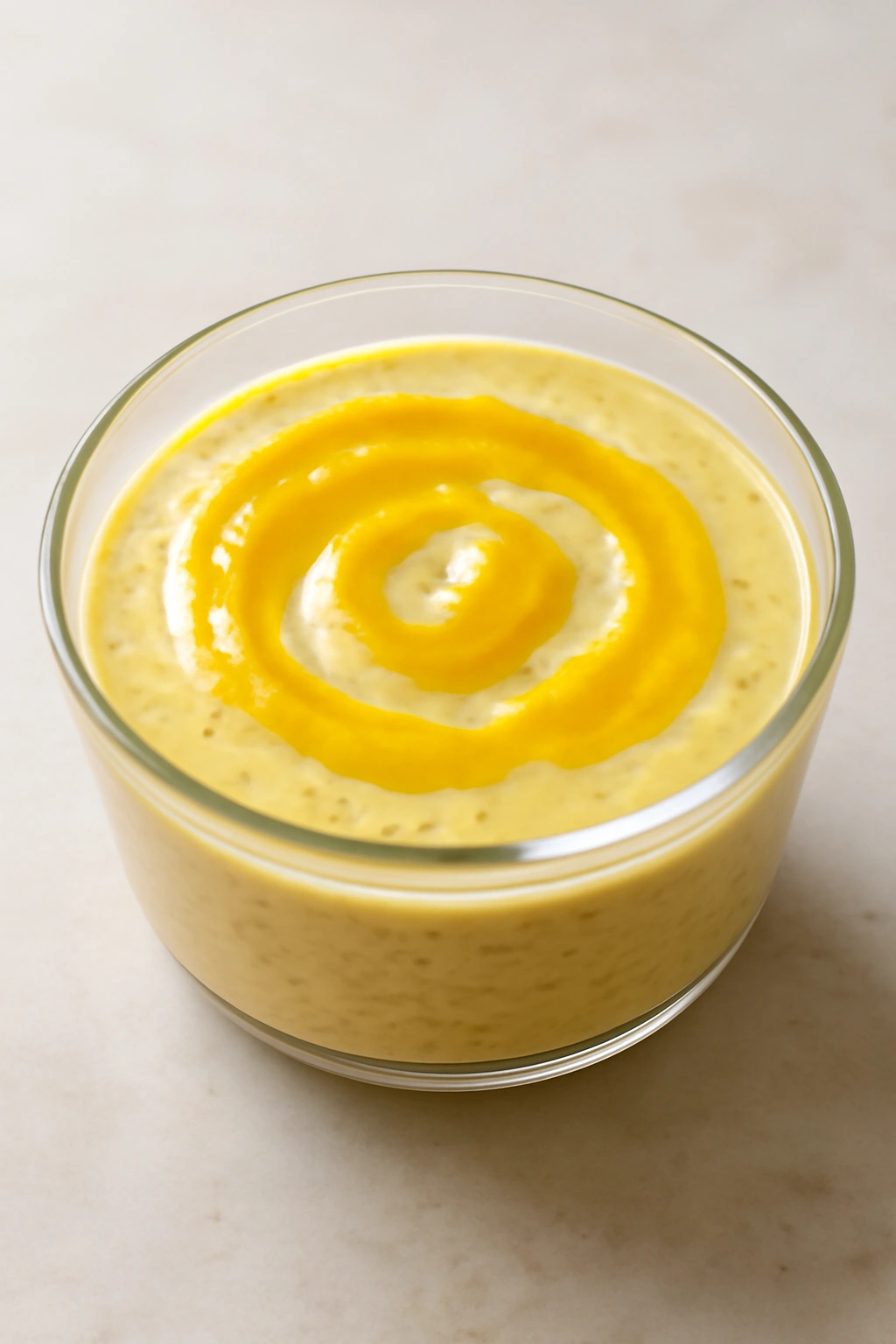
Cut the mango flesh into rough chunks, roughly 1-inch pieces. Transfer to a blender or food processor. You need approximately 1 cup of blended mango puree, which typically comes from 1 large mango or 2 medium mangoes. Blend on high speed for 30 to 45 seconds, until completely smooth with no visible chunks or fibers. The puree should be silky and uniform in color. Strain through a fine-mesh sieve if you prefer to remove any fiber, though most blenders will create a smooth enough puree that straining is unnecessary.
Mix the Pudding Base:
-
Pour the mango puree into a medium mixing bowl or a quart-sized mason jar (the jar method is ideal for storage and makes chilling easier).
-
Add the coconut milk, ¾ cup of your chosen liquid, chia seeds, vanilla extract, and a small pinch of fine sea salt. Do not add sweetener yet. Taste the raw mixture—if the mango is very sweet (which it often is), you likely don’t need any additional sugar. If it tastes a bit flat or bland, add 1 to 2 tablespoons of maple syrup or honey.
-
Using a whisk or fork, stir vigorously for 1 to 2 minutes. This is more important than it sounds. Whisking breaks up any clumps of chia seeds and ensures they’re evenly distributed throughout the liquid. Chia seeds have a slight tendency to clump together, and whisking prevents them from settling into a solid mass at the bottom. You’ll notice the mixture becoming slightly thicker as you stir—this is the chia seeds beginning to absorb liquid.
-
Add any optional flavor variations you’re using—lime juice, cardamom, ginger, mint, or coconut extract. Whisk again for 30 seconds to fully incorporate.
-
Cover the bowl or jar and refrigerate immediately. Do not leave the pudding at room temperature. It needs cold temperatures to set properly and to maintain food safety, especially if using dairy products.
Chill and Check Consistency:
-
Let the pudding sit undisturbed in the refrigerator for at least 4 hours. For the best texture and flavor, chill overnight—8 to 12 hours is ideal. During the first hour of chilling, you can give it a quick stir if you want to redistribute the seeds, but this step is optional since the pudding will eventually reach an even consistency regardless.
-
After 4 hours, remove the pudding from the refrigerator and give it a thorough stir. If it seems too thin, return it to the fridge for another 1 to 2 hours and stir again. If it seems too thick or gluey, stir in an extra 1 to 2 tablespoons of your chosen liquid to reach the consistency you prefer. Pudding consistency preferences vary—some people love it thick enough to stand a spoon in, while others prefer a more pourable texture. There’s no wrong answer here; adjust to your taste.
Advertisements -
Once the pudding reaches your desired consistency, it’s ready to serve. It’s best eaten within 2 days, though it keeps safely in the refrigerator for up to 5 days. The texture gradually thickens as it sits because the chia seeds continue to absorb liquid over time. If you notice it’s getting too thick after a day or two, add a splash of milk or water when serving.
Serve and Enjoy:
- Spoon the pudding into bowls or glasses. If you’re making a pretty breakfast or want maximum flavor, top with fresh diced mango, toasted coconut flakes, a handful of granola, and fresh berries. A sprinkle of lime zest or a few fresh mint leaves adds brightness and elevates the whole bowl.
The Secret to Creamy Texture Without Dairy
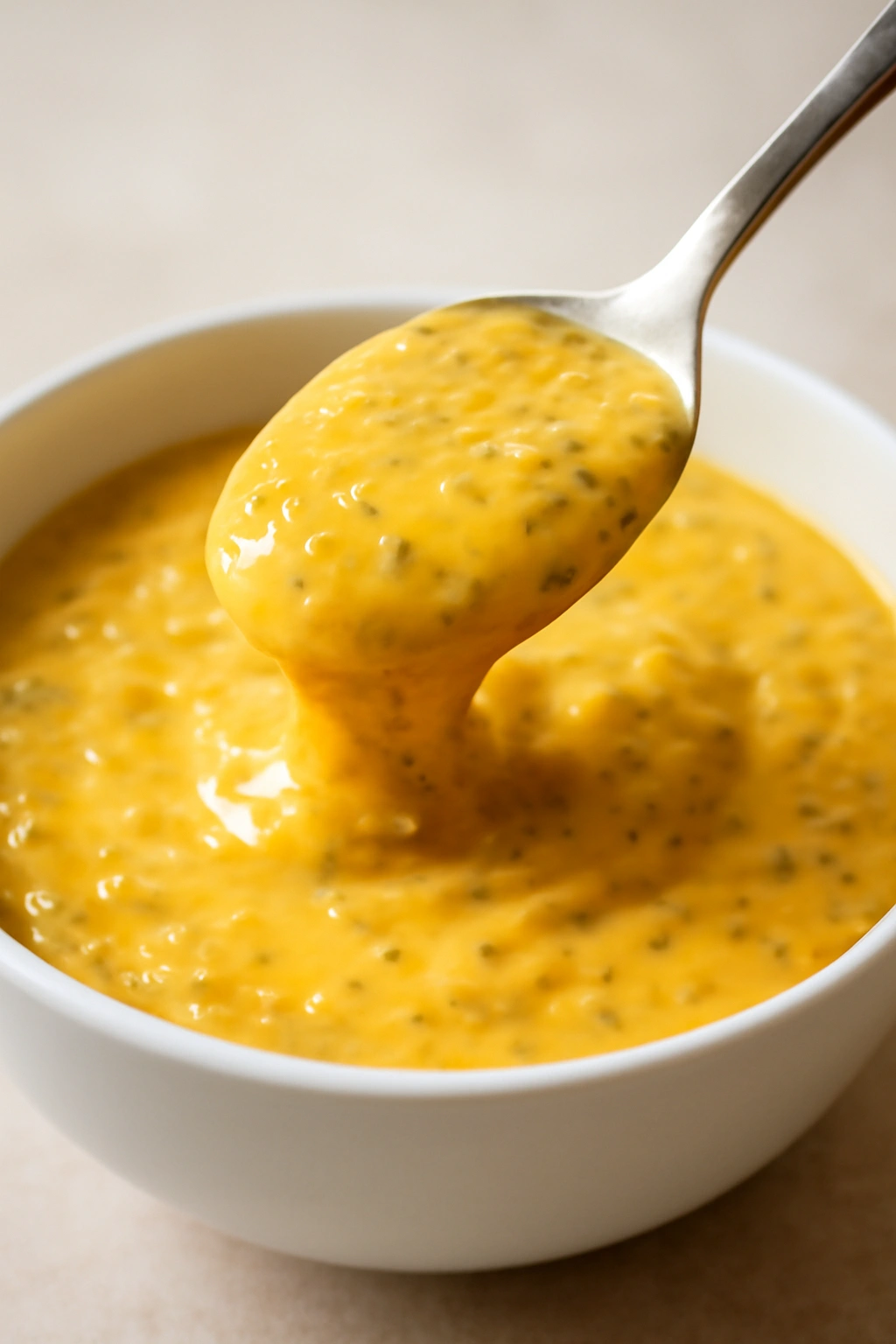
The texture question comes up constantly with chia pudding: how do you get it creamy without using cream or yogurt? The answer is understanding what creates creaminess in the first place. It’s not necessarily fat, though fat definitely helps. It’s also viscosity and mouthfeel—the way a food feels as you eat it.
Chia seeds create a gel coating that makes the pudding feel luxurious and thick. Coconut milk (especially full-fat versions) adds richness and actual creaminess. Mango puree adds body and smoothness without adding dairy. When you combine all three, you get something that tastes and feels genuinely creamy, even though there’s not a drop of dairy in sight. The ratio of these ingredients matters—that’s why getting the liquid-to-seed ratio right in the first place is so important.
If you want to boost creaminess even further, use regular full-fat coconut milk from a can. Shake the can well before opening so that the thick cream blends with the thinner liquid. If you’re using a carton of coconut milk (the shelf-stable drink kind), understand that it’s much thinner than canned and may require you to reduce other liquids slightly to get the right texture.
Common Mistakes That Lead to Gluey or Thin Pudding
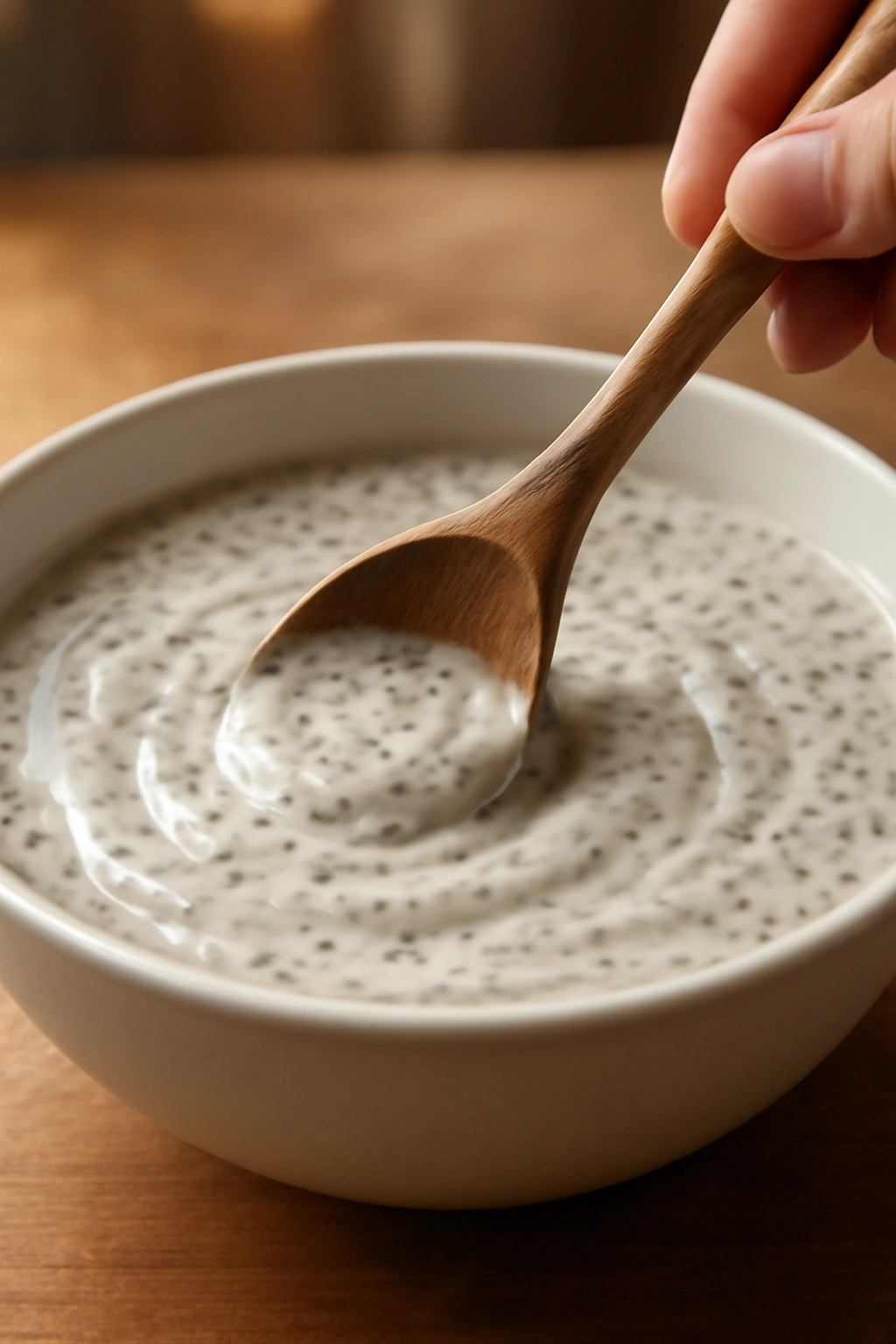
The most common mistake is adding the chia seeds to the liquid and immediately walking away without stirring. When you do this, the seeds sink to the bottom and absorb liquid from below, creating a thick mass at the bottom and thin liquid on top. A vigorous stir during the first few minutes of mixing prevents this entirely. You only need to stir for a minute or two—this isn’t something you need to monitor constantly.
Another frequent issue is not shaking the coconut milk before using it. The can naturally separates into a thick cream layer and a thin liquid layer. If you only use the liquid part without the cream, your pudding will be too thin and lacking that essential richness. Shake the can thoroughly, or better yet, place it upside down in the refrigerator for 15 minutes before opening—this helps redistribute the cream throughout. Open it and pour the entire contents into your bowl.
Under-chilling is sneakier than you’d think. The pudding seems fine after 4 hours, but by morning (after 10 to 12 hours), it’s noticeably thicker and creamier. If you’re tasting it after only 4 hours and finding it too thin, resist the urge to add more chia seeds or thickener. Just let it sit longer. The seeds are still doing their job; they need a bit more time.
Temperature matters too. Room-temperature pudding sets much more slowly than cold pudding. If you’re short on time and tempted to skip the refrigeration, don’t. Cold temperatures speed up the gelling process noticeably. The pudding won’t set properly at room temperature—it’ll just separate.
Flavor Variations and Adaptations to Keep Things Fresh
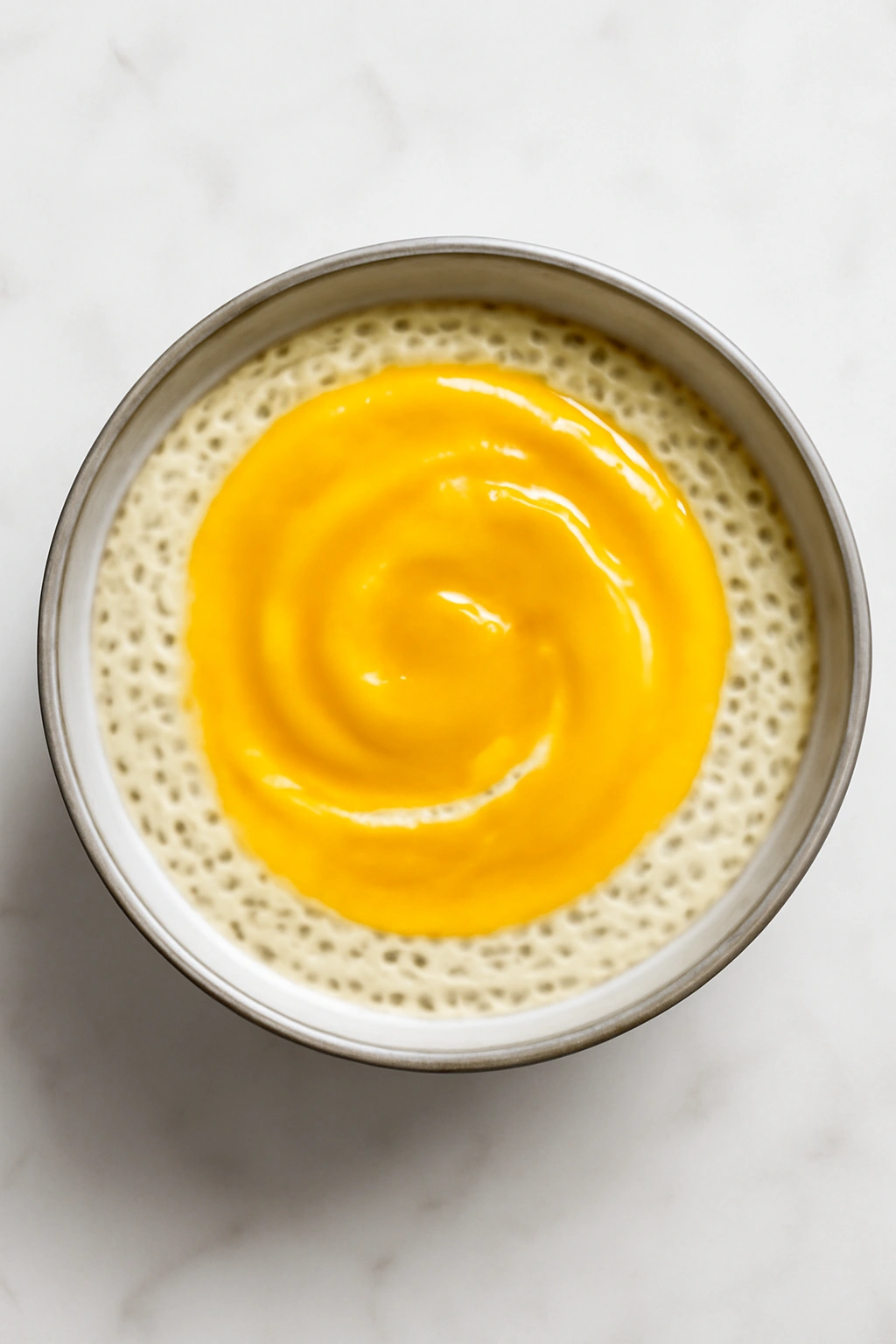
Mango is the star, but it’s not your only option. Passion fruit pudding is absolutely divine—use 1 cup of fresh passion fruit pulp (about 8 to 10 fruits) in place of the mango, and reduce the other liquid slightly since passion fruit is quite juicy. The tartness creates an entirely different character—brighter, more sophisticated, and deeply tropical.
Pineapple-mango swirl is another winner. Use ¾ cup mango puree and ¼ cup fresh pineapple puree. The pineapple adds tartness and another layer of tropical flavor. Bromelain (the enzyme in pineapple) can theoretically prevent chia seeds from gelling properly, but in practice, using just a small amount of pineapple doesn’t cause any issues. Make sure your pineapple is blended and strained to remove most of the fiber, and reduce your other liquid by 2 to 3 tablespoons to compensate for the liquid content.
Coconut-mango with cardamom leans into the tropical-warm spice direction. Add ½ teaspoon of ground cardamom to the base, increase the coconut milk to 1¼ cups, and reduce the mango to ¾ cup. This creates a more subtle mango flavor and a more prominent coconut-spiced character. It tastes almost like dessert.
Spiced mango with ginger uses 1 cup of fresh mango puree plus 2 teaspoons of fresh ginger juice (grated ginger, squeezed through cheesecloth) and a tiny pinch of cayenne pepper for warmth. This version is excellent if you love the flavor of mango lassi.
Dairy version for creamier texture: If you want to use dairy, replace the coconut milk with 1 cup of whole milk or heavy cream (use a mix of both if you prefer), and replace the liquid with ¾ cup of full-fat Greek yogurt mixed with ¼ cup milk. This creates a tangy, ultra-creamy pudding.
Vegan coconut cream pudding: Use full-fat coconut milk (canned, shaken), add 1 tablespoon of raw coconut oil (melted and mixed in thoroughly), and use coconut water or fresh coconut milk as your liquid. This is the richest non-dairy version.
Storage, Make-Ahead Options, and How Long It Keeps
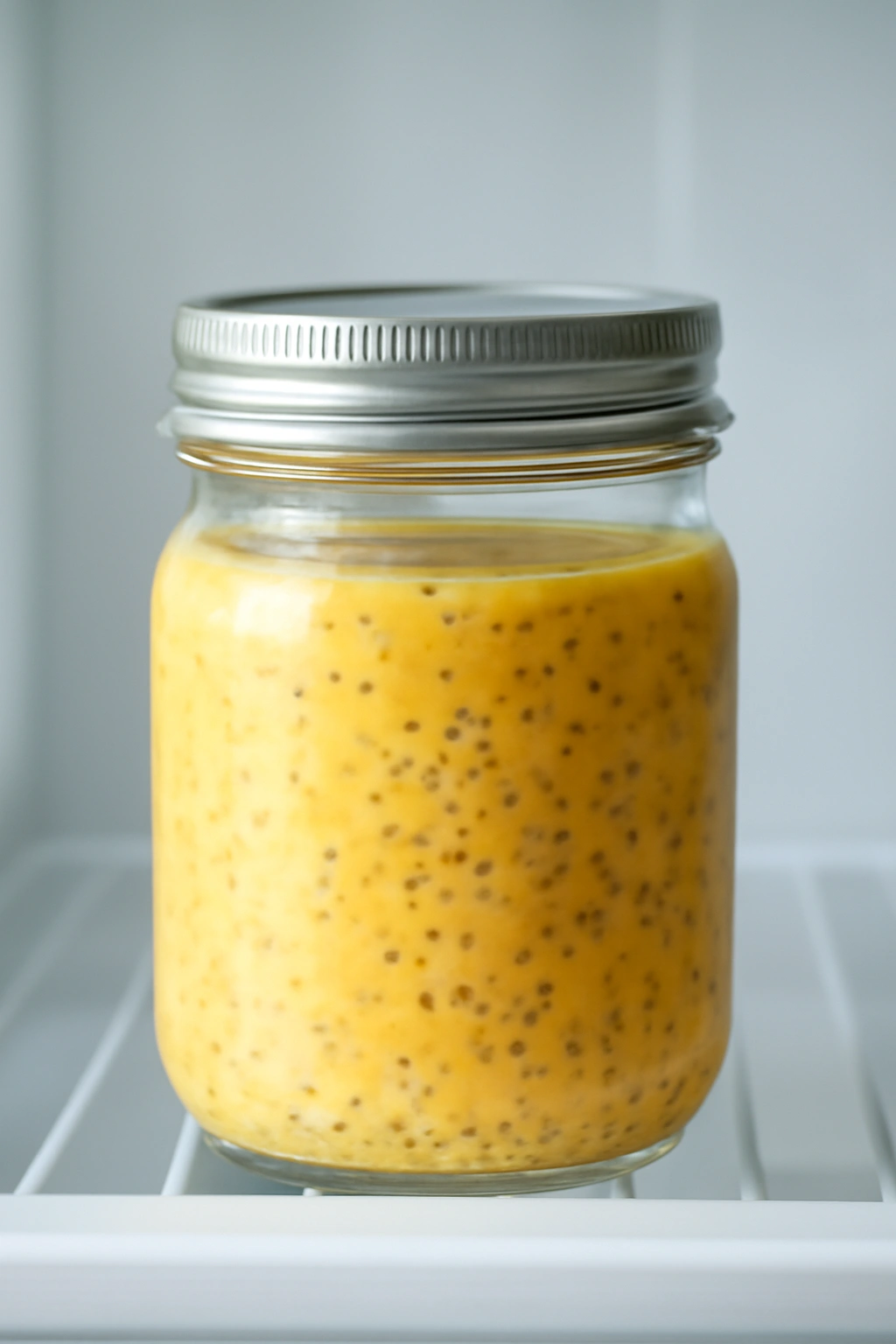
The pudding keeps beautifully in the refrigerator for up to 5 days, stored in an airtight container or covered bowl. As it sits, the chia seeds continue absorbing liquid very gradually, so the texture thickens slightly with each passing day. By day 3 or 4, you may notice it’s gotten denser. This isn’t spoilage—it’s just the nature of the recipe. If it’s too thick, stir in a splash of milk to reach your preferred consistency. This is completely normal and totally fine.
You can absolutely make pudding up to 5 days in advance, making it the perfect breakfast for meal-prepping. Divide it into individual mason jars or containers for grab-and-go breakfasts. The pudding won’t separate or degrade, and each morning you just pull one from the fridge, add toppings if desired, and eat.
Freezing is possible but not recommended for the pudding itself. Chia pudding’s texture doesn’t hold up well to freezing and thawing—the chia seeds’ gel coating becomes weird and grainy. However, you can freeze fresh mango puree to use later. Blend ripe mango, pour it into ice cube trays, freeze solid, then transfer to freezer bags. Use these cubes within 3 months. Thaw them in the refrigerator and use just like fresh puree.
The toppings benefit from a different strategy. Don’t top the pudding before storing it—granola gets soggy, nuts lose their crunch, and fresh fruit softens. Store the pudding plain in the fridge, and add your favorite toppings each morning. This takes literally 2 minutes and ensures every bowl tastes fresh and has the texture you want.
Serving Suggestions and Pairing Ideas
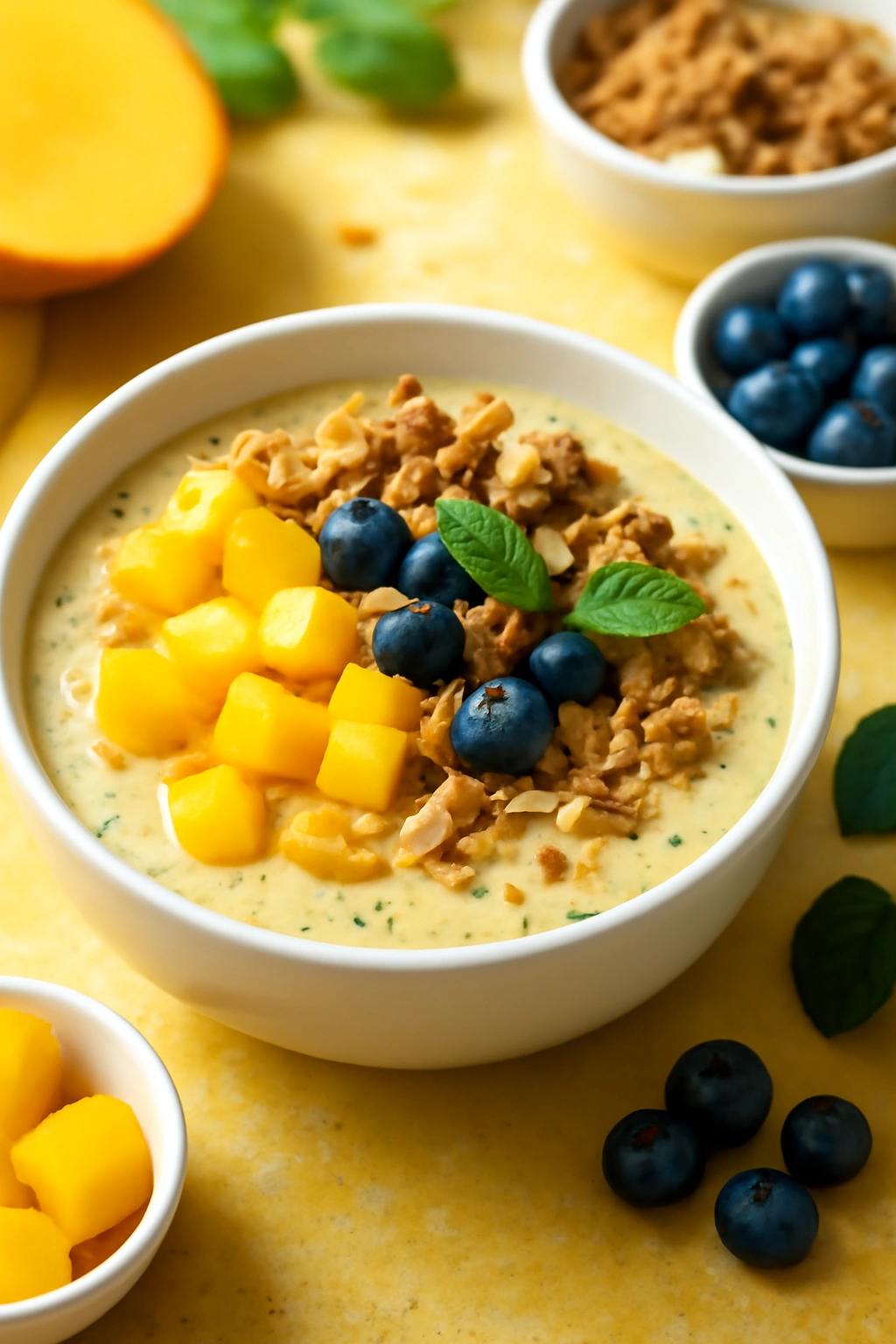
The simplest way to serve this pudding is exactly as it is, with nothing but a spoon. It’s dessert for breakfast, and it needs nothing else. But if you want to elevate it into something even more special, fresh toppings make all the difference. Fresh diced mango is the obvious choice—it reinforces the star flavor and adds brightness. Toasted unsweetened coconut flakes add crunch and deepen the tropical angle. Granola (especially varieties with nuts and seeds) creates textural contrast and makes the whole bowl feel more substantial.
Fresh berries—raspberries, blueberries, or blackberries—are refreshing and add tartness that balances the sweetness. They’re especially nice if you’re concerned that the pudding feels too rich or too sweet on its own. Sliced almonds or macadamia nuts add substance and protein, making the breakfast more filling. A pinch of lime zest right before eating adds brightness and elevates the tropical flavor significantly.
If you’re making this for a special brunch, consider serving it in a clear glass or a pretty bowl so the beautiful pale golden color shows through. Garnish with a fresh mint leaf, edible flowers, or a tiny mango cube on top. The pudding itself looks beautiful—it deserves a presentation that matches.
Pairing it with other breakfast foods: A slice of coconut bread or mango bread pairs naturally. A buttery croissant or a simple shortbread cookie works perfectly—the pudding’s creaminess and fruit flavor balance the pastry’s richness. For a complete breakfast, serve the pudding alongside a vegetable-forward breakfast—eggs with avocado, or a simple green salad with chickpeas and lemon dressing. The pudding is sweet enough to satisfy that dessert craving, so you don’t need anything additional to feel complete.
Drink pairing ideas: Serve with strong coffee or espresso if you like that dessert-for-breakfast combination. Tropical fruit juice, like fresh passion fruit juice or fresh pineapple juice, continues the tropical theme. Sparkling coconut water is refreshing and not too heavy. Herbal tea—chamomile, hibiscus, or passion fruit tea—pairs beautifully.
Final Thoughts
This pudding sits at the intersection of indulgence and nutrition, taste and simplicity. You get breakfast that tastes like a treat but delivers sustained energy, fiber, omega-3s, and antioxidants. You get something you can make once and eat all week. You get something that impresses without requiring any real effort. That’s the win right there.
The best part about mastering this recipe is realizing how adaptable it is. The formula—chia seeds, fruit puree, liquid, and fat—works with almost any flavor direction you want to take it. Once you’ve made mango a few times, you’ll start experimenting with passion fruit, pineapple, or berries. You’ll play with spices and flavor combinations. You’ll find your perfect version and make it on rotation.
But start with the simple mango version as written. Get comfortable with the technique, understand how the chia seeds behave, and figure out exactly what consistency you love. That foundation makes everything else possible. And on a morning when you’re rushing out the door, tired, or not in the mood to think about breakfast, you’ll be genuinely grateful for the creamy, tropical bowl waiting for you in the fridge.
