



When you bite into truly exceptional pulled pork, it’s the kind of effortless tenderness that makes you wonder how something so impressively succulent could come from such minimal kitchen time on your part. The meat practically dissolves on your tongue, releasing layers of smoky-sweet flavor with every chew. The best part? This level of restaurant-quality pulled pork isn’t some culinary secret reserved for professional barbecue pitmasters. Your slow cooker can deliver exactly this result, and it requires almost no active work from you—just the right technique, the right cut of meat, and the patience to let time do what heat cannot.
The magic of crock pot pulled pork lies in understanding one fundamental principle: low, slow, moist heat breaks down the tough connective tissues and dense muscle fibers of a pork shoulder into something so tender it practically falls apart when you look at it. This isn’t luck or mystery. It’s science, and it’s repeatable every single time. Over the years, home cooks have perfected this method to the point where pulling pork in a slow cooker has become the go-to approach for busy weeknight dinners, feeding a crowd, and meal-prep projects that require minimal supervision.
The transformation that happens inside your crock pot is genuinely remarkable. You place in a raw, firm piece of meat that weighs several pounds. Eight to ten hours later, you remove something so tender that a fork can shred it with barely any effort. That’s the promise of this recipe, and it absolutely delivers.
Why Pulled Pork Works Perfectly in a Slow Cooker
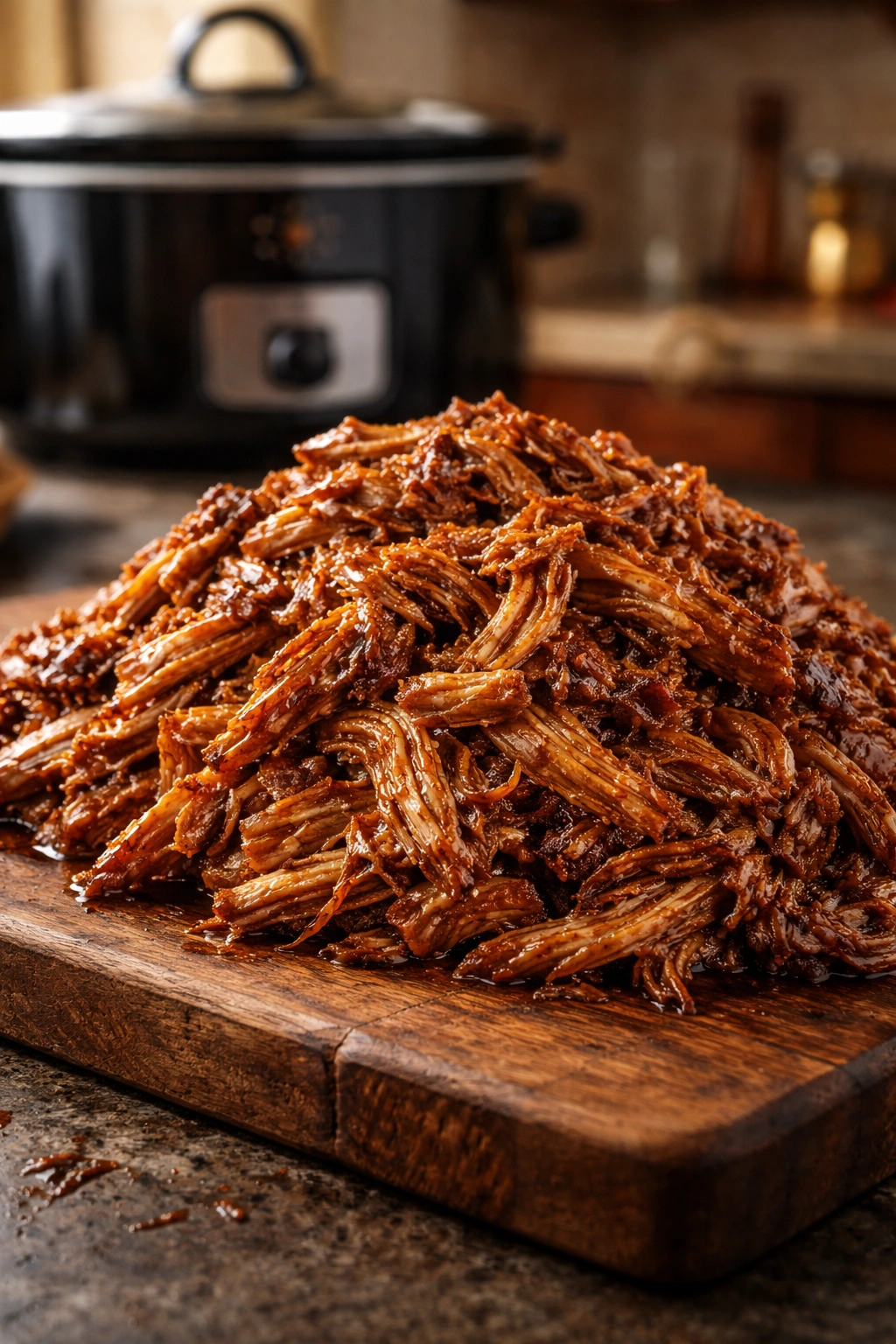
The slow cooker is arguably the best appliance for pulled pork because it creates an ideal cooking environment. Unlike your oven, which can dry out meat with direct, intense heat, or your grill, which requires constant attention, the slow cooker maintains a gentle, consistent temperature while the pork essentially braises in its own juices. This moist environment is critical—it prevents the exterior from drying out while the interior breaks down.
The key factor is that pork shoulder contains abundant connective tissue and intramuscular fat. When exposed to temperatures around 190 to 210 degrees Fahrenheit for an extended period, these tissues don’t just break down—they actually melt into gelatin and collagen that enriches the meat itself. The fat renders slowly into the pork, creating that sought-after juiciness and tenderness that makes people go back for seconds.
Another practical advantage: the slow cooker’s liquid environment means you’re not hovering over the stove. You can prep this meal in the morning, set it to cook all day, and come home to dinner that’s ready to eat. The pork even stays warm and ready when you’re running late. Many modern slow cookers include programmable timers that automatically switch to a “warm” setting once the cooking time finishes, so you won’t accidentally overcook your meat.
The hands-on time for this entire process is genuinely minimal. You’re looking at roughly 15 to 20 minutes of active prep—seasoning the meat, maybe searing it if you choose to add depth of flavor—and then you’re done. The slow cooker does the actual work.
Choosing the Perfect Cut of Pork for Maximum Tenderness
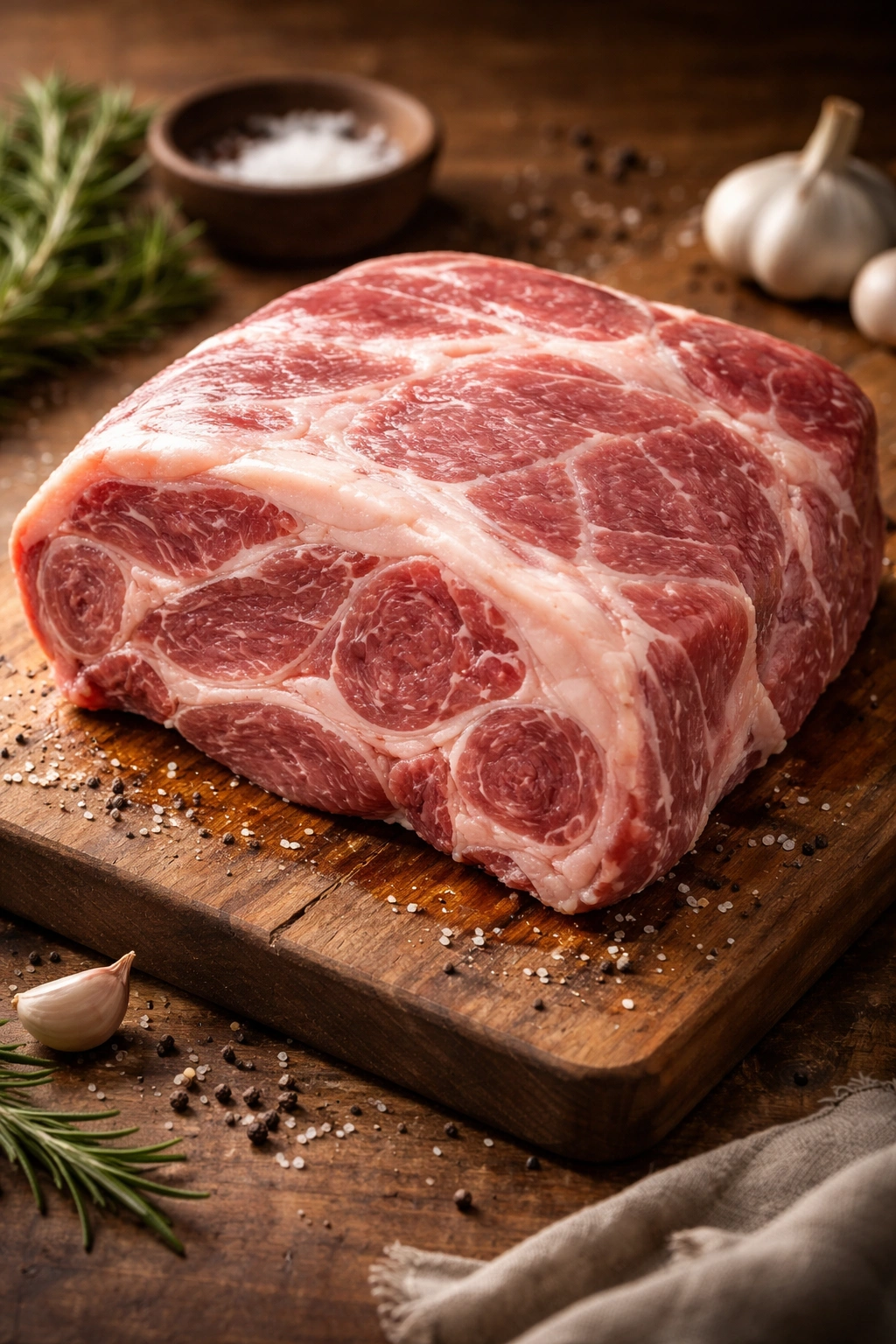
Not all pork cuts are created equal when it comes to pulled pork. Your meat selection is arguably the most important decision in this entire process. The cut you choose determines whether you’ll end up with something sublime or something dry and disappointing, so this matters.
Pork shoulder (also called pork butt, despite the misleading name) is the gold standard. This is the front shoulder area of the pig—specifically the top portion has more fat marbling compared to the bottom picnic cut. Look for the label “Boston Butt” or “Pork Butt” at the store; these are premium shoulder cuts with ideal fat distribution. The fat isn’t something to avoid—it’s what makes the pulled pork actually taste good. Fat is flavor, and in the moist environment of a slow cooker, that fat renders into the meat rather than cooking away.
A quality pork shoulder should have visible white marbling throughout the meat, not just a layer of fat on top. This intramuscular fat is what keeps the meat moist during the long cook and what makes every bite juicy. A boneless shoulder works fine, but a bone-in version can add even more depth to the cooking liquid, creating better sauce.
If you can’t find a pork shoulder, picnic roast (the lower portion of the shoulder) is a solid second choice. It’s slightly less tender naturally but becomes beautifully soft with enough time in the slow cooker. The trade-off is that it tends to be a bit fattier, which some people prefer and others don’t.
Avoid using pork loin for traditional pulled pork unless you specifically want a leaner version. Pork loin is much leaner and doesn’t contain the connective tissue that breaks down into that signature tender texture. While you technically can make pulled pork from pork loin—and some recipes do this successfully—it requires more careful timing to avoid dryness and won’t have quite the same fall-apart quality.
Size matters too. A 5- to 7-pound pork shoulder is the sweet spot. It’s large enough to develop real flavor and that gorgeous bark (the browned exterior bits), but it’s not so massive that it takes an unreasonable amount of time to cook through. If you want to speed things up, you can cut a large shoulder in half before cooking, which increases the surface area for browning and reduces total cooking time.
The Science Behind Truly Tender, Shredded Meat
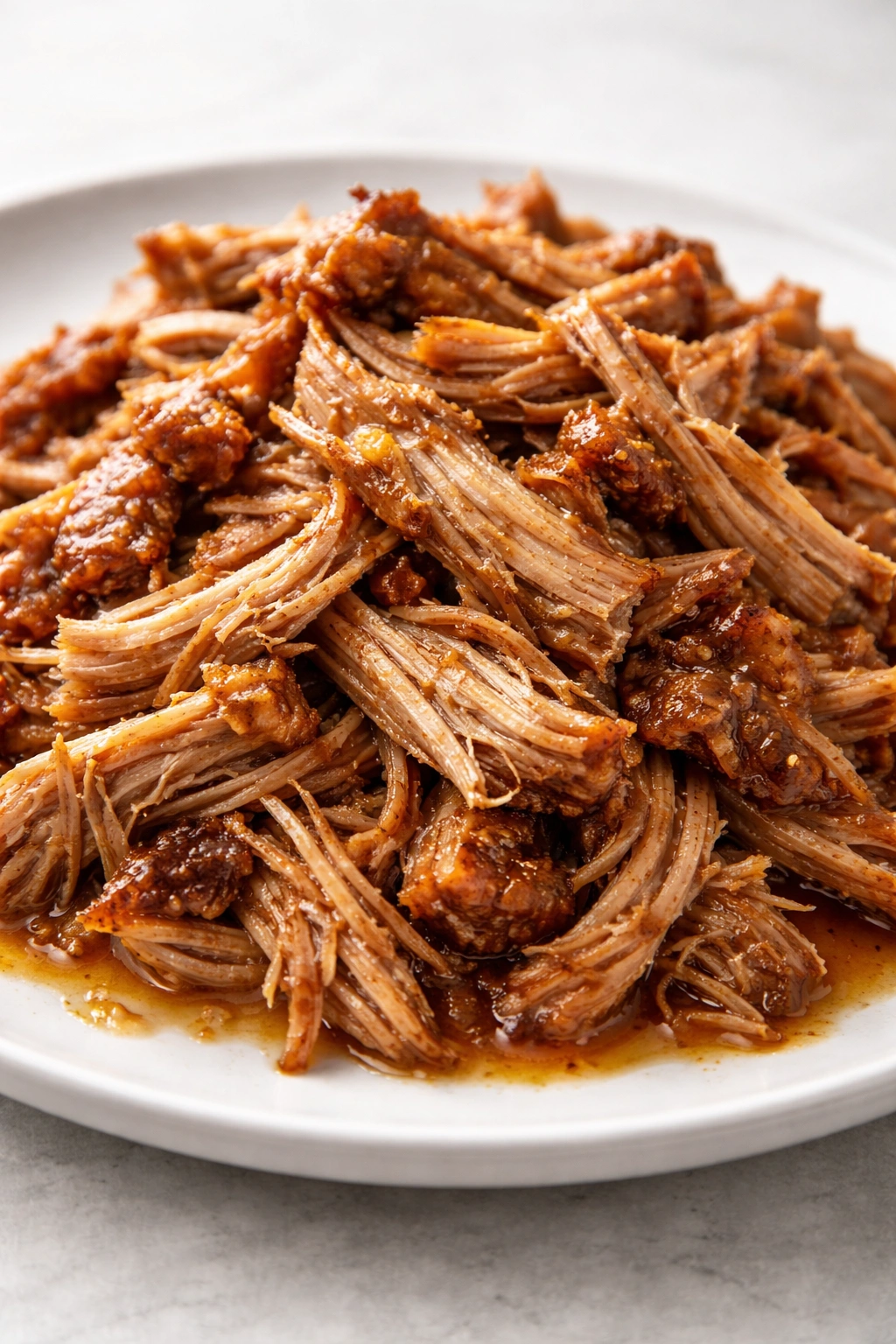
Understanding what actually happens to pork during slow cooking helps you make better decisions throughout the process. This isn’t just food trivia—it explains why certain steps matter and why timing is more important than you might think.
Muscle tissue contains long fibers of protein bundled together. These protein fibers can feel tough and chewy unless something breaks them down. That something is heat and time working together. As pork reaches about 130 degrees Fahrenheit, the fat begins to render—meaning it literally melts. This process lubricates the muscle fibers from the inside, making them more tender.
As temperature continues to climb toward 160 degrees, something even more important happens: collagen begins to break down. Collagen is the connective tissue that holds the muscle bundles together and gives raw meat its firm, tough quality. In the slow cooker’s moist environment, this collagen transforms into gelatin—the same substance that makes good broth silky and rich. This gelatin is what makes the pulled pork taste so good and feel so tender.
By the time the pork reaches 190 to 200 degrees internally, the collagen conversion is complete, and the meat is at peak tenderness. Push it much beyond 205 degrees, and something unwanted happens: the muscle fibers themselves begin to tighten and squeeze out their moisture, creating dry, chalky pork. This is why using a meat thermometer is genuinely essential—you can’t rely on time alone because every slow cooker runs slightly differently.
The moisture in the cooking environment is crucial to this entire process. That’s why the slow cooker is so effective—the meat is essentially braising in liquid, so the exterior never dries out while the interior transforms. A well-cooked pork shoulder will release a tremendous amount of its own liquid as it cooks. This isn’t a sign something went wrong; it’s evidence the process is working.
Building Flavor: The Spice Rub That Transforms Everything
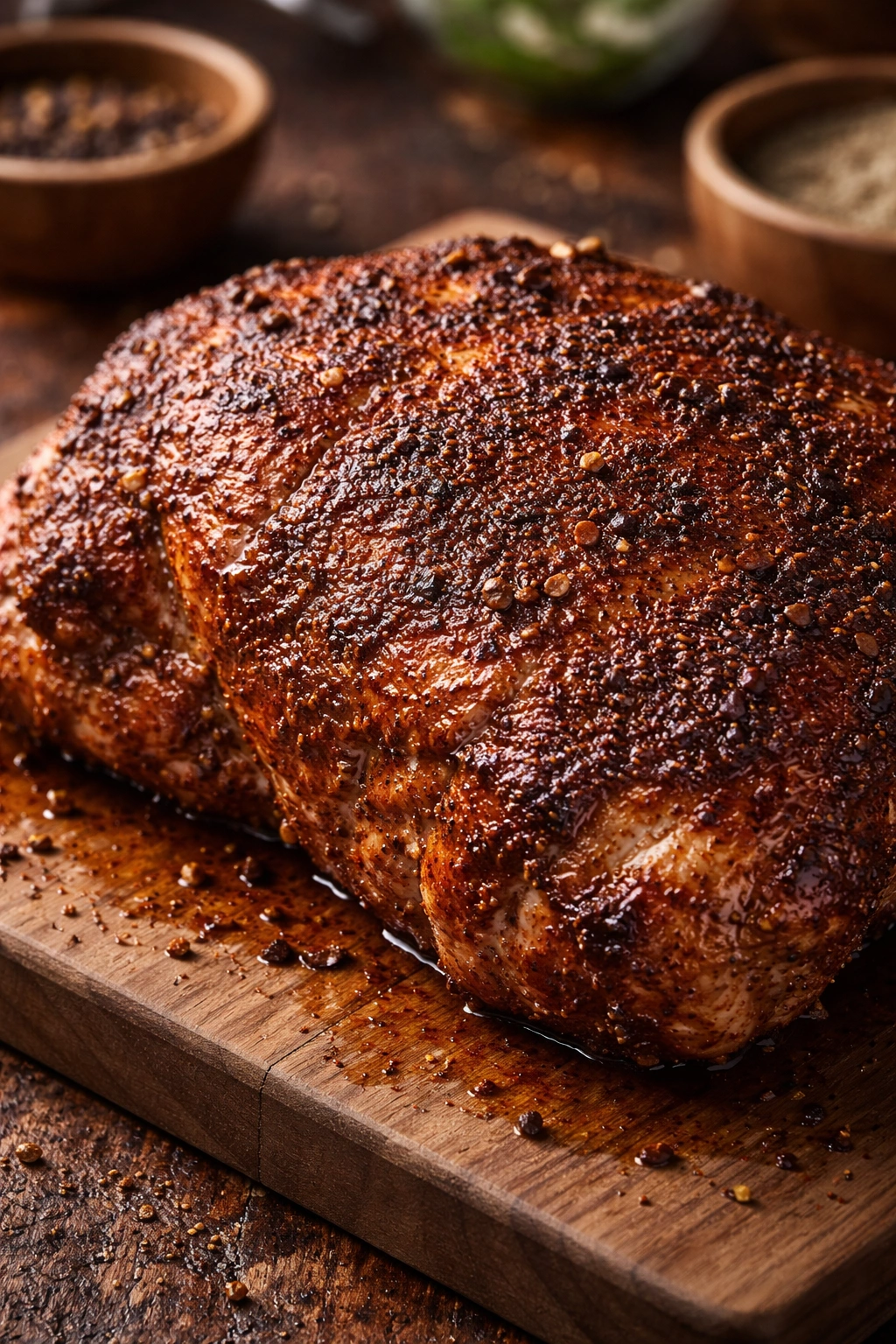
The best pulled pork doesn’t taste good just because it’s tender. It tastes good because it’s properly seasoned at every level—both the spice coating on the outside and the liquid sauce that bathes it throughout cooking.
A quality spice rub does more than just sit on the surface. When you apply a dry rub to meat before slow cooking, the spices slowly bloom and dissolve into the rendering fat, creating a concentrated flavor sauce. The most effective rubs balance several flavor categories: salt and pepper for baseline seasoning and heat, paprika for color and mild sweetness, garlic and onion powder for savory depth, and warm spices like cumin, chili powder, and sometimes a pinch of cayenne for complexity.
Brown sugar in the rub serves two purposes. It adds sweetness, which balances the savory elements, but it also helps the rub stick to the meat and develop a slightly caramelized quality. The ratio matters—too little and the flavors seem flat; too much and it becomes cloying.
Many pulled pork recipes also incorporate acidic components like apple cider vinegar, Worcestershire sauce, or mustard in the liquid. These aren’t just flavor additions; the acid actually helps tenderize the meat by breaking down protein structures. Apple cider vinegar is particularly effective and pairs beautifully with pork’s natural flavor. The tannins in vinegar act as a flavor amplifier, making everything taste more developed and sophisticated.
Some people add liquid smoke to mimic the smoky flavor you’d get from a grill or smoker. This is completely optional—if you want traditional pulled pork flavor, a high-quality liquid smoke (the kind with just water and smoke, nothing else) adds authentic depth. Wright’s brand is widely available and reliable. But if you skip it, your pulled pork will still be delicious; it’ll just taste more like a slow-cooked roast and less like barbecue.
Why the Right Temperature Is Non-Negotiable
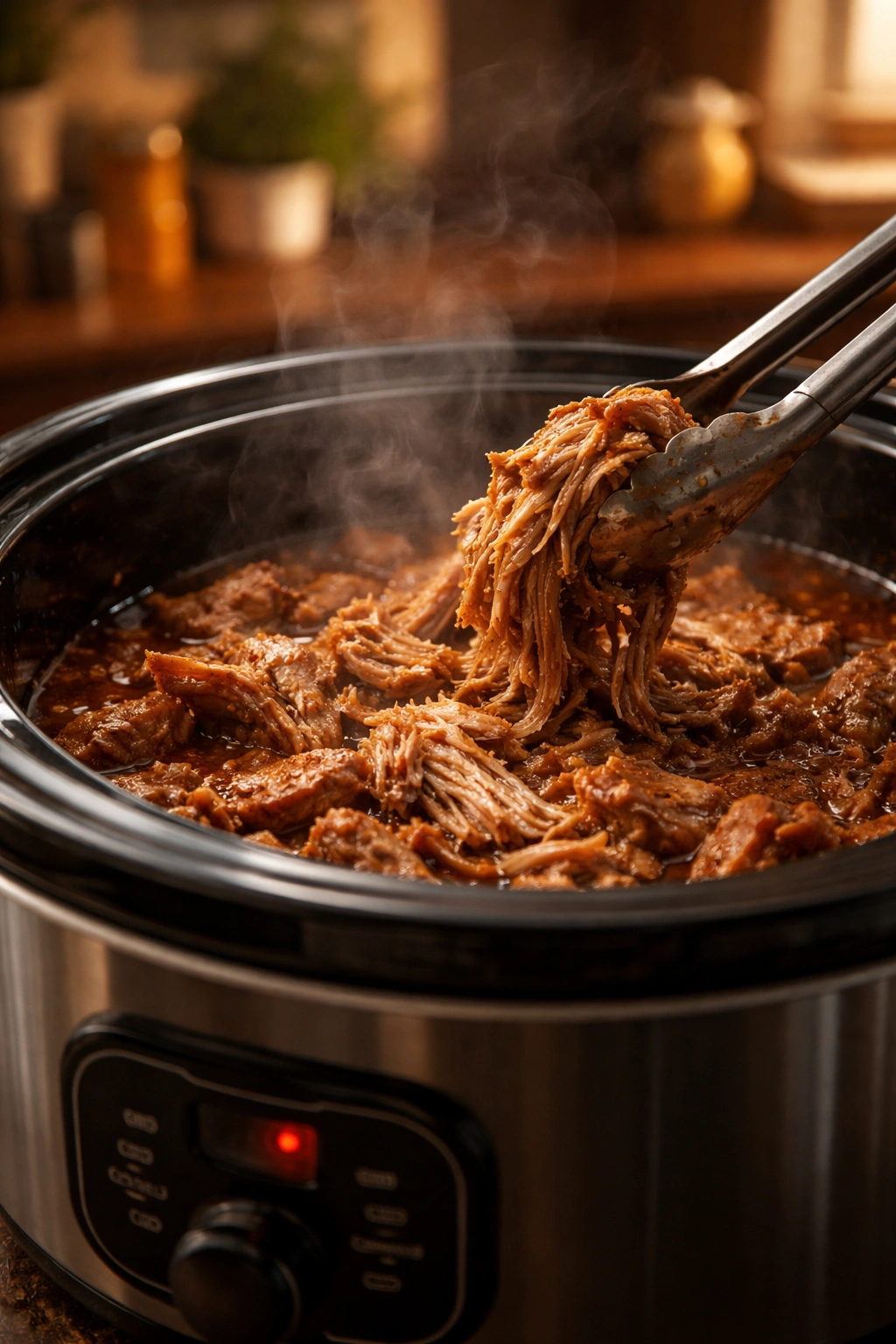
Temperature control separates excellent pulled pork from disappointing pork. Your slow cooker’s “low” setting typically maintains temperatures between 170 and 180 degrees Fahrenheit, while “high” runs closer to 280 to 300 degrees. This might not seem like a huge difference, but it’s transformative in results.
Using the low setting takes longer—typically 8 to 10 hours for a whole pork shoulder—but produces meat that’s more evenly cooked and more consistently tender. The slow, steady heat gives collagen plenty of time to fully convert to gelatin. Using high will cook the pork faster (often 4 to 6 hours), but you risk overcooking the exterior while the interior is still tough, or having the whole thing dry out if you miss the window.
The goal is hitting an internal temperature of 195 to 200 degrees Fahrenheit. Use a reliable meat thermometer inserted into the thickest part of the meat (but not touching bone, if there is one). Once it hits 195, you can remove it—the temperature will rise another few degrees from residual heat.
What you absolutely don’t want to do is let the internal temperature climb above 210 degrees. At this point, the muscle fibers have already squeezed out most of their moisture, and you’re left with stringy, dry meat that tastes chalky rather than succulent. This is why checking with a thermometer starting at the lower end of the cooking time range is genuinely important. Set a phone alarm to check your pork about an hour before you expect it to be done.
Yield: Serves 8 to 12 | Makes approximately 6 to 8 cups shredded pork
Prep Time: 20 minutes (hands-on active preparation and seasoning only)
Cook Time: 8 to 10 hours (on low) or 4 to 6 hours (on high)
Total Time: 8 hours 20 minutes to 10 hours 20 minutes active cooking
Chill/Rest Time: 15 to 20 minutes resting after removal from slow cooker (highly recommended)
Difficulty: Beginner — No special cooking techniques required, minimal prep, and the slow cooker handles all the heavy lifting. This recipe is genuinely difficult to mess up.
Ingredients for Classic Crock Pot Pulled Pork
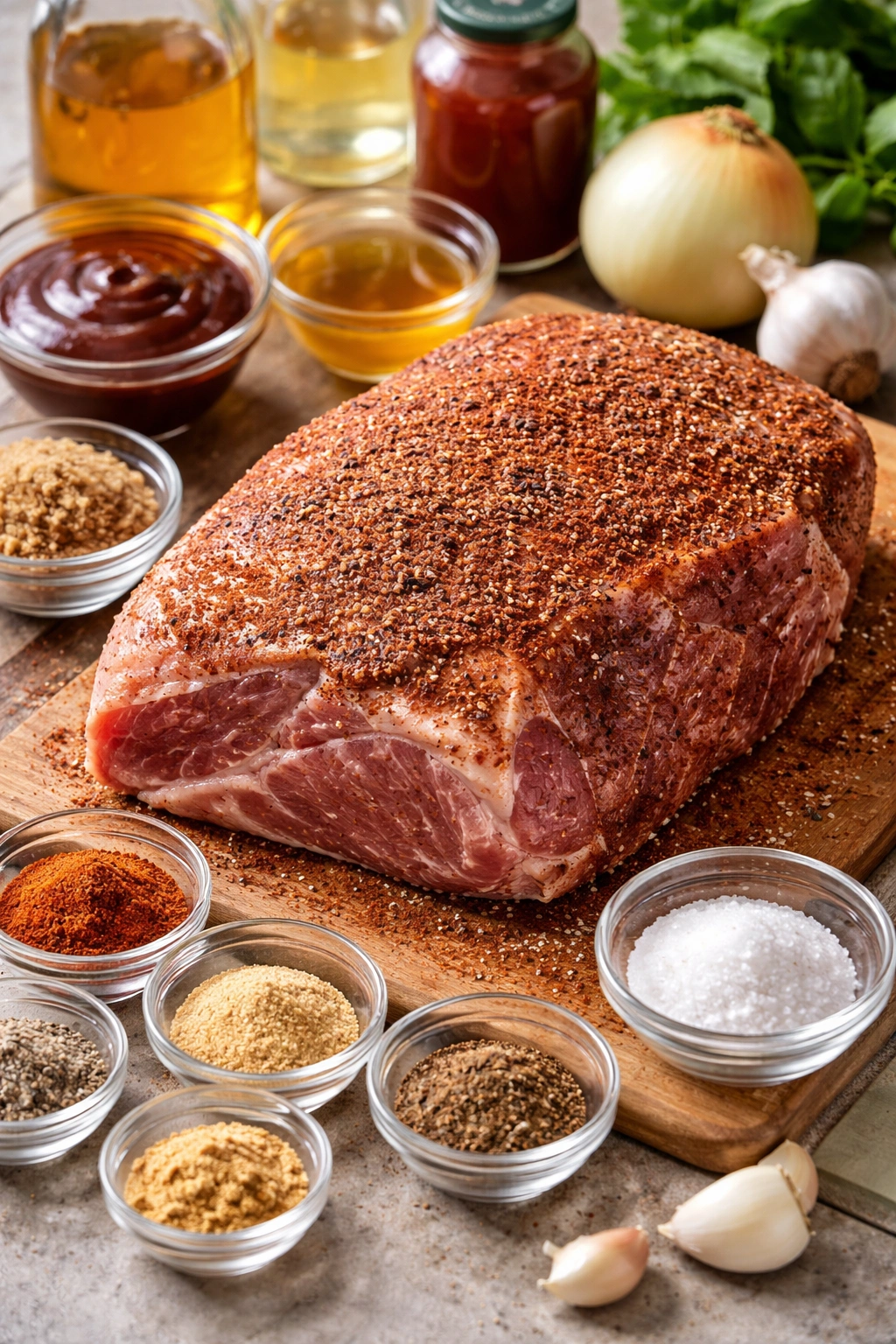
For the Pork and Dry Rub:
- 5 to 7 pound pork shoulder (also called Boston Butt or pork butt), bone-in preferred but boneless works well
- 3 tablespoons olive oil, for rubbing on the meat
- 1 tablespoon kosher salt (use 2½ teaspoons if using table salt, which is denser)
- 2 teaspoons freshly ground black pepper
- 1 tablespoon paprika, for color and mild pepper flavor
- 1 tablespoon smoked paprika (optional but recommended for deeper flavor)
- 2 teaspoons garlic powder
- 2 teaspoons onion powder
- 1 teaspoon chili powder
- 2 teaspoons ground cumin
- 1 teaspoon dry mustard powder
- ⅓ cup packed brown sugar (light or dark, both work)
- ½ teaspoon cayenne pepper (optional, for subtle heat)
For the Cooking Liquid and Sauce:
- 2 tablespoons vegetable oil, for searing the meat (optional but recommended)
- ¾ cup apple cider vinegar
- ¼ cup chicken broth or water
- 1 teaspoon liquid smoke (optional, Wright’s brand is excellent)
- 1 to 2 cups of your favorite barbecue sauce (added after cooking, not before)
Optional Add-Ins for Extra Depth:
- 2 tablespoons yellow mustard or Dijon mustard, mixed with the vinegar
- 2 tablespoons Worcestershire sauce
- 4 to 6 garlic cloves, sliced into slivers and inserted into slits in the meat
- 1 medium yellow onion, sliced
Step-by-Step Instructions for Fall-Apart Pulled Pork
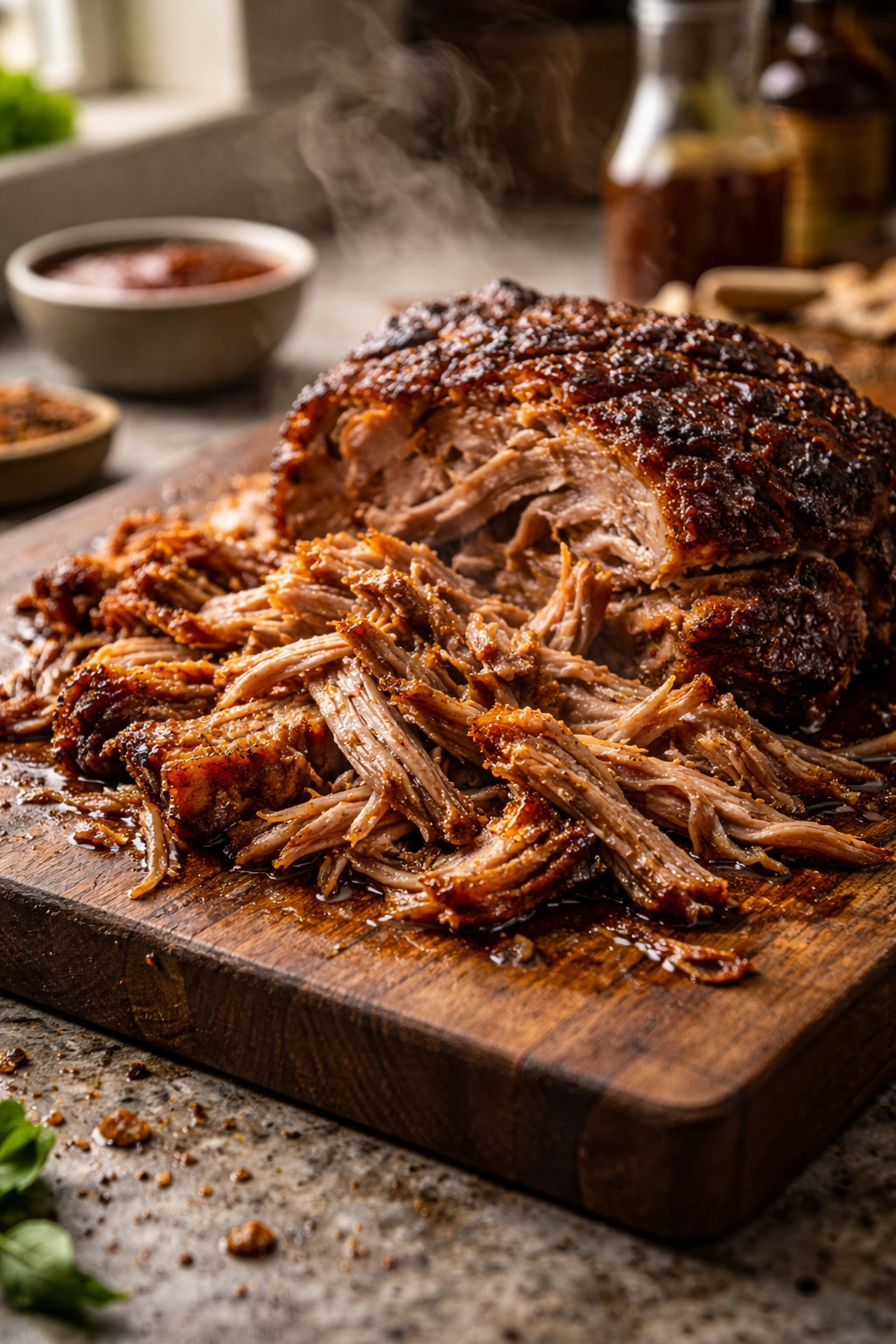
Prepare the Meat and Dry Rub:
-
Remove the pork shoulder from packaging and pat it completely dry with paper towels. Moisture on the surface prevents the rub from adhering properly and interferes with browning. Don’t skip this step.
-
In a small bowl, combine the kosher salt, black pepper, paprika, smoked paprika, garlic powder, onion powder, chili powder, cumin, dry mustard powder, brown sugar, and cayenne pepper. Stir thoroughly until well combined. You should have a fragrant, uniform blend with no clumps.
-
Measure out 3 tablespoons of this rub mixture and set it aside in a small container or ziplock bag—you’ll use this portion later before cooking. This reserve amount goes on the meat after marinating.
Advertisements -
Rub the 3 tablespoons of olive oil evenly over all surfaces of the pork shoulder, working it into the meat and making sure every crevice gets coverage. If using liquid smoke, drizzle it over the pork now and massage it in. Don’t skip the oil—it helps the rub stick and creates flavor bonds with the spices.
-
Using your hands, apply all but the reserved 3 tablespoons of the spice rub to the pork, getting into every nook, crevice, and under any flaps of skin. Work it in thoroughly. Place the seasoned pork into a large ziplock bag (a 2-gallon freezer bag works perfectly).
-
Seal the bag and refrigerate for at least 6 hours, or ideally up to 48 hours. The longer marinating time allows the salt in the rub to penetrate the meat and help it retain moisture during cooking. This is genuinely worth the wait if you have time.
Optional: Searing for Deeper Flavor:
-
When you’re ready to cook, remove the pork from the refrigerator about 30 minutes before cooking. This allows it to come closer to room temperature, which results in more even cooking. Pat the surface dry again if it’s wet from marinating.
-
Rub the reserved 3 tablespoons of spice mixture onto all surfaces of the pork. Set a large skillet (cast iron is ideal) over medium-high heat and let it preheat for at least 3 minutes until very hot. Searing is optional but adds incredible depth of flavor—the browning creates complex flavors that develop further during cooking.
-
Add 2 tablespoons vegetable oil to the hot pan and swirl to coat. The oil should shimmer immediately. Carefully place the pork in the pan—it will sizzle loudly, which is exactly what you want. Don’t move it; let it sit for about 2 minutes until a golden-brown crust develops.
-
Using tongs, flip the pork and sear another side for 2 minutes until browned. Continue flipping and searing all sides and edges until most of the surface has a rich brown crust. This entire searing process should take about 8 to 12 minutes total. Don’t worry about cooking it through—you’re only browning the exterior.
Slow Cook the Pork:
-
Place the seared pork directly into your slow cooker (no added oil needed). If you skipped searing, just add the unseared pork now.
Advertisements -
In a small bowl, whisk together the apple cider vinegar, chicken broth, and if using, the yellow mustard and Worcestershire sauce. Pour this liquid over and around the pork, making sure it gets underneath and in contact with the meat. You want the pork sitting in this braising liquid.
-
If you’ve sliced garlic cloves, insert them into small slits you’ve cut into the pork with a sharp knife. Push the garlic deeper into the meat so it won’t fall out during cooking. This infuses the interior with subtle garlic flavor.
-
Cover the slow cooker with its lid and set to low heat only. Do not use the high setting unless absolutely necessary—low heat produces superior results. Cook for 8 to 10 hours if the pork is whole, or 6 to 8 hours if you’ve cut it in half.
-
Approximately 1 hour before the pork should finish cooking, use a meat thermometer to check the internal temperature. Insert it into the thickest part of the meat, away from bone. You’re looking for a reading between 190 and 205 degrees Fahrenheit. Continue checking every 15 to 20 minutes once you’re in this temperature range.
-
Once the pork reaches 195 to 200 degrees internally, it’s done. Remove it from the slow cooker immediately. Don’t leave it in longer hoping it’ll get more tender—that’s how you end up with dry pork. The carryover cooking will add a few more degrees as it rests.
Shred and Finish the Pork:
-
Place the cooked pork on a cutting board and tent loosely with aluminum foil. Let it rest for 15 to 20 minutes—this allows the juices to redistribute throughout the meat, making it juicier. This step actually matters more than you might think.
-
Reserve about 1 cup of the cooking liquid from the slow cooker in a measuring cup or bowl. Discard most of the remaining liquid, which will be quite fatty. Save only what looks relatively clear and flavorful.
-
Using two sturdy forks (or meat claws if you have them), begin shredding the pork by inserting the forks into the meat and pulling in opposite directions. Start in the center and work outward. The meat should fall apart easily if cooked properly. If it’s still tough and requires significant effort, it needs more time in the slow cooker—return it and cook another 30 to 60 minutes.
-
As you shred, remove any large chunks of gristle (the unpleasant, stringy bits) and discard them. However, do not throw away all the fat—the small pieces of rendered fat are what make pulled pork taste incredible. Shred these into small pieces and mix back into the meat. Fat equals flavor.
Advertisements -
Return all the shredded pork to the slow cooker (or to a large serving bowl if you prefer). Pour in about ½ cup of the reserved cooking liquid and 1 to 2 cups of your favorite barbecue sauce. Stir thoroughly, breaking up any chunks and ensuring the sauce is evenly distributed. Add more cooking liquid and sauce to taste—some people like it saucier, others prefer less. You control the consistency.
-
Set the slow cooker to warm if you’re not serving immediately. The pork will stay hot and ready for another 1 to 2 hours without drying out.
Practical Tips That Make the Difference Between Good and Exceptional Pulled Pork
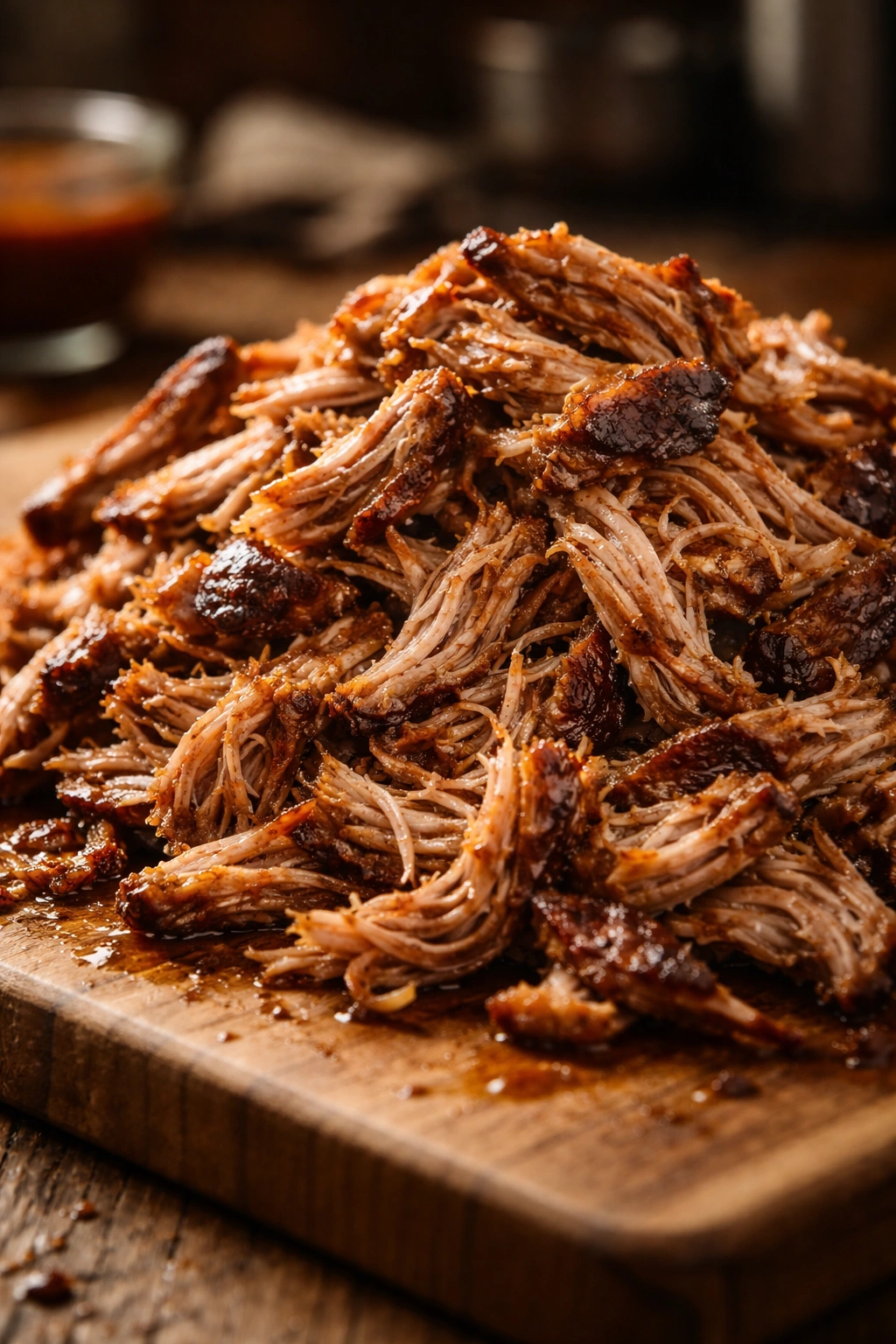
Use a reliable meat thermometer. This single tool is the difference between nailing it and ruining an expensive piece of meat. Cheap instant-read thermometers are unreliable—invest in a Thermoworks or similar quality brand. Digital is better than analog for accuracy.
Don’t skip the resting period. Those 15 to 20 minutes after cooking while the pork rests are absolutely crucial. The meat’s muscle fibers relax slightly, and the juices redistribute. Shredding pork straight from the slow cooker produces drier results. Patience here pays off significantly.
The fat is your friend, not your enemy. Many people instinctively try to trim all the fat off pulled pork, but the fat is where most of the flavor lives. The fat has been slowly rendering for 8+ hours, and it tastes delicious. Trim off large chunks of skin or anything that’s unpleasant to eat, but leave the small, shredded pieces mixed into the meat.
Searing adds remarkable depth, but it’s optional. If you’re short on time, skip the searing step and you’ll still get great pulled pork. The searing creates a browned crust that adds complex flavors—it makes a good thing better, but it’s not required. The slow cooker does plenty of work on its own.
Liquid smoke is genuinely optional. If you want your pulled pork to taste like traditional barbecue, liquid smoke adds authentic smoky flavor. If you like the taste of a slow-cooked roast and don’t care about smoky notes, skip it entirely. Either way, the pork will taste delicious.
Don’t add barbecue sauce before cooking. Barbecue sauce contains sugar, and sugar caramelizes at high temperatures, creating burnt bits and off-flavors. Add your sauce after the pork is cooked and shredded. This also gives you flexibility—you can serve some of the pork plain, some with BBQ sauce, and some with entirely different toppings.
Start checking temperature early. Every slow cooker heats differently, so begin checking internal temperature about 1 hour before your expected finish time. Finding it done at 7 hours instead of 10 is far better than discovering you’ve overcooked it at 11 hours.
The pork will release a surprising amount of liquid. Don’t be alarmed by all the liquid in the slow cooker—this is normal and desirable. This liquid is what keeps the pork moist. Just don’t add extra liquid thinking the recipe is wrong. The pork creates its own braising environment.
Common Mistakes That Keep Your Pork From Shredding Properly
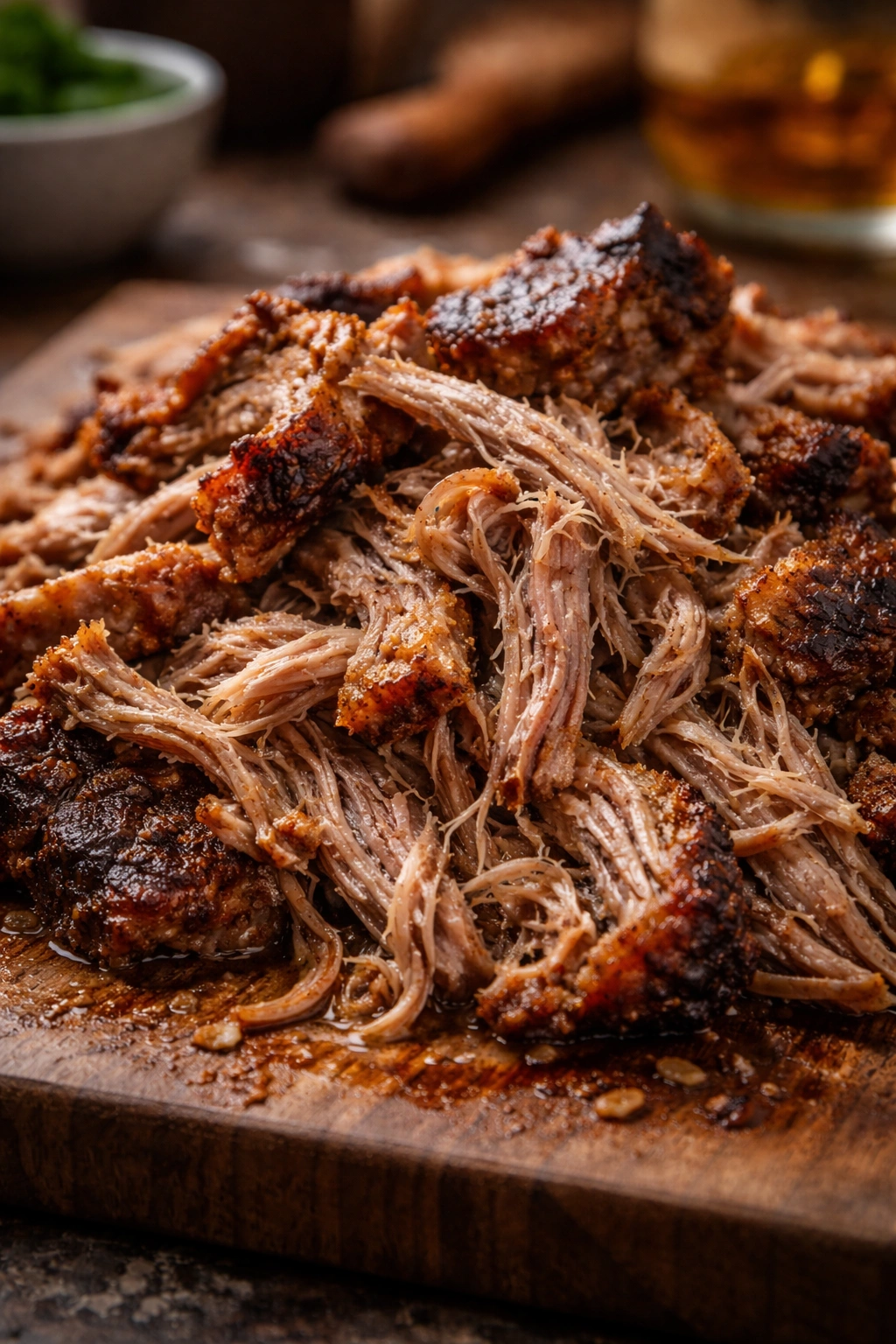
Using high heat instead of low. High heat cooks the pork faster but produces uneven results. You’ll often end up with overcooked, dry exterior while the interior is still tough. Low and slow is genuinely the correct approach here—it takes patience, but patience pays off with perfect texture.
Not using enough salt in the rub. Salt isn’t just for taste; it penetrates the meat and helps it retain moisture during cooking. A rub that’s too mild results in flavorless, slightly tough pork. The amount in this recipe is correct—don’t reduce it worrying about sodium.
Overcooking past 205 degrees internal temperature. Beyond 210 degrees, muscle fibers squeeze out their moisture and the meat becomes dry and stringy. This is the single most common mistake with slow-cooker pulled pork. Use a thermometer and stop cooking once you hit 195 to 200 degrees.
Skipping the rest period. Cutting into pork or shredding it immediately after cooking results in drier meat. Let it rest 15 to 20 minutes. This truly matters.
Discarding all the fat. Some fat on pulled pork is essential to texture and flavor. Small rendered bits mixed into the meat make it taste richer and more tender. Large chunks of skin should go, but don’t strip the meat completely clean.
Using the wrong cut of meat. Pork loin won’t produce the same fall-apart texture as pork shoulder. If you have only pork loin available, it’ll still be good, but it won’t be quite the same experience. Shoulder is worth seeking out.
Not patting the meat dry before seasoning. Moisture on the surface prevents the rub from sticking and prevents browning. Take the time to dry it thoroughly with paper towels.
Creative Variations and Flavor Adaptations
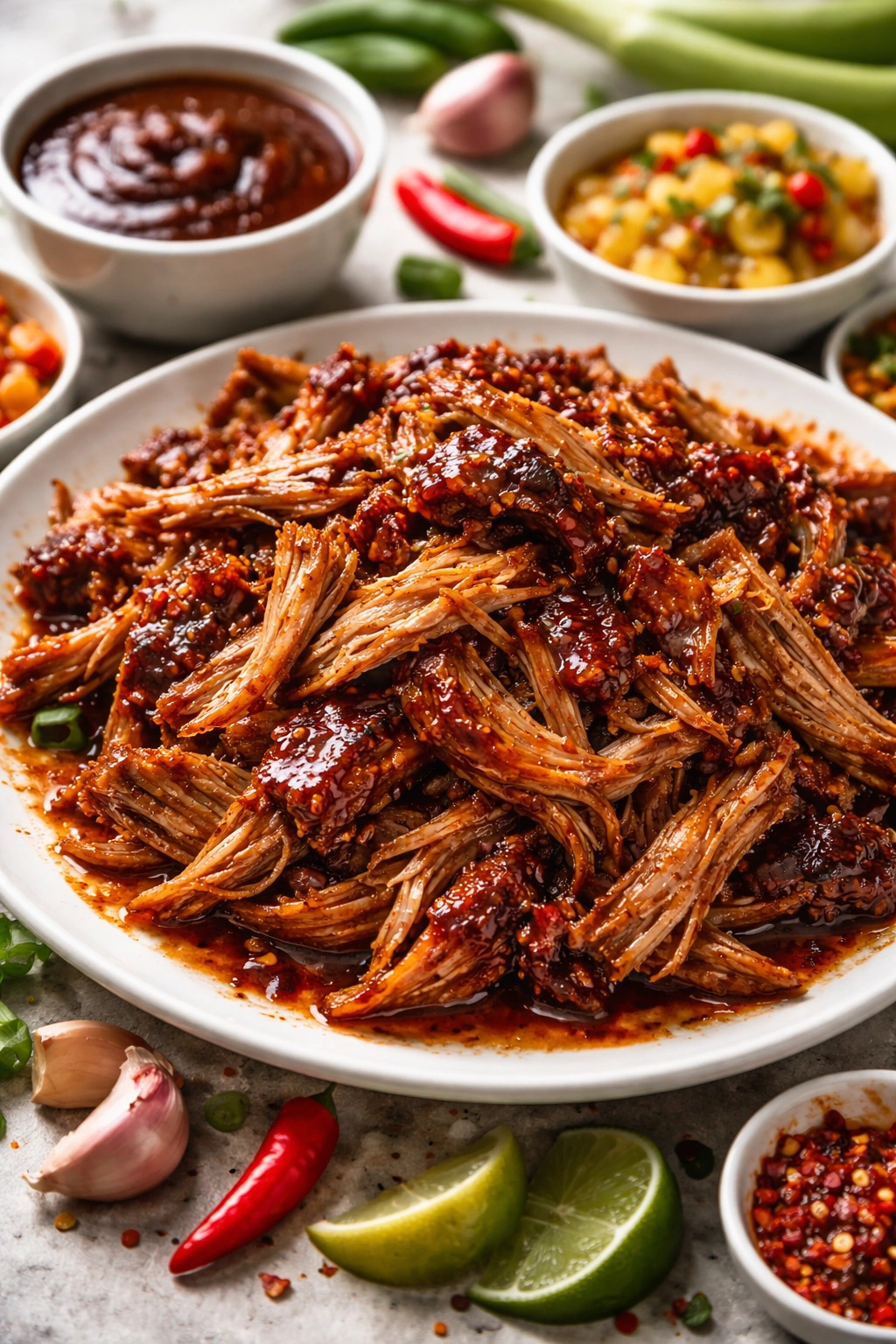
Pulled pork is genuinely versatile. Once you understand the base technique, you can adapt it in dozens of directions.
For a sweeter flavor profile, increase the brown sugar in the rub to ½ cup and add ¼ cup honey or molasses to the cooking liquid. Add a splash of pineapple juice (instead of some broth) and serve with Hawaiian rolls for a tropical twist.
For deeper, more complex flavors, add 2 tablespoons of Worcestershire sauce and 2 tablespoons of soy sauce to the cooking liquid. These additions add umami depth that makes the pulled pork taste more sophisticated and savory.
For spicy pulled pork, increase the cayenne pepper in the rub to ½ to 1 teaspoon and add 1 to 2 teaspoons of hot sauce (like Frank’s or Tabasco) to the cooking liquid. Mix in more hot sauce after shredding if you want additional heat.
For a honey-garlic glaze, instead of barbecue sauce, toss the shredded pork with ½ cup honey, 3 to 4 tablespoons soy sauce, 2 tablespoons rice vinegar, and 3 to 4 minced garlic cloves. Serve over rice or noodles instead of on buns.
For Asian-inspired pulled pork, use the base cooking method but replace barbecue sauce with a mixture of soy sauce, rice vinegar, honey, ginger, and a touch of sesame oil. Serve in Asian steamed buns or over jasmine rice with pickled vegetables.
For a mustard-based version (Carolina style), omit the brown sugar and add extra yellow mustard to the rub (about 3 tablespoons mixed with the spices). Use mustard-based barbecue sauce instead of tomato-based sauce for serving.
For dietary adaptations, this recipe works beautifully for paleo, keto, and low-carb eating plans—just serve the pulled pork over cauliflower rice, roasted vegetables, or lettuce wraps instead of buns, and choose a sugar-free barbecue sauce (brands like G Hughes make good options).
Storage, Freezing, and Make-Ahead Strategies
Pulled pork is one of the most forgiving dishes to store and reheat. This makes it perfect for meal prep and advance cooking.
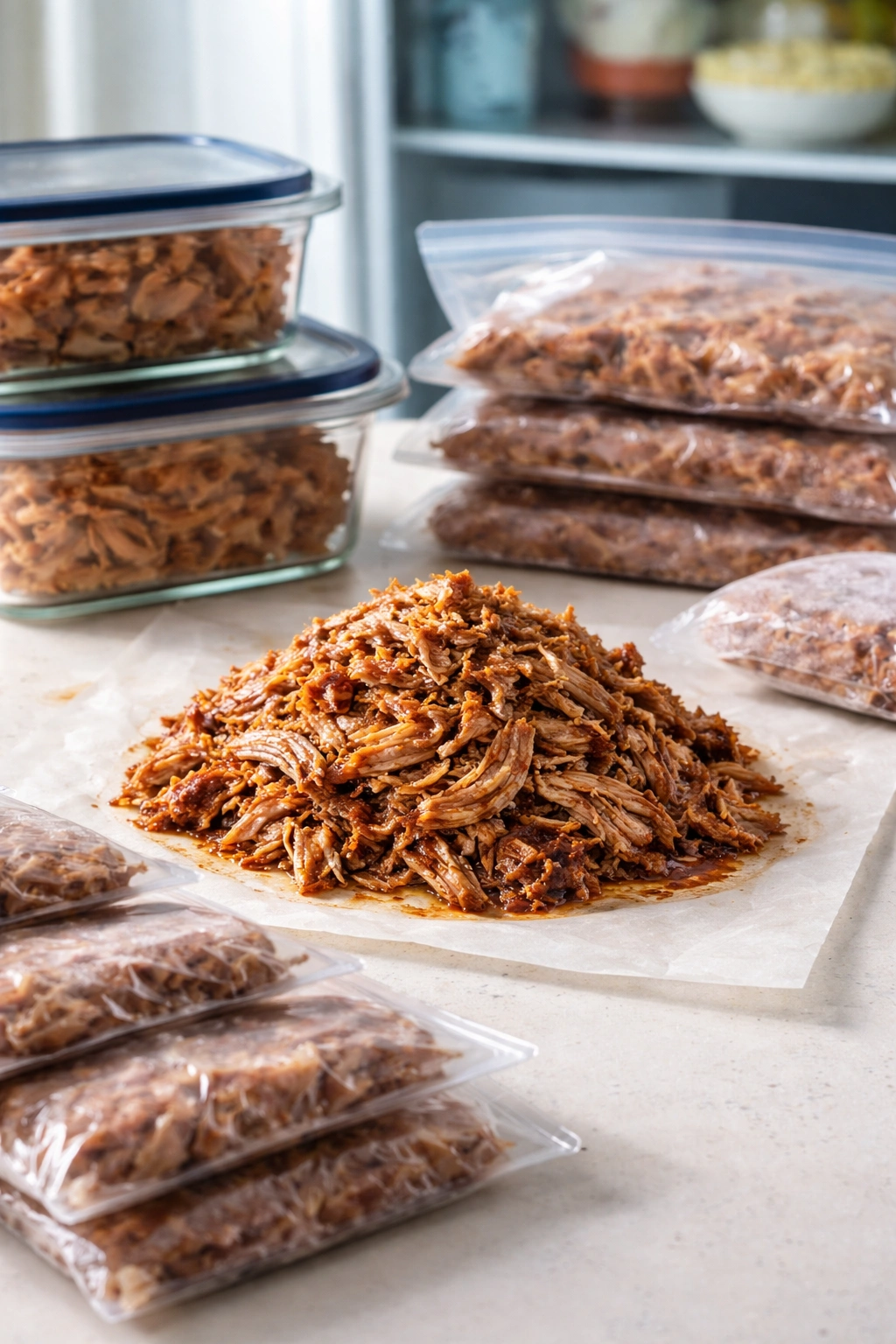
Refrigerator storage: Once the pulled pork cools to room temperature, transfer it to an airtight container along with some of the cooking liquid and sauce (the liquid prevents drying out). It keeps safely for 4 to 5 days in the refrigerator. Keep it stored in one layer if possible so it cools evenly.
Freezing for later: Pulled pork freezes beautifully for up to 3 to 4 months. Use a heavy-duty freezer bag or freezer container, remove as much air as possible, and include some of the cooking liquid to prevent drying. Flat, uniform freezer bags stack neatly and thaw more quickly than containers.
Thawing and reheating: Thaw frozen pulled pork overnight in the refrigerator. To reheat, you have several options. For a single serving, place it in a microwave-safe bowl, cover loosely, and microwave at 50 percent power for 1 to 2 minutes, stirring halfway through. For larger quantities, place the pork in a covered skillet on the stovetop over medium-low heat with 2 to 3 tablespoons of water or broth, stirring occasionally until warmed through (usually 10 to 15 minutes). Alternatively, return it to the slow cooker set to warm for 45 minutes to 1 hour.
Make-ahead from raw: You can prepare the rub and apply it to the pork up to 48 hours before cooking. This actually improves flavor because the salt penetrates the meat more deeply. Just keep the rubbed pork in a sealed bag in the refrigerator until you’re ready to cook.
Make-ahead components: You can brown the pork and apply the rub the morning before, seal it in the slow cooker’s ceramic insert, refrigerate overnight, and cook it the next day. Set the insert directly into the slow cooker base and start cooking. Add 30 to 45 minutes to cooking time since the pork starts colder. The cooking liquid can also be prepared in advance and added just before cooking.
Serving Suggestions and Perfect Pairings
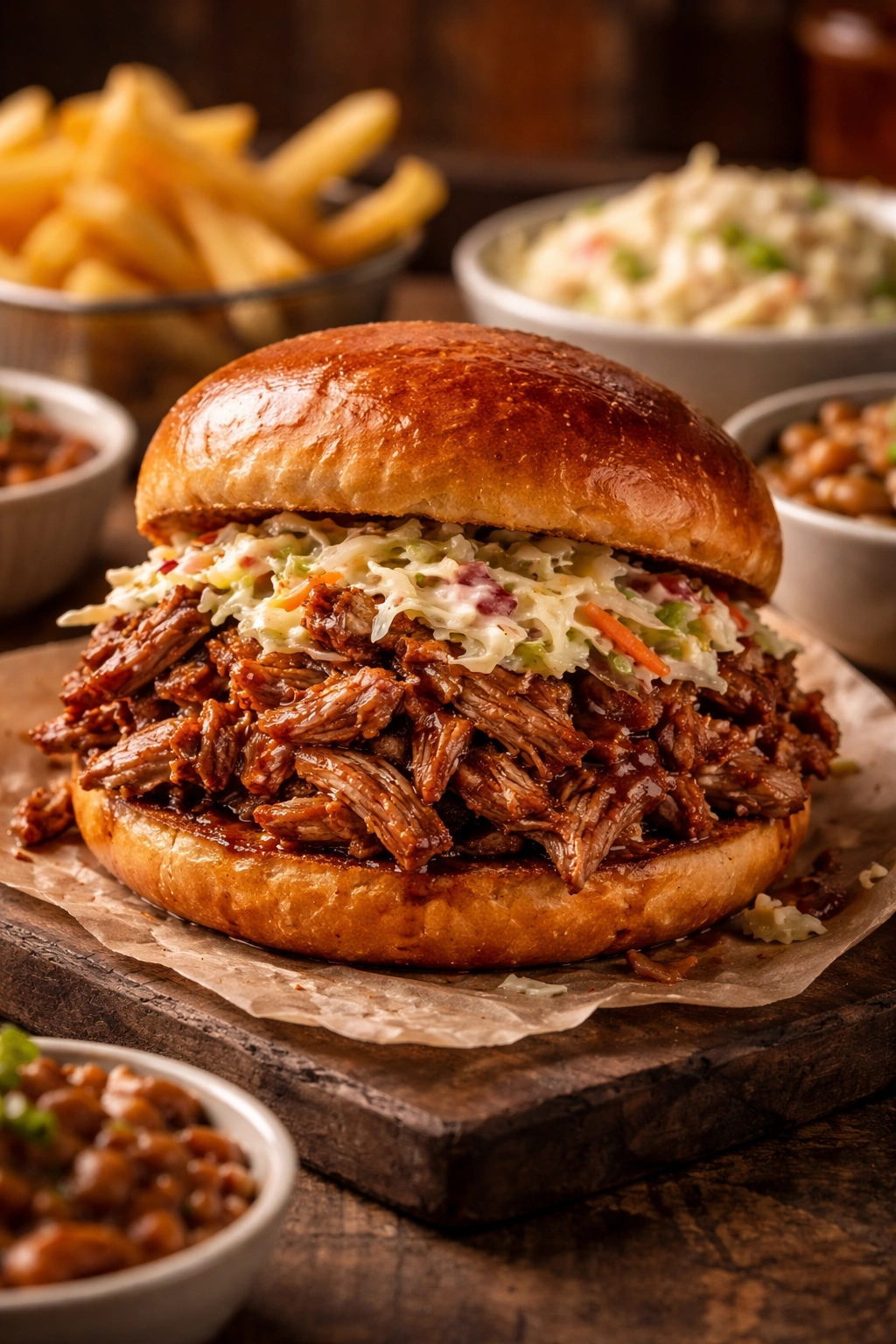
The most obvious serving is the classic pulled pork sandwich on a soft, toasted brioche bun with coleslaw and extra barbecue sauce. This is iconic for good reason. Butter the buns and toast them in a skillet for a minute or two—the warm, slightly crispy bun provides textural contrast to the tender meat.
Coleslaw is essential, not optional. The cool, crisp, slightly tangy slaw provides a textural contrast to the soft pulled pork and cuts through the richness of the sauce. A lemony, herby coleslaw is perfect, or a simpler vinegar-based slaw also works beautifully.
Beyond sandwiches, pulled pork works in:
-
Tacos with warm flour or corn tortillas, diced onions, cilantro, and a squeeze of lime. Switch the sauce to a salsa verde or pico de gallo for completely different flavor.
-
Nachos with tortilla chips, melted cheese, jalapeños, and sour cream. The pulled pork becomes a loaded nacho topping that feels special but requires minimal effort.
-
Rice bowls with jasmine or brown rice, roasted or grilled vegetables, and pickled slaw. Top with green onions and sesame seeds for a fresh, modern presentation.
-
Quesadillas with shredded cheese folded into warm tortillas with the pork, then grilled until crispy and golden.
-
Baked or sweet potatoes topped with pulled pork, sour cream, chives, and crispy bacon bits for a loaded-potato situation.
-
Salads as a protein on top of greens with your favorite dressing. A warm pulled pork salad with crispy bacon, cheddar, and ranch dressing is unexpectedly delicious.
Advertisements
Side dishes that pair beautifully include:
- Creamy coleslaw (the classic accompaniment)
- Mac and cheese (the richness works well)
- Roasted or grilled corn on the cob
- Baked beans with bacon
- Potato salad (warm or cold)
- Grilled vegetables
- Cornbread or jalapeño cornbread
- Pickled vegetables and relishes
Drinks to serve:
Iced tea (sweet or unsweet), lemonade, or light lager beer complement pulled pork beautifully. The slight sweetness of tea or lemonade balances the savory smoke and sauce. For alcoholic options, crisp lagers, pilsners, or even wheat beers pair well without overwhelming the pork’s flavor.
Final Thoughts
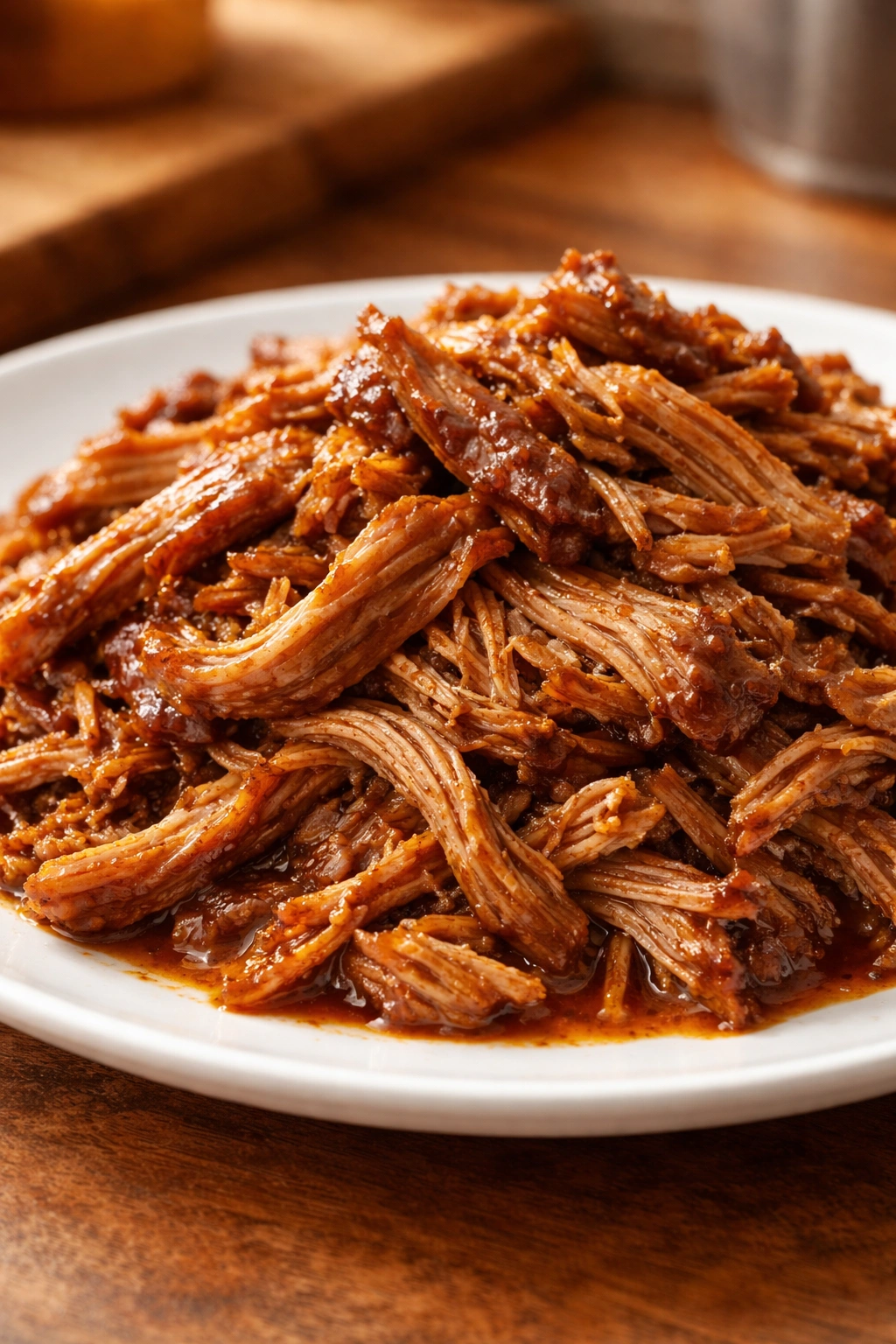
The extraordinary appeal of slow-cooker pulled pork comes down to a formula that genuinely works: the right cut of meat, adequate time at low temperatures, proper seasoning, and a respect for what the science is doing inside that ceramic pot. There are no fancy techniques required. There’s no specialized equipment beyond a meat thermometer. What matters is understanding why each step matters and executing it with intention.
Once you’ve made this pulled pork once, the technique becomes second nature. The next time you need to feed a crowd without fussing all day, or you want to meal-prep protein for the week ahead, you’ll know exactly what to do. The slow cooker does the actual work while you go about your day. By dinnertime, you’ll have meat so tender it falls apart at the touch of a fork, flavored deeply with spices and smoke, and ready to become whatever you decide—a sandwich, a taco, a salad topping, or something entirely new. That’s the real magic of this recipe.
