



The stress of hosting a big dinner party doesn’t have to come from the kitchen. Too many hosts feel trapped between wanting to impress their guests and actually having time to enjoy the evening themselves. The secret isn’t finding restaurant-quality recipes—it’s choosing dishes that taste impressive but don’t demand your constant attention while everyone’s gathered around your table. The best dinner party recipes are actually the ones that quietly handle themselves in the oven, come together ahead of time, or finish with just a few minutes of last-minute plating.
What separates a stressful dinner party from a memorable one is understanding which dishes genuinely shine when made in advance, which techniques save you hours without sacrificing flavor, and which recipes stay forgiving even if they sit on the stove for an extra ten minutes. A roasted chicken that rests beautifully tastes just as good fifteen minutes after it leaves the oven. A braised short rib improves overnight in the fridge. A pasta dish that’s been loosely tossed with sauce and held at a gentle simmer becomes creamy and cohesive rather than drying out. When you choose recipes that work with your hosting reality rather than against it, you transform the entire experience.
This guide walks through the easiest, most impressive recipes for feeding a crowd without spending all day in the kitchen. You’ll discover which dishes actually benefit from being made the day before, which components you can prep in advance, and exactly how to time everything so the food arrives at the table hot and finished while you’re still present and relaxed with your guests.
Why Make-Ahead Recipes Change Everything
The moment you stop thinking about dinner parties as “cook and serve immediately” events, everything becomes easier. Make-ahead recipes are your secret weapon because they collapse the timeline. Your guests arrive at seven o’clock, but your main dish has been sitting in the oven at low heat or resting on the counter since five. By the time people sit down, you’re not running between the kitchen and table—you’re already there, greeting guests, pouring wine, and actually participating in the evening.
Make-ahead dishes taste better in many cases because flavors develop over time. Braised dishes, stews, and anything with acidity or spice actually improve when given eighteen to twenty-four hours for the flavors to meld and deepen. A beef bourguignon cooked on Friday tastes noticeably richer when served on Saturday. A marinara sauce simmered and then rested overnight has more developed depth than one made the same day.
The psychological benefit of having your main dish already complete is enormous. You can set your table, chill your wine, shower, and change into something nice without glancing nervously at the clock. If your appetizers run over because guests are genuinely enjoying themselves, it doesn’t matter—your entrée is already waiting, needing just a quick reheat or final garnish.
Planning Your Menu Around Timing
The key to a successful dinner party menu is choosing dishes that have different cooking paths. Never pick three components that all demand oven space during the same narrow window. If your main dish needs the oven at four-hundred-fifty degrees for forty minutes, your side vegetable should be something that roasts at the same temperature or something that’s completely done ahead of time.
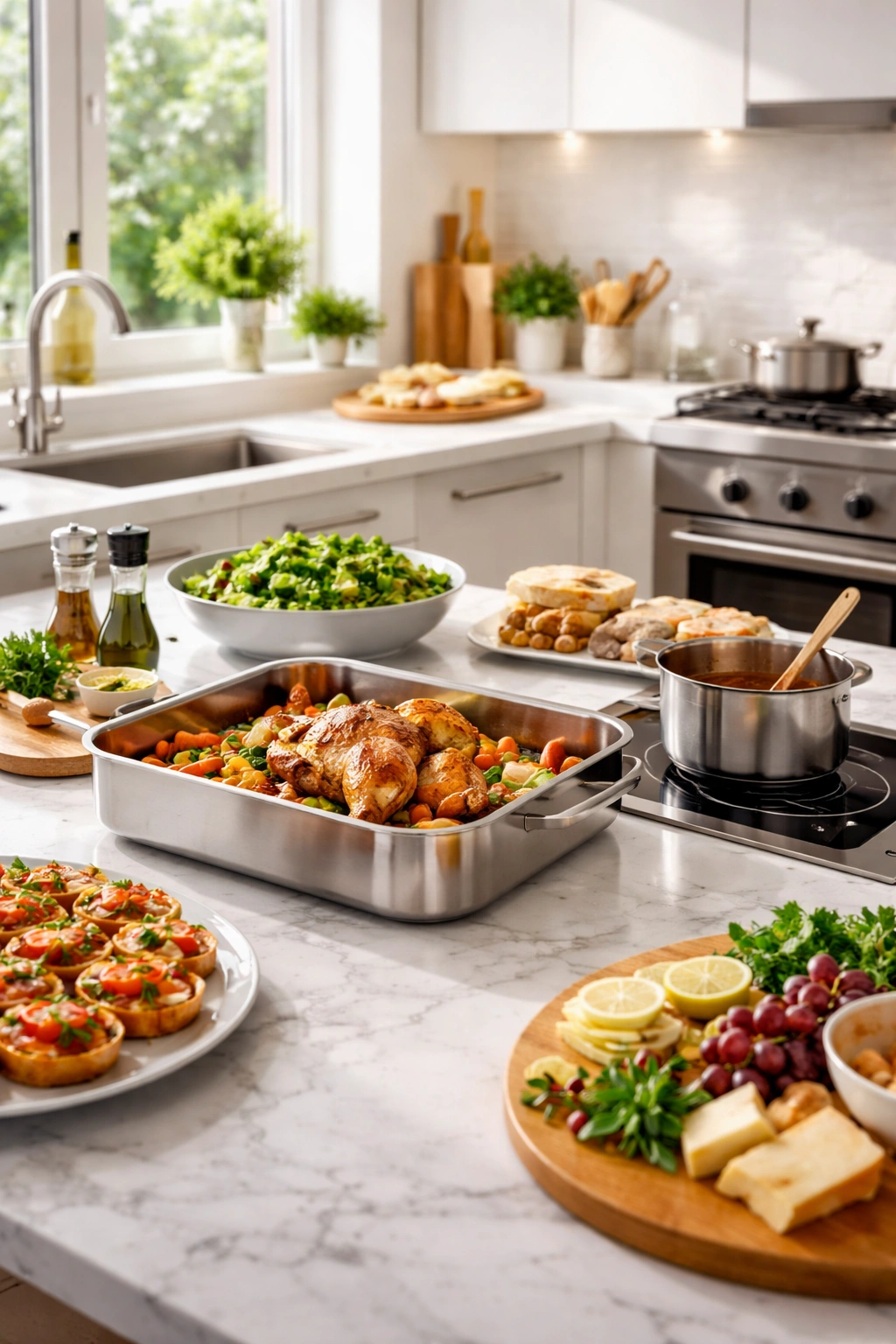
Think in terms of oven real estate and stovetop burners. A realistic dinner for eight people might look like: a slow-roasted protein (oven, low and slow, started mid-afternoon), a prepared-ahead salad or vegetable component that’s served cold or at room temperature, a starch that cooks in water rather than stealing oven space, and a sauce or reduction that simmers on the stovetop while everything else cooks. This approach means you’re never frantically juggling four things at once.
Building in a fifteen-to-thirty-minute buffer between courses also genuinely improves the experience. Serve appetizers and sit for a bit while the main dish finishes its final minutes. This isn’t dead time—it’s when your guests are actually comfortable, conversation flows naturally, and the pace of the evening feels intentional rather than rushed.
Mediterranean Roasted Chicken with Lemon and Herbs
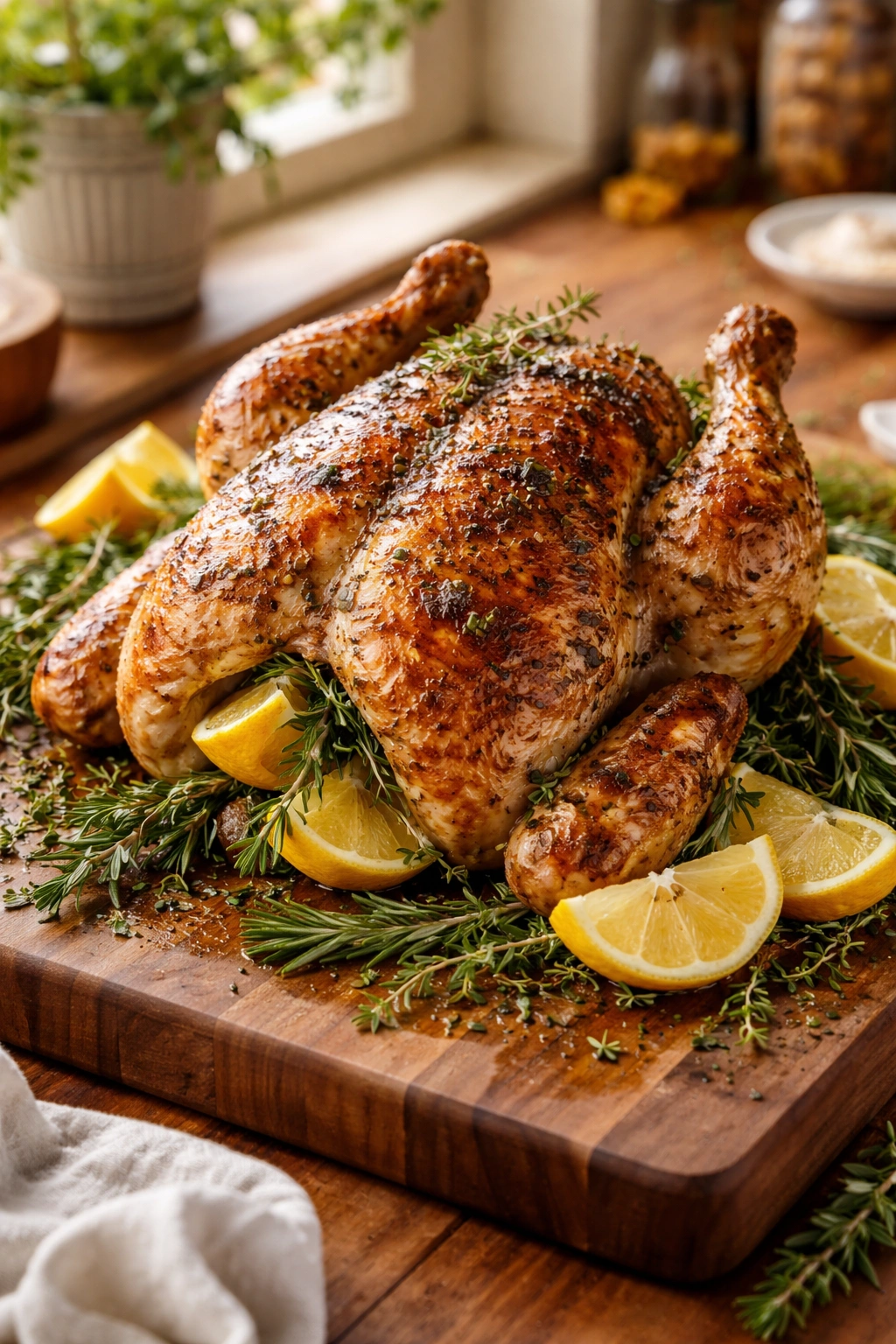
This dish has become a dinner party staple because it’s forgiving, elegant, and genuinely difficult to ruin. A whole roasted chicken (or three or four of them, depending on your guest count) creates an impressive centerpiece that costs far less than individual protein portions. The magic is in simple technique: seasoning the bird inside and out, roasting it at the right temperature, and letting it rest so the meat stays impossibly juicy.
The formula is straightforward—stuff a whole chicken with lemon halves and fresh herbs like rosemary and thyme. Season aggressively with salt and pepper on the skin and inside the cavity. Roast at four hundred twenty-five degrees for about an hour and a quarter, depending on the bird’s size, until the skin is deep golden and the thigh reaches one hundred sixty-five degrees on an instant-read thermometer. The critical step everyone skips: let it rest for at least fifteen minutes before carving. This allows the juices to reabsorb into the meat rather than running onto the cutting board.
Make this component mid-afternoon and let it rest completely. Cover it loosely with foil and it’ll stay warm and perfect for up to an hour. If you need it hotter, place it uncovered in a two-hundred-fifty-degree oven for about ten minutes right before serving. The skin won’t crisp again, but it will be warm and still pleasant. The real advantage: you carve and plate the chicken in the kitchen, handling the messy part away from your dining room, and bring out individual servings or a beautiful arranged platter already done.
Slow-Braised Short Ribs That Actually Taste Better the Next Day
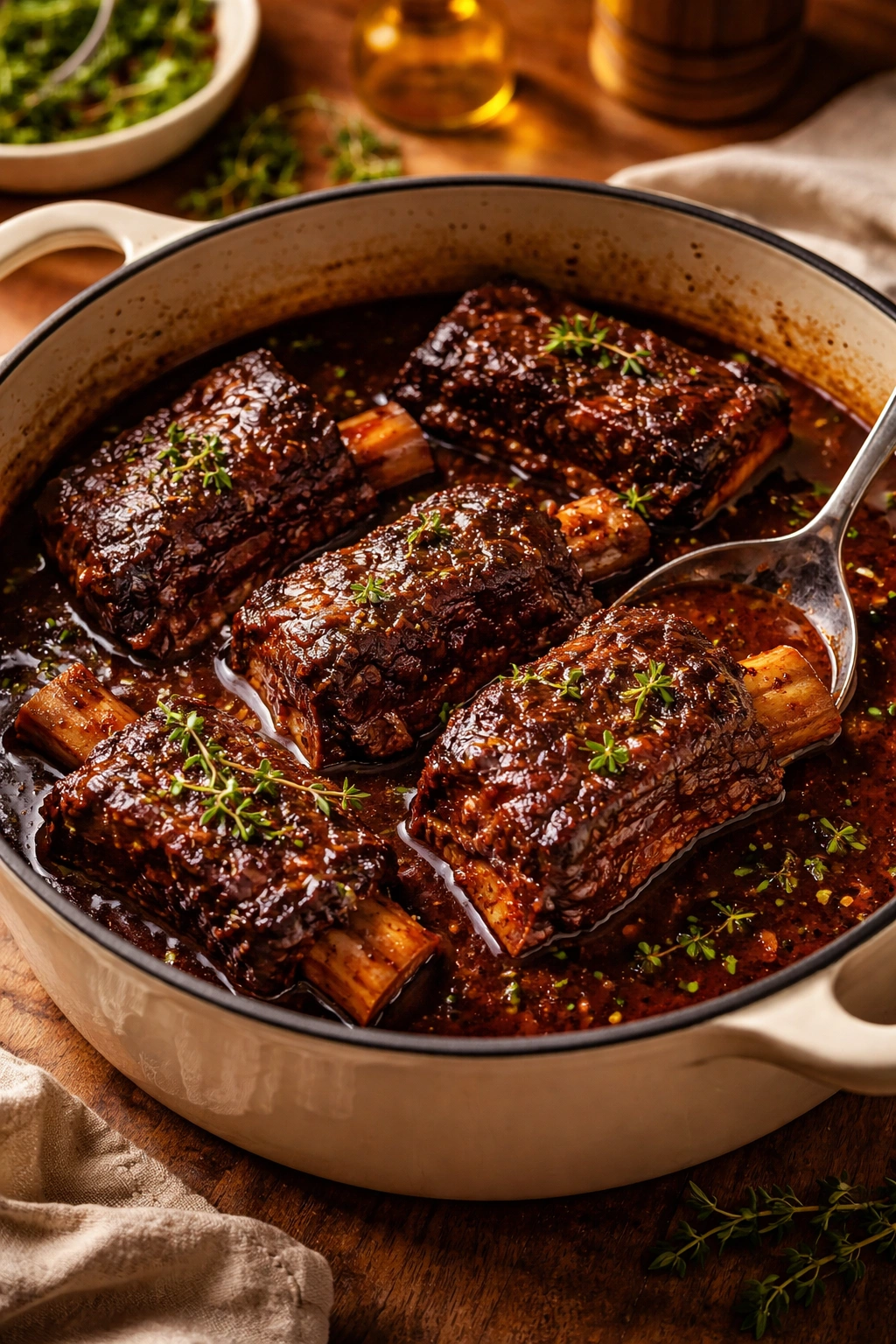
Short ribs are the ultimate make-ahead protein because they’re nearly impossible to overcook and they genuinely taste better after a day in the fridge. The muscle fibers break down into something silky, the fat renders into the sauce, and the flavors deepen dramatically. This is a dish that gets better with time rather than declining.
The method is simple: sear the short ribs in a hot Dutch oven to develop color and crust, remove them, sauté your aromatics (onions, celery, carrots), add tomato paste and let it caramelize slightly, then deglaze with red wine. Add beef broth to nearly cover the ribs, bring it to a simmer, cover the pot, and braise in a three-hundred-twenty-five-degree oven for three to four hours until the meat is absolutely tender and pulls cleanly from the bone.
Make this dish one or two days ahead. Let it cool completely, cover it, and refrigerate. When you’re ready to serve, the fat will have solidified on top—lift it off and discard it, which reduces the richness without removing any of the flavor. Reheat the whole pot gently on the stovetop until it reaches a steady simmer, then transfer to a warm serving vessel. The meat will be more tender, the sauce more cohesive, and you’ll have zero stress about timing on dinner day.
Pasta Dishes That Hold Well and Taste Better Rested
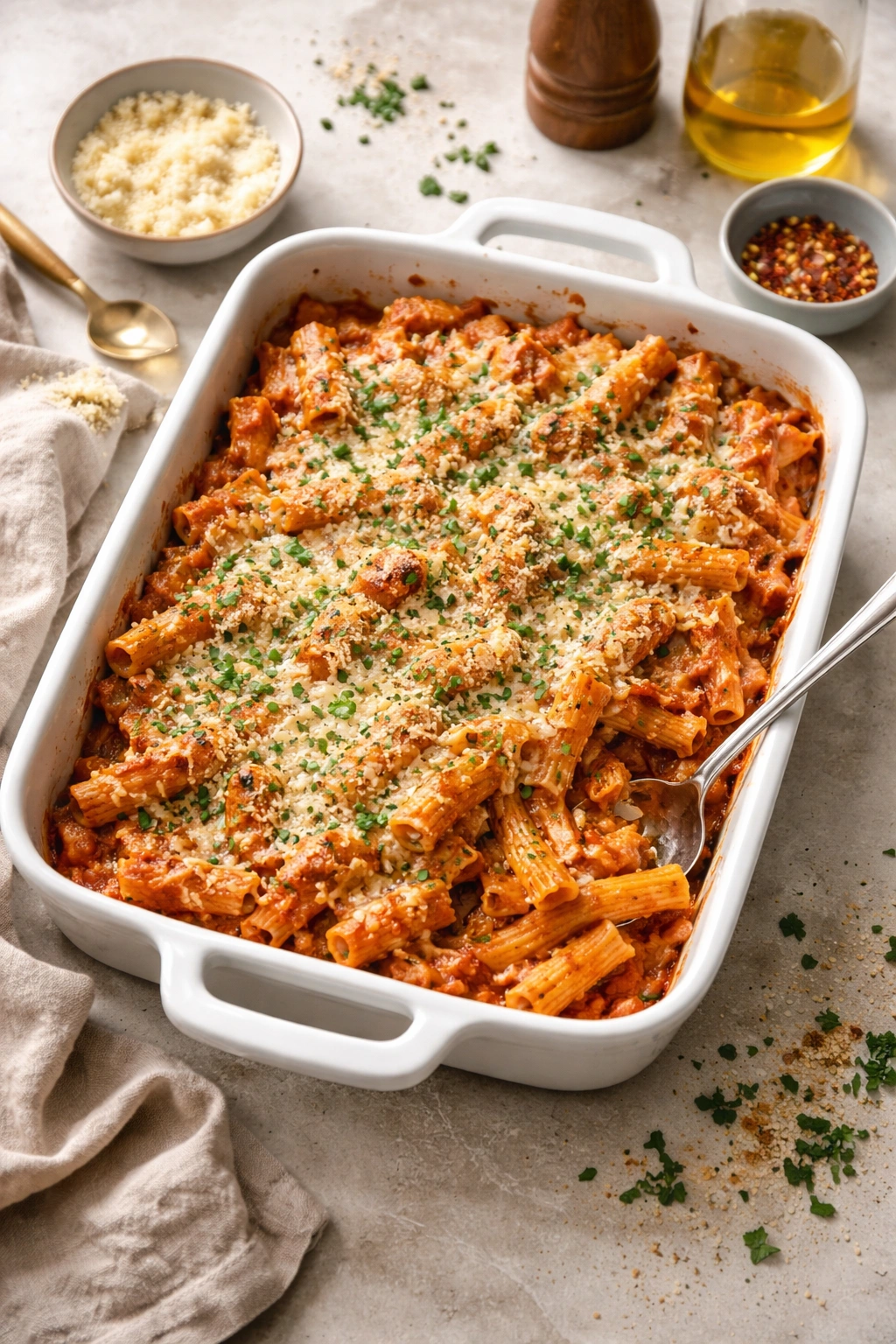
Contrary to what you might think, certain pasta preparations actually improve when held and gently reheated. The key is using a wetter sauce rather than oil-based pastas, which dry out and become gluey if overcooked or held. A creamy carbonara made the night before will break and separate. A properly made marinara-based baked pasta or a cheese-enriched béchamel-based dish becomes even more cohesive and creamy.
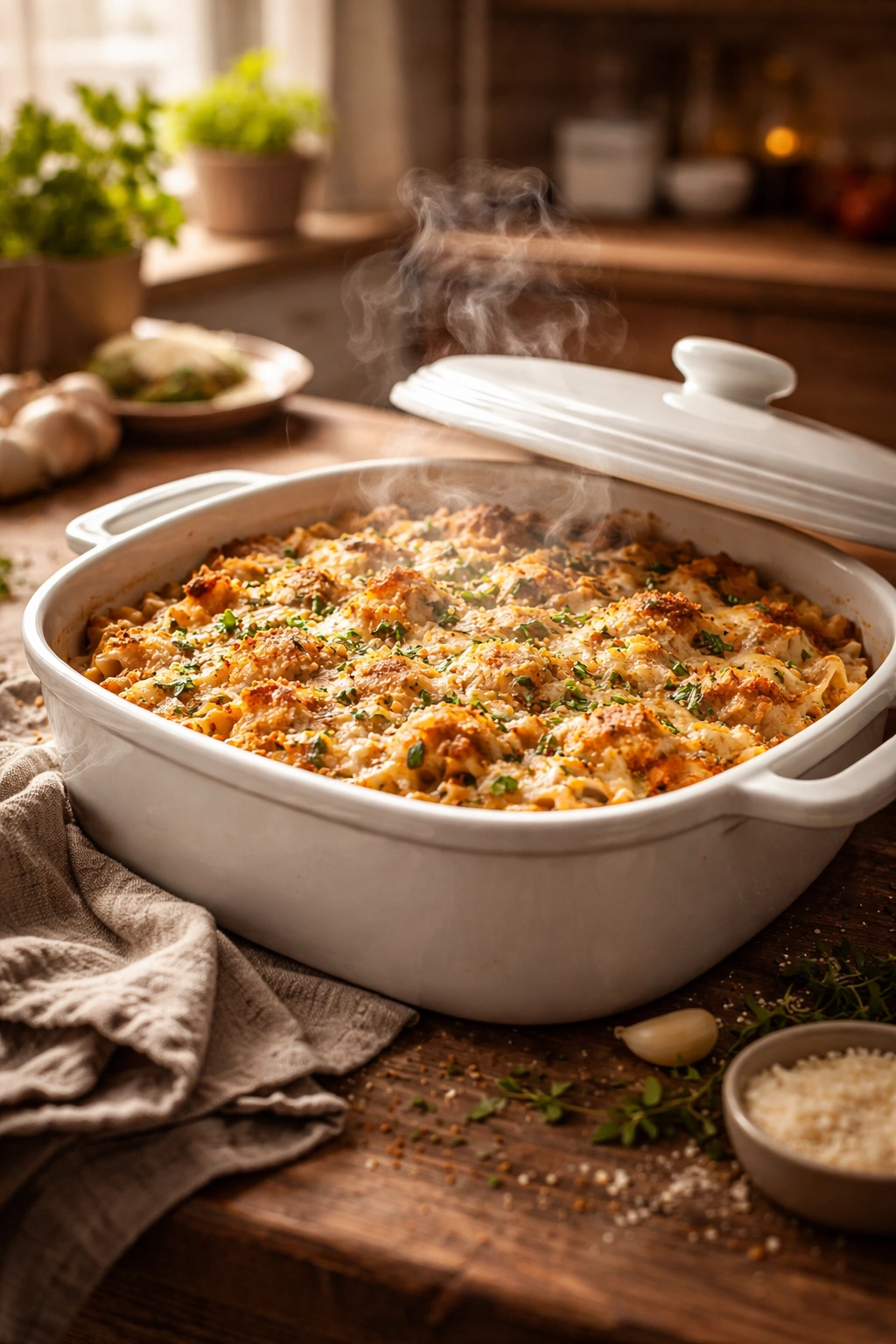
Baked pasta shapes like penne or rigatoni work beautifully. Toss cooked, drained pasta with your sauce and some grated Parmigiano-Reggiano, transfer it to a buttered baking dish, top it with breadcrumbs and more cheese, and bake it at three hundred seventy-five degrees for about twenty-five minutes until the top is golden. This can be completely assembled a full day ahead, covered, and refrigerated. On dinner day, let it come to room temperature for about thirty minutes, then bake it (it might need five to ten additional minutes since it’s starting cold). The interior will be creamy, the top will be golden, and you’ll have a complete component that needs no last-minute attention.
Another option is a properly made lasagna—not too sloppy, with enough bechamel and cheese sauce to bind the layers but still leave them distinct. Assemble it completely the day before or morning of, refrigerate it, and bake it according to your recipe. It actually becomes easier to slice neatly when it’s had time to set in the fridge.
Roasted Vegetables That Can Be Prepared Hours Ahead
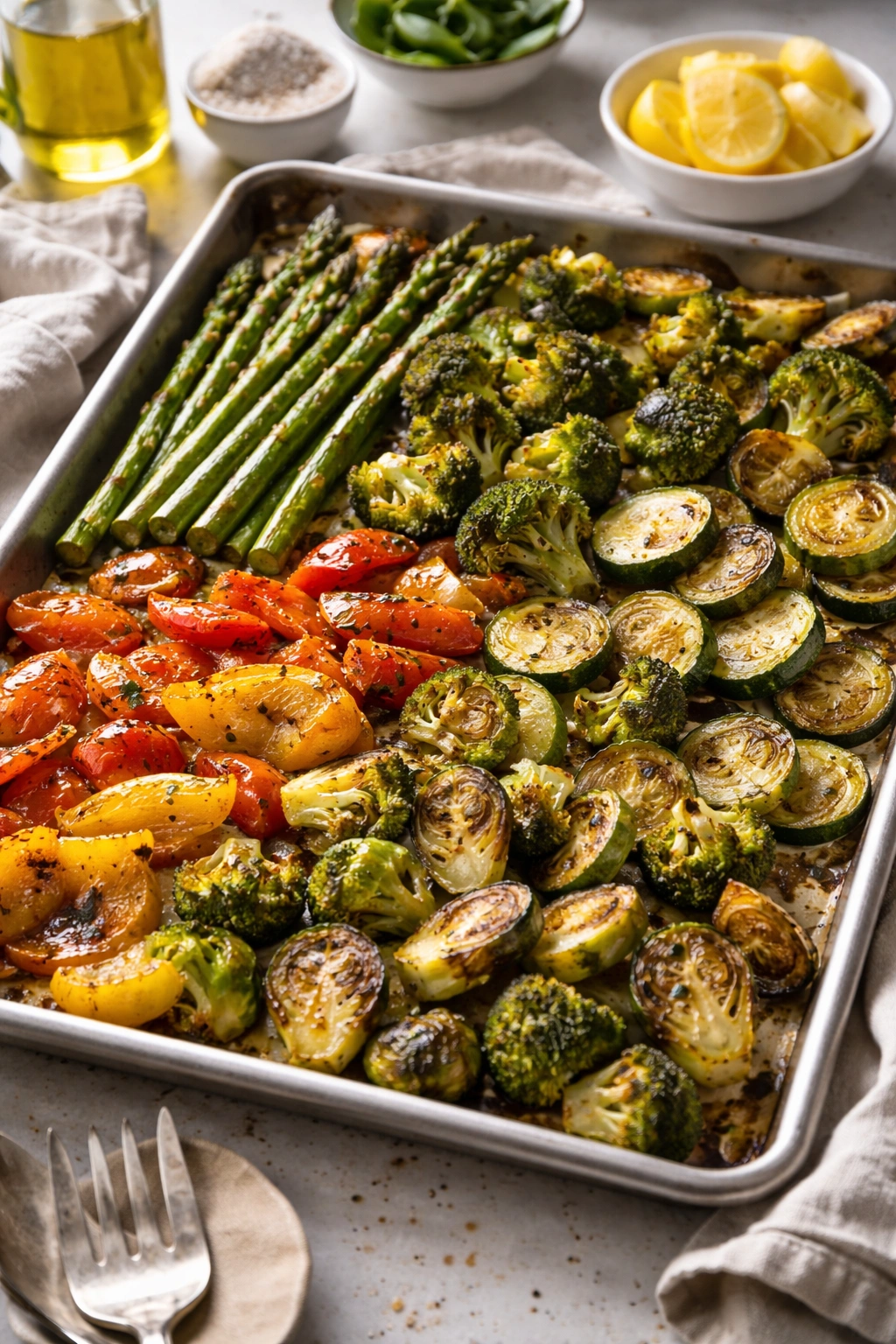
Roasted vegetables are one of the easiest components to get right for a crowd, and they’re remarkably flexible about timing. You can roast them several hours in advance and serve them at room temperature, or gently reheat them just before serving. This means they don’t compete for oven space with your protein during the final stretch.
The technique is simple: toss vegetables (asparagus, broccoli, Brussels sprouts, zucchini, bell peppers—basically anything you love) with good olive oil, salt, and pepper. Spread them in a single layer on a sheet pan and roast at four hundred twenty-five degrees for twenty to thirty minutes, stirring halfway through, until they’re deeply caramelized on the edges and tender inside. Finish with fresh lemon juice, good salt, and fresh herbs like parsley or dill.
Roast these in the early afternoon, let them cool to room temperature, and they’re actually lovely served cool or at room temperature. If you prefer them hot, arrange them on a sheet pan, cover loosely with foil, and warm them gently in a three hundred-degree oven for about ten minutes before serving. The caramelization won’t deepen further, but they’ll be pleasantly warm and still maintain their texture.
Composed Salads That Don’t Wilt
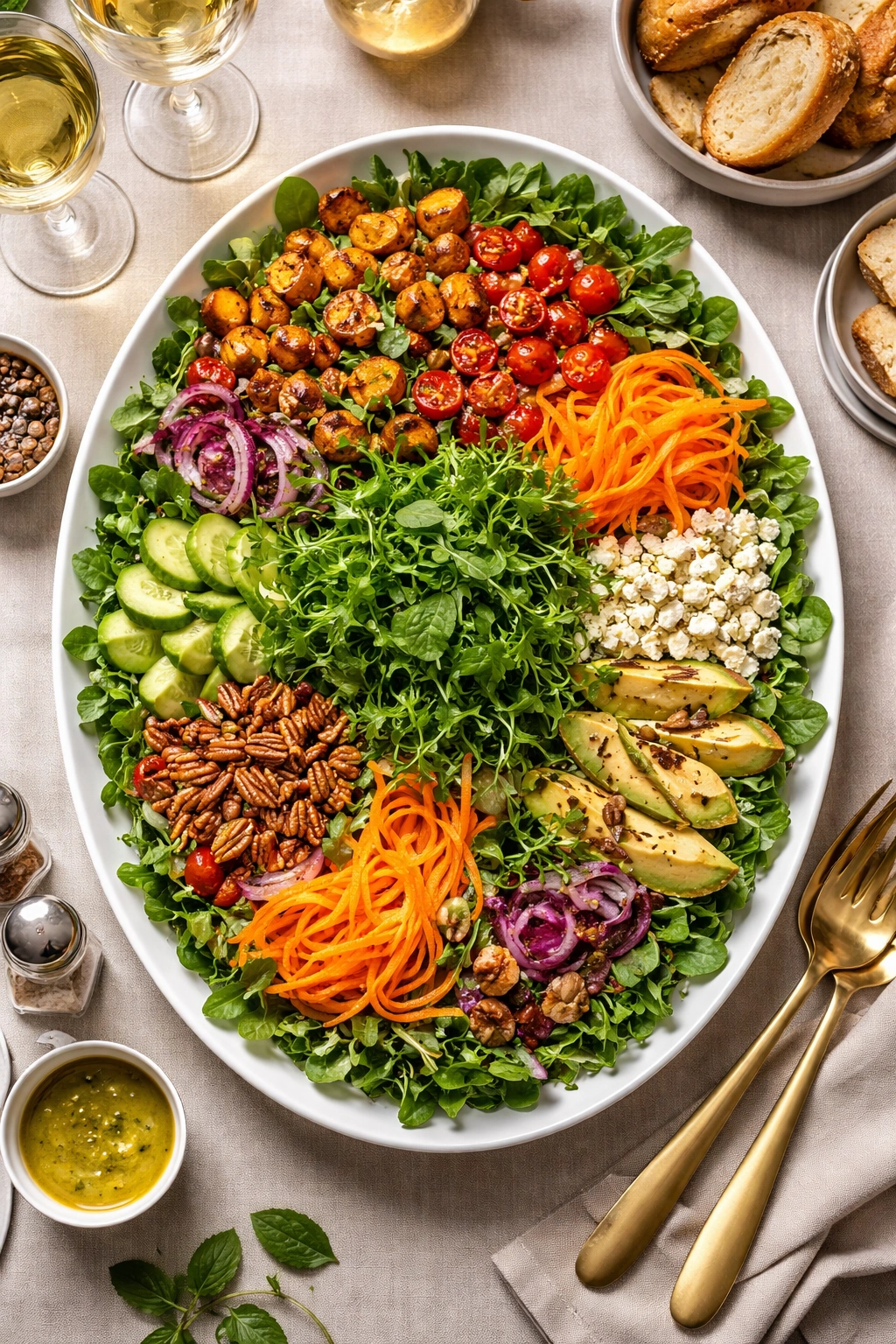
A salad that’s dressed hours in advance falls into a sad, soggy mess. But a composed salad—where components are arranged but not fully dressed—can sit prepared for hours and be tossed together right before serving. This approach looks beautiful, holds up perfectly, and can be assembled on your dining table as part of the presentation.
Build your salad on a large platter or shallow bowl with greens as a base, then arrange your components around it in sections: roasted vegetables, nuts, cheese, perhaps shaved carrots, fresh herbs. Keep your dressing in a jar in the fridge. Right before serving, dress the salad at the table or in the kitchen, give it a generous toss, and bring it out. The presentation is already beautiful before you dress it, and the salad maintains perfect texture.
Alternatively, make a hearty grain-based salad where the components are resilient to dressing. A farro salad or a white bean salad actually improves if dressed a few hours in advance because the grains and beans absorb the flavors. These dishes work beautifully as a side component that can be made completely the day before and needs no attention on party day.
Creamy Dips and First-Course Components
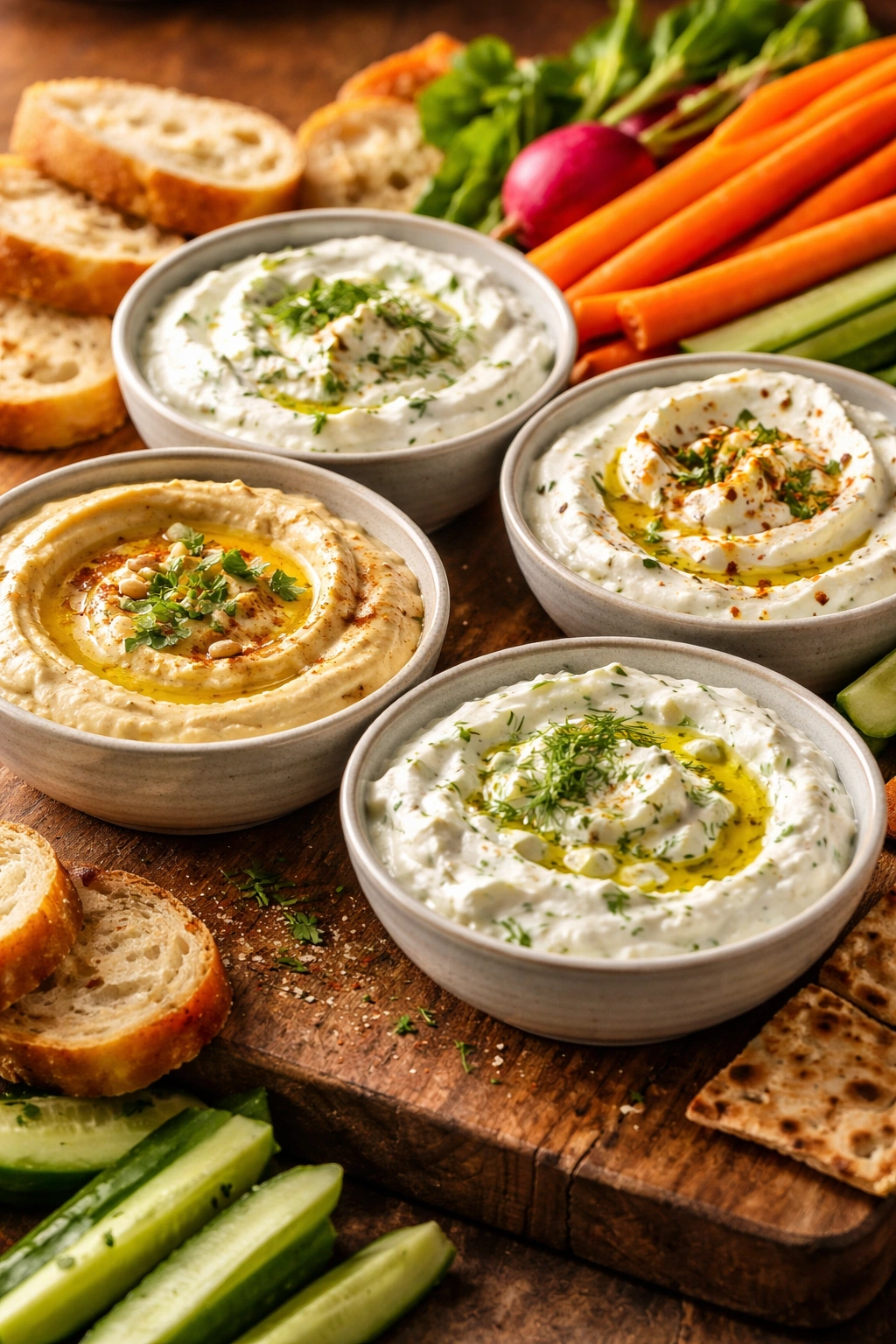
Dips and spreads are the ultimate make-ahead appetizer because they actually taste better when flavors have had time to meld. Make your hummus, tzatziki, whipped feta, or herb-enriched labneh the day before and store it in the fridge. These components will taste richer and more developed than if you made them hours before service.
Set out your dips with good bread, crackers, fresh vegetables, and olives. The beauty is that guests can serve themselves, you don’t need a hot oven to maintain them, and they’re naturally flexible if people arrive at different times or appetite levels vary. You can make these three days in advance if you want, and they’ll still be perfect.
Think about building a grazing board element where guests can serve themselves before sitting down for the meal. This keeps them occupied during the final minutes before dinner, reduces hunger-driven impatience, and eases the transition from appetizers to the main course.
Grains and Starches That Free Up Oven Space
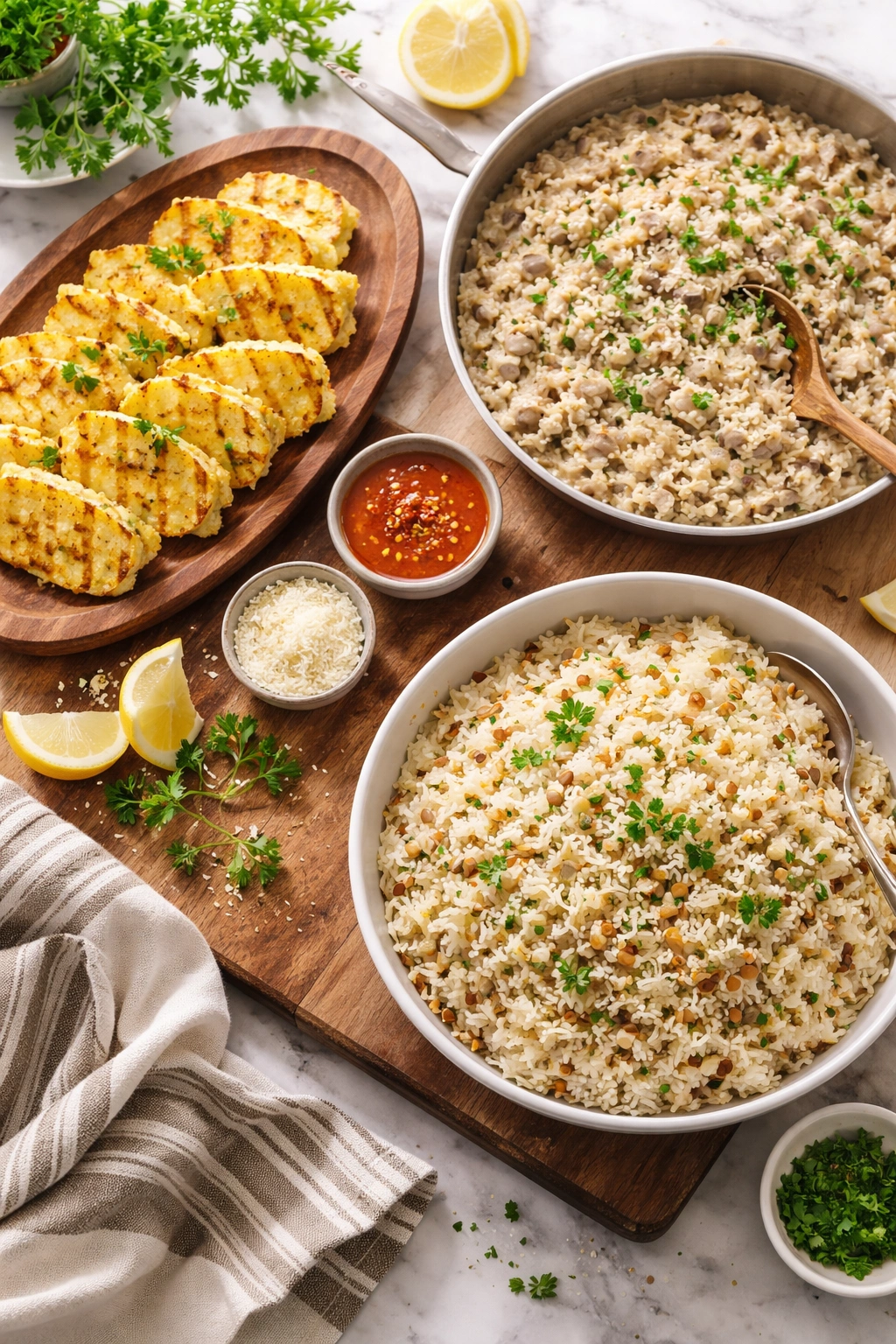
Any time your oven is monopolized by your protein, your starch needs to live on the stovetop or be prepared entirely in advance. Risotto, while it demands active stirring, is actually quick—about twenty minutes from start to finish—and can be made entirely during that window right before serving. Polenta can be made hours ahead, poured into a pan, cooled, sliced, fried or roasted at the last minute. Rice pilaf cooked on the stovetop or in a covered pot frees up oven space and stays warm for a surprisingly long time.
Potatoes are your friend because they’re so flexible. Boiled new potatoes can be cooked and held several hours ahead, then tossed with warm butter and herbs right before serving. Mashed potatoes can be made two hours in advance, held loosely covered at room temperature, and warmed by stirring in hot milk or cream right before serving. Roasted potatoes follow the same formula as roasted vegetables—roast hours ahead, serve at room temperature or gently reheat.
The mindset shift is this: your oven is valuable real estate. Every component that doesn’t absolutely need dry heat should find another cooking method. This gives you room to roast or bake your main protein without juggling multiple components simultaneously.
Sauces, Reductions, and Gravies That Enhance Your Proteins
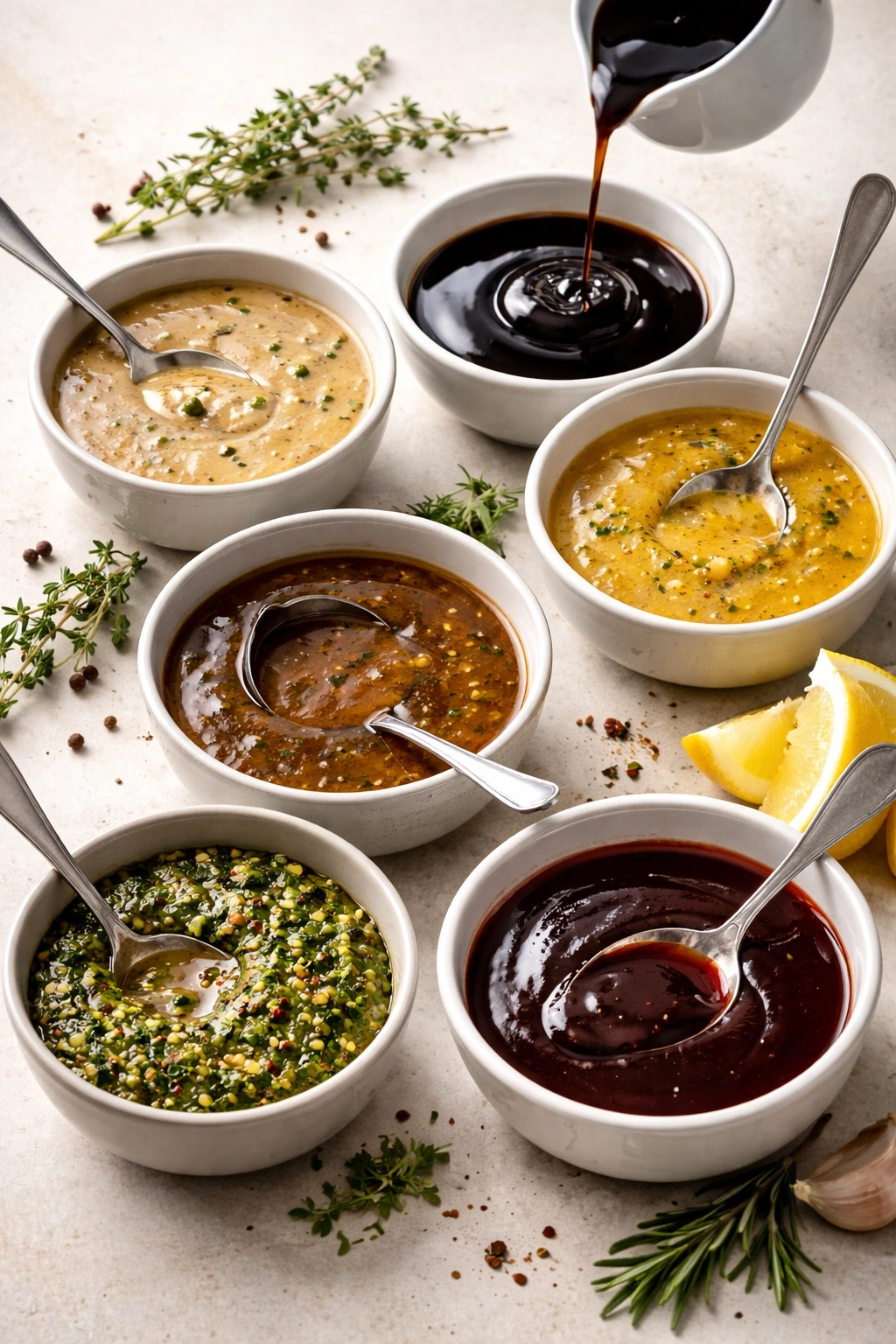
A good sauce often makes the difference between a home-cooked dinner and something that feels restaurant-quality. The advantage is that sauces are easy to make ahead and they benefit from sitting. A reduction that concentrates pan drippings and wine, a béchamel, or a compound butter all taste better after a day.
Make pan sauces by deglazing your roasting pan with wine or broth after you’ve removed your protein, scraping up all those flavorful browned bits. Simmer it down until it’s concentrated and rich. Pour it into a container, cool it, and refrigerate it. Gently rewarm it on the stovetop right before serving. It takes five minutes of active time and tastes like you’ve been working in the kitchen all day.
Compound butter—softened butter mixed with fresh herbs, lemon zest, garlic, and salt—can be made days ahead and frozen. Slice a pat over a hot roasted vegetable or piece of protein and it melts beautifully, finishing the plate with richness and elegance. This is a technique that looks fancy but requires literally no last-minute work.
Desserts That Are Better When Made Ahead
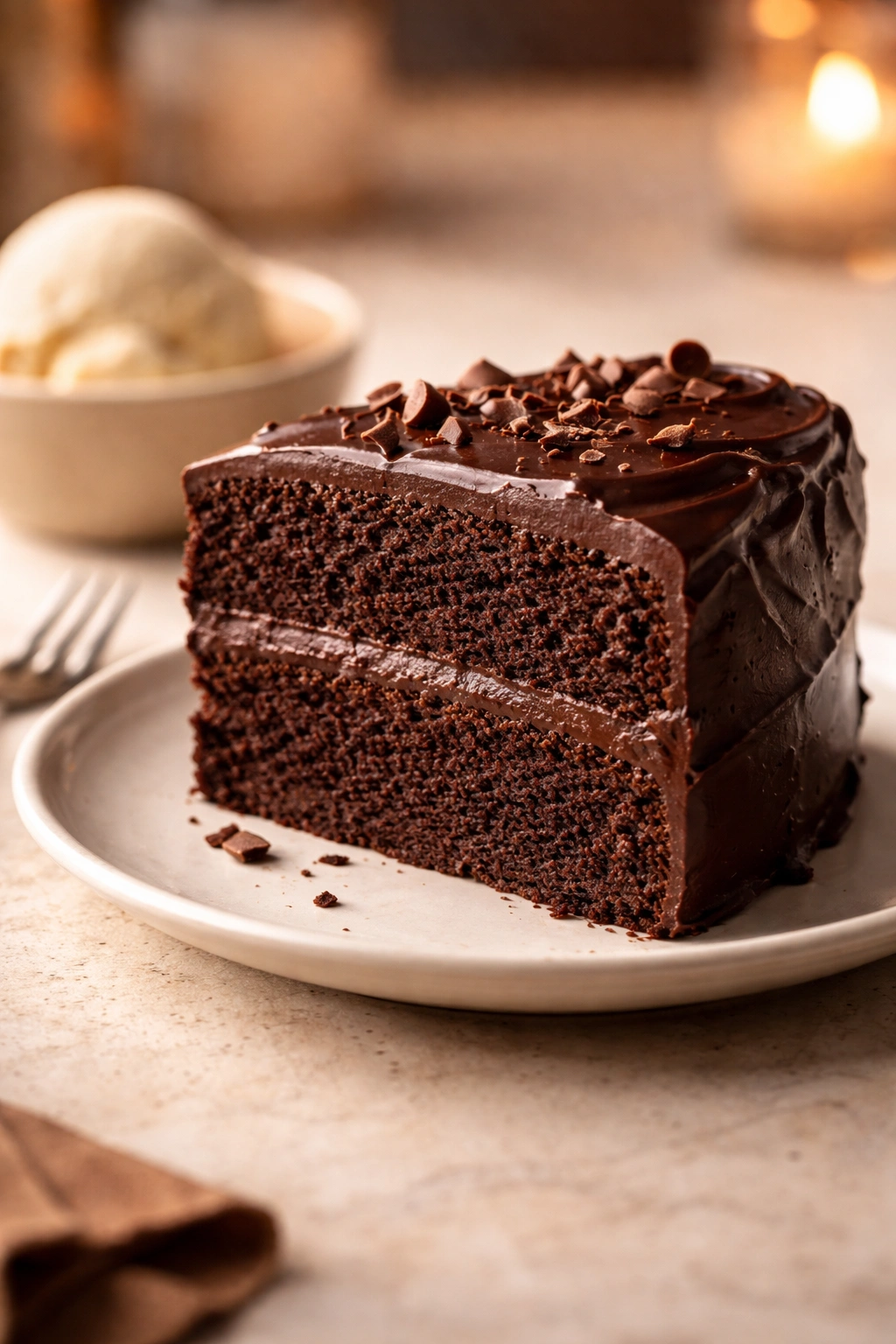
The dessert component of a dinner party is where make-ahead really shines. So many desserts actually improve when made one or two days in advance. Chocolate cakes, brownies, and other dense cakes become moister as they sit. Custards, mousses, and cheesecakes need to chill thoroughly anyway, so making them ahead is necessary rather than optional.
Avoid desserts that require whipped cream applied right before serving, or make the cream component ahead and hold it in the fridge separately, adding it just at the moment of service. Keep dessert simple—a good chocolate cake with vanilla ice cream, a lemon tart, a brownie with whipped cream, fresh berries with whipped mascarpone. These feel special without demanding precision plating or last-minute assembly.
Consider a dessert that can be portioned and plated in the kitchen before bringing individual servings to the table. This looks elegant, controls portion size, and removes any last-minute plating stress from the dining room.
The Make-Ahead Timeline That Actually Works
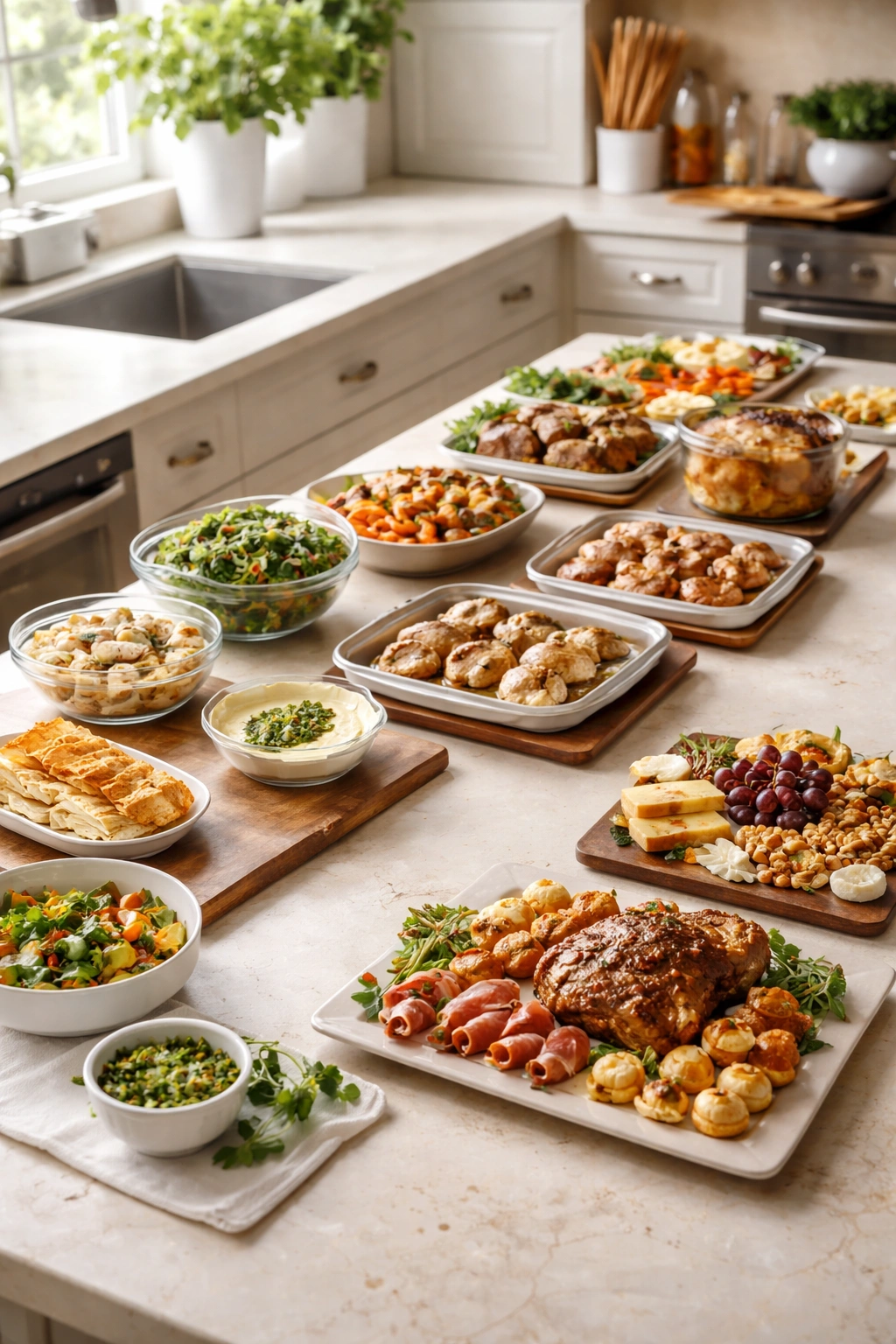
Create a realistic cooking schedule by working backward from when your guests arrive. If dinner is at seven o’clock and you want to serve the first course at seven-fifteen, your main course should be completely finished and holding by six-fifty-five. If your main dish takes an hour to roast and needs a fifteen-minute rest, you need it in the oven by five-forty-five at the latest.
The day before: make your braise, cook your pasta, prepare your dessert, make your dips and sauces, prep all your vegetables (wash, chop, store in containers).
The morning of: set your table, arrange your serving vessels, make any components that don’t keep (whipped cream, for example, if you’re using it), chill your wine, shower and dress.
Two to three hours before guests arrive: start your slow-cooking proteins, prepare your grazing board, set out appetizers if any are best served at room temperature.
One hour before: light candles, do a final walkthrough of your dining area, make sure beverages are ready.
Forty-five minutes before: start your oven components that have shorter cooking times, put water on for pasta if you need fresh pasta (unlikely given this guide, but it happens), get plating vessels warm.
Thirty minutes before: put your appetizers out if they’ve been chilling, start any stovetop components that take fifteen to twenty minutes, taste and season anything that needs final seasoning.
This timeline isn’t rigid—it’s a framework. The point is that nothing should demand your attention during the hour guests are actually sitting at your table. Build your menu so that’s possible.
Common Mistakes That Steal Your Evening
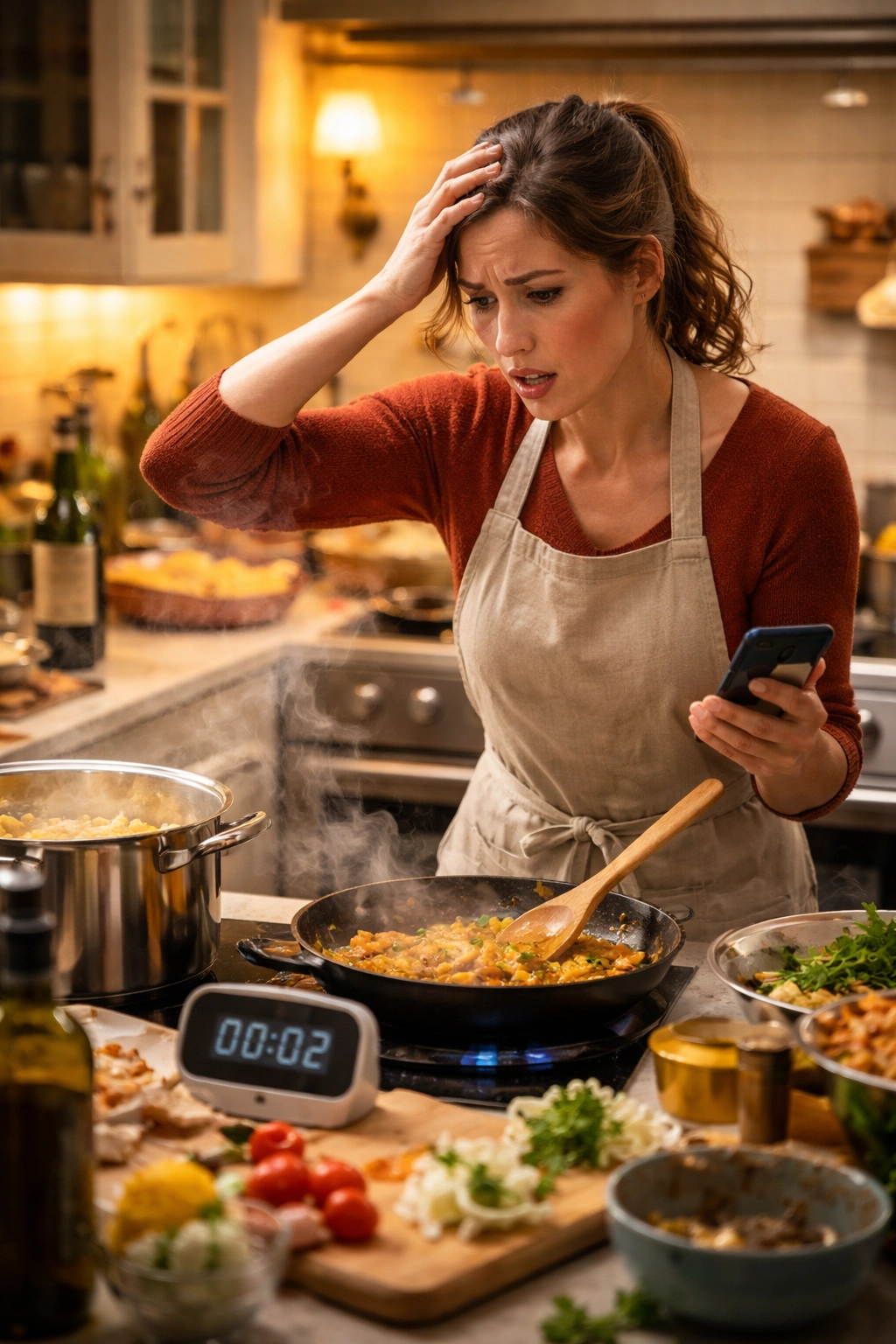
The biggest mistake is choosing recipes that all demand attention simultaneously. If your protein needs the oven at six o’clock, your vegetable side shouldn’t also need the oven at six o’clock. If you’re making a sauce that requires constant stirring, you can’t also be boiling pasta. Map out which tools (oven, stovetop, hands) each component needs and at what time, and deliberately choose components that use different resources at different times.
The second mistake is underestimating how long things actually take. A dish that claims thirty minutes often takes forty-five in a real kitchen where you’re handling multiple things at once. Build in a buffer. If your menu is supposed to take two hours, plan as if it takes three. This isn’t lazy—it’s realistic.
The third mistake is not tasting your food before guests arrive. A sauce that seemed perfect in the morning might need more salt after an hour. A vegetable roasted hours ago might benefit from a finishing squeeze of fresh lemon juice right before serving. Taste everything and taste again right before service.
The fourth mistake is overthinking plating and presentation. Guests are there for good food and good company, not for deconstructed architecture. Plate simply and generously. A piece of fish on a bed of greens with vegetables alongside looks beautiful without requiring tweezers and a architecture degree.
Scaling Recipes Up for Larger Crowds
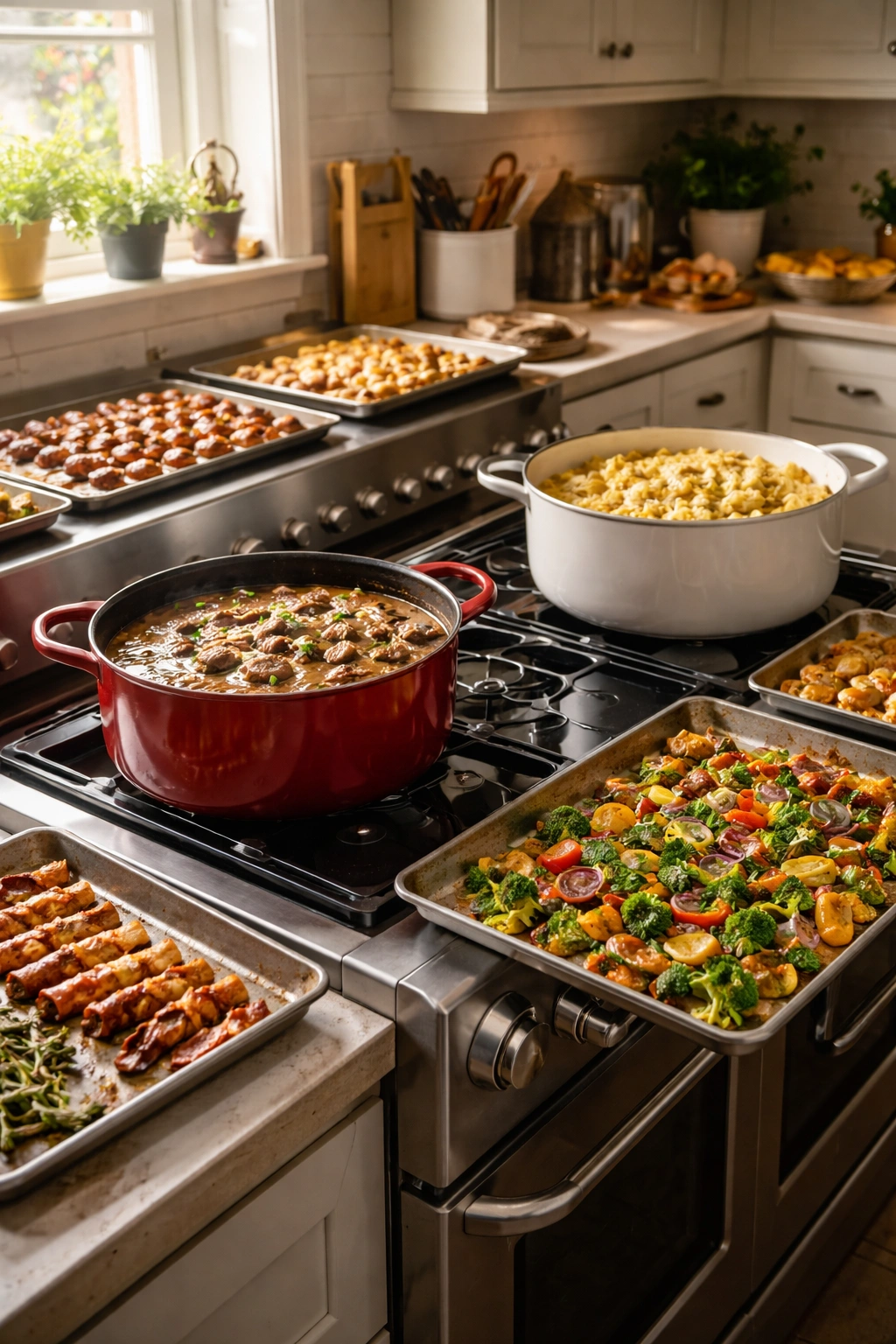
When you’re cooking for twelve instead of six, don’t just double or triple every recipe. Quantities scale linearly, but cooking time often doesn’t. A braised short rib recipe that serves six in four hours doesn’t necessarily take just four hours for twelve—the pot might need extra cooking time because it’s more densely packed. A pan-roasted chicken recipe for four that takes forty-five minutes doesn’t take ninety minutes for eight; it takes forty-five minutes but you might need two oven racks.
Think in terms of equipment. Can your Dutch oven hold twice as much braised meat, or do you need two pots? Do you have enough sheet pans? Can your stovetop accommodate all your burners running simultaneously? These are logistical questions that affect whether your meal comes together smoothly.
Write out your scaled recipe before cooking. Don’t just eyeball it. A recipe that calls for “season to taste” becomes impossible when you’re tasting as you go with four times the volume. Measure your seasonings, taste at the end, and adjust if needed.
Wine Pairing Basics That Elevate Everything
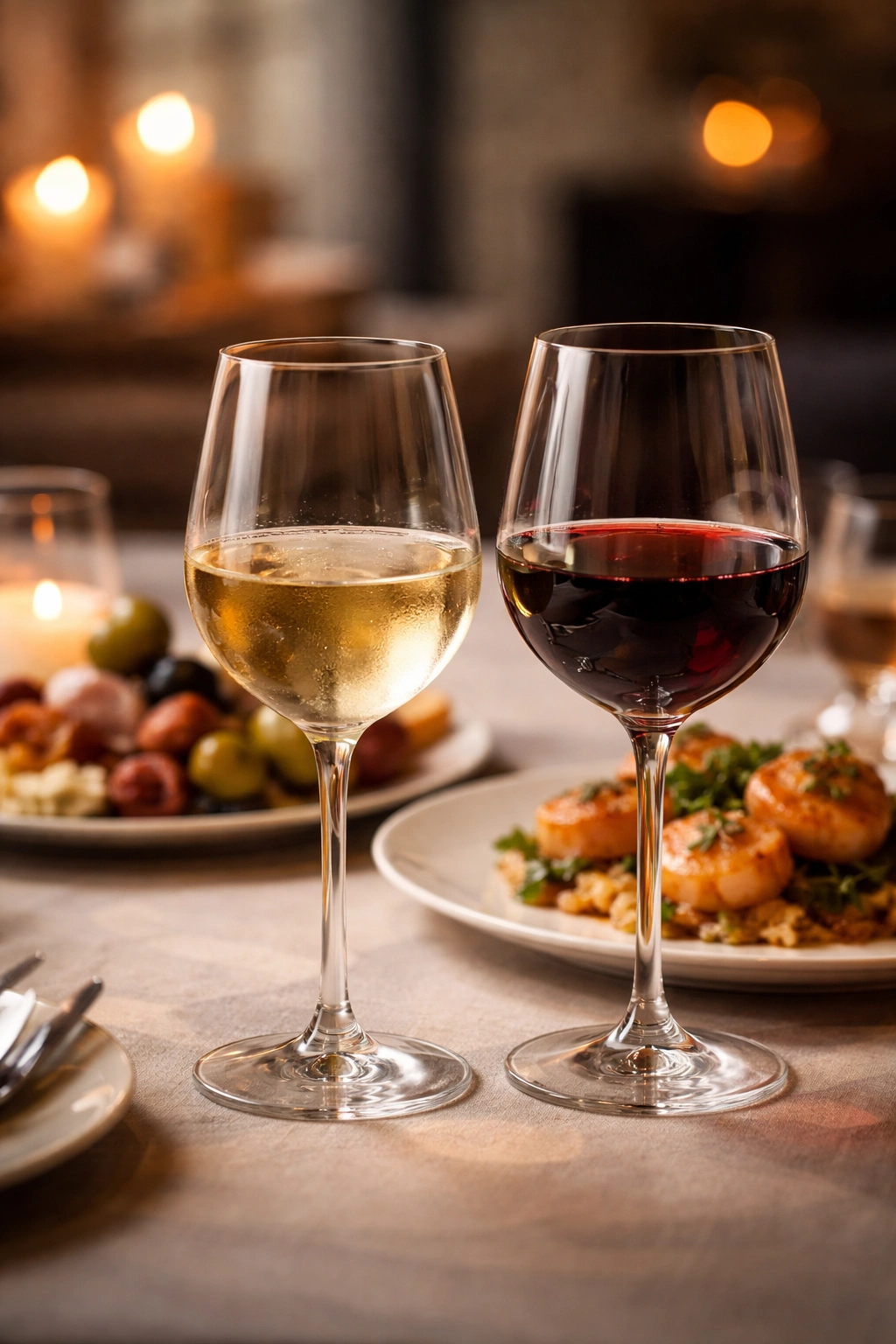
You don’t need to be a wine expert to pair thoughtfully. The basic principle is that the wine should complement the food, not fight it. A light white wine (think Pinot Grigio or Sauvignon Blanc) pairs beautifully with seafood, light proteins, and vegetable-forward dishes. A fuller white wine (Chardonnay, Viognier) works with richer sauces and creamy components. A light red wine like Pinot Noir pairs with lighter red meats and rich but not-too-heavy dishes. A fuller red wine (Cabernet, Malbec, Côtes du Rhône) matches bold, heavy dishes like braised short ribs and stews.
Buy two or three bottles across the range and let guests choose. You’re not trying to impress with obscure wines—you’re trying to enhance the meal. A decent, reasonably priced wine that you actually enjoy is infinitely better than an expensive bottle you felt obligated to buy.
Breathing Room: Why Timing Gaps Matter
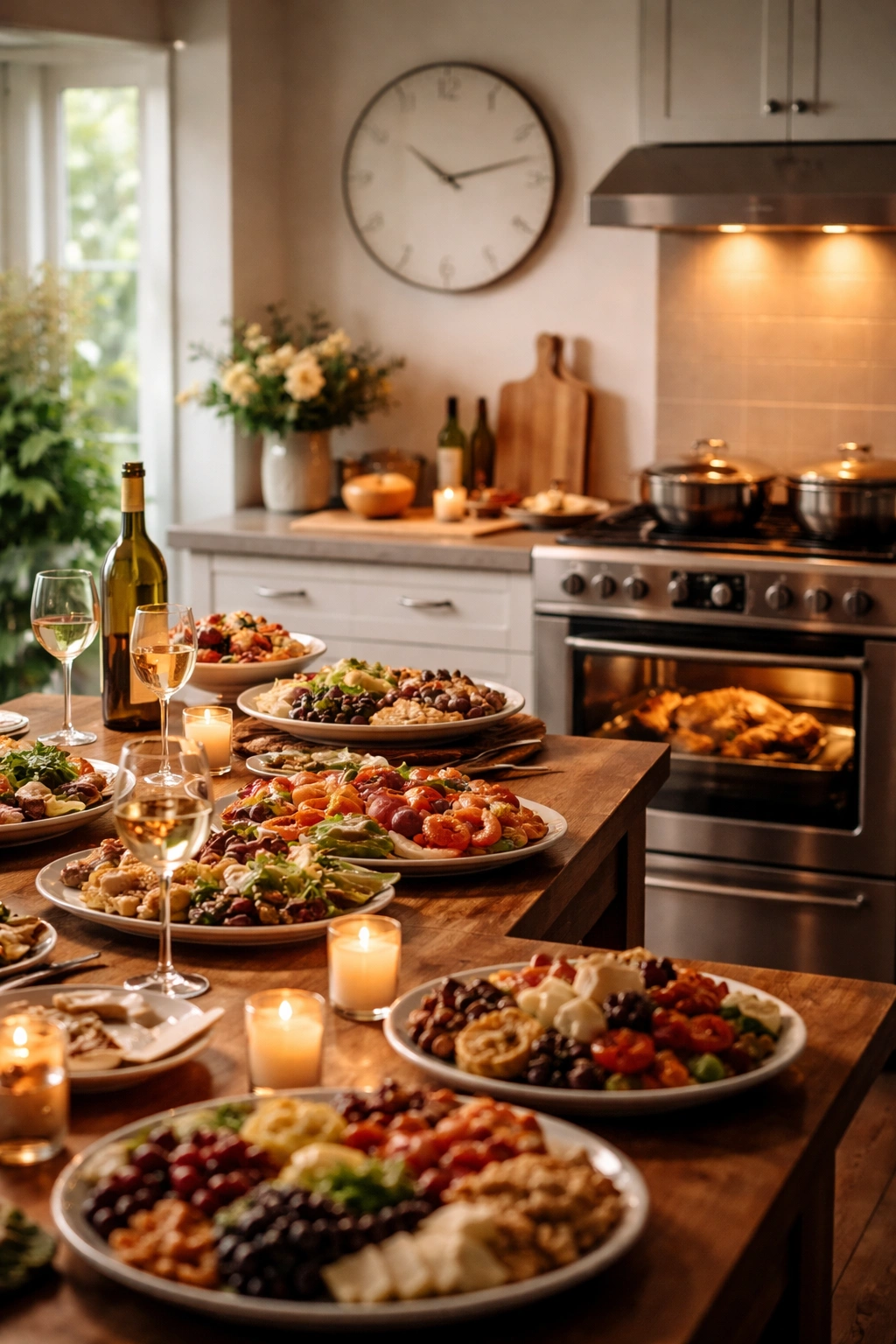
Here’s something most dinner party guides miss: the actual meal is better when there’s space between courses. Serve your appetizers and let people eat and chat for fifteen or twenty minutes while you’re not actively cooking. Then clear those plates, transition to the main course, and let that course breathe without immediately pushing dessert onto people.
This requires that nothing in your main course needs last-minute cooking while people are sitting down eating their appetizers. You need to build your menu so that’s possible. This is where the make-ahead strategy really shines. Your main dish is already in the oven or holding warm. Your sides are either done ahead or are cooking on the stovetop without your attention. You’re actually present, pouring wine and engaging with your guests, not sneaking away to the kitchen.
The pacing of the meal matters as much as the food itself. A dinner that feels rushed and chaotic leaves guests more tired than satisfied, even if the food is delicious. A dinner with natural breathing room where people can actually taste their food and have conversations feels civilized and intentional.
Final Thoughts
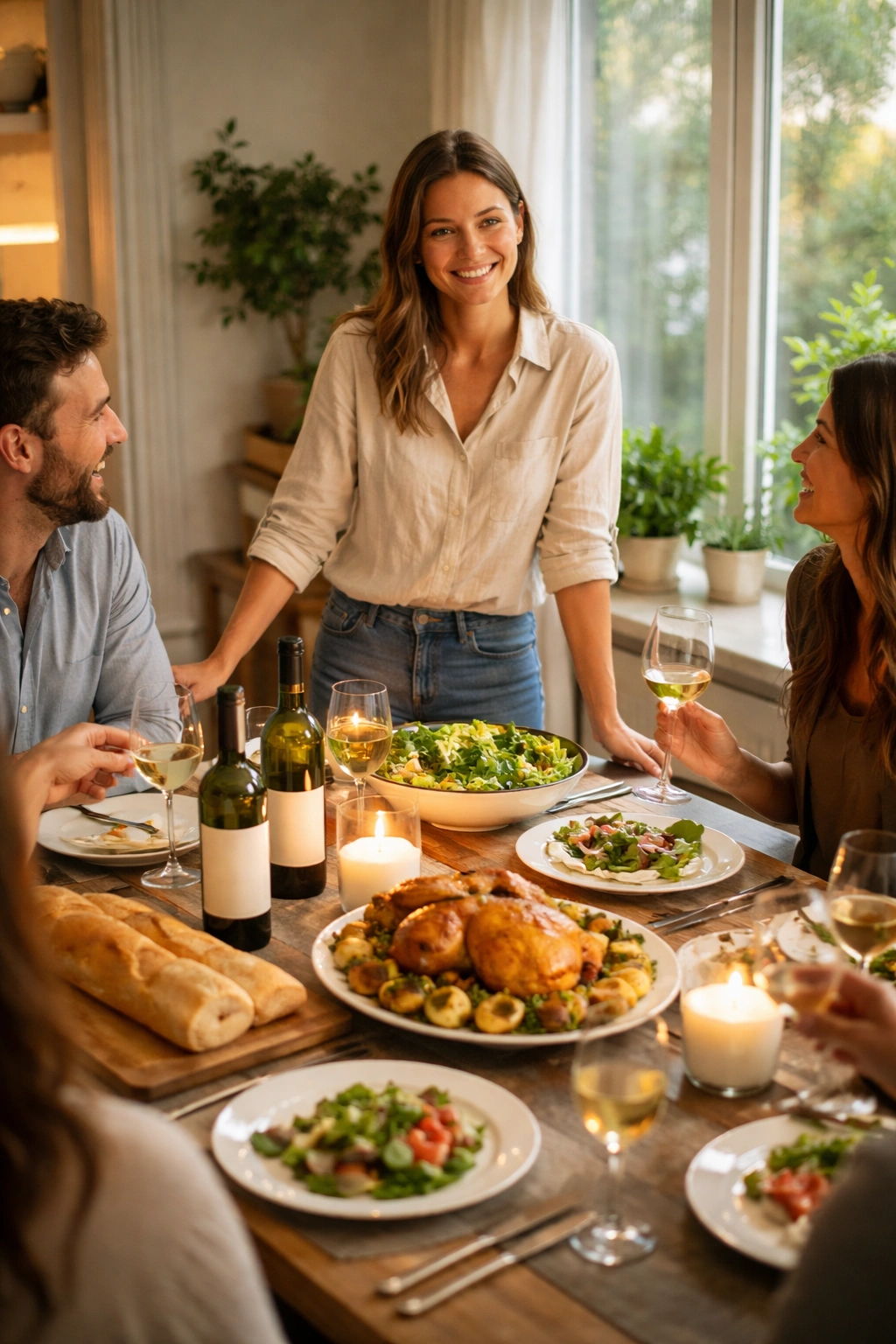
Hosting a dinner party doesn’t require chef-level skills or hours of last-minute cooking. It requires choosing recipes that are fundamentally forgiving, making components ahead whenever possible, and building a menu where different dishes use different tools at different times. Pick one substantial main dish that you’re confident about, two sides that don’t demand oven space, a simple salad or vegetable component, and a dessert that’s already done. Build in time for make-ahead prep, create a realistic timeline that gives you breathing room, and remember that guests are there for company more than for anything else.
The best dinner parties are the ones where the host is actually relaxed and enjoying themselves. That’s only possible if the food is mostly handled before guests arrive. Choose recipes that work with your reality rather than against it, taste your food before service, and don’t apologize for simplicity. A perfectly roasted chicken, good bread, a simple salad, and a decent wine make a far better dinner party than an overly complicated menu where you’re stressed and absent from your own table. That shift in mindset—from impressing people with complexity to nourishing them with simplicity executed well—is what transforms dinner parties from obligations into actual events you look forward to hosting.
